

Energy efficiency in cloud computing data centers: a survey on software technologies
Open accessThe DOI matches its Crossref record; 133 of the 134 references it cites were found in a registry or an index; 14 of the 109 sources its claims cite were checked for support.
Abstract
Cloud computing is a commercial and economic paradigm that has gained traction since 2006 and is presently the most significant technology in IT sector. From the notion of cloud computing to its energy efficiency, cloud has been the subject of much discussion. The energy consumption of data centres alone will rise from 200 TWh in 2016 to 2967 TWh in 2030. The data centres require a lot of power to provide services, which increases CO2 emissions. In this survey paper, software-based technologies that can be used for building green data centers and include power management at individual software level has been discussed. The paper discusses the energy efficiency in containers and problem-solving approaches used for reducing power consumption in data centers. Further, the paper also gives details about the impact of data centers on environment that includes the e-waste and the various standards opted by different countries for giving rating to the data centers. This article goes beyond just demonstrating new green cloud computing possibilities. Instead, it focuses the attention and resources of academia and society on a critical issue: long-term technological advancement. The article covers the new technologies that can be applied at the individual software level that includes techniques applied at virtualization level, operating system level and application level. It clearly defines different measures at each level to reduce the energy consumption that clearly adds value to the current environmental problem of pollution reduction. This article also addresses the difficulties, concerns, and needs that cloud data centres and cloud organisations must grasp, as well as some of the factors and case studies that influence green cloud usage.
Overview
CoChat Summary
TL;DR
This survey reviews software-level technologies for improving energy efficiency in cloud data centers, covering operating system, virtualization, application, container, and data-center-level approaches. It also discusses environmental impact, policies/standards, case studies, and open research challenges for green data centers.
Key findings
- Data center energy consumption is projected to rise from 200 TWh in 2016 to 2967 TWh in 2030; average annual data center PUE was 1.57 in 2021 versus 1.59 in 2020, with an ideal PUE of 1.0.
- Containerization can reduce energy use: Docker configured to a maximum latency of 3000 ms can operate up to 21% more services than KVM while consuming 11.33% less energy than KVM; a container placement method (MLSM) cut energy usage by an average of 12.8% compared with First Fit.
- Other reported software-level gains include VIP reducing power usage and improving CPU-intensive application completion time by up to 27% and 32%, respectively, without breaching latency-sensitive SLAs; a MapReduce configurator improved energy efficiency by up to 50% in two structurally distinct clusters.
- Data centers emitted 3.15 × 10^7 tons CO2-eq in 2018, about 0.5% of total U.S. GHG emissions; many corporate servers are utilized only 10–15%, and 30% are described as “zombies” that are inactive yet still consume electricity.
Methods
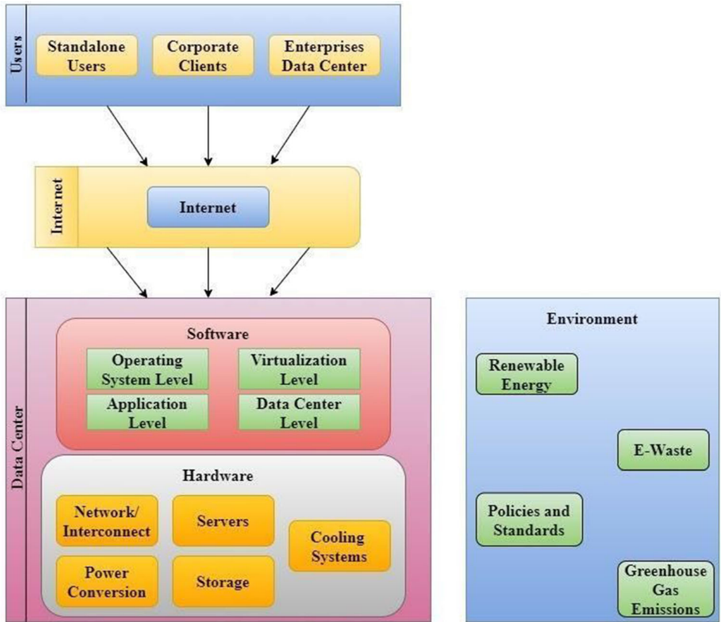
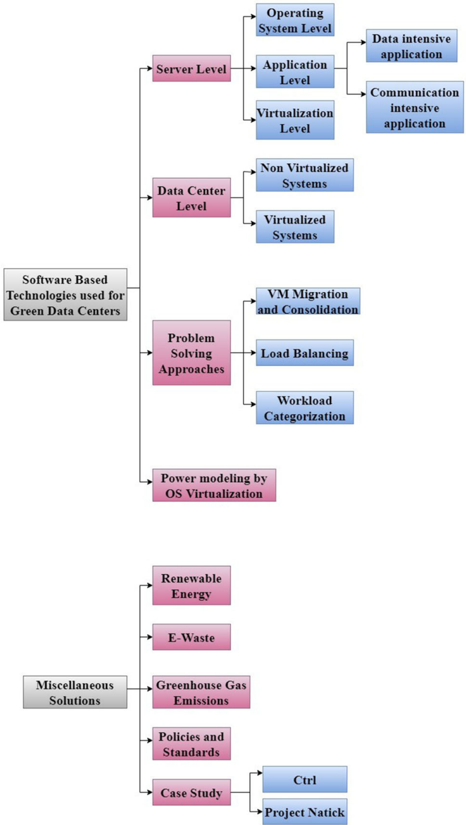
- Design: a survey of software-based energy-efficiency techniques in cloud data centers, organized by OS level, virtualization level, application level, operating-system virtualization/containers, data-center-level dynamic power management, problem-solving approaches, environment, and research challenges.
- Data sources: articles collected from IEEE, Springer, and Elsevier, using Web of Science and Scopus; included publications were peer reviewed, mostly published between 2015 and 2020, and focused on software-based methods for data center energy efficiency.
- Analysis: narrative synthesis and taxonomy; excluded non-peer-reviewed papers, pre-2015 publications, non-English studies, and studies without details on software innovations for data center energy savings. No datasets were generated or analyzed.
Limitations
- The paper does not state its own limitations explicitly; it states that prior survey articles are “either incomplete or having limitations,” especially regarding application, virtualization, and OS layers, data-center-level solutions, containers, environmental factors, and case studies.
- Evident from the text: this is a secondary literature survey with no primary experiments or datasets, and its scope is limited to software technologies, excluding hardware technologies covered in the authors’ earlier work.
- Evident from the text: the literature search is mostly limited to 2015–2020 and excludes non-English and non-peer-reviewed sources, so newer or non-indexed work may be missed.
Model-written summary. Check it against the paper before relying on it.
Integrity signals
Registry
Cites
Statistics
Figures



Verification
Claims the paper makes
13 Valid · 18 Not valid · 71 Not checked · 54 Own results and interpretations
Every source the paper cites for this claim was checked and supports it.
In the paper
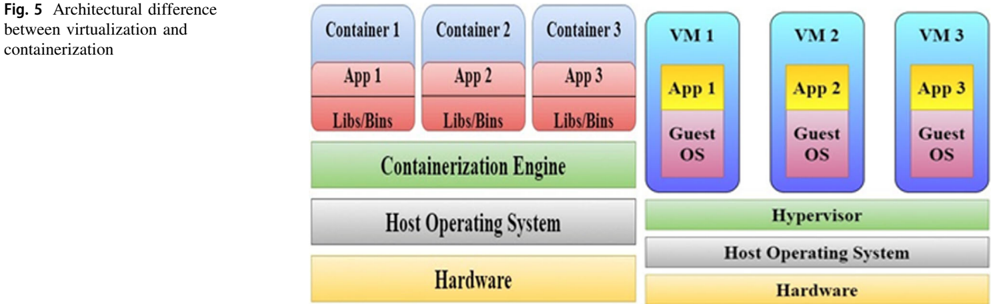
“Container-based systems returned unused memory to the host, resulting in more efficient memory utilisation.”
What the sources say
- Supportedcites [41] 41. Ramchandra Desai, P.A. Survey of Performance Comparison between Virtual Machines and Containers. Int. J. Comput. Sci. Eng. (2016) source
The Memory Performance section (p. of our copy, §B) states directly that 'Container based systems have the ability to return unused memory to the host resulting in better usage,' which is exactly what the citing sentence attributes. The Discussion (§G) reinforces it, crediting container-based virtualization's better CPU and I/O performance to its ability to release unused resources. (LLM, conf=0.90)
plainstates a cause- Asserted: passes — The authors put it forward as true.
- Checkable: passes — It can be checked against evidence.
- Load-bearing: unclear — It is unclear whether the paper’s conclusions depend on it.
- Based: passes — The paper gives a reason why it holds.
- Supported
The cited sources support only part of this claim — read each source’s verdict below.
In the paper
“Virtualization systems suffered from double cache since the host and virtual computer used the same memory blocks.”
What the sources say
- Partly supportedcites [41] 41. Ramchandra Desai, P.A. Survey of Performance Comparison between Virtual Machines and Containers. Int. J. Comput. Sci. Eng. (2016) sourceExperimental — accuracy not yet measured
The Memory Performance section (B) of our copy states the double-cache problem almost verbatim: 'Para virtualization systems suffer from double cache since the same memory blocks are used by the host and the virtual machine.' However, the source restricts this to para-virtualization specifically (the Introduction distinguishes full, partial and para virtualization, and KVM is described as full virtualization), whereas the citing sentence attributes the double-cache drawback to 'virtualization systems' generally. That generalization to all virtualization is the part the source does not support; the mechanism (host and VM sharing the same memory blocks) is confirmed. (LLM, conf=0.72)
plainstates a cause- Asserted: passes — The authors put it forward as true.
- Checkable: passes — It can be checked against evidence.
- Load-bearing: unclear — It is unclear whether the paper’s conclusions depend on it.
- Based: passes — The paper gives a reason why it holds.
- Partly supported
The cited sources support only part of this claim — read each source’s verdict below.
In the paper
“The energy consumption of data centres alone will rise from 200 TWh in 2016 to 2967 TWh in 2030.”
- Also stated in: § 1 Introduction · p. 2 · plain
“The energy consumption of data centres alone will rise from 200 TWh in 2016 to 2967 TWh in 2030 [2].”
What the sources say
- Partly supportedcites [2] 2. Koot, M., Wijnhoven, F.: Usage impact on data center electricity needs: A system dynamic forecasting model. Appl. Energy. 291 , 116798 (2021) sourceExperimental — accuracy not yet measured
The Literature review (section 2) reports the exact 200 TWh-to-2,967 TWh projection, but attributes it to Andrae and Edler and says it was highly uncertain and later revised. The paper’s own conclusion (section 7) instead projects 286 TWh in 2016 rising to 321 TWh in 2030 under unchanged trends, so the unqualified sentence should not be read as this paper’s forecast. (LLM, conf=0.88)
plainstates a cause- Asserted: passes — The authors put it forward as true.
- Checkable: passes — It can be checked against evidence.
- Load-bearing: unclear — It is unclear whether the paper’s conclusions depend on it.
- Based: passes — The paper gives a reason why it holds.
- Also stated in: § 1 Introduction · p. 2 · plain
Every source the paper cites for this claim was checked and supports it.
In the paper
“For achieving energy efficiency especially at the application level, Ho et al. [26] concentrated on batch applications executing on VMs in data centres.”
What the sources say
- Supportedcites [26] 26. Ho, T.T.N., Gribaudo, M., Pernici, B.: Characterizing Energy per Job in Cloud Applications. Electron. 2016. 5 , 90 (2016) source
The Abstract states that the paper focuses on batch applications running on virtual machines in data centers and analyzes their energy consumption and efficiency at the application level. Section 4, “Modeling Application Energy Efficiency,” confirms that focus. The source supports the citing sentence as a description of its research focus, rather than a claim that it achieved a measured efficiency improvement. (LLM, conf=0.94)
plain- Asserted: passes — The authors put it forward as true.
- Checkable: passes — It can be checked against evidence.
- Load-bearing: unclear — It is unclear whether the paper’s conclusions depend on it.
- Based: passes — The paper gives a reason why it holds.
- Supported
In the paper
“Docker, when configured to a maximum latency of 3000ms, can operate up to 21% more services than KVM.”
What the sources say
- Not checked — no full text of the sourcecites [39] 39. Cuadrado-Cordero, I., Orgerie, A.C., Menaud, J.M. Comparative experimental analysis of the quality-of-service and energy-efficiency of VMs and containers' consolidation for cloud applications. 25th International Conference on Software, Telecommunications and Computer Networks, SoftCOM 2017 (2017) https://doi.org/10.23919/SOFTCOM.2017.8115516 source
plainstates a cause- Asserted: passes — The authors put it forward as true.
- Checkable: passes — It can be checked against evidence.
- Load-bearing: unclear — It is unclear whether the paper’s conclusions depend on it.
- Based: passes — The paper gives a reason why it holds.
16 more claims
Create a free account to see all 156 claims and to verify the 9 references still open.
- Probably not a substantial claim. 118
- It may state two separate claims as one. 54
Claims other papers make about this one
Each is checked against this paper’s own text: does it say what the citing paper says it does?
The source backs part of the claim, not all of it — or backs it for a different population, condition or comparison.
In the citing paper
“Studies have shown that green computing initiatives can result in substantial cost savings for organizations through reduced energy bills, lower maintenance costs, and increased operational efficiency (Liu et al ., 2022; Katal et al ., 2023).”
From Advancing green computing: Practices, strategies, and impact in modern software development for environmental sustainability (2024) · cites this paper as Katal et al ., 2023
Experimental — accuracy not yet measuredThe cited source says what the claim attributes to it.
In the citing paper
“In addition to environmental benefits, adopting green computing practices can yield significant economic and societal benefits for organizations and society as a whole.”
From Advancing green computing: Practices, strategies, and impact in modern software development for environmental sustainability (2024) · cites this paper as Katal et al ., 2023
Self-check
Percentages, sums and reported differences re-computed from the paper’s own numbers.
Each contradiction between two passages listed here was confirmed by an independent check.
Rated minor: it would not touch a result — a value no result rests on, a p-value that stays on the same side of the significance level, or a conflict that is clerical, resolved elsewhere in the paper, or outside its own findings.
In the paper
§ Declarations · p. 26
“Ethical approval This paper does not contain any studies with human participants or animals performed by any of the authors.”
§ Declarations · p. 26
“Informed consent Informed consent was obtained from all individual participants included in the study.”
Citations
Cites
Beloglazov, A., & Buyya, R. (2012) · Concurrency and Computation: Practice and Experience · doi:10.1002/cpe.1867 · Cited by 1,864 · cited 1×
“The metric for SLA is calculated as the fraction of the difference among the allocated and the requested CPU for each VM [43].”
Power provisioning for a warehouse-sized computer
Fan, X., Weber, W.-D., & Barroso, L. A. (2007) · Proceedings of the 34th annual international symposium on Computer architecture · doi:10.1145/1250662.1250665 · Cited by 1,797 · cited 1×
“Fan’s [48] energy model of a PM (Eq.”
BackgroundData Center Energy Consumption Modeling: A Survey
Dayarathna, M., Wen, Y., & Fan, R. (2016) · IEEE Communications Surveys & Tutorials · doi:10.1109/comst.2015.2481183 · Cited by 1,165 · cited 1×
“The authors in [14] discussed the different mechanism and architectures for the design of energy efficient data centers.”
Background(2010) · doi:10.5555/1855711.1855728 · Cited by 970
Green Cloud Computing: Balancing Energy in Processing, Storage, and Transport
Baliga, J., Ayre, R. W. A., Hinton, K., & Tucker, R. S. (2011) · Proceedings of the IEEE · doi:10.1109/jproc.2010.2060451 · Cited by 840 · cited 1×
“The authors of [11] presented an analysis on cloud computing energy usage.”
BackgroundA Taxonomy and Survey of Energy-Efficient Data Centers and Cloud Computing Systems
Beloglazov, A., Buyya, R., Lee, Y. C., & Zomaya, A. (2011) · Advances in Computers · doi:10.1016/b978-0-12-385512-1.00003-7 · Cited by 777
Sustainable Computing: Informatics and Systems
Li, K. (2012) · Cited by 486
Post-copy based live virtual machine migration using adaptive pre-paging and dynamic self-ballooning
Hines, M. R., & Gopalan, K. (2009) · Proceedings of the 2009 ACM SIGPLAN/SIGOPS international conference on Virtual execution environments · doi:10.1145/1508293.1508301 · Cited by 409
Usage impact on data center electricity needs: A system dynamic forecasting model
Koot, M., & Wijnhoven, F. (2021) · Applied Energy · doi:10.1016/j.apenergy.2021.116798 · Cited by 403 · cited 1×
“The energy consumption of data centres alone will rise from 200 TWh in 2016 to 2967 TWh in 2030 [2].”
BackgroundUser-priority guided Min-Min scheduling algorithm for load balancing in cloud computing
Chen, H., Wang, F., Helian, N., & Akanmu, G. (2013) · 2013 National Conference on Parallel Computing Technologies (PARCOMPTECH) · doi:10.1109/parcomptech.2013.6621389 · Cited by 287 · cited 9×
“To address the issue of energy usage, the authors of [56] proposed the Energy and Performance-Efficient Task Scheduling Algorithm (EPETTS) in a heterogeneous virtualized cloud.”
MethodInfluential
Research works printed but not linked: 8
- 1. Fiona, B., Ballarat, C.: International Review of Energy Efficiency in Data Centres Acknowledgements. (2021)
- 10. SRCMap: Energy Proportional Storage Using Dynamic Consolidation. https://www.researchgate.net/publication/ 221353706\_SRCMap\_Energy\_Proportional\_Storage\_Using\_ Dynamic\_Consolidation
- 80. Falisha, I.N., Purboyo, T.W., Latuconsina, R.: Experimental model for load balancing in cloud computing using equally spread current execution load algorithm. Int. J. Appl. Eng. Res. 13 , 1134-1138 (2018)
- 81. Patel, D., Rajawat, A. Efficient Throttled Load Balancing Algorithm in Cloud Environment.International Journal of Modern Trends in Engineering and Research (2015)
- 96. Crow Search based Scheduling Algorithm for Load Balancing in Cloud Environment: Int. J. Innovative Technol. Exploring Eng. 8 , 1058-1064 (2019)
- 100. Derdus, K.M., Omwenga, V., Ogao, P. Statistical Techniques for Characterizing Cloud Workloads: A Survey.International Journal of Computer and Information Technology2279-0764(2019)
- 101. Ismaeel, S., Al-Khazraji, A., Miri, A. An efficient workload clustering framework for large-scale data centers. 8th International Conference on Modeling Simulation and Applied
- 102. Yousif, S.A., Al-Dulaimy, A. Clustering Cloud Workload Traces to Improve the Performance of Cloud Data Centers. Proceedings of the World Congress on Engineering (2017)
Cited by
Items 101–200 of 500
Principles of Green Computing in Information Security
Sekti, B. A., Laksono, M. N. G., Laksono, M. I. A., Widodo, A. M., Anwar, N., & Tiaraputri, Z. A. (2025) · Advances in computational intelligence and robotics book series · doi:10.4018/979-8-3693-8034-5.ch001 · Cited by 7
Comprehensive Analysis of VM Migration Trends in Cloud Data Centers
Singh, S., & Singh, D. K. (2022) · Recent Patents on Engineering · doi:10.2174/1872212117666221129160726 · Cited by 7
Blockchain-enabled auction for cloud resource provisioning: a survey on trust and economy
Singhal, R., Sharma, V., Singhal, I., & Bansal, V. (2024) · International Journal of Systems Assurance Engineering and Management · doi:10.1007/s13198-024-02314-x · Cited by 7
“CRP also emerged as a solu-tion for reducing e-waste generation and management of IT resources especially for the sectors where their IT requirement is dynamic and little effort is made for proper dissemination of electronic waste (Singhal et al. 2019a, b; Laskar et al. 2022; Katal et al. 2023).”
Towards Energy Efficient Cloud: A Green and Intelligent Migration of Traditional Energy Sources
Mohsin, S. M., Maqsood, T., & Madani, S. A. (2024) · Energies · doi:10.3390/en17112787 · Cited by 7
Integrating Renewable Energy Sources into Cloud Computing Data Centers: Challenges and Solutions
Satish, S., & Meduri, S. S. (2024) · International Journal of Research Publication and Reviews · doi:10.55248/gengpi.5.0624.1443 · Cited by 7
Ismail, L., & Materwala, H. (2024) · Procedia Computer Science · doi:10.1016/j.procs.2024.06.039 · Cited by 10
Fan, S., Liang, H., Nassani, A. A., Imran, M., Naseem, I., & Zaman, K. (2024) · Energy & Environment · doi:10.1177/0958305x241270229 · Cited by 9
Cloud computing-oriented big data analysis-based intelligent university talent development mechanism
Song, Z., Wu, Y. I., Ji, H., et al. (2023) · Computers & Electrical Engineering · doi:10.1016/j.compeleceng.2023.108828 · Cited by 7
Energy Efficient Resource Utilization of Cloud Computing Environments for Deployment Models
Kavitha, J., Rao, P. S. V. S., & Babu, G. C. (2023) · International Conference on Augmented Intelligence and Sustainable Systems (ICAISS) · doi:10.1109/icaiss58487.2023.10250648 · Cited by 7
“Description of the data collected during the experiments, including energy consumption measurements, resource utilization data, and performance metrics [9].”
MethodCRISP: Cloud resilient infrastructure for self-healing platforms in dynamic adaptation
Rawas, S., Samala, A. D., & Fortuna, A. (2024) · International Journal of Information Technology · doi:10.1007/s41870-024-02265-3 · Cited by 10
AI integration for climate risk mitigation: The role of organizational context
Khan, M. K., Hussain, M. J., Hussan, M. W., Qadeer, A., Armstrong, A., & Li, S. (2025) · Technological Forecasting and Social Change · doi:10.1016/j.techfore.2025.124327 · Cited by 14
Prioritizing interoperable AI-driven solutions for sustainable circular economy in the public sector
Alshibani, S. M., Singhal, A. B., Gupta, B., Papa, A., & Giudice, M. D. (2026) · Technological Forecasting and Social Change · doi:10.1016/j.techfore.2025.124513 · Cited by 11
Berthon, P. R., Lim, W. M., Pizzichini, L., Raquel, S., Rindfleisch, A., & Soon, P. (2026) · Journal of Macromarketing · doi:10.1177/02761467251413156 · Cited by 14
“For example, policy could require that Lends solutions, such as ridesharing services, adopt minimum standards for maintenance cycles, utilization reporting, and end-of-life recirculation in order to betteralign fi rmincentives with societalwelfare (Katal et al., 2023; Schaefers et al., 2016).”
Patel, B., Vasa, J., & Mewada, H. K. (2024) · e-Prime - Advances in Electrical Engineering Electronics and Energy · doi:10.1016/j.prime.2024.100703 · Cited by 9
Interpolation-Based IoT Sensors Selection
Chaabane, N., Mahfoudhi, S., & Belkadhi, K. (2024) · IEEE Sensors Journal · doi:10.1109/jsen.2024.3461833 · Cited by 12
“In addition, they investigated task offloading [18], [21], [24], the activation and deactivation of idle resources, virtualization [19], [21], energy harvesting [18], [24], and cooling optimization as methods to improve energy efficiency in IoT networks.”
BackgroundMethodBlockchain‐based transparent and certificateless data integrity auditing for cloud storage
Miao, Y., Miao, Y., & Miao, X. (2024) · Concurrency and Computation Practice and Experience · doi:10.1002/cpe.8285 · Cited by 9
Rahmani, A. M., Alsubai, S., Alanazi, A., Alqahtani, A., Zaidi, M. M., & Hosseinzadeh, M. (2024) · Computers & Electrical Engineering · doi:10.1016/j.compeleceng.2024.109812 · Cited by 10
Huang, T., Huang, W., Zhang, B., Chen, W., & Pan, X. (2025) · Energy and Buildings · doi:10.1016/j.enbuild.2025.115454 · Cited by 9
Energy-aware parameter tuning for mixed workloads in cloud server
Liang, J., Lin, W., Xu, Y., Liu, Y., Mo, R., & Luo, X. (2023) · Cluster Computing · doi:10.1007/s10586-023-04212-6 · Cited by 6
Innovative server simulator for data centers and critical indices of performance evaluation
Li, N., Li, Y., Gong, X.-M., & Tao, W. (2024) · Energy and Buildings · doi:10.1016/j.enbuild.2024.114937 · Cited by 6
A Comprehensive Survey on Sustainable Resource Management in Cloud Computing EnvironmentsPreprint
Saxena, D., & Singh, A. K. (2024) · doi:10.36227/techrxiv.170473729.96561302/v1 · Cited by 8
Barani, O. (2025) · Journal of Enterprise Information Management · doi:10.1108/jeim-02-2025-0067 · Cited by 10
Analysis of Data Privacy Breaches Using Deep Learning in Cloud Environments: A Review
Almosti, A. M., & Rahman, M. M. H. (2025) · Electronics · doi:10.3390/electronics14132727 · Cited by 13
Huang, N., Li, X., Xu, Q., Chen, R., Chen, H., & Chen, A. (2023) · Energies · doi:10.3390/en16166063 · Cited by 9
Data Centers and Green Energy: Paving the Way for a Sustainable Digital Future
Osibo, B., & Adamo, S. (2023) · International Journal of Latest Technology in Engineering Management & Applied Science · doi:10.51583/ijltemas.2023.121103 · Cited by 9
XAI-driven Model Design for Resource Utilization Forecasting in Cloud-native 6G Networks
Liatsas, L., Kibalya, G., & Antonopoulos, A. (2024) · IEEE International Mediterranean Conference on Communications and Networking (MeditCom) · doi:10.1109/meditcom61057.2024.10621360 · Cited by 8
“…promising approach to realise efficient resource and service management by enabling proactive allocation and real-location of resources depending on the real-time network and service conditions, hence avoiding resource over-provisioning while complying with the stringent QoS requirements [2], [3].”
BackgroundMondal, S., & Goswami, S. S. (2024) · Computing and artificial intelligence. · doi:10.59400/cai1934 · Cited by 5
“Katal et al. [11] examined the EI of CC in the agriculture sector.”
InfluentialQasim, M., Sajid, M., Lapina, M., & Shahid, M. (2025) · Cluster Computing · doi:10.1007/s10586-025-05680-8 · Cited by 5
“Cloud data centers con - sume massive amounts of power, contributing significantly to global power consumption and carbon emissions [ 7 , 8].”
Brudni, S., Anidgar, S., Brodt, O., Mimran, D., Shabtai, A., & Elovici, Y. (2024) · IEEE European Symposium on Security and Privacy · doi:10.1109/eurosp60621.2024.00043 · Cited by 10
“In recent years we have witnessed nascent efforts to invest in software-level energy efficiency, which entails the use of energy-aware operating systems, virtualization layers, and even individual software components [33].”
BackgroundOn-Premises versus Cloud Computing: A Comparative Analysis of Energy Consumption
Thaqi, R., Kadriu, M., Krasniqi, B., & Rexha, B. (2024) · International Conference on Renewable Energies and Smart Technologies (REST) · doi:10.1109/rest59987.2024.10645419 · Cited by 10
“The survey article in [15], addresses the substantial energy consumption forecast for data centers, projecting an increase from 200 TWh in 2016 to 2967 TWh by 2030.”
BackgroundAgrawal, A., Shrivastava, K., Chakrabarty, A., Singh, Y., Shaw, R., & Padhi, A. (2024) · International Conference on Trends in Quantum Computing and Emerging Business Technologies (TQCEBT) · doi:10.1109/tqcebt59414.2024.10545213 · Cited by 6
“Also, confirmation programmes for dossier centres let trades equate their strength use to that of their peers in the unchanging field and show that they care about utilizing strength capably and being good to the environment [10].”
BackgroundZakharova, Y., & Sakhno, M. (2024) · Journal of Computational and Applied Mathematics · doi:10.1016/j.cam.2024.116254 · Cited by 5
Workload Pattern Learning-Based Cloud Resource Management Models: Concepts and Meta-Analysis
Saxena, D., & Singh, A. K. (2024) · IEEE Transactions on Sustainable Computing · doi:10.1109/tsusc.2024.3456429 · Cited by 5
“Katal et al. [27] explored software-based technologies for green data centers, focusing on container energy efficiency, power reduction, and addressing environmental impacts, including e-waste, while emphasizing long-term technological advancements to mitigate pollution.”
Pinky, P., & Verma, K. (2025) · Concurrency and Computation Practice and Experience · doi:10.1002/cpe.70163 · Cited by 9
Cloud Computing Based Digital Media Content Distribution Technology
He, X., & Zhang, Q. (2024) · Procedia Computer Science · doi:10.1016/j.procs.2024.10.055 · Cited by 4
Dewasiri, N. J., Gangodawilage, D. S. K., & Singh, R. (2025) · Approaches to global sustainability, markets, and governance · doi:10.1007/978-981-96-7181-6_6 · Cited by 7
Khan, M. I., Yasmeen, T., Hadi, N. U., Asif, M., Farooq, M., Kurniawan, T. A., Khan, M., & Al-Ghamdi, S. G. (2026) · Journal of Open Innovation Technology Market and Complexity · doi:10.1016/j.joitmc.2026.100731 · Cited by 13
Sanaj, M. S., Horng, M., Shankar, S. S., Lo, C.-C., Sunder, R., Lilhore, U. K., Simaiya, S., Tekeste, L. G., Mohamed, H. G., & Ghith, E. S. (2026) · International Journal of Computational Intelligence Systems · doi:10.1007/s44196-025-01095-w · Cited by 10
Tang, H., Wang, D., Liu, J., & Zhao, J. (2026) · Systems · doi:10.3390/systems14060680 · Cited by 4
“Studies have examined dynamic resource allocation, load balancing, hardware optimisation and software-based energy management in cloud computing and data centres [31].”
A Proposed Scheduling Algorithm for IoT Applications in a Merged Environment of Edge, Fog, and Cloud
Tran, X. T. (2023) · Computing and Informatics · doi:10.31577/cai_2023_2_311 · Cited by 4
“The use of dynamic power management (DPM) techniques has been crucial to achieve energy efficiency as addressed in [15, 16, 18] and references therein.”
MethodSingh, N. S. S., Talib, A. N., Qader, K. H., et al. (2025) · International Journal of Data Science and Analytics · doi:10.1007/s41060-025-00815-x · Cited by 4
“Users traveling at different velocities (e.g., walkers at 1 m/s or cars at 10 m/s) [12] often transition between edge servers, resulting in handovers that may interrupt offloading and diminish QoS [13, 14].”
Brunnert, A. (2025) · ACM Joint European Software Engineering Conference and Symposium on the Foundations of Software Engineering (ESEC/FSE) · doi:10.1145/3696630.3728709 · Cited by 6
Reddy, S. S., Nrusimhadri, S., Mahesh, G., et al. (2025) · Parallel Computing · doi:10.1016/j.parco.2025.103161 · Cited by 4
Sanjalawe, Y. K., Al-E’mari, S., Allehyani, B. A., et al. (2025) · Algorithms · doi:10.3390/a18110715 · Cited by 4
Brunnert, A. (2024) · ACM/SPEC International Conference on Performance Engineering (ICPE) · doi:10.1145/3629527.3652883 · Cited by 7
“Modern software systems run in virtualised, containerised or serverless infrastructures, for which we need to find ways of allocating the CO2 emissions of entire servers to individual software components or transactions [5].”
BackgroundA Novel Optimization Approach for Energy-Efficient Multiple Workflow Scheduling in Cloud Environment
Aggarwal, A., Kumar, S., Bhansali, A., Alsekait, D. M., & AbdElminaam, D. S. (2024) · Computer Systems Science and Engineering · doi:10.32604/csse.2024.050406 · Cited by 4
“According to [5], in a data center, direct electricity consumption by servers is 45%, by cooling systems 41%, 11% by storage devices, and the remaining 3% by network and sharing devices.”
A Multi-Objective Clustered Input Oriented Salp Swarm Algorithm in Cloud Computing
Murali, J. A., & Brindha, T. (2024) · Computers, materials & continua/Computers, materials & continua (Print) · doi:10.32604/cmc.2024.058115 · Cited by 4
“9 depicts the performance evaluation of the GA, PSO [10], GWO [9], SSA [11], and proposed algorithm CIOSSA in terms of makespan for 85 VMs distributed among 30 PMs.”
Jaiprakash, S. P., Badal, T., & Kumar, N. (2025) · International Journal of Information Technology · doi:10.1007/s41870-025-02490-4 · Cited by 5
“The (1) proposed study exploited the MAX-Util energy model [3, 36, 38], which deals with the consolidation of VMs and utilization of CPU.”
The feasibility and prospects of coal mine water as a cooling medium for data centers
Li, Z., Zhang, C., Su, P., Zhao, G., Wang, Z., Li, Y. R., Li, Y. R., Wang, M., Qiao, P., Guo, J., et al. (2025) · Journal of environmental chemical engineering · doi:10.1016/j.jece.2025.117365 · Cited by 7
A Structural Analysis of the User Behavior Dynamics for Environmentally Sustainable ICT
Roth, S., & Sezgin, A. (2025) · IEEE Transactions on Technology and Society · doi:10.1109/tts.2025.3576590 · Cited by 5
“Similarly, a survey on software designs for energy-efficient cloud computing has been undertaken in [71].”
BackgroundIntegrating energy consumption in the development of serverless applications
Serrano-Gutierrez, P., Ayala, I., & Fuentes, L. (2025) · Information and Software Technology · doi:10.1016/j.infsof.2025.107819 · Cited by 8
Energy Efficient Algorithms in Green Cloud Computing- A Comprehensive Study
Vankudre, A., & Rani, J. V. (2023) · International Conference on Computing, Communication and Networking Technologies (ICCCNT) · doi:10.1109/icccnt56998.2023.10306976 · Cited by 4
“[25] mentioned the software based technologies to build green data center.”
MethodA Multilevel Learning Model for Predicting CPU Utilization in Cloud Data Centers
Daraghmeh, M., Agarwal, A., & Jararweh, Y. (2023) · IEEE Intl Conf on Dependable, Autonomic and Secure Computing, Intl Conf on Pervasive Intelligence and Computing, Intl Conf on Cloud and Big Data Computing, Intl Conf on Cyber Science and Technology Congress (DASC/PiCom/CBDCom/CyberSciTech) · doi:10.1109/dasc/picom/cbdcom/cy59711.2023.10361305 · Cited by 10
“These data centers, crucial hubs in the digital ecosystem, consume significant amounts of energy while meeting the highest performance standards [1].”
BackgroundPaving the Path to a Sustainable Digital Future With Green Cloud Computing
Kalinaki, K., Abdullatif, M., Nasser, S. A.-K., Nsubuga, R., & Kugonza, J. (2024) · Advances in computer and electrical engineering book series · doi:10.4018/979-8-3693-0900-1.ch002 · Cited by 3
Performance of VM in SDN-Assisted Cloud Data Center with Working Vacations
Barik, L., Dash, B. B., Mishra, M. R., Rout, S., De, U. C., & Patra, S. S. (2023) · International Conference on I-SMAC (IoT in Social, Mobile, Analytics and Cloud) (I-SMAC) · doi:10.1109/i-smac58438.2023.10290270 · Cited by 4
PULSE: A modular framework for predictive energy efficiency in heterogeneous data centers
Flores-Martin, D., Lemus-Prieto, F., & Rico‐Gallego, J. (2025) · SoftwareX · doi:10.1016/j.softx.2025.102313 · Cited by 7
Sheng, X., Yu, C., Zhou, Y., & Cui, X. (2024) · Mathematics · doi:10.3390/math12182932 · Cited by 3
“To address this dilemma, IOTOS IoT centers are envisioned as a technology platform product [3].”
BackgroundZhong, W., Zhao, L., & Dou, Q. (2025) · International Journal of Information System Modeling and Design · doi:10.4018/ijismd.367278 · Cited by 8
UAV Application With XAI and Soft Computing Methods to Protect Privacy of Power-Data in Smart Grids
Gan, Y., Xiao, Z., Ke, T., & Liang, Z. (2025) · IEEE Transactions on Consumer Electronics · doi:10.1109/tce.2025.3551519 · Cited by 5
“In [23], the energy aspect of data centers in cloud computing has been discussed y considering the state-of-the-art approaches.”
FPGA innovation research in the Netherlands: present landscape and future outlook
Alachiotis, N., van den Belt, S., van der Vlugt, S., van der Walle, R., Safari, M., Forlin, B. E., Matteis, T. D., Al-Ars, Z., Jordans, R., de Almeida, A. J. S., et al. (2025) · Frontiers in High Performance Computing · doi:10.3389/fhpcp.2025.1572844 · Cited by 5
Optimizing Resource Scheduling in Computing Power Networks for Low-Consumption Big Data Analytics
Cheng, Y., Hao, Z., Huang, J. Z., & Cai, Z. (2025) · Tsinghua Science & Technology · doi:10.26599/tst.2025.9010018 · Cited by 3
Li, J., Lin, W., Wang, X., & Huang, H. (2025) · Cluster Computing · doi:10.1007/s10586-025-05414-w · Cited by 5
Maximizing Power-Constrained Supercomputing Throughput
Ding, N., Antepara, O., Zhao, Z., Austin, B., Oliker, L., Wright, N. J., & Williams, S. (2025) · ISC High Performance (ISC) · doi:10.23919/isc.2025.11017728 · Cited by 3
Energy-Efficient Container Scheduling Based on Deep Reinforcement Learning in Data Centers
Li, Z., Zhang, S., Li, Y., Liu, X., Huang, J., & Hu, J. (2025) · Computers · doi:10.3390/computers14120560 · Cited by 6
Robust and computationally efficient design for run-of-river hydropower
Yildiz, V., Brown, S., & Rougé, C. (2024) · Environmental Modelling & Software · doi:10.1016/j.envsoft.2024.106220 · Cited by 5
A hybrid architecture for secure data sharing in multi-clouds system
Hajlaoui, N., Bejaoui, C., Ismail, T., Ghanmi, H., & Touati, H. (2024) · The Computer Journal · doi:10.1093/comjnl/bxae092 · Cited by 6
EdgeScan for IoT Contextual Understanding With Edge Computing and Image Captioning
Hafeth, D. A., Al-Khafajiy, M., & Kollias, S. (2024) · IEEE Internet of Things Journal · doi:10.1109/jiot.2024.3492066 · Cited by 5
“…and storage capabilities/facilities, the ever-growing volume of data has introduced a range of concerns, including escalating energy consumption [21], heightened strain on communication bandwidth [22], [23], and the emergence of latency issues for time-sensitive services/applications [5], [24].”
Optimizing AI Performance in Industry: A Hybrid Computing Architecture Approach Based on Big Data
Dewi, M. U., Santoso, L., & Santoso, A. B. (2024) · Journal of Technology Informatics and Engineering · doi:10.51903/jtie.v3i3.201 · Cited by 5
“Hybrid computing architecture is one of the latest approaches that combines various computing technologies, such as CPUs, GPUs, FPGAs, as well as cloud and edge computing, within a single system designed to enhance performance and efficiency in big data processing and AI development (Abbaszadeh Shahri et al., 2022) .”
InfluentialThe Use of Machine Learning for Efficient Energy Management in Big Data-Based Computing Systems
Putra, T. W. A., Setiawan, N. D., & Rusito, R. (2024) · Journal of Technology Informatics and Engineering · doi:10.51903/jtie.v3i3.202 · Cited by 7
“The inclusion of variables such as temperature and humidity in predictive models has proven essential for optimizing cooling systems and reducing energy waste (Katal et al., 2023).”
InfluentialKaesling, K., & Wolf, A. (2025) · GRUR International · doi:10.1093/grurint/ikae156 · Cited by 4
Alla, H. B., Alla, S. B., Ezzati, A., & Touhafi, A. (2025) · Computers · doi:10.3390/computers14030081 · Cited by 3
“Consequently, traditional resource allocation algorithms, often designed for static environments, struggle to adapt to the dynamic and heterogeneous nature of cloud workloads [4].”
Wang, Y. (2025) · International Journal of Computers Communications & Control · doi:10.15837/ijccc.2025.4.6814 · Cited by 3
Carbon Topography Representation: Improving Impacts of Data Center Lifecycle
Weppe, O., Bekri, D., Marty, T., Guibert, L., Aubet, L., Prévotet, J.-C., Pelcat, M., & Rumley, S. (2025) · ACM SIGEnergy Energy Informatics Review · doi:10.1145/3757892.3757898 · Cited by 3
Big data energy systems: A survey of practices and associated challenges
Mwinuka, L. J., Cafaro, M., Pereira, L. A., & Morais, H. G. V. (2026) · Computer Science Review · doi:10.1016/j.cosrev.2026.100927 · Cited by 8
Reducing Cloud Expenditures and Carbon Emissions via Virtual Machine Migration and Downsizing
Huang, N., Li, A., Zhang, S., & Zong, Z. (2023) · IEEE International Performance, Computing, and Communications Conference · doi:10.1109/ipccc59175.2023.10253871 · Cited by 4
Panesar, E. A. G. S. (2023) · International Journal on Recent and Innovation Trends in Computing and Communication · doi:10.17762/ijritcc.v11i10.8570 · Cited by 5
Privacy and security issues in fog-to-fog communication: A survey
Murkomen, T. (2023) · World Journal of Advanced Research and Reviews · doi:10.30574/wjarr.2023.20.3.2487 · Cited by 4
Energy-Aware Query Processing: A Case Study on Join Reordering
Bellatreche, L., Djellali, F., Macyna, W., & ORDÓÑEZ, C. R. (2023) · IEEE International Conference on Big Data (BigData) · doi:10.1109/bigdata59044.2023.10386332 · Cited by 4
“…that track and analyze energy usage, aiding developers in identifying energy-intensive sections of their applications for targeted optimizations [8], (k) scaling down, particularly in cloud environments, where dynamically scaling down virtual machines and resources during periods of reduced…”
BackgroundExploring Multi-Task Learning for Forecasting Energy-Cost Resource Allocation in IoT-Cloud Systems
Aldossary, M., Alharbi, H. A., & Ayub, N. (2024) · Computers, materials & continua/Computers, materials & continua (Print) · doi:10.32604/cmc.2024.050862 · Cited by 3
“IaaS billing is tied to computing power usage, and various cloud platforms, such as open, closed, and mixed types (e.g., VMware and Nutanix), offer diverse infrastructure approaches [22].”
(2024) · International Journal of Advanced Computer Research · doi:10.19101/ijacr.2023.1362017 · Cited by 9
“The operation of this paradigm promotes users to regularly produce, store, access, and update their personal information using technological means [39] [40].”
Falloon, M., Ma, H., & Chen, A. (2024) · Genetic and Evolutionary Computation Conference (GECCO) · doi:10.1145/3638529.3654070 · Cited by 3
“As far as we know, existing methods including GPHH, which have been used to evolve heuristic rules to guide the allocation of Containers to VMs and VMs to PMs, have not considered the scenario where previously allocated containers may leave the data center dynamically over time [8].”
Impactos da governança e elementos ESG na computação em nuvem: Uma análise teórica e prática
Ideyama, F., & Becker, J. L. (2024) · RGC - Revista de Governança Corporativa · doi:10.21434/iberoamericanjcg.v11i00.146 · Cited by 6
Gautam, A., Gangodkar, D., Lohumi, Y., et al. (2024) · IEEE International Conference on Electrical Power and Energy Systems (ICEPES) · doi:10.1109/icepes60647.2024.10653469 · Cited by 3
“As the global conversion to cleaner and more sustainable energy sources accelerates, DC microgrids offer a persuasive solution to meet the challenges of a rapidly evolving energy landscape[19].”
BackgroundKumar, M. R. N., Annappa, B., & Yadav, V. (2024) · Computing · doi:10.1007/s00607-024-01373-z · Cited by 10
“By preventing overprovisioning, ensuring cost-effective scalability, and conserving energy through the shutdown of idle resources, this strategy improves user experience and sustains stable performance [40].”
A Hybrid Deep Learning Approach for Modelling and Optimising Data Centre Energy Efficiency
Gebreyesus, Y., Dalton, D., Chiara, D. D., & Chinnici, M. (2024) · Procedia Computer Science · doi:10.1016/j.procs.2024.09.572 · Cited by 4
Energy-efficient real-time multi-workflow scheduling in container-based cloud
Sun, Z., Huang, H., Li, Z., & Gu, C. (2025) · Journal of Combinatorial Optimization · doi:10.1007/s10878-025-01265-8 · Cited by 6
Fault-tolerant and mobility-aware loading via Markov chain in mobile cloud computing
Wang, N., Li, Y., Li, Y., & Nie, H. (2025) · Scientific Reports · doi:10.1038/s41598-025-02529-3 · Cited by 3
“6 and 7, respectively.”
Rabaaoui, S., Hachicha, H., & Zagrouba, E. (2024) · Procedia Computer Science · doi:10.1016/j.procs.2024.09.191 · Cited by 2
Energy-Efficient Scheduling for Dependent Tasks in DVFS-Enabled Heterogeneous Cloud Computing
Jiang, K., Huang, J. Y., & Li, R. (2025) · Journal of Circuits Systems and Computers · doi:10.1142/s0218126625503244 · Cited by 2
Design of Swarm Intelligence Control Based on Double-Layer Deep Reinforcement Learning
Yan, X., Yu, G., Huang, G., Zhou, R., & Liu, H. (2025) · Applied Sciences · doi:10.3390/app15084337 · Cited by 5
Fang, Z., Ma, H., Chen, G., Hartmann, S., & Chen, S. (2025) · Lecture notes in computer science · doi:10.1007/978-3-031-90065-5_26 · Cited by 4
ARS: Adaptive routing strategies using AT-GCN for traffic optimization in data center networks
Liu, Y., Xu, B., Yu, T., Meng, Q., Wang, B., & Shen, Y. (2025) · Journal of Network and Computer Applications · doi:10.1016/j.jnca.2025.104214 · Cited by 3
SPDK+: Low Latency or High Power Efficiency? We Take Both
Li, E., Yi, S., Li, P., et al. (2025) · ACM Workshop on Hot Topics in Storage and File Systems (HotStorage) · doi:10.1145/3736548.3737824 · Cited by 2
“Furthermore, continuous polling leads to high CPU usage, which is not ideal in scenarios where power efficiency is a concern (e.g., data centers [17] and HPC [16]).”
Data Center Temperature Control Method Based on Multi-Parameter Model-Free Adaptive Control Strategy
Jiang, D., Zhang, S., & Pan, K. (2025) · Processes · doi:10.3390/pr13082360 · Cited by 2
Energy Efficient Task Scheduling in Serverless Computing Using PSO and ACO Algorithms
Hadi, A. P., Hartono, B., Rozikin, K., Suasana, I. S., & Noorul Hassan, S. (2025) · International Conference on Creative Communication and Innovative Technology (ICCIT) · doi:10.1109/iccit65724.2025.11167562 · Cited by 5
“The integration of PSO for global task distribution and ACO for local refinement minimizes redundant resource usage, combining PSO rapid convergence [12], [25] with ACO adaptive path search [11], [27], and addressing limitations of standalone methods [13], [14].”
Wen, H., Qiao, C., & Nghiem, X. (2025) · Technology in Society · doi:10.1016/j.techsoc.2025.103185 · Cited by 4
Green Data Centres: Sustainable Solutions with Green Energy and Green–Blue Infrastructure
Grochulska-Salak, M., Maciejewska, E., Bujak, P., et al. (2025) · Energies · doi:10.3390/en18246592 · Cited by 2
Chen, J., Ma, S., Yang, T., & Qiu, B. (2026) · Alexandria Engineering Journal · doi:10.1016/j.aej.2025.12.052 · Cited by 2
Proactive Resource Allocation Framework with SVM Regression for Cloud Environments
Sripathi, G., & Khan, D. A. (2026) · SN Computer Science · doi:10.1007/s42979-025-04541-w · Cited by 3
A deep learning approach for early prediction of task failures in cloud computing environments
Aldomi, S., Suleiman, H., Shatnawi, A. M., & Alawneh, L. M. (2026) · Systems and Soft Computing · doi:10.1016/j.sasc.2026.200442 · Cited by 8
Metadata
- Authors
- Katal, A., Dahiya, S., & Choudhury, T.
- Affiliations
- University of Petroleum and Energy Studies (IN)
- Corresponding author
- Katal, Avita
- Choudhury, Tanupriya
- Venue
- Cluster Computing
- Published
- 2022-08-30
- Volume
- 26
- Issue
- 3
- Pages
- 1845-1875
- ISSN
- 1386-7857 (ISSN-L)
- 1573-7543
- PMC
- PMC9424070
- OpenAlex
- W4293770403
- Cited by
- 516
- References
- 126
- Citations by year
- 2026: 110 · 2025: 171 · 2024: 172 · 2023: 55 · 2022: 8
- FWCI
- 100.30
- Type
- journal article
- Language
- en
- Open access
- hybrid
- doi.org
- Licence
- cc-by
- www.springernature.com/gp/researchers/text-and-data-mining (tdm)
- www.springernature.com/gp/researchers/text-and-data-mining (vor)
- Locations
- Cluster Computing (publishedVersion, cc-by)
- PubMed Central (publishedVersion)
- PubMed (publishedVersion)
- Topics
- Physical Sciences › Computer Science › Information Systems › Cloud Computing and Resource Management
- Physical Sciences › Computer Science › Hardware and Architecture › Energy Efficiency in Computing
- Physical Sciences › Engineering › Electrical and Electronic Engineering › Green IT and Sustainability
- Keywords
- energy efficiency, cloud computing, data centers, green data centers, power management, containers, virtualization, operating systems, CO2 emissions, electronic waste, energy consumption
About these checks
Registry, retraction, Cites and statistics results are computed, not judged, with one exception: a printed reference that no index lists is read once by a model before it counts as a citation error. Claims are extracted by a model and kept only when their quote appears verbatim in the text; each cited source is then checked, with a model’s help, for whether it says what the claim relies on. Those verdicts can be wrong — read the claim’s quote and the cited source before relying on one.
The claim verdicts this report counts are experimental: their accuracy is not yet measured.
A language model drew the claims from the paper on 2026-10-10, under version 3 of the claim definition (model deepseek-v4.1-flash, prompt extract-v3).
A second model labelled each claim on 2026-10-10 (model jev-1.13-20260917, definition revision gold-guideline-v0.2).
Cited sources are checked with a language model’s help (qwen3.8-omni-flash and gpt-6-sol).
Statistics and arithmetic are recomputed, not judged.
Confidence bands are shown only for fields calibrated on our annotated test set. None is calibrated yet, so no band is shown.
What counts as a claim ›How we measure confidence ›How we check this ›
Are you an author, or do you see a problem with this page? Request a review
Data sources
Bibliographic data: Semantic Scholar, OpenAlex, Crossref.
Contains information from the Semantic Scholar Academic Graph Datasets, made available under the ODC Attribution License (ODC-BY 1.0).
Semantic Scholar’s data is described in: Kinney, R., et al. (2023). The Semantic Scholar Open Data Platform. arXiv:2301.10140.
