

Online Price Discrimination and EU Data Privacy Law
Open accessThe DOI matches its Crossref record; 45 of the 46 references it cites were found in a registry or an index; 7 of the 58 sources its claims cite were checked for support.
Abstract
Online shops could offer each website customer a different price. Such personalized pricing can lead to advanced forms of price discrimination based on individual characteristics of consumers, which may be provided, obtained, or assumed. An online shop can recognize customers, for instance through cookies, and categorize them as price-sensitive or price-insensitive. Subsequently, it can charge (presumed) price-insensitive people higher prices. This paper explores personalized pricing from a legal and an economic perspective. From an economic perspective, there are valid arguments in favour of price discrimination, but its effect on total consumer welfare is ambiguous. Irrespectively, many people regard personalized pricing as unfair or manipulative. The paper analyses how this dislike of personalized pricing may be linked to economic analysis and to other norms or values. Next, the paper examines whether European data protection law applies to personalized pricing. Data protection law applies if personal data are processed, and this paper argues that that is generally the case when prices are personalized. Data protection law requires companies to be transparent about the purpose of personal data processing, which implies that they must inform customers if they personalize prices. Subsequently, consumers have to give consent. If enforced, data protection law could thereby play a significant role in mitigating any adverse effects of personalized pricing. It could help to unearth how prevalent personalized pricing is and how people respond to transparency about it.
Overview
CoChat Summary
TL;DR
This paper argues that online personalized pricing generally involves processing personal data, so EU data protection law applies and requires transparency and usually consent. It also reviews the ambiguous welfare economics of price discrimination and the public dislike of personalized pricing.
Key findings
- Personalized pricing generally triggers EU data protection law because it entails processing personal data; cookies with unique identifiers are treated as personal data by European Data Protection Authorities, and the CJEU’s *Breyer* judgment supports a broad interpretation of personal data.
- Data protection law requires companies to inform customers about the specific purpose of processing, so companies must disclose if they personalize prices; the ePrivacy Directive separately requires informed consent for cookies, including disclosure of the cookie’s purpose.
- Consent is generally the only viable legal basis for personalized pricing under the GDPR; contract necessity and legitimate interests are unlikely to justify it, and Article 22 on automated decisions may also require consent or safeguards such as human intervention.
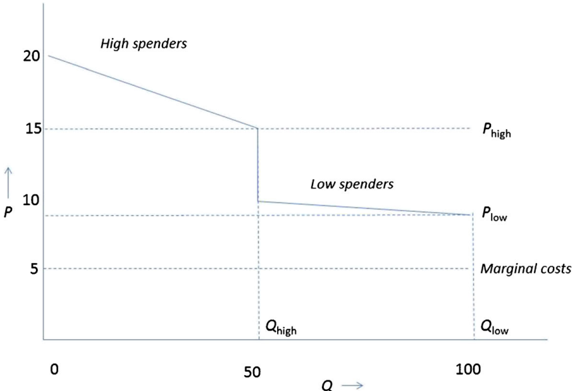
- The welfare effects of price discrimination are ambiguous. In the paper’s stylized example, a monopolist with marginal cost €5 and 100 customers moves from a uniform price of €15—selling 50 units, profit €500, consumer surplus €125, total welfare €625—to price discrimination at €15 and €8, yielding profit €650, consumer surplus €175, and total welfare €825, but price discrimination can still transfer surplus from consumers to sellers and harm high-willingness-to-pay consumers.
- Public attitudes are negative: in a US survey cited by the paper, 78% of respondents did not want discounts tailored to them based on what they did on other websites they had visited.
Methods
- Conceptual legal and economic analysis, not an empirical study; the paper combines legal doctrinal analysis of EU data protection law with economic theory and secondary examples.
- It examines EU instruments including the GDPR, the 1995 Data Protection Directive, and the ePrivacy Directive, and discusses CJEU and Article 29 Working Party interpretations of personal data, transparency, legal bases, and automated decisions.
- It uses stylized economic examples and hypotheticals (Alice, Bob, Carol, Dave, Erin, Fay) to illustrate personalized pricing and legal applicability, and cites existing surveys and examples such as Amazon 2000 and Staples.com.
Limitations
- The paper states that it is too early to conclude data protection law is the most appropriate instrument, that people hardly read privacy notices, that some shops may offer take-it-or-leave-it choices, and that compliance and enforcement are assumed to be adequate.
- The paper states that many open questions remain, including how often online price discrimination occurs, why people dislike it, and how other laws such as non-discrimination law or the Services Directive may limit it; it also excludes versioning and price steering from scope.
- Evident from the text: the analysis relies on secondary survey evidence and examples rather than original measurement of prevalence, and the legal discussion is framed around the GDPR before its May 2018 application and a proposed ePrivacy Regulation.
Model-written summary. Check it against the paper before relying on it.
Integrity signals
Registry
Cites
Statistics
Figures
Verification
Claims the paper makes
6 Valid · 1 Not valid · 39 Not checked · 60 Own results and interpretations
The cited sources support only part of this claim — read each source’s verdict below.
In the paper
“However, many people regard personalized pricing generally as unfair or manipulative.”
§ Online Price Discrimination and EU Data Privacy Law > People's Attitude Towards Personalized Pricing
What the sources say
- Supportedcites Turow et al. 2005
In “The Study and the Population” (page not supplied), the paper reports that 64%–91% of respondents objected to various forms of price discrimination, including prices based on customers’ purchase histories. This supports the paraphrase that many people regard personalized pricing as unfair or manipulative. (LLM, conf=0.92)
- Partly supportedcites Turow et al. 2009 matched to “Americans Reject Tailored Advertising and Three Activities that Enable It” (2009) sourceExperimental — accuracy not yet measured
The survey reports that 51% of Americans did not want tailored discounts (Differences by Age, p. 17). The Conclusion (p. 24) suggests that some may fear receiving less generous discounts than others, but says the study did not ask why respondents objected. It therefore does not establish that people generally regard personalized pricing as unfair or manipulative. (LLM, conf=0.84)
plain- Asserted: passes — The authors put it forward as true.
- Checkable: passes — It can be checked against evidence.
- Load-bearing: unclear — It is unclear whether the paper’s conclusions depend on it.
- Based: passes — The paper gives a reason why it holds.
- Supported
Every source the paper cites for this claim was checked and supports it.
In the paper
“In another US survey, 78% of the respondents did not want”
§ Online Price Discrimination and EU Data Privacy Law > People's Attitude Towards Personalized Pricing
What the sources say
- Supportedcites Turow et al. 2009 matched to “Americans Reject Tailored Advertising and Three Activities that Enable It” (2009) source
The ‘Rejecting Tailored Content and Behavioral Tracking’ section (p. 14) says that 78% of respondents rejected tailored discounts either outright or after learning they would be based on tracking across other websites. The survey question on the same page describes this as following what respondents do on other websites they have visited. (LLM, conf=0.94)
plain- Asserted: passes — The authors put it forward as true.
- Checkable: passes — It can be checked against evidence.
- Load-bearing: unclear — It is unclear whether the paper’s conclusions depend on it.
- Based: passes — The paper gives a reason why it holds.
- Supported
The cited sources support only part of this claim — read each source’s verdict below.
In the paper
“found that [American adults] overwhelmingly object to most forms of behavioural targeting and all forms of price discrimination as ethically wrong.”
§ Online Price Discrimination and EU Data Privacy Law > People's Attitude Towards Personalized Pricing
What the sources say
- Partly supportedcites Turow et al. 2005Experimental — accuracy not yet measured
The Overview states that respondents overwhelmingly objected to most forms of behavioral targeting and all forms of price discrimination as ethically wrong. But it identifies the survey respondents as adults who had used the internet in the past month; the claim broadens that finding to American adults generally. (LLM, conf=0.87)
plain- Asserted: passes — The authors put it forward as true.
- Checkable: passes — It can be checked against evidence.
- Load-bearing: unclear — It is unclear whether the paper’s conclusions depend on it.
- Based: passes — The paper gives a reason why it holds.
- Partly supported
The cited sources support only part of this claim — read each source’s verdict below.
In the paper
“we agree that cookies with unique identifiers should be seen as personal data”
§ Online Price Discrimination and EU Data Privacy Law > People's Attitude Towards Personalized Pricing
What the sources say
- Not matchedcites De Hert and Gutwirth 2008
An author–year citation the paper’s reference list doesn’t settle. We don’t search these by name.
- Supportedcites Zuiderveen Borgesius 2016 matched to “Singling out people without knowing their names – Behavioural targeting, pseudonymous data, and the new Data Protection Regulation” (2016) source
In the section on European data protection authorities, the paper explains that unique cookie identifiers can identify people by singling them out and reports that such cookies qualify as personal data. Its discussion of arguments against the ‘single out’ interpretation adds that replacing a name with another unique identifier does not put data outside data-protection law. The paper notes an exception where data tied to an identifier do not relate to an individual, but that does not undermine the citing sentence’s general position. (LLM, conf=0.91)
plain- Asserted: passes — The authors put it forward as true.
- Checkable: passes — It can be checked against evidence.
- Load-bearing: passes — The paper’s conclusions depend on it.
- Based: passes — The paper gives a reason why it holds.
- Not matched
In the paper
“Notwithstanding the examples above, personalized pricing seems to be relatively rare.”
§ Online Price Discrimination and EU Data Privacy Law > Personalized Pricing
What the sources say
- Not matchedcites Narayanan 2013
An author–year citation the paper’s reference list doesn’t settle. We don’t search these by name.
hedged- Asserted: passes — The authors put it forward as true.
- Checkable: passes — It can be checked against evidence.
- Load-bearing: unclear — It is unclear whether the paper’s conclusions depend on it.
- Based: passes — The paper gives a reason why it holds.
- Not matched
50 more claims
Create a free account to see all 106 claims and to verify the 1 reference still open.
- It may state two separate claims as one. 23
- Probably not a substantial claim. 36
- The quote only partly states this claim. 2
Claims other papers make about this one
Each is checked against this paper’s own text: does it say what the citing paper says it does?
The source backs part of the claim, not all of it — or backs it for a different population, condition or comparison.
In the citing paper
“Generally, price personalization is allowed by law, as long as the practice does not lead to discrimination on the basis of, for instance, ethnicity (Zuiderveen Borgesius 2020; Zuiderveen Borgesius and Poort 2017).”
From When is personalized advertising crossing personal boundaries? How type of information, data sharing, and personalized pricing influence consumer perceptions of personalized advertising (2021) · cites this paper as Zuiderveen Borgesius and Poort 2017
Experimental — accuracy not yet measured
Citations
Cites
(1994) · Journal of the American Dietetic Association · doi:10.1016/0002-8223(94)92216-0 · Cited by 45,910
Pigou, A. C. (1933) · The Economic Journal · doi:10.2307/2224491 · Cited by 5,137
Regret Theory: An Alternative Theory of Rational Choice Under Uncertainty
Loomes, G., & Sugden, R. (1982) · The Economic Journal · doi:10.2307/2232669 · Cited by 4,042 · cited 3×
“In 2000, it was widely reported that Amazon offered different visitors different prices (e.g., BBC News 2000). When a regular customer deleted his computer’s cookies, he saw the price of a DVD drop. Hence, it appeared that customers who previously ordered from Amazon were shown a higher price for a product than new cu…”
BackgroundInfluentialHow the machine “thinks”: Understanding opacity in machine learning algorithms
Burrell, J. (2016) · Big Data & Society · doi:10.1177/2053951715622512 · Cited by 3,196
Wachter, S., Mittelstadt, B., & Floridi, L. (2017) · International Data Privacy Law · doi:10.1093/idpl/ipx005 · Cited by 1,308
Edwards, L., & Veale, M. (2017) · doi:10.31228/osf.io/97upg · Cited by 524
How the Machine 'Thinks:' Understanding Opacity in Machine Learning AlgorithmsPreprint
Burrell, J. (2015) · SSRN Electronic Journal · doi:10.2139/ssrn.2660674 · Cited by 511
Measuring price discrimination and steering on e-commerce web sites
Hannak, A., Soeller, G., Lazer, D., Mislove, A., & Wilson, C. (2014) · Proceedings of the 2014 Conference on Internet Measurement Conference · doi:10.1145/2663716.2663744 · Cited by 405
Smart Technologies and the End(s) of Law: Novel Entanglements of Law and Technology
Hildebrandt, M. (2015) · doi:10.4337/9781849808774 · Cited by 353 · cited 1×
“However, with modern machine learning techniques, it is often difficult to explain the logic behind a decision, when an algorithm, analysing large quantities of data, arrives at that decision (Burrell 2016; Edwards and Veale 2017; Hildebrandt 2015; Kroll et al. 2016).”
BackgroundThe daily you: how the new advertising industry is defining your identity and your worth
(2012) · Choice Reviews Online · doi:10.5860/choice.49-6375 · Cited by 348
Research works printed but not linked: 5
- De Blasio, B., & Menin, J. (2015). From cradle to cane: the cost of being a female consumer. A study of gender pricing in new York City. New York City: Consumer Affairs.
- Mattioli, D. (2012). On Orbitz, Mac Users Steered to Pricier Hotels. Wall Street Journal, 23 August 2012.
- Preston McAfee, R. (2008). Price Discrimination, Chapter 20. In Issues in Competition Law and Policy (Vol. 1, pp. 465-484). Washington: ABA Book Publishing.
- Steppe, R. (2017). Prijsdiscriminatie in het digitale tijdperk: Beschouwingen over de nieuwe algemene verordening gegevensbescherming. In M. E. Storme & F. Helsen (Eds.), Innovatie en disruptie in het economisch recht. Antwerpen: Intersentia.
- Stigler, G. J. (1987). Theory of price (Fourth ed.). New York: Macmillan.
Cited by
Items 101–183 of 183
Orwat, C., & Schankin, A. (2018) · Repository KITopen (Karlsruhe Institute of Technology) · doi:10.5445/ksp/1000086677 · Cited by 5
“Big data practices also can facilitate third-degree price discrimination with different prices for different groups or types, while the second-degree price discrimination with quantity discounts is deemed less relevant for big data (US CEA 2015; Miller 2014; Ezrachi and Stucke 2016; Steppe 2017; Acquisti, Taylor and W…”
BackgroundControl as a Central Notion in the Discussion on Data Subject Rights
Vrabec, H. U. (2021) · Oxford University Press eBooks · doi:10.1093/oso/9780198868422.003.0003 · Cited by 1
Owens, R. (2022) · Information technology and law series/Information technology & law series · doi:10.1007/978-94-6265-523-2_20 · Cited by 1
Artificial Intelligence and Religious Freedom
Temperman, J. (2023) · Oxford University Press eBooks · doi:10.1093/law/9780192882486.003.0004 · Cited by 5
Artificial Intelligence and the Right to Liberty and Security
Golunova, V. (2023) · Oxford University Press eBooks · doi:10.1093/law/9780192882486.003.0003 · Cited by 6
Artificial Intelligence and Human Rights: Understanding and Governing Common Risks and Benefits
Prifti, K., Quintavalla, A., & Temperman, J. (2023) · Oxford University Press eBooks · doi:10.1093/law/9780192882486.003.0029 · Cited by 2
Artificial Intelligence and Consumer Protection Rights
Li, S., Schütte, B., & Majewski, L. (2023) · Oxford University Press eBooks · doi:10.1093/law/9780192882486.003.0027 · Cited by 2
Smart Cities, Artificial Intelligence, and Public Law: An Unchained Melody
Ranchordás, S. (2023) · Oxford University Press eBooks · doi:10.1093/law/9780192882486.003.0033 · Cited by 2
ECPAS: A Blockchain-based E-Commerce Price Auditing System
Takakubo, T., Li, R., Nan, H., Jin, Q., Su, Z., & Wu, H. (2024) · International Conference on Communications · doi:10.1109/icc51166.2024.10622720 · Cited by 1
“Furthermore, from a macroeconomic standpoint, it can negatively impact the economy if users lose trust in online sellers due to price discrimination [6].”
BackgroundArtificial Intelligence and Gender-Based Discrimination
Lütz, F. (2023) · Oxford University Press eBooks · doi:10.1093/law/9780192882486.003.0014 · Cited by 6
How Much Is No Longer A Simple Question – Pricing Algorithms and Antitrust LawsPreprint
Gulati, A. (2018) · SSRN Electronic Journal · doi:10.2139/ssrn.3682486 · Cited by 1
Borgesius, F. Z. (2023) · SSRN Electronic Journal · doi:10.2139/ssrn.4520646 · Cited by 1
Self-citationNon-discrimination law in Europe: a primer for non-lawyersPreprint
Borgesius, F. Z., Hacker, P., Baranowska, N., & Fabris, A. (2024) · SSRN Electronic Journal · doi:10.2139/ssrn.4786956 · Cited by 10
Self-citationConsumer Search With and Without TrackingPreprint
Preuß, M. (2018) · RePEc: Research Papers in Economics
Marktwächter Digitale Welt: Schöne neue Shopping-Welt?
Dautzenberg, K. (2019) · HiBiFo – Haushalt in Bildung & Forschung · doi:10.3224/hibifo.v8i2.03
A Blessing or a Curse? The Implications of Consumers’ Aversion on Personalized PricingPreprint
Zhang, X., Cheng, L., Yue, W. T., & Yu, Y. (2021) · SSRN Electronic Journal · doi:10.2139/ssrn.3777056
Lewicki, M., Kajdanowicz, T. J., Bródka, P., & Sobecki, J. F. (2021) · Lecture notes in computer science · doi:10.1007/978-3-030-77970-2_46
DETERMINANTS OF PRICE DISCRIMINATION INFLUENCE VECTOR ON PUBLIC WELFARE
Harchuk, V., & Gerasymenko, A. (2021) · Market Infrastructure · doi:10.32843/infrastruct55-1 · Cited by 2
Endogenous Data Collection in Platform Markets: Privacy and WelfarePreprint
Jakhu, G., & Chowdhury, P. R. (2021) · SSRN Electronic Journal · doi:10.2139/ssrn.3867746
Applications: From Personalised Medicine and Pricing to Political Micro-Targeting
Kohl, U., & Eisler, J. (2021) · Cambridge University Press eBooks · doi:10.1017/9781108891325.012
Personality and Data Protection Rights on the Internet: Introduction
Albers, M., & Sarlet, I. W. (2022) · Ius gentium · doi:10.1007/978-3-030-90331-2_1
Conclusions: Striving for Data Subject Control within and beyond Data Subject Rights
Vrabec, H. U. (2021) · Oxford University Press eBooks · doi:10.1093/oso/9780198868422.003.0009
Safeguarding Individuals in the Data-driven Economy—EU Data Protection Framework in a Nutshell
Vrabec, H. U. (2021) · Oxford University Press eBooks · doi:10.1093/oso/9780198868422.003.0002
The Right of Access under EU Data Protection Law
Vrabec, H. U. (2021) · Oxford University Press eBooks · doi:10.1093/oso/9780198868422.003.0005
Data Subject Rights in Relation to Profiling
Vrabec, H. U. (2021) · Oxford University Press eBooks · doi:10.1093/oso/9780198868422.003.0008
Vrabec, H. U. (2021) · Oxford University Press eBooks · doi:10.1093/oso/9780198868422.003.0001
Heidary, K., & Custers, B. H. M. (2021) · SSRN Electronic Journal · doi:10.2139/ssrn.4016174 · Cited by 4
Neuromarketing vs libertad y autonomía de las decisiones del consumidor
Rojas, M. L. F. (2022) · Revista Brasileira de Direitos Fundamentais & Justiça · doi:10.30899/dfj.v16i1.1346 · Cited by 3
Marketing-House-Konzept: Konsumentenorientiertes Marketing in Zeiten der Digitalisierung
Lucas, C. (2023) · Springer eBooks · doi:10.1007/978-3-658-38210-0_1
Vrabec, H. U. (2021) · Oxford University Press eBooks · doi:10.1093/oso/9780198868422.002.0006
Vrabec, H. U. (2021) · Oxford University Press eBooks · doi:10.1093/oso/9780198868422.002.0003
Vrabec, H. U. (2021) · Oxford University Press eBooks · doi:10.1093/oso/9780198868422.002.0004
Vrabec, H. U. (2021) · Oxford University Press eBooks · doi:10.1093/oso/9780198868422.002.0008
Vrabec, H. U. (2021) · Oxford University Press eBooks · doi:10.1093/oso/9780198868422.002.0007
Kurzeinführung zum aktuellen Stand der DSGVO
Krämer, A., & Mauer, R. (2023) · Springer eBooks · doi:10.1007/978-3-658-41902-8_1
Cofone, I. (2023) · Cambridge University Press eBooks · doi:10.1017/9781108995825.010
Lim, E., & Morgan, P. (2024) · Cambridge University Press eBooks · doi:10.1017/9781108980197.004
Legal Protection of Customer Personal Data in the Banking Sector
Wulan Rannie, B. (2023) · ARRUS Journal of Social Sciences and Humanities · doi:10.35877/soshum2169 · Cited by 3
“Higher quality service, coupled with the use of the best information technology are several reasons why customers choose certain banks (Haliwela, 2023; Haris Sanjaya & Arabella, 2023; Zuiderveen Borgesius & Poort, 2017).”
BackgroundThe Ethics of Online SteeringPreprint
Miklós, A., & Miklós‐Thal, J. (2024) · SSRN Electronic Journal · doi:10.2139/ssrn.4872397
Artificial Intelligence and the Right to Housing
Compton, C., & Hohmann, J. M. (2023) · Oxford University Press eBooks · doi:10.1093/law/9780192882486.003.0024 · Cited by 1
Robot Rights/Human Responsibility
Gunkel, D. J. (2023) · Oxford University Press eBooks · doi:10.1093/law/9780192882486.003.0031 · Cited by 1
Artificial Intelligence Technologies and the Right to Seek and Enjoy Asylum: An Overview
Raimy, R. (2023) · Oxford University Press eBooks · doi:10.1093/law/9780192882486.003.0021 · Cited by 4
Artificial Intelligence and the Right to Food
Omotubora, A. (2023) · Oxford University Press eBooks · doi:10.1093/law/9780192882486.003.0023 · Cited by 1
Heine, K. (2023) · Oxford University Press eBooks · doi:10.1093/law/9780192882486.003.0030 · Cited by 1
Artificial Intelligence Screening and the Right to Asylum
Dhruv, S. (2023) · Oxford University Press eBooks · doi:10.1093/law/9780192882486.003.0022 · Cited by 1
Artificial Intelligence and Racial Discrimination
Koen, L., & Kgomotso, M. (2023) · Oxford University Press eBooks · doi:10.1093/law/9780192882486.003.0013
Ebert, I. L., & Lisa, H. (2023) · Oxford University Press eBooks · doi:10.1093/law/9780192882486.003.0034
Artificial Intelligence, the Public Space, and the Right to Be Ignored
Pin, A. (2023) · Oxford University Press eBooks · doi:10.1093/law/9780192882486.003.0012
The Limits of AI Decision-Making: Are There Decisions Artificial Intelligence Should Not Make?
Gamper, F. (2023) · Oxford University Press eBooks · doi:10.1093/law/9780192882486.003.0032 · Cited by 1
Artificial Intelligence and the Right to an Effective Remedy
de Heer, S. (2023) · Oxford University Press eBooks · doi:10.1093/law/9780192882486.003.0020
Artificial Intelligence and Freedom of Assembly
Margaret, W. (2023) · Oxford University Press eBooks · doi:10.1093/law/9780192882486.003.0006
van der Sloot, B. (2023) · Oxford University Press eBooks · doi:10.1093/law/9780192882486.003.0011
Tomada, L., & Xenidis, R. (2023) · Oxford University Press eBooks · doi:10.1093/law/9780192882486.003.0007
Artificial Intelligence and Disability Rights
Zarra, A., Favalli, S., & Matilde, C. (2023) · Oxford University Press eBooks · doi:10.1093/law/9780192882486.003.0017 · Cited by 3
Artificial Intelligence and LGBTQ+ Rights
Shahid, M. (2023) · Oxford University Press eBooks · doi:10.1093/law/9780192882486.003.0015 · Cited by 2
Quintavalla, A., & Temperman, J. (2023) · Oxford University Press eBooks · doi:10.1093/law/9780192882486.002.0009
Quintavalla, A., & Temperman, J. (2023) · Oxford University Press eBooks · doi:10.1093/law/9780192882486.002.0008
Quintavalla, A., & Temperman, J. (2023) · Oxford University Press eBooks · doi:10.1093/law/9780192882486.002.0007
Quintavalla, A., & Temperman, J. (2023) · Oxford University Press eBooks · doi:10.1093/law/9780192882486.002.0006
Quintavalla, A., & Temperman, J. (2023) · Oxford University Press eBooks · doi:10.1093/law/9780192882486.002.0010
Quintavalla, A., & Temperman, J. (2023) · Oxford University Press eBooks · doi:10.1093/law/9780192882486.002.0003
Application and Regulation of AI
DiMatteo, L. A., Poncibò, C., & Howells, G. G. (2024) · Cambridge University Press eBooks · doi:10.1017/9781009483599.021
EU Consumer Law and the Artificial Intelligence Act: Two Worlds Apart?
Ebers, M. (2024) · Cambridge University Press eBooks · doi:10.1017/9781009483599.022 · Cited by 1
The Negotiation Trap An Experiment on a Large Language ModelPreprint
Engel, C. (2024) · SSRN Electronic Journal · doi:10.2139/ssrn.5076291
Interface of Data Protection and Other Areas of Law
Gupta, I. (2024) · Springer eBooks · doi:10.1007/978-981-99-6778-0_6
EU Competition Law and Personalized Pricing
Caforio, V., & Maggiolino, M. (2025) · Cambridge University Press eBooks · doi:10.1017/9781009367912.011
EU Law Perspectives on Price Personalization
Esposito, F., & Grochowski, M. (2025) · Cambridge University Press eBooks · doi:10.1017/9781009367912.008
Esposito, F., & Grochowski, M. (2025) · Cambridge University Press eBooks · doi:10.1017/9781009367912.002
Price Personalization versus Contract Terms Personalization: Mapping the Complexity
Davola, A., Esposito, F., & Grochowski, M. (2025) · Cambridge University Press eBooks · doi:10.1017/9781009367912.005
Introduction: Algorithmic Price Personalization: From Laesio Enormis to Laesio Algorithmica?
Esposito, F., & Grochowski, M. (2025) · Cambridge University Press eBooks · doi:10.1017/9781009367912.001
Oh the Prices You’ll See: Designing a Fair Exchange System to Mitigate Personalized Pricing
Karan, A., Balepur, N., & Sundaram, H. (2025) · ACM Conference on Fairness, Accountability, and Transparency (FAccT) · doi:10.1145/3715275.3732076 · Cited by 4
When AI sets wages: biases and labor discrimination in generative pricing
Cohen, M. C., Hage-Youssef, E., & Khern-am-nuai, W. (2026) · AI and Ethics · doi:10.2139/ssrn.5404966 · Cited by 2
Online Consumer Manipulation: A Law and Economics Analysis of Personalized Advertising
van Heusden, A. J. (2025) · Economic analysis of law in European legal scholarship · doi:10.1007/978-3-032-01468-9_3
Algorithmic Pricing: A Law and Economics Analysis
van Heusden, A. J. (2025) · Economic analysis of law in European legal scholarship · doi:10.1007/978-3-032-01468-9_4
Problematic Consequences of Personalisation of Advertisement: The Case of Insurance Contracts
Południak-Gierz, K. (2025) · AIDA Europe research series on insurance law and regulation · doi:10.1007/978-3-031-96496-1_5
Consumers’ privacy concerns and price setting in a multichannel monopoly
Sánchez, M., & Urbano, A. (2025) · Journal of Behavioral and Experimental Economics · doi:10.1016/j.socec.2025.102471 · Cited by 1
Quan, S., Zheng, Z. (., Wang, M., & Hu, X. (2026) · Production and Operations Management · doi:10.1177/10591478251408177 · Cited by 2
Transparency versus Opacity: Personalized Pricing and Firm Competition under Network EffectsPreprint
Kundu, S. (2026) · SSRN Electronic Journal · doi:10.2139/ssrn.6072271
Silva, J. F., & Leite, M. S. A. (2026) · Computers & Security · doi:10.1016/j.cose.2026.105031
Economic effects of using personal data (personal information)
Yusupova, G. F. (2026) · Voprosy Ekonomiki · doi:10.32609/0042-8736-2026-7-70-91
The Vulnerability Premium: Why Fairness Norms and Consumer Law Both Miss State-Based PricingPreprint
Tsaban, S. (2026) · Research Square · doi:10.21203/rs.3.rs-10738984/v1
Enforcement Approaches to Personalised Pricing: The Role of Article 9 of Regulation 1/2003
Kocabaş, A. (2026) · İstanbul Hukuk Mecmuası / Istanbul Law Review · doi:10.26650/mecmua.2026.84.3.0010
Novazi, Z. (2026) · South African Yearbook of International Law · doi:10.25159/2521-2583/22280 · Cited by 2
Metadata
- Authors
- Zuiderveen Borgesius, F., & Poort, J.
- Affiliations
- University of Amsterdam (NL)
- Corresponding author
- Poort, Joost
- ORCID
- Poort, Joost
- Venue
- Journal of Consumer Policy
- Published
- 2017-07-15
- Volume
- 40
- Issue
- 3
- Pages
- 347-366
- ISSN
- 0168-7034 (ISSN-L)
- 1573-0700
- OpenAlex
- W2736191408
- Semantic Scholar
- caf35b7e02a0cf54353d4564244916e0adc1c0bd
- Cited by
- 213
- References
- 46
- Citations by year
- 2026: 15 · 2025: 21 · 2024: 22 · 2023: 66 · 2022: 23 · 2021: 32 · 2020: 17 · 2019: 7 · 2018: 8 · 2017: 2
- FWCI
- 13.51
- Type
- journal article
- Language
- en
- Update notices
- erratum (2017-09-04)
- Open access
- hybrid
- doi.org
- Locations
- Journal of Consumer Policy (publishedVersion, cc-by)
- SSRN Electronic Journal (submittedVersion)
- UvA-DARE (University of Amsterdam) (publishedVersion, cc-by)
- RePEc: Research Papers in Economics (submittedVersion, cc-by)
- Data Archiving and Networked Services (DANS) (submittedVersion, other-oa)
- Funders
- University of Amsterdam
- Topics
- Social Sciences › Business, Management and Accounting › Marketing › Consumer Market Behavior and Pricing
- Social Sciences › Law › Diverse Legal and Medical Studies
- Social Sciences › Law › Digitalization, Law, and Regulation
- Keywords
- personalized pricing, price discrimination, online shopping, data protection law, cookies, consumer consent, transparency, consumer welfare, unfair pricing
About these checks
Registry, retraction, Cites and statistics results are computed, not judged, with one exception: a printed reference that no index lists is read once by a model before it counts as a citation error. Claims are extracted by a model and kept only when their quote appears verbatim in the text; each cited source is then checked, with a model’s help, for whether it says what the claim relies on. Those verdicts can be wrong — read the claim’s quote and the cited source before relying on one.
The claim verdicts this report counts are experimental: their accuracy is not yet measured.
A language model drew the claims from the paper on 2026-10-07, under version 3 of the claim definition (model deepseek-v4.1-flash, prompt extract-v3).
A second model labelled each claim on 2026-10-07 (model jev-1.13-20260917, definition revision gold-guideline-v0.2).
Cited sources are checked with a language model’s help (gpt-6-sol).
Statistics and arithmetic are recomputed, not judged.
Confidence bands are shown only for fields calibrated on our annotated test set. None is calibrated yet, so no band is shown.
What counts as a claim ›How we measure confidence ›How we check this ›
Are you an author, or do you see a problem with this page? Request a review
Data sources
Bibliographic data: Semantic Scholar, OpenAlex, Crossref.
Contains information from the Semantic Scholar Academic Graph Datasets, made available under the ODC Attribution License (ODC-BY 1.0).
Semantic Scholar’s data is described in: Kinney, R., et al. (2023). The Semantic Scholar Open Data Platform. arXiv:2301.10140.
