

Online Price Discrimination and EU Data Privacy Law
Open accessThe DOI matches its Crossref record; 45 of the 46 references it cites were found in a registry or an index; 7 of the 58 sources its claims cite were checked for support.
Abstract
Online shops could offer each website customer a different price. Such personalized pricing can lead to advanced forms of price discrimination based on individual characteristics of consumers, which may be provided, obtained, or assumed. An online shop can recognize customers, for instance through cookies, and categorize them as price-sensitive or price-insensitive. Subsequently, it can charge (presumed) price-insensitive people higher prices. This paper explores personalized pricing from a legal and an economic perspective. From an economic perspective, there are valid arguments in favour of price discrimination, but its effect on total consumer welfare is ambiguous. Irrespectively, many people regard personalized pricing as unfair or manipulative. The paper analyses how this dislike of personalized pricing may be linked to economic analysis and to other norms or values. Next, the paper examines whether European data protection law applies to personalized pricing. Data protection law applies if personal data are processed, and this paper argues that that is generally the case when prices are personalized. Data protection law requires companies to be transparent about the purpose of personal data processing, which implies that they must inform customers if they personalize prices. Subsequently, consumers have to give consent. If enforced, data protection law could thereby play a significant role in mitigating any adverse effects of personalized pricing. It could help to unearth how prevalent personalized pricing is and how people respond to transparency about it.
Overview
CoChat Summary
TL;DR
This paper argues that online personalized pricing generally involves processing personal data, so EU data protection law applies and requires transparency and usually consent. It also reviews the ambiguous welfare economics of price discrimination and the public dislike of personalized pricing.
Key findings
- Personalized pricing generally triggers EU data protection law because it entails processing personal data; cookies with unique identifiers are treated as personal data by European Data Protection Authorities, and the CJEU’s *Breyer* judgment supports a broad interpretation of personal data.
- Data protection law requires companies to inform customers about the specific purpose of processing, so companies must disclose if they personalize prices; the ePrivacy Directive separately requires informed consent for cookies, including disclosure of the cookie’s purpose.
- Consent is generally the only viable legal basis for personalized pricing under the GDPR; contract necessity and legitimate interests are unlikely to justify it, and Article 22 on automated decisions may also require consent or safeguards such as human intervention.
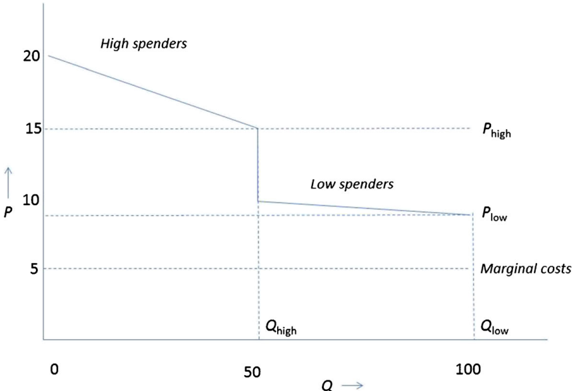
- The welfare effects of price discrimination are ambiguous. In the paper’s stylized example, a monopolist with marginal cost €5 and 100 customers moves from a uniform price of €15—selling 50 units, profit €500, consumer surplus €125, total welfare €625—to price discrimination at €15 and €8, yielding profit €650, consumer surplus €175, and total welfare €825, but price discrimination can still transfer surplus from consumers to sellers and harm high-willingness-to-pay consumers.
- Public attitudes are negative: in a US survey cited by the paper, 78% of respondents did not want discounts tailored to them based on what they did on other websites they had visited.
Methods
- Conceptual legal and economic analysis, not an empirical study; the paper combines legal doctrinal analysis of EU data protection law with economic theory and secondary examples.
- It examines EU instruments including the GDPR, the 1995 Data Protection Directive, and the ePrivacy Directive, and discusses CJEU and Article 29 Working Party interpretations of personal data, transparency, legal bases, and automated decisions.
- It uses stylized economic examples and hypotheticals (Alice, Bob, Carol, Dave, Erin, Fay) to illustrate personalized pricing and legal applicability, and cites existing surveys and examples such as Amazon 2000 and Staples.com.
Limitations
- The paper states that it is too early to conclude data protection law is the most appropriate instrument, that people hardly read privacy notices, that some shops may offer take-it-or-leave-it choices, and that compliance and enforcement are assumed to be adequate.
- The paper states that many open questions remain, including how often online price discrimination occurs, why people dislike it, and how other laws such as non-discrimination law or the Services Directive may limit it; it also excludes versioning and price steering from scope.
- Evident from the text: the analysis relies on secondary survey evidence and examples rather than original measurement of prevalence, and the legal discussion is framed around the GDPR before its May 2018 application and a proposed ePrivacy Regulation.
Model-written summary. Check it against the paper before relying on it.
Integrity signals
Registry
Cites
Statistics
Figures
Verification
Claims the paper makes
6 Valid · 1 Not valid · 39 Not checked · 60 Own results and interpretations
The cited sources support only part of this claim — read each source’s verdict below.
In the paper
“However, many people regard personalized pricing generally as unfair or manipulative.”
§ Online Price Discrimination and EU Data Privacy Law > People's Attitude Towards Personalized Pricing
What the sources say
- Supportedcites Turow et al. 2005
In “The Study and the Population” (page not supplied), the paper reports that 64%–91% of respondents objected to various forms of price discrimination, including prices based on customers’ purchase histories. This supports the paraphrase that many people regard personalized pricing as unfair or manipulative. (LLM, conf=0.92)
- Partly supportedcites Turow et al. 2009 matched to “Americans Reject Tailored Advertising and Three Activities that Enable It” (2009) sourceExperimental — accuracy not yet measured
The survey reports that 51% of Americans did not want tailored discounts (Differences by Age, p. 17). The Conclusion (p. 24) suggests that some may fear receiving less generous discounts than others, but says the study did not ask why respondents objected. It therefore does not establish that people generally regard personalized pricing as unfair or manipulative. (LLM, conf=0.84)
plain- Asserted: passes — The authors put it forward as true.
- Checkable: passes — It can be checked against evidence.
- Load-bearing: unclear — It is unclear whether the paper’s conclusions depend on it.
- Based: passes — The paper gives a reason why it holds.
- Supported
Every source the paper cites for this claim was checked and supports it.
In the paper
“In another US survey, 78% of the respondents did not want”
§ Online Price Discrimination and EU Data Privacy Law > People's Attitude Towards Personalized Pricing
What the sources say
- Supportedcites Turow et al. 2009 matched to “Americans Reject Tailored Advertising and Three Activities that Enable It” (2009) source
The ‘Rejecting Tailored Content and Behavioral Tracking’ section (p. 14) says that 78% of respondents rejected tailored discounts either outright or after learning they would be based on tracking across other websites. The survey question on the same page describes this as following what respondents do on other websites they have visited. (LLM, conf=0.94)
plain- Asserted: passes — The authors put it forward as true.
- Checkable: passes — It can be checked against evidence.
- Load-bearing: unclear — It is unclear whether the paper’s conclusions depend on it.
- Based: passes — The paper gives a reason why it holds.
- Supported
The cited sources support only part of this claim — read each source’s verdict below.
In the paper
“found that [American adults] overwhelmingly object to most forms of behavioural targeting and all forms of price discrimination as ethically wrong.”
§ Online Price Discrimination and EU Data Privacy Law > People's Attitude Towards Personalized Pricing
What the sources say
- Partly supportedcites Turow et al. 2005Experimental — accuracy not yet measured
The Overview states that respondents overwhelmingly objected to most forms of behavioral targeting and all forms of price discrimination as ethically wrong. But it identifies the survey respondents as adults who had used the internet in the past month; the claim broadens that finding to American adults generally. (LLM, conf=0.87)
plain- Asserted: passes — The authors put it forward as true.
- Checkable: passes — It can be checked against evidence.
- Load-bearing: unclear — It is unclear whether the paper’s conclusions depend on it.
- Based: passes — The paper gives a reason why it holds.
- Partly supported
The cited sources support only part of this claim — read each source’s verdict below.
In the paper
“we agree that cookies with unique identifiers should be seen as personal data”
§ Online Price Discrimination and EU Data Privacy Law > People's Attitude Towards Personalized Pricing
What the sources say
- Not matchedcites De Hert and Gutwirth 2008
An author–year citation the paper’s reference list doesn’t settle. We don’t search these by name.
- Supportedcites Zuiderveen Borgesius 2016 matched to “Singling out people without knowing their names – Behavioural targeting, pseudonymous data, and the new Data Protection Regulation” (2016) source
In the section on European data protection authorities, the paper explains that unique cookie identifiers can identify people by singling them out and reports that such cookies qualify as personal data. Its discussion of arguments against the ‘single out’ interpretation adds that replacing a name with another unique identifier does not put data outside data-protection law. The paper notes an exception where data tied to an identifier do not relate to an individual, but that does not undermine the citing sentence’s general position. (LLM, conf=0.91)
plain- Asserted: passes — The authors put it forward as true.
- Checkable: passes — It can be checked against evidence.
- Load-bearing: passes — The paper’s conclusions depend on it.
- Based: passes — The paper gives a reason why it holds.
- Not matched
In the paper
“Notwithstanding the examples above, personalized pricing seems to be relatively rare.”
§ Online Price Discrimination and EU Data Privacy Law > Personalized Pricing
What the sources say
- Not matchedcites Narayanan 2013
An author–year citation the paper’s reference list doesn’t settle. We don’t search these by name.
hedged- Asserted: passes — The authors put it forward as true.
- Checkable: passes — It can be checked against evidence.
- Load-bearing: unclear — It is unclear whether the paper’s conclusions depend on it.
- Based: passes — The paper gives a reason why it holds.
- Not matched
50 more claims
Create a free account to see all 106 claims and every source verdict.
- It may state two separate claims as one. 23
- Probably not a substantial claim. 36
- The quote only partly states this claim. 2
Claims other papers make about this one
Each is checked against this paper’s own text: does it say what the citing paper says it does?
The source backs part of the claim, not all of it — or backs it for a different population, condition or comparison.
In the citing paper
“Generally, price personalization is allowed by law, as long as the practice does not lead to discrimination on the basis of, for instance, ethnicity (Zuiderveen Borgesius 2020; Zuiderveen Borgesius and Poort 2017).”
From When is personalized advertising crossing personal boundaries? How type of information, data sharing, and personalized pricing influence consumer perceptions of personalized advertising (2021) · cites this paper as Zuiderveen Borgesius and Poort 2017
Experimental — accuracy not yet measured
Citations
Cites
(1994) · Journal of the American Dietetic Association · doi:10.1016/0002-8223(94)92216-0 · Cited by 45,910
Pigou, A. C. (1933) · The Economic Journal · doi:10.2307/2224491 · Cited by 5,137
Regret Theory: An Alternative Theory of Rational Choice Under Uncertainty
Loomes, G., & Sugden, R. (1982) · The Economic Journal · doi:10.2307/2232669 · Cited by 4,042 · cited 3×
“In 2000, it was widely reported that Amazon offered different visitors different prices (e.g., BBC News 2000). When a regular customer deleted his computer’s cookies, he saw the price of a DVD drop. Hence, it appeared that customers who previously ordered from Amazon were shown a higher price for a product than new cu…”
BackgroundInfluentialHow the machine “thinks”: Understanding opacity in machine learning algorithms
Burrell, J. (2016) · Big Data & Society · doi:10.1177/2053951715622512 · Cited by 3,196
Wachter, S., Mittelstadt, B., & Floridi, L. (2017) · International Data Privacy Law · doi:10.1093/idpl/ipx005 · Cited by 1,308
Edwards, L., & Veale, M. (2017) · doi:10.31228/osf.io/97upg · Cited by 524
How the Machine 'Thinks:' Understanding Opacity in Machine Learning AlgorithmsPreprint
Burrell, J. (2015) · SSRN Electronic Journal · doi:10.2139/ssrn.2660674 · Cited by 511
Measuring price discrimination and steering on e-commerce web sites
Hannak, A., Soeller, G., Lazer, D., Mislove, A., & Wilson, C. (2014) · Proceedings of the 2014 Conference on Internet Measurement Conference · doi:10.1145/2663716.2663744 · Cited by 405
Smart Technologies and the End(s) of Law: Novel Entanglements of Law and Technology
Hildebrandt, M. (2015) · doi:10.4337/9781849808774 · Cited by 353 · cited 1×
“However, with modern machine learning techniques, it is often difficult to explain the logic behind a decision, when an algorithm, analysing large quantities of data, arrives at that decision (Burrell 2016; Edwards and Veale 2017; Hildebrandt 2015; Kroll et al. 2016).”
BackgroundThe daily you: how the new advertising industry is defining your identity and your worth
(2012) · Choice Reviews Online · doi:10.5860/choice.49-6375 · Cited by 348
Chapter 10 Price discrimination
Varian, H. R. (1989) · Handbook of Industrial Organization · doi:10.1016/s1573-448x(89)01013-7 · Cited by 343 · cited 2×
“…satisfied: A seller must be able to distinguish between customers to know which price to charge to whom, he must have enough market power to be able to set prices above marginal costs, and resale must be impractical, costly, or forbidden to prevent arbitrage between customers (e.g., Varian 1989).”
BackgroundAmericans Reject Tailored Advertising and Three Activities that Enable It
Turow, J., King, J., Hoofnagle, C. J., Bleakley, A., & Hennessy, M. (2009) · doi:10.2139/ssrn.1478214 · Cited by 315 · cited 1×
“In another US survey, 78% of the respondents did not want “discounts (…) tailored for you based on following (…) what you did on other websites you have visited” (Turow et al. 2009, p. 15).”
BackgroundRecent Developments in the Economics of Price Discrimination
Armstrong, M. (2013) · Advances in Economics and Econometrics · doi:10.1017/cbo9781139052276.006 · Cited by 267 · cited 2×
“overview, see for instance Varian (1989) and Armstrong (2006). These welfare effects turn out to”
Background(2002) · Medical Entomology and Zoology · Cited by 264
The daily you: How the new advertising industry is defining your identity and your worth
Peters, C. (2014) · New Media & Society · doi:10.1177/1461444814535723 · Cited by 259
Slave to the Algorithm? Why a Right to Explanationn is Probably Not the Remedy You are Looking for
Edwards, L., & Veale, M. (2017) · SSRN Electronic Journal · doi:10.2139/ssrn.2972855 · Cited by 244
Privacy, economics, and price discrimination on the Internet
Odlyzko, A. (2003) · Proceedings of the 5th international conference on Electronic commerce - ICEC '03 · doi:10.1145/948005.948051 · Cited by 230
Understanding the promises and premises of online health platforms
Van Dijck, J., & Poell, T. (2016) · Big Data & Society · doi:10.1177/2053951716654173 · Cited by 227
Zarsky, T. (2003) · Yale Journal of Law and Technology · Cited by 178
The Right Not to be Subject to Automated Decisions Based on Profiling
Mendoza, I., & Bygrave, L. A. (2017) · EU Internet Law · doi:10.1007/978-3-319-64955-9_4 · Cited by 160
What Can Behavioral Economics Teach Us about Privacy?
(2007) · Digital Privacy · doi:10.1201/9781420052183-29 · Cited by 156
(2005) · ScholarlyCommons (University of Pennsylvania) · Cited by 121
(2007) · Cited by 119
Baker, W., Marn, M. V., & Zawada, C. C. (2001) · PubMed · Cited by 112
Regulating Profiling in a Democratic Constitutional State
Gutwirth, S., & Hert, P. D. (2008) · Springer eBooks · doi:10.1007/978-1-4020-6914-7_14 · Cited by 109
Zuiderveen Borgesius, F. J. (2016) · Computer Law & Security Review · doi:10.1016/j.clsr.2015.12.013 · Cited by 108 · cited 1×
“In line with various other scholars (e.g., De Hert and Gutwirth 2008), we agree that cookies with unique identifiers should be seen as personal data (see also Zuiderveen Borgesius 2016).”
ResultImproving Privacy Protection in the Area of Behavioural Targeting
Zuiderveen Borgesius, F. J. (2015) · SSRN Electronic Journal · doi:10.2139/ssrn.2654213 · Cited by 106
Self-citationOdlyzko, A. (2009) · Review of Network Economics · doi:10.2202/1446-9022.1169 · Cited by 102 · cited 1×
“Odlyzko (2009) suggests that “the growing erosion of privacy can be explained by companies preparing to exploit the growing opportunities for price discrimination.””
BackgroundCrowd-assisted search for price discrimination in e-commerce: first results
Mikians, J., Gyarmati, L., Erramilli, V., & Laoutaris, N. (2013) · Proceedings of the ninth ACM conference on Emerging networking experiments and technologies · doi:10.1145/2535372.2535415 · Cited by 82 · cited 1×
“Similarly, Mikians et al. (2013) found several examples of online shops that charge customers from different regions different prices, while Hannak et al. (2014) found examples of companies that offer discounts to mobile users and to people who are logged in to sites.”
BackgroundMarget, A. W. (1966) · Cited by 80
(1997) · Choice Reviews Online · doi:10.5860/choice.35-2212 · Cited by 62
(2014) · Lirias · Cited by 61
Zarsky, T. (2004) · Maine law review · Cited by 53
The Bumpy Road of Electronic Commerce
Odlyzko, A. M. (1996) · WebNet · Cited by 49
Miller, A. (2022) · UF Law Scholarship Repository (University of Florida) · Cited by 45
Privacy, Economics, and Price Discrimination on the InternetPreprint
Odlyzko, A. M. (2003) · SSRN Electronic Journal · doi:10.2139/ssrn.429762 · Cited by 42
(2013) · bepress Legal Repository · Cited by 41
Articles Accessed in June 2007
(2007) · Obstetrics and Gynecology · doi:10.1097/01.aog.0000263924.97887.3b · Cited by 30
Crowd-assisted Search for Price Discrimination in E-Commerce: First resultsPreprint
Mikians, J., Gyarmati, L., Erramilli, V., & Laoutaris, N. (2013) · arXiv (Cornell University) · doi:10.48550/arxiv.1307.4531 · Cited by 29
Improving Privacy Protection in the area of Behavioural TargetingPreprint
Borgesius, F. Z. (2025) · arXiv (Cornell University) · doi:10.48550/arxiv.2512.13405 · Cited by 22
Self-citationPersonalized pricing versus history-based pricing: implications for privacy policy
Miettinen, T., & Stenbacka, R. (2015) · Information Economics and Policy · doi:10.1016/j.infoecopol.2015.10.003 · Cited by 15 · cited 1×
“Moreover, a mere suspicion of personalized pricing could increase search costs, lead to inefficient switching (Miettinen and Stenbacka 2015), and burden ordinary everyday transactions with a need to shop around to make sure they get the best deal.”
BackgroundComments on Selected Topics in the Draft EU Data Protection Regulation
Korff, D. (2012) · doi:10.2139/ssrn.2150145 · Cited by 8 · cited 2×
“But it is often assumed that this right implies an in-principle prohibition of such decisions (De Hert and Gutwirth 2008; Korff 2012; Wachter et al. 2017).”
Background(2013) · SSRN Electronic Journal · Cited by 3
(2017) · FLASH - Fordham Law Archive of Scholarship & History (Fordham University)
Research works printed but not linked: 5
- De Blasio, B., & Menin, J. (2015). From cradle to cane: the cost of being a female consumer. A study of gender pricing in new York City. New York City: Consumer Affairs.
- Mattioli, D. (2012). On Orbitz, Mac Users Steered to Pricier Hotels. Wall Street Journal, 23 August 2012.
- Preston McAfee, R. (2008). Price Discrimination, Chapter 20. In Issues in Competition Law and Policy (Vol. 1, pp. 465-484). Washington: ABA Book Publishing.
- Steppe, R. (2017). Prijsdiscriminatie in het digitale tijdperk: Beschouwingen over de nieuwe algemene verordening gegevensbescherming. In M. E. Storme & F. Helsen (Eds.), Innovatie en disruptie in het economisch recht. Antwerpen: Intersentia.
- Stigler, G. J. (1987). Theory of price (Fourth ed.). New York: Macmillan.
Cited by
Gao, Y., & Liu, H. (2023) · Journal of Research in Interactive Marketing · doi:10.1108/jrim-01-2022-0023 · Cited by 424
Mapping the Ethicality of Algorithmic Pricing: A Review of Dynamic and Personalized Pricing
Seele, P., Dierksmeier, C., Hofstetter, R., & Schultz, M. D. (2021) · Journal of Business Ethics · doi:10.1007/s10551-019-04371-w · Cited by 196
Discrimination, artificial intelligence, and algorithmic decision-making
Borgesius, F. Z. (2025) · arXiv · doi:10.48550/arxiv.2510.13465 · Cited by 152
“77 Zuiderveen Borgesius and Poort 2017.”
Self-citationBirch, K., Chiappetta, M., & Artyushina, A. (2020) · Policy Studies · doi:10.1080/01442872.2020.1748264 · Cited by 198
Himeur, Y., Sohail, S. S., Bensaali, F., Amira, A., & Alazab, M. (2022) · Computers & Security · doi:10.1016/j.cose.2022.102746 · Cited by 139
Metadata
- Authors
- Zuiderveen Borgesius, F., & Poort, J.
- Affiliations
- University of Amsterdam (NL)
- Corresponding author
- Poort, Joost
- ORCID
- Poort, Joost
- Venue
- Journal of Consumer Policy
- Published
- 2017-07-15
- Volume
- 40
- Issue
- 3
- Pages
- 347-366
- ISSN
- 0168-7034 (ISSN-L)
- 1573-0700
- OpenAlex
- W2736191408
- Semantic Scholar
- caf35b7e02a0cf54353d4564244916e0adc1c0bd
- Cited by
- 213
- References
- 46
- Citations by year
- 2026: 15 · 2025: 21 · 2024: 22 · 2023: 66 · 2022: 23 · 2021: 32 · 2020: 17 · 2019: 7 · 2018: 8 · 2017: 2
- FWCI
- 13.51
- Type
- journal article
- Language
- en
- Update notices
- erratum (2017-09-04)
- Open access
- hybrid
- doi.org
- Locations
- Journal of Consumer Policy (publishedVersion, cc-by)
- SSRN Electronic Journal (submittedVersion)
- UvA-DARE (University of Amsterdam) (publishedVersion, cc-by)
- RePEc: Research Papers in Economics (submittedVersion, cc-by)
- Data Archiving and Networked Services (DANS) (submittedVersion, other-oa)
- Funders
- University of Amsterdam
- Topics
- Social Sciences › Business, Management and Accounting › Marketing › Consumer Market Behavior and Pricing
- Social Sciences › Law › Diverse Legal and Medical Studies
- Social Sciences › Law › Digitalization, Law, and Regulation
- Keywords
- personalized pricing, price discrimination, online shopping, data protection law, cookies, consumer consent, transparency, consumer welfare, unfair pricing
About these checks
Registry, retraction, Cites and statistics results are computed, not judged, with one exception: a printed reference that no index lists is read once by a model before it counts as a citation error. Claims are extracted by a model and kept only when their quote appears verbatim in the text; each cited source is then checked, with a model’s help, for whether it says what the claim relies on. Those verdicts can be wrong — read the claim’s quote and the cited source before relying on one.
The claim verdicts this report counts are experimental: their accuracy is not yet measured.
A language model drew the claims from the paper on 2026-10-07, under version 3 of the claim definition (model deepseek-v4.1-flash, prompt extract-v3).
A second model labelled each claim on 2026-10-07 (model jev-1.13-20260917, definition revision gold-guideline-v0.2).
Cited sources are checked with a language model’s help (gpt-6-sol).
Statistics and arithmetic are recomputed, not judged.
Confidence bands are shown only for fields calibrated on our annotated test set. None is calibrated yet, so no band is shown.
What counts as a claim ›How we measure confidence ›How we check this ›
Are you an author, or do you see a problem with this page? Request a review
Data sources
Bibliographic data: Semantic Scholar, OpenAlex, Crossref.
Contains information from the Semantic Scholar Academic Graph Datasets, made available under the ODC Attribution License (ODC-BY 1.0).
Semantic Scholar’s data is described in: Kinney, R., et al. (2023). The Semantic Scholar Open Data Platform. arXiv:2301.10140.
