

Worth the Effort: the Start and Stick to Desirable Difficulties (S2D2) Framework
Open accessThe DOI matches its Crossref record; 81 of the 81 references it cites were found in a registry or an index; 25 of the 70 sources its claims cite were checked for support.
Abstract
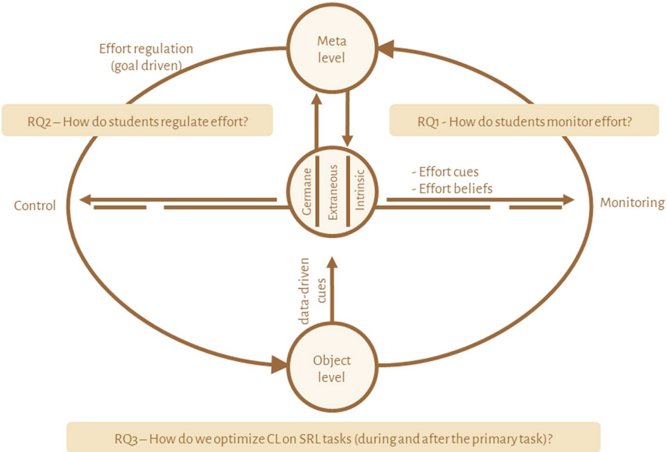
Abstract Desirable difficulties are learning conditions that are often experienced as effortful, but have a positive effect on learning results and transfer of knowledge and skills (Bjork & Bjork, 2011; Bjork, 1994). Learners often do not appreciate the beneficial effects of desirable difficulties, and the negative experiences of high effort and perceived low learning make them resistant to engage in desirable difficulties (Biwer et al., 2020a). This ultimately limits learning outcomes and academic achievement. With the increasing emphasis on self-regulation in education, characterized by higher learner agency and abundant choices in what, when, and how to study, the field of educational psychology is in need of theoretical and empirically testable assumptions that improve self-regulation in desirably difficult learning conditions with the aim to foster self-regulation abilities, learning outcomes, and academic achievement. Here, we present a framework that describes how to support self-regulation of effort when engaging in desirable difficulties: the “Start and Stick to Desirable Difficulties (S2D2)” framework. The framework builds on the Effort Monitoring and Regulation model (de Bruin et al., 2020). The aim of this framework is (1) to describe evidence for the central role of perceived effort and perceived learning in (dis)engagement in desirable difficulties, and (2) to review evidence on, and provide an agenda for research to improve learners’ self-regulated use of desirable difficulties to help them start and persist when learning feels tough, but is actually effective.
Overview
CoChat Summary
TL;DR
This review proposes the Start and Stick to Desirable Difficulties (S2D2) framework to explain why learners avoid, start, or persist in desirable difficulties based on perceived effort and perceived learning. It argues that sustainable use of these strategies requires interventions at the strategy, task, and learner levels to help learners accept, reduce, or silence effort while also seeing actual learning benefits.
Key findings
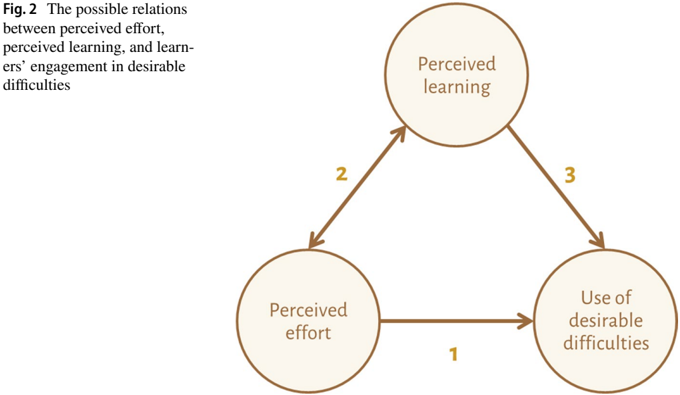
- The paper identifies three relations that shape engagement in desirable difficulties: perceived effort can directly affect use, perceived effort can be intricately related to perceived learning, and perceived learning can directly affect use.
- In one cited meta-analysis, learners’ effort ratings correlated negatively with judgments of learning during learning, with \(r = -0.355\); the correlation was weaker for prospective than retrospective judgments and stronger for problem-solving than paired-associates tasks.
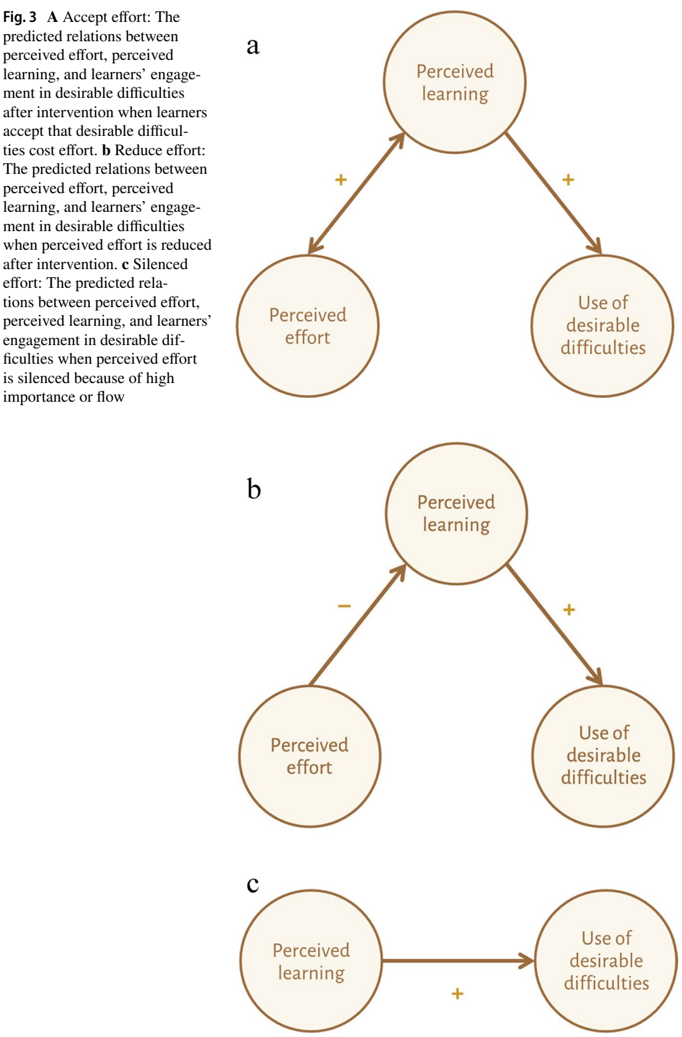
- In a cited study of human anatomy image-name pairs, learners’ strategy decisions showed that before feedback, effort directly predicted retrieval-practice choices; after performance feedback, strategy decisions were directly affected by effort ratings and indirectly through perceived learning.
- In a cited study comparing blocked and interleaved practice, perceived effort was higher and perceived learning lower for interleaving than blocking at first, but these differences decreased over time; the effect of reduced effort on choosing interleaving was mediated by increased perceived learning.
Methods
- Conceptual review/framework paper: the authors synthesize prior theory and empirical findings rather than report a new primary empirical study.
- The framework builds on the Effort Monitoring and Regulation (EMR) model and focuses on self-regulated learning in authentic self-study environments, especially older adolescents and adult learners.
- The analysis is narrative and integrative, using prior studies and a proposed intervention agenda organized around strategy-level, task-level, and learner-level approaches.
Limitations
- The paper states that it does not explain how teachers can directly incorporate desirable difficulties into teaching; its focus is on students’ self-regulated use in self-study contexts.
- The authors note that their discussion of the relation between perceived effort and learning is limited by the fact that “much [is] still unknown,” including how these perceptions develop across task level and strategy level and over longer time spans.
- Evident from the text: this is a framework/review without a new empirical sample, so the proposed claims are not directly tested in this paper.
Model-written summary. Check it against the paper before relying on it.
Integrity signals
Registry
Cites
Statistics
Figures
Verification
Claims the paper makes
21 Valid · 6 Not valid · 39 Not checked · 92 Own results and interpretations
Every source the paper cites for this claim was checked and supports it.
In the paper
“That is, self-reports of effort through ratings on a Likert-type scale should not be viewed as objective reflections of effort based solely on the difficulty of a task.”
What the sources say
- Supportedcites Scheiter et al., 2020 matched to “Looking at Mental Effort Appraisals through a Metacognitive Lens: Are they Biased?” (2020) source
The Subjective Effort Measures section describes effort self-reports made on a nine-point Likert scale. The Heuristic Cues Underlying Effort Appraisals section says those appraisals can be influenced by feedback and task position—factors unrelated to the task itself—so they are not objective reflections based solely on task difficulty. Page numbers were not available in our copy. (LLM, conf=0.93)
plain- Asserted: passes — The authors put it forward as true.
- Checkable: passes — It can be checked against evidence.
- Load-bearing: passes — The paper’s conclusions depend on it.
- Based: passes — The paper gives a reason why it holds.
- Rests on an assumption not shown here.
- Supported
Every source the paper cites for this claim was checked and supports it.
In the paper
“These differences between blocking and interleaving decreased after experience with the strategies.”
What the sources say
- Supportedcites Onan et al., 2022 matched to “Growing Out of the Experience: How Subjective Experiences of Effort and Learning Influence the Use of Interleaved Practice” (2022) source
The Perceived Effort and Perceived Learning sections report that, over time, effort decreased and perceived learning increased for interleaved practice, while neither changed for blocked practice. Because interleaving initially had higher perceived effort and lower perceived learning, both differences narrowed with experience. (LLM, conf=0.94)
plain- Asserted: passes — The authors put it forward as true.
- Checkable: passes — It can be checked against evidence.
- Load-bearing: passes — The paper’s conclusions depend on it.
- Based: passes — The paper gives a reason why it holds.
- Supported
The cited sources that could be checked couldn’t confirm or dispute this claim.
In the paper
“The Baars etal.'s (2020) meta-analysis shows that the goal-driven approach is less common among learners than the data-driven approach.”
What the sources say
- Could not verifycites Baars et al., 2020 matched to “The Relation Between Students’ Effort and Monitoring Judgments During Learning: A Meta-analysis” (2020) sourceExperimental — accuracy not yet measured
The Data-Driven and Goal-Driven Self-Regulation section describes both approaches but does not compare how commonly learners use them. Limitations and Future Studies says only a small number of included studies manipulated goal-driven self-regulation; that is a statement about the studies, not the prevalence of the approach among learners. Searches for a learner-level frequency comparison found none. (LLM, conf=0.73)
plain- Asserted: passes — The authors put it forward as true.
- Checkable: passes — It can be checked against evidence.
- Load-bearing: unclear — It is unclear whether the paper’s conclusions depend on it.
- Based: passes — The paper gives a reason why it holds.
- Could not verify
Every source the paper cites for this claim was checked and supports it.
In the paper
“In the context of desirable difficulties, the negative effect of perceiving effort as costly or aversive was also observed in research by Hui and colleagues (2022).”
What the sources say
- Supportedcites Hui et al., 2022 matched to “Why students do (or do not) choose retrieval practice: Their perceptions of mental effort during task performance matter” (2022) source
In the Discussion (section 4, Figure 4; page not provided), Hui and colleagues report that perceived mental effort directly informed students’ strategy choices: they tended to choose less effortful restudy for tasks they found taxing. This supports the claim’s broad point that treating effort as a cost can discourage an effortful learning strategy, although the study describes perceived effort rather than directly measuring aversion. (LLM, conf=0.86)
plainstates a cause- Asserted: passes — The authors put it forward as true.
- Checkable: passes — It can be checked against evidence.
- Load-bearing: passes — The paper’s conclusions depend on it.
- Based: passes — The paper gives a reason why it holds.
- Supported
The cited sources support only part of this claim — read each source’s verdict below.
In the paper
“Instead, learners derive them dynamically through several sources of information such as their effort beliefs, prior task experience, current level of fatigue, interest in the task, and fluency of processing.”
What the sources say
- Partly supportedcites Scheiter et al., 2020 matched to “Looking at Mental Effort Appraisals through a Metacognitive Lens: Are they Biased?” (2020) sourceExperimental — accuracy not yet measured
The Subjective Effort Measures section (page unavailable) says beliefs about ability may affect how learners assess effort, and the Heuristic Cues Underlying Effort Appraisals section says task experience and other cues can influence ratings. The copy does not establish current fatigue or task interest as sources of effort ratings; it discusses processing fluency chiefly as a cue for judgments of learning, not effort ratings. (LLM, conf=0.84)
plainstates a cause- Asserted: passes — The authors put it forward as true.
- Checkable: passes — It can be checked against evidence.
- Load-bearing: passes — The paper’s conclusions depend on it.
- Based: passes — The paper gives a reason why it holds.
- Rests on an assumption not shown here.
- Partly supported
62 more claims · 6 with their cited sources checked
Create a free account to see all 158 claims and to verify the 5 references still open.
- It may state two separate claims as one. 58
- Probably not a substantial claim. 50
Citations
Cites
Cognitive Load During Problem Solving: Effects on Learning
Sweller, J. (1988) · Cognitive Science · doi:10.1016/0364-0213(88)90023-7 · Cited by 11,048 · cited 1×
“The desirable difficulties usually remain more effortful because they generally require active, generative processing, thereby inducing more germane load to put in cognitive load theory terms (Sweller, 1988).”
BackgroundTest-Enhanced Learning: Taking Memory Tests Improves Long-Term Retention
Roediger, H. L., & Karpicke, J. D. (2006) · Psychological Science · doi:10.1111/j.1467-9280.2006.01693.x · Cited by 2,867
Metamemory: A Theoretical Framework and New Findings
Nelson, T. O. (1990) · Psychology of Learning and Motivation · doi:10.1016/s0079-7421(08)60053-5 · Cited by 2,583 · cited 1×
“The EMR model finds its base in the Nelson and Narens model (Nelson, 1990; Nelson & 1 3 Narens, 1994), which describes how cycles of monitoring and regulation of learning characterize learning task engagement.”
MethodThe Critical Importance of Retrieval for Learning
Karpicke, J. D., & Roediger, H. L. (2008) · Science · doi:10.1126/science.1152408 · Cited by 1,791 · cited 1×
“For example, when using retrieval practice, learning effects are not immediately visible but appear only after a delay (Karpicke & Roediger, 2008; Nunes & Karpicke, 2015).”
MethodNakamura, J., & Csikszentmihalyi, M. (2014) · Flow and the Foundations of Positive Psychology · doi:10.1007/978-94-017-9088-8_16 · Cited by 1,608 · cited 2×
“Flowlike experiences can also be interpreted as examples of the extremely goal-driven approach (Nakamura & Csikszentmihalyi, 2014) because under these circumstances perceptions of effort also appear to be silenced (Swann et al., 2016).”
BackgroundGuadagnoli, M. A., & Lee, T. D. (2004) · Journal of Motor Behavior · doi:10.3200/jmbr.36.2.212-224 · Cited by 1,534 · cited 1×
“For these learners, Educational Psychology Review (2023) 35:41 1 3 41 Page 20 of 27 the difficulty of the learning material is probably too high; the desirably difficult strategy itself not benefiting them is less likely (Guadagnoli & Lee, 2004).”
BackgroundAn opportunity cost model of subjective effort and task performance
Kurzban, R., Duckworth, A., Kable, J. W., & Myers, J. (2013) · Behavioral and Brain Sciences · doi:10.1017/s0140525x12003196 · Cited by 1,381 · cited 1×
“According to the opportunity cost model (Kurzban et al., 2013), the experienced costs of effort invested in a task are weighed against alternative opportunities.”
MethodMonitoring one’s own knowledge during study: A cue-utilization approach to judgments of learning
Koriat, A. (1997) · Journal of Experimental Psychology: General · doi:10.1037/0096-3445.126.4.349 · Cited by 1,363 · cited 1×
“As in the case of metacognitive judgments such as judgments of learning (de Bruin et al., 2017; Koriat, 1997), learners do not have direct access to the effort they actually expend and therefore have to infer their objective effort based on information sources typically termed “cues.””
BackgroundMemory and Metamemory Considerations in the Training of Human Beings
Bjork, R. A. (1994) · Metacognition · doi:10.7551/mitpress/4561.003.0011 · Cited by 1,084 · cited 2×
“Desirable difficulties are learning conditions that are often experienced as effortful, but have a positive effect on learning results and transfer of knowledge and skills (Bjork & Bjork, 2011; Bjork, 1994).”
BackgroundToward a rational and mechanistic account of mental effort
Shenhav, A., Musslick, S., Lieder, F., Kool, W., Griffiths, T. L., Cohen, J. D., & Botvinick, M. M. (2017) · Annual Review of Neuroscience · doi:10.1146/annurev-neuro-072116-031526 · Cited by 1,077
Research works printed but not linked: 3
- Biwer, F. & de Bruin, A.B.H. (2023). Teaching students to 'Study Smart' - A training program based on the science of learning. In C. E. Overson, C. M. Hakala, L. L. Kordonowy, & V. A. Benassi (Eds.). In their own words: What scholars want you to know about why and how to apply the science of learning in your academic setting . Society for the Teaching of Psychology. (in press).
- Cirillo, F. (2006). The pomodoro technique (the pomodoro). Agile Processes in Software Engineering, 54 (2), 35.
- Metcalfe, J. (2011). Desirable difficulties and studying in the region of proximal learning. In A. S. Benjamin (Ed.) Successful remembering and successful forgetting: A Festschrift in honor of Robert A. Bjork (pp . 259-276). London (UK): Psychology Press. <!-- image --> 1 3
Cited by
Fan, Y., Tang, L., Le, H., Shen, K., Tan, S., Zhao, Y., Shen, Y., Li, X., & Gašević, D. (2025) · British Journal of Educational Technology · doi:10.1111/bjet.13544 · Cited by 805
Grund, A., Fries, S., Nückles, M., Renkl, A., & Roelle, J. (2024) · Educational Psychology Review · doi:10.1007/s10648-024-09852-7 · Cited by 68
“…that learning requires some sort of cognitive processing in response to a task’s complexity (i.e., effort-by-complexity), at first glance renders it understandable that the phrase “no pain, no gain” is increasingly used in educational contexts (e.g., Metcalfe, 2011; see also de Bruin et al., 2023).”
InfluentialComplexity affects performance, cognitive load, and awareness
Zeitlhofer, I., Zumbach, J., & Schweppe, J. (2024) · Learning and Instruction · doi:10.1016/j.learninstruc.2024.102001 · Cited by 81
Halmo, S. M., Yamini, K. A., & Stanton, J. D. (2024) · CBE—Life Sciences Education · doi:10.1187/cbe.23-08-0158 · Cited by 71
“…for each student where a problem is difficult enough to engage their curiosity and motivation to solve some-thing unknown but also does not generate negative emotions associated with failure that could prevent problem solving from moving forward (Zepeda et al. , 2020; de Bruin et al. , 2023).”
Carpenter, S. K. (2023) · Educational Psychology Review · doi:10.1007/s10648-023-09811-8 · Cited by 42
Gorbunova, A., Lange, C. H., Savelyev, A., Adamovich, K., & Costley, J. (2024) · Education Sciences · doi:10.3390/educsci14080860 · Cited by 54
David, L., Biwer, F., Baars, M., Wijnia, L., PAAS, F. G. W. C., & de Bruin, A. B. H. (2024) · Educational Psychology Review · doi:10.1007/s10648-024-09903-z · Cited by 37
“Learners might benefit from interventions that address this paradox and thus be able to regulate their learning accordingly (De Bruin et al., 2023).”
InfluentialSelf-citationAbel, R., de Bruin, A. B. H., Onan, E., & Roelle, J. (2024) · Educational Psychology Review · doi:10.1007/s10648-024-09902-0 · Cited by 22
“…for learners’ disengagement in interleaving is that learners perceive the to-be-invested additional effort in interleaved learning as motivational costs (de Bruin et al., 2023; see also Feldon et al. (2019) and Grund et al., (2024) and do not recognize sufficient value in incurring these costs.”
InfluentialSelf-citationStrengthening Conscientiousness by Means of Interventions: A Systematic Review
Turner, M., & Hodis, F. A. (2025) · Educational Psychology Review · doi:10.1007/s10648-025-10016-4 · Cited by 20
“…et al., 2022) and use generally effective learning strategies, such as spaced learning and self-testing (Theobald et al., 2018, 2021; Wingate & Tomes, 2017), even though these strategies are perceived as requiring considerable effort (i.e., are desirable difficulties; de Bruin et al., 2023).”
de Bruin, A. B. H., Janssen, E. M., Waldeyer, J., & Stebner, F. (2025) · Educational Psychology Review · doi:10.1007/s10648-025-10042-2 · Cited by 13
“In the context of the EMR model and the related Start and Stick to Desirable Difficulties (S2D2) framework (see de Bruin et al., 2023), it is highly relevant to research the novel posited assumption that engaging in desirable difficulties is possible without ensuing negative effort experiences.”
Dawson, M. G., Deer, R., & Boguslawski, S. (2025) · Computers in Human Behavior Reports · doi:10.1016/j.chbr.2025.100724 · Cited by 30
The Use of Retrieval Practice in the Health Professions: A State-of-the-Art Review
Serra, M. J., Kaminske, A. N., Nebel, C. L., & Coppola, K. M. (2025) · Behavioral Sciences · doi:10.3390/bs15070974 · Cited by 38
Heintalu, K., Saks, K., Edisherashvili, N., & Dekker, I. (2025) · Educational Research Review · doi:10.1016/j.edurev.2025.100709 · Cited by 17
Onan, E., Biwer, F., Wiradhany, W., & de Bruin, A. B. H. (2024) · Learning and Instruction · doi:10.1016/j.learninstruc.2024.101942 · Cited by 15
Self-citationOnan, E., Biwer, F., Abel, R., Wiradhany, W., & de Bruin, A. B. H. (2024) · npj Science of Learning · doi:10.1038/s41539-024-00245-7 · Cited by 15
Self-citationBroeren, M., Verkoeijen, P. P. J. L., Arends, L. R., & Smeets, G. (2024) · Applied Cognitive Psychology · doi:10.1002/acp.4220 · Cited by 17
Self-regulation of Flow: Creating “Seemingly Effortless” Learning Among Higher Education Students
Hui, L., Rovers, S. F. E., van Merriënboer, J. J. G., Donkers, J. H. H. L. M., & de Bruin, A. B. H. (2025) · International Journal of Educational Research · doi:10.1016/j.ijer.2025.102573 · Cited by 16
Self-citationBlissett, S., Mensour, E., Shaw, J. M., Martin, L. J., Gauthier, S. R., de Bruin, A. B. H., Siu, S. C., & Sibbald, M. (2023) · Medical Education · doi:10.1111/medu.15180 · Cited by 8
Self-citationSmits, E. J. C., Wenzel, N., & de Bruin, A. B. H. (2025) · Behavioral Sciences · doi:10.3390/bs15070861 · Cited by 39
“…breaks in advance, using techniques that externally regulate breaks, while others rely on subjective cues such as fatigue, productivity, and perceived effort and progress productivity to decide when to disengage from learning tasks (Bjork & Bjork, 2020; de Bruin et al., 2023; Grahek et al., 2022).”
Self-citationThe Underappreciated Benefits of Interleaving for Category Learning
Do, L. A., & Thomas, A. K. (2023) · Journal of Intelligence · doi:10.3390/jintelligence11080153 · Cited by 15
Hey, R., McDaniel, M. A., & Hodis, F. A. (2024) · Metacognition and Learning · doi:10.1007/s11409-024-09389-8 · Cited by 26
“Effort regulation is “the conscious decision to invest or stop investing effort, the actual investment of, and the fluctuations in mental effort when engaging in a learning task” (de Bruin et al., 2023, p. 4).”
InfluentialDealing with Desirable Difficulties: Supporting Students to Accept, Reduce, or Silence Effort
de Bruin, A. B. H. (2023) · Medical Science Educator · doi:10.1007/s40670-023-01911-y · Cited by 10
“Figure is reused without adaptation from [12], under the Creative Commons License (https:// creat iveco mmons. org/ licen ses/ by/4.”
BackgroundMethodInfluentialSelf-citationKim, S., Abel, R., Leutner, D., Schmiemann, P., & Roelle, J. (2025) · Learning and Instruction · doi:10.1016/j.learninstruc.2025.102143 · Cited by 7
Kim, Y.-E., Smith-Peirce, R. N., & Butler, A. C. (2025) · Metacognition and Learning · doi:10.1007/s11409-025-09448-8 · Cited by 5
“…need to consider both cognitive and motivational learning strategies when planning is central to some frameworks in educational psychology (Efklides, 2011; Pintrich, 2004), and an emerging topic within cognitive psychology (de Bruin et al., 2023 ; McDaniel & Einstein, 2020; Zepeda et al., 2020 ).”
Biwer, F., Taban, G., & de Bruin, A. B. H. (2025) · European Journal of Engineering Education · doi:10.1080/03043797.2025.2458117 · Cited by 9
“For engineering students, having positive experiences with invested effort, having a clear goal-driven approach to learning, and experiencing effort as positive also seem to be stimulating students to apply more desirably difficult learning strategies (de Bruin et al. 2023).”
Self-citationCompetency based medical education and trust in the learning environment
Hsu, D. C., Rassbach, C., Zandt, K. J. L., Morrow, A., Rubenstein, J., Tatem, A., Turner, D. A., Poitevien, P., & Barone, M. (2024) · Current problems in pediatric and adolescent health care · doi:10.1016/j.cppeds.2024.101640 · Cited by 4
Fan, T., Hui, L., Luo, L., & de Bruin, A. B. H. (2024) · Educational Psychology Review · doi:10.1007/s10648-024-09945-3 · Cited by 4
“For example, whether students could adopt a positive attitude toward investing effort and stick to desirably difficult strategy (i.e., retrieval practice) for challenging materials after such intervention (de Bruin et al., 2023).”
Self-citationDekker, I., Koerhuis, M.-J., & Koek, M. (2024) · Active Learning in Higher Education · doi:10.1177/14697874241249130 · Cited by 8
“The latter aspiration supposes that the program addresses deeper instead of surface types of learning, also known as desirable difficulties and effective study techniques (de Bruin et al., 2023).”
Understanding the reasons and cues that guide general chemistry students’ studying decisions
Keenan, K., Baquero, A., Alsharabi, E., & Pratt, J. M. (2025) · Chemistry Education Research and Practice · doi:10.1039/d5rp00086f · Cited by 2
Play Across Disciplines, Across Ages: What is Lost Without Play?
Anderson, A., Brownell, C. J., Danish, J. A., Gresalfi, M. S., Knowe, M., Maltese, A. V., Parks, A. N., Paul, K. M., Penney, L., Ryan, Z., et al. (2025) · Proceedings. · doi:10.22318/icls2025.315624 · Cited by 3
Comparing a sociological and psychological approach to summer bridge programs: a field experiment
Dekker, I., de Coninck, L., Biwer, F., Wenzel, N., van Herpen, S. G. A., Janssen, T. W. P., & Zijlstra, B. J. H. (2025) · Higher Education · doi:10.1007/s10734-025-01550-9 · Cited by 4
“These findings align with the claim by de Bruin et al. (2023) that students often underappreciate effortful study activities.”
Self-citationUnderstanding Learning Strategy Use Through the Lens of Habit
Krause, A.-K., Breitwieser, J., & Brod, G. (2025) · Educational Psychology Review · doi:10.1007/s10648-025-10087-3 · Cited by 9
“This “effort-as-costly belief” (De Bruin et al., 2023 , p. 6) may be counteracted through habit development.”
InfluentialFralick, C. M., & Yan, V. X. (2025) · Metacognition and Learning · doi:10.1007/s11409-025-09446-w · Cited by 2
“This widespread heuristic of “easily learned = easily remembered” (Koriat, 2008) is contrary to robust findings regarding “desirably difficult” study strategies which may feel more difficult but are ultimately more effective for learning (Bjork, 1994; Bjork & Bjork, 2011; de Bruin et al., 2023).”
Wu, T., Elsa, E., & Huang, Y. (2026) · Journal of English for Academic Purposes · doi:10.1016/j.jeap.2026.101641 · Cited by 8
Efklides, A., Gonida, E. Ν., & Kikas, E. (2026) · Educational Psychology Review · doi:10.1007/s10648-026-10154-3 · Cited by 5
Why the User-Friendliness of AI Undermines Education. Commentary on Wieczorek 2025
Dekker, I., & Hermans, F. (2026) · Philosophy & Technology · doi:10.1007/s13347-026-01093-6 · Cited by 3
Germane processes moderate the effectiveness of complex desirable difficulty tasks
Zeitlhofer, I., & Zumbach, J. (2026) · Instructional Science · doi:10.1007/s11251-026-09807-1 · Cited by 3
“…suggest that cognitively effortful learning is often perceived as being less effective, causing learners to interpret such demands as motivational costs that negatively impact expectancies for success and intrinsic interest (de Bruin et al., 2023; Kirk-Johnson et al., 2019; Onan et al., 2022).”
InfluentialJohnson, R. R., Shabanova, V., & Langhan, M. L. (2025) · Medical Science Educator · doi:10.1007/s40670-025-02338-3 · Cited by 3
“This may reflect the concept of “desirable difficulty,” where appropriately challenging learning experiences enhance skill development and transfer [20].”
Developing a holistic approach to teaching biosciences using self-regulated learning theory
Dunk, V., & Craft, J. A. (2025) · AJP Advances in Physiology Education · doi:10.1152/advan.00072.2025 · Cited by 3
Ma, X., & Chen, L. (2025) · Educational Psychology Review · doi:10.1007/s10648-025-10069-5 · Cited by 1
“Some students perceive retrieval practice as having a high perceived effort cost (De Bruin et al., 2023) or are unfamiliar with its implementation (Fiorella, 2020), or merely view it as a tool for assessing knowledge mastery rather than a learning strategy (Anthenien et al., 2017; Dunlosky et al.,…”
Lorenz, T., de Bruin, A. B. H., & Crutzen, R. (2025) · Computers in Human Behavior Reports · doi:10.1016/j.chbr.2025.100818 · Cited by 1
Self-citationEmbracing the challenge: Predicting self-testing in non-formal online courses using machine learning
Klose, M., Handschuh, P., Steger, D., & Artelt, C. (2025) · Computers & Education · doi:10.1016/j.compedu.2025.105507 · Cited by 2
Mechanisms to prepare for future learning: A think-aloud study
Ockl, K., & Glogger‐Frey, I. (2025) · Learning and Instruction · doi:10.1016/j.learninstruc.2025.102309 · Cited by 1
Powell, K. S., Rentzelas, P., & Kambouri, M. A. (2026) · Learning and Instruction · doi:10.1016/j.learninstruc.2026.102368 · Cited by 1
Hytti, M., Sandström, N., & Bodfield, K. S. (2026) · Frontiers in Political Science · doi:10.3389/fpos.2026.1761729 · Cited by 2
Debets, T., Banihashem, S. K., Wenniger, G. M. D. B., Brinke, D. J.-T., Vos, T. E. J., & Camp, G. (2026) · Innovations in Education and Teaching International · doi:10.1080/14703297.2026.2686372 · Cited by 1
Martín‐Alguacil, N., & Avedillo, L. (2026) · Education Sciences · doi:10.3390/educsci16081265 · Cited by 2
Effects of task complexity and pre-training on problem solving: A cognitive load perspective
Zeitlhofer, I., Zumbach, J., & Schwartz, N. (2026) · European Journal of Psychology of Education · doi:10.1007/s10212-026-01176-0 · Cited by 1
“Repeated engagement with a demanding problem appears to promote deeper processing and more efficient schema construction, supporting recent arguments that learners may benefit from challenging tasks rather than overly simplified ones (e.g., de Bruin et al., 2023; Grund et al., 2024).”
Wiradhany, W., Djalal, F. M., & de Bruin, A. B. H. (2025) · Accountability in Research · doi:10.1080/08989621.2025.2457100 · Cited by 2
“This high initial investment, better long-term gain dyad is in line with the principle of “desirable difficulties” (de Bruin et al. 2023), which has been shown to be effective in promoting long-term retention in educational settings.”
Self-citationOnan, E., Onan, A., Özgün, E., Gündoğdu, S., Bektaş, H., & de Bruin, A. B. H. (2025) · Applied Cognitive Psychology · doi:10.1002/acp.70063 · Cited by 2
Self-citationHigh School Students' Sentiments and Outcomes in FossilSketch Learning Activities
Bang, S., Степанова, А., Ali, S. F., Belanger, C. L., Hammond, T., & Anwar, S. (2025) · ASEE Annual Conference & Exposition · doi:10.18260/1-2--56694 · Cited by 1
Making Room for Friction: Boundary crossing in General Practitioners ResidencyPreprint
Meljes, I., Irene, A. S., Maartje, E. D. B., Anneke, W. M. K., & Nierkens, V. (2024) · Research Square · doi:10.21203/rs.3.rs-5374837/v1
Vu, T., Meeter, M., Hofman, A. D., Jansen, B. R. J., Magis‐Weinberg, L., van Triest, E., & van Atteveldt, N. (2025) · British Journal of Educational Psychology · doi:10.1111/bjep.12731 · Cited by 6
“…research suggested that it is not the quantity of learning behaviours but rather the quality of learning, such as using effective learning strategies (Dunlosky et al., 2013 ) or engaging with ‘desirable difficulties’ (De Bruin et al., 2023), that most likely contributes to increased learning.”
Kiper, G., Newman, D. J., & Oyserman, D. (2025) · Self and Identity · doi:10.1080/15298868.2025.2487537 · Cited by 2
“In doing so, our results suggest that effort is not always experienced negatively, even though it can be (Baars et al., 2020; Bjork, 1994; de Bruin et al., 2023; Feldon et al. 2019; Inzlicht et al., 2018).”
Üben aus Sicht der Lernpsychologie: Wie kann Üben das nachhaltige Lernen fördern?
Roelle, J., & Richter, T. (2025) · Unterrichtswissenschaft · doi:10.1007/s42010-025-00227-7
“…Durchlesen an-statt Abrufübungen. s. z. B. Karpicke 2009), werden wünschenswerte Erschwernisse als schwieriger und mental anstrengender empfunden (vgl. Biwer et al. 2020; de Bruin et al. 2023), sind aber bei Lerntests nach einer oder mehreren Wochen den subjektiv einfacheren Übungsformen überlegen.”
Integrating locus of control into RICOSRE-Flipped classroom for improved self-regulated learning
Mahanal, S., Zubaidah, S., Setiawan, D., Setiowati, F. K., Muhaimin, F. G., Kusmahardhika, N., & Hardianto, H. (2025) · Multidisciplinary Science Journal · doi:10.31893/multiscience.2026022 · Cited by 3
Embracing the Digital Age in Contemporary Classrooms
Young, K. (2025) · IGI Global eBooks · doi:10.4018/979-8-3693-1293-3.ch012
Bianchi, S. (2025) · doi:10.59490/mg.116 · Cited by 1
Eastwood, K. W., Allali, D. S., Leela-Amornsin, S., Desbiens, J.-P., & Szulewski, A. (2026) · Canadian Journal of Emergency Medicine · doi:10.1007/s43678-026-01118-1 · Cited by 1
“Deliberate practice is operationalized through spaced repetition, the process of recalling knowledge, interleaved and over time, to strengthen memory [6].”
Investigating Choice of and Perceived Efficacy of Learning Strategies Used by STEM Students
Hui, L., Ntonia, I., de Bruin, A. B. H., Fox, M. F. J., & Charalambous, M. (2026) · Education Sciences · doi:10.3390/educsci16030415
Self-citationLearning health equity in higher education—results from a European pilot study
Spjeldnæs, I. O., Boonekamp, G., Subirón‐Valera, A. B., Törnblom, C., Nyberg, A., Rodríguez‐Roca, B., van Wijchen, J., Antón‐Solanas, I., & Alme, M. N. (2026) · BMC Medical Education · doi:10.1186/s12909-026-08979-1
Zeitlhofer, I., & Zumbach, J. (2026) · International Journal of Educational Research · doi:10.1016/j.ijer.2026.103039 · Cited by 2
Beyond the Perfect Assistant: Provoking Learning with Flawed AI Partners
Balakrishnan, V., Kway, L. K., Sandeep, A. H., Wong, E. F. J. T., Ann, O. C., & Fernando, O. N. N. (2026) · Designing Interactive Systems Conference · doi:10.1145/3802974.3809428
“However, persistence alone does not confirm productive learning [6]: repeated attempts could equally reflect confusion or trial-and-error behavior.”
Li, F., Liu, C., Qing, Y., Zhu, Y. U. N. L. O. N., Wang, H., Lu, X., Lai, Y. Y., Ning, J., Sun, L., Zhang, M., et al. (2026) · MedComm – Future Medicine · doi:10.1002/mef2.70060
Keenan, K., Alsharabi, E., Baquero, A., & Pratt, J. M. (2026) · Chemistry Education Research and Practice · doi:10.1039/d6rp00105j
Between care and avoidance: ethical limits of trauma-informed pedagogy in education
Bakshi, P. (2026) · Ethics and Education · doi:10.1080/17449642.2026.2695025 · Cited by 1
An effort recalibration framework for digital media use and cognition
Wiradhany, W., Parry, D. A., & Aru, J. (2026) · Nature Human Behaviour · doi:10.1038/s41562-026-02500-w · Cited by 1
“Because cognitive effort is metabolically demanding 32 and its rewards are often delayed 49,52 , people tend to favour lower-effort activities, a tendency described as the “law of less effort” 33,53 .”
InfluentialSelf-citationStudents Taking Responsibility for Their Own Learning: Insights from TU Delft
Onan, E., Adrichem, T., Aşut, S., Docter, M. W., Ioannou, O., Rooij, R., & Staničić, A. (2026) · doi:10.59490/mt.244
Self-citationComparing Interleaved and Blocked Practices in Secondary School Music Performances
Veniel-Martí, F., Nicolás, A. M. B., Omigie, D., & Ruiz, M. H. (2026) · Update Applications of Research in Music Education · doi:10.1177/87551233261474481
Peteros, E. D. L., Anog, M. D., & Batucan, N. A. (2026) · Multidisciplinary Reviews · doi:10.31893/multirev.2027064
“Students with ALS often struggle with self-regulation when engaging in difficulties because they look at effort as a waste of funds, which also stems from a lack of understanding of the benefits of hard work in learning (de Bruin et al., 2023).”
Artificial Intelligence and the Loss of the ‘Writing Struggle’: Is Struggle Essential to Learning?
Desai, H. (2026) · Emerald Group Publishing Limited eBooks · doi:10.1108/978-1-80686-243-620261003
Learning-Science Grounded Design for Generative Artificial Intelligence in Education
Lin, J., & Hu, X. (2026) · Springer eBooks · doi:10.1007/978-3-032-24819-0_7
von Maltitz, M. (2026) · Advances in computational intelligence and robotics book series · doi:10.4018/979-8-3373-9089-5.ch012
von Maltitz, M., Fabris‐Rotelli, I., Roberts, D. J., Smit, A., Maposa, D., & Das, S. (2026) · Advances in computational intelligence and robotics book series · doi:10.4018/979-8-3373-9089-5.ch010
When effort fails: Instances and reasons for effort-performance decoupling
Wolff, W., Hack, L., Halperin, I., Holgado, D., Englert, C., Zech, A., Schüler, J., Bieleke, M., Shenhav, A., & Martarelli, C. (2026) · Neuroscience & Biobehavioral Reviews · doi:10.1016/j.neubiorev.2026.106978 · Cited by 9
Hartnett, M. K., & Jacoby, J. (2026) · Education Sciences · doi:10.3390/educsci16091541
Core practices as anchors for grounding teaching in research on learning and instruction
Nückles, M., & Hipp, H. (2026) · Frontiers in Education · doi:10.3389/feduc.2026.1819272
Xiaotian, R., Li, X., Gao, L., Wei, Q., Liu, H., & Yu, X. (2026) · Educational Psychology Review · doi:10.1007/s10648-026-10217-5
“By reducing effortful processes such as active retrieval and self-monitoring, AI may weaken the productive difficulties that contribute to durable learning and cognitive restructuring (Bjork & Bjork, 2011; de Bruin et al., 2023; Fan et al., 2025).”
Hao, Y., Malmberg, L., & Stylianides, G. J. (2026) · Educational Psychology · doi:10.1080/01443410.2026.2742893
Metadata
- Authors
- de Bruin, A. B. H., Biwer, F., Hui, L., Onan, E., David, L., & Wiradhany, W.
- Affiliations
- Maastricht University (NL)
- Imperial College London (GB)
- Binus University (ID)
- Corresponding author
- de Bruin, Anique B. H.
- Venue
- Educational Psychology Review
- Published
- 2023-03-27
- Volume
- 35
- Issue
- 2
- ISSN
- 1040-726X (ISSN-L)
- 1573-336X
- OpenAlex
- W4360985532
- Semantic Scholar
- c9556fb1c7b8127ea4cc898fa1746277dc226675
- Cited by
- 109
- References
- 80
- Citations by year
- 2026: 53 · 2025: 34 · 2024: 18 · 2023: 4
- FWCI
- 28.90
- Type
- journal article
- Language
- en
- Open access
- hybrid
- doi.org
- Licence
- cc-by
- creativecommons.org/licenses/by/4.0 (tdm)
- creativecommons.org/licenses/by/4.0 (vor)
- Locations
- Educational Psychology Review (publishedVersion, cc-by)
- Research Publications (Maastricht University) (publishedVersion, cc-by)
- Research Publications (Maastricht University) (submittedVersion, other-oa)
- Funders
- NWO (VI.Vidi.195.135)
- Topics
- Social Sciences › Psychology › Developmental and Educational Psychology › Innovative Teaching and Learning Methods
- Life Sciences › Neuroscience › Cognitive Neuroscience › Memory Processes and Influences
- Social Sciences › Psychology › Experimental and Cognitive Psychology › Visual and Cognitive Learning Processes
- Keywords
- desirable difficulties, self-regulation, effort regulation, perceived effort, perceived learning, student engagement, learning persistence, academic performance, knowledge transfer, learner agency
About these checks
Registry, retraction, Cites and statistics results are computed, not judged, with one exception: a printed reference that no index lists is read once by a model before it counts as a citation error. Claims are extracted by a model and kept only when their quote appears verbatim in the text; each cited source is then checked, with a model’s help, for whether it says what the claim relies on. Those verdicts can be wrong — read the claim’s quote and the cited source before relying on one.
The claim verdicts this report counts are experimental: their accuracy is not yet measured.
A language model drew the claims from the paper on 2026-09-28, under version 3 of the claim definition (model deepseek-v4.1-flash, prompt extract-v3).
A second model labelled each claim on 2026-09-28 (model jev-1.13-20260917, definition revision gold-guideline-v0.2).
Cited sources are checked with a language model’s help (gpt-6-sol).
Statistics and arithmetic are recomputed, not judged.
Confidence bands are shown only for fields calibrated on our annotated test set. None is calibrated yet, so no band is shown.
What counts as a claim ›How we measure confidence ›How we check this ›
Are you an author, or do you see a problem with this page? Request a review
Data sources
Bibliographic data: Semantic Scholar, OpenAlex, Crossref.
Contains information from the Semantic Scholar Academic Graph Datasets, made available under the ODC Attribution License (ODC-BY 1.0).
Semantic Scholar’s data is described in: Kinney, R., et al. (2023). The Semantic Scholar Open Data Platform. arXiv:2301.10140.
