

Worth the Effort: the Start and Stick to Desirable Difficulties (S2D2) Framework
Open accessThe DOI matches its Crossref record; 81 of the 81 references it cites were found in a registry or an index; 25 of the 70 sources its claims cite were checked for support.
Abstract
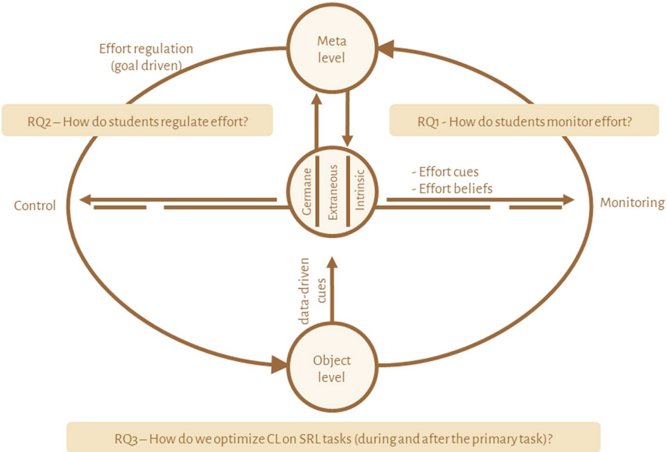
Abstract Desirable difficulties are learning conditions that are often experienced as effortful, but have a positive effect on learning results and transfer of knowledge and skills (Bjork & Bjork, 2011; Bjork, 1994). Learners often do not appreciate the beneficial effects of desirable difficulties, and the negative experiences of high effort and perceived low learning make them resistant to engage in desirable difficulties (Biwer et al., 2020a). This ultimately limits learning outcomes and academic achievement. With the increasing emphasis on self-regulation in education, characterized by higher learner agency and abundant choices in what, when, and how to study, the field of educational psychology is in need of theoretical and empirically testable assumptions that improve self-regulation in desirably difficult learning conditions with the aim to foster self-regulation abilities, learning outcomes, and academic achievement. Here, we present a framework that describes how to support self-regulation of effort when engaging in desirable difficulties: the “Start and Stick to Desirable Difficulties (S2D2)” framework. The framework builds on the Effort Monitoring and Regulation model (de Bruin et al., 2020). The aim of this framework is (1) to describe evidence for the central role of perceived effort and perceived learning in (dis)engagement in desirable difficulties, and (2) to review evidence on, and provide an agenda for research to improve learners’ self-regulated use of desirable difficulties to help them start and persist when learning feels tough, but is actually effective.
Overview
CoChat Summary
TL;DR
This review proposes the Start and Stick to Desirable Difficulties (S2D2) framework to explain why learners avoid, start, or persist in desirable difficulties based on perceived effort and perceived learning. It argues that sustainable use of these strategies requires interventions at the strategy, task, and learner levels to help learners accept, reduce, or silence effort while also seeing actual learning benefits.
Key findings
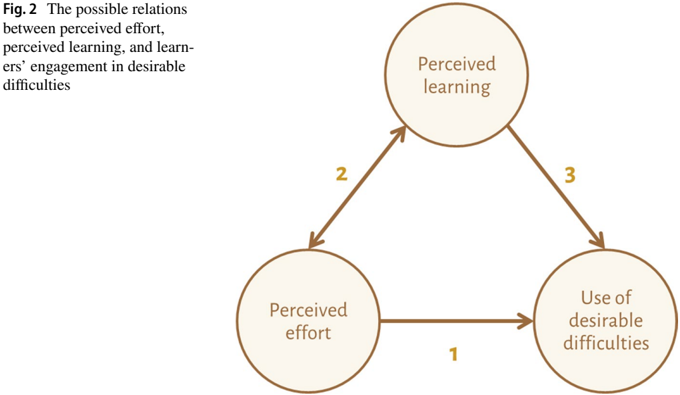
- The paper identifies three relations that shape engagement in desirable difficulties: perceived effort can directly affect use, perceived effort can be intricately related to perceived learning, and perceived learning can directly affect use.
- In one cited meta-analysis, learners’ effort ratings correlated negatively with judgments of learning during learning, with \(r = -0.355\); the correlation was weaker for prospective than retrospective judgments and stronger for problem-solving than paired-associates tasks.
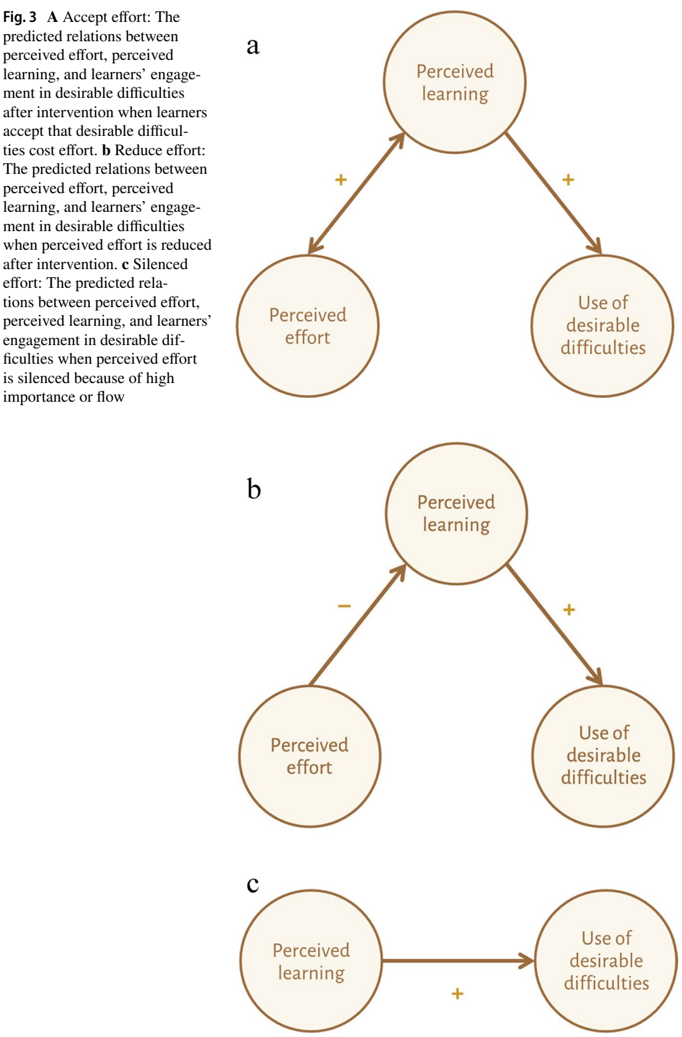
- In a cited study of human anatomy image-name pairs, learners’ strategy decisions showed that before feedback, effort directly predicted retrieval-practice choices; after performance feedback, strategy decisions were directly affected by effort ratings and indirectly through perceived learning.
- In a cited study comparing blocked and interleaved practice, perceived effort was higher and perceived learning lower for interleaving than blocking at first, but these differences decreased over time; the effect of reduced effort on choosing interleaving was mediated by increased perceived learning.
Methods
- Conceptual review/framework paper: the authors synthesize prior theory and empirical findings rather than report a new primary empirical study.
- The framework builds on the Effort Monitoring and Regulation (EMR) model and focuses on self-regulated learning in authentic self-study environments, especially older adolescents and adult learners.
- The analysis is narrative and integrative, using prior studies and a proposed intervention agenda organized around strategy-level, task-level, and learner-level approaches.
Limitations
- The paper states that it does not explain how teachers can directly incorporate desirable difficulties into teaching; its focus is on students’ self-regulated use in self-study contexts.
- The authors note that their discussion of the relation between perceived effort and learning is limited by the fact that “much [is] still unknown,” including how these perceptions develop across task level and strategy level and over longer time spans.
- Evident from the text: this is a framework/review without a new empirical sample, so the proposed claims are not directly tested in this paper.
Model-written summary. Check it against the paper before relying on it.
Integrity signals
Registry
Cites
Statistics
Figures
Verification
Claims the paper makes
21 Valid · 6 Not valid · 39 Not checked · 92 Own results and interpretations
Every source the paper cites for this claim was checked and supports it.
In the paper
“That is, self-reports of effort through ratings on a Likert-type scale should not be viewed as objective reflections of effort based solely on the difficulty of a task.”
What the sources say
- Supportedcites Scheiter et al., 2020 matched to “Looking at Mental Effort Appraisals through a Metacognitive Lens: Are they Biased?” (2020) source
The Subjective Effort Measures section describes effort self-reports made on a nine-point Likert scale. The Heuristic Cues Underlying Effort Appraisals section says those appraisals can be influenced by feedback and task position—factors unrelated to the task itself—so they are not objective reflections based solely on task difficulty. Page numbers were not available in our copy. (LLM, conf=0.93)
plain- Asserted: passes — The authors put it forward as true.
- Checkable: passes — It can be checked against evidence.
- Load-bearing: passes — The paper’s conclusions depend on it.
- Based: passes — The paper gives a reason why it holds.
- Rests on an assumption not shown here.
- Supported
Every source the paper cites for this claim was checked and supports it.
In the paper
“These differences between blocking and interleaving decreased after experience with the strategies.”
What the sources say
- Supportedcites Onan et al., 2022 matched to “Growing Out of the Experience: How Subjective Experiences of Effort and Learning Influence the Use of Interleaved Practice” (2022) source
The Perceived Effort and Perceived Learning sections report that, over time, effort decreased and perceived learning increased for interleaved practice, while neither changed for blocked practice. Because interleaving initially had higher perceived effort and lower perceived learning, both differences narrowed with experience. (LLM, conf=0.94)
plain- Asserted: passes — The authors put it forward as true.
- Checkable: passes — It can be checked against evidence.
- Load-bearing: passes — The paper’s conclusions depend on it.
- Based: passes — The paper gives a reason why it holds.
- Supported
The cited sources that could be checked couldn’t confirm or dispute this claim.
In the paper
“The Baars etal.'s (2020) meta-analysis shows that the goal-driven approach is less common among learners than the data-driven approach.”
What the sources say
- Could not verifycites Baars et al., 2020 matched to “The Relation Between Students’ Effort and Monitoring Judgments During Learning: A Meta-analysis” (2020) sourceExperimental — accuracy not yet measured
The Data-Driven and Goal-Driven Self-Regulation section describes both approaches but does not compare how commonly learners use them. Limitations and Future Studies says only a small number of included studies manipulated goal-driven self-regulation; that is a statement about the studies, not the prevalence of the approach among learners. Searches for a learner-level frequency comparison found none. (LLM, conf=0.73)
plain- Asserted: passes — The authors put it forward as true.
- Checkable: passes — It can be checked against evidence.
- Load-bearing: unclear — It is unclear whether the paper’s conclusions depend on it.
- Based: passes — The paper gives a reason why it holds.
- Could not verify
Every source the paper cites for this claim was checked and supports it.
In the paper
“In the context of desirable difficulties, the negative effect of perceiving effort as costly or aversive was also observed in research by Hui and colleagues (2022).”
What the sources say
- Supportedcites Hui et al., 2022 matched to “Why students do (or do not) choose retrieval practice: Their perceptions of mental effort during task performance matter” (2022) source
In the Discussion (section 4, Figure 4; page not provided), Hui and colleagues report that perceived mental effort directly informed students’ strategy choices: they tended to choose less effortful restudy for tasks they found taxing. This supports the claim’s broad point that treating effort as a cost can discourage an effortful learning strategy, although the study describes perceived effort rather than directly measuring aversion. (LLM, conf=0.86)
plainstates a cause- Asserted: passes — The authors put it forward as true.
- Checkable: passes — It can be checked against evidence.
- Load-bearing: passes — The paper’s conclusions depend on it.
- Based: passes — The paper gives a reason why it holds.
- Supported
The cited sources support only part of this claim — read each source’s verdict below.
In the paper
“Instead, learners derive them dynamically through several sources of information such as their effort beliefs, prior task experience, current level of fatigue, interest in the task, and fluency of processing.”
What the sources say
- Partly supportedcites Scheiter et al., 2020 matched to “Looking at Mental Effort Appraisals through a Metacognitive Lens: Are they Biased?” (2020) sourceExperimental — accuracy not yet measured
The Subjective Effort Measures section (page unavailable) says beliefs about ability may affect how learners assess effort, and the Heuristic Cues Underlying Effort Appraisals section says task experience and other cues can influence ratings. The copy does not establish current fatigue or task interest as sources of effort ratings; it discusses processing fluency chiefly as a cue for judgments of learning, not effort ratings. (LLM, conf=0.84)
plainstates a cause- Asserted: passes — The authors put it forward as true.
- Checkable: passes — It can be checked against evidence.
- Load-bearing: passes — The paper’s conclusions depend on it.
- Based: passes — The paper gives a reason why it holds.
- Rests on an assumption not shown here.
- Partly supported
62 more claims · 6 with their cited sources checked
Create a free account to see all 158 claims and to verify the 1 reference still open.
- It may state two separate claims as one. 58
- Probably not a substantial claim. 50
Citations
Cites
Cognitive Load During Problem Solving: Effects on Learning
Sweller, J. (1988) · Cognitive Science · doi:10.1016/0364-0213(88)90023-7 · Cited by 11,048 · cited 1×
“The desirable difficulties usually remain more effortful because they generally require active, generative processing, thereby inducing more germane load to put in cognitive load theory terms (Sweller, 1988).”
BackgroundTest-Enhanced Learning: Taking Memory Tests Improves Long-Term Retention
Roediger, H. L., & Karpicke, J. D. (2006) · Psychological Science · doi:10.1111/j.1467-9280.2006.01693.x · Cited by 2,867
Metamemory: A Theoretical Framework and New Findings
Nelson, T. O. (1990) · Psychology of Learning and Motivation · doi:10.1016/s0079-7421(08)60053-5 · Cited by 2,583 · cited 1×
“The EMR model finds its base in the Nelson and Narens model (Nelson, 1990; Nelson & 1 3 Narens, 1994), which describes how cycles of monitoring and regulation of learning characterize learning task engagement.”
MethodThe Critical Importance of Retrieval for Learning
Karpicke, J. D., & Roediger, H. L. (2008) · Science · doi:10.1126/science.1152408 · Cited by 1,791 · cited 1×
“For example, when using retrieval practice, learning effects are not immediately visible but appear only after a delay (Karpicke & Roediger, 2008; Nunes & Karpicke, 2015).”
MethodNakamura, J., & Csikszentmihalyi, M. (2014) · Flow and the Foundations of Positive Psychology · doi:10.1007/978-94-017-9088-8_16 · Cited by 1,608 · cited 2×
“Flowlike experiences can also be interpreted as examples of the extremely goal-driven approach (Nakamura & Csikszentmihalyi, 2014) because under these circumstances perceptions of effort also appear to be silenced (Swann et al., 2016).”
BackgroundGuadagnoli, M. A., & Lee, T. D. (2004) · Journal of Motor Behavior · doi:10.3200/jmbr.36.2.212-224 · Cited by 1,534 · cited 1×
“For these learners, Educational Psychology Review (2023) 35:41 1 3 41 Page 20 of 27 the difficulty of the learning material is probably too high; the desirably difficult strategy itself not benefiting them is less likely (Guadagnoli & Lee, 2004).”
BackgroundAn opportunity cost model of subjective effort and task performance
Kurzban, R., Duckworth, A., Kable, J. W., & Myers, J. (2013) · Behavioral and Brain Sciences · doi:10.1017/s0140525x12003196 · Cited by 1,381 · cited 1×
“According to the opportunity cost model (Kurzban et al., 2013), the experienced costs of effort invested in a task are weighed against alternative opportunities.”
MethodMonitoring one’s own knowledge during study: A cue-utilization approach to judgments of learning
Koriat, A. (1997) · Journal of Experimental Psychology: General · doi:10.1037/0096-3445.126.4.349 · Cited by 1,363 · cited 1×
“As in the case of metacognitive judgments such as judgments of learning (de Bruin et al., 2017; Koriat, 1997), learners do not have direct access to the effort they actually expend and therefore have to infer their objective effort based on information sources typically termed “cues.””
BackgroundMemory and Metamemory Considerations in the Training of Human Beings
Bjork, R. A. (1994) · Metacognition · doi:10.7551/mitpress/4561.003.0011 · Cited by 1,084 · cited 2×
“Desirable difficulties are learning conditions that are often experienced as effortful, but have a positive effect on learning results and transfer of knowledge and skills (Bjork & Bjork, 2011; Bjork, 1994).”
BackgroundToward a rational and mechanistic account of mental effort
Shenhav, A., Musslick, S., Lieder, F., Kool, W., Griffiths, T. L., Cohen, J. D., & Botvinick, M. M. (2017) · Annual Review of Neuroscience · doi:10.1146/annurev-neuro-072116-031526 · Cited by 1,077
How do we know that we know? The accessibility model of the feeling of knowing
Koriat, A. (1993) · Psychological Review · doi:10.1037/0033-295x.100.4.609 · Cited by 895 · cited 1×
“These judgments can be measured in many ways such as through Judgments of Learning (Nelson & Dunlosky, 1991), predictions of performance (van Loon et al., 2014), and feeling of knowing (FOK; Koriat, 1993).”
MethodThe Effort Paradox: Effort Is Both Costly and Valued
Inzlicht, M., Shenhav, A., & Olivola, C. Y. (2018) · Trends in Cognitive Sciences · doi:10.1016/j.tics.2018.01.007 · Cited by 863
Why Investigate Metacognition?
Nelson, T. O., & Narens, L. (1994) · Metacognition · doi:10.7551/mitpress/4561.003.0003 · Cited by 750
Karpicke, J. D., Butler, A. C., & Roediger III, H. L. (2009) · Memory · doi:10.1080/09658210802647009 · Cited by 745
Klassen, R. M., Krawchuk, L. L., & Rajani, S. (2008) · Contemporary Educational Psychology · doi:10.1016/j.cedpsych.2007.07.001 · Cited by 728 · cited 1×
“Also, within our view, procrastination may not always be a self-efficacy problem (Klassen et al., 2008), but could be an adaptive way of students to increase importance and reduce perceived effort.”
Background(2011) · Cited by 725
Repeated retrieval during learning is the key to long-term retention☆
KARPICKE, J., & ROEDIGERIII, H. (2007) · Journal of Memory and Language · doi:10.1016/j.jml.2006.09.004 · Cited by 598
Integrating Models of Self-Regulation
Inzlicht, M., Werner, K. M., Briskin, J. L., & Roberts, B. W. (2021) · Annual Review of Psychology · doi:10.1146/annurev-psych-061020-105721 · Cited by 594 · cited 1×
“In line with several views on self-regulation as overriding, a default response of inaction, free roaming thought, or mind wandering (Inzlicht et al., 2021), deciding to start and stick to a learning task is goal-driven, self-regulatory behavior.”
BackgroundNelson, T. O., & Dunlosky, J. (1991) · Psychological Science · doi:10.1111/j.1467-9280.1991.tb00147.x · Cited by 580 · cited 5×
“1 3 Educational Psychology Review (2023) 35:41 Page 9 of 27 41 Relation 3—Perceived Learning Is Directly Related to the Use of Desirable Difficulties There are circumstances when perceived effort does not play a role and use of desirable difficulties is related solely to perceived learning.”
MethodInfluentialMeasuring cost: The forgotten component of expectancy-value theory
Flake, J. K., Barron, K. E., Hulleman, C., McCoach, B. D., & Welsh, M. E. (2015) · Contemporary Educational Psychology · doi:10.1016/j.cedpsych.2015.03.002 · Cited by 554 · cited 1×
“It should be mentioned that learners may experience other types of costs than effort costs when self-regulating their learning, such as emotional costs and costs related to loss of valued alternatives (Flake et al., 2015).”
BackgroundStudy strategies of college students: Are self-testing and scheduling related to achievement?
Hartwig, M. K., & Dunlosky, J. (2012) · Psychonomic Bulletin & Review · doi:10.3758/s13423-011-0181-y · Cited by 477
Dignath, C., & Veenman, M. V. J. (2021) · Educational Psychology Review · doi:10.1007/s10648-020-09534-0 · Cited by 403
Expectancy-Value-Cost Model of Motivation
Barron, K. E., & Hulleman, C. S. (2015) · International Encyclopedia of the Social & Behavioral Sciences · doi:10.1016/b978-0-08-097086-8.26099-6 · Cited by 393 · cited 1×
“In terms of expectancy-value theory (Barron & Hulleman, 2015), the high costs of not engaging in the learning activity are what motivates the effort silencing.”
BackgroundThe Influence of Length and Frequency of Training Session on the Rate of Learning to Type
BADDELEY, A. D., & LONGMAN, D. J. A. (1978) · Ergonomics · doi:10.1080/00140137808931764 · Cited by 291 · cited 1×
“Not surprisingly, learners report low enjoyment in these kinds of learning circumstances (Baddeley & Longman, 1978).”
BackgroundWhy interleaving enhances inductive learning: The roles of discrimination and retrieval
Birnbaum, M. S., Kornell, N., Bjork, E. L., & Bjork, R. A. (2013) · Memory & Cognition · doi:10.3758/s13421-012-0272-7 · Cited by 278 · cited 1×
“For example, learners improve their retention in category learning when they interleave rather than block the order of their study materials (Birnbaum et al., 2013; Brunmair & Richter, 2019).”
BackgroundCastro-Alonso, J. C., de Koning, B. B., Fiorella, L., & Paas, F. (2021) · Educational Psychology Review · doi:10.1007/s10648-021-09606-9 · Cited by 278 · cited 1×
“First, manipulating (perceived) task length can be achieved by segmenting the task into smaller chunks (Castro-Alonso et al., 2021).”
BackgroundInstructor and student knowledge of study strategies.
Morehead, K., Rhodes, M. G., & DeLozier, S. (2016) · Memory · doi:10.1080/09658211.2014.1001992 · Cited by 230
Biwer, F., Wiradhany, W., oude Egbrink, M., Hospers, H., Wasenitz, S., Jansen, W., & de Bruin, A. (2021) · Frontiers in Psychology · doi:10.3389/fpsyg.2021.642593 · Cited by 226 · cited 1×
“This benefit stems from the fact that for both types of learners, learning will take effort (Biwer et al., 2021).”
BackgroundSelf-citationCognitive Load as Motivational Cost
Feldon, D. F., Callan, G., Juth, S., & Jeong, S. (2019) · Educational Psychology Review · doi:10.1007/s10648-019-09464-6 · Cited by 218 · cited 2×
“Learners are known to interpret perceived effort as a motivational cost (Feldon et al., 2019) or as generally aversive (Inzlicht et al.”
BackgroundSynthesizing Cognitive Load and Self-regulation Theory: a Theoretical Framework and Research Agenda
de Bruin, A. B. H., Roelle, J., Carpenter, S. K., Baars, M., & EFG-MRE (2020) · Educational Psychology Review · doi:10.1007/s10648-020-09576-4 · Cited by 196
Fostering effective learning strategies in higher education—A mixed-methods study.
Biwer, F., Egbrink, M. G. A. O., Aalten, P., & de Bruin, A. B. H. (2020) · Journal of Applied Research in Memory and Cognition · doi:10.1016/j.jarmac.2020.03.004 · Cited by 195 · cited 3×
“Explanation of what desirable difficulties actually are and what learning strategies are preferable under which circumstances is necessary (Biwer et al., 2020a; Biwer et al., 2020b).”
BackgroundSelf-citationSimilarity matters: A meta-analysis of interleaved learning and its moderators.
Brunmair, M., & Richter, T. (2019) · Psychological Bulletin · doi:10.1037/bul0000209 · Cited by 178 · cited 1×
“For example, learners improve their retention in category learning when they interleave rather than block the order of their study materials (Birnbaum et al., 2013; Brunmair & Richter, 2019).”
BackgroundThe Science of Habit and Its Implications for Student Learning and Well-being
Fiorella, L. (2020) · Educational Psychology Review · doi:10.1007/s10648-020-09525-1 · Cited by 160 · cited 1×
“We agree with Fiorella (2020) that findings from the behavior change literature are of relevance here, as these studies provide insights into how habits are overridden and created.”
BackgroundYan, V. X., Bjork, E. L., & Bjork, R. A. (2016) · Journal of Experimental Psychology: General · doi:10.1037/xge0000177 · Cited by 153 · cited 1×
“Similar misinterpretations of perceived learning gains have been found for massed versus spaced practice (Logan et al., 2012), and blocked versus interleaved practice (Yan et al., 2016).”
BackgroundSwann, C., Keegan, R. J., Crust, L., & Piggott, D. (2015) · Psychology of sport and exercise · doi:10.1016/j.psychsport.2015.10.008 · Cited by 152
Koriat, A. (2008) · Memory & Cognition · doi:10.3758/mc.36.2.416 · Cited by 143 · cited 2×
“In data-driven 1 3 Educational Psychology Review (2023) 35:41 Page 7 of 27 41 effort interpretations, learners apply the easily-learned-easily-remembered heuristic (Koriat, 2008) and view experiences of high effort as an indication of poor learning from the task and vice versa.”
BackgroundKirk-Johnson, A., Galla, B. M., & Fraundorf, S. H. (2019) · Cognitive Psychology · doi:10.1016/j.cogpsych.2019.101237 · Cited by 142 · cited 1×
“This finding aligns with research showing that decisions about how learners invest effort are often made considering perceived effects on learning (Kirk-Johnson et al., 2019), and research showing that there is a negative relation between effort ratings and learners’ self-efficacy (Likourezos & Kalyuga, 2017).”
ResultRewarding cognitive effort increases the intrinsic value of mental labor
Clay, G., Mlynski, C., Korb, F. M., Goschke, T., & Job, V. (2022) · Proceedings of the National Academy of Sciences · doi:10.1073/pnas.2111785119 · Cited by 131 · cited 1×
“Recent research (Clay et al., 2022) showed that rewarding high effort on a working memory task (the N-back task) led to higher choices for more difficult tasks during a transfer task (a math task) where the reward was absent.”
BackgroundTiming and Frequency of Mental Effort Measurement: Evidence in Favour of Repeated Measures
van Gog, T., Kirschner, F., Kester, L., & Paas, F. (2012) · Applied Cognitive Psychology · doi:10.1002/acp.2883 · Cited by 130
Choking under pressure: theoretical models and interventions
Mesagno, C., & Beckmann, J. (2017) · Current Opinion in Psychology · doi:10.1016/j.copsyc.2017.05.015 · Cited by 114 · cited 1×
“Such circumstances can be linked to a state of paralyzing or choking under pressure, where learners experience the burden of work as too high and fail to get started or quit prematurely knowing they cannot manage the task load (Mesagno & Beckmann, 2017).”
BackgroundMonitoring and regulation of learning in medical education: The need for predictive cues
de Bruin, A. B. H., Dunlosky, J., & Cavalcanti, R. B. (2017) · Medical Education · doi:10.1111/medu.13267 · Cited by 112 · cited 1×
“As in the case of metacognitive judgments such as judgments of learning (de Bruin et al., 2017; Koriat, 1997), learners do not have direct access to the effort they actually expend and therefore have to infer their objective effort based on information sources typically termed “cues.””
BackgroundPerez, T., Dai, T., Kaplan, A., Cromley, J. G., Brooks, W. D., White, A. C., Mara, K. R., & Balsai, M. J. (2019) · Learning and Individual Differences · doi:10.1016/j.lindif.2019.04.001 · Cited by 110 · cited 1×
“Correlational research indicates that the experienced concept of cost is distinct from the expectancy factor of motivation (Dietrich et al., 2019; Perez et al., 2019).”
BackgroundBellhäuser, H., Lösch, T., Winter, C., & Schmitz, B. (2016) · The Internet and Higher Education · doi:10.1016/j.iheduc.2016.07.002 · Cited by 109 · cited 1×
“Examples of successful interventions at the strategy level cover several types of learning strategy training programs provided in small groups (Biwer et al., 2020a; Biwer et al., 2020b), or online (Bellhäuser et al., 2016; Broadbent et al., 2020; Endres et al., 2021).”
BackgroundLikourezos, V., & Kalyuga, S. (2016) · Instructional Science · doi:10.1007/s11251-016-9399-4 · Cited by 109
In-the-Moment Profiles of Expectancies, Task Values, and Costs
Dietrich, J., Moeller, J., Guo, J., Viljaranta, J., & Kracke, B. (2019) · Frontiers in Psychology · doi:10.3389/fpsyg.2019.01662 · Cited by 109 · cited 1×
“Correlational research indicates that the experienced concept of cost is distinct from the expectancy factor of motivation (Dietrich et al., 2019; Perez et al., 2019).”
BackgroundLogan, J. M., Castel, A. D., Haber, S., & Viehman, E. J. (2012) · Metacognition and Learning · doi:10.1007/s11409-012-9090-3 · Cited by 103 · cited 1×
“Similar misinterpretations of perceived learning gains have been found for massed versus spaced practice (Logan et al., 2012), and blocked versus interleaved practice (Yan et al.”
BackgroundThe persistence of the fluency–confidence association in problem solving
Ackerman, R., & Zalmanov, H. (2012) · Psychonomic Bulletin & Review · doi:10.3758/s13423-012-0305-z · Cited by 103 · cited 1×
“The pain in such utterances refers to the effort that is experienced when engaging in exercise or in learning tasks that are typically unfavorable; those where experiences of fluency are scarce (Ackerman & Zalmanov, 2012).”
BackgroundMcDaniel, M. A., & Einstein, G. O. (2020) · Perspectives on Psychological Science · doi:10.1177/1745691620920723 · Cited by 103 · cited 1×
“…on frameworks that describe the necessary conditions for such a training program, the Study Smart framework (Biwer & de Bruin, 2023) and the Knowledge, Belief, Commitment, and Planning (KBCP) framework (McDaniel & Einstein, 2020; McDaniel et al., 2021) provide important starting points.”
BackgroundThe Relation Between Students’ Effort and Monitoring Judgments During Learning: A Meta-analysis
Baars, M., Wijnia, L., de Bruin, A., & Paas, F. (2020) · Educational Psychology Review · doi:10.1007/s10648-020-09569-3 · Cited by 101
Integrating Models of Self-RegulationPreprint
Inzlicht, M., Werner, K. M., Briskin, J. L., & Roberts, B. W. (2020) · PsyArXiv (OSF Preprints) · doi:10.31234/osf.io/dpjye · Cited by 97
Improving Lifelong Learning by Fostering Students’ Learning Strategies at University
Endres, T., Leber, J., Böttger, C., Rovers, S., & Renkl, A. (2020) · Psychology Learning & Teaching · doi:10.1177/1475725720952025 · Cited by 92
Reber, R., & Greifeneder, R. (2017) · Educational Psychologist · doi:10.1080/00461520.2016.1258173 · Cited by 87
Koriat, A., Ackerman, R., Adiv, S., Lockl, K., & Schneider, W. (2014) · Journal of Experimental Psychology: General · doi:10.1037/a0031768 · Cited by 85 · cited 1×
“The negative correlation between effort ratings and judgments of learning suggests that learners tend to apply a data-driven interpretation of effort (Koriat et al., 2014).”
BackgroundPhysiological and Psychological Effects of Deception on Pacing Strategy and Performance: A Review
Jones, H. S., Williams, E. L., Bridge, C. A., Marchant, D., Midgley, A. W., Micklewright, D. P., & McNaughton, L. R. (2013) · Sports Medicine · doi:10.1007/s40279-013-0094-1 · Cited by 84 · cited 1×
“Research in sport sciences has revealed that athletes are more willing to invest effort when the (perceived) end point is in sight (Jones et al., 2013).”
BackgroundMaking an Effort Versus Experiencing Load
Klepsch, M., & Seufert, T. (2021) · Frontiers in Education · doi:10.3389/feduc.2021.645284 · Cited by 79 · cited 1×
“…valued against its perceived effect on learning and students experience but accept the effort: Higher effort 1 This distinction is also termed passive load (load experienced bottom-up from the task) versus active load (load actively controlled and invested by the learner, Klepsch & Seufert, 2021).”
BackgroundThe effort paradox: Effort is both costly and valuedPreprint
Inzlicht, M., Shenhav, A., & Olivola, C. Y. (2017) · PsyArXiv (OSF Preprints) · doi:10.31234/osf.io/b5a2m · Cited by 76
van Loon, M. H., de Bruin, A. B. H., van Gog, T., van Merriënboer, J. J. G., & Dunlosky, J. (2014) · Acta Psychologica · doi:10.1016/j.actpsy.2014.06.007 · Cited by 68
Looking at Mental Effort Appraisals through a Metacognitive Lens: Are they Biased?
Scheiter, K., Ackerman, R., & Hoogerheide, V. (2020) · Educational Psychology Review · doi:10.1007/s10648-020-09555-9 · Cited by 63
Thacher, P. V. (2008) · Behavioral Sleep Medicine · doi:10.1080/15402000701796114 · Cited by 61 · cited 2×
“When under high time pressure, students are known to exemplify similar undesirable and ineffective behavior (Thacher, 2008).”
BackgroundBroadbent, J., Panadero, E., & Fuller-Tyszkiewicz, M. (2020) · Educational Technology Research and Development · doi:10.1007/s11423-020-09781-6 · Cited by 59 · cited 1×
“Examples of successful interventions at the strategy level cover several types of learning strategy training programs provided in small groups (Biwer et al., 2020a; Biwer et al., 2020b), or online (Bellhäuser et al., 2016; Broadbent et al., 2020; Endres et al., 2021).”
BackgroundMotivational strategies to engage learners in desirable difficulties.
Zepeda, C. D., Martin, R. S., & Butler, A. C. (2020) · Journal of Applied Research in Memory and Cognition · doi:10.1016/j.jarmac.2020.08.007 · Cited by 58 · cited 2×
“Motivation regulation strategies such as self-talk and picturing your future self (Zepeda et al., 2020) seem particularly promising in this regard as they specifically aim at having learners persist when things get rough.”
BackgroundOyserman, D., Elmore, K., Novin, S., Fisher, O., & Smith, G. C. (2018) · Frontiers in Psychology · doi:10.3389/fpsyg.2018.00781 · Cited by 57 · cited 1×
“Recent research on changing erroneous effort beliefs, where learners’ beliefs were framed or primed that high effort is important for learning, has shown some positive effects in increasing effort investments and improving learning outcomes (Muenks et al., 2016; Oyserman et al., 2018).”
BackgroundCogliano, M., Bernacki, M. L., & Kardash, C. M. (2021) · Journal of Educational Psychology · doi:10.1037/edu0000624 · Cited by 55 · cited 1×
“This approach is implemented in several learning strategy programs (Biwer et al., 2020a; Cogliano et al., 2020), where the generalizability of the learning strategies across different categories of learning tasks is also discussed and learners gain confidence in the effectiveness of the strategies in their specific co…”
MethodEffects of performance feedback valence on perceptions of invested mental effort
Raaijmakers, S. F., Baars, M., Schaap, L., Paas, F., & van Gog, T. (2017) · Learning and Instruction · doi:10.1016/j.learninstruc.2016.12.002 · Cited by 52
Self‐pacing in interval training: A teleoanticipatory approach
Edwards, A. M., Bentley, M. B., Mann, M. E., & Seaholme, T. (2010) · Psychophysiology · doi:10.1111/j.1469-8986.2010.01034.x · Cited by 51
Validity evidence for a short scale of college students’ perceptions of cost
Beymer, P. N., Ferland, M., & Flake, J. K. (2021) · Current Psychology · doi:10.1007/s12144-020-01218-w · Cited by 51
Motivating Personal Growth by Seeking Discomfort
Woolley, K., & Fishbach, A. (2022) · Psychological Science · doi:10.1177/09567976211044685 · Cited by 46 · cited 1×
“Finally, recent research revealed that framing the feeling of discomfort while engaging in a task as a sign of improvement in knowledge or skill motivated engagement in the task and improved goal achievement (Woolley & Fishbach, 2022).”
BackgroundTraining College Students to Use Learning Strategies: A Framework and Pilot Course
McDaniel, M. A., Einstein, G. O., & Een, E. (2021) · Psychology Learning & Teaching · doi:10.1177/1475725721989489 · Cited by 44 · cited 1×
“…on frameworks that describe the necessary conditions for such a training program, the Study Smart framework (Biwer & de Bruin, 2023) and the Knowledge, Belief, Commitment, and Planning (KBCP) framework (McDaniel & Einstein, 2020; McDaniel et al., 2021) provide important starting points.”
BackgroundBiwer, F., de Bruin, A. B. H., Schreurs, S., & Egbrink, M. G. A. O. (2020) · Journal of Applied Research in Memory and Cognition · doi:10.1016/j.jarmac.2020.07.006 · Cited by 44 · cited 3×
“Explanation of what desirable difficulties actually are and what learning strategies are preferable under which circumstances is necessary (Biwer et al., 2020a; Biwer et al., 2020b).”
BackgroundSelf-citationMacaluso, J. A., Beuford, R. R., & Fraundorf, S. H. (2022) · Journal of Intelligence · doi:10.3390/jintelligence10040083 · Cited by 43 · cited 1×
“Since learners were more familiar with blocking, the experience with blocking in the current study had less of an effect on their ratings of effort and learning than the more novel experience with interleaving (Macaluso et al., 2022).”
BackgroundSurma, T., Vanhoyweghen, K., Camp, G., & Kirschner, P. A. (2018) · Teaching and Teacher Education · doi:10.1016/j.tate.2018.05.007 · Cited by 39 · cited 1×
“Research shows that, just as students, teachers suffer from misbeliefs and lack adequate knowledge about effective learning strategy use (Morehead et al., 2016; Surma et al., 2018).”
BackgroundOnan, E., Wiradhany, W., Biwer, F., Janssen, E. M., & de Bruin, A. B. H. (2022) · Educational Psychology Review · doi:10.1007/s10648-022-09692-3 · Cited by 35 · cited 2×
“Effort put into desirable difficulties will often remain higher than effort put into ineffective strategies, even though this difference may become smaller after practice (Onan et al., 2022).”
BackgroundSelf-citationHui, L., de Bruin, A. B. H., Donkers, J., & van Merriënboer, J. J. G. (2022) · Applied Cognitive Psychology · doi:10.1002/acp.3933 · Cited by 33
Self-citationMuenks, K. M., Miele, D. B., & Wigfield, A. (2015) · Journal of Educational Psychology · doi:10.1037/edu0000068 · Cited by 33 · cited 1×
“Recent research on changing erroneous effort beliefs, where learners’ beliefs were framed or primed that high effort is important for learning, has shown some positive effects in increasing effort investments and improving learning outcomes (Muenks et al., 2016; Oyserman et al., 2018).”
BackgroundRetrieval‐Based Learning: Research at the Interface between Cognitive Science and Education
Nunes, L. D., & Karpicke, J. D. (2015) · Emerging Trends in the Social and Behavioral Sciences · doi:10.1002/9781118900772.etrds0289 · Cited by 31
Does Individual Performance Feedback Increase the Use of Retrieval Practice?
Hui, L., de Bruin, A. B. H., Donkers, J., & van Merriënboer, J. J. G. (2021) · Educational Psychology Review · doi:10.1007/s10648-021-09604-x · Cited by 30
Self-citationVariations of Periodization of Strength
Bompa, T. O. (1996) · Strength and conditioning journal · doi:10.1519/1073-6840(1996)018<0058:vopos>2.3.co;2 · Cited by 26
Stimulating the intention to change learning strategies: The role of narratives
Hui, L., de Bruin, A. B. H., Donkers, J., & van Merriënboer, J. J. G. (2021) · International Journal of Educational Research · doi:10.1016/j.ijer.2021.101753 · Cited by 25
Self-citationThe Hemingway effect: How failing to finish a task can have a positive effect on motivation
Oyama, Y., Manalo, E., & Nakatani, Y. (2018) · Thinking Skills and Creativity · doi:10.1016/j.tsc.2018.01.001 · Cited by 18 · cited 2×
“This phenomenon is also termed the “Hemingway effect” after the author Hemingway, who advocated that to write prolifically you should always stop when you are going well (Oyama et al., 2018).”
BackgroundIs there more to metamemory? An argument for two specialized monitoring abilities
McDonough, I. M., Enam, T., Kraemer, K. R., Eakin, D. K., & Kim, M. (2021) · Psychonomic Bulletin & Review · doi:10.3758/s13423-021-01930-z · Cited by 14 · cited 1×
“Recent research shows evidence for two distinct monitoring abilities: one taking place during encoding and one during retrieval (McDonough et al., 2021).”
BackgroundBailey, R., & Jesse, D. (2012) · Institutional Repositories DataBase (IRDB) · Cited by 8
Research works printed but not linked: 3
- Biwer, F. & de Bruin, A.B.H. (2023). Teaching students to 'Study Smart' - A training program based on the science of learning. In C. E. Overson, C. M. Hakala, L. L. Kordonowy, & V. A. Benassi (Eds.). In their own words: What scholars want you to know about why and how to apply the science of learning in your academic setting . Society for the Teaching of Psychology. (in press).
- Cirillo, F. (2006). The pomodoro technique (the pomodoro). Agile Processes in Software Engineering, 54 (2), 35.
- Metcalfe, J. (2011). Desirable difficulties and studying in the region of proximal learning. In A. S. Benjamin (Ed.) Successful remembering and successful forgetting: A Festschrift in honor of Robert A. Bjork (pp . 259-276). London (UK): Psychology Press. <!-- image --> 1 3
Cited by
Fan, Y., Tang, L., Le, H., Shen, K., Tan, S., Zhao, Y., Shen, Y., Li, X., & Gašević, D. (2025) · British Journal of Educational Technology · doi:10.1111/bjet.13544 · Cited by 805
Grund, A., Fries, S., Nückles, M., Renkl, A., & Roelle, J. (2024) · Educational Psychology Review · doi:10.1007/s10648-024-09852-7 · Cited by 68
“…that learning requires some sort of cognitive processing in response to a task’s complexity (i.e., effort-by-complexity), at first glance renders it understandable that the phrase “no pain, no gain” is increasingly used in educational contexts (e.g., Metcalfe, 2011; see also de Bruin et al., 2023).”
InfluentialComplexity affects performance, cognitive load, and awareness
Zeitlhofer, I., Zumbach, J., & Schweppe, J. (2024) · Learning and Instruction · doi:10.1016/j.learninstruc.2024.102001 · Cited by 81
Halmo, S. M., Yamini, K. A., & Stanton, J. D. (2024) · CBE—Life Sciences Education · doi:10.1187/cbe.23-08-0158 · Cited by 71
“…for each student where a problem is difficult enough to engage their curiosity and motivation to solve some-thing unknown but also does not generate negative emotions associated with failure that could prevent problem solving from moving forward (Zepeda et al. , 2020; de Bruin et al. , 2023).”
Carpenter, S. K. (2023) · Educational Psychology Review · doi:10.1007/s10648-023-09811-8 · Cited by 42
Metadata
- Authors
- de Bruin, A. B. H., Biwer, F., Hui, L., Onan, E., David, L., & Wiradhany, W.
- Affiliations
- Maastricht University (NL)
- Imperial College London (GB)
- Binus University (ID)
- Corresponding author
- de Bruin, Anique B. H.
- Venue
- Educational Psychology Review
- Published
- 2023-03-27
- Volume
- 35
- Issue
- 2
- ISSN
- 1040-726X (ISSN-L)
- 1573-336X
- OpenAlex
- W4360985532
- Semantic Scholar
- c9556fb1c7b8127ea4cc898fa1746277dc226675
- Cited by
- 109
- References
- 80
- Citations by year
- 2026: 53 · 2025: 34 · 2024: 18 · 2023: 4
- FWCI
- 28.90
- Type
- journal article
- Language
- en
- Open access
- hybrid
- doi.org
- Licence
- cc-by
- creativecommons.org/licenses/by/4.0 (tdm)
- creativecommons.org/licenses/by/4.0 (vor)
- Locations
- Educational Psychology Review (publishedVersion, cc-by)
- Research Publications (Maastricht University) (publishedVersion, cc-by)
- Research Publications (Maastricht University) (submittedVersion, other-oa)
- Funders
- NWO (VI.Vidi.195.135)
- Topics
- Social Sciences › Psychology › Developmental and Educational Psychology › Innovative Teaching and Learning Methods
- Life Sciences › Neuroscience › Cognitive Neuroscience › Memory Processes and Influences
- Social Sciences › Psychology › Experimental and Cognitive Psychology › Visual and Cognitive Learning Processes
- Keywords
- desirable difficulties, self-regulation, effort regulation, perceived effort, perceived learning, student engagement, learning persistence, academic performance, knowledge transfer, learner agency
About these checks
Registry, retraction, Cites and statistics results are computed, not judged, with one exception: a printed reference that no index lists is read once by a model before it counts as a citation error. Claims are extracted by a model and kept only when their quote appears verbatim in the text; each cited source is then checked, with a model’s help, for whether it says what the claim relies on. Those verdicts can be wrong — read the claim’s quote and the cited source before relying on one.
The claim verdicts this report counts are experimental: their accuracy is not yet measured.
A language model drew the claims from the paper on 2026-09-28, under version 3 of the claim definition (model deepseek-v4.1-flash, prompt extract-v3).
A second model labelled each claim on 2026-09-28 (model jev-1.13-20260917, definition revision gold-guideline-v0.2).
Cited sources are checked with a language model’s help (gpt-6-sol).
Statistics and arithmetic are recomputed, not judged.
Confidence bands are shown only for fields calibrated on our annotated test set. None is calibrated yet, so no band is shown.
What counts as a claim ›How we measure confidence ›How we check this ›
Are you an author, or do you see a problem with this page? Request a review
Data sources
Bibliographic data: Semantic Scholar, OpenAlex, Crossref.
Contains information from the Semantic Scholar Academic Graph Datasets, made available under the ODC Attribution License (ODC-BY 1.0).
Semantic Scholar’s data is described in: Kinney, R., et al. (2023). The Semantic Scholar Open Data Platform. arXiv:2301.10140.
