

Guidelines for conducting and reporting case study research in software engineering
Open accessThe DOI matches its Crossref record; 74 of the 75 references it cites were found in a registry or an index.
Abstract
Case study is a suitable research methodology for software engineering research since it studies contemporary phenomena in its natural context. However, the understanding of what constitutes a case study varies, and hence the quality of the resulting studies. This paper aims at providing an introduction to case study methodology and guidelines for researchers conducting case studies and readers studying reports of such studies. The content is based on the authors’ own experience from conducting and reading case studies. The terminology and guidelines are compiled from different methodology handbooks in other research domains, in particular social science and information systems, and adapted to the needs in software engineering. We present recommended practices for software engineering case studies as well as empirically derived and evaluated checklists for researchers and readers of case study research.
Overview
The claims and statistics of this paper haven’t been checked yet.
Free: it reads the open-access text and checks the first 5 claims that cite a source we can check. Create a free account to check every claim.
Integrity signals
Registry
Cites
Statistics
Figures



Verification
Claims the paper makes
The claims and statistics of this paper haven’t been checked yet.
Free: it reads the open-access text and checks the first 5 claims that cite a source we can check. Create a free account to check every claim.
Claims other papers make about this one
Each is checked against this paper’s own text: does it say what the citing paper says it does?
In the citing paper
“it is common to include construct validity, reliability, internal validity, and external validity, according to the guideline proposed in other works [222,255], which we adopted in the following.”
From Sustainability in computing education: A systematic literature review (2024) · cites this paper as [222]
Self-check
Percentages, sums and reported differences re-computed from the paper’s own numbers.
The self-check needs the paper’s full text.
Citations
Cites
(1984) · Cited by 81,983
Case Study Research: Design and Methods
Chaiklin, H. (1991) · The Journal of Nervous and Mental Disease · doi:10.1097/00005053-199102000-00025 · Cited by 39,535
Basics of Qualitative Research
Ozanne, J. L., Strauss, A., & Corbin, J. (1992) · Journal of Marketing Research · doi:10.1177/002224379202900312 · Cited by 17,868
Basics of Qualitative Research
Ozanne, J. L., Strauss, A., & Corbin, J. (1992) · Journal of Marketing Research · doi:10.2307/3172751 · Cited by 17,850
Building Theories from Case Study Research
Eisenhardt, K. M. (1989) · The Academy of Management Review · doi:10.2307/258557 · Cited by 17,455
The Art of Case Study Research
Johnson, K. E., & Stake, R. E. (1996) · The Modern Language Journal · doi:10.2307/329758 · Cited by 15,826 · cited 4×
“Four different types of triangulation may be applied ( Stake 1995 ):”
BackgroundMethodInfluentialHartley, J. (2004) · Essential Guide to Qualitative Methods in Organizational Research · doi:10.4135/9781446280119.n26 · Cited by 15,461
Five misunderstandings about case-study research
Flyvbjerg, B. (2006) · Qualitative Inquiry · doi:10.1177/1077800405284363 · Cited by 14,266 · cited 4×
“2 Case study methodology was originally used primarily for exploratory purposes, and some researchers still limit case studies for this purpose, as discussed by Flyvbjerg (2007).”
BackgroundMethodInfluentialAn Experimental Application of the DELPHI Method to the Use of Experts
Dalkey, N., & Helmer, O. (1963) · Management Science · doi:10.1287/mnsc.9.3.458 · Cited by 6,061
A Set of Principles for Conducting and Evaluating Interpretive Field Studies in Information Systems1
Klein, H. K., & Myers, M. D. (1999) · MIS Quarterly · doi:10.2307/249410 · Cited by 5,263 · cited 7×
“We prefer to consider ethnographic studies as a specialized type of case studies with focus on cultural practices (Easterbrook et al. 2008) or long duration studies with large amounts of participant-observer data (Klein and Myers 1999).”
BackgroundMethodInfluential
Research works printed but not linked: 2
- Shull F, Singer J, Sjøberg D (eds) (2008) Guide to Advanced Empirical Software Engineering. Springer- Verlag: London
- Martin Höst is an Associate Professor in Software Engineering in the Software Engineering Research Group at the Department of Computer Science, Lund University, Sweden. He received an M.Sc. degree from Lund University in 1992 and a Ph.D. degree in Software Engineering from the same university in 1999. His main research interests include software process improvement, software quality, empirical software engineering, and computer simulation of software development processes. The research is mainly conducted through empirical methods such as case studies, controlled experiments, and surveys. He has published more than 40 papers in international journals and conference proceedings.
Cited by
Items 201–300 of 1,013
The influence of Technical Debt on software developer morale
Besker, T., Ghanbari, H., Martini, A., & Bosch, J. (2020) · Journal of Systems and Software · doi:10.1016/j.jss.2020.110586 · Cited by 82
Usage and usefulness of technical software documentation: An industrial case study
Garousi, G., Garousi, V., Ruhe, G., Zhi, J., Moussavi, M., & Smith, B. (2014) · Information and Software Technology · doi:10.1016/j.infsof.2014.08.003 · Cited by 73
“Here, and in what follows for the description of the whole case study, we follow the terminology and methodology proposed by Runeson and Höst [35].”
InfluentialA Suite of Object Oriented Cognitive Complexity Metrics
Misra, S., Adewumi, A., Sanz, L. F., & Damaševičius, R. (2018) · IEEE Access · doi:10.1109/access.2018.2791344 · Cited by 73
“To achieve this, we followed the guidelines for conducting and reporting case studies in software engineering conducted by Runeson and Höst [30]; we evaluated our metrics theoretically, which includes the validation through measurement theory.”
MethodSelf-Service Cybersecurity Monitoring as Enabler for DevSecOps
Diaz, J., Perez, J. E., Lopez-Pena, M. A., Mena, G. A., & Yague, A. (2019) · IEEE Access · doi:10.1109/access.2019.2930000 · Cited by 63
“That is, they are, in general terms, very difficult to be objectively judged [36].”
BackgroundBlockchain and agency theory in supply chain management: A question of trust
Medina, M. J., Baudet, C., & Lebraty, J. (2024) · International Journal of Information Management · doi:10.1016/j.ijinfomgt.2023.102747 · Cited by 89
Do We Know Enough about Requirements Prioritization in Agile Projects: Insights from a Case Study
Racheva, Z., Daneva, M., Sikkel, K., Herrmann, A., & Wieringa, R. J. (2010) · IEEE International Requirements Engineering Conference (RE) · doi:10.1109/re.2010.27 · Cited by 72
“researchers recommended by Runeson and Höst [33].”
BackgroundInfluentialHighly-cited papers in software engineering: The top-100
Garousi, V., & Fernandes, J. M. (2015) · Information and Software Technology · doi:10.1016/j.infsof.2015.11.003 · Cited by 87
Sustainability competencies and skills in software engineering: An industry perspective
Heldal, R., Nguyên, N. T., Moreira, A., Lago, P., Duboc, L., Betz, S., Coroamă, V. C., Penzenstadler, B., Porras, J., Capilla, R., et al. (2024) · Journal of Systems and Software · doi:10.1016/j.jss.2024.111978 · Cited by 81
Ehrenhard, M., Wijnhoven, F., Broek, T. A. V. D., & Stagno, M. C. Z. (2016) · Technological Forecasting and Social Change · doi:10.1016/j.techfore.2016.09.011 · Cited by 91
Global vs. local models for cross-project defect prediction: A replication study
Herbold, S., Trautsch, A., & Grabowski, J. (2016) · Empirical Software Engineering · doi:10.1007/s10664-016-9468-y · Cited by 78
“Our study follows the guidelines for conducting case studies proposed by Runeson and Höst (2009).”
MethodSoftware traceability in the automotive domain: Challenges and solutions
Maro, S., Steghöfer, J.-P., & Staron, M. (2018) · Journal of Systems and Software · doi:10.1016/j.jss.2018.03.060 · Cited by 89
Characterizing industry-academia collaborations in software engineering: evidence from 101 projects
Garousi, V., Pfahl, D., Fernandes, J. M., Felderer, M., Mäntylä, M., Shepherd, D. C., Arcuri, A., Coşkunçay, A., & Tekinerdoğan, B. (2019) · Empirical Software Engineering · doi:10.1007/s10664-019-09711-y · Cited by 87
Going with the flow: An activity theory analysis of flow techniques in software development
Dennehy, D., & Conboy, K. (2016) · Journal of Systems and Software · doi:10.1016/j.jss.2016.10.003 · Cited by 86
Qualitative software engineering research: Reflections and guidelines
Lenberg, P., FELDT, R. H., Gren, L., Tengberg, L. G. W., Tidefors, I., & Graziotin, D. (2023) · Journal of Software Evolution and Process · doi:10.1002/smr.2607 · Cited by 92
“Software: Practice and Experience 2018; 48(12): 2223–2236.”
A systematic review of domain analysis solutions for product lines
Khurum, M., & Gorschek, T. (2009) · Journal of Systems and Software · doi:10.1016/j.jss.2009.06.048 · Cited by 75
Martini, A., Fontana, F. A., Biaggi, A., & Roveda, R. (2018) · Lecture notes in computer science · doi:10.1007/978-3-030-00761-4_21 · Cited by 70
“The investigation included a mix of quantitative and qualitative methods, which is highly recommended in case-studies [13], where it is crucial to reach a detailed understanding of complex systems, such as large software projects.”
BackgroundMethodInfluentialWohlin, C., & Runeson, P. (2021) · Information and Software Technology · doi:10.1016/j.infsof.2021.106678 · Cited by 43
Self-citationRana, R., Staron, M., Berger, C., Hansson, J., Nilsson, M., Törner, F., Meding, W., & Höglund, C. (2014) · Journal of Systems and Software · doi:10.1016/j.jss.2014.08.033 · Cited by 69
Business process architectures: overview, comparison and framework
Dijkman, R., Vanderfeesten, I., & Reijers, H. A. (2014) · Enterprise Information Systems · doi:10.1080/17517575.2014.928951 · Cited by 69
Akpan, I. J., & Shanker, M. S. (2018) · SIMULATION · doi:10.1177/0037549718757039 · Cited by 69
Data quality certification using ISO/IEC 25012: Industrial experiences
Gualo, F., Rodriguez, M., Verdugo, J., Caballero, I., & Piattini, M. (2021) · Journal of Systems and Software · doi:10.1016/j.jss.2021.110938 · Cited by 68
A study of transactional memory vs. locks in practice
Pankratius, V., & Adl-Tabatabai, A.-R. (2011) · ACM Symposium on Parallelism in Algorithms and Architectures (SPAA) · doi:10.1145/1989493.1989500 · Cited by 78
An exploratory study on exception handling bugs in Java programs
Ebert, F., Castor, F., & Serebrenik, A. (2015) · Journal of Systems and Software · doi:10.1016/j.jss.2015.04.066 · Cited by 73
“The combination of the empirical study of EH-bugs with the investigation of their perceptions allows us to triangulate our findings, such a triangulation being considered an important step in empirical software engineering research [42].”
BackgroundScalable Approaches for Test Suite Reduction
Cruciani, E., Miranda, B., Verdecchia, R., & Bertolino, A. (2019) · ACM/IEEE International Conference on Software Engineering: Companion Proceedings (ICSE-Companion) · doi:10.1109/icse.2019.00055 · Cited by 68
“Following the classification in [32] we consider four aspects.”
MethodIwaya, L. H., Babar, M. A., & Rashid, A. (2023) · IEEE Transactions on Software Engineering · doi:10.1109/tse.2023.3290237 · Cited by 79
“A total of ten participants were familiar with all privacy strategies in the list, of which only 3 have used all of them in their careers.”
BackgroundMethodInfluential(2017) · Lecture Notes in Business Information Processing · doi:10.1007/978-3-319-57633-6 · Cited by 56
Nascimento, D. L. D. M., Sotelino, E. D., Thiago Pires Santoloni, L. A. R. A., Caiado, R. G. G., & Ivson, P. (2017) · Journal of Civil Engineering and Management · doi:10.3846/13923730.2017.1385521 · Cited by 67
“However, according to Sacks et al. (2010), the largest research effort in the area of construction visualization focuses on the design phase (3D) and construction planning (4D).”
BackgroundDetecting violations of access control and information flow policies in data flow diagrams
Seifermann, S., Heinrich, R., Werle, D., & Reussner, R. (2021) · Journal of Systems and Software · doi:10.1016/j.jss.2021.111138 · Cited by 88
Sun, L., Li, Y., & Zio, E. (2021) · ASCE-ASME Journal of Risk and Uncertainty in Engineering Systems Part B Mechanical Engineering · doi:10.1115/1.4051940 · Cited by 86
Is it a Case Study? - Support for Ensuring and Assuring a Study is a Case Study
Wohlin, C., & Rainer, A. (2021) · Journal of Systems and Software · doi:10.1016/j.jss.2022.111395 · Cited by 75
“We chose to focus on articles citing the guidelines by Runeson and H¨ost (2009) instead of conducting a systematic literature review.”
InfluentialFischbach, J., Frattini, J., Vogelsang, A., Méndez, D., Unterkalmsteiner, M., Wehrle, A., Henao, P. R., Yousefi, P., Juricic, T., Radduenz, J., et al. (2022) · Journal of Systems and Software · doi:10.1016/j.jss.2022.111549 · Cited by 66
Olsson, H. H., & Bosch, J. (2013) · Lecture notes in business information processing · doi:10.1007/978-3-642-44930-7_10 · Cited by 72
“The main data collection method used was semi-structured group interviews with open-ended questions [22].”
MethodEnvironment modeling and simulation for automated testing of soft real-time embedded software
Iqbal, M. Z., Arcuri, A., & Briand, L. (2013) · Software & Systems Modeling · doi:10.1007/s10270-013-0328-6 · Cited by 66
The Pricey Bill of Technical Debt: When and by Whom will it be Paid?
Besker, T., Martini, A., & Bosch, J. (2017) · IEEE International Conference on Software Maintenance (ICSM) · doi:10.1109/icsme.2017.42 · Cited by 81
“As suggested in [31], this study employed the technique of semi-structured interviews where the questions were planned but not necessarily asked in the same order as they were listed.”
MethodBoundary objects and their use in agile systems engineering
Wohlrab, R., Pelliccione, P., Knauss, E., & Larsson, M. A. (2019) · Journal of Software Evolution and Process · doi:10.1002/smr.2166 · Cited by 78
“For the data analysis, we followed Creswell’s approach for qualitative data [45].”
MethodShafiee, S., Wautelet, Y., Hvam, L., Sandrin, E., & Forza, C. (2020) · Journal of Systems and Software · doi:10.1016/j.jss.2020.110732 · Cited by 78
“Four of the company’s projects were selected as cases following literal and theoretical replication logic (Runeson and Höst, 2009; Voss et al., 2002; Yin, 2009).”
BackgroundMethodOn the diffuseness of technical debt items and accuracy of remediation time when using SonarQube
Baldassarre, M. T., Lenarduzzi, V., Romano, S., & Saarimäki, N. (2020) · Information and Software Technology · doi:10.1016/j.infsof.2020.106377 · Cited by 72
“We designed our case study by taking into account the recommendations by Runeson and H¨ost [31].”
MethodPractitioners’ Perceptions on the Adoption of Low Code Development Platforms
Käss, S., Strahringer, S., & Westner, M. K. (2023) · IEEE Access · doi:10.1109/access.2023.3258539 · Cited by 82
“Discussing results before publishing is good practice in case study methodology, as it reduces the risk of misinter-preting the results and thus leads to a higher construct validity [44], [45], [46].”
BackgroundFeldmann, S., Kernschmidt, K., Wimmer, M., & Vogel‐Heuser, B. (2019) · Journal of Systems and Software · doi:10.1016/j.jss.2019.03.060 · Cited by 65
Embracing Technical Debt, from a Startup Company Perspective
Besker, T., Martini, A., Lokuge, R. E., Blincoe, K., & Bosch, J. (2018) · IEEE International Conference on Software Maintenance (ICSM) · doi:10.1109/icsme.2018.00051 · Cited by 78
“Specific threats to validity include construct validity related to the concept of TD, external validity with respect to the limited contexts analyzed, and reliability of the results affected by the high level of interpretation that both interviewees and researchers might have been injected in the study [20].”
The state-of-practice in requirements elicitation: an extended interview study at 12 companies
Palomares, C., Franch, X., Quer, C., Chatzipetrou, P., López, L., & Gorschek, T. (2021) · Requirements Engineering · doi:10.1007/s00766-020-00345-x · Cited by 64
The journey to technical excellence in agile software development
Alami, A., Krancher, O., & Paasivaara, M. (2022) · Information and Software Technology · doi:10.1016/j.infsof.2022.106959 · Cited by 78
“Case studies increase our knowledge of a particular phenomenon in depth [67,68].”
BackgroundTechnical Dependency Challenges in Large-Scale Agile Software Development
Sekitoleko, N., Evbota, F., Knauss, E., Sandberg, A., Chaudron, M. R. V., & Olsson, H. H. (2014) · Lecture notes in business information processing · doi:10.1007/978-3-319-06862-6_4 · Cited by 84
“As qualitative research approaches aim to investigate and improve the understanding of phenomena in their real-life context [24], and especially when the purpose is to explore peoples’ experiences and perceptions, we found it particularly well suited for our interests.”
BackgroundMethodInfluentialIn two minds: how reflections influence software design thinking
Razavian, M., Tang, A., Capilla, R., & Lago, P. (2016) · Journal of Software Evolution and Process · doi:10.1002/smr.1776 · Cited by 76
“To design and report the case study we followed the guidelines proposed by Runeson and Höst [70].”
MethodAn empirical investigation of modularity metrics for indicating architectural technical debt
Li, Z., Liang, P., Avgeriou, P., Guelfi, N., & Ampatzoglou, A. (2014) · International ACM SIGSOFT Conference on Quality of Software Architectures (QoSA) · doi:10.1145/2602576.2602581 · Cited by 78
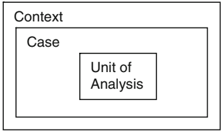
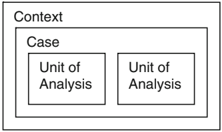
“According to [17], case studies can be characterized based on the way they define their cases and units of analysis.”
BackgroundMethodInfluentialStatic Fault Localization in Model Transformations
Burgueño, L., Troya, J., Wimmer, M., & Vallecillo, A. (2014) · IEEE Transactions on Software Engineering · doi:10.1109/tse.2014.2375201 · Cited by 74
“To evaluate the accuracy of our approach we performed a case study [29] by following the guidelines for conducting empirical explanatory case studies by Roneson and H€ orst [30].”
MethodAn investigation of proposed techniques for quantifying confidence in assurance arguments
Graydon, P., & Holloway, C. M. (2016) · Safety Science · doi:10.1016/j.ssci.2016.09.014 · Cited by 64
Mauša, G., & Grbac, T. G. (2017) · Applied Soft Computing · doi:10.1016/j.asoc.2017.01.050 · Cited by 64
Failure prediction in production line based on federated learning: an empirical study
Ge, N., Li, G., Zhang, L., & Liu, Y. (2021) · Journal of Intelligent Manufacturing · doi:10.1007/s10845-021-01775-2 · Cited by 77
“Following common guidelines for empirical studies (Runeson and Höst 2009; Yin 2017), we discuss threats to the validity of our study.”
MethodAljedaani, W., Aljedaani, M., AlOmar, E. A., Mkaouer, M. W., Ludi, S. A., & Khalaf, Y. B. (2021) · Education Sciences · doi:10.3390/educsci11110712 · Cited by 68
Extreme Learning Machine Applied to Software Development Effort Estimation
Carvalho, H. D. P. D., Fagundes, R., & Santos, W. B. (2021) · IEEE Access · doi:10.1109/access.2021.3091313 · Cited by 63
An Effective Method Of Developing Business Case Studies Based On Company AnalysisPreprint
Aithal, P. S. (2017) · SSRN Electronic Journal · doi:10.5281/zenodo.400579 · Cited by 73
Alkharabsheh, K., Alawadi, S., Kebande, V. R., Crespo, Y., Fernández-Delgado, M., & Taboada, J. A. (2021) · Information and Software Technology · doi:10.1016/j.infsof.2021.106736 · Cited by 70
“The objective of this study is defined by the GQM method, widely used in software engineering research for goal setting [37,38] as follows: Analyze Set of classes.”
MethodKuusinen, K., Mikkonen, T., & Pakarinen, S. (2012) · Lecture notes in computer science · doi:10.1007/978-3-642-34347-6_6 · Cited by 62
How Do Open Source Communities Document Software Architecture: An Exploratory Survey
Ding, W., Liang, P., Tang, A., Van Vliet, H., & Shahin, M. (2014) · 2014 19th International Conference on Engineering of Complex Computer Systems · doi:10.1109/iceccs.2014.26 · Cited by 54
“This survey is an exploratory survey to explore facts, seek new insights, and to generate ideas and hypotheses for new research [28][29].”
BackgroundA comparison of the efficiency and effectiveness of vulnerability discovery techniques
Austin, A., Holmgreen, C., & Williams, L. A. (2012) · Information and Software Technology · doi:10.1016/j.infsof.2012.11.007 · Cited by 62
Companies’ Participation in OSS Development–An Empirical Study of OpenStack
Zhang, Y., Zhou, M., Mockus, A., & Jin, Z. G. (2019) · IEEE Transactions on Software Engineering · doi:10.1109/tse.2019.2946156 · Cited by 75
A Quantitative Study on Characteristics and Effect of Batch Refactoring on Code Smells
Bibiano, A. C., Fernandes, E., Oliveira, D., Garcia, A., Kalinowski, M., Fonseca, B., Oliveira, R., de Oliveira, A. R. M., & Cedrim, D. (2019) · Proceedings of the ... ACM-IEEE International Symposium on Empirical Software Engineering and Measurement/International Symposium on Empirical Software Engineering and Measurement · doi:10.1109/esem.2019.8870183 · Cited by 73
“We then tabulated and plotted all data based on descriptive analysis guidelines for Software Engineering [40] [41].”
MethodOn the long-term use of visual gui testing in industrial practice: a case study
Alégroth, E., & FELDT, R. H. (2017) · Empirical Software Engineering · doi:10.1007/s10664-016-9497-6 · Cited by 61
Company Analysis – The Beginning Step for Scholarly Research
Aithal, P. S. (2017) · International Journal of Case Studies in Business IT and Education · doi:10.47992/ijcsbe.2581.6942.0002 · Cited by 75
Assessing IOT Projects in University Education - A Framework for Problem-Based Learning
Mäenpää, H., Varjonen, S., Hellas, A., Tarkoma, S., & Männistö, T. (2017) · IEEE/ACM International Conference on Software Engineering: Software Engineering Education and Training (ICSE-SEET) · doi:10.1109/icse-seet.2017.6 · Cited by 61
“To capture a realistic representation of the phenomenon in its authentic context, our data collection strategy includes several primary and secondary sources of information [33].”
BackgroundHehn, J., & Uebernickel, F. (2018) · IEEE International Requirements Engineering Conference (RE) · doi:10.1109/re.2018.00-18 · Cited by 61
“Thus, we follow a longitudinal case study approach to gain richer and more contextualized information of the usage of DT for RE over time in a real-life project setting [21], [22].”
BackgroundMethodInfluentialWohlrab, R., Knauss, E., Steghöfer, J.-P., Maro, S., Anjorin, A., & Pelliccione, P. (2018) · Requirements Engineering · doi:10.1007/s00766-018-0306-1 · Cited by 70
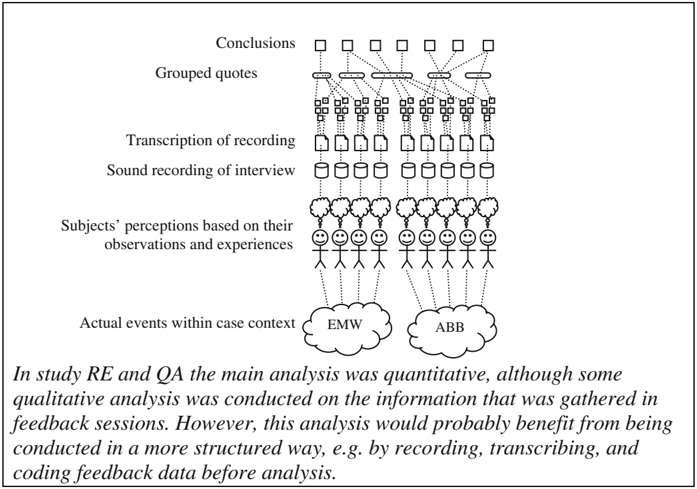
“Reporting and quality assurance of research findings During data analysis and reporting, we maintained a clear chain of evidence [45] to document our procedure and results, ensuring that they remain comprehensible for the reader.”
BackgroundMethodDesigning Microservice Systems Using Patterns: An Empirical Study on Quality Trade-Offs
Vale, G., Correia, F. F., Guerra, E., Rosa, T. D. O., Fritzsch, J., & Bogner, J. (2022) · IEEE International Conference on Software Architecture (ICSA) · doi:10.1109/icsa53651.2022.00015 · Cited by 78
Panesar-Walawege, R. K., Sabetzadeh, M., & Briand, L. (2012) · Information and Software Technology · doi:10.1016/j.infsof.2012.11.009 · Cited by 60
An Integer Linear Programming approach to the single and bi-objective Next Release Problem
Veerapen, N., Ochoa, G., Harman, M., & Burke, E. K. (2015) · Information and Software Technology · doi:10.1016/j.infsof.2015.03.008 · Cited by 60
Bayesian Networks For Evidence-Based Decision-Making in Software Engineering
Tosun, A., & Bener, A. (2014) · IEEE Transactions on Software Engineering · doi:10.1109/tse.2014.2321179 · Cited by 66
“Thus far, evidence-based software engineering has provided guidelines for conducting empirical research (e.g., [4]), and for the systematic aggregation of current research evidence (e.g., [5], [6]).”
BackgroundA Bayesian networks-based approach to assess and improve the teamwork quality of agile teams
Freire, A., Perkusich, M., Saraiva, R., de Almeida, H. O., & Perkusich, Â. (2018) · Information and Software Technology · doi:10.1016/j.infsof.2018.04.004 · Cited by 60
Lenarduzzi, V., Saarimäki, N., & Taibi, D. (2020) · Journal of Systems and Software · doi:10.1016/j.jss.2020.110750 · Cited by 76
Code generation using model driven architecture: A systematic mapping study
Sebastián, G., Gallud, J. A., & Tesoriero, R. (2019) · Journal of Computer Languages · doi:10.1016/j.cola.2019.100935 · Cited by 66
Business process archeology using MARBLE
Pérez‐Castillo, R., de Guzmán, I. G., & Piattini, M. G. (2011) · Information and Software Technology · doi:10.1016/j.infsof.2011.05.006 · Cited by 63
“[47].”
Besker, T., Martini, A., & Bosch, J. (2018) · IEEE/ACM International Conference on Technical Debt (TechDebt) · doi:10.1145/3194164.3194178 · Cited by 77
“The external aspect of validity addresses to what extent it is possible to generalize the findings [24].”
BackgroundMethodInfluentialPractical relevance of software engineering research: synthesizing the community’s voice
Garousi, V., Borg, M., & Oivo, M. (2020) · Empirical Software Engineering · doi:10.1007/s10664-020-09803-0 · Cited by 78
Habibullah, K. M., & Horkoff, J. (2021) · 2021 IEEE 29th International Requirements Engineering Conference (RE) · doi:10.1109/re51729.2021.00009 · Cited by 41
Towards an AI‐driven business development framework: A multi‐case study
John, M. M., Olsson, H. H., & Bosch, J. (2022) · Journal of Software Evolution and Process · doi:10.1002/smr.2432 · Cited by 74
The state-of-practice in requirements specification: an extended interview study at 12 companies
Franch, X., Palomares, C., Quer, C., Chatzipetrou, P., & Gorschek, T. (2023) · Requirements Engineering · doi:10.1007/s00766-023-00399-7 · Cited by 59
“Qualitative research is appropriate when the purpose of an investigation is to explore a particular area of interest or to improve our understanding of a phenomenon [35, 36], as it is the case of our study.”
BackgroundTeixeira, J., Robles, G., & Gonzalez-Barahona, J. M. (2015) · Journal of Internet Services and Applications · doi:10.1186/s13174-015-0028-2 · Cited by 77
“Neverthe-less, it remains undetermined whether such knowledge can contribute to Software Engineering research, which more recently embraced the ecosystem thinking [8].”
MethodInfluentialAnalyzing an automotive testing process with evidence-based software engineering
Kasoju, A., Petersen, K., & Mäntylä, M. (2013) · Information and Software Technology · doi:10.1016/j.infsof.2013.01.005 · Cited by 76
“We conducted an industrial case study [15] to investigate problems and challenges in test process in automotive software domain and identify improvement potentials, answering RQ1 and RQ2.”
BackgroundMethodQualitative research on software development: a longitudinal case study methodology
McLeod, L., MacDonell, S. G., & Doolin, B. (2011) · Empirical Software Engineering · doi:10.1007/s10664-010-9153-5 · Cited by 71
Empirical software engineering: From discipline to interdiscipline
Méndez, D., & Passoth, J.-H. (2018) · Journal of Systems and Software · doi:10.1016/j.jss.2018.11.019 · Cited by 72
“approaches and method guidelines to empirical software engineering (ranging from systematic mapping studies [42] to case study research [43]).”
MethodNon Verbal Communication in Software Engineering – An Empirical Study
Ciancarini, P., Farina, M., Masyagin, S., Succi, G., Yermolaieva, S., & Zagvozkina, N. (2021) · IEEE Access · doi:10.1109/access.2021.3075983 · Cited by 63
“We achieved Observer Triangulation , as suggested by [100], by having two researchers supervising each interview [101].”
MethodDingsøyr, T., Bjørnson, F. O., Schrof, J. I., & Sporsem, T. (2022) · Empirical Software Engineering · doi:10.1007/s10664-022-10230-6 · Cited by 69
“We discuss construct, internal and external validity, as well as reliability (Runeson and Höst 2009): Construct validity To ensure construct validity , we have built on established constructs, such as coordination mechanisms, but in the interview guides, we used wording such as ‘ dependencies ’ and…”
MethodDelgado, A., Weber, B., Ruíz, F., de Guzmán, I. G., & Piattini, M. G. (2013) · Information and Software Technology · doi:10.1016/j.infsof.2013.08.003 · Cited by 58
“The definition, execution, data collection and analysis of the case study is presented in the following sections, based on the guides in [66][67][68]: case study design (cf.”
MethodA systematic review of research on open source software in commercial software product development
Höst, M., & Oručević-Alagić, A. (2010) · Information and Software Technology · doi:10.1016/j.infsof.2010.12.009 · Cited by 75
“Stol and Ali Babar (2009) have made a review of the broad area of ”open source” from the conference on Open Source Systems, OSS.”
BackgroundSelf-citationStåhl, D., Hallén, K., & Bosch, J. (2016) · Empirical Software Engineering · doi:10.1007/s10664-016-9457-1 · Cited by 64
‘Big time’: An examination of temporal complexity and business value in analytics
Conboy, K., Dennehy, D., & O'Connor, M. (2020) · Information & Management · doi:10.1016/j.im.2018.05.010 · Cited by 50
Mattos, D. I., Bosch, J., & Olsson, H. H. (2018) · Lecture notes in business information processing · doi:10.1007/978-3-319-91602-6_20 · Cited by 58
“The second part of the research method consists of a multiple case study [21] with semi-structured interviews conducted with software companies in the embedded systems domain.”
MethodEmpirical Research in Software Engineering — A Literature Survey
Zhang, L., Tian, J.-H., Jiang, J., Liu, Y., Pu, M.-Y., & Yue, T. (2018) · Journal of Computer Science and Technology · doi:10.1007/s11390-018-1864-x · Cited by 70
Jardim, R. R.-A. J., dos Santos, M., Neto, E., da Silva, E., & de Barros, F. (2020) · IEEE Latin America Transactions · doi:10.1109/tla.2020.9400437 · Cited by 57
“A construção desta metodologia segue as orientações de [34] para a realização do estudo de caso de engenharia de software, que é exposta a seguir.”
BackgroundDesign of a framework of military defense system for governance of geoinformation
Jardim, R. R.-A. J., dos Santos, M., Neto, E., Muradas, F. M., SANTIAGO, B. D. S., & Moreira, M. Â. L. (2022) · Procedia Computer Science · doi:10.1016/j.procs.2022.01.022 · Cited by 57
Heterogeneous Ensemble Model to Optimize Software Effort Estimation Accuracy
Ali, S. S., Ren, J., Zhang, K., Wu, J., & Liu, C. (2023) · IEEE Access · doi:10.1109/access.2023.3256533 · Cited by 62
“In a sample case study, two academic projects and two commercial software projects are observed and analyzed using historical data on estimations [40].”
MethodSystem Architecture Design of IoT-Based Smart Cities
Tekinerdoğan, B., Köksal, Ö., & Çelik, T. (2023) · Applied Sciences · doi:10.3390/app13074173 · Cited by 60
“One approach to modeling architectural views is the “Views and Beyond” (V and B) approach, which differentiates three categories of viewpoints or styles: module, compo ‐ nent and connector, and allocation styles [15].”
BackgroundPardo, C., Pino, F. J., García, F. O., Baldassarre, M. T., & Piattini, M. G. (2012) · Journal of Systems and Software · doi:10.1016/j.jss.2012.07.072 · Cited by 57
Visual GUI testing in practice: challenges, problemsand limitations
Alégroth, E., FELDT, R. H., & Ryrholm, L. (2014) · Empirical Software Engineering · doi:10.1007/s10664-013-9293-5 · Cited by 57
“Many automated test techniques approach testing from lower levels of system abstraction, e.g. unit tests (Olan 2003; Gamma and Beck 1999; Cheon and Leavens 2006), which make them a powerful tool for finding component and function level defects.”
MethodResultAn empirical investigation of the influence of persona with personality traits on conceptual design
Anvari, F., Richards, D., Hitchens, M., Babar, M. A., Tran, H. M. T., & Busch, P. A. (2017) · Journal of Systems and Software · doi:10.1016/j.jss.2017.09.020 · Cited by 67
A Goal-Driven Evaluation Method Based On Process Mining for Healthcare Processes
Erdoğan, T. G., & Tarhan, A. (2018) · Applied Sciences · doi:10.3390/app8060894 · Cited by 63
“The case study was designed and conducted by following the formal case study research approach and guidelines [7,51,52].”
MethodGarousi, V., Tarhan, A., Pfahl, D., Coşkunçay, A., & Demirörs, O. (2018) · Software Quality Journal · doi:10.1007/s11219-018-9419-5 · Cited by 69
de Campos, R. S., Simon, A. T., & Martins, F. D. C. (2019) · Journal of Cleaner Production · doi:10.1016/j.jclepro.2019.02.171 · Cited by 57
How Scrum adds value to achieving software quality?
Alami, A., & Krancher, O. (2022) · Empirical Software Engineering · doi:10.1007/s10664-022-10208-4 · Cited by 56
Code and commit metrics of developer productivity: a study on team leaders perceptions
de Oliveira, E. C. C., Fernandes, E., Steinmacher, I., de Cristo, M. A. P., Conte, T. U., & Garcia, A. (2020) · Empirical Software Engineering · doi:10.1007/s10664-020-09820-z · Cited by 63
Metadata
- Authors
- Runeson, P., & Höst, M.
- Affiliations
- Lund University (SE)
- Corresponding author
- Runeson, Per
- Venue
- Empirical Software Engineering
- Published
- 2008-12-19
- Volume
- 14
- Issue
- 2
- Pages
- 131-164
- ISSN
- 1382-3256 (ISSN-L)
- 1573-7616
- OpenAlex
- W2162739315
- Cited by
- 3,862
- References
- 75
- Citations by year
- 2026: 204 · 2025: 225 · 2024: 244 · 2023: 241 · 2022: 246 · 2021: 299 · 2020: 312 · 2019: 268 · 2018: 280 · 2017: 237 · 2016: 260 · 2015: 263 · 2014: 252 · 2013: 198 · 2012: 151
- FWCI
- 186.23
- Type
- journal article
- Language
- en
- Open access
- hybrid
- doi.org
- Licence
- cc-by-nc
- Locations
- Empirical Software Engineering (publishedVersion, cc-by-nc)
- Lund University Publications (Lund University) (submittedVersion, other-oa)
- Funders
- Vetenskapsrådet
- Topics
- Physical Sciences › Computer Science › Information Systems › Software Engineering Techniques and Practices
- Social Sciences › Sociology and Political Science › Qualitative Comparative Analysis Research
- Physical Sciences › Computer Science › Information Systems › Software Engineering Research
- Keywords
- case study method, software engineering research, reporting guidelines, research quality, naturalistic study, qualitative research practice
About these checks
Registry, retraction, Cites and statistics results are computed, not judged, with one exception: a printed reference that no index lists is read once by a model before it counts as a citation error. Claims are extracted by a model and kept only when their quote appears verbatim in the text; each cited source is then checked, with a model’s help, for whether it says what the claim relies on. Those verdicts can be wrong — read the claim’s quote and the cited source before relying on one.
Statistics and arithmetic are recomputed, not judged.
Confidence bands are shown only for fields calibrated on our annotated test set. None is calibrated yet, so no band is shown.
What counts as a claim ›How we measure confidence ›How we check this ›
Are you an author, or do you see a problem with this page? Request a review
Data sources
Bibliographic data: Semantic Scholar, OpenAlex, Crossref.
Contains information from the Semantic Scholar Academic Graph Datasets, made available under the ODC Attribution License (ODC-BY 1.0).
Semantic Scholar’s data is described in: Kinney, R., et al. (2023). The Semantic Scholar Open Data Platform. arXiv:2301.10140.
