

Guidelines for conducting and reporting case study research in software engineering
Open accessThe DOI matches its Crossref record; 74 of the 75 references it cites were found in a registry or an index.
Abstract
Case study is a suitable research methodology for software engineering research since it studies contemporary phenomena in its natural context. However, the understanding of what constitutes a case study varies, and hence the quality of the resulting studies. This paper aims at providing an introduction to case study methodology and guidelines for researchers conducting case studies and readers studying reports of such studies. The content is based on the authors’ own experience from conducting and reading case studies. The terminology and guidelines are compiled from different methodology handbooks in other research domains, in particular social science and information systems, and adapted to the needs in software engineering. We present recommended practices for software engineering case studies as well as empirically derived and evaluated checklists for researchers and readers of case study research.
Overview
The claims and statistics of this paper haven’t been checked yet.
Free: it reads the open-access text and checks the first 5 claims that cite a source we can check. Create a free account to check every claim.
Integrity signals
Registry
Cites
Statistics
Figures
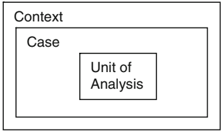
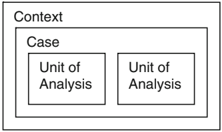

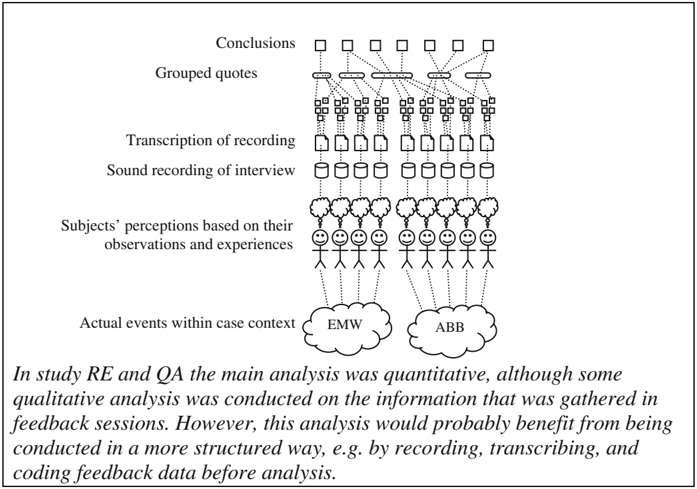


Verification
Claims the paper makes
The claims and statistics of this paper haven’t been checked yet.
Free: it reads the open-access text and checks the first 5 claims that cite a source we can check. Create a free account to check every claim.
Claims other papers make about this one
Each is checked against this paper’s own text: does it say what the citing paper says it does?
In the citing paper
“it is common to include construct validity, reliability, internal validity, and external validity, according to the guideline proposed in other works [222,255], which we adopted in the following.”
From Sustainability in computing education: A systematic literature review (2024) · cites this paper as [222]
Self-check
Percentages, sums and reported differences re-computed from the paper’s own numbers.
The self-check needs the paper’s full text.
Citations
Cites
(1984) · Cited by 81,983
Case Study Research: Design and Methods
Chaiklin, H. (1991) · The Journal of Nervous and Mental Disease · doi:10.1097/00005053-199102000-00025 · Cited by 39,535
Basics of Qualitative Research
Ozanne, J. L., Strauss, A., & Corbin, J. (1992) · Journal of Marketing Research · doi:10.1177/002224379202900312 · Cited by 17,868
Basics of Qualitative Research
Ozanne, J. L., Strauss, A., & Corbin, J. (1992) · Journal of Marketing Research · doi:10.2307/3172751 · Cited by 17,850
Building Theories from Case Study Research
Eisenhardt, K. M. (1989) · The Academy of Management Review · doi:10.2307/258557 · Cited by 17,455
The Art of Case Study Research
Johnson, K. E., & Stake, R. E. (1996) · The Modern Language Journal · doi:10.2307/329758 · Cited by 15,826 · cited 4×
“Four different types of triangulation may be applied ( Stake 1995 ):”
BackgroundMethodInfluentialHartley, J. (2004) · Essential Guide to Qualitative Methods in Organizational Research · doi:10.4135/9781446280119.n26 · Cited by 15,461
Five misunderstandings about case-study research
Flyvbjerg, B. (2006) · Qualitative Inquiry · doi:10.1177/1077800405284363 · Cited by 14,266 · cited 4×
“2 Case study methodology was originally used primarily for exploratory purposes, and some researchers still limit case studies for this purpose, as discussed by Flyvbjerg (2007).”
BackgroundMethodInfluentialAn Experimental Application of the DELPHI Method to the Use of Experts
Dalkey, N., & Helmer, O. (1963) · Management Science · doi:10.1287/mnsc.9.3.458 · Cited by 6,061
A Set of Principles for Conducting and Evaluating Interpretive Field Studies in Information Systems1
Klein, H. K., & Myers, M. D. (1999) · MIS Quarterly · doi:10.2307/249410 · Cited by 5,263 · cited 7×
“We prefer to consider ethnographic studies as a specialized type of case studies with focus on cultural practices (Easterbrook et al. 2008) or long duration studies with large amounts of participant-observer data (Klein and Myers 1999).”
BackgroundMethodInfluential
Research works printed but not linked: 2
- Shull F, Singer J, Sjøberg D (eds) (2008) Guide to Advanced Empirical Software Engineering. Springer- Verlag: London
- Martin Höst is an Associate Professor in Software Engineering in the Software Engineering Research Group at the Department of Computer Science, Lund University, Sweden. He received an M.Sc. degree from Lund University in 1992 and a Ph.D. degree in Software Engineering from the same university in 1999. His main research interests include software process improvement, software quality, empirical software engineering, and computer simulation of software development processes. The research is mainly conducted through empirical methods such as case studies, controlled experiments, and surveys. He has published more than 40 papers in international journals and conference proceedings.
Cited by
Items 401–500 of 1,013
Evaluating usage and quality of technical software documentation: an empirical study
Garousi, G., Garousi, V., Moussavi, M., Ruhe, G., & Smith, B. (2013) · International Conference on Evaluation and Assessment in Software Engineering (EASE) · doi:10.1145/2460999.2461003 · Cited by 45
“We have had recent experience with the AR approach in two recent projects in which we used AR to introduce automated configuration testing in an industrial setting [17] and also to contribute another automated testing framework for another industrial partner [18].”
BackgroundMethodInfluentialManaging Quality Requirements: A Systematic Review
Svensson, R. B., Höst, M., & Regnell, B. (2010) · Euromicro Conference on Software Engineering and Advanced Applications (SEAA) · doi:10.1109/seaa.2010.55 · Cited by 45
“[11] P. Runeson and M. Höst, “Guidelines for conducting and reporting case study research in software engineering,” Empirical Software Engineering, vol. 14, Apr. 2009, pp. 131-164, doi: 10.1007/s10664008-9102-8.”
BackgroundMethodInfluentialSelf-citationOn the interest of architectural technical debt: Uncovering the contagious debt phenomenon
Martini, A., & Bosch, J. (2017) · Journal of Software Evolution and Process · doi:10.1002/smr.1877 · Cited by 52
“14 This research process was chosen given the lack of previous empirical evidence in literature related to the research problem.”
MethodInfluentialOrenga-Roglá, S., & Chalmeta, R. (2017) · Business & Information Systems Engineering · doi:10.1007/s12599-017-0513-1 · Cited by 67
“The work plan that was followed in order to carry out the case study was based on Runeson and Ho¨st (2009) and consists of five phases: Case study design and planning, preparation for data collection, collecting evidence, analysis of collected data, and validation of collected data.”
MethodTowards a meta-model for data ecosystems
Oliveira, M. I. S., Oliveira, L. E. R. A., Batista, M. G. R., & Lóscio, B. F. (2018) · Annual International Conference on Digital Government Research · doi:10.1145/3209281.3209333 · Cited by 45
“According to Runeson and Höst [34], these research subjects can be considered adequate since they play different roles in the Data Ecosystem as well as they can provide significant information about the Data Ecosystem under study.”
MethodAML4DT: A Model-Driven Framework for Developing and Maintaining Digital Twins with AutomationML
Lehner, D., Sint, S., Vierhauser, M., Narzt, W., & Wimmer, M. (2021) · IEEE International Conference on Emerging Technologies and Factory Automation (ETFA) · doi:10.1109/etfa45728.2021.9613376 · Cited by 51
“Thus, a case study is conducted following the guidelines by Runeson & H ¨ ost [26].”
MethodAgile software development one year into the COVID-19 pandemic
Ågren, P., Knoph, E., & Svensson, R. B. (2022) · Empirical Software Engineering · doi:10.1007/s10664-022-10176-9 · Cited by 52
“The sampling strategy used for the pre-study was convenience sampling (Runeson and H¨ost 2009) within our industrial network.”
MethodSantos, R. D. S., de Magalhães, C. V. C., Capretz, L. F., Neto, J. D. S. C., da Silva, F. Q. B., & Saher, A. (2018) · Proceedings of the ... ACM-IEEE International Symposium on Empirical Software Engineering and Measurement/International Symposium on Empirical Software Engineering and Measurement · doi:10.1145/3239235.3268923 · Cited by 54
“In this study, the guidelines for conducting case studies [12] and qualitative analysis”
MethodEffort estimation in agile software development: Case study and improvement framework
Tanveer, B., Guzmán, L., & Engel, U. M. (2017) · Journal of Software Evolution and Process · doi:10.1002/smr.1862 · Cited by 45
Hu, C., Kumar, S., Huang, J., & Ratnavelu, K. (2017) · PLoS ONE · doi:10.1371/journal.pone.0175623 · Cited by 54
A systematic mapping study on architectural smells detection
Mumtaz, H., Singh, P., & Blincoe, K. (2021) · Journal of Systems and Software · doi:10.1016/j.jss.2020.110885 · Cited by 44
“Still, the borderline between these types of evaluation is generally blurred [40], and hence we rely on the terminologies used in the primary papers to classify them.”
MethodA Conceptual Model for Compliance Checking Support of Enterprise Architecture Decisions
Plataniotis, G., de Kinderen, S., Ma, Q., & Proper, H. A. (2015) · IEEE Conference on Business Informatics · doi:10.1109/cbi.2015.46 · Cited by 44
“This is in line with [10], that advices to prepare for data collection prior to the collection of evidence.”
MethodResultUsability Issues of Virtual Reality Learning Simulator in Healthcare and Cybersecurity
Kasurinen, J. (2017) · Procedia Computer Science · doi:10.1016/j.procs.2017.11.193 · Cited by 44
Creating Shared Value: Exploration in an Entrepreneurial Ecosystem
Vela, M. R., & Lizama, J. C. (2022) · Sustainability · doi:10.3390/su14148505 · Cited by 49
“We performed this iterative process until we were able to generalize the findings [92].”
BackgroundMethodTowards an understanding of the causes and effects of software requirements change: two case studies
McGee, S., & Greer, D. (2012) · Requirements Engineering · doi:10.1007/s00766-012-0149-0 · Cited by 44
“This increases the precision of empirical research especially in cases of subjective measurement [32].”
BackgroundMethodInfluentialGolightly, D., Kefalidou, G., & Sharples, S. (2017) · Information Systems and e-Business Management · doi:10.1007/s10257-017-0343-1 · Cited by 54
“To achieve this, the approach taken was to elicit multiple case studies through the use of semistructured interview (Runeson and Höst 2009).”
MethodDönmez, D., & Grote, G. (2017) · Information and Software Technology · doi:10.1016/j.infsof.2017.08.015 · Cited by 56
A local and global tour on MOMoT
Bill, R., Fleck, M., Troya, J., Mayerhofer, T., & Wimmer, M. (2017) · Software & Systems Modeling · doi:10.1007/s10270-017-0644-3 · Cited by 44
“In this section, we perform experiments based on the guidelines for conducting empirical explanatory case studies [58].”
MethodA literature review on the effectiveness and efficiency of business modeling
Wilson, M., Wnuk, K., Silvander, J., & Gorschek, T. (2018) · DiVA (Blekinge Institute of Technology) · doi:10.5277/e-inf180111 · Cited by 74
Gupta, V., Fernández-Crehuet, J. M., Hanne, T., & Telesko, R. (2020) · Results in Engineering · doi:10.1016/j.rineng.2020.100175 · Cited by 47
Model driven engineering for machine learning components: A systematic literature review
Naveed, H., Arora, C., Khalajzadeh, H., Grundy, J., & Haggag, O. (2024) · Information and Software Technology · doi:10.1016/j.infsof.2024.107423 · Cited by 56
Studying the explanations for the automated prediction of bug and non-bug issues using LIME and SHAP
Schulte, L., Ledel, B., & Herbold, S. (2024) · Empirical Software Engineering · doi:10.1007/s10664-024-10469-1 · Cited by 48
Extending value stream mapping through waste definition beyond customer perspective
Khurum, M., Petersen, K., & Gorschek, T. (2014) · Journal of Software Evolution and Process · doi:10.1002/smr.1647 · Cited by 59
“Four types of validity threats are commonly distinguished, namely construct validity, internal validity, external validity and reliability [41–43].”
BackgroundImpediments in Agile Software Development: An Empirical Investigation
Wiklund, K., Sundmark, D., Eldh, S., & Lundqvist, K. (2013) · Lecture notes in computer science · doi:10.1007/978-3-642-39259-7_6 · Cited by 43
“The guidelines by Runeson and Höst[12] were used when designing and performing the study.”
BackgroundMethodInfluentialManaging Technical Debt in Enterprise Software Packages
Ramasubbu, N., & Kemerer, C. F. (2014) · IEEE Transactions on Software Engineering · doi:10.1109/tse.2014.2327027 · Cited by 49
Descriptive vs prescriptive models in industry
Heldal, R., Pelliccione, P., Eliasson, U., Lantz, J., Derehag, J., & Whittle, J. (2016) · ACM/IEEE International Conference on Model Driven Engineering Languages and Systems (MODELS) · doi:10.1145/2976767.2976808 · Cited by 43
“Regarding threats to internal validity, we followed a systematic approach to setting up the study and best practice guidelines for both data collection and analysis [30, 31, 33].”
MethodLinåker, J., Munir, H., Wnuk, K., & Mols, C. E. (2018) · Journal of Systems and Software · doi:10.1016/j.jss.2017.09.032 · Cited by 39
“Member checking may involve having multiple individuals o through the data, or letting interviewees review a trancript ( Runeson and Höst, 2009 ).”
BackgroundMethodInfluentialLima, A. S., de Souza, J. N., Moura, J. A. B., & da Silva, I. P. (2018) · IEEE Transactions on Engineering Management · doi:10.1109/tem.2017.2787564 · Cited by 47
“This section presents validation results as produced by three case studies where the model and corresponding tools were initially applied, according to recommendations in [55].”
MethodGerking, C., & Schubert, D. (2019) · IEEE International Conference on Software Architecture (ICSA) · doi:10.1109/icsa.2019.00015 · Cited by 43
“To report our study, we rely on the structure proposed by Runeson and Höst [24].”
MethodTowards surgically-precise technical debt estimation: early results and research roadmap
Lenarduzzi, V., Martini, A., Taibi, D., & Tamburri, D. A. (2019) · doi:10.1145/3340482.3342747 · Cited by 43
“the other metrics that SonarQube measured and not involved in the computation. For this purpose, we conducted an empirical study as a case study based on the guidelines defined by Runeson and H´’ost [17]. Goal and Research Questions. The goal of this study is to investigate if Technical Debt could be derived from soft…”
MethodAssuring the Evolvability of Microservices: Insights into Industry Practices and Challenges
Bogner, J., Fritzsch, J., Wagner, S., & Zimmermann, A. (2019) · IEEE International Conference on Software Maintenance (ICSM) · doi:10.1109/icsme.2019.00089 · Cited by 43
“We prepared an interview preamble [21] that explained the interview process and relevant topics.”
MethodInfluentialOn the Adoption of Kotlin on Android Development: A Triangulation Study
de Oliveira, V. B. J., Teixeira, L., & Ebert, F. (2020) · IEEE International Conference on Software Analysis, Evolution and Reengineering (SANER) · doi:10.1109/saner48275.2020.9054859 · Cited by 56
“2) Data Collection: We collected data through semistructured interviews [28] with seven professional developers.”
MethodOn opportunistic software reuse
Mäkitalo, N., Taivalsaari, A., Kiviluoto, A., Mikkonen, T., & Capilla, R. (2020) · Computing · doi:10.1007/s00607-020-00833-6 · Cited by 60
“Therefore, we gathered qualitative data as stated by [39] to provide additional insight on how practitioners do opportunistic reuse.”
MethodGupta, V., Fernández-Crehuet, J. M., Gupta, C., & Hanne, T. (2020) · Sustainability · doi:10.3390/su122310106 · Cited by 47
“The data instruments were made aware of the following (as suggested in [22]):”
BackgroundMethodInfluentialvan Wessel, R., Kroon, P., & de Vries, H. J. (2021) · IEEE Transactions on Engineering Management · doi:10.1109/tem.2021.3128278 · Cited by 57
“We examined whether there were any typical threats to validity in our case study research [79], [81].”
BackgroundMethodAn effective Enterprise Architecture Implementation Methodology
Nikpay, F., Ahmad, R. B., Rouhani, B. D., Mahrin, M. N., & Shamshirband, S. (2017) · Information Systems and e-Business Management · doi:10.1007/s10257-016-0336-5 · Cited by 49
“Thecasestudy protocol was defined based on instructions of (Runeson and Ho¨st 2009).”
MethodInfluentialVisual ppinot: A Graphical Notation for Process Performance Indicators
del–Río–Ortega, A., Resinas, M., Durán, A., Bernárdez, B., Ruiz–Cortés, A., & Toro, M. (2017) · Business & Information Systems Engineering · doi:10.1007/s12599-017-0483-3 · Cited by 43
“Specifically, we have followed the case study research process proposed in Runeson and Ho¨st (2009) and Runeson et al. (2012), as described below and summarised in Fig.”
MethodThe Role of Data Analytics in Startup Companies: Exploring Challenges and Barriers
Berg, V., Birkeland, J., Pappas, I. O., & Jaccheri, L. (2018) · Lecture notes in computer science · doi:10.1007/978-3-030-02131-3_19 · Cited by 49
“We defined selection criteria as suggested by Runeson and H¨ost [26].”
InfluentialTrustworthy artificial intelligence: A decision‐making taxonomy of potential challenges
Akbar, M. A., Khan, A. A., Mahmood, S., Rafi, S., & Demi, S. (2023) · Software Practice and Experience · doi:10.1002/spe.3216 · Cited by 47
“Exclusion criteria : Based on the recommendations in References 36,39,40, we used the exclusion criteria to weed out irrelevant material.”
InfluentialContinuous planning: an important aspect of agile and lean development
Suomalainen, T., Kuusela, R., & Tihinen, M. (2015) · International Journal of Agile Systems and Management · doi:10.1504/ijasm.2015.070607 · Cited by 42
“The purpose of triangulation is to approach a studied object from various angles to provide an in-depth understanding of it (Runeson and Höst, 2009).”
BackgroundMethodEmpirical evaluation of a decision support model for adopting software product line engineering
Tüzün, E., Tekinerdoğan, B., Kalender, M. E., & Bilgen, S. (2015) · Information and Software Technology · doi:10.1016/j.infsof.2014.12.007 · Cited by 42
“For this we apply the guidelines as discussed by Runeson and Höst [40].”
MethodMulti-purpose, multi-level feature modeling of large-scale industrial software systems
Rabiser, D., Prähofer, H., Grünbacher, P., Petruzelka, M., Eder, K., Angerer, F., Kromoser, M., & Grimmer, A. (2016) · Software & Systems Modeling · doi:10.1007/s10270-016-0564-7 · Cited by 42
“Following Runeson and Höst [64] and Easterbrook et al. [26], we classify the researchinthisphaseaspartlyexploratoryandpartlydescrip-tive, as we focus on finding out to what extent multi-purpose, multi-level feature models are useful.”
BackgroundMethodWankmüller, C., & Reiner, G. (2021) · Sustainability · doi:10.3390/su13042204 · Cited by 48
“Coding of transcribed interview protocols is used for a systematic and consistent investigation of qualitative data using a previously defined set of dimensions [61].”
MethodSingh, P., & Singh, L. K. (2021) · IEEE Transactions on Reliability · doi:10.1109/tr.2021.3051635 · Cited by 42
“For this we categorize the answers [23], [24] based on the concept building technique by analyzing all the answers of same question, for each question.”
MethodIdentifying Challenges for OSS Vulnerability Scanners - A Study & Test Suite
Dann, A., Plate, H., Hermann, B., Ponta, S. E., & Bodden, E. (2021) · IEEE Transactions on Software Engineering · doi:10.1109/tse.2021.3101739 · Cited by 42
“To gain such an in-depth understanding of real-world situations and processes case studies are a suitable mean [31].”
BackgroundMethodSecurity Assurance Model of Software Development for Global Software Development Vendors
Khan, R. A., Khan, S. U., Alzahrani, M., & Ilyas, M. (2022) · IEEE Access · doi:10.1109/access.2022.3178301 · Cited by 47
“A case study is considered an appropriate research method in software engineering and a highly effective tool for validation purposes [67, 68].”
MethodInvestigating ERP systems procurement practice: Hong Kong and Australian experiences
Poon, P., & Yu, Y. T. (2010) · Information and Software Technology · doi:10.1016/j.infsof.2010.04.003 · Cited by 54
“The multiple-case design directs our focus to understanding the dynamics and complexities present (namely, the processes and critical issues of ERP procurement in this study) within each case (that is, each firm) [45,62,63].”
BackgroundMethodInfluentialMéndez, D., Wagner, S., Lochmann, K., Baumann, A., & de Carne, H. (2011) · Information and Software Technology · doi:10.1016/j.infsof.2011.09.001 · Cited by 42
“We organise the study according to Runeson and Höst [32]: We formulate the research questions, and describe the case and subject selection, as well as the data collection procedures.”
MethodLong-Term Evaluation of Technical Debt in Open-Source Software
Molnar, A.-J., & Motogna, S. (2020) · Proceedings of the ... ACM-IEEE International Symposium on Empirical Software Engineering and Measurement/International Symposium on Empirical Software Engineering and Measurement · doi:10.1145/3382494.3410673 · Cited by 41
“We organized our evaluation according to the best practices defined in [26].”
InfluentialOlsson, H. H., Bosch, J., & Alahyari, H. (2013) · doi:10.2316/p.2013.796-008 · Cited by 51
Jagroep, E. A., van der Werf, J. M. E. M., Brinkkemper, S., Blom, L., & van Vliet, R. (2016) · Computing · doi:10.1007/s00607-016-0502-0 · Cited by 41
“With regard to the validity of the case study, an evaluation is performed following the threats as identified in [32].”
MethodFine-tuning spectrum based fault localisation with frequent method item sets
Laghari, G., Murgia, A., & Demeyer, S. (2016) · IEEE/ACM International Conference on Automated Software Engineering (ASE) · doi:10.1145/2970276.2970308 · Cited by 41
“Consistent with the guidelines for case studies research (see [37, 50]), we organise them into four categories.”
MethodMartini, A., Sikander, E., & Madlani, N. (2017) · Information and Software Technology · doi:10.1016/j.infsof.2017.08.005 · Cited by 49
Experiences of using a game for improving learning in software requirements elicitation
García, I., Pacheco, C., León, A., & Calvo-Manzano, J. A. (2018) · Computer Applications in Engineering Education · doi:10.1002/cae.22072 · Cited by 45
FACILITY MANAGEMENT USING DIGITAL OBEYA ROOM BY INTEGRATING BIM-LEAN APPROACHES – AN EMPIRICAL STUDY
Nascimento, D. L. D. M., Quelhas, O. L. G., Meiriño, M. J., Caiado, R. G. G., Barbosa, S. D. J., & Ivson, P. (2018) · Journal of Civil Engineering and Management · doi:10.3846/jcem.2018.5609 · Cited by 44
“The empirical study was considered acceptable as the data are gathered from diverse procedures, avoiding the subjectivity of the researcher and guaranteeing the quality of the re-sults (Yin 2005); and increasing the precision of empirical research (Runeson, Höst 2009).”
MethodSoftware Architecture Social Debt: Managing the Incommunicability Factor
Tamburri, D. A. (2019) · IEEE Transactions on Computational Social Systems · doi:10.1109/tcss.2018.2886433 · Cited by 52
“The conversation was steered by the focus-group facilitator over four main points, following the funnel-like convergence style, according to the guidelines of Runeson and Höst [44].”
MethodCloud platforms for remote monitoring system: a comparative case study
Hao, Y., Helo, P., & Gunasekaran, A. (2019) · Production Planning & Control · doi:10.1080/09537287.2019.1631459 · Cited by 45
Demystifying Data Science Projects: A Look on the People and Process of Data Science Today
Aho, T., Sievi-Korte, O., Kilamo, T., Yaman, S. G., & Mikkonen, T. (2020) · Lecture notes in computer science · doi:10.1007/978-3-030-64148-1_10 · Cited by 47
Automatic Detection of Causality in Requirement Artifacts: The CiRA Approach
Fischbach, J., Frattini, J., Spaans, A., Kummeth, M., Vogelsang, A., Méndez, D., & Unterkalmsteiner, M. (2021) · Lecture notes in computer science · doi:10.1007/978-3-030-73128-1_2 · Cited by 41
Cross-Platform Mobile App Development in Industry: A Multiple Case-Study
Zohud, T., & Zein, S. (2021) · International Journal of Computing · doi:10.47839/ijc.20.1.2091 · Cited by 41
Industry application of continuous integration modeling: a multiple-case study
Ståhl, D., & Bosch, J. (2016) · ACM/IEEE International Conference on Software Engineering: Companion Proceedings (ICSE-Companion) · doi:10.1145/2889160.2889252 · Cited by 41
“To achieve data and observer triangulation [22] as many interviewees of the varied participant roles as possible were included, reaching a total of ten engineers across all four cases.”
BackgroundThe Introduction of Technical Debt Tracking in Large Companies
Martini, A., Besker, T., & Bosch, J. (2016) · Asia-Pacific Software Engineering Conference (APSEC) · doi:10.1109/apsec.2016.032 · Cited by 48
“We combined different sources of data (source triangulation) and different methodologies (methodology triangulation) for reliable results [9].”
BackgroundMethodA mapping study on documentation in Continuous Software Development
Theunissen, T., van Heesch, U., & Avgeriou, P. (2022) · Information and Software Technology · doi:10.1016/j.infsof.2021.106733 · Cited by 40
Mäkinen, S., Leppänen, M., Kilamo, T., Mattila, A.-L., Laukkanen, E., Pagels, M., & Männistö, T. (2016) · Information and Software Technology · doi:10.1016/j.infsof.2016.09.001 · Cited by 45
Garousi, V., & Felderer, M. (2017) · International Conference on Evaluation and Assessment in Software Engineering (EASE) · doi:10.1145/3084226.3084238 · Cited by 48
“By being a ‘guideline’ paper, similar to [1, 10, 12, 28], the main contributions of this paper are a synthesized list of challenges usually faced during SLRs’ data extraction phase and the corresponding solutions (guidelines), synthesized from two sources: (1) the pool of 16 SLR studies in which…”
MethodDigital Obeya Room: exploring the synergies between BIM and lean for visual construction management
Nascimento, D. L. D. M., Caiado, R. G. G., Tortorella, G. L., Ivson, P., & Meiriño, M. J. (2018) · Innovative Infrastructure Solutions · doi:10.1007/s41062-017-0125-0 · Cited by 47
“This constitutes a triangulation that helps in avoiding researcher subjectivity while also increasing quality and precision of the results [27, 28].”
BackgroundAmanatidis, T., Mittas, N., Moschou, A., Chatzigeorgiou, A., Ampatzoglou, A., & Angelis, L. (2020) · Empirical Software Engineering · doi:10.1007/s10664-020-09869-w · Cited by 42
Developing ML/DL Models: A Design Framework
John, M. M., Olsson, H. H., & Bosch, J. (2020) · International Conference on Software and System Process · doi:10.1145/3379177.3388892 · Cited by 58
“Following the guidelines of Runeson and Höst [24], a multiple-case study was conducted to analyse the activities of experienced data scientists when designing ML/DL models in real-world settings.”
MethodThe entrepreneurial logic of startup software development: A study of 40 software startups
Nguyen‐Duc, A., Kemell, K., & Abrahamsson, P. (2021) · Empirical Software Engineering · doi:10.1007/s10664-021-09987-z · Cited by 49
“To ensure the validity of this study, we followed the validity guidelines from Runeson (Runeson and Höst, 2009).”
BackgroundMethodInfluentialOn misbehaviour and fault tolerance in machine learning systems
Myllyaho, L., Raatikainen, M., Männistö, T., Nurminen, J. K., & Mikkonen, T. (2021) · Journal of Systems and Software · doi:10.1016/j.jss.2021.111096 · Cited by 52
“We asked several respondents about their experiences over the years on several di ff erent projects they had been involved in rather than, for example, only the most recent or successful project.”
BackgroundMethodAgile Model-Driven Engineering in Mechatronic Systems - An Industrial Case Study
Eliasson, U., Heldal, R., Lantz, J., & Berger, C. (2014) · Lecture notes in computer science · doi:10.1007/978-3-319-11653-2_27 · Cited by 40
Rodríguez, P., Partanen, J. O., Kuvaja, P., & Oivo, M. (2014) · Hawaii International Conference on System Sciences (HICSS) · doi:10.1109/hicss.2014.586 · Cited by 54
How to make agile UX work more efficient: management and sales perspectives
Kuusinen, K., & Väänänen, K. (2012) · Nordic Conference on Human-Computer Interaction · doi:10.1145/2399016.2399037 · Cited by 40
JSART: JavaScript Assertion-Based Regression Testing
Mirshokraie, S., & Mesbah, A. (2012) · Lecture notes in computer science · doi:10.1007/978-3-642-31753-8_18 · Cited by 46
“To quantitatively assess the accuracy and efficiency of our approach, we have conducted a case study following guidelines from Runeson and H¨ost [23].”
MethodOlder adults and hackathons: a qualitative study
Kopeć, W., Balcerzak, B., Nielek, R., Kowalik, G., Wierzbicki, A., & Casati, F. (2018) · Empirical Software Engineering · doi:10.1007/s10664-017-9565-6 · Cited by 39
“Runeson and H¨ost (2008) provided a list of best practices.”
BackgroundOsborne, C., Ding, J., & Kirk, H. R. (2024) · Journal of Computational Social Science · doi:10.1007/s42001-024-00300-8 · Cited by 61
“As open models become increasingly widely available and used, policymakers need empirical data to inform discussions about the benefits, risks, and governance of these models.”
Configuring Agentic AI Coding Tools: An Exploratory Study
Galster, M., Mohsenimofidi, S., Lulla, J. L., Auwal, A. M., Treude, C., & Baltes, S. (2026) · ACM International Conference on AI-Powered Software (AIware) · doi:10.1145/3805760.3814887 · Cited by 54
“We organize this section following established guidelines [19].”
Assessing event correlation in non-process-aware information systems
Pérez‐Castillo, R., Weber, B., de Guzmán, I. G., Piattini, M. G., & Pinggera, J. (2012) · Software & Systems Modeling · doi:10.1007/s10270-012-0285-5 · Cited by 39
Forces that Prevent Agile Adoption in the Automotive Domain
Hohl, P., Münch, J., Schneider, K. A., & Stupperich, M. (2016) · Lecture notes in computer science · doi:10.1007/978-3-319-49094-6_32 · Cited by 39
Uskarcı, A., & Demirörs, O. (2017) · Computer Standards & Interfaces · doi:10.1016/j.csi.2017.01.008 · Cited by 41
Are developers aware of the architectural impact of their changes?
Paixão, M. H. E., Krinke, J., Han, D., Ragkhitwetsagul, C., & Harman, M. (2017) · IEEE/ACM International Conference on Automated Software Engineering (ASE) · doi:10.1109/ase.2017.8115622 · Cited by 50
“Since surveys are subjective to bias [28] and the questionnaires usually target the software system as whole, such studies fail to capture details and nuances of each particular architectural change.”
BackgroundUsing GitHub in large software engineering classes. An exploratory case study
Tushev, M., Williams, G., & Mahmoud, A. (2019) · Computer Science Education · doi:10.1080/08993408.2019.1696168 · Cited by 47
“Correlation analysis is commonly used in exploratory case studies as an effective and straightforward tool to reveal any relationships in the data (Runeson & H¨ost, 2009).”
MethodData-Driven Software Architecture for Analyzing Confidentiality
Seifermann, S., Heinrich, R., & Reussner, R. (2019) · IEEE International Conference on Software Architecture (ICSA) · doi:10.1109/icsa.2019.00009 · Cited by 39
“According to Runeson and H¨ost [29], case study based research honors deep understanding of a phenomenon more than representativeness.”
Method“Bad smells” in software analytics papers
Menzies, T., & Shepperd, M. (2019) · Information and Software Technology · doi:10.1016/j.infsof.2019.04.005 · Cited by 37
“• “Guidelines for conducting and reporting case study research in software engineering”, in the Empirical Software Engineering journal [86] (2500 citations since 2009).”
Application of design thinking to product-configuration projects
Shafiee, S., Haug, A., Kristensen, S. S., & Hvam, L. (2020) · Journal of Manufacturing Technology Management · doi:10.1108/jmtm-04-2020-0137 · Cited by 39
FLOW-assisted value stream mapping in the early phases of large-scale software development
bin Ali, N., Petersen, K., & Schneider, K. A. (2015) · Journal of Systems and Software · doi:10.1016/j.jss.2015.10.013 · Cited by 39
“External validity is concerned with the generalization of the findings of the study outside the studied case [22].”
BackgroundInfluentialSantos, J. C. S., Peruma, A., Mirakhorli, M. T., Galstery, M., Vidal, J. V., & Sejfia, A. (2017) · IEEE International Conference on Software Architecture (ICSA) · doi:10.1109/icsa.2017.39 · Cited by 47
“To answer our research questions from Section I, we conducted an in-depth case study with three cases [20] based on guidelines for industrially-based multiple-case studies [24].”
MethodUnderstanding the role of subcultures in the enterprise architecture process
Niemietz, H., de Kinderen, S., & Constantinidis, C. (2013) · ORBi (University of Liège) · Cited by 48
Agile product-line architecting in practice: A case study in smart grids
Díaz, J., Pérez, J., & Garbajosa, J. (2014) · Information and Software Technology · doi:10.1016/j.infsof.2014.01.014 · Cited by 40
“As data gathered in case studies is mainly qualitative [61], and it is typically less precise than quantitative data, it is important to use triangulation to increase the precision of the study.”
BackgroundMethodInfluentialComparing and contrasting model-driven engineering at three large companies
Burden, H., Heldal, R., & Whittle, J. (2014) · Proceedings of the ... ACM-IEEE International Symposium on Empirical Software Engineering and Measurement/International Symposium on Empirical Software Engineering and Measurement · doi:10.1145/2652524.2652527 · Cited by 38
“In terms of threats to internal validity, we followed a systematic approach in setting up the study and best practice guidelines in both data collection and analysis [13, 14, 17].”
MethodAutomated analysis of CSS rules to support style maintenance
Mesbah, A., & Mirshokraie, S. (2012) · doi:10.5555/2337223.2337272 · Cited by 38
Agile methods in embedded system development: Multiple-case study of three industrial cases
Könnölä, K., Suomi, S., Mäkilä, T., Jokela, T., Rantala, V., & Lehtonen, T. (2016) · Journal of Systems and Software · doi:10.1016/j.jss.2016.05.001 · Cited by 49
“From there the recommendations evolved for instance to guidelines or templates ( Runeson and Höst, 2009 ) ( Brereton et al., 2008 ).”
From Scrum to Agile: a journey to tackle the challenges of distributed development in an Agile team
Lous, P., Tell, P., Michelsen, C. B., Dittrich, Y., & Ebdrup, A. (2018) · International Conference on Software and System Process · doi:10.1145/3202710.3203149 · Cited by 53
“The data collection techniques used during the visits included semi-structured interviews and observations (see Figure 2 for a detailed breakdown of the activities performed during the visits) [36].”
MethodA Large-Scale Study on Source Code Reviewer Recommendation
Lipčák, J., & Rossi, B. (2018) · Euromicro Conference on Software Engineering and Advanced Applications (SEAA) · doi:10.1109/seaa.2018.00068 · Cited by 42
“Internal validity: Threats to internal validity are related to experimental errors and biases [37], [38].”
How do companies collaborate in open source ecosystems? an empirical study of OpenStack
Zhang, Y., Zhou, M., Stol, K.-J., Wu, J., & Jin, Z. G. (2020) · ACM/IEEE International Conference on Software Engineering: Companion Proceedings (ICSE-Companion) · doi:10.1145/3377811.3380376 · Cited by 52
“We discuss threats to the validity of our study following common guidelines for empirical studies [74, 91].”
MethodOptimizing symbolic execution for malware behavior classification
Sebastio, S., Baranov, E., Biondi, F., Decourbe, O., Given-Wilson, T., Legay, A., Puodzius, C., & Quilbeuf, J. (2020) · Computers & Security · doi:10.1016/j.cose.2020.101775 · Cited by 41
Understanding Hypotheses Engineering in Software Startups through a Gray Literature Review
Melegati, J., Guerra, E., & Wang, X. (2020) · Information and Software Technology · doi:10.1016/j.infsof.2020.106465 · Cited by 44
A Study of Incorporation of Deep Learning Into Software Reliability Modeling and Assessment
Wu, C., & Huang, C. (2021) · IEEE Transactions on Reliability · doi:10.1109/tr.2021.3105531 · Cited by 38
Supporting Continuous Integration by Code-Churn Based Test Selection
Knauss, E., Staron, M., Meding, W., Söder, O., Nilsson, A., & Castell, M. (2015) · IEEE/ACM International Workshop on Rapid Continuous Software Engineering (RCoSE) · doi:10.1109/rcose.2015.11 · Cited by 49
“We can classify this case study as ecaluative multiple case study [20], [21], consisting of two cases.”
MethodZolduoarrati, E., Licorish, S. A., & Stanger, N. (2022) · Journal of Systems and Software · doi:10.1016/j.jss.2022.111427 · Cited by 45
Metadata
- Authors
- Runeson, P., & Höst, M.
- Affiliations
- Lund University (SE)
- Corresponding author
- Runeson, Per
- Venue
- Empirical Software Engineering
- Published
- 2008-12-19
- Volume
- 14
- Issue
- 2
- Pages
- 131-164
- ISSN
- 1382-3256 (ISSN-L)
- 1573-7616
- OpenAlex
- W2162739315
- Cited by
- 3,862
- References
- 75
- Citations by year
- 2026: 204 · 2025: 225 · 2024: 244 · 2023: 241 · 2022: 246 · 2021: 299 · 2020: 312 · 2019: 268 · 2018: 280 · 2017: 237 · 2016: 260 · 2015: 263 · 2014: 252 · 2013: 198 · 2012: 151
- FWCI
- 186.23
- Type
- journal article
- Language
- en
- Open access
- hybrid
- doi.org
- Licence
- cc-by-nc
- Locations
- Empirical Software Engineering (publishedVersion, cc-by-nc)
- Lund University Publications (Lund University) (submittedVersion, other-oa)
- Funders
- Vetenskapsrådet
- Topics
- Physical Sciences › Computer Science › Information Systems › Software Engineering Techniques and Practices
- Social Sciences › Sociology and Political Science › Qualitative Comparative Analysis Research
- Physical Sciences › Computer Science › Information Systems › Software Engineering Research
- Keywords
- case study method, software engineering research, reporting guidelines, research quality, naturalistic study, qualitative research practice
About these checks
Registry, retraction, Cites and statistics results are computed, not judged, with one exception: a printed reference that no index lists is read once by a model before it counts as a citation error. Claims are extracted by a model and kept only when their quote appears verbatim in the text; each cited source is then checked, with a model’s help, for whether it says what the claim relies on. Those verdicts can be wrong — read the claim’s quote and the cited source before relying on one.
Statistics and arithmetic are recomputed, not judged.
Confidence bands are shown only for fields calibrated on our annotated test set. None is calibrated yet, so no band is shown.
What counts as a claim ›How we measure confidence ›How we check this ›
Are you an author, or do you see a problem with this page? Request a review
Data sources
Bibliographic data: Semantic Scholar, OpenAlex, Crossref.
Contains information from the Semantic Scholar Academic Graph Datasets, made available under the ODC Attribution License (ODC-BY 1.0).
Semantic Scholar’s data is described in: Kinney, R., et al. (2023). The Semantic Scholar Open Data Platform. arXiv:2301.10140.
