

Guidelines for conducting and reporting case study research in software engineering
Open accessThe DOI matches its Crossref record; 74 of the 75 references it cites were found in a registry or an index.
Abstract
Case study is a suitable research methodology for software engineering research since it studies contemporary phenomena in its natural context. However, the understanding of what constitutes a case study varies, and hence the quality of the resulting studies. This paper aims at providing an introduction to case study methodology and guidelines for researchers conducting case studies and readers studying reports of such studies. The content is based on the authors’ own experience from conducting and reading case studies. The terminology and guidelines are compiled from different methodology handbooks in other research domains, in particular social science and information systems, and adapted to the needs in software engineering. We present recommended practices for software engineering case studies as well as empirically derived and evaluated checklists for researchers and readers of case study research.
Overview
The claims and statistics of this paper haven’t been checked yet.
Free: it reads the open-access text and checks the first 5 claims that cite a source we can check. Create a free account to check every claim.
Integrity signals
Registry
Cites
Statistics
Figures



Verification
Claims the paper makes
The claims and statistics of this paper haven’t been checked yet.
Free: it reads the open-access text and checks the first 5 claims that cite a source we can check. Create a free account to check every claim.
Claims other papers make about this one
Each is checked against this paper’s own text: does it say what the citing paper says it does?
In the citing paper
“it is common to include construct validity, reliability, internal validity, and external validity, according to the guideline proposed in other works [222,255], which we adopted in the following.”
From Sustainability in computing education: A systematic literature review (2024) · cites this paper as [222]
Self-check
Percentages, sums and reported differences re-computed from the paper’s own numbers.
The self-check needs the paper’s full text.
Citations
Cites
(1984) · Cited by 81,983
Case Study Research: Design and Methods
Chaiklin, H. (1991) · The Journal of Nervous and Mental Disease · doi:10.1097/00005053-199102000-00025 · Cited by 39,535
Basics of Qualitative Research
Ozanne, J. L., Strauss, A., & Corbin, J. (1992) · Journal of Marketing Research · doi:10.1177/002224379202900312 · Cited by 17,868
Basics of Qualitative Research
Ozanne, J. L., Strauss, A., & Corbin, J. (1992) · Journal of Marketing Research · doi:10.2307/3172751 · Cited by 17,850
Building Theories from Case Study Research
Eisenhardt, K. M. (1989) · The Academy of Management Review · doi:10.2307/258557 · Cited by 17,455
The Art of Case Study Research
Johnson, K. E., & Stake, R. E. (1996) · The Modern Language Journal · doi:10.2307/329758 · Cited by 15,826 · cited 4×
“Four different types of triangulation may be applied ( Stake 1995 ):”
BackgroundMethodInfluentialHartley, J. (2004) · Essential Guide to Qualitative Methods in Organizational Research · doi:10.4135/9781446280119.n26 · Cited by 15,461
Five misunderstandings about case-study research
Flyvbjerg, B. (2006) · Qualitative Inquiry · doi:10.1177/1077800405284363 · Cited by 14,266 · cited 4×
“2 Case study methodology was originally used primarily for exploratory purposes, and some researchers still limit case studies for this purpose, as discussed by Flyvbjerg (2007).”
BackgroundMethodInfluentialAn Experimental Application of the DELPHI Method to the Use of Experts
Dalkey, N., & Helmer, O. (1963) · Management Science · doi:10.1287/mnsc.9.3.458 · Cited by 6,061
A Set of Principles for Conducting and Evaluating Interpretive Field Studies in Information Systems1
Klein, H. K., & Myers, M. D. (1999) · MIS Quarterly · doi:10.2307/249410 · Cited by 5,263 · cited 7×
“We prefer to consider ethnographic studies as a specialized type of case studies with focus on cultural practices (Easterbrook et al. 2008) or long duration studies with large amounts of participant-observer data (Klein and Myers 1999).”
BackgroundMethodInfluential
Research works printed but not linked: 2
- Shull F, Singer J, Sjøberg D (eds) (2008) Guide to Advanced Empirical Software Engineering. Springer- Verlag: London
- Martin Höst is an Associate Professor in Software Engineering in the Software Engineering Research Group at the Department of Computer Science, Lund University, Sweden. He received an M.Sc. degree from Lund University in 1992 and a Ph.D. degree in Software Engineering from the same university in 1999. His main research interests include software process improvement, software quality, empirical software engineering, and computer simulation of software development processes. The research is mainly conducted through empirical methods such as case studies, controlled experiments, and surveys. He has published more than 40 papers in international journals and conference proceedings.
Cited by
Items 801–900 of 1,013
Startups Transitioning from Early to Growth Phase - A Pilot Study of Technical Debt Perception
Cico, O., de Souza, R. M. C. R., Jaccheri, L., Duc, A. N., & Machado, I. (2021) · Lecture notes in business information processing · doi:10.1007/978-3-030-67292-8_8 · Cited by 29
Stettina, C. J., Garbajosa, J., & Kruchten, P. (2023) · Lecture notes in business information processing · doi:10.1007/978-3-031-33976-9 · Cited by 27
The impact of private label foods on supply chain governance
Vlachos, I. P. (2014) · British Food Journal · doi:10.1108/bfj-09-2012-0228 · Cited by 25
A Case Study on Safety Cases in the Automotive Domain: Modules, Patterns, and Models
Wagner, S., Schätz, B., Puchner, S., & Kock, P. (2010) · Proceedings/Proceedings - International Symposium on Software Reliability Engineering · doi:10.1109/issre.2010.31 · Cited by 25
“We give background information on the two main types of artefacts used in the case study: safety cases and models employed in the automotive domain.”
MethodRelating System Quality and Software Architecture
Eeles, P., Bahsoon, R., Mistrík, I., Roshandel, R., & Stal, M. (2014) · Elsevier eBooks · doi:10.1016/b978-0-12-417009-4.00001-6 · Cited by 28
An empirical perspective on security challenges in large-scale agile software development
van der Heijden, A., Broasca, C., & Serebrenik, A. (2018) · Proceedings of the ... ACM-IEEE International Symposium on Empirical Software Engineering and Measurement/International Symposium on Empirical Software Engineering and Measurement · doi:10.1145/3239235.3267426 · Cited by 30
“Rabobank is selected as a case study, as it provides a typical example [15] of traditional unwieldy financial organizations [2] aiming to undergo an organization-wide agile transformation.”
BackgroundMethodUser feedback in continuous software engineering: revealing the state-of-practice
Tkalich, A., Klotins, E., Sporsem, T., Stray, V. G., Moe, N. B., & Barbala, A. (2025) · Empirical Software Engineering · doi:10.1007/s10664-024-10557-2 · Cited by 24
Poli, E. F., Campos‐Rivela, J. M., Martínez‐Ferrer, M. T., Rahmouni, R., Rouis, S., Yurtkuran, Z., & Fontefrancesco, M. F. (2025) · Agriculture · doi:10.3390/agriculture15060640 · Cited by 24
Requirements Traceability Link Recovery via Retrieval-Augmented Generation
Hey, T., Fuchß, D., Keim, J., & Koziolek, A. (2025) · Lecture notes in computer science · doi:10.1007/978-3-031-88531-0_27 · Cited by 24
“Based on the guidelines of Runeson and Höst [35] and the threats of using LLMs in software engineering discussed by Sallou et al. [36], we address potential threats of our research and experiments.”
Araújo, A. A., Kalinowski, M., & Baldassarre, M. T. (2025) · IEEE International Conference on Software Engineering Education and Training (CSEE&T) · doi:10.1109/cseet66350.2025.00040 · Cited by 29
“This investigation adopts an evaluative case study approach following the methodological guidelines proposed by Runeson and H¨ost [35].”
Architecture challenges for internal software ecosystems: a large-scale industry case study
Schultis, K.-B., Elsner, C., & Lohmann, D. (2014) · ACM Joint European Software Engineering Conference and Symposium on the Foundations of Software Engineering (ESEC/FSE) · doi:10.1145/2635868.2635876 · Cited by 31
“Furthermore, they performed 7 unstructured interviews [28] (lasting about 2 hours each) with architects of ISECO-A and ISECO-B to get a basic understanding of the study systems and to commonly sketch collaboration among organizational units in a scenario-based fashion.”
BackgroundMethodInfluentialFelderer, M., & Beer, A. (2013) · Lecture notes in business information processing · doi:10.1007/978-3-642-35702-2_9 · Cited by 24
“The case study design follows the guidelines of case study research in software engineering according to Runeson and Höst [30].”
MethodMeshing agile and plan-driven development in safety-critical software: a case study
Heeager, L. T., & Nielsen, P. A. (2020) · Empirical Software Engineering · doi:10.1007/s10664-020-09804-z · Cited by 24
Capabilities and Readiness for Big Data Analytics
Pedro, J., Brown, I., & Hart, M. (2019) · Procedia Computer Science · doi:10.1016/j.procs.2019.12.147 · Cited by 29
Modularisation strategies in the AEC industry: a comparative analysis
Shafiee, S., Piroozfar, P. A. E., Hvam, L., Farr, E. R. P., Huang, G. Q., Pan, W., Kudsk, A., Rasmussen, J. B., & Korell, M. (2020) · Architectural Engineering and Design Management · doi:10.1080/17452007.2020.1735291 · Cited by 24
Vogel‐Heuser, B., & Bi, F. (2020) · Journal of Systems and Software · doi:10.1016/j.jss.2020.110809 · Cited by 26
Emerging and Changing Tasks in the Development Process for Machine Learning Systems
Liu, H., Eksmo, S., Risberg, J., & Hebig, R. (2020) · International Conference on Software and System Process · doi:10.1145/3379177.3388905 · Cited by 31
“In this section, internal and external threats to validity [11] of our study are discussed.”
BackgroundMethodChallenges and recommendations to publishing and using credible evidence in software engineering
Wohlin, C., & Rainer, A. (2021) · Information and Software Technology · doi:10.1016/j.infsof.2021.106555 · Cited by 26
“We emphasise that we are not undertaking a case study in the formal way defined by Yin [18] or by Runeson and H¨ost [19].”
An Empirical Study on Refactoring-Inducing Pull Requests
Coelho, F., Tsantalis, N., Massoni, T. L., & Alves, E. L. G. (2021) · Proceedings of the ... ACM-IEEE International Symposium on Empirical Software Engineering and Measurement/International Symposium on Empirical Software Engineering and Measurement · doi:10.1145/3475716.3475785 · Cited by 26
Gregory, P., Lassenius, C., Wang, X., & Kruchten, P. B. (2021) · Lecture notes in business information processing · doi:10.1007/978-3-030-78098-2 · Cited by 25
Abbas, M., Ferrari, A., Shatnawi, A., Enoiu, E. P., Saadatmand, M., & Sundmark, D. (2022) · Requirements Engineering · doi:10.1007/s00766-021-00370-4 · Cited by 47
“This work can be regarded as an exploratory case study [79], oriented to understand the”
BackgroundImpacts, causes, and solutions of architectural smells in microservices: An industrial investigation
Zhong, C., Huang, H., Zhang, H., & Li, S. (2022) · Software Practice and Experience · doi:10.1002/spe.3138 · Cited by 31
“To answer these RQs, this industrial case study 54 was designed as two stages, a quantitative investigation of the artifacts of the case system and a qualitative investigation of the practitioners’ perspective.”
MethodLomio, F., Moreschini, S., & Lenarduzzi, V. (2022) · Empirical Software Engineering · doi:10.1007/s10664-022-10164-z · Cited by 31
“We designed our empirical study based on the guidelines defined by Runeson and Höst (2009). In this Section, we describe the empirical study, including the goal and the research questions, the study context, the data collection, and the data analysis.”
MethodCorporate dominance in open source ecosystems: a case study of OpenStack
Zhang, Y., Stol, K.-J., Liu, H., & Zhou, M. (2022) · ACM Joint European Software Engineering Conference and Symposium on the Foundations of Software Engineering (ESEC/FSE) · doi:10.1145/3540250.3549117 · Cited by 33
“To reduce potential researcher bias [52], the first two authors independently performed steps (1) to (4) described above.”
BackgroundMethodEmotions in Requirements Engineering: A Systematic Mapping Study
Iqbal, T., Anwar, H., Filzah, S., Gharib, M., Mooses, K., & Taveter, K. (2023) · International Workshop on Cooperative and Human Aspects of Software Engineering (CHASE) · doi:10.1109/chase58964.2023.00020 · Cited by 26
“[28], we address threats to validity under the following categories: 1- Internal threats focus on factors that have not been considered in the study but may have influenced the results.”
BackgroundRecovering Trace Links Between Software Documentation And Code
Keim, J., Corallo, S., Fuchß, D., Hey, T., Telge, T., & Koziolek, A. (2024) · ACM/IEEE International Conference on Software Engineering: Companion Proceedings (ICSE-Companion) · doi:10.1145/3597503.3639130 · Cited by 26
“In conclusion, this scientific study investigated the use of trace-ability link recovery (TLR) for linking software architecture documentation (SAD) to code.”
BackgroundReal-Time Reflexion Modelling in architecture reconciliation: A multi case study
Buckley, J., Alí, N., English, M., Rosik, J., & Herold, S. (2015) · Information and Software Technology · doi:10.1016/j.infsof.2015.01.011 · Cited by 27
“2 Empirical Design An in-vivo, multi-case-study protocol [54-55] was adopted across four financial services organizations.”
MethodDealing with Traceability in the MDDof Model Transformations
Vara, J. M., Bollati, V. A., Jiménez, Á., & Marcos, E. (2014) · IEEE Transactions on Software Engineering · doi:10.1109/tse.2014.2316132 · Cited by 24
“carried out, and discusses the main conclusions and the lessons learned from this process according to the aspects of validity proposed by Runeson and H€ ost [55]: construct validity, internal validity, external validity and reliability.”
MethodDesign and programming patterns for implementing usability functionalities in web applications
Rodríguez, F. D., Acuña, S. T., & Juristo, N. (2015) · Journal of Systems and Software · doi:10.1016/j.jss.2015.04.023 · Cited by 24
“We use a case study methodology (Runeson and Höst, 2009) for the second objective of validating the solutions.”
MethodFrança, A. C. C., da Silva, F. Q. B., & Mariz, L. M. R. D. S. (2010) · Proceedings of the ... ACM-IEEE International Symposium on Empirical Software Engineering and Measurement/International Symposium on Empirical Software Engineering and Measurement · doi:10.1145/1852786.1852835 · Cited by 29
“In particular, case studies [ 16 ] could provide “thick descriptions” (a term popularized by Geertz [7]) of the phenomenon of interest.”
Structuring automotive product lines and feature models: an exploratory study at Opel
Oliinyk, O., Petersen, K., Schoelzke, M., Becker, M., & Schneickert, S. (2015) · Requirements Engineering · doi:10.1007/s00766-015-0237-z · Cited by 26
A Practical Model for Evaluating the Energy Efficiency of Software Applications
Kalaitzoglou, G., Bruntink, M., & Visser, J. (2014) · Advances in computer science research · doi:10.2991/ict4s-14.2014.9 · Cited by 24
“In this section we evaluate our study with respect to potential validity threats (as defined in [31]).”
Collaborative Traceability Management: Challenges and Opportunities
Wohlrab, R., Steghöfer, J.-P., Knauss, E., Maro, S., & Anjorin, A. (2016) · IEEE International Requirements Engineering Conference (RE) · doi:10.1109/re.2016.17 · Cited by 36
“In the actual coding process, we read through the transcripts line by line, connecting statements from the interviews to appropriate codes using an editing approach [28].”
MethodInsights into the Perceived Benefits of Kanban in Software Companies: Practitioners’ Views
Ahmad, M. O., Markkula, J., & Oivo, M. (2016) · Lecture notes in business information processing · doi:10.1007/978-3-319-33515-5_13 · Cited by 24
“In this study, we considered threats to validity throughout the research process by following the guidelines outlined by Runeson and Höst [26].”
MethodAlamdar, F., Kalantari, M., & Rajabifard, A. (2016) · International Journal of Disaster Risk Reduction · doi:10.1016/j.ijdrr.2016.10.008 · Cited by 24
Gamifying Collaborative Prioritization: Does Pointsification Work?
Kifetew, F. M., Muñante, D., Perini, A., Susi, A., Siena, A., Busetta, P., & Valerio, D. (2017) · IEEE International Requirements Engineering Conference (RE) · doi:10.1109/re.2017.66 · Cited by 34
“discussion of threats to validity [18] are not appropriate.”
BackgroundAsymmetric Release Planning: Compromising Satisfaction against Dissatisfaction
Nayebi, M., & Ruhe, G. (2018) · IEEE Transactions on Software Engineering · doi:10.1109/tse.2018.2810895 · Cited by 24
“Following [63], we discuss four types of threats.”
BackgroundMethodInfluentialEverything is INTERRELATED: teaching software engineering for sustainability
Penzenstadler, B., Betz, S., Venters, C. C., Chitchyan, R., Porras, J., Seyff, N., Duboc, L., & Becker, C. (2018) · IEEE/ACM International Conference on Software Engineering: Software Engineering Education and Training (ICSE-SEET) · doi:10.1145/3183377.3183382 · Cited by 29
“As a keyfi rst step, the overall objective of this study [45] is thus to understand, through this particularfi rst case, how to teach a group of students with mixed backgrounds such that they get an understanding of software engineering for sustainability and can apply this knowledge to a (local) project.”
BackgroundMethodSpotify Tailoring for Promoting Effectiveness in Cross-Functional Autonomous Squads
Salameh, A., & Bass, J. M. (2019) · Lecture notes in business information processing · doi:10.1007/978-3-030-30126-2_3 · Cited by 24
“Due to the lack of scientific research related to the Spotify model, this research draws on a longitudinal embedded case study [7] to investigate how organisations tailor agile practices and processes to get the balance right between squads’ autonomy and effective alignment among them.”
Investigating Agile Practices in Software Startups
de Souza, R. M. C. R., Rocha, L., Silva, F. M., & Machado, I. (2019) · Brazilian Symposium on Software Engineering · doi:10.1145/3350768.3350786 · Cited by 27
“This triangulation aims to confirm that when a participant refers to an agile software development practice, they referred to the same concept adopted in this study [21].”
MethodA heterogeneous single changepoint software reliability growth model framework
Nagaraju, V., Fiondella, L., & Wandji, T. (2019) · Software Testing Verification and Reliability · doi:10.1002/stvr.1717 · Cited by 24
Modularity in making: simplifying solution space for user innovation
Naik, H. S., Fritzsche, A., & Moeslein, K. M. (2020) · R and D Management · doi:10.1111/radm.12427 · Cited by 29
Groeneveld, D., Tekinerdoğan, B., Garousi, V., & Catal, C. (2020) · Precision Agriculture · doi:10.1007/s11119-020-09770-y · Cited by 24
An Ontology for Privacy Requirements via a Systematic Literature Review
Gharib, M., Giorgini, P., & Mylopoulos, J. (2020) · Journal on Data Semantics · doi:10.1007/s13740-020-00116-5 · Cited by 33
An Interview Study of how Developers use Execution Logs in Embedded Software Engineering
Yang, N., Cuijpers, P. P., Schiffelers, R. R. H., Lukkien, J. J., & Serebrenik, A. (2021) · IEEE/ACM International Conference on Software Engineering: Software Engineering in Practice (ICSE-SEIP) · doi:10.1109/icse-seip52600.2021.00015 · Cited by 24
“To understand how software developers use logs in the embedded systems industry, we conducted a case study [37].”
MethodAssessing Large-Project Courses: Model, Activities, and Lessons Learned
Vasilevskaya, M., Broman, D., & Sandahl, K. (2015) · ACM Transactions on Computing Education · doi:10.1145/2732156 · Cited by 24
“Runeson and H¨ost [Runeson and H¨ost 2009] identify four areas of validity threats for a case-study, such as ours: — Construct validity .”
BackgroundA case study of the variability consequences of the CQRS pattern in online business software
Kabbedijk, J., Jansen, S., & Brinkkemper, S. (2012) · European Conference on Pattern Languages of Programs · doi:10.1145/2602928.2603078 · Cited by 24
Software quality across borders: Three case studies on company internal alignment
Barney, S., Mohankumar, V., Chatzipetrou, P., Aurum, A., Wohlin, C., & Angelis, L. (2013) · Information and Software Technology · doi:10.1016/j.infsof.2013.06.004 · Cited by 25
“The results in this paper have limited generalizability (Runeson and Höst, 2009).”
ResultA Taxonomy of Change Types and Its Application in Software Evolution
Lehnert, S., Farooq, Q.-U.-A., & Riebisch, M. (2012) · IEEE International Conference and Workshop on the Engineering of Computer-Based Systems (ECBS) · doi:10.1109/ecbs.2012.9 · Cited by 24
“We are following the guidelines for case study research as established by Runeson and Höst [40] and the Goal Question Metric (GQM) introduced by Basili et al.”
MethodNewman, J. (2016) · IFIP advances in information and communication technology · doi:10.1007/978-3-319-47286-7_18 · Cited by 29
“Such records include fault reports, change requests, versioning and defect tracking [11],[52].”
Software Architects’ Experiences of Quality Requirements: What We Know and What We Do Not Know?
Daneva, M., Buglione, L., & Herrmann, A. (2013) · Lecture notes in computer science · doi:10.1007/978-3-642-37422-7_1 · Cited by 24
“Our evaluation of the possible threats to validity of the observations and conclusions in this research, followed the checklist in [29].”
Methodde la Vara, J. L. (2011) · RiuNet (Universitat Politècnica de València) · doi:10.4995/thesis/10251/11445 · Cited by 31
Evidence-based programming language design : a philosophical and methodological exploration
Kaijanaho, A.-J. (2015) · Jyväskylä University Digital Archive (University of Jyväskylä) · Cited by 38
Variability management in process families through change patterns
Ayora, C., Torres, V., de la Vara, J. L., & Pelechano, V. (2016) · Information and Software Technology · doi:10.1016/j.infsof.2016.01.007 · Cited by 23
Redesigning patent management process: an Action Research study
Soranzo, B., Nosella, A., & Filippini, R. (2017) · Management Decision · doi:10.1108/md-04-2016-0226 · Cited by 23
Roddis, S., Winter, S., Zhao, F., & Kutadinata, R. J. (2019) · Travel Behaviour and Society · doi:10.1016/j.tbs.2019.03.003 · Cited by 23
Towards a Software Sustainability-Quality Model: Insights from a Multi-Case Study
Condorí-Fernández, N., & Lago, P. (2019) · International Conference on Research Challenges in Information Science (RCIS) · doi:10.1109/rcis.2019.8877084 · Cited by 26
“In the following, we discuss the validity threats of our case studies regarding reliability, internal, and external validity [19], [20].”
BackgroundKornyshova, E., & Barrios, J. (2021) · Procedia Computer Science · doi:10.1016/j.procs.2021.08.237 · Cited by 23
Developing a quality assurance identity in a university: a grounded theory approach
Tetteh, G. A., Amoako‐Gyampah, K., & Twumasi, J. (2021) · Quality Assurance in Education · doi:10.1108/qae-12-2020-0141 · Cited by 28
Cognitive biases in software development
Chattopadhyay, S., Nelson, N., Au, A., Morales, N., Sanchez, C. A., Pandita, R., & Sarma, A. (2022) · Communications of the ACM · doi:10.1145/3517217 · Cited by 23
“IP13 mentioned:[12:44] “API code is evolving very frequently…and you don’t know [the Different perspectives: Appreciating a different perspective, coupled with associated relevant feedback, can help avoid biases such as Preconception (CB1), Fixation (CB3), and Superficial selection (CB9).”
BackgroundInfluentialBeringhoff, F., Greenyer, J., Rösener, C., & Tichy, M. (2022) · IEEE Intelligent Vehicles Symposium · doi:10.1109/iv51971.2022.9827097 · Cited by 23
“The threats to validity of the interview study are discussed along the classification scheme from Runeson and H¨ost [7]: Construct Validity: At the beginning of each interview, the interviewer gave an introduction to the interview topic and a definition of terms for the interview.”
A taxonomy of metrics for GUI-based testing research: A systematic literature review
Coppola, R., & Alégroth, E. (2022) · Information and Software Technology · doi:10.1016/j.infsof.2022.107062 · Cited by 23
A scientific software ecosystem architecture for the livestock domain
Gomes, J. S., Esteves, I., Neto, V. V. G., David, J., Braga, R. M. M., Arbex, W., Kassab, M., & Oliveira, R. (2023) · Information and Software Technology · doi:10.1016/j.infsof.2023.107240 · Cited by 23
Healthcare System Digital Transformation across Four European Countries: A Multiple-Case Study
Fonda, F., Galazzi, A., Chiappinotto, S., Justi, L., Frydensberg, M. S., Boesen, R. L., Macur, M., Andrés, E., Reixach, E., & Palese, A. (2023) · Healthcare · doi:10.3390/healthcare12010016 · Cited by 23
Reference architecture design for developing data management systems in smart farming
Krisnawijaya, N. N. K., Tekinerdoğan, B., Catal, C., & van der Tol, P. P. J. (2024) · Ecological Informatics · doi:10.1016/j.ecoinf.2024.102613 · Cited by 23
GDPR compliance via software evolution: Weaving security controls in software design
Ayala-Rivera, V., Portillo‐Dominguez, A. O., & Pasquale, L. (2024) · Journal of Systems and Software · doi:10.1016/j.jss.2024.112144 · Cited by 28
Early identification of bottlenecks in very large scale system of systems software development
Petersen, K., Roos, P. E., Nyström, S., & Runeson, P. (2014) · Journal of Software Evolution and Process · doi:10.1002/smr.1653 · Cited by 26
“The qualitative data (freetext answers) was summarized by coding [23].”
MethodSelf-citationAnalysing the concept of quality in model-driven engineering literature: A systematic review
Giraldo, F. D., España, S., & Pastor, Ó. (2014) · International Conference on Research Challenges in Information Science (RCIS) · doi:10.1109/rcis.2014.6861030 · Cited by 23
CEEM: A Practical Methodology for Cloud Services Evaluation
Li, Z., O’Brien, L., & Zhang, H. (2013) · IEEE World Congress on Services (SERVICES) · doi:10.1109/services.2013.73 · Cited by 23
“Considering the close relationship between Cloud services evaluation and experimental computer science [27], moreover, we can adapt the well-proposed structure for reporting generic experiments or case studies [23] to reporting Cloud services evaluation studies.”
MethodLessons learned from evaluating a checklist for reporting experimental and observational research
Wieringa, R. J., Condorí-Fernández, N., Daneva, M., Mutschler, B., & Pastor, Ó. (2012) · Proceedings of the ... ACM-IEEE International Symposium on Empirical Software Engineering and Measurement/International Symposium on Empirical Software Engineering and Measurement · doi:10.1145/2372251.2372279 · Cited by 25
Eliasson, U., Martini, A., Kaufmann, R., & Odeh, S. (2015) · IEEE/ACM International Conference on Technical Debt (TechDebt) · doi:10.1109/mtd.2015.7332622 · Cited by 32
“To answer the research questions presented in Section I, we conducted an exploratory case-study [12] at the electrical development department at VCG.”
MethodInfluentialTest case selection in industry: an analysis of issues related to static approaches
Blondeau, V., Etien, A., Anquetil, N., Cresson, S., Croisy, P., & Ducasse, S. (2016) · Software Quality Journal · doi:10.1007/s11219-016-9328-4 · Cited by 23
“This section discusses the validity of our case study using validation scheme defined by Runeson and Höst (2009). The construct validity, the internal validity, the external validity, and the reliability are presented. Software Qual J (2017) 25:1203–1237 1227”
MethodAnalyzing and predicting effort associated with finding and fixing software faults
Hamill, M., & Goševa-Popstojanova, K. (2017) · Information and Software Technology · doi:10.1016/j.infsof.2017.01.002 · Cited by 28
“In this section we describe the case study following the guidelines suggested in [22, 23] and then provide the description of the attributes used in the analysis.”
BackgroundMethodContinuous Integration and Visual GUI Testing: Benefits and Drawbacks in Industrial Practice
Alégroth, E., Karlsson, A., & Radway, A. (2018) · IEEE International Conference on Software Testing, Verification and Validation (ICST) · doi:10.1109/icst.2018.00026 · Cited by 23
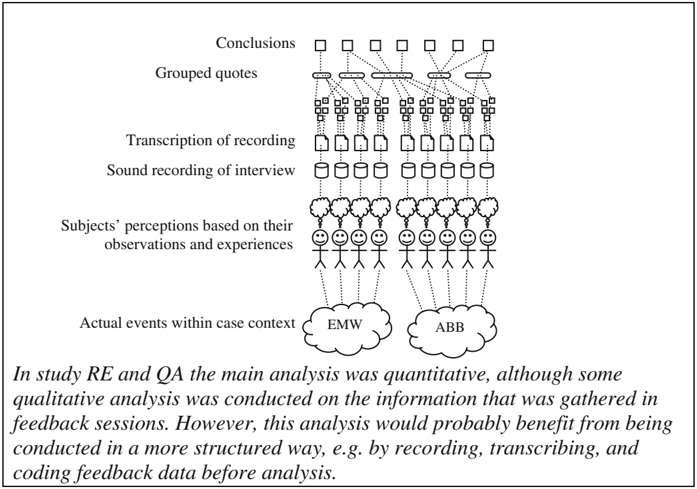
“After each interview, the interview recordings were transcribed, coded [37] and clustered to provide chains of evidence [29] to simplify inference of the study’s conclusions.”
BackgroundMethodInfluentialImproving continuous integration with similarity-based test case selection
Neto, F. G. D. O., Ahmad, A., Leifler, O., Sandahl, K., & Enoiu, E. P. (2018) · International Workshop on Automation of Software Test (AST) · doi:10.1145/3194733.3194744 · Cited by 23
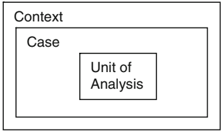
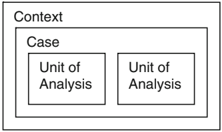
“Since the data from each company include different information, we divide our analysis into two distinct unit of analysis, as suggested by Runeson and Höst [19].”
MethodFucci, D., Palomares, C., Franch, X., Costal, D., Raatikainen, M., Stettinger, M., Kurtanović, Z., Kojo, T., Koenig, L., Falkner, A. A., et al. (2018) · Proceedings of the ... ACM-IEEE International Symposium on Empirical Software Engineering and Measurement/International Symposium on Empirical Software Engineering and Measurement · doi:10.1145/3239235.3240498 · Cited by 23
“alysis is studied in each case [35]), and exploratory (i.e., the goal is to seek new insights rather than test existing assumptions) case study, reported according to the guidelines of Runeson et al. [27]. Data were directly collected using semi-structured interviews with ten company representatives and analyzed using…”
MethodInfluentialGren, L. (2018) · Proceedings of the ... ACM-IEEE International Symposium on Empirical Software Engineering and Measurement/International Symposium on Empirical Software Engineering and Measurement · doi:10.1145/3239235.3267437 · Cited by 26
“To help to implement such an awareness, I suggest a checklist below inspired by seminal work conducted by Messick [15] in relation to testing validity, but where I also include validity aspects in relation to speci c research studies as already suggested by Wohlin et al. [20] and Runeson and Höst [19].”
BackgroundInfluentialInterface protocol inference to aid understanding legacy software components
Aslam, K., Cleophas, L., Schiffelers, R. R. H., & van den Brand, M. (2020) · Software & Systems Modeling · doi:10.1007/s10270-020-00809-2 · Cited by 23
Alone or Together? Inter-organizational affiliations of open source communities
Eckert, R., Stuermer, M., & Myrach, T. (2018) · Journal of Systems and Software · doi:10.1016/j.jss.2018.12.007 · Cited by 23
Three Key Checklists and Remedies for Trustworthy Analysis of Online Controlled Experiments at Scale
Fabijan, A., Dmitriev, P., Olsson, H. H., Bosch, J., Vermeer, L., & Lewis, D. (2019) · IEEE/ACM International Conference on Software Engineering: Software Engineering in Practice (ICSE-SEIP) · doi:10.1109/icse-seip.2019.00009 · Cited by 28
“In this section, we briefly discuss our efforts in mitigating the validity concerns that are applicable for this type of qualitative research [34].”
BackgroundMethodReviewer Recommendation using Software Artifact Traceability Graphs
Sülün, E., Tüzün, E., & Doğrusöz, U. (2019) · doi:10.1145/3345629.3345637 · Cited by 23
“External validity: Threats to external validity are concerned with the generalizability of our study [19].”
BackgroundInfluentialOrthogonal Uncertainty Modeling in the Engineering of Cyber-Physical Systems
Bandyszak, T., Daun, M., Tenbergen, B., Kuhs, P., Wolf, S., & Weyer, T. (2020) · IEEE Transactions on Automation Science and Engineering · doi:10.1109/tase.2020.2980726 · Cited by 27
“We strictly adhered to the established guidelines on case studies outlined in [36].”
MethodEfficient Execution of ATL Model Transformations Using Static Analysis and Parallelism
Cuadrado, J. S., Burgueño, L., Wimmer, M., & Vallecillo, A. (2020) · IEEE Transactions on Software Engineering · doi:10.1109/tse.2020.3011388 · Cited by 23
“To answer these questions, we carried out an empirical case study [22] by following the guidelines for conducting empirical explanatory case studies by Roneson and Hörst [23].”
MethodProduct line adoption in industry: an experience report from the railway domain
Abbas, M., Jongeling, R., Lindskog, C., Enoiu, E. P., Saadatmand, M., & Sundmark, D. (2020) · International Software Product Line Conference (SPLC) · doi:10.1145/3382025.3414953 · Cited by 33
“We address the validity threats of our results following the classification and guidelines proposed by Runeson and Höst [28].”
MethodHeroku-Based Innovative Platform for Web-Based Deployment in Product Development at Axis
Danielsson, P., Postema, T., & Munir, H. (2021) · IEEE Access · doi:10.1109/access.2021.3050255 · Cited by 30
“We addressed four types of validity threats [47] with their mitigation strategies.”
BackgroundInfluentialOn Autonomous Dynamic Software Ecosystems
Capilla, R., Cioroaica, E., Bühnová, B., & Bosch, J. (2021) · IEEE Transactions on Engineering Management · doi:10.1109/tem.2021.3116873 · Cited by 25
“To this end, we combined exploratory literature (both white and grey) adopting the guidelines described in [28] to conduct a case study research aimed to support the conceptualization of the notion of autonomous dynamic ecosystems and framing these around their key principles.”
MethodBR4DQ: A methodology for grouping business rules for data quality evaluation
Caballero, I., Gualo, F., Rodríguez, M., & Piattini, M. G. (2022) · Information Systems · doi:10.1016/j.is.2022.102058 · Cited by 27
Towards continuous validation of customer value
Olsson, H. H., & Bosch, J. (2015) · doi:10.1145/2764979.2764982 · Cited by 23
Assessing software product line potential: an exploratory industrial case study
Koziolek, H., Goldschmidt, T., de Gooijer, T., Domis, D., Sehestedt, S., Gamer, T., & Aleksy, M. (2015) · Empirical Software Engineering · doi:10.1007/s10664-014-9358-0 · Cited by 23
“4.1 Research Questions Therefore, we considered the application of the domain analysis as an exploratory case study (Yin 2013; Runeson and Höst 2009; Eisenhardt 1989).”
MethodInfluentialMulti-sprint planning and smooth replanning: An optimization model
Golfarelli, M., Rizzi, S., & Turricchia, E. (2013) · Journal of Systems and Software · doi:10.1016/j.jss.2013.04.028 · Cited by 30
A Holistic Overview of Software Engineering Research Strategies
Stol, K.-J., & Fitzgerald, B. F. (2015) · Conducting Empirical Studies in Industry · doi:10.1109/cesi.2015.15 · Cited by 28
Continuous Experimentation in the B2B Domain: A Case Study
Rissanen, O. (n.d.) · Cited by 23
Architectural Knowledge Management in Global Software Development
Clerc, V. (2011) · Digital Academic REpository of VU University Amsterdam (Vrije Universiteit Amsterdam) · Cited by 85
Implementing FAIR principles in data management systems: A multi-case study in precision farming
Krisnawijaya, N. N. K., Tekinerdoğan, B., Catal, C., van der Tol, P. P. J., & Herdiyeni, Y. (2024) · Computers and Electronics in Agriculture · doi:10.1016/j.compag.2024.109855 · Cited by 23
Enabling Architecture Traceability by LLM-based Architecture Component Name Extraction
Fuchß, D., Liu, H., Hey, T., Keim, J., & Koziolek, A. (2025) · IEEE International Conference on Software Architecture (ICSA) · doi:10.1109/icsa65012.2025.00011 · Cited by 30
Improving Requirements Engineering by Artefact Orientation
Méndez, D., & Wieringa, R. J. (2013) · Lecture notes in computer science · doi:10.1007/978-3-642-39259-7_11 · Cited by 22
“[14] and which we discuss in a concluding joint workshop.”
BackgroundSupporting Continuous Integration by Code-Churn Based Test Selection
Knauss, E., Staron, M., Meding, W., Söder, O., Nilsson, A., & Castell, M. (2015) · Chalmers Research (Chalmers University of Technology) · Cited by 22
Improving Risk Management in a Scaled Agile Environment
Schön, E.-M., Radtke, D., & Jordan, C. (2020) · Lecture notes in business information processing · doi:10.1007/978-3-030-49392-9_9 · Cited by 22
“To this end, we used a case study in order to investigate this contemporary phenomenon in its context in industry [15].”
MethodThe use of incentives to promote technical debt management
Besker, T., Martini, A., & Bosch, J. (2021) · Information and Software Technology · doi:10.1016/j.infsof.2021.106740 · Cited by 28
Being a Mentor in open source projects
Steinmacher, I., Balali, S., Trinkenreich, B., Guizani, M., Izquierdo-Cortázar, D., Zambrano, G. G. C., Gerosa, M. A., & Sarma, A. (2021) · Journal of Internet Services and Applications · doi:10.1186/s13174-021-00140-z · Cited by 30
Metadata
- Authors
- Runeson, P., & Höst, M.
- Affiliations
- Lund University (SE)
- Corresponding author
- Runeson, Per
- Venue
- Empirical Software Engineering
- Published
- 2008-12-19
- Volume
- 14
- Issue
- 2
- Pages
- 131-164
- ISSN
- 1382-3256 (ISSN-L)
- 1573-7616
- OpenAlex
- W2162739315
- Cited by
- 3,862
- References
- 75
- Citations by year
- 2026: 204 · 2025: 225 · 2024: 244 · 2023: 241 · 2022: 246 · 2021: 299 · 2020: 312 · 2019: 268 · 2018: 280 · 2017: 237 · 2016: 260 · 2015: 263 · 2014: 252 · 2013: 198 · 2012: 151
- FWCI
- 186.23
- Type
- journal article
- Language
- en
- Open access
- hybrid
- doi.org
- Licence
- cc-by-nc
- Locations
- Empirical Software Engineering (publishedVersion, cc-by-nc)
- Lund University Publications (Lund University) (submittedVersion, other-oa)
- Funders
- Vetenskapsrådet
- Topics
- Physical Sciences › Computer Science › Information Systems › Software Engineering Techniques and Practices
- Social Sciences › Sociology and Political Science › Qualitative Comparative Analysis Research
- Physical Sciences › Computer Science › Information Systems › Software Engineering Research
- Keywords
- case study method, software engineering research, reporting guidelines, research quality, naturalistic study, qualitative research practice
About these checks
Registry, retraction, Cites and statistics results are computed, not judged, with one exception: a printed reference that no index lists is read once by a model before it counts as a citation error. Claims are extracted by a model and kept only when their quote appears verbatim in the text; each cited source is then checked, with a model’s help, for whether it says what the claim relies on. Those verdicts can be wrong — read the claim’s quote and the cited source before relying on one.
Statistics and arithmetic are recomputed, not judged.
Confidence bands are shown only for fields calibrated on our annotated test set. None is calibrated yet, so no band is shown.
What counts as a claim ›How we measure confidence ›How we check this ›
Are you an author, or do you see a problem with this page? Request a review
Data sources
Bibliographic data: Semantic Scholar, OpenAlex, Crossref.
Contains information from the Semantic Scholar Academic Graph Datasets, made available under the ODC Attribution License (ODC-BY 1.0).
Semantic Scholar’s data is described in: Kinney, R., et al. (2023). The Semantic Scholar Open Data Platform. arXiv:2301.10140.
