

Guidelines for conducting and reporting case study research in software engineering
Open accessThe DOI matches its Crossref record; 74 of the 75 references it cites were found in a registry or an index.
Abstract
Case study is a suitable research methodology for software engineering research since it studies contemporary phenomena in its natural context. However, the understanding of what constitutes a case study varies, and hence the quality of the resulting studies. This paper aims at providing an introduction to case study methodology and guidelines for researchers conducting case studies and readers studying reports of such studies. The content is based on the authors’ own experience from conducting and reading case studies. The terminology and guidelines are compiled from different methodology handbooks in other research domains, in particular social science and information systems, and adapted to the needs in software engineering. We present recommended practices for software engineering case studies as well as empirically derived and evaluated checklists for researchers and readers of case study research.
Overview
The claims and statistics of this paper haven’t been checked yet.
Free: it reads the open-access text and checks the first 5 claims that cite a source we can check. Create a free account to check every claim.
Integrity signals
Registry
Cites
Statistics
Figures



Verification
Claims the paper makes
The claims and statistics of this paper haven’t been checked yet.
Free: it reads the open-access text and checks the first 5 claims that cite a source we can check. Create a free account to check every claim.
Claims other papers make about this one
Each is checked against this paper’s own text: does it say what the citing paper says it does?
In the citing paper
“it is common to include construct validity, reliability, internal validity, and external validity, according to the guideline proposed in other works [222,255], which we adopted in the following.”
From Sustainability in computing education: A systematic literature review (2024) · cites this paper as [222]
Self-check
Percentages, sums and reported differences re-computed from the paper’s own numbers.
The self-check needs the paper’s full text.
Citations
Cites
(1984) · Cited by 81,983
Case Study Research: Design and Methods
Chaiklin, H. (1991) · The Journal of Nervous and Mental Disease · doi:10.1097/00005053-199102000-00025 · Cited by 39,535
Basics of Qualitative Research
Ozanne, J. L., Strauss, A., & Corbin, J. (1992) · Journal of Marketing Research · doi:10.1177/002224379202900312 · Cited by 17,868
Basics of Qualitative Research
Ozanne, J. L., Strauss, A., & Corbin, J. (1992) · Journal of Marketing Research · doi:10.2307/3172751 · Cited by 17,850
Building Theories from Case Study Research
Eisenhardt, K. M. (1989) · The Academy of Management Review · doi:10.2307/258557 · Cited by 17,455
The Art of Case Study Research
Johnson, K. E., & Stake, R. E. (1996) · The Modern Language Journal · doi:10.2307/329758 · Cited by 15,826 · cited 4×
“Four different types of triangulation may be applied ( Stake 1995 ):”
BackgroundMethodInfluentialHartley, J. (2004) · Essential Guide to Qualitative Methods in Organizational Research · doi:10.4135/9781446280119.n26 · Cited by 15,461
Five misunderstandings about case-study research
Flyvbjerg, B. (2006) · Qualitative Inquiry · doi:10.1177/1077800405284363 · Cited by 14,266 · cited 4×
“2 Case study methodology was originally used primarily for exploratory purposes, and some researchers still limit case studies for this purpose, as discussed by Flyvbjerg (2007).”
BackgroundMethodInfluentialAn Experimental Application of the DELPHI Method to the Use of Experts
Dalkey, N., & Helmer, O. (1963) · Management Science · doi:10.1287/mnsc.9.3.458 · Cited by 6,061
A Set of Principles for Conducting and Evaluating Interpretive Field Studies in Information Systems1
Klein, H. K., & Myers, M. D. (1999) · MIS Quarterly · doi:10.2307/249410 · Cited by 5,263 · cited 7×
“We prefer to consider ethnographic studies as a specialized type of case studies with focus on cultural practices (Easterbrook et al. 2008) or long duration studies with large amounts of participant-observer data (Klein and Myers 1999).”
BackgroundMethodInfluential
Research works printed but not linked: 2
- Shull F, Singer J, Sjøberg D (eds) (2008) Guide to Advanced Empirical Software Engineering. Springer- Verlag: London
- Martin Höst is an Associate Professor in Software Engineering in the Software Engineering Research Group at the Department of Computer Science, Lund University, Sweden. He received an M.Sc. degree from Lund University in 1992 and a Ph.D. degree in Software Engineering from the same university in 1999. His main research interests include software process improvement, software quality, empirical software engineering, and computer simulation of software development processes. The research is mainly conducted through empirical methods such as case studies, controlled experiments, and surveys. He has published more than 40 papers in international journals and conference proceedings.
Cited by
Items 701–800 of 1,013
Identifying Potential Risks and Benefits of Using Cloud in Distributed Software Development
Oza, N. V., Münch, J., Garbajosa, J., Yagüe, A., & González, E. (2013) · Lecture notes in computer science · doi:10.1007/978-3-642-39259-7_19 · Cited by 28
“We analyzed the transcribed interviews using the “editing approach,” recommended by Runeson and Höst [15] for software engineering case studies.”
MethodInfluentialLinåker, J., Rempel, P., Regnell, B., & Mäder, P. (2016) · Lecture notes in computer science · doi:10.1007/978-3-319-30282-9_5 · Cited by 28
“We chose the Apache Hadoop project for an embedded case study [25] due to its systematically organized contribution process and its ecosystem composition.”
BackgroundMethodRecording concerns in source code using annotations
Sulír, M., Nosáľ, M., & Porubän, J. (2016) · Computer Languages · doi:10.1016/j.cl.2016.07.003 · Cited by 31
“Threats to Validity While some hypotheses were outlined in this section, because this is an exploratory study [14], there is a need to properly quantify and statistically confirm or reject them.”
BackgroundSignoretti, I., Marczak, S. D. S., Salerno, L., de Lara, A., & Bastos, R. M. (2019) · Proceedings of the ... ACM-IEEE International Symposium on Empirical Software Engineering and Measurement/International Symposium on Empirical Software Engineering and Measurement · doi:10.1109/esem.2019.8870154 · Cited by 28
“We conducted a multiple case study [15] in a multinational company named ORG (name omitted for confidential reasons).”
MethodA Method to Assess and Argue for Practical Significance in Software Engineering
Torkar, R., Furia, C. A., FELDT, R. H., Neto, F. G. D. O., Gren, L., Lenberg, P., & Ernst, N. (2021) · IEEE Transactions on Software Engineering · doi:10.1109/tse.2020.3048991 · Cited by 33
“Nonetheless, the bulk of research has focused on defining and implementing guidelines for experimental design (from case studies [1] to grounded theory [2] and experiments [3]) and statistical analysis (from statistical testing [4] to Bayesian modeling [5]).”
BackgroundChallenges of Adopting SAFe in the Banking Industry – A Study Two Years After Its Introduction
Tengstrand, S. N., Tomaszewski, P., Borg, M., & Jabangwe, R. (2021) · Lecture notes in business information processing · doi:10.1007/978-3-030-78098-2_10 · Cited by 28
Technologies for GQM-Based Metrics Recommender Systems: A Systematic Literature Review
Farina, M., Gorb, A., Kruglov, A. V., & Succi, G. (2022) · IEEE Access · doi:10.1109/access.2022.3152397 · Cited by 32
“As we follow the best norms of our discipline [72], we believe we did not fall for this bias.”
BackgroundRecruiting credible participants for field studies in software engineering research
Rainer, A., & Wohlin, C. (2022) · Information and Software Technology · doi:10.1016/j.infsof.2022.107002 · Cited by 35
Toward Understanding the Impact of Refactoring on Program Comprehension
Sellitto, G., Iannone, E., Codabux, Z., Lenarduzzi, V., Lucia, A. D., Palomba, F., & Ferrucci, F. (2022) · IEEE International Conference on Software Analysis, Evolution and Reengineering (SANER) · doi:10.1109/saner53432.2022.00090 · Cited by 42
“Our study was designed based on the guidelines proposed by Runeson and Host [62].”
MethodTechnical debts and faults in open-source quantum software systems: An empirical study
Openja, M., Morovati, M. M., An, L., Khomh, F., & Abidi, M. (2022) · Journal of Systems and Software · doi:10.1016/j.jss.2022.111458 · Cited by 37
Security Responses in Software Development
López, T., Sharp, H., Bandara, A. K., Tun, T. T., Levine, M., & Nuseibeh, B. (2023) · ACM Transactions on Software Engineering and Methodology · doi:10.1145/3563211 · Cited by 37
“These activities mitigated the risk that the data collected were misunderstood or misinterpreted [52] and clarified that the interview questions and session prompts were accessible to the interviewees.”
BackgroundTowards Prioritizing Architecture Technical Debt: Information Needs of Architects and Product Owners
Martini, A., & Bosch, J. (2015) · Euromicro Conference on Software Engineering and Advanced Applications (SEAA) · doi:10.1109/seaa.2015.78 · Cited by 42
“We have employed an embedded multiple-case study [11], where the unit of analysis is an (sub-part of the) organization: the unit needed to be large enough, developing 2 or more subsystems involving at least 10 development teams.”
MethodInfluentialChaturvedi, K. K., & Singh, V. B. (2012) · International Journal of Open Source Software and Processes · doi:10.4018/jossp.2012040103 · Cited by 32
Change-Based Test Selection in the Presence of Developer Tests
Soetens, Q. D., Demeyer, S., & Zaidman, A. (2013) · Euromicro Conference on Software Maintenance and Reengineering (CSMR) · doi:10.1109/csmr.2013.20 · Cited by 28
“Consistent with the guidelines for case studies research (see [24], [25]) we organize them into four categories.”
MethodEquality in cumulative voting: A systematic review with an improvement proposal
Rinkevics, K., & Torkar, R. (2012) · Information and Software Technology · doi:10.1016/j.infsof.2012.08.004 · Cited by 28
“A survey in a large number of software companies can be used to quantify the level of adoption of CV in industry (similarly to the study by [28]), while a case study can be used to receive qualitative feedback on the use of CV [29].”
MethodSurvey Reproduction of Defect Reporting in Industrial Software Development
Laukkanen, E., & Mäntylä, M. (2011) · Proceedings of the ... ACM-IEEE International Symposium on Empirical Software Engineering and Measurement/International Symposium on Empirical Software Engineering and Measurement · doi:10.1109/esem.2011.28 · Cited by 35
A proposed model for reuse of software requirements in requirements catalog
Pacheco, C., García, I., Calvo-Manzano, J. A., & Arcilla, M. (2014) · Journal of Software Evolution and Process · doi:10.1002/smr.1698 · Cited by 28
“Data was collected in four different ways: review of historical documents, observation of participants, semi-structured interviews, and questionnaires using a Likert scale [48].”
MethodThe impact of domain knowledge on the effectiveness of requirements engineering activities
Niknafs, A., & Berry, D. M. (2016) · Empirical Software Engineering · doi:10.1007/s10664-015-9416-2 · Cited by 28
“This case study was designed and is reported in accordance with many of the recommendations of Runeson and Höst [53].”
BackgroundResultEspinosa‐Curiel, I. E., Rodríguez‐Jacobo, J., Vázquez‐Alfaro, E., Fernández‐Zepeda, J. A., & Fajardo‐Delgado, D. (2018) · Journal of Software Evolution and Process · doi:10.1002/smr.1946 · Cited by 28
Understanding software developers' cognition in agile requirements engineering
Jia, J., Yang, X., Zhang, R., & Liu, X. (2019) · Science of Computer Programming · doi:10.1016/j.scico.2019.03.005 · Cited by 34
A case study about the improvement of business process models driven by indicators
Sánchez-González, L., García, F. O., Ruíz, F., & Piattini, M. G. (2015) · Software & Systems Modeling · doi:10.1007/s10270-015-0482-0 · Cited by 33
“In order to describe these threats more clearly, we have divided them into the categories suggested by Runeson and Höst [44]:”
MethodInfluentialCodepori: Large-Scale System for Autonomous Software Development Using Multi-Agent Technology
Rasheed, Z., Malik, S., Kemell, K.-K., Muhammad, W., Saari, M., Systä, K., & Abrahamsson, P. (2024) · doi:10.2139/ssrn.4979510 · Cited by 27
Beyond Words: On Large Language Models Actionability in Mission-Critical Risk Analysis
Esposito, M., Palagiano, F., Lenarduzzi, V., & Taibi, D. (2024) · Proceedings of the ... ACM-IEEE International Symposium on Empirical Software Engineering and Measurement/International Symposium on Empirical Software Engineering and Measurement · doi:10.1145/3674805.3695401 · Cited by 35
“In our specific context, we define hallucination for a model or a human as an analysis where a specified threat or vulnerability either does not exist in the tables provided by National Security Authority [27] or is incorrectly used instead of another.”
Kemell, K., Saarikallio, M., Nguyen‐Duc, A., & Abrahamsson, P. (2025) · Information and Software Technology · doi:10.1016/j.infsof.2025.107805 · Cited by 42
Rainer, A. (2011) · Information and Software Technology · doi:10.1016/j.infsof.2011.01.003 · Cited by 30
“Yin [77], amongst others (e.g. [56]) recommend that the scope of the case and units of analyses are defined.”
BackgroundDesigning an API at an appropriate abstraction level for programming social robot applications
Diprose, J. P., MacDonald, B. A., Hosking, J., & Plimmer, B. (2016) · Journal of Visual Languages & Computing · doi:10.1016/j.jvlc.2016.07.005 · Cited by 29
Software product lines adoption in small organizations
Bastos, J. F., Neto, P. A. D. M. S., O’Leary, P., de Almeida, E. S., & Meira, S. R. D. L. (2017) · Journal of Systems and Software · doi:10.1016/j.jss.2017.05.052 · Cited by 27
ASAS: An Approach to Support Simulation of Smart Systems
Neto, V. V. G., Garcés, L., Guessi, M., Paes, C. E. D. B., Manzano, W., Oquendo, F., & Nakagawa, E. Y. (2018) · Hawaii International Conference on System Sciences (HICSS) · doi:10.24251/hicss.2018.724 · Cited by 27
“, an exploratory type of empirical method for investigating a phenomena in its natural environment using data gathered from few entities (people, organizations, and sensors) [16].”
BackgroundA Multi Case Study on Legacy System Migration in the Banking Industry
Hayretci, H. E., & Aydemir, F. B. (2021) · Lecture notes in computer science · doi:10.1007/978-3-030-79382-1_32 · Cited by 36
Understanding Architecture Erosion: The Practitioners’ Perceptive
Li, R., Liang, P., Soliman, M., & Avgeriou, P. (2021) · IEEE International Conference on Program Comprehension (ICPC) · doi:10.1109/icpc52881.2021.00037 · Cited by 30
Alotaibi, Y. A., & Subahi, A. F. (2021) · Business Process Management Journal · doi:10.1108/bpmj-09-2020-0414 · Cited by 27
Acrobats and Safety Nets: Problematizing Large-Scale Agile Software Development
Rolland, K. H., Fitzgerald, B. F., Dingsøyr, T., & Stol, K.-J. (2023) · ACM Transactions on Software Engineering and Methodology · doi:10.1145/3617169 · Cited by 29
“For the case study, we drew on recommendations suggested by Runeson and Höst [ 2009 ].”
MethodKhadka, R., Shrestha, P., Klein, B., Saeidi, A., Hage, J., Jansen, S., van Dis, E., & Bruntink, M. (2015) · IEEE International Conference on Software Maintenance (ICSM) · doi:10.1109/icsm.2015.7332499 · Cited by 27
“We have observed that there is a clear absence of empirical research that measures these benefits, although limited research has been validated with industrial case studies to assess the applicability.”
Tanveer, B., Guzmán, L., & Engel, U. M. (2016) · International Conference on Software and System Process · doi:10.1145/2904354.2904373 · Cited by 27
“We evaluated the case study using the checklist proposed by [14] to strengthen the validity of the results.”
BackgroundMethodSurveys in Software Engineering: Identifying Representative Samples
de Mello, R., & Travassos, G. H. (2016) · Proceedings of the ... ACM-IEEE International Symposium on Empirical Software Engineering and Measurement/International Symposium on Empirical Software Engineering and Measurement · doi:10.1145/2961111.2962632 · Cited by 35
“Since then, different qualitative research methods have been applied to support investigations in the field, including case studies [2], action research [3], and focus group [4].”
MethodAn empirical study of portfolio management and Kanban in agile and lean software companies
Ahmad, M. O., Lwakatare, L. E., Kuvaja, P., Oivo, M., & Markkula, J. (2016) · Journal of Software Evolution and Process · doi:10.1002/smr.1834 · Cited by 27
“According to Runeson and Höst, 42 researchers should formulate a research question that includes potentially important variables; however, they should avoid linking variables and theories as much as possible.”
MethodManaging uncertainty in software projects
Marinho, M., Sampaio, S. C. D. B., & de Moura, H. P. (2017) · Innovations in Systems and Software Engineering · doi:10.1007/s11334-017-0297-y · Cited by 33
“The validity of a study denotes the trustworthiness of its results, the extent to which the results are true and unbiased by the researchers’ subjective point of view [48].”
InfluentialReducing user input requests to improve IT support ticket resolution process
Gupta, M., Asadullah, A. M., Padmanabhuni, S., & Serebrenik, A. (2017) · Empirical Software Engineering · doi:10.1007/s10664-017-9532-2 · Cited by 32
“Triangulation is known to improve the credibility and validity of the results [39][58].”
BackgroundLearning in the Large - An Exploratory Study of Retrospectives in Large-Scale Agile Development
Dingsøyr, T., Marius Mikalsen, A., Solem, A., & Vestues, K. (2018) · Lecture notes in business information processing · doi:10.1007/978-3-319-91602-6_13 · Cited by 27
“We are currently conducting a longitudinal case study [14] of a large-scale development project.”
MethodBusiness process model refactoring applying IBUPROFEN. An industrial evaluation
Pérez‐Castillo, R., Fernández-Ropero, M., & Piattini, M. G. (2018) · Journal of Systems and Software · doi:10.1016/j.jss.2018.10.012 · Cited by 27
The Online Controlled Experiment Lifecycle
Fabijan, A., Dmitriev, P., Olsson, H. H., & Bosch, J. (2018) · IEEE Software · doi:10.1109/ms.2018.2875842 · Cited by 27
Fundamentals of Software Startups: Essential Engineering and Business Aspects
Nguyen‐Duc, A., Münch, J., Prikladnicki, R., Wang, X., & Abrahamsson, P. (2020) · Springer eBooks · doi:10.1007/978-3-030-35983-6 · Cited by 27
Governance and Management of Green IT: A Multi-Case Study
Patón-Romero, J. D., Baldassarre, M. T., Rodríguez, M., Runeson, P., Höst, M., & Piattini, M. G. (2020) · Information and Software Technology · doi:10.1016/j.infsof.2020.106414 · Cited by 32
“In the following subsections, the threats to validity that exist in the present multi-case study are analyzed in detail, based on the four aspects of validity defined by [43,44].”
BackgroundSelf-citationA tale from the trenches: cognitive biases and software development
Chattopadhyay, S., NELSON, N. M., Au, A., Morales, N., Sanchez, C. A., Pandita, R., & Sarma, A. (2020) · ACM/IEEE International Conference on Software Engineering: Companion Proceedings (ICSE-Companion) · doi:10.1145/3377811.3380330 · Cited by 45
Product Roadmap Formats for an Uncertain Future: A Grey Literature Review
Münch, J., Trieflinger, S., Bogazköy, E., Eißler, P., Roling, B., & Schneider, J. (2020) · Euromicro Conference on Software Engineering and Advanced Applications (SEAA) · doi:10.1109/seaa51224.2020.00055 · Cited by 27
Singh, P., & Singh, L. K. (2021) · Nuclear Engineering and Technology · doi:10.1016/j.net.2021.05.025 · Cited by 27
Rana, R., Staron, M., Berger, C., Hansson, J., Nilsson, M., & Meding, W. (2014) · Communications in computer and information science · doi:10.1007/978-3-319-11854-3_23 · Cited by 27
“Data collected through interviews is a form of first degree methods [21], that are although expensive to collect but offer larger control.”
BackgroundMethodInfluentialDeveloper Role Evolution in Open Source Software Ecosystem: An Explanatory Study on GNOME
Cheng, C., Li, B., Li, Z.-Y., Zhao, Y.-Q., & Liao, F.-L. (2017) · Journal of Computer Science and Technology · doi:10.1007/s11390-017-1728-9 · Cited by 26
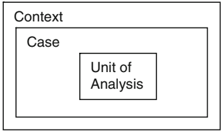
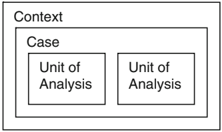
“According to [33], case studies can be characterized based on the way they define their cases and units of analysis.”
InfluentialDemystifying practices, challenges and expected features of using GitHub copilot
Zhang, B., Liang, P., Zhou, X., Ahmad, A., & Waseem, M. (2023) · International Journal of Software Engineering and Knowledge Engineering · doi:10.1142/s0218194023410048 · Cited by 26
Conflicting Scores, Confusing Signals: An Empirical Study of Vulnerability Scoring Systems
Koscinski, V., Nelson, M., Okutan, A., Falso, R., & Mirakhorli, M. T. (2025) · ACM SIGSAC Conference on Computer and Communications Security (CCS) · doi:10.1145/3719027.3765210 · Cited by 26
“To address our research questions from Section 1, we conducted an embedded case study [49] of Microsoft’s Patch Tuesday disclosures, following established guidelines for empirical research [65].”
ReuseTool—An extensible tool support for object-oriented framework reuse
Oliveira, T., Alencar, P., & Cowan, D. D. (2011) · Journal of Systems and Software · doi:10.1016/j.jss.2011.06.030 · Cited by 26
Forking and coordination in multi-platform development: a case study
Duc, A. N., Mockus, A., Hackbarth, R. L., & Palframan, J. (2014) · Proceedings of the ... ACM-IEEE International Symposium on Empirical Software Engineering and Measurement/International Symposium on Empirical Software Engineering and Measurement · doi:10.1145/2652524.2652546 · Cited by 29
“We used a suggested checklist [20] to ensure that we had addressed all the critical requirements of case study design including aims of the study, defining the case, unit of Table 6: Hypothesis testing”
BackgroundMethodInfluentialA risk worth taking? The effects of risk and prior experience on co-innovation participation
Abhari, K., Davidson, E., & Xiao, B. S. (2018) · Internet Research · doi:10.1108/intr-05-2017-0196 · Cited by 30
Justice-Oriented Teaching Dispositions in Urban Education: A Critical Interpretive Case Study
Butler, B. R., Coffey, H., & Young, J. L. (2018) · Urban Education · doi:10.1177/0042085918801428 · Cited by 26
Safe Velocity: A Practical Guide to Software Deployment at Scale using Controlled Rollout
Xia, T., Bhardwaj, S., Dmitriev, P., & Fabijan, A. (2019) · IEEE/ACM International Conference on Software Engineering: Software Engineering in Practice (ICSE-SEIP) · doi:10.1109/icse-seip.2019.00010 · Cited by 26
“[24] P. Runeson and M. Höst, “Guidelines for conducting and reporting case study research in software engineering,” Empir.”
BackgroundMethodInfluentialThe impact of requirements on systems development speed: a multiple-case study in automotive
Ågren, S. M., Knauss, E., Heldal, R., Pelliccione, P., Malmqvist, G., & Bodén, J. (2019) · Requirements Engineering · doi:10.1007/s00766-019-00319-8 · Cited by 33
“practice guidelines for both data collection and analysis [81].”
BackgroundMethodInfluentialThe Evolution of Empirical Methods in Software Engineering
Felderer, M., & Travassos, G. H. (2020) · Springer eBooks · doi:10.1007/978-3-030-32489-6_1 · Cited by 32
A case study on tool support for collaboration in agile development
Calefato, F., Giove, A., Lanubile, F., & Losavio, M. (2020) · IEEE International Conference on Global Software Engineering (ICGSE) · doi:10.1145/3372787.3390436 · Cited by 26
“[15, 16].”
HEDF: A Method for Early Forecasting Software Defects Based on Human Error Mechanisms
Huang, F., & Strigini, L. (2023) · IEEE Access · doi:10.1109/access.2023.3234490 · Cited by 29
“We used an in-depth case study, which is a research methodology especially suitable when one wants to answer “why” and “how” questions and develop novel theories (Runeson & Höst, 2009).”
MethodSoftware Variability Management: An Exploratory Study with Two Feature Modeling Tools
Pereira, J. A., de Souza, C. M. B., Figueiredo, E., Abilio, R., Vale, G., & Costa, H. A. X. (2013) · Brazilian Symposium on Software Components, Architectures, and Reuse (SBCARS) · doi:10.1109/sbcars.2013.13 · Cited by 26
“Construct validity reflects to what extent the operational measures that are studied really represent what the researcher have in mind and what is investigated according to the research questions [30].”
BackgroundAn exploratory study on ontology engineering for software architecture documentation
de Graaf, K. A., Liang, P., Tang, A., van Hage, W. R., & van der Vliet, H. J. (2014) · Computers in Industry · doi:10.1016/j.compind.2014.04.006 · Cited by 33
“In this exploratory case study [21] on the use of the ‘typical question’ approach we explore two questions:”
MethodRobustness Testing of Embedded Software Systems: An Industrial Interview Study
Shah, S. M. A., Sundmark, D., Lindström, B., & Andler, S. F. (2016) · IEEE Access · doi:10.1109/access.2016.2544951 · Cited by 26
Predicting golf ball trajectories from swing plane: An artificial neural networks approach
Bačić, B. (2016) · Expert Systems with Applications · doi:10.1016/j.eswa.2016.07.014 · Cited by 26
Holistic security requirements analysis for socio-technical systems
Li, T., Horkoff, J., & Mylopoulos, J. (2016) · Software & Systems Modeling · doi:10.1007/s10270-016-0560-y · Cited by 26
“[58], which has an focus on case study research in software engineering.”
BackgroundBenefits and drawbacks of software reference architectures: A case study
Martínez‐Fernández, S., Ayala, C. P., Franch, X., & Marques, H. M. (2017) · Information and Software Technology · doi:10.1016/j.infsof.2017.03.011 · Cited by 34
CERSE - Catalog for empirical research in software engineering: A Systematic mapping study
Molléri, J. S., Petersen, K., & Mendes, E. (2018) · Information and Software Technology · doi:10.1016/j.infsof.2018.08.008 · Cited by 31
Effects of measurements on correlations of software code metrics
Mamun, M. A. A., Berger, C., & Hansson, J. (2019) · Empirical Software Engineering · doi:10.1007/s10664-019-09714-9 · Cited by 27
Enabling the Reuse of Software Development Assets Through a Taxonomy for User Stories
Dilorenzo, E., Dantas, E., Perkusich, M., Ramos, F., Costa, A., Albuquerque, D. W., de Almeida, H. O., & Perkusich, Â. (2020) · IEEE Access · doi:10.1109/access.2020.2996951 · Cited by 29
“According to Runeson and H´’ost [35], a case study is an empirical method to investigate a contemporary phenomenon in a specific context.”
BackgroundThe costs and benefits of multistage configuration: A framework and case study
Rasmussen, J. B., Haug, A., Shafiee, S., Hvam, L., Mortensen, N. H., & Myrodia, A. (2020) · Computers & Industrial Engineering · doi:10.1016/j.cie.2020.107095 · Cited by 26
España, S. (2011) · RiuNet (Universitat Politècnica de València) · doi:10.4995/thesis/10251/14572 · Cited by 40
Gunatilake, H., Grundy, J., Hoda, R., & Mueller, I. (2024) · ACM Transactions on Software Engineering and Methodology · doi:10.1145/3641849 · Cited by 27
“We adhered to the guidelines outlined by Runeson et al. [63] when conducting this case study.”
MethodAngermeir, F., Amougou, M., Kreitz, M., Bauer, A., Linhuber, M., Fucci, D., Moyón, F., Mendez, D., & Tony, G. (2026) · ACM/IEEE International Conference on Software Engineering: Companion Proceedings (ICSE-Companion) · doi:10.1145/3744916.3773207 · Cited by 35
CMMI guided process improvement for DevOps projects: an exploratory case study
Rong, G., Zhang, H., & Shao, D. (2016) · International Conference on Software and System Process · doi:10.1145/2904354.2904372 · Cited by 25
Sharma, P., & Sangal, A. L. (2019) · Computer Standards & Interfaces · doi:10.1016/j.csi.2019.04.009 · Cited by 31
Investigating the Adoption and Application of Large-Scale Scrum at a German Automobile Manufacturer
Uludağ, Ö., Kleehaus, M., Dreymann, N., Kabelin, C., & Matthes, F. (2019) · IEEE International Conference on Global Software Engineering (ICGSE) · doi:10.1109/icgse.2019.00019 · Cited by 25
“B. Threats to validity We discuss potential threats to validity along with an assessment scheme as suggested by Runeson and Höst [18].”
BackgroundMethodInfluentialMSL: A pattern language for engineering self-adaptive systems
Arcaini, P., Mirandola, R., Riccobene, E., & Scandurra, P. (2020) · Journal of Systems and Software · doi:10.1016/j.jss.2020.110558 · Cited by 25
IoT-Based Approaches for Monitoring the Particulate Matter and Its Impact on Health
Diván, M. J., Reynoso, M. L. S., Panebianco, J. E., & Méndez, M. J. (2021) · IEEE Internet of Things Journal · doi:10.1109/jiot.2021.3068898 · Cited by 29
COPri v.2 — A core ontology for privacy requirements
Gharib, M., Giorgini, P., & Mylopoulos, J. (2021) · Data & Knowledge Engineering · doi:10.1016/j.datak.2021.101888 · Cited by 33
A Framework for Automating Deployment and Evaluation of Blockchain Networks
Tran, N. K., Babar, M. A., & Walters, A. J. (2022) · Journal of Network and Computer Applications · doi:10.1016/j.jnca.2022.103460 · Cited by 25
“Whilst the case study method does not aim to provide statistically significant conclusions [27], we attempted to broaden the generalization of our results by choosing a case”
BackgroundMethodMeasurement of key performance indicators of user experience based on software requirements
Atoum, I. (2023) · Science of Computer Programming · doi:10.1016/j.scico.2023.102929 · Cited by 27
Industry Practices for Challenging Autonomous Driving Systems with Critical Scenarios
Song, Q., Engström, E., & Runeson, P. (2024) · ACM Transactions on Software Engineering and Methodology · doi:10.1145/3640334 · Cited by 35
“The study is an interview study, in which we mainly used semi-structured interviews [70] to gather insights from industry practitioners.”
BackgroundMethodResultInfluentialSelf-citationSoftware modernization by recovering Web services from legacy databases
Pérez‐Castillo, R., de Guzmán, I. G., Caballero, I., & Piattini, M. G. (2012) · Journal of Software Evolution and Process · doi:10.1002/smr.1554 · Cited by 25
“The case study was carried out by following the protocol for planning, conducting, and reporting case studies proposed by Runeson and Host [45].”
MethodInternet Adoption at the User Level: Empirical Evidence from The Gambia
Touray, A., Salminen, A., & Mursu, A. (2014) · Information Technology for Development · doi:10.1080/02681102.2013.874319 · Cited by 25
“Both reliability and validity were achieved by the appropriate use of case study protocol as outlined by Runeson and Ho¨st (2009).”
MethodTen Lessons Learned from Integrating Interaction Design and Agile Development
da Silva, T. S., Silveira, M. S., & Maurer, F. (2013) · Agile Conference · doi:10.1109/agile.2013.11 · Cited by 35
Happy Birthday! A trend analysis on past MSR papers
Demeyer, S., Murgia, A., Wyckmans, K., & Lamkanfi, A. (2013) · International Conference on Mining Software Repositories (MSR) · doi:10.1109/msr.2013.6624049 · Cited by 25
“Consistent with the guidelines for case studies research (see [14], [15]) we organize them in four categories.”
MethodEmpirical evaluations on the cost-effectiveness of state-based testing: An industrial case study
Holt, N. E., Briand, L., & Torkar, R. (2014) · Information and Software Technology · doi:10.1016/j.infsof.2014.02.011 · Cited by 25
“Reliability concerns to what extent the data and the analysis are dependent on the specific researchers [56] meaning that unclear descriptions of data collection procedures may give different results in subsequent replications of the study.”
BackgroundResultSoftware requirements change taxonomy: Evaluation by case study
McGee, S., & Greer, D. (2011) · IEEE International Requirements Engineering Conference (RE) · doi:10.1109/re.2011.6051641 · Cited by 25
“The study was designed in accordance with the case study guidelines outlined by Runeson and Host [11] and Wohlin et al [12] and is a single unit case study, in which the unit of analysis is the requirements change.”
MethodA method to generate reusable safety case argument-fragments from compositional safety analysis
Šljivo, I., Gallina, B., Carlson, J., Hansson, H., & Puri, S. (2016) · Journal of Systems and Software · doi:10.1016/j.jss.2016.07.034 · Cited by 25
“Case study is an empirical method for investigating a contemporary phenomenon in its real-world context [24].”
BackgroundScaling agile development in mechatronic organizations - a comparative case study
Eklund, U., & Berger, C. (2017) · IEEE/ACM International Conference on Software Engineering: Software Engineering in Practice (ICSE-SEIP) · doi:10.1109/icse-seip.2017.25 · Cited by 25
Sabaliauskaite, G., Ng, G. S., Ruths, J., & Mathur, A. P. (2017) · Robotics and Autonomous Systems · doi:10.1016/j.robot.2017.09.018 · Cited by 27
“There are limitations and threats to validity to all empirical studies, as defined in [6,28].”
BackgroundCorrelations of software code metrics: an empirical study
Mamun, M. A. A., Berger, C., & Hansson, J. (2017) · Joint Conference of the International Workshop on Software Measurement and the International Conference on Software Process and Product Measurement (IWSM-MENSURA) · doi:10.1145/3143434.3143445 · Cited by 33
“This empirical study is designed as a case study based on Runeson and Höst’s guideline [13] on designing, planning, and conducting case study.”
MethodAn empirical study of tactical vulnerabilities
Santos, J. C. S., Tarrit, K., Sejfia, A., Mirakhorli, M. T., & Galster, M. (2018) · Journal of Systems and Software · doi:10.1016/j.jss.2018.10.030 · Cited by 26
“We conducted an in-depth case study with three cases [31] based on guidelines for industrially-based multiple-case studies [32] (where each of the three systems is one case).”
MethodReporting from the Implementation of a Business Capability Map as Business-IT Alignment Tool
Bondel, G., Faber, A., & Matthes, F. (2018) · IEEE International Enterprise Distributed Object Computing Conference Workshops (EDOCW) · doi:10.1109/edocw.2018.00027 · Cited by 25
“A case study represents an appropriate methodology for research within the context of information system science since it studies a phenomenon in its natural setting [29], [30].”
BackgroundMethodFramework for Prioritization of Open Data Publication: An Application to Smart Cities
Prieto, Á. E., Mazón, J.-N., & Lozano-Tello, A. (2019) · IEEE Transactions on Emerging Topics in Computing · doi:10.1109/tetc.2019.2893016 · Cited by 27
“Showing the application of action research is made by using a test case of the POPSC framework [25], which is shown in Section V.”
MethodRam, P., Rodríguez, P., Oivo, M., & Martínez‐Fernández, S. (2019) · International Conference on Software and System Process · doi:10.1109/icssp.2019.00013 · Cited by 30
“We followed the guidelines recommended by Runeson and Höst [15] to conduct and report the multiple case study.”
BackgroundMethodTripathi, N., & Oivo, M. (2020) · Springer eBooks · doi:10.1007/978-3-030-35983-6_9 · Cited by 25
Understanding Practitioners’ Challenges on Software Modeling: A Survey
Özkaya, M., & Erata, F. (2020) · Journal of Computer Languages · doi:10.1016/j.cola.2020.100963 · Cited by 25
On the Role of Software Architecture in DevOps Transformation: An Industrial Case Study
Shahin, M., & Babar, M. A. (2020) · International Conference on Software and System Process · doi:10.1145/3379177.3388891 · Cited by 34
“Informed by the established guidelines for conducting a case study [30, 31], a research protocol was developed in advance and was strictly followed when performing the case study.”
MethodKyakulumbye, S., Pather, S., & Jantjies, M. (2021) · International journal of information systems and project management · doi:10.12821/ijispm070403 · Cited by 28
“In the software engineering context, the case may be a software development project, which is the most straightforward choice or it may alternatively be an individual, a group of people, a process, a product, a policy, a role in the organization, an event, a technology, etc. [60].”
Melegati, J., Edison, H., & Wang, X. (2020) · IEEE Transactions on Software Engineering · doi:10.1109/tse.2020.3042610 · Cited by 29
Metadata
- Authors
- Runeson, P., & Höst, M.
- Affiliations
- Lund University (SE)
- Corresponding author
- Runeson, Per
- Venue
- Empirical Software Engineering
- Published
- 2008-12-19
- Volume
- 14
- Issue
- 2
- Pages
- 131-164
- ISSN
- 1382-3256 (ISSN-L)
- 1573-7616
- OpenAlex
- W2162739315
- Cited by
- 3,862
- References
- 75
- Citations by year
- 2026: 204 · 2025: 225 · 2024: 244 · 2023: 241 · 2022: 246 · 2021: 299 · 2020: 312 · 2019: 268 · 2018: 280 · 2017: 237 · 2016: 260 · 2015: 263 · 2014: 252 · 2013: 198 · 2012: 151
- FWCI
- 186.23
- Type
- journal article
- Language
- en
- Open access
- hybrid
- doi.org
- Licence
- cc-by-nc
- Locations
- Empirical Software Engineering (publishedVersion, cc-by-nc)
- Lund University Publications (Lund University) (submittedVersion, other-oa)
- Funders
- Vetenskapsrådet
- Topics
- Physical Sciences › Computer Science › Information Systems › Software Engineering Techniques and Practices
- Social Sciences › Sociology and Political Science › Qualitative Comparative Analysis Research
- Physical Sciences › Computer Science › Information Systems › Software Engineering Research
- Keywords
- case study method, software engineering research, reporting guidelines, research quality, naturalistic study, qualitative research practice
About these checks
Registry, retraction, Cites and statistics results are computed, not judged, with one exception: a printed reference that no index lists is read once by a model before it counts as a citation error. Claims are extracted by a model and kept only when their quote appears verbatim in the text; each cited source is then checked, with a model’s help, for whether it says what the claim relies on. Those verdicts can be wrong — read the claim’s quote and the cited source before relying on one.
Statistics and arithmetic are recomputed, not judged.
Confidence bands are shown only for fields calibrated on our annotated test set. None is calibrated yet, so no band is shown.
What counts as a claim ›How we measure confidence ›How we check this ›
Are you an author, or do you see a problem with this page? Request a review
Data sources
Bibliographic data: Semantic Scholar, OpenAlex, Crossref.
Contains information from the Semantic Scholar Academic Graph Datasets, made available under the ODC Attribution License (ODC-BY 1.0).
Semantic Scholar’s data is described in: Kinney, R., et al. (2023). The Semantic Scholar Open Data Platform. arXiv:2301.10140.
