

Experiences of Autism Acceptance and Mental Health in Autistic Adults
Open accessThe DOI matches its Crossref record; 67 of the 71 references it cites were found in a registry or an index; 3 of the 60 sources its claims cite were checked for support.
Abstract
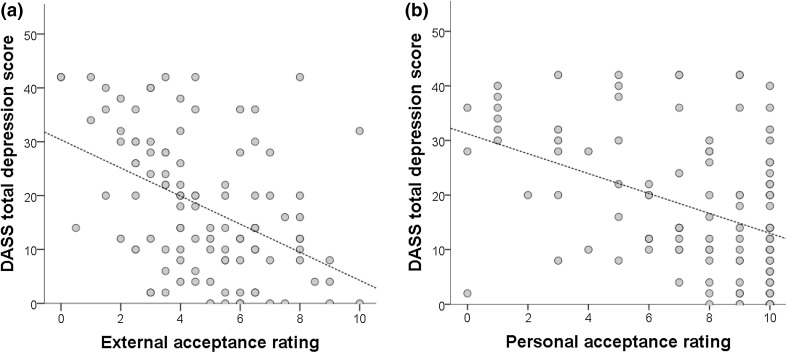
Mental health difficulties are highly prevalent in individuals on the autism spectrum. The current study examined how experiences and perceptions of autism acceptance could impact on the mental health of autistic adults. 111 adults on the autism spectrum completed an online survey examining their experiences of autism acceptance, along with symptoms of depression, anxiety and stress. Regression analyses showed that autism acceptance from external sources and personal acceptance significantly predicted depression. Acceptance from others also significantly predicted stress but acceptance did not predict anxiety. Further analyses suggested that experiences of "camouflaging" could relate to higher rates of depression. The current study highlights the importance of considering how autism acceptance could contribute to mental health in autism.
Overview
CoChat Summary
TL;DR
In 111 autistic adults, perceived autism acceptance from external sources and personal acceptance predicted lower depression, and external acceptance also predicted lower stress, but acceptance did not predict anxiety. Exploratory qualitative reports of camouflaging were linked to higher depression and lower recent acceptance.
Key findings
- Only 7% said society generally accepted them as autistic, 43% said “no,” and 48% said “sometimes”; 24.3% agreed/strongly agreed they had felt accepted by society in the past week, while 41.4% disagreed/strongly disagreed.
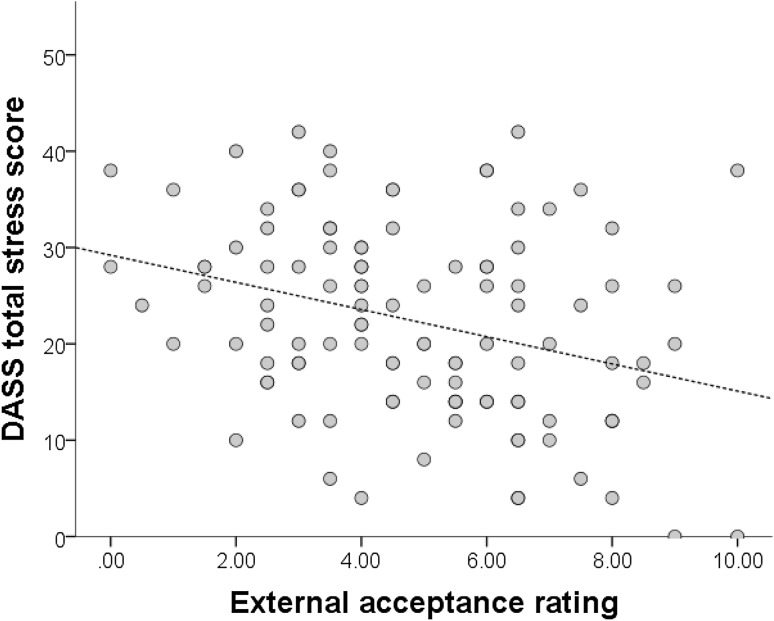
- In hierarchical regressions, the final depression model explained 52.1% of variance; external acceptance (β = −0.284, p = .004) and personal acceptance (β = −0.307, p = .001) significantly predicted depression. For stress, external acceptance significantly predicted stress (β = −0.198, p = .037), but adding acceptance variables was a non-significant change (p = .11). Acceptance did not predict anxiety.
- DASS means were depression 17.8 (SD = 12.7), anxiety 12.9 (SD = 9.14), and stress 22.3 (SD = 9.96), described as higher than non-autistic population means cited from Henry and Crawford (2005).
- Of 63 qualitative responders, 27 spontaneously reported camouflaging/masking; camouflaging interacted with DASS scores (F(2, 212) = 4.55, p = .012), with only depression differing between those who reported camouflaging and those who did not (t(107) = −0.256, p = .012, g = 0.56), and camouflagers were more likely to disagree they had experienced acceptance (X²(2) = 6.68, p = .035).
Methods
- Cross-sectional online survey of 111 autistic adults over 18, recruited via social media and UK autism organisations/groups; data collected June–October 2016; median completion time 12 min; 84% self-reported additional mental health diagnoses or developmental conditions.
- Measures included newly developed autism acceptance items (societal, family/friend, and personal acceptance; past-week societal acceptance; categorical societal acceptance), the DASS-21, and open-text qualitative responses analyzed by content analysis with two independent coders.
- Analyses included Spearman correlations, PCA that combined societal and family/friend acceptance into “external sources” while treating personal acceptance separately, and three hierarchical regressions predicting depression, anxiety, and stress while controlling age, age of diagnosis, gender, and other DASS scales; exploratory mixed ANOVA examined camouflaging.
Limitations
- Stated by the paper: online self-report may be unreliable; the sample was predominantly female, limiting generalisability, though gender was not a significant predictor; many participants reported additional diagnoses, possibly attracting those already experiencing mental health difficulties; and the sample was mainly well-educated and not representative of the whole autism spectrum.
- Evident from the text: the cross-sectional correlational design cannot establish causality or direction; the autism acceptance items were not a pre-existing validated measure, with PCA KMO = 0.528, personal acceptance loading 0.462, and Cronbach’s alpha improving only from 0.51 to 0.64 after removing personal acceptance; 27 participants were excluded from final regression analyses due to missing data, and 11 without a formal diagnosis were excluded from regressions.
Model-written summary. Check it against the paper before relying on it.
Integrity signals
Registry
Cites
Statistics
Figures
Verification
Claims the paper makes
3 Valid · 0 Not valid · 44 Not checked · 65 Own results and interpretations
Every source the paper cites for this claim was checked and supports it.
In the paper
“Sasson et al. (2017) found that non-autistic individuals tend to make rapid unfavourable judgements about those on the autism spectrum.”
§ Experiences of Autism Acceptance and Mental Health in Autistic Adults > Introduction
What the sources say
- Supportedcites Sasson et al. 2017 matched to “Neurotypical Peers are Less Willing to Interact with Those with Autism based on Thin Slice Judgments” (2017) source
The Abstract (p. 1) states that across three studies, first impressions of individuals with ASD made from thin slices of real-world social behavior by typically-developing observers were 'far less favorable across a range of trait judgments compared to controls' and that these patterns 'occur within seconds'. The Discussion (p. 1) likewise reports robustly less favorable first impressions by neurotypical observers, associated with reduced intentions to engage. The claim's 'rapid unfavourable judgements' by non-autistic individuals is therefore directly stated; the only qualifier the source adds (that the bias vanishes for conversational content without audiovisual cues) does not contradict the hedged 'tend to'. (LLM, conf=0.92)
plain- Asserted: passes — The authors put it forward as true.
- Checkable: passes — It can be checked against evidence.
- Load-bearing: passes — The paper’s conclusions depend on it.
- Based: passes — The paper gives a reason why it holds.
- Supported
The sources with a verdict support this claim; the rest weren’t checked yet, have no full text we could read, or their verdicts aren’t rated yet.
In the paper
“many autistic individuals frequently report “masking” or “camouflaging”—that is, they may use strategies to camouflage the fact they are on the autism spectrum in order to “fit in” to the non-autistic world (Dean et al. 2016; Hull et al. 2017).”
§ Experiences of Autism Acceptance and Mental Health in Autistic Adults > Introduction
What the sources say
- Not checked yetcites Dean et al. 2016 matched to “The art of camouflage: Gender differences in the social behaviors of girls and boys with autism spectrum disorder” (2017) source
- Supportedcites Hull et al. 2017 matched to ““Putting on My Best Normal”: Social Camouflaging in Adults with Autism Spectrum Conditions” (2017) source
The Discussion opening states that 'the vast majority of participants (male, female, and of other genders) reported camouflaging to some degree', and the Conclusions (p. last) that 'camouflaging of ASC-related characteristics in social situations may be a common behaviour amongst adults with ASC' and 'is motivated by the desire to fit in with others'. The Masking theme section describes hiding/suppressing ASC-associated behaviours and adopting personas so as not to appear autistic, with some respondents camouflaging at all times — matching the citing sentence's 'strategies to camouflage the fact they are on the autism spectrum in order to fit in'. The only scope difference is that Hull et al. sampled diagnosed adults, whereas the citing sentence speaks of autistic individuals generally; the citing hedge ('may use strategies') is no stronger than the source's own. (LLM, conf=0.85)
hedged- Asserted: passes — The authors put it forward as true.
- Checkable: passes — It can be checked against evidence.
- Load-bearing: unclear — It is unclear whether the paper’s conclusions depend on it.
- Based: passes — The paper gives a reason why it holds.
A result the paper reports from its own data — it cites no other source for it, so there is none to check. The quote shows it is in the paper.
In the paper
“Further analyses suggested that experiences of “camouflaging” could relate to higher rates of depression.”
§ Experiences of Autism Acceptance and Mental Health in Autistic Adults > Abstract
hedgedstates an associationn = 111- Asserted: passes — The authors put it forward as true.
- Checkable: passes — It can be checked against evidence.
- Load-bearing: unclear — It is unclear whether the paper’s conclusions depend on it.
- Based: passes — The paper gives a reason why it holds.
- Rests on an assumption not shown here.
A result the paper reports from its own data — it cites no other source for it, so there is none to check. The quote shows it is in the paper.
In the paper
“Regression analyses showed that autism acceptance from external sources and personal acceptance significantly predicted depression.”
§ Experiences of Autism Acceptance and Mental Health in Autistic Adults > Abstract
plainstates an associationn = 111- Asserted: passes — The authors put it forward as true.
- Checkable: passes — It can be checked against evidence.
- Load-bearing: passes — The paper’s conclusions depend on it.
- Based: passes — The paper gives a reason why it holds.
- Rests on an assumption not shown here.
A result the paper reports from its own data — it cites no other source for it, so there is none to check. The quote shows it is in the paper.
In the paper
“Acceptance from others also significantly predicted stress but acceptance did not predict anxiety.”
§ Experiences of Autism Acceptance and Mental Health in Autistic Adults > Abstract
plainstates an associationn = 111 ·- Asserted: passes — The authors put it forward as true.
- Checkable: passes — It can be checked against evidence.
- Load-bearing: passes — The paper’s conclusions depend on it.
- Based: passes — The paper gives a reason why it holds.
- Rests on an assumption not shown here.
45 more claims
Create a free account to see all 112 claims and to verify the 55 references still open.
- Probably not a substantial claim. 41
- It may state two separate claims as one. 30
- The quote only partly states this claim. 3
Claims other papers make about this one
Each is checked against this paper’s own text: does it say what the citing paper says it does?
The source backs part of the claim, not all of it — or backs it for a different population, condition or comparison.
In the citing paper
“evidence suggested that experiences of stigma and not feeling accepted by others was associated with increased camouflaging (Cage et al., 2018;Perry et al., 2021)”
From Camouflaging in autism: A systematic review (2021) · cites this paper as Cage et al., 2018
Experimental — accuracy not yet measuredThe cited source says what the claim attributes to it.
In the citing paper
“Results of three exploratory studies using predominately qualitative methodologies were not suggestive of sex or gender differences in camouflaging (Cage et al., 2018;Hull et al., 2017;Livingston et al. 2020).”
From Camouflaging in autism: A systematic review (2021) · cites this paper as Cage et al., 2018
The cited source says what the claim attributes to it.
In the citing paper
“Importantly, acceptance of autism by others is correlated with lower levels of stress and depression in Autistic adults (Cage et al., 2018).”
From Neurodiversity and Autism Intervention: Reconciling Perspectives Through a Naturalistic Developmental Behavioral Intervention Framework (2022) · cites this paper as Cage et al., 2018
The cited source says what the claim attributes to it.
In the citing paper
“Previous research has found that lack of societal understanding of autism and feeling misunderstood may contribute to stress, isolation, and depression among autistic adults (Cage et al., 2018;Gotham et al., 2014;Griffith et al., 2012;Han et al., 2022).”
From A mixed methods study of autistic adults' mental health therapy experiences (2023) · cites this paper as Cage et al., 2018
The cited source says what the claim attributes to it.
In the citing paper
“The negative mental effects of “camouflaging” and “masking” in society are described in recent research, and support the need for considering societal approaches for promoting autistic identity (e.g. Cage et al., 2018; Cage & Troxell-Whitman, 2019).”
From Listening to the autistic voice: Mental health priorities to guide research and practice in autism from a stakeholder-driven project (2020) · cites this paper as Cage et al., 2018
6 more claims about this paper
Create a free account to see every claim other papers make about this one.
Statistics that don’t add up
Each reported p-value recomputed from its test statistic and degrees of freedom, each partial η² from its F, and each ratio, mean difference or B printed with a p checked against its own confidence interval.
Rated major: it would touch a result — a value a result rests on, reported and recomputed p-values on opposite sides of the significance level, two passages that conflict with no sign which is right, or a cited work retracted before this paper was published.
In the paper
“t (107) = − 0.256, p = .012”
§ Experiences of Autism Acceptance and Mental Health in Autistic Adults > Results > Content Analysis of Qualitative Results
Reported p = .012 · recomputed p = .798
Statistics recomputed
Every reported test result, recomputed from its test statistic and degrees of freedom. A result shows as not adding up only once an independent check has confirmed it.
- Doesn’t add upt(107) = -0.256reported p = .012 · recomputed p = .798The two fall on opposite sides of .05
“t (107) = − 0.256, p = .012”
- Consistentχ²(3) = 33.66reported p < .001 · recomputed p < .001
“χ2 (3) = 33.66, p < .001”
- Consistentt(110) = 7.93reported p < .001 · recomputed p < .001
“t(110) = 7.93, p < .001”
- ConsistentF(7, 83) = 11.8reported p < .001 · recomputed p < .001
“F (7, 83) = 11.80, p < .001”
- ConsistentF(7, 83) = 14.32reported p < .001 · recomputed p < .001
“F (7, 83) = 14.32, p < .001”
6 more recomputed tests
Create a free account to see every test the Stats check recomputed.
Self-check
Percentages, sums and reported differences re-computed from the paper’s own numbers.
Each contradiction between two passages listed here was confirmed by an independent check.
Rated minor: it would not touch a result — a value no result rests on, a p-value that stays on the same side of the significance level, or a conflict that is clerical, resolved elsewhere in the paper, or outside its own findings.
In the paper
§ Experiences of Autism Acceptance and Mental Health in Autistic Adults > Results > Autism Acceptance and Mental Health
“Next, stress was entered as the outcome variable.”
§ Experiences of Autism Acceptance and Mental Health in Autistic Adults > Results > Autism Acceptance and Mental Health
“The first step explained 54% of the variance in depression scores”
Rated minor: it would not touch a result — a value no result rests on, a p-value that stays on the same side of the significance level, or a conflict that is clerical, resolved elsewhere in the paper, or outside its own findings.
In the paper
§ Experiences of Autism Acceptance and Mental Health in Autistic Adults > Results > Content Analysis of Qualitative Results
“t (107) = − 0.256”
§ Experiences of Autism Acceptance and Mental Health in Autistic Adults > Results > Content Analysis of Qualitative Results
“p = .012, g = 0.56”
Rated minor: it would not touch a result — a value no result rests on, a p-value that stays on the same side of the significance level, or a conflict that is clerical, resolved elsewhere in the paper, or outside its own findings.
In the paper
§ Experiences of Autism Acceptance and Mental Health in Autistic Adults > Results > Autism Acceptance and Mental Health
“Finally, anxiety was tested as the outcome variable”
§ Experiences of Autism Acceptance and Mental Health in Autistic Adults > Results > Autism Acceptance and Mental Health
“here the first step explained 52% of the variance in depression scores”
Rated minor: it would not touch a result — a value no result rests on, a p-value that stays on the same side of the significance level, or a conflict that is clerical, resolved elsewhere in the paper, or outside its own findings.
In the paper
§ Experiences of Autism Acceptance and Mental Health in Autistic Adults > Results > Autism Acceptance and Mental Health
“| DASS anxiety | 0.371 | 0.195 | 0.411 | 0.061 |”
§ Experiences of Autism Acceptance and Mental Health in Autistic Adults > Results > Autism Acceptance and Mental Health
“| DASS anxiety | 0.431 | 0.170 | 0.285 | 0.013 |”
Rated minor: it would not touch a result — a value no result rests on, a p-value that stays on the same side of the significance level, or a conflict that is clerical, resolved elsewhere in the paper, or outside its own findings.
In the paper
§ Experiences of Autism Acceptance and Mental Health in Autistic Adults > Results > Autism Acceptance
“The KMO statistic was acceptable (0.528)”
§ Experiences of Autism Acceptance and Mental Health in Autistic Adults > Results > Autism Acceptance
“individual item KMO values were above 0.74”
1 more finding
Create a free account to see every finding of this check.
Citations
Cites
Diagnostic and Statistical Manual of Mental Disorders
American Psychiatric Association (2013) · doi:10.1176/appi.books.9780890425596 · Cited by 116,369
Diagnostic and Statistical Manual of Mental Disorders
Williams, J. B. W., & First, M. (2013) · Encyclopedia of Social Work · doi:10.1093/acrefore/9780199975839.013.104 · Cited by 109,519
The Measurement of Observer Agreement for Categorical Data
Landis, J. R., & Koch, G. G. (1977) · Biometrics · doi:10.2307/2529310 · Cited by 81,148
The need to belong: Desire for interpersonal attachments as a fundamental human motivation.
Baumeister, R. F., & Leary, M. R. (1995) · Psychological Bulletin · doi:10.1037//0033-2909.117.3.497 · Cited by 23,245 · cited 1×
“Indeed, sense of belonging is argued to be vital to the well being of all individuals, irrespective of autism (Baumeister and Leary 1995).”
Background(2017) · Cited by 16,319
Lovibond, P. F., & Lovibond, S. H. (1995) · Behaviour Research and Therapy · doi:10.1016/0005-7967(94)00075-u · Cited by 14,523
Does the autistic child have a “theory of mind” ?
Baron-Cohen, S., Leslie, A. M., & Frith, U. (1985) · Cognition · doi:10.1016/0010-0277(85)90022-8 · Cited by 8,599
(1995) · Cited by 6,909
Henry, J. D., & Crawford, J. R. (2005) · British Journal of Clinical Psychology · doi:10.1348/014466505x29657 · Cited by 5,801 · cited 1×
“2007), along with good construct validity (Henry and Crawford 2005).”
Antony, M. M., Bieling, P. J., Cox, B. J., Enns, M. W., & Swinson, R. P. (1998) · Psychological Assessment · doi:10.1037/1040-3590.10.2.176 · Cited by 4,874
Research works printed but not linked: 1
- Freelon D ReCal: Intercoder reliability calculation as a web service International Journal of Internet Science 2010 5 1 20 33
Cited by
Items 201–300 of 638
Hwang, Y. I., Foley, K., Elley, K., Brown, S. A., Joy-Leong, D., Li, X., Grove, R., Trollor, J. N., Pellicano, E., & Zheng, L. (2022) · Journal of Autism and Developmental Disorders · doi:10.1007/s10803-022-05473-7 · Cited by 21
“This is problematic given research indicating a tendency for autistic adults to use maladaptive strategies in self-regulation of internal states, ‘masking’ of their autistic traits, and the flow-on effect of this onto negative psychological wellbeing (Cage et al., 2018; Cai et al., 2018).”
BackgroundMcMaughan, D. J., Imanpour, S., Mulcahy, A. C., Jones, J. L., & Criss, M. M. (2023) · Autism · doi:10.1177/13623613221143592 · Cited by 22
“However, systemic factors external to the autistic person, experienced as compounding stressors, may also shape overall well-being and at least partially explain the increased rates of mental health conditions, particularly the rates of anxiety and depression (Cage et al., 2018; Cage & Troxell-Whitman, 2019; Cook et a…”
BackgroundA qualitative interview study on quality of life and ageing experiences of autistic adults
Viner, H. E., Yuill, N., Costa, A. P., Radford, H., & Kornadt, A. E. (2024) · Communications Psychology · doi:10.1038/s44271-024-00142-0 · Cited by 24
Supporting the needs of college students with autism spectrum disorder
Chandrasekhar, T. (2019) · Journal of American College Health · doi:10.1080/07448481.2019.1686003 · Cited by 23
Galvin, J., Howes, A., McCarthy, B., & Richards, G. (2020) · Autism · doi:10.1177/1362361320966853 · Cited by 21
“It may also influence other known mediators of the relation between autistic traits and psychopathological outcomes, such as reinforcing the belief that other people do not understand them, and increasing feelings of non-acceptance, perceived burdensomeness and thwarted belonging, which, as previously mentioned, are a…”
BackgroundWeaponized Autism: Making Sense of Violent Internalized Ableism in Online Incel Communities
Gheorghe, R. M., & Clement, D. Y. (2023) · Deviant Behavior · doi:10.1080/01639625.2023.2268253 · Cited by 21
“As they interact with these negative framings and stigmatized perceptions, many autistic individuals may feel pressured to camouflage or conceal their autism, even though doing so may be detrimental to their own wellbeing and mental health (Botha et al. 2022; Cage et al. 2018; Pearson & Rose 2021).”
BackgroundAutistic-Delivered Peer Support: A Feasibility Study
Shea, L., Wong, M.-Y., Song, W., Kaplan, K., Uppal, D., & Salzer, M. S. (2022) · Journal of Autism and Developmental Disorders · doi:10.1007/s10803-022-05816-4 · Cited by 31
“Unmet needs for services to support social skills, adaptive skills such as self-care, selfacceptance, and other skill areas may result in barriers for autistic individuals to live independently and fully participate in their community (Cage et al., 2017; Henninger & Taylor, 2013; Kanne et al., 2011).”
BackgroundAfsharnejad, B., Black, M. H., Falkmer, M., Bölte, S., & Girdler, S. J. (2023) · Journal of Autism and Developmental Disorders · doi:10.1007/s10803-023-05893-z · Cited by 19
“This approach does not align with contemporary views of autism which focus on supporting individual needs rather than promoting the notion that individuals need to comply with the neurotypical world (Cage et al., 2018; Monahan et al., 2021).”
BackgroundSimpson, A., Rensburg, M. V., Ding, L., & Rydzewska, E. (2024) · Research in Autism · doi:10.1016/j.rasd.2024.102427 · Cited by 19
Kapp, S. K., Goldknopf, E. J., Brooks, P. J., Kofner, B., & Hossain, M. (2019) · Behavioral and Brain Sciences · doi:10.1017/s0140525x18002479 · Cited by 20
Cognitive and Social Cognitive Self-assessment in Autistic Adults
DeBrabander, K. M., Pinkham, A. E., Ackerman, R. A., Jones, D. R., & Sasson, N. J. (2020) · Journal of Autism and Developmental Disorders · doi:10.1007/s10803-020-04722-x · Cited by 19
Presymptomatic Detection and Intervention for Autism Spectrum Disorder
MacDuffie, K. E., Estes, A. M., Harrington, L. T., Peay, H. L., Piven, J., Pruett, J. R., Wolff, J. J., & Wilfond, B. S. (2021) · PEDIATRICS · doi:10.1542/peds.2020-032250 · Cited by 18
Evaluation of an Autism Training in a Much-Needed Context: The Case of France
Saade, S., Bockstal-Fieulaine, B., Gillespie‐Lynch, K., Besche‐Richard, C., Boujut, É., Harrison, A. J., & Cappe, É. (2023) · Autism in Adulthood · doi:10.1089/aut.2022.0080 · Cited by 19
“8,15,16 Living as an ‘‘othered identity’’ can also lead to internalized stigma, which in turn can contribute to mental health difficulties among autistic people.”
Jeanneret, N., Courcy, I., Caron, V., Giroux, M., Guerrero, L., Ouimet, M., d’Arc, B. F., & Soulières, I. (2022) · Research in Autism · doi:10.1016/j.rasd.2022.102038 · Cited by 19
Galvin, J., Howes, A., & Richards, G. (2023) · Journal of Autism and Developmental Disorders · doi:10.1007/s10803-023-06157-6 · Cited by 19
“In autistic individuals, such experiences may include heightened exposure to trauma (Dodds, 2021 ), instances of bullying (Zablotsky et al., 2014 ), the necessity to camouflage one’s autistic traits (Cook et al., 2021 ), and a pervasive sense of non-acceptance from others (Cage et al., 2018 ).”
Life Is a Stage: Autistic Perspectives on Neurotypicality
Angulo-Jiménez, H., Chan, M., & DeThorne, L. S. (2019) · Autism in Adulthood · doi:10.1089/aut.2019.0024 · Cited by 18
“22,23 When combined with prior literature, these narratives on neurotypicality offer at least three implications for professionals supporting autistic individuals and their families.”
Can a Person be ‘A Bit Autistic’? A Response to Francesca Happé and Uta Frith
Chown, N., & Leatherland, J. (2020) · Journal of Autism and Developmental Disorders · doi:10.1007/s10803-020-04541-0 · Cited by 21
Milton, D. E. M., Heasman, B., & Sheppard, E. (2020) · Springer eBooks · doi:10.1007/978-1-4614-6435-8_102273-2 · Cited by 20
Consolidating a framework of autistic camouflaging strategies: An integrative systematic review
Nel, J., Spedding, M. F., & Malcolm‐Smith, S. (2025) · Autism · doi:10.1177/13623613251335472 · Cited by 20
Our Challenges, Our Solutions: The Impact of Autism on Families
Trew, S. (2025) · Journal of Autism and Developmental Disorders · doi:10.1007/s10803-025-07034-0 · Cited by 19
Speech-Language Pathologist's Role in Understanding and Promoting Self-Advocacy in Autistic Adults
Santhanam, S. P., & Bellon-Harn, M. L. (2022) · American Journal of Speech-Language Pathology · doi:10.1044/2021_ajslp-21-00223 · Cited by 16
Gillespie‐Smith, K., Mair, A. P. A., Alabtullatif, A., Pain, H., & McConachie, D. (2024) · Autism in Adulthood · doi:10.1089/aut.2023.0051 · Cited by 18
“53,55,56 As observed in Themes 1 and 3, socializing online was viewed as positive.”
Lei, J., Leigh, E., Charman, T., Russell, A., & Hollocks, M. J. (2024) · Autism · doi:10.1177/13623613241238251 · Cited by 17
“…& Frost, 2020), and may inhibit autistic individuals from finding a positive sense of self-worth and developing collective self-esteem to build a shared autism group identity and to recognise and embrace their own strengths within their social group (Cage et al., 2018; Cooper et al., 2017, 2022).”
BackgroundBrake, J. (2024) · Disability & Society · doi:10.1080/09687599.2024.2374491 · Cited by 17
“In other words, this framework rejects the concept of a ‘normal brain’ and instead of taking a deficit approach, it describes differences in the way people think, behave, and perceive the world (Bagatell 2010; cage, Di Monaco, and Newell 2018; Grinker 2020, 2010; Rios and costa Andrada 2015).”
Growing-up autistic: Sharing autistic children’s experiences and insights
Mullally, S. L., Wood, A. E., Edwards, C. C., Connolly, S. E., Constable, H., Watson, S., Rodgers, J., Rose, K., & King, N. (2026) · Autism · doi:10.1177/13623613261427795 · Cited by 19
Wilkinson, E. H., Vo, L. T. V., London, Z., Wilson, S., & Bal, V. H. (2022) · Journal of Autism and Developmental Disorders · doi:10.1007/s10803-021-05405-x · Cited by 38
Adel, . A. A., Elhalafawy, A. I., Khodier, G. A., Alrefai, A. A., & Khalifa, S. H. (2025) · Theory and Practice in Language Studies · doi:10.17507/tpls.1511.03 · Cited by 15
“According to Cage et al. (2018), “autism acceptance can be defined as an individual feeling accepted or appreciated as an autistic person, with autism positively recognized and accepted by others and the self as an integral part of that individual.”
Lamash, L., Sagie, D., Selanikyo, E., Meyer, S., & Gal, E. (2024) · Research in Autism · doi:10.1016/j.rasd.2023.102311 · Cited by 20
Cheng, Y., Dwyer, P. S. R., & Keating, C. T. (2024) · Autism · doi:10.1177/13623613241290565 · Cited by 21
“Indeed, autistic individuals can be dehumanized by their neurotypical peers (Cage et al., 2018).”
McKinnon, K., Bougoure, M., Zhuang, S., Tan, D. W., & Magiati, I. (2024) · Autism · doi:10.1177/13623613241287964 · Cited by 17
Self-compassion as an antidote to self-stigma and shame in autistic adults
Riebel, M., Bureau, R., Rohmer, O., Clément, C., & Weiner, L. (2025) · Autism · doi:10.1177/13623613251316965 · Cited by 18
“The elevated levels of bullying they endure (Hebron et al., 2015; Zablotsky et al., 2015) and the frequent experiences of non-acceptance from others can lead them to believe that they are different and to devalue themselves (Cage et al., 2018; Jacoby et al., 2019).”
Self-Perceived Quality of Life in Spanish-Speaking Women with Autism Spectrum Disorders
Morales‐Hidalgo, P., Martínez, M. M., Gutiérrez-González, A., Petisco, L. G., Amat, C., D’Agostino, C. I., & de la Varga, L. P. (2021) · Journal of Autism and Developmental Disorders · doi:10.1007/s10803-021-05400-2 · Cited by 15
“This is reason enough to carry out an in-depth study of the needs, trajectories and particularities of women with ASD in order to establish more precise preventive and therapeutic programs (Cage et al., 2017; Green et al., 2019).”
BackgroundCamouflaging and autism: Conceptualisation and methodological issues
Arnold, W. M., Bitsika, V., & Sharpley, C. F. (2026) · Autism · doi:10.1177/13623613261420085 · Cited by 17
“…or exclusively, autistic females diagnosed during adulthood (Baldwin & Costley, 2016; Bargiela et al., 2016; L. Bradley et al., 2021; Brake, 2024; Cage et al., 2018; Cage & Troxell-Whitman, 2019; Cook, Crane, Hull et al., 2021; Cooper, 2024; Craddock, 2024; Hull et al., 2017, 2019; Leedham et…”
Job Seeking and Daily Workforce Experiences of Autistic Librarians
Anderson, A. M. (2021) · The International Journal of Information Diversity & Inclusion (IJIDI) · doi:10.33137/ijidi.v5i3.36196 · Cited by 17
“In the U.K., a survey of 111 autistic adults found that only 7% felt that “society, in general, accepted them as an autistic person,” while another 48% agreed with this statement only “sometimes” (Cage, et al., 2018, p. 477).”
The ethical imperative to honor autistic clients’ autonomy in mental health treatment
McVey, A. J., Glaves, K. J., Seaver, S., & Casagrande, K. A. (2023) · Frontiers in Psychiatry · doi:10.3389/fpsyt.2023.1259025 · Cited by 14
“Connecting Jacob with resources and role models to support autistic joy and pride (18) may support his autonomy development, mental health, and wellbeing (25, 26).”
BackgroundMok, T., Tang, A., McCrimmon, A. W., & Oehlberg, L. (2023) · International ACM SIGACCESS Conference on Computers and Accessibility (ASSETS) · doi:10.1145/3597638.3608416 · Cited by 16
“Feeling accepted by others as an autistic person may also protect against depression and reduce symptoms of depression [12], while having a positive autistic identity can combat mental health difficulties [15].”
InfluentialLei, J., Cooper, K., & Hollocks, M. J. (2025) · Autism in Adulthood · doi:10.1089/aut.2024.0005 · Cited by 14
“27 Autism acceptance within family transactions may have a positive in fl uence on scaffolding the development of autistic individuals ’ positive self-esteem that can buffer against stress and depression in adulthood and also model positive transactions for those outside of the family system on how…”
Lee, J. Y. S., Whittingham, K., & Mitchell, A. E. (2022) · Research in Developmental Disabilities · doi:10.1016/j.ridd.2022.104343 · Cited by 14
McMaughan, D. J., Jones, J. L., Mulcahy, A. C., Tucker, E. C., Beverly, J., & Perez-Patron, M. J. (2022) · Intellectual and developmental disabilities · doi:10.1352/1934-9556-60.6.484 · Cited by 28
Kritika, K., Williams, R. M., & Ringland, K. E. (2025) · Proceedings of the 2025 CHI Conference on Human Factors in Computing Systems · doi:10.1145/3706598.3714094 · Cited by 13
“Masking, a socially-driven practice [18, 43, 85, 102], serves as a mechanism to “blend in” with neurotypical majority, similar to other racial, gender-based conformation practices in minorities, sometimes called “passing” or “code-switching.”
Ferenc, K., Byrka, K., & Król, M. E. (2021) · Research in Autism · doi:10.1016/j.rasd.2021.101826 · Cited by 13
Paricos, A., Sturrock, A., Twomey, K. E., & Leadbitter, K. (2024) · Research in Autism · doi:10.1016/j.rasd.2024.102338 · Cited by 16
Experiences of Females With Late Diagnosis of Autism: Descriptive Qualitative Study
Garcia-Simon, M. I., Navarro-Jimenez, E. D. M., Martinez‐Ortigosa, A., Ropero‐Padilla, C., Román, P., & Rodríguez-Arrastia, M. J. (2025) · Nursing Research · doi:10.1097/nnr.0000000000000825 · Cited by 18
Camouflaging in autism: A cause or a consequence of mental health difficulties?
van der Putten, W., Mol, A. J. J., Radhoe, T. A., Torenvliet, C., van Rentergem, J. A. A., Groenman, A. P., & Geurts, H. M. (2025) · Autism · doi:10.1177/13623613251347104 · Cited by 14
“To what extent autistic people are accepted by others can play an important role in the mental health difficulties someone experiences (Cage et al., 2018).”
Empathics system: application of emotion analysis AI through smart glasses
Lin, T.-H., Huang, L., Hannaford, B., Tran, C., Raiti, J., Zaragoza, R., Feng, T., Wagner, L., & James, J. (2020) · International Conference on PErvasive Technologies Related to Assistive Environments (PETRA) · doi:10.1145/3389189.3393748 · Cited by 13
“These societal expectations cause autistic people to expend energy and time to train themselves to communicate in a neurotypical fashion - this is called “masking” [7].”
BackgroundShort report: Gendered workplace social interaction processes in autism
Hayward, S. M., Stokes, M. A., & McVilly, K. (2022) · Research in Developmental Disabilities · doi:10.1016/j.ridd.2022.104310 · Cited by 14
Maroto, M. L., Pettinicchio, D., Chai, L., & Holmes, A. (2023) · Research in social science and disability · doi:10.1108/s1479-354720230000013004 · Cited by 15
“…due to mobility-related issues (Rosso et al., 2013; Schafer, 2018), but also because of disablist attitudes and ableist structures that stigmatize, marginalize, and exclude (Maroto & Pettinicchio, 2022; Schafer, 2018; also see Cage et al., 2018; Ciciurkaite et al., 2022; Moloney et al., 2019).”
"But the Bumpies Hurt!": Autism and the Importance of Identity-first Language
Pineo, E. (2022) · Including Disability · doi:10.51357/id.vi2.194 · Cited by 20
Est-ce que Vous Compute? Code-Switching, Cultural Identity, and AI
Falbo, A., & LaCroix, T. (2022) · Feminist Philosophy Quarterly · doi:10.5206/fpq/2022.3/4.14264 · Cited by 14
Zhong, C., Gao, Y.-N., Huang, X.-C., Zhu, X., Miao, H., Xu, X., & Qin, Y. (2021) · Annals of Translational Medicine · doi:10.21037/atm-21-3143 · Cited by 13
“7% of patients worldwide have received minimal treatment (3).”
BackgroundKeates, N. (2022) · Journal of Speech Language and Hearing Research · doi:10.1044/2022_jslhr-22-00028 · Cited by 15
Challenges and solutions for autism in academic geosciences
Taylor, N. C., & Johnson, J. H. (2020) · Advances in geosciences · doi:10.5194/adgeo-53-33-2020 · Cited by 13
Schiltz, H. K., Sterrett, K., Singer, H., & Lord, C. (2023) · Autism Research · doi:10.1002/aur.2967 · Cited by 13
“External factors, such as autism acceptance (Cage et al., 2018), and social stigma surrounding people with DDs (Han et al.”
BackgroundGraham, J., Rodgers, J., & Cassidy, S. (2024) · Autism in Adulthood · doi:10.1089/aut.2023.0039 · Cited by 12
“39 Links have been made between camouflaging and poorer mental health, 38–40 and camouflaging has been identified as an independent risk marker for suicidality in autistic adults.”
Huntjens, A., van den Bosch, L. (., Sizoo, B. B., Kerkhof, A. J. F. M., Smit, F., & van der Gaag, M. (2024) · Autism · doi:10.1177/13623613241302875 · Cited by 12
“Feelings of thwarted belonging (Pelton et al., 2020) and lack of societal acceptance (Cage et al., 2018) further contribute to the high rates of suicidal behaviour among autistic individuals, as well as those with high autistic traits (Richards et al., 2019).”
“There is just too much going on there”: Nonverbal communication experiences of autistic adults
Radford, H., Reidinger, B., Kapp, S. K., & de Marchena, A. B. (2025) · PLoS ONE · doi:10.1371/journal.pone.0325465 · Cited by 15
Gillies-Walker, L., Ramzan, N., Rankin, J., Nimbley, E., & Gillespie‐Smith, K. (2022) · Journal of Autism and Developmental Disorders · doi:10.1007/s10803-021-05392-z · Cited by 13
“Due to emotions being hidden so well in public, emotional communication challenges may go unnoticed or without further exploration and have been linked to depression both in Autistic men and woman (Cage et al, 2018; Lai et al., 2017).”
BackgroundSher, D. A., Gibson, J. L., & Sher, H. E. (2022) · Autism · doi:10.1177/13623613221075099 · Cited by 14
“Such stigma may make autistic people more likely to hide their diagnosis, which negatively affects their well-being (Cage et al., 2018).”
BackgroundResultShimoyama, S., & Endo, T. (2024) · Autism · doi:10.1177/13623613241235722 · Cited by 12
“They also show restricted and repetitive interests and behaviors (RRBI), which may give them comfort while posing disadvantages (e.g. Cage et al., 2018).”
BackgroundThe experience of autism from the perspective of autistic adolescents
Trew, S. (2024) · Disability & Society · doi:10.1080/09687599.2024.2374484 · Cited by 12
Fox, L., & Asbury, K. (2024) · Autism & Developmental Language Impairments · doi:10.1177/23969415241275934 · Cited by 15
“Providing support for all children on how to communicate successfully with others may help to support not only friendship development but allow autistic children to be accepted for who they are, which may improve quality of life and well-being (Cage et al., 2018).”
BackgroundLanguage Matters in British Newspapers: A Participatory Analysis of the Autism UK Press Corpus
Karaminis, T. N., Botha, M., Longley, S., Waldock, K. E., Storey, S., Strachan, K., Ransom, N., & Pellicano, E. (2024) · Autism in Adulthood · doi:10.1089/aut.2023.0105 · Cited by 14
“59 To illustrate some of autistic people ’ s perspectives, in Kenny et al., 23 autistic people advocated that “ [autism] is not a disorder, I am not a disordered version of a non-autistic person ” and that one should “ [n]ever forget that autistic people are PEOPLE who are complex and not…”
Lee, J. Y. S., Whittingham, K., Olson, R., & Mitchell, A. E. (2025) · Journal of Autism and Developmental Disorders · doi:10.1007/s10803-023-06188-z · Cited by 10
“This is in line with research conducted by Cage et al. (2018) whereby experiences of acceptance by autistic adults predicted their mental health.”
Cardon, G. J., McQuarrie, M., Calton, S., & Gabrielsen, T. P. (2023) · Research in Autism · doi:10.1016/j.rasd.2023.102263 · Cited by 15
Bayeh, R., & Ryder, A. G. (2025) · Autism in Adulthood · doi:10.1089/aut.2024.0120 · Cited by 11
“22 In particular, autistic women are more likely to camou fl age autistic traits, which, combined with diagnostic biases, contribute to higher rates of late diagnosis, 23 as well as increased diagnostic rates of borderline personality disorder and anorexia nervosa, both risk factors for suicide,…”
Bransgrove, K., & Karakas, G. (2025) · Journal of Autism and Developmental Disorders · doi:10.1007/s10803-025-06865-1 · Cited by 11
Subgrouping school-aged children on the autism spectrum based on co-occurring psychiatric symptoms
Piergies, A. M. H., Hirota, T., Monden, R., & Zheng, S. (2022) · Research in Autism · doi:10.1016/j.rasd.2022.101983 · Cited by 10
Zhou, K. (2023) · Rehabilitation Counseling Bulletin · doi:10.1177/00343552231155216 · Cited by 10
“Cage et al. (2018) examined the relationship between autism acceptance and mental health among adults with ASD.”
Friedman, S., Noble, R., Archer, S., Gibson, J. L., & Hughes, C. H. (2023) · Autism · doi:10.1177/13623613231166462 · Cited by 12
“Given the known detrimental impacts of masking in social situations (Cage et al., 2018; Cage, Troxell-Whitman, 2019), it is unsurprising that some autistic adults reported the pandemic period as providing a break from the need to mask (Bundy et al., 2022; Lois Mosquera et al., 2021).”
Social prescribing for autistic people: A framework for service provision
Charlton, R. A., Crompton, C. J., Roestorf, A., Torry, C., & The Autistica Physical Health and Ageing Study Group (2020) · AMRC Open Research · doi:10.12688/amrcopenres.12901.1 · Cited by 13
Self-Report of Restricted Repetitive Behaviors in Autistic Adults: A Systematic Review
Collis, E., Dark, E., Russell, A., & Brosnan, M. (2024) · Autism in Adulthood · doi:10.1089/aut.2023.0111 · Cited by 10
‘Am I gonna regret this?’: The experiences of diagnostic disclosure in autistic adults
Au‐Yeung, S. K., Freeth, M., & Thompson, A. R. (2025) · Autism · doi:10.1177/13623613251337504 · Cited by 9
“…as the extent of stigma within autistic person’s systems, could impact on the disclosure experiences and the autistic person’s mental health, given that external source of autism acceptance had been negatively predicted mental health outcomes, including depression and stress (Cage et al., 2018).”
Newman, K., Snay, S., Endres, M., Parikh, M., & Begel, A. (2025) · International ACM SIGACCESS Conference on Computers and Accessibility (ASSETS) · doi:10.1145/3663547.3746334 · Cited by 12
Halder, S., & Bruyère, S. M. (2021) · International Journal of Developmental Disabilities · doi:10.1080/20473869.2021.1917111 · Cited by 10
Muraškaitė, I., & Žardeckaitė–Matulaitienė, K. (2024) · Autism · doi:10.1177/13623613241230128 · Cited by 10
“These experiences of social rejection, stigma and the sense of being different might lead autistic people to conceal non-normative behaviors, which can negatively impact their psychological well-being and psychosocial functioning (Botha & Frost, 2020; Cage et al., 2018; Perry et al., 2022).”
BackgroundFuld, S., & McKelvie, M. R. (2024) · Counselling and Psychotherapy Research · doi:10.1002/capr.12792 · Cited by 9
Cao, Y., & Luo, L. (2024) · Frontiers in Behavioral Neuroscience · doi:10.3389/fnbeh.2024.1428347 · Cited by 9
“The transition to college represents a critical developmental juncture, marked by profound shifts in identity formation, social roles, and psychological maturation (Sawyer et al., 2018; Yikealo et al., 2018; Cage et al., 2021; Liu et al., 2023a).”
BackgroundSelf-reported Everyday Sources of Happiness and Unhappiness in Autistic Adults
Parenteau, C. I., Lampinen, L. A., Ghods, S. S., Taylor, J. L., Adams, R. E., Bishop, S. L., & Zheng, S. (2023) · Journal of Autism and Developmental Disorders · doi:10.1007/s10803-023-05892-0 · Cited by 11
“Many autistic adults report a range of challenges across multiple domains of life that have been linked to mental health problems, including stigma, limited quantity and quality of social interactions and relationships, and high rates of unemployment and underemployment (Baldwin et al., 2014; Cage et al., 2018; Hendri…”
Primary care of children with autism spectrum disorder: Applying evidence-based interventions
Kilmer, M. (2020) · The Nurse Practitioner · doi:10.1097/01.npr.0000666192.02590.ed · Cited by 13
“Children with ASD experience a higher rate of psychiatric disorders than neurotypical children, including attention-defi cit and hyperactivity disorder (ADHD), depression, bipolar disorder, and anxiety.(45) Seventy percent of children with ASD have also been evaluated and diagnosed with one or more psychiatric disorde…”
BackgroundSouthey, S., & Stoddart, K. P. (2021) · International Social Work · doi:10.1177/00208728211012462 · Cited by 9
“In understanding many autistic individuals have co-occurring mental health issues (Attwood, 2007; Cage et al., 2018; Ghaziuddin et al., 2002; Stoddart et al., 2013), this population may be particularly vulnerable during the pandemic.”
BackgroundFriedman, S., Noble, R., Archer, S., Gibson, J. L., & Hughes, C. H. (2024) · Autism in Adulthood · doi:10.1089/aut.2023.0009 · Cited by 11
“27,28 Given the detrimental impact of masking on mental health, there is a need for social (and non-social) environments that are accepting and supportive of autistic people as they are, without the pressure of neurotypical expectations.”
Measuring the Autistic Women’s Experience (AWE)
Groen, Y., Ebert, W. M., Dittner, F. M., Stapert, A. F., Henning, D., Greaves‐Lord, K., Davids, R. C. D., Castelein, S., Baron‐Cohen, S., Allison, C. L., et al. (2023) · International Journal of Environmental Research and Public Health · doi:10.3390/ijerph20247148 · Cited by 9
“Recognizing themselves in the additional items may foster the self-acceptance of autism in women, which is crucial for their mental wellbeing [14] and which may eventually lead to a healthier coping style (e.g., less camouflaging).”
BackgroundNimbley, E., Buchan, K., Maloney, E., Kettley, S., Sader, M., Duffy, F., & Gillespie‐Smith, K. (2025) · Journal of Clinical Psychology · doi:10.1002/jclp.23802 · Cited by 8
“Research exploring this strategy should be wary of confusion around terminology, with the terms camouflaging and masking used interchangeably (e.g., Cage et al. 2018; Cage and Troxell ‐ Whitman 2019) and inconsistent terms used between the research and Autistic community.”
Kildahl, A. N., Langjord, T., Pedersen, G., Hove, O., Urnes, Ø., Torgersen, T., Eikenæs, I. U.-M., & Kvarstein, E. H. (2025) · Nordic Journal of Psychiatry · doi:10.1080/08039488.2025.2497820 · Cited by 11
“In addition, facilitating development of a positive identity as autistic has been high-lighted in several studies as an important aspect of mental health care in this population [48,49].”
Wurth, P., Fuermaier, A. B. M., Strand, A. H., & Thorell, L. B. (2025) · Frontiers in Psychiatry · doi:10.3389/fpsyt.2025.1668780 · Cited by 9
“…agree with or like the diagnosis that they have received) has recently emerged as a salient theme in qualitative research on individuals with ASD (17, 18) and ADHD (19), and a positive diagnostic identity has been associated with better mental outcomes and higher quality of life in ASD (17, 20 –…”
Clin, É., & Kissine, M. (2023) · Journal of Speech Language and Hearing Research · doi:10.1044/2023_jslhr-23-00002 · Cited by 9
Browne, K., Lawson, W. B., McGarry, S., Scott, M., Girdler, S. J., & Milbourn, B. T. (2024) · Autism in Adulthood · doi:10.1089/aut.2024.0141 · Cited by 10
“25,70 Findings highlight the importance of educating not only the autistic individual but also those in their support network.”
Karaminis, T. N., Gabrielatos, C., Maden-Weinberger, U., & Beattie, G. W. (2024) · Autism · doi:10.1177/13623613241303547 · Cited by 10
“In addition, future research should explore the impact of media portrayals on the self-identity and self-esteem of autistic people (Cage et al., 2018; Han et al., 2022), considering how biases in media narratives interact with internalised stigma (Bachmann et al., 2019) within underrepresented…”
Munday, K., Papadopoulos, C., Adkin, T., & Gray-Hammond, D. (2025) · Autism in Adulthood · doi:10.1089/aut.2024.0213 · Cited by 10
“12 Masking has been linked to poorer mental health, fatigue, 14 – 16 depression, 17 and greater risk for suicidality among autistic adults.”
Should We Continue to Tell Autistic People that Their Brains are Different?
Crawshaw, D. (2023) · Psychological Reports · doi:10.1177/00332941231174391 · Cited by 9
“For example, eight out of the top 10 stereotypes which non-autistic adults associated with autism were found to be negative, such as dif fi cult personalities and awkwardness (Wood & Freeth, 2016; see also Cage et al., 2018).”
Burnout: The Cost of Masking Neurodiversity in Graduate STEM Programs
Syharat, C. M., Hain, A., Zaghi, A. E., & Berdanier, C. (2024) · ASEE Annual Conference & Exposition · doi:10.18260/1-2--43092 · Cited by 13
Milton, D. E. M., Heasman, B., & Sheppard, E. (2021) · Springer eBooks · doi:10.1007/978-3-319-91280-6_102273 · Cited by 8
National Autism Indicators Report: Mental Health
Rast, J. E., Garfield, T., Roux, A. M., Miller, K. H. K., Hund, L. M., Tao, S., Kerns, C. M., Rosenau, K. A., Hotez, E., & Anderson, K. A. (2021) · doi:10.17918/nairmentalhealth2021 · Cited by 13
Occurrence and overlap of physical and mental health conditions in autistic adults
Torenvliet, C., Radhoe, T. A., & Geurts, H. M. (2025) · Autism · doi:10.1177/13623613251362346 · Cited by 7
Who Am I: The Balance Between Masking and Identity
Burns, T. M., & Botha, M. (2025) · Autism in Adulthood · doi:10.1177/25739581251365476 · Cited by 7
Seçer, İ., Çimen, F., Ulaş, S., Tatlı, E., Saatçı, F., & Pakiş, A. K. (2025) · Scientific Reports · doi:10.1038/s41598-025-20569-7 · Cited by 7
Corbett, B., Anderson, T. J., & Dautel, J. B. (2024) · Cognitive Development · doi:10.1016/j.cogdev.2024.101419 · Cited by 7
Phan, J. (2025) · Autism in Adulthood · doi:10.1089/aut.2023.0182 · Cited by 8
“17 The key to harnessing these cognitive proclivities in academic research lies in acknowledging the heterogeneity within the autism spectrum.”
Øverland, E., Andersen, P. N., Orm, S., Øie, M. G., Skogli, E. W., & Hauge, Å. L. (2024) · Autism in Adulthood · doi:10.1089/aut.2024.0156 · Cited by 8
Old Age in Adults with ASD: Psychosocial Aspects—a Systematic Review
Parchomiuk, M. (2021) · Review Journal of Autism and Developmental Disorders · doi:10.1007/s40489-020-00229-4 · Cited by 7
Metadata
- Authors
- Cage, E., Di Monaco, J., & Newell, V.
- Affiliations
- Royal Holloway University of London (GB)
- Corresponding author
- Cage, Eilidh
- Venue
- Journal of Autism and Developmental Disorders
- Published
- 2017-10-25
- Volume
- 48
- Issue
- 2
- Pages
- 473-484
- ISSN
- 0162-3257 (ISSN-L)
- 1573-3432
- PMC
- PMC5807490
- OpenAlex
- W2766434912
- Semantic Scholar
- 97e77090b6b7073196f62b6e0797b4a8bdfc4319
- Cited by
- 538
- References
- 71
- Citations by year
- 2026: 65 · 2025: 79 · 2024: 84 · 2023: 87 · 2022: 73 · 2021: 70 · 2020: 40 · 2019: 30 · 2018: 9 · 2017: 1
- FWCI
- 12.55
- Type
- journal article
- Language
- en
- Open access
- hybrid
- doi.org
- Locations
- Journal of Autism and Developmental Disorders (publishedVersion, cc-by)
- PubMed Central (publishedVersion, cc-by)
- PubMed (publishedVersion)
- Stirling Online Research Repository (University of Stirling) (submittedVersion, cc-by)
- Topics
- Life Sciences › Neuroscience › Cognitive Neuroscience › Autism Spectrum Disorder Research
- Social Sciences › Psychology › Clinical Psychology › Family and Disability Support Research
- Social Sciences › Psychology › Clinical Psychology › Mindfulness and Compassion Interventions
- Keywords
- autism acceptance, autistic adults, mental health, depression, anxiety, stress, camouflaging, social acceptance, autism spectrum disorder
- MeSH terms
- Adolescent, Adult, Aged, Anxiety, Autistic Disorder, Depression, Female, Humans, Male, Mental Health, Middle Aged, Surveys and Questionnaires, Stress, Psychological, Young Adult, Social Stigma
About these checks
Registry, retraction, Cites and statistics results are computed, not judged, with one exception: a printed reference that no index lists is read once by a model before it counts as a citation error. Claims are extracted by a model and kept only when their quote appears verbatim in the text; each cited source is then checked, with a model’s help, for whether it says what the claim relies on. Those verdicts can be wrong — read the claim’s quote and the cited source before relying on one.
A language model drew the claims from the paper on 2026-10-05, under version 3 of the claim definition (model deepseek-v4.1-flash, prompt extract-v3).
A second model labelled each claim on 2026-10-05 (model jev-1.13-20260917, definition revision gold-guideline-v0.2).
Cited sources are checked with a language model’s help (qwen3.8-omni-flash).
Statistics and arithmetic are recomputed, not judged.
Confidence bands are shown only for fields calibrated on our annotated test set. None is calibrated yet, so no band is shown.
What counts as a claim ›How we measure confidence ›How we check this ›
Are you an author, or do you see a problem with this page? Request a review
Data sources
Bibliographic data: Semantic Scholar, OpenAlex, Crossref.
Contains information from the Semantic Scholar Academic Graph Datasets, made available under the ODC Attribution License (ODC-BY 1.0).
Semantic Scholar’s data is described in: Kinney, R., et al. (2023). The Semantic Scholar Open Data Platform. arXiv:2301.10140.
