

Experiences of Autism Acceptance and Mental Health in Autistic Adults
Open accessThe DOI matches its Crossref record; 69 of the 71 references it cites were found in a registry or an index; 3 of the 60 sources its claims cite were checked for support.
Abstract
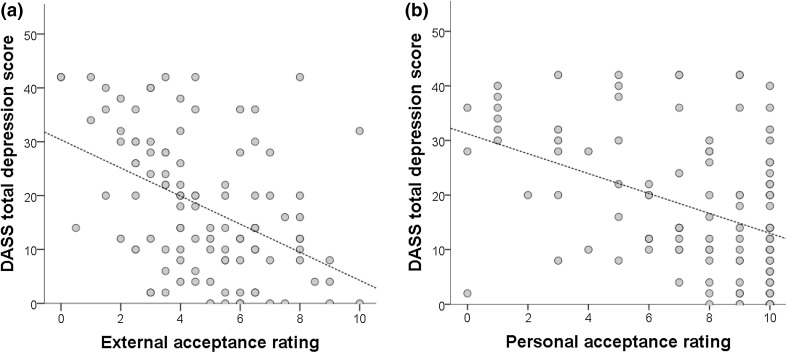
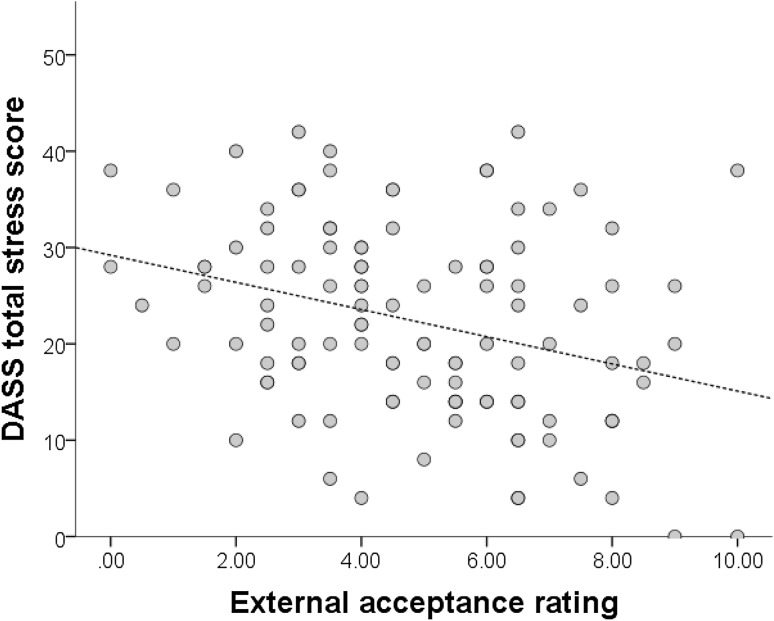
Mental health difficulties are highly prevalent in individuals on the autism spectrum. The current study examined how experiences and perceptions of autism acceptance could impact on the mental health of autistic adults. 111 adults on the autism spectrum completed an online survey examining their experiences of autism acceptance, along with symptoms of depression, anxiety and stress. Regression analyses showed that autism acceptance from external sources and personal acceptance significantly predicted depression. Acceptance from others also significantly predicted stress but acceptance did not predict anxiety. Further analyses suggested that experiences of "camouflaging" could relate to higher rates of depression. The current study highlights the importance of considering how autism acceptance could contribute to mental health in autism.
Overview
CoChat Summary
TL;DR
In 111 autistic adults, perceived autism acceptance from external sources and personal acceptance predicted lower depression, and external acceptance also predicted lower stress, but acceptance did not predict anxiety. Exploratory qualitative reports of camouflaging were linked to higher depression and lower recent acceptance.
Key findings
- Only 7% said society generally accepted them as autistic, 43% said “no,” and 48% said “sometimes”; 24.3% agreed/strongly agreed they had felt accepted by society in the past week, while 41.4% disagreed/strongly disagreed.
- In hierarchical regressions, the final depression model explained 52.1% of variance; external acceptance (β = −0.284, p = .004) and personal acceptance (β = −0.307, p = .001) significantly predicted depression. For stress, external acceptance significantly predicted stress (β = −0.198, p = .037), but adding acceptance variables was a non-significant change (p = .11). Acceptance did not predict anxiety.
- DASS means were depression 17.8 (SD = 12.7), anxiety 12.9 (SD = 9.14), and stress 22.3 (SD = 9.96), described as higher than non-autistic population means cited from Henry and Crawford (2005).
- Of 63 qualitative responders, 27 spontaneously reported camouflaging/masking; camouflaging interacted with DASS scores (F(2, 212) = 4.55, p = .012), with only depression differing between those who reported camouflaging and those who did not (t(107) = −0.256, p = .012, g = 0.56), and camouflagers were more likely to disagree they had experienced acceptance (X²(2) = 6.68, p = .035).
Methods
- Cross-sectional online survey of 111 autistic adults over 18, recruited via social media and UK autism organisations/groups; data collected June–October 2016; median completion time 12 min; 84% self-reported additional mental health diagnoses or developmental conditions.
- Measures included newly developed autism acceptance items (societal, family/friend, and personal acceptance; past-week societal acceptance; categorical societal acceptance), the DASS-21, and open-text qualitative responses analyzed by content analysis with two independent coders.
- Analyses included Spearman correlations, PCA that combined societal and family/friend acceptance into “external sources” while treating personal acceptance separately, and three hierarchical regressions predicting depression, anxiety, and stress while controlling age, age of diagnosis, gender, and other DASS scales; exploratory mixed ANOVA examined camouflaging.
Limitations
- Stated by the paper: online self-report may be unreliable; the sample was predominantly female, limiting generalisability, though gender was not a significant predictor; many participants reported additional diagnoses, possibly attracting those already experiencing mental health difficulties; and the sample was mainly well-educated and not representative of the whole autism spectrum.
- Evident from the text: the cross-sectional correlational design cannot establish causality or direction; the autism acceptance items were not a pre-existing validated measure, with PCA KMO = 0.528, personal acceptance loading 0.462, and Cronbach’s alpha improving only from 0.51 to 0.64 after removing personal acceptance; 27 participants were excluded from final regression analyses due to missing data, and 11 without a formal diagnosis were excluded from regressions.
Model-written summary. Check it against the paper before relying on it.
Integrity signals
Registry
Cites
Statistics
Figures
Verification
Claims the paper makes
3 Valid · 0 Not valid · 44 Not checked · 65 Own results and interpretations
Every source the paper cites for this claim was checked and supports it.
In the paper
“Sasson et al. (2017) found that non-autistic individuals tend to make rapid unfavourable judgements about those on the autism spectrum.”
§ Experiences of Autism Acceptance and Mental Health in Autistic Adults > Introduction
What the sources say
- Supportedcites Sasson et al. 2017 matched to “Neurotypical Peers are Less Willing to Interact with Those with Autism based on Thin Slice Judgments” (2017) source
The Abstract (p. 1) states that across three studies, first impressions of individuals with ASD made from thin slices of real-world social behavior by typically-developing observers were 'far less favorable across a range of trait judgments compared to controls' and that these patterns 'occur within seconds'. The Discussion (p. 1) likewise reports robustly less favorable first impressions by neurotypical observers, associated with reduced intentions to engage. The claim's 'rapid unfavourable judgements' by non-autistic individuals is therefore directly stated; the only qualifier the source adds (that the bias vanishes for conversational content without audiovisual cues) does not contradict the hedged 'tend to'. (LLM, conf=0.92)
plain- Asserted: passes — The authors put it forward as true.
- Checkable: passes — It can be checked against evidence.
- Load-bearing: passes — The paper’s conclusions depend on it.
- Based: passes — The paper gives a reason why it holds.
- Supported
The sources with a verdict support this claim; the rest weren’t checked yet, have no full text we could read, or their verdicts aren’t rated yet.
In the paper
“many autistic individuals frequently report “masking” or “camouflaging”—that is, they may use strategies to camouflage the fact they are on the autism spectrum in order to “fit in” to the non-autistic world (Dean et al. 2016; Hull et al. 2017).”
§ Experiences of Autism Acceptance and Mental Health in Autistic Adults > Introduction
What the sources say
- Not checked yetcites Dean et al. 2016 matched to “The art of camouflage: Gender differences in the social behaviors of girls and boys with autism spectrum disorder” (2017) source
- Supportedcites Hull et al. 2017 matched to ““Putting on My Best Normal”: Social Camouflaging in Adults with Autism Spectrum Conditions” (2017) source
The Discussion opening states that 'the vast majority of participants (male, female, and of other genders) reported camouflaging to some degree', and the Conclusions (p. last) that 'camouflaging of ASC-related characteristics in social situations may be a common behaviour amongst adults with ASC' and 'is motivated by the desire to fit in with others'. The Masking theme section describes hiding/suppressing ASC-associated behaviours and adopting personas so as not to appear autistic, with some respondents camouflaging at all times — matching the citing sentence's 'strategies to camouflage the fact they are on the autism spectrum in order to fit in'. The only scope difference is that Hull et al. sampled diagnosed adults, whereas the citing sentence speaks of autistic individuals generally; the citing hedge ('may use strategies') is no stronger than the source's own. (LLM, conf=0.85)
hedged- Asserted: passes — The authors put it forward as true.
- Checkable: passes — It can be checked against evidence.
- Load-bearing: unclear — It is unclear whether the paper’s conclusions depend on it.
- Based: passes — The paper gives a reason why it holds.
A result the paper reports from its own data — it cites no other source for it, so there is none to check. The quote shows it is in the paper.
In the paper
“Further analyses suggested that experiences of “camouflaging” could relate to higher rates of depression.”
§ Experiences of Autism Acceptance and Mental Health in Autistic Adults > Abstract
hedgedstates an associationn = 111- Asserted: passes — The authors put it forward as true.
- Checkable: passes — It can be checked against evidence.
- Load-bearing: unclear — It is unclear whether the paper’s conclusions depend on it.
- Based: passes — The paper gives a reason why it holds.
- Rests on an assumption not shown here.
A result the paper reports from its own data — it cites no other source for it, so there is none to check. The quote shows it is in the paper.
In the paper
“Regression analyses showed that autism acceptance from external sources and personal acceptance significantly predicted depression.”
§ Experiences of Autism Acceptance and Mental Health in Autistic Adults > Abstract
plainstates an associationn = 111- Asserted: passes — The authors put it forward as true.
- Checkable: passes — It can be checked against evidence.
- Load-bearing: passes — The paper’s conclusions depend on it.
- Based: passes — The paper gives a reason why it holds.
- Rests on an assumption not shown here.
A result the paper reports from its own data — it cites no other source for it, so there is none to check. The quote shows it is in the paper.
In the paper
“Acceptance from others also significantly predicted stress but acceptance did not predict anxiety.”
§ Experiences of Autism Acceptance and Mental Health in Autistic Adults > Abstract
plainstates an associationn = 111 ·- Asserted: passes — The authors put it forward as true.
- Checkable: passes — It can be checked against evidence.
- Load-bearing: passes — The paper’s conclusions depend on it.
- Based: passes — The paper gives a reason why it holds.
- Rests on an assumption not shown here.
45 more claims
Create a free account to see all 112 claims and to verify the 55 references still open.
- Probably not a substantial claim. 41
- It may state two separate claims as one. 30
- The quote only partly states this claim. 3
Claims other papers make about this one
Each is checked against this paper’s own text: does it say what the citing paper says it does?
The source backs part of the claim, not all of it — or backs it for a different population, condition or comparison.
In the citing paper
“evidence suggested that experiences of stigma and not feeling accepted by others was associated with increased camouflaging (Cage et al., 2018;Perry et al., 2021)”
From Camouflaging in autism: A systematic review (2021) · cites this paper as Cage et al., 2018
Experimental — accuracy not yet measuredThe cited source says what the claim attributes to it.
In the citing paper
“Results of three exploratory studies using predominately qualitative methodologies were not suggestive of sex or gender differences in camouflaging (Cage et al., 2018;Hull et al., 2017;Livingston et al. 2020).”
From Camouflaging in autism: A systematic review (2021) · cites this paper as Cage et al., 2018
The cited source says what the claim attributes to it.
In the citing paper
“Importantly, acceptance of autism by others is correlated with lower levels of stress and depression in Autistic adults (Cage et al., 2018).”
From Neurodiversity and Autism Intervention: Reconciling Perspectives Through a Naturalistic Developmental Behavioral Intervention Framework (2022) · cites this paper as Cage et al., 2018
The cited source says what the claim attributes to it.
In the citing paper
“Previous research has found that lack of societal understanding of autism and feeling misunderstood may contribute to stress, isolation, and depression among autistic adults (Cage et al., 2018;Gotham et al., 2014;Griffith et al., 2012;Han et al., 2022).”
From A mixed methods study of autistic adults' mental health therapy experiences (2023) · cites this paper as Cage et al., 2018
The cited source says what the claim attributes to it.
In the citing paper
“The negative mental effects of “camouflaging” and “masking” in society are described in recent research, and support the need for considering societal approaches for promoting autistic identity (e.g. Cage et al., 2018; Cage & Troxell-Whitman, 2019).”
From Listening to the autistic voice: Mental health priorities to guide research and practice in autism from a stakeholder-driven project (2020) · cites this paper as Cage et al., 2018
4 more claims about this paper
Create a free account to see every claim other papers make about this one.
Statistics that don’t add up
Each reported p-value recomputed from its test statistic and degrees of freedom, each partial η² from its F, and each ratio, mean difference or B printed with a p checked against its own confidence interval.
Rated major: it would touch a result — a value a result rests on, reported and recomputed p-values on opposite sides of the significance level, two passages that conflict with no sign which is right, or a cited work retracted before this paper was published.
In the paper
“t (107) = − 0.256, p = .012”
§ Experiences of Autism Acceptance and Mental Health in Autistic Adults > Results > Content Analysis of Qualitative Results
Reported p = .012 · recomputed p = .798
Statistics recomputed
Every reported test result, recomputed from its test statistic and degrees of freedom. A result shows as not adding up only once an independent check has confirmed it.
- Doesn’t add upt(107) = -0.256reported p = .012 · recomputed p = .798The two fall on opposite sides of .05
“t (107) = − 0.256, p = .012”
- Consistentχ²(3) = 33.66reported p < .001 · recomputed p < .001
“χ2 (3) = 33.66, p < .001”
- Consistentt(110) = 7.93reported p < .001 · recomputed p < .001
“t(110) = 7.93, p < .001”
- ConsistentF(7, 83) = 11.8reported p < .001 · recomputed p < .001
“F (7, 83) = 11.80, p < .001”
- ConsistentF(7, 83) = 14.32reported p < .001 · recomputed p < .001
“F (7, 83) = 14.32, p < .001”
6 more recomputed tests
Create a free account to see every test the Stats check recomputed.
Self-check
Percentages, sums and reported differences re-computed from the paper’s own numbers.
Each contradiction between two passages listed here was confirmed by an independent check.
Rated minor: it would not touch a result — a value no result rests on, a p-value that stays on the same side of the significance level, or a conflict that is clerical, resolved elsewhere in the paper, or outside its own findings.
In the paper
§ Experiences of Autism Acceptance and Mental Health in Autistic Adults > Results > Autism Acceptance and Mental Health
“Next, stress was entered as the outcome variable.”
§ Experiences of Autism Acceptance and Mental Health in Autistic Adults > Results > Autism Acceptance and Mental Health
“The first step explained 54% of the variance in depression scores”
Rated minor: it would not touch a result — a value no result rests on, a p-value that stays on the same side of the significance level, or a conflict that is clerical, resolved elsewhere in the paper, or outside its own findings.
In the paper
§ Experiences of Autism Acceptance and Mental Health in Autistic Adults > Results > Content Analysis of Qualitative Results
“t (107) = − 0.256”
§ Experiences of Autism Acceptance and Mental Health in Autistic Adults > Results > Content Analysis of Qualitative Results
“p = .012, g = 0.56”
Rated minor: it would not touch a result — a value no result rests on, a p-value that stays on the same side of the significance level, or a conflict that is clerical, resolved elsewhere in the paper, or outside its own findings.
In the paper
§ Experiences of Autism Acceptance and Mental Health in Autistic Adults > Results > Autism Acceptance and Mental Health
“Finally, anxiety was tested as the outcome variable”
§ Experiences of Autism Acceptance and Mental Health in Autistic Adults > Results > Autism Acceptance and Mental Health
“here the first step explained 52% of the variance in depression scores”
Rated minor: it would not touch a result — a value no result rests on, a p-value that stays on the same side of the significance level, or a conflict that is clerical, resolved elsewhere in the paper, or outside its own findings.
In the paper
§ Experiences of Autism Acceptance and Mental Health in Autistic Adults > Results > Autism Acceptance and Mental Health
“| DASS anxiety | 0.371 | 0.195 | 0.411 | 0.061 |”
§ Experiences of Autism Acceptance and Mental Health in Autistic Adults > Results > Autism Acceptance and Mental Health
“| DASS anxiety | 0.431 | 0.170 | 0.285 | 0.013 |”
Rated minor: it would not touch a result — a value no result rests on, a p-value that stays on the same side of the significance level, or a conflict that is clerical, resolved elsewhere in the paper, or outside its own findings.
In the paper
§ Experiences of Autism Acceptance and Mental Health in Autistic Adults > Results > Autism Acceptance
“The KMO statistic was acceptable (0.528)”
§ Experiences of Autism Acceptance and Mental Health in Autistic Adults > Results > Autism Acceptance
“individual item KMO values were above 0.74”
1 more finding
Create a free account to see every finding of this check.
Citations
Cites
Diagnostic and Statistical Manual of Mental Disorders
American Psychiatric Association (2013) · doi:10.1176/appi.books.9780890425596 · Cited by 116,369
Diagnostic and Statistical Manual of Mental Disorders
Williams, J. B. W., & First, M. (2013) · Encyclopedia of Social Work · doi:10.1093/acrefore/9780199975839.013.104 · Cited by 109,519
The Measurement of Observer Agreement for Categorical Data
Landis, J. R., & Koch, G. G. (1977) · Biometrics · doi:10.2307/2529310 · Cited by 81,148
The need to belong: Desire for interpersonal attachments as a fundamental human motivation.
Baumeister, R. F., & Leary, M. R. (1995) · Psychological Bulletin · doi:10.1037//0033-2909.117.3.497 · Cited by 23,245 · cited 1×
“Indeed, sense of belonging is argued to be vital to the well being of all individuals, irrespective of autism (Baumeister and Leary 1995).”
Background(2017) · Cited by 16,319
Lovibond, P. F., & Lovibond, S. H. (1995) · Behaviour Research and Therapy · doi:10.1016/0005-7967(94)00075-u · Cited by 14,523
Does the autistic child have a “theory of mind” ?
Baron-Cohen, S., Leslie, A. M., & Frith, U. (1985) · Cognition · doi:10.1016/0010-0277(85)90022-8 · Cited by 8,599
(1995) · Cited by 6,909
Henry, J. D., & Crawford, J. R. (2005) · British Journal of Clinical Psychology · doi:10.1348/014466505x29657 · Cited by 5,801 · cited 1×
“2007), along with good construct validity (Henry and Crawford 2005).”
Antony, M. M., Bieling, P. J., Cox, B. J., Enns, M. W., & Swinson, R. P. (1998) · Psychological Assessment · doi:10.1037/1040-3590.10.2.176 · Cited by 4,874
Does low self-esteem predict depression and anxiety? A meta-analysis of longitudinal studies.
Sowislo, J. F., & Orth, U. (2013) · Psychological Bulletin · doi:10.1037/a0028931 · Cited by 2,123 · cited 1×
“Further, a meta-analysis of whether self-esteem predicted depression and anxiety in a non-autistic sample found the directional effect of self-esteem on depression was stronger than the effect of depression on self-esteem (Sowislo and Orth 2013).”
BackgroundWhich terms should be used to describe autism? Perspectives from the UK autism community
Kenny, L., Hattersley, C., Molins, B., Buckley, C., Povey, C., & Pellicano, E. (2016) · Autism · doi:10.1177/1362361315588200 · Cited by 1,941
(2013) · Routledge eBooks · doi:10.4324/9780203077887 · Cited by 1,484
“Putting on My Best Normal”: Social Camouflaging in Adults with Autism Spectrum Conditions
Hull, L., Petrides, K. V., Allison, C., Smith, P., Baron-Cohen, S., Lai, M.-C., & Mandy, W. (2017) · Journal of Autism and Developmental Disorders · doi:10.1007/s10803-017-3166-5 · Cited by 1,365 · cited 1×
“Despite this, many autistic individuals frequently report “masking” or “camouflaging”—that is, they may use strategies to camouflage the fact they are on the autism spectrum in order to “fit in” to the non-autistic world (Dean et al. 2016; Hull et al. 2017).”
BackgroundAssessing Response Rates and Nonresponse Bias in Web and Paper Surveys
Sax, L. J., Gilmartin, S. K., & Bryant, A. N. (2003) · Research in Higher Education · doi:10.1023/a:1024232915870 · Cited by 1,294 · cited 1×
“This could be due to women being more likely to complete surveys (Sax et al. 2003) or the topic being of particular interest to women.”
BackgroundDeficit, difference, or both? Autism and neurodiversity.
Kapp, S. K., Gillespie-Lynch, K., Sherman, L. E., & Hutman, T. (2013) · Developmental Psychology · doi:10.1037/a0028353 · Cited by 1,263
Bargiela, S., Steward, R., & Mandy, W. (2016) · Journal of Autism and Developmental Disorders · doi:10.1007/s10803-016-2872-8 · Cited by 1,087 · cited 1×
“Additionally, recent research has attempted to explain gender differences in the diagnosis of autism as females are suggested to be better at camouflaging than males (Bargiela et al. 2016; Dean et al. 2016; Lai et al. 2017; Tierney et al. 2016).”
BackgroundWhat should autism research focus upon? Community views and priorities from the United Kingdom
Pellicano, E., Dinsmore, A., & Charman, T. (2014) · Autism · doi:10.1177/1362361314529627 · Cited by 800
Increasingly certain about uncertainty: Intolerance of uncertainty across anxiety and depression
Carleton, R. N., Mulvogue, M. K., Thibodeau, M. A., McCabe, R. E., Antony, M. M., & Asmundson, G. J. G. (2012) · Journal of Anxiety Disorders · doi:10.1016/j.janxdis.2012.01.011 · Cited by 775 · cited 1×
“For example, intolerance of uncertainty is an important concept within anxiety disorders regardless of autism (Carleton et al. 2012), where being unable to deal with the uncertain aggravates anxiety.”
BackgroundTaking the strain: Social identity, social support, and the experience of stress
Haslam, S. A., O'Brien, A., Jetten, J., Vormedal, K., & Penna, S. (2005) · British Journal of Social Psychology · doi:10.1348/014466605x37468 · Cited by 771 · cited 1×
“In the social psychology literature, social support has been shown to protect against stress (Haslam et al. 2005).”
BackgroundMindblind eyes: an absence of spontaneous theory of mind in Asperger syndrome
Senju, A., Southgate, V., White, S., & Frith, U. (2009) · Science · doi:10.1126/science.1176170 · Cited by 769 · cited 1×
“2013) and whether automatic or conscious Theory of Mind is being tested (Senju et al. 2009).”
BackgroundQuantifying and exploring camouflaging in men and women with autism
Lai, M.-C., Lombardo, M. V., Ruigrok, A. N., Chakrabarti, B., Auyeung, B., Szatmari, P., Happé, F., Baron-Cohen, S., & MRC AIMS Consortium (2017) · Autism · doi:10.1177/1362361316671012 · Cited by 705
Young Adult Outcome of Autism Spectrum Disorders
Eaves, L. C., & Ho, H. H. (2008) · Journal of Autism and Developmental Disorders · doi:10.1007/s10803-007-0441-x · Cited by 683
Humphrey, N., & Lewis, S. (2008) · Autism · doi:10.1177/1362361307085267 · Cited by 587
Neurotypical Peers are Less Willing to Interact with Those with Autism based on Thin Slice Judgments
Sasson, N. J., Faso, D. J., Nugent, J., Lovell, S., Kennedy, D. P., & Grossman, R. B. (2017) · Scientific Reports · doi:10.1038/srep40700 · Cited by 584
Dean, M., Harwood, R., & Kasari, C. (2017) · Autism · doi:10.1177/1362361316671845 · Cited by 566
Autism as a Natural Human Variation: Reflections on the Claims of the Neurodiversity Movement
Jaarsma, P., & Welin, S. (2012) · Health Care Analysis · doi:10.1007/s10728-011-0169-9 · Cited by 553 · cited 1×
“Many autistic people want to be accepted for being “who they are” and take pride in being neurodivergent, a term (alongside neurodiversity) used to describe differences in the way people think, with diversity in the brain an important and celebrated part of human variation (Cage et al. 2016a; Humphrey and Lewis 2008;…”
Background“Theory of Mind” in Asperger's Syndrome Dermot M. Bowler
Bowler, D. M. (1992) · Journal of Child Psychology and Psychiatry · doi:10.1111/j.1469-7610.1992.tb01962.x · Cited by 534 · cited 1×
“However, research has shown that autistic individuals can theorise about other minds, and this ability is dependent on cognitive ability (Bowler 1992), task demands (Peterson et al.”
BackgroundPresentation of depression in autism and Asperger syndrome: A review
Stewart, M. E., Barnard, L., Pearson, J., Hasan, R., & O’Brien, G. (2006) · Autism · doi:10.1177/1362361306062013 · Cited by 515
Meta-analysis of stigma and mental health
Mak, W. W. S., Poon, C. Y. M., Pun, L. Y. K., & Cheung, S. F. (2007) · Social Science & Medicine · doi:10.1016/j.socscimed.2007.03.015 · Cited by 427
Ng, F., Trauer, T., Dodd, S., Callaly, T., Campbell, S., & Berk, M. (2007) · Acta Neuropsychiatrica · doi:10.1111/j.1601-5215.2007.00217.x · Cited by 404 · cited 1×
“We used the short version as it is shown to have as good reliability and validity as the long version (Cronbach’s alpha 0.94, 0.87 and 0.91 for the depression, anxiety and stress subscales respectively, Antony et al. 1998; Ng et al. 2007), along with good construct validity (Henry and Crawford 2005).”
MethodInfluentialBoulter, C., Freeston, M., South, M., & Rodgers, J. (2014) · Journal of Autism and Developmental Disorders · doi:10.1007/s10803-013-2001-x · Cited by 401 · cited 1×
“In both autistic children and adults, intolerance of uncertainty has been shown to relate to anxiety (Boulter et al. 2014; Maisel et al. 2016).”
BackgroundLoneliness, friendship, and well-being in adults with autism spectrum disorders
Mazurek, M. O. (2014) · Autism · doi:10.1177/1362361312474121 · Cited by 401
Whose Expertise Is It? Evidence for Autistic Adults as Critical Autism Experts
Gillespie-Lynch, K., Kapp, S. K., Brooks, P. J., Pickens, J., & Schwartzman, B. (2017) · Frontiers in Psychology · doi:10.3389/fpsyg.2017.00438 · Cited by 384
Levels of anxiety and sources of stress in adults with autism
Gillott, A., & Standen, P. J. (2007) · Journal of Intellectual Disabilities · doi:10.1177/1744629507083585 · Cited by 359 · cited 1×
“Anxiety is also frequently found to be higher in the autistic population than within the non-autistic population (Gillott and Standen 2007), alongside a higher prevalence of social anxiety disorder (Maddox and White 2015).”
BackgroundSocial identity, self‐esteem, and mental health in autism
Cooper, K., Smith, L. G. E., & Russell, A. (2017) · European Journal of Social Psychology · doi:10.1002/ejsp.2297 · Cited by 354 · cited 1×
“Recent research has also indicated that identifying positively with an autistic identity mediates the relationship between self-esteem and mental health difficulties, suggesting that personal acceptance of autism as part of one’s identity could protect against depression and anxiety (Cooper et al. 2017).”
Green, S. A., & Ben-Sasson, A. (2010) · Journal of Autism and Developmental Disorders · doi:10.1007/s10803-010-1007-x · Cited by 327 · cited 2×
“Another factor which is thought to play an important role in anxiety in autism is sensory sensitivities (Green and Ben-Sasson 2010).”
BackgroundPsychological Disorder in Adolescents and Adults with Asperger Syndrome
Tantam, D. (2000) · Autism · doi:10.1177/1362361300004001004 · Cited by 316
Looking behind the mask: Social coping strategies of girls on the autistic spectrum
Tierney, S., Burns, J., & Kilbey, E. (2016) · Research in Autism Spectrum Disorders · doi:10.1016/j.rasd.2015.11.013 · Cited by 316 · cited 1×
“Additionally, recent research has attempted to explain gender differences in the diagnosis of autism as females are suggested to be better at camouflaging than males (Bargiela et al. 2016; Dean et al. 2016; Lai et al. 2017; Tierney et al. 2016).”
BackgroundRobertson, S. M. (2009) · Disability Studies Quarterly · doi:10.18061/dsq.v30i1.1069 · Cited by 305 · cited 2×
“Many autistic people want to be accepted for being “who they are” and take pride in being neurodivergent, a term (alongside neurodiversity) used to describe differences in the way people think, with diversity in the brain an important and celebrated part of human variation (Cage et al. 2016a; Humphrey and Lewis 2008;…”
BackgroundUnconditional self-acceptance and psychological health
Chamberlain, J. M., & Haaga, D. A. F. (2001) · Journal of Rational-Emotive and Cognitive-Behavior Therapy · doi:10.1023/a:1011189416600 · Cited by 288 · cited 1×
“Personal acceptance is also an important variable within mental health—for example, unconditional self-acceptance in non-clinical samples has been shown to negatively correlate with anxiety (Chamberlain and Haaga 2001) and depression (Flett et al.”
BackgroundLoneliness and Social Support in Adolescent Boys with Autism Spectrum Disorders
Lasgaard, M., Nielsen, A., Eriksen, M. E., & Goossens, L. (2010) · Journal of Autism and Developmental Disorders · doi:10.1007/s10803-009-0851-z · Cited by 242
Weiss, J. A., Cappadocia, M. C., MacMullin, J. A., Viecili, M., & Lunsky, Y. (2012) · Autism · doi:10.1177/1362361311422708 · Cited by 228 · cited 1×
“Equally, parents of autistic children who demonstrate higher acceptance of their child’s autism have been found to have fewer mental health problems (Weiss et al. 2012).”
BackgroundHow is a sense of well-being and belonging constructed in the accounts of autistic adults?
Milton, D., & Sims, T. (2016) · Disability & Society · doi:10.1080/09687599.2016.1186529 · Cited by 225 · cited 1×
“In terms of acceptance from closer social networks, having the opportunity to engage with others who are likeminded and to develop one’s sense of belonging is thought to be important to the well-being of autistic adults (Milton and Sims 2016).”
BackgroundComorbid Social Anxiety Disorder in Adults with Autism Spectrum Disorder
Maddox, B. B., & White, S. W. (2015) · Journal of Autism and Developmental Disorders · doi:10.1007/s10803-015-2531-5 · Cited by 223 · cited 2×
“Anxiety is also frequently found to be higher in the autistic population than within the non-autistic population (Gillott and Standen 2007), alongside a higher prevalence of social anxiety disorder (Maddox and White 2015).”
BackgroundMethodNeil, L., Olsson, N. C., & Pellicano, E. (2016) · Journal of Autism and Developmental Disorders · doi:10.1007/s10803-016-2721-9 · Cited by 201
Dimensions of Perfectionism, Unconditional Self-Acceptance, and Depression
Flett, G. L., Besser, A., Davis, R. A., & Hewitt, P. L. (2003) · Journal of Rational-Emotive and Cognitive-Behavior Therapy · doi:10.1023/a:1025051431957 · Cited by 200 · cited 1×
“Personal acceptance is also an important variable within mental health—for example, unconditional self-acceptance in non-clinical samples has been shown to negatively correlate with anxiety (Chamberlain and Haaga 2001) and depression (Flett et al. 2003).”
BackgroundCollege Students’ Openness Toward Autism Spectrum Disorders: Improving Peer Acceptance
Nevill, R. E. A., & White, S. W. (2011) · Journal of Autism and Developmental Disorders · doi:10.1007/s10803-011-1189-x · Cited by 199 · cited 1×
“Research has also suggested that previous experience of contact with autistic individuals is associated with greater autism acceptance in university students (Gardiner and Iarocci 2014) and those with a family member on the autism spectrum tend to be more accepting and open towards autism (Nevill and White 2011).”
BackgroundGriffith, G. M., Totsika, V., Nash, S., & Hastings, R. P. (2012) · Autism · doi:10.1177/1362361311405223 · Cited by 180
Heasman, B., & Gillespie, A. (2018) · Autism · doi:10.1177/1362361317708287 · Cited by 163 · cited 1×
“A recent study by Heasman and Gillespie (2017) also demonstrated that neurotypical family members tended to underestimate their autistic family member’s perspective-taking ability.”
BackgroundGardiner, E., & Iarocci, G. (2014) · Journal of Autism and Developmental Disorders · doi:10.1007/s10803-013-1950-4 · Cited by 162 · cited 1×
“Research has also suggested that previous experience of contact with autistic individuals is associated with greater autism acceptance in university students (Gardiner and Iarocci 2014) and those with a family member on the autism spectrum tend to be more accepting and open towards autism (Nevill and White 2011).”
BackgroundBishop-Fitzpatrick, L., Minshew, N. J., Mazefsky, C. A., & Eack, S. M. (2017) · Journal of Autism and Developmental Disorders · doi:10.1007/s10803-016-2910-6 · Cited by 160
Bishop-Fitzpatrick, L., Mazefsky, C. A., & Eack, S. M. (2018) · Autism · doi:10.1177/1362361317703090 · Cited by 142 · cited 1×
“However, autistic individuals may struggle to feel accepted by various individuals - with research suggesting that they experience less social support from others as well as perceiving more stress (Bishop-Fitzpatrick et al. 2017).”
BackgroundAdults With Autism Speak Out: Perceptions of Their Life Experiences
Hurlbutt, K., & Chalmers, L. (2002) · Focus on Autism and Other Developmental Disabilities · doi:10.1177/10883576020170020501 · Cited by 139
Brief Report: Autism Awareness: Views from a Campus Community
Tipton, L. A., & Blacher, J. (2014) · Journal of Autism and Developmental Disorders · doi:10.1007/s10803-013-1893-9 · Cited by 135 · cited 1×
“2013, 2015), misunderstandings and misconceptions are common nonetheless, such as believing that changing an autistic child’s diet can lessen symptoms, or that autism can be outgrown (Tipton and Blacher 2014).”
BackgroundModeling the cognitive mechanisms linking autism symptoms and anxiety in adults.
Maisel, M. E., Stephenson, K. G., South, M., Rodgers, J., Freeston, M. H., & Gaigg, S. B. (2016) · Journal of Abnormal Psychology · doi:10.1037/abn0000168 · Cited by 132 · cited 2×
“Other factors which may affect mental health in autism may include sensory sensitivities (Green and Ben-Sasson 2010) and intolerance of uncertainty (Maisel et al. 2016).”
BackgroundAwareness and knowledge of autism and autism interventions: A general population survey
Dillenburger, K., Jordan, J. A., McKerr, L., Devine, P., & Keenan, M. (2013) · Research in Autism Spectrum Disorders · doi:10.1016/j.rasd.2013.09.004 · Cited by 132
Kelly, A., & Barnes-Holmes, D. (2013) · Research in Developmental Disabilities · doi:10.1016/j.ridd.2012.07.018 · Cited by 84 · cited 1×
“Further, unconscious biases towards autism can still be prevailingly negative even in those who work regularly with autistic children (Kelly and Barnes-Holmes 2013).”
BackgroundLucas, R., & James, A. I. (2018) · Journal of Autism and Developmental Disorders · doi:10.1007/s10803-017-3303-1 · Cited by 74 · cited 1×
“For example, peer mentoring has been examined in a Higher Education context and been shown to have the potential to improve autistic students’ self-esteem (Lucas and James 2017).”
BackgroundReputation Management: Evidence for Ability But Reduced Propensity in Autism
Cage, E., Pellicano, E., Shah, P., & Bird, G. (2013) · Autism Research · doi:10.1002/aur.1313 · Cited by 67
Self-citationDillenburger, K., McKerr, L., Jordan, J. A., Devine, P., & Keenan, M. (2015) · Journal of Applied Research in Intellectual Disabilities · doi:10.1111/jar.12144 · Cited by 65
‘I am who I am’: Reputation concerns in adolescents on the autism spectrum
Cage, E., Bird, G., & Pellicano, L. (2016) · Research in Autism Spectrum Disorders · doi:10.1016/j.rasd.2016.01.010 · Cited by 52
Self-citationKhan, N., Binder, L., Pantakani, D. V. K., & Asif, A. R. (2017) · Frontiers in Physiology · doi:10.3389/fphys.2017.00438 · Cited by 48
Scheeren, A. M., Begeer, S., Banerjee, R., Meerum Terwogt, M., & Koot, H. M. (2010) · Autism · doi:10.1177/1362361310366568 · Cited by 46
Children with autism can track others' beliefs in a competitive game
Peterson, C. C., Slaughter, V., Peterson, J., & Premack, D. (2013) · Developmental Science · doi:10.1111/desc.12040 · Cited by 44 · cited 1×
“However, research has shown that autistic individuals can theorise about other minds, and this ability is dependent on cognitive ability (Bowler 1992), task demands (Peterson et al. 2013) and whether automatic or conscious Theory of Mind is being tested (Senju et al.”
BackgroundBrief Report: Self-Presentation of Children with Autism Spectrum Disorders
Begeer, S., Banerjee, R., Lunenburg, P., Meerum Terwogt, M., Stegge, H., & Rieffe, C. (2008) · Journal of Autism and Developmental Disorders · doi:10.1007/s10803-007-0503-0 · Cited by 36 · cited 1×
“Being able to pretend or act as neurotypical fits with the idea that autistic individuals are capable of reputation management, and supports evidence that autistic individuals can present themselves in a specific light (Begeer et al. 2008; Cage et al. 2013, 2016a, b; Scheeren et al. 2010, 2015).”
BackgroundIdentity accumulation, others' acceptance, job-search self-efficacy, and stress
Lang, J. C., & Lee, C. H. (2005) · Journal of Organizational Behavior · doi:10.1002/job.309 · Cited by 34 · cited 1×
“For example, less stress is seen in workplaces where others are more accepting and supportive of whom an individual wants to be (Lang and Lee 2005).”
BackgroundReputation Management in Children on the Autism Spectrum
Cage, E., Bird, G., & Pellicano, E. (2016) · Journal of Autism and Developmental Disorders · doi:10.1007/s10803-016-2923-1 · Cited by 28
Self-citationScheeren, A. M., Banerjee, R., Koot, H. M., & Begeer, S. (2016) · Journal of Autism and Developmental Disorders · doi:10.1007/s10803-015-2610-7 · Cited by 26
Research works printed but not linked: 1
- Freelon D ReCal: Intercoder reliability calculation as a web service International Journal of Internet Science 2010 5 1 20 33
Cited by
Avoiding Ableist Language: Suggestions for Autism Researchers
Bottema-Beutel, K., Kapp, S. K., Lester, J. N., Sasson, N. J., & Hand, B. N. (2021) · Autism in Adulthood · doi:10.1089/aut.2020.0014 · Cited by 1,251
Annual Research Review: Shifting from ‘normal science’ to neurodiversity in autism science
Pellicano, E., & den Houting, J. (2022) · Journal of Child Psychology and Psychiatry · doi:10.1111/jcpp.13534 · Cited by 744
“The potential value of this acceptance mindset to autism is further supported by recent research indicating that greater autism acceptance is associated with better mental health, in both autistic adults (Cage et al., 2018) and mothers of autistic children (Da Paz, Siegel, Coccia, & Epel, 2018).”
ResultThe Neurodiversity Approach(es): What Are They and What Do They Mean for Researchers?
Dwyer, P. (2022) · Human Development · doi:10.1159/000523723 · Cited by 672
Understanding the reasons, contexts and costs of camouflaging for autistic adults
Cage, E., & Troxell-Whitman, Z. (2019) · Journal of Autism and Developmental Disorders · doi:10.1007/s10803-018-03878-x · Cited by 661
Self-citationThe Female Autism Phenotype and Camouflaging: a Narrative Review
Hull, L., Petrides, K. V., & Mandy, W. (2020) · Review Journal of Autism and Developmental Disorders · doi:10.1007/s40489-020-00197-9 · Cited by 614
Metadata
- Authors
- Cage, E., Di Monaco, J., & Newell, V.
- Affiliations
- Royal Holloway University of London (GB)
- Corresponding author
- Cage, Eilidh
- Venue
- Journal of Autism and Developmental Disorders
- Published
- 2017-10-25
- Volume
- 48
- Issue
- 2
- Pages
- 473-484
- ISSN
- 0162-3257 (ISSN-L)
- 1573-3432
- PMC
- PMC5807490
- OpenAlex
- W2766434912
- Semantic Scholar
- 97e77090b6b7073196f62b6e0797b4a8bdfc4319
- Cited by
- 538
- References
- 71
- Citations by year
- 2026: 65 · 2025: 79 · 2024: 84 · 2023: 87 · 2022: 73 · 2021: 70 · 2020: 40 · 2019: 30 · 2018: 9 · 2017: 1
- FWCI
- 12.55
- Type
- journal article
- Language
- en
- Open access
- hybrid
- doi.org
- Locations
- Journal of Autism and Developmental Disorders (publishedVersion, cc-by)
- PubMed Central (publishedVersion, cc-by)
- PubMed (publishedVersion)
- Stirling Online Research Repository (University of Stirling) (submittedVersion, cc-by)
- Topics
- Life Sciences › Neuroscience › Cognitive Neuroscience › Autism Spectrum Disorder Research
- Social Sciences › Psychology › Clinical Psychology › Family and Disability Support Research
- Social Sciences › Psychology › Clinical Psychology › Mindfulness and Compassion Interventions
- Keywords
- autism acceptance, autistic adults, mental health, depression, anxiety, stress, camouflaging, social acceptance, autism spectrum disorder
- MeSH terms
- Adolescent, Adult, Aged, Anxiety, Autistic Disorder, Depression, Female, Humans, Male, Mental Health, Middle Aged, Surveys and Questionnaires, Stress, Psychological, Young Adult, Social Stigma
About these checks
Registry, retraction, Cites and statistics results are computed, not judged, with one exception: a printed reference that no index lists is read once by a model before it counts as a citation error. Claims are extracted by a model and kept only when their quote appears verbatim in the text; each cited source is then checked, with a model’s help, for whether it says what the claim relies on. Those verdicts can be wrong — read the claim’s quote and the cited source before relying on one.
A language model drew the claims from the paper on 2026-10-05, under version 3 of the claim definition (model deepseek-v4.1-flash, prompt extract-v3).
A second model labelled each claim on 2026-10-05 (model jev-1.13-20260917, definition revision gold-guideline-v0.2).
Cited sources are checked with a language model’s help (qwen3.8-omni-flash).
Statistics and arithmetic are recomputed, not judged.
Confidence bands are shown only for fields calibrated on our annotated test set. None is calibrated yet, so no band is shown.
What counts as a claim ›How we measure confidence ›How we check this ›
Are you an author, or do you see a problem with this page? Request a review
Data sources
Bibliographic data: Semantic Scholar, OpenAlex, Crossref.
Contains information from the Semantic Scholar Academic Graph Datasets, made available under the ODC Attribution License (ODC-BY 1.0).
Semantic Scholar’s data is described in: Kinney, R., et al. (2023). The Semantic Scholar Open Data Platform. arXiv:2301.10140.
