

Experiences of Autism Acceptance and Mental Health in Autistic Adults
Open accessThe DOI matches its Crossref record; 67 of the 71 references it cites were found in a registry or an index; 3 of the 60 sources its claims cite were checked for support.
Abstract
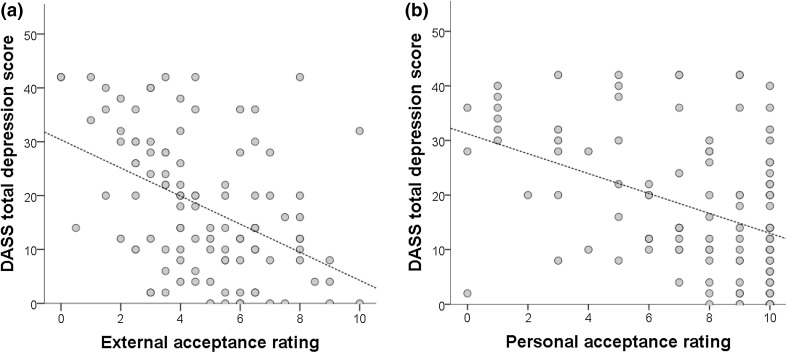
Mental health difficulties are highly prevalent in individuals on the autism spectrum. The current study examined how experiences and perceptions of autism acceptance could impact on the mental health of autistic adults. 111 adults on the autism spectrum completed an online survey examining their experiences of autism acceptance, along with symptoms of depression, anxiety and stress. Regression analyses showed that autism acceptance from external sources and personal acceptance significantly predicted depression. Acceptance from others also significantly predicted stress but acceptance did not predict anxiety. Further analyses suggested that experiences of "camouflaging" could relate to higher rates of depression. The current study highlights the importance of considering how autism acceptance could contribute to mental health in autism.
Overview
CoChat Summary
TL;DR
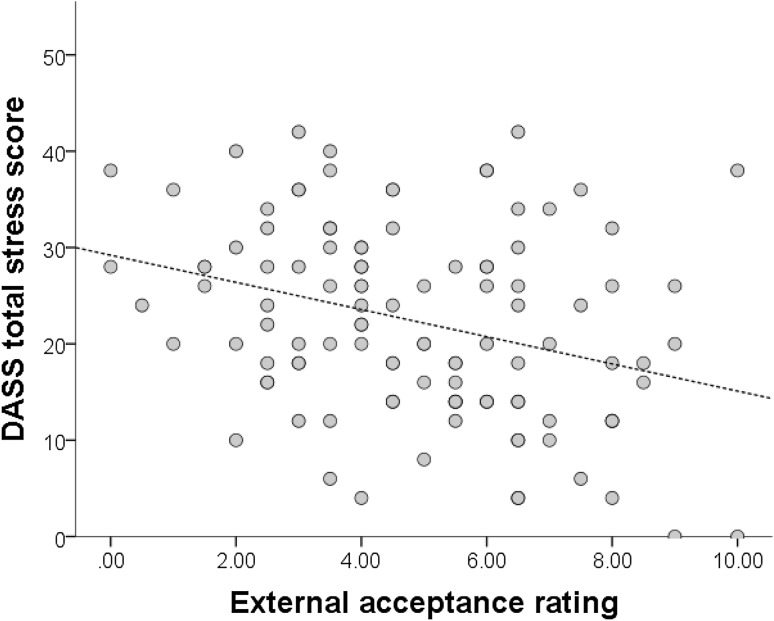
In 111 autistic adults, perceived autism acceptance from external sources and personal acceptance predicted lower depression, and external acceptance also predicted lower stress, but acceptance did not predict anxiety. Exploratory qualitative reports of camouflaging were linked to higher depression and lower recent acceptance.
Key findings
- Only 7% said society generally accepted them as autistic, 43% said “no,” and 48% said “sometimes”; 24.3% agreed/strongly agreed they had felt accepted by society in the past week, while 41.4% disagreed/strongly disagreed.
- In hierarchical regressions, the final depression model explained 52.1% of variance; external acceptance (β = −0.284, p = .004) and personal acceptance (β = −0.307, p = .001) significantly predicted depression. For stress, external acceptance significantly predicted stress (β = −0.198, p = .037), but adding acceptance variables was a non-significant change (p = .11). Acceptance did not predict anxiety.
- DASS means were depression 17.8 (SD = 12.7), anxiety 12.9 (SD = 9.14), and stress 22.3 (SD = 9.96), described as higher than non-autistic population means cited from Henry and Crawford (2005).
- Of 63 qualitative responders, 27 spontaneously reported camouflaging/masking; camouflaging interacted with DASS scores (F(2, 212) = 4.55, p = .012), with only depression differing between those who reported camouflaging and those who did not (t(107) = −0.256, p = .012, g = 0.56), and camouflagers were more likely to disagree they had experienced acceptance (X²(2) = 6.68, p = .035).
Methods
- Cross-sectional online survey of 111 autistic adults over 18, recruited via social media and UK autism organisations/groups; data collected June–October 2016; median completion time 12 min; 84% self-reported additional mental health diagnoses or developmental conditions.
- Measures included newly developed autism acceptance items (societal, family/friend, and personal acceptance; past-week societal acceptance; categorical societal acceptance), the DASS-21, and open-text qualitative responses analyzed by content analysis with two independent coders.
- Analyses included Spearman correlations, PCA that combined societal and family/friend acceptance into “external sources” while treating personal acceptance separately, and three hierarchical regressions predicting depression, anxiety, and stress while controlling age, age of diagnosis, gender, and other DASS scales; exploratory mixed ANOVA examined camouflaging.
Limitations
- Stated by the paper: online self-report may be unreliable; the sample was predominantly female, limiting generalisability, though gender was not a significant predictor; many participants reported additional diagnoses, possibly attracting those already experiencing mental health difficulties; and the sample was mainly well-educated and not representative of the whole autism spectrum.
- Evident from the text: the cross-sectional correlational design cannot establish causality or direction; the autism acceptance items were not a pre-existing validated measure, with PCA KMO = 0.528, personal acceptance loading 0.462, and Cronbach’s alpha improving only from 0.51 to 0.64 after removing personal acceptance; 27 participants were excluded from final regression analyses due to missing data, and 11 without a formal diagnosis were excluded from regressions.
Model-written summary. Check it against the paper before relying on it.
Integrity signals
Registry
Cites
Statistics
Figures
Verification
Claims the paper makes
3 Valid · 0 Not valid · 44 Not checked · 65 Own results and interpretations
Every source the paper cites for this claim was checked and supports it.
In the paper
“Sasson et al. (2017) found that non-autistic individuals tend to make rapid unfavourable judgements about those on the autism spectrum.”
§ Experiences of Autism Acceptance and Mental Health in Autistic Adults > Introduction
What the sources say
- Supportedcites Sasson et al. 2017 matched to “Neurotypical Peers are Less Willing to Interact with Those with Autism based on Thin Slice Judgments” (2017) source
The Abstract (p. 1) states that across three studies, first impressions of individuals with ASD made from thin slices of real-world social behavior by typically-developing observers were 'far less favorable across a range of trait judgments compared to controls' and that these patterns 'occur within seconds'. The Discussion (p. 1) likewise reports robustly less favorable first impressions by neurotypical observers, associated with reduced intentions to engage. The claim's 'rapid unfavourable judgements' by non-autistic individuals is therefore directly stated; the only qualifier the source adds (that the bias vanishes for conversational content without audiovisual cues) does not contradict the hedged 'tend to'. (LLM, conf=0.92)
plain- Asserted: passes — The authors put it forward as true.
- Checkable: passes — It can be checked against evidence.
- Load-bearing: passes — The paper’s conclusions depend on it.
- Based: passes — The paper gives a reason why it holds.
- Supported
The sources with a verdict support this claim; the rest weren’t checked yet, have no full text we could read, or their verdicts aren’t rated yet.
In the paper
“many autistic individuals frequently report “masking” or “camouflaging”—that is, they may use strategies to camouflage the fact they are on the autism spectrum in order to “fit in” to the non-autistic world (Dean et al. 2016; Hull et al. 2017).”
§ Experiences of Autism Acceptance and Mental Health in Autistic Adults > Introduction
What the sources say
- Not checked yetcites Dean et al. 2016 matched to “The art of camouflage: Gender differences in the social behaviors of girls and boys with autism spectrum disorder” (2017) source
- Supportedcites Hull et al. 2017 matched to ““Putting on My Best Normal”: Social Camouflaging in Adults with Autism Spectrum Conditions” (2017) source
The Discussion opening states that 'the vast majority of participants (male, female, and of other genders) reported camouflaging to some degree', and the Conclusions (p. last) that 'camouflaging of ASC-related characteristics in social situations may be a common behaviour amongst adults with ASC' and 'is motivated by the desire to fit in with others'. The Masking theme section describes hiding/suppressing ASC-associated behaviours and adopting personas so as not to appear autistic, with some respondents camouflaging at all times — matching the citing sentence's 'strategies to camouflage the fact they are on the autism spectrum in order to fit in'. The only scope difference is that Hull et al. sampled diagnosed adults, whereas the citing sentence speaks of autistic individuals generally; the citing hedge ('may use strategies') is no stronger than the source's own. (LLM, conf=0.85)
hedged- Asserted: passes — The authors put it forward as true.
- Checkable: passes — It can be checked against evidence.
- Load-bearing: unclear — It is unclear whether the paper’s conclusions depend on it.
- Based: passes — The paper gives a reason why it holds.
A result the paper reports from its own data — it cites no other source for it, so there is none to check. The quote shows it is in the paper.
In the paper
“Further analyses suggested that experiences of “camouflaging” could relate to higher rates of depression.”
§ Experiences of Autism Acceptance and Mental Health in Autistic Adults > Abstract
hedgedstates an associationn = 111- Asserted: passes — The authors put it forward as true.
- Checkable: passes — It can be checked against evidence.
- Load-bearing: unclear — It is unclear whether the paper’s conclusions depend on it.
- Based: passes — The paper gives a reason why it holds.
- Rests on an assumption not shown here.
A result the paper reports from its own data — it cites no other source for it, so there is none to check. The quote shows it is in the paper.
In the paper
“Regression analyses showed that autism acceptance from external sources and personal acceptance significantly predicted depression.”
§ Experiences of Autism Acceptance and Mental Health in Autistic Adults > Abstract
plainstates an associationn = 111- Asserted: passes — The authors put it forward as true.
- Checkable: passes — It can be checked against evidence.
- Load-bearing: passes — The paper’s conclusions depend on it.
- Based: passes — The paper gives a reason why it holds.
- Rests on an assumption not shown here.
A result the paper reports from its own data — it cites no other source for it, so there is none to check. The quote shows it is in the paper.
In the paper
“Acceptance from others also significantly predicted stress but acceptance did not predict anxiety.”
§ Experiences of Autism Acceptance and Mental Health in Autistic Adults > Abstract
plainstates an associationn = 111 ·- Asserted: passes — The authors put it forward as true.
- Checkable: passes — It can be checked against evidence.
- Load-bearing: passes — The paper’s conclusions depend on it.
- Based: passes — The paper gives a reason why it holds.
- Rests on an assumption not shown here.
45 more claims
Create a free account to see all 112 claims and to verify the 55 references still open.
- Probably not a substantial claim. 41
- It may state two separate claims as one. 30
- The quote only partly states this claim. 3
Claims other papers make about this one
Each is checked against this paper’s own text: does it say what the citing paper says it does?
The source backs part of the claim, not all of it — or backs it for a different population, condition or comparison.
In the citing paper
“evidence suggested that experiences of stigma and not feeling accepted by others was associated with increased camouflaging (Cage et al., 2018;Perry et al., 2021)”
From Camouflaging in autism: A systematic review (2021) · cites this paper as Cage et al., 2018
Experimental — accuracy not yet measuredThe cited source says what the claim attributes to it.
In the citing paper
“Results of three exploratory studies using predominately qualitative methodologies were not suggestive of sex or gender differences in camouflaging (Cage et al., 2018;Hull et al., 2017;Livingston et al. 2020).”
From Camouflaging in autism: A systematic review (2021) · cites this paper as Cage et al., 2018
The cited source says what the claim attributes to it.
In the citing paper
“Importantly, acceptance of autism by others is correlated with lower levels of stress and depression in Autistic adults (Cage et al., 2018).”
From Neurodiversity and Autism Intervention: Reconciling Perspectives Through a Naturalistic Developmental Behavioral Intervention Framework (2022) · cites this paper as Cage et al., 2018
The cited source says what the claim attributes to it.
In the citing paper
“Previous research has found that lack of societal understanding of autism and feeling misunderstood may contribute to stress, isolation, and depression among autistic adults (Cage et al., 2018;Gotham et al., 2014;Griffith et al., 2012;Han et al., 2022).”
From A mixed methods study of autistic adults' mental health therapy experiences (2023) · cites this paper as Cage et al., 2018
The cited source says what the claim attributes to it.
In the citing paper
“The negative mental effects of “camouflaging” and “masking” in society are described in recent research, and support the need for considering societal approaches for promoting autistic identity (e.g. Cage et al., 2018; Cage & Troxell-Whitman, 2019).”
From Listening to the autistic voice: Mental health priorities to guide research and practice in autism from a stakeholder-driven project (2020) · cites this paper as Cage et al., 2018
6 more claims about this paper
Create a free account to see every claim other papers make about this one.
Statistics that don’t add up
Each reported p-value recomputed from its test statistic and degrees of freedom, each partial η² from its F, and each ratio, mean difference or B printed with a p checked against its own confidence interval.
Rated major: it would touch a result — a value a result rests on, reported and recomputed p-values on opposite sides of the significance level, two passages that conflict with no sign which is right, or a cited work retracted before this paper was published.
In the paper
“t (107) = − 0.256, p = .012”
§ Experiences of Autism Acceptance and Mental Health in Autistic Adults > Results > Content Analysis of Qualitative Results
Reported p = .012 · recomputed p = .798
Statistics recomputed
Every reported test result, recomputed from its test statistic and degrees of freedom. A result shows as not adding up only once an independent check has confirmed it.
- Doesn’t add upt(107) = -0.256reported p = .012 · recomputed p = .798The two fall on opposite sides of .05
“t (107) = − 0.256, p = .012”
- Consistentχ²(3) = 33.66reported p < .001 · recomputed p < .001
“χ2 (3) = 33.66, p < .001”
- Consistentt(110) = 7.93reported p < .001 · recomputed p < .001
“t(110) = 7.93, p < .001”
- ConsistentF(7, 83) = 11.8reported p < .001 · recomputed p < .001
“F (7, 83) = 11.80, p < .001”
- ConsistentF(7, 83) = 14.32reported p < .001 · recomputed p < .001
“F (7, 83) = 14.32, p < .001”
6 more recomputed tests
Create a free account to see every test the Stats check recomputed.
Self-check
Percentages, sums and reported differences re-computed from the paper’s own numbers.
Each contradiction between two passages listed here was confirmed by an independent check.
Rated minor: it would not touch a result — a value no result rests on, a p-value that stays on the same side of the significance level, or a conflict that is clerical, resolved elsewhere in the paper, or outside its own findings.
In the paper
§ Experiences of Autism Acceptance and Mental Health in Autistic Adults > Results > Autism Acceptance and Mental Health
“Next, stress was entered as the outcome variable.”
§ Experiences of Autism Acceptance and Mental Health in Autistic Adults > Results > Autism Acceptance and Mental Health
“The first step explained 54% of the variance in depression scores”
Rated minor: it would not touch a result — a value no result rests on, a p-value that stays on the same side of the significance level, or a conflict that is clerical, resolved elsewhere in the paper, or outside its own findings.
In the paper
§ Experiences of Autism Acceptance and Mental Health in Autistic Adults > Results > Content Analysis of Qualitative Results
“t (107) = − 0.256”
§ Experiences of Autism Acceptance and Mental Health in Autistic Adults > Results > Content Analysis of Qualitative Results
“p = .012, g = 0.56”
Rated minor: it would not touch a result — a value no result rests on, a p-value that stays on the same side of the significance level, or a conflict that is clerical, resolved elsewhere in the paper, or outside its own findings.
In the paper
§ Experiences of Autism Acceptance and Mental Health in Autistic Adults > Results > Autism Acceptance and Mental Health
“Finally, anxiety was tested as the outcome variable”
§ Experiences of Autism Acceptance and Mental Health in Autistic Adults > Results > Autism Acceptance and Mental Health
“here the first step explained 52% of the variance in depression scores”
Rated minor: it would not touch a result — a value no result rests on, a p-value that stays on the same side of the significance level, or a conflict that is clerical, resolved elsewhere in the paper, or outside its own findings.
In the paper
§ Experiences of Autism Acceptance and Mental Health in Autistic Adults > Results > Autism Acceptance and Mental Health
“| DASS anxiety | 0.371 | 0.195 | 0.411 | 0.061 |”
§ Experiences of Autism Acceptance and Mental Health in Autistic Adults > Results > Autism Acceptance and Mental Health
“| DASS anxiety | 0.431 | 0.170 | 0.285 | 0.013 |”
Rated minor: it would not touch a result — a value no result rests on, a p-value that stays on the same side of the significance level, or a conflict that is clerical, resolved elsewhere in the paper, or outside its own findings.
In the paper
§ Experiences of Autism Acceptance and Mental Health in Autistic Adults > Results > Autism Acceptance
“The KMO statistic was acceptable (0.528)”
§ Experiences of Autism Acceptance and Mental Health in Autistic Adults > Results > Autism Acceptance
“individual item KMO values were above 0.74”
1 more finding
Create a free account to see every finding of this check.
Citations
Cites
Diagnostic and Statistical Manual of Mental Disorders
American Psychiatric Association (2013) · doi:10.1176/appi.books.9780890425596 · Cited by 116,369
Diagnostic and Statistical Manual of Mental Disorders
Williams, J. B. W., & First, M. (2013) · Encyclopedia of Social Work · doi:10.1093/acrefore/9780199975839.013.104 · Cited by 109,519
The Measurement of Observer Agreement for Categorical Data
Landis, J. R., & Koch, G. G. (1977) · Biometrics · doi:10.2307/2529310 · Cited by 81,148
The need to belong: Desire for interpersonal attachments as a fundamental human motivation.
Baumeister, R. F., & Leary, M. R. (1995) · Psychological Bulletin · doi:10.1037//0033-2909.117.3.497 · Cited by 23,245 · cited 1×
“Indeed, sense of belonging is argued to be vital to the well being of all individuals, irrespective of autism (Baumeister and Leary 1995).”
Background(2017) · Cited by 16,319
Lovibond, P. F., & Lovibond, S. H. (1995) · Behaviour Research and Therapy · doi:10.1016/0005-7967(94)00075-u · Cited by 14,523
Does the autistic child have a “theory of mind” ?
Baron-Cohen, S., Leslie, A. M., & Frith, U. (1985) · Cognition · doi:10.1016/0010-0277(85)90022-8 · Cited by 8,599
(1995) · Cited by 6,909
Henry, J. D., & Crawford, J. R. (2005) · British Journal of Clinical Psychology · doi:10.1348/014466505x29657 · Cited by 5,801 · cited 1×
“2007), along with good construct validity (Henry and Crawford 2005).”
Antony, M. M., Bieling, P. J., Cox, B. J., Enns, M. W., & Swinson, R. P. (1998) · Psychological Assessment · doi:10.1037/1040-3590.10.2.176 · Cited by 4,874
Research works printed but not linked: 1
- Freelon D ReCal: Intercoder reliability calculation as a web service International Journal of Internet Science 2010 5 1 20 33
Cited by
Items 101–200 of 638
Remnélius, K. L., & Bölte, S. (2023) · Journal of Autism and Developmental Disorders · doi:10.1007/s10803-023-05909-8 · Cited by 56
Forster, S., & Pearson, A. (2020) · Disability & Society · doi:10.1080/09687599.2019.1680347 · Cited by 39
Chapple, M., Davis, P. M., Billington, J., Myrick, J. A., Ruddock, C., & Corcoran, R. (2021) · Frontiers in Psychology · doi:10.3389/fpsyg.2021.708375 · Cited by 52
Field, S. L., Williams, M. O., Jones, C. R. G., & Fox, J. R. E. (2024) · Autism · doi:10.1177/13623613231223036 · Cited by 45
“Studies without a significant theme relating to camouflaging were deemed to have insufficient data to synthesise qualitative research (e.g. Cage et al., 2018) where there was a single subtheme relating to camouflaging with only four participant quotes given.”
BackgroundAutistic women’s experiences of self-compassion after receiving their diagnosis in adulthood
Wilson, R. B., Thompson, A. R., Rowse, G., Smith, R. S., Dugdale, A.-S., & Freeth, M. (2022) · Autism · doi:10.1177/13623613221136752 · Cited by 51
“Research suggested the social challenges associated with autism could increase the risk of mental health issues, including bullying (Bejerot & Mörtberg, 2009; Zablotsky et al., 2014) and non-acceptance from others (Cage et al., 2018; Sasson et al., 2017).”
BackgroundInformation transfer within and between autistic and non-autistic people
Crompton, C. J., Foster, S. J., Wilks, C. E. H., Dodd, M., Efthimiou, T. N., Ropar, D., Sasson, N. J., Lages, M., & Fletcher‐Watson, S. (2025) · Nature Human Behaviour · doi:10.1038/s41562-025-02163-z · Cited by 50
“These difficulties are associated with fewer friendships 3 , less social support 4 , loneliness 5 , challenges securing and maintaining employment 6–8 , poorer mental health 9,10 and reduced quality of life 11 .”
Development of stigma-related support for autistic adults: Insights from the autism community
Han, E. K. L., Scior, K., Heath, E., Umagami, K., & Crane, L. (2023) · Autism · doi:10.1177/13623613221143590 · Cited by 52
“Less perceived autism acceptance from external sources and less personal autism acceptance has predicted greater levels of depression (Cage et al., 2018).”
BackgroundOshima, F., Takahashi, T., Tamura, M., Guan, S., Seto, M., Hull, L., Mandy, W., Tsuchiya, K. J., & Shimizu, E. (2024) · Molecular Autism · doi:10.1186/s13229-023-00579-w · Cited by 47
“Cage et al. [34] also noted that feeling accepted by others as an autistic person could be a protective factor against depression [34].”
BackgroundTrainee teachers’ knowledge of autism: implications for understanding and inclusive practice
Vincent, J., & Ralston, K. (2019) · Oxford Review of Education · doi:10.1080/03054985.2019.1645651 · Cited by 51
Lei, J., & Russell, A. (2021) · Autism · doi:10.1177/1362361320984897 · Cited by 51
“Interestingly, anxiety was not associated with autism acceptance by self or others (Cage et al., 2018), which suggests other factors may be at play.”
BackgroundInfluentialMuniandy, M., Richdale, A. L., Arnold, S. R. C., Trollor, J. N., & Lawson, L. P. (2021) · Autism Research · doi:10.1002/aur.2564 · Cited by 46
“While many autistic individuals may attempt to “camouflage” their autistic traits in order to blend in, the constant need to be self-aware and to monitor oneself that camouflaging involves, can be highly strenuous and detrimental to mental health (Bargiela et al., 2016; Cage et al., 2018; Hull et al., 2017).”
BackgroundDeThorne, L. S., & Searsmith, K. (2020) · Perspectives of the ASHA Special Interest Groups · doi:10.1044/2020_persp-20-00188 · Cited by 45
What does receiving autism diagnosis in adulthood look like? Stakeholders’ experiences and inputs
Ghanouni, P., & Seaker, L. (2023) · International Journal of Mental Health Systems · doi:10.1186/s13033-023-00587-6 · Cited by 49
“The different levels of knowledge among the public may impact how and when “red-flags” are noticed as well as the potential ways they use to seek out diagnosis [18, 31, 32].”
BackgroundCARE Model of Treatment for stuttering: Theory, assumptions, and preliminary findings
Byrd, C. T., Coalson, G. A., & Conture, E. G. (2024) · Frontiers in Psychology · doi:10.3389/fpsyg.2024.1488328 · Cited by 51
Neurodivergent Pupils’ Experiences of School Distress and Attendance Difficulties
Fielding, C., Streeter, A., Riby, D. M., & Hanley, M. (2025) · Neurodiversity · doi:10.1177/27546330251327056 · Cited by 49
“This is not uncommon in studies of neurodivergent and autistic pupils in relation to schooling (Havik et al., 2014; Melin et al., 2022), or indeed concerning awareness within society (Cage et al., 2018).”
Tomczak, M. T., Mpofu, E., & Hutson, N. (2022) · International Journal of Environmental Research and Public Health · doi:10.3390/ijerph191710982 · Cited by 42
“While autism is a social and communication disorder [9,11,15], people with autism have unique socialization needs to be “accepted or appreciated as an autistic person, with autism positively recognized and accepted by others and the self as an integral part of that individual” [39] (p.”
BackgroundPortrayals of autism in the British press: A corpus-based study
Karaminis, T. N., Gabrielatos, C., Maden-Weinberger, U., & Beattie, G. W. (2022) · Autism · doi:10.1177/13623613221131752 · Cited by 59
“Negative perceptions of autism (Cage et al., 2018) and the need for social camouflaging as a coping response to autism-related stigma (Hull et al.”
BackgroundAutism in Later Life: What Is Known and What Is Needed?
Sonido, M. T., Arnold, S. R. C., Higgins, J. M., & Hwang, Y. I. (2020) · Current Developmental Disorders Reports · doi:10.1007/s40474-020-00192-z · Cited by 48
Ferenc, K., Płatos, M., Byrka, K., & Król, M. E. (2022) · Autism · doi:10.1177/13623613221135818 · Cited by 41
“Furthermore, our results contribute to the still thin line of research showing a positive relationship between autism acceptance and the well-being of autistic people (Cage et al., 2018).”
BackgroundResultKim, S. Y., Song, D., Bottema‐Beutel, K., Gillespie‐Lynch, K., & Cage, E. (2022) · Autism Research · doi:10.1002/aur.2867 · Cited by 44
“These negative attitudes can adversely impact autistic people’s mental health (Botha & Frost, 2020; Cage et al., 2018), employment outcomes and experiences (Baldwin et al.”
BackgroundSelf-citationCrowson, S., Poole, D., Scargill, K., & Freeth, M. (2023) · Autism · doi:10.1177/13623613231196805 · Cited by 44
“Holding a positive autistic identity has been linked to reduced depressive symptoms (Cage et al., 2018; K.Cooper et al., 2017).”
BackgroundMurphy, S., Flower, R. L., & Jellett, R. (2022) · Autism · doi:10.1177/13623613221117911 · Cited by 44
“Therefore, having access to an autism diagnosis that could promote self-acceptance and appropriate psychological support is imperative for many reasons (Cage et al., 2018; Cooper et al., 2018; White et al., 2018).”
BackgroundA systematic review of social camouflaging in autistic adults and youth: Implications and theory
Klein, J. L., Krahn, R., Howe, S. J., Lewis, J., McMorris, C. A., & Macoun, S. J. (2024) · Development and Psychopathology · doi:10.1017/s0954579424001159 · Cited by 48
“Masking behaviors reported included stopping behavioral presentations of autism (e.g., suppressing stimming or sensory overload) (Cage et al., 2018, Cook et al., 2021a, Cook et al., 2022; Hull et al., 2017; Sullivan, 2021).”
InfluentialMcQuaid, G. A., Gendy, J., Lee, N., & Wallace, G. L. (2023) · Autism in Adulthood · doi:10.1089/aut.2021.0088 · Cited by 43
“81,83,84 We examined the intersection of autism and sexual minority identities in the current study, in part, to understand this overall elevated risk for mental health problems and lower subjective QoL in autistic adults.”
Keating, C. T., Hickman, L., Geelhand, P., Takahashi, T., Leung, J., Monk, R., Schuster, B. A., Rybicki, A. J., Girolamo, T. M., Clin, É., et al. (2024) · PLoS ONE · doi:10.1371/journal.pone.0299824 · Cited by 47
“However, a burgeoning literature suggests that camouflaging may be a risk factor for depression and anxiety in autism [26, 38, 54–58], irrespective of gender [59].”
BackgroundInfluentialThe Prevalence of Suicidal Behavior in Autism Spectrum Disorder: A Meta-Analysis
Huntjens, A., Landlust, A. M., Wissenburg, S. A., & van der Gaag, M. (2023) · Crisis · doi:10.1027/0227-5910/a000922 · Cited by 40
“We included studies in which participants had little exposure to risk factors, while others involved participants who were exposed to many risk factors (Moseley et al., 2020).”
Gellini, H., & Marczak, M. (2023) · Review Journal of Autism and Developmental Disorders · doi:10.1007/s40489-023-00356-8 · Cited by 46
“Similar to previous findings, masking was reported to be exhausting, stressful (Hull et al., 2017) and detrimental to mental health (Cage et al., 2018).”
Identifying Language for People on the Autism Spectrum: A Scoping Review
Shakes, P., & Cashin, A. J. (2019) · Issues in Mental Health Nursing · doi:10.1080/01612840.2018.1522400 · Cited by 40
Gender Differences in the First Impressions of Autistic Adults
Cage, E., & Burton, H. A. (2019) · Autism Research · doi:10.1002/aur.2191 · Cited by 42
“While some prior research has reported no gender differences in camouflaging behaviour [Cage et al., 2018; Hull et al., 2017], Lai et al.”
Self-citationBeresford, B., Mukherjee, S., Mayhew, E., Heavey, E., Park, A., Stuttard, L., Allgar, V. L., & Knapp, M. R. J. (2020) · Health Services and Delivery Research · doi:10.3310/hsdr08480 · Cited by 47
A transdiagnostic approach to neurodiversity in a representative population sample: The N+ 4 model
Apperly, I. A., Lee, R., van der Kleij, S. W., & Devine, R. T. (2024) · JCPP Advances · doi:10.1002/jcv2.12219 · Cited by 37
“…condition in a largely neurotypical world may itself be a cause of at least some co ‐ occurrent psychiatric conditions (Alexander ‐ Passe, 2015; Cage et al., 2018; Cage & Troxell ‐ Whitman, 2019; Dwyer, 2022; Gallant & Good, 2023; Kiraz & Sertçelik, 2021; Mantzalas et al., 2022; Pryke ‐ Hobbes…”
BackgroundInfluentialBradley, S., Moore, F. R., Duffy, F., Clark, L., Suratwala, T., Knightsmith, P., & Gillespie‐Smith, K. (2024) · Autism · doi:10.1177/13623613241245749 · Cited by 42
“Positive social identification with Autism has been associated with mental health benefits such as better self-esteem and lower levels of anxiety and depression (Cage et al., 2018; K. Cooper et al., 2017; R. Cooper et al., 2021).”
BackgroundSociocultural context and autistics’ quality of life: A comparison between Québec and France
Caron, V., Jeanneret, N., Giroux, M., Guerrero, L., Ouimet, M., d’Arc, B. F., Soulières, I., & Courcy, I. (2021) · Autism · doi:10.1177/13623613211035229 · Cited by 40
“The non-acceptance of autism by others (e.g. society, family, and friends) and oneself impacts mental health by predicting higher level of depression (Cage et al., 2017).”
BackgroundResultInfluentialPelton, M., Crawford, H., Bul, K., Robertson, A., Adams, J., Beurs, D. P. D., Rodgers, J., Baron‐Cohen, S., & Cassidy, S. (2023) · Suicide and Life-Threatening Behavior · doi:10.1111/sltb.12954 · Cited by 39
“Our model allows interventions to be identified at each level; for example, understanding and reducing anxiety (Parr et al., 2020), promoting belonging (Milton & Sims, 2016) and autism acceptance (Cage et al., 2018) could reduce the extent to which the network is activated.”
MethodDell’Osso, L., Cremone, I. M., Chiarantini, I., Arone, A., Massimetti, G., Carmassi, C., & Carpita, B. (2021) · CNS Spectrums · doi:10.1017/s1092852921000808 · Cited by 39
“Similar results were reported by a previous study, which did not find sex differences in CAT-Q scores with respect of sex, although highlighting that camouflaging behaviors may be used for different reasons by males and females.(28,36) Another study by Hull et al reported sex differences in CAT-Q scores only among ASD…”
ResultJones, D. R., Morrison, K. E., DeBrabander, K. M., Ackerman, R. A., Pinkham, A. E., & Sasson, N. J. (2021) · Frontiers in Psychology · doi:10.3389/fpsyg.2021.739147 · Cited by 39
“, 2018), andmay unintentionally encourage themasking of autistic ways of being (Pearson and Rose, 2021), increase internalized stigma (Botha and Frost, 2020), and contribute to depression (Cage et al., 2018), anxiety (Hull et al.”
BackgroundAutism awareness interventions for children and adolescents: a scoping review
Cremin, K., Healy, O., Spirtos, M., & Quinn, S. (2021) · Journal of Developmental and Physical Disabilities · doi:10.1007/s10882-020-09741-1 · Cited by 35
Autism, Stereotypes, and Stigma: The Impact of Media Representations
Hungerford, C. L., Kornhaber, R. A., West, S., & Cleary, M. L. (2025) · Issues in Mental Health Nursing · doi:10.1080/01612840.2025.2456698 · Cited by 37
“The stereo-typical portrayal of autistic people in the media therefore plays a substantial role in confirming and maintaining the negative attitudes and biases of audiences (Bury et al., 2024; Jones, 2024) and shaping societal understanding and acceptance (Cage et al., 2018).”
Weiner, L., Costache, M. E., Bemmouna, D., Rabot, J., Weibel, S., Dubreucq, M., Dubreucq, J., & Coutelle, R. (2023) · Women s Health · doi:10.1177/17455057231174763 · Cited by 37
‘We have so much to offer’: Community members’ perspectives on autism research
Haar, T., Brownlow, C., Hall, G., Heyworth, M., Lawson, W. B., Poulsen, R. E., Reinisch, T., & Pellicano, E. (2024) · Autism · doi:10.1177/13623613241248713 · Cited by 39
“At worst, these negative attitudes about being Autistic can have damaging effects on Autistic people’s self-esteem and self-concept (van der Cruijsen & Boyer, 2021; Williams et al., 2019) and on their mental health (Cage et al., 2018; Cooper et al., 2017).”
Scheerer, N. E., Boucher, T. Q., Sasson, N. J., & Iarocci, G. (2022) · Autism in Adulthood · doi:10.1089/aut.2021.0046 · Cited by 35
“6 For example, the majority of autistic children experience bullying, 7 and autistic adolescents and adults experience mental health problems, 8,9 including anxiety, depression, and suicidality.”
Reliability and validity of the Japanese version of the camouflaging autistic traits questionnaire
Hongo, M., Oshima, F., Guan, S., Takahashi, T., Nitta, Y., Seto, M., Hull, L., Mandy, W., Ohtani, T., Tamura, M., et al. (2024) · Autism Research · doi:10.1002/aur.3137 · Cited by 39
“Therefore, camouflaging behavior can have negative effects on mental health, including anxiety and depression (Cage et al., 2018).”
BackgroundA mixed methods study of autistic adults' mental health therapy experiences
Mazurek, M. O., Pappagianopoulos, J., Brunt, S., Sadikova, E., Nevill, R., Menezes, M., & Harkins, C. (2023) · Clinical Psychology & Psychotherapy · doi:10.1002/cpp.2835 · Cited by 33
Lilley, R., Lawson, W. B., Hall, G., Mahony, J., Clapham, H., Heyworth, M., Arnold, S. R. C., Trollor, J. N., Yudell, M., & Pellicano, E. (2022) · Journal of Autism and Developmental Disorders · doi:10.1007/s10803-022-05667-z · Cited by 35
“This position broadly supports research findings that autistic identity and greater personal autism acceptance can act as a protective factor against mental health difficulties (Cage et al., 2018; Cooper et al., 2017; Corden et al., 2021).”
Cassidy, S., McLaughlin, E., McGranaghan, R., Pelton, M., O’Connor, R. C., & Rodgers, J. (2023) · Suicide and Life-Threatening Behavior · doi:10.1111/sltb.12965 · Cited by 34
Parent-Reported Barriers and Enablers of Strengths in their Children with Autism
Clark, M., & Adams, D. (2020) · Journal of Child and Family Studies · doi:10.1007/s10826-020-01741-1 · Cited by 34
Ma, Y., Lee, L. Y., & Zhang, X. (2023) · Autism & Developmental Language Impairments · doi:10.1177/23969415231168567 · Cited by 35
Radev, S., Freeth, M., & Thompson, A. R. (2023) · Autism · doi:10.1177/13623613231212794 · Cited by 34
“…judged and stigmatised’ is one particularly relevant to autistic parents of autistic children, and has not come up in previous research into the experiences of non-autistic parents although it has come up in research examining experiences of autistic adults (Cage et al., 2018; Perry et al., 2022).”
BackgroundChen, Y., Jenkins, C. A., Charlton, R. A., Happe, F. G. E., Mandy, W., & Stewart, G. R. (2024) · Autism in Adulthood · doi:10.1089/aut.2024.0031 · Cited by 36
“However, it should be noted that mental health conditions in autistic adults were found to be related to a variety of factors, including the use of disengagement coping strategies, 46 autism acceptance, 47 and social support.”
Improving Social Anxiety and Social Responsiveness in Autism Spectrum Disorder through PEERS®
Factor, R. S., Moody, C. T., Sung, K. Y., & Laugeson, E. A. (2022) · Evidence-Based Practice in Child and Adolescent Mental Health · doi:10.1080/23794925.2021.2013138 · Cited by 35
“Camouflaging can lead to detrimental long-term effects (e.g., increased suicidality, depression, mental and physical difficulties; S. A. Cassidy et al., 2020; Baldwin & Costley, 2016; Cage et al., 2018; S. Cassidy et al., 2018; Hull et al., 2020; Livingston et al., 2019) in autistic adults.”
BackgroundDell’Osso, L., Cremone, I. M., Muti, D., Massimetti, G., Lorenzi, P., Carmassi, C., & Carpita, B. (2022) · Comprehensive Psychiatry · doi:10.1016/j.comppsych.2022.152295 · Cited by 37
The lived experience of autistic teachers: a review of the literature
StEvens, C. (2022) · International Journal of Inclusive Education · doi:10.1080/13603116.2022.2041738 · Cited by 35
“…in this paper, opting for the iden-tity-first term ‘autistic teacher/person/individual’ rather than the person-first term ‘teacher/person/individual with autism’, in alignment with the terminology mostly preferred by the autistic community (Cage, Di Monaco, and Newell 2018; Gernsbacher 2017).”
Gilmore, D., Longo, A., Krantz, M., Radford, D., & Hand, B. N. (2022) · Current Psychiatry Reports · doi:10.1007/s11920-022-01362-z · Cited by 35
Yau, N., Anderson, S., & Smith, I. (2023) · Research in Autism · doi:10.1016/j.rasd.2022.102101 · Cited by 35
Autistic women’s experience of intimate relationships: the impact of an adult diagnosis
Kock, E., Strydom, A., O'Brady, D., & Tantam, D. (2019) · Advances in Autism · doi:10.1108/aia-09-2018-0035 · Cited by 34
Lee, G. K., Curtiss, S. L., Kuo, H. J., Chun, J., Lee, H.-K., & Nimako, D. D. (2021) · Journal of Autism and Developmental Disorders · doi:10.1007/s10803-021-05037-1 · Cited by 33
Galvin, J., & Richards, G. (2022) · Autism · doi:10.1177/13623613221132109 · Cited by 33
“Studies also show that autistic people are more likely to experience trauma (Dodds, 2021), bullying (Humphrey & Hebron, 2015) and non-acceptance from others (Cage et al., 2018).”
BackgroundMosquera, M. L., Mandy, W., Pavlopoulou, G., & Dimitriou, D. (2021) · Research in Developmental Disabilities · doi:10.1016/j.ridd.2021.104057 · Cited by 30
“The participants’ perceptions of a stigma and social unacceptance towards the autistic community produced a great impact in their lives, aligning with recent findings (Botha, Dibb, & Frost, 2020; Cage et al., 2018).”
Barcelos, A. M., Kargas, N., Packham, C., & Mills, D. S. (2021) · Scientific Reports · doi:10.1038/s41598-021-02504-8 · Cited by 37
Schuck, R. K., & Fung, L. K. (2024) · Frontiers in Psychiatry · doi:10.3389/fpsyt.2023.1250895 · Cited by 30
“” Neurodiverse conditions are highly stigmatized, but many studies suggest that it is not neurodivergence (e.g., autism) itself that can lead to lower quality of life or well-being, but instead, lack of social support and/or acceptance (19–22).”
BackgroundChen, Y., Yang, C., & Feng, S. (2019) · International Journal of Environmental Research and Public Health · doi:10.3390/ijerph16203791 · Cited by 32
“Social communication can improve the sense of belonging and self-acceptance and enhance their positive cognition of life [23].”
Background‘At the End of the Day, It’s Love’: An Exploration of Relationships in Neurodiverse Couples
Smith, R., Netto, J., Gribble, N., & Falkmer, M. (2020) · Journal of Autism and Developmental Disorders · doi:10.1007/s10803-020-04790-z · Cited by 30
Zheng, S., Adams, R. E., Taylor, J. L., Pezzimenti, F., & Bishop, S. L. (2021) · Autism · doi:10.1177/13623613211008276 · Cited by 32
“The DASS has been previously used with adults on the autism spectrum (Cage et al., 2018; Maddox & White, 2015).”
MethodMcGreevy, E., Quinn, A., Law, R., Botha, M., Evans, M., Rose, K., Moyse, R., Boyens, T., Matejko, M., & Pavlopoulou, G. (2024) · Journal of Humanistic Psychology · doi:10.1177/00221678241232442 · Cited by 34
Liu, C.-H., Chen, Y., Chen, P., Ni, H., & Lai, M. (2023) · Autism · doi:10.1177/13623613231181732 · Cited by 28
“Previous study found a negative correlation between other’s acceptance of oneself and one’s perceived stress (Cage et al., 2018).”
BackgroundFrench Validation of the Camouflaging Autistic Traits Questionnaire (CAT-Q)
Bureau, R., Riebel, M., Weiner, L., Coutelle, R., Dachez, J., & Clément, C. (2023) · Journal of Autism and Developmental Disorders · doi:10.1007/s10803-023-06048-w · Cited by 31
“Some authors suggest that autis - tic camouflaging is a response to experiencing stigma and/ or internalized stigma (Botha & Frost, 2020 ; Cage et al., 2018; Perry et al., 2022 ).”
Zaguri‐Vittenberg, S., Weintraub, N., & Tal‐Saban, M. (2023) · Disability and Rehabilitation · doi:10.1080/09638288.2023.2246376 · Cited by 29
“…in line with previous studies among adults with various neurodevelopmental disorders, with respect to self-acceptance [32,33] and social acceptance [32,34]. concurrently, positive occupational experiences supported the participants’ self-acceptance; it allowed them to accept their difficulties in…”
Moore, H. L., Cassidy, S., & Rodgers, J. (2023) · Autism Research · doi:10.1002/aur.3073 · Cited by 30
“Exploring personal (autistic identity) and external acceptance, Cage et al. (2018) found that personal (alongside external) acceptance negatively predicted depression, but not anxiety.”
InfluentialLung, S. L. M., Picard, È., Soulières, I., & Bertone, A. (2024) · Research in Autism · doi:10.1016/j.rasd.2024.102458 · Cited by 29
Hiding in Plain Sight: Eating Disorders, Autism, and Diagnostic Overshadowing in Women
Brown, C. M., Hedley, D., Hooley, M., Hayward, S. M., Fuller‐Tyszkiewicz, M., Krug, I., & Stokes, M. A. (2024) · Autism in Adulthood · doi:10.1089/aut.2023.0197 · Cited by 30
Autistic People’s Perinatal Experiences I: A Survey of Pregnancy Experiences
Hampton, S., Allison, C. L., Baron‐Cohen, S., & Holt, R. (2022) · Journal of Autism and Developmental Disorders · doi:10.1007/s10803-022-05754-1 · Cited by 28
“, 2019) and factors surrounding autism may in fact contribute to the development of psychiatric conditions (Cage et al., 2018), attempting to disentangle autism from these other conditions may lead to a significant aspect of the autistic experience being obscured.”
BackgroundCooke, K., Ridgway, K., Pecora, L. A., Westrupp, E. M., Hedley, D., Hooley, M., & Stokes, M. A. (2023) · Research in Autism · doi:10.1016/j.rasd.2023.102313 · Cited by 30
Measurement of Subcategories of Repetitive Behaviors in Autistic Adolescents and Adults
McDermott, C. R., Farmer, C., Gotham, K. O., & Bal, V. H. (2020) · Autism in Adulthood · doi:10.1089/aut.2019.0056 · Cited by 28
“Discrepancies between self-report and caregiver report could provide important insights into individual experiences and may even serve as a red flag for concerns considering the possible relationship between features of depression and camouflaging.(48) Previous studies have also demonstrated a relationship between dep…”
Treatment of anxiety in autistic adults: A systematic review
Menezes, M., Harkins, C., Robinson, M. F., Pappagianopoulos, J., Cross, R., Vasa, R. A., & Mazurek, M. O. (2022) · Research in Autism Spectrum Disorders · doi:10.1016/j.rasd.2022.102068 · Cited by 26
White, L., Ixqe, K. V., Goodall, K., & Gillespie‐Smith, K. (2024) · Autism in Adulthood · doi:10.1089/aut.2023.0151 · Cited by 26
“24,56 Those labeled as having a learning disability are particularly vulnerable to hate crime, forced institutionalization, being viewed as unintelligent or incapable, and feeling unsafe in public.”
Experiences of autistic and non-autistic individuals participating in a corporate internship scheme
Remington, A., Heasman, B., Romualdez, A. M., & Pellicano, E. (2022) · Autism · doi:10.1177/13623613211025115 · Cited by 22
“Further proactive awareness about the wider health and well-being contexts of autistic interns should be a key consideration for managers during future programmes, particularly given the communication challenges autistic people experience in speaking up about how they may be feeling (Cage et al., 2018; Heasman, 2017).”
BackgroundA Systematic Review of Self-Reported Stress Questionnaires in People on the Autism Spectrum
Thoen, A., Steyaert, J. G., Alaerts, K., Evers, K., & Damme, T. V. (2021) · Review Journal of Autism and Developmental Disorders · doi:10.1007/s40489-021-00293-4 · Cited by 28
“However, more women were included in two studies using the DASS-21 (Cage et al., 2018; George & Stokes, 2018) which was attributed to the format of the data collection by means of a survey (Cage et al.”
BackgroundMethodInfluentialThe double empathy problem, camouflage, and the value of expertise from experience
Mitchell, P., Cassidy, S., & Sheppard, E. (2019) · Behavioral and Brain Sciences · doi:10.1017/s0140525x18002212 · Cited by 29
Gürbüz, E., Riby, D. M., South, M., & Hanley, M. (2024) · Scientific Reports · doi:10.1038/s41598-024-59532-3 · Cited by 29
“Lastly, longitudinal data is needed to test whether social anxiety or expectation of rejection comes first, especially given the bidirectional relationship between the two as suggested in previous research 20,22 .”
BackgroundInfluentialTruman, C., Crane, L., Howlin, P., & Pellicano, E. (2021) · International Journal of Inclusive Education · doi:10.1080/13603116.2021.1916108 · Cited by 31
“Here, parents across all three groups reported that masking had a detrimental e ff ect on children ’ s mental health (see also Cage, Monaco, and Newell 2018; Cook, Ogden, and Win-stone 2017; Lai et al. 2017).”
BackgroundDepression and Employment Outcomes in Autistic Adults: A Systematic Review
Schwartzman, J. M., & Corbett, B. A. (2022) · Review Journal of Autism and Developmental Disorders · doi:10.1007/s40489-022-00331-9 · Cited by 27
Loo, B. R. Y., Teo, T. J. Y., Liang, M. J., Leong, D.-J., Tan, D. W., Zhuang, S., Hull, L., Livingston, L. A., Mandy, W., Happe, F. G. E., et al. (2023) · Autism · doi:10.1177/13623613231180075 · Cited by 27
“…community towards acceptance, understanding and belonging may facilitate a more positive self-identity and strengthen autism self-acceptance (Cage et al., 2018; Crane et al., 2021), reducing the pressure to camouflage and potentially protecting against autistic burnout while improving…”
BackgroundMcQuaid, G. A., Sadowski, L. Y., Lee, N., & Wallace, G. L. (2024) · Autism in Adulthood · doi:10.1089/aut.2022.0121 · Cited by 26
“33 Conversely, a positive sense of autism identity and affiliation with the broader community of autistic people are associated with greater psychological well-being.”
Compassion focused therapy for self-stigma and shame in autism: a single case pre-experimental study
Riebel, M., Krasny‐Pacini, A., Manolov, R., Rohmer, O., & Weiner, L. (2024) · Frontiers in Psychiatry · doi:10.3389/fpsyt.2023.1281428 · Cited by 28
“Both results are clinically important given that camouflaging, social isolation, and emotion dysregulation have been found to be involved in the high rates depression, anxiety and suicidality in autistic adults (7, 65, 88, 89).”
BackgroundCamouflaging in autism: a systematic reviewPreprint
Cook, J. M., Hull, L., Crane, L., & Mandy, W. (2021) · OSF Preprints (OSF Preprints) · doi:10.31219/osf.io/u5b9e · Cited by 29
Mechanisms of Change in Behavioral Activation: Adapting Depression Treatment for Autistic People
Bal, V. H., Wilkinson, E., Glascock, V., Hastings, R. P., & Jahoda, A. (2023) · Cognitive and Behavioral Practice · doi:10.1016/j.cbpra.2022.03.006 · Cited by 24
The Neurodiversity Attitudes Questionnaire: Development and Initial Validation
Schuck, R. K., Choi, S., Baiden, K. M. P., Dwyer, P. S. R., & Uljarević, M. (2024) · Autism · doi:10.1177/13623613241245756 · Cited by 28
“While these critiques may suggest room for refinement of the neurodiversity perspective, its emphasis on acceptance and inclusion has clear positive benefits (Cage et al., 2018; Ferenc et al., 2023).”
Background‘There’s nothing I can do to stop it’: homelessness among autistic people in a British city
Garratt, E. A., & Flaherty, J. (2021) · Disability & Society · doi:10.1080/09687599.2021.2004881 · Cited by 27
Neurodiversity 2.0 - Harnessing cross-disciplinary disability insights
Srinivasan, H. (2025) · Research in Autism · doi:10.1016/j.reia.2025.202652 · Cited by 27
Pellicano, E., Cribb, S. J., & Kenny, L. (2019) · Research on Child and Adolescent Psychopathology · doi:10.1007/s10802-019-00602-w · Cited by 26
Mental Health and University Students on the Autism Spectrum: a Literature Review
Kuder, S. J., Accardo, A. L., & Bomgardner, E. M. (2020) · Review Journal of Autism and Developmental Disorders · doi:10.1007/s40489-020-00222-x · Cited by 31
Wilmot, A., Pizzey, H., Leitão, S., Hasking, P. A., & Boyes, M. E. (2023) · Dyslexia · doi:10.1002/dys.1733 · Cited by 26
“…is the association between “ acceptance ” of one's (or one's child's) neurodiversity and the well-being/mental health of neurodiverse individuals and their families (Cage et al., 2017; Crane, Jones, Prosser, Taghrizi, & Pellicano, 2019; Weiss, Cappado-cia, MacMullin, Viecili, & Lunsky, 2012).”
Advancing Mental Health Supports for Autistic Postsecondary Students: A Call for Research
Gunin, G. B., Gravino, A., & Bal, V. H. (2021) · Autism in Adulthood · doi:10.1089/aut.2020.0044 · Cited by 27
“Emerging research demonstrates that perceived acceptance by peers is linked to positive mental health in autistic adults, 33 and higher levels of social connectedness are related to greater life satisfaction in both autistic and neurotypical college students.”
Mahony, C., & O’Ryan, C. (2022) · Frontiers in Psychiatry · doi:10.3389/fpsyt.2022.985713 · Cited by 25
Neurodiversity and psychotherapy—Connections and ways forward
Pantazakos, T. (2023) · Counselling and Psychotherapy Research · doi:10.1002/capr.12675 · Cited by 25
Jones, F., Hamilton, J., & Kargas, N. (2024) · Counselling and Psychotherapy Research · doi:10.1002/capr.12742 · Cited by 23
Cancino-Barros, I., Villacura-Herrera, C., & Castillo, R. D. (2025) · Scientific Reports · doi:10.1038/s41598-025-06137-z · Cited by 23
Kim, S. Y. (2020) · Autism in Adulthood · doi:10.1089/aut.2019.0066 · Cited by 24
“11 However, currently, there is no instrument that measures nonautistic individuals’ autism acceptance.”
Jenks, E., Selman, F., Harmens, M., Boon, S., Tran, T., Hobson, H., Eagle, S., & Sedgewick, F. (2023) · Frontiers in Psychiatry · doi:10.3389/fpsyt.2023.1264895 · Cited by 22
Marsden, S. J. E., Eastham, R., & Kaley, A. (2024) · Autism · doi:10.1177/13623613241271931 · Cited by 24
“The knowledge of having these differences and having to conform to a society and environment created by and for a predominantly neurotypical population can create a sense of thwarted belongingness, isolation, burdensomeness, and inadequacy (Cage et al., 2018; Moseley et al., 2022).”
Metadata
- Authors
- Cage, E., Di Monaco, J., & Newell, V.
- Affiliations
- Royal Holloway University of London (GB)
- Corresponding author
- Cage, Eilidh
- Venue
- Journal of Autism and Developmental Disorders
- Published
- 2017-10-25
- Volume
- 48
- Issue
- 2
- Pages
- 473-484
- ISSN
- 0162-3257 (ISSN-L)
- 1573-3432
- PMC
- PMC5807490
- OpenAlex
- W2766434912
- Semantic Scholar
- 97e77090b6b7073196f62b6e0797b4a8bdfc4319
- Cited by
- 538
- References
- 71
- Citations by year
- 2026: 65 · 2025: 79 · 2024: 84 · 2023: 87 · 2022: 73 · 2021: 70 · 2020: 40 · 2019: 30 · 2018: 9 · 2017: 1
- FWCI
- 12.55
- Type
- journal article
- Language
- en
- Open access
- hybrid
- doi.org
- Locations
- Journal of Autism and Developmental Disorders (publishedVersion, cc-by)
- PubMed Central (publishedVersion, cc-by)
- PubMed (publishedVersion)
- Stirling Online Research Repository (University of Stirling) (submittedVersion, cc-by)
- Topics
- Life Sciences › Neuroscience › Cognitive Neuroscience › Autism Spectrum Disorder Research
- Social Sciences › Psychology › Clinical Psychology › Family and Disability Support Research
- Social Sciences › Psychology › Clinical Psychology › Mindfulness and Compassion Interventions
- Keywords
- autism acceptance, autistic adults, mental health, depression, anxiety, stress, camouflaging, social acceptance, autism spectrum disorder
- MeSH terms
- Adolescent, Adult, Aged, Anxiety, Autistic Disorder, Depression, Female, Humans, Male, Mental Health, Middle Aged, Surveys and Questionnaires, Stress, Psychological, Young Adult, Social Stigma
About these checks
Registry, retraction, Cites and statistics results are computed, not judged, with one exception: a printed reference that no index lists is read once by a model before it counts as a citation error. Claims are extracted by a model and kept only when their quote appears verbatim in the text; each cited source is then checked, with a model’s help, for whether it says what the claim relies on. Those verdicts can be wrong — read the claim’s quote and the cited source before relying on one.
A language model drew the claims from the paper on 2026-10-05, under version 3 of the claim definition (model deepseek-v4.1-flash, prompt extract-v3).
A second model labelled each claim on 2026-10-05 (model jev-1.13-20260917, definition revision gold-guideline-v0.2).
Cited sources are checked with a language model’s help (qwen3.8-omni-flash).
Statistics and arithmetic are recomputed, not judged.
Confidence bands are shown only for fields calibrated on our annotated test set. None is calibrated yet, so no band is shown.
What counts as a claim ›How we measure confidence ›How we check this ›
Are you an author, or do you see a problem with this page? Request a review
Data sources
Bibliographic data: Semantic Scholar, OpenAlex, Crossref.
Contains information from the Semantic Scholar Academic Graph Datasets, made available under the ODC Attribution License (ODC-BY 1.0).
Semantic Scholar’s data is described in: Kinney, R., et al. (2023). The Semantic Scholar Open Data Platform. arXiv:2301.10140.
