

Killing the Priest-King: Addressing Egalitarianism in the Indus Civilization
Open accessThe DOI matches its Crossref record; 286 of the 292 references it cites were found in a registry or an index, and 1 are not checked yet; none of the 188 sources its claims cite is checked for support yet.
Abstract
The cities of the Indus civilization were expansive and planned with large-scale architecture and sophisticated Bronze Age technologies. Despite these hallmarks of social complexity, the Indus lacks clear evidence for elaborate tombs, individual-aggrandizing monuments, large temples, and palaces. Its first excavators suggested that the Indus civilization was far more egalitarian than other early complex societies, and after nearly a century of investigation, clear evidence for a ruling class of managerial elites has yet to materialize. The conspicuous lack of political and economic inequality noted by Mohenjo-daro’s initial excavators was basically correct. This is not because the Indus civilization was not a complex society, rather, it is because there are common assumptions about distributions of wealth, hierarchies of power, specialization, and urbanism in the past that are simply incorrect. The Indus civilization reveals that a ruling class is not a prerequisite for social complexity.
Checked 2026-11-22 · 1 reference not checked yet
Overview
CoChat Summary
TL;DR
Green argues that the Indus civilization (c. 2600–1900 BC) lacked a ruling class and was relatively egalitarian, despite being urban and technologically complex. The paper reviews archaeological evidence for inequality and concludes that a ruling class is not a prerequisite for social complexity.
Key findings
- The Indus lacks clear evidence for palaces, elaborate tombs, aggrandizing monuments, and retainer sacrifice; the 17.5-cm statuette commonly called the “priest-king” is now thought to reflect interaction with neighboring societies rather than a military elite.
- Burial wealth appears relatively even: Harappa’s cemeteries include 547 potential burials; at Farmana, the “richest” of 57 burials had 17 vessels and the poorest had 2; one well-preserved Rakhigarhi grave had 37 vessels; at Kalibangan, 18 graves included 78 pots in a rectangular grave without a skeleton.
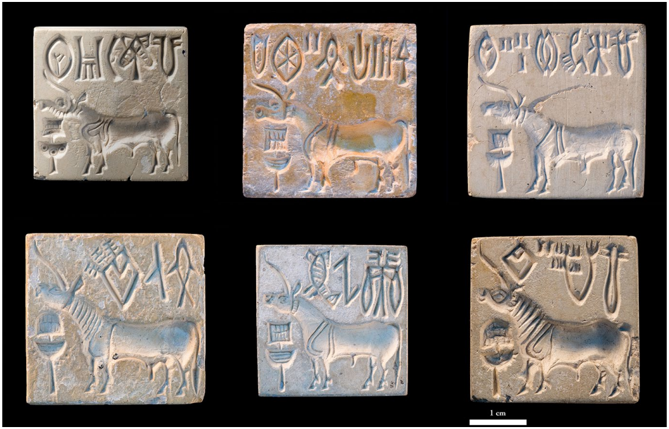
- Craft production and valued goods were widely distributed rather than restricted to elites: 2,500 seals were recovered from Mohenjo-daro alone; seals were standardized at roughly 2.5 cm but produced by many different groups; stoneware bangles, etched carnelian beads, and stamp seals are found across settlements and contexts.
- Large-scale collective action existed without a ruling class: the Great Bath, the Pillared Hall over 30 m on each side, and Mohenjo-daro foundation platforms—one estimated at 4 million days of labor, or 10,000 builders working more than a year—along with drainage systems and standardized weights and seals.
Methods
- Review/synthesis of published archaeological evidence from Indus sites including Mohenjo-daro, Harappa, Dholavira, Rakhigarhi, Kalibangan, Farmana, and Lothal, covering architecture, cemeteries, craft assemblages, seals, settlement patterns, and bioarchaeological data.
- Comparative theoretical analysis critiquing neo-evolutionary trait lists and elite-centered models of social complexity, using criteria such as palaces, elaborate tombs, aggrandizing monuments, retainer sacrifice, and restricted access to wealth as expected evidence for a ruling class.
- No new primary excavation or quantitative inequality index is presented; the argument is built from qualitative synthesis of existing datasets and published interpretations.
Limitations
- Paper-stated: the absolute range of Indus wealth distributions has not been directly compared with other early complex societies, making it difficult to ascertain whether Indus wealth differentials were commensurate.
- Paper-stated: it remains an open question whether small settlements were qualitatively different from cities, so whether Indus egalitarianism extended across broader landscapes is unresolved.
- Evident from the text: the argument relies heavily on legacy excavation records and unevenly published datasets; Dholavira’s possible tombs yielded no human remains from the two excavated structures, and Harappa’s cemeteries may represent only a portion of the site’s population, though the paper argues there is no convincing evidence of unrepresented socioeconomic strata.
Model-written summary. Check it against the paper before relying on it.
Integrity signals
Registry
Cites
Statistics
Figures
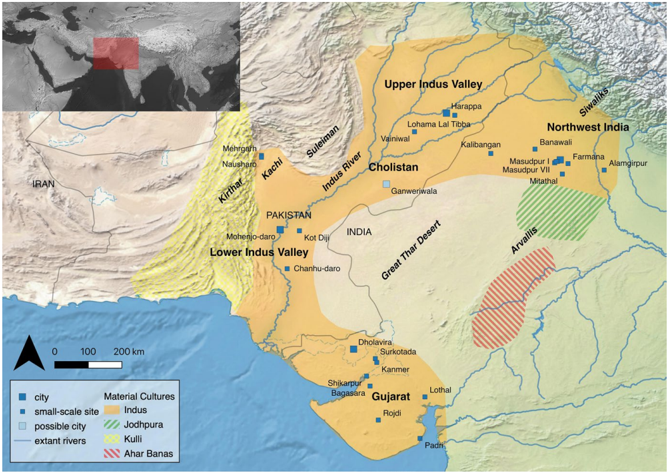
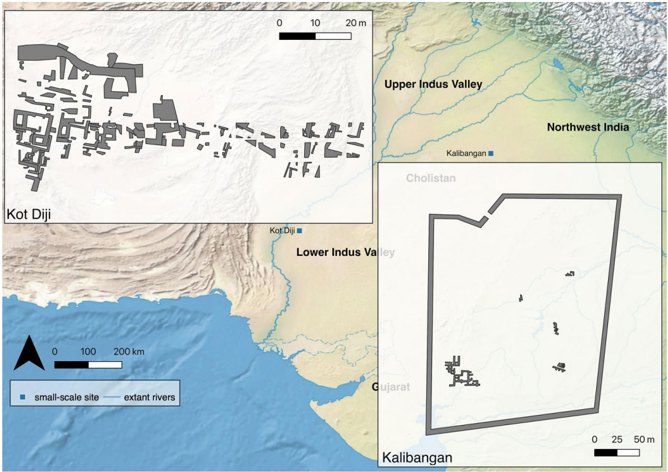
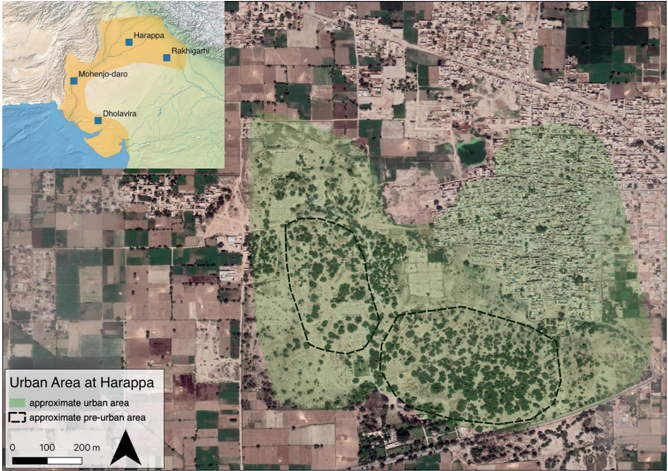
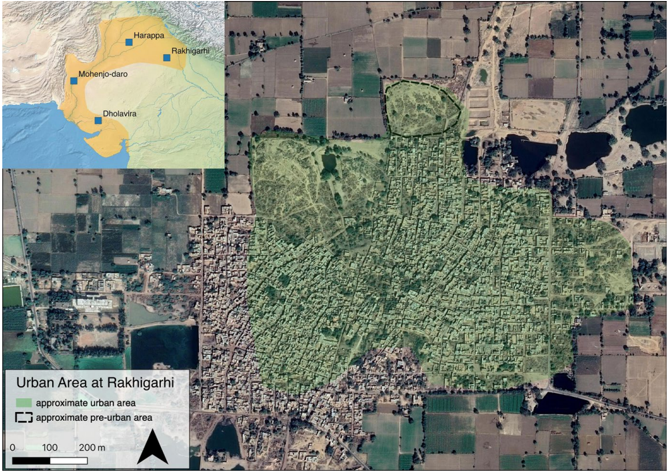
Verification
Claims the paper makes
0 Valid · 11 Not valid · 111 Not checked · 124 Own results and interpretations
A result the paper states — it cites no source for it, so there is none to check. The quote shows it is in the paper.
In the paper
“Despite considerable growth in our knowledge of Indus technologies (e.g., Kenoyer 1996;Miller 2007;Prabhakar 2018;Vidale 2000;Wright 1991) and environments (e.g., Madella and Fuller 2006;Petrie et al. 2017;Wright et al. 2008), no clear evidence of a ruling class has been recovered.”
§ Killing the Priest-King: Addressing Egalitarianism in the Indus Civilization > Introduction
boosted- Asserted: passes — The authors put it forward as true.
- Checkable: passes — It can be checked against evidence.
- Load-bearing: passes — The paper’s conclusions depend on it.
- Based: passes — The paper gives a reason why it holds.
In the paper
“Mohenjo-daro's first excavators explicitly grappled with empirical patterns that contradicted the idea that the Indus was under the control of a political hierarchy, such as the widespread availability of luxuries (e.g., private bathing platforms and commodious houses) that in Egypt and Mesopotamia were restricted to palace contexts (Marshall 1931, p. vi);”
§ Killing the Priest-King: Addressing Egalitarianism in the Indus Civilization > Introduction
What the sources say
- Not matchedcites Marshall 1931, p. vi
An author–year citation the paper’s reference list doesn’t settle. We don’t search these by name.
plain- Asserted: passes — The authors put it forward as true.
- Checkable: passes — It can be checked against evidence.
- Load-bearing: passes — The paper’s conclusions depend on it.
- Based: passes — The paper gives a reason why it holds.
- Not matched
The paper states this without a source or data behind it here, so there is nothing to check it against. The quote shows it is in the paper.
In the paper
“It is conspicuous that the sites commonly identified as Indus cities are roughly equidistant from one another.”
§ Killing the Priest-King: Addressing Egalitarianism in the Indus Civilization > Evidence of Collective Action and Political Organization
plain- Asserted: passes — The authors put it forward as true.
- Checkable: passes — It can be checked against evidence.
- Load-bearing: passes — The paper’s conclusions depend on it.
- Based: unclear — It is unclear why the paper says it holds.
A result the paper states — it cites no source for it, so there is none to check. The quote shows it is in the paper.
In the paper
“However, evidence of coercive urban-rural dynamics has not been identified.”
§ Killing the Priest-King: Addressing Egalitarianism in the Indus Civilization > Evidence of Collective Action and Political Organization
plain- Asserted: passes — The authors put it forward as true.
- Checkable: passes — It can be checked against evidence.
- Load-bearing: passes — The paper’s conclusions depend on it.
- Based: passes — The paper gives a reason why it holds.
A result the paper states — it cites no source for it, so there is none to check. The quote shows it is in the paper.
In the paper
“Aside from the excavation of ephemeral “Late Harappan” layers at Harappa and Dholavira, few clear excavation data are available from the post-Urban phase (c.1900-1300 BC).”
§ Killing the Priest-King: Addressing Egalitarianism in the Indus Civilization > Trajectories of Deurbanization
plain- Asserted: passes — The authors put it forward as true.
- Checkable: passes — It can be checked against evidence.
- Load-bearing: passes — The paper’s conclusions depend on it.
- Based: passes — The paper gives a reason why it holds.
128 more claims
Create a free account to see all 246 claims and to verify the 101 references still open.
- It may state two separate claims as one. 74
- Probably not a substantial claim. 56
Citations
Cites
Olson, M. (1965) · doi:10.4159/9780674041660 · Cited by 14,191
The Logic of Collective Action: Public Goods and the Theory of Groups.
Sufrin, S. C., & Olson, M. (1966) · Industrial and Labor Relations Review · doi:10.2307/2521228 · Cited by 11,518
Capital: A Critique of Political Economy
(2020) · On Violence · doi:10.1515/9780822390169-009 · Cited by 9,870
Collective action and the evolution of social norms.
Ostrom, E. (2000) · Journal of Economic Perspectives · doi:10.1257/jep.14.3.137 · Cited by 4,195
(2019) · American Museum Novitates · doi:10.1206/novi · Cited by 4,138
A History of Archaeological Thought. By Bruce G. Trigger.
Small, D. B. (1992) · American Journal of Archaeology · doi:10.2307/505763 · Cited by 1,293
(2012) · Choice Reviews Online · doi:10.5860/choice.49-2787 · Cited by 1,176
Childe, V. G. (1950) · Town Planning Review · doi:10.3828/tpr.21.1.k853061t614q42qh · Cited by 1,160
A Dual-Processual Theory for the Evolution of Mesoamerican Civilization
Blanton, R. E., Feinman, G. M., Kowalewski, S. A., & Peregrine, P. N. (1996) · Current Anthropology · doi:10.1086/204471 · Cited by 1,006
Heterarchy and the Analysis of Complex Societies
Crumley, C. L. (1995) · Archaeological Papers of the American Anthropological Association · doi:10.1525/ap3a.1995.6.1.1 · Cited by 958
Smallholders, householders: farm families and the ecology of intensive, sustainable agriculture
(1994) · Choice Reviews Online · doi:10.5860/choice.31-2759 · Cited by 926
Archaeological method and theory
(1990) · Choice Reviews Online · doi:10.5860/choice.27-3357 · Cited by 780
Smallholders, Householders: Farm Families and the Ecology of Intensive, Sustainable Agriculture
Netting, R. M. (1993) · doi:10.1515/9781503622067 · Cited by 756
Specialization, Exchange and Complex Societies.
Price, B. J., Brumfiel, E., & Earle, T. K. (1988) · Man · doi:10.2307/2803271 · Cited by 675
Craft and the Kingly Ideal: Art, Trade, and Power
(1993) · University of Texas Press eBooks · doi:10.7560/730748 · Cited by 629
Understanding Early Civilizations: A Comparative Study
Trigger, B. G. (2003) · Cambridge University Press eBooks · doi:10.1017/cbo9780511840630 · Cited by 627
Pattern of the Past: Studies in Honour of David Clarke.
Trigger, B. G., Hodder, I., Isaac, G., & Hammond, N. (1981) · Man · doi:10.2307/2801303 · Cited by 560
Chronologies in Old World Archaeology.
Evans, J. D., & Ehrich, R. W. (1967) · Man · doi:10.2307/2798670 · Cited by 528
The cultural evolution of civilizations
Flannery, K. V. (1972) · Annual Review of Ecology and Systematics · doi:10.1146/annurev.es.03.110172.002151 · Cited by 526
Myths of the Archaic State: Evolution of the Earliest Cities, States, and Civilizations
Yoffee, N. (2005) · doi:10.1017/cbo9780511489662 · Cited by 516 · cited 1×
“2013; Wengrow 2010; Yoffee 2005).”
Collective Action in the Formation of Pre-Modern States
Blanton, R., & Fargher, L. (2008) · Fundamental Issues in Archaeology · doi:10.1007/978-0-387-73877-2 · Cited by 499
The Political Landscape: Constellations of Authority in Early Complex Polities
Smith, A. T. (2003) · University of California Press eBooks · doi:10.1525/9780520936997 · Cited by 493
Population, Exchange, and Early State Formation in Southwestern Iran
WRIGHT, H. T., & JOHNSON, G. A. (1975) · American Anthropologist · doi:10.1525/aa.1975.77.2.02a00020 · Cited by 429
Myths of the archaic state: evolution of the earliest cities, states, and civilizations
(2006) · Choice Reviews Online · doi:10.5860/choice.43-4762 · Cited by 389
Agricultural Origins and Frontiers in South Asia: A Working Synthesis
Fuller, D. Q. (2006) · Journal of World Prehistory · doi:10.1007/s10963-006-9006-8 · Cited by 387 · cited 4×
“2012; Madella and Fuller 2006; Petrie et al.”
BackgroundInfluentialPractical and prestige technologies: The evolution of material systems
Hayden, B. (1998) · Journal of Archaeological Method and Theory · doi:10.1007/bf02428415 · Cited by 381
Origins and Development of Urbanism: Archaeological Perspectives
Cowgill, G. L. (2004) · Annual Review of Anthropology · doi:10.1146/annurev.anthro.32.061002.093248 · Cited by 364
Chiefdoms and other archaeological delusions
(2007) · Choice Reviews Online · doi:10.5860/choice.45-2116 · Cited by 357
Sankalia, H. D., & Allchin, B. (1985) · Man · doi:10.2307/2802392 · Cited by 343
Craft and the kingly ideal: art, trade, and power
(1994) · Choice Reviews Online · doi:10.5860/choice.31-3851 · Cited by 342
6 Plough and Pastoralism: Aspects of the Secondary Products Revolution (1981)
(1997) · Economy and Society in Prehistoric Europe · doi:10.1515/9781474472562-009 · Cited by 335
Greater post-Neolithic wealth disparities in Eurasia than in North America and Mesoamerica
Kohler, T. A., Smith, M. E., Bogaard, A., Feinman, G. M., Peterson, C. E., Betzenhauser, A., Pailes, M., Stone, E. C., Marie Prentiss, A., Dennehy, T. J., et al. (2017) · Nature · doi:10.1038/nature24646 · Cited by 331
The Indus civilization: a contemporary perspective
(2003) · Choice Reviews Online · doi:10.5860/choice.40-5952 · Cited by 331
Dietrich, O., Heun, M., Notroff, J., Schmidt, K., & Zarnkow, M. (2012) · Antiquity · doi:10.1017/s0003598x00047840 · Cited by 329
Fluvial landscapes of the Harappan civilization
Giosan, L., Clift, P. D., Macklin, M. G., Fuller, D. Q., Constantinescu, S., Durcan, J. A., Stevens, T., Duller, G. A. T., Tabrez, A. R., Gangal, K., et al. (2012) · Proceedings of the National Academy of Sciences · doi:10.1073/pnas.1112743109 · Cited by 327
Ancient Mesopotamia: the Eden that never was
(1999) · Choice Reviews Online · doi:10.5860/choice.37-2316 · Cited by 326
Recent Research on the Origin of the State
Wright, H. T. (1977) · Annual Review of Anthropology · doi:10.1146/annurev.an.06.100177.002115 · Cited by 307
The Evolution of Urban Society: Early Mesopotamia and Prehispanic Mexico.
Rouse, I., & Adams, R. M. (1967) · Man · doi:10.2307/2799516 · Cited by 302
Ancient Mesopotamia at the Dawn of Civilization: The Evolution of an Urban Landscape
Algaze, G. (2008) · University of Chicago Press eBooks · doi:10.7208/chicago/9780226013787.001.0001 · Cited by 280
Ancient Cities of the Indus Valley Civilization
JonthanMarkKenoyer (1998) · 世界古典文明史杂志:英文版 · Cited by 276
A Comparative Study of Thirty City‐State Cultures
Kirk‐Greene, A. (2001) · African Affairs · doi:10.1093/afraf/100.398.159 · Cited by 274
Cycles of Civilization in Northern Mesopotamia, 4400–2000 BC
Ur, J. A. (2010) · Journal of Archaeological Research · doi:10.1007/s10814-010-9041-y · Cited by 263
Blanton, R. E. (1994) · Interdisciplinary Contributions to Archaeology · doi:10.1007/978-1-4899-0990-9 · Cited by 261
Journal of Archaeological Research
(2013) · Journal of Archaeological Research · doi:10.1007/10814.1573-7756 · Cited by 258
The Archaeology of city-states: cross-cultural approaches
(1998) · Choice Reviews Online · doi:10.5860/choice.35-5213 · Cited by 243
Houses and Households: A Comparative Study
Blanton, R. E. (2013) · Cited by 242
Agricultural Origins and Frontiers in South Asia: A Working Synthesis
Fuller, D. Q. (2007) · Journal of World Prehistory · doi:10.1007/s10963-006-9007-7 · Cited by 232
Textile Extensification, Alienation, and Social Stratification in Ancient Mesopotamia
McCorriston, J. (1997) · Current Anthropology · doi:10.1086/204643 · Cited by 222
Lyonnet, B. (2005) · HAL Portal Artxiker (Hindustan Aeronautics Limited (India)) · Cited by 220
Art of the first cities: the third millennium B.C. from the Mediterranean to the Indus
(2004) · Choice Reviews Online · doi:10.5860/choice.41-2584 · Cited by 217
Ceramic Standardization and Intensity of Production: Quantifying Degrees of Specialization
Roux, V. (2003) · American Antiquity · doi:10.2307/3557072 · Cited by 212
The ancient city : new perspectives on urbanism in the old and new world
Marcus, J., & Sabloff, J. A. (2008) · Cited by 209
The ancient Indus: urbanism, economy, and society
(2010) · Choice Reviews Online · doi:10.5860/choice.47-6423 · Cited by 200
A history of archaeological thought
Mithen, S. J. (1991) · History of European Ideas · doi:10.1016/0191-6599(91)90034-v · Cited by 200
Stein, G. J. (1998) · Journal of Archaeological Research · doi:10.1007/bf02443149 · Cited by 200
Techniques for Assessing Standardization in Artifact Assemblages: Can We Scale Material Variability?
Eerkens, J. W., & Bettinger, R. L. (2001) · American Antiquity · doi:10.2307/2694247 · Cited by 200
The Political Economy of Craft Production: Crafting Empire in South India, c.1350–1650
Sinopoli, C. M. (2003) · Cambridge University Press eBooks · doi:10.1017/cbo9780511489648 · Cited by 195
The Indus Civilization: A Contemporary Perspective
Possehl, G. L. (2019) · Medical Entomology and Zoology · Cited by 194
Coulmas, F., & Parpola, A. (1996) · Language · doi:10.2307/416809 · Cited by 191
The Emergence of Inequality: A Focus on Strategies and Processes
Feinman, G. M. (1995) · Fundamental Issues in Archaeology · doi:10.1007/978-1-4899-1289-3_10 · Cited by 183 · cited 2×
“…inequality, and class in particular, archaeologists have honed a strong set of arguments about mortuary data, palace assemblages, aggrandizing monuments, and written records (Feinman 1995), and efforts are underway to develop similar indices for household data as well (Kohler and Smith 2018).”
BackgroundPalaeoecology and the Harappan Civilisation of South Asia: a reconsideration
Madella, M., & Fuller, D. Q. (2006) · Quaternary Science Reviews · doi:10.1016/j.quascirev.2005.10.012 · Cited by 180
Property, kin, and community on Truk
Goodenough, W. H. (1951) · Americanae (AECID Library) · Cited by 179
The corporate group as an archaeological unit
Hayden, B. D., & Cannon, A. (1982) · Journal of Anthropological Archaeology · doi:10.1016/0278-4165(82)90018-6 · Cited by 177
Order, legitimacy, and wealth in ancient states
Richards, J. E., & Buren, M. V. (2000) · Cited by 171
NEW EVIDENCE FOR EARLY SILK IN THE INDUS CIVILIZATION*Preprint
Good, I., Kenoyer, J. M., & Meadow, R. (2008) · Nature Precedings · doi:10.1038/npre.2008.1900.1 · Cited by 170
Orengo, H. A., Conesa, F. C., Garcia-Molsosa, A., Lobo, A., Green, A. S., Madella, M., & Petrie, C. A. (2020) · Proceedings of the National Academy of Sciences · doi:10.1073/pnas.2005583117 · Cited by 165
Self-citationThe farming-inequality nexus: new insights from ancient Western Eurasia
Bogaard, A., Fochesato, M., & Bowles, S. (2019) · Antiquity · doi:10.15184/aqy.2019.105 · Cited by 162
Wheeler, R. E. (1968) · Cited by 157
Abrupt weakening of the Indian summer monsoon at 8.2 kyr B.P.
Dixit, Y., Hodell, D. A., Sinha, R., & Petrie, C. A. (2014) · Earth and Planetary Science Letters · doi:10.1016/j.epsl.2014.01.026 · Cited by 153
Indus ethnobiology: new perspectives from the field
(2004) · Choice Reviews Online · doi:10.5860/choice.41-5993 · Cited by 143
The Comparative archaeology of complex societies
(2012) · Choice Reviews Online · doi:10.5860/choice.49-4540 · Cited by 142
What Makes Civilization?: The Ancient Near East and the Future of the West
Wengrow, D. (2010) · Cited by 141
Lothal, a Harappan port town (1955-62)
Rao, S. R. (1979) · Archaeological Survey of India eBooks · Cited by 140
Water supply and history: Harappa and the Beas regional survey
Wright, R. P., Bryson, R. A., & Schuldenrein, J. (2008) · Antiquity · doi:10.1017/s0003598x00096423 · Cited by 139
Allchin, F. R. (1998) · University of Groningen research database (University of Groningen / Centre for Information Technology) · Cited by 139
Petrie, C. A., Singh, R. N., Bates, J., Dixit, Y., French, C. A. I., Hodell, D. A., Jones, P. J., Lancelotti, C., Lynam, F., Neogi, S., et al. (2017) · Current Anthropology · doi:10.1086/690112 · Cited by 137
‘Multi-cropping’, Intercropping and Adaptation to Variable Environments in Indus South Asia
Petrie, C. A., & Bates, J. (2017) · Journal of World Prehistory · doi:10.1007/s10963-017-9101-z · Cited by 129
Trade and technology of the Indus Valley: New insights from Harappa, Pakistan
Kenoyer, J. M. (1997) · World Archaeology · doi:10.1080/00438243.1997.9980377 · Cited by 128
Ten Thousand Years of Inequality: The Archaeology of Wealth Differences
(2018) · University of Arizona Press eBooks · doi:10.2307/j.ctt20d8801 · Cited by 128
Research in Economic Anthropology
(2016) · Emerald Group Publishing Limited eBooks · doi:10.1108/s0190-128120160000036019 · Cited by 127
Ancient Teotihuacan: Early Urbanism in Central Mexico
Cowgill, G. L. (2015) · doi:10.1017/cbo9781139046817 · Cited by 125
Old problems and new perspectives in the archaeology of South Asia
Kenoyer, J. M. (1989) · Medical Entomology and Zoology · Cited by 124
Ancient Cholistan, Archaeology and Architecture
Mughal, M. R. (1997) · Medical Entomology and Zoology · Cited by 122
Flad, R. K., & Hruby, Z. X. (2007) · Archeological Papers of the American Anthropological Association · doi:10.1525/ap3a.2007.17.1.1 · Cited by 113
Collective Action Theory and the Dynamics of Complex Societies
DeMarrais, E., & Earle, T. (2017) · Annual Review of Anthropology · doi:10.1146/annurev-anthro-102116-041409 · Cited by 113
Pokharia, A. K., Kharakwal, J. S., & Srivastava, A. (2013) · Journal of Archaeological Science · doi:10.1016/j.jas.2013.11.029 · Cited by 112
Harappan Civilization. A Contemporary Perspective
Leemans, W. F., & Possehl, G. L. (1987) · Journal of the Economic and Social History of the Orient · doi:10.2307/3632031 · Cited by 110
How Humans Cooperate: Confronting the Challenges of Collective Acti
Blanton, R. E., & Fargher, L. F. (2016) · doi:10.5876/9781607325147 · Cited by 106
Chanhu-daro Excavations, 1935-1936
Bobrinskoy, G. V., & Mackay, E. J. H. (1944) · Journal of the American Oriental Society · doi:10.2307/594735 · Cited by 105
Seeds of urbanism: palaeoethnobotany and the Indus Civilization
Weber, S. (1999) · Antiquity · doi:10.1017/s0003598x00065558 · Cited by 103
Comparing ancient inequalities: the challenges of comparability, bias and precision
Fochesato, M., Bogaard, A., & Bowles, S. (2019) · Antiquity · doi:10.15184/aqy.2019.106 · Cited by 102
Mobile Pastoralism and the Formation of Near Eastern Civilizations: Weaving Together Society
Porter, A. (2012) · doi:10.1017/cbo9780511895012 · Cited by 100
Ancient Teotihuacan: early urbanism in Central Mexico
(2015) · Choice Reviews Online · doi:10.5860/choice.192215 · Cited by 97
Water supply and sewage disposal at Mohenjo‐Daro
Jansen, M. (1989) · World Archaeology · doi:10.1080/00438243.1989.9980100 · Cited by 97
Big histories, human lives tackling problems of scale in archaeology
Robb, J. (2012) · Cited by 97
Ancient Mesopotamia at the dawn of civilization: the evolution of an urban landscape
(2009) · Choice Reviews Online · doi:10.5860/choice.47-2077 · Cited by 95
Ideology and the Harappan civilization
Miller, D. (1985) · Journal of Anthropological Archaeology · doi:10.1016/0278-4165(85)90013-3 · Cited by 95
V. Gordon Childe and the Urban Revolution: a historical perspective on a revolution in urban studies
Smith, M. (2009) · Town Planning Review · doi:10.3828/tpr.80.1.2a · Cited by 94
Modeling the Roles of Craft Production in Ancient Political Economies
Schortman, E. M., & Urban, P. A. (2004) · Journal of Archaeological Research · doi:10.1023/b:jare.0000023712.34302.49 · Cited by 94
The Archaeology of Trading Systems, Part 1: Towards a New Trade Synthesis
Oka, R., & Kusimba, C. M. (2008) · Journal of Archaeological Research · doi:10.1007/s10814-008-9023-5 · Cited by 94
Feinman, G. M., & Carballo, D. M. (2018) · Economic Anthropology · doi:10.1002/sea2.12098 · Cited by 88
The Archaeology of Urban Landscapes
Smith, M. L. (2014) · Annual Review of Anthropology · doi:10.1146/annurev-anthro-102313-025839 · Cited by 84
Connections and Complexity: New Approaches to the Archaeology of South Asia
Abraham, S. A., Gullapalli, P., Raczek, T. P., & Rizvi, U. Z. (2016) · doi:10.4324/9781315431857-8 · Cited by 83
The Oxford handbook of cities in world history
(2013) · Choice Reviews Online · doi:10.5860/choice.51-1630 · Cited by 80
Archaeological approaches to technology
(2007) · Choice Reviews Online · doi:10.5860/choice.45-1544 · Cited by 78
NEW EVIDENCE FOR EARLY SILK IN THE INDUS CIVILIZATION*
GOOD, I. L., KENOYER, J. M., & MEADOW, R. H. (2009) · Archaeometry · doi:10.1111/j.1475-4754.2008.00454.x · Cited by 76
Law, R. W., & 人間文化研究機構総合地球環境学研究所インダスプロジェクト (2011) · Medical Entomology and Zoology · Cited by 75
The Archaeology of Politics: The Materiality of Political Practice and Action in the Past
Johanson, P. G., & Bauer, A. M. (2011) · Cited by 73
A Companion to South Asia in the Past
Schug, G. R., & Walimbe, S. R. (2016) · Wiley eBooks · doi:10.1002/9781119055280 · Cited by 73
History from things: essays on material culture
(1993) · Choice Reviews Online · doi:10.5860/choice.31-2294 · Cited by 72
Infection, Disease, and Biosocial Processes at the End of the Indus Civilization
Robbins Schug, G., Blevins, K. E., Cox, B., Gray, K., & Mushrif-Tripathy, V. (2013) · PLoS ONE · doi:10.1371/journal.pone.0084814 · Cited by 70
Ghaswala, S. K., & Wheeler, M. (1969) · Technology and Culture · doi:10.2307/3101582 · Cited by 70
Chase, B., Meiggs, D. C., Ajithprasad, P., & Slater, P. A. (2014) · Journal of Archaeological Science · doi:10.1016/j.jas.2014.06.013 · Cited by 65
Petrie, C. A., Bates, J., Higham, T., & Singh, R. N. (2016) · Antiquity · doi:10.15184/aqy.2016.210 · Cited by 65
Size, Complexity, and Organizational Variation: A Comparative Approach
Feinman, G. M. (2011) · Cross-Cultural Research · doi:10.1177/1069397110383658 · Cited by 62
2 The Emergence of Social Complexity: Why More than Population Size Matters
Feinman, G. M. (2012) · University of Colorado Press eBooks · doi:10.5876/9781607322085.c004 · Cited by 62
Internalizing class in historical archaeology
Wurst, L. (1999) · Historical Archaeology · doi:10.1007/bf03374277 · Cited by 61
The Power of Infrastructures: a Counternarrative and a Speculation
Yoffee, N. (2015) · Journal of Archaeological Method and Theory · doi:10.1007/s10816-015-9260-0 · Cited by 60
Beyond Chiefdoms: Pathways to Complexity in Africa
Haour, A., & McIntosh, S. K. (2001) · Africa · doi:10.2307/1161586 · Cited by 59
Sustainability or Collapse? An Integrated History and Future of People on Earth
Custance, G. (2006) · The MIT Press eBooks · doi:10.7551/mitpress/6572.001.0001 · Cited by 59
Millets and Herders: The Origins of Plant Cultivation in Semiarid North Gujarat (India)
García-Granero, J. J., Lancelotti, C., Madella, M., & Ajithprasad, P. (2016) · Current Anthropology · doi:10.1086/685775 · Cited by 58
The Evolution of Fragility: Setting the Terms
Yoffee, N. (2019) · Apollo (University of Cambridge) · doi:10.17863/cam.40692 · Cited by 58
Urbanization, State Formation, and Cooperation: A Reappraisal
Jennings, J., & Earle, T. K. (2016) · Current Anthropology · doi:10.1086/687510 · Cited by 57
Class confrontations in archaeology
McGuire, R. H., & Walker, M. (1999) · Historical Archaeology · doi:10.1007/bf03374285 · Cited by 56
A peaceful realm? Trauma and social differentiation at Harappa
Robbins Schug, G., Gray, K., Mushrif-Tripathy, V., & Sankhyan, A. R. (2012) · International Journal of Paleopathology · doi:10.1016/j.ijpp.2012.09.012 · Cited by 54
Crisis to Collapse. The Archaeology of Social Breakdown
Cunningham, T., & Driessen, J. (2017) · Digital Access to Libraries · Cited by 54
Hubs and upstarts: pathways to urbanism in the northern Fertile Crescent
Lawrence, D., & Wilkinson, T. J. (2015) · Antiquity · doi:10.15184/aqy.2014.44 · Cited by 52
Excavations at Mohenjo Daro, Pakistan : the pottery
Dales, G. F., Kenoyer, J. M., & Alcock, L. (1986) · University of Pennsylvania Museum of Archaeology and Anthropology eBooks · Cited by 51
Archaeology of the Night: Life After Dark in the Ancient World
address, M., University Press of Colorado, Ste, M. S., PMB, Denver, -, C., & -, P. (2017) · University Press of Colorado eBooks · doi:10.5876/9781607326786 · Cited by 51
Finding forgotten cities : how the Indus civilization was discovered / Nayanjyot Lahiri
(n.d.) · Institutional Repositories DataBase (IRDB) · Cited by 49
India: An Archaeological History: Palaeolithic Beginnings to Early Historic Foundations
Chakrabarti, D. K. (2000) · Medical Entomology and Zoology · Cited by 48
Excavation at Surkotada 1971-72 and exploration in Kutch
Joshi, J. P., & Sharma, A. (1990) · Cited by 47
Evaluating Social Complexity and Inequality in the Balkans Between 6500 and 4200 BC
Porčić, M. (2018) · Journal of Archaeological Research · doi:10.1007/s10814-018-9126-6 · Cited by 47
The vanishing millets of the Indus civilization
Weber, S., & Kashyap, A. (2013) · Archaeological and Anthropological Sciences · doi:10.1007/s12520-013-0143-6 · Cited by 46
Prehistoric India, to 1000 B. C.
Worman, E. C., & Piggott, S. (1952) · Journal of the American Oriental Society · doi:10.2307/595840 · Cited by 46
The archaeology of Indus crafts : Indus craftspeople and why we study them
Vidale, M. M. V., & archeologiche, C. S. E. R. (2000) · Padua Research Archive (University of Padova) · Cited by 44
Enquiries into the Political Organization of Harappan Society
Humphreys, A. J. B., & Ratnagar, S. (1993) · The South African Archaeological Bulletin · doi:10.2307/3888881 · Cited by 44
(2009) · Cited by 42
India an Archaeological History: Palaeolithic Beginnings to Early Historic Foundations
Chakrabarti, D. (2009) · Oxford University Press eBooks · doi:10.1093/acprof:oso/9780198064121.001.0001 · Cited by 42
Minoan Architectural Design: Formation and Signification
Preziosi, D. (1983) · doi:10.1515/9783110824575 · Cited by 42
Measuring the Harappan world: Insights into the Indus order and cosmology
Kenoyer, J. M. (2010) · Cambridge University Press eBooks · doi:10.1017/cbo9780511760822.013 · Cited by 41
Tlaxcallan: the archaeology of an ancient republic in the New World
Fargher, L. F., Blanton, R. E., Espinoza, V. Y. H., Millhauser, J., Xiuhtecutli, N., & Overholtzer, L. (2011) · Antiquity · doi:10.1017/s0003598x0006751x · Cited by 41
Eurasia at the Dawn of History: Urbanization and Social Change
Fernández-Götz, M., & Krausse, D. (2017) · Cambridge University Press eBooks · doi:10.1017/9781316550328 · Cited by 41
Green, A. S., & Petrie, C. A. (2018) · Journal of Field Archaeology · doi:10.1080/00934690.2018.1464332 · Cited by 41
Self-citationGreen, A. S., Orengo, H. A., Alam, A., Garcia‐Molsosa, A., Green, L. M., Conesa, F. C., Ranjan, A., Singh, R. N., & Petrie, C. A. (2019) · Remote Sensing · doi:10.3390/rs11182089 · Cited by 40
Self-citationThe Indus civilization : an interdisciplinary perspective
Agrawal, D. P. (2007) · Medical Entomology and Zoology · Cited by 39
Materializing Harappan identities: Unity and diversity in the borderlands of the Indus Civilization
Chase, B., Ajithprasad, P., Rajesh, S. V., Patel, A., & Sharma, B. (2014) · Journal of Anthropological Archaeology · doi:10.1016/j.jaa.2014.04.005 · Cited by 39
Trigger, B. G. (1974) · World Archaeology · doi:10.1080/00438243.1974.9979591 · Cited by 38
Understanding Heterarchy: Crafting and Social Projects in Pre-Hispanic Northwest Argentina
DeMarrais, E. (2013) · Cambridge Archaeological Journal · doi:10.1017/s0959774313000474 · Cited by 38
Craft Production as an Empowering Strategy in an Emerging Empire
Nash, D. J. (2019) · Journal of Anthropological Research · doi:10.1086/704144 · Cited by 38
Making pacts and cooperative acts: the archaeology of coalition and consensus
DeMarrais, E. (2016) · World Archaeology · doi:10.1080/00438243.2016.1140591 · Cited by 37
Studying Inequality’s Deep Past
Smith, M. E., Kohler, T. A., & Feinman, G. M. (2018) · University of Arizona Press eBooks · doi:10.2307/j.ctt20d8801.4 · Cited by 37
New Perspectives on the Political Economy of Great Zimbabwe
Chirikure, S. (2020) · Journal of Archaeological Research · doi:10.1007/s10814-019-09133-w · Cited by 35 · cited 1×
“To understand how the world’s complex societies emerged, we must get beyond “elite-centered” and “exotics-fueled” models of social change (Chirikure 2020, p. 141).”
BackgroundAdams, R. M. (1960) · Scientific American · doi:10.1038/scientificamerican0960-153 · Cited by 35
Human sacrifice and intentional corpse preservation in the Royal Cemetery of Ur
Baadsgaard, A., Monge, J., Cox, S., & Zettler, R. L. (2011) · Antiquity · doi:10.1017/s0003598x00067417 · Cited by 35
Finding forgotten cities: how the Indus civilization was discovered
(2007) · Choice Reviews Online · doi:10.5860/choice.44-6392 · Cited by 34
Lothal and the Indus Civilization
Possehl, G. L., & Rao, S. R. (1975) · Journal of the American Oriental Society · doi:10.2307/599318 · Cited by 34
The Harappan civilization : new evidence and more theory. American Museum novitates ; no. 2055
Fairservis, W. A. (1961) · Biodiversity Heritage Library (Smithsonian Institution) · Cited by 33
Ancient South Asian cities in their regions
Sinopoli, C. M. (2015) · Cambridge University Press eBooks · doi:10.1017/cho9781139035606.020 · Cited by 33
Excavation at Mitathal (1968) and other explorations in the Sutlej-Yamuna Divide
Bhan, S. (1975) · Medical Entomology and Zoology · Cited by 31
Chase, B., Meiggs, D. C., Ajithprasad, P., & Slater, P. A. (2018) · Journal of Archaeological Science · doi:10.1016/j.jas.2018.01.007 · Cited by 31
Social change at the Harappan settlement of Gola Dhoro: a reading from animal bones
Chase, B. (2010) · Antiquity · doi:10.1017/s0003598x00066758 · Cited by 30
Petrie, C. A. (2019) · Apollo (University of Cambridge) · doi:10.17863/cam.40701 · Cited by 30
Laursen, S. T. (2010) · Arabian archaeology and epigraphy · doi:10.1111/j.1600-0471.2010.00329.x · Cited by 29
Bogaard, A., Styring, A., Whitlam, J., Fochesato, M., & Bowles, S. (2018) · University of Arizona Press eBooks · doi:10.2307/j.ctt20d8801.11 · Cited by 29
Carnelian bead Production in Khambhat, India: an ethnoarchaeological study
Kenoyer, J. M., Bhan, K. K., & Vidale, M. M. V. (1994) · Padua Research Archive (University of Padova) · Cited by 29
Dixit, Y., Hodell, D. A., Sinha, R., & Petrie, C. A. (2014) · Journal of Paleolimnology · doi:10.1007/s10933-014-9805-3 · Cited by 28
Feinman, G. M. (2018) · Cliodynamics The Journal of Quantitative History and Cultural Evolution · doi:10.21237/c7clio9239449 · Cited by 28
Water Supply, Labor Requirements, and Land Ownership in Indus Floodplain Agricultural Systems
Miller, H. M. ‐. (2006) · Cotsen Institute of Archaeology Press eBooks · doi:10.2307/j.ctvdjrr1w.10 · Cited by 28
Petrie, C. A., & Lynam, F. (2019) · Journal of Field Archaeology · doi:10.1080/00934690.2019.1664848 · Cited by 28
(2016) · Routledge eBooks · doi:10.4324/9781315431857 · Cited by 28
Climate, Complexity, and Problem Solving in the Roman Empire
Tainter, J. A., & Crumley, C. L. (2006) · The MIT Press eBooks · doi:10.7551/mitpress/6572.003.0008 · Cited by 27
Heterarchy and the Analysis of Complex Societies: Comments
Brumfiel, E. M. (1995) · Archaeological Papers of the American Anthropological Association · doi:10.1525/ap3a.1995.6.1.125 · Cited by 27
Chakraborty, K. S., Chakraborty, S., le Roux, P., Miller, H. M. ‐., Shirvalkar, P., & Rawat, Y. (2018) · Journal of Archaeological Science Reports · doi:10.1016/j.jasrep.2018.06.031 · Cited by 27
Studies in the archaeology of India and Pakistan
Thomas, K. (1988) · Journal of Archaeological Science · doi:10.1016/0305-4403(88)90044-1 · Cited by 26
Archaeological and anthropological studies on the Harappan cemetery of Rakhigarhi, India
Shinde, V. S., Kim, Y. J., Woo, E. J., Jadhav, N., Waghmare, P., Yadav, Y., Munshi, A., Chatterjee, M., Panyam, A., Hong, J. H., et al. (2018) · PLOS ONE · doi:10.1371/journal.pone.0192299 · Cited by 26
Social Complexity and Social Inequality in the Prehistoric Mediterranean
Leppard, T. P. (2019) · Current Anthropology · doi:10.1086/703174 · Cited by 25
An epigenetic view of the Harappan culture
Fairservis, W. A. (1989) · Cambridge University Press eBooks · doi:10.1017/cbo9780511558221.014 · Cited by 23
Knowledge and Belief in Artistic Production by Classic Maya Elites
Inomata, T. (2007) · Archeological Papers of the American Anthropological Association · doi:10.1525/ap3a.2007.17.1.129 · Cited by 23
Using TSX/TDX Pursuit Monostatic SAR Stacks for PS-InSAR Analysis in Urban Areas
Wang, Z., Balz, T., Zhang, L., Perissin, D., & Liao, M. (2018) · Remote Sensing · doi:10.3390/rs11010026 · Cited by 23
Oilseeds, spices, fruits and flavour in the Indus Civilisation
Bates, J. (2019) · Journal of Archaeological Science Reports · doi:10.1016/j.jasrep.2019.02.033 · Cited by 23
Green, A. S. (2017) · Cambridge Archaeological Journal · doi:10.1017/s0959774317000774 · Cited by 22
Self-citationPadri and the Indus civilization
Shinde, V. S. (1992) · South Asian Studies · doi:10.1080/02666030.1992.9628444 · Cited by 21
The Published Archaeobotanical Data from the Indus Civilisation, South Asia, c.3200–1500BC
Bates, J. (2019) · Journal of Open Archaeology Data · doi:10.5334/joad.57 · Cited by 21
On the development of Indus technical virtuosity and its relation to social structure
Vidale, M., Miller, H., Taddei, M., & Marco, G. D. (2000) · Cited by 21
Networks of Power: Political Relations in the Late Postclassic Naco Valley
Schortman, E., & Urban, P. (2011) · doi:10.2307/j.ctt46nvnt · Cited by 21
Chiefdoms and Other Archaeological Delusions
Pauketat, T. R. (2007) · doi:10.5040/9798216418474 · Cited by 21
Kharakwal, J. S., Rawat, Y., & 長田, 俊. (2012) · Cited by 20
Lightfoot, E., Jones, P., Joglekar, P. P., Tames-Demauras, M., Smith, E., Muschinski, J., Shinde, V. S., Singh, R. N., Jones, M. K., O’Connell, T. C., et al. (2020) · Archaeological Research in Asia · doi:10.1016/j.ara.2020.100212 · Cited by 20
Singh, R. N., Petrie, C. A., Pandey, A. K., Parikh, D., & Pawar, V. (2011) · doi:10.13140/rg.2.2.10236.05766 · Cited by 20
Scales, weights and weight-regulated artefacts in Middle and Late Bronze Age Britain
Rahmstorf, L. (2019) · Antiquity · doi:10.15184/aqy.2018.257 · Cited by 19
Encyclopedia of urban cultures: cities and cultures around the world
(2003) · Choice Reviews Online · doi:10.5860/choice.40-5565 · Cited by 18
Halperin, C. T. (2017) · American Anthropologist · doi:10.1111/aman.12860 · Cited by 18
Walking with the Unicorn: Social Organization and Material Culture in Ancient South Asia
Dennys Frenez, G. M. J., Frenez, D., Jamison, G. M., Law, R. W., Vidale, M., & Meadow, R. (2018) · Archaeopress Publishing Ltd eBooks · doi:10.2307/j.ctv19vbgkc · Cited by 18
Clark, S. R. (2003) · Asian Perspectives · doi:10.1353/asi.2003.0036 · Cited by 17
Petrie, C. A., Parikh, D., Green, A. S., & Bates, J. (2018) · Archaeopress Publishing Ltd eBooks · doi:10.2307/j.ctv19vbgkc.34 · Cited by 17
Self-citationShell working at Ancient Balakot, Pakistan
Dales, G. F., & Kenoyer, J. M. (1977) · Dialnet (Universidad de la Rioja) · Cited by 16
Bhan, K. K., & Ajithprasad, P. (2008) · Cited by 16
Research works printed but not linked: 115
- Ajithprasad, P. (2018). Early Harappan burials and Kachchh. History Today 15: 21-33.
- Ajithprasad, P., and Sonawane, V. H. (2011). The Harappa culture of north Gujurat: A regional paradigm. In Osada, T., and Uesugi, A. (eds.), Linguistics, Archaeology, and the Human Past, Occasional Paper 12, Research Institute for Humanity and Nature, Kyoto, pp. 223-269.
- Aruz, J., and Wallenfels, R. (eds.), Art of the First Cities: The Third Millennium BC from the Medi- terranean to the Indus, Metropolitan Museum of Art, New York, and Yale University Press, New Haven, pp. 3-10.
- Belcher, W. (2003). Fish exploitation of the Indus Valley tradition. In Weber, S., Belcher, W., and Miller, L. (eds.), Indus Ethnobiology: New Perspectives from the Field, Lexington Books, Lanham, MD, pp. 95-176.
- Biagi, P., Starnini, E., and Michniak, R. (2018). Chert mines and chert miners: The material culture and social organization of the Indus chipped stone workers, artisans and traders in the Indus Valley (Sindh Pakistan). In Kenoyer, J., Frenez, D., Jamison, G., Law, R., Vidale, M., and Meadow R. (eds.), Walking with the Unicorn: Social Organization and Material Culture in Ancient South Asia:
- In Pande, B., Chattopadhyaya, B., and Ghosh, A. (eds.), Archaeology and History: Essays in Memory of Shri A. Ghosh, Agam Kala Prakashan, Delhi, pp. 135-156.
- Bisht, R. S. (2015). Excavations at Dholavira, Archaeological Survey of India, Delhi.
- Blanton, R. E. (1998). Beyond centralization: Steps toward a theory of egalitarian behavior in archaic states. In Feinman, G., and Marcus, J. (eds.), Archaic States, School of American Research Press, Santa Fe, NM, pp. 135-172.
- Broodbank, C. (2013). The Making of the Middle Sea, Thames and Hudson, London.
- Carballo, D. (2013). Cooperation and Collective Action, University Press of Colorado, Boulder.
- Chakrabarti, D. K. (2014). Distribution and features of the Harappan settlements. In Chakrabarti, D. K., and Lal, M. (eds.), History of India: Protohistoric Foundation, Vivekanand International Founda- tion, New Delhi, pp. 98-143.
- Childe, V. G. (1929). The Most Ancient East, Alfred A. Knopf, New York.
- Costin, C. L., and Wright, R. P. (eds.) (1998). Craft and Social Identity, Archeological Papers No. 8, American Anthropological Association, Arlington, VA.
- Crone, P. (1989). Pre-Industrial Societies: New Perspectives on the Past, Blackwell, Oxford.
- Delougaz, P. (1940). The Temple Oval at Khafajah, University of Chicago Press, Chicago.
- Dikshit, K. N. (1984). Late Harappa in northern India. In Lal, B. B., and Gupta, S. P. (eds.), Frontiers of the Indus Civilization, Books and Books, Delhi, pp. 253-270.
- Feinman, G. M. (2013). The emergence of social complexity. In Carballo, D. M. (ed.), Cooperation and Collective Action, University Press of Colorado, Boulder, pp. 35-56.
- Feinman, G. M., and Marcus, J. (eds.) (1998). Archaic states, School of American Research Press, Santa Fe, NM.
- Fentress, M. A. (1976). Resource Access, Exchange Systems and Regional Interaction in the Indus Valley, Ph.D. dissertation, Department of Anthropology, University of Pennsylvania, Philadelphia.
- Franke-Vogt, U. (1992). Inscribed objects from Mohenjodaro: Some remarks on stylistic variability and distribution patterns. In Jarrige, C., Gerry, J., and Meadow, R. (eds), South Asian Archaeology 1989; Papers from the Tenth International Conference of South Asian Archaeologists in Western Europe, Prehistory Press, Madison, WI, pp. 103-112.
- Franke-Vogt, U. (1993). Stratigraphy and cultural process at Mohenjo-daro. In Gail, A. J., and Mevis- sen G. J. R. (eds.), South Asian Archaeology 1991: Proceedings of the Eleventh International Conference of the Association of South Asian Archaeologists in Western Europe, Franz Steiner, Stuttgart, pp. 87-100.
- Green, A. S. (2010). Reconstructing operational sequences: A new methodology for the study of seal carving in the Indus civilization. Man and Environment 35: 15-34.
- Green, A. S., and Petrie, C. A. (n. d.). Cities without subordinates? Upstream urbanization and the Indus civilization. Unpublished manuscript on file, McDonald Institute for Archaeological Research, University of Cambridge, Cambridge.
- Gyucha, A. (ed.) (2019). Coming Together: Comparative Approaches to Population Aggregation and Early Urbanization, State University of New York Press, Albany.
- Hegde, K. T. M., Bhan, K. K., Sonawane, V. H., Krishnan, K., and Shah, D. R. (1990). Excavations at Nageshwar, Gujarat: A Harappan Shell Working Site on the Gulf of Kutch, Maharaja Sayajirao University, Baroda. 1 3 Journal of Archaeological Research (2021) 29:153-202
- Jansen, M. (1978). City planning in the Harappa culture. Art and Archaeological Research Papers 1978: 69-74.
- Jansen, M. (1984b). Architectural remains at Mohenjo-daro. In Lal, B. B., and Gupta, P. (eds.), Fron- tiers of the Indus Civilization, Sir Mortimer Wheeler Commemoration Volume, Books and Books, Delhi, pp. 75-88.
- Jansen, M. (1984a). Theoretical aspects of structural analyses for Mohenjo-Daro. In Jansen, M., and Urban, G. (eds.), Interim Reports Vol. 1, Istituto Italiano per il Medio ed Estremo Oriente Roma, Rome, pp. 39-62.
- Jansen, M. (1993). Mohenjo-Daro: Water Splendour 4500 Years Ago, Frontinus-Gesellschaft, Bergisch.
- Jansen, M. (1994). Mohenjo-daro, type site of the earliest urbanization process in South Asia: Ten years of research at Mohenjo-daro, Pakistan and an attempt at synopsis. In Parpola, A., and Koskikallio, P. (eds.), South Asian Archaeology 1993: Proceedings of the Twelfth International Conference of the European Association of South Asian Archaeologists, Soumalainen Tiedeakatemia, Helsinki, pp. 263-280.
- Joshi, J. P. (1990). Excavations at Surkotada 1971-1972 and exploration in Kutch, Archaeological Sur- vey of India, Delhi.
- Joshi, J. P., Madhu, B., and Ram, J. (1984). The Indus civilization: A reconsideration on the basis of dis- tribution maps. In Lal, B. B., and Gupta, P. (eds.), Frontiers of the Indus Civilization, Sir Mortimer Wheeler Commemoration Volume, Books and Books, Delhi, pp. 510-530.
- Kennedy, K. (2002). Biological anthropology of human skeletons from Harappa. In Settar, S., and Kori- setter, R. (eds.), Indian Archaeology in Retrospect II: Protohistory, Manohar, Delhi pp. 293-316.
- Kenoyer, J. M. (1984). Shell industries at Moenjo Daro, Pakistan. In Jansen, M., and Urban, G. (eds.), Interim Reports, Forschungproject, Aachen, pp. 99-116.
- Kenoyer, J. M. (1992). Harappan craft specialization and the question of urban segregation and stratifica- tion. The Eastern Anthropologist 45: 39-54.
- Kenoyer, J. M. (1994). The Harappan state: Was it or wasn't it? In Kenoyer, J. M. (ed.), From Sumer to Meluhha: Contributions to the Archaeology of South and West Asia in Memory of George F. Dales, Jr., Prehistory Press, Madison, WI, pp. 71-80.
- Kenoyer, J. M. (1996). Craft traditions of the Indus civilization and their legacy in modern Pakistan. Lahore Museum Bulletin 9: 1-8.
- Kenoyer, J. M. (2006). Cultures and societies of the Indus tradition. In Tharpar, R. (ed.), Historical Roots in the Making of the Aryan, National Book Trust, New Delhi, pp. 21-49.
- Kenoyer, J. M. (2012). Households and neighborhoods of the Indus tradition: An overview. In Parker, B. J., and Foster, C. P. (eds.), New Perspectives on Household Archaeology, Eisenbrauns, Winona Lake, IN, pp. 373-406.
- Kenoyer, M., and Meadow, R. H. (2010). Inscribed objects from Harappa excavations 1986-2007. In Par- pola, A., Pande, B. M., and Koskikallio, P. (eds.), Corpus of Indus Seals and Inscriptions 3: New Material, Untraced Objects and Collections Outside India and Pakistan Part 1: Mohenjo-daro and Harappa, Soumalainen Tiedeakatemia, Helsinki, pp. xliv-lviii.
- Khan, F. A. (1965). Excavations at Kot Diji. Pakistan Archaeology 2: 1-119.
- Kohler, T. A., and Smith, M. E. (eds.) (2018). Ten Thousand Years of Inequality, University of Arizona Press, Tucson.
- Kumar, M. (2009). Harappan settlements in the Ghaggar-Yamuna divide. In Osada, T., and Uesugi, A. (eds.), Linguistics, Archaeology and the Human Past, Occasional Paper 7, Research Institute for Humanity and Nature, Kyoto, pp. 1-24.
- In Possehl, G. L., and Tosi, M. (eds.), Harappan Studies, Oxford and IBH Publishing, Delhi, pp. 63-71.
- Lal, B. B., Joshi, J. P., Bala, M., Sharma, A. K. and Ramachandran, K. S. (2015). Excavations at Kaliban- gan: The Harappans (1960-69): Part 1, Archaeological Survey of India, Delhi.
- Law, R. (2003). Potential steatite sources for the Indus civilization. In Halim, M. A. (ed.), Indus Valley Civilization: Collection of Papers Presented in the International Colloquium on Indus Valley Civi- lization at Islamabad (6-8 April 2001), Ministry of Culture, Islamabad, pp. 158-167.
- Marshall, J. (ed.) (1931). Mohenjo-Daro and the Indus Civilization, Arthur Prosbain, London.
- Malik, S. C. (1968). Indian Civilization: The Formative Period, Indian Institute of Advanced Study, Simla.
- Mackay, E. (1931). Seals, seal impressions, and copper tablets, with tabulation. In Marshall, J. (ed.), Mohenjo-Daro and the Indus Civilization, Arthur Prosbain, London, pp. 370-405.
- McIntosh, R. (2005a). Ancient Middle Niger, Cambridge University Press, Cambridge.
- Meadow, R. H. (1998). Pre-and proto-historic agricultural and pastoral transformations in northwestern South Asia. The Review of Archaeology 19: 12-21.
- Meadow, R. H., and Patel, A. (2003). Prehistoric pastoralism in northwestern South Asia from the Neo- lithic through Harappan period. In Weber, S. A., and Belcher, W. R. (eds.), Indus Ethnobiology, Lexington Books, Lanham, MD, pp. 65-94.
- Miller, H. M.-L. (2000). Reassessing the urban atructure of Harappa: Evidence for craft production distri- bution. In Taddei, M., and De Marco, G. (eds.), South Asian Archaeology 1997, Istituto Italiano per l'Africa e L'Oriente, Rome, pp. 77-100.
- Miller, H. M.-L. (2008a). Issues in the determination of ancient value systems: The role of talc (steatite) and faience in the Indus civilization. In Olijdam, E., and Spoor, R. H. (eds.), Intercultural Rela- tions between South and Southwest Asia: Studies in Commemoration of E. C. L. During Caspers (1934-1996), Archaeopress, Oxford, pp. 145-157.
- Miller, H. M.-L. (2008b). The Indus talc-faience complex. In Raven, E. M. (ed.), South Asian Archaeol- ogy 1999, Egbert Forsten, Groningen, pp. 111-132.
- In Campbell, R. (ed.), Violence and Civilization: Studies of Social Violence in History and Prehis- tory, Oxbow Books, Oxford, pp. 61-93.
- Mughal, M. R., Khan, G. M., Iqbal, F., Hassan, M., and Khan, M. A. (1996). Archaeological sites and monuments in Punjab. Preliminary results of explorations: 1992-96. Pakistan Archaeology, Spe- cial Number 29(1994-1996): 1-474.
- Nath, A. (1998). Rakhigarhi: A Harappan metropolis in the Sarasvati-Drishadvati divide. Puratattva 28: 39-45.
- Nath, A. (1999). Further excavations at Rakhigarhi. Puratattva 29: 46-49.
- Nath, A. (2001). Rakhigarhi: 1999-2000. Puratattva 31: 43-45.
- Kohler, T. A., and Smith, M. E. (eds.), Ten Thousand Years of Inequality, University of Arizona Press, Tucson, pp. 67-95 .
- Pal, J. (2014). Bones of contention: A re-evaluation of the sexing of skeletons at the site of Lothal. Pro- ceedings of the Indian History Congress 75: 1167-1172.
- Parmar, N. (2012). Protohistoric Investigations in the Bhiwani District of Haryana, Ph.D. dissertation, Department of Archaeology, Deccan College Post Graduate and Research Institute, Pune.
- Patel, A., Allchin, R., and Allchin, B. (1997). The Pastoral Economy of Dholavira: A First Look at Ani- mals and Urban Life in Third Millennium Kutch, Science Publishers, Oxford, and IBH Publishing, New Delhi.
- Piggott, S. (1950). Prehistoric India to 1000 BC, Penguin Books, Baltimore.
- Pittman, H. (1994). Towards an understanding of the role of glyptic imagery in the administrative sys- tems of proto-literate greater Mesopotamia. In Ferioli, P., Fissori, G. G., and Frangipane, M. (eds.), Archives Before Writing, Ministero per I Beni Culturali e Ambientali, Turin, pp. 177-203.
- Possehl, G. L. (1998). Sociocultural complexity without the state: The Indus civilization. In Feinman, G. M., and Marcus, J. (eds.), Archaic States, School of American Research Press, Santa Fe, NM, pp. 261-292.
- Possehl, G. L., and Herman, C. F. (1990). The Sorath Harappan: A new regional manifestation of the Indus Urban phase. In Taddei, M. (ed.), South Asian Archaeology 1987, Istituto Italiano per il Medio ed Estremo Oriente, Rome, pp. 295-319.
- Pracchia, S., Tosi, M., and Vidale, M. (1985). Craft industries at Moenjo-daro. In Schotsmans, J., and Taddei, M. (eds.), South Asian Archaeology 1983, Istituto Universitario Orientale Dipartimento di Studi Asiatici, Naples, pp. 207-247.
- Raczek, T. P. (2016). The Ahar culture and others: Social spectrums of the Mewar Plain. In Robbins Schug, G., and Walimbe, S. R. (eds.), A Companion to South Asia in the Past, John Wiley and Sons, Hoboken, NJ, pp. 225-239.
- Rajesh, S. V., Krishnan, K., Ajithprasad, P., and Madella, M. (2013). Pre-Prabhas assemblage from Gujarat, western India. Heritage: Journal of Multidisciplinary Studies in Archaeology 1: 181-209.
- Ratnagar, S. F. (2016). Harappan Archaeology: Early State Perspectives, Primus Books, Delhi.
- Kenoyer, J. M. (ed.), Old Problems-New Perspectives in the Archaeology of South Asia, Wis- consin Archaeological Reports, Madison, pp. 159-180.
- Roux, V. (1999). Ethnoarchaeology and the generation of referential models: The case of Harappan car- nelian beads. In Roux, V. (ed.), Urgeschichtliche Materialhefte, Mo Vince Verlag, Tübingen, pp. 153-169.
- Sarcina, A. (1979). A statistical assessment of house patterns at Mohenjo-Daro. Mesopotamia 13-14: 155-199.
- Service, E. R. (1975). Origins of the State and Civilization: The Process of Cultural Evolution, W. W. Norton, New York.
- Shah, S. G. M., and Parpola, A. (1991). Corpus of Indus Seals and Inscriptions, 2: Collections in Paki- stan, Suomalainen Tiedeakatemia, Helsinki.
- Sharma, A. K. (1999). The Departed Harappans of Kalibangan, Sundeep Prakashan, New Delhi.
- Robbins Schug, G., Walimbe, S. R., and Kennedy, K. A. R. (eds.) (2016). A Companion to South Asia in the Past, John Wiley and Sons, Chichester, UK.
- Schuldenrein, J., Wright, R. P., Mughal, M. R., and Khan, M. A. (2004). Landscapes, soils, and mound histories of the Upper Indus Valley, Pakistan: New insights on the Holocene environments near ancient Harappa. Journal of Archaeological Science 31: 777-797.
- Valentine, B. (2016). More than origins: Refining migration in the Indus civilization. In Robbins Schug, G., and Walimbe, S. R. (eds.), A Companion to South Asia in the Past, John Wiley and Sons, Hobo- ken, NJ, pp. 187-204.
- Shinde, V. S., Green, A. S., Parmar, N., and Sable, P. D. (2012). Rakhigarhi and the Harappan civiliza- tion: Recent work and new challenges. Bulletin of the Deccan College Research Institute 72/73: 43-53.
- Shinde, V. S., Osada, T., and Kumar, M. (eds.) (2011). Excavations at Farmana: District Rohtak, Hary- ana, India, 2006-08, Research Institute for Humanity and Nature, Kyoto.
- Shinde, V. S., Osada, T., Sharma, M. M., Uesugi, A., Uno, T., Maemoku, H., et al. (2008). Exploration in the Ghaggar Basin and excavations at Girawad, Farmana (Rohtak District) and Mitathal (Bhi- wani District), Haryana, India. In Osada, T., and Uesugi, A. (eds.), Linguistics, Archaeology and the Human Past, Indus Project Occasional Paper 3, Research Institute for Humanity and Nature, Kyoto, pp. 77-158.
- Shirvalkar, P. (2013). Harappan migrations: A perspective about the Gujarat Harappans. Heritage Jour- nal of Multidisciplinary Studies in Archaeology 1: 301-318.
- Singh, R. N., Pandey, A. K., Singh, D. P., Ranjan, A., and Chakradhari, S. (2015). Excavations at Khanak, Bhiwani-2014: A preliminary report. Manaviki 6-7: 815-819.
- Singh, R. N., Petrie, C. A., French, C. A. I., Bates, J., Pandey, A. K., Parikh, D., Lancelotti, C., and Red- house, D. I. (2012). Survey and excavations at Dabli vas Chugta, Hanumangarh District, Rajasthan. Puratattva 42: 133-147.
- Singh, R. N., Green, A. S., Green, L. M., Ranjan, A., Alam, A., and Petrie, C. A. (2018). Between the hinterlands: Preliminary results from the TwoRains Survey in northwest India (2017). Man and Environment 43.2: 84-102.
- Suraj Bhan (1969). Excavations at Mitathal (Hissar) 1968. Journal of Haryana Studies 1: 1-15.
- Suraj Bhan (1975). Excavation at Mitathal (1968) and Other Explorations, Kurukshetra University, Kurukshetra.
- Vats, M. S. (1940). Excavations at Harappa: Being an Account of Archaeological Excavations at Harappa Carried Out Between 1920-21 and 1933-34, Munshiram Manoharlal, Delhi.
- Vidale, M. (1986). Steatite cutting on glazing: Relational aspects of two technological environments in Harappan urban contexts. East and West 36: 520-525.
- Vidale, M. (1990). On the structure and the relative chronology of an Harappan industrial site. In Tad- dei, M., and Callieri, M. (eds.), South Asian Archaeology 1987, Istituto Italiano per il Medio ed Estremo Oriente Roma, Rome, pp. 203-244.
- Franke, U., and Weisshaar, H. J. (eds.), South Asian Archaeology 2003, Lindon Soft, Aichwald, pp. 137-146.
- Vidale, M., and Balista, C. (1988). Towards a geo-archaeology of craft at Moenjodaro. In Jansen, M., and Tosi, M. (eds.), Interim Reports Vol. 3, Istituto Italiano per il Medio ed Estremo Oriente Roma, Rome, pp. 93-108.
- Wankze H. (1984). Axis systems and orientation at Mohenjo-daro. Interim Reports Vol. 2, Istituto Italiano per il Medio ed Estremo Oriente Roma, Rome, pp. 23-32.
- Weber, S. A. (2003). Archaeobotany at Harappa: Indications for change. In Weber, S. A., and Belcher, W. R. (eds.), Indus Ethnobiology: New Perspectives From the Field, Lexington Books, Lanham, MD, pp. 175-198.
- Wenke, R. J. (2009). The Ancient Egyptian State: The Origins of Egyptian Culture (c. 8000-2000 BC), Cambridge University Press, Cambridge.
- Wheeler, S. M. (1947). Harappa 1946: The defenses and cemetery R37. Ancient India 3: 58-130.
- Wilkins, H. (2005). From massive to flimsy: The declining structural fabric at Mohenjo-Daro. In
- Wright, R. P. (1991). Patterns of technology and the organization of production at Harappa. In Meadow, R. H. (ed.), Harappa Excavations 1986-1900: A Multidisciplinary Approach to Third Millennium Urbanism, Prehistory Press, Madison, WI, pp. 71-88.
- Wright, R. P. (2012). Perspectives from the Indus: Contexts of interaction in the Late Harappan/post- urban period. In Potts, D., and Hellyer, P. (eds.), Fifty Years of Emirates Archaeology, Motivate Publishing, Dubai, pp. 98-109.
- Ceccarelli, A., and Petrie, C. A. (2020). Cultural evolutionary paradigms and technological transforma- tions from the Neolithic up to the Indus urban period in South Asia. In Greaves Andrade, L. R., and Hardy, A. (eds.), Religions, Society, Trade and Kingship: Archaeology and Art in South Asia and Along the Silk Road 3500 BC-5th Century CE, South Asian Archaeology and Art 2016, Dev Pub- lishers, New Delhi, pp. 3-20.
- Coningham, R., and Manuel, M. (2009). Priest-kings or puritans? Childe and willing subordination in the Indus. European Journal of Archaeology 12: 167-180.
- Coningham, R., and Young, R. (2015). The Archaeology of South Asia: From the Indus to Asoka, c. 6500 BCE-200 CE, Cambridge University Press, Cambridge.
- Danino, M. (2010). The Lost River: On the Trail of the Sarasvatī, Penguin Books India, New Delhi.
- Danino, M. (2016). Aryans and the Indus civilization: Archaeological, skeletal, and molecular evidence. In Robbins Schug, G., and Walimbe, S. R. (eds.), A Companion to South Asia in the Past, John Wiley and Sons, Hoboken, NJ, pp. 205-224.
- Farooqui, A., Gaur, A. S., and Prasad, V. (2013). Climate, vegetation and ecology during Harappan period: Excavations at Kanjetar and Kaj, mid-Saurashtra coast, Gujarat. Journal of Archaeological Science 40: 2631-2647.
- Gupta, A. K., Sharma, J. R., and Sreenivasan, G. (2011). Using satellite imagery to reveal the course of an extinct river below the Thar Desert in the Indo-Pak region. International Journal of Remote Sensing 32: 5197-5216.
- Kenoyer, J. M., Price, T. D., and Burton, J. H. (2013). A new approach to tracking connections between the Indus Valley and Mesopotamia: Initial results of strontium isotope analyses from Harappa and Ur. Journal of Archaeological Science 40: 2286-2297.
- Lindstrom, K. (2013). Pottery Preferences and Community Dynamics in the Indus Civilization Border- lands, Ph.D. dissertation, Department of Anthropology, University of Wisconsin, Madison.
- Méry, S., and Blackmon, J. (2005). Socio-economical patterns of a ceramic container: The Harappan black slipped jar. In Jarrige, C., and Lefèvre, V. (eds.), South Asian Archaeology 2001, Editions Recherché Sur les Civilizations, Paris, pp. 227-235.
- Parpola, A. (2015). The Roots of Hinduism: The Early Aryans and the Indus Civilization, Oxford Univer- sity Press, New York.
- Patel, S. (2017). Dynamics of Ceramic Technological Style and Boundaries of the Sorath Harappans. Ph.D. dissertation. Department of Anthropology, New York University, New York.
- Petrie, C. A. (ed.) (2013). Ancient Iran and Its Neighbours: Local Developments and Long-Range Inter- actions in the Fourth Millennium BC, Oxbow Books, Oxford.
Cited by
The fluid city, urbanism as process
Leadbetter, M. P. (2021) · World Archaeology · doi:10.1080/00438243.2021.2001367 · Cited by 49
Lund, J., Furholt, M., & Austvoll, K. I. (2022) · Archaeological Dialogues · doi:10.1017/s1380203822000162 · Cited by 40
Reconceptualizing Archaeological Perspectives on Long-Term Political Change
Feinman, G. M. (2023) · Annual Review of Anthropology · doi:10.1146/annurev-anthro-060221-114205 · Cited by 33
Assessing grand narratives of economic inequality across time
Feinman, G. M., Quequezana, G. C., Green, A. S., Lawrence, D., Munson, J. L., Ortman, S. G., Petrie, C. A., Thompson, A. E., & Nicholas, L. M. (2025) · Proceedings of the National Academy of Sciences · doi:10.1073/pnas.2400698121 · Cited by 30
Self-citationCities and Citadels: An Archaeology of Inequality and Economic Growth
Green, A. S., Wilkinson, T., Wilkinson, D., Highcock, N. A., & Leppard, T. P. (2023) · Routledge eBooks · doi:10.4324/9781003183563 · Cited by 30
Self-citation
Metadata
- Authors
- Green, A. S.
- Affiliations
- University of Cambridge (GB)
- Corresponding author
- Green, Adam S.
- ORCID
- Green, Adam S.
- Venue
- Journal of Archaeological Research
- Published
- 2020-09-16
- Volume
- 29
- Issue
- 2
- Pages
- 153-202
- ISSN
- 1059-0161 (ISSN-L)
- 1573-7756
- OpenAlex
- W3087229121
- Cited by
- 75
- References
- 292
- Citations by year
- 2026: 10 · 2025: 15 · 2024: 17 · 2023: 14 · 2022: 12 · 2021: 4 · 2020: 3
- FWCI
- 27.57
- Type
- journal article
- Language
- en
- Open access
- hybrid
- doi.org
- Licence
- cc-by
- creativecommons.org/licenses/by/4.0 (tdm)
- creativecommons.org/licenses/by/4.0 (vor)
- Locations
- Journal of Archaeological Research (publishedVersion, cc-by)
- Apollo (University of Cambridge) (submittedVersion, cc-by)
- Apollo
- Funders
- York University
- Biotechnology and Biological Sciences Research Council (BB/P027970/1)
- McDonald Institute for Archaeological Research
- Topics
- Social Sciences › Arts and Humanities › Archeology (arts and humanities) › Ancient and Medieval Archaeology Studies
- Social Sciences › Arts and Humanities › Archeology (arts and humanities) › Archaeological and Geological Studies
- Social Sciences › Arts and Humanities › History › South Asian Studies and Diaspora
- Keywords
- Indus Valley civilization, egalitarianism, social complexity, ruling class, political inequality, economic inequality, urbanism, Bronze Age, Mohenjo-daro, social hierarchy, early complex societies
About these checks
Registry, retraction, Cites and statistics results are computed, not judged, with one exception: a printed reference that no index lists is read once by a model before it counts as a citation error. Claims are extracted by a model and kept only when their quote appears verbatim in the text; each cited source is then checked, with a model’s help, for whether it says what the claim relies on. Those verdicts can be wrong — read the claim’s quote and the cited source before relying on one.
A language model drew the claims from the paper on 2026-11-18, under version 3 of the claim definition (model deepseek-v4.1-flash, prompt extract-v3).
A second model labelled each claim on 2026-11-18 (model jev-1.13-20260917, definition revision gold-guideline-v0.2).
Statistics and arithmetic are recomputed, not judged.
Confidence bands are shown only for fields calibrated on our annotated test set. None is calibrated yet, so no band is shown.
What counts as a claim ›How we measure confidence ›How we check this ›
Are you an author, or do you see a problem with this page? Request a review
Data sources
Bibliographic data: Semantic Scholar, OpenAlex, Crossref.
Contains information from the Semantic Scholar Academic Graph Datasets, made available under the ODC Attribution License (ODC-BY 1.0).
Semantic Scholar’s data is described in: Kinney, R., et al. (2023). The Semantic Scholar Open Data Platform. arXiv:2301.10140.
