

The DOI matches its Crossref record; 45 of the 49 references it cites were found in a registry or an index, and 4 are not checked yet.
Social Intelligence and Academic Achievement as Predictors of Adolescent Popularity
Open accessAbstract
This study compared the effects of social intelligence and cognitive intelligence, as measured by academic achievement, on adolescent popularity in two school contexts. A distinction was made between sociometric popularity, a measure of acceptance, and perceived popularity, a measure of social dominance. Participants were 512, 14-15 year-old adolescents (56% girls, 44% boys) in vocational and college preparatory schools in Northwestern Europe. Perceived popularity was significantly related to social intelligence, but not to academic achievement, in both contexts. Sociometric popularity was predicted by an interaction between academic achievement and social intelligence, further qualified by school context. Whereas college bound students gained sociometric popularity by excelling both socially and academically, vocational students benefited from doing well either socially or academically, but not in combination. The implications of these findings were discussed.
Overview
The claims and statistics of this paper haven’t been checked yet.
Run the check — free, no account needed. It reads the open-access text and checks the sources it cites.
Integrity signals
Registry
Cites
Statistics
Figures
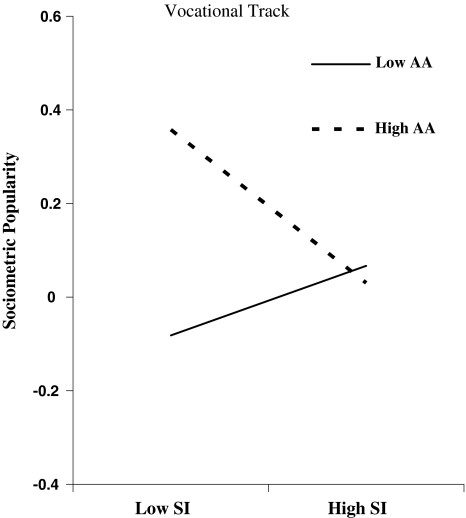
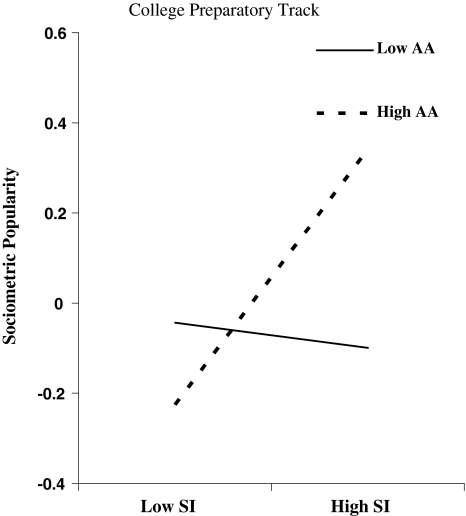
Verification
Claims the paper makes
The claims and statistics of this paper haven’t been checked yet.
Run the check — free, no account needed. It reads the open-access text and checks the sources it cites.
Claims other papers make about this one
Each is checked against this paper’s own text: does it say what the citing paper says it does?
The cited source doesn’t support the claim as written.
In the citing paper
“Therefore, it is only natural that a number of studies have consistently confirmed correlations between the social intelligence of children and their sociometric peer status (Lease, Kennedy, Axelrod, 2002; Meijs et al., 2010).”
From The The effects of cognitive, social, and emotional intelligence on children’s sociometric status in a new peer group (2023) · cites this paper as Meijs et al., 2010
Checked by a reasoning model — may be wrong.
Experimental — accuracy not yet measuredThe source backs part of the claim, not all of it — or backs it for a different population, condition or comparison.
In the citing paper
“according to some authors the effect of the latter on peer status depends on the norms of the group. Academic achievement leads to higher status only if it is prioritized in the classroom, but where other skills are prioritized, it may not lead to high social status (Meijs et al., 2010).”
From The The effects of cognitive, social, and emotional intelligence on children’s sociometric status in a new peer group (2023) · cites this paper as Meijs et al., 2010
Experimental — accuracy not yet measured
Self-check
Percentages, sums and reported differences re-computed from the paper’s own numbers.
The self-check needs the paper’s full text.
Citations
Cites
Multiple regression: testing and interpreting interactions
(1992) · Choice Reviews Online · doi:10.5860/choice.29-3352 · Cited by 36,647
A Handbook of Child Psychology
(1932) · Nature · doi:10.1038/130331a0 · Cited by 10,133
(1991) · Cited by 7,187
Peer Interactions, Relationships, and Groups
Rubin, K. H., Bukowski, W. M., & Parker, J. G. (2007) · Handbook of Child Psychology · doi:10.1002/9780470147658.chpsy0310 · Cited by 2,755
Social, emotional, and personality development
Eisenberg, N., & Damon, W. (1998) · Wiley eBooks · Cited by 1,903
Holmbeck, G. N. (2002) · Journal of Pediatric Psychology · doi:10.1093/jpepsy/27.1.87 · Cited by 1,866
Multiple Regression: Testing and Interpreting Interactions
Toothaker, L. E., Aiken, L. S., & West, S. G. (1994) · Journal of the Operational Research Society · doi:10.2307/2583960 · Cited by 1,741
Newcomb, A. F., Bukowski, W. M., & Pattee, L. (1993) · Psychological Bulletin · doi:10.1037/0033-2909.113.1.99 · Cited by 1,464
A biopsychosocial model of the development of chronic conduct problems in adolescence.
Dodge, K. A., & Pettit, G. S. (2003) · Developmental Psychology · doi:10.1037//0012-1649.39.2.349 · Cited by 1,297
Cillessen, A. H. N., & Mayeux, L. (2004) · Child Development · doi:10.1111/j.1467-8624.2004.00660.x · Cited by 1,013
Self-citation
Cited by
Sorted by citations
Clueless or Powerful? Identifying Subtypes of Bullies in Adolescence
Peeters, M., Cillessen, A. H. N., & Scholte, R. H. J. (2009) · Journal of Youth and Adolescence · doi:10.1007/s10964-009-9478-9 · Cited by 174
Self-citationRyan, A. M., North, E. A., & Ferguson, S. (2019) · Elsevier eBooks · doi:10.1016/b978-0-12-813413-9.00006-1 · Cited by 149
Garandeau, C. F., Ahn, H., & Rodkin, P. C. (2011) · Developmental Psychology · doi:10.1037/a0025271 · Cited by 123
van den Berg, Y. H. M., Lansu, T. A. M., & Cillessen, A. H. N. (2020) · Journal of Adolescence · doi:10.1016/j.adolescence.2020.07.010 · Cited by 122
Self-citationClinical and Mental Health Issues in Counseling the Gifted Individual
Cross, J. R., & Cross, T. L. (2015) · Journal of Counseling & Development · doi:10.1002/j.1556-6676.2015.00192.x · Cited by 107
Gorman, A. H., Schwartz, D., Nakamoto, J., & Mayeux, L. (2011) · Journal of Applied Developmental Psychology · doi:10.1016/j.appdev.2011.05.001 · Cited by 87
Crosnoe, R., & Benner, A. D. (2015) · Handbook of Child Psychology and Developmental Science · doi:10.1002/9781118963418.childpsy407 · Cited by 73
Kleen, H., & Glock, S. (2018) · Social Psychology of Education · doi:10.1007/s11218-018-9451-0 · Cited by 59
Niu, L., Jin, S., Li, L., & French, D. C. (2015) · Social Development · doi:10.1111/sode.12172 · Cited by 57
Behavioral changes predicting temporal changes in perceived popular status
Bowker, J. C., Rubin, K. H., Buskirk-Cohen, A. A., Rose‐Krasnor, L., & Booth‐LaForce, C. (2010) · Journal of Applied Developmental Psychology · doi:10.1016/j.appdev.2009.10.002 · Cited by 56
Ferguson, S., & Ryan, A. M. (2018) · Journal of Youth and Adolescence · doi:10.1007/s10964-018-0970-y · Cited by 62
Moshfeghyeganeh, S., & Hazari, Z. (2021) · Physical Review Physics Education Research · doi:10.1103/physrevphyseducres.17.010114 · Cited by 49
Cooc, N., & Kim, J. S. (2016) · Journal of Educational Psychology · doi:10.1037/edu0000166 · Cited by 39
Peairs, K. F., Putallaz, M., & Costanzo, P. R. (2019) · Gifted Child Quarterly · doi:10.1177/0016986219838973 · Cited by 36
Adolescents’ Characteristics and Peer Relationships in Class: A Population Study
Cavicchiolo, E., Lucidi, F., Diotaiuti, P., Chirico, A., Galli, F., Manganelli, S., D’Amico, M., Albarello, F., Girelli, L., Cozzolino, M., et al. (2022) · International Journal of Environmental Research and Public Health · doi:10.3390/ijerph19158907 · Cited by 40
Social network effects on academic achievement
Bond, R. M., Chykina, V., & Jones, J. J. (2017) · The Social Science Journal · doi:10.1016/j.soscij.2017.06.001 · Cited by 41
Nostrand, D. F.-V., & Ojanen, T. J. (2013) · International Journal of Behavioral Development · doi:10.1177/0165025413503420 · Cited by 41
Interpersonal Trust Consistency and the Quality of Peer Relationships During Childhood
Rotenberg, K. J., & Boulton, M. J. (2012) · Social Development · doi:10.1111/sode.12005 · Cited by 29
Does defending victimized peers put youth at risk of being victimized?
Malamut, S. T., Trach, J., Garandeau, C. F., & Salmivalli, C. (2022) · Child Development · doi:10.1111/cdev.13866 · Cited by 28
Student perceptions of high-achieving classmates
Händel, M., Vialle, W., & Ziegler, A. (2013) · High Ability Studies · doi:10.1080/13598139.2013.843139 · Cited by 27
Savenkov, A. I. (2018) · Journal of Modern Foreign Psychology · doi:10.17759/jmfp.2018070201 · Cited by 27
Popularity in the Peer Group and Victimization Within Friendship Cliques During Early Adolescence
Closson, L. M., & Watanabe, L. K. (2016) · The Journal of Early Adolescence · doi:10.1177/0272431616670753 · Cited by 27
Academic Achievements and Study Habits of College Students of District Pulwama
Illahi, B. Y., & Khandai, H. K. (2015) · Journals & Books Hosting (International Knowledge Sharing Platform) · Cited by 26
Huang, F., Huang, Z., Li, Z., & Zhang, M. (2021) · International Journal of Environmental Research and Public Health · doi:10.3390/ijerph18189565 · Cited by 34
Mimicking and anticipating others’ actions is linked to Social Information Processing
Genschow, O., Klomfar, S., d’Haene, I., & Braß, M. (2018) · PLoS ONE · doi:10.1371/journal.pone.0193743 · Cited by 28
Breaux, R., Langberg, J. M., Swanson, C. S., Eadeh, H., & Becker, S. P. (2020) · Journal of Affective Disorders · doi:10.1016/j.jad.2020.05.027 · Cited by 26
Accepting a Scholarly Identity
Cross, J. R., Bugaj, S. J., & Mammadov, S. (2016) · journal for the education of the gifted · doi:10.1177/0162353215624162 · Cited by 22
Peer Relationships and Chinese Adolescents’ Academic Achievement: Selection and Influence
Shen, M., & French, D. C. (2023) · American Educational Research Journal · doi:10.3102/00028312231208675 · Cited by 29
Zhou, W., & McLellan, R. (2021) · Journal of Youth and Adolescence · doi:10.1007/s10964-021-01454-8 · Cited by 23
Gallupe, O., & Bouchard, M. (2015) · Rationality and Society · doi:10.1177/1043463114546316 · Cited by 19
Li, Y., & Hu, Y. (2018) · Journal of Youth and Adolescence · doi:10.1007/s10964-018-0882-x · Cited by 19
Self-esteem, Defensive Strategies and Social Intelligence in the Adolescence
Maltese, A., Alesi, M., & Alù, A. G. M. (2012) · Procedia - Social and Behavioral Sciences · doi:10.1016/j.sbspro.2012.12.164 · Cited by 17
Associations between risk behaviour and social status in European adolescents
Agan, M. L. F., Costin, A. S., Deutz, M. H. F., Edelsbrunner, P. A., Záliš, L., & Franken, A. (2014) · European Journal of Developmental Psychology · doi:10.1080/17405629.2014.975790 · Cited by 17
The role of perceived popularity on collaborative learning: A dyadic perspective.
Gommans, R., Segers, E., Burk, W. J., & Scholte, R. H. J. (2014) · Journal of Educational Psychology · doi:10.1037/a0037851 · Cited by 17
Self-citationPositive Psychosocial Factors Associated with the University Student’s Engagement
Durón-Ramos, M. F., García-Vázquez, F. I., & Lagares, L. P. (2018) · The Open Psychology Journal · doi:10.2174/1874350101811010292 · Cited by 17
The Relationship among Emotional Intelligence, Social Intelligence and Learning Behaviour
Praditsang, M., Hanafi, Z., & Walters, T. (2015) · Asian Social Science · doi:10.5539/ass.v11n13p98 · Cited by 15
Lee, S. J., Jeong, E. J., Choi, J. I., & Park, M. S. (2024) · Frontiers in Psychiatry · doi:10.3389/fpsyt.2024.1353969 · Cited by 14
New Students’ Peer Integration and Exposure to Deviant Peers: Spurious Effects of School Moves?
Siennick, S. E., Widdowson, A. O., & Ragan, D. T. (2016) · The Journal of Early Adolescence · doi:10.1177/0272431616659563 · Cited by 15
Sun, Y., Bowker, J. C., Coplan, R. J., Liu, J., & Sang, B. (2022) · Journal of Youth and Adolescence · doi:10.1007/s10964-022-01719-w · Cited by 15
French, D. C., Niu, L., & Purwono, U. (2015) · Social Development · doi:10.1111/sode.12148 · Cited by 14
Hubers, M. D., Burk, W. J., Segers, E., Kleinjan, M., Scholte, R. H. J., & Cillessen, A. H. N. (2015) · Educational Psychology · doi:10.1080/01443410.2015.1053841 · Cited by 14
Self-citationClosson, L. M., Hart, N. C., & Hogg, L. D. (2016) · Social Development · doi:10.1111/sode.12223 · Cited by 13
Händel, M., Duan, X., Sutherland, M., & Ziegler, A. (2013) · International Journal of Science Education · doi:10.1080/09500693.2013.830232 · Cited by 13
Popularity According to Emerging Adults: What is it, and How to Acquire it
Lansu, T. A. M., Nostrand, D. F.-V., & Cillessen, A. H. N. (2022) · Emerging Adulthood · doi:10.1177/21676968211066668 · Cited by 17
Self-citationSocial Intelligence, Study Habits and Academic Achievements of College Students of District Pulwama
Illahi, B. Y. (2016) · Journals & Books Hosting (International Knowledge Sharing Platform) · Cited by 12
Speech Intelligibility and Personality Peer-ratings of Young Adults With Cochlear Implants
Freeman, V. (2017) · The Journal of Deaf Studies and Deaf Education · doi:10.1093/deafed/enx033 · Cited by 12
Attitudes Toward Deafness Affect Impressions of Young Adults With Cochlear Implants
Freeman, V. (2018) · The Journal of Deaf Studies and Deaf Education · doi:10.1093/deafed/eny026 · Cited by 12
Orientation to Happiness as a Predictor of University Students’ Engagement
Durón-Ramos, M. F., & García-Vázquez, F. I. (2018) · International Journal of Evaluation and Research in Education (IJERE) · doi:10.11591/ijere.v7i4.15446 · Cited by 12
Corbí, R. G., Miñano, P., Veas, A., & Costa, J. L. C. (2019) · Contemporary Educational Psychology · doi:10.1016/j.cedpsych.2019.101780 · Cited by 11
Echols, L. (2014) · Journal of Educational Psychology · doi:10.1037/a0037440 · Cited by 11
Social goals moderate the associations between peer status and behavior in middle school
Mayeux, L., & Kraft, C. (2018) · Social Development · doi:10.1111/sode.12298 · Cited by 10
Sozialbeziehungen zu Gleichaltrigen
Vierhaus, M., & Wendt, E.-V. (2018) · Springer-Lehrbuch · doi:10.1007/978-3-662-55792-1_7 · Cited by 10
Aparisi, D., Inglés, C. J., García-Fernández, J. M., Martínez-Monteagudo, M. C., Marzo, J. C., & Estévez, E. (2015) · Culture and Education · doi:10.1080/11356405.2015.1006846 · Cited by 9
Are intelligent peers liked more? Assessing peer-reported liking through the network analysis
Flakus, M., Danieluk, B., Baran, L. N., Kwiatkowska, K., Rogoza, R., & Schermer, J. A. (2021) · Personality and Individual Differences · doi:10.1016/j.paid.2021.110844 · Cited by 8
Jung, Y. H., Kim, S. Y., Jang, S., Park, E., Shin, J., & Suh, J. (2022) · International Journal of Environmental Research and Public Health · doi:10.3390/ijerph19063303 · Cited by 8
Social costs to trying hard in high school: Differences by race-ethnicity
Workman, J. B. (2020) · Social Science Research · doi:10.1016/j.ssresearch.2020.102484 · Cited by 7
Bocskor, Á. (2021) · Youth & Society · doi:10.1177/0044118x211012815 · Cited by 7
Reliability and Validity of the Tromso Social Intelligence Scale (TSIS)
Chater, W., Rebhi, M., Saidane, M., Guelmami, N., & Bouassida, A. (2023) · Advances in Physical Education · doi:10.4236/ape.2023.131006 · Cited by 7
Stevens, G. W. J. M., Veldkamp, C., Harakeh, Z., & Laninga‐Wijnen, L. (2020) · Journal of Youth and Adolescence · doi:10.1007/s10964-020-01200-6 · Cited by 7
Sociometric Popularity in a School ContextPreprint
Викторовна, Т. В., Ivaniushina, V. A., & Alexandrov, D. (2013) · SSRN Electronic Journal · doi:10.2139/ssrn.2227302 · Cited by 7
Zhang, Y., Ren, P., Li, X., Liu, H., & Luo, F. (2019) · Frontiers in Education · doi:10.3389/feduc.2019.00052 · Cited by 6
Gemeay, E. M., Ahmed, E. S., Ahmad, E. R., & Al-Mahmoud, S. A. (2015) · Journal of Nursing Education and Practice · doi:10.5430/jnep.v5n6p96 · Cited by 6
Kauten, R. (2016) · Aquila Digital Community (University of Southern Mississippi) · Cited by 6
Park, H., & Lee, K. (2016) · Journal of Digital Convergence · doi:10.14400/jdc.2016.14.4.325 · Cited by 5
Estrategias de aprendizaje y nominación sociométrica en estudiantes españoles
Aparisi, D., Inglés, C. J., García-Fernández, J. M., Torregrosa, M. S., Delgado, B., & Esteban, C. R. (2019) · European Journal of Education and Psychology · doi:10.30552/ejep.v13i1.293 · Cited by 5
Predictors of academic achievement: The role of older sibling and peer relationship factors
Ryherd, L. M. (2011) · Iowa State University Digital Repository (Iowa State University) · doi:10.31274/etd-180810-2991 · Cited by 5
Immigrant status and the social returns to academic achievement in adolescence
Ye, L. Z., & Fletcher, J. M. (2022) · Journal of Ethnic and Migration Studies · doi:10.1080/1369183x.2021.2020630 · Cited by 5
Chmielowice‐Szymanski, N. S., Lansu, T. A. M., Burk, W. J., van den Berg, Y. H. M., & Cillessen, A. H. N. (2024) · Social Development · doi:10.1111/sode.12735 · Cited by 4
Self-citationWei, H.-S., Shen, A. C., Hwa, H., Feng, J., Hsieh, Y., & Huang, C. (2025) · Personality and Individual Differences · doi:10.1016/j.paid.2025.113570 · Cited by 3
Goagoses, N., & Eilts, J. (2024) · Journal of Community & Applied Social Psychology · doi:10.1002/casp.2888 · Cited by 3
Inglés, C. J., Aparisi, D., Delgado, B., Granados, L., & García-Fernández, J. M. (2017) · Electronic Journal of Research in Educational Psychology · doi:10.14204/ejrep.42.16073 · Cited by 3
Smart, Pretty or Independent: Who Is Popular at School?
Викторовна, Т. В., Ivaniushina, V. A., & Alexandrov, D. (2017) · Voprosy Obrazovaniya/ Educational Studies Moscow · doi:10.17323/1814-9545-2017-4-171-198 · Cited by 3
School Adjustment Problems of Fifth Graders As a Risk Factor in Learning Difficulties
Permiakova, M. (2018) · KnE Life Sciences · doi:10.18502/kls.v4i8.3330 · Cited by 3
Aceptación social de alumnos con alto rendimiento académico en México
Lavadores, A. K. C., Sánchez, P. A., García, J. J. V., & Hernández, L. F. B. (2020) · PSICUMEX · doi:10.36793/psicumex.v10i1.344 · Cited by 3
Gallardo, L. O., & Barrasa, Á. (2016) · International Journal of Social Psychology Revista de Psicología Social · doi:10.1080/02134748.2016.1190128 · Cited by 3
A Study of Social Intelligence in Students at Kashan University of Medical Sciences During Year 2015
Rahimi, H., & Eftekhar, H. S. (2016) · Āmūzish-i parastārī/Āmūzish-i parastārī · doi:10.21859/jne-05036 · Cited by 3
Inglés, C. J., Aparisi, D., Delgado, B., Granados, L., & García-Fernández, J. M. (2017) · Electronic Journal of Research in Educational Psychology · doi:10.25115/ejrep.42.16073 · Cited by 3
Ambiguous Status Relations and Complex Hierarchy among Adolescents
McMahan, P. (2024) · Socius Sociological Research for a Dynamic World · doi:10.1177/23780231241272675 · Cited by 2
Lieury, A., Lorant, S., Trosseille, B., Vourc’h, R., & Fenouillet, F. (2014) · Bulletin de psychologie · doi:10.3917/bupsy.532.0275 · Cited by 4
Kularajasingam, J., Subramaniam, A., & Singh, D. K. S. (2022) · International Journal of Academic Research in Business and Social Sciences · doi:10.6007/ijarbss/v12-i2/12258 · Cited by 2
Saini, G., Dash, S. S., & Tiwari, A. (2023) · International Journal of Manpower · doi:10.1108/ijm-09-2022-0448 · Cited by 4
Social intelligence of students with and without hearing impairment in mainstream schools
Adibsereshki, N., & Hatamizadeh, N. (2023) · International Journal of Special Education (IJSE) · doi:10.52291/ijse.2023.38.22 · Cited by 2
Sudraba, V., Mārtinsone, K., & Arnis, V. (2014) · SHS Web of Conferences · doi:10.1051/shsconf/20141000045 · Cited by 2
PSYCHOLOGICAL ASPECTS OF THE STUDY OF SOCIOMETRIC STATUS IN ADOLESCENTS
Ibadullayeva, G. (2021) · Восточно Европейский Научный Журнал · doi:10.31618/essa.2782-1994.2021.4.67.4 · Cited by 4
Cillessen, A. H. N., Chmielowice‐Szymanski, N. S., & Millett, M. A. (2022) · Elsevier eBooks · doi:10.1016/b978-0-12-818872-9.00119-9 · Cited by 2
Self-citationIntra and Inter-Individual Differences in Social Intelligence of Portuguese Students
Pinto, J. C., Faria, L., Gaspar, N., & Taveira, M. D. C. (2015) · Paidéia (Ribeirão Preto) · doi:10.1590/1982-43272561201503 · Cited by 1
PROGRAMAS INFORMÁTICOS PARA COMPARACIONES ENTRE CORRELACIONES: MUESTRAS INDEPENDIENTES
Silver, N. C., & Merino‐Soto, C. (2016) · Revista Digital de Investigación en Docencia Universitaria · doi:10.19083/ridu.2016.461 · Cited by 1
Informal Status Among Adolescents: A Literature Review
Bocskor, Á. (2021) · Corvinus Journal of Sociology and Social Policy · doi:10.14267/cjssp.2021.2.7 · Cited by 1
SOCIAL INTELLIGENCE AND SCHOLASTIC ACHIEVEMENT OF STUDENTS WITH VISUAL IMPAIRMENT
Prabhu, P., Sujathamalini, J., & Gunasekaran, K. (2022) · INTERNATIONAL JOURNAL OF SCIENTIFIC RESEARCH · doi:10.36106/ijsr/9722516 · Cited by 1
Wolter, I., & Seidel, T. (2017) · Zeitschrift für Erziehungswissenschaft · doi:10.1007/s11618-017-0772-0 · Cited by 1
Humberg, S., Dufner, M., Schönbrodt, F. D., Utesch, K., Hutteman, R., van Zalk, M. H. W., Denissen, J. J. A., Nestler, S., & Back, M. D. (2016) · doi:10.31234/osf.io/smmh7 · Cited by 1
Knopp, K. A. (2023) · Kwartalnik Naukowy Fides et Ratio · doi:10.34766/fetr.v55i3.1218
Популярность школьников и образовательная среда школы
Викторовна, Т. В., Ivaniushina, V. A., & Alexandrov, D. (2014) · Voprosy Obrazovaniya/ Educational Studies Moscow · doi:10.17323/1814-9545-2013-4-145-167
Martinho, N. P. J. G. (2013) · Portuguese National Funding Agency for Science, Research and Technology (RCAAP Project by FCT)
Fassnacht, G. M. (2013) · ScholarWorks @ The University of New Orleans (The University of New Orleans)
The Potential Risks and Adaptive Contributions of Elite Social Status to Youth Development
Troop‐Gordon, W. (2014) · Cambridge University Press eBooks · doi:10.1017/cbo9780511920165.010
Diferenças Intra e Inter Individuais na Inteligência Social de Estudantes Portugueses
Pinto, J. C., Faria, L., Gaspar, N., & Taveira, M. D. C. (2015) · Portuguese National Funding Agency for Science, Research and Technology (RCAAP Project by FCT)
Diferencias intra e inter individuales en inteligencia social de estudiantes portugueses
Pinto, J. C., Faria, L., Gaspar, N., & Taveira, M. D. C. (2015) · Portuguese National Funding Agency for Science, Research and Technology (RCAAP Project by FCT)
CHANDINI (2018) · i-manager s Journal on School Educational Technology · doi:10.26634/jsch.14.2.14904
Savenkova, T. D. (2021) · SHS Web of Conferences · doi:10.1051/shsconf/202111701003
Metadata
- Authors
- Meijs, N., Cillessen, A. H. N., Scholte, R. H. J., Segers, E., & Spijkerman, R.
- Affiliations
- Radboud University Nijmegen (NL)
- University of Connecticut (US)
- Corresponding author
- Meijs, Noortje
- Venue
- Journal of Youth and Adolescence
- Published
- 2008-12-09
- Volume
- 39
- Issue
- 1
- Pages
- 62-72
- ISSN
- 0047-2891 (ISSN-L)
- 1573-6601
- PMC
- PMC2796964
- OpenAlex
- W2147742033
- Cited by
- 117
- References
- 46
- Citations by year
- 2026: 3 · 2025: 1 · 2024: 8 · 2023: 7 · 2022: 10 · 2021: 9 · 2020: 8 · 2019: 7 · 2018: 12 · 2017: 6 · 2016: 12 · 2015: 13 · 2014: 8 · 2013: 6 · 2012: 2
- FWCI
- 2.23
- Type
- journal article
- Language
- en
- Open access
- hybrid
- doi.org
- Licence
- cc-by-nc
- Locations
- Journal of Youth and Adolescence (publishedVersion, cc-by-nc)
- PubMed Central (publishedVersion, cc-by-nc)
- PubMed (publishedVersion)
- Radboud Repository (Radboud University) (submittedVersion, other-oa)
- Radboud Repository (Radboud University) (submittedVersion)
- Topics
- Social Sciences › Psychology › Social Psychology › Bullying, Victimization, and Aggression
- Social Sciences › Psychology › Clinical Psychology › Child and Adolescent Psychosocial and Emotional Development
- Social Sciences › Education › Social Skills and Education
- Keywords
- social intelligence, academic performance, sociometric popularity, perceived popularity, social dominance, school context, vocational schools, college preparatory schools
- MeSH terms
- Achievement, Adolescent, Adolescent Behavior, Educational Measurement, Europe, Female, Humans, Interpersonal Relations, Male, Peer Group, Surveys and Questionnaires, Self Concept, Social Adjustment, Social Behavior, Social Perception, Emotional Intelligence
About these checks
Registry, retraction, Cites and statistics results are computed, not judged, with one exception: a printed reference that no index lists is read once by a model before it counts as a citation error. Claims are extracted by a model and kept only when their quote appears verbatim in the text; each cited source is then checked, with a model’s help, for whether it says what the claim relies on. Those verdicts can be wrong — read the claim’s quote and the cited source before relying on one.
Statistics and arithmetic are recomputed, not judged.
Confidence bands are shown only for fields calibrated on our annotated test set. None is calibrated yet, so no band is shown.
What counts as a claim ›How we measure confidence ›How we check this ›
Are you an author, or do you see a problem with this page? Request a review
