

The interplay between psychological need satisfaction and psychological need frustration within a work context: A variable and person-oriented approach
Open accessThe DOI matches its Crossref record; 64 of the 66 references it cites were found in a registry or an index.
Abstract
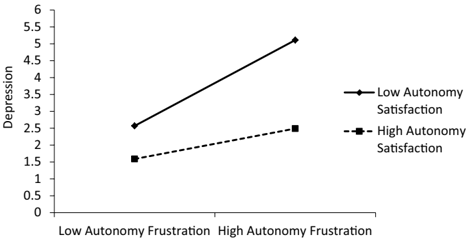
A plethora of empirical data support a positive (or “brighter”) pathway to optimal human functioning as specified within Basic Psychological Needs Theory (Ryan and Deci in Psychol Inq 11(4):319–33, 2000). Yet, far less is known about the negative (or “darker”) pathway, a process evoking of human dysfunction and ill-being (cf. Vansteenkiste and Ryan in J Psychother Integr 23(3):263, 2013). Further, debate surrounds the independence and interplay between psychological need satisfaction and psychological need frustration and how these dynamic constructs are experienced within individuals. In this work, variable and person-oriented analyses were employed to: (i) investigate the relationships between the basic psychological needs and symptoms of stress, depression and anxiety as well as with life satisfaction; and (ii) identify different psychological need profiles and their relationship with psychological function. Participants (N = 2236;M Age = 42.16 years;SD = 7.8) were UK-based operational firefighters who completed an online survey. Results of regression analyses showed a moderating effect of psychological need satisfaction on the relationship between need frustration and negative psychological symptoms. Latent profile analyses revealed five distinct basic psychological need profiles that carry implications for human psychological functioning. Some support for an asymmetrical relationship between need satisfaction and need frustration emerged (Vansteenkiste and Ryan in J Psychother Integr 23(3):263, 2013), yet, examples of above average need satisfaction and frustration scores were also observed. Worker profiles where psychological need frustration prevailed over need satisfaction had the poorest psychological health.
Overview
The claims and statistics of this paper haven’t been checked yet.
Free: it reads the open-access text and checks the first 5 claims that cite a source we can check. Create a free account to check every claim.
Integrity signals
Registry
Cites
Statistics
Figures
Verification
Claims the paper makes
The claims and statistics of this paper haven’t been checked yet.
Free: it reads the open-access text and checks the first 5 claims that cite a source we can check. Create a free account to check every claim.
Claims other papers make about this one
Each is checked against this paper’s own text: does it say what the citing paper says it does?
The cited source says what the claim attributes to it.
In the citing paper
“Various profiles were identified, with those being characterized by a stronger presence of need satisfaction and by an absence of need frustration yielding the most adaptive outcomes.The opposite profile of low need satisfaction and high frustration yielded the most maladaptive outcomes (see also Vanhove-Meriaux et al. 2018).”
From Basic psychological need theory: Advancements, critical themes, and future directions (2020) · cites this paper as Rouse et al. 2020
Self-check
Percentages, sums and reported differences re-computed from the paper’s own numbers.
The self-check needs the paper’s full text.
Citations
Cites
Hu, L., & Bentler, P. M. (1999) · Structural Equation Modeling A Multidisciplinary Journal · doi:10.1080/10705519909540118 · Cited by 108,788
Statistical Power Analysis for the Behavioral Sciences
Muller, K. (1989) · Technometrics · doi:10.1080/00401706.1989.10488618 · Cited by 99,167
Tabachnick, B. G., & Fidell, L. S. (1983) · Cited by 80,054
Statistical Power Analysis for the Behavioral Sciences (2nd ed.).
Lachenbruch, P. A., & Cohen, J. (1989) · Journal of the American Statistical Association · doi:10.2307/2290095 · Cited by 37,395
Multiple regression: testing and interpreting interactions
(1992) · Choice Reviews Online · doi:10.5860/choice.29-3352 · Cited by 36,654
The "what" and "why" of goal pursuits: Human needs and the self-determination of behavior
Deci, E. L., & Ryan, R. M. (2000) · Psychological Inquiry · doi:10.1207/s15327965pli1104_01 · Cited by 34,210 · cited 2×
“Within Basic Psychological Needs Theory (BPNT; Deci and Ryan 2000; Ryan and Deci 2000, 2017), it is proposed that humans achieve growth, development, and optimal functioning via the satisfaction of three basic psychological needs for autonomy, competence, and relatedness.”
BackgroundThe satisfaction with life scale
Diener, E., Emmons, R. A., Larsen, R. J., & Griffin, S. (1985) · Journal of Personality Assessment · doi:10.1207/s15327752jpa4901_13 · Cited by 31,768
Alternative Ways of Assessing Model Fit
Browne, M. W., & Cudeck, R. (1992) · Sociological Methods & Research · doi:10.1177/0049124192021002005 · Cited by 27,200
(2007) · Cited by 10,092
Research works printed but not linked: 4
- 4. Arbuckle, J. L. (2013). Amos 22 user's guide. Chicago, IL: SPSS.
- 21. González, M. G., Niemiec, C. P., & Williams, G. C. (2014). At the interface of work and health: a consideration of the health gradi- ent using self-determination theory. New York: Oxford University Press.
- 37. Masyn, K. (2013). Latent profile analysis and finite mixture modelling. In T. D. Little (Ed.), The Oxford handbook of quantitative methods in psychology (pp. 551-611). New York: Oxford University Press.
- 40. Murphy, S. A., Beaton, R. D., Pike, K. C., & Johnson, L. (1999). Occu- pational stressors, stress responses, and alcohol consumption among professional firefighters: a prospective, longitudinal analy- sis. International Journal of Stress Management, 6(3), 179-196. · doi:10.1023/a:1021934725246
Cited by
Basic psychological need theory: Advancements, critical themes, and future directions
Vansteenkiste, M., Ryan, R. M., & Soenens, B. (2020) · Motivation and Emotion · doi:10.1007/s11031-019-09818-1 · Cited by 1,891
Basic Psychological Needs Theory: A Conceptual and Empirical Review of Key Criteria
Vansteenkiste, M., Soenens, B., & Ryan, R. M. (2023) · Oxford University Press eBooks · doi:10.1093/oxfordhb/9780197600047.013.5 · Cited by 165
Nunes, P. M., Proença, T., & Todaro, M. E. C. (2023) · Personnel Review · doi:10.1108/pr-11-2021-0812 · Cited by 159
Self-Determination Theory and Its Relation to Organizations
Olafsen, A. H., & Deci, E. L. (2020) · Oxford University Press eBooks · doi:10.1093/acrefore/9780190236557.013.112 · Cited by 120
Work Values and Job Satisfaction: The Mediating Role of Basic Psychological Needs at Work
Busque‐Carrier, M., Ratelle, C. F., & Corff, Y. L. (2021) · Journal of Career Development · doi:10.1177/08948453211043878 · Cited by 84
“In the SDT literature, it was shown that PNS contribute to wellness outcomes, whereas PNF predict illness outcomes (Rouse et al., 2020; Vansteenkiste et al., 2020).”
BackgroundInfluentialTeachers’ motivational profiles and their longitudinal associations with teaching quality
Thommen, D., Sieber, V., Grob, U., & Praetorius, A. (2021) · Learning and Instruction · doi:10.1016/j.learninstruc.2021.101514 · Cited by 91
Lagios, C., Caesens, G., Nguyen, N., & Stinglhamber, F. (2021) · Journal of Personnel Psychology · doi:10.1027/1866-5888/a000286 · Cited by 63
Beyond Intrinsic Motivation: The Role of Autonomous Motivation in User Experience
Bennett, D., & Mekler, E. D. (2024) · ACM Transactions on Computer-Human Interaction · doi:10.1145/3689044 · Cited by 37
“It also avoids normality assumptions and is insensitive to heteroscedasticity [2].”
Santana‐Monagas, E., & Alonso, J. L. N. (2022) · Learning and Individual Differences · doi:10.1016/j.lindif.2022.102162 · Cited by 51
Burgueño, R., García‐González, L., Abós, Á., & Sevil‐Serrano, J. (2023) · European Physical Education Review · doi:10.1177/1356336x231165229 · Cited by 34
“…on need satisfaction and need frustration, have been found in distinct domains (e.g. general, work, education, or sport) with different samples (e.g. youngsters, adults, or elderly) and regarding several wellness/illness outcomes (Li et al., 2022; Rouse et al., 2020; Tóth-Király et al., 2020).”
BackgroundMethodResultInfluentialLatent profile analysis of post-traumatic stress and post-traumatic growth among firefighters
Shin, Y., Nam, J. K., Lee, A., & Kim, Y. (2023) · European Journal of Psychotraumatology · doi:10.1080/20008066.2022.2159048 · Cited by 37
Chevrier, B., & Lannegrand‐Willems, L. (2021) · European Journal of Psychology of Education · doi:10.1007/s10212-021-00569-7 · Cited by 30
Zhang, L., & Jiang, Y. (2023) · Journal of Intelligence · doi:10.3390/jintelligence11060111 · Cited by 31
Harrison, M. G., Wang, Y., Cheng, A. S., Tam, C. K. Y., Pan, Y.-L., & King, R. B. (2024) · Teaching and Teacher Education · doi:10.1016/j.tate.2024.104819 · Cited by 57
Linking Work Values Profiles to Basic Psychological Need Satisfaction and Frustration
Busque‐Carrier, M., Ratelle, C. F., & Corff, Y. L. (2021) · Psychological Reports · doi:10.1177/00332941211040439 · Cited by 32
“In contrast, when these needs are frustrated, individuals feel controlled by external or self-imposed pressures (autonomy frustration), uncapable or ineffective in their actions (competence frustration), and excluded by valued others (relatedness frustration; Rouse et al., 2020).”
BackgroundHuyghebaert‐Zouaghi, T., Gillet, N., Fernet, C., Thomas, J., & Ntoumanis, N. (2022) · European Journal of Work and Organizational Psychology · doi:10.1080/1359432x.2022.2127354 · Cited by 35
Harder, better, faster, stronger: digitalisation and employee well-being in the operations workforce
Lyngstadaas, H., & Berg, T. (2022) · Production Planning & Control · doi:10.1080/09537287.2022.2153735 · Cited by 35
“Configurational methods offer a person-centered approach that is better suited to the examination of theoretical frameworks that include interactionist and dynamic conceptualizations (Rouse et al. 2020; Howard et al. 2016).”
Haw, J. Y., & King, R. B. (2023) · Social Psychology of Education · doi:10.1007/s11218-023-09790-2 · Cited by 33
“Competence is the feeling of being able to capably achieve and master a desired outcome (Rouse et al., 2020).”
Li, C., Wang, J., Koh, K. T., Tan, K. S. S., Tan, S. M., Ang, W. B., Wong, L. H., & Yeo, H. N. C. (2021) · Frontiers in Psychology · doi:10.3389/fpsyg.2021.675639 · Cited by 34
Liu, X., Zeng, J., Zhang, Y., Yi, Z., Chen, S., & Liu, Y. (2024) · Journal of Child and Family Studies · doi:10.1007/s10826-023-02775-x · Cited by 22
“Under this threatening experience, individuals are prone to depression (Alivernini et al., 2019; Rouse et al., 2020).”
Jungert, T., Dubord, M. G., Högberg, M., & Forest, J. (2022) · International Journal of Training and Development · doi:10.1111/ijtd.12267 · Cited by 38
Coxen, L., van der Vaart, L., den Broeck, A. V., Rothmann, S., & Schreurs, B. H. J. (2023) · Current Psychology · doi:10.1007/s12144-023-04235-7 · Cited by 28
Patterer, A. S., Kühnel, J., & Korunka, C. (2023) · Work & Stress · doi:10.1080/02678373.2023.2222367 · Cited by 27
“Traditionally, SDT has focused on the “ bright ” side of human well-being and functioning that results from need satisfaction; however, growing attention has been given to the coexistence of a “ dark ” side that results from need frustration (Rouse et al., 2020).”
BackgroundRoney, C. J. R., & Soicher, H. M. (2021) · The Journal of Social Psychology · doi:10.1080/00224545.2021.1915230 · Cited by 33
“The shared association with autonomy among the former variables would argue for them also being associated with LS, based on SDT and the findings by Rouse et al. (2020).”
BackgroundResultLindner, S., Stieger, M., Rüegger, D., Kowatsch, T., Flückiger, C., Mehl, M. R., & Allemand, M. (2023) · European Journal of Personality · doi:10.1177/08902070221149593 · Cited by 21
“It may be that during work-related activities, individuals tend to process information in a way that promotes negative states (i.e., stress, anxiety) (Rouse et al., 2020), leading to increased neuroticism.”
BackgroundSchoofs, L., Maunz, L. A., & Glaser, J. (2023) · Current Psychology · doi:10.1007/s12144-023-05480-6 · Cited by 45
Heyns, M. M., & Rothmann, S. (2021) · Frontiers in Psychology · doi:10.3389/fpsyg.2021.563542 · Cited by 18
Liao, X.-L., Cao, C.-H., Gamble, J. H., Li, L., Jiang, X.-Y., Bo, C.-X., & Chen, I. (2023) · Frontiers in Public Health · doi:10.3389/fpubh.2023.1299929 · Cited by 15
Li, F., Jiao, R., Lin, X., & Liu, L. (2023) · Current Psychology · doi:10.1007/s12144-023-04391-w · Cited by 15
Jonge, S. D., Opdecam, E., & Haerens, L. L. (2024) · Contemporary Educational Psychology · doi:10.1016/j.cedpsych.2024.102273 · Cited by 19
Basic Psychological Need Profiles and Correlates in Volunteers for a National Sports Event
Li, C., Cho, H., & Wu, Y. (2022) · VOLUNTAS International Journal of Voluntary and Nonprofit Organizations · doi:10.1007/s11266-020-00307-5 · Cited by 14
The compensation effect of competence frustration and its behavioral manifestations
Meng, L., He, L., Chen, M., & Huang, Y. (2024) · PsyCh Journal · doi:10.1002/pchj.746 · Cited by 13
“Excessive work challenges, difficult tasks, and negative feedback can lead to the frustration of employees ’ competence (Ryan & Deci, 2017) and further bring about negative outcomes, such as burnout, stress, depression, and anxiety (Bartholomew et al., 2014; Rouse et al., 2020).”
BackgroundRatelle, C. F., Lascano, D. I. V., Guay, F., & Duchesne, S. (2023) · Learning and Individual Differences · doi:10.1016/j.lindif.2023.102357 · Cited by 19
Heinimäki, O.-P., Toyama, H., Upadyaya, K., & Salmela‐Aro, K. (2025) · Teaching and Teacher Education · doi:10.1016/j.tate.2025.105296 · Cited by 12
Serhatoğlu, S., Koydemir, S., & Schütz, A. (2022) · The Journal of Psychology · doi:10.1080/00223980.2022.2048777 · Cited by 9
Chavez‐Baldini, U., Verweij, K. J. H., Bergamin, J., Luigjes, J., Mocking, R. J. T., Denys, D. A. J. P., Nieman, D. H., & Vulink, N. C. C. (2024) · Cogent Mental Health · doi:10.1080/28324765.2024.2313869 · Cited by 12
“Compromised autonomy, including perceived lack of control and avolition, can be related to depression and negative affect (Rouse et al., 2020; Vansteenkiste et al., 2006).”
Ling, T., Zhao, R., & Jang, H. (2024) · Asia Pacific Journal of Marketing and Logistics · doi:10.1108/apjml-02-2024-0223 · Cited by 10
Lee, J.-E., & Bae, S. (2023) · Current Psychology · doi:10.1007/s12144-023-05044-8 · Cited by 9
“Rouse et al. (2020) examined firefighters and found that a job-related need for autonomy influences overall life satisfaction.”
Schuman, D. L., Yockey, R. A., Ponder, W. N., & Carbajal, J. (2024) · Journal of Affective Disorders · doi:10.1016/j.jad.2024.09.167 · Cited by 10
Shi, H. (2024) · Frontiers in Psychology · doi:10.3389/fpsyg.2024.1400441 · Cited by 20
Autonomous Regulation of Social Media Use: Implications for Self-control, Well-Being, and UX
Bennett, D., Feng, F., & Mekler, E. D. (2025) · CHI Conference on Human Factors in Computing Systems · doi:10.1145/3706598.3713094 · Cited by 13
“While LPA has been rarely used in HCI [e.g., 8], it is well established in psychology [5, 70], and SDT research [e.g., 13, 36, 78, 105].”
Krijgsman, C., Hornstra, L., Litalien, D., Haerens, L. L., Borghouts, L. B., & Mainhard, T. (2025) · Learning and Individual Differences · doi:10.1016/j.lindif.2025.102780 · Cited by 8
Meaning in life through work: A cognitive-experiential self-theory (CEST) perspective
Baburaj, S., & Marathe, G. M. (2023) · Organizational Psychology Review · doi:10.1177/20413866231166151 · Cited by 9
“Research further suggests that zookeepers (Bunderson & Thompson, 2009), nurses (Allan et al., 2018), firefighters (Rouse et al., 2019), or home care workers (Schneider et al., 2019) report MiL despite enduring harsh working conditions andoverworking themselves.”
BackgroundBarański, M., & Poprawa, R. W. (2023) · Health Psychology Report · doi:10.5114/hpr/165875 · Cited by 11
“These results show specific differences between participants with various combinations of satisfaction and frustration of autonomy, competence, and relatedness (compare with Rouse et al., 2020; Vanhove-Meriaux et al., 2017; Warburton et al., 2020).”
BackgroundResultInfluentialDu, C., & Yang, Y. (2024) · International Journal of Applied Linguistics · doi:10.1111/ijal.12627 · Cited by 10
Dor-Haim, P. (2024) · Journal of Professional Capital and Community · doi:10.1108/jpcc-01-2024-0004 · Cited by 5
Koydemir, S., Varol, M., Fehn, T., BİLGİÇ, İ. D., Gauglitz, I. K., & Schütz, A. (2022) · Current Psychology · doi:10.1007/s12144-022-03865-7 · Cited by 7
Reyes, V., Unanue, W., Vignoles, V. L., & den Broeck, A. V. (2023) · Work & Stress · doi:10.1080/02678373.2023.2239198 · Cited by 8
“…’ work-related well-being such as decreased engagement and work satisfaction, as well as increased turnover intention and job insecurity (W. Unanue et al., 2017), as well as general ill-being such as increased depression, anxiety and stress and decreased life satisfaction (Rouse et al., 2020).”
BackgroundSciberas, C., & Fournier, M. A. (2023) · Social Psychological and Personality Science · doi:10.1177/19485506231191084 · Cited by 5
“…of psychological need frustration are associated with several forms of maladjustment, including depression (Levine et al., 2022), anxiety (Rouse et al., 2019), conduct disorder (Rodrı´guez-Meirinhos et al., 2019), borderline personality disorder (van der Kaap-Deeder et al., 2021), and…”
Chen, W., Yao, J., Zhu, G., Liu, Z., Wang, H., Chu, D., & Niu, H. (2025) · Frontiers in Psychology · doi:10.3389/fpsyg.2025.1542883 · Cited by 5
Bhattarai, S., Pabitra, K. C., Gyawali, A., Lamichhane, A., Giri, A., & Kakchapati, S. (2021) · International Journal of Occupational Safety and Health · doi:10.3126/ijosh.v11i2.35982 · Cited by 4
The application of imagery rescripting to intrusive autobiographical memories in depression
Stavropoulos, A., Brockman, R. N., & Berle, D. (2022) · The Cognitive Behaviour Therapist · doi:10.1017/s1754470x22000435 · Cited by 3
Nunes, P. M., Todaro, M. E. C., & Proença, T. (2023) · Management Research The Journal of the Iberoamerican Academy of Management · doi:10.1108/mrjiam-06-2022-1320 · Cited by 9
Coxen, L., van der Vaart, L., den Broeck, A. V., Rothmann, S., & Schreurs, B. H. J. (2025) · Journal of Managerial Psychology · doi:10.1108/jmp-06-2023-0361 · Cited by 4
Harrison, M. G., Mendoza, N. B., Hocson, S. M. G., & King, R. B. (2026) · British Journal of Guidance and Counselling · doi:10.1080/03069885.2025.2610616 · Cited by 3
“The need for competence is satis fi ed when an individual has a sense of e ff ectiveness and capability in solving problems and carrying out important tasks (Rouse et al., 2020), and predicts higher wellbeing in teachers and other school personnel (Cansoy et al., 2020; Xiyun et al., 2022).”
Examining the role of psychological needs and passion in problem video gaming
Remedios, J. C., Gunnell, K. E., Paynter, M. B., & Tabri, N. (2023) · Addiction Research & Theory · doi:10.1080/16066359.2023.2282524 · Cited by 4
“…education, work) has demonstrated that contextual satisfaction of psychological needs leads to favorable outcomes (Niemiec and Ryan 2009; Sari 2015; Rouse et al. 2020) whereas contextual frustration of psychological needs leads to unfavorable outcomes (Niemiec and Ryan, 2009; Gunnell et al. 2013;…”
Kadir, M. S., Wong, Z. Y., Tan, S. H., & Caleon, I. S. (2023) · Springer eBooks · doi:10.1007/978-981-99-7897-7_7 · Cited by 2
Entrepreneurial Teams and Individual Well-BeingPreprint
Smith, N., Thiel, J., & Wuebker, R. J. (2021) · SSRN Electronic Journal · doi:10.2139/ssrn.3912917 · Cited by 3
Warmer, M. C., Fallowfield, J. L., Bilzon, J., Evans, S., & Western, M. J. (2025) · BMJ Military Health · doi:10.1136/military-2025-003168 · Cited by 3
“11 Presently, little is known about how motivation operates within hierarchical military environments, nor whether relationships between need support, autonomous motivation and health behaviours observed in other uniformed settings pertain to the military workplace.”
Self-citationYang, J., Brandon, R., Zhang, A., Yang, Y., & Zhang, H. (2025) · Children and Youth Services Review · doi:10.1016/j.childyouth.2025.108479 · Cited by 5
Clain, A., & Oliveira, P. D. (2023) · Pratiques Psychologiques · doi:10.1016/j.prps.2023.03.004 · Cited by 2
da Costa, L. F., Chambel, M. J., & Larentis, F. (2022) · Revista Psicologia Organizações e Trabalho · doi:10.5935/rpot/2022.3.23494 · Cited by 3
“…como: gestão imediata das emoções (in loco); mascarar emoções negativas; estressores cognitivos; frustração das necessidades psicológicas básicas (autonomia, controle e relacionamentos) (Bernabé & Botia, 2016; Cremasco & Vivienne, 2010; Rouse et al., 2020; Tuckey & Scott, 2014; Young et al., 2014).”
BackgroundBudiarto, Y., & Dewi, F. I. R. (2023) · Psihologijske teme · doi:10.31820/pt.32.3.1 · Cited by 3
Filozofická fakulta, U. P. J. Š., Gajdošová, B., Orosová, O., & Benka, J. (2023) · E-psychologie · doi:10.29364/epsy.476
المتغيرات النفسية المرتبطة بالشخصية ذاتية الغرض لدي طلاب الجامعة
حرب, س. ح. س. ا. (2022) · المجلة التربوية لکلية التربية بسوهاج · doi:10.21608/edusohag.2022.211548
Hiring in Singapore : perspectives from relative deprivation, social identity, and meritocracy
Lee, A. Z. Z. (2021) · DR-NTU (Nanyang Technological University) · doi:10.32657/10356/155244
A Model to Explore how Communal Traits Affects Stay Intent Amongst Taiwanese Nurses
Chang, W.-Y., & Lee, Y. (2022) · SAGE Open Nursing · doi:10.1177/23779608221097168
McMahon, K. (2023) · PDXScholar (Portland State University) · doi:10.15760/etd.8162
Hoo, C. S. (2023) · Open Access Victoria University of Wellington | Te Herenga Waka (Figshare) · doi:10.26686/wgtn.24037101 · Cited by 1
Nunn, K., Brancamp, T., Evans, W. S., Hambridge, T., Harmon, T. G., Wallace, S. E., Biel, M., & Hula, W. D. (2025) · American Journal of Speech-Language Pathology · doi:10.1044/2025_ajslp-24-00404 · Cited by 1
Fernández, F. M., Lira, C. J., Pando, E. V. B., & Ornelas-Contreras, M. (2025) · Sportis Scientific Journal of School Sport Physical Education and Psychomotricity · doi:10.17979/sportis.2025.11.3.10979
Hoo, C. S., & Hodis, F. A. (2026) · Social Psychology of Education · doi:10.1007/s11218-026-10195-0 · Cited by 1
Entrepreneurial Teams and Individual Well-being
Smith, N., Thiel, J., & Wuebker, R. J. (2022) · Revue de l’Entrepreneuriat · doi:10.3917/e.entre.hs2.0159 · Cited by 1
Trépanier, S., Notelaers, G., Nielsen, M. B., & Morin, A. J. S. (2026) · Journal of Interpersonal Violence · doi:10.1177/08862605261421611
Sapinsley, A. J., Leyhr, D., Readdy, T., & Raabe, J. J. (2026) · International Sport Coaching Journal · doi:10.1123/iscj.2025-0041
Yuhang, C., Zeng, R., Xueqing, G., Jing, F., Li, Z., Zhaoxia, D., Yuanyuan, T., Li, D., & Qian, Y. (2026) · Frontiers in Psychology · doi:10.3389/fpsyg.2026.1832763
“…with life may be better able to adapt to role transitions after retirement, may have more opportunities for autonomous decision-making in daily life, and may maintain moderate social participation, which could contribute to a positive cycle for basic psychological needs (Rouse et al., 2020).”
Beyond additive models: well-being as a dynamic cost–recovery system
Hill, T. G. (2026) · Current Psychology · doi:10.1007/s12144-026-09716-z
“Need satisfaction supports vitality and integration (Vansteenkiste et al., 2020 ), but when activities that satisfy needs simultaneously impose escalating demands, their benefits may plateau or reverse (Rouse et al., 2019 ; Warburton et al., 2019 ).”
КРИЗА ПОТРЕБ ЯК ЧИННИК ЕМОЦІЙНОЇ АСИМЕТРІЇ У СТОСУНКАХ
Назаренко, А., & Січінава, М. (2026) · DÉBATS SCIENTIFIQUES ET ORIENTATIONS PROSPECTIVES DU DÉVELOPPEMENT SCIENTIFIQUE · doi:10.36074/logos-05.06.2026.043
Emirza, S., Tims, M., & Darouei, M. (2026) · Journal of Vocational Behavior · doi:10.1016/j.jvb.2026.104310
Metadata
- Authors
- Rouse, P. C., Turner, P. J. F., Siddall, A. G., Schmid, J., Standage, M., & Bilzon, J. L. J.
- Affiliations
- University of Bath (GB)
- Lancashire Fire and Rescue Service (GB)
- University of Chichester (GB)
- University of Bern (CH)
- Corresponding author
- Bilzon, James L. J.
- Venue
- Motivation and Emotion
- Published
- 2019-11-22
- Volume
- 44
- Issue
- 2
- Pages
- 175-189
- ISSN
- 0146-7239 (ISSN-L)
- 1573-6644
- OpenAlex
- W2989954837
- Cited by
- 80
- References
- 66
- Citations by year
- 2026: 9 · 2025: 9 · 2024: 11 · 2023: 26 · 2022: 11 · 2021: 12 · 2020: 2
- FWCI
- 7.87
- Type
- journal article
- Language
- en
- Open access
- hybrid
- doi.org
- Licence
- cc-by
- creativecommons.org/licenses/by/4.0 (tdm)
- creativecommons.org/licenses/by/4.0 (vor)
- Locations
- Motivation and Emotion (publishedVersion, cc-by)
- ChiPrints (University of Chichester) (acceptedVersion)
- BORIS (University Library Bern) (submittedVersion, cc-by)
- Open Access CRIS of the University of Bern
- Funders
- Chief Fire Officers Association (RE-FH1085)
- FireFit Steering Group (RE-FH1085)
- Fire Service Research and Training Trust (RE-FH1085)
- Topics
- Social Sciences › Psychology › Social Psychology › Motivation and Self-Concept in Sports
- Social Sciences › Psychology › Applied Psychology › Human Behavior and Motivation
- Social Sciences › Business, Management and Accounting › Organizational Behavior and Human Resource Management › Job Satisfaction and Organizational Behavior
- Keywords
- basic psychological needs, need satisfaction, need frustration, basic psychological needs theory, occupational stress, depression, anxiety, life satisfaction, firefighters, employee motivation, psychological well-being
About these checks
Registry, retraction, Cites and statistics results are computed, not judged, with one exception: a printed reference that no index lists is read once by a model before it counts as a citation error. Claims are extracted by a model and kept only when their quote appears verbatim in the text; each cited source is then checked, with a model’s help, for whether it says what the claim relies on. Those verdicts can be wrong — read the claim’s quote and the cited source before relying on one.
Statistics and arithmetic are recomputed, not judged.
Confidence bands are shown only for fields calibrated on our annotated test set. None is calibrated yet, so no band is shown.
What counts as a claim ›How we measure confidence ›How we check this ›
Are you an author, or do you see a problem with this page? Request a review
Data sources
Bibliographic data: Semantic Scholar, OpenAlex, Crossref.
Contains information from the Semantic Scholar Academic Graph Datasets, made available under the ODC Attribution License (ODC-BY 1.0).
Semantic Scholar’s data is described in: Kinney, R., et al. (2023). The Semantic Scholar Open Data Platform. arXiv:2301.10140.
