

The interplay between psychological need satisfaction and psychological need frustration within a work context: A variable and person-oriented approach
Open accessThe DOI matches its Crossref record; 64 of the 66 references it cites were found in a registry or an index.
Abstract
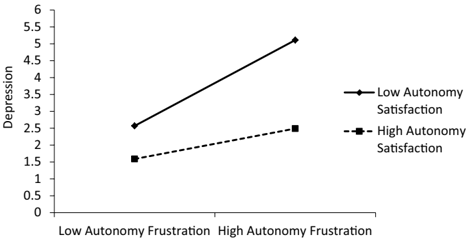
A plethora of empirical data support a positive (or “brighter”) pathway to optimal human functioning as specified within Basic Psychological Needs Theory (Ryan and Deci in Psychol Inq 11(4):319–33, 2000). Yet, far less is known about the negative (or “darker”) pathway, a process evoking of human dysfunction and ill-being (cf. Vansteenkiste and Ryan in J Psychother Integr 23(3):263, 2013). Further, debate surrounds the independence and interplay between psychological need satisfaction and psychological need frustration and how these dynamic constructs are experienced within individuals. In this work, variable and person-oriented analyses were employed to: (i) investigate the relationships between the basic psychological needs and symptoms of stress, depression and anxiety as well as with life satisfaction; and (ii) identify different psychological need profiles and their relationship with psychological function. Participants (N = 2236;M Age = 42.16 years;SD = 7.8) were UK-based operational firefighters who completed an online survey. Results of regression analyses showed a moderating effect of psychological need satisfaction on the relationship between need frustration and negative psychological symptoms. Latent profile analyses revealed five distinct basic psychological need profiles that carry implications for human psychological functioning. Some support for an asymmetrical relationship between need satisfaction and need frustration emerged (Vansteenkiste and Ryan in J Psychother Integr 23(3):263, 2013), yet, examples of above average need satisfaction and frustration scores were also observed. Worker profiles where psychological need frustration prevailed over need satisfaction had the poorest psychological health.
Overview
The claims and statistics of this paper haven’t been checked yet.
Free: it reads the open-access text and checks the first 5 claims that cite a source we can check. Create a free account to check every claim.
Integrity signals
Registry
Cites
Statistics
Figures
Verification
Claims the paper makes
The claims and statistics of this paper haven’t been checked yet.
Free: it reads the open-access text and checks the first 5 claims that cite a source we can check. Create a free account to check every claim.
Claims other papers make about this one
Each is checked against this paper’s own text: does it say what the citing paper says it does?
The cited source says what the claim attributes to it.
In the citing paper
“Various profiles were identified, with those being characterized by a stronger presence of need satisfaction and by an absence of need frustration yielding the most adaptive outcomes.The opposite profile of low need satisfaction and high frustration yielded the most maladaptive outcomes (see also Vanhove-Meriaux et al. 2018).”
From Basic psychological need theory: Advancements, critical themes, and future directions (2020) · cites this paper as Rouse et al. 2020
Self-check
Percentages, sums and reported differences re-computed from the paper’s own numbers.
The self-check needs the paper’s full text.
Citations
Cites
Hu, L., & Bentler, P. M. (1999) · Structural Equation Modeling A Multidisciplinary Journal · doi:10.1080/10705519909540118 · Cited by 108,788
Statistical Power Analysis for the Behavioral Sciences
Muller, K. (1989) · Technometrics · doi:10.1080/00401706.1989.10488618 · Cited by 99,167
Tabachnick, B. G., & Fidell, L. S. (1983) · Cited by 80,058
Statistical Power Analysis for the Behavioral Sciences (2nd ed.).
Lachenbruch, P. A., & Cohen, J. (1989) · Journal of the American Statistical Association · doi:10.2307/2290095 · Cited by 37,395
Multiple regression: testing and interpreting interactions
(1992) · Choice Reviews Online · doi:10.5860/choice.29-3352 · Cited by 36,654
The "what" and "why" of goal pursuits: Human needs and the self-determination of behavior
Deci, E. L., & Ryan, R. M. (2000) · Psychological Inquiry · doi:10.1207/s15327965pli1104_01 · Cited by 34,210 · cited 2×
“Within Basic Psychological Needs Theory (BPNT; Deci and Ryan 2000; Ryan and Deci 2000, 2017), it is proposed that humans achieve growth, development, and optimal functioning via the satisfaction of three basic psychological needs for autonomy, competence, and relatedness.”
BackgroundThe satisfaction with life scale
Diener, E., Emmons, R. A., Larsen, R. J., & Griffin, S. (1985) · Journal of Personality Assessment · doi:10.1207/s15327752jpa4901_13 · Cited by 31,768
Alternative Ways of Assessing Model Fit
Browne, M. W., & Cudeck, R. (1992) · Sociological Methods & Research · doi:10.1177/0049124192021002005 · Cited by 27,200
(2007) · Cited by 10,092
(1991) · Cited by 7,187
(1995) · Cited by 6,909
Henry, J. D., & Crawford, J. R. (2005) · British Journal of Clinical Psychology · doi:10.1348/014466505x29657 · Cited by 5,801
-Handbook of Self-Determination Research by Edward L. Deci and Richard M. Ryan (Editors)
Paulson, D. S. (2002) · The Journal of mind and behavior · Cited by 5,171
Handbook of Self-Determination Research
Deci, E. L., & Ryan, R. M. (2004) · Cited by 5,008
Alternative ways of assessing model fit
Browne, M. (1993) · Medical Entomology and Zoology · Cited by 4,247
Byrne, B. M. (2013) · doi:10.4324/9780203805534 · Cited by 4,016
Review of the Satisfaction With Life Scale
Pavot, W., & Diener, E. (2009) · Social Indicators Research Series · doi:10.1007/978-90-481-2354-4_5 · Cited by 3,460
Basic psychological need satisfaction, need frustration, and need strength across four cultures
Chen, B., Vansteenkiste, M., Beyers, W., Boone, L., Deci, E. L., Van der Kaap-Deeder, J., Duriez, B., Lens, W., Matos, L., Mouratidis, A., et al. (2015) · Motivation and Emotion · doi:10.1007/s11031-014-9450-1 · Cited by 2,507
The satisfaction with life scale and the emerging construct of life satisfaction
Pavot, W., & Diener, E. (2008) · The Journal of Positive Psychology · doi:10.1080/17439760701756946 · Cited by 2,396
Vansteenkiste, M., & Ryan, R. M. (2013) · Journal of Psychotherapy Integration · doi:10.1037/a0032359 · Cited by 2,170
A Review of Self-Determination Theory’s Basic Psychological Needs at Work
Van den Broeck, A., Ferris, D. L., Chang, C.-H., & Rosen, C. C. (2016) · Journal of Management · doi:10.1177/0149206316632058 · Cited by 1,465
The Darker and Brighter Sides of Human Existence: Basic Psychological Needs as a Unifying Concept
Ryan, R. M., & Deci, E. L. (2000) · Psychological Inquiry · doi:10.1207/s15327965pli1104_03 · Cited by 1,344 · cited 4×
“Within Basic Psychological Needs Theory (BPNT; Deci and Ryan 2000; Ryan and Deci 2000, 2017), it is proposed that humans achieve growth, development, and optimal functioning via the satisfaction of three basic psychological needs for autonomy, competence, and relatedness.”
BackgroundInfluentialBartholomew, K. J., Ntoumanis, N., Ryan, R. M., Bosch, J. A., & Thøgersen-Ntoumani, C. (2011) · Personality and Social Psychology Bulletin · doi:10.1177/0146167211413125 · Cited by 1,064
Person-Centered and Variable-Centered Approaches to Longitudinal Data
Laursen, B. P., & Hoff, E. (2006) · Merrill-Palmer Quarterly · doi:10.1353/mpq.2006.0029 · Cited by 953
(2016) · doi:10.3389/fpsyg · Cited by 801
Psychological Need Thwarting in the Sport Context: Assessing the Darker Side of Athletic Experience
Bartholomew, K. J., Ntoumanis, N., Ryan, R. M., & Thøgersen-Ntoumani, C. (2011) · Journal of Sport and Exercise Psychology · doi:10.1123/jsep.33.1.75 · Cited by 760
Haerens, L., Aelterman, N., Vansteenkiste, M., Soenens, B., & Van Petegem, S. (2015) · Psychology of Sport and Exercise · doi:10.1016/j.psychsport.2014.08.013 · Cited by 747
Ryan, R. M., Bernstein, J. H., & Brown, K. W. (2010) · Journal of Social and Clinical Psychology · doi:10.1521/jscp.2010.29.1.95 · Cited by 507
Motivation profiles at work: A self-determination theory approach
Howard, J., Gagné, M., Morin, A. J. S., & Van den Broeck, A. (2016) · Journal of Vocational Behavior · doi:10.1016/j.jvb.2016.07.004 · Cited by 497
It's not just the amount that counts: Balanced need-satisfaction also affects well-being
Sheldon, K. M., & Niemiec, C. P. (2006) · Journal of Personality and Social Psychology · doi:10.1037/0022-3514.91.2.331 · Cited by 454
Structural Equation Modeling With EQS
Byrne, B. M., & Byrne, B. M. (2013) · Routledge eBooks · doi:10.4324/9780203726532 · Cited by 451
Arbuckle, J. L. (2008) · DSpace Biblioteca Universidad de Talca (Universidad de Talca) · Cited by 450
Martela, F., & Ryan, R. M. (2016) · Journal of Personality · doi:10.1111/jopy.12215 · Cited by 422
Mindfulness, Work Climate, and Psychological Need Satisfaction in Employee Well-being
Schultz, P. P., Ryan, R. M., Niemiec, C. P., Legate, N., & Williams, G. C. (2015) · Mindfulness · doi:10.1007/s12671-014-0338-7 · Cited by 296
IRT studies of many groups: the alignment method
Muthén, B., & Asparouhov, T. (2014) · Frontiers in Psychology · doi:10.3389/fpsyg.2014.00978 · Cited by 293
Gunnell, K. E., Crocker, P. R. E., Wilson, P. M., Mack, D. E., & Zumbo, B. D. (2013) · Psychology of Sport and Exercise · doi:10.1016/j.psychsport.2013.03.007 · Cited by 260
The Impact of Organizational Factors on Psychological Needs and Their Relations with Well-Being
Gillet, N., Fouquereau, E., Forest, J., Brunault, P., & Colombat, P. (2012) · Journal of Business and Psychology · doi:10.1007/s10869-011-9253-2 · Cited by 258
Coach Autonomy Support and Quality of Sport Engagement in Young Soccer Players
Álvarez, M. S., Balaguer, I., Castillo, I., & Duda, J. L. (2009) · The Spanish journal of psychology · doi:10.1017/s1138741600001554 · Cited by 194
Van den Broeck, A., Lens, W., De Witte, H., & Van Coillie, H. (2013) · Journal of Vocational Behavior · doi:10.1016/j.jvb.2012.11.005 · Cited by 192
The Person and the Variable in Developmental Psychology
Bergman, L. R., & Andersson, H. (2010) · Zeitschrift für Psychologie / Journal of Psychology · doi:10.1027/0044-3409/a000025 · Cited by 188 · cited 2×
“A person-centred approach is better suited to the examination of theoretical frameworks that include interactionistic and dynamic conceptualizations (Bergman and Andersson 2010), especially when interactions exist at a within-person as well as between-person level (Lindwall et al.”
BackgroundA preliminary investigation of post-traumatic stress symptoms among firefighters
Haslam, C., & Mallon, K. (2003) · Work & Stress · doi:10.1080/02678370310001625649 · Cited by 188
The mental health of fire-fighters: An examination of the impact of repeated trauma exposure
Harvey, S. B., Milligan-Saville, J. S., Paterson, H. M., Harkness, E. L., Marsh, A. M., Dobson, M., Kemp, R., & Bryant, R. A. (2016) · Australian & New Zealand Journal of Psychiatry · doi:10.1177/0004867415615217 · Cited by 188
An Introduction to Intermediate and Advanced Statistical Analyses for Sport and Exercise Scientists
Ntoumanis, N., & Myers, N. D. (2015) · eSpace (Curtin University) · Cited by 183
Trépanier, S.-G., Fernet, C., & Austin, S. (2015) · Journal of Occupational Health Psychology · doi:10.1037/a0037726 · Cited by 178
Trépanier, S.-G., Forest, J., Fernet, C., & Austin, S. (2015) · Work & Stress · doi:10.1080/02678373.2015.1074957 · Cited by 178
Advances in Sport and Exercise Psychology
(1992) · Human Kinetics eBooks · doi:10.5040/9781492595199 · Cited by 178
Vansteenkiste, M., Lens, W., Soenens, B., & Luyckx, K. (2006) · Motivation and Emotion · doi:10.1007/s11031-006-9041-x · Cited by 177
Stirring the motivational soup: within-person latent profiles of motivation in exercise
Lindwall, M., Ivarsson, A., Weman-Josefsson, K., Jonsson, L., Ntoumanis, N., Patrick, H., Thøgersen-Ntoumani, C., Markland, D., & Teixeira, P. (2017) · International Journal of Behavioral Nutrition and Physical Activity · doi:10.1186/s12966-017-0464-4 · Cited by 169
Firefighting and mental health: Experiences of repeated exposure to trauma
Jahnke, S. A., Poston, W. S. C., Haddock, C. K., & Murphy, B. (2016) · Work · doi:10.3233/wor-162255 · Cited by 152
Dysvik, A., Kuvaas, B., & Gagné, M. (2013) · Journal of Applied Social Psychology · doi:10.1111/jasp.12068 · Cited by 150
Standage, M., & Ryan, R. M. (2012) · Advances in Motivation in Sport and Exercise · doi:10.5040/9781492595182.ch-007 · Cited by 147 · cited 2×
“2016; Standage and Ryan 2012).”
BackgroundSelf-citationOlafsen, A. H. (2016) · Motivation and Emotion · doi:10.1007/s11031-016-9592-4 · Cited by 106 · cited 3×
“2013; Olafsen 2017).”
BackgroundInfluentialMotivational profiles and burnout in elite athletes: A person-centered approach
Gustafsson, H., Carlin, M., Podlog, L. W., Stenling, A., & Lindwall, M. (2017) · Psychology of sport and exercise · doi:10.1016/j.psychsport.2017.11.009 · Cited by 104
The role of work motivation in psychological health.
Fernet, C. (2013) · Canadian Psychology/Psychologie canadienne · doi:10.1037/a0031058 · Cited by 103 · cited 1×
“To date, no studies have systematically investigated BPNT, but previous work does show SDT to provide a relevant framework to test the mechanisms that relate to symptoms of stress, depression, anxiety and satisfaction with life in work contexts (Fernet 2013; Martela and Ryan 2016; Trépanier et al.”
BackgroundVan den Broeck, A., Vansteenkiste, M., Lens, W., & De Witte, H. (2010) · Applied Psychology · doi:10.1111/j.1464-0597.2009.00391.x · Cited by 94
A gentle introduction to mixture modeling using physical fitness performance data
Morin, A. J. S., & Wang, J. (2016) · Wiley eBooks · Cited by 93
Campbell, R., Boone, L., Vansteenkiste, M., & Soenens, B. (2018) · Journal of Clinical Psychology · doi:10.1002/jclp.22628 · Cited by 72
Gillet, N., Forest, J., Benabou, C., & Bentein, K. (2015) · Le travail humain · doi:10.3917/e.th.782.0119 · Cited by 60
Viewing exercise goal content through a person-oriented lens: A self-determination perspective
Lindwall, M., Josefsson, K. W., Sebire, S. J., & Standage, M. (2016) · Psychology of sport and exercise · doi:10.1016/j.psychsport.2016.06.011 · Cited by 45
Self-citationGender Differences in Fire Fighter Job Stressors and Symptoms of Stress
Murphy, S. A., Beaton, R. D., Cain, K., & Pike, K. (1995) · Women & Health · doi:10.1300/j013v22n02_04 · Cited by 37
Self‐Determination Theory and Well‐Being in the Health Care Profession
Bernard, D., Martin, J. J., & Kulik, N. L. (2014) · Journal of Applied Biobehavioral Research · doi:10.1111/jabr.12023 · Cited by 26
Self-Determination- Based Theories of Sport, Exercise, and Physical Activity Motivation
Standage, M., Curran, T., & Rouse, P. C. (1992) · doi:10.5040/9781492595199.ch-016 · Cited by 20
Self-citationLifestyle behaviours and perceived well-being in different fire service roles
Turner, P. J. F., Siddall, A. G., Stevenson, R. D. M., Standage, M., & Bilzon, J. (2018) · Occupational Medicine · doi:10.1093/occmed/kqy110 · Cited by 7
Self-citation
Research works printed but not linked: 5
- 4. Arbuckle, J. L. (2013). Amos 22 user's guide. Chicago, IL: SPSS.
- 21. González, M. G., Niemiec, C. P., & Williams, G. C. (2014). At the interface of work and health: a consideration of the health gradi- ent using self-determination theory. New York: Oxford University Press.
- 37. Masyn, K. (2013). Latent profile analysis and finite mixture modelling. In T. D. Little (Ed.), The Oxford handbook of quantitative methods in psychology (pp. 551-611). New York: Oxford University Press.
- 40. Murphy, S. A., Beaton, R. D., Pike, K. C., & Johnson, L. (1999). Occu- pational stressors, stress responses, and alcohol consumption among professional firefighters: a prospective, longitudinal analy- sis. International Journal of Stress Management, 6(3), 179-196. · doi:10.1023/a:1021934725246
- Ryan, R. M., Bernstein, J. H., & Brown, K. W. (2010). Weekends, work, and well-being: psychological need satisfactions and day of the week effects on mood, vitality, and physical symptoms. Journal of Social and Clinical Psychology,29(1), 95–122. https://doi.org/10.1521/jscp.2010.29.1.95. · DOI · Paper page
Cited by
Basic psychological need theory: Advancements, critical themes, and future directions
Vansteenkiste, M., Ryan, R. M., & Soenens, B. (2020) · Motivation and Emotion · doi:10.1007/s11031-019-09818-1 · Cited by 1,891
Basic Psychological Needs Theory: A Conceptual and Empirical Review of Key Criteria
Vansteenkiste, M., Soenens, B., & Ryan, R. M. (2023) · Oxford University Press eBooks · doi:10.1093/oxfordhb/9780197600047.013.5 · Cited by 165
Nunes, P. M., Proença, T., & Todaro, M. E. C. (2023) · Personnel Review · doi:10.1108/pr-11-2021-0812 · Cited by 159
Self-Determination Theory and Its Relation to Organizations
Olafsen, A. H., & Deci, E. L. (2020) · Oxford University Press eBooks · doi:10.1093/acrefore/9780190236557.013.112 · Cited by 120
Work Values and Job Satisfaction: The Mediating Role of Basic Psychological Needs at Work
Busque‐Carrier, M., Ratelle, C. F., & Corff, Y. L. (2021) · Journal of Career Development · doi:10.1177/08948453211043878 · Cited by 84
“In the SDT literature, it was shown that PNS contribute to wellness outcomes, whereas PNF predict illness outcomes (Rouse et al., 2020; Vansteenkiste et al., 2020).”
BackgroundInfluential
Metadata
- Authors
- Rouse, P. C., Turner, P. J. F., Siddall, A. G., Schmid, J., Standage, M., & Bilzon, J. L. J.
- Affiliations
- University of Bath (GB)
- Lancashire Fire and Rescue Service (GB)
- University of Chichester (GB)
- University of Bern (CH)
- Corresponding author
- Bilzon, James L. J.
- Venue
- Motivation and Emotion
- Published
- 2019-11-22
- Volume
- 44
- Issue
- 2
- Pages
- 175-189
- ISSN
- 0146-7239 (ISSN-L)
- 1573-6644
- OpenAlex
- W2989954837
- Cited by
- 80
- References
- 66
- Citations by year
- 2026: 9 · 2025: 9 · 2024: 11 · 2023: 26 · 2022: 11 · 2021: 12 · 2020: 2
- FWCI
- 7.87
- Type
- journal article
- Language
- en
- Open access
- hybrid
- doi.org
- Licence
- cc-by
- creativecommons.org/licenses/by/4.0 (tdm)
- creativecommons.org/licenses/by/4.0 (vor)
- Locations
- Motivation and Emotion (publishedVersion, cc-by)
- ChiPrints (University of Chichester) (acceptedVersion)
- BORIS (University Library Bern) (submittedVersion, cc-by)
- Open Access CRIS of the University of Bern
- Funders
- Chief Fire Officers Association (RE-FH1085)
- FireFit Steering Group (RE-FH1085)
- Fire Service Research and Training Trust (RE-FH1085)
- Topics
- Social Sciences › Psychology › Social Psychology › Motivation and Self-Concept in Sports
- Social Sciences › Psychology › Applied Psychology › Human Behavior and Motivation
- Social Sciences › Business, Management and Accounting › Organizational Behavior and Human Resource Management › Job Satisfaction and Organizational Behavior
- Keywords
- basic psychological needs, need satisfaction, need frustration, basic psychological needs theory, occupational stress, depression, anxiety, life satisfaction, firefighters, employee motivation, psychological well-being
About these checks
Registry, retraction, Cites and statistics results are computed, not judged, with one exception: a printed reference that no index lists is read once by a model before it counts as a citation error. Claims are extracted by a model and kept only when their quote appears verbatim in the text; each cited source is then checked, with a model’s help, for whether it says what the claim relies on. Those verdicts can be wrong — read the claim’s quote and the cited source before relying on one.
Statistics and arithmetic are recomputed, not judged.
Confidence bands are shown only for fields calibrated on our annotated test set. None is calibrated yet, so no band is shown.
What counts as a claim ›How we measure confidence ›How we check this ›
Are you an author, or do you see a problem with this page? Request a review
Data sources
Bibliographic data: Semantic Scholar, OpenAlex, Crossref.
Contains information from the Semantic Scholar Academic Graph Datasets, made available under the ODC Attribution License (ODC-BY 1.0).
Semantic Scholar’s data is described in: Kinney, R., et al. (2023). The Semantic Scholar Open Data Platform. arXiv:2301.10140.
