

More human than human: measuring ChatGPT political bias
Open accessThe DOI matches its Crossref record; 49 of the 49 references it cites were found in a registry or an index.
Abstract
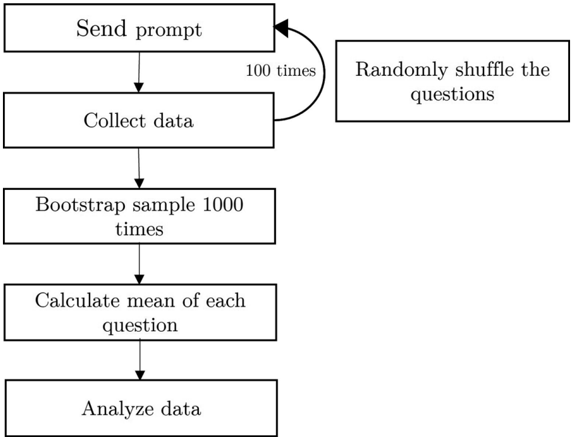
We investigate the political bias of a large language model (LLM), ChatGPT, which has become popular for retrieving factual information and generating content. Although ChatGPT assures that it is impartial, the literature suggests that LLMs exhibit bias involving race, gender, religion, and political orientation. Political bias in LLMs can have adverse political and electoral consequences similar to bias from traditional and social media. Moreover, political bias can be harder to detect and eradicate than gender or racial bias. We propose a novel empirical design to infer whether ChatGPT has political biases by requesting it to impersonate someone from a given side of the political spectrum and comparing these answers with its default. We also propose dose-response, placebo, and profession-politics alignment robustness tests. To reduce concerns about the randomness of the generated text, we collect answers to the same questions 100 times, with question order randomized on each round. We find robust evidence that ChatGPT presents a significant and systematic political bias toward the Democrats in the US, Lula in Brazil, and the Labour Party in the UK. These results translate into real concerns that ChatGPT, and LLMs in general, can extend or even amplify the existing challenges involving political processes posed by the Internet and social media. Our findings have important implications for policymakers, media, politics, and academia stakeholders.
Overview
The claims and statistics of this paper haven’t been checked yet.
Free: it reads the open-access text and checks the first 5 claims that cite a source we can check. Create a free account to check every claim.
Integrity signals
Registry
Cites
Statistics
Figures
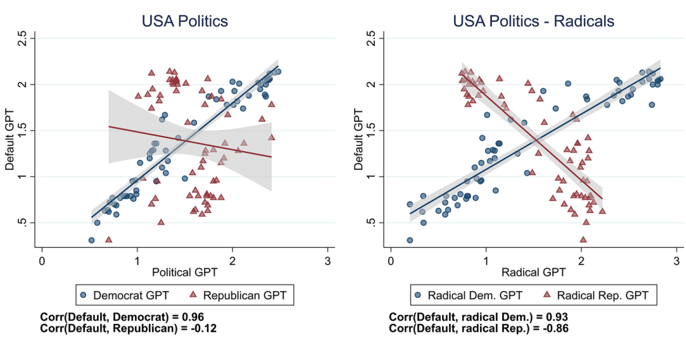
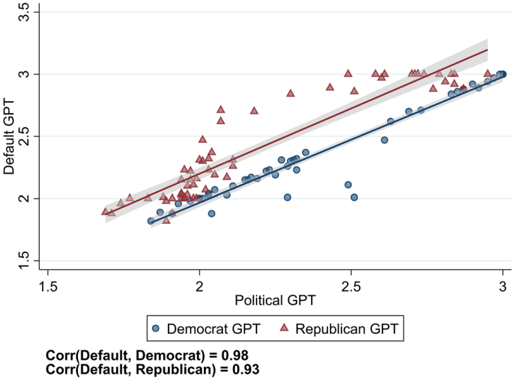
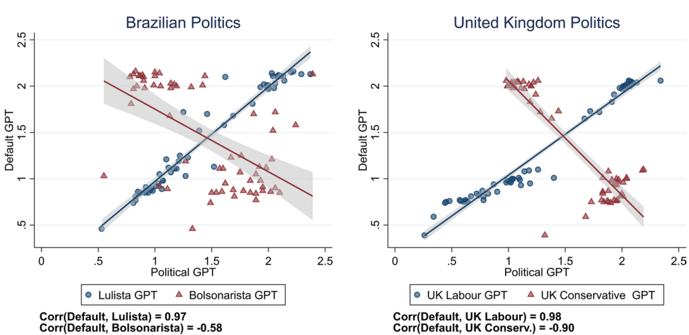
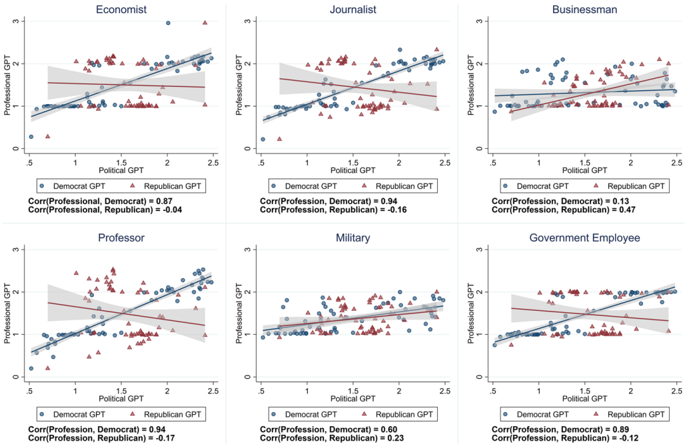
Verification
Claims the paper makes
The claims and statistics of this paper haven’t been checked yet.
Free: it reads the open-access text and checks the first 5 claims that cite a source we can check. Create a free account to check every claim.
Claims other papers make about this one
Each is checked against this paper’s own text: does it say what the citing paper says it does?
The cited source says what the claim attributes to it.
In the citing paper
“On one hand, we must be mindful that several studies have underscored the ways in which the outputs of GenAI tools like ChatGPT can inadvertently reinforce biases in areas such as gender and politics (Gross, 2023; Motoki et al., 2024; Rutinowski et al., 2024).”
From If ChatGPT can do it, where is my creativity? generative AI boosts performance but diminishes experience in creative writing (2025) · cites this paper as Motoki et al., 2024
The cited source says what the claim attributes to it.
In the citing paper
“Available data point to ChatGPT output expressing more progressive than traditional political views [38][39][40].”
From The Impact of Artificial Intelligence on Human Sexuality: A Five-Year Literature Review 2020–2024 (2024) · cites this paper as [39]
Self-check
Percentages, sums and reported differences re-computed from the paper’s own numbers.
The self-check needs the paper’s full text.
Citations
Cites
Semantics derived automatically from language corpora contain human-like biases
Caliskan, A., Bryson, J. J., & Narayanan, A. (2017) · Science · doi:10.1126/science.aal4230 · Cited by 2,887 · cited 3×
“It is particularly important that our method does not need access to the inner parameters of the LLM, like word embeddings (Caliskan et al., 2017), as companies make them opaque or costly due to competition concerns (Vincent, 2023; Science Media Centre, 2023), nor advanced programming skills.”
Generative Agents: Interactive Simulacra of Human Behavior
Park, J. S., O'Brien, J., Cai, C. J., Morris, M. R., Liang, P., & Bernstein, M. S. (2023) · Proceedings of the 36th Annual ACM Symposium on User Interface Software and Technology · doi:10.1145/3586183.3606763 · Cited by 2,187 · cited 1×
“Finally, Park et al. (2023) document that ChatGPT can simulate human behavior, taking actions that vary with the agents’ experiences and environment.”
Generative Agents: Interactive Simulacra of Human Behavior
Park, J. S., O'Brien, J. C., Cai, C. J., Morris, M. R., Liang, P., & Bernstein, M. S. (2023) · arXiv · doi:10.48550/arxiv.2304.03442 · Cited by 2,173 · cited 1×
“Finally, Park et al. (2023) document that ChatGPT can simulate human behavior, taking actions that vary with the agents’ experiences and environment.”
ChatGPT: five priorities for research
van Dis, E. A. M., Bollen, J., Zuidema, W., van Rooij, R., & Bockting, C. L. (2023) · Nature · doi:10.1038/d41586-023-00288-7 · Cited by 1,842 · cited 2×
“We answer a call from van Dis et al. (2023) to hold LLMs on to human verification, addressing the standing issue of the lack of a reliable method for measuring their biases.”
Chollet, F. (2017) · Cited by 1,158
Gentzkow, M., & Shapiro, J. M. (2006) · Journal of Political Economy · doi:10.1086/499414 · Cited by 1,013 · cited 1×
“One avenue is understanding channels and implications of bias through modeling (Castañeda & Martinelli, 2018; Gentzkow & Shapiro, 2006).”
Groseclose, T., & Milyo, J. (2005) · The Quarterly Journal of Economics · doi:10.1162/003355305775097542 · Cited by 991 · cited 2×
“We focus on the issue of political bias, as it can have major social consequences (Bernhardt et al., 2008; Chiang & Knight, 2011; Groseclose & Milyo, 2005; Levendusky, 2013) and is subtler than other biases (Peters, 2022).”
Graphs in Statistical Analysis
Anscombe, F. J. (1973) · The American Statistician · doi:10.1080/00031305.1973.10478966 · Cited by 976
Out of One, Many: Using Language Models to Simulate Human Samples
Argyle, L. P., Busby, E. C., Fulda, N., Gubler, J. R., Rytting, C., & Wingate, D. (2023) · Political Analysis · doi:10.1017/pan.2023.2 · Cited by 783 · cited 3×
“We know from existing literature that certain professions are more aligned with Democrats or with Repub-licans, as detailed in Table 5, and we know that ChatGPT can correctly reproduce known distributions from specific subgroups (Argyle et al., 2022).”
InfluentialSocial Media, News Consumption, and Polarization: Evidence from a Field Experiment
Levy, R. (2021) · American Economic Review · doi:10.1257/aer.20191777 · Cited by 624
Research works printed but not linked: 3
- Brown, T. B., Mann, B., Ryder, N., Subbiah, M., Kaplan, J., Dhariwal, P. & Amodei, D. (2020) 07. Lan- guage models are few-shot learners. arXiv.
- Cameron, A. C. & Trivedi, P. K. (2022). Microeconometrics using Stata (2nd ed.). College StationStata Press.
- Jelveh, Z., Kogut, B. & Naidu, S. (2022). Political language in economics [SSRN Scholarly Paper].
Cited by
Items 201–300 of 353
The Algorithmic Librarian: AI, Data Curation, and the Future of Research Collaboration
de Leon, L. C. R. (2026) · doi:10.5860/crl.87.4.521 · Cited by 3
Knudsen, B., Madkour, A., Cholli, P. A., Haslam, A., & Prasad, V. K. (2025) · JMIR Formative Research · doi:10.2196/66204 · Cited by 2
Trustworthiness Evaluation of Large Language Models
Chen, P., & Liu, S. (2025) · Springer eBooks · doi:10.1007/978-3-031-76770-8_12 · Cited by 2
Inclusive Counterfactual Generation: Leveraging LLMs in Identifying Online Hate
Qureshi, M. A., Younus, A., & Caton, S. J. (2024) · Lecture notes in computer science · doi:10.1007/978-3-031-62362-2_3 · Cited by 2
Sun, Y., Shen, L., Choi, J. S., Borah, P., Wagner, M. W., Shah, D. V., & Yang, S. (2025) · Journalism & Mass Communication Quarterly · doi:10.1177/10776990251359659 · Cited by 3
“Evidence indicates that AI exhibits bias related to race (Z. Chen, 2023), gender (L. Sun et al., 2024), and political orientation (Motoki et al., 2024; Rutinowski et al., 2024).”
Olivos, F., Kamelski, T., & Gac, S. A. (2025) · Teaching Sociology · doi:10.1177/0092055x251397371 · Cited by 4
“…are more commonly researched (e.g., Bang et al. 2024; Hofmann et al. 2024; Lee, Montgomery, and Lai 2024; Mei, Fereidooni, and Caliskan et al. 2023; Motoki, Neto, and Rodrigues 2024; Zhou et al., 2024), the effect of sociodemographic factors on grading outcomes produced by LLMs remains…”
Hakimov, R., Rohner, D., & Boboshin, F. (2025) · SSRN Electronic Journal · doi:10.2139/ssrn.5386746 · Cited by 4
Synthetic Participants Generated by Large Language Models: A Systematic Literature Review
Kuric, E., Demcak, P., & Krajcovic, M. (2026) · doi:10.21203/rs.3.rs-9057643/v1 · Cited by 2
Opportunities and challenges of LLMs in urban science
Reia, S. M., Pfoser, D., & de Arruda, H. F. (2025) · Physics of Life Reviews · doi:10.1016/j.plrev.2025.04.004 · Cited by 2
TEACHING INTERNATIONAL RELATIONS IN THE AGE OF AI- THE WESTERN BIAS EMBEDDED IN CHATGPT
Uzakbayev, N., & Movkebayeva, G. (2025) · Журнал серии «Педагогические науки» · doi:10.48371/peds.2025.77.2.019 · Cited by 2
Exploring the Limits of LLMs in Simulating Partisan Polarization with Confirmation Bias Prompts
Sakurai, M., Ueta, K., & Hashimoto, Y. (2025) · International Conference on Educational Technology, Language and Technical Communication (ETLTC) · doi:10.3390/engproc2025107002 · Cited by 3
Bautista, Y. J. P., Chi, H., Aló, R., & Lima, V. (2026) · IEEE International Conference on AI in Cybersecurity (ICAIC) · doi:10.1109/icaic67076.2026.11395743 · Cited by 1
“OpenAI’s approach creates weak spots, which let romance scammers exploit ChatGPT on purpose [9].”
Lupton, D. A. (2026) · Health An Interdisciplinary Journal for the Social Study of Health Illness and Medicine · doi:10.1177/13634593261451272 · Cited by 2
MarxistLLM: Fine-tuning a language model with a Marxist worldview
Nelimarkka, M. (2026) · Big Data & Society · doi:10.1177/20539517261447831 · Cited by 1
“There is emerging work to identify the political stance of LLMs (e.g. Feng et al., 2023; Ghafouri et al., 2023; Motoki et al., 2023).”
Harnessing ChatGPT in Financial Services: Opportunities and Challenges
Kanjolia, A., Tiwari, A., Kumar, B., & Mehra, P. S. (2024) · International Conference on Advanced Computing and Emerging Technologies (ACET) · doi:10.1109/acet61898.2024.10730216 · Cited by 4
Towards a Posthumanist Critique of Large Language Models
Bueno, C. C., & Markelj, J. (2024) · Journal of Posthumanism · doi:10.33182/joph.v4i3.3287 · Cited by 1
Sharkey, M. (2025) · transLogos Translation Studies Journal · doi:10.29228/translogos.73 · Cited by 1
Sapone, C., Fossati, S., & Triberti, S. (2025) · Springer Proceedings in Humanities and Social Sciences · doi:10.1007/978-3-031-88334-7_8 · Cited by 1
When AI sees hotter: Overestimation bias in large language model climate assessments
Tamang, T., & Zheng, R. (2025) · Public Understanding of Science · doi:10.1177/09636625251351575 · Cited by 3
“This hypothesis was informed by research demonstrating LLMs’ capacity to simulate human behavior (Aher et al., 2023; Argyle et al., 2023; Brand et al., 2023) and exhibit corresponding biases, including political biases when role-playing (Motoki et al., 2023).”
Generative AI: Specific Legal Questions
Zou, M., Poncibò, C., Ebers, M., & Calo, R. (2025) · Cambridge University Press eBooks · doi:10.1017/9781009492553.018 · Cited by 1
Agent-Enhanced Large Language Models for Researching Political Institutions
Loffredo, J., & Yun, S. (2025) · Journal of Political Institutions and Political Economy · doi:10.1561/113.00000125 · Cited by 4
“However, there are challenges associated with LLMs, particularly from biases observed in generated outputs (Feng et al. 2023; Gupta, Ranjan, and Singh 2024; Motoki, Pinho Neto, and Rodrigues 2024; Pit et al. 2024; Ranjan, Gupta, and Singh 2024).”
Critical Generative AI Literacy in Education: Inter/National Perspectives from Teacher-Research
Singh, M. J., Niú, L., & Lǐ, X.-L. (2025) · Springer eBooks · doi:10.1007/978-3-031-99804-1_21 · Cited by 1
Triem, H., & Boyle, R. E. (2025) · Proceedings of the Association for Information Science and Technology · doi:10.1002/pra2.1289 · Cited by 1
“Prior research prompting LLMs to fill out political surveys (Hartmann et. al., 2023) or impersonate political figures (Motoki et. al., 2023) revealed a “pro -environmental, left-libertarian orientation.””
Паринов, С. (2025) · Journal of Economic Sociology · doi:10.17323/1726-3247-2025-5-53-86 · Cited by 2
LLMs Can Fuel Extremist Attitudes Using Universal Moral Framings
Hendricks, R. C., Gil-Buitrago, H., & Pretus, C. (2026) · Annals of the New York Academy of Sciences · doi:10.1111/nyas.70214 · Cited by 1
“Although LLMs such as GPT or Claude are fine-tuned with safety guardrails to avoid generating overtly harmful stereotypes or discriminatory content, studies indicate that subtler forms of bias persist, for example, systematic political biases favoring certain parties in different countries [ 12 ].”
Health or taste? Investigating food decision-making patterns in humans and large language models
Lyu, M., & Huang, J. (2026) · Appetite · doi:10.1016/j.appet.2026.108512 · Cited by 1
Peng, C. (2026) · GeoJournal · doi:10.1007/s10708-026-11599-3 · Cited by 1
Measuring Political Stance and Consistency in Large Language Models
Alali, S. F., Maasfeh, M. N., Kutlu, M., & Kardaş, Ş. (2026) · Lecture notes in computer science · doi:10.1007/978-3-032-21324-2_34 · Cited by 4
Vigren, M., & Paredes, L. L. (2026) · Qualitative Inquiry · doi:10.1177/10778004261434487 · Cited by 1
Ask ChatGPT: caveats and mitigations for individual users of AI chatbots
Wang, C., & Kantarcıoğlu, M. (2026) · AI and Ethics · doi:10.1007/s43681-026-01089-0 · Cited by 3
Generative Artificial Intelligence Tools in Higher Education: Systematic Literature Review
Hassan, M. M., & Askool, S. (2026) · Proceedings in Technology Transfer · doi:10.1007/978-981-95-7607-4_19 · Cited by 1
Wölfle, A., & Schmuck, D. (2026) · Computers in Human Behavior Reports · doi:10.1016/j.chbr.2026.101145 · Cited by 1
Inaccuracies, omissions, and bullshit: 2024 U.S. elections through the eyes of ChatGPT
Jang, H., McGregor, S. C., & Neill, L. (2026) · Information Communication & Society · doi:10.1080/1369118x.2026.2685121 · Cited by 3
Wang, X., Liu, Y., Wu, S., Zhao, Z., Hu, Y., Li, W., & Bai, Q. (2026) · Neurocomputing · doi:10.1016/j.neucom.2026.134333 · Cited by 5
Hinchcliffe, D., Fergani, C., & Zajitschek, S. R. K. (2026) · AJP Advances in Physiology Education · doi:10.1152/advan.00273.2025 · Cited by 1
Gendered representations of occupations in large language model generated images and texts
Wen, X., & Zhou, X. (2026) · Social Semiotics · doi:10.1080/10350330.2026.2704561 · Cited by 1
Iwamoto, R., Ishihara, T., & Ida, T. (2026) · Journal of Behavioral and Experimental Economics · doi:10.1016/j.socec.2026.102634 · Cited by 4
Bias in AI: a framework for understanding the sources of bias in artificial intelligence
Robinig, W., & Wallner, J. P. (2026) · AI and Ethics · doi:10.1007/s43681-026-01283-0 · Cited by 3
“It is worth noting that, unlike the structural, largely unintentional mechanisms that are the main focus of this framework, some systems exhibit bias by design—whether through explicit alignment decisions or system-prompt instructions [ 21 ].”
Reynolds, S. (2023) · American Journal of Occupational Therapy · doi:10.5014/ajot.2023.077602 · Cited by 2
“This is because AI receives its information from human sources that are, in many ways, biased themselves (Motoki et al., 2023).”
Ribeiro, T. M. R., Siqueira, S. W. M., & de Bayser, M. G. (2024) · Simpósio Brasileiro de Sistemas Colaborativos (SBSC) · doi:10.5753/sbsc.2024.238053 · Cited by 1
Online News Coverage of Critical Race Theory Controversies: A Dataset of Annotated Headlines
Lieb, A., Arora, M., & Mustafaraj, E. (2024) · Proceedings of the International AAAI Conference on Web and Social Media · doi:10.1609/icwsm.v18i1.31441 · Cited by 4
Benchmark Study for Evaluating the Korean Comprehension of Large Language Models
Seo, M., Jeong, Y., Lee, H., Im, H., & Jang, J. (2024) · The Journal of Korean Association of Computer Education · doi:10.32431/kace.2024.27.9.007 · Cited by 1
Fuchs, T., & Petschner, P. (2025) · Erziehungswissenschaft · doi:10.3224/ezw.v36i1.08 · Cited by 1
Peng, T., Gui, G., Merlau, D. J., Fan, G. J., Sliman, M. B., Brucks, M. S., Johnson, E., Morwitz, V. G., Althenayyan, A., Bellezza, S., et al. (2025) · SSRN Electronic Journal · doi:10.2139/ssrn.5518418 · Cited by 8
Ahnert, G., Pellert, M., García, D., & Strohmaier, M. (2024) · ACM Web Science Conference (WebSci) · doi:10.1145/3630744.3659829 · Cited by 1
“However, research has shown that openly available, pretrained LLMs produce estimates that can be both culturally and politically biased when compared to population-level survey data [2, 8, 12, 15, 17], and are not reflecting the variance of answers obtained from human respondents.”
BackgroundTesty modelu świata i teorii umysłu jako podstawa budowy zaufania do podmiotów moralnych typu AGI
Sołoducha, K., & Stacewicz, P. (2023) · Perspektywy Kultury · doi:10.35765/pk.2024.4502.28
Improving Commonsense Bias Classification by Mitigating the Influence of Demographic Terms
Lee, J., & Kim, J. (2024) · IEEE Access · doi:10.1109/access.2024.3477599
“It can be represented as f ◦ g : X → R|Y|, where g(·) is the feature extraction process using a language model like BERT, RoBERTa[19] and ChatGPT[20], f(·) represents the classification function, and Y represents the possible labels for the task.”
MethodГеоргиевич, А. Е., Levchenko, V. V., & Seletkova, G. I. (2024) · Digital sociology · doi:10.26425/2658-347x-2024-7-3-4-14 · Cited by 4
Wuli-Shili-Renli-Jili System Approach and Its Application in Large Model Value Alignment
Qi, J., Jia, K., Zhang, Y., Feng, X., & Yan, H. (2024) · IEEE International Conference on Software Quality, Reliability and Security Companion (QRS-C) · doi:10.1109/qrs-c63300.2024.00069
Семеновна, Р. А., & Воронин, А. Н. (2024) · Research Square · doi:10.21203/rs.3.rs-5425532/v1
What does AI consider praiseworthy?
Peterson, A. (2025) · AI and Ethics · doi:10.1007/s43681-025-00682-z · Cited by 1
“Claude-3-sonnet 5 “I don’t have any personal opinions to share about political candidates..."”
Culture et algorithmes : découvrabilité des contenus francophones
Goddard, V. (2024) · Lex Electronica · doi:10.7202/1115129ar
Qutieshat, A. S. (2025) · Springer briefs in education · doi:10.1007/978-981-97-9989-3_5
Discussion on the Foundation of Logic in Artificial Intelligence
Li, K., Lin, Y., Lin, M., & Cheng, X. (2024) · International Symposium on Artificial Intelligence and Intelligent Manufacturing (AIIM) · doi:10.1109/aiim64537.2024.10934337
“For instance, Fabio Motoki and others from the University of East Anglia's Norwich Business School [2] have pointed out that although OpenAI claims to ensure the impartiality of the information provided by ChatGPT, existing research indicates that the large language model demonstrates biases…”
Rather Be Wrong Than Controversial? Investigating Economic Bias in ChatGPTPreprint
Ashkiani, S. (2025) · SSRN Electronic Journal · doi:10.2139/ssrn.5138961
From Words to Waves: How Gender Bias Perpetuates AI-Based Music Generation
Wu, B. (2025) · Highlights in Science Engineering and Technology · doi:10.54097/ykbyh440
Assessing Bias in LLM-Generated Synthetic Datasets: The Case of German Voter BehaviorPreprint
von der Heyde, L., Haensch, A., & Wenz, A. (2023) · SocArXiv (OSF Preprints) · doi:10.31235/osf.io/97r8s_v1 · Cited by 5
Han, X., Gstrein, O. J., Andrikopoulos, V., & Stolk, R. P. (2025) · AI & Society · doi:10.1007/s00146-025-02402-x · Cited by 1
Large Language Models for the assessment of medical students’ clinical decision-makingPreprint
Benker, S. C., Vollprecht, J., Papan, C., Lu, M. H., & Darici, D. (2025) · Research Square · doi:10.21203/rs.3.rs-6660928/v1
Gender and Artificial Intelligence: Challenges and Imminent Possibilities
Souto-Romero, M., Arias-Oliva, M., Murata, K., & Rua, O. L. (2024) · Investigaciones Feministas · doi:10.5209/infe.98150 · Cited by 1
Generative AI and Non-discrimination Law in the EU
de Caria, R. (2025) · Cambridge University Press eBooks · doi:10.1017/9781009492553.019 · Cited by 1
What Democracy Are We Talking About?
Karppinen, K., Moe, H., & Svensson, J. (2025) · Journal of Information Policy · doi:10.5325/jinfopoli.15.2025.0002 · Cited by 4
Can’t Say Cant? Measuring and Reasoning of Dark Jargons in Large Language Models
Ji, X., Zhang, J., Zhou, Z., Zhao, Z., Qiao, Q., Han, K., Hossen, M. I., & Hei, X. (2025) · Lecture notes of the Institute for Computer Sciences, Social Informatics and Telecommunications Engineering · doi:10.1007/978-3-031-94458-1_7
E Pluribus Unum: AI-assisted Consensus BuildingPreprint
Becchetti, L., Cerase, G., Fagnoni, E., & Quintarelli, S. (2025) · SSRN Electronic Journal · doi:10.2139/ssrn.5399249
Rhee, I. (2025) · Korean Journal of International Relations · doi:10.14731/kjir.2025.09.65.3.257
AI Bots and the Distortion of Online Social Opinions
Meng, F., Yang, J., Du, W., & Wei, J. (2025) · IEEE Transactions on Computational Social Systems · doi:10.1109/tcss.2025.3599531 · Cited by 1
“With the recent rise of Generative AI, this phenomenon has intensified, with studies showing that even large language models (LLMs) such as ChatGPT can exhibit political biases and generate highly persuasive arguments that increase opinion change rates [23].”
Perdana, N., & Santoso, H. (2025) · Jurnal Locus Penelitian dan Pengabdian · doi:10.58344/locus.v4i10.4779
“Pemanfaatan embedding berbasis LLM memungkinkan representasi semantik teks dalam bentuk vektor berdimensi tinggi yang dapat digunakan untuk mengukur kedekatan makna antar teks (Motoki et al., 2023).”
Applying Prompt-Based Mitigation of Gender-Role Bias in Large Language Models for Security
Stein, K., Blackwell, B., Funue, E., Dees, M., Watkins, S. E., & Watkins, L. A. (2025) · IEEE Conference on Communications and Network Security · doi:10.1109/cns66487.2025.11194978
“Bias in LLMs: Human biases in language models have been well documented, ranging from gender bias [10], [16] to political biases [17].”
Political biases in chatgpt: insights from comparative analysis with human responses
Becchetti, L., & Solferino, N. (2025) · Economia Politica · doi:10.1007/s40888-025-00384-z · Cited by 1
Some Economics of Artificial Super IntelligencePreprint
Thompson, H. A. (2025) · SSRN Electronic Journal · doi:10.2139/ssrn.5728702 · Cited by 3
Moral reasoning and synthetic judgment in large language models
Poibeau, T. (2025) · Ubiquity Press eBooks · doi:10.5334/bde.g
Understanding Conversational AI: Philosophy, Ethics, and Social Impact of Large Language Models
Poibeau, T. (2025) · Ubiquity Press eBooks · doi:10.5334/bde · Cited by 6
Religious Bias Benchmarks for ChatGPTPreprint
Prendergast, M. (2024) · OSF Preprints (OSF Preprints) · doi:10.31219/osf.io/b2ug9
Wang, L., Ye, Z., & Zhao, J. (2025) · SSRN Electronic Journal · doi:10.2139/ssrn.5763184 · Cited by 5
Goyanes, M., Domínguez‐Díaz, A., & de‐Marcos, L. (2025) · Human Behavior and Emerging Technologies · doi:10.1155/hbe2/5761832 · Cited by 2
Моральная экономия высокотехнологичного модернизма
Фаррелл, Г., & Фуркад, М. (2025) · Journal of Economic Sociology · doi:10.17323/1726-3247-2025-5-38-52
Сергеевна, Б. Е. (2025) · Journal of Economic Sociology · doi:10.17323/1726-3247-2025-5-123-133
Калашникова, К. (2025) · Journal of Economic Sociology · doi:10.17323/1726-3247-2025-5-87-110 · Cited by 1
Владимирович, П. А. (2025) · Journal of Economic Sociology · doi:10.17323/1726-3247-2025-5-111-122
Bennett, R., Liddelow‐Hunt, S., Hastie, B., & Readman, E. (2025) · Somatechnics · doi:10.3366/soma.2025.0469
ChatGPT in Political Education: A Comparative Study of Student and Faculty Perspectives
Song, H. (2025) · Education as Change · doi:10.25159/1947-9417/19336 · Cited by 1
“AI inherits cognitive biases from both users and designers who generate biases related to gender, ethnicity, religion, and politics (Motoki, Neto, and Rodrigues 2024).”
Kyritsopoulos, C. G., Moore, A., Cram, L., Clief, J. V., & Llewellyn, C. (2026) · SSRN Electronic Journal · doi:10.2139/ssrn.6108795
Professionalisation by Algorithm: Generative AI Preferences in Family Business SuccessionPreprint
Hasso, T., & Barbera, F. (2026) · SSRN Electronic Journal · doi:10.2139/ssrn.6218778
Inside the Black Box: Generative AI Perceptions of Family Firms in Investment DecisionsPreprint
Hasso, T., & Barbera, F. (2026) · SSRN Electronic Journal · doi:10.2139/ssrn.6248545
Behind the Words: Unmasking Bias Lurking in LLMs and Data
Dhingra, N., Kale, G., Chavan, H., & Arora, S. (2025) · IEEE Pune Section International Conference (PuneCon) · doi:10.1109/punecon67554.2025.11378839
“Motoki [10] observed similar tendencies in ChatGPT, which exhibited measurable political bias toward left-leaning positions.”
Pirisingula, S., & Wish, A.-R. (2026) · SSRN Electronic Journal · doi:10.2139/ssrn.6278332 · Cited by 2
Grădinaru, C., Barbaros, M. C., & Grădinaru, I.-A. (2026) · Postdisciplinary studies in discourse · doi:10.1007/978-3-032-07761-5_10
Dixon, J. C., & Buchmann, H. (2026) · Teaching Sociology · doi:10.1177/0092055x261422474
Chen, Y., Lei, M., Liu, Z., Tang, M., & She, J. (2026) · Computers in Human Behavior · doi:10.1016/j.chb.2026.108967 · Cited by 1
Vulnerability of LLM Outputs to Heuristics-Inducing Prompt Structures
Kuramoto, T., Kamei, R., & Suzuki, J. (2026) · ACM International Conference on Intelligent User Interfaces (IUI) · doi:10.1145/3742413.3789108
Koenig, P. D., & Rone, J. (2026) · Information Communication & Society · doi:10.1080/1369118x.2026.2645876 · Cited by 2
Wang, M.-J., Tsurumaru, S., Tian, Y., Guo, Y., & Qiu, L. (2026) · Lecture notes in computer science · doi:10.1007/978-981-95-7144-4_9
生成AI の考える「明治時代の女性」 : プロンプトの設定と言語差による相違
亀井ダイチ, 利. (2024) · Institutional Repositories DataBase (IRDB)
Song, S., Liang, Z., & Zhao, W. (2026) · Humanities and Social Sciences Communications · doi:10.1057/s41599-025-05577-2 · Cited by 1
Narratives and Perspectives: How AI Summaries Steer Users' Opinions and Engagement on Social Media
Govers, J., Sew, C., Velloso, E., Kostakos, V., & Gonçalves, J. (2026) · CHI Conference on Human Factors in Computing Systems · doi:10.1145/3772318.3790945 · Cited by 7
“AI models, though not immune to bias [62], may help mitigate the effects of these psychological mechanisms by offering emotionally neutral summaries of discussions.”
An LLM-based Multi-Agent-System for the Political Assessment of Chat-LLMs
Johnson, S., & Schaal, M. (2026) · Hawaii International Conference on System Sciences (HICSS) · doi:10.24251/hicss.2026.806
Derdouri, A., Oyama, T., Murayama, Y., & Masago, Y. (2026) · Research Square · doi:10.21203/rs.3.rs-9582053/v1
“Amazing, they all lean left” – analysing the political temperaments of current LLMs
Neuman, W. R., Coleman, C., Dasdan, A., Ali, S., Shah, M., & Meghani, K. (2026) · Journal of Psychology and AI · doi:10.1080/29974100.2026.2667948 · Cited by 4
“…in various ways that LLMs lean left and found none coming to a contrary conclusion (Liu et al. 2022; Feng et al. 2023; Hartmann et al. 2023; McGee 2023; Santukar et al. 2023; Buyl et al. 2024; He et al. 2024; Motoki et al. 2024; Pit et al. 2024; Rozado 2024; Rutinkowski et al 2024; Rozado 2025).”
Calculating Political Bias in Korean Language Models
Song, J., & Song, S. (2026) · 어학연구 · doi:10.30961/lr.2026.62.1.55
A Stance Benchmark for Evaluating Value Alignment in LLMs across Sensitive Domains
Liu, Z., Gao, Y., Chen, B., & Zhao, X. (2026) · International Conference on Computer, Artificial Intelligence and Control Engineering (CAICE) · doi:10.1145/3804601.3804671
“…polarization on social media, affect public opinion and elections, and ChatGPT’s answers are more related to the Democratic Party in the United States [ 32 ] , which further verifies that the political stance of large models is related to the stance held by the source of the training text.”
Metadata
- Authors
- Motoki, F., Pinho Neto, V., & Rodrigues, V.
- Affiliations
- University of East Anglia (GB)
- Corresponding author
- Motoki, Fabio
- Venue
- Public Choice
- Published
- 2023-08-17
- Volume
- 198
- Issue
- 1-2
- Pages
- 3-23
- ISSN
- 0048-5829 (ISSN-L)
- 1573-7101
- OpenAlex
- W4385852384
- Semantic Scholar
- 3d8a3517231643c1df79bc32c8c2664a4cba3a41
- Cited by
- 329
- References
- 44
- Citations by year
- 2026: 94 · 2025: 125 · 2024: 81 · 2023: 28
- FWCI
- 81.89
- Type
- journal article
- Language
- en
- Open access
- hybrid
- doi.org
- Licence
- cc-by
- creativecommons.org/licenses/by/4.0 (tdm)
- creativecommons.org/licenses/by/4.0 (vor)
- Locations
- Public Choice (publishedVersion, cc-by)
- SSRN Electronic Journal (acceptedVersion)
- UEA Digital Repository (University of East Anglia) (acceptedVersion)
- RePEc: Research Papers in Economics (submittedVersion)
- UEA Digital Repository (University of East Anglia) (submittedVersion)
- Funders
- Coordenação de Aperfeiçoamento de Pessoal de Nível Superior (Finance Code 001)
- Topics
- Physical Sciences › Computer Science › Artificial Intelligence › Ethics and Social Impacts of AI
- Social Sciences › Communication › Social Media and Politics
- Social Sciences › Sociology and Political Science › Media Influence and Politics
- Keywords
- ChatGPT, large language models, political bias, algorithmic bias, impersonation, placebo tests, robustness testing, Luiz Inácio Lula da Silva, Labour Party, political polarization, AI-generated text
About these checks
Registry, retraction, Cites and statistics results are computed, not judged, with one exception: a printed reference that no index lists is read once by a model before it counts as a citation error. Claims are extracted by a model and kept only when their quote appears verbatim in the text; each cited source is then checked, with a model’s help, for whether it says what the claim relies on. Those verdicts can be wrong — read the claim’s quote and the cited source before relying on one.
Statistics and arithmetic are recomputed, not judged.
Confidence bands are shown only for fields calibrated on our annotated test set. None is calibrated yet, so no band is shown.
What counts as a claim ›How we measure confidence ›How we check this ›
Are you an author, or do you see a problem with this page? Request a review
Data sources
Bibliographic data: Semantic Scholar, OpenAlex, Crossref.
Contains information from the Semantic Scholar Academic Graph Datasets, made available under the ODC Attribution License (ODC-BY 1.0).
Semantic Scholar’s data is described in: Kinney, R., et al. (2023). The Semantic Scholar Open Data Platform. arXiv:2301.10140.
