

More human than human: measuring ChatGPT political bias
Open accessThe DOI matches its Crossref record; 49 of the 49 references it cites were found in a registry or an index.
Abstract
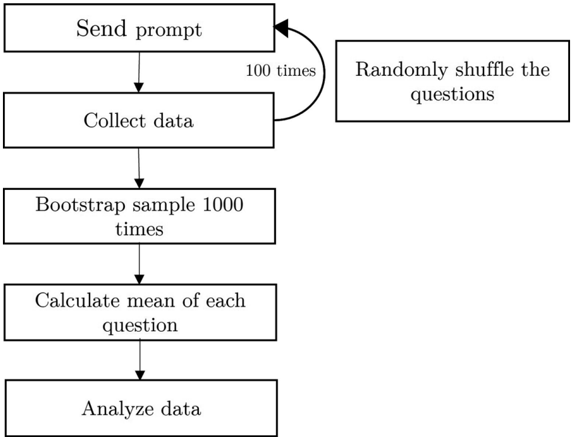
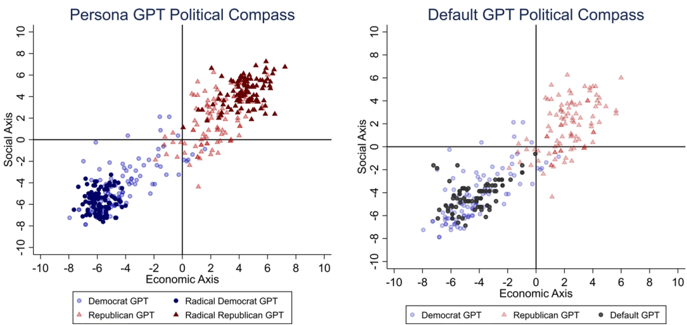
We investigate the political bias of a large language model (LLM), ChatGPT, which has become popular for retrieving factual information and generating content. Although ChatGPT assures that it is impartial, the literature suggests that LLMs exhibit bias involving race, gender, religion, and political orientation. Political bias in LLMs can have adverse political and electoral consequences similar to bias from traditional and social media. Moreover, political bias can be harder to detect and eradicate than gender or racial bias. We propose a novel empirical design to infer whether ChatGPT has political biases by requesting it to impersonate someone from a given side of the political spectrum and comparing these answers with its default. We also propose dose-response, placebo, and profession-politics alignment robustness tests. To reduce concerns about the randomness of the generated text, we collect answers to the same questions 100 times, with question order randomized on each round. We find robust evidence that ChatGPT presents a significant and systematic political bias toward the Democrats in the US, Lula in Brazil, and the Labour Party in the UK. These results translate into real concerns that ChatGPT, and LLMs in general, can extend or even amplify the existing challenges involving political processes posed by the Internet and social media. Our findings have important implications for policymakers, media, politics, and academia stakeholders.
Overview
The claims and statistics of this paper haven’t been checked yet.
Free: it reads the open-access text and checks the first 5 claims that cite a source we can check. Create a free account to check every claim.
Integrity signals
Registry
Cites
Statistics
Figures
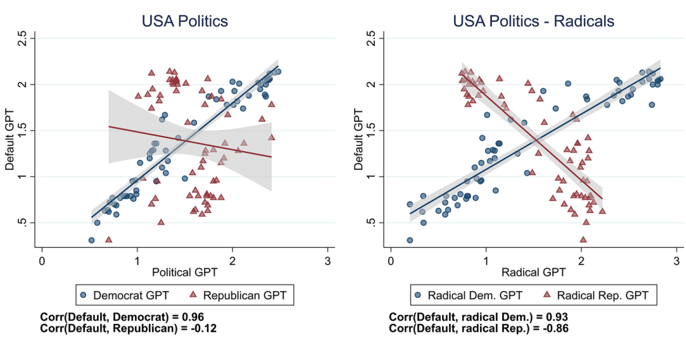
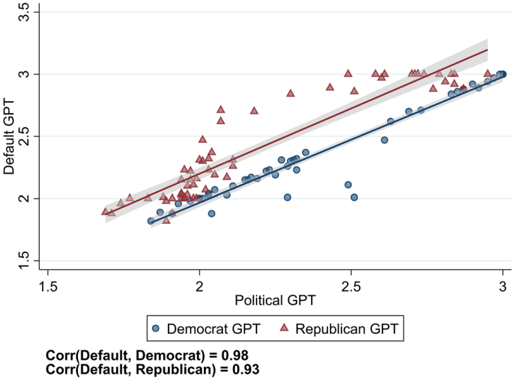
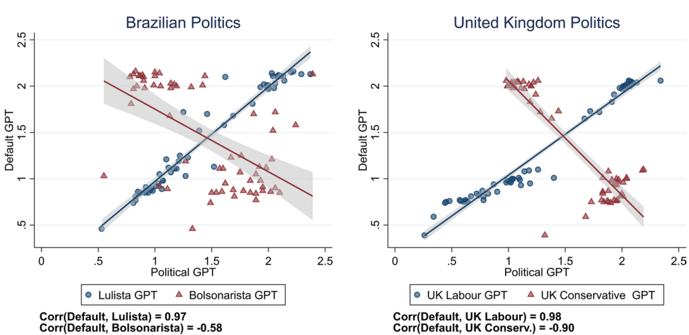
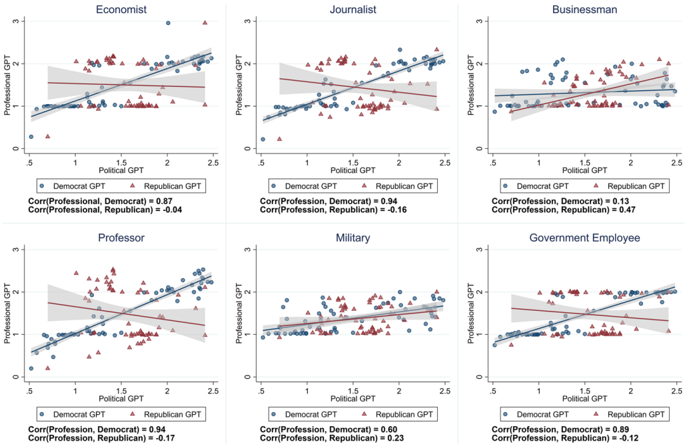
Verification
Claims the paper makes
The claims and statistics of this paper haven’t been checked yet.
Free: it reads the open-access text and checks the first 5 claims that cite a source we can check. Create a free account to check every claim.
Claims other papers make about this one
Each is checked against this paper’s own text: does it say what the citing paper says it does?
The cited source says what the claim attributes to it.
In the citing paper
“On one hand, we must be mindful that several studies have underscored the ways in which the outputs of GenAI tools like ChatGPT can inadvertently reinforce biases in areas such as gender and politics (Gross, 2023; Motoki et al., 2024; Rutinowski et al., 2024).”
From If ChatGPT can do it, where is my creativity? generative AI boosts performance but diminishes experience in creative writing (2025) · cites this paper as Motoki et al., 2024
The cited source says what the claim attributes to it.
In the citing paper
“Available data point to ChatGPT output expressing more progressive than traditional political views [38][39][40].”
From The Impact of Artificial Intelligence on Human Sexuality: A Five-Year Literature Review 2020–2024 (2024) · cites this paper as [39]
Self-check
Percentages, sums and reported differences re-computed from the paper’s own numbers.
The self-check needs the paper’s full text.
Citations
Cites
Semantics derived automatically from language corpora contain human-like biases
Caliskan, A., Bryson, J. J., & Narayanan, A. (2017) · Science · doi:10.1126/science.aal4230 · Cited by 2,887 · cited 3×
“It is particularly important that our method does not need access to the inner parameters of the LLM, like word embeddings (Caliskan et al., 2017), as companies make them opaque or costly due to competition concerns (Vincent, 2023; Science Media Centre, 2023), nor advanced programming skills.”
Generative Agents: Interactive Simulacra of Human Behavior
Park, J. S., O'Brien, J., Cai, C. J., Morris, M. R., Liang, P., & Bernstein, M. S. (2023) · Proceedings of the 36th Annual ACM Symposium on User Interface Software and Technology · doi:10.1145/3586183.3606763 · Cited by 2,187 · cited 1×
“Finally, Park et al. (2023) document that ChatGPT can simulate human behavior, taking actions that vary with the agents’ experiences and environment.”
Generative Agents: Interactive Simulacra of Human Behavior
Park, J. S., O'Brien, J. C., Cai, C. J., Morris, M. R., Liang, P., & Bernstein, M. S. (2023) · arXiv · doi:10.48550/arxiv.2304.03442 · Cited by 2,173 · cited 1×
“Finally, Park et al. (2023) document that ChatGPT can simulate human behavior, taking actions that vary with the agents’ experiences and environment.”
ChatGPT: five priorities for research
van Dis, E. A. M., Bollen, J., Zuidema, W., van Rooij, R., & Bockting, C. L. (2023) · Nature · doi:10.1038/d41586-023-00288-7 · Cited by 1,842 · cited 2×
“We answer a call from van Dis et al. (2023) to hold LLMs on to human verification, addressing the standing issue of the lack of a reliable method for measuring their biases.”
Chollet, F. (2017) · Cited by 1,158
Gentzkow, M., & Shapiro, J. M. (2006) · Journal of Political Economy · doi:10.1086/499414 · Cited by 1,013 · cited 1×
“One avenue is understanding channels and implications of bias through modeling (Castañeda & Martinelli, 2018; Gentzkow & Shapiro, 2006).”
Groseclose, T., & Milyo, J. (2005) · The Quarterly Journal of Economics · doi:10.1162/003355305775097542 · Cited by 991 · cited 2×
“We focus on the issue of political bias, as it can have major social consequences (Bernhardt et al., 2008; Chiang & Knight, 2011; Groseclose & Milyo, 2005; Levendusky, 2013) and is subtler than other biases (Peters, 2022).”
Graphs in Statistical Analysis
Anscombe, F. J. (1973) · The American Statistician · doi:10.1080/00031305.1973.10478966 · Cited by 976
Out of One, Many: Using Language Models to Simulate Human Samples
Argyle, L. P., Busby, E. C., Fulda, N., Gubler, J. R., Rytting, C., & Wingate, D. (2023) · Political Analysis · doi:10.1017/pan.2023.2 · Cited by 783 · cited 3×
“We know from existing literature that certain professions are more aligned with Democrats or with Repub-licans, as detailed in Table 5, and we know that ChatGPT can correctly reproduce known distributions from specific subgroups (Argyle et al., 2022).”
InfluentialSocial Media, News Consumption, and Polarization: Evidence from a Field Experiment
Levy, R. (2021) · American Economic Review · doi:10.1257/aer.20191777 · Cited by 624
Research works printed but not linked: 3
- Brown, T. B., Mann, B., Ryder, N., Subbiah, M., Kaplan, J., Dhariwal, P. & Amodei, D. (2020) 07. Lan- guage models are few-shot learners. arXiv.
- Cameron, A. C. & Trivedi, P. K. (2022). Microeconometrics using Stata (2nd ed.). College StationStata Press.
- Jelveh, Z., Kogut, B. & Naidu, S. (2022). Political language in economics [SSRN Scholarly Paper].
Cited by
Items 101–200 of 353
Ruled by robots: preference for algorithmic decision makers and perceptions of their choices
Chugunova, M., & Luhan, W. J. (2024) · Public Choice · doi:10.1007/s11127-024-01178-w · Cited by 25
“Turning right”? An experimental study on the political value shift in large language models
Liu, Y., Panwang, Y., & Gu, C. (2025) · Humanities and Social Sciences Communications · doi:10.1057/s41599-025-04465-z · Cited by 31
“These fi ndings align with previous research, which also identi fi ed signi fi cant liberal-left political biases in ChatGPT, particularly favoring the Democratic Party in the United States, Lula in Brazil, and the Labour Party in the United Kingdom (Motoki et al. 2023).”
InfluentialVox Populi, Vox AI? Using Large Language Models to Estimate German Vote Choice
von der Heyde, L., Haensch, A., & Wenz, A. (2025) · Social Science Computer Review · doi:10.1177/08944393251337014 · Cited by 46
“For example, Motoki et al. (2023) and Hartmann et al. (2023) found that GPT ’ s default political orientation was biased towards left or progressive ideologies in several two-and multi-party systems.”
InfluentialA practical guide to implementing ChatGPT as a secondary coder in qualitative research
Blondeel, E., Everaert, P. C., & Opdecam, E. (2025) · International Journal of Accounting Information Systems · doi:10.1016/j.accinf.2025.100754 · Cited by 20
Rama, I., & Airoldi, M. (2025) · New Media & Society · doi:10.1177/14614448251338273 · Cited by 15
“The contribution dialogues with literature applying qualitative inter-views to conversational chatbots (Dengel et al., 2023; Magee et al., 2023; Motoki et al., 2024; Weinberg, 2020), by introducing a methodological approach and analytical posture suitable for studying the intertwined social,…”
Large Language Models and Financial Market SentimentPreprint
Bond, S. A., Klok, H., & Zhu, M. (2023) · SSRN Electronic Journal · doi:10.2139/ssrn.4584928 · Cited by 28
The Homogenizing Engine: AI's Role in Standardizing Culture and the Path to Policy
Daryani, Y., Sourati, Z., & Dehghani, M. (2025) · Policy Insights from the Behavioral and Brain Sciences · doi:10.1177/23727322251406591 · Cited by 19
“…the United Arab Emirates (UAE)t, LLMs exhibit comparable left-leaning orientations, suggesting that the bias re fl ects dominant patterns in Western online discourse rather than the speci fi c political landscapes of individual nations (Batzner et al., 2024; Motoki et al., 2024; Peng et al., 2024).”
Borup, J., West, R. E., Lowenthal, P. R., & Archambault, L. (2025) · Open Praxis · doi:10.55982/openpraxis.17.1.769 · Cited by 11
“Generative AI’s outputs can contain potentially harmful political (Motoki et al., 2023; Rozado, 2023), racial (Omiye et al., 2023), and gender biases (Newstead et al., 2023), and online instructors and students should be diligent in recognizing and minimizing these possible biases.”
ChatGPT vs. Human Journalists: Analyzing News Summaries Through BERTScore and Moderation Standards
Kim, H.-S., Kang, J.-W., & Choi, S. (2025) · Electronics · doi:10.3390/electronics14112115 · Cited by 13
Karell, D., Sachs, J. D., & Barrett, R. (2024) · Poetics · doi:10.1016/j.poetic.2024.101966 · Cited by 15
Prompting the Machine: Introducing an LLM Data Extraction Method for Social Scientists
Foisy, L.-O. M., Proulx, É., Cadieux, H., Gilbert, J., Rivest, J., Bouillon, A., & Dufresne, Y. (2025) · Social Science Computer Review · doi:10.1177/08944393251344865 · Cited by 13
“…et al., 2022; Rozado, 2023; Rutinowski et al., 2023; Van den Broek, 2023), and this bias extends to LLMs ’ evaluations of personalities, institutions, and political parties, favoring liberals and left-leaning entities (McGee, 2023; Motoki et al., 2023; M Foisy et al., 2024; Heyde et al., 2024).”
Prompt selection matters: enhancing text annotations for social sciences with large language models
Abraham, L., Arnal, C., & Marie, A. (2025) · Journal of Computational Social Science · doi:10.1007/s42001-025-00388-6 · Cited by 19
“LLMs are also known to suffer from certain biases, including political ones [LJW + 22, MPNR24, ZLS + 24]; those could result in systematic biases on certain tasks that would have a greater impact on the research performed on the annotated dataset than the raw accuracy might suggest.”
Generative AI in Heritage Practice: Improving the Accessibility of Heritage Guidance
Witte, J., Lee, E., Brausem, L., Shillabeer, V., & Bonacchi, C. (2025) · Heritage · doi:10.3390/heritage8120513 · Cited by 18
Shi, S., Zhang, Y., Xu, X., Filieri, R., & Jia, R. (2026) · Tourism Management · doi:10.1016/j.tourman.2026.105446 · Cited by 10
The Elusiveness of Detecting Political Bias in Language Models
Lunardi, R., Barbera, D. L., & Roitero, K. (2024) · ACM International Conference on Information and Knowledge Management (CIKM) · doi:10.1145/3627673.3680002 · Cited by 30
“Finally, Motoki et al. [17] investigate the political bias of ChatGPT by having the model impersonate different political perspectives, running robustness tests, and analyzing responses to determine presence of systematic political bias, finding that ChatGPT exhibits bias toward certain political…”
Application of large language models in healthcare: A bibliometric analysis
Zhang, L., Zhao, Q., Zhang, D., Song, M., Zhang, Y., & Wang, X. (2025) · Digital Health · doi:10.1177/20552076251324444 · Cited by 15
“33,34 This raises ethical concerns and questions about the fairness and representativeness of LLM applications in global healthcare.”
Walker, C., & Timoneda, J. C. (2025) · Political Science Research and Methods · doi:10.1017/psrm.2025.10057 · Cited by 17
“This is partially due to the focus on the English language in extant work (Motoki et al. , 2024; Pit et al. , 2024).”
Generative exaggeration in LLM social agents: Consistency, bias, and toxicity
Nudo, J., Pandolfo, M. E., Loru, E., Samory, M., Cinelli, M., & Quattrociocchi, W. (2025) · Online Social Networks and Media · doi:10.1016/j.osnem.2025.100344 · Cited by 30
Security and Privacy of Large Language Models: Threat Taxonomy, Ethical Implications, and Governance
Pribisalić, M., & Martinčić-Ipšić, S. (2026) · AI · doi:10.3390/ai7050152 · Cited by 9
Skumanich, A., & Kim, H. K. (2024) · Proceedings of the AAAI Symposium Series · doi:10.1609/aaaiss.v3i1.31247 · Cited by 11
Real-GPT: Efficiently Tailoring LLMs for Informed Decision-Making in the Real Estate Industry
Gloria, B., Melsbach, J. W., Bienert, S., & Schoder, D. (2024) · Journal of Real Estate Portfolio Management · doi:10.1080/10835547.2024.2372748 · Cited by 13
The impact of guilt on student interactions with generative AI technology
Jo, H. (2025) · Ethics & Behavior · doi:10.1080/10508422.2025.2466152 · Cited by 9
“Since these models are trained on large datasets that may contain biased information, they can inadvertently perpetuate stereotypes and unfair representations (Bender et al., 2021; Chavanayarn, 2023; Motoki et al., 2024).”
What do librarians look like? Stereotyping of a profession by generative Ai
Spennemann, D. H. R., & Oddone, K. (2025) · Journal of Librarianship and Information Science · doi:10.1177/09610006251357286 · Cited by 13
“…versions of ChatGPT exhibited biases, generally favouring libertarian, progressive, and left-leaning perspectives (Fujimoto and Takemoto, 2023; Motoki et al., 2024, 2025; Rozado, 2023; Rutinowski et al., 2024), often with a North American (Cao et al., 2023) or Eurocentric focus (Broadhead,…”
AI-Delphi: Emulating Personas Toward Machine–Machine Collaboration
Nóbrega, L., Marchhausen, L., Martinez, L. F., Lima, Y., de Almeida, M. A., Lyra, A. D. O., Barbosa, C. E., & de Souza, J. M. (2025) · AI · doi:10.3390/ai6110294 · Cited by 12
“In this context, Motoki et al. [19] played a significant role in investigating the political bias of ChatGPT.”
Due process by design: Enhancing fairness and trust in AI decision-making
Fischman-Afori, O. (2025) · Social Sciences & Humanities Open · doi:10.1016/j.ssaho.2025.102178 · Cited by 12
Rotaru, G.-C., Anagnoste, S., & Oancea, V.-M. (2024) · Proceedings of the ... International Conference on Business Excellence · doi:10.2478/picbe-2024-0158 · Cited by 38
“Previous research identified significant evidence that ChatGPT exhibits a systematic bias towards left-leaning political positions in various contexts, including the United States, Brazil, and the United Kingdom (Motoki, 2024).”
Perils and Opportunities in Using Large Language Models in Psychological ResearchPreprint
Abdurahman, S., Atari, M., Karimi-Malekabadi, F., Xue, M. J., Trager, J. P., Park, P. S., Golazizian, P., Omrani, A., & Dehghani, M. (2023) · OSF Preprints (OSF Preprints) · doi:10.31219/osf.io/tg79n · Cited by 16
Perils and Opportunities in Using Large Language Models in Psychological ResearchPreprint
Abdurahman, S., Atari, M., Karimi-Malekabadi, F., Xue, M. J., Trager, J. P., Park, P. S., Golazizian, P., Omrani, A., & Dehghani, M. (2023) · PsyArXiv (OSF Preprints) · doi:10.31234/osf.io/d695y · Cited by 11
DOSA: A Dataset of Social Artifacts from Different Indian Geographical Subcultures
Seth, A., Ahuja, S., Bali, K., & Sitaram, S. (2024) · doi:10.2139/ssrn.4756716 · Cited by 8
Grasso, F., & Locci, S. (2024) · Lecture notes in computer science · doi:10.1007/978-3-031-70242-6_29 · Cited by 8
“…mitigate the impact of this unpredictability on performance and to obtain statistically significant results, similarly to what performed in other similar studies [20] we executed each experiment 100 times for each of the three tasks and calculated the average metrics, which are presented in Table 2.”
Examining the Feasibility of Large Language Models as Survey Respondents
Kitadai, A., Ogawa, K., & Nishino, N. (2024) · IEEE International Conference on Big Data (BigData) · doi:10.1109/bigdata62323.2024.10825497 · Cited by 14
Ta, N., Zeng, J., & Li, Z. (2025) · Information Communication & Society · doi:10.1080/1369118x.2025.2537803 · Cited by 10
“Academic research has also provided evidence suggesting that ChatGPT’s political bias leans toward liberal viewpoints (Motoki et al., 2024).”
Alyukov, M., Makhortykh, M., Voronovici, A., & Sydorova, M. (2025) · Harvard Kennedy School Misinformation Review · doi:10.37016/mr-2020-187 · Cited by 21
Addressing Autonomy Risks in Generative Chatbots with the Socratic Method
Lu, W., & Hu, Z. (2025) · Science and Engineering Ethics · doi:10.1007/s11948-025-00567-8 · Cited by 15
“For instance, empirical studies have demonstrated that ChatGPT exhibits systematic political bias, favoring entities such as the U.S. Democratic Party, Brazil’s Lula, and the U.K. Labour Party (Motoki et al., 2024).”
Is ChatGPT a friend or foe in the war on misinformation?: A South African perspective
Senekal, B., & Brokensha, S. (2023) · Communicare: Journal for Communication Studies in Africa · doi:10.36615/jcsa.v42i2.2437 · Cited by 7
Rethinking AI: Power, Surveillance, and Democracy
AKSOY, S. (2025) · Journal of Economic Sociology · doi:10.17323/1726-3247-2025-5-138-155 · Cited by 6
How do Generative Language Models Answer Opinion Polls?Preprint
Boelaert, J., Coavoux, S., Ollion, É., Petev, I. D., & Präg, P. (2024) · SocArXiv (OSF Preprints) · doi:10.31235/osf.io/r2pnb · Cited by 15
Spennemann, D. H. R. (2025) · SSRN Electronic Journal · doi:10.2139/ssrn.5393987 · Cited by 9
Xu, Z., & Zhang, X. (2025) · International Journal of Human-Computer Interaction · doi:10.1080/10447318.2025.2508311 · Cited by 8
“At the same time, ChatGPT has sparked debates about misinformation, abuse, academic cheating, and its ethical role in sensitive fields like healthcare or law (Guleria et al., 2024; Motoki et al., 2024; Rospigliosi, 2023).”
Zhu, J., Kempermann, M., Cannanure, V. K., Hartland, A., Navarrete, R. M., Carteny, G., Braun, D., & Weber, I. G. (2025) · ACM Conference on Conversational User Interfaces (CUI) · doi:10.1145/3719160.3736611 · Cited by 8
“…under-scored by numerous expert evaluations on election-related facts (e.g. candidates’ names) [1, 2, 24, 51], as well as automated evaluations revealing LLMs’ supposed bias towards left-leaning policies based on the popular Political Compass test [13, 23, 41] and existing European VAAs [9, 49].”
Stay Tuned: Improving Sentiment Analysis and Stance Detection Using Large Language Models
Griswold, M., Robbins, M. W., & Pollard, M. (2025) · Political Analysis · doi:10.1017/pan.2025.10023 · Cited by 10
Karanja, J. M., & Musili, M. M. (2026) · Social Science Computer Review · doi:10.1177/08944393261416781 · Cited by 7
Jiménez, C. A. R., Lokker, C., Ibhawoh, B., & Schwartz, L. J. (2026) · Discover Public Health · doi:10.1186/s12982-026-01568-z · Cited by 7
Large Language Models as SocioTechnical Systems
Dhole, K. (2023) · doi:10.18653/v1/2023.bigpicture-1.6 · Cited by 26
“Such outputs could have serious socio-political ramifications (Motoki et al., 2023) as well as radicalisation risks (McGuffie and Newhouse, 2020), without discounting the possibility of being led to even physical harm.”
BackgroundDilling, M., & Owen, L. (2024) · Journal of Political Science Education · doi:10.1080/15512169.2024.2408767 · Cited by 6
“This risks being highly conse-quential for assignments in politics and international relations, with bias being particularly hard to detect, for instance, when explaining foundational concepts like democracy, inequality, or populism (Motoki et al. 2023).”
Пинчук, А. Н., Сергеевич, М. Е., & Андреевич, Т. Д. (2025) · Journal of Economic Sociology · doi:10.17323/1726-3247-2025-5-11-37 · Cited by 6
ChatGPT as a voting application in direct democracy
Reveilhac, M., & Morselli, D. (2025) · Swiss Political Science Review · doi:10.1111/spsr.12650 · Cited by 9
Political Biases of ChatGPT in Different LanguagesPreprint
Retzlaff, N. (2024) · Preprints.org · doi:10.20944/preprints202406.1224.v1 · Cited by 13
Voting Advice Applications: Implementation of RAG-supported LLMsPreprint
Schiele, D.-I. M., Gittmann, Y., Ilchmann, S., Gojsalić, A., Jurinčić, D., & Klempt, P. (2024) · doi:10.36227/techrxiv.172115156.64500701/v1 · Cited by 12
Wang, E., Smith, J. D., Katz, S. J., Bishay, M., Dissanayake, T., Jones, N., Reddy, S., SHOLTER, D. E., Soo, J., & Ye, C. (2025) · Rheumatology Advances in Practice · doi:10.1093/rap/rkaf083 · Cited by 6
“Even though the association between political view and AI use has not previously been reported, Motoki et al. [28] found that LLMs such as ChatGPT tend to lean towards more liberal views, which could potentially attract more liberal-leaning users.”
Deng, Z., Fu, X., & Li, C. (2025) · Environment and Planning B Urban Analytics and City Science · doi:10.1177/23998083251382381 · Cited by 6
Political Ideology Shifts in Large Language Models
Bernardelle, P., Civelli, S., Fröhling, L., Lunardi, R., Roitero, K., & Demartini, G. (2026) · Information Processing & Management · doi:10.1016/j.ipm.2026.105124 · Cited by 14
Bol, D., & Bono, P.-H. (2025) · Research & Politics · doi:10.1177/20531680251335653 · Cited by 5
Wencker, T., Borst, J., & Niekler, A. (2025) · Evaluation · doi:10.1177/13563890251330911 · Cited by 9
Exposing the Ideology of Large Language Models with Creative Practices
Cremaschi, M., Grigis, P., Dorfmann, M., & Angeli, A. D. (2025) · Designing Interactive Systems Conference · doi:10.1145/3715336.3735715 · Cited by 8
“In addition, they present systematic political biases [28, 54] and lack transparency and accountability [44].”
Kathirgamalingam, A., Lind, F., & Boomgaarden, H. G. (2025) · Annals of the International Communication Association · doi:10.1093/anncom/wlaf013 · Cited by 5
Díaz, G. M. C., Jiménez‐Leal, W., Grisales, M. A., Sripada, C., Amaya, S., Inzlicht, M., & Bermúdez, J. P. (2026) · Behavior Research Methods · doi:10.3758/s13428-026-02966-6 · Cited by 6
“…known to produce biased outputs related to social categories such as gender, ethnicity, race, religion, and political orientation (Angwin et al., 2016; Fazelpour & Danks, 2021; Kasirzadeh, 2022; Fulgu & Capraro, 2024; Zack et al., 2024; Motoki et al., 2024; Liang et al., 2021; Liu et al., 2022).”
Assessing Bias in LLM-Generated Synthetic Datasets: The Case of German Voter BehaviorPreprint
von der Heyde, L., Haensch, A., & Wenz, A. (2023) · SocArXiv (OSF Preprints) · doi:10.31235/osf.io/97r8s · Cited by 9
Frontiers: Reducing Disparity Between LLMs and Humans: Optimal LLM Sample Calibration
Leng, Y., Sang, Y., & Agarwal, A. (2026) · Marketing Science · doi:10.2139/ssrn.4802019 · Cited by 9
Piao, J., Lu, Z., Gao, C., & Li, Y. (2025) · International World Wide Web Conference (WWW) · doi:10.1145/3696410.3714537 · Cited by 13
Bachmann, F., van der Weijden, D., Heitz, L., Sarasua, C., & Bernstein, A. (2025) · PLoS ONE · doi:10.1371/journal.pone.0322690 · Cited by 9
“Similar to previous work [65], we prompt GPT-4 to answer the questionnaire pretending to be a member of one of the eight parties.”
Lim, H., Choi, D., & Hong, H. (2025) · ACM Conference on Fairness, Accountability, and Transparency (FAccT) · doi:10.1145/3715275.3732207 · Cited by 8
Nasi, F. (2025) · Discover Artificial Intelligence · doi:10.1007/s44163-025-00331-8 · Cited by 6
González-Cantera, T., & Bonacchi, C. (2025) · International Journal of Heritage Studies · doi:10.1080/13527258.2025.2543736 · Cited by 4
Should we be wary of using artificial intelligence-based big data management in social research?
Ejdys, J., Garwolińska, M., Lăzăroiu, G., Nica, E., di Pietro, F., Poskrobko, T., & Szpilko, D. (2025) · Journal of Business Economics and Management · doi:10.3846/jbem.2025.24792 · Cited by 4
Spennemann, D. H. R. (2026) · Administrative Sciences · doi:10.3390/admsci16060252 · Cited by 5
“…all generative AI models, both large language models and text to image generators (Fujimoto & Takemoto, 2023; Gross, 2023; Jenny et al., 2023; Motoki et al., 2023; Nakashima et al., 2023; Rutinowski et al., 2023; Spennemann, 2025d, There is a considerable body of work that has examined the…”
Digital twins are funhouse mirrors: Five systematic distortions
Peng, T., Brucks, M. S., Gui, G., Merlau, D. J., Fan, G. J., Sliman, M. B., Johnson, E. J., Althenayyan, A., Bellezza, S., Donati, D., et al. (2026) · Science Advances · doi:10.1126/sciadv.aeh8260 · Cited by 22
“” In particular, twins tended to provide answers that were consistent with a view of technology as a safe tool under the control of humans (e.g., substudies 6, 9, 14, and 19).”
Perception of Bias in ChatGPT: Analysis of Social Media Data
Wahbeh, A., Al-Ramahi, M. A., El-Gayar, O., Elnoshokaty, A., & Nasralah, T. (2023) · IEEE Global Conference on Artificial Intelligence and Internet of Things (GCAIoT) · doi:10.1109/gcaiot61060.2023.10385099 · Cited by 6
Trust and Trustworthiness: Privacy Protection in the ChatGPT Era
Yu, S., Carroll, F., & Bentley, B. L. (2024) · Springer eBooks · doi:10.1007/978-3-031-76473-8_6 · Cited by 8
Behavioral analysis of ChatGPT users based on the ABC model: Focusing on a socio-technical approach
Liu, Y., Wang, H., & Park, Y. (2025) · European Management Journal · doi:10.1016/j.emj.2024.12.007 · Cited by 7
Capraro, V., Paolo, R. D., & Pizziol, V. (2025) · Scientific Reports · doi:10.1038/s41598-025-01715-7 · Cited by 14
AI-Enhanced Deliberative Democracy and the Future of the Collective Will
Revel, M., & Pénigaud, T. (2026) · Philosophy & Technology · doi:10.1007/s13347-026-01044-1 · Cited by 19
“…left-wing biases (Potter et al. 2024 elegantly titled their paper "Hidden persuaders"), with a wealth of such results at this point (Feng et al., 2023; Röttger et al., 2024; Motoki et al., 2024 (across languages Hartmann et al., 2023) that worsen during fine-tuning (Santurkar et al. 2023).”
Hijacking algorithmic bias: analyzing the political discourse around ChatGPT on social media
Cohen, M., & Toch, E. (2025) · Information Communication & Society · doi:10.1080/1369118x.2025.2561046 · Cited by 6
“Several recent papers, which rely on the rich output of large-language models, expand the notion of algorithmic bias toward other categories, such as political views (Liu et al., 2022; Motoki et al., 2024).”
Motoki, F. Y. S., Monteiro, J. J., Malagueño, R., & Rodrigues, V. R. D. S. (2023) · SSRN Electronic Journal · doi:10.2139/ssrn.4595896 · Cited by 4
Self-citationImran, M., Shahid, A. R., Hou, M., & Imteaj, A. (2024) · TechRxiv · doi:10.36227/techrxiv.170630660.06963201/v1 · Cited by 6
Toubia, O., Gui, G., Peng, T., Merlau, D. J., Li, A., & Chen, H. (2025) · SSRN Electronic Journal · doi:10.2139/ssrn.5265253 · Cited by 22
The Journey of Language Models in Understanding Natural Language
Liu, Y. R., Zhou, J., Sang, G., Huang, R., Zhao, X., Fang, J., Wang, T., & Li, B. (2024) · Lecture notes in computer science · doi:10.1007/978-981-97-7707-5_29 · Cited by 3
Silver, B., Williams‐Ceci, S., & Naaman, M. (2025) · CHI Conference Extended Abstracts on Human Factors in Computing Systems (CHI EA) · doi:10.1145/3706599.3720008 · Cited by 4
“Although LLMs often contain viewpoint biases in their training data [9, 28], prompt engineering can override or switch the models’ default responses [15, 18], reducing some of the overt biases that prevent humans from acting upon misinformation.”
Kahani: Culturally-Nuanced Visual Storytelling Tool for Non-Western Cultures
Hamna, Sudharsan, D., Seth, A., Budhiraja, R., Khullar, D., Jain, V., Bali, K., Vashistha, A., & Segal, S. (2025) · ACM SIGCAS/SIGCHI Conference on Computing and Sustainable Societies (COMPASS) · doi:10.1145/3715335.3735478 · Cited by 10
“…advances, past works have raised concerns about the cultural awareness of these models, including the world knowledge they encode, the ideologies their outputs mimic [4], and the extent to which they recognize diverse identities such as gender, race, and political affiliations [14, 22, 30, 49].”
Dormuth, I., Franke, S., Hafer, M., Katzke, T., Marx, A., Müller, E., Neider, D., Pauly, M., & Rutinowski, J. (2025) · Communications in computer and information science · doi:10.1007/978-3-032-08333-3_4 · Cited by 10
Gao, Y., Feng, Y., & Jahng, S. G. (2025) · Frontiers in Public Health · doi:10.3389/fpubh.2025.1705082 · Cited by 5
An Emergent Understanding of Human-AI Collaboration in Deliberation
Umbelino, G. K., & Veri, F. (2025) · ACM Conference on Computer Supported Cooperative Work (CSCW) · doi:10.1145/3715070.3749265 · Cited by 6
“For most of the models, we used off-the-shelf, default configurations, with temperature parameter set to zero to reduce the randomness in models’ responses [16].”
Generative AI as an Investment Advisor: Same Client, Different Advice
Agliata, N., & Hasso, T. (2026) · FinTech · doi:10.3390/fintech5020054 · Cited by 3
“The contrast between our results and previous studies documenting clear gender or ethnic disparities in lending and hiring contexts [7,8,10,11] should therefore be read narrowly: under this specific structured prompt design, we find no robust evidence of ethnic disparate treatment in two of three…”
InfluentialLLMs as annotators: the effect of party cues on labelling decisions by large language models
Vera, S. V., & Driggers, H. (2025) · Humanities and Social Sciences Communications · doi:10.1057/s41599-025-05834-4 · Cited by 17
“Motoki et al. (2024), for example, fi nd that LLMs tend to align more with left-of-center viewpoints, a result similar to the one obtained by Rozado (2024) when probing LLMs with political orientation tests.”
Valuing time in silicon: Can large language models replicate human value of travel time
Yan, Y., Liu, T., & Yin, Y. (2026) · Travel Behaviour and Society · doi:10.1016/j.tbs.2026.101245 · Cited by 15
“Rozado (2023) and Motoki et al. (2024) uncovered biases of LLMs in their political opinions.”
The Impact of ChatGPT on Enterprise Competitive Intelligence Systems
Linna, G. (2023) · Information Systems and Economics · doi:10.23977/infse.2023.040909 · Cited by 3
“Simultaneously, improving the system's interpretability makes the decision-making process more transparent, enabling users to understand the logic behind the system's outputs [24] .”
BackgroundEvolution of the use of conversational agents in business education: Past, present, and future
López, V. (2024) · RAM. Revista de Administração Mackenzie · doi:10.1590/1678-6971/eramd240062 · Cited by 4
Skumanich, A., & Kim, H. K. (2024) · IEEE International Conference on Big Data (BigData) · doi:10.1109/bigdata62323.2024.10825035 · Cited by 3
España-Bonet, C. (2023) · Findings of the Association for Computational Linguistics: EMNLP (Findings of EMNLP) · doi:10.18653/v1/2023.findings-emnlp.787 · Cited by 14
Vox Populi, Vox AI? Using Language Models to Estimate German Public OpinionPreprint
von der Heyde, L., Haensch, A., & Wenz, A. (2023) · SocArXiv (OSF Preprints) · doi:10.31235/osf.io/8je9g · Cited by 6
Lukyanenko, R. (2025) · SSRN Electronic Journal · doi:10.2139/ssrn.5153894 · Cited by 3
Sacred or Secular? Religious Bias in AI-Generated Financial AdvicePreprint
Khan, M. S., & Umer, H. (2025) · SSRN Electronic Journal · doi:10.2139/ssrn.5193790 · Cited by 4
Collectivism and individualism political bias in large language models: A two-step approach
Xiao-bo, S. H. A. N., Teng, Y., Wang, Y., Zhao, H., & Wang, Y. (2025) · Big Data & Society · doi:10.1177/20539517251343861 · Cited by 6
“In particular, concerns over political biases inherent in LLM outputs have been voiced (Blodgett et al., 2020; Motoki et al., 2024; Sullivan-Paul, 2023).”
Spaces for democracy with generative artificial intelligence: public architecture at stake
Campo-Ruiz, I. (2025) · AI & Society · doi:10.1007/s00146-025-02353-3 · Cited by 3
Dai, L., & Chen, S. (2025) · International Journal of High Speed Electronics and Systems · doi:10.1142/s0129156425408733 · Cited by 2
Chiriac, E. (2025) · Documentation et bibliothèques · doi:10.7202/1119067ar · Cited by 2
Xiang, M., & Xia, S. (2025) · Policy Studies Journal · doi:10.1111/psj.70086 · Cited by 3
“In such scenarios, if algorithms are flawed—a burgeoning literature has demonstrated the potential political bias of LLMs (e.g., Motoki et al. 2024; Rozado 2023)—or if they are intentionally harnessed by authoritarian regimes to promote “bad” policies that are detrimental to citizens' interests in…”
ChatGPT as a research proxy: simulating human attitudes in social science research
Семеновна, Р. А., & Воронин, А. Н. (2026) · Journal of Computational Social Science · doi:10.1007/s42001-025-00452-1 · Cited by 3
“These results confirm the findings on the left bias exhibited by ChatGPT [ 15 , 16 , 22 , 32 , 34 , 40–42 ] (Gover, 2023; Van den Broek, 2023).”
Administrative Decision-Making with Generative AI: The Challenge of Epistemic Boundedness
Kim, Y., Kim, J., Kim, T., & Cho, H.-C. (2026) · Administration & Society · doi:10.1177/00953997251409156 · Cited by 5
“…require analyzing lengthy policy documents remain challenging for LLMs. Additionally, studies spanning 2024 to 2025 have documented pervasive bias across political (Motoki et al., 2024), cultural (Tao et al., 2024), racial (Hofmann et al., 2024), and geographical (Manvi et al., 2024) dimensions.”
Inteligencia artificial y elecciones: un experimento en el balotaje ecuatoriano 2025
Curvale, C. (2026) · Revista Mexicana de Derecho Electoral · doi:10.22201/iij.24487910e.2026.24.20952 · Cited by 2
Metadata
- Authors
- Motoki, F., Pinho Neto, V., & Rodrigues, V.
- Affiliations
- University of East Anglia (GB)
- Corresponding author
- Motoki, Fabio
- Venue
- Public Choice
- Published
- 2023-08-17
- Volume
- 198
- Issue
- 1-2
- Pages
- 3-23
- ISSN
- 0048-5829 (ISSN-L)
- 1573-7101
- OpenAlex
- W4385852384
- Semantic Scholar
- 3d8a3517231643c1df79bc32c8c2664a4cba3a41
- Cited by
- 329
- References
- 44
- Citations by year
- 2026: 94 · 2025: 125 · 2024: 81 · 2023: 28
- FWCI
- 81.89
- Type
- journal article
- Language
- en
- Open access
- hybrid
- doi.org
- Licence
- cc-by
- creativecommons.org/licenses/by/4.0 (tdm)
- creativecommons.org/licenses/by/4.0 (vor)
- Locations
- Public Choice (publishedVersion, cc-by)
- SSRN Electronic Journal (acceptedVersion)
- UEA Digital Repository (University of East Anglia) (acceptedVersion)
- RePEc: Research Papers in Economics (submittedVersion)
- UEA Digital Repository (University of East Anglia) (submittedVersion)
- Funders
- Coordenação de Aperfeiçoamento de Pessoal de Nível Superior (Finance Code 001)
- Topics
- Physical Sciences › Computer Science › Artificial Intelligence › Ethics and Social Impacts of AI
- Social Sciences › Communication › Social Media and Politics
- Social Sciences › Sociology and Political Science › Media Influence and Politics
- Keywords
- ChatGPT, large language models, political bias, algorithmic bias, impersonation, placebo tests, robustness testing, Luiz Inácio Lula da Silva, Labour Party, political polarization, AI-generated text
About these checks
Registry, retraction, Cites and statistics results are computed, not judged, with one exception: a printed reference that no index lists is read once by a model before it counts as a citation error. Claims are extracted by a model and kept only when their quote appears verbatim in the text; each cited source is then checked, with a model’s help, for whether it says what the claim relies on. Those verdicts can be wrong — read the claim’s quote and the cited source before relying on one.
Statistics and arithmetic are recomputed, not judged.
Confidence bands are shown only for fields calibrated on our annotated test set. None is calibrated yet, so no band is shown.
What counts as a claim ›How we measure confidence ›How we check this ›
Are you an author, or do you see a problem with this page? Request a review
Data sources
Bibliographic data: Semantic Scholar, OpenAlex, Crossref.
Contains information from the Semantic Scholar Academic Graph Datasets, made available under the ODC Attribution License (ODC-BY 1.0).
Semantic Scholar’s data is described in: Kinney, R., et al. (2023). The Semantic Scholar Open Data Platform. arXiv:2301.10140.
