

Evaluating and establishing national norms for mental wellbeing using the short Warwick–Edinburgh Mental Well-being Scale (SWEMWBS): findings from the Health Survey for England
Open accessThe DOI matches its Crossref record; 26 of the 27 references it cites were found in a registry or an index.
Abstract
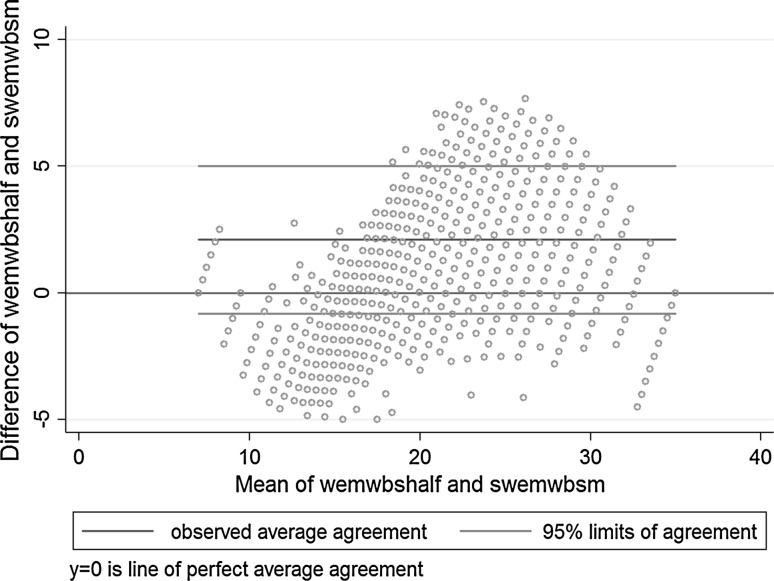
PURPOSE: The Warwick-Edinburgh Mental Well-being Scale (WEMWBS), 14 positively worded statements, is a validated instrument to measure mental wellbeing on a population level. Less is known about the population distribution of the shorter seven-item version (SWEMWBS) or its performance as an instrument to measure wellbeing. METHODS: Using the Health Survey for England 2010-2013 (n = 27,169 adults aged 16+, nationally representative of the population), age- and sex-specific norms were estimated using means and percentiles. Criterion validity was examined using: (1) Spearman correlations (ρ) for SWEMWBS with General Health Questionnaire (GHQ-12), happiness index, EQ-VAS (2) a multinomial logit model with SWEMWBS (low, medium and high wellbeing) as the outcome and demographic, social and health behaviours as explanatory variables. Relative validity was examined by comparing SWEMWBS with WEMWBS using: (1) Spearman correlations (continuous data), and (2) the weighted kappa statistic (categorical), within population subgroups. RESULTS: Mean (median) SWEMWBS was 23.7 (23.2) for men and 23.2 (23.2) for women (p = 0.100). Spearman correlations were moderately sized for the happiness index (ρ = 0.53, P < 0.001), GHQ-12 (ρ = -0.52, p < 0.001) and EQ-VAS (ρ = 0.40, p < 0.001). Participants consuming <1 portion of fruit and vegetables a day versus ≥5 (odds ratio = 1.43 95% Confidence Interval = (1.22-1.66)) and current smokers versus non-smokers (1.28 (1.15-1.41)) were more likely to have low vs medium wellbeing. Participants who binge drank versus non-drinkers were less likely to have high versus medium wellbeing (0.81 (0.71-0.92)). Spearman correlations between SWEMWBS and WEMWBS were above 0.95; weighted kappa statistics showed almost perfect agreement (0.79-0.85). CONCLUSION: SWEMWBS distinguishes mental wellbeing between subgroups, similarly to WEMWBS, but is less sensitive to gender differences.
Overview
The claims and statistics of this paper haven’t been checked yet.
Free: it reads the open-access text and checks the first 5 claims that cite a source we can check. Create a free account to check every claim.
Integrity signals
Registry
Cites
Statistics
Figures
Verification
Claims the paper makes
The claims and statistics of this paper haven’t been checked yet.
Free: it reads the open-access text and checks the first 5 claims that cite a source we can check. Create a free account to check every claim.
Claims other papers make about this one
Each is checked against this paper’s own text: does it say what the citing paper says it does?
The source backs part of the claim, not all of it — or backs it for a different population, condition or comparison.
In the citing paper
“Internal validity of the SWEMWBS has been demonstrated as good to excellent (α = 0.84; Fat et al., 2017).”
From Behind the masks: A cross-sectional study on intolerance of uncertainty, perceived vulnerability to disease and psychological flexibility in relation to state anxiety and wellbeing during the COVID-19 pandemic (2021) · cites this paper as Fat et al., 2017
Experimental — accuracy not yet measuredThe cited source says what the claim attributes to it.
In the citing paper
“Mean pre-intervention scores suggested at the beginning of the study participants were within the ‘low’ wellbeing range (below 19.3; Ng Fat et al., 2017) and were experiencing COVID-related distress (above 6 out of 10).”
From ACTing towards better living during COVID-19: The effects of Acceptance and Commitment therapy for individuals affected by COVID-19 (2022) · cites this paper as Ng Fat et al., 2017
The cited source says what the claim attributes to it.
In the citing paper
“when compared with normative comparison data, wellbeing levels, in particular, remained lower than the published norms”
From Mental health during the COVID-19 pandemic: exploring the role of psychological flexibility and stress-related variables. (2023) · cites this paper as Fat et al., 2017
Self-check
Percentages, sums and reported differences re-computed from the paper’s own numbers.
The self-check needs the paper’s full text.
Citations
Cites
The Measurement of Observer Agreement for Categorical Data
Landis, J. R., & Koch, G. G. (1977) · Biometrics · doi:10.2307/2529310 · Cited by 81,148 · cited 1×
“To assess the strength of agreement, we used the Landis and Koch classification [26]: slight: 0–0.”
MethodCoefficient Alpha and the Internal Structure of Tests
Cronbach, L. J. (1951) · Psychometrika · doi:10.1007/bf02310555 · Cited by 43,931
On Happiness and Human Potentials: A Review of Research on Hedonic and Eudaimonic Well-Being
Ryan, R. M., & Deci, E. L. (2001) · Annual Review of Psychology · doi:10.1146/annurev.psych.52.1.141 · Cited by 11,567
The Warwick-Edinburgh Mental Well-being Scale (WEMWBS): development and UK validation
Tennant, R., Hiller, L., Fishwick, R., Platt, S., Joseph, S., Weich, S., Parkinson, J., Secker, J., & Stewart-Brown, S. (2007) · Health and Quality of Life Outcomes · doi:10.1186/1477-7525-5-63 · Cited by 5,031 · cited 4×
“Similar moderate correlations were found between SWEMWBS and GHQ12 and EQ-VAS, as had been previously demonstrated for WEMWBS [9].”
BackgroundMethodResultInfluentialSelf-citationSubjective wellbeing, health, and ageing
Steptoe, A., Deaton, A., & Stone, A. A. (2015) · The Lancet · doi:10.1016/s0140-6736(13)61489-0 · Cited by 2,455 · cited 1×
“It is linked with good physical health and with longevity among older adults [7].”
BackgroundIs well-being U-shaped over the life cycle?
Blanchflower, D. G., & Oswald, A. J. (2008) · Social Science & Medicine · doi:10.1016/j.socscimed.2008.01.030 · Cited by 1,830 · cited 2×
“Mental wellbeing has been found to have a U-shaped relationship with age [5, 6].”
Stewart-Brown, S., Tennant, A., Tennant, R., Platt, S., Parkinson, J., & Weich, S. (2009) · Health and Quality of Life Outcomes · doi:10.1186/1477-7525-7-15 · Cited by 1,251
Self-citationGiornale Italiano di Psicologia
Amerio, P., Anolli, L., Cornoldi, C., Galli, P. F., Gerbino, W., Mosconi, G., Nicoletti, R., Palmonari, A., Parisi, D., Poli, M., et al. (2006) · Archivio istituzionale della ricerca (Alma Mater Studiorum Università di Bologna) · Cited by 713
Time-Limit Tests: Estimating their Reliability and Degree of Speeding
Cronbach, L. J., & Warrington, W. G. (1951) · Psychometrika · doi:10.1007/bf02289113 · Cited by 677
How Can Measures of Subjective Well-Being Be Used to Inform Public Policy?
Dolan, P., & White, M. P. (2007) · Perspectives on Psychological Science · doi:10.1111/j.1745-6916.2007.00030.x · Cited by 416 · cited 1×
“to assess progress outside of the usual economic and material indicators [1–3].”
Background
Research works printed but not linked: 6
- Tinkler, L. (2015). Measuring National Well-being: Personal Well-being in the UK, 2014–2015. In ONS. (Ed.), Statistical Bulletin.: ONS.
- McManus S Chanfreau J Lloyd C Predictors of wellbeing 2013 London Natcen
- Natcen Social Research, and University College Medical School Health Survey for England, 2010 [computer file] 2015 3 Colchester UK Data Archive
- NatCen Social Research, University College London, and Department of Epidemiology and Public Health Health Survey for England, 2013 [computer file] 2015 Colchester UK Data Archive
- NatCen Social Research, University College London, and Department of Epidemiology and Public Health Health Survey for England, 2011 [computer file] 2013 Colchester UK Data Archive
- NatCen Social Research, University College London, and Department of Epidemiology and Public Health Health Survey for England, 2012 [computer file] 2014 Colchester UK Data Archive
Cited by
Items 201–300 of 549
Jefferies, P., Fritz, J., Deighton, J., & Ungar, M. T. (2023) · Research on Child and Adolescent Psychopathology · doi:10.1007/s10802-023-01038-z · Cited by 11
Chakrapani, V., Kumar, P., Kaur, J., Shunmugam, M., & Mukherjee, D. (2023) · Venereology · doi:10.3390/venereology2010003 · Cited by 11
Predicting Adherence to Home-Based Cardiac Rehabilitation with Data-Driven Methods
Filos, D., Claes, J., Cornelissen, V., Kouidi, E. J., & Chouvarda, I. (2023) · Applied Sciences · doi:10.3390/app13106120 · Cited by 13
Buckingham, S. A., Tu, G., Elliott, L. R., Poole, R., Walker, T., Bland, E., & Morrissey, K. (2023) · BMC Public Health · doi:10.1186/s12889-023-16875-2 · Cited by 19
“The mean mental wellbeing (SWEMWBS) scores were 23.4 ± 4.8 for males and 22.6 ± 4.0 for females in our sample; this is slightly (although not significantly) lower than the national (England) male and female norm scores of 23.7 and 23.2 respectively [46].”
InfluentialDanielsen, S., Strandberg-Larsen, K., Orri, M., Nordentoft, M., Erlangsen, A., & Madsen, T. (2024) · European Child and Adolescent Psychiatry · doi:10.1007/s00787-024-02616-2 · Cited by 8
Parkin, K., Chen, S., Biria, M., Plaistow, J., Beckwith, H., Barnham, I. J., Segarra, N., Worbe, Y., Fineberg, N. A., Cardinal, R. N., et al. (2022) · Psychological Medicine · doi:10.1017/s003329172100492x · Cited by 13
van Rens, T., Hanson, P., Oyebode, O. O., Walasek, L., Barber, T. M., Mujcic, R., & Al-Khudairy, L. (2022) · BMJ Nutrition Prevention & Health · doi:10.1136/bmjnph-2022-000562 · Cited by 11
McFadden, P., Ross, J., MacLochlainn, J., Mallett, J., McGrory, S., Currie, D., Schroder, H. S., Nicholl, P., Ravalier, J. M., & Manthorpe, J. (2023) · The British Journal of Social Work · doi:10.1093/bjsw/bcad220 · Cited by 14
Gustafsson, J., Ojala, A., Hiltunen, P., Engberg, E., Wiklund-Engblom, A., Törnwall, N., Roos, E., & Ray, C. (2021) · International Journal of Environmental Research and Public Health · doi:10.3390/ijerph18136814 · Cited by 18
Mental wellbeing in bereaved carers: A Health Survey for England population study
Hodiamont, F., Allgar, V. L., Currow, D. C., & Johnson, M. J. (2019) · BMJ Supportive & Palliative Care · doi:10.1136/bmjspcare-2019-001957 · Cited by 11
Upsher, R. J., Percy, Z., Nobili, A., Foster, J., Hughes, G., & Byrom, N. (2022) · Education Sciences · doi:10.3390/educsci12090622 · Cited by 19
Ballou, N., Sewall, C. J. R., Ratcliffe, J., Zendle, D. I., Tokarchuk, L. N., & Deterding, S. (2024) · Technology Mind and Behavior · doi:10.1037/tmb0000124 · Cited by 25
“…Kingdom and cross-cultural sample, Thompson, 2007, p. 238); general mental well-being is 3.25 (compared to 3.4 in U.K. adults aged 25 – 36, Ng Fat et al., 2017); depressive symptoms were 54 on the original scale or 2.68 when rescaled (compared to 50 in the general as the PROMIS population…”
InfluentialA measure to assess the workplace well‐being of psychological practitioners
Summers, E., Morris, R. C., & Bhutani, G. (2019) · Clinical Psychology & Psychotherapy · doi:10.1002/cpp.2401 · Cited by 17
Grimson, S., Brickley, G., Smeeton, N. J., Abbott, W., & Brett, A. (2021) · European Journal of Sport Science · doi:10.1080/17461391.2021.1976841 · Cited by 15
Kinnafick, F., Brinkley, A., Bailey, S. J., & Adams, E. J. (2021) · International Journal of Behavioral Nutrition and Physical Activity · doi:10.1186/s12966-021-01204-w · Cited by 13
“Indeed, while mental health and wellbeing [59] and social isolation were higher than population norms [60], findings indicate WI members do not participate in sufficient PA to meet national guidelines designed to protect from ill-health [1] and report perceptions of quality of life lower than the general population [6…”
BackgroundGambling and Gaming in the United Kingdom during the COVID-19 Lockdown
Close, J., Spicer, S. G., Nicklin, L. L., Lloyd, J., Whalley, B., & Lloyd, H. M. (2022) · COVID · doi:10.3390/covid2020007 · Cited by 13
“Across the cohort of 631 gamers/gamblers, wellbeing scores (as measured by the WEMWBS) before lockdown were similar to UK norms [38], but over lockdown dropped by approximately 2 points (Table 4).”
MethodSmith, L., Amlôt, R., Fear, N. T., Michie, S., Rubin, G. J., & POTTS, H. W. W. (2022) · Journal of Psychiatric Research · doi:10.1016/j.jpsychires.2022.06.040 · Cited by 10
“Wellbeing was measured using the Short Warwick-Edinburgh Mental Wellbeing Scale (SWEMWS), another validated tool (Ng Fat et al., 2017; NHS Scotland et al., 2008).”
InfluentialDay, C., Harwood, J., Kendall, N., & Nicoll, J. (2022) · BMC Public Health · doi:10.1186/s12889-022-13691-y · Cited by 14
The uptake and outcomes of an online self-help mindfulness programme during COVID-19
Li, I., Chen, A. Z., Newby, J. M., Kladnitski, N., Haskelberg, H., Millard, M., & Mahoney, A. (2022) · Clinical Psychologist · doi:10.1080/13284207.2022.2045866 · Cited by 12
Miller, R. J., Hotton, M., Williamon, A., Kneebone, R. L., Goodacre, T., O’Leary, D., & Chan, J. K. K. (2021) · Annals of Surgery · doi:10.1097/sla.0000000000005199 · Cited by 34
“However, it may be less sensitive to sex differences.(24)”
BackgroundMethodResultInfluentialWatson, C. (2024) · Educational Psychology in Practice · doi:10.1080/02667363.2024.2365644 · Cited by 19
“The SWEMWBS demonstrated good internal consistency (α = .84) (Ng Fat et al., 2017).”
InfluentialFincham, G. W., Epel, E. S., Colasanti, A., Strauss, C., & Cavanagh, K. (2024) · Scientific Reports · doi:10.1038/s41598-024-64254-7 · Cited by 16
“The other trait measures were mental wellbeing (using the Short Warwick-Edinburgh Mental Wellbeing Scale; SWEMWBS) 21 and sleep-related impairment (PROMIS Item Bank v. 1.0—Sleep-Related Impairment—Short Form 4a; PROMIS-4a) 22 .”
MethodInfluentialYiu, H. H. E., Al‐Janabi, H., Stewart-Brown, S. L., Petrou, S., & Madan, J. J. (2022) · Quality of Life Research · doi:10.1007/s11136-022-03123-0 · Cited by 11
Self-citationFolch, C., González-Casals, H., Colom, J., Bosque‐Prous, M., Barón-Garcia, T., Álvarez-Vargas, A., Casabona, J., & Espelt, A. (2022) · Children · doi:10.3390/children9060783 · Cited by 13
Stuttard, L., Boyle, P., Fairhurst, C. M., Hewitt, C. E., Longo, F., Walker, S., Weatherly, H. L. A., Mayhew, E., & Beresford, B. (2021) · Trials · doi:10.1186/s13063-021-05607-9 · Cited by 11
Balchin, C., Tan, A. L., Wilson, O. J., McKenna, J., & Stavropoulos‐Kalinoglou, A. (2021) · Rheumatology International · doi:10.1007/s00296-021-05054-4 · Cited by 9
“SWEMWBS raw scores were transformed using a conversion table (see Online Resource 2) to facilitate the use of parametric statistical analyses [21].”
BackgroundMethodInfluentialDiamorphine assisted treatment in Middlesbrough: a UK drug treatment case study
Poulter, H. L., Moore, H. J., Crow, R., Ahmed, D., & Walker, T. (2022) · Journal of Substance Use · doi:10.1080/14659891.2022.2120433 · Cited by 9
“Self-reported gains in wellbeing from entry to month 6 were reported, with mean baseline scores (SD = 4.2, n = 13, score range 7 to 20,) indicating “probable depression” and latter scores being indicative of the average population 22.8 (SD = 5.6, n = 8 score range 12 to 29; Ng Fat et al., 2017).”
BackgroundInfluentialLyons, A., Alba, B., Waling, A., Minichiello, V., Hughes, M., Barrett, C., Fredriksen‐Goldsen, K. I., & Edmonds, S. (2020) · Aging & Mental Health · doi:10.1080/13607863.2020.1765314 · Cited by 10
“The 7-item Short Warwick Edinburgh Mental Well-Being Scale (Stewart-Brown et al., 2009) was used, which has similar validity to the longer version of the scale (Fat et al., 2017).”
MethodBehnood, S. A., Shafran, R., Bennett, S. D., Zhang, A. X., O’Mahoney, L. L., Stephenson, T. J., Ladhani, S. N., Stavola, B. L. D., Viner, R., & Swann, O. V. (2021) · SSRN Electronic Journal · doi:10.2139/ssrn.3940260 · Cited by 9
Sharp, C., Widnall, E., Albers, P. N., Willis, K. J., Capner, C., Kidger, J., de Vocht, F., Kaner, E., van Sluijs, E. M. F., Fairbrother, H., et al. (2022) · International Journal of Environmental Research and Public Health · doi:10.3390/ijerph192013711 · Cited by 12
“In addition, the survey contains the following scales; Short Warwick-Edinburgh Mental Well-being Scale (SWEMWEBS) to assess mental well-being [28], Short Moods and Feelings Questionnaire (SMFQ) to assess moods and feelings [29], the Generalized Anxiety Disorder Scale (GAD-7) to assess anxiety [30,31], and the Child He…”
MethodMorrissey, K., Taylor, T., & Tu, G. (2022) · Applied Research in Quality of Life · doi:10.1007/s11482-022-10121-4 · Cited by 8
Burch, K., Coombes, L., Macey, E., & Backinsell, A. (2023) · Developmental Child Welfare · doi:10.1177/25161032231165757 · Cited by 12
“In order to practice DDP, therapists have received specific training and supervision (DDP Network, 2022), so their core competencies and approach to DDP should have been consistent across England.”
MethodResultInfluentialYang, Z., Yang, J., & Chen, S. (2024) · Land · doi:10.3390/land13081328 · Cited by 10
Balogh, R., Moortel, D. D., Gadeyne, S., Vanderleyden, J., Warhurst, C., & Vanroelen, C. (2024) · International Journal of Social Determinants of Health and Health Services · doi:10.1177/27551938241288788 · Cited by 11
Sharpe, D. M., Rajabi, M., Mesa, L. G., Hanafiah, A. N., Obuaku-Igwe, C. C., Davidson, J. C., & Chileshe, K. (2024) · Frontiers in Psychiatry · doi:10.3389/fpsyt.2024.1424836 · Cited by 16
Linton, M.-J., Jelbert, S. A., Kidger, J., Morris, R. W., Biddle, L., & Hood, B. M. (2021) · Journal of Medical Internet Research · doi:10.2196/25279 · Cited by 14
Virtual Museum Tours for Schools: Teachers’ Experiences and Expectations
Aristeidou, M., Kouvara, T., Karachristos, C. V., Spyropoulou, N. D., Benavides-Lahnstein, A. I., Vulicevic, B., Lacapelle, A., Orphanoudakis, T. G., & Batsi, Ζ. (2022) · IEEE Global Engineering Education Conference (EDUCON) · doi:10.1109/educon52537.2022.9766548 · Cited by 10
“Museums may work with schools or vice versa to create partnerships that recognise discrete aspects of communication such as mutually beneficial learning goals and the purpose of visits [11], [12].”
Malins, S., Boutry, C., Moghaddam, N. G., Rathbone, J., Gibbons, F., Mays, C., Brooks, D. J., & Levene, J. (2023) · Psycho-Oncology · doi:10.1002/pon.6200 · Cited by 11
Heinze, N., & Castle, C. L. (2023) · Frontiers in Public Health · doi:10.3389/fpubh.2023.1277341 · Cited by 11
Tariq, A., Gray, E., Gregory, A. M., & Chan, S. W. Y. (2024) · Wellcome Open Research · doi:10.12688/wellcomeopenres.22685.1 · Cited by 14
Wallace, S., Wallace, C. A., Elliott, M., Davies, M., & Pontin, D. (2022) · BMJ Open · doi:10.1136/bmjopen-2021-052860 · Cited by 15
The cost of the wider impacts of road traffic on local communities: 1.6% of Great Britain's GDP
Anciães, P. R., Jones, P., Mindell, J. S., & Scholes, S. (2022) · Transportation Research Part A Policy and Practice · doi:10.1016/j.tra.2022.05.016 · Cited by 12
Self-citationJohnson, L., Czachorowski, M., Gutridge, K., McGrath, N. M., Parkes, J., & Plugge, E. (2023) · Frontiers in Public Health · doi:10.3389/fpubh.2023.1049497 · Cited by 11
Burnout, psychological wellbeing, and musculoskeletal complaints in UK GPs: an observational study
Biddle, G. J. H., Thomas, N. P. B., Edwardson, C. L., Clemes, S. A., & Daley, A. (2023) · BJGP Open · doi:10.3399/bjgpo.2023.0007 · Cited by 8
A quantitative evaluation of a regional Positive Behavioural Support workforce development approach
McKenzie, K., Murray, G. C., Martin, R. E., Murray, A. L., & Metcalfe, D. (2021) · Journal of Applied Research in Intellectual Disabilities · doi:10.1111/jar.12915 · Cited by 9
Mareva, S., Chapman, B. L., Hardwick, R., Hewlett, C., Mitchell, S. B., Sanders, A., & Hayes, R. A. (2024) · Healthcare · doi:10.3390/healthcare12040430 · Cited by 11
Kanougiya, S., Daruwalla, N., & Osrin, D. (2024) · BMC Women s Health · doi:10.1186/s12905-024-03389-1 · Cited by 12
Psychometric properties of the Warwick Edinburgh Mental Well-being Scale: a systematic review
Perera, R., Wickremasinghe, R., & Za, T. A. P. D. (2025) · Systematic Reviews · doi:10.1186/s13643-025-02897-x · Cited by 11
“3; the mean Several studies reported comparable scores between sex [10, 27, 32, 48, 49], religion [10], ethnicity [10, 32], education level [32], and employment status [32].”
Social prescribing for informal carers: a pre-post study
Aggar, C., Teunisse, A. K., Bissett, M., Freak‐Poli, R., & Baker, J. R. (2025) · BMC Family Practice · doi:10.1186/s12875-025-02978-9 · Cited by 8
“Short Warwick-Edinburgh Mental Wellbeing Scale (SWEMWBS) [27] with 7 items rated 1–5.”
InfluentialBamford, J., Leavey, G., Rosato, M., Divin, N., Breslin, G., & Corry, D. A. S. (2023) · BMJ Open · doi:10.1136/bmjopen-2023-071999 · Cited by 14
Coyte, B., Betihavas, V., Devenish, S., & Foster, K. (2023) · Paramedicine · doi:10.1177/27536386231206501 · Cited by 16
Walking and Walkability in Delhi: Dissonance between Environmental Perception and Behavior
Mondschein, A. S. (2023) · Transportation Research Record Journal of the Transportation Research Board · doi:10.1177/03611981231210541 · Cited by 10
“The well-being (SWEMWBS) and CNS scores also varied within acceptable ranges ( 25 , 26 ).”
Tweedie‐Cullen, R. Y., Leong, K. S. W., Wilson, B. C., Derraik, J. G. B., Albert, B. B., Monk, R., Vatanen, T., Creagh, C., Depczynski, M., Edwards, T., et al. (2024) · BMJ Open · doi:10.1136/bmjopen-2023-074625 · Cited by 8
Yang, Z., Luo, N., & Hong, Y. (2024) · Health and Quality of Life Outcomes · doi:10.1186/s12955-024-02314-2 · Cited by 9
Working Conditions and Well-Being across the COVID Pandemic in UK Social (Care) Workers
Ravalier, J. M., McFadden, P., Gillen, P. A., Mallett, J., Nicholl, P., Neill, R. D., Manthorpe, J., Moriarty, J., Schroder, H. S., & Curry, D. (2022) · The British Journal of Social Work · doi:10.1093/bjsw/bcac214 · Cited by 12
An investigation of smoking habits and mental well‐being in healthcare personnel during COVID‐19
FIRAT, M., Gökmen, B. D., & Karakurt, P. (2021) · Perspectives In Psychiatric Care · doi:10.1111/ppc.12819 · Cited by 7
Shepherd, K., Pritty, B., Tickle, A., & Moghaddam, N. (2023) · International Journal of Mental Health and Addiction · doi:10.1007/s11469-021-00729-2 · Cited by 6
Tadros, M., Li, S., Corkish, B., Upton, E. L., Newby, J. M., & Werner‐Seidler, A. (2024) · Behavioral Sleep Medicine · doi:10.1080/15402002.2024.2374258 · Cited by 10
“(SWEMWBS; Ng Fat et al., 2017): The SWEMWBS is a 7-item measure of positive aspects of mental wellbeing.”
InfluentialBertotti, M., Farina, I., Marques, M. J., Alves, R., Dias, S., Paternoster, S., Paza, A., & Torri, E. (2025) · SSM - Mental Health · doi:10.1016/j.ssmmh.2025.100440 · Cited by 7
Calnan, M., Blest‐Hopley, G., Busch, C., Adams, M., Ruffell, S., Piper, T., Roseman, L., Kettner, H., & Carhart-Harris, R. L. (2025) · Brain and Behavior · doi:10.1002/brb3.70660 · Cited by 10
Morrish, N., Spencer, A. E., & Medina‐Lara, A. (2025) · PLoS ONE · doi:10.1371/journal.pone.0327671 · Cited by 7
“Mean SWEMWBS score for the sample was 24.3, similar to the population norm reported in previous studies [54], and suggesting middling wellbeing.”
InfluentialNewlands, F., Rojas, N. K., Nugawela, M. D., Pereira, S. M. P., Buszewicz, M., Chalder, T., Cheung, E. Y., Dalrymple, E., Ford, T. J., Heyman, I., et al. (2023) · Journal of Adolescent Health · doi:10.1016/j.jadohealth.2023.01.026 · Cited by 7
“Scores on the SWEMWBS were similar among those who tested positive (Median ¼ 20.7, IQR 18.0 e 23.2) and those who tested negative (Median ¼ 20.7, IQR 18.0 e 24.1).”
InfluentialDevelopment and Validation of the Sexual Minority and Religious Identity Integration (SMRII) Scale
Etengoff, C. M., Lefevor, G. T., Huynh, K. D., Rodriguez, E. M., & Luong, E. (2023) · Journal of Homosexuality · doi:10.1080/00918369.2023.2201870 · Cited by 7
Niven, A. G., & Strain, T. (2023) · Mental health and physical activity · doi:10.1016/j.mhpa.2023.100556 · Cited by 12
Factors associated with high and low mental well-being in Spanish university students
Navarra‐Ventura, G., Serra, P. R., Roca, M., Gili, M., García-Toro, M., Vilagut, G., Alayo, I., Ballester, L., Blasco, M. J., Castellví, P., et al. (2024) · Journal of Affective Disorders · doi:10.1016/j.jad.2024.04.056 · Cited by 16
Hanzlová, R., & Kudrnáč, A. (2024) · Health and Quality of Life Outcomes · doi:10.1186/s12955-024-02280-9 · Cited by 9
Owens, M., Leivang, R., & Bunce, H. L. I. (2024) · Ecopsychology · doi:10.1089/eco.2024.0031 · Cited by 8
Dingle, G. A., Han, R., Huang, K., Alhadad, S. S. J., Beckman, E. M., Bentley, S. V., Edmed, S. L., Gomersall, S. R., Hides, L. M., Lorimer, N., et al. (2025) · Journal of Affective Disorders · doi:10.1016/j.jad.2025.03.011 · Cited by 7
Sexual orientation and prevalence of mental health difficulties among emergency services employees
Kyron, M. J., McEvoy, P. M., Gilbey, D. P., Lin, A. P., Mazza, C., Rikkers, W., Bartlett, J., & Lawrence, D. M. (2021) · Journal of Affective Disorders · doi:10.1016/j.jad.2021.02.032 · Cited by 8
Burrin, C., Daniels, N. F., Cardinal, R. N., Hayhurst, C., Christmas, D. M. B., & Zimbron, J. (2021) · Case Reports in Psychiatry · doi:10.1155/2021/6615723 · Cited by 10
Turner, K., Moses, J., & Neal, A. (2021) · Clinical Psychology & Psychotherapy · doi:10.1002/cpp.2667 · Cited by 17
Sharpe, R. A., Wyatt, K. M., & Williams, A. J. (2022) · International Journal of Environmental Research and Public Health · doi:10.3390/ijerph19073816 · Cited by 7
Sleep Quality, Wellbeing and Happiness in Medical Undergraduates in Western India
Kukade, A. S., Mathad, M. D., & Sashidharan, R. K. (2022) · National Journal of Community Medicine · doi:10.55489/njcm.13052022133 · Cited by 6
Working from Home with a View of Nature (and Sunlight) Benefits People's Well-Being
Sciulli, N., Goullet, D., & Snell, T. (2023) · Ecopsychology · doi:10.1089/eco.2022.0030 · Cited by 9
“The positively worded items (e.g., ‘‘I’ve been thinking clearly’’) reflect the main components of mental well-being, including feeling good and functioning well (Linda, Shaun, Sadie, Jennifer, & Sarah, 2017).”
Paisi, M., Allen, Z., & Shawe, J. (2023) · Health Expectations · doi:10.1111/hex.13700 · Cited by 6
Tan, S. Z. K., Shendyapina, M., & Tay, L. N. S. (2023) · Technology Knowledge and Learning · doi:10.1007/s10758-023-09648-8 · Cited by 9
“In this study, the short WEMWBS (SWEMWBS) was used, which has been shown to be consistent with the long-form but with reduced participant burden (Stewart-Brown et al., 2009; Ng Fat et al., 2017).”
Keetharuth, A. D., Gray, L. A., McGrane, E., Worboys, H. M., & Orozco-Leal, G. (2024) · Health and Quality of Life Outcomes · doi:10.1186/s12955-023-02220-z · Cited by 7
Hughes, C., O’Neill, D., Mitchell, G., Close, C., Stark, P., Mallon, A., & Wilson, C. B. (2024) · Nurse Education Today · doi:10.1016/j.nedt.2024.106265 · Cited by 8
Jónsdóttir, U. S., Thordardottir, E. B., Aspelund, T., Jónmundsson, Þ., & Einarsdóttir, K. (2019) · European Journal of Public Health · doi:10.1093/eurpub/ckz192 · Cited by 7
Factors associated with positive mental health in young adults with a neurodevelopmental disorder
Appelqvist‐Schmidlechner, K., Lämsä, R., & Tuulio‐Henriksson, A. (2020) · Research in Developmental Disabilities · doi:10.1016/j.ridd.2020.103780 · Cited by 9
Stress, wellbeing, and help seeking in first year university studentsPreprint
Dingle, G. A., Vidas, D., & Hong, M. (2021) · PsyArXiv (OSF Preprints) · doi:10.31234/osf.io/85scz · Cited by 11
Han, R., Bos, V., Wiebusch, F., Broughton, M. C., & Dingle, G. A. (2025) · Behavioral Sciences · doi:10.3390/bs15050575 · Cited by 14
“Wellbeing was assessed using the Short Warwick–Edinburgh Mental Wellbeing Scale (SWEMWBS; Ng Fat et al., 2017).”
Cogan, N. A., Smith, M., & Deakin, K. (2026) · Behavioral Sciences · doi:10.3390/bs16030418 · Cited by 11
“The scale is known for its high reliability (Ng Fat et al., 2017) and has been validated across diverse populations, proving to be a sensitive tool for measuring changes in mental health.”
The impact of social prescribing on well-being outcomes in a nationwide analysis
Bu, F., Hayes, D., Munford, L. A., & Fancourt, D. E. (2026) · Nature Health · doi:10.1038/s44360-026-00099-w · Cited by 10
“The SWEMWBS is a widely used and validated tool for measuring mental well-being and detecting clinically meaningful changes 27,28 .”
Thomson, L. J. M., Elsden, E., & Chatterjee, H. J. (2023) · Museum and Society · doi:10.29311/mas.v21i1.3786 · Cited by 7
“It is also possible that there was less scope for wellbeing improvement than expected, as when pooled across the two museums that used it, SWEMWBS scores lay within the ‘medium’ range for mental wellbeing (Fat et al. 2017).”
BackgroundMethodEstablishing the psychological impact of congenital upper limb differences on parents and families
Miller, R., MacKenzie, A., Welman, T. J. P., Bodger, S., & Horwitz, M. D. (2024) · Journal of Hand Surgery (European Volume) · doi:10.1177/17531934241256793 · Cited by 7
“It demonstrates good internal consistency, convergence and discriminatory validity in UK (Miller et al., 2022; Ng Fat et al., 2017) and European populations (Koushede et al., 2019), but may be less sensitive to differences in sex (Ng Fat et al., 2017).”
Vainre, M., Galante, J., Watson, P., Dalgleish, T., & Hitchcock, C. (2022) · BMJ Open · doi:10.1136/bmjopen-2021-050951 · Cited by 7
Toma, G., Rubie-Davies, C. M., & Fevre, D. L. (2022) · Journal of Workplace Learning · doi:10.1108/jwl-09-2021-0123 · Cited by 9
Neill, R. D., Wake, J., Ohwa, M., Manthorpe, J., Gillen, P. A., & McFadden, P. (2022) · Psych · doi:10.3390/psych4040062 · Cited by 6
Martland, R., Valmaggia, L., Paleri, V., Steer, N., & Riches, S. (2024) · Mental Health and Digital Technologies · doi:10.1108/mhdt-11-2023-0001 · Cited by 5
Moral distress in advanced practice nurses during the COVID-19 pandemic
Wood, E., King, R., Taylor, B. H., Robertson, S., Senek, M., Tod, A., & Ryan, T. (2022) · Nursing Standard · doi:10.7748/ns.2022.e11885 · Cited by 9
Jong, A., Riddleston, L., Mathur, M., Duncan, K. B., Lalioti, K., Fuhrmann, D., & Lau, J. Y. F. (2023) · Current Research in Behavioral Sciences · doi:10.1016/j.crbeha.2023.100133 · Cited by 6
Donaldson, J. L., Robertson, A. M., Cruwys, T., Rathbone, J. A., Haslam, C., Chen, J., & Dawel, A. (2025) · British Journal of Clinical Psychology · doi:10.1111/bjc.12539 · Cited by 5
“SWEMWBS scores were transformed in accordance with author recommendations (NHS Health Scotland, University of Warwick, & University of Edinburgh, 2008; see also Ng Fat et al., 2017).”
Help-seeking intentions of UK construction workers: a cross-sectional study
Duncan, M. D., Bansal, D., & Cooke, E. (2024) · Occupational Medicine · doi:10.1093/occmed/kqae007 · Cited by 7
“When comparing scores from our sample to UK benchmark data, it was interesting to note that scores from the (S)WEMWBS were slightly higher than the general population (mean = 23.7; mean males 23.2; mean females 23.2 [20]), with no significant differences observed.”
ResultInfluentialMartland, R., Valmaggia, L., Paleri, V., Mulligan, A., Hildebrand, A., Williams, G., Raz, A., Steer, N., & Riches, S. (2025) · Mental Health & Prevention · doi:10.1016/j.mhp.2025.200408 · Cited by 6
Lam, L. T.-M., & Lam, M. K. (2025) · Frontiers in Psychiatry · doi:10.3389/fpsyt.2025.1528509 · Cited by 4
Yesberg, J. A., Fenn, L., & Sargeant, E. (2025) · Corrections · doi:10.1080/23774657.2025.2493692 · Cited by 7
“Previous studies have shown the scale to have good internal reliability (α = 0.84; Ng Fat et al., 2017).”
InfluentialJylkkä, J., Väyrynen, H., Lin, E., Walldén, C., Krabbe, A., Kähönen, J., & Sikka, P. (2025) · Consciousness and Cognition · doi:10.1016/j.concog.2025.103901 · Cited by 8
Wilson, J. J., Smith, L., Yakkundi, A., Jacob, L., Martin, S., Grabovac, I., McDermott, D. T., López‐Bueno, R., Barnett, Y., Butler, L., et al. (2022) · International Journal of Environmental Research and Public Health · doi:10.3390/ijerph19073959 · Cited by 4
“The SWEMWBS contains seven items and has been validated [25].”
MethodGroup-based psychoeducational workshop for parents in Kenya: findings from a pilot study
Alemu, R. E. G., Nyatete, H., Baseke, R., Ngatia, V., Osborn, T. L., & Wasanga, C. (2023) · Frontiers in Public Health · doi:10.3389/fpubh.2023.1223804 · Cited by 5
Metadata
- Authors
- Ng Fat, L., Scholes, S., Boniface, S., Mindell, J., & Stewart-Brown, S.
- Affiliations
- University College London (GB)
- King's College London (GB)
- University of Warwick (GB)
- Venue
- Quality of Life Research
- Published
- 2016-11-16
- Volume
- 26
- Issue
- 5
- Pages
- 1129-1144
- ISSN
- 0962-9343 (ISSN-L)
- 1573-2649
- PMC
- PMC5376387
- OpenAlex
- W2553379941
- Cited by
- 548
- References
- 27
- Citations by year
- 2026: 53 · 2025: 73 · 2024: 86 · 2023: 82 · 2022: 91 · 2021: 83 · 2020: 44 · 2019: 20 · 2018: 11 · 2017: 4
- FWCI
- 18.32
- Type
- journal article
- Language
- en
- Open access
- hybrid
- doi.org
- Locations
- Quality of Life Research (publishedVersion, cc-by)
- PubMed Central (publishedVersion, cc-by)
- PubMed (publishedVersion)
- Warwick Research Archive Portal (University of Warwick) (acceptedVersion, cc-by)
- UCL Discovery (University College London) (submittedVersion)
- Research Portal (King's College London) (submittedVersion, cc-by)
- Funders
- University College London
- Topics
- Social Sciences › Psychology › Social Psychology › Psychological Well-being and Life Satisfaction
- Social Sciences › Decision Sciences › Management Science and Operations Research › Psychometric Methodologies and Testing
- Social Sciences › Economics, Econometrics and Finance › Economics and Econometrics › Health Systems, Economic Evaluations, Quality of Life
- Keywords
- psychological well-being, national standards, age- and sex-specific percentiles, criterion validity, relative validity, General Health Questionnaire, happiness index, EQ-VAS, fruit and vegetable intake, smoking, binge drinking, Health Survey for England, questionnaire agreement, mental health screening
- MeSH terms
- Adolescent, Adult, England, Female, Health Surveys, Humans, Male, Mental Health, Psychometrics, Quality of Life, Surveys and Questionnaires, Young Adult
About these checks
Registry, retraction, Cites and statistics results are computed, not judged, with one exception: a printed reference that no index lists is read once by a model before it counts as a citation error. Claims are extracted by a model and kept only when their quote appears verbatim in the text; each cited source is then checked, with a model’s help, for whether it says what the claim relies on. Those verdicts can be wrong — read the claim’s quote and the cited source before relying on one.
Statistics and arithmetic are recomputed, not judged.
Confidence bands are shown only for fields calibrated on our annotated test set. None is calibrated yet, so no band is shown.
What counts as a claim ›How we measure confidence ›How we check this ›
Are you an author, or do you see a problem with this page? Request a review
Data sources
Bibliographic data: Semantic Scholar, OpenAlex, Crossref.
Contains information from the Semantic Scholar Academic Graph Datasets, made available under the ODC Attribution License (ODC-BY 1.0).
Semantic Scholar’s data is described in: Kinney, R., et al. (2023). The Semantic Scholar Open Data Platform. arXiv:2301.10140.
