

Biochar physicochemical properties: pyrolysis temperature and feedstock kind effects
Open accessThe DOI matches its Crossref record; 223 of the 225 references it cites were found in a registry or an index, and 1 are not checked yet; 31 of the 174 sources its claims cite were checked for support.
Abstract
Abstract Biochar is a pyrogenous, organic material synthesized through pyrolysis of different biomass (plant or animal waste). The potential biochar applications include: (1) pollution remediation due to high CEC and specific surface area; (2) soil fertility improvement on the way of liming effect, enrichment in volatile matter and increase of pore volume, (3) carbon sequestration due to carbon and ash content, etc. Biochar properties are affected by several technological parameters, mainly pyrolysis temperature and feedstock kind, which differentiation can lead to products with a wide range of values of pH, specific surface area, pore volume, CEC, volatile matter, ash and carbon content. High pyrolysis temperature promotes the production of biochar with a strongly developed specific surface area, high porosity, pH as well as content of ash and carbon, but with low values of CEC and content of volatile matter. This is most likely due to significant degree of organic matter decomposition. Biochars produced from animal litter and solid waste feedstocks exhibit lower surface areas, carbon content, volatile matter and high CEC compared to biochars produced from crop residue and wood biomass, even at higher pyrolysis temperatures. The reason for this difference is considerable variation in lignin and cellulose content as well as in moisture content of biomass. The physicochemical properties of biochar determine application of this biomaterial as an additive to improve soil quality. This review succinctly presents the impact of pyrolysis temperature and the type of biomass on the physicochemical characteristics of biochar and its impact on soil fertility.
Verified 2026-11-25 · 1 reference not checked yet
Overview
CoChat Summary
TL;DR
This is a review of how pyrolysis temperature and feedstock type shape biochar physicochemical properties and, in turn, its usefulness for soil amendment and contaminant removal. The paper’s main message is that higher pyrolysis temperatures generally increase pH, specific surface area, ash and carbon content, while decreasing CEC, volatile matter, and acidic functional groups.
Key findings
- Increasing pyrolysis temperature was reported to increase biochar pH, with values ranging from 6.5 to 10.8, and pH becoming roughly constant around 600 °C when alkali salts are fully released.
- The review states that higher pyrolysis temperature increases specific surface area and porosity, while decreasing CEC and volatile matter; it also notes that biochar produced at 600–700 °C is highly aromatic with well-organized C layers.
- Feedstock type strongly affects properties: biochars from animal litter and solid waste tend to have lower surface area, carbon content, and volatile matter, but higher CEC than those from crop residue and wood biomass.
- The paper reports several example values showing feedstock differences, e.g. wood biochar surface area 127.0 m²/g versus straw biochar 22.0 m²/g, green waste 46.0 m²/g, and algae 19.0 m²/g; and CEC 57.5 cmol/kg for algal biochar and 48.4 cmol/kg for poultry litter biochar at 500 °C.
Methods
- Review article synthesizing prior studies on biochar production and properties; no new experimental dataset was collected.
- The paper compares literature on the effects of pyrolysis temperature and feedstock kind on biochar physicochemical characteristics, and on resulting effects in soil.
- It draws on reported values from earlier studies and tables summarizing prior experiments and observed property ranges.
Limitations
- The paper does not report a systematic search strategy, study selection criteria, or meta-analytic methods; this is evident from the text, which presents a narrative review rather than a formal systematic review.
- The paper repeatedly notes that results vary by biomass and pyrolysis conditions, so many conclusions are broad generalizations across heterogeneous studies; this is evident from the text.
- Not stated in the paper.
Model-written summary. Check it against the paper before relying on it.
Integrity signals
Registry
Cites
Statistics
Figures

Verification
Claims the paper makes
28 Valid · 5 Not valid · 100 Not checked · 23 Own results and interpretations
At least one cited source doesn’t support this claim or points to a different paper, and none confirmed it — see the verdicts below.
In the paper
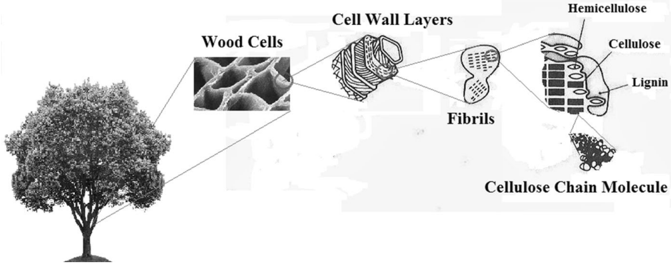
“Woody biomass often has higher cellulose, hemicellulose and lignin contents (Fig. 4) than biomass from herbaceous or grass species”
§ Biochar physicochemical properties: pyrolysis temperature and feedstock kind effects > 3.1 Volatile matter, carbon content and ash content
What the sources say
- Disputedcites Keiluweit et al. 2010 matched to “Dynamic Molecular Structure of Plant Biomass-Derived Black Carbon (Biochar)” (2010) sourceExperimental — accuracy not yet measured
The NEXAFS section attributes higher lignin content to woody material, but the Comparison of Precursor Materials section suggests grass has higher hemicellulose content—the opposite of the claim for that component. The cited passages do not establish that woody biomass has higher cellulose content. (LLM, conf=0.88)
Checked by a reasoning model — may be wrong.
- Not checked — no full text of the sourcecites Lupoi and Smith 2012 matched to “Characterization of Woody and Herbaceous Biomasses Lignin Composition with 1064 nm Dispersive Multichannel Raman Spectroscopy” (2012) source
hedgedstates an association- Asserted: passes — The authors put it forward as true.
- Checkable: passes — It can be checked against evidence.
- Load-bearing: unclear — It is unclear whether the paper’s conclusions depend on it.
- Based: passes — The paper gives a reason why it holds.
- Disputed
The cited sources support only part of this claim — read each source’s verdict below.
In the paper
“Numerous studies have proven that biochar increases the ability of soil to adsorb heavy metals and other contaminants, which is important for environmental protection and management”
- Also stated in: § 4.2 Inorganic and organic contaminates in soil · boosted
“Numerous studies have proven that biochar increases the ability of soil to adsorb heavy metals and other contaminants, which is important for environmental protection and management (Tomczyk et al. 2019;Wei et al. 2018).”
What the sources say
- Partly supportedcites Tomczyk et al. 2019 matched to “Biochar efficiency in copper removal from Haplic soils” (2019) sourceExperimental — accuracy not yet measured
The section ‘Amount of Cu adsorption on the soils as a function of biochar dose and pH value’ reports that adding biochar increased copper adsorption in the soils tested. The Conclusion limits the finding to copper in sandy and loess Haplic soils, with effective immobilization at acidic pH; it does not establish increased soil adsorption of other contaminants generally. (LLM, conf=0.86)
- Not checked — no full text of the sourcecites Wei et al. 2018 matched to “Biochar-based functional materials in the purification of agricultural wastewater: Fabrication, application and future research needs” (2018) source
boostedstates a cause- Asserted: passes — The authors put it forward as true.
- Checkable: passes — It can be checked against evidence.
- Load-bearing: passes — The paper’s conclusions depend on it.
- Based: passes — The paper gives a reason why it holds.
- Also stated in: § 4.2 Inorganic and organic contaminates in soil · boosted
The sources with a verdict support this claim; the rest weren’t checked yet, have no full text we could read, or their verdicts aren’t rated yet.
In the paper
“The pyrolysis temperature is strongly correlated with changes in the structure and physicochemical properties of biochar”
§ Biochar physicochemical properties: pyrolysis temperature and feedstock kind effects > 2 Effects of pyrolysis temperature
What the sources say
- Not checked — no full text of the sourcecites Asadullah et al. 2007 matched to “Production of bio-oil from fixed bed pyrolysis of bagasse” (2007) source
- Not checked — no full text of the sourcecites Chen et al. 2008 matched to “Transitional Adsorption and Partition of Nonpolar and Polar Aromatic Contaminants by Biochars of Pine Needles with Different Pyrolytic Temperatures” (2008) source
- Supportedcites Jindo et al. 2014 matched to “Physical and chemical characterization of biochars derived from different agricultural residues” (2014) source
The Conclusions state that pyrolysis temperature strongly influences biochar physicochemical properties. Section 3.4 also describes temperature-dependent changes in chemical composition and structure, supporting the structural part of the claim. (LLM, conf=0.93)
boostedstates an association- Asserted: passes — The authors put it forward as true.
- Checkable: passes — It can be checked against evidence.
- Load-bearing: passes — The paper’s conclusions depend on it.
- Based: passes — The paper gives a reason why it holds.
The cited sources support only part of this claim — read each source’s verdict below.
In the paper
“This was observed because the increasing temperature resulted in further cracking of the volatile fractions into low-molecular-weight liquids and gases instead of biochar”
§ Biochar physicochemical properties: pyrolysis temperature and feedstock kind effects > 2.3 Volatile matter
What the sources say
- Partly supportedcites Ronsse et al. 2012 matched to “Production and characterization of slow pyrolysis biochar: influence of feedstock type and pyrolysis conditions” (2013) sourceExperimental — accuracy not yet measured
The Discussion (page unavailable in our copy) reports that biochar’s volatile matter content declined as pyrolysis severity increased. The Proximate analysis section describes progressive devolatilization, and the Introduction identifies liquid and gaseous pyrolysis products. The paper does not establish the more specific explanation that volatile fractions underwent further cracking into low-molecular-weight liquids and gases instead of biochar. (LLM, conf=0.86)
plainstates a cause- Asserted: passes — The authors put it forward as true.
- Checkable: passes — It can be checked against evidence.
- Load-bearing: unclear — It is unclear whether the paper’s conclusions depend on it.
- Based: passes — The paper gives a reason why it holds.
- Partly supported
Every source the paper cites for this claim was checked and supports it.
In the paper
“increased pyrolysis temperature caused an increase of 5.7-18.7% in ash content”
§ Biochar physicochemical properties: pyrolysis temperature and feedstock kind effects > 2.4 Carbon content and ash content
What the sources say
- Supportedcites Rafiq et al. 2016 matched to “Influence of Pyrolysis Temperature on Physico-Chemical Properties of Corn Stover (Zea mays L.) Biochar and Feasibility for Carbon Capture and Energy Balance” (2016) source
Table 2 in Results and Discussion §4.1 reports ash content of 5.7%, 12.5%, and 18.7% at pyrolysis temperatures of 300°C, 400°C, and 500°C, respectively. The figures describe ash content rising from 5.7% to 18.7%, rather than a percentage increase of that magnitude. (LLM, conf=0.91)
plainstates a cause- Asserted: passes — The authors put it forward as true.
- Checkable: passes — It can be checked against evidence.
- Load-bearing: unclear — It is unclear whether the paper’s conclusions depend on it.
- Based: passes — The paper gives a reason why it holds.
- Supported
82 more claims · 15 with their cited sources checked
Create a free account to see all 156 claims and to verify the 11 references still open.
- It may state two separate claims as one. 60
- Probably not a substantial claim. 13
Claims other papers make about this one
Each is checked against this paper’s own text: does it say what the citing paper says it does?
The source backs part of the claim, not all of it — or backs it for a different population, condition or comparison.
In the citing paper
“For example, biochar with a high CEC retains more nutrients in soil by reducing nutrient loss through leaching (Tomczyk et al. 2020).”
From Biochar and its importance on nutrient dynamics in soil and plant (2020) · cites this paper as Tomczyk et al. 2020
Experimental — accuracy not yet measuredThe cited source says what the claim attributes to it.
In the citing paper
“the P and K contents increase due to an increase in ash content (Christel et al. 2016;Tomczyk et al. 2020;Wang et al. 2013).”
From Biochar and its importance on nutrient dynamics in soil and plant (2020) · cites this paper as Tomczyk et al. 2020
The cited source says what the claim attributes to it.
In the citing paper
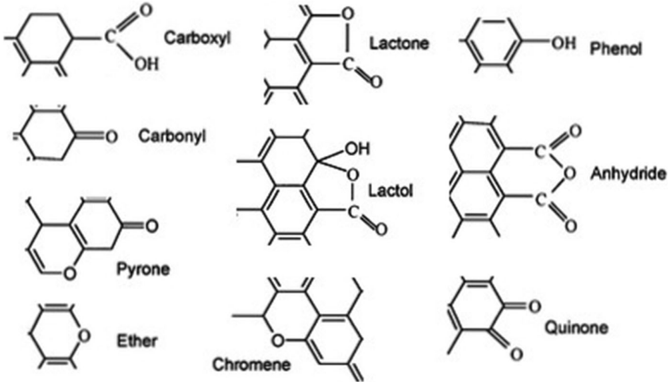
“The CEC of biochar is attributed to the generation of various functional groups, such as carboxyl and hydroxyl groups, during the pyrolysis of biomass (Tomczyk et al. 2020).”
From Biochar and its importance on nutrient dynamics in soil and plant (2020) · cites this paper as Tomczyk et al. 2020
In the citing paper
“Biochar also showed a positive impact on surface area of soil (Anawar et al. 2015), which varied with biochar types (Tomczyk et al. 2020).”
From Biochar and its importance on nutrient dynamics in soil and plant (2020) · cites this paper as Tomczyk et al. 2020
Citations
Cites
Pyrolysis of Wood/Biomass for Bio-oil: A Critical Review
Mohan, D., Pittman, C. U., & Steele, P. H. (2006) · Energy & Fuels · doi:10.1021/ef0502397 · Cited by 5,663
Biochar effects on soil biota – A review
Lehmann, J., Rillig, M. C., Thies, J., Masiello, C. A., Hockaday, W. C., & Crowley, D. (2011) · Soil Biology and Biochemistry · doi:10.1016/j.soilbio.2011.04.022 · Cited by 5,074
Biochar as a sorbent for contaminant management in soil and water: A review
Ahmad, M., Rajapaksha, A. U., Lim, J. E., Zhang, M., Bolan, N., Mohan, D., Vithanage, M., Lee, S. S., & Ok, Y. S. (2014) · Chemosphere · doi:10.1016/j.chemosphere.2013.10.071 · Cited by 4,662 · cited 4×
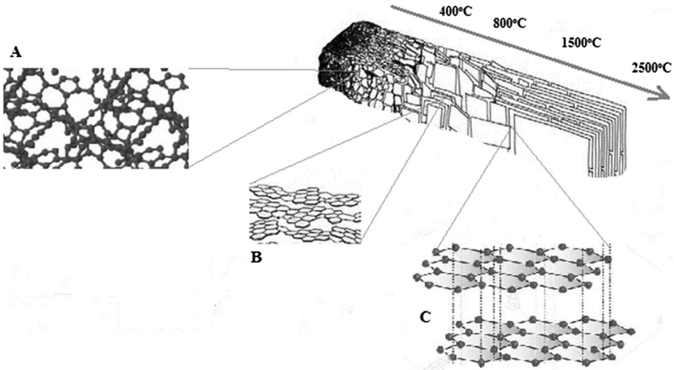
“As a result, the structure of biochar appears to have more organized C layers (like graphene structure) and less content of surface functional groups when pyrolysis temperature increases (Ahmad et al. 2014b).”
BackgroundInfluentialDynamic Molecular Structure of Plant Biomass-Derived Black Carbon (Biochar)
Keiluweit, M., Nico, P. S., Johnson, M. G., & Kleber, M. (2010) · Environmental Science & Technology · doi:10.1021/es9031419 · Cited by 3,230
Bio-char Sequestration in Terrestrial Ecosystems – A Review
Lehmann, J., Gaunt, J., & Rondon, M. (2006) · Mitigation and Adaptation Strategies for Global Change · doi:10.1007/s11027-005-9006-5 · Cited by 3,053
Structure Determination of Organic Compounds
Pretsch, E., Bühlmann, P., & Affolter, C. (2000) · Springer eBooks · doi:10.1007/978-3-662-04201-4 · Cited by 3,026
Biochar for environmental management: science and technology
(2009) · Choice Reviews Online · doi:10.5860/choice.47-0296 · Cited by 2,949
Glaser, B., Lehmann, J., & Zech, W. (2002) · Biology and Fertility of Soils · doi:10.1007/s00374-002-0466-4 · Cited by 2,890 · cited 3×
“However, Glaser et al. (2002) reported that Amazonian charcoal-rich anthrosols had a field water retention capacity 18.0% higher than that of surrounding soil without charcoal.”
BackgroundInfluentialSustainable biochar to mitigate global climate change
Woolf, D., Amonette, J. E., Street-Perrott, F. A., Lehmann, J., & Joseph, S. (2010) · Nature Communications · doi:10.1038/ncomms1053 · Cited by 2,680
Compant, S., Clément, C., & Sessitsch, A. (2010) · Soil Biology and Biochemistry · doi:10.1016/j.soilbio.2009.11.024 · Cited by 2,318
Research works printed but not linked: 10
- 39. Chen T, Zhang Y, Wang H, Lu W, Zhou Z, Zhang Y, Ren L (2015) Influence of pyrolysis temperature on characteristic and heavy metal adsorptive performance of biochar derived from municipal sewage sludge. Bioresour Technol 164:47-54 · DOI · Paper page
- 51. Denyes MJ, Parisien MA, Rutter A, Zeeb BA (2014) Physical, chemical and biological characterization of six biochar produced for the remediation of contamined soils. J Vis Exp 93:52183
- 56. Duong VT, Khanh NM, Nguyen NH, Phi NN, Nquyen T-C, Xo DH (2017) Impact of biochar on the water holding capacity and moisture of basalt and grey soil. J Sci Ho Chi Minh City Open Univers 7:36-43
- 58. El-Gamal E, Saleh M, Elsokkary I, Rashad M, Abd El-Latif MM (2017) Comparison between properties of biochar pro- duced by traditional and controlled pyrolysis. J Alex Sci Exch 38:413-424
- 66. Gerlach H (2014) Biochar in poultry farming. The Biochar Journal, Arbaz, Switzerland, www.biocharjournal.org/en/ ct/10
- 71. Guo M, Shen Y, He Z (2012) Poultry litter-based biochar: preparation, characterization, and utilization. In: He Z (ed) Applied research in animal manure management: chal- lenges and opportunities beyond the adverse environmental impacts. Nova Science Publishers, Hauppauge, NY, pp 171-202
- 114. Lewandowski W, Radziemska M, Ryms E, Ostrowski P (2010) Nowoczesne metody termochemiczne konwersji biomasy w paliwa gazowe, ciekłe i stałe. Proceedings of ECOpole 4 (2) (in Polish)
- 128. Malin ´ska K (2012) Biowe ˛giel odpowiedzia ˛na aktualne problem ochrony s ´rodowiska. In_ zynieria i ochrona s ´rodowiska 15:387-403 (in Polish)
- 203. Woolf D (2008) Biochar as a soil amendment: a review of the environmental implications. Swansea University, School of the Environment and Society. http://orgprints.org/13268
- 215. Yu H, Zhang Z, Li Z, Chen D (2014) Characteristic of tar for- mation during cellulose, hemicellulose and lignin gasifi- cation. Fuel 118:25-256
Cited by
Items 1,601–1,700 of 2,909
Gallorini, R., Rosi, L., Galletti, A. M. R., Licursi, D., & Antonetti, C. (2025) · Journal of Analytical and Applied Pyrolysis · doi:10.1016/j.jaap.2025.107206 · Cited by 6
Adeniyi, A. G., Micheal, T. T., Emenike, E. C., Abd-Elkader, O. H., Iwuozor, K. O., Al‐Lohedan, H. A., Hambali, H. U., Ezzat, A. O., Adeeyo, T., Amoloye, M. A., et al. (2025) · International Journal of Chemical Reactor Engineering · doi:10.1515/ijcre-2024-0248 · Cited by 6
Characterization of selected pyrolysis products of diseased orange wood
Kravetz, C., Leca, C., Brito, J. Ó., Saloni, D. E., & Tilotta, D. C. (2020) · BioResources · doi:10.15376/biores.15.3.7118-7126 · Cited by 6
“Not surprisingly, the charcoal content obtained from the orange wood under these experimental conditions is comparable to the biochar/charcoal content obtained from other biomass species (Manya 2012; Tomczyk et al. 2020).”
BackgroundMethodSukmawati, S. (2020) · Agroplantae Jurnal Ilmiah Terapan Budidaya dan Pengelolaan Tanaman Pertanian dan Perkebunan · doi:10.51978/agro.v9i2.223 · Cited by 13
Effect of Pyrolysis Methods on Characteristics of Biochar from Young Coconut Waste as Ameliorant
Maulana, A., Herviyanti, H., Prasetyo, T. B., Harianti, M., & Lita, A. L. (2022) · IOP Conference Series Earth and Environmental Science · doi:10.1088/1755-1315/959/1/012035 · Cited by 15
de Oliveira, F. S., Takeshita, V., Mendes, K. F., Tornisielo, V. L., Alonso, F. G., Junqueira, L. V., Neto, M. B., Lins, H. A., & Silva, D. V. (2022) · International Journal of Environmental Science and Technology · doi:10.1007/s13762-022-04046-6 · Cited by 7
“The physical and chemical properties of biochar determine the application of this biological material as an additive to improve soil quality (Tomczyk et al. 2020).”
BackgroundInfluentialSantos, J. A., Gonzaga, M. I. S., de Almeida, A. Q., da Silva, A. J., Santos, J. C. D. J., & Lima, I. D. S. (2022) · Research Society and Development · doi:10.33448/rsd-v11i5.28360 · Cited by 7
Sukartono, S., Kusumo, B. H., Suwardji, S., Bakti, A. A., Mahrup, M., Susilowati, L. E., & Fahrudin, F. (2022) · Sains Tanah - Journal of Soil Science and Agroclimatology · doi:10.20961/stjssa.v19i2.65452 · Cited by 7
Studies on the efficiency of fish scale adsorbents for treatment of fish processing effluent
Devasena, S. S., Padmavathy, P., Rani, V., Ganesan, P., & Pereira, J. J. (2023) · Environmental Progress & Sustainable Energy · doi:10.1002/ep.14195 · Cited by 5
“24 The values of other basic properties (moisture, bulk density, and pH) of adsorbents used in this study were calculated and shown in Table 3.”
MethodApplication and Impacts of Mulch Installation Techniques on Indian Horticulture: An In-depth Review
Indurthi, S., Razauddin, Ashoka, P., Saikanth, D. R. K., Das, H., Kumar, V., & Pancholi, R. (2023) · International Journal of Plant & Soil Science · doi:10.9734/ijpss/2023/v35i183504 · Cited by 8
Windiastuti, E., Indrasti, N. S., Hasanudin, U., Bindar, Y., & Suprihatin, S. (2023) · Journal of Ecological Engineering · doi:10.12911/22998993/170719 · Cited by 11
Zhang, M., Li, Y., Zhang, S., et al. (2023) · Microchimica Acta · doi:10.1007/s00604-023-06074-6 · Cited by 6
Impact of Biochar Dose and Origin on Winter Wheat Grain Quality and Quantity
Wyzińska, M., Berbeć, A. K., & Grabinski, J. (2023) · Agriculture · doi:10.3390/agriculture14010039 · Cited by 10
DEVELOPMENT AND EVALUATION OF A CONTINUOUS FLOW BIOCHAR UNIT USING RICE HUSK BIOMASS
FARAG, H. A., El‐Kholy, M., Okasha, M., AZAB, A. E., KHATER, A. E., & Kamel, R. M. (2024) · INMATEH Agricultural Engineering · doi:10.35633/inmateh-72-03 · Cited by 7
Biochar assists phytoremediation of cadmium by regulation of rhizosphere microbiome in paddy fields
Wang, H., Shi, C., Zhang, Q., Guo, D., Liu, S., & Yu, Q. (2024) · Environmental Technology & Innovation · doi:10.1016/j.eti.2024.103757 · Cited by 10
Mohammed-Nour, A., Al-Sewailem, M., EL-NAGGAR, A. H., EL-Saeid, M. H., Aly, A. A., & Elfaki, J. T. (2021) · Molecules · doi:10.3390/molecules26164707 · Cited by 7
“[22] found that during the pyrolysis of different feedstock to produce biochar, fixed carbon significantly increased.”
BackgroundHaq, Z. U., Ullah, H., Khan, M. N. A., et al. (2022) · SSRN Electronic Journal · doi:10.2139/ssrn.4191311 · Cited by 6
Wang, Y., Li, H., Zhao, Y., et al. (2024) · SSRN Electronic Journal · doi:10.2139/ssrn.4885603 · Cited by 6
Subramaniam, M. N., Zheng, J., Wu, Z., Goh, P. S., & Zhang, G. (2024) · Catalysts · doi:10.3390/catal14010043 · Cited by 6
Rani, A., Rongpipi, M., Bhardwaj, A., et al. (2024) · Surfaces and Interfaces · doi:10.1016/j.surfin.2024.105511 · Cited by 5
Biochars Induced Changes in CO2 Evolution and Biochemical Properties of an Alkaline Subtropical soil
Choudhary, T. K., Khan, K. S., Hussain, Q., Ashfaq, M., & Saqlain, C. M. (2024) · Journal of soil science and plant nutrition · doi:10.1007/s42729-024-02179-w · Cited by 7
“…is more resistant to decay and serves as a better source of C sequestration than the biochar derived at a low temperature (Harvey et al. 2012) because, at a low temperature (350 o C), biochar becomes less stable due to the presence of labile C, which produces more CO 2 (Tomczyk et al. 2020).”
Zhou, H., Wang, Z., Jiang, J., Zhao, Q., Li, L., Gao, Q., Li, X., & Wang, K. (2025) · Journal of Cleaner Production · doi:10.1016/j.jclepro.2025.145031 · Cited by 5
Ball-Milled Spent Coffee Ground Biochar Effectively Removes Caffeine from Water
Yang, Y., Wan, Y., Chen, J., Chen, H., Li, Y. C., Muñoz‐Carpena, R., Zheng, Y., Huang, J., Zhang, Y., & Gao, B. (2025) · Water · doi:10.3390/w17060881 · Cited by 6
“SEM of CG450 at ( a ) 2.00k× and ( b ) 10.00k× fi However, there was a considerable enhancement in the amount of each functional group, including C-H (2934, 2854, 1440, and 1375 cm − 1 ), C”
Ofon, U. A., Ndubuisi-Nnaji, U. U., Udofia, G. E., Adegoke, A. A., Orji, E. E., Ekaette, M. N., Ukot, C. A., Offiong, N. O., Fapojuwo, D. P., & Shaibu, S. E. (2025) · Cleaner Waste Systems · doi:10.1016/j.clwas.2025.100288 · Cited by 6
Curcio, R., Bilotti, R., Lia, C., Compitiello, M., Cangemi, S., Verrillo, M., Spaccini, R., & Mazzei, P. (2025) · Agriculture · doi:10.3390/agriculture15101091 · Cited by 8
Du, J., Hu, J., Tan, C., Yang, S., Liu, H., & Wang, H. (2025) · Energy · doi:10.1016/j.energy.2025.136807 · Cited by 5
Arbuscular mycorrhizal fungi in biochar-amended soils: a review
Rosenthal, J., & Gunn, K. M. (2025) · Soil Research · doi:10.1071/sr24123 · Cited by 5
Potential mechanisms and application of biochar in electrochemical systems
Pandit, C., Wang, C., & Ong, H. C. (2025) · Applied Energy · doi:10.1016/j.apenergy.2025.126351 · Cited by 6
Hasan, I. M. U., Li, B., Niu, Z., Dandan, G., Yaoling, Z., Shakoor, M. B., Nawaz, M. Z., Liu, Y., Qiao, J., Niazi, N. K., et al. (2025) · Journal of Molecular Liquids · doi:10.1016/j.molliq.2025.128058 · Cited by 8
Chandrasekar, R., Ray, J. P., Prakash, P., Sathasivam, J., Jeyabalan, J., & Narayanasamy, S. (2025) · Journal of Industrial and Engineering Chemistry · doi:10.1016/j.jiec.2025.07.045 · Cited by 6
Su, Y., Wang, S., Yu, X., Tang, S., & Tian, C. (2025) · Process Biochemistry · doi:10.1016/j.procbio.2025.08.004 · Cited by 6
Biochar and Natural Antioxidants as Components of Eco-Friendly Elastomer Composites
Miedzianowska, J., Kaczmarek, K. J., & Masłowski, M. (2025) · Polymers · doi:10.3390/polym17172351 · Cited by 6
“These include substantial amounts of minerals such as Ca, K, Mg, Si, Na, Fe, Mn, Cu and Zn, primarily present as oxides, carbonates and phosphates [27,28].”
Invisible Invaders: Ecotoxicological Impacts of Nano‐ and Microplastics in Aquatic Ecosystems
Narayanan, M. (2025) · Advanced Sustainable Systems · doi:10.1002/adsu.202501005 · Cited by 6
Zhou, S., Xiu, Y., Wu, J., Gong, J., Kausar, T., Degen, A. A., Sun, F., Ma, Z., Xue, R., & Bai, Y. (2025) · Ecological Indicators · doi:10.1016/j.ecolind.2025.114250 · Cited by 5
Trubenbacher, K., Bai, S. H., Dissanayake, D. K. R. P. L., Omidvar, N., Joseph, S. D., & Farrar, M. B. (2025) · Land · doi:10.3390/land14102036 · Cited by 5
Kennedy, O. K., Byun, Y., Lyu, H. J., Oh, J. E., Mi, T., & Jeon, D. (2025) · Journal of Building Engineering · doi:10.1016/j.jobe.2025.114427 · Cited by 10
Ferreira, P. H. N., Silva, N. V., Woloche, C. S., de Sousa, J. E. S., da Silva, J. C. G., Cassiano, G. H., Pereira, V. H., Carazzolle, M. F., Pereira, G. A. G., & de Abreu, L. G. F. (2025) · Biomass and Bioenergy · doi:10.1016/j.biombioe.2025.108497 · Cited by 6
Das, K., Sukul, U., Wijaya, C. J., Sanfui, S., Taharia, M., Dey, G., Sharma, R. K., Lee, C.-I., Lin, P.-Y., Wang, C.-W., et al. (2025) · Separation and Purification Technology · doi:10.1016/j.seppur.2025.135840 · Cited by 7
Carbon sequestration potential of biochar-modified building materials: A critical review
Zhou, Q., Wu, D., Ye, C., Du, J., Qiu, L., Jin, M., & Wu, W. (2025) · Journal of Building Engineering · doi:10.1016/j.jobe.2025.114687 · Cited by 12
Torres-Sciancalepore, R., Reyes-Urrutia, A., Rodríguez, R., Fouga, G. G., & Mazza, G. (2025) · Journal of environmental chemical engineering · doi:10.1016/j.jece.2025.120790 · Cited by 7
Xia, F., Zhang, Z., Li, Y., Liang, C., Cheng, C., Li, H., & Wu, K. (2025) · Biomass and Bioenergy · doi:10.1016/j.biombioe.2025.108814 · Cited by 5
Enzyme immobilization on biochar: Prospects for recycling agro-food waste by pyrolysis
Ionov, Y. A., Freinkman, O. V., Tracey, C., Krivoshapkina, E. F., & Nazarova, E. A. (2025) · Biomass and Bioenergy · doi:10.1016/j.biombioe.2025.108816 · Cited by 7
Moghadam, M. T. T., & Kang, K. (2026) · Journal of Materials Science · doi:10.1007/s10853-026-12159-3 · Cited by 7
“The carbonization temperature plays a pivotal role in determining the physicochemical properties of these materials, influencing their yield, porosity, elemental composition, and surface chemistry [60].”
Biochar–polymer composites for 3D printing: a review
Day, R., Han, N., Adhikari, S., Wie, J. J., Yoo, C. G., Zhao, X., Webb, E., Ozcan, S., Ragauskas, A. J., & Pu, Y. (2026) · Biochar · doi:10.1007/s42773-025-00520-9 · Cited by 11
“Typically, at higher pyrolysis temperatures, the surface area of the biochar increases owing to volatile matter release (Dhar et al. 2022; Tomczyk et al. 2020; Wang et al. 2019).”
Song, K., Zhao, X., Lai, S., Xiong, H., Kang, Z., Li, Y., Zhu, Z., Yang, Z., & Han, L. (2026) · Separation and Purification Technology · doi:10.1016/j.seppur.2026.137085 · Cited by 7
Aulia, N., Efiyanti, L., Mitan, N. M. M., Rahmila, Y. I., Suyadi, S., Darmawan, S., Djarwanto, D., Rachmansyah, M. D., Yuniawati, Y., Gusti, R. E. P., et al. (2026) · Results in Engineering · doi:10.1016/j.rineng.2026.110476 · Cited by 8
Biney, M. A., Gusiatin, Z. M., Trakal, L., Moško, J., Soukup, K., & Pohořelý, M. (2026) · Waste Management · doi:10.1016/j.wasman.2026.115520 · Cited by 8
Faramarzi-Lighvan, H., Ahmadian, S. M. S., Rezvani, Z., & Amani‐Ghadim, A. R. (2026) · Results in Chemistry · doi:10.1016/j.rechem.2026.103422 · Cited by 7
Understanding feedstock-dependent biochar performance beyond static material descriptors
Gholamahmadi, B. (2026) · Biochar X · doi:10.48130/bchax-0026-0014 · Cited by 7
How does biochar reduce N2O emission from soil? - a review of mechanisms
Wang, X. J., Leite, C. N., Thamdrup, B., Bruun, S., & Hansen, H. C. B. (2026) · Soil Biology and Biochemistry · doi:10.1016/j.soilbio.2026.110214 · Cited by 7
Gupta, S., More, R. V., & Yadav, A. (2023) · Materials Today Proceedings · doi:10.1016/j.matpr.2023.03.291 · Cited by 7
Surface-loaded Fe2O3-biochar for the abatement of antibiotics from pharmaceutical wastewater
Muzawazi, E. S., Thusabantu, N., Oluwalana, A. E., Mukaratirwa‐Muchanyereyi, N., Mamba, G., Mokoena, P., Mabuba, N., & Chaukura, N. (2023) · International Journal of Environmental Science and Technology · doi:10.1007/s13762-023-05201-3 · Cited by 8
“It can be produced from various biomass feedstock under varied treatments, for example, heating rate, pyrolysis time, and temperature (Tomczyk et al. 2020).”
Bardha, A., Kurian, J., Gariépy, Y., Prasher, S. O., Cornejo, R. L. B., Khirpin, C. Y., Mehlem, J. J., & Dumont, M. (2023) · Waste and Biomass Valorization · doi:10.1007/s12649-023-02287-1 · Cited by 6
Forero, J. A. J., Atanda, L. A., Rahmati, S., Bartley, J. P., Beltramini, J. N., Doherty, W. O. S., Moghaddam, L., Ostrikov, K., & Rackemann, D. W. (2023) · ACS Sustainable Chemistry & Engineering · doi:10.1021/acssuschemeng.3c06354 · Cited by 5
Py-GC/MS and slow pyrolysis of tamarind seed husk
Kaur, R., Kumar, A., Biswas, B., Krishna, B. B., & Bhaskar, T. (2024) · Journal of Material Cycles and Waste Management · doi:10.1007/s10163-024-01888-9 · Cited by 6
“Biochar production depends on the lignin and ash content and Tomczyk et al. summarised the variation in physico-chemical properties of biochar with temperature and feed type [56, 57].”
Ionic liquid lubricity enhancement with bio-oil derived from microwave pyrolysis of bamboo
Ariffin, N. A. A. M., Foong, S. Y., Chong, W. W. F., Lam, S. S., Ng, J.-H., & Zhang, H. (2024) · Industrial Crops and Products · doi:10.1016/j.indcrop.2024.118543 · Cited by 9
Biochar versus heavy metals under changing environmental conditions
Khan, A. A., Hayat, K., Wang, Y.-F., Alhaithloul, H. A. S., Alghanem, S. M. S., Alhoqail, W. A., & Soliman, M. H. (2024) · Elsevier eBooks · doi:10.1016/b978-0-443-21562-9.00007-4 · Cited by 6
Climate change in interaction with global carbon cycle
Hameed, R., Abbas, A., Balooch, S., Khattak, W. A., Nazir, M. M., Naqvi, S., Li, G., & Du, D. (2024) · Elsevier eBooks · doi:10.1016/b978-0-443-23707-2.00009-x · Cited by 5
He, S., Xue, N., Lin, G., Chen, Y., Gai, X., Yu, Y., Liu, F., Guo, Z., & Qiu, P. (2024) · Journal of environmental chemical engineering · doi:10.1016/j.jece.2024.114982 · Cited by 5
Sustainable Biochar Production from Date Palms: A Scoping Review of Solutions for Arab Regions
Burezq, H. A. (2025) · International Journal of Agriculture and Natural Resources · doi:10.7764/ijanr.v51i3.2526 · Cited by 6
Alves, K. S., Guimarães, T., Bittencourt, R. D. C., Gonçalves, P. A. R., Carneiro, A. D. C. O., Carvalho, A. M. M. L., & da Costa, M. M. (2025) · Biomass Conversion and Biorefinery · doi:10.1007/s13399-025-06702-6 · Cited by 8
“Tomczyk et al. (2020) also reported a decrease in surface area associated with ash content and elevated pyrolysis temperatures (600 and 800 °C) [27].”
Zhang, F., Hu, B., Meng, L., Pang, M., Chen, Y., Song, W., Feng, Y., & Ma, Y. (2025) · Soil Use and Management · doi:10.1111/sum.70044 · Cited by 8
“Furthermore, biochar with higher lignin content possesses stronger antioxidant properties, leading to fewer oxygen-containing functional groups upon ageing (Chen, Guo, et al., 2023; Tomczyk et al., 2020).”
Kizilca, M. (2025) · Biomass and Bioenergy · doi:10.1016/j.biombioe.2025.107861 · Cited by 6
Yao, Y., Yang, P., Wang, B., Xu, Q. Q., Song, F., Wang, Y., Zhao, Y., Guo, L., Wang, X., & Xu, M. (2025) · Environmental Pollution · doi:10.1016/j.envpol.2025.126247 · Cited by 6
Han, W., Chen, A., Li, Z., Zhou, R., Zhang, K., Zhao, W., Bi, X. T., & Zhang, X. (2025) · Water Air & Soil Pollution · doi:10.1007/s11270-025-07967-3 · Cited by 5
“…with desired properties, knowledge is required about its dependencies on both feedstock properties and pyrolysis conditions, and factors including modification method and environmental condition for its deployment, both quantitatively and qualitatively (Tomczyk et al., 2020; Weber & Quicker, 2018).”
Roy, A. R., Jahan, I., Mou, S. J., Hasin, M. F., Angon, P. B., Sultana, R., Mazumder, B., & Sakil, M. A. (2025) · Phyton · doi:10.32604/phyton.2025.063675 · Cited by 10
“The temperature level during pyrolysis determines char stability through the amount of carbon content [17].”
He, D., Dong, Z., & Zhu, B. (2025) · Environmental Technology & Innovation · doi:10.1016/j.eti.2025.104250 · Cited by 6
Wijitkosum, S., Sriburi, T., & Chutivisut, P. (2025) · International Journal of Environmental Science and Technology · doi:10.1007/s13762-025-06484-4 · Cited by 11
“Furthermore, the high surface area of biochar increases its exchange with nutrients at the surface (Tomczyk et al. 2020; Al-Wabel et al. 2018).”
Guo, J., Zhou, H., Jia, L., Wang, Y., Fan, M., Wang, M., Liu, P., & Shang, Z. (2025) · Frontiers in Plant Science · doi:10.3389/fpls.2025.1571305 · Cited by 6
“=O and C-H functional groups that can serve as nutrient exchange sites (Tomczyk et al., 2020).”
Mellalou, A., Khorssa, A., Girault, H. H., Outzourhit, A., & Ghamouss, F. (2025) · International Journal of Hydrogen Energy · doi:10.1016/j.ijhydene.2025.150131 · Cited by 9
Halmi, M. F. A., & Simarani, K. (2021) · Bragantia · doi:10.1590/1678-4499.20210017 · Cited by 6
Phytoremediation of Soils Contaminated with Heavy Metals: Techniques and Strategies
Biswal, T. (2022) · Springer eBooks · doi:10.1007/978-3-030-89984-4_3 · Cited by 8
Zhao, C., Zhang, Y., Xing, Y., Yang, Y., Gong, A., Lv, Y., Zhang, Y., Chen, A., Liu, X., & Chen, J. (2022) · International Journal of Chemical Reactor Engineering · doi:10.1515/ijcre-2022-0025 · Cited by 7
Plant uptake of personal care products and biochar-assisted immobilization in soil: an appraisal
Keerthanan, S., Rajapaksha, A. U., Mašek, O., & Vithanage, M. S. (2022) · Journal of Soils and Sediments · doi:10.1007/s11368-022-03400-y · Cited by 6
Pyrolysis kinetic study of the thermal degradation of pre-treated empty fruit bunches
Akinnawo, O. O., Nurhafizah, M. D., & Abdullah, N. (2023) · Materials Today Proceedings · doi:10.1016/j.matpr.2023.03.512 · Cited by 6
Salisu, A., Umar, B. I., Zhong, Z., Yu, C., & Wang, Y. (2023) · Environmental Engineering Research · doi:10.4491/eer.2022.620 · Cited by 6
Ogunremi, O. O., Ogunkunle, C. O., & Fatoba, P. O. (2023) · Scientific African · doi:10.1016/j.sciaf.2023.e01921 · Cited by 12
Gairhe, J. J., Bhattarai, P., Gyanwali, P., Khanal, R., Mainali, R., Poudel, S., Pokhrel, M., & Sharma, P. K. (2024) · Archives of Agriculture and Environmental Science · doi:10.26832/24566632.2024.0901019 · Cited by 6
Role of Pyrolysis Temperature on Arsenic and Lead Leaching Potential in a Biochar-Amended Sediment
Soares, M. B., Ferreira, J. R., Colzato, M., & Alleoni, L. R. F. (2024) · International Journal of Environmental Research · doi:10.1007/s41742-024-00604-7 · Cited by 5
“The increase in pyrolysis temperature also changes the carbon structure from which it is possible to obtain crystalline structures of high stability such as graphene (Tomczyk et al. 2020).”
Kinetics of pyrolysis of de-oiled neem seeds (Azadirachta indica)
Aly, S. T., Mahmoud, F. E. Z., Sorour, M., Abadir, M. F., & Saidy, M. I. E. (2024) · Biomass Conversion and Biorefinery · doi:10.1007/s13399-024-05677-0 · Cited by 6
Boostani, H. R., Hardie, A. G., Najafi‐Ghiri, M., Bijanzadeh, E., Khalili, D., & Farrokhnejad, E. (2024) · SOIL · doi:10.5194/soil-10-487-2024 · Cited by 10
Miranda, C., Scalera, F., Piancastelli, A., Pullar, R. C., Tiritan, M. E., Piccirillo, C., Castro, P. M. L., & Amorim, C. L. (2024) · Sustainable Chemistry and Pharmacy · doi:10.1016/j.scp.2024.101761 · Cited by 8
Tayade, A. A., Nagpal, S., Neemisha, & Sharma, P. (2024) · Communications in Soil Science and Plant Analysis · doi:10.1080/00103624.2024.2391990 · Cited by 7
“Different kinds of soil react contrastingly, the addition of organic amendments to sandy soil enhanced the detainment of water in it (Blanco-Canqui 2017) whereas in clayey soil, a decrease in moisture content is noticed (Tomczyk, Sokołowska, and Boguta 2020).”
Narkhede, S., Phillips, E., Singhai, A., Dadsena, A., Sahu, R., Arfin, T., Shakya, A., & Parkhey, P. (2024) · ACS symposium series · doi:10.1021/bk-2024-1479.ch005 · Cited by 6
Deactivation of chromated copper arsenate as a catalyst in smouldering of wood
Wu, W., Wiesner, F., Hidalgo, J. P., Morrell, J. J., & Yermán, L. (2024) · Journal of Analytical and Applied Pyrolysis · doi:10.1016/j.jaap.2024.106824 · Cited by 5
Qi, W., Yang, Y., Xu, Y., Teng, X., Ma, J., Xu, W., Ye, Z., Fang, X., & Liú, D. (2024) · Toxics · doi:10.3390/toxics12120888 · Cited by 7
“These properties were enhanced at higher pyrolysis temperatures, which increased the development of micropores and aromatic structures within the biochar [46].”
Munir, M., Nazir, A., Khan, M. A., Saleem, S., & Ali, H. E. (2025) · Sustainability · doi:10.3390/su17041675 · Cited by 10
Carpena-Istán, V., Jurado, M. M., Suárez-Estrella, F., López-González, J. A., Estrella-González, M. J., Martínez-Gallardo, M. R., Toribio, A. J., Salinas, J., & López, M. J. (2025) · Journal of Environmental Management · doi:10.1016/j.jenvman.2025.124887 · Cited by 8
One- and two-step H2O activation of fungus bran for calcium-rich biochar in tar steam reforming
Guo, S., Zhang, S., Guo, T., Zhu, S., Qu, H., Li, X., & Tian, J. (2025) · Journal of environmental chemical engineering · doi:10.1016/j.jece.2025.116147 · Cited by 5
López‐Francés, A., Ferrer, B., Baldoví, H. G., Dhakshinamoorthy, A., & Navalón, S. (2025) · Advanced Sustainable Systems · doi:10.1002/adsu.202500108 · Cited by 5
Effect of synthesis method on ammonium sorption behavior of oat husk biochar
Fonseca, J. D. D. S., Matej-Łukowicz, K., Kluska, J., Baluk, M. A., Kulesza, J. E., Barros, B. S., & Wojciechowska, E. (2025) · Scientific Reports · doi:10.1038/s41598-025-89335-z · Cited by 5
“However, increasing the temperature results in the loss of some of the functional groups, decreasing ion exchange and increasing energy consumption for the process 28,29 .”
Manickavasagam, G., He, C. H., Zhou, T., Hamidon, T. S., Hussin, M. H., Saaid, M., & Oh, W. (2025) · Separation and Purification Technology · doi:10.1016/j.seppur.2025.133161 · Cited by 5
Rathinapriya, P., Lee, I. B., Yi, P.-H., & Jeong, S. T. (2025) · 한국토양비료학회지 · doi:10.7745/kjssf.2025.58.2.159 · Cited by 5
Application of Biochar for Wastewater Treatment
Abd-Elhamid, A. I., & Emran, M. (2021) · Springer eBooks · doi:10.1007/978-981-16-4059-9_1 · Cited by 6
García, A. P. G., Figueroa-Díaz, A. B., Hernández, S. C., Padmasree, K. P., & Díaz‐Jiménez, L. (2022) · Reaction Kinetics Mechanisms and Catalysis · doi:10.1007/s11144-022-02264-0 · Cited by 5
“In the guishe biochar case, the SSA agrees with reports for softwood and husks treated at high temperatures [41, 45].”
BackgroundResultInfluentialDani, P., Naudiyal, K., Shah, V., & Daverey, A. (2022) · Environmental Quality Management · doi:10.1002/tqem.21921 · Cited by 6
Solid phase microextraction of benzenes in river water by pomelo peel biochar
Chen, J., Zhang, Z., Yu, J., Tang, S., Cui, B., & Zeng, J. (2022) · Chinese Journal of Chromatography · doi:10.3724/sp.j.1123.2022.02006 · Cited by 5
The use of biochar for reducing carbon footprints in land-use systems: prospects and problems
Nair, V. D., & Mukherjee, A. (2022) · Carbon Footprints · doi:10.20517/cf.2022.13 · Cited by 7
Evaluation of Biochar Production Temperature in Interaction with Elastomers of Different Polarities
Ribeiro, W. B., Bérti, G. B., Faccio, M., Godinho, M., & Brandalise, R. N. (2023) · Materials Research · doi:10.1590/1980-5373-mr-2022-0341 · Cited by 8
“…ºC) presents a microporous area of about 20 m 2 .g -1 -1 due to the correlation between the pyrolysis temperature and the surface area and microporosity due to the decomposition of lignocellulosic material, especially aromatic lignin, which eliminates volatile substances that block the pores 24 .”
BackgroundDevasena, S. S., Padmavathy, P., Rani, V., et al. (2023) · Biomass Conversion and Biorefinery · doi:10.1007/s13399-023-04298-3 · Cited by 5
“FSB and AFS showed more porous structure when compared with DFS, which could be attributed to increasing pyrolysis temperature, where pore blocking substances were driven off or were thermally cracked [35].”
Metadata
- Authors
- Tomczyk, A., Sokołowska, Z., & Boguta, P.
- Affiliations
- Institute of Agrophysics, Polish Academy of Sciences (PL)
- Corresponding author
- Tomczyk, Agnieszka
- Venue
- Reviews in Environmental Science and Bio/Technology
- Published
- 2020-02-05
- Volume
- 19
- Issue
- 1
- Pages
- 191-215
- ISSN
- 1569-1705 (ISSN-L)
- 1572-9826
- OpenAlex
- W3004850069
- Semantic Scholar
- 6c053f4f737e2b53804c4d5aa53f4b80224a386d
- Cited by
- 2,948
- References
- 217
- Citations by year
- 2026: 613 · 2025: 679 · 2024: 573 · 2023: 435 · 2022: 355 · 2021: 216 · 2020: 76
- FWCI
- 84.93
- Type
- journal article
- Language
- en
- Open access
- hybrid
- doi.org
- Licence
- cc-by
- creativecommons.org/licenses/by/4.0 (tdm)
- creativecommons.org/licenses/by/4.0 (vor)
- Locations
- Reviews in Environmental Science and Bio/Technology (publishedVersion, cc-by)
- Funders
- Narodowe Centrum Badań i Rozwoju (BIOSTRATEG3/345940/7/NCBR/2017)
- Topics
- Physical Sciences › Energy › Fuel Technology › Thermochemical Biomass Conversion Processes
- Life Sciences › Agricultural and Biological Sciences › Soil Science › Soil Carbon and Nitrogen Dynamics
- Physical Sciences › Environmental Science › Water Science and Technology › Adsorption and biosorption for pollutant removal
- Keywords
- biochar, pyrolysis temperature, biomass feedstock, physicochemical properties, cation exchange capacity, specific surface area, pore volume, ash content, carbon content, volatile matter, soil fertility, liming, carbon sequestration, pollution remediation, crop residues, woody biomass
About these checks
Registry, retraction, Cites and statistics results are computed, not judged, with one exception: a printed reference that no index lists is read once by a model before it counts as a citation error. Claims are extracted by a model and kept only when their quote appears verbatim in the text; each cited source is then checked, with a model’s help, for whether it says what the claim relies on. Those verdicts can be wrong — read the claim’s quote and the cited source before relying on one.
The claim verdicts this report counts are experimental: their accuracy is not yet measured.
A language model drew the claims from the paper on 2026-10-11, under version 3 of the claim definition (model deepseek-v4.1-flash, prompt extract-v3).
A second model labelled each claim on 2026-10-11 (model jev-1.13-20260917, definition revision gold-guideline-v0.2).
Cited sources are checked with a language model’s help (gpt-6-sol).
Statistics and arithmetic are recomputed, not judged.
Confidence bands are shown only for fields calibrated on our annotated test set. None is calibrated yet, so no band is shown.
What counts as a claim ›How we measure confidence ›How we check this ›
Are you an author, or do you see a problem with this page? Request a review
Data sources
Bibliographic data: Semantic Scholar, OpenAlex, Crossref.
Contains information from the Semantic Scholar Academic Graph Datasets, made available under the ODC Attribution License (ODC-BY 1.0).
Semantic Scholar’s data is described in: Kinney, R., et al. (2023). The Semantic Scholar Open Data Platform. arXiv:2301.10140.
