

Biochar physicochemical properties: pyrolysis temperature and feedstock kind effects
Open accessThe DOI matches its Crossref record; 223 of the 225 references it cites were found in a registry or an index, and 1 are not checked yet; 31 of the 174 sources its claims cite were checked for support.
Abstract
Abstract Biochar is a pyrogenous, organic material synthesized through pyrolysis of different biomass (plant or animal waste). The potential biochar applications include: (1) pollution remediation due to high CEC and specific surface area; (2) soil fertility improvement on the way of liming effect, enrichment in volatile matter and increase of pore volume, (3) carbon sequestration due to carbon and ash content, etc. Biochar properties are affected by several technological parameters, mainly pyrolysis temperature and feedstock kind, which differentiation can lead to products with a wide range of values of pH, specific surface area, pore volume, CEC, volatile matter, ash and carbon content. High pyrolysis temperature promotes the production of biochar with a strongly developed specific surface area, high porosity, pH as well as content of ash and carbon, but with low values of CEC and content of volatile matter. This is most likely due to significant degree of organic matter decomposition. Biochars produced from animal litter and solid waste feedstocks exhibit lower surface areas, carbon content, volatile matter and high CEC compared to biochars produced from crop residue and wood biomass, even at higher pyrolysis temperatures. The reason for this difference is considerable variation in lignin and cellulose content as well as in moisture content of biomass. The physicochemical properties of biochar determine application of this biomaterial as an additive to improve soil quality. This review succinctly presents the impact of pyrolysis temperature and the type of biomass on the physicochemical characteristics of biochar and its impact on soil fertility.
Verified 2026-11-25 · 1 reference not checked yet
Overview
CoChat Summary
TL;DR
This is a review of how pyrolysis temperature and feedstock type shape biochar physicochemical properties and, in turn, its usefulness for soil amendment and contaminant removal. The paper’s main message is that higher pyrolysis temperatures generally increase pH, specific surface area, ash and carbon content, while decreasing CEC, volatile matter, and acidic functional groups.
Key findings
- Increasing pyrolysis temperature was reported to increase biochar pH, with values ranging from 6.5 to 10.8, and pH becoming roughly constant around 600 °C when alkali salts are fully released.
- The review states that higher pyrolysis temperature increases specific surface area and porosity, while decreasing CEC and volatile matter; it also notes that biochar produced at 600–700 °C is highly aromatic with well-organized C layers.
- Feedstock type strongly affects properties: biochars from animal litter and solid waste tend to have lower surface area, carbon content, and volatile matter, but higher CEC than those from crop residue and wood biomass.
- The paper reports several example values showing feedstock differences, e.g. wood biochar surface area 127.0 m²/g versus straw biochar 22.0 m²/g, green waste 46.0 m²/g, and algae 19.0 m²/g; and CEC 57.5 cmol/kg for algal biochar and 48.4 cmol/kg for poultry litter biochar at 500 °C.
Methods
- Review article synthesizing prior studies on biochar production and properties; no new experimental dataset was collected.
- The paper compares literature on the effects of pyrolysis temperature and feedstock kind on biochar physicochemical characteristics, and on resulting effects in soil.
- It draws on reported values from earlier studies and tables summarizing prior experiments and observed property ranges.
Limitations
- The paper does not report a systematic search strategy, study selection criteria, or meta-analytic methods; this is evident from the text, which presents a narrative review rather than a formal systematic review.
- The paper repeatedly notes that results vary by biomass and pyrolysis conditions, so many conclusions are broad generalizations across heterogeneous studies; this is evident from the text.
- Not stated in the paper.
Model-written summary. Check it against the paper before relying on it.
Integrity signals
Registry
Cites
Statistics
Figures

Verification
Claims the paper makes
28 Valid · 5 Not valid · 100 Not checked · 23 Own results and interpretations
At least one cited source doesn’t support this claim or points to a different paper, and none confirmed it — see the verdicts below.
In the paper
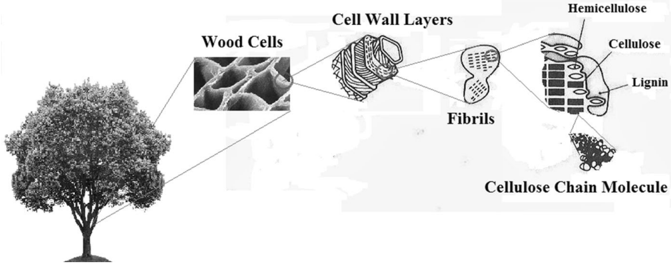
“Woody biomass often has higher cellulose, hemicellulose and lignin contents (Fig. 4) than biomass from herbaceous or grass species”
§ Biochar physicochemical properties: pyrolysis temperature and feedstock kind effects > 3.1 Volatile matter, carbon content and ash content
What the sources say
- Disputedcites Keiluweit et al. 2010 matched to “Dynamic Molecular Structure of Plant Biomass-Derived Black Carbon (Biochar)” (2010) sourceExperimental — accuracy not yet measured
The NEXAFS section attributes higher lignin content to woody material, but the Comparison of Precursor Materials section suggests grass has higher hemicellulose content—the opposite of the claim for that component. The cited passages do not establish that woody biomass has higher cellulose content. (LLM, conf=0.88)
Checked by a reasoning model — may be wrong.
- Not checked — no full text of the sourcecites Lupoi and Smith 2012 matched to “Characterization of Woody and Herbaceous Biomasses Lignin Composition with 1064 nm Dispersive Multichannel Raman Spectroscopy” (2012) source
hedgedstates an association- Asserted: passes — The authors put it forward as true.
- Checkable: passes — It can be checked against evidence.
- Load-bearing: unclear — It is unclear whether the paper’s conclusions depend on it.
- Based: passes — The paper gives a reason why it holds.
- Disputed
The cited sources support only part of this claim — read each source’s verdict below.
In the paper
“Numerous studies have proven that biochar increases the ability of soil to adsorb heavy metals and other contaminants, which is important for environmental protection and management”
- Also stated in: § 4.2 Inorganic and organic contaminates in soil · boosted
“Numerous studies have proven that biochar increases the ability of soil to adsorb heavy metals and other contaminants, which is important for environmental protection and management (Tomczyk et al. 2019;Wei et al. 2018).”
What the sources say
- Partly supportedcites Tomczyk et al. 2019 matched to “Biochar efficiency in copper removal from Haplic soils” (2019) sourceExperimental — accuracy not yet measured
The section ‘Amount of Cu adsorption on the soils as a function of biochar dose and pH value’ reports that adding biochar increased copper adsorption in the soils tested. The Conclusion limits the finding to copper in sandy and loess Haplic soils, with effective immobilization at acidic pH; it does not establish increased soil adsorption of other contaminants generally. (LLM, conf=0.86)
- Not checked — no full text of the sourcecites Wei et al. 2018 matched to “Biochar-based functional materials in the purification of agricultural wastewater: Fabrication, application and future research needs” (2018) source
boostedstates a cause- Asserted: passes — The authors put it forward as true.
- Checkable: passes — It can be checked against evidence.
- Load-bearing: passes — The paper’s conclusions depend on it.
- Based: passes — The paper gives a reason why it holds.
- Also stated in: § 4.2 Inorganic and organic contaminates in soil · boosted
The sources with a verdict support this claim; the rest weren’t checked yet, have no full text we could read, or their verdicts aren’t rated yet.
In the paper
“The pyrolysis temperature is strongly correlated with changes in the structure and physicochemical properties of biochar”
§ Biochar physicochemical properties: pyrolysis temperature and feedstock kind effects > 2 Effects of pyrolysis temperature
What the sources say
- Not checked — no full text of the sourcecites Asadullah et al. 2007 matched to “Production of bio-oil from fixed bed pyrolysis of bagasse” (2007) source
- Not checked — no full text of the sourcecites Chen et al. 2008 matched to “Transitional Adsorption and Partition of Nonpolar and Polar Aromatic Contaminants by Biochars of Pine Needles with Different Pyrolytic Temperatures” (2008) source
- Supportedcites Jindo et al. 2014 matched to “Physical and chemical characterization of biochars derived from different agricultural residues” (2014) source
The Conclusions state that pyrolysis temperature strongly influences biochar physicochemical properties. Section 3.4 also describes temperature-dependent changes in chemical composition and structure, supporting the structural part of the claim. (LLM, conf=0.93)
boostedstates an association- Asserted: passes — The authors put it forward as true.
- Checkable: passes — It can be checked against evidence.
- Load-bearing: passes — The paper’s conclusions depend on it.
- Based: passes — The paper gives a reason why it holds.
The cited sources support only part of this claim — read each source’s verdict below.
In the paper
“This was observed because the increasing temperature resulted in further cracking of the volatile fractions into low-molecular-weight liquids and gases instead of biochar”
§ Biochar physicochemical properties: pyrolysis temperature and feedstock kind effects > 2.3 Volatile matter
What the sources say
- Partly supportedcites Ronsse et al. 2012 matched to “Production and characterization of slow pyrolysis biochar: influence of feedstock type and pyrolysis conditions” (2013) sourceExperimental — accuracy not yet measured
The Discussion (page unavailable in our copy) reports that biochar’s volatile matter content declined as pyrolysis severity increased. The Proximate analysis section describes progressive devolatilization, and the Introduction identifies liquid and gaseous pyrolysis products. The paper does not establish the more specific explanation that volatile fractions underwent further cracking into low-molecular-weight liquids and gases instead of biochar. (LLM, conf=0.86)
plainstates a cause- Asserted: passes — The authors put it forward as true.
- Checkable: passes — It can be checked against evidence.
- Load-bearing: unclear — It is unclear whether the paper’s conclusions depend on it.
- Based: passes — The paper gives a reason why it holds.
- Partly supported
Every source the paper cites for this claim was checked and supports it.
In the paper
“increased pyrolysis temperature caused an increase of 5.7-18.7% in ash content”
§ Biochar physicochemical properties: pyrolysis temperature and feedstock kind effects > 2.4 Carbon content and ash content
What the sources say
- Supportedcites Rafiq et al. 2016 matched to “Influence of Pyrolysis Temperature on Physico-Chemical Properties of Corn Stover (Zea mays L.) Biochar and Feasibility for Carbon Capture and Energy Balance” (2016) source
Table 2 in Results and Discussion §4.1 reports ash content of 5.7%, 12.5%, and 18.7% at pyrolysis temperatures of 300°C, 400°C, and 500°C, respectively. The figures describe ash content rising from 5.7% to 18.7%, rather than a percentage increase of that magnitude. (LLM, conf=0.91)
plainstates a cause- Asserted: passes — The authors put it forward as true.
- Checkable: passes — It can be checked against evidence.
- Load-bearing: unclear — It is unclear whether the paper’s conclusions depend on it.
- Based: passes — The paper gives a reason why it holds.
- Supported
82 more claims · 15 with their cited sources checked
Create a free account to see all 156 claims and to verify the 11 references still open.
- It may state two separate claims as one. 60
- Probably not a substantial claim. 13
Claims other papers make about this one
Each is checked against this paper’s own text: does it say what the citing paper says it does?
The source backs part of the claim, not all of it — or backs it for a different population, condition or comparison.
In the citing paper
“For example, biochar with a high CEC retains more nutrients in soil by reducing nutrient loss through leaching (Tomczyk et al. 2020).”
From Biochar and its importance on nutrient dynamics in soil and plant (2020) · cites this paper as Tomczyk et al. 2020
Experimental — accuracy not yet measuredThe cited source says what the claim attributes to it.
In the citing paper
“the P and K contents increase due to an increase in ash content (Christel et al. 2016;Tomczyk et al. 2020;Wang et al. 2013).”
From Biochar and its importance on nutrient dynamics in soil and plant (2020) · cites this paper as Tomczyk et al. 2020
The cited source says what the claim attributes to it.
In the citing paper
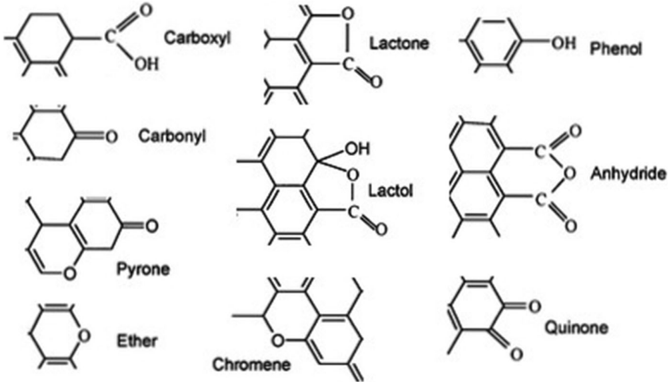
“The CEC of biochar is attributed to the generation of various functional groups, such as carboxyl and hydroxyl groups, during the pyrolysis of biomass (Tomczyk et al. 2020).”
From Biochar and its importance on nutrient dynamics in soil and plant (2020) · cites this paper as Tomczyk et al. 2020
In the citing paper
“Biochar also showed a positive impact on surface area of soil (Anawar et al. 2015), which varied with biochar types (Tomczyk et al. 2020).”
From Biochar and its importance on nutrient dynamics in soil and plant (2020) · cites this paper as Tomczyk et al. 2020
Citations
Cites
Pyrolysis of Wood/Biomass for Bio-oil: A Critical Review
Mohan, D., Pittman, C. U., & Steele, P. H. (2006) · Energy & Fuels · doi:10.1021/ef0502397 · Cited by 5,663
Biochar effects on soil biota – A review
Lehmann, J., Rillig, M. C., Thies, J., Masiello, C. A., Hockaday, W. C., & Crowley, D. (2011) · Soil Biology and Biochemistry · doi:10.1016/j.soilbio.2011.04.022 · Cited by 5,074
Biochar as a sorbent for contaminant management in soil and water: A review
Ahmad, M., Rajapaksha, A. U., Lim, J. E., Zhang, M., Bolan, N., Mohan, D., Vithanage, M., Lee, S. S., & Ok, Y. S. (2014) · Chemosphere · doi:10.1016/j.chemosphere.2013.10.071 · Cited by 4,662 · cited 4×
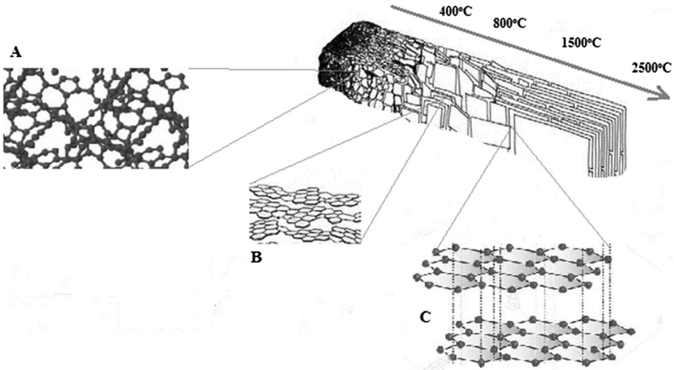
“As a result, the structure of biochar appears to have more organized C layers (like graphene structure) and less content of surface functional groups when pyrolysis temperature increases (Ahmad et al. 2014b).”
BackgroundInfluentialDynamic Molecular Structure of Plant Biomass-Derived Black Carbon (Biochar)
Keiluweit, M., Nico, P. S., Johnson, M. G., & Kleber, M. (2010) · Environmental Science & Technology · doi:10.1021/es9031419 · Cited by 3,230
Bio-char Sequestration in Terrestrial Ecosystems – A Review
Lehmann, J., Gaunt, J., & Rondon, M. (2006) · Mitigation and Adaptation Strategies for Global Change · doi:10.1007/s11027-005-9006-5 · Cited by 3,053
Structure Determination of Organic Compounds
Pretsch, E., Bühlmann, P., & Affolter, C. (2000) · Springer eBooks · doi:10.1007/978-3-662-04201-4 · Cited by 3,026
Biochar for environmental management: science and technology
(2009) · Choice Reviews Online · doi:10.5860/choice.47-0296 · Cited by 2,949
Glaser, B., Lehmann, J., & Zech, W. (2002) · Biology and Fertility of Soils · doi:10.1007/s00374-002-0466-4 · Cited by 2,890 · cited 3×
“However, Glaser et al. (2002) reported that Amazonian charcoal-rich anthrosols had a field water retention capacity 18.0% higher than that of surrounding soil without charcoal.”
BackgroundInfluentialSustainable biochar to mitigate global climate change
Woolf, D., Amonette, J. E., Street-Perrott, F. A., Lehmann, J., & Joseph, S. (2010) · Nature Communications · doi:10.1038/ncomms1053 · Cited by 2,680
Compant, S., Clément, C., & Sessitsch, A. (2010) · Soil Biology and Biochemistry · doi:10.1016/j.soilbio.2009.11.024 · Cited by 2,318
A review of biochar and its use and function in soil
Sohi, S. P., Krull, E., Lopez-Capel, E., & Bol, R. (2010) · Advances in Agronomy · doi:10.1016/s0065-2113(10)05002-9 · Cited by 2,240
Black Carbon Increases Cation Exchange Capacity in Soils
Liang, B., Lehmann, J., Solomon, D., Kinyangi, J., Grossman, J., O'Neill, B., Skjemstad, J. O., Thies, J., Luizão, F. J., Petersen, J., et al. (2006) · Soil Science Society of America Journal · doi:10.2136/sssaj2005.0383 · Cited by 2,191
Adsorption of heavy metal ions on soils and soils constituents
Bradl, H. B. (2004) · Journal of Colloid and Interface Science · doi:10.1016/j.jcis.2004.04.005 · Cited by 2,064 · cited 1×
“…as on the kind of interfering ions (Bogusz et al. 2015), pH of the solution, the dosage of biochar applied (Kılıç et al. 2013; Tomczyk et al. 2019), soil type, soil pH, contact time, metal concentration and temperature (Bradl 2004; Dube et al. 2001; Srivastava et al. 2005) as well as biochar type.”
BackgroundThe forms of alkalis in the biochar produced from crop residues at different temperatures
Yuan, J.-H., Xu, R.-K., & Zhang, H. (2011) · Bioresource Technology · doi:10.1016/j.biortech.2010.11.018 · Cited by 2,029 · cited 5×
“For example, Chen and Yuan (2011) investigated the effect of biochars (obtained from pine needles at different temperatures) on the sorption of the PAHs naphtalene and phenantrene in soil.”
BackgroundInfluentialVan Zwieten, L., Kimber, S., Morris, S., Chan, K. Y., Downie, A., Rust, J., Joseph, S., & Cowie, A. (2010) · Plant and Soil · doi:10.1007/s11104-009-0050-x · Cited by 1,916
Agronomic values of greenwaste biochar as a soil amendment
Chan, K. Y., Van Zwieten, L., Meszaros, I., Downie, A., & Joseph, S. (2007) · Soil Research · doi:10.1071/sr07109 · Cited by 1,902
Reference Module in Materials Science and Materials Engineering
Macovez, R., & Rudolf, P. (2016) · Elsevier eBooks · Cited by 1,887
Chen, B., Zhou, D., & Zhu, L. (2008) · Environmental Science & Technology · doi:10.1021/es8002684 · Cited by 1,823
Mechanisms of metal sorption by biochars: Biochar characteristics and modifications
Li, H., Dong, X., da Silva, E. B., de Oliveira, L. M., Chen, Y., & Ma, L. Q. (2017) · Chemosphere · doi:10.1016/j.chemosphere.2017.03.072 · Cited by 1,822
Effect of process parameters on production of biochar from biomass waste through pyrolysis: A review
Tripathi, M., Sahu, J. N., & Ganesan, P. (2016) · Renewable and Sustainable Energy Reviews · doi:10.1016/j.rser.2015.10.122 · Cited by 1,759
The Art, Science, and Technology of Charcoal Production
Antal, M. J., & Grønli, M. (2003) · Industrial & Engineering Chemistry Research · doi:10.1021/ie0207919 · Cited by 1,623
Weber, K., & Quicker, P. (2018) · Fuel · doi:10.1016/j.fuel.2017.12.054 · Cited by 1,522
Impact of pyrolysis temperature and manure source on physicochemical characteristics of biochar
Cantrell, K. B., Hunt, P. G., Uchimiya, M., Novak, J. M., & Ro, K. S. (2012) · Bioresource Technology · doi:10.1016/j.biortech.2011.11.084 · Cited by 1,502
Ahmad, M., Lee, S. S., Dou, X., Mohan, D., Sung, J.-K., Yang, J. E., & Ok, Y. S. (2012) · Bioresource Technology · doi:10.1016/j.biortech.2012.05.042 · Cited by 1,357
Black carbon in soils and sediments: Analysis, distribution, implications, and current challenges
Schmidt, M. W. I., & Noack, A. G. (2000) · Global Biogeochemical Cycles · doi:10.1029/1999gb001208 · Cited by 1,334
Production and utilization of biochar: A review
Cha, J. S., Park, S. H., Jung, S.-C., Ryu, C., Jeon, J.-K., Shin, M.-C., & Park, Y.-K. (2016) · Journal of Industrial and Engineering Chemistry · doi:10.1016/j.jiec.2016.06.002 · Cited by 1,293
Biochar for environmental management: an introduction
(2015) · Biochar for Environmental Management · doi:10.4324/9780203762264-8 · Cited by 1,273 · cited 1×
“only as a renewable fuel, but also as an additive for improvement of soil quality (Lehmann and Joseph 2009).”
BackgroundDairy-Manure Derived Biochar Effectively Sorbs Lead and Atrazine
Cao, X., Ma, L., Gao, B., & Harris, W. (2009) · Environmental Science & Technology · doi:10.1021/es803092k · Cited by 1,251
Properties of dairy-manure-derived biochar pertinent to its potential use in remediation
Cao, X., & Harris, W. (2010) · Bioresource Technology · doi:10.1016/j.biortech.2010.02.052 · Cited by 1,173
Surface chemistry variations among a series of laboratory-produced biochars
Mukherjee, A., Zimmerman, A. R., & Harris, W. (2011) · Geoderma · doi:10.1016/j.geoderma.2011.04.021 · Cited by 1,171
Effects of temperature and particle size on bio-char yield from pyrolysis of agricultural residues
Demirbas, A. (2004) · Journal of Analytical and Applied Pyrolysis · doi:10.1016/j.jaap.2004.07.003 · Cited by 1,154 · cited 1×
“The high lignin composition in the feedstock will result in higher char formation (Demirbas 2004).”
BackgroundBiochar to improve soil fertility. A review
Ding, Y., Liu, Y., Liu, S., Li, Z., Tan, X., Huang, X., Zeng, G., Zhou, L., & Zheng, B. (2016) · Agronomy for Sustainable Development · doi:10.1007/s13593-016-0372-z · Cited by 1,144
Characterization of biochars to evaluate recalcitrance and agronomic performance
Enders, A., Hanley, K., Whitman, T., Joseph, S., & Lehmann, J. (2012) · Bioresource Technology · doi:10.1016/j.biortech.2012.03.022 · Cited by 1,113
An investigation into the reactions of biochar in soil
Joseph, S. D., Camps-Arbestain, M., Lin, Y., Munroe, P., Chia, C. H., Hook, J., van Zwieten, L., Kimber, S., Cowie, A., Singh, B. P., et al. (2010) · Soil Research · doi:10.1071/sr10009 · Cited by 1,111
Biochar and Soil Physical Properties
Blanco-Canqui, H. (2017) · Soil Science Society of America Journal · doi:10.2136/sssaj2017.01.0017 · Cited by 1,106 · cited 1×
“Smaller biochar particle sizes can also increase water retention but may reduce saturated flow (Blanco-Canqui 2017).”
BackgroundAbiotic and microbial oxidation of laboratory-produced black carbon (biochar)
Zimmerman, A. R. (2010) · Environmental Science & Technology · doi:10.1021/es903140c · Cited by 1,103 · cited 1×
“The volatile matter content of a biochar affects the stability of the material (Zimmerman 2010), its N availability (Deenik et al. 2010), plant growth (Deenik et al. 2010; Denyes et al. 2014) and its sorption capacity (Mukherjee et al. 2011).”
BackgroundRelative distribution of Pb2+ sorption mechanisms by sludge-derived biochar
Lu, H., Zhang, W., Yang, Y., Huang, X., Wang, S., & Qiu, R. (2012) · Water Research · doi:10.1016/j.watres.2011.11.058 · Cited by 1,102
Compositions and sorptive properties of crop residue-derived chars
Chun, Y., Sheng, G., Chiou, C. T., & Xing, B. (2004) · Environmental Science & Technology · doi:10.1021/es035034w · Cited by 1,079
Vassilev, S. V., Baxter, D., Andersen, L. K., & Vassileva, C. G. (2013) · Fuel · doi:10.1016/j.fuel.2012.09.041 · Cited by 1,031
Yao, Y., Gao, B., Zhang, M., Inyang, M., & Zimmerman, A. R. (2012) · Chemosphere · doi:10.1016/j.chemosphere.2012.06.002 · Cited by 1,030
Al-Wabel, M. I., Al-Omran, A., El-Naggar, A. H., Nadeem, M., & Usman, A. R. A. (2013) · Bioresource Technology · doi:10.1016/j.biortech.2012.12.165 · Cited by 1,026
Zhu, X., Chen, B., Zhu, L., & Xing, B. (2017) · Environmental Pollution · doi:10.1016/j.envpol.2017.04.032 · Cited by 1,021
Chen, X., Chen, G., Chen, L., Chen, Y., Lehmann, J., McBride, M. B., & Hay, A. G. (2011) · Bioresource Technology · doi:10.1016/j.biortech.2011.06.078 · Cited by 1,016
Effect of Low-Temperature Pyrolysis Conditions on Biochar for Agricultural Use
Gaskin, J. W., Steiner, C., Harris, K., Das, K. C., & Bibens, B. (2008) · Transactions of the ASABE · doi:10.13031/2013.25409 · Cited by 1,015
Biochar: A synthesis of its agronomic impact beyond carbon sequestration
Spokas, K. A., Cantrell, K. B., Novak, J. M., Archer, D. W., Ippolito, J. A., Collins, H. P., Boateng, A. A., Lima, I. M., Lamb, M. C., McAloon, A. J., et al. (2012) · Journal of Environmental Quality · doi:10.2134/jeq2011.0069 · Cited by 1,014
Kloss, S., Zehetner, F., Dellantonio, A., Hamid, R., Ottner, F., Liedtke, V., Schwanninger, M., Gerzabek, M. H., & Soja, G. (2012) · Journal of Environmental Quality · doi:10.2134/jeq2011.0070 · Cited by 1,014
Ronsse, F., van Hecke, S., Dickinson, D., & Prins, W. (2013) · GCB Bioenergy · doi:10.1111/gcbb.12018 · Cited by 1,000
Characterisation and evaluation of biochars for their application as a soil amendment
Singh, B., Singh, B. P., & Cowie, A. L. (2010) · Soil Research · doi:10.1071/sr10058 · Cited by 991
Biochar for Environmental Management
Shackley, S. J., Clare, A., Joseph, S. D., McCarl, B. A., & Schmidt, H. (2009) · Taylor and Francis · Cited by 961
Effect of biochar amendment on soil carbon balance and soil microbial activity
Steinbeiss, S., Gleixner, G., & Antonietti, M. (2009) · Soil Biology and Biochemistry · doi:10.1016/j.soilbio.2009.03.016 · Cited by 956
Characterization of chars from pyrolysis of lignin
Sharma, R. K., Wooten, J. B., Baliga, V. L., Lin, X., Geoffrey Chan, W., & Hajaligol, M. R. (2004) · Fuel · doi:10.1016/j.fuel.2003.11.015 · Cited by 946
(2009) · Cited by 884
Sun, Y., Gao, B., Yao, Y., Fang, J., Zhang, M., Zhou, Y., Chen, H., & Yang, L. (2014) · Chemical Engineering Journal · doi:10.1016/j.cej.2013.10.081 · Cited by 854
Influence of Pyrolysis Temperature on Biochar Property and Function as a Heavy Metal Sorbent in Soil
Uchimiya, M., Wartelle, L. H., Klasson, K. T., Fortier, C. A., & Lima, I. M. (2011) · Journal of Agricultural and Food Chemistry · doi:10.1021/jf104206c · Cited by 854
(2010) · Joint Research Centre (European Commission) · doi:10.2788/472 · Cited by 851 · cited 4×
“Biochar interacts physically with the soil fractions (Verheijen et al. 2010).”
InfluentialPhysical and chemical characterization of biochars derived from different agricultural residues
Jindo, K., Mizumoto, H., Sawada, Y., Sanchez-Monedero, M. A., & Sonoki, T. (2014) · Biogeosciences · doi:10.5194/bg-11-6613-2014 · Cited by 822
Chen, T., Zhang, Y., Wang, H., Lu, W., Zhou, Z., Zhang, Y., & Ren, L. (2014) · Bioresource Technology · doi:10.1016/j.biortech.2014.04.048 · Cited by 797
Bio-oil and bio-char production from corn cobs and stover by fast pyrolysis
Mullen, C. A., Boateng, A. A., Goldberg, N. M., Lima, I. M., Laird, D. A., & Hicks, K. B. (2010) · Biomass and Bioenergy · doi:10.1016/j.biombioe.2009.09.012 · Cited by 717
Chemical characterization of rice straw-derived biochar for soil amendment
Wu, W., Yang, M., Feng, Q., McGrouther, K., Wang, H., Lu, H., & Chen, Y. (2012) · Biomass and Bioenergy · doi:10.1016/j.biombioe.2012.09.034 · Cited by 715
Kookana, R. S., Sarmah, A. K., Van Zwieten, L., Krull, E., & Singh, B. (2011) · Advances in agronomy · doi:10.1016/b978-0-12-385538-1.00003-2 · Cited by 712
Quality variations of poultry litter biochar generated at different pyrolysis temperatures
Song, W., & Guo, M. (2012) · Journal of Analytical and Applied Pyrolysis · doi:10.1016/j.jaap.2011.11.018 · Cited by 693
Insights into Biochar and Hydrochar Production and Applications: A Review
Zhang, Z., Zhu, Z., Shen, B., & Liu, L. (2019) · Energy · doi:10.1016/j.energy.2019.01.035 · Cited by 687
Kinetic and adsorptive characterization of biochar in metal ions removal
Kołodyńska, D., Wnętrzak, R., Leahy, J. J., Hayes, M. H. B., Kwapiński, W., & Hubicki, Z. (2012) · Chemical Engineering Journal · doi:10.1016/j.cej.2012.05.025 · Cited by 683
Screening biochars for heavy metal retention in soil: Role of oxygen functional groups
Uchimiya, M., Chang, S., & Klasson, K. T. (2011) · Journal of Hazardous Materials · doi:10.1016/j.jhazmat.2011.03.063 · Cited by 678
Black carbon affects the cycling of non-black carbon in soil
Liang, B., Lehmann, J., Sohi, S. P., Thies, J. E., O’Neill, B., Trujillo, L., Gaunt, J., Solomon, D., Grossman, J., Neves, E. G., et al. (2010) · Organic Geochemistry · doi:10.1016/j.orggeochem.2009.09.007 · Cited by 668
Chen, B., & Chen, Z. (2009) · Chemosphere · doi:10.1016/j.chemosphere.2009.02.004 · Cited by 654 · cited 2×
“Moreover, the destruction of aliphatic alkyls and ester groups as well as the exposure of the aromatic lignin core under higher pyrolysis temperatures may result in increased surface area (Chen and Chen 2009).”
BackgroundDomingues, R. R., Trugilho, P. F., Silva, C. A., Melo, I. C. N. A. D., Melo, L. C. A., Magriotis, Z. M., & Sánchez-Monedero, M. A. (2017) · PLOS ONE · doi:10.1371/journal.pone.0176884 · Cited by 654
Comparison of biochar properties from biomass residues produced by slow pyrolysis at 500°C
Lee, Y., Park, J., Ryu, C., Gang, K. S., Yang, W., Park, Y.-K., Jung, J., & Hyun, S. (2013) · Bioresource Technology · doi:10.1016/j.biortech.2013.08.135 · Cited by 624
Biochar Carbon Stability in a Clayey Soil As a Function of Feedstock and Pyrolysis Temperature
Singh, B. P., Cowie, A. L., & Smernik, R. J. (2012) · Environmental Science & Technology · doi:10.1021/es302545b · Cited by 623
Influence of feedstock source and pyrolysis temperature on biochar bulk and surface properties
Suliman, W., Harsh, J. B., Abu-Lail, N. I., Fortuna, A.-M., Dallmeyer, I., & Garcia-Perez, M. (2016) · Biomass and Bioenergy · doi:10.1016/j.biombioe.2015.11.010 · Cited by 585
Zhao, S.-X., Ta, N., & Wang, X.-D. (2017) · Energies · doi:10.3390/en10091293 · Cited by 585
Breeding latitude drives individual schedules in a trans-hemispheric migrant bird
Conklin, J. R., Battley, P. F., Potter, M. A., & Fox, J. W. (2010) · Nature Communications · doi:10.1038/ncomms1072 · Cited by 582
Removal of zinc, copper and lead by natural zeolite—a comparison of adsorption isotherms
Perić, J., Trgo, M., & Vukojević Medvidović, N. (2004) · Water Research · doi:10.1016/j.watres.2003.12.035 · Cited by 575
On the nature of basic sites on carbon surfaces: an overview
Montes-Morán, M. A., Suárez, D., Menéndez, J. A., & Fuente, E. (2004) · Carbon · doi:10.1016/j.carbon.2004.01.023 · Cited by 566
Zhang, J., Liu, J., & Liu, R. (2015) · Bioresource Technology · doi:10.1016/j.biortech.2014.11.011 · Cited by 560
Jiang, J., Xu, R.-K., Jiang, T.-Y., & Li, Z. (2012) · Journal of Hazardous Materials · doi:10.1016/j.jhazmat.2012.05.086 · Cited by 551
Mohan, D., Rajput, S., Singh, V. K., Steele, P. H., & Pittman, C. U. (2011) · Journal of Hazardous Materials · doi:10.1016/j.jhazmat.2011.01.127 · Cited by 548
The effect of pyrolysis conditions on biochar stability as determined by three methods
Crombie, K., Mašek, O., Sohi, S. P., Brownsort, P., & Cross, A. (2013) · GCB Bioenergy · doi:10.1111/gcbb.12030 · Cited by 533
Karami, N., Clemente, R., Moreno-Jiménez, E., Lepp, N. W., & Beesley, L. (2011) · Journal of Hazardous Materials · doi:10.1016/j.jhazmat.2011.04.025 · Cited by 531
An overview of the composition and application of biomass ash.
Vassilev, S. V., Baxter, D., Andersen, L. K., & Vassileva, C. G. (2013) · Fuel · doi:10.1016/j.fuel.2012.10.001 · Cited by 523
Use of Chemical and Physical Characteristics To Investigate Trends in Biochar Feedstocks
Mukome, F. N. D., Zhang, X., Silva, L. C. R., Six, J., & Parikh, S. J. (2013) · Journal of Agricultural and Food Chemistry · doi:10.1021/jf3049142 · Cited by 517
Catechol and Humic Acid Sorption onto a Range of Laboratory-Produced Black Carbons (Biochars)
Kasozi, G. N., Zimmerman, A. R., Nkedi-Kizza, P., & Gao, B. (2010) · Environmental Science & Technology · doi:10.1021/es1014423 · Cited by 509
Adsorption of Cu(II) by biochars generated from three crop straws
Tong, X.-J., Li, J.-Y., Yuan, J.-H., & Xu, R.-K. (2011) · Chemical Engineering Journal · doi:10.1016/j.cej.2011.06.069 · Cited by 505
Structure Determination of Organic Compounds: Tables of Spectral Data
(2009) · Springer eBooks · doi:10.1007/978-3-540-93810-1 · Cited by 497
Sorption of metals on humic acid
Kerndorff, H., & Schnitzer, M. (1980) · Geochimica et Cosmochimica Acta · doi:10.1016/0016-7037(80)90221-5 · Cited by 493
Wang, L., Wang, Y., Ma, F., Tankpa, V., Bai, S., Guo, X., & Wang, X. (2019) · Science of The Total Environment · doi:10.1016/j.scitotenv.2019.03.011 · Cited by 493
Catechol and humic acid sorption onto a range of laboratory-produced black carbons (biochars).
Kasozi, G. N., Zimmerman, A., Nkedi-Kizza, P., & Gao, B. (2010) · Environmental Science and Technology · doi:10.1021/es1014423.s001 · Cited by 490
Charcoal volatile matter content influences plant growth and soil nitrogen transformations
Deenik, J. L., McClellan, T., Uehara, G., Antal, M. J., & Campbell, S. (2010) · Soil Science Society of America Journal · doi:10.2136/sssaj2009.0115 · Cited by 485
Characterization of Biochars Produced from Cornstovers for Soil Amendment
Lee, J. W., Kidder, M., Evans, B. R., Paik, S., Buchanan III, A. C., Garten, C. T., & Brown, R. C. (2010) · Environmental Science & Technology · doi:10.1021/es101337x · Cited by 473
Biochar from anaerobically digested sugarcane bagasse
Inyang, M., Gao, B., Pullammanappallil, P., Ding, W., & Zimmerman, A. R. (2010) · Bioresource Technology · doi:10.1016/j.biortech.2010.06.088 · Cited by 473
Özçimen, D., & Ersoy-Meriçboyu, A. (2010) · Renewable Energy · doi:10.1016/j.renene.2009.11.042 · Cited by 457
Effects of feedstock type and pyrolysis temperature on potential applications of biochar
Tag, A. T., Duman, G., Ucar, S., & Yanik, J. (2016) · Journal of Analytical and Applied Pyrolysis · doi:10.1016/j.jaap.2016.05.006 · Cited by 449
Biomass-based pyrolytic polygeneration system on cotton stalk pyrolysis: Influence of temperature
Chen, Y., Yang, H., Wang, X., Zhang, S., & Chen, H. (2012) · Bioresource Technology · doi:10.1016/j.biortech.2011.10.074 · Cited by 446 · cited 1×
“The increase in the porosity of biochar is due to the decomposition of lignin, the quick release of H2 and CH4 and the reaction of aromatic condensation as the temperature increases (Chen et al. 2012; Zhao et al. 2017).”
BackgroundPyrolytic temperatures impact lead sorption mechanisms by bagasse biochars
Ding, W., Dong, X., Ime, I. M., Gao, B., & Ma, L. Q. (2014) · Chemosphere · doi:10.1016/j.chemosphere.2013.12.042 · Cited by 443
Physical and chemical characterization of waste wood derived biochars
Yargicoglu, E. N., Sadasivam, B. Y., Reddy, K. R., & Spokas, K. (2015) · Waste Management · doi:10.1016/j.wasman.2014.10.029 · Cited by 443
Adsorption of methyl violet from aqueous solutions by the biochars derived from crop residues
Xu, R.-K., Xiao, S.-C., Yuan, J.-H., & Zhao, A.-Z. (2011) · Bioresource Technology · doi:10.1016/j.biortech.2011.08.089 · Cited by 442
Fuertes, A. B., Arbestain, M. C., Sevilla, M., Maciá-Agulló, J. A., Fiol, S., López, R., Smernik, R. J., Aitkenhead, W. P., Arce, F., & Macias, F. (2010) · Soil Research · doi:10.1071/sr10010 · Cited by 430
Short-term CO2 and N2O emissions and microbial properties of biochar amended sandy loam soils
Ameloot, N., De Neve, S., Jegajeevagan, K., Yildiz, G., Buchan, D., Funkuin, Y. N., Prins, W., Bouckaert, L., & Sleutel, S. (2013) · Soil Biology and Biochemistry · doi:10.1016/j.soilbio.2012.10.025 · Cited by 427
Frontiers in Environmental Science
(2021) · doi:10.3389/fenvs · Cited by 426
Characteristics of Biochar: Biological Properties
Thies, J. E., & Rillig, M. C. (2012) · doi:10.4324/9781849770552-13 · Cited by 424
Ghani, W. A. W. A. K., Mohd, A., da Silva, G., Bachmann, R. T., Taufiq-Yap, Y. H., Rashid, U., & Al-Muhtaseb, A. H. (2013) · Industrial Crops and Products · doi:10.1016/j.indcrop.2012.10.017 · Cited by 410
Temperature Sensitivity of Black Carbon Decomposition and Oxidation
Nguyen, B. T., Lehmann, J., Hockaday, W. C., Joseph, S., & Masiello, C. A. (2010) · Environmental Science & Technology · doi:10.1021/es903016y · Cited by 400
Effects and fate of biochar from rice residues in rice-based systems
Haefele, S. M., Konboon, Y., Wongboon, W., Amarante, S., Maarifat, A. A., Pfeiffer, E. M., & Knoblauch, C. (2011) · Field Crops Research · doi:10.1016/j.fcr.2011.01.014 · Cited by 393
Kuppusamy, S., Thavamani, P., Megharaj, M., Venkateswarlu, K., & Naidu, R. (2016) · Environment International · doi:10.1016/j.envint.2015.10.018 · Cited by 383
Effect of Charcoal on Certain Physical, Chemical, and Biological Properties of Forest Soils
Tryon, E. H. (1948) · Ecological Monographs · doi:10.2307/1948629 · Cited by 377 · cited 1×
“Tryon (1948) showed that charcoal increased the available moisture in sandy soil but had no effect in loamy soil and decreased the available moisture in clay soil.”
BackgroundAMOUNTS, DYNAMICS ANS SEQUESTERING OF CARBON IN TROPICAL AND SUBTROPICAL SOILS
Sombroek, W. G., Nachtergaele, F., & Hebel, A. (1993) · AMBIO · Cited by 377
Rafiq, M. K., Bachmann, R. T., Rafiq, M. T., Shang, Z., Joseph, S., & Long, R. (2016) · PLOS ONE · doi:10.1371/journal.pone.0156894 · Cited by 376
Competitive adsorption behavior of heavy metals on kaolinite
Srivastava, P., Singh, B., & Angove, M. (2005) · Journal of Colloid and Interface Science · doi:10.1016/j.jcis.2005.04.036 · Cited by 357
Claoston, N., Samsuri, A., Ahmad Husni, M., & Mohd Amran, M. (2014) · Waste Management & Research: The Journal for a Sustainable Circular Economy · doi:10.1177/0734242x14525822 · Cited by 338
Adsorption of heavy metal ions from aqueous solutions by bio-char, a by-product of pyrolysis
Kılıç, M., Kırbıyık, Ç., Çepelioğullar, Ö., & Pütün, A. E. (2013) · Applied Surface Science · doi:10.1016/j.apsusc.2013.07.033 · Cited by 326
Zama, E. F., Zhu, Y.-G., Reid, B. J., & Sun, G.-X. (2017) · Journal of Cleaner Production · doi:10.1016/j.jclepro.2017.01.125 · Cited by 323
Lehmann, J., Liang, B., Solomon, D., Lerotic, M., Luizão, F., Kinyangi, J., Schäfer, T., Wirick, S., & Jacobsen, C. (2005) · Global Biogeochemical Cycles · doi:10.1029/2004gb002435 · Cited by 319 · cited 1×
“…groups or other functional groups with a negative charge in the pH range of soils can be the result of two principally different processes: (1) surface oxidation of the biochar particles themselves and (2) adsorption of highly oxidized organic matter onto biochar surfaces (Lehmann et al. 2005).”
BackgroundEffect of sewage sludge properties on the biochar characteristic
Zielińska, A., Oleszczuk, P., Charmas, B., Skubiszewska-Zięba, J., & Pasieczna-Patkowska, S. (2015) · Journal of Analytical and Applied Pyrolysis · doi:10.1016/j.jaap.2015.01.025 · Cited by 316
Bogusz, A., Oleszczuk, P., & Dobrowolski, R. (2015) · Bioresource Technology · doi:10.1016/j.biortech.2015.08.006 · Cited by 310
Lion, L. W., Altmann, R. S., & Leckie, J. O. (1982) · Environmental Science & Technology · doi:10.1021/es00104a007 · Cited by 308
Stability of black carbon in soils across a climatic gradient
Cheng, C., Lehmann, J., Thies, J. E., & Burton, S. D. (2008) · Journal of Geophysical Research: Biogeosciences · doi:10.1029/2007jg000642 · Cited by 306 · cited 1×
“The long-term stability of biochar in soil is a key factor affecting the decrease of CO2 emissions into the atmosphere (Cheng et al. 2008).”
BackgroundBourke, J., Manley-Harris, M., Fushimi, C., Dowaki, K., Nunoura, T., & Antal, M. J. (2007) · Industrial & Engineering Chemistry Research · doi:10.1021/ie070415u · Cited by 300
Effects of biochars produced from different feedstocks on soil properties and sunflower growth
Alburquerque, J. A., Calero, J. M., Barrón, V., Torrent, J., del Campillo, M. C., Gallardo, A., & Villar, R. (2014) · Journal of Plant Nutrition and Soil Science · doi:10.1002/jpln.201200652 · Cited by 298
Ahmad, M., Lee, S. S., Lim, J. E., Lee, S.-E., Cho, J. S., Moon, D. H., Hashimoto, Y., & Ok, Y. S. (2014) · Chemosphere · doi:10.1016/j.chemosphere.2013.09.077 · Cited by 292 · cited 4×
“As a result, the structure of biochar appears to have more organized C layers (like graphene structure) and less content of surface functional groups when pyrolysis temperature increases (Ahmad et al. 2014b).”
BackgroundInfluentialProduction of bio-oil from fixed bed pyrolysis of bagasse
Asadullah, M., Rahman, M. A., Ali, M. M., Rahman, M. S., Motin, M. A., Sultan, M. B., & Alam, M. R. (2007) · Fuel · doi:10.1016/j.fuel.2007.02.007 · Cited by 292
A review of thermochemical conversion of microalgal biomass for biofuels: chemistry and processes
Kumar, G., Shobana, S., Chen, W.-H., Bach, Q.-V., Kim, S. H., Atabani, A. E., & Chang, J.-S. (2017) · Green Chemistry · doi:10.1039/c6gc01937d · Cited by 292 · cited 1×
“However, production can also be based on biomass sources other than lignocelluloses matter, such as sewage sludge, poultry litter, excrement, bones, dairy manure etc. (Kumar et al. 2016).”
BackgroundSoil fauna and soil functions: a jigsaw puzzle
Briones, M. J. I. (2014) · Frontiers in Environmental Science · doi:10.3389/fenvs.2014.00007 · Cited by 291 · cited 2×
“The proportions of these individual products depend on the temperature range, pressure, residence time, etc. (Brewer 2012; Cheah et al. 2016; Lewandowski et al. 2010).”
BackgroundAdsorption and Migration of Heavy Metals in Soil
Dube, A., Zbytniewski, R., Kowalkowski, T., Cukrowska, E., & Buszewski, B. (2001) · Polish Journal of Environmental Studies · Cited by 284
Physicochemical and sorptive properties of biochars derived from woody and herbaceous biomass
Wang, S., Gao, B., Zimmerman, A. R., Li, Y., Ma, L., Harris, W. G., & Migliaccio, K. W. (2015) · Chemosphere · doi:10.1016/j.chemosphere.2015.04.062 · Cited by 275
Enhanced sorption of polycyclic aromatic hydrocarbons by soil amended with biochar
Chen, B., & Yuan, M. (2011) · Journal of Soils and Sediments · doi:10.1007/s11368-010-0266-7 · Cited by 271
Shinogi, Y., & Kanri, Y. (2003) · Bioresource Technology · doi:10.1016/s0960-8524(03)00147-0 · Cited by 271
Shaaban, A., Se, S.-M., Dimin, M. F., Juoi, J. M., Mohd Husin, M. H., & Mitan, N. M. M. (2014) · Journal of Analytical and Applied Pyrolysis · doi:10.1016/j.jaap.2014.01.021 · Cited by 268
High-resolution electron microscopy studies of non-graphitizing carbons
Harris, P. J. F., & Tsang, S. C. (1997) · Philosophical Magazine A · doi:10.1080/01418619708214028 · Cited by 268
Adsorption-Partitioning Uptake of Nine Low-Polarity Organic Chemicals on a Natural Sorbent
Xia, G., & Ball, W. P. (1999) · Environmental Science & Technology · doi:10.1021/es980581g · Cited by 262
Lei, O., & Zhang, R. (2013) · Journal of Soils and Sediments · doi:10.1007/s11368-013-0738-7 · Cited by 260
Chicken Manure Biochar as Liming and Nutrient Source for Acid Appalachian Soil
Hass, A., Gonzalez, J. M., Lima, I. M., Godwin, H. W., Halvorson, J. J., & Boyer, D. G. (2012) · Journal of Environmental Quality · doi:10.2134/jeq2011.0124 · Cited by 256
Jin, Y., Liang, X., He, M., Liu, Y., Tian, G., & Shi, J. (2016) · Chemosphere · doi:10.1016/j.chemosphere.2015.07.015 · Cited by 253
Structure of non-graphitising carbons
Harris, P. J. F. (1997) · International Materials Reviews · doi:10.1179/095066097790093172 · Cited by 249 · cited 1×
“Figures 1 and 2 shows example structures on the outer surface of the graphene sheets (Harris 1997; Harris and Tsang 1997) and pores (Van Zwieten et al. 2010; Zheng et al. 2010).”
BackgroundBanik, C., Lawrinenko, M., Bakshi, S., & Laird, D. A. (2018) · Journal of Environmental Quality · doi:10.2134/jeq2017.11.0432 · Cited by 244
Lee, X. J., Lee, L. Y., Gan, S., Thangalazhy-Gopakumar, S., & Ng, H. K. (2017) · Bioresource Technology · doi:10.1016/j.biortech.2017.03.105 · Cited by 241
Carrier, M., Hardie, A. G., Uras, Ü., Görgens, J., & Knoetze, J. (. (2012) · Journal of Analytical and Applied Pyrolysis · doi:10.1016/j.jaap.2012.02.016 · Cited by 240
A review on production and characterization of biochars for application in direct carbon fuel cells
Jafri, N., Wong, W. Y., Doshi, V., Yoon, L. W., & Cheah, K. H. (2018) · Process Safety and Environmental Protection · doi:10.1016/j.psep.2018.06.036 · Cited by 236
Wang, A., Bell, J. F., Li, R., Johnson, J. R., Farrand, W. H., Cloutis, E. A., Arvidson, R. E., Crumpler, L., Squyres, S. W., McLennan, S. M., et al. (2008) · Journal of Geophysical Research: Planets · doi:10.1029/2008je003126 · Cited by 235
Li, X., Shen, Q., Zhang, D., Mei, X., Ran, W., Xu, Y., & Yu, G. (2013) · PLoS ONE · doi:10.1371/journal.pone.0065949 · Cited by 234
Comparison of Biochar Formation from Various Agricultural By-Products Using FTIR Spectroscopy
Liu, Y., He, Z., & Uchimiya, M. (2015) · Modern Applied Science · doi:10.5539/mas.v9n4p246 · Cited by 233 · cited 1×
“All of these bands are typical for the FTIR of biochars (Claoston et al. 2014; Ghani et al. 2013; Liu et al. 2015; Kardam et al. 2012; Zhao et al. 2017).”
BackgroundBiochar and Emissions of Non-CO2 Greenhouse Gases from Soil
ZWIETEN, L. V., Singh, B., Joseph, S. D., Kimber, S. W. L., Cowie, A., & Chan, K. Y. (2012) · RUNE (Research UNE) · doi:10.4324/9781849770552-20 · Cited by 232
Characteristics of tar formation during cellulose, hemicellulose and lignin gasification
Yu, H., Zhang, Z., Li, Z., & Chen, D. (2014) · Fuel · doi:10.1016/j.fuel.2013.10.080 · Cited by 231 · cited 2×
“Cellulose, present in the biomass, helps in the formation of tar (is a mixture of discrete ketones, aldehydes, organic liquids, and char), while high lignin content is favourable for char production during pyrolysis (Tripathi et al. 2016; Yu et al. 2014).”
BackgroundKawamoto, H., Murayama, M., & Saka, S. (2003) · Journal of Wood Science · doi:10.1007/s10086-002-0487-5 · Cited by 229
Agronomic properties of biochars from different manure wastes
Cely, P., Gascó, G., Paz-Ferreiro, J., & Méndez, A. (2015) · Journal of Analytical and Applied Pyrolysis · doi:10.1016/j.jaap.2014.11.014 · Cited by 224
Elaigwu, S. E., Rocher, V., Kyriakou, G., & Greenway, G. M. (2014) · Journal of Industrial and Engineering Chemistry · doi:10.1016/j.jiec.2013.12.036 · Cited by 208
Biochar from Biosolids Pyrolysis: A Review
Paz-Ferreiro, J., Nieto, A., Méndez, A., Askeland, M. P. J., & Gascó, G. (2018) · International Journal of Environmental Research and Public Health · doi:10.3390/ijerph15050956 · Cited by 207
Yenisoy-Karakaş, S., Aygün, A., Güneş, M., & Tahtasakal, E. (2004) · Carbon · doi:10.1016/j.carbon.2003.11.019 · Cited by 192
Waste Management Practices: Municipal, Hazardous, and Industrial
Pichtel, J. (2005) · CRC Press eBooks · doi:10.1201/9781420037517 · Cited by 184 · cited 1×
“The non-combustible component corresponds to the moisture and ash content (Pichtel 2014).”
BackgroundSorption of Deisopropylatrazine on Broiler Litter Biochars
Uchimiya, M., Wartelle, L. H., Lima, I. M., & Klasson, K. T. (2010) · Journal of Agricultural and Food Chemistry · doi:10.1021/jf102152q · Cited by 182
Slow Pyrolysis of Bamboo Biomass: Analysis of Biochar Properties
Hernández-Mena, L. E., Pécora, A. A. B., & Beraldo, A. L. (2014) · Chemical engineering transactions · doi:10.3303/cet1437020 · Cited by 182
Li, C., Zhu, X., He, H., Fang, Y., Dong, H., Lü, J., Li, J., & Li, Y. (2019) · Journal of Molecular Liquids · doi:10.1016/j.molliq.2018.10.142 · Cited by 177 · cited 3×
“The sorption efficiency of mesoporous biochar was associated with a higher internal porosity, which promoted the adsorption of smaller-size antibiotic molecules (Li et al. 2019).”
BackgroundInfluentialKatyal, S., Thambimuthu, K., & Valix, M. (2003) · Renewable Energy · doi:10.1016/s0960-1481(02)00112-x · Cited by 170
Preparation and characterization of pyrolytic chars from different biomass samples
Varol, E. A., & Pütün, A. E. (2012) · Journal of Analytical and Applied Pyrolysis · doi:10.1016/j.jaap.2012.07.001 · Cited by 169
Wei, D., Li, B., Huang, H., Luo, L., Zhang, J., Yang, Y., Guo, J., Tang, L., Zeng, G., & Zhou, Y. (2018) · Chemosphere · doi:10.1016/j.chemosphere.2017.12.193 · Cited by 169
Earthworm avoidance of biochar can be mitigated by wetting
Li, D., Hockaday, W. C., Masiello, C. A., & Alvarez, P. J. J. (2011) · Soil Biology and Biochemistry · doi:10.1016/j.soilbio.2011.04.019 · Cited by 165
de la Rosa, J. M., Paneque, M., Miller, A. Z., & Knicker, H. (2014) · Science of The Total Environment · doi:10.1016/j.scitotenv.2014.08.025 · Cited by 162
Venegas, A., Rigol, A., & Vidal, M. (2014) · Chemosphere · doi:10.1016/j.chemosphere.2014.06.009 · Cited by 154
(2010) · Cited by 154
The influence of uniaxial compression upon pore size distribution in bi-modal soils
KUTILEK, M., JENDELE, L., & PANAYIOTOPOULOS, K. (2006) · Soil and Tillage Research · doi:10.1016/j.still.2005.02.001 · Cited by 141
Biochar in the Agroecosystem–Climate-Change–Sustainability Nexus
Nair, V. D., Nair, P. K. R., Dari, B., Freitas, A. M., Chatterjee, N., & Pinheiro, F. M. (2017) · Frontiers in Plant Science · doi:10.3389/fpls.2017.02051 · Cited by 139
Usowicz, B., Lipiec, J., Łukowski, M., Marczewski, W., & Usowicz, J. (2016) · Soil and Tillage Research · doi:10.1016/j.still.2016.03.009 · Cited by 136
Uras, Ü., Carrier, M., Hardie, A. G., & Knoetze, J. H. (2012) · Journal of Analytical and Applied Pyrolysis · doi:10.1016/j.jaap.2012.08.007 · Cited by 133
Adsorption characteristics and pore-development of biomass-pyrolysis char
Raveendran, K. (1998) · Fuel · doi:10.1016/s0016-2361(97)00246-9 · Cited by 128
Mia, S., Singh, B., & Dijkstra, F. A. (2017) · GCB Bioenergy · doi:10.1111/gcbb.12430 · Cited by 127 · cited 2×
“The negative charge sites on biochar surfaces are attributed to carboxylate and phenolate functional groups (Mia et al. 2017).”
BackgroundSopeña, F., Semple, K. T., Sohi, S., & Bending, G. D. (2012) · Chemosphere · doi:10.1016/j.chemosphere.2012.02.066 · Cited by 125
Biochar affects carbon composition and stability in soil: a combined spectroscopy-microscopy study
Hernandez-Soriano, M. C., Kerré, B., Kopittke, P. M., Horemans, B., & Smolders, E. (2016) · Scientific Reports · doi:10.1038/srep25127 · Cited by 123
Rutkowska, B., Szulc, W., Sosulski, T., & Stępień, W. (2014) · Plant, Soil and Environment · doi:10.17221/914/2013-pse · Cited by 121
Mitchell, P. J., Dalley, T. S. L., & Helleur, R. J. (2012) · Journal of Analytical and Applied Pyrolysis · doi:10.1016/j.jaap.2012.10.025 · Cited by 121
Vamvuka, D., & Sfakiotakis, S. (2011) · Renewable Energy · doi:10.1016/j.renene.2011.02.013 · Cited by 121
Using Biochar as a Soil Amendment for Sustainable Agriculture
Zheng, W., Sharma, B., & Rajagopalan, N. (2010) · Illinois Digital Environment for Access to Learning and Scholarship (University of Illinois at Urbana-Champaign) · Cited by 120
Effect of poultry litter biochar on soil enzymatic activity, ecotoxicity and plant growth
Mierzwa-Hersztek, M., Gondek, K., & Baran, A. (2016) · Applied Soil Ecology · doi:10.1016/j.apsoil.2016.04.006 · Cited by 120 · cited 4×
“Ameloot et al. (2013) and Mierzwa-Hersztek et al. (2016) showed that biochar amendment caused an increase in the activity of dehydrogenase and urease in soil.”
BackgroundInfluentialCárdenas- Aguiar, E., Gascó, G., Paz-Ferreiro, J., & Méndez, A. (2017) · International Biodeterioration & Biodegradation · doi:10.1016/j.ibiod.2017.05.014 · Cited by 120
ANAWAR, H. M., AKTER, F., SOLAIMAN, Z. M., & STREZOV, V. (2015) · Pedosphere · doi:10.1016/s1002-0160(15)30046-1 · Cited by 119
Biochars impact on water infiltration and water quality through a compacted subsoil layer
Novak, J., Sigua, G. C., Watts, D. W., Cantrell, K. B., Shumaker, P. D., Szögi, A. A., Johnson, M. G., & Spokas, K. A. (2015) · Chemosphere · doi:10.1016/j.chemosphere.2015.06.038 · Cited by 117
Impact of Biochar on Earthworm Populations: A Review
Weyers, S. L., & Spokas, K. A. (2011) · Applied and Environmental Soil Science · doi:10.1155/2011/541592 · Cited by 117
Lian, F., Huang, F., Chen, W., Xing, B., & Zhu, L. Y. (2011) · Environmental Pollution · doi:10.1016/j.envpol.2011.01.002 · Cited by 115
Dye adsorption onto char from bamboo
Mui, E. L. K., Cheung, W. H., Valix, M., & McKay, G. (2010) · Journal of Hazardous Materials · doi:10.1016/j.jhazmat.2010.01.018 · Cited by 114 · cited 1×
“Biochar may also adsorb other contaminants, such as PAH, antibiotics, and pesticides (Mui et al. 2010; Xu et al. 2011).”
BackgroundXu, R., & Zhao, A. (2013) · Environmental Science and Pollution Research · doi:10.1007/s11356-013-1769-8 · Cited by 114 · cited 1×
“Xu and Zhao (2013) showed that biochar from straws and peanut (in the amounts of 3.0 and 5.0% (v/v)) increased the Cu sorption capacities of Oxisol, Utisol and Ultestinated soils, whereas biochar from rice reduced Cu in Ultisol derived from Quaternary red earth at the same doses (Jiang et al. 2012).”
BackgroundInfluentialReview of the Effects of Biochar Amendment on Soil Properties and Carbon Sequestration
Xie, T., Sadasivam, B. Y., Reddy, K. R., Wang, C., & Spokas, K. (2016) · Journal of Hazardous, Toxic, and Radioactive Waste · doi:10.1061/(asce)hz.2153-5515.0000293 · Cited by 112
Characterization of carbonaceous combustion residues: II. Nonpolar organic compounds
Fernandes, M. B., & Brooks, P. R. (2003) · Chemosphere · doi:10.1016/s0045-6535(03)00452-1 · Cited by 105
(2014) · Polish Journal of Environmental Studies · Cited by 105
Influence of Poultry Litter Biochar on Soil Properties and Plant Growth
Revell, K. T., Maguire, R. O., & Agblevor, F. A. (2012) · Soil Science · doi:10.1097/ss.0b013e3182564202 · Cited by 102
Determination of critical pH and Al concentration of acidic Ultisols for wheat and canola crops
Baquy, M. A.-A., Li, J.-Y., Xu, C., Mehmood, K., & Xu, R. (2017) · Solid Earth · doi:10.5194/se-8-149-2017 · Cited by 99
Janus, A., Pelfrêne, A., Heymans, S., Deboffe, C., Douay, F., & Waterlot, C. (2015) · Journal of Environmental Management · doi:10.1016/j.jenvman.2015.07.056 · Cited by 98
Ouyang, L., Tang, Q., Yu, L., & Zhang, R. (2014) · Soil Research · doi:10.1071/sr14075 · Cited by 93
Cheah, S., Jablonski, W. S., Olstad, J. L., Carpenter, D. L., Barthelemy, K. D., Robichaud, D. J., Andrews, J. C., Black, S. K., Oddo, M. D., & Westover, T. L. (2016) · Green Chemistry · doi:10.1039/c6gc01661h · Cited by 92
Parmar, A., Nema, P. K., & Agarwal, T. (2014) · Greenwich Academic Literature Archive (University of Greenwich) · Cited by 90
Sun, X., Han, X., Ping, F., Zhang, L., Zhang, K., Chen, M., & Wu, W. (2018) · Science of The Total Environment · doi:10.1016/j.scitotenv.2018.02.046 · Cited by 84
Sorption, kinetics and thermodynamics of phosphate sorption onto soybean stover derived biochar
Karunanithi, R., Ok, Y. S., Dharmarajan, R., Ahmad, M., Seshadri, B., Bolan, N. S., & Naidu, R. (2017) · Environmental Technology & Innovation · doi:10.1016/j.eti.2017.06.002 · Cited by 83
Risk Evaluation of Pyrolyzed Biochar from Multiple Wastes
Ndirangu, S. M., Liu, Y., Xu, K., & Song, S. (2019) · Journal of Chemistry · doi:10.1155/2019/4506314 · Cited by 78 · cited 1×
“Furthermore, the pyrolysis of biomass may contribute to the formation of phytotoxic and potentially carcinogenic compounds under some conditions (type of feedstock, pollution in feedstock, and pyrolysis parameters) (Ndriangu et al. 2019).”
BackgroundEffects of amendment of different biochars on soil carbon mineralisation and sequestration
Ouyang, L., Yu, L., & Zhang, R. (2014) · Soil Research · doi:10.1071/sr13186 · Cited by 75
Darmstadt, H., Pantea, D., Sümmchen, L., Roland, U., Kaliaguine, S., & Roy, C. (2000) · Journal of Analytical and Applied Pyrolysis · doi:10.1016/s0165-2370(99)00051-0 · Cited by 72
Pyrolysis of Sugarcane Bagasse and Co-pyrolysis with an Argentinean Subbituminous Coal
Bonelli, P. R., Buonomo, E. L., & Cukierman, A. L. (2007) · Energy Sources, Part A: Recovery, Utilization, and Environmental Effects · doi:10.1080/00908310500281247 · Cited by 72
The Potential of Biochar Amendments to Remediate Contaminated Soils
(2013) · Biochar and Soil Biota · doi:10.1201/b14585-6 · Cited by 68
Cabeza, I., Waterhouse, T., Sohi, S., & Rooke, J. A. (2018) · Animal Feed Science and Technology · doi:10.1016/j.anifeedsci.2018.01.003 · Cited by 63
García-Jaramillo, M., Cox, L., Knicker, H. E., Cornejo, J., Spokas, K. A., & Hermosín, M. C. (2015) · Journal of Hazardous Materials · doi:10.1016/j.jhazmat.2014.10.052 · Cited by 60
Lupoi, J. S., & Smith, E. A. (2012) · Applied Spectroscopy · doi:10.1366/12-06621 · Cited by 59
Electrochemical Lignin Degradation in Ionic Liquids on Ternary Mixed Metal Electrodes
Rauber, D., Dier, T. K. F., Volmer, D. A., & Hempelmann, R. (2017) · Zeitschrift für Physikalische Chemie · doi:10.1515/zpch-2017-0951 · Cited by 59
Biochar efficiency in copper removal from Haplic soils
Tomczyk, A., Boguta, P., & Sokołowska, Z. (2019) · International Journal of Environmental Science and Technology · doi:10.1007/s13762-019-02227-4 · Cited by 57
Self-citationPichtel, J. (2014) · CRC Press eBooks · doi:10.1201/b16576 · Cited by 52
Research works printed but not linked: 10
- 39. Chen T, Zhang Y, Wang H, Lu W, Zhou Z, Zhang Y, Ren L (2015) Influence of pyrolysis temperature on characteristic and heavy metal adsorptive performance of biochar derived from municipal sewage sludge. Bioresour Technol 164:47-54 · DOI · Paper page
- 51. Denyes MJ, Parisien MA, Rutter A, Zeeb BA (2014) Physical, chemical and biological characterization of six biochar produced for the remediation of contamined soils. J Vis Exp 93:52183
- 56. Duong VT, Khanh NM, Nguyen NH, Phi NN, Nquyen T-C, Xo DH (2017) Impact of biochar on the water holding capacity and moisture of basalt and grey soil. J Sci Ho Chi Minh City Open Univers 7:36-43
- 58. El-Gamal E, Saleh M, Elsokkary I, Rashad M, Abd El-Latif MM (2017) Comparison between properties of biochar pro- duced by traditional and controlled pyrolysis. J Alex Sci Exch 38:413-424
- 66. Gerlach H (2014) Biochar in poultry farming. The Biochar Journal, Arbaz, Switzerland, www.biocharjournal.org/en/ ct/10
- 71. Guo M, Shen Y, He Z (2012) Poultry litter-based biochar: preparation, characterization, and utilization. In: He Z (ed) Applied research in animal manure management: chal- lenges and opportunities beyond the adverse environmental impacts. Nova Science Publishers, Hauppauge, NY, pp 171-202
- 114. Lewandowski W, Radziemska M, Ryms E, Ostrowski P (2010) Nowoczesne metody termochemiczne konwersji biomasy w paliwa gazowe, ciekłe i stałe. Proceedings of ECOpole 4 (2) (in Polish)
- 128. Malin ´ska K (2012) Biowe ˛giel odpowiedzia ˛na aktualne problem ochrony s ´rodowiska. In_ zynieria i ochrona s ´rodowiska 15:387-403 (in Polish)
- 203. Woolf D (2008) Biochar as a soil amendment: a review of the environmental implications. Swansea University, School of the Environment and Society. http://orgprints.org/13268
- 215. Yu H, Zhang Z, Li Z, Chen D (2014) Characteristic of tar for- mation during cellulose, hemicellulose and lignin gasifi- cation. Fuel 118:25-256
Cited by
An overview on engineering the surface area and porosity of biochar
Leng, L., Xiong, Q., Yang, L., Li, H., Zhou, Y., Zhang, W., Jiang, S., Li, H., & Huang, H. (2021) · Science of The Total Environment · doi:10.1016/j.scitotenv.2020.144204 · Cited by 1,314
Biochar and its importance on nutrient dynamics in soil and plant
Hossain, M. Z., Bahar, M. M., Sarkar, B., Donne, S. W., Ok, Y. S., Palansooriya, K. N., Kirkham, M. B., Chowdhury, S., & Bolan, N. (2020) · Biochar · doi:10.1007/s42773-020-00065-z · Cited by 904
Al-Rumaihi, A., Shahbaz, M., Mckay, G., Mackey, H., & Al-Ansari, T. (2022) · Renewable and Sustainable Energy Reviews · doi:10.1016/j.rser.2022.112715 · Cited by 650
Multifunctional applications of biochar beyond carbon storage
Bolan, N., Hoang, S. A., Beiyuan, J., Gupta, S., Hou, D., Karakoti, A., Joseph, S., Jung, S., Kim, K.-H., Kirkham, M. B., et al. (2022) · International Materials Reviews · doi:10.1080/09506608.2021.1922047 · Cited by 638
“higher level of ‘volatile’ nutrients such as nitrogen and sulphur [18].”
BackgroundSingh, H., Northup, B. K., Rice, C. W., & Prasad, P. V. V. (2022) · Biochar · doi:10.1007/s42773-022-00138-1 · Cited by 604
“Among feedstocks, biochar containing higher amounts of lignin possesses greater porosity since pore structure under pyrolysis is preserved due to the stability of lignin (Tomczyk et al. 2020).”
BackgroundMethod
Metadata
- Authors
- Tomczyk, A., Sokołowska, Z., & Boguta, P.
- Affiliations
- Institute of Agrophysics, Polish Academy of Sciences (PL)
- Corresponding author
- Tomczyk, Agnieszka
- Venue
- Reviews in Environmental Science and Bio/Technology
- Published
- 2020-02-05
- Volume
- 19
- Issue
- 1
- Pages
- 191-215
- ISSN
- 1569-1705 (ISSN-L)
- 1572-9826
- OpenAlex
- W3004850069
- Semantic Scholar
- 6c053f4f737e2b53804c4d5aa53f4b80224a386d
- Cited by
- 2,948
- References
- 217
- Citations by year
- 2026: 613 · 2025: 679 · 2024: 573 · 2023: 435 · 2022: 355 · 2021: 216 · 2020: 76
- FWCI
- 84.93
- Type
- journal article
- Language
- en
- Open access
- hybrid
- doi.org
- Licence
- cc-by
- creativecommons.org/licenses/by/4.0 (tdm)
- creativecommons.org/licenses/by/4.0 (vor)
- Locations
- Reviews in Environmental Science and Bio/Technology (publishedVersion, cc-by)
- Funders
- Narodowe Centrum Badań i Rozwoju (BIOSTRATEG3/345940/7/NCBR/2017)
- Topics
- Physical Sciences › Energy › Fuel Technology › Thermochemical Biomass Conversion Processes
- Life Sciences › Agricultural and Biological Sciences › Soil Science › Soil Carbon and Nitrogen Dynamics
- Physical Sciences › Environmental Science › Water Science and Technology › Adsorption and biosorption for pollutant removal
- Keywords
- biochar, pyrolysis temperature, biomass feedstock, physicochemical properties, cation exchange capacity, specific surface area, pore volume, ash content, carbon content, volatile matter, soil fertility, liming, carbon sequestration, pollution remediation, crop residues, woody biomass
About these checks
Registry, retraction, Cites and statistics results are computed, not judged, with one exception: a printed reference that no index lists is read once by a model before it counts as a citation error. Claims are extracted by a model and kept only when their quote appears verbatim in the text; each cited source is then checked, with a model’s help, for whether it says what the claim relies on. Those verdicts can be wrong — read the claim’s quote and the cited source before relying on one.
The claim verdicts this report counts are experimental: their accuracy is not yet measured.
A language model drew the claims from the paper on 2026-10-11, under version 3 of the claim definition (model deepseek-v4.1-flash, prompt extract-v3).
A second model labelled each claim on 2026-10-11 (model jev-1.13-20260917, definition revision gold-guideline-v0.2).
Cited sources are checked with a language model’s help (gpt-6-sol).
Statistics and arithmetic are recomputed, not judged.
Confidence bands are shown only for fields calibrated on our annotated test set. None is calibrated yet, so no band is shown.
What counts as a claim ›How we measure confidence ›How we check this ›
Are you an author, or do you see a problem with this page? Request a review
Data sources
Bibliographic data: Semantic Scholar, OpenAlex, Crossref.
Contains information from the Semantic Scholar Academic Graph Datasets, made available under the ODC Attribution License (ODC-BY 1.0).
Semantic Scholar’s data is described in: Kinney, R., et al. (2023). The Semantic Scholar Open Data Platform. arXiv:2301.10140.
