

Validation and Psychometric Evaluation of the Italian Version of the Fear of COVID-19 Scale
Open accessThe DOI matches its Crossref record, with a small difference in title or year; 51 of the 53 references it cites were found in a registry or an index; none of the 10 sources its claims cite is checked for support yet.
Abstract
Background: The advent of COVID-19 worldwide has led to consequences for people's health, both physical and psychological, such as fear and anxiety. This is the case in Italy, one of the countries most affected by the pandemic. Given the heightened fear concerning COVID-19 in Italy., the present study analyzed the psychometric properties of the Italian version of the Fear of COVID-19 Scale (FCV-19S). Methods: The sample comprised 250 Italian participants who were administered Italian versions of the FCV-19S, the Hospital Anxiety and Depression Scale (HADS), and the Severity Measure for Specific Phobia-Adult (SMSP-A). Several psychometric tests were performed to investigate the validity and reliability of the test including confirmatory factor analysis. Results: Analysis of the data showed satisfactory psychometric characteristics and confirmed the scale's unidimensional properties. The seven FCV-19S items had acceptable correlations with the test total (from .443 to .784). Furthermore, the loadings on the factor were significant and strong (from .684 to .897). The internal consistency was very good (α = .871). Construct validity for the FCV-19S was supported by significant and positive correlations with the HADS (r=.649) and SMSP-A (r=.703). Conclusions: The Italian version of the Fear of COVID-19 Scale is valid and reliable in assessing fear of COVID-19 among the general Italian population.
Overview
CoChat Summary
## TL;DR
This study validated the Italian version of the Fear of COVID-19 Scale (FCV-19S) in 249 Italian adults. The scale showed a unidimensional structure, good reliability, and positive correlations with anxiety/depression and specific phobia measures.
## Key findings
- The sample included 249 participants aged 18 to 76 years; 92% were female (n = 229) and 8% male (n = 20).
- The Italian FCV-19S showed a unidimensional structure; the reported eigenvalue was 4.60 with proportion of variance = 0.657 and explained common variance = 74.31%.
- Internal consistency was very good: Cronbach’s α = .871; the composite reliability = 0.907 and the Factor Determinacy Index = 0.966.
- Construct/convergent validity was supported by positive correlations with HADS (r = .649) and SMSP-A (r = .703); item–total correlations ranged from .443 to .784, and factor loadings ranged from .684 to .897.
## Methods
- Design: Psychometric validation study of the Italian FCV-19S using confirmatory factor analysis and reliability/validity testing.
- Data/sample: 249 Italian-speaking adults recruited through an online survey posted in Italian forums and social network communities between 18 and 21 March 2020; participants also completed the HADS and SMSP-A.
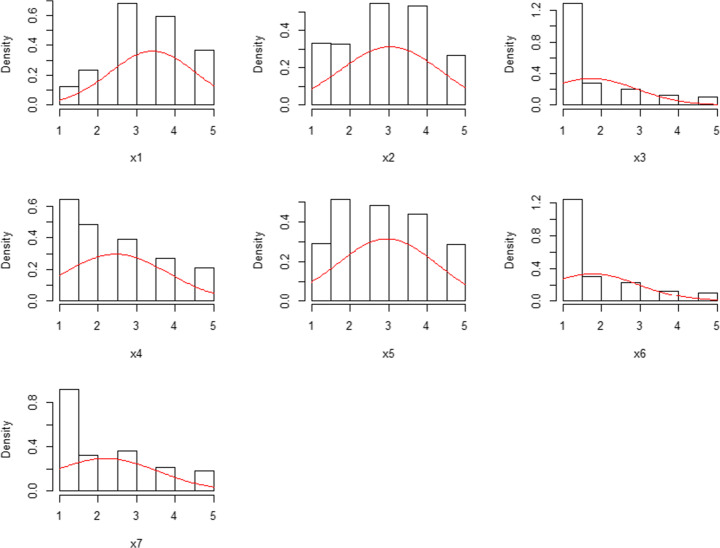
- Main analysis: Descriptive statistics, normality checks, parallel analysis/DWLS (polychoric correlations), confirmatory factor analysis with fit indices (χ², CFI, TLI, RMSEA, SRMR), and correlations for construct/convergent validity.
## Limitations
- The paper states the sample was self-selected, came from the general Italian population, and was mostly female, so tests for gender differences were not possible.
- The paper states that no formal diagnosis of mood disorders was undertaken and that social desirability may have influenced responses.
- Evident from the text: the study was conducted over a very short period and used an online convenience sample, which limits representativeness beyond the surveyed participants.
Model-written summary. Check it against the paper before relying on it.
Integrity signals
Registry
Cites
Statistics
Figures
Verification
Claims the paper makes
0 Valid · 0 Not valid · 7 Not checked · 31 Own results and interpretations
A result the paper reports from its own data — it cites no other source for it, so there is none to check. The quote shows it is in the paper.
In the paper
“confirmed the scale’s unidimensional properties”
- Also stated in: § Psychometric Analysis of the Italian FCV-19S · hedged
“the Italian FCV-19S appeared to have a unidimensional structure (i.e., a single factor)”
- Also stated in: § Discussion · hedged
“Results indicated a stable unidimensional structure of the Italian FCV-19S, confirming the findings of the original validation study (Ahorsu et al. 2020).”
§ Validation and Psychometric Evaluation of the Italian Version of the Fear of COVID-19 Scale > Abstract > Results
plainn = 249 ·- Asserted: passes — The authors put it forward as true.
- Checkable: passes — It can be checked against evidence.
- Load-bearing: passes — The paper’s conclusions depend on it.
- Based: passes — The paper gives a reason why it holds.
- Rests on an assumption not shown here.
- Also stated in: § Psychometric Analysis of the Italian FCV-19S · hedged
A result the paper reports from its own data — it cites no other source for it, so there is none to check. The quote shows it is in the paper.
In the paper
“Construct validity for the FCV-19S was supported by significant and positive correlations with the HADS (r=.649) and SMSP-A (r=.703).”
§ Validation and Psychometric Evaluation of the Italian Version of the Fear of COVID-19 Scale > Abstract > Results
plainstates an association- Asserted: passes — The authors put it forward as true.
- Checkable: passes — It can be checked against evidence.
- Load-bearing: passes — The paper’s conclusions depend on it.
- Based: passes — The paper gives a reason why it holds.
In the paper
“The explained common variance (ECV) was 74.31% (Fornell and Larcker 1981).”
§ Validation and Psychometric Evaluation of the Italian Version of the Fear of COVID-19 Scale > Results > Psychometric Analysis of the Italian FCV-19S
What the sources say
- Not checked yetcites Fornell and Larcker 1981 matched to “Evaluating structural equation models with unobservable variables and measurement error” (1981) source
plainn = 249- Asserted: passes — The authors put it forward as true.
- Checkable: passes — It can be checked against evidence.
- Load-bearing: passes — The paper’s conclusions depend on it.
- Based: passes — The paper gives a reason why it holds.
A result the paper reports from its own data — it cites no other source for it, so there is none to check. The quote shows it is in the paper.
In the paper
“The Factor Determinacy Index was 0.966 and the composite reliability was 0.907.”
§ Validation and Psychometric Evaluation of the Italian Version of the Fear of COVID-19 Scale > Results > Psychometric Analysis of the Italian FCV-19S
plain- Asserted: passes — The authors put it forward as true.
- Checkable: passes — It can be checked against evidence.
- Load-bearing: passes — The paper’s conclusions depend on it.
- Based: passes — The paper gives a reason why it holds.
A result the paper reports from its own data — it cites no other source for it, so there is none to check. The quote shows it is in the paper.
In the paper
“the loadings on the factor were significant and strong (from .684 to .897).”
§ Validation and Psychometric Evaluation of the Italian Version of the Fear of COVID-19 Scale > Abstract > Results
boosted- Asserted: passes — The authors put it forward as true.
- Checkable: passes — It can be checked against evidence.
- Load-bearing: passes — The paper’s conclusions depend on it.
- Based: passes — The paper gives a reason why it holds.
14 more claims
Create a free account to see all 38 claims and to verify the 10 references still open.
- It may state two separate claims as one. 15
- Probably not a substantial claim. 8
- The quote only partly states this claim. 1
Claims other papers make about this one
Each is checked against this paper’s own text: does it say what the citing paper says it does?
In the citing paper
“This scale has been used in a wide range of countries, such as Iran (Alyami et al., 2020), Bangladesh (Sakib et al., 2020), Italy (Soraci et al., 2020), Turkey (Satici et al., 2020), Russia and Belarus (Reznik et al., 2020), Israel (Tzur Bitan et al., 2020), Peru (Huarcaya-Victoria et al., 2020), and Paraguay (Barrios et al., 2020).”
From Fear of COVID-19, Stress, and Anxiety in University Undergraduate Students: A Predictive Model for Depression (2020) · cites this paper as Soraci et al., 2020
Self-check
Percentages, sums and reported differences re-computed from the paper’s own numbers.
Each contradiction between two passages listed here was confirmed by an independent check.
Rated minor: it would not touch a result — a value no result rests on, a p-value that stays on the same side of the significance level, or a conflict that is clerical, resolved elsewhere in the paper, or outside its own findings.
In the paper
§ Validation and Psychometric Evaluation of the Italian Version of the Fear of COVID-19 Scale > Abstract > Methods
“The sample comprised 250 Italian participants who were administered Italian versions of the FCV-19S, the Hospital Anxiety and Depression Scale (HADS), and the Severity Measure for Specific Phobia–Adult (SMSP-A).”
§ Validation and Psychometric Evaluation of the Italian Version of the Fear of COVID-19 Scale > Methods > Participants and Procedure
“A total of 249 participants (age 18 to 76 years) volunteered to take part in the study via an online survey posted in Italian online forums and social network communities (e.g., Facebook).”
Citations
Cites
R: A Language and Environment for Statistical Computing
R Core Team (2025) · doi:10.32614/r.manuals · Cited by 352,181
Diagnostic and Statistical Manual of Mental Disorders
American Psychiatric Association (2013) · doi:10.1176/appi.books.9780890425596 · Cited by 116,369
Diagnostic and Statistical Manual of Mental Disorders
Williams, J. B. W., & First, M. (2013) · Encyclopedia of Social Work · doi:10.1093/acrefore/9780199975839.013.104 · Cited by 109,519
Evaluating Structural Equation Models with Unobservable Variables and Measurement Error
Fornell, C., & Larcker, D. F. (1981) · Journal of Marketing Research · doi:10.2307/3151312 · Cited by 109,314 · cited 3×
“…deviations of themain items); (ii) construct and criterion validity of the Italian FCV-19S; (iii) the reliability of the scale, examined via composite reliability (CR) (e.g., CR values greater than 0.7 are associated with good test reliability; Fornell and Larcker 1981; Netemeyer et al. 2003).”
BackgroundInfluentialEvaluating structural equation models with unobservable variables and measurement error
Fornell, C., & Larcker, D. F. (1981) · Journal of Marketing Research · doi:10.1177/002224378101800104 · Cited by 109,190
Hu, L., & Bentler, P. M. (1999) · Structural Equation Modeling A Multidisciplinary Journal · doi:10.1080/10705519909540118 · Cited by 108,788 · cited 2×
“…(Kline 2011); chi-square test is very sensitive to the size of the sample, so several indices were used (Kline 2016), TLI = 99, CFI = 99, RMSEA=0.069 (90% confidence interval, lower limit 0.032, upper limit 0.105, p = .173, i.e., not significant for p= .01) and SRMR=0.047 (Hu and Bentler 1999).”
MethodInfluentialTabachnick, B. G., & Fidell, L. S. (1983) · Cited by 80,031
The Hospital Anxiety and Depression Scale
Zigmond, A. S., & Snaith, R. P. (1983) · Acta Psychiatrica Scandinavica · doi:10.1111/j.1600-0447.1983.tb09716.x · Cited by 47,139 · cited 1×
“The HADS (Zigmond and Snaith 1983) is a 14-item scale comprising seven items relating to anxiety and seven items relating to depression.”
BackgroundClinical characteristics of coronavirus disease 2019 in China
Guan, W.-J., Ni, Z.-Y., Hu, Y., Liang, W.-H., Ou, C.-Q., He, J.-X., Liu, L., Shan, H., Lei, C.-L., Hui, D. S. C., et al. (2020) · New England Journal of Medicine · doi:10.1056/nejmoa2002032 · Cited by 30,246
lavaan : An R Package for Structural Equation Modeling
Rosseel, Y. (2012) · Journal of Statistical Software · doi:10.18637/jss.v048.i02 · Cited by 27,955
Chen, N., Zhou, M., Dong, X., Qu, J., Gong, F., Han, Y., Qiu, Y., Wang, J., Liu, Y., Wei, Y., et al. (2020) · The Lancet · doi:10.1016/s0140-6736(20)30211-7 · Cited by 21,415 · cited 2×
“After initial mortality rates of approximately 15% being reported (Huang et al. 2020), the mortality rate was later found to be between 4.3 and 11% (Wang et al. 2020; Chen et al. 2020).”
BackgroundInfluentialWang, D., Hu, B., Hu, C., Zhu, F., Liu, X., Zhang, J., Wang, B., Xiang, H., Cheng, Z., Xiong, Y., et al. (2020) · JAMA · doi:10.1001/jama.2020.1585 · Cited by 20,148 · cited 3×
“After initial mortality rates of approximately 15% being reported (Huang et al. 2020), the mortality rate was later found to be between 4.3 and 11% (Wang et al. 2020; Chen et al. 2020).”
BackgroundInfluentialLa certeza de lo impredecible: Cultura Educación y Sociedad en tiempos de COVID19
Martínez González, M. (2020) · DSPACE System - Metalibrary (University of the Coast) · Cited by 18,463
Diagnostic and Statistical Manual of Mental Disorders, 5th ed.
Carter, M. J. (2014) · Therapeutic Recreation Journal · Cited by 15,169
An Index of Factorial Simplicity
Kaiser, H. F. (1974) · Psychometrika · doi:10.1007/bf02291575 · Cited by 14,898 · cited 2×
“The factorial validity of FCV-19S was supported by the results (Cerny and Kaiser 1977; Kaiser 1974) .”
ResultGuidelines for the process of cross-cultural adaptation of self-report measures
Beaton, D. E., Bombardier, C., Guillemin, F., & Ferraz, M. B. (2000) · Spine · doi:10.1097/00007632-200012150-00014 · Cited by 14,542 · cited 1×
“For the Italian FCV-19S, the items were independently translated by a mother-tongue translator and internationally accepted practices for translation were employed (Beaton et al. 2000).”
MethodDepression and quality of life in older persons: A review
Sivertsen, H., Bjørkløf, G. H., Engedal, K., Selbæk, G., & Helvik, A.-S. (2015) · Dementia and Geriatric Cognitive Disorders · doi:10.1159/000437299 · Cited by 14,152
Construct validity in psychological tests.
Cronbach, L. J., & Meehl, P. E. (1955) · Psychological Bulletin · doi:10.1037/h0040957 · Cited by 11,195 · cited 1×
“First, construct and criterion validity were tested (Cronbach and Meehl 1955) .”
Background(2007) · Cited by 10,092
Testing Structural Equation Models.
Clogg, C. C., Bollen, K. A., & Long, J. S. (1995) · Social Forces · doi:10.2307/2580595 · Cited by 8,211
The Fear of COVID-19 Scale: Development and Initial Validation
Ahorsu, D. K., Lin, C.-Y., Imani, V., Saffari, M., Griffiths, M. D., & Pakpour, A. H. (2022) · International Journal of Mental Health and Addiction · doi:10.1007/s11469-020-00270-8 · Cited by 4,332 · cited 10×
“Fear of COVID-19 Scale The FCV-19S (Ahorsu et al. 2020) is a seven-item scale that assesses the fear of COVID-19.”
BackgroundMethodResultInfluentialSelf-citationHuang, Y., & Zhao, N. (2020) · Psychiatry Research · doi:10.1016/j.psychres.2020.112954 · Cited by 3,736
(1993) · Cited by 2,269
Netemeyer, R., Bearden, W., & Sharma, S. (2003) · Sage eBooks · doi:10.4135/9781412985772 · Cited by 2,118
(2003) · Cited by 2,093
A comparison of some methodologies for the factor analysis of non‐normal Likert variables
Muthén, B., & Kaplan, D. (1985) · British Journal of Mathematical and Statistical Psychology · doi:10.1111/j.2044-8317.1985.tb00832.x · Cited by 1,778 · cited 2×
“Univariate normality of the data was verified using the guidelines proposed by Muthén and Kaplan (1985) before the analysis of the sample’s results (i.e., to check if acceptable values for asymmetry/ asymmetry and kurtosis were in the range from − 1 to + 1 in the case of normal univariate data…”
BackgroundMethodEstimation of composite reliability for congeneric measures
Raykov, T. (1997) · Applied Psychological Measurement · doi:10.1177/01466216970212006 · Cited by 1,775 · cited 2×
“To analyze the reliability of the measure and internal consistency, Cronbach’s alpha, Factor Determinacy Index, and composite reliability (Raykov 1997) were used.”
MethodAsymptotically distribution‐free methods for the analysis of covariance structures
Browne, M. W. (1984) · British Journal of Mathematical and Statistical Psychology · doi:10.1111/j.2044-8317.1984.tb00789.x · Cited by 1,768
Santini, Z. I., Jose, P. E., York Cornwell, E., Koyanagi, A., Nielsen, L., Hinrichsen, C., Meilstrup, C., Madsen, K. R., & Koushede, V. (2020) · The Lancet Public Health · doi:10.1016/s2468-2667(19)30230-0 · Cited by 1,755 · cited 1×
“…because social isolation (in this case, resulting from mandatory social distancing policies issued by governments) has been previously shown to be strongly intertwined with anxiety and depression symptoms in both younger and older populations (e.g.,Matthews et al. 2019; Santini et al. 2020).”
BackgroundSingle Sample Cross-Validation Indices for Covariance Structures
Browne, M. W., & Cudeck, R. (1989) · Multivariate Behavioral Research · doi:10.1207/s15327906mbr2404_4 · Cited by 1,656 · cited 1×
“A good model should have the following characteristics: GFI > 0.90, CFI and TLI > 0.95, RMSEA 0.06, and SRMR 0.08 (i.e., Browne and Cudeck 1993) The analysis was carried out using the following statistical packages: FACTOR v. 10.10.01 (Ferrando and Lorenzo-Seva 2017), SPSS Statistics v.25 (IBM…”
MethodInfluentialDiscovering drugs to treat coronavirus disease 2019 (COVID-19)
Dong, L., Hu, S., & Gao, J. (2020) · Drug Discoveries & Therapeutics · doi:10.5582/ddt.2020.01012 · Cited by 1,390 · cited 1×
“Medical research globally has rightfully focused on the development of an effective vaccine (Dong et al. 2020; Wang et al. 2020), while governments have dedicated themselves to the implementation of strategies for infection control to minimize the spread of the virus.”
BackgroundA Study Of A Measure Of Sampling Adequacy For Factor-Analytic Correlation Matrices
Cerny, B. A., & Kaiser, H. F. (1977) · Multivariate Behavioral Research · doi:10.1207/s15327906mbr1201_3 · Cited by 1,221
Infectious Disease Threats in the Twenty-First Century: Strengthening the Global Response
Bloom, D. E., & Cadarette, D. (2019) · Frontiers in Immunology · doi:10.3389/fimmu.2019.00549 · Cited by 806 · cited 2×
“Besides generating concerns on a physical and psychological healthcare level, COVID-19 has also resulted in social issues, which have been previously associated with an acceleration of an infectious disease’s spread (Centers for Disease Control and Prevention 2020a, b; Bloom and Cadarette 2019).”
BackgroundPerceived vulnerability to disease: Development and validation of a 15-item self-report instrument
Duncan, L. A., Schaller, M., & Park, J. H. (2009) · Personality and Individual Differences · doi:10.1016/j.paid.2009.05.001 · Cited by 758 · cited 1×
“This is in accordance with previous literature indicating that, during long periods of infectious epidemics, individuals’ psychophysical health can be affected by negative psychological states (e.g., anxiety, depression, and phobias; Duncan et al. 2009; Pappas et al. 2009; Ropeik 2004).”
ResultExploratory Factor Analysis: A Users’Guide
Ferguson, E., & Cox, T. (1993) · International Journal of Selection and Assessment · doi:10.1111/j.1468-2389.1993.tb00092.x · Cited by 724 · cited 1×
“…RMSEA 0.06, and SRMR 0.08 (i.e., Browne and Cudeck 1993) The analysis was carried out using the following statistical packages: FACTOR v. 10.10.01 (Ferrando and Lorenzo-Seva 2017), SPSS Statistics v.25 (IBM Corporation 2017), and “R” software (R Core Team 2014) with the lavaan package (Yves…”
MethodInfluentialReporting Analyses of Covariance Structures
Boomsma, A. (2000) · Structural Equation Modeling: A Multidisciplinary Journal · doi:10.1207/s15328007sem0703_6 · Cited by 655 · cited 1×
“To investigate and analyze the factorial structure, since there is no unequivocal consensus in the literature (see Bollen and Long 1993; Boomsma 2000), different goodness of fit (GOF) adaptation indiceswere used to confirm the dimensionality of the FCV-19S.”
MethodMîndrilă, D. (2010) · International Journal for Digital Society · doi:10.20533/ijds.2040.2570.2010.0010 · Cited by 566 · cited 1×
“In this specific case, since the items (see Table 1) were distributed in a non-normal way (some items out of the range of ± 1 [seeMuthén and Kaplan 1985; Tabachnick and Fidell 2007]), parallel analysis/diagonally weighted least squares method (DWLS, polychoric correlation) was used (Mindrila 2010).”
MethodSocial Reaction Toward the 2019 Novel Coronavirus (COVID-19)
Lin, C.-Y. (2020) · Asian Journal of Social Health and Behavior · doi:10.4103/shb.shb_11_20 · Cited by 561 · cited 1×
“…with individuals who may have been infected has been reported in the context of COVID-19 (Centers for Disease Control and Prevention 2020a, b; Lin 2020), a new psychometric assessment tool assessing an individual’s fear of COVID-19 was recently developed, i.e., the Fear of COVID-19 Scale…”
Costantini, M., Musso, M., Viterbori, P., Bonci, F., Del Mastro, L., Garrone, O., Venturini, M., & Morasso, G. (1999) · Supportive Care in Cancer · doi:10.1007/s005200050241 · Cited by 535 · cited 1×
“Hospital Anxiety and Depression Scale In order to assess the anxiety and depression levels of participants, the Italian version of the Hospital Anxiety and Depression Scale (HADS) (Costantini et al. 1999) was used.”
MethodProgram FACTOR at 10: Origins, development and future directions
Ferrando, P., & Lorenzo-Seva, U. (2017) · Psicothema · doi:10.7334/psicothema2016.304 · Cited by 534 · cited 1×
“…RMSEA 0.06, and SRMR 0.08 (i.e., Browne and Cudeck 1993) The analysis was carried out using the following statistical packages: FACTOR v. 10.10.01 (Ferrando and Lorenzo-Seva 2017), SPSS Statistics v.25 (IBM Corporation 2017), and “R” software (R Core Team 2014) with the lavaan package (Yves…”
MethodInfluentialLonely young adults in modern Britain: findings from an epidemiological cohort study
Matthews, T., Danese, A., Caspi, A., Fisher, H. L., Goldman-Mellor, S., Kepa, A., Moffitt, T. E., Odgers, C. L., & Arseneault, L. (2019) · Psychological Medicine · doi:10.1017/s0033291718000788 · Cited by 381
Using the Modification Index and Standardized Expected Parameter Change for Model Modification
Whittaker, T. A. (2012) · The Journal of Experimental Education · doi:10.1080/00220973.2010.531299 · Cited by 357 · cited 2×
“Preliminary covariance results may, in fact, be due to different factors, such as (i) an underlying factor that was not considered in the present model, (ii) the sample size, (iii) the imbalance of the sample’s gender composition, (iv) idiosyncratic characteristics of the sample, and (v) the semantic similarity betwee…”
BackgroundCurrent directions in stress and human immune function
Morey, J. N., Boggero, I. A., Scott, A. B., & Segerstrom, S. C. (2015) · Current Opinion in Psychology · doi:10.1016/j.copsyc.2015.03.007 · Cited by 340 · cited 1×
“…shown to worsen both the physical and mental health of individuals, often resulting in increased use of alcohol, tobacco, or other drugs (Centers for Disease Control and Prevention 2020c) and negatively affecting the immune system, making people more vulnerable to disease (e.g., Morey et al. 2015).”
BackgroundPsychosocial consequences of infectious diseases
Pappas, G., Kiriaze, I. J., Giannakis, P., & Falagas, M. E. (2009) · Clinical Microbiology and Infection · doi:10.1111/j.1469-0691.2009.02947.x · Cited by 323 · cited 8×
“Often fueled by sensationalistic headlines in the mass media, fear can bring people to oscillate between denial and phobia, while also stigmatizing citizens racially perceived as being the source of the disease (Pappas et al.”
BackgroundResultInfluentialHuang, Y., & Zhao, N. (2020) · medRxiv · doi:10.1101/2020.02.19.20025395 · Cited by 238 · cited 3×
“2018; Huang et al.”
BackgroundInfluentialRopeik, D. P. (2004) · EMBO Reports · doi:10.1038/sj.embor.7400228 · Cited by 80 · cited 2×
“This is in accordance with previous literature indicating that, during long periods of infectious epidemics, individuals’ psychophysical health can be affected by negative psychological states (e.g., anxiety, depression, and phobias; Duncan et al. 2009; Pappas et al. 2009; Ropeik 2004).”
ResultDimensional anxiety scales for DSM-5: Sensitivity to clinical severity
Knappe, S., Klotsche, J., Strobel, A., LeBeau, R. T., Craske, M. G., Wittchen, H.-U., & Beesdo-Baum, K. (2013) · European Psychiatry · doi:10.1016/j.eurpsy.2013.02.001 · Cited by 56 · cited 2×
“Adult (SMSP-A) (Knappe et al. 2013) is a 10-item scale that assesses the severity of specific”
BackgroundReaction to the threat of influenza pandemic: the mass media and the public.
Falagas, M. E., & Kiriaze, I. J. (2006) · Critical Care · doi:10.1186/cc4910 · Cited by 49 · cited 2×
“Moreover, fear experienced during an epidemics has been previously associated with the stigmatization of citizens perceived as being the source of the disease, with the risk of resulting in scuffles or, in extreme cases, civil conflicts (Pappas et al. 2009; Falagas and Kiriaze 2006).”
BackgroundReduced immunity to measles in adults with major depressive disorder
Ford, B. N., Yolken, R. H., Dickerson, F., Teague, T. K., Irwin, M. R., Paulus, M. P., & Savitz, J. B. (2018) · Psychological Medicine · doi:10.1017/s0033291718000661 · Cited by 39 · cited 1×
“In turn, other psychological disorders such as anxiety and depression have been found associated with fear in previous epidemics, further affecting people's quality of life negatively (e.g., Ford et al.”
BackgroundPhobia, Anxiety, and Depression
Greenson, R. R. (1959) · Journal of the American Psychoanalytic Association · doi:10.1177/000306515900700404 · Cited by 31 · cited 2×
“…in accordance with previous literature (e.g., Brannon and Schuyler 2000; American Psychiatric Association 2013) according to which specific phobias are often comorbid with anxiety (which is unsurprising given that phobias can be considered as a defense by individuals from anxiety; Greenson 1959).”
ResultComorbid Generalized Anxiety Disorder, Phobia, and Panic Disorder
Brannon, N., & Schuyler, D. (2000) · The Primary Care Companion For CNS Disorders · doi:10.4088/pcc.v02n0411 · Cited by 2 · cited 1×
“This is in accordance with previous literature (e.g., Brannon and Schuyler 2000; American Psychiatric Association 2013) according to which specific phobias are often comorbid with anxiety (which is unsurprising given that phobias can be considered as a defense by individuals from anxiety; Greenson…”
Result
Research works printed but not linked: 4
- Gorsuch, R. L. (1983). Factor analysis (2nd Edition). Hillsdale, NJ: Erlbaum.
- Kline, R. B. (2011). Methodology in the social sciences. Principles and practice of structural equation modeling (3rd ed.). New York: Guilford Press.
- Kline, R. B. (2016). Methodology in the social sciences. Principles and practice of structural equation modeling (4th ed.). Guilford Press.
- Muthén, L. K., & Muthén, B. O. (1998-2017). Mplus user’s guide (8th ed.). Los Angeles: Muthén & Muthén.
Cited by
Depression and Anxiety in Hong Kong during COVID-19
Choi, E. P. H., Hui, B. P. H., & Wan, E. Y. F. (2020) · International Journal of Environmental Research and Public Health · doi:10.3390/ijerph17103740 · Cited by 893
“Recent studies among Italian [36] and Iranian [37] populations found that fear of COVID-19 was significantly correlated with depression and anxiety, as measured by the hospital anxiety and depression scale; the authors also explained that fear of COVID-19 may be exacerbated by coexisting depression and anxiety disorde…”
BackgroundGalanti, T., Guidetti, G., Mazzei, E., Zappalà, S., & Toscano, F. (2021) · Journal of Occupational & Environmental Medicine · doi:10.1097/jom.0000000000002236 · Cited by 826
“Furthermore, since this research was conducted during the first phase of the COVID-19 pandemic, subjective perceptions and concerns regarding the COVID-19 may also have an impact on the experiences and well-being of the participants.18 Therefore, fear of COVID-19 was used as a control variable and assessed using the s…”
BackgroundBakioğlu, F., Korkmaz, O., & Ercan, H. (2021) · International Journal of Mental Health and Addiction · doi:10.1007/s11469-020-00331-y · Cited by 812
“Additionally, the FCV-19S was confirmed in Bangla (Sakib et al. 2020), Italy (Soraci et al. 2020), and Eastern Europe (Reznik et al. 2020) versions.”
BackgroundSakib, N., Bhuiyan, A. K. M. I., Hossain, S., Al Mamun, F., Hosen, I., Abdullah, A. H., Sarker, M. A., Mohiuddin, M. S., Rayhan, I., Hossain, M., et al. (2022) · International Journal of Mental Health and Addiction · doi:10.1007/s11469-020-00289-x · Cited by 414
“In general, the results of the study were comparable with the original Iranian validation (Ahorsu et al. 2020) and a recent Italian validation study (Soraci et al. 2020).”
BackgroundResultInfluentialSelf-citationRodríguez-Hidalgo, A. J., Pantaleón, Y., Dios, I., & Falla, D. (2020) · Frontiers in Psychology · doi:10.3389/fpsyg.2020.591797 · Cited by 408
Metadata
- Authors
- Soraci, P., Ferrari, A., Abbiati, F. A., Del Fante, E., De Pace, R., Urso, A., & Griffiths, M. D.
- Affiliations
- University of Milano-Bicocca (IT)
- University of Turin (IT)
- Pontifical University of Saint Thomas Aquinas (IT)
- Nottingham Trent University (GB)
- Corresponding author
- Griffiths, Mark D.
- Venue
- International Journal of Mental Health and Addiction
- Published
- 2020-05-04
- Volume
- 20
- Issue
- 4
- Pages
- 1913-1922
- ISSN
- 1557-1874 (ISSN-L)
- 1557-1882
- PMC
- PMC7198091
- OpenAlex
- W3023650990
- Cited by
- 427
- References
- 53
- Citations by year
- 2026: 4 · 2025: 7 · 2024: 24 · 2023: 41 · 2022: 120 · 2021: 157 · 2020: 74
- FWCI
- 39.16
- Type
- journal article
- Language
- en
- Open access
- hybrid
- doi.org
- Licence
- cc-by
- www.springer.com/tdm (tdm)
- www.springer.com/tdm (vor)
- Locations
- International Journal of Mental Health and Addiction (publishedVersion, cc-by)
- PubMed Central (publishedVersion, cc-by)
- PubMed (publishedVersion)
- Nottingham Trent University's Institutional Repository (Nottingham Trent Repository) (acceptedVersion)
- BOA (University of Milano-Bicocca) (submittedVersion)
- Topics
- Social Sciences › Psychology › Clinical Psychology › COVID-19 and Mental Health
- Social Sciences › Psychology › Experimental and Cognitive Psychology › Anxiety, Depression, Psychometrics, Treatment, Cognitive Processes
- Social Sciences › Decision Sciences › Management Science and Operations Research › Psychometric Methodologies and Testing
- Keywords
- Fear of COVID-19 Scale, fear of COVID-19, Italian translation, psychometric validation, scale reliability, construct validity, anxiety, specific phobia, Hospital Anxiety and Depression Scale
About these checks
Registry, retraction, Cites and statistics results are computed, not judged, with one exception: a printed reference that no index lists is read once by a model before it counts as a citation error. Claims are extracted by a model and kept only when their quote appears verbatim in the text; each cited source is then checked, with a model’s help, for whether it says what the claim relies on. Those verdicts can be wrong — read the claim’s quote and the cited source before relying on one.
A language model drew the claims from the paper on 2026-10-11, under version 3 of the claim definition (model deepseek-v4.1-flash, prompt extract-v3).
A second model labelled each claim on 2026-10-11 (model jev-1.13-20260917, definition revision gold-guideline-v0.2).
Statistics and arithmetic are recomputed, not judged.
Confidence bands are shown only for fields calibrated on our annotated test set. None is calibrated yet, so no band is shown.
What counts as a claim ›How we measure confidence ›How we check this ›
Are you an author, or do you see a problem with this page? Request a review
Data sources
Bibliographic data: Semantic Scholar, OpenAlex, Crossref.
Contains information from the Semantic Scholar Academic Graph Datasets, made available under the ODC Attribution License (ODC-BY 1.0).
Semantic Scholar’s data is described in: Kinney, R., et al. (2023). The Semantic Scholar Open Data Platform. arXiv:2301.10140.
