

The DOI matches its Crossref record; 4 of the 4 references it cites were found in a registry or an index.
The Effect of Gel Microstructure on Simulated Gastric Digestion of Protein Gels
Open accessAbstract
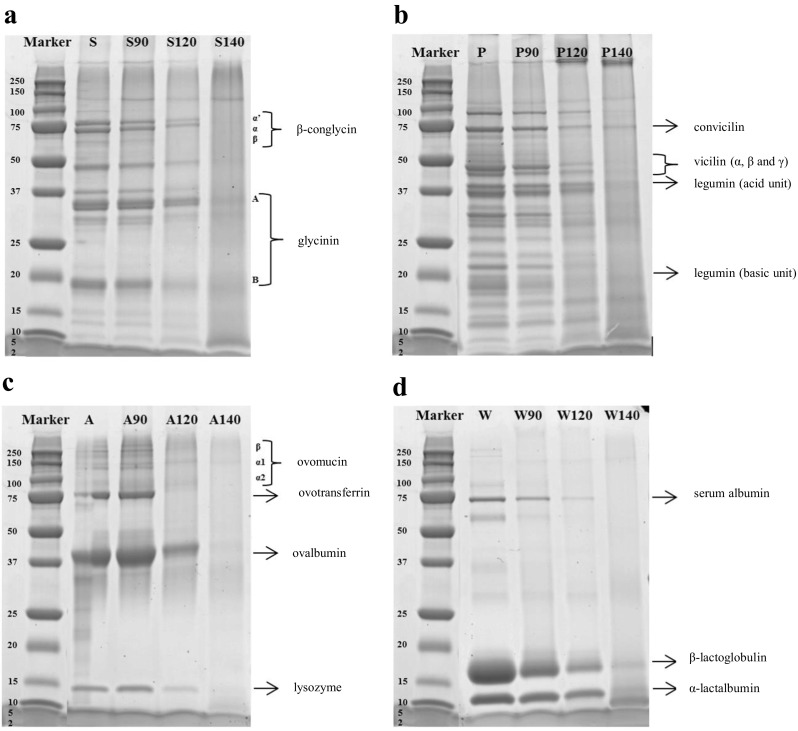
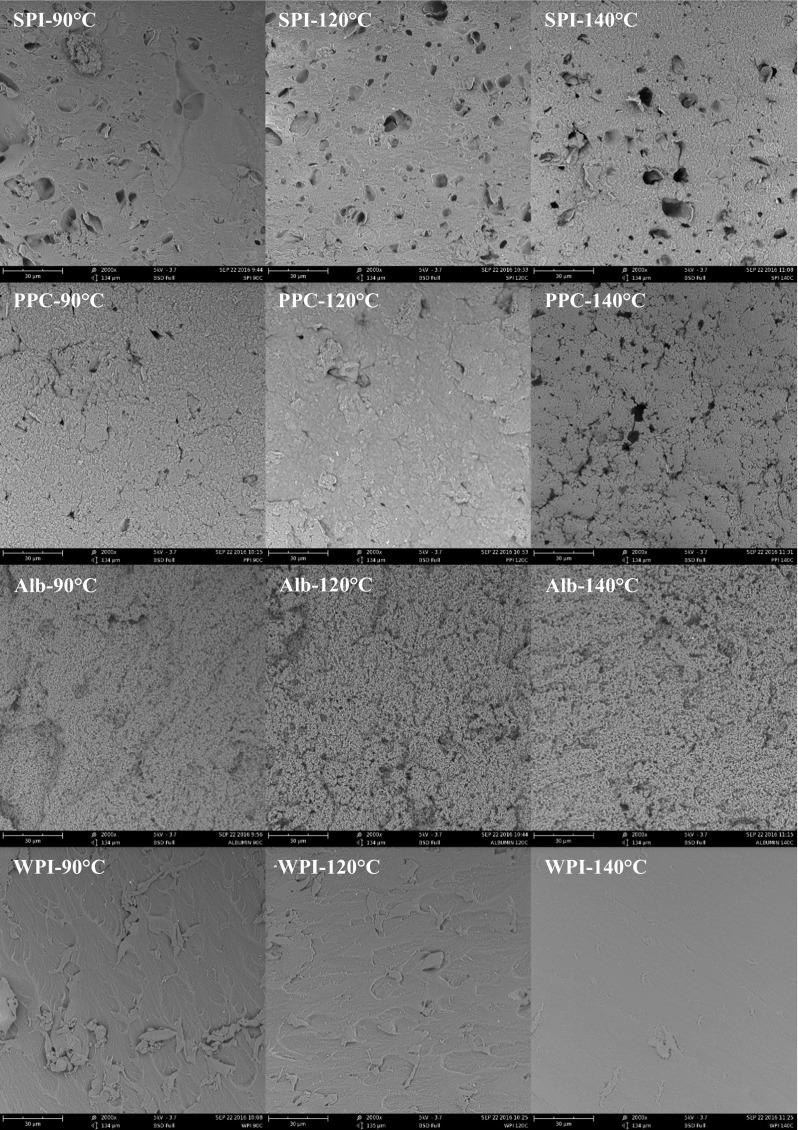
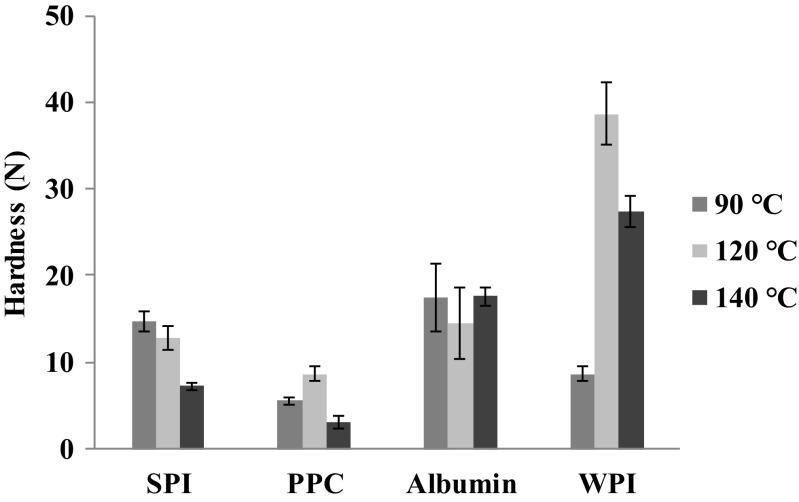
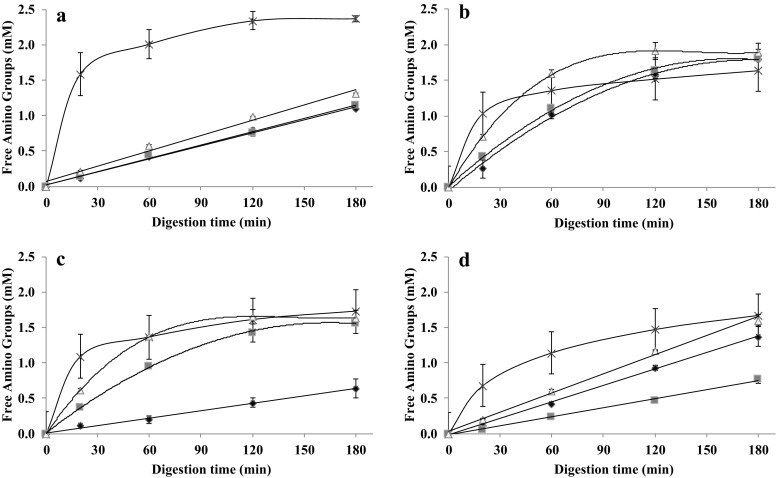
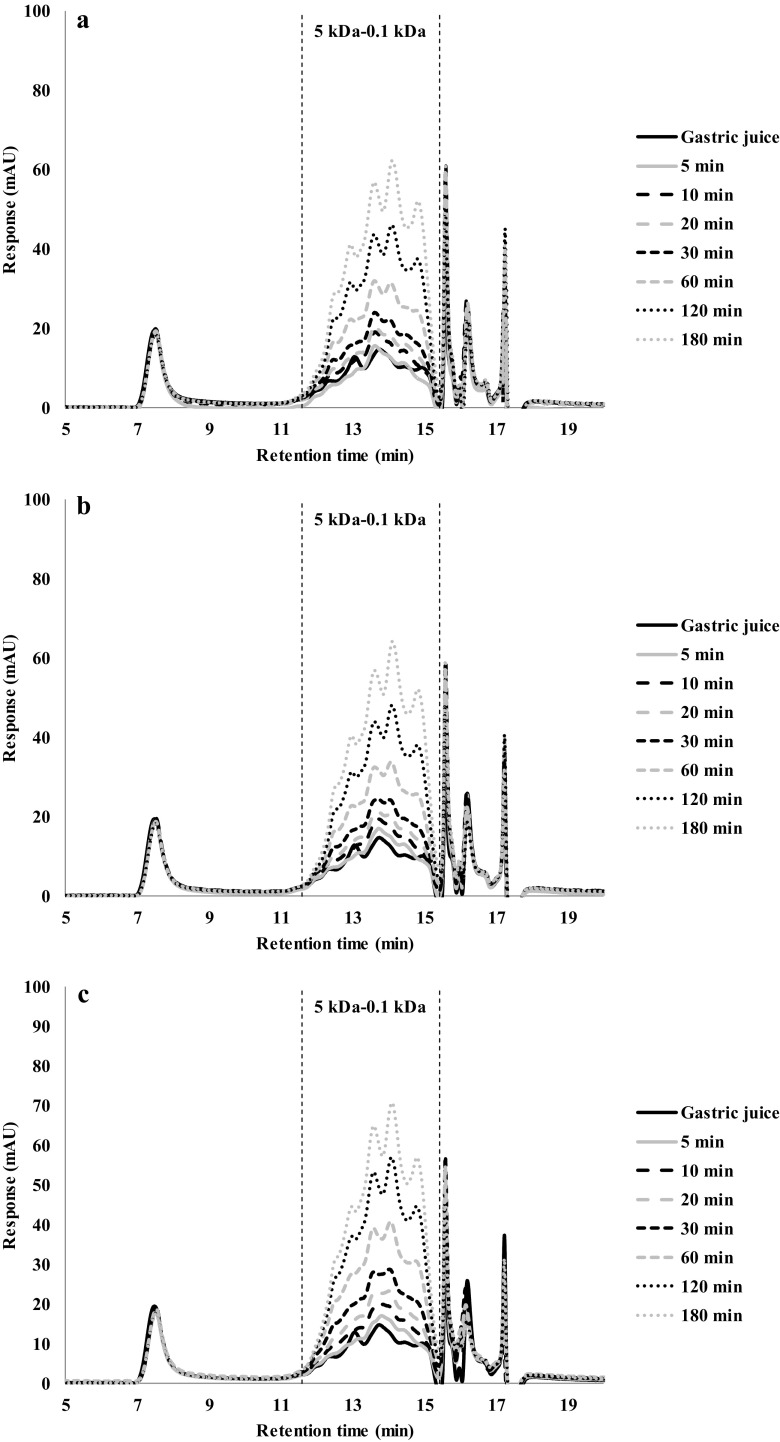
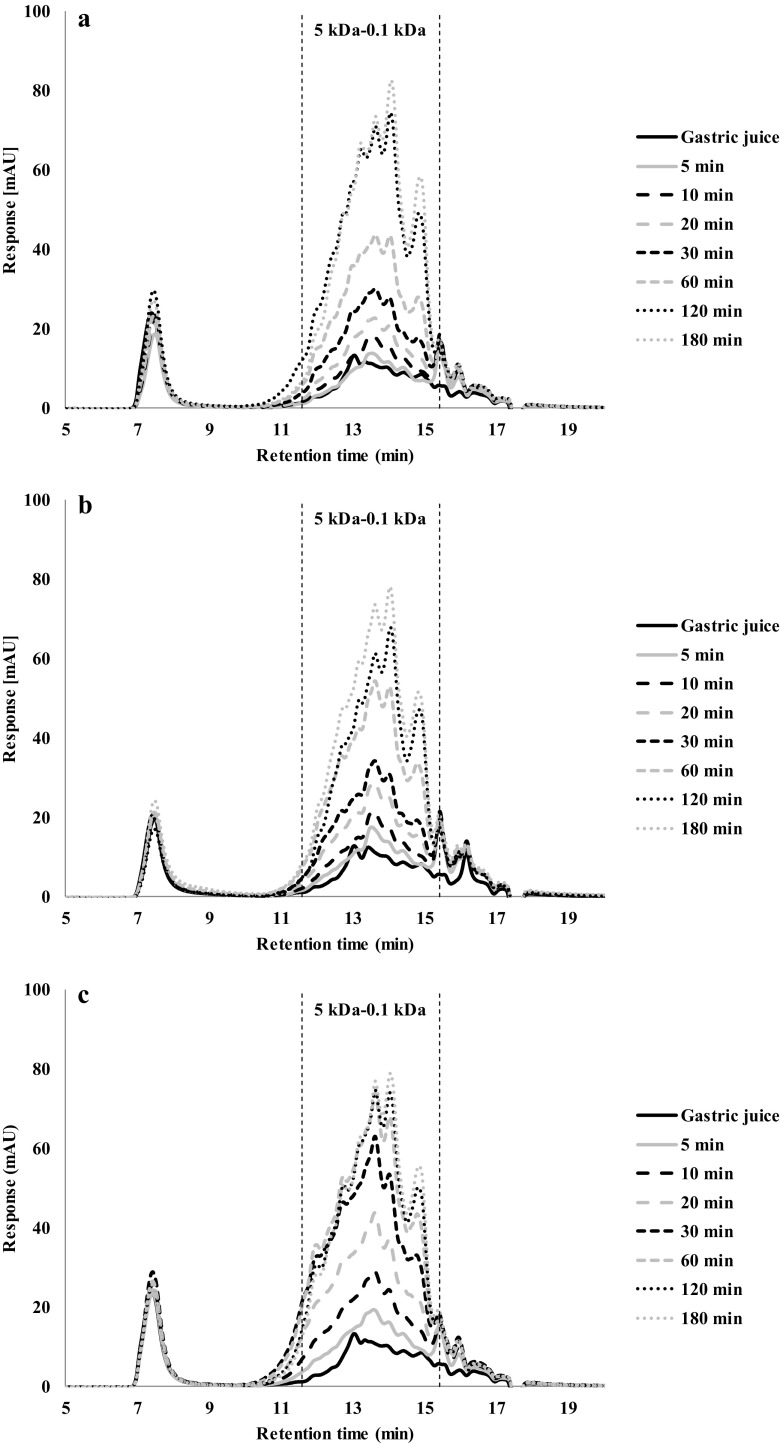
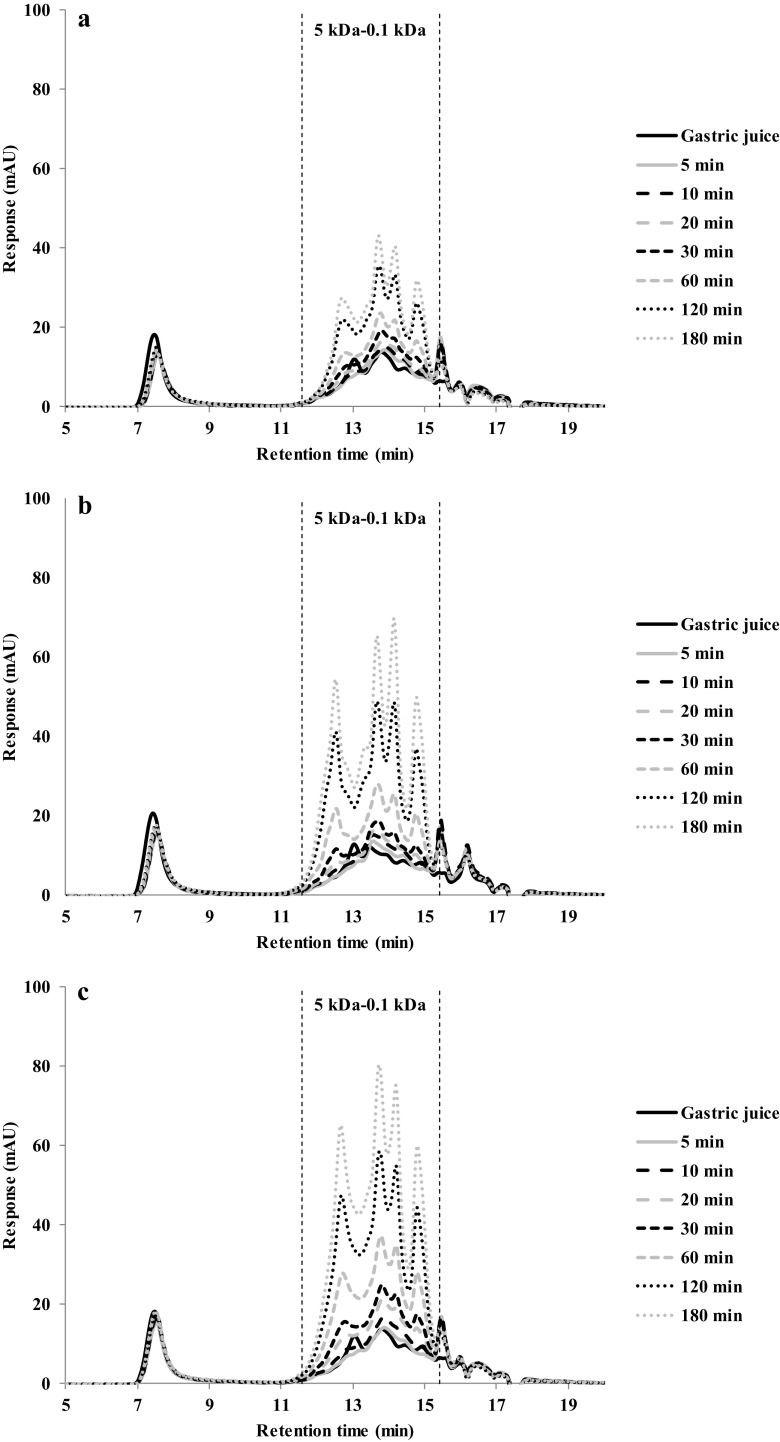
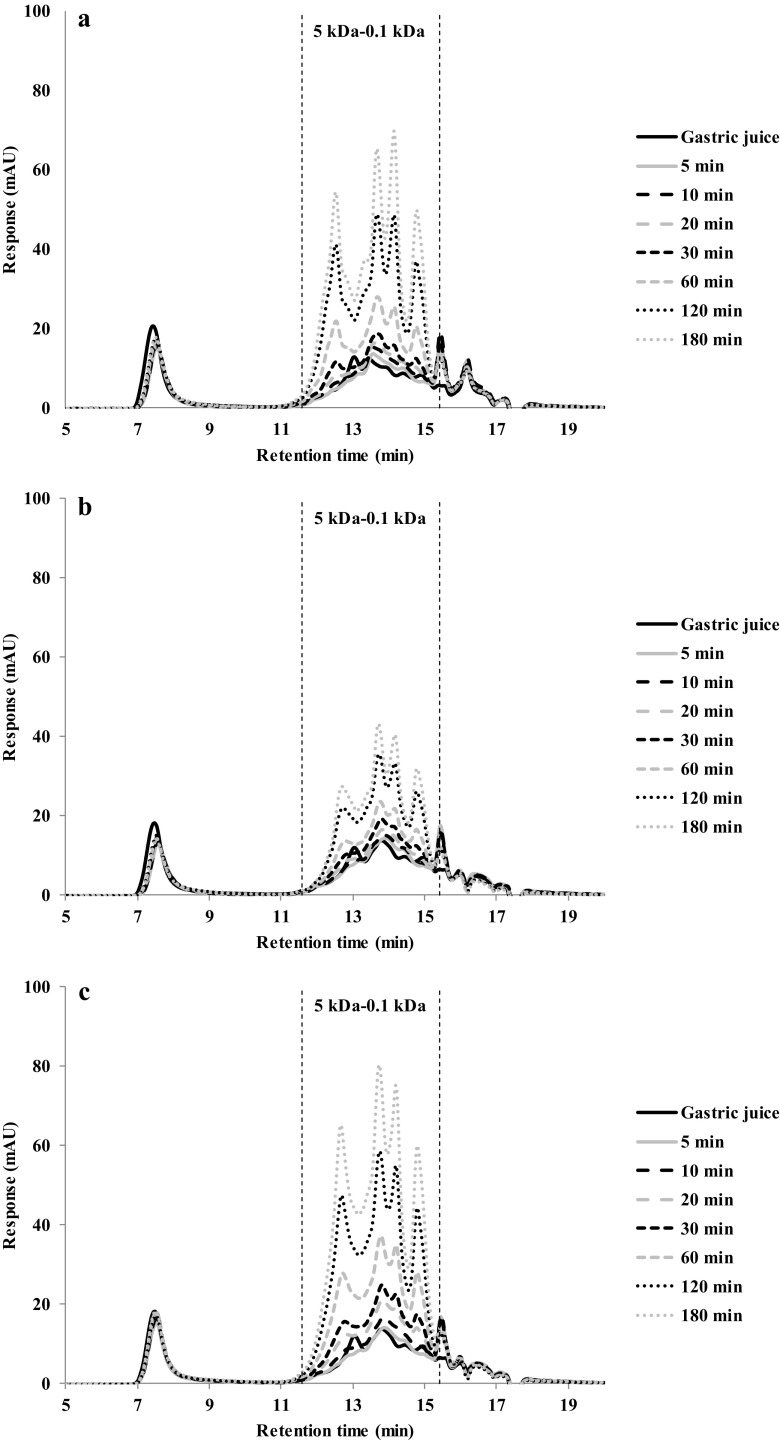
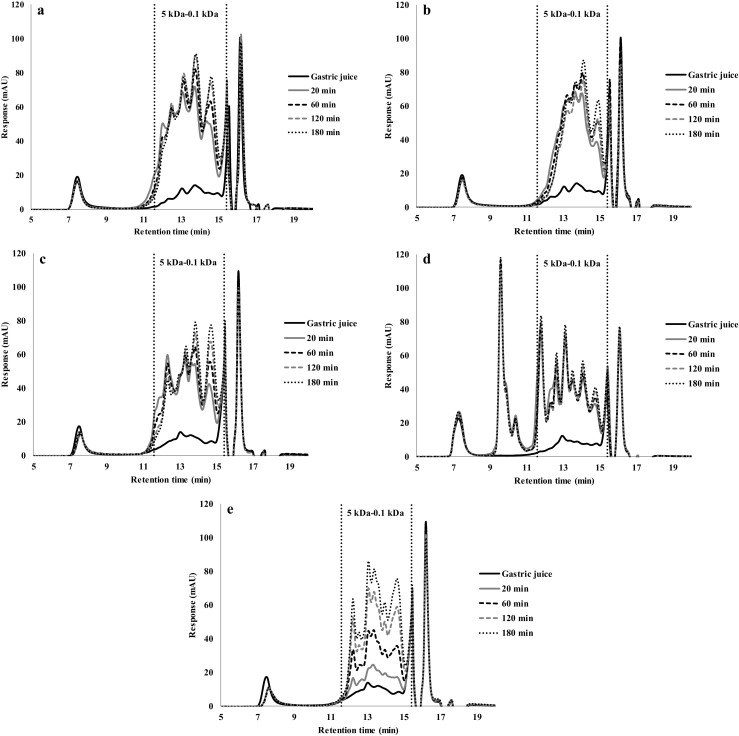
The objective of this study was to analyse the impact of the gel structure obtained by different heat-induced temperatures on the in vitro gastric digestibility at pH 2. To achieve this, gels were prepared from soy protein, pea protein, albumin from chicken egg white and whey protein isolate at varying temperatures (90, 120 and 140 °C) for 30 min. Gels were characterised prior to digestion via microstructure and SDS-PAGE analysis. Subsequently, the gastric digestion process was followed via the protein hydrolysis and HPSEC analysis up to 180 min. Peptides of different sizes (<5 kDa) were gradually formed during the digestion. Our results showed that gels induced at 140 °C were digested faster. The protein source and gelation temperature had great influence on the in vitro gastric protein digestibility.
Overview
The claims and statistics of this paper haven’t been checked yet.
Run the check — free, no account needed. It reads the open-access text and checks the sources it cites.
Integrity signals
Registry
Cites
Statistics
Figures
Verification
Claims the paper makes
The claims and statistics of this paper haven’t been checked yet.
Run the check — free, no account needed. It reads the open-access text and checks the sources it cites.
Claims other papers make about this one
Each is checked against this paper’s own text: does it say what the citing paper says it does?
The source backs part of the claim, not all of it — or backs it for a different population, condition or comparison.
In the citing paper
“Increased gel texture at higher protein content delayed the gastric empty and the breakdown of gels during digestion, further reducing digestibility.”
From Designing Protein Gels for Nutrient Delivery: From Formulation to Digestion (2026) · cites this paper as Opazo‐Navarrete et al. 2018
Experimental — accuracy not yet measuredIn the citing paper
“The denser microstructure and less porosity of protein gels could delay the diffusion of pepsin into gel matrix, showing slower protein hydrolysis (Luo et al. 2017; Opazo‐Navarrete et al. 2018).”
From Designing Protein Gels for Nutrient Delivery: From Formulation to Digestion (2026) · cites this paper as Opazo‐Navarrete et al. 2018
Self-check
Percentages, sums and reported differences re-computed from the paper’s own numbers.
The self-check needs the paper’s full text.
Citations
Cites
Slow and fast dietary proteins differently modulate postprandial protein accretion
Boirie, Y., Dangin, M., Gachon, P., Vasson, M.-P., Maubois, J.-L., & Beaufrère, B. (1997) · Proceedings of the National Academy of Sciences · doi:10.1073/pnas.94.26.14930 · Cited by 1,453
Physicochemical and textural properties of heat-induced pea protein isolate gels
Shand, P. J., Ya, H., Pietrasik, Z., & Wanasundara, P. K. J. P. D. (2007) · Food Chemistry · doi:10.1016/j.foodchem.2006.06.060 · Cited by 443
Characterization of Pea Vicilin. 1. Denoting Convicilin as the α-Subunit of the Pisum Vicilin Family
O'Kane, F. E., Happe, R. P., Vereijken, J. M., Gruppen, H., & van Boekel, M. A. J. S. (2004) · Journal of Agricultural and Food Chemistry · doi:10.1021/jf035104i · Cited by 138
Urbonaite, V., de Jongh, H. H. J., van der Linden, E., & Pouvreau, L. (2015) · Food Hydrocolloids · doi:10.1016/j.foodhyd.2014.12.010 · Cited by 88
Research works printed but not linked: 38
- C.D. Munialo, E. van der Linden, K. Ako, H.H.J. de Jong, Food Hydrocoll. 49, 104–117 (2015) · DOI
- K. Nyemb, C. Guérin-Dubiard, S. Pézenne, J. Jardin, V. Briard-Bion, C. Cauty, S. Rutherfurd, D. Dupont, F. Nau, Food Hydrocoll. 54, 315–327 (2016) · DOI
- J.M.S. Renkema, Formation, structure and rheological properties of soy protein gels. Ph.D. Thesis, Wageningen University, Wageningen, The Netherlands (2001)
- A.-M. Hermansson, J. Am. Oil Chem. Soc. 63(5), 658–666 (1986) · DOI
- C.-H. Wang, S. Damodaran, J. Agric. Food Chem. 39(3), 433–438 (1991) · DOI
- I. Norton, S. Moore, P. Fryer, Obes. Rev. 8(1), 83–88 (2007) · DOI
- S. Van Vliet, N.A. Burd, L.J. van Loon, J. Nutr. 145, 1981–1991 (2015) · DOI · Paper page
- N. Chen, M. Zhao, W. Sun, Food Chem. 141, 3224–3229 (2013) · DOI
- P.J.M. Pelgrom, A.M. Vissers, R.M. Boom, M.A.I. Schutyser, Food Res. Int. 53, 232–239 (2013) · DOI
- S.D. Arntfield, E.D. Murray, Can. Inst. Food Sci. Technol. J. 14(4), 289–294 (1981) · DOI
- X. Rui, Y. Fu, Q. Zhang, W. Li, F. Zare, X. Chen, M. Jiang, M. Dong, M. LWT-Food Sci. Technol. 71, 234–242 (2016) · DOI
- G.M. Bornhorst, M.J. Ferrua, R.P. Singh, J. Food Sci. 80, R924–R934 (2015) · DOI
- Q. Guo, A. Ye, M. Lad, D. Dalgleish, H. Singh, Soft Matter 10, 1214–1223 (2014) · DOI
- B.L. Dekkers, R. Hamoen, R.M. Boom, A.J. van der Goot, Innov. J. Food Eng. 222, 84–92 (2018) · DOI
- B.L. Dekkers, N.V. Constantinos, A.J. van der Goot, Innov. Food Sci. Emerg. 36, 193–200 (2016) · DOI
- Q. Luo, R.M. Boom, A.E.M. Janssen, LWT-Food Sci. Technol. 63(1), 161–168 (2015) · DOI
- G. Avila, M. Opazo-Navarrete, M. Meurs, M. Minor, G. Sala, M. van Boekel, M. Stieger, A.E.M. Janssen, Food Biophys. 11, 184–197 (2016) · DOI
- M.-L. Jalabert-Malbos, A. Mishellany-Dutuor, A. Woda, M.-A. Peyron, Food Qual. Prefer. 18, 803–812 (2007) · DOI
- B.E. Casey, K.J. Laidler, J. Am. Chem. Soc. 73, 1455–1457 (1951) · DOI
- J. Adler-Nissen, Enzymic Hydrolysis of Food Proteins (Elsevier Applied Science Publishers, New York, 1986), pp. 110–169
- I. Crévieu, B. Carré, A.-M. Chagneua, L. Quillien, J. Guéguen, S. Bérot, S.J. Agric, Food Chem. 45, 1295–1300 (1997) · DOI
- A.-M. Hermansson, Aggregation and Denaturation Involved in Gel Formation (SHERMAN, P. Food Texture and Rheology. New York: Academic Press, 1979), pp. 265 · DOI · Paper page
- J.E. Kinsella, Crit. Rev. Food Sci. Nutr. 21, 197–262 (1984) · DOI
- L.G. Phillips, D.M. Whitehead, J.E. Kinsella, Structure Function Properties of Food Proteins (San Diego, Academic Press, 1994), p. 271
- T. Furukawa, S. Ohta, A. Yamamoto, J. Texture Stu. 10, 333–346 (1979) · DOI
- T. Furukawa, S. Ohta, J. Texture Stu. 13(1), 59–69 (1982) · DOI
- C.Y. Ma, J. Holme, J. Food Sci. 47, 1454–1459 (1982) · DOI
- J.M. Aguilera, Food Technol. 49, 83–89 (1995)
- V.K. Gupta, H. Reuter, Neth. Milk Dairy J. 46, 89–100 (1992)
- F.J. Monahan, J.B. German, J.E. Kinsella, J. Agric. Food Chem. 43, 46–52 (1995) · DOI
- M. McSwiney, H. Singh, O.H. Campanella, Food Hydrocoll. 8, 441–453 (1994) · DOI
- R.H. Schmidt, in Protein functionality in foods, ed. by J. P. Cherry. Gelation and coagulation (ACS, Washington, 1981), pp. 131–147 · DOI
- L. Marciani, P.A. Gowland, R.C. Spiller, P. Manoj, R.J. Moore, P. Young, A.J. Fillery-Travis, Am. J. Physiol. Gastrointest. Liver Physiol. 280(6), G1227–G1233 (2001) · DOI · Paper page
- Q. Guo, A. Ye, M. Lad, M. Ferrua, D. Dalgleish, H. Singh, Food Funct. 6, 756–764 (2015) · DOI
- T. Lambers, W. van de Bosch, S. de Jong, Food Dig. 4, 1–6 (2013) · DOI
- K. Tsumura, T. Saito, W. Kugimiya, K. Inouye, J. Food Sci. 69, 363–367 (2004) · DOI
- N. Chen, Q. Zhao, W. Sun, M. Zhao, J. Agric. Food Chem. 61, 12139–12145 (2013) · DOI
- L. Laguna, P. Picouet, M.D. Guardia, C.M.G.C. Renard, A. Sarkar, LWT-Food Sci. Technol. 84, 511–519 (2017) · DOI
Cited by
Sorted by citations
Designing Protein Gels for Nutrient Delivery: From Formulation to Digestion
Dong, X., Wang, Y., Chen, X. D., & Selomulya, C. (2026) · Comprehensive Reviews in Food Science and Food Safety · doi:10.1111/1541-4337.70424 · Cited by 17
Metadata
- Authors
- Opazo-Navarrete, M., Altenburg, M. D., Boom, R. M., & Janssen, A. E. M.
- Affiliations
- Wageningen University & Research (NL)
- Corresponding author
- Janssen, Anja E. M.
- Venue
- Food Biophysics
- Published
- 2018-03-05
- Volume
- 13
- Issue
- 2
- Pages
- 124-138
- ISSN
- 1557-1858 (ISSN-L)
- 1557-1866
- PMC
- PMC5937947
- OpenAlex
- W2791903335
- Cited by
- 82
- References
- 4
- Citations by year
- 2026: 8 · 2025: 13 · 2024: 11 · 2023: 12 · 2022: 10 · 2021: 12 · 2020: 6 · 2019: 9 · 2018: 1
- FWCI
- 5.27
- Type
- journal article
- Language
- en
- Open access
- hybrid
- doi.org
- Licence
- Locations
- Food Biophysics (publishedVersion, cc-by)
- Europe PMC (PubMed Central) (publishedVersion, other-oa)
- PubMed Central (publishedVersion, cc-by)
- PubMed (publishedVersion)
- Socio-Environmental Systems Modeling (acceptedVersion, cc-by)
- Data Archiving and Networked Services (DANS) (submittedVersion, cc-by)
- Funders
- Wageningen University
- Topics
- Life Sciences › Agricultural and Biological Sciences › Food Science › Proteins in Food Systems
- Life Sciences › Agricultural and Biological Sciences › Food Science › Protein Hydrolysis and Bioactive Peptides
- Health Sciences › Nursing › Nutrition and Dietetics › Food composition and properties
- Keywords
- gel microstructure, in vitro gastric digestion, protein gels, heat-induced gelation, gelation temperature, soy protein, pea protein, egg white albumin, whey protein isolate, proteolysis, peptide formation, protein digestibility
About these checks
Registry, retraction, Cites and statistics results are computed, not judged, with one exception: a printed reference that no index lists is read once by a model before it counts as a citation error. Claims are extracted by a model and kept only when their quote appears verbatim in the text; each cited source is then checked, with a model’s help, for whether it says what the claim relies on. Those verdicts can be wrong — read the claim’s quote and the cited source before relying on one.
Statistics and arithmetic are recomputed, not judged.
Confidence bands are shown only for fields calibrated on our annotated test set. None is calibrated yet, so no band is shown.
What counts as a claim ›How we measure confidence ›How we check this ›
Are you an author, or do you see a problem with this page? Request a review
