

A Re-conceptualization of Access for 21st Century Healthcare
Open accessThe DOI matches its Crossref record; 60 of the 60 references it cites were found in a registry or an index.
Abstract
Many e-health technologies are available to promote virtual patient-provider communication outside the context of face-to-face clinical encounters. Current digital communication modalities include cell phones, smartphones, interactive voice response, text messages, e-mails, clinic-based interactive video, home-based web-cams, mobile smartphone two-way cameras, personal monitoring devices, kiosks, dashboards, personal health records, web-based portals, social networking sites, secure chat rooms, and on-line forums. Improvements in digital access could drastically diminish the geographical, temporal, and cultural access problems faced by many patients. Conversely, a growing digital divide could create greater access disparities for some populations. As the paradigm of healthcare delivery evolves towards greater reliance on non-encounter-based digital communications between patients and their care teams, it is critical that our theoretical conceptualization of access undergoes a concurrent paradigm shift to make it more relevant for the digital age. The traditional conceptualizations and indicators of access are not well adapted to measure access to health services that are delivered digitally outside the context of face-to-face encounters with providers. This paper provides an overview of digital "encounterless" utilization, discusses the weaknesses of traditional conceptual frameworks of access, presents a new access framework, provides recommendations for how to measure access in the new framework, and discusses future directions for research on access.
Overview
The claims and statistics of this paper haven’t been checked yet.
Free: it reads the open-access text and checks the first 5 claims that cite a source we can check. Create a free account to check every claim.
Integrity signals
Registry
Cites
Statistics
Figures
Verification
Claims the paper makes
The claims and statistics of this paper haven’t been checked yet.
Free: it reads the open-access text and checks the first 5 claims that cite a source we can check. Create a free account to check every claim.
Claims other papers make about this one
Each is checked against this paper’s own text: does it say what the citing paper says it does?
The cited source says what the claim attributes to it.
In the citing paper
“As described by Fortney et. al., access is a multidimensional concept including geographic, temporal, financial, digital, and cultural domains, and barriers to care can be considered within these areas.42”
From Receipt of Glucagon-Like Peptide-1 Receptor Agonists Among Rural Patients with Obstructive Sleep Apnea and Excess Weight (2026) · cites this paper as [42]
Self-check
Percentages, sums and reported differences re-computed from the paper’s own numbers.
The self-check needs the paper’s full text.
Citations
Cites
The theory of planned behavior
Ajzen, I. (1991) · Organizational Behavior and Human Decision Processes · doi:10.1016/0749-5978(91)90020-t · Cited by 134,657
Self-efficacy mechanism in human agency
Bandura, A. (1982) · American Psychologist · doi:10.1037/0003-066x.37.2.122 · Cited by 15,975
Evaluating the quality of medical care
DONABEDIAN, A. (2005) · The Milbank Quarterly · doi:10.1111/j.1468-0009.2005.00397.x · Cited by 6,102
Social Learning Theory and the Health Belief Model
Rosenstock, I. M., Strecher, V. J., & Becker, M. H. (1988) · Health Education Quarterly · doi:10.1177/109019818801500203 · Cited by 5,564 · cited 1×
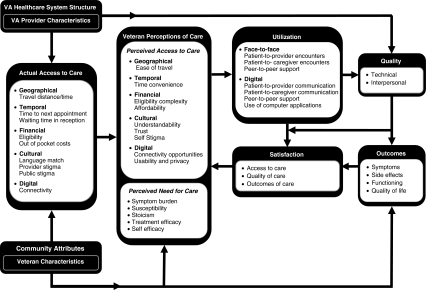
“18 Perceived need is broadly conceptualized here as perceptions about symptom burden, susceptibility, stoicism, self efficacy, and treatment efficacy.”
BackgroundThe Concept of Access: Definition and Relationship to Consumer Satisfaction
Penchansky, R., & Thomas, J. W. (1981) · Medical Care · doi:10.1097/00005650-198102000-00001 · Cited by 3,437 · cited 1×
“5 As described in Figure 1, we propose the following dimensions of access: geographical, temporal, financial, cultural and digital.”
BackgroundThe definition of quality and approaches to its assessment
Donabedian, A. (1980) · Health Administration Press eBooks · Cited by 2,618
Internet-based cognitive behaviour therapy for symptoms of depression and anxiety: A meta-analysis
SPEK, V., CUIJPERS, P., NYKLÍČEK, I., RIPER, H., KEYZER, J., & POP, V. (2007) · Psychological Medicine · doi:10.1017/s0033291706008944 · Cited by 1,586
Healthcare via Cell Phones: A Systematic Review
Krishna, S., Boren, S. A., & Balas, E. A. (2009) · Telemedicine and e-Health · doi:10.1089/tmj.2008.0099 · Cited by 882 · cited 1×
“46 Another important type of asynchronous digital patient-to-provider encounter includes remote monitoring involving the entering/forwarding of clinical information by the patient to their provider via smartphones, kiosks, web-based portals hosted by the healthcare organization (e.g., MyHealtheVet…”
BackgroundBerwick, D. M. (2009) · Health Affairs · doi:10.1377/hlthaff.28.4.w555 · Cited by 869
Bethell, C. D., Read, D., Stein, R. E. K., Blumberg, S. J., Wells, N., & Newacheck, P. W. (2002) · Ambulatory Pediatrics · doi:10.1367/1539-4409(2002)002<0038:icwshc>2.0.co;2 · Cited by 698
Research works printed but not linked: 5
- Rosenstock IM Strecher VJ Becker MH Social learning theory and the Health Belief Model Health Educ Q 1988 15 2 175 183 10.1177/109019818801500203 3378902 · DOI · Paper page
- Ricketts TC Goldsmith LJ Access in health services research: The battle of the frameworks Nurs Outlook 2005 53 6 274 280 10.1016/j.outlook.2005.06.007 16360698 · DOI · Paper page
- Ricketts TC Goldsmith LJ Access in health services research: The battle of the frameworks Nurs Outlook 2005 53 6 274 280 10.1016/j.outlook.2005.06.007 16360698 · DOI · Paper page
- Sarasohn-Kahn J How Smartphones are Changing Health Care for Consumers and Providers 2010 CA Oakland
- Sarasohn-Kahn J How Smartphones are Changing Health Care for Consumers and Providers 2010 CA Oakland
Cited by
Items 101–200 of 312
Pitfalls with Smartphones in Medicine
Redelmeier, D. A., & Detsky, A. S. (2013) · Journal of General Internal Medicine · doi:10.1007/s11606-013-2467-4 · Cited by 19
Magalhães, B. M. B. D. S., Fernandes, C. S., Santos, C., & Martínez‐Galiano, J. M. (2020) · Cancer Nursing · doi:10.1097/ncc.0000000000000823 · Cited by 27
“The advancement of technologies within eHealth and, more specifically, mHealth, has offered alternatives that promote interaction between healthcare professionals and patients, surpassing the usual context of face-to-face hospital consultation.(33) This new era provides health professionals with detailed information,…”
BackgroundWeb-based PTSD training for primary care providers: A pilot study.
Samuelson, K. W., Koenig, C. J., McCamish, N., Choucroun, G., Tarasovsky, G., Bertenthal, D., & Seal, K. H. (2013) · Psychological Services · doi:10.1037/a0034855 · Cited by 19
“There are multiple patient-level barriers to mental health care including lack of access, particularly among rural veterans, stigma, cultural attitudes, denial, and apathy (Fortney et al., 2011; Hoge et al., 2004; Ouimette et al., 2011; Pietrzak et al., 2009).”
BackgroundPyne, J. M., Kelly, P. A., Fischer, E. P., Miller, C. J., Wright, P. B., Zamora, K. A., Koenig, C. J., Stanley, R., Seal, K. H., Burgess, J. F., et al. (2018) · Psychological Services · doi:10.1037/ser0000235 · Cited by 19
Self-citationWhat Do Veterans Want? Understanding Veterans’ Preferences for PTSD Treatment Delivery
Morland, L. A., Wells, S. Y., Glassman, L. H., Grubbs, K. M., Mackintosh, M., Golshan, S., Sohn, M. J., Thorp, S. R., Savage, U. C., & Acierno, R. E. (2019) · Military Medicine · doi:10.1093/milmed/usz035 · Cited by 23
Maguen, S., & Griffin, B. J. (2022) · Frontiers in Psychiatry · doi:10.3389/fpsyt.2022.874729 · Cited by 23
“The existing treatments are therefore susceptible to known access barriers and would require substantial resource investment to scale beyond specialty mental health settings (30).”
BackgroundO'Gorman, L. D., & Hogenbirk, J. C. (2015) · Telemedicine Journal and e-Health · doi:10.1089/tmj.2015.0133 · Cited by 17
“This article focuses on the geographic dimension of access as per Fortney et al. 8 and includes the location of Ontario Tele-medicine Network (OTN) units (health system characteristic), road networks (the built environment within community characteristics), and population size.”
Earle‐Richardson, G. B., Scribani, M., Scott, E., May, J. J., & Jenkins, P. (2014) · The Journal of Rural Health · doi:10.1111/jrh.12098 · Cited by 17
Victor, G. A., Kheibari, A., Staton, M., & Oser, C. B. (2018) · Journal of Social Work Practice in the Addictions · doi:10.1080/1533256x.2018.1450264 · Cited by 22
Villalvazo, Y. R., McDanel, J. S., Beste, L. A., Sánchez, A., Vaughan‐Sarrazin, M., & Katz, D. A. (2019) · Health Services Research · doi:10.1111/1475-6773.13241 · Cited by 18
Possemato, K., Wu, J. C., Greene, C. J., MacQueen, R., Blonigen, D. M., Wade, M. J., Owen, J. E., Keane, T. M., Brief, D. J., Lindley, S. E., et al. (2021) · Journal of Medical Internet Research · doi:10.2196/29559 · Cited by 17
“…low costs, and growing evidence shows that many individuals prefer to use eHealth as part of their health care [8,9]. eHealth could dramatically diminish access problems related to travel distance and time, wait times for appointments, financial burden, stigma, and desire for self-reliance [10].”
Fortney, J. C., Carey, E., Rajan, S., Rise, P. J., Gunzburger, E. C., & Felker, B. L. (2022) · Health Services Research · doi:10.1111/1475-6773.13993 · Cited by 16
Self-citationCaregiver Experience of Tele-dementia Care for Older Veterans
Iyer, S., Ngo, V., Humber, M. B., Chen, P., Pallaki, M., Dolinar, T., Brodrick, M.-F. B., Gould, C. E., & TRIVEDI, R. B. (2023) · Journal of General Internal Medicine · doi:10.1007/s11606-023-08188-2 · Cited by 17
“The interview guide (Supplemental Appendix 1) was informed by Fortney’s Access to Care model 13 and included questions related to domains of access to care (geographical, temporal, and digital factors) as well as perceived access to care, utilization, satisfaction, and quality.”
MethodAccess to primary health care: perspectives of primary care physicians and community stakeholders
Toal-Sullivan, D., Dahrouge, S., Tesfaselassie, J., & Olejnik, L. J. (2024) · BMC Family Practice · doi:10.1186/s12875-024-02312-9 · Cited by 24
“Access to care and factors that influence access for different populations, health needs and for diverse contexts is complex and researchers have proposed different frameworks to conceptualize this interaction between individuals, and health and social systems [8–10].”
BackgroundNasir, K., & Okunrintemi, V. (2018) · International Journal for Quality in Health Care · doi:10.1093/intqhc/mzy217 · Cited by 19
Pyne, J. M., Kelly, P. A., Fischer, E. P., Miller, C. J., Wright, P. B., Zamora, K. A., Koenig, C. J., Stanley, R., Seal, K. H., & Fortney, J. C. (2019) · Military Medicine · doi:10.1093/milmed/usy429 · Cited by 19
“Veterans may be authorized to seek care through VCP if: (1) VA cannot provide the services needed, (2) they are informed by a local VA medical facility that an appointment cannot be scheduled within 30 days of either the date requested by their VA provider or the date requested by the veteran, (3) they live 40 miles o…”
BackgroundSelf-citationBaig, M. R., Tapia, R. N., Meraj, A., Pugh, J. A., Roache, J. D., & Finley, E. P. (2019) · Psychiatric Quarterly · doi:10.1007/s11126-019-09668-7 · Cited by 16
Waiting for Care in Veterans Affairs Health Care Facilities and Elsewhere
Kaboli, P. J., & Fihn, S. D. (2019) · JAMA Network Open · doi:10.1001/jamanetworkopen.2018.7079 · Cited by 15
Self-citationAugustine, M. R., Nelson, K. M., Fihn, S. D., & Wong, E. S. (2019) · Journal of General Internal Medicine · doi:10.1007/s11606-019-05060-0 · Cited by 19
The role of healthcare system hassles in delaying or forgoing care
Brunner, J., Rose, D. E., Chuang, E., Canelo, I. A., & Yano, E. M. (2020) · Healthcare · doi:10.1016/j.hjdsi.2020.100411 · Cited by 16
Pelak, M., Pettit, A. R., Terwiesch, C., Gutierrez, J. C., & Marcus, S. C. (2015) · Journal of Evaluation in Clinical Practice · doi:10.1111/jep.12341 · Cited by 15
Impact of nonphysician providers on spatial accessibility to primary care in Iowa
Young, S. G., Gruca, T. S., & Nelson, G. C. (2020) · Health Services Research · doi:10.1111/1475-6773.13280 · Cited by 15
“Other nonpatient factors, for example, low levels of Medicaid reimbursement or transportation challenges, 51-53 may likewise affect realized access to primary care services and should be included in future studies.”
The 2023 Impact of Inflammatory Bowel Disease in Canada: Access to and Models of Care
Mathias, H., Rohatinsky, N., Murthy, S. K., Novak, K. L., Kuenzig, M. E., Nguyen, G. C., Fowler, S. A., Benchimol, E. I., Coward, S., Kaplan, G. G., et al. (2023) · Journal of the Canadian Association of Gastroenterology · doi:10.1093/jcag/gwad007 · Cited by 17
“More recently, access has been reconceptualized as a multifaceted experience that moves away from geographic availability of services to include patient-centered considerations such as cultural appropriateness (17).”
BackgroundMea, V. D., Quattrin, O., & Parpinel, M. T. (2016) · Informatics for Health and Social Care · doi:10.1080/17538157.2016.1255214 · Cited by 14
“All these tools may be seen as a new way to strengthen the patient-physician relationship (20), in particular in the case of chronic diseases, which develop over time and have consequences on ageing (21).”
BackgroundKaboli, P. J., Miake-Lye, I. M., Ruser, C. B., Yano, E. M., Orshansky, G., Rubenstein, L. V., Curtis, I., Kirsh, S. R., & Hempel, S. (2019) · Medical Care · doi:10.1097/mlr.0000000000001177 · Cited by 14
Self-citationA Proposed Framework for Measuring Access to Surgical Care in the United States
Taylor, K. K., Ibrahim, A. M., & Scott, J. W. (2022) · JAMA Surgery · doi:10.1001/jamasurg.2022.3184 · Cited by 14
The impact of insurance coverage on consumer utilization of health services
O’Connor, G. E. (2015) · International Journal of Bank Marketing · doi:10.1108/ijbm-05-2014-0061 · Cited by 15
Area-Level socioeconomic disadvantage and access to primary care: A rapid review
Staloff, J. A., Morenz, A. M., Hayes, S., Bhatia-Lin, A., & Liao, J. M. (2025) · Health Affairs Scholar · doi:10.1093/haschl/qxaf066 · Cited by 22
“25 The Fortney model has been used to study access to multiple types of healthcare services and settings, 26-28 including primary care, 29,30 which we defined as clinicians or health care settings providing care coordination, comprehensiveness of services, and continuity of care.”
McCullough, M. B., Zogas, A., Gillespie, C., Kleinberg, F., Reisman, J. I., Ndiwane, N., Tran, M. H., Ourth, H. L., Morreale, A. P., & Miller, D. R. (2021) · Medicine · doi:10.1097/md.0000000000026689 · Cited by 13
Goyal, A., Saeed, H., Sultan, W., Singh, A., Abdullah, A., Arshad, M. K., Amin, Z., Changez, M. I. K., Mahalwar, G., Khan, R., et al. (2025) · PLoS ONE · doi:10.1371/journal.pone.0317592 · Cited by 16
Moldestad, M., Stryczek, K. C., Haverhals, L. M., Kenney, R. R., Lee, M., Ball, S. L., Au, D. H., Kirsh, S. R., Sayre, G. G., & Young, J. P. (2020) · Military Medicine · doi:10.1093/milmed/usaa520 · Cited by 16
Littman, A. J., Young, J. P., Moldestad, M., Tseng, C., Czerniecki, J. M., Landry, G. J., Robbins, J. M., Boyko, E. J., & Dillon, M. P. (2021) · PLoS ONE · doi:10.1371/journal.pone.0248310 · Cited by 15
“’s access to care model [32], past experience accessing care (e.”
BackgroundYoon, J., Vanneman, M. E., Dally, S. K., Trivedi, A. N., & Phibbs, C. S. (2019) · Medical Care · doi:10.1097/mlr.0000000000001066 · Cited by 14
Research into practice: accessing primary care
Campbell, J. L., & Salisbury, C. (2015) · British Journal of General Practice · doi:10.3399/bjgp15x688057 · Cited by 12
Serving Our Homeless Veterans: Patient Perpetrated Violence as a Barrier to Health Care Access
Semeah, L. M., Campbell, C. L., Cowper, D. C., & Peet, A. C. (2017) · Journal of Public and Nonprofit Affairs · doi:10.20899/jpna.3.2.223-234 · Cited by 12
Young, S. G., Ayers, M., & Malak, S. F. (2020) · Journal of Clinical and Translational Science · doi:10.1017/cts.2020.28 · Cited by 11
“Access to care is a multidimensional concept including availability of services (capacity), accessibility (travel constraints), affordability, and acceptability in terms of patient preferences, among others [36,37].”
BackgroundGray, K. E., Rao, M., Gunnink, E. J., Eschenroeder, L. W., Geyer, J. R., Nelson, K. M., & Reddy, A. (2022) · Journal of General Internal Medicine · doi:10.1007/s11606-022-07452-1 · Cited by 13
Psychometric Properties of the Assessment of Perceived Access to Care (APAC) Instrument
Fortney, J. C., Pyne, J. M., Hawrilenko, M., Bechtel, J. M., Moore, D. L., Nolan, J. P., Pfeiffer, P., Shushan, S., Shore, J. H., & Bowen, D. (2020) · Journal of Ambulatory Care Management · doi:10.1097/jac.0000000000000358 · Cited by 12
Self-citationCole, H. V. S., & Franzosa, E. C. (2022) · International Journal for Equity in Health · doi:10.1186/s12939-022-01669-6 · Cited by 17
“extended this framework, proposing that “fit” should include geographical, temporal, financial, cultural and digital dimensions of access, as well as patients’ own perceptions of their access to care and need for care [40].”
BackgroundSolimeo, S. L., Steffensmeier, K. S., Stewart, G. L., & Rosenthal, G. E. (2014) · Healthcare · doi:10.1016/j.hjdsi.2014.07.004 · Cited by 13
Falgarone, G., Bousquet, G., Wilmet, A., Brizio, A., Faure, V., Guillouet, C., Baudino, F., Roque, I., Mayol, S., & Pamoukdjian, F. (2022) · Journal of Medical Internet Research · doi:10.2196/33507 · Cited by 14
“Several digital communication systems and devices for telemedicine have been previously reported (eg, interactive voice response, SMS text messages, emails, interactive video, home-based videoconferencing, personal monitoring devices, and personal health records) [1,3-5].”
Gray, C. P., Egelfeld, J., & Vashi, A. A. (2023) · Disability and health journal · doi:10.1016/j.dhjo.2023.101515 · Cited by 14
Su, W., & Chang, C. (2021) · Interactive Learning Environments · doi:10.1080/10494820.2021.1879873 · Cited by 12
Fischer, E. P., Curran, G. M., Fortney, J. C., McSweeney, J. C., Williams, D. K., & Williams, J. (2021) · Psychiatric Services · doi:10.1176/appi.ps.201900275 · Cited by 11
“To avoid problems of multicollinearity due to the recursive relationship between attitudes and service utilization (14), we did not include previous service use in the regression models.”
BackgroundMethodSelf-citationResnik, J., Miller, C. J., Roth, C. E., Burns, K., & Bovin, M. J. (2023) · Military Medicine · doi:10.1093/milmed/usad376 · Cited by 19
Hermes, E. D. A., Burrone, L., Heapy, A. A., Martino, S., Perez, E., Rosenheck, R. A., Rowe, M., Ruzek, J. I., & Greene, C. J. (2019) · Administration and Policy in Mental Health and Mental Health Services Research · doi:10.1007/s10488-018-0913-7 · Cited by 10
Innovation and efficiency in health care: does anyone really know what they mean?
Burgess, J. F. (2012) · Health Systems · doi:10.1057/hs.2012.6 · Cited by 26
“Though increased interactive technological networking has the potential to improve what we have termed digital access, this also could create greater access disparities for some patient populations who are not electronically socially networked (Fortney et al, 2011).”
BackgroundSelf-citationComponents of the Patient-Centered Medical Home Associated with Perceived Access to Primary Care
Schuttner, L., Gunnink, E. J., Sylling, P. W., Taylor, L., Fihn, S. D., & Nelson, K. M. (2020) · Journal of General Internal Medicine · doi:10.1007/s11606-020-05668-7 · Cited by 10
Wray, C. M., Myers, U. S., Slightam, C. A., Dardashti, N., Heyworth, L. K., Lewinski, A. A., Kaboli, P. J., Edes, T. E., Trueman, K., & Zulman, D. M. (2024) · Journal of General Internal Medicine · doi:10.1007/s11606-023-08463-2 · Cited by 10
Self-citationDefining Access Management in Health Care Delivery Organizations
Hempel, S., Hilton, L. G., Stockdale, S. E., Kaboli, P., Miake-Lye, I., Danz, M., Rose, D., Kirsh, S., Curtis, I., & Rubenstein, L. (2019) · The journal of ambulatory care management · doi:10.1097/jac.0000000000000382 · Cited by 7
“The access definition was developed by VHA staff and based on expert consensus (Fortney et al., 2011):”
BackgroundMethodSelf-citationDisparities in Video-Based Primary Care Use Among Veterans with Cardiovascular Disease
Tisdale, R. L., Der‐Martirosian, C., Yoo, C. K., Chu, K., Zulman, D. M., & Leung, L. B. (2024) · Journal of General Internal Medicine · doi:10.1007/s11606-023-08475-y · Cited by 9
“30 In particular, and similar to the general population of Veterans, male, older, low-income, and rural-dwelling Veterans with these prevalent cardiovascular comorbidities had lower odds of ever using video primary care compared to their respective reference groups.”
BackgroundBowen, M. E., Bosworth, H. B., & Roumie, C. L. (2013) · Journal of Clinical Hypertension · doi:10.1111/jch.12172 · Cited by 14
“Age, mean (SD), y 65 (10) 65 (10) 63 (9) 63 (10)”
Self-citationPatient-ly Waiting: A Review of Patient-Centered Access to Inflammatory Bowel Disease Care in Canada
Mathias, H., van Zanten, S. V., Kits, O., Heisler, C., & Jones, J. (2018) · Journal of the Canadian Association of Gastroenterology · doi:10.1093/jcag/gwy001 · Cited by 10
““Access” to healthcare has previously been defined as “the fit between the individual and the healthcare system” (7).”
BackgroundInfluentialMcNeal, D. M., Fehling, K. B., Ho, P. M., Kaboli, P. J., Shimada, S. L., Saini, S. D., Youles, B., & ALBRIGHT, K. J. (2022) · Journal of General Internal Medicine · doi:10.1007/s11606-021-07195-5 · Cited by 11
“, time convenience).(7) Improving Veterans’ access to care across these multiple dimensions is essential to ensuring optimal health outcomes, and VA has been engaged in a number of recent initiatives to investigate and address barriers to access.”
BackgroundSelf-citationAccess Management in Primary Care: Perspectives from an Expert Panel
Hempel, S., Stockdale, S. E., Danz, M., Rose, D. E., Kirsh, S. R., Curtis, I., & Rubenstein, L. V. (2018) · RAND Corporation eBooks · doi:10.7249/rr2536 · Cited by 16
“(Fortney et al., 2011, p. 641) The five stakeholder subpanels were instructed that they could choose to adopt the published definition of access, and the decision to not change the existing definition would be a valid outcome of the panel discussion.”
BackgroundMyers, K., Cummings, J. R., Zima, B. T., Oberleitner, R., Roth, D. E., Merry, S., Bohr, Y. M., & Stasiak, K. (2018) · Journal of Technology in Behavioral Science · doi:10.1007/s41347-018-0055-5 · Cited by 10
“Data on the use of store and forward technology in child and adolescentmental health disorders holds considerable promise for improving access by facilitating the geographic and temporal fit between the patient and the health care system (Fortney et al. 2011).”
BackgroundInfluentialBehavioral Health Care in the Military Health System: Access and Quality for Remote Service Members
Hepner, K. A., Brown, R. A., Roth, C. P., Ruder, T., & Pincus, H. A. (2021) · RAND Corporation eBooks · doi:10.7249/rr2788 · Cited by 10
Racial Differences in Expanded Telemedicine Use During COVID-19: A Literature Review
Ali, M., & Sullivan, G. (2024) · Telemedicine Journal and e-Health · doi:10.1089/tmj.2023.0370 · Cited by 8
Staloff, J. A., Gunnink, E. J., Rojas, J., Wong, E. S., Nelson, K. M., & Reddy, A. (2024) · Journal of General Internal Medicine · doi:10.1007/s11606-024-08751-5 · Cited by 9
“35 Second, this study does not provide insight into the specific circumstances in which veterans find in-person or telemedicine most appropriate for their primary care visits, which may be an area of further study.”
New Challenges and Opportunities for Opioid Agonist Treatment Access and Retention: A Scoping Review
Power, N., Archambault, L., & Perreault, M. (2024) · Journal of Drug Issues · doi:10.1177/00220426241269828 · Cited by 11
Whole-Body MRI in Children: Concepts and Controversies—AJR Expert Panel Narrative Review
Gallo-Bernal, S., Chan, S. S., Cho, Y. Y., Daldrup-Link, H. E., Gee, M. S., Kemp, J. M., Kraus, M. S., Meyers, A. B., von Krüchten, V. R., & Greer, M. C. (2025) · American Journal of Roentgenology · doi:10.2214/ajr.24.32178 · Cited by 8
Promoting Health Literacy in Global Health Care
Kasemsap, K. (2016) · Advances in healthcare information systems and administration book series · doi:10.4018/978-1-5225-0920-2.ch029 · Cited by 8
Loup, J. R., Smith, K., Snow, A. L., & Hilgeman, M. M. (2023) · Journal of Applied Gerontology · doi:10.1177/07334648231159084 · Cited by 8
“…appointments, rapid analysis of rural patients’ needs combined with life-space mapping may help clinical settings adjust to telehealth and gain a better understanding of the need-based context in which rural dementia dyads live and now attend remote appointments (Fortney et al., 2011, p. 639–640).”
BackgroundRenn, B. N., Walker, T. J., Edds, B., Roots, M., & Raue, P. J. (2024) · Journal of Affective Disorders · doi:10.1016/j.jad.2024.09.104 · Cited by 12
Designing quantitative telemedicine research
Wade, V., Barnett, A. G., Martin‐Khan, M., & Russell, T. G. (2016) · Journal of Telemedicine and Telecare · doi:10.1177/1357633x16671240 · Cited by 9
“For a comprehensive discussion of access to care, including measuring the geographical, temporal, financial, cultural and digital dimensions, see the review by Fortney.(24)”
BackgroundModernizing Training in Psychotherapy Competencies With Adaptive Learning Systems: Proof of Concept
Renn, B. N., Areán, P. A., Raue, P. J., Aisenberg, E., Friedman, E. C., & Popović, Z. (2020) · Research on Social Work Practice · doi:10.1177/1049731520964854 · Cited by 10
“At fault are several instrumental barriers to care such as transportation barriers, distance, time, and the stigma that many cultural groups have about seeking care (Arnaez et al., 2020; Brenes et al., 2015; Fortney et al., 2011; Kreps, 2017; Pepin et al., 2009).”
BackgroundWilson, S. M., Mulcahy, A. C., Lange, T. M., Eldridge, M. R., Weidenbacher, H. J., Jackson, G. L., Gierisch, J. M., Crowley, M. J., Calhoun, P. S., & Hilgeman, M. M. (2023) · Journal of General Internal Medicine · doi:10.1007/s11606-023-08204-5 · Cited by 8
Evans-Hudnall, G. L., Johnson, A. L., Kimmel, B., Brandt, C. P., Mbue, N. D., Lawson, E., & ANDERSON, J. A. (2018) · Clinical Case Studies · doi:10.1177/1534650118795285 · Cited by 9
A Decade of Focus on and Improvement in Access to Care in the Veterans Health Administration
Kaboli, P. J., & Shimada, S. L. (2023) · Journal of General Internal Medicine · doi:10.1007/s11606-023-08208-1 · Cited by 8
Self-citationKwiringira, J. N., Mugisha, J., Akugizibwe, M., & Ariho, P. (2021) · BMC Health Services Research · doi:10.1186/s12913-021-07204-7 · Cited by 15
“Geographical accessibility refers to the relative ease [4, 5] by which health services can be reached and utilized by a population when and where the services are needed [6, 7].”
BackgroundHealth Care Professionals’ Experiences in Telerehabilitation: Qualitative Content Analysis
Qvarfordt, M., Nilsson, E., & Nilsson, L. (2023) · JMIR Human Factors · doi:10.2196/40690 · Cited by 11
“The latter is part of the ongoing health care digital transformation [5], where digital tools are increasingly used for patient diagnostics, monitoring, and treatment [6], for example, digital consultations [7].”
Dodge, J., Youles, B., Caldararo, J., Sears, E. D., Caverly, T. J., Ho, P. M., Shimada, S. L., Kaboli, P. J., ALBRIGHT, K. J., Robinson, S. A., et al. (2023) · Journal of General Internal Medicine · doi:10.1007/s11606-023-08115-5 · Cited by 10
Self-citationDonovan, L. M., Malte, C. A., Spece, L. J., Griffith, M. F., Feemster, L. C., Zeliadt, S. B., Au, D. H., & Hawkins, E. J. (2019) · Annals of the American Thoracic Society · doi:10.1513/annalsats.201901-048oc · Cited by 8
Okunrintemi, V., & Nasir, K. (2020) · Methodist DeBakey Cardiovascular Journal · doi:10.14797/mdcj-16-3-220 · Cited by 7
An investigation of the factors influencing the choice of healthcare facility in South Africa
Mhlanga, D., & Hassan, A. S. (2022) · International Journal of Research in Business and Social Science (2147-4478) · doi:10.20525/ijrbs.v11i4.1765 · Cited by 10
Santoyo-Sánchez, G., Merino‐Soto, C., Flores‐Hernández, S., Pelcastre‐Villafuerte, B. E., & Reyes‐Morales, H. (2022) · International Journal of Environmental Research and Public Health · doi:10.3390/ijerph191610102 · Cited by 13
“In this respect, however, evidence has shown that perceptions regarding access provide greater information about the phenomenon than measures of actual access do [27,28].”
BackgroundGoldstein, K. M., Perry, K. R., Lewinski, A. A., Walsh, C., Shepherd‐Banigan, M. E., Bosworth, H. B., Weidenbacher, H. J., Blalock, D. V., & Zullig, L. L. (2022) · BMJ Open · doi:10.1136/bmjopen-2022-062261 · Cited by 7
Self-citationKalofonos, I., McCoy, M., Altman, L., Gelberg, L., Hamilton, A. B., & Gabrielian, S. E. (2023) · Journal of General Internal Medicine · doi:10.1007/s11606-023-08124-4 · Cited by 8
Haro, E. K., Mader, M. J., Noël, P. H., Garcia, H. A., Vogt, D. S., Bernardy, N. C., Bollinger, M., Pugh, M. J., & Finley, E. P. (2019) · Military Medicine · doi:10.1093/milmed/usz078 · Cited by 9
Wong, E. S., Maciejewski, M. L., Hebert, P. L., Reddy, A., & Liu, C. (2019) · Medical Care · doi:10.1097/mlr.0000000000001155 · Cited by 7
Mobile Computing for Radiology
Auffermann, W. F., Chetlen, A. L., Sharma, A., Colucci, A. T., DeQuesada, I. M., Grajo, J. R., Kung, J. W., Loehfelm, T. W., & Sherry, S. J. (2013) · Academic Radiology · doi:10.1016/j.acra.2013.09.009 · Cited by 9
Telehealth and equitable access to health care
Wade, V. (2013) · The Medical Journal of Australia · doi:10.5694/mja13.10039 · Cited by 7
Bhat, A. S., Goud, B. R., Kalidindi, B., Ruben, J. P., Devadass, D., Waghmare, A., Collins, P. Y., Raj, T. D. S., & Srinivasan, K. (2023) · JMIR Research Protocols · doi:10.2196/42919 · Cited by 8
“Our conceptual model is based on the access to care model by Fortney et al [33] (Figure 1).”
MethodRose, D. E., Leung, L. B., McClean, M. R., Nelson, K. M., Curtis, I., Yano, E. M., Rubenstein, L. V., & Stockdale, S. E. (2023) · Journal of General Internal Medicine · doi:10.1007/s11606-023-08172-w · Cited by 6
Adaji, A. (2018) · Mayo Clinic Proceedings Innovations Quality & Outcomes · doi:10.1016/j.mayocpiqo.2018.03.004 · Cited by 6
Patient-centered substance use disorder treatment for women Veterans
Giannitrapani, K. F., Huynh, A. K., Schweizer, C. A., Hamilton, A. B., & Hoggatt, K. J. (2018) · Journal of Military Veteran and Family Health · doi:10.3138/jmvfh.2017-0006 · Cited by 6
Development of a novel metric of timely care access to primary care services.
Batten, A. J., Augustine, M. R., Nelson, K. M., & Kaboli, P. (2020) · Health Services Research · doi:10.1111/1475-6773.13255 · Cited by 6
“Outpatient 2910 (1) 4853 (2) 4606 (2) 727 (0)b aAll 12-month periods are from June 1 through May 31.”
Self-citationFactors Associated With Patient Ratings of Timeliness of Primary Care Appointments
Mayo‐Smith, M. F., Radwin, L. E., Abdulkerim, H., & Mohr, D. C. (2020) · Journal of Patient Experience · doi:10.1177/2374373520968979 · Cited by 9
“access health care, focused research on how these new technologies affect perceptions of access will be important (36).”
BackgroundO’Shea, A. M. J., Batten, A. J., Hu, E., Augustine, M. R., Hogan, T. P., & Kaboli, P. J. (2021) · Journal of General Internal Medicine · doi:10.1007/s11606-020-06541-3 · Cited by 6
“Non-traditional health care delivery modalities, such as secure messaging (SM), which is a secure email service provided via online patient portals, have the potential to increase communication between patients and their medical providers and have become more widely available.(1) Within the Veterans Heal th Adminis t…”
BackgroundSelf-citationTillis, W. P., Bond, W. F., Svendsen, J. D., & Guither, S. (2017) · Telemedicine Journal and e-Health · doi:10.1089/tmj.2016.0201 · Cited by 7
Pyne, J. M., Kelly, P. A., Fischer, E. P., Miller, C. J., Connolly, S. L., Wright, P. B., Zamora, K. A., Koenig, C. J., Seal, K. H., & Fortney, J. C. (2020) · Psychological Services · doi:10.1037/ser0000504 · Cited by 7
Self-citationMcGowan, M. G., Medich, M., Rose, D. E., & Stockdale, S. E. (2021) · Journal of General Internal Medicine · doi:10.1007/s11606-021-06885-4 · Cited by 7
“Our approach is guided by Fortney and colleagues’ reconceptualization of access for the digital age.(14) This framework incorporates quantifiable access measures with patients’ perceptions and expands the definition of access to include not only in-person visits, but also virtual care (telephonic, video, and asynchron…”
MethodDoes machine learning improve prediction of VA primary care reliance?
Wong, E. S. (2020) · The American Journal of Managed Care · doi:10.37765/ajmc.2020.42144 · Cited by 6
Manuel, J. K., Purcell, N., Abadjian, L. R., Cardoos, S. L., Yalch, M. M., Hill, C., McCarthy, B., Bertenthal, D., McGrath, S., & Seal, K. H. (2023) · JMIR Medical Education · doi:10.2196/42862 · Cited by 5
“Veterans underuse Department of Veterans Affairs (VA) mental health services due to factors such as poor access, beliefs about psychotherapy, and stigma [3-7].”
BackgroundContextualizing Patient Empowerment
Palumbo, R. (2017) · SpringerBriefs in public health · doi:10.1007/978-3-319-58344-0_1 · Cited by 5
Wong, E. S., Rajan, S., Liu, C., Morland, L. A., Pyne, J. M., Simsek‐Duran, F., Reisinger, H. S., Moeckli, J. K., & Fortney, J. C. (2022) · Implementation Research and Practice · doi:10.1177/26334895221116771 · Cited by 6
“Because the enhanced implementation was not more successful than the standard implementation, we did not conduct a population-level cost-effectiveness analysis (Fortney et al., 2014).”
BackgroundMethodResultSelf-citationKramer, B. J., Jouldjian, S., Wang, M., Dang, J., Mitchell, M. N., Finke, B., & Saliba, D. (2011) · Journal of General Internal Medicine · doi:10.1007/s11606-011-1834-2 · Cited by 5
Rapid Sterilization of Cell Phones Using a Novel Portable Non-Thermal Plasma Device
Morrison, K. A., Asanbe, O. A., Dong, X., Weinstein, A. L., Toyoda, Y., Guevara, D., Kirkels, E., Landford, W. N., Gołkowski, C., Gołkowski, M., et al. (2015) · Plasma Medicine · doi:10.1615/plasmamed.v5.i1.50 · Cited by 5
Access to Imaging Technology in Global Health
Morris, M. A., & Saboury, B. (2019) · Springer eBooks · doi:10.1007/978-3-319-98485-8_3 · Cited by 5
Hynes, D. M., & Thomas, K. C. (2023) · International Journal of Care Coordination · doi:10.1177/20534345231153801 · Cited by 8
“For example, the measurement of receipt of the preferred type of mental health service (psychotherapy or pharmacotherapy) is important to assess patient-centered care.(11) Subsequent iterations of the IBM explored further dimensions of access including continuity of care, delay in help-seeking, and adherence to a pres…”
Background
Metadata
- Authors
- Fortney, J. C., Burgess, J. F., Bosworth, H. B., Booth, B. M., & Kaboli, P. J.
- Affiliations
- Health Services Research & Development (US)
- Boston University (US)
- Duke University (US)
- University of Iowa (US)
- Corresponding author
- Fortney, John C.
- Venue
- Journal of General Internal Medicine
- Published
- 2011-10-12
- Volume
- 26
- Issue
- S2
- Pages
- 639-47
- ISSN
- 0884-8734 (ISSN-L)
- 1525-1497
- PMC
- PMC3191218
- OpenAlex
- W2035798031
- Semantic Scholar
- 817e5e54e16b01a30d49c1789b7ed51a7f5f1b17
- Cited by
- 311
- References
- 59
- Citations by year
- 2026: 23 · 2025: 22 · 2024: 21 · 2023: 23 · 2022: 25 · 2021: 17 · 2020: 22 · 2019: 26 · 2018: 26 · 2017: 20 · 2016: 10 · 2015: 26 · 2014: 12 · 2013: 23 · 2012: 9
- FWCI
- 2.37
- Type
- journal article
- Language
- en
- Open access
- hybrid
- doi.org
- Licence
- cc-by-nc
- creativecommons.org/licenses/by-nc/2.0 (tdm)
- Locations
- Journal of General Internal Medicine (publishedVersion, cc-by-nc)
- Europe PMC (PubMed Central) (publishedVersion, cc-by-nc)
- PubMed Central (publishedVersion, cc-by-nc)
- PubMed (publishedVersion)
- Funders
- U.S. Department of Veterans Affairs (08-027)
- Health Services Research and Development (#08‐027)
- Office of Rural Health
- NIH Clinical Center
- Topics
- Health Sciences › Medicine › Public Health, Environmental and Occupational Health › Telemedicine and Telehealth Implementation
- Health Sciences › Health Professions › General Health Professions › Health Literacy and Information Accessibility
- Health Sciences › Health Professions › Health Information Management › Electronic Health Records Systems
- Keywords
- health care access, e-health, digital health communication, digital divide, access inequality, telemedicine, mobile health
- MeSH terms
- Diffusion of Innovation, Forecasting, Health Services Accessibility, Health Services Needs and Demand, Humans, User-Computer Interface, Telemedicine, Patient-Centered Care, Internet, Biomedical Technology, Veterans Health
About these checks
Registry, retraction, Cites and statistics results are computed, not judged, with one exception: a printed reference that no index lists is read once by a model before it counts as a citation error. Claims are extracted by a model and kept only when their quote appears verbatim in the text; each cited source is then checked, with a model’s help, for whether it says what the claim relies on. Those verdicts can be wrong — read the claim’s quote and the cited source before relying on one.
Statistics and arithmetic are recomputed, not judged.
Confidence bands are shown only for fields calibrated on our annotated test set. None is calibrated yet, so no band is shown.
What counts as a claim ›How we measure confidence ›How we check this ›
Are you an author, or do you see a problem with this page? Request a review
Data sources
Bibliographic data: Semantic Scholar, OpenAlex, Crossref.
Contains information from the Semantic Scholar Academic Graph Datasets, made available under the ODC Attribution License (ODC-BY 1.0).
Semantic Scholar’s data is described in: Kinney, R., et al. (2023). The Semantic Scholar Open Data Platform. arXiv:2301.10140.
