

A Re-conceptualization of Access for 21st Century Healthcare
Open accessThe DOI matches its Crossref record; 60 of the 60 references it cites were found in a registry or an index.
Abstract
Many e-health technologies are available to promote virtual patient-provider communication outside the context of face-to-face clinical encounters. Current digital communication modalities include cell phones, smartphones, interactive voice response, text messages, e-mails, clinic-based interactive video, home-based web-cams, mobile smartphone two-way cameras, personal monitoring devices, kiosks, dashboards, personal health records, web-based portals, social networking sites, secure chat rooms, and on-line forums. Improvements in digital access could drastically diminish the geographical, temporal, and cultural access problems faced by many patients. Conversely, a growing digital divide could create greater access disparities for some populations. As the paradigm of healthcare delivery evolves towards greater reliance on non-encounter-based digital communications between patients and their care teams, it is critical that our theoretical conceptualization of access undergoes a concurrent paradigm shift to make it more relevant for the digital age. The traditional conceptualizations and indicators of access are not well adapted to measure access to health services that are delivered digitally outside the context of face-to-face encounters with providers. This paper provides an overview of digital "encounterless" utilization, discusses the weaknesses of traditional conceptual frameworks of access, presents a new access framework, provides recommendations for how to measure access in the new framework, and discusses future directions for research on access.
Overview
The claims and statistics of this paper haven’t been checked yet.
Free: it reads the open-access text and checks the first 5 claims that cite a source we can check. Create a free account to check every claim.
Integrity signals
Registry
Cites
Statistics
Figures
Verification
Claims the paper makes
The claims and statistics of this paper haven’t been checked yet.
Free: it reads the open-access text and checks the first 5 claims that cite a source we can check. Create a free account to check every claim.
Claims other papers make about this one
Each is checked against this paper’s own text: does it say what the citing paper says it does?
The cited source says what the claim attributes to it.
In the citing paper
“As described by Fortney et. al., access is a multidimensional concept including geographic, temporal, financial, digital, and cultural domains, and barriers to care can be considered within these areas.42”
From Receipt of Glucagon-Like Peptide-1 Receptor Agonists Among Rural Patients with Obstructive Sleep Apnea and Excess Weight (2026) · cites this paper as [42]
Self-check
Percentages, sums and reported differences re-computed from the paper’s own numbers.
The self-check needs the paper’s full text.
Citations
Cites
The theory of planned behavior
Ajzen, I. (1991) · Organizational Behavior and Human Decision Processes · doi:10.1016/0749-5978(91)90020-t · Cited by 134,657
Self-efficacy mechanism in human agency
Bandura, A. (1982) · American Psychologist · doi:10.1037/0003-066x.37.2.122 · Cited by 15,975
Evaluating the quality of medical care
DONABEDIAN, A. (2005) · The Milbank Quarterly · doi:10.1111/j.1468-0009.2005.00397.x · Cited by 6,102
Social Learning Theory and the Health Belief Model
Rosenstock, I. M., Strecher, V. J., & Becker, M. H. (1988) · Health Education Quarterly · doi:10.1177/109019818801500203 · Cited by 5,564 · cited 1×
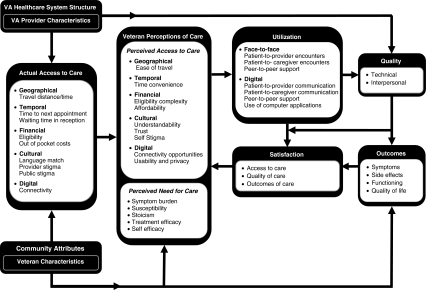
“18 Perceived need is broadly conceptualized here as perceptions about symptom burden, susceptibility, stoicism, self efficacy, and treatment efficacy.”
BackgroundThe Concept of Access: Definition and Relationship to Consumer Satisfaction
Penchansky, R., & Thomas, J. W. (1981) · Medical Care · doi:10.1097/00005650-198102000-00001 · Cited by 3,437 · cited 1×
“5 As described in Figure 1, we propose the following dimensions of access: geographical, temporal, financial, cultural and digital.”
BackgroundThe definition of quality and approaches to its assessment
Donabedian, A. (1980) · Health Administration Press eBooks · Cited by 2,618
Internet-based cognitive behaviour therapy for symptoms of depression and anxiety: A meta-analysis
SPEK, V., CUIJPERS, P., NYKLÍČEK, I., RIPER, H., KEYZER, J., & POP, V. (2007) · Psychological Medicine · doi:10.1017/s0033291706008944 · Cited by 1,586
Healthcare via Cell Phones: A Systematic Review
Krishna, S., Boren, S. A., & Balas, E. A. (2009) · Telemedicine and e-Health · doi:10.1089/tmj.2008.0099 · Cited by 882 · cited 1×
“46 Another important type of asynchronous digital patient-to-provider encounter includes remote monitoring involving the entering/forwarding of clinical information by the patient to their provider via smartphones, kiosks, web-based portals hosted by the healthcare organization (e.g., MyHealtheVet…”
BackgroundBerwick, D. M. (2009) · Health Affairs · doi:10.1377/hlthaff.28.4.w555 · Cited by 869
Bethell, C. D., Read, D., Stein, R. E. K., Blumberg, S. J., Wells, N., & Newacheck, P. W. (2002) · Ambulatory Pediatrics · doi:10.1367/1539-4409(2002)002<0038:icwshc>2.0.co;2 · Cited by 698
Research works printed but not linked: 5
- Rosenstock IM Strecher VJ Becker MH Social learning theory and the Health Belief Model Health Educ Q 1988 15 2 175 183 10.1177/109019818801500203 3378902 · DOI · Paper page
- Ricketts TC Goldsmith LJ Access in health services research: The battle of the frameworks Nurs Outlook 2005 53 6 274 280 10.1016/j.outlook.2005.06.007 16360698 · DOI · Paper page
- Ricketts TC Goldsmith LJ Access in health services research: The battle of the frameworks Nurs Outlook 2005 53 6 274 280 10.1016/j.outlook.2005.06.007 16360698 · DOI · Paper page
- Sarasohn-Kahn J How Smartphones are Changing Health Care for Consumers and Providers 2010 CA Oakland
- Sarasohn-Kahn J How Smartphones are Changing Health Care for Consumers and Providers 2010 CA Oakland
Cited by
Glasgow, R. E., & Riley, W. T. (2013) · American Journal of Preventive Medicine · doi:10.1016/j.amepre.2013.03.010 · Cited by 318
A Comprehensive Review on Exploring the Impact of Telemedicine on Healthcare Accessibility
Anawade, P. A., Sharma, D., & Gahane, S. (2024) · Cureus · doi:10.7759/cureus.55996 · Cited by 287
“Despite the potential benefits, numerous barriers and challenges hinder the widespread adoption of telemedicine practices, including infrastructure limitations, operational complexities, regulatory constraints, communication barriers, and legislative hurdles [32].”
Telemedicine-Based Collaborative Care for Posttraumatic Stress Disorder: A Randomized Clinical Trial
Fortney, J. C., Pyne, J. M., Kimbrell, T. A., Hudson, T. J., Robinson, D. E., Schneider, R., Moore, W. M., Custer, P. J., Grubbs, K. M., & Schnurr, P. P. (2015) · JAMA Psychiatry · doi:10.1001/jamapsychiatry.2014.1575 · Cited by 272
Self-citationCarey, K. B., Scott-Sheldon, L. A. J., Elliott, J. C., Garey, L., & Carey, M. P. (2012) · Clinical Psychology Review · doi:10.1016/j.cpr.2012.08.001 · Cited by 250
Accessible magnetic resonance imaging: A review
Geethanath, S., & Vaughan, J. T. (2019) · Journal of Magnetic Resonance Imaging · doi:10.1002/jmri.26638 · Cited by 244
“In this review we considered a definition that could be optimized for imaging technology in general and MR in particular.(47) Fortney et al(47) characterize accessible healthcare in the digital age with five access dimensions (geographical, temporal, financial, cultural, and digital) at four levels of delivery (indivi…”
MethodBarriers and Facilitators to Substance Use Treatment in the Rural South: A Qualitative Study
Browne, T., Priester, M. A., Clone, S., Iachini, A., DeHart, D., & Hock, R. (2016) · The Journal of Rural Health · doi:10.1111/jrh.12129 · Cited by 216
Telepsychiatry integration of mental health services into rural primary care settings
Fortney, J. C., Pyne, J. M., Turner, E. E., Farris, K. M., Normoyle, T. M., Avery, M. D., Hilty, D. M., & Unützer, J. (2015) · International Review of Psychiatry · doi:10.3109/09540261.2015.1085838 · Cited by 209
“For example, web-based or smartphone audio-video communications may be used with the patient in their home or other private location if the patient has digital access to those technologies (Fortney et al., 2011).”
BackgroundInfluentialSelf-citationAtkins, D., Kilbourne, A. M., & Shulkin, D. (2017) · Annual Review of Public Health · doi:10.1146/annurev-publhealth-031816-044255 · Cited by 181
Nazi, K. M. (2013) · Journal of Medical Internet Research · doi:10.2196/jmir.2443 · Cited by 176
“Background: Despite significant consumer interest and anticipated benefits, overall adoption of personal health records (PHRs) remains relatively low.”
BackgroundInfluentialShingleton, R. M., & Palfai, T. P. (2016) · Patient Education and Counseling · doi:10.1016/j.pec.2015.08.005 · Cited by 172
“Despite this growth in development, many of these advances have not been empirically evaluated, and many questions remain about how technology may be used to enhance treatment efficacy and effectiveness [4].”
BackgroundHelping policy‐makers address rural health access problems
Russell, D. J., Humphreys, J. S., Ward, B., Chisholm, M., Buykx, P., McGrail, M., & Wakerman, J. (2013) · Australian Journal of Rural Health · doi:10.1111/ajr.12023 · Cited by 165
Hermes, E. D., Lyon, A. R., Schueller, S. M., & Glass, J. E. (2019) · Journal of Medical Internet Research · doi:10.2196/11752 · Cited by 149
“BITs are 1 aspect of the current transition in health care delivery from services focused on traditional provider-centered face-to-face care in brick-and-mortar facilities to patient-centered services that include self-care [1,57].”
Barriers and Facilitators to Telemedicine: Can You Hear Me Now?
López, A. M., Lam, K., & Thota, R. (2021) · American Society of Clinical Oncology Educational Book · doi:10.1200/edbk_320827 · Cited by 162
Patient Perceptions of Video Visits Using Veterans Affairs Telehealth Tablets: Survey Study
Slightam, C., Gregory, A. J., Hu, J., Jacobs, J., Gurmessa, T., Kimerling, R., Blonigen, D., & Zulman, D. M. (2020) · Journal of Medical Internet Research · doi:10.2196/15682 · Cited by 135
“Video visits can help address issues related to health care access [5-7], and evidence shows that they can be effective methods for delivering care, especially for disease management [8-11] and mental health care [12-15].”
MethodeHealth: Extending, Enhancing, and Evolving Health Care
Meier, C. A., Fitzgerald, M. C., & Smith, J. M. (2013) · Annual Review of Biomedical Engineering · doi:10.1146/annurev-bioeng-071812-152350 · Cited by 132
Health literacy in the “oral exchange”: An important element of patient–provider communication
Nouri, S. S., & Rudd, R. E. (2015) · Patient Education and Counseling · doi:10.1016/j.pec.2014.12.002 · Cited by 165
MacQueen, I. T., Maggard-Gibbons, M. A., Capra, G., Raaen, L. B., Ulloa, J. G., Shekelle, P., Miake-Lye, I. M., Beroes, J. M., & Hempel, S. (2017) · Journal of General Internal Medicine · doi:10.1007/s11606-017-4210-z · Cited by 131
“In addition, the care environment has changed in the last decade as a result of the increased use of internet applications and advanced communication technologies.(16) Telehealth has expanded patient access to care and offers new possibilities for supporting rural healthcare providers, such as access to specialist inp…”
BackgroundNjagi, P., Arsenijevic, J., & Groot, W. N. J. (2018) · Systematic Reviews · doi:10.1186/s13643-018-0799-1 · Cited by 146
Veteran-centered barriers to VA mental healthcare services use
Cheney, A. M., Koenig, C. J., Miller, C. J., Zamora, K. A., Wright, P. B., Stanley, R., Fortney, J. C., Burgess, J. F., & Pyne, J. M. (2018) · BMC Health Services Research · doi:10.1186/s12913-018-3346-9 · Cited by 144
Self-citationBrouillette, R. M., Foil, H., Fontenot, S., Correro, A., Allen, R., Martin, C. K., Bruce-Keller, A. J., & Keller, J. N. (2013) · PLoS ONE · doi:10.1371/journal.pone.0065925 · Cited by 113
“The ability of smartphones to be worn on the body makes them particularly attractive for geriatric studies [9–11].”
BackgroundBecker, S., Kribben, A., Meister, S., Diamantidis, C. J., Unger, N., & Mitchell, A. (2013) · PLoS ONE · doi:10.1371/journal.pone.0078547 · Cited by 99
Using Health Literacy and Learning Style Preferences to Optimize the Delivery of Health Information
Giuse, N. B., Koonce, T. Y., Storrow, A. B., Kusnoor, S. V., & Ye, F. (2012) · Journal of Health Communication · doi:10.1080/10810730.2012.712610 · Cited by 118
Morland, L. A., Mackintosh, M., Glassman, L. H., Wells, S. Y., Thorp, S. R., Rauch, S. A. M., Cunningham, P. B., Tuerk, P. W., Grubbs, K. M., Golshan, S., et al. (2020) · Depression and Anxiety · doi:10.1002/da.22979 · Cited by 91
Chan, S. R., Parish, M. B., & Yellowlees, P. (2015) · Current Psychiatry Reports · doi:10.1007/s11920-015-0630-9 · Cited by 117
Tegegne, T. K., Chojenta, C., Loxton, D. J., Smith, R., & Kibret, K. T. (2018) · PLoS ONE · doi:10.1371/journal.pone.0203130 · Cited by 96
Seal, K. H., Abadjian, L. R., McCamish, N., Shi, Y., Tarasovsky, G., & Weingardt, K. R. (2012) · General Hospital Psychiatry · doi:10.1016/j.genhosppsych.2012.04.007 · Cited by 85
“Use of the telephone may extend reach and decrease stigma for rural veterans, many of whom live great distances from a VA facility and may experience cultural barriers to beginning to talk about mental health problems in-person [4,41].”
Managing Asthma with Mobile Phones: A Feasibility Study
Holtz, B., & Whitten, P. (2009) · Telemedicine and e-Health · doi:10.1089/tmj.2009.0048 · Cited by 78
Guidelines for Psychological Practice with Older Adults
(2013) · PsycEXTRA Dataset · doi:10.1037/e645272013-001 · Cited by 81
What Are the Consequences of Waiting for Health Care in the Veteran Population?
Pizer, S., & Prentice, J. C. (2011) · Journal of general internal medicine · doi:10.1007/s11606-011-1819-1 · Cited by 87
Transportation vulnerability as a barrier to service utilization for HIV-positive individuals
Sagrestano, L. M., Clay, J. A., Finerman, R. D., Gooch, J., & Rapino, M. A. (2013) · AIDS Care · doi:10.1080/09540121.2013.819403 · Cited by 78
VA FitHeart, a Mobile App for Cardiac Rehabilitation: Usability Study
Beatty, A. L., Magnusson, S. L., Fortney, J. C., Sayre, G. G., & Whooley, M. A. (2018) · JMIR Human Factors · doi:10.2196/humanfactors.8017 · Cited by 77
“Technology has the potential to facilitate health interventions and motivate patients to improve health behaviors, including for the secondary prevention of cardiovascular disease [15-19].”
BackgroundSelf-citationAdams, S. V., Mader, M. J., Bollinger, M., Wong, E. S., Hudson, T. J., & Littman, A. J. (2019) · The Journal of Rural Health · doi:10.1111/jrh.12343 · Cited by 80
Time to Treatment Among Veterans of Conflicts in Iraq and Afghanistan With Psychiatric Diagnoses
Maguen, S., Madden, E., Cohen, B. E., Bertenthal, D., & Seal, K. H. (2012) · Psychiatric Services · doi:10.1176/appi.ps.201200051 · Cited by 81
Access to Mental Health Care Among Women Veterans
Kimerling, R. E., Pavao, J., Greene, L., Karpenko, J., Rodriguez, A. L., Saweikis, M., & Washington, D. L. (2015) · Medical Care · doi:10.1097/mlr.0000000000000272 · Cited by 73
“Patient-centered reconceptualizations of access to VA care are focusing on the set of dimensions that describe the fit between characteristics and preferences of the individual and qualities of available health care services.(7) This model extends the quantification of access from observations of service utilization a…”
BackgroundHogan, T. P., Wakefield, B. J., Nazi, K. M., Houston, T. K., & Weaver, F. M. (2011) · Journal of General Internal Medicine · doi:10.1007/s11606-011-1765-y · Cited by 77
Interventions to Improve Veterans’ Access to Care: A Systematic Review of the Literature
Kehle, S. M., Greer, N., Rutks, I., & Wilt, T. (2011) · Journal of General Internal Medicine · doi:10.1007/s11606-011-1849-8 · Cited by 66
Impact of Magnetic Resonance Imaging on Healthcare in Low- and Middle-Income Countries
Hilabi, B. S., Alghamdi, S. A., & Almanaa, M. A. (2023) · Cureus · doi:10.7759/cureus.37698 · Cited by 105
“These statistics and access dimensions have been utilized in place of performance-based evaluation to review existing MRI systems according to accessibility [23], with further details shown in Table 2.”
BackgroundMethodConnolly, S. L., Miller, C. J., Koenig, C. J., Zamora, K. A., Wright, P. B., Stanley, R. L., & Pyne, J. M. (2018) · JMIR mHealth and uHealth · doi:10.2196/10748 · Cited by 63
“At the start of each interview, participants first completed a series of self-reported questionnaires related to descriptive demographics and physical and mental health histories and then completed a semistructured qualitative interview informed by the State of the Art (SOTA) Access Model [24] (Multimedia Appendix 1).”
MethodInfluentialFarm Fresh Broadband: The Politics of Rural Connectivity
Ali, C. (2021) · The MIT Press eBooks · doi:10.7551/mitpress/12822.001.0001 · Cited by 128
Comparison of Telephone and Televideo Modes for Delivery of Genetic Counseling: a Randomized Trial
Voils, C. I., Venne, V. L., Weidenbacher, H. J., Sperber, N. R., & Datta, S. (2017) · Journal of Genetic Counseling · doi:10.1007/s10897-017-0189-1 · Cited by 66
“operationalize, as it is the joint effect of perceived access, actual access, and health outcomes (Fortney et al. 2011).”
BackgroundInfluentialKeusch, F., Bähr, S., Haas, G., Kreuter, F., & Trappmann, M. (2020) · Sociological Methods & Research · doi:10.1177/0049124120914924 · Cited by 60
“…studies comparing smartphone owners and nonowners, including individuals who own regular, nonsmartphone cell phones, confirm that a digital divide that is driven by sociodemographic differences in age, education, income, and employment status exists (Fortney et al. 2011; Park and Lee 2015).”
BackgroundLee, M. H., Siewiorek, D. P., Smailagic, A., Bernardino, A. J. M., & Badia, S. B. I. (2022) · International Journal of Social Robotics · doi:10.1007/s12369-022-00883-0 · Cited by 74
“As a smartphone starts being widely adopted by elderly people and explored for health services [6,7, 17], the team decided that post-stroke survivors could make a flexible plan of their self-directed rehabilitation through a smartphone instead of relying on spontaneous planning (Section 4.”
BackgroundClinical Research Informatics and Electronic Health Record Data
Horvath, M. M., Rusincovitch, S. A., & Richesson, R. L. (2014) · Yearbook of Medical Informatics · doi:10.15265/iy-2014-0009 · Cited by 57
“These data streams bring new challenges as patients will use these resources to different depths; there is a large potential for missing data from patients on the less engaged side of the digital divide, especially due to lack of technical acumen or barriers to access [101, 102].”
BackgroundBarriers to Using Nonpharmacologic Approaches and Reducing Opioid Use in Primary Care
Giannitrapani, K. F., Ahluwalia, S. C., McCaa, M., Pisciotta, M., Dobscha, S. K., & Lorenz, K. (2017) · Pain Medicine · doi:10.1093/pm/pnx220 · Cited by 70
Katz, D. A., McCoy, K., & Vaughan‐Sarrazin, M. (2015) · Journal of the American Geriatrics Society · doi:10.1111/jgs.13841 · Cited by 58
Golembiewski, E. H., Gravholt, D. L., Roldan, V. D. T., Lincango-Naranjo, E. P., Vallejo, S., Bautista, A. E. G., LaVecchia, C. M., Patten, C. A., Allen, S. V., Jaladi, S., et al. (2022) · The Annals of Family Medicine · doi:10.1370/afm.2798 · Cited by 69
Which Outpatient Wait-Time Measures Are Related to Patient Satisfaction?
Prentice, J. C., Davies, M., & Pizer, S. (2014) · American Journal of Medical Quality · doi:10.1177/1062860613494750 · Cited by 53
“Appointment wait times continue to be an essential measure of access as the health care system continues to struggle with long wait times.(1,2,3) For example, a national survey in 2009 found an average wait time of 20.”
BackgroundStigma, American military personnel and mental health care: challenges from Iraq and Afghanistan
Schreiber, M., & McEnany, G. P. (2015) · Journal of Mental Health · doi:10.3109/09638237.2014.971147 · Cited by 48
“These devices are stigma reducing because they are empowering by providing information and allowing for contact with peers (Corrigan et al., 2012; Fortney et al., 2011).”
BackgroundMcFarland, L. V., Raugi, G. J., & Reiber, G. E. (2013) · Telemedicine and e-Health · doi:10.1089/tmj.2012.0327 · Cited by 48
Mattocks, K. M., Cunningham, K. G., Elwy, A. R., Finley, E. P., Greenstone, C. L., Mengeling, M. A., Pizer, S. D., Vanneman, M. E., Weiner, M., & Bastian, L. A. (2019) · Journal of General Internal Medicine · doi:10.1007/s11606-019-04972-1 · Cited by 53
Multidimensionality: redefining the digital divide in the smartphone era
Park, E.-A., & Lee, S. (2015) · Info · doi:10.1108/info-09-2014-0037 · Cited by 58
“can be further marginalized in terms of their ability to access information and applications (Hargittai and Kim, 2012; Fortney et al., 2011; Horrigan, 2011; Rice and Katz, 2003).”
BackgroundBaten, A., Biswas, R. K., Kendal, E. S., & Bhowmik, J. (2025) · Systematic Reviews · doi:10.1186/s13643-025-02832-0 · Cited by 74
What Can the National Broadband Map Tell Us About the Health Care Connectivity Gap?
Whitacre, B. E., Wheeler, D., & Landgraf, C. E. (2016) · The Journal of Rural Health · doi:10.1111/jrh.12177 · Cited by 44
Quinn, M., Robinson, C., Forman, J. H., Krein, S. L., & Rosland, A.-M. M. (2017) · Medical Care · doi:10.1097/mlr.0000000000000730 · Cited by 52
“Health care access consisted of 6 domains: “primary care access,” “specialty care access,”(8,60) “urgent care access,”(9,20) “spatial access” (including geographic and transportation barriers), “communication access between visits,”(9,21,22,57) and “cultural access” (including familiarity with patient’s culture and la…”
BackgroundMerker, V. L., Dai, A., Radtke, H. B., Knight, P. B., Jordan, J. T., & Plotkin, S. R. (2018) · BMC Health Services Research · doi:10.1186/s12913-018-3471-5 · Cited by 44
“In addition, we used geographic information systems to calculate driving distances between NF patients’ homes and network clinics, thus quantifying patients’ “actual geographical access” [8].”
BackgroundMethodCabieses, B., & Bird, P. (2014) · International Journal of Health Services · doi:10.2190/hs.44.4.j · Cited by 41
Ohl, M. E., Richardson, K., Kaboli, P., Perencevich, E., & Vaughan-Sarrazin, M. (2014) · Journal of Rural Health · doi:10.1111/jrh.12070 · Cited by 46
Self-citationPreferences of people with Type 2 diabetes for diabetes care: a discrete choice experiment
Hertroijs, D. F. L., Elissen, A., Brouwers, M. C. G. J., Hiligsmann, M., Schaper, N. C., & Ruwaard, D. (2019) · Diabetic Medicine · doi:10.1111/dme.13969 · Cited by 43
Glass, J. E., Grant, J. D., Yoon, H. Y., & Bucholz, K. K. (2015) · Drug and Alcohol Dependence · doi:10.1016/j.drugalcdep.2015.05.006 · Cited by 41
E-mental health preferences of Veterans with and without probable posttraumatic stress disorder
Whealin, J. M., Seibert-Hatalsky, L. A., Howell, J. W., & Tsai, J. (2015) · Journal of Rehabilitation Research and Development · doi:10.1682/jrrd.2014.04.0113 · Cited by 39
“Due to the VHA’s mission to provide equitable, accessible, and patient-centered care [12], it is important that VHA providers and administrators recognize that many patients may be reluctant to use e-mental health, independent of treatment need.”
BackgroundMethodMcBain, R. K., Cantor, J., Kofner, A., Stein, B. D., & Yu, H. (2021) · Journal of the American Academy of Child & Adolescent Psychiatry · doi:10.1016/j.jaac.2021.11.028 · Cited by 48
Fortney, J. C., Heagerty, P. J., Bauer, A. M., Cerimele, J. M., Kaysen, D. L., Pfeiffer, P. N., Zielinski, M. J., Pyne, J. M., Bowen, D., Russo, J. E., et al. (2019) · Contemporary Clinical Trials · doi:10.1016/j.cct.2019.105873 · Cited by 49
Self-citationVeterans’ experiences initiating VA-based mental health care.
Bovin, M. J., Miller, C. J., Koenig, C. J., Lipschitz, J. M., Zamora, K. A., Wright, P. B., Pyne, J. M., & Burgess, J. F. (2019) · Psychological Services · doi:10.1037/ser0000233 · Cited by 47
Self-citationKnowledge and practices of parents about child eye health care in the public sector in Swaziland
Sukati, V. N., Moodley, V. R., & Mashige, K. P. (2018) · African Journal of Primary Health Care & Family Medicine · doi:10.4102/phcfm.v10i1.1808 · Cited by 36
Whealin, J. M., King, L., Shore, P., & Spira, J. L. (2017) · The International Journal of Psychiatry in Medicine · doi:10.1177/0091217417703291 · Cited by 38
Stille, C. J., Fischer, S. H., Pelle, N. L., Dworetzky, B., Mazor, K. M., & Cooley, W. C. (2013) · Academic Pediatrics · doi:10.1016/j.acap.2012.12.003 · Cited by 38
Zahedi, F. M., Zhao, H., Sanvanson, P. P., Walia, N., Jain, H. K., & Shaker, R. (2022) · Information & Management · doi:10.1016/j.im.2022.103706 · Cited by 38
“Perceived temporal access represents the self-reported time burden and temporal convenience of receiving services ” ([38], p. S643).”
Drive Time and Receipt of Guideline-Recommended Screening, Diagnosis, and Treatment
Baldomero, A. K., Kunisaki, K. M., Wendt, C. H., Bangerter, A. K., Diem, S. J., Ensrud, K. E., Nelson, D. B., Henning‐Smith, C., Bart, B. A., Hammett, P. J., et al. (2022) · JAMA Network Open · doi:10.1001/jamanetworkopen.2022.40290 · Cited by 34
Patient Acceptance of and Initiation and Engagement in Telepsychotherapy in Primary Care
Deen, T. L., Fortney, J. C., & Schroeder, G. (2013) · Psychiatric Services · doi:10.1176/appi.ps.201200198 · Cited by 32
“Variables were included in the model based on our theoretical conceptualization of access to care (5).”
InfluentialSelf-citationBhat, A. S., Mao, J., Unützer, J., Reed, S. D., & Unger, J. A. (2018) · General Hospital Psychiatry · doi:10.1016/j.genhosppsych.2018.01.005 · Cited by 34
“Digital asynchronous communication such as text messaging can improve access to health care [6] especially given the fact that rates of texting are higher among traditionally underserved populations such as racial and ethnic minorities, and low income populations.”
BackgroundPass, L., Kennelty, K. A., & Carter, B. L. (2019) · BMJ Open · doi:10.1136/bmjopen-2019-029976 · Cited by 42
Caregiver Experiences and Roles in Care Seeking During COPD Exacerbations: A Qualitative Study
Suresh, M., Young, J. P., Fan, V. S., Simons, C. E., Battaglia, C. T., Simpson, T. L., Fortney, J. C., Locke, E. R., & TRIVEDI, R. B. (2021) · Annals of Behavioral Medicine · doi:10.1093/abm/kaab045 · Cited by 37
Self-citationRubenstein, L. V., Hempel, S., Danz, M. S., Rose, D. E., Stockdale, S. E., Curtis, I., & Kirsh, S. R. (2019) · Journal of General Internal Medicine · doi:10.1007/s11606-019-05541-2 · Cited by 35
Eide, A. H., Dyrstad, K., Munthali, A., Rooy, G. V., Braathen, S. H., Halvorsen, T., Persendt, F., Mvula, P., & Rød, J. K. (2018) · BMC International Health and Human Rights · doi:10.1186/s12914-018-0166-2 · Cited by 36
“Access can, and mostly has been, measured as perceived access, through self-reported and subjective experience of access [26].”
BackgroundGrubbs, K. M., Fortney, J. C., Dean, T., Williams, J. S., & Godleski, L. (2015) · Telemedicine Journal and e-Health · doi:10.1089/tmj.2014.0152 · Cited by 33
“Improving digital access via interactive video can help veterans living in rural communities overcome long travel distances associated with seeking mental healthcare.(3) In Fiscal Year 2012 (FY12), 12% of all interactive video encounters in VHA were for mental health.”
Self-citationUnderstanding health care communication preferences of veteran primary care users
LaVela, S. L., Schectman, G., Gering, J., Locatelli, S. M., Gawron, A., & Weaver, F. M. (2012) · Patient Education and Counseling · doi:10.1016/j.pec.2012.06.004 · Cited by 29
“VA has been described as a leader in the implementation of communication technologies, such as personal health records and internet health portals, home-based telehealth, kiosks, and interactive video [5].”
BackgroundInfluentialNdumele, C. D., Cohen, M. S., & Cleary, P. D. (2017) · JAMA Internal Medicine · doi:10.1001/jamainternmed.2017.3766 · Cited by 30
Yoo, W., Kim, S. Y., Hong, Y. A., Chih, M., Shah, D. V., & Gustafson, D. H. (2014) · Telemedicine Journal and e-Health · doi:10.1089/tmj.2013.0359 · Cited by 30
“With the adoption and diffusion of interactive communication technologies in the health service realm, the paradigm for healthcare delivery is evolving into greater reliance on online communication between healthcare clinicians and patients.(29) Our findings lend empirical credence to this argument for adolescent asth…”
E-consult implementation: lessons learned using consolidated framework for implementation research.
Haverhals, L. M., Sayre, G., Helfrich, C. D., Battaglia, C. T., Aron, D. C., Stevenson, L. D., Kirsh, S. R., Ho, P. M., & Lowery, J. C. (2015) · PubMed · Cited by 35
Jones, J. E., Damery, S. L., Phillips, K. W., Retzer, A., Nayyar, P., & Jolly, K. B. (2022) · PLoS ONE · doi:10.1371/journal.pone.0269435 · Cited by 35
“Overall, flexibility in the design and delivery of remote consultations which reflect the cultural needs of different disadvantaged groups may be required as one size does not appear to fit all [72, 73].”
BackgroundSiegler, J. E., Stromberg, N., Ravitz, N., Hanson, C. W., & Patel, N. N. (2016) · Applied Clinical Informatics · doi:10.4338/aci-2015-11-ra-0151 · Cited by 28
Zhu, J., Ebert, L., Xue, Z., Shen, Q., & Chan, S. W.-C. (2017) · Technology and Health Care · doi:10.3233/thc-161292 · Cited by 27
Turner, J. W., Robinson, J. D., Tian, Y., Neustadtl, A., Angelus, P., Russell, M., Mun, S. K., & Levine, B. A. (2013) · Human Communication Research · doi:10.1111/j.1468-2958.2012.01437.x · Cited by 31
“…reconceptualize the way we understand healthcare access in the 21st century, Fortney, Burgess, Bosworth, Booth, and Kaboli (2011) suggested that digital communications between patients and their practitioners would have the ability to ‘‘drastically improve access’’ (Fortney et al., 2011, p. 645).”
BackgroundHoeft, T. J., Hinton, L., Liu, J., & Unützer, J. (2016) · The American Journal of Geriatric Psychiatry · doi:10.1016/j.jagp.2015.07.003 · Cited by 25
“379 Given the rapid rise in the use of technology to improve health and mental health and the potential for a 380 deepening digital divide for older adults (100), this is an area that may deserve additional attention and 381 research.”
Alam, M. S., Tabassum, N. J., & Tokey, A. I. (2023) · BMC Health Services Research · doi:10.1186/s12913-023-09588-0 · Cited by 34
“On the contrary, actual access to care refers to those aspects of access that can be seen and measured directly [8].”
BackgroundManyazewal, T., Oosthuizen, M. J., & Matlakala, M. C. (2016) · BMJ Open · doi:10.1136/bmjopen-2016-012582 · Cited by 30
Older Veteran Digital Disparities: Examining the Potential for Solutions Within Social Networks
Luger, T. M., Hogan, T. P., Richardson, L. M., Cioffari-Bailiff, L., Harvey, K. L. L., & Houston, T. K. (2016) · Journal of Medical Internet Research · doi:10.2196/jmir.6385 · Cited by 29
“The digital divide is particularly concerning due to the fact that health information technologies (HIT), such as Web-based patient portals, mobile apps, or telehealth systems, are increasingly implemented to provide patients with improved access to their health care providers and self-management resources [13-16].”
BackgroundRural access to clinical pharmacy services
Patterson, B. J., Kaboli, P. J., Tubbs, T., ALEXANDER, B. K., & Lund, B. C. (2014) · Journal of the American Pharmacists Association · doi:10.1331/japha.2014.13248 · Cited by 22
Self-citationFinley, E. P., Mader, M. J., Bollinger, M., Haro, E. K., Garcia, H. A., Huynh, A. K., Pugh, J. A., & Pugh, M. J. (2017) · Military Medicine · doi:10.7205/milmed-d-17-00074 · Cited by 26
Telehealth Triage and Oncology Nursing Practice
Steingass, S. K., & Maloney-Newton, S. (2020) · Seminars in Oncology Nursing · doi:10.1016/j.soncn.2020.151019 · Cited by 22
Hilgeman, M. M., Lange, T. M., Bishop, T. K., & Cramer, R. J. (2022) · Psychological Services · doi:10.1037/ser0000604 · Cited by 24
Applying behavior change theory to technology promoting veteran mental health care seeking.
Whealin, J. M., Kuhn, E., & Pietrzak, R. H. (2014) · Psychological Services · doi:10.1037/a0037232 · Cited by 20
Health care access from the rural perspective: A narrative review
Kaboli, P. J., Blaine, A., Mares, J. G., Fortney, J. C., Ono, S. S., & O’Shea, A. M. J. (2026) · The Journal of Rural Health · doi:10.1111/jrh.70119 · Cited by 24
“28 This frameworkwasappropriatelyadaptedtovirtualchangesinhealthcare delivery, including asynchronous communication, video telemedicine, and remote monitoring programs and is the framework on which this narrative review is constructed.”
Self-citationTelepsychiatry in Integrated Care Settings
Adaji, A., & Fortney, J. C. (2017) · FOCUS The Journal of Lifelong Learning in Psychiatry · doi:10.1176/appi.focus.20170007 · Cited by 23
Self-citationPatient Preferences for Receiving Reports of Test Results
LaRocque, J. R., Davis, C. L., Tan, T., D'Amico, F. J., & Merenstein, D. J. (2015) · The Journal of the American Board of Family Medicine · doi:10.3122/jabfm.2015.06.150030 · Cited by 22
“Since the passage of HIPPA, however, there has been an expansion to new Internet-based methods, such as E-mail and password-protected websites, and the potential use of emerging technologies such as mobile text messages (reviewed in ref.(7)).”
Radford, S. J., Abdul-Aema, B., Tench, C. R., Leighton, P. A., Coad, J., & Moran, G. W. (2024) · Scandinavian Journal of Gastroenterology · doi:10.1080/00365521.2024.2330588 · Cited by 24
“Timely access to healthcare has long been recognised as essential to improving patient outcomes [37].”
BackgroundGoodman, K. W. (2015) · Cambridge University Press eBooks · doi:10.1017/cbo9781139600330 · Cited by 53
Katon, J. G., Ma, E. W., Sayre, G. G., Zephyrin, L., Cordasco, K. M., Yano, E. M., & Fortney, J. C. (2018) · Women s Health Issues · doi:10.1016/j.whi.2018.08.006 · Cited by 19
Self-citationPham, T. V., Doorley, J. D., Kenney, M. O., Joo, J. H., Shallcross, A. J., Kincade, M., Jackson, J., & Vranceanu, A. (2023) · Pain Management · doi:10.2217/pmt-2023-0032 · Cited by 23
Teng, E. J., Fletcher, T. L., Hiatt, E. L., Chaison, A. D., Dunn, N. J., Petersen, N. J., & Stanley, M. A. (2015) · Journal of Anxiety Disorders · doi:10.1016/j.janxdis.2015.04.002 · Cited by 23
Metadata
- Authors
- Fortney, J. C., Burgess, J. F., Bosworth, H. B., Booth, B. M., & Kaboli, P. J.
- Affiliations
- Health Services Research & Development (US)
- Boston University (US)
- Duke University (US)
- University of Iowa (US)
- Corresponding author
- Fortney, John C.
- Venue
- Journal of General Internal Medicine
- Published
- 2011-10-12
- Volume
- 26
- Issue
- S2
- Pages
- 639-47
- ISSN
- 0884-8734 (ISSN-L)
- 1525-1497
- PMC
- PMC3191218
- OpenAlex
- W2035798031
- Cited by
- 311
- References
- 59
- Citations by year
- 2026: 23 · 2025: 22 · 2024: 21 · 2023: 23 · 2022: 25 · 2021: 17 · 2020: 22 · 2019: 26 · 2018: 26 · 2017: 20 · 2016: 10 · 2015: 26 · 2014: 12 · 2013: 23 · 2012: 9
- FWCI
- 2.37
- Type
- journal article
- Language
- en
- Open access
- hybrid
- doi.org
- Licence
- cc-by-nc
- creativecommons.org/licenses/by-nc/2.0 (tdm)
- Locations
- Journal of General Internal Medicine (publishedVersion, cc-by-nc)
- Europe PMC (PubMed Central) (publishedVersion, cc-by-nc)
- PubMed Central (publishedVersion, cc-by-nc)
- PubMed (publishedVersion)
- Funders
- U.S. Department of Veterans Affairs (08-027)
- Health Services Research and Development (#08‐027)
- Office of Rural Health
- NIH Clinical Center
- Topics
- Health Sciences › Medicine › Public Health, Environmental and Occupational Health › Telemedicine and Telehealth Implementation
- Health Sciences › Health Professions › General Health Professions › Health Literacy and Information Accessibility
- Health Sciences › Health Professions › Health Information Management › Electronic Health Records Systems
- Keywords
- health care access, e-health, digital health communication, digital divide, access inequality, telemedicine, mobile health
- MeSH terms
- Diffusion of Innovation, Forecasting, Health Services Accessibility, Health Services Needs and Demand, Humans, User-Computer Interface, Telemedicine, Patient-Centered Care, Internet, Biomedical Technology, Veterans Health
About these checks
Registry, retraction, Cites and statistics results are computed, not judged, with one exception: a printed reference that no index lists is read once by a model before it counts as a citation error. Claims are extracted by a model and kept only when their quote appears verbatim in the text; each cited source is then checked, with a model’s help, for whether it says what the claim relies on. Those verdicts can be wrong — read the claim’s quote and the cited source before relying on one.
Statistics and arithmetic are recomputed, not judged.
Confidence bands are shown only for fields calibrated on our annotated test set. None is calibrated yet, so no band is shown.
What counts as a claim ›How we measure confidence ›How we check this ›
Are you an author, or do you see a problem with this page? Request a review
Data sources
Bibliographic data: Semantic Scholar, OpenAlex, Crossref.
Contains information from the Semantic Scholar Academic Graph Datasets, made available under the ODC Attribution License (ODC-BY 1.0).
Semantic Scholar’s data is described in: Kinney, R., et al. (2023). The Semantic Scholar Open Data Platform. arXiv:2301.10140.
