

Mindfulness-Based Stress Reduction for Residents: A Randomized Controlled Trial
Open accessThe DOI matches its Crossref record; 50 of the 50 references it cites were found in a registry or an index.
Abstract
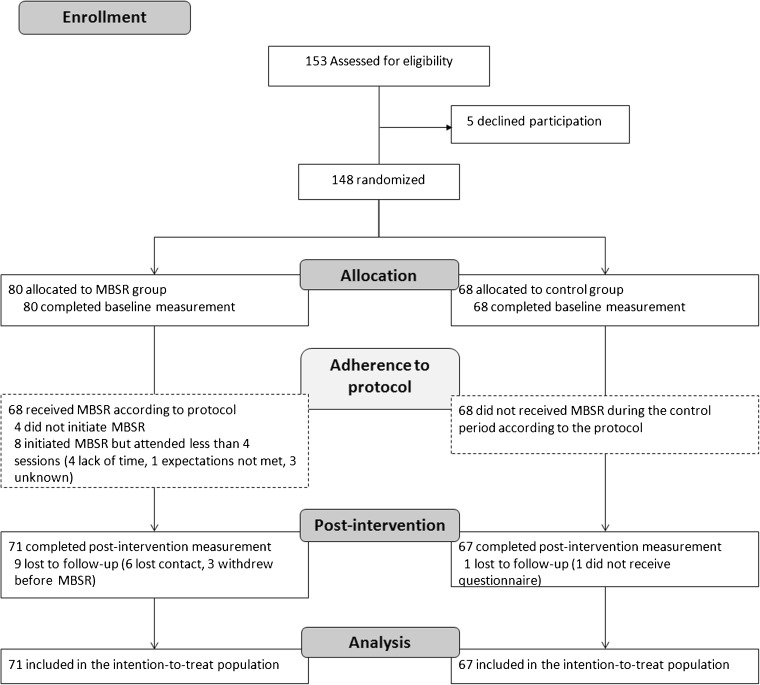
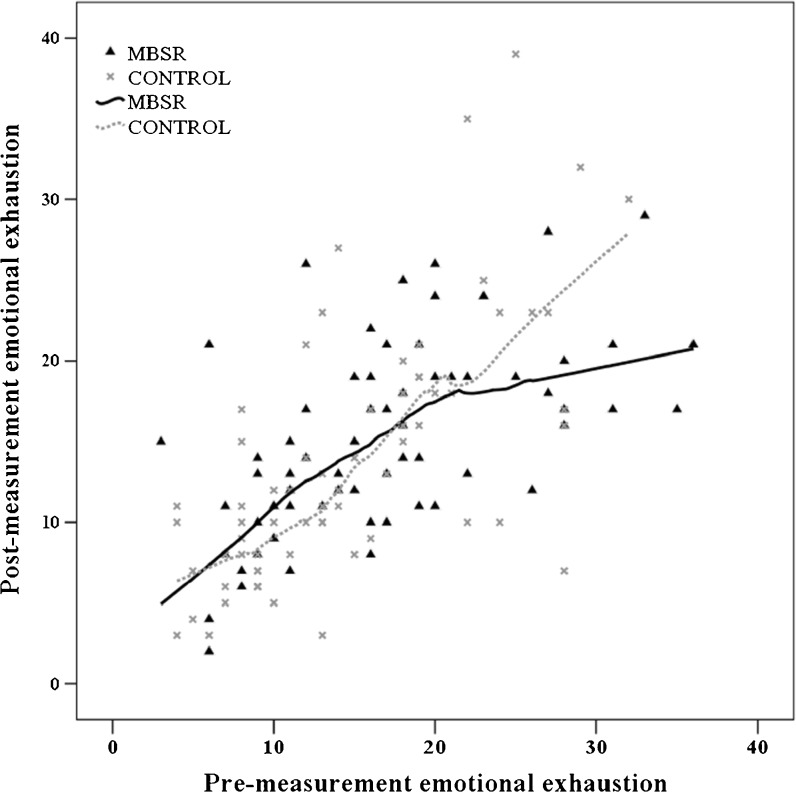
BACKGROUND: Burnout is highly prevalent in residents. No randomized controlled trials have been conducted measuring the effects of Mindfulness-Based Stress Reduction (MBSR) on burnout in residents. OBJECTIVE: To determine the effectiveness of MBSR in reducing burnout in residents. DESIGN: A randomized controlled trial comparing MBSR with a waitlist control group. PARTICIPANTS: Residents from all medical, surgical and primary care disciplines were eligible to participate. Participants were self-referred. INTERVENTION: The MBSR consisted of eight weekly 2.5-h sessions and one 6-h silent day. MAIN MEASURES: The primary outcome was the emotional exhaustion subscale of the Dutch version of the Maslach Burnout Inventory-Human Service Survey. Secondary outcomes included the depersonalization and reduced personal accomplishment subscales of burnout, worry, work-home interference, mindfulness skills, self-compassion, positive mental health, empathy and medical errors. Assessment took place at baseline and post-intervention approximately 3 months later. KEY RESULTS: Of the 148 residents participating, 138 (93%) completed the post-intervention assessment. No significant difference in emotional exhaustion was found between the two groups. However, the MBSR group reported significantly greater improvements than the control group in personal accomplishment (p = 0.028, d = 0.24), worry (p = 0.036, d = 0.23), mindfulness skills (p = 0.010, d = 0.33), self-compassion (p = 0.010, d = 0.35) and perspective-taking (empathy) (p = 0.025, d = 0.33). No effects were found for the other measures. Exploratory moderation analysis showed that the intervention outcome was moderated by baseline severity of emotional exhaustion; those with greater emotional exhaustion did seem to benefit. CONCLUSIONS: The results of our primary outcome analysis did not support the effectiveness of MBSR for reducing emotional exhaustion in residents. However, residents with high baseline levels of emotional exhaustion did appear to benefit from MBSR. Furthermore, they demonstrated modest improvements in personal accomplishment, worry, mindfulness skills, self-compassion and perspective-taking. More research is needed to confirm these results.
Overview
The claims and statistics of this paper haven’t been checked yet.
Free: it reads the open-access text and checks the first 5 claims that cite a source we can check. Create a free account to check every claim.
Integrity signals
Registry
Cites
Statistics
Figures
Verification
Claims the paper makes
The claims and statistics of this paper haven’t been checked yet.
Free: it reads the open-access text and checks the first 5 claims that cite a source we can check. Create a free account to check every claim.
Claims other papers make about this one
Each is checked against this paper’s own text: does it say what the citing paper says it does?
The source backs part of the claim, not all of it — or backs it for a different population, condition or comparison.
In the citing paper
“Also, 8 studies [45, 51, 52, 57, 63, 64, 74], comprising 72.7% of the total, were categorized as high risk of bias in the second or third domain due to naive per protocol analysis from complete cases at the end of the studies.”
From Individual and organizational interventions to reduce burnout in resident physicians: a systematic review and meta-analysis (2024) · cites this paper as [57]
Experimental — accuracy not yet measuredThe cited source says what the claim attributes to it.
In the citing paper
“In the subgroup of meditation intervention studies [50–58], the Cohen’s d SMD was found to be non-statistically significant in EE (-0.30, 95% CI -0.61 to 0.02, p = 0.25, I2 = 63.1%) and DP (-0.10, 95% CI -0.28 to 0.07, p = 0.25, I2 = 0%), but statistically significant in PA (0.22, 95% CI 0.03 to 0.40, p = 0.02, I2 = 0%).”
From Individual and organizational interventions to reduce burnout in resident physicians: a systematic review and meta-analysis (2024) · cites this paper as [57]
The cited source says what the claim attributes to it.
In the citing paper
“In the subgroup of meditation intervention studies [50–58], the Cohen’s d SMD was found to be non-statistically significant in EE (-0.30, 95% CI -0.61 to 0.02, p = 0.25, I2 = 63.1%) and DP (-0.10, 95% CI -0.28 to 0.07, p = 0.25, I2 = 0%), but statistically significant in PA (0.22, 95% CI 0.03 to 0.40, p = 0.02, I2 = 0%).”
From Individual and organizational interventions to reduce burnout in resident physicians: a systematic review and meta-analysis (2024) · cites this paper as [57]
Self-check
Percentages, sums and reported differences re-computed from the paper’s own numbers.
The self-check needs the paper’s full text.
Citations
Cites
1 retracted
Gotink, R. A., Chu, P., Busschbach, J. J. V., Benson, H., Fricchione, G. L., & Hunink, M. G. M. (2015) · PLOS ONE · doi:10.1371/journal.pone.0124344 · Cited by 539
RetractedCONSORT 2010 Statement: updated guidelines for reporting parallel group randomised trials
the CONSORT Group, Schulz, K. F., Altman, D. G., & Moher, D. (2010) · BMC Medicine · doi:10.1186/1741-7015-8-18 · Cited by 13,371
Maslach, C., Schaufeli, W. B., & Leiter, M. P. (2001) · Annual Review of Psychology · doi:10.1146/annurev.psych.52.1.397 · Cited by 12,852
Mindfulness-based interventions in context: Past, present, and future
Kabat-Zinn, J. (2003) · Clinical Psychology: Science and Practice · doi:10.1093/clipsy.bpg016 · Cited by 8,615 · cited 1×
“Although mindfulness has been taught for centuries as part of Buddhist tradition, the meditation practices taught inMBSR are psycho-educational and secular.(16,17) MBSR has been found to reduce symptoms of depression and anxiety and to improve quality of life in patients with a variety of somatic and psychiatric disor…”
Mindfulness-based interventions in context: Past, present, and future.
Kabat-Zinn, J. (2003) · Clinical Psychology: Science and Practice · doi:10.1093/clipsy/bpg016 · Cited by 8,612
(2008) · Medical Entomology and Zoology · Cited by 7,477
No adjustments are needed for multiple comparisons.
Rothman, K. J. (1990) · Epidemiology · doi:10.1097/00001648-199001000-00010 · Cited by 5,965 · cited 1×
“As the analyses of the secondary outcome measures were exploratory, we did not adjust for multiple testing to avoid type II errors.(44,45) We calculated Cohen’s d-type effect sizes with the adjusted differences between the groups using the pooled standard deviation at baseline.”
The mental health continuum: from languishing to flourishing in life.
Keyes, C. L. M. (2002) · Journal of Health and Social Behavior · doi:10.2307/3090197 · Cited by 5,133 · cited 2×
“We assessed positive mental health with the validated Mental Health Continuum–Short Form.(36,37) The scale consists of 14 items (α= 0.”
InfluentialDevelopment and validation of the Penn State Worry Questionnaire
Meyer, T. J., Miller, M. L., Metzger, R. L., & Borkovec, T. D. (1990) · Behaviour Research and Therapy · doi:10.1016/0005-7967(90)90135-6 · Cited by 5,099 · cited 1×
“We used the validated Penn State Worry Questionnaire to measure worry.(31) This questionnaire consists of 16 items (α= 0.”
Prevention of relapse/recurrence in major depression by mindfulness-based cognitive therapy.
Teasdale, J. D., Segal, Z. V., Williams, J. M. G., Ridgeway, V. A., Soulsby, J. M., & Lau, M. A. (2000) · Journal of Consulting and Clinical Psychology · doi:10.1037/0022-006x.68.4.615 · Cited by 3,236 · cited 1×
“In line with previous studies, completers were defined as having attended four or more MBSR sessions.(28)”
Research works printed but not linked: 4
- Kabat-Zinn J Full catastrophe living: Using the wisdom of your body and mind to face stress, pain, and illness 1990 New York Delacourt: Random House LLC
- Maslach C Jackson SE Maslach Burnout Inventory: Second Edition 1986 Palo Alto Consulting Psychologists Press
- Schaufeli W Van Dierendonck D Handleiding van de Utrechtse Burnout Schaal (UBOS)[Manual Utrecht Burnout Scale] 2000 Lisse Swets Test Services
- Frank J Snell L Sherbino J Draft CanMEDS 2015 Physician Competency Framework–Series III 2014 Ottawa The Royal College of Physicians and Surgeons of Canada
Cited by
Galante, J., Friedrich, C., Dawson, A. F., Modrego-Alarcón, M., Gebbing, P., Delgado-Suárez, I., Gupta, R., Dean, L., Dalgleish, T., White, I. R., et al. (2021) · PLOS Medicine · doi:10.1371/journal.pmed.1003481 · Cited by 319
“…Netherlands 167 Medical undergraduates (1) 25 (1.8) 79% Dis, WB, Mindf, Real func MBSR (3) No intervention (clerkships as usual) (1) Post–int, 4 m, 9 m, 12 m, 17 m Verweij 2018 [266,267], the Netherlands 148 Medical doctors (2) 31 (4.6) 88% WB, Mindf, Real func, Self MBSR (3) Waitlist (1)…”
InfluentialMindfulness-Based Programs in the Workplace: a Meta-Analysis of Randomized Controlled Trials
Vonderlin, R., Biermann, M., Bohus, M., & Lyssenko, L. (2020) · Mindfulness · doi:10.1007/s12671-020-01328-3 · Cited by 259
Suleiman‐Martos, N., Gomez‐Urquiza, J. L., Aguayo‐Estremera, R., Cañadas‐De La Fuente, G. A., De La Fuente‐Solana, E. I., & Albendín‐García, L. (2020) · Journal of Advanced Nursing · doi:10.1111/jan.14318 · Cited by 217
Scheepers, R. A., Emke, H., Epstein, R. M., & Lombarts, K. M. J. M. H. (2020) · Medical Education · doi:10.1111/medu.14020 · Cited by 170
Spinelli, C., Wisener, M., & Khoury, B. (2019) · Journal of Psychosomatic Research · doi:10.1016/j.jpsychores.2019.03.003 · Cited by 170
Fendel, J. C., Bürkle, J. J., & Göritz, A. S. (2021) · Academic Medicine · doi:10.1097/acm.0000000000003936 · Cited by 127
Wasson, R. S., Barratt, C., & O’Brien, W. H. (2020) · Mindfulness · doi:10.1007/s12671-020-01342-5 · Cited by 109
“…al. (2017) 19 Nurses Wait-list 4 Australia Journal .00 Stafford-Brown and Pakenham (2012) 28 Clinical psychology trainees Wait-list 4 Australia Journal .32 Verweij et al. (2017) 67 Residents Wait-list 8 Netherlands Journal .17 SCS, Self-Compassion Scale; Hedges g, effect size however, most did…”
BackgroundMindfulness in Healthcare Professionals and Medical Education
Chmielewski, J., Łoś, K., & Łuczyński, W. (2021) · International Journal of Occupational Medicine and Environmental Health · doi:10.13075/ijomeh.1896.01542 · Cited by 96
Zhang, K., Wang, Y., Wei, Q., Li, X., Guo, Y., & Zhang, S. (2021) · Gels · doi:10.3390/gels7030115 · Cited by 71
Burnout Levels and Patterns in Postgraduate Medical Trainees: A Systematic Review and Meta-Analysis
Prentice, S., Dorstyn, D., Benson, J., & Elliott, T. E. (2020) · Academic Medicine · doi:10.1097/acm.0000000000003379 · Cited by 79
Shiri, R., Nikunlaakso, R., & Laitinen, J. (2023) · Healthcare · doi:10.3390/healthcare11121792 · Cited by 65
“An 8-week mindfulness-based stress reduction program that included psychoeducation and exercises improved personal accomplishment but had no effects on emotional exhaustion and depersonalization among resident physicians [66], while another RCT [67] showed the opposite effect: a beneficial effect on emotional exhausti…”
BackgroundDelgado, N., Delgado, J., Betancort, M., Bonache, H., & Harris, L. T. (2023) · Psychology Research and Behavior Management · doi:10.2147/prbm.s384247 · Cited by 64
“…was the most common instrument used to measure burnout levels in healthcare professionals, although six studies utilized a version of the original scale, such as MBI-General Service, 8 MBI-Human Service Survey, 51,52,54 an abbreviated version of MBI 47 and a Danish adaptation composed of 20 items.”
Parsons, M., Bailitz, J. M., Chung, A. S., Mannix, A., Battaglioli, N., Clinton, M., & Gottlieb, M. A. (2020) · Western Journal of Emergency Medicine · doi:10.5811/westjem.2019.11.42961 · Cited by 64
Tement, S., Ketiš, Z. K., Miroševič, Š., & Selič-Zupančič, P. (2021) · International Journal of Environmental Research and Public Health · doi:10.3390/ijerph182111181 · Cited by 54
“Study Location Australia [32] 1 USA [33–43] 11 Spain [44] 1 The Netherlands [45,46] 2 United Kingdom [47–49] 3 Participants Physicians [33–38,44,45,47,48] 10 Residents/interns [32,39–43,46,49] 8 Physician Specialty Primary care/Family medicine/General practice [33,36,38,45,48] 5 Internal medicine [34] 1 Radiology [37]…”
BackgroundKakoschke, N., Hassed, C., Chambers, R., & Lee, K. (2021) · PLOS ONE · doi:10.1371/journal.pone.0258999 · Cited by 51
“One promising strategy for reducing psychological distress in clinicians is mindfulnessbased interventions [17, 18].”
BackgroundTam, C. C., Sun, S., Yang, X., Li, X., Zhou, Y., & Shen, Z. (2020) · AIDS and Behavior · doi:10.1007/s10461-020-03068-w · Cited by 64
The impact of mindfulness practice on physician burnout: A scoping review
Malik, H., & Annabi, C. A. (2022) · Frontiers in Psychology · doi:10.3389/fpsyg.2022.956651 · Cited by 62
“Similarly, a large MBSR Dutch study conducted over 2 years found no significant difference in depersonalization or emotional exhaustion in 148 physicians from varying specialties (Verweij et al., 2017).”
BackgroundCultivating a way of being and doing: Individual strategies for physician well-being and resilience
Gogo, A., Osta, A. D., McClafferty, H. H., & Rana, D. T. (2019) · Current problems in pediatric and adolescent health care · doi:10.1016/j.cppeds.2019.100663 · Cited by 53
Fendel, J. C., Aeschbach, V. M., Schmidt, S., & Göritz, A. S. (2021) · Journal of Internal Medicine · doi:10.1111/joim.13374 · Cited by 45
Othman, S. Y., Hassan, N. I., & Mohamed, A. M. (2023) · BMC Nursing · doi:10.1186/s12912-023-01466-8 · Cited by 40
“However, Verweij et al. [55] revealed no significant difference in burnout between the study and control groups.”
BackgroundMethodPodgurski, L., Greco, C., Croom, A., Arnold, R., & Claxton, R. (2019) · Journal of Palliative Medicine · doi:10.1089/jpm.2018.0550 · Cited by 40
“6 It is also possible that our series was too brief to impact burnout.”
Kraiss, J. T., Redelinghuys, K., & Weiss, L. (2022) · Journal of Happiness Studies · doi:10.1007/s10902-022-00545-y · Cited by 56
Talebiazar, N., Anzali, B. C., Abbasi, M., Azizi, N., Goli, R., Faraji, N., Bagheri, M., Amiri, N., & Kazemi, S. (2024) · International Archives of Occupational and Environmental Health · doi:10.1007/s00420-024-02078-8 · Cited by 47
Kiratipaisarl, W., Surawattanasakul, V., & Sirikul, W. (2024) · BMC Medical Education · doi:10.1186/s12909-024-06195-3 · Cited by 37
“%) studies were randomized, controlled, concurrent trials [45, 51, 52, 55, 57, 60–64 , 74].”
BackgroundInfluentialEffectiveness of mindfulness-based interventions on empathy: A meta-analysis
Hu, Z.-Y., Wen, Y.-R., Wang, Y., Lin, Y., Shi, J., Yu, Z., Lin, Y.-T., & Wang, Y. (2022) · Frontiers in Psychology · doi:10.3389/fpsyg.2022.992575 · Cited by 50
“However, the effect sizes for MBSR were lower than the overall effect sizes, suggesting that we can consider other types of MBIs in practice.”
BackgroundMethodInfluentialDeveloping a Mindfulness Skills-Based Training Program for Resident Physicians
Minichiello, V., Hayer, S., Gillespie, B., Goss, M., & Barrett, B. (2020) · Family Medicine · doi:10.22454/fammed.2020.461348 · Cited by 30
Fendel, J. C., Aeschbach, V. M.-J., Göritz, A. S., & Schmidt, S. (2020) · Mindfulness · doi:10.1007/s12671-020-01366-x · Cited by 35
Fraiman, Y. S., Cheston, C. C., Cabral, H., Allen, C., Asnes, A. G., Barrett, J. T., Batra, M., Bernstein, W., Bleeker, T., Dietz, P. M., et al. (2022) · Archives of Pediatrics and Adolescent Medicine · doi:10.1001/jamapediatrics.2021.5740 · Cited by 31
Zheng, Y., Gu, X., Jiang, M., & Zeng, X. (2022) · Mindfulness · doi:10.1007/s12671-022-01927-2 · Cited by 33
Obstetrics and Gynecology Residents' Perspectives on Wellness: Findings From a National Survey
Morgan, H. K., Winkel, A. F., Nguyen, A. T., Carson, S. A., Ogburn, T., & Woodland, M. B. (2019) · Obstetrics and Gynecology · doi:10.1097/aog.0000000000003103 · Cited by 31
Pandit, A. S., de Gouveia, M., Horsfall, H. L., Reka, A., & Marcus, H. J. (2022) · Frontiers in Surgery · doi:10.3389/fsurg.2022.916228 · Cited by 27
Higgins, M. C. S. S., Siddiqui, A. A., Kosowsky, T., Unan, L., Mete, M., Rowe, S. G., & Marchalik, D. (2022) · Academic Radiology · doi:10.1016/j.acra.2022.01.022 · Cited by 27
Purdie, D. R., Federman, M., Chin, A., Winston, D., Bursch, B., Olmstead, R., Bulut, Y., & Irwin, M. R. (2023) · Journal of Clinical Psychology in Medical Settings · doi:10.1007/s10880-022-09896-3 · Cited by 19
“However, the few existing randomized controlled trials have demonstrated mixed support for utility of mindfulness skills in reducing burnout among resident physicians (Fraiman et al., 2022; Ireland et al., 2017; Lebares et al., 2018; Verweij et al., 2018).”
A pilot study of a longitudinal mindfulness curriculum in undergraduate medical education
MacLean, H., Braschi, E., Archibald, D., Sanchez-Campos, M., Jebanesan, D., Koszycki, D., & Gonsalves, C. (2020) · Canadian Medical Education Journal · doi:10.36834/cmej.56726 · Cited by 20
Loewenthal, J., Dyer, N. L., Lipsyc-Sharf, M., Borden, S., Mehta, D. H., Dusek, J. A., & Khalsa, S. B. S. (2021) · Global Advances in Health and Medicine · doi:10.1177/21649561211001038 · Cited by 20
“Several studies demonstrated reduced stress and/or burnout after meditation-based MBIs, whereas others did not observe an effect.(49,50) In a feasibility study of a mindfulness intervention for German residents, the program was rated as highly feasible with no attrition, but included only nine participants and no comp…”
BackgroundFendel, J. C., Bürkle, J. J., & Göritz, A. S. (2019) · BMJ Open · doi:10.1136/bmjopen-2019-032295 · Cited by 26
Frisenstam, K. L., Friberg, P., Osika, W., & Chen, Y. (2021) · Mindfulness · doi:10.1007/s12671-021-01771-w · Cited by 26
“Mindfulness also contributes to the well-being of the staff, making it a sustainable method within the healthcare organization (Boellinghaus et al., 2014; Shapiro & Carlson, 2009; Verweij et al., 2018).”
MethodAssessing the mental wellbeing of next generation general practitioners: a cross-sectional survey
Lindemann, F., Rozsnyai, Z., Zumbrunn, B., Laukenmann, J., Kronenberg, R., & Streit, S. (2019) · BJGP Open · doi:10.3399/bjgpopen19x101671 · Cited by 24
Lu, F., Xu, Y., Yu, Y., Zhao, R., Peng, L., Liu, B., & Li, M. (2023) · Nurse Education in Practice · doi:10.1016/j.nepr.2023.103640 · Cited by 17
The effectiveness of work–nonwork interventions: A theoretical synthesis and meta-analysis.
von Allmen, N., Hirschi, A., Burmeister, A., & Shockley, K. M. (2024) · Journal of Applied Psychology · doi:10.1037/apl0001105 · Cited by 25
Boden, L. M., Rodriguez, C., Kelly, J. D., Khalsa, A. S., & Casper, D. S. (2023) · JBJS Open Access · doi:10.2106/jbjs.oa.22.00114 · Cited by 16
Mindfulness and compassion training for health professionals: A qualitative study
Brun, C., Akinyemi, A., Houtin, L., Mizzi, C., Cardoso, T., & Isnard Bagnis, C. (2023) · Frontiers in Psychology · doi:10.3389/fpsyg.2022.1113453 · Cited by 16
Talebiazar, N., Salamat, E., Abbasi, M., Azizi, N., Goli, R., Faraji, N., Bagheri, M., Amiri, N., & Kazemi, S. (2024) · Geriatric Nursing · doi:10.1016/j.gerinurse.2024.05.034 · Cited by 23
Szuster, R. R., Onoye, J., Eckert, M., Kurahara, D., Ikeda, R. K., & Matsu, C. R. (2019) · The International Journal of Psychiatry in Medicine · doi:10.1177/0091217419887639 · Cited by 19
“Similarly, mindfulness-based stress reduction (MBSR)—a more extensive and well-established MBI(32)—did not demonstrate a reduction in burnout for residents,(33) but did support the development of skills such as self-compassion, self-reflection, acceptance, nonjudgment, and an enhanced ability to relate to others.(33,3…”
BackgroundA tailored mindfulness-based program for resident physicians: A qualitative study
Aeschbach, V. M.-J., Fendel, J. C., Schmidt, S., & Göritz, A. S. (2021) · Complementary Therapies in Clinical Practice · doi:10.1016/j.ctcp.2021.101333 · Cited by 19
To the Point: a prescription for well-being in medical education
Hopkins, L., Morgan, H. K., Buery-Joyner, S. D., Craig, L. B., Everett, E. N., Forstein, D. A., Graziano, S., Hampton, B. S., McKenzie, M. L., Page-Ramsey, S. M., et al. (2019) · American Journal of Obstetrics and Gynecology · doi:10.1016/j.ajog.2019.05.012 · Cited by 19
Mindfulness Training for Young Neurosurgeons: A Virtual Multicenter Prospective Pilot Study
Pandit, A. S., Reka, A., Layard Horsfall, H., & Marcus, H. J. (2022) · World Neurosurgery · doi:10.1016/j.wneu.2022.04.128 · Cited by 14
Collett, G., Gupta, J., Eltayeb, A., Korszun, A., Sharples, L. D., Rice, K. M., & Gupta, A. K. (2025) · Annals of Internal Medicine · doi:10.7326/annals-25-00469 · Cited by 20
Mindfulness-based Interventions for Surgeons: A Scoping Review
Coopersmith, A. S., Shroff, Y. V., Wen, G. A., Berler, M. H., Gonzales, P. A., Ojute, F. M., & Lebares, C. C. (2024) · Annals of Surgery · doi:10.1097/sla.0000000000006213 · Cited by 18
“Verweji et al (2018) 16 and Shin et al (2023) 36 found increases in elements or effects of mindfulness, such as self-compassion and a sense of common humanity, respectively.”
Li, J., & Qin, X. (2021) · Psychology in the Schools · doi:10.1002/pits.22578 · Cited by 12
Aeschbach, V. M.-J., Fendel, J. C., Göritz, A. S., Schulze-Marmeling, C., & Schmidt, S. (2022) · Mindfulness · doi:10.1007/s12671-022-01876-w · Cited by 16
“This includes the finding of a small effect on self-compassion (Verweij et al., 2018), a medium effect on self-attributed mindfulness (i.”
BackgroundInfluentialVreeling, K., Kersemaekers, W. M., Cillessen, L., van Dierendonck, D., & Speckens, A. E. M. (2019) · BMJ Open · doi:10.1136/bmjopen-2019-031643 · Cited by 19
Self-citationMindfulness-based stress reduction for elementary school teachers: a randomized controlled trial
Lensen, J. H., Stoltz, S. E. M. J., Kleinjan, M., Kraiss, J. T., Scholte, R. H. J., & Speckens, A. E. M. (2024) · Frontiers in Education · doi:10.3389/feduc.2024.1385375 · Cited by 27
Self-citationHirayama, Y., Khan, S., Gill, C., Thoburn, M., Hancox, J., & Muzaffar, J. (2024) · Future Healthcare Journal · doi:10.1016/j.fhj.2024.100195 · Cited by 17
Mindfulness-based programme for residents: study protocol of a randomised controlled trial
Aeschbach, V. M.-J., Fendel, J. C., Göritz, A. S., & Schmidt, S. (2020) · BMJ Open · doi:10.1136/bmjopen-2019-035025 · Cited by 12
The art of seeing: The impact of a visual arts course on medical student wellbeing
Noorily, A. R., Willieme, A., Belsky, M. S., & Grogan, K. (2023) · Medical Teacher · doi:10.1080/0142159x.2023.2184675 · Cited by 13
“By encouraging a person to focus on the present moment, mindfulness eases the feelings of anxiety and depression that often accompany rumination over the past and apprehension about the future, and has been proven to reduce stress (Brown and Ryan 2003; Hofmann et al. 2010; Ireland et al. 2017; Verweij et al. 2018; Fen…”
BackgroundSarkar, S., Sa, B., Singh, K., Gaur, U., Bharatha, A., Víctor, V., Rahman, S., & Majumder, M. A. (2021) · Advances in Human Biology · doi:10.4103/aihb.aihb_28_21 · Cited by 12
Muffins and Meditation: Combatting Burnout in Surgical Residents
Burnet, G., Platnick, C., Krishnan, P., Robinson, C. K., Sauaia, A., Burlew, C. C., Nehler, M. R., Jaiswal, K. R., & Platnick, K. B. (2022) · Journal of surgical education · doi:10.1016/j.jsurg.2022.09.005 · Cited by 11
Intern Mental Health Interventions
Bommarito, S., & Hughes, M. (2019) · Current Psychiatry Reports · doi:10.1007/s11920-019-1035-y · Cited by 9
Baeza‐Velasco, C., Genty, C., Jaussent, I., Benramdane, M., Courtet, P., & Olié, É. (2020) · BMC Psychiatry · doi:10.1186/s12888-020-02529-9 · Cited by 20
Peters, M., Klein, T., Stuber, F., Kösters, M., Mulfinger, N., Stiawa, M., & Puschner, B. (2023) · Stress and Health · doi:10.1002/smi.3314 · Cited by 12
Li, A. C. M., Chio, F. H. N., Mak, W. W. S., Fong, T., Chan, S. H. W., Tran, Y. H. R., & Kakani, K. (2025) · Social Science & Medicine · doi:10.1016/j.socscimed.2025.117749 · Cited by 16
Sustainable benefits of mindfulness training in health professions education
Sköld, C., Steen, A., Niemi, M., Vinnars, B., & Kiessling, A. (2025) · BMC Medical Education · doi:10.1186/s12909-025-06998-y · Cited by 9
Hohnemann, C., Engel, F., Peifer, C., & Diestel, S. (2024) · Frontiers in Psychology · doi:10.3389/fpsyg.2024.1385372 · Cited by 7
“In line with this, in a randomized controlled trial, Verweij et al. (2018) could reveal a negative effect of the MBSR training on emotional exhaustion for individuals with high baseline levels of emotional exhaustion.”
ResultThe Text Effect: Stress Management and Resiliency Training Pilot for Resident Physicians
Nathan, J., McCray, L. W., & Feldman, N. (2021) · Family Medicine · doi:10.22454/fammed.2021.847102 · Cited by 12
Bienestar eudaimónico y meditación mindfulness en los contextos laborales: una revisión sistemática
Rincón, I. C., García‐Palacios, A., & Vázquez, S. S. (2023) · Anales de Psicología · doi:10.6018/analesps.493671 · Cited by 15
“- + - - - van Berkel et al., 2014 + + + + + + + van Dongen et al., 2016 + + + + + + + Verweij et al., 2017 + ?”
BackgroundInfluentialGan, R., Chen, S., & Xue, J. (2024) · Human Resources for Health · doi:10.1186/s12960-024-00959-0 · Cited by 15
“Another study [61] conducted in residents also did not support the effectiveness of MBSR for reducing burnout.”
Schlatter, S., Berland, A., Lutz, A., Shankland, R., Barret, N., Guillaumée, T., Duclos, A., Cortet, M., Rimmelé, T., Rode, G., et al. (2025) · Medical Teacher · doi:10.1080/0142159x.2024.2431137 · Cited by 8
Iswarya, V. S., Babima, M., Muhila, M. G., & Dhaneesh, R. (2024) · International Journal of Systems Assurance Engineering and Management · doi:10.1007/s13198-024-02339-2 · Cited by 12
“Consequently, it’s crucial to establish the precise source of stress and its effects on the employee’shealth (Verweij et al. 2018).”
Prevention of burnout syndrome in physicians: a systematic review and meta-analysis
Krebs, L., Jung, L., & Arrich, J. (2026) · Wiener Klinische Wochenschrift · doi:10.1007/s00508-025-02601-y · Cited by 5
Applied Mindfulness for Physician Wellbeing: A Prospective Qualitative Study Protocol
Weisbaum, E., & Chadi, N. (2022) · Frontiers in Public Health · doi:10.3389/fpubh.2022.807792 · Cited by 7
Vainre, M., Galante, J., Watson, P., Dalgleish, T., & Hitchcock, C. (2022) · BMJ Open · doi:10.1136/bmjopen-2021-050951 · Cited by 7
“…that work performance was rarely assessed in trials investigating the outcomes of MBPs. 13 When work performance was measured, wide-ranging operational definitions were used, for example, engagement, 14–18 motivation, 15 absenteeism 19 and presenteeism, 17–19 rate of errors 20 and burn-out.”
BackgroundBurnout: Definition, Prevalence, Risk Factors, Prevention, and Interventions Literature Reviews
Bouskill, K., Danz, M., Meredith, L. S., Chen, C., Chang, J., Baxi, S. M., Huynh, D., Al-Ibrahim, H., Motala, A., Larkin, J., et al. (2022) · RAND Corporation eBooks · doi:10.7249/rr-a428-1 · Cited by 16
Silent Suffering: The Tragic Suicide Among Medical Residents
Montazeri, A., Hantoushzadeh, S., Razavi, S. J., Dashtkoohi, M., Eshraghi, N., & Ghaemi, M. (2024) · Archives of Iranian Medicine · doi:10.34172/aim.2024.41 · Cited by 5
Sir William Osler: A forerunner of mindfulness in medical practice
Kopel, J. J. (2019) · Baylor University Medical Center Proceedings · doi:10.1080/08998280.2019.1614847 · Cited by 5
“reporting similar levels of physician burnout.(20) Furthermore,”
BackgroundMINdI: Mindfulness Instruction for New Interns
Cheston, C. C., Sox, C. M., Michelson, C. D., & Fraiman, Y. S. (2020) · MedEdPORTAL · doi:10.15766/mep_2374-8265.10933 · Cited by 5
Enhancing Resident Well-being: Illuminating the Path Forward
Dyrbye, L. N., & West, C. P. (2018) · Journal of General Internal Medicine · doi:10.1007/s11606-018-4333-x · Cited by 7
Damico, V., Milani, M., & Murano, L. (2025) · Pain Management Nursing · doi:10.1016/j.pmn.2025.02.010 · Cited by 7
Effects of Meditation for Surgeons: A Systematic Review of the Scientific Literature
Capodici, A., Sanmarchi, F., & Golinelli, D. (2022) · Annals of Surgery · doi:10.1097/sla.0000000000005398 · Cited by 7
“These findings are in line with other existing literature investigating the effect of these techniques on other populations.19,25 For instance, verweij et al reported that, among resident physicians, individuals with high baseline levels of emotional exhaustion benefit from Mindfulness-Based Stress Reduction.19 Study…”
BackgroundResultMinichiello, V. J., & Webber, S. A. (2023) · Journal of Graduate Medical Education · doi:10.4300/jgme-d-22-00492.1 · Cited by 4
Burnout in Graduate Medical Education: Uncovering Resident Burnout Profiles Using Cluster Analysis
Yaghmour, N. A., Savage, N. M., Rockey, P. H., Santen, S. A., DeCarlo, K., Hickam, G., Schwartzberg, J. G., Baldwin, D. C., & Perera, R. A. (2024) · HCA Healthcare Journal of Medicine · doi:10.36518/2689-0216.1784 · Cited by 5
Pilot study evaluating a 12-h mindfulness-based curriculum for OB/GYN residents
Peterson, B., Fitzmaurice, L., Boehm, J. K., & Bendix, B. (2022) · Complementary Therapies in Clinical Practice · doi:10.1016/j.ctcp.2022.101620 · Cited by 4
AlSaif, H. I., Alenezi, M. N., Asiri, M., Alshaibani, K. O., Alrasheed, A. A., Alsaad, S. M., & Batais, M. A. (2022) · Medicina · doi:10.3390/medicina58091258 · Cited by 4
“Notably, when constructs of empathy were considered, mindfulness-based stress reduction (MBSR) resulted in a significant improvement in perspective taking among residents [24].”
BackgroundRiall, T. S. (2018) · JAMA Surgery · doi:10.1001/jamasurg.2018.2735 · Cited by 5
Recommendations and Resources for Coping with Burnout
Abdurrahman, M., & Hrobsky, H. (2020) · Springer eBooks · doi:10.1007/978-3-030-45627-6_18 · Cited by 4
Khan, A., Kim, D., Atwater, R., & Reddy, R. (2025) · Medicina · doi:10.3390/medicina62010039 · Cited by 3
“Similarly, Verweij et al. conducted a randomized clinical trial of Mindfulness-Based Stress Reduction on burnout in residents using the Dutch version of the MBI [36].”
Han, J.-H., Lee, M., Cha, C., & Baek, G. (2025) · Healthcare · doi:10.3390/healthcare13243253 · Cited by 3
“A meta-analysis of 11 studies that evaluated EE [12,33,35,37,38,40,44,46,48,52,58] and 10 studies that measured DP and low PA [12,33,37,38,40,44,46,48,52,58] [12,33,35,37,38,40,44,46,48,52,58]; ( B ): [12,33,37,38,40,44,46,48,52,58].”
Villalón, F., Hirmas, A., Mundt, A. P., & Quiroz, D. (2025) · General Hospital Psychiatry · doi:10.1016/j.genhosppsych.2025.09.012 · Cited by 6
Effects of mindfulness-based interventions on self-compassion: A meta-analysis
Sun, T., Yan, Y.-X., Jin, Y., & An, J. (2021) · Advances in Psychological Science · doi:10.3724/sp.j.1042.2021.01808 · Cited by 6
A Perspective on Wellness in Anesthesiology Residency Programs
Brown, K. B., Cook, A., Chen, F., & Martinelli, S. M. (2022) · Anesthesiology Clinics · doi:10.1016/j.anclin.2022.01.003 · Cited by 4
Dikicier, S., Korkmaz, C., Atay, A., & Yilmaz, M. D. (2023) · Annals of Medicine · doi:10.1080/07853890.2023.2184487 · Cited by 5
“A previous study emphasized that reducing burnout in healthcare workers is especially difficult [49].”
BackgroundBondre, A. P., Khan, A., Singh, A., Singh, S., Shrivastava, R., Verma, N., Ranjan, A., Agrawal, J., Mehrotra, S., Shidhaye, R. R., et al. (2024) · Contemporary Clinical Trials Communications · doi:10.1016/j.conctc.2024.101377 · Cited by 6
“…to ASHAs in the intervention arm will show greater early remission rate than patients linked to ASHAs in the control arm 3-month follow-up aimed at improving wellbeing among community health workers in India, we referred to methodologically similar designs for calculating the sample size [55 – 57].”
MethodVivian, E., Oduor, H., Girisha, P., & Mantry, P. (2021) · International Journal of Environmental Research and Public Health · doi:10.3390/ijerph18084034 · Cited by 4
“MBSR therapies provide several benefits for participants, including stress reduction, emotion regulation [14,15], increased working memory [16], higher levels of self-satisfaction [17], improved focus [18], and reduced emotional exhaustion [19].”
BackgroundInfluentialEFFECTS OF MEDITATION ON THE TREATMENT OF STRESS AND ANXIETY
Guimarães, S. S., Galli, L. M., & Nunes, J. R. P. (2021) · Psicologia Saúde & Doenças · doi:10.15309/21psd220223 · Cited by 7
Effects of Mindfulness practice on work stress: a study with professionals in Primary Health Care
Fernandes, M., Souza, J. P., Gherardi‐Donato, E. C. D. S., de Souza, H. C. C., Franzon, A. C. A., Oliveira-Ciabati, L., & Braga, G. C. (2021) · Research Society and Development · doi:10.33448/rsd-v10i4.14002 · Cited by 2
Burnout before and during COVID: A systematic review and meta‐analysis of 48 698 trainees
Prentice, S., Dorstyn, D., Massy‐Westropp, N., Benson, J., & Elliott, T. E. (2025) · Medical Education · doi:10.1111/medu.15760 · Cited by 2
Mapping workplace compassion research across the social sciences: A bibliometric review
Kunst, H., Byington, E. K., Johnson, A. M., & Nguyen, H. (2025) · Australian Journal of Management · doi:10.1177/03128962251358615 · Cited by 5
“Notably, many of these articles examine mindfulness interventions through pilot studies/programmes (e.g. Moody et al., 2013; Rimes and Wingrove, 2011), controlled clinical trials (e.g. Pérula-de Torres et al., 2019), and randomised controlled trials (e.g. Trombka et al., 2021; Verweij et al., 2018).”
Devia, M. C., & Domínguez, L. C. (2020) · IATREIA · doi:10.17533/udea.iatreia.77 · Cited by 3
“No obstante, la evidencia que soporta su efectividad para disminuir el estrés no es conclusiva (34,43,44,57,58), aunque ofrece beneficios sobre la empatía y el compromiso por el trabajo (39,59), la cognición (41) y la felicidad (44,60).”
BackgroundFacing Adversity during Graduate Medical Training: The Concept of ‘Coping Intelligence’
Taylor, N., Kelley, K. C., Firstenberg, M. S., Davido, H. T., Papadimos, T. J., McCallister, D. E., Ali, A., Erickson-Parsons, L. A., & Stawicki, S. P. (2022) · IntechOpen eBooks · doi:10.5772/intechopen.99698 · Cited by 3
Vainre, M., Dalgleish, T., Bendriss‐Otiko, T., Butler, M., Kirkpatrick, A., Kosugiyama, N., Martinez‐Sosa, C., Mariscotti, F., Sideri, A., Soenksen, S., et al. (2022) · PsyArXiv (OSF Preprints) · doi:10.31234/osf.io/2vkru · Cited by 4
Metadata
- Authors
- Verweij, H., van Ravesteijn, H., van Hooff, M. L. M., Lagro-Janssen, A. L. M., & Speckens, A. E. M.
- Affiliations
- Radboud University Medical Center (NL)
- Corresponding author
- Verweij, Hanne
- Venue
- Journal of General Internal Medicine
- Published
- 2017-12-18
- Volume
- 33
- Issue
- 4
- Pages
- 429-436
- ISSN
- 0884-8734 (ISSN-L)
- 1525-1497
- PMC
- PMC5880763
- OpenAlex
- W2780124175
- Semantic Scholar
- 0a204294a63dfbfa2b67e59844d0c380790548d7
- Cited by
- 122
- References
- 49
- Citations by year
- 2026: 2 · 2025: 13 · 2024: 19 · 2023: 14 · 2022: 21 · 2021: 19 · 2020: 19 · 2019: 13 · 2018: 2
- FWCI
- 11.51
- Type
- journal article
- Language
- en
- Open access
- hybrid
- doi.org
- Locations
- Journal of General Internal Medicine (publishedVersion, cc-by)
- PubMed Central (publishedVersion, cc-by)
- PubMed (publishedVersion)
- Radboud Repository (Radboud University) (submittedVersion)
- Radboud Repository (Radboud University) (submittedVersion, other-oa)
- Funders
- Radboud University Medical Center
- Topics
- Social Sciences › Psychology › Clinical Psychology › Mindfulness and Compassion Interventions
- Health Sciences › Health Professions › General Health Professions › Healthcare professionals’ stress and burnout
- Social Sciences › Psychology › Social Psychology › Stress and Burnout Research
- Keywords
- mindfulness-based stress reduction, burnout, medical residents, emotional exhaustion, personal accomplishment, self-compassion, mindfulness skills, empathy, worry, work-home interference, medical errors, Maslach Burnout Inventory
- MeSH terms
- Adult, Burnout, Professional, Female, Humans, Internship and Residency, Male, Netherlands, Stress, Psychological, Mindfulness
About these checks
Registry, retraction, Cites and statistics results are computed, not judged, with one exception: a printed reference that no index lists is read once by a model before it counts as a citation error. Claims are extracted by a model and kept only when their quote appears verbatim in the text; each cited source is then checked, with a model’s help, for whether it says what the claim relies on. Those verdicts can be wrong — read the claim’s quote and the cited source before relying on one.
Statistics and arithmetic are recomputed, not judged.
Confidence bands are shown only for fields calibrated on our annotated test set. None is calibrated yet, so no band is shown.
What counts as a claim ›How we measure confidence ›How we check this ›
Are you an author, or do you see a problem with this page? Request a review
Data sources
Bibliographic data: Semantic Scholar, OpenAlex, Crossref.
Contains information from the Semantic Scholar Academic Graph Datasets, made available under the ODC Attribution License (ODC-BY 1.0).
Semantic Scholar’s data is described in: Kinney, R., et al. (2023). The Semantic Scholar Open Data Platform. arXiv:2301.10140.
