

Mindfulness-Based Stress Reduction for Residents: A Randomized Controlled Trial
Open accessThe DOI matches its Crossref record; 50 of the 50 references it cites were found in a registry or an index.
Abstract
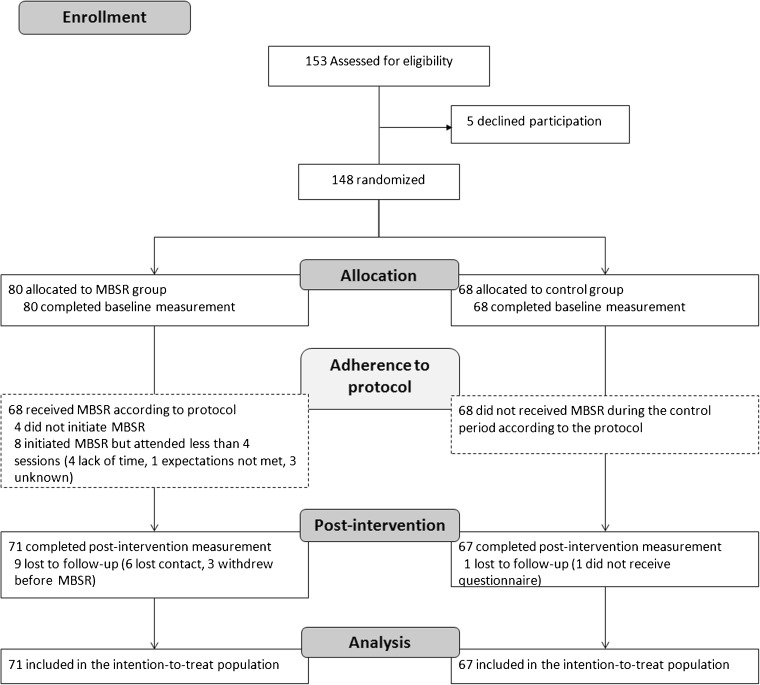
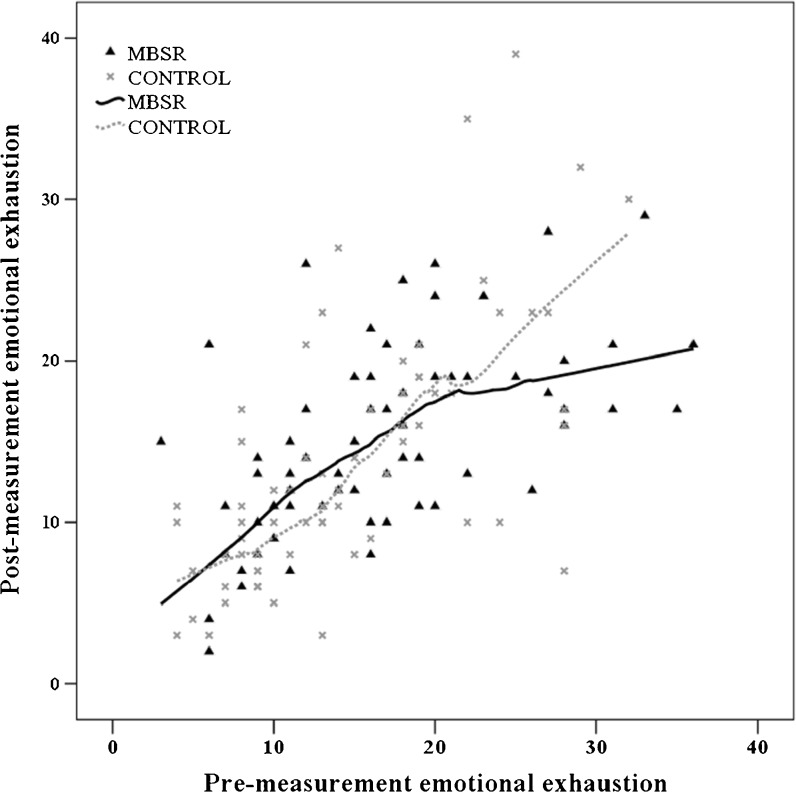
BACKGROUND: Burnout is highly prevalent in residents. No randomized controlled trials have been conducted measuring the effects of Mindfulness-Based Stress Reduction (MBSR) on burnout in residents. OBJECTIVE: To determine the effectiveness of MBSR in reducing burnout in residents. DESIGN: A randomized controlled trial comparing MBSR with a waitlist control group. PARTICIPANTS: Residents from all medical, surgical and primary care disciplines were eligible to participate. Participants were self-referred. INTERVENTION: The MBSR consisted of eight weekly 2.5-h sessions and one 6-h silent day. MAIN MEASURES: The primary outcome was the emotional exhaustion subscale of the Dutch version of the Maslach Burnout Inventory-Human Service Survey. Secondary outcomes included the depersonalization and reduced personal accomplishment subscales of burnout, worry, work-home interference, mindfulness skills, self-compassion, positive mental health, empathy and medical errors. Assessment took place at baseline and post-intervention approximately 3 months later. KEY RESULTS: Of the 148 residents participating, 138 (93%) completed the post-intervention assessment. No significant difference in emotional exhaustion was found between the two groups. However, the MBSR group reported significantly greater improvements than the control group in personal accomplishment (p = 0.028, d = 0.24), worry (p = 0.036, d = 0.23), mindfulness skills (p = 0.010, d = 0.33), self-compassion (p = 0.010, d = 0.35) and perspective-taking (empathy) (p = 0.025, d = 0.33). No effects were found for the other measures. Exploratory moderation analysis showed that the intervention outcome was moderated by baseline severity of emotional exhaustion; those with greater emotional exhaustion did seem to benefit. CONCLUSIONS: The results of our primary outcome analysis did not support the effectiveness of MBSR for reducing emotional exhaustion in residents. However, residents with high baseline levels of emotional exhaustion did appear to benefit from MBSR. Furthermore, they demonstrated modest improvements in personal accomplishment, worry, mindfulness skills, self-compassion and perspective-taking. More research is needed to confirm these results.
Overview
The claims and statistics of this paper haven’t been checked yet.
Free: it reads the open-access text and checks the first 5 claims that cite a source we can check. Create a free account to check every claim.
Integrity signals
Registry
Cites
Statistics
Figures
Verification
Claims the paper makes
The claims and statistics of this paper haven’t been checked yet.
Free: it reads the open-access text and checks the first 5 claims that cite a source we can check. Create a free account to check every claim.
Claims other papers make about this one
Each is checked against this paper’s own text: does it say what the citing paper says it does?
The source backs part of the claim, not all of it — or backs it for a different population, condition or comparison.
In the citing paper
“Also, 8 studies [45, 51, 52, 57, 63, 64, 74], comprising 72.7% of the total, were categorized as high risk of bias in the second or third domain due to naive per protocol analysis from complete cases at the end of the studies.”
From Individual and organizational interventions to reduce burnout in resident physicians: a systematic review and meta-analysis (2024) · cites this paper as [57]
Experimental — accuracy not yet measuredThe cited source says what the claim attributes to it.
In the citing paper
“In the subgroup of meditation intervention studies [50–58], the Cohen’s d SMD was found to be non-statistically significant in EE (-0.30, 95% CI -0.61 to 0.02, p = 0.25, I2 = 63.1%) and DP (-0.10, 95% CI -0.28 to 0.07, p = 0.25, I2 = 0%), but statistically significant in PA (0.22, 95% CI 0.03 to 0.40, p = 0.02, I2 = 0%).”
From Individual and organizational interventions to reduce burnout in resident physicians: a systematic review and meta-analysis (2024) · cites this paper as [57]
The cited source says what the claim attributes to it.
In the citing paper
“In the subgroup of meditation intervention studies [50–58], the Cohen’s d SMD was found to be non-statistically significant in EE (-0.30, 95% CI -0.61 to 0.02, p = 0.25, I2 = 63.1%) and DP (-0.10, 95% CI -0.28 to 0.07, p = 0.25, I2 = 0%), but statistically significant in PA (0.22, 95% CI 0.03 to 0.40, p = 0.02, I2 = 0%).”
From Individual and organizational interventions to reduce burnout in resident physicians: a systematic review and meta-analysis (2024) · cites this paper as [57]
Self-check
Percentages, sums and reported differences re-computed from the paper’s own numbers.
The self-check needs the paper’s full text.
Citations
Cites
1 retracted
Gotink, R. A., Chu, P., Busschbach, J. J. V., Benson, H., Fricchione, G. L., & Hunink, M. G. M. (2015) · PLOS ONE · doi:10.1371/journal.pone.0124344 · Cited by 539
RetractedCONSORT 2010 Statement: updated guidelines for reporting parallel group randomised trials
the CONSORT Group, Schulz, K. F., Altman, D. G., & Moher, D. (2010) · BMC Medicine · doi:10.1186/1741-7015-8-18 · Cited by 13,371
Maslach, C., Schaufeli, W. B., & Leiter, M. P. (2001) · Annual Review of Psychology · doi:10.1146/annurev.psych.52.1.397 · Cited by 12,852
Mindfulness-based interventions in context: Past, present, and future
Kabat-Zinn, J. (2003) · Clinical Psychology: Science and Practice · doi:10.1093/clipsy.bpg016 · Cited by 8,615 · cited 1×
“Although mindfulness has been taught for centuries as part of Buddhist tradition, the meditation practices taught inMBSR are psycho-educational and secular.(16,17) MBSR has been found to reduce symptoms of depression and anxiety and to improve quality of life in patients with a variety of somatic and psychiatric disor…”
Mindfulness-based interventions in context: Past, present, and future.
Kabat-Zinn, J. (2003) · Clinical Psychology: Science and Practice · doi:10.1093/clipsy/bpg016 · Cited by 8,612
(2008) · Medical Entomology and Zoology · Cited by 7,477
No adjustments are needed for multiple comparisons.
Rothman, K. J. (1990) · Epidemiology · doi:10.1097/00001648-199001000-00010 · Cited by 5,965 · cited 1×
“As the analyses of the secondary outcome measures were exploratory, we did not adjust for multiple testing to avoid type II errors.(44,45) We calculated Cohen’s d-type effect sizes with the adjusted differences between the groups using the pooled standard deviation at baseline.”
The mental health continuum: from languishing to flourishing in life.
Keyes, C. L. M. (2002) · Journal of Health and Social Behavior · doi:10.2307/3090197 · Cited by 5,133 · cited 2×
“We assessed positive mental health with the validated Mental Health Continuum–Short Form.(36,37) The scale consists of 14 items (α= 0.”
InfluentialDevelopment and validation of the Penn State Worry Questionnaire
Meyer, T. J., Miller, M. L., Metzger, R. L., & Borkovec, T. D. (1990) · Behaviour Research and Therapy · doi:10.1016/0005-7967(90)90135-6 · Cited by 5,099 · cited 1×
“We used the validated Penn State Worry Questionnaire to measure worry.(31) This questionnaire consists of 16 items (α= 0.”
Prevention of relapse/recurrence in major depression by mindfulness-based cognitive therapy.
Teasdale, J. D., Segal, Z. V., Williams, J. M. G., Ridgeway, V. A., Soulsby, J. M., & Lau, M. A. (2000) · Journal of Consulting and Clinical Psychology · doi:10.1037/0022-006x.68.4.615 · Cited by 3,236 · cited 1×
“In line with previous studies, completers were defined as having attended four or more MBSR sessions.(28)”
Construction and factorial validation of a short form of the Self-Compassion Scale
Raes, F., Pommier, E., Neff, K. D., & Van Gucht, D. (2011) · Clinical Psychology & Psychotherapy · doi:10.1002/cpp.702 · Cited by 2,997 · cited 1×
“88).(34) This scale consists of six positively and six negatively worded items, which are scored on a five-point scale, with the former representing selfcompassion (α= 0.”
Review: a gentle introduction to imputation of missing values.
Donders, A. R. T., van der Heijden, G. J. M. G., Stijnen, T., & Moons, K. G. M. (2006) · Journal of Clinical Epidemiology · doi:10.1016/j.jclinepi.2006.01.014 · Cited by 2,582
Interventions to prevent and reduce physician burnout: a systematic review and meta-analysis
West, C. P., Dyrbye, L. N., Erwin, P. J., & Shanafelt, T. D. (2016) · The Lancet · doi:10.1016/s0140-6736(16)31279-x · Cited by 2,362
Burnout and self-reported patient care in an internal medicine residency program
Shanafelt, T. D., Bradley, K. A., Wipf, J. E., & Back, A. L. (2002) · Annals of Internal Medicine · doi:10.7326/0003-4819-136-5-200203050-00008 · Cited by 2,165
Dyrbye, L. N., West, C. P., Satele, D., Boone, S., Tan, L., Sloan, J., & Shanafelt, T. D. (2014) · Academic Medicine · doi:10.1097/acm.0000000000000134 · Cited by 2,040 · cited 2×
“Residency is a particularly demanding and challenging period, and a peak time for distress.(1,2) Residents are confronted with a high workload and stressful situations.”
Mindfulness-based therapy: a comprehensive meta-analysis
Khoury, B., Lecomte, T., Fortin, G., Masse, M., Therien, P., Bouchard, V., Chapleau, M.-A., Paquin, K., & Hofmann, S. G. (2013) · Clinical Psychology Review · doi:10.1016/j.cpr.2013.05.005 · Cited by 2,003
Krasner, M. S. (2009) · JAMA · doi:10.1001/jama.2009.1384 · Cited by 1,650 · cited 3×
“In contrast to other studies, however, we did not find an effect on our primary outcome measure.(39,48) This might be due to a lower baseline level of emotional exhaustion than expected in our sample, particularly compared with previous studies in U.”
Mindfulness-based stress reduction for healthy individuals: A meta-analysis
Khoury, B., Sharma, M., Rush, S. E., & Fournier, C. (2015) · Journal of Psychosomatic Research · doi:10.1016/j.jpsychores.2015.03.009 · Cited by 1,617 · cited 2×
“Although the differences between the two groups were modest, they are comparable to those in other studies on MBSR in non-clinical populations.(15) However, more research is needed to confirm these findings.”
Effects of mindfulness-based stress reduction on medical and premedical students
Shapiro, S. L., Schwartz, G. E., & Bonner, G. (1998) · Journal of Behavioral Medicine · doi:10.1023/a:1018700829825 · Cited by 1,493
Evaluating the psychometric properties of the mental health continuum-short form (MHC-SF)
Lamers, S. M. A., Westerhof, G. J., Bohlmeijer, E. T., ten Klooster, P. M., & Keyes, C. L. M. (2011) · Journal of Clinical Psychology · doi:10.1002/jclp.20741 · Cited by 1,402 · cited 2×
“We assessed positive mental health with the validated Mental Health Continuum–Short Form.(36,37) The scale consists of 14 items (α= 0.”
InfluentialDo multiple outcome measures require p-value adjustment?
Feise, R. J. (2002) · BMC Medical Research Methodology · doi:10.1186/1471-2288-2-8 · Cited by 1,299 · cited 1×
“As the analyses of the secondary outcome measures were exploratory, we did not adjust for multiple testing to avoid type II errors.(44,45) We calculated Cohen’s d-type effect sizes with the adjusted differences between the groups using the pooled standard deviation at baseline.”
A narrative review on burnout experienced by medical students and residents
Dyrbye, L., & Shanafelt, T. (2016) · Medical Education · doi:10.1111/medu.12927 · Cited by 1,134 · cited 2×
“Residency is a particularly demanding and challenging period, and a peak time for distress.(1,2) Residents are confronted with a high workload and stressful situations.”
The Jefferson Scale of Physician Empathy: Development and Preliminary Psychometric Data
Hojat, M., Mangione, S., Nasca, T. J., Cohen, M. J. M., Gonnella, J. S., Erdmann, J. B., Veloski, J., & Magee, M. (2001) · Educational and Psychological Measurement · doi:10.1177/00131640121971158 · Cited by 1,049 · cited 1×
“We used the validated Jefferson Scale of Physician Empathy to measure empathy in the physician-patient relationship.(38) It uses a seven-point scale and measures three components of empathy: perspective-taking (10 items,α = 0.”
Association of resident fatigue and distress with perceived medical errors
West, C. P. (2009) · JAMA · doi:10.1001/jama.2009.1389 · Cited by 999
Bohlmeijer, E., ten Klooster, P. M., Fledderus, M., Veehof, M., & Baer, R. (2011) · Assessment · doi:10.1177/1073191111408231 · Cited by 990
The ACGME outcome project: retrospective and prospective
Swing, S. R. (2007) · Medical Teacher · doi:10.1080/01421590701392903 · Cited by 962
Hakanen, J. J., & Schaufeli, W. B. (2012) · Journal of Affective Disorders · doi:10.1016/j.jad.2012.02.043 · Cited by 883
Van Breukelen, G. J. P. (2006) · Journal of Clinical Epidemiology · doi:10.1016/j.jclinepi.2006.02.007 · Cited by 765
Thomas, N. K. (2004) · JAMA · doi:10.1001/jama.292.23.2880 · Cited by 750
Burnout During Residency Training: A Literature Review
IsHak, W. W., Lederer, S., Mandili, C., Nikravesh, R., Seligman, L., Vasa, M., Ogunyemi, D., & Bernstein, C. A. (2009) · Journal of Graduate Medical Education · doi:10.4300/jgme-d-09-00054.1 · Cited by 643 · cited 1×
“In other countries, these numbers are even higher, ranging from 27% to 82%.(1,6,7) Burnout can lead to depression, suicidal thoughts, suboptimal patient care and medical errors.”
(2000) · doi:10.1016/s0261-3794(99)00028-1 · Cited by 620 · cited 1×
“2).(47) The reduction of emotional exhaustion as a result of MBSR was dependent on the baseline level of emotional exhaustion: those with higher baseline levels of emotional exhaustion showed greater reductions in emotional exhaustion.”
Geurts, S. A. E., Taris, T. W., Kompier, M. A. J., Dikkers, J. S. E., Van Hooff, M. L. M., & Kinnunen, U. M. (2005) · Work & Stress · doi:10.1080/02678370500410208 · Cited by 605
A simple sample size formula for analysis of covariance in randomized clinical trials
Borm, G. F., Fransen, J., & Lemmens, W. A. J. G. (2007) · Journal of Clinical Epidemiology · doi:10.1016/j.jclinepi.2007.02.006 · Cited by 575
Treatment allocation by minimisation
Altman, D. G., & Bland, J. M. (2005) · BMJ · doi:10.1136/bmj.330.7495.843 · Cited by 550 · cited 1×
“With minimization, the treatment allocated to the next participant enrolled in the trial depends on the characteristics of those participants already enrolled.(41)”
Irving, J. A., Dobkin, P. L., & Park, J. (2009) · Complementary Therapies in Clinical Practice · doi:10.1016/j.ctcp.2009.01.002 · Cited by 531 · cited 2×
“More high-quality research is needed though, as the included studies often used limited sample sizes and uncontrolled study designs.(14,21,22) In medical students, a few randomized controlled trials have been conducted showing improvements in psychological distress, self-compassion, well-being and empathy.”
Burton, A., Burgess, C., Dean, S., Koutsopoulou, G. Z., & Hugh‐Jones, S. (2017) · Stress and Health · doi:10.1002/smi.2673 · Cited by 412 · cited 1×
“More high-quality research is needed though, as the included studies often used limited sample sizes and uncontrolled study designs.(14,21,22) In medical students, a few randomized controlled trials have been conducted showing improvements in psychological distress, self-compassion, well-being and empathy.”
de Vibe, M., Solhaug, I., Tyssen, R., Friborg, O., Rosenvinge, J. H., Sørlie, T., & Bjørndal, A. (2013) · BMC Medical Education · doi:10.1186/1472-6920-13-107 · Cited by 398 · cited 1×
“This is consistent with previous studies on mindfulness in healthy participants.(15,24,25) Although the differences between the two groups were modest, they are comparable to those in other studies on MBSR in non-clinical populations.”
Burnout in medical residents: a review
Prins, J. T., Gazendam‐Donofrio, S. M., Tubben, B. J., Van Der Heijden, F. M. M. A., Van De Wiel, H. B. M., & Hoekstra‐Weebers, J. E. H. M. (2007) · Medical Education · doi:10.1111/j.1365-2923.2007.02797.x · Cited by 383 · cited 1×
“In other countries, these numbers are even higher, ranging from 27% to 82%.(1,6,7) Burnout can lead to depression, suicidal thoughts, suboptimal patient care and medical errors.”
A Reconsideration of the Self-Compassion Scale’s Total Score: Self-Compassion versus Self-Criticism
López, A., Sanderman, R., Smink, A., Zhang, Y., van Sonderen, E., Ranchor, A., & Schroevers, M. J. (2015) · PLOS ONE · doi:10.1371/journal.pone.0132940 · Cited by 380 · cited 1×
“85).(35) We assessed positive mental health with the validated Mental Health Continuum–Short Form.”
Interventions to Reduce the Consequences of Stress in Physicians: A Review and Meta-Analysis
Regehr, C., Glancy, D., Pitts, A., & LeBlanc, V. R. (2014) · Journal of Nervous & Mental Disease · doi:10.1097/nmd.0000000000000130 · Cited by 310 · cited 1×
“A review and meta-analysis indicated that cognitive, behavioral and mindfulness-based approaches may contribute to lower levels of burnout among physicians.(13) In fact, mindfulness has been reported to be helpful not only in reducing burnout but also in promoting well-being and quality of patient care among healthcar…”
Burnout, engagement and resident physicians' self-reported errors
Prins, J. T., van der Heijden, F. M. M. A., Hoekstra-Weebers, J. E. H. M., Bakker, A. B., van de Wiel, H. B. M., Jacobs, B., & Gazendam-Donofrio, S. M. (2009) · Psychology, Health & Medicine · doi:10.1080/13548500903311554 · Cited by 260 · cited 3×
“We used questions developed by Prins et al.(10) regardingmedical errors (6 items,α= 0.”
InfluentialJob burnout in mental health providers: A meta-analysis of 35 years of intervention research
Dreison, K. C., Luther, L., Bonfils, K. A., Sliter, M. T., McGrew, J. H., & Salyers, M. P. (2018) · Journal of Occupational Health Psychology · doi:10.1037/ocp0000047 · Cited by 244 · cited 2×
“Meta-analyses on burnout interventions in these individuals have found relatively low effect sizes.(49,51) However, despite the seemingly modest statistical effect sizes in these studies, a one-point reduction in burnout score can result in clinically meaningful differences.”
Burnout and engagement among resident doctors in the Netherlands: a national study
Prins, J. T., Hoekstra‐Weebers, J. E. H. M., Gazendam‐Donofrio, S. M., Dillingh, G. S., Bakker, A. B., Huisman, M., Jacobs, B., & Van Der Heijden, F. M. M. A. (2010) · Medical Education · doi:10.1111/j.1365-2923.2009.03590.x · Cited by 236 · cited 3×
“All questionnaires were selected based on previous studies in similar populations.(5,10,14,25,39)”
InfluentialSuicidal Thoughts Among Medical Residents with Burnout
van der Heijden, F., Dillingh, G., Bakker, A., & Prins, J. (2008) · Archives of Suicide Research · doi:10.1080/13811110802325349 · Cited by 233
Lamothe, M., Rondeau, É., Malboeuf-Hurtubise, C., Duval, M., & Sultan, S. (2016) · Complementary Therapies in Medicine · doi:10.1016/j.ctim.2015.11.001 · Cited by 228 · cited 1×
“More high-quality research is needed though, as the included studies often used limited sample sizes and uncontrolled study designs.(14,21,22) In medical students, a few randomized controlled trials have been conducted showing improvements in psychological distress, self-compassion, well-being and empathy.”
Asuero, A. M., Queraltó, J. M., Pujol-Ribera, E., Berenguera, A., Rodriguez-Blanco, T., & Epstein, R. M. (2014) · Journal of Continuing Education in the Health Professions · doi:10.1002/chp.21211 · Cited by 223 · cited 2×
“In contrast to other studies, however, we did not find an effect on our primary outcome measure.(39,48) This might be due to a lower baseline level of emotional exhaustion than expected in our sample, particularly compared with previous studies in U.”
The effectiveness of controlled interventions on employees’ burnout: A meta‐analysis
Maricuţoiu, L. P., Sava, F. A., & Butta, O. (2016) · Journal of Occupational and Organizational Psychology · doi:10.1111/joop.12099 · Cited by 163 · cited 1×
“Several meta-analyses on burnout interventions noted that a lack of effect might be explained by a large proportion of participants scoring relatively low on burnout symptoms, leaving limited room for improvement.(49,50) Dreison et al.”
van Dijk, I., Lucassen, P. L. B. J., Akkermans, R. P., van Engelen, B. G. M., van Weel, C., & Speckens, A. E. M. (2017) · Academic Medicine · doi:10.1097/acm.0000000000001546 · Cited by 87 · cited 2×
“All questionnaires were selected based on previous studies in similar populations.(5,10,14,25,39)”
Self-citationWhy don’t academic physicians seek needed professional help for psychological distress?
Fridner, A., Belkic, K. L., Marini, M., Sendén, M. G., & Schenck-Gustafsson, K. G. (2012) · Swiss Medical Weekly · doi:10.4414/smw.2012.13626 · Cited by 66 · cited 1×
“Given its considerable impact on both their own well-being and the quality of patient care, it is worrying that physicians often do not seek professional help for themselves.(12) Research on interventions to prevent or reduce resident burnout is scarce.”
Exploring the Promise of Mindfulness as Medicine
Buchholz, L. (2015) · JAMA · doi:10.1001/jama.2015.7023 · Cited by 41
Research works printed but not linked: 4
- Kabat-Zinn J Full catastrophe living: Using the wisdom of your body and mind to face stress, pain, and illness 1990 New York Delacourt: Random House LLC
- Maslach C Jackson SE Maslach Burnout Inventory: Second Edition 1986 Palo Alto Consulting Psychologists Press
- Schaufeli W Van Dierendonck D Handleiding van de Utrechtse Burnout Schaal (UBOS)[Manual Utrecht Burnout Scale] 2000 Lisse Swets Test Services
- Frank J Snell L Sherbino J Draft CanMEDS 2015 Physician Competency Framework–Series III 2014 Ottawa The Royal College of Physicians and Surgeons of Canada
Cited by
Galante, J., Friedrich, C., Dawson, A. F., Modrego-Alarcón, M., Gebbing, P., Delgado-Suárez, I., Gupta, R., Dean, L., Dalgleish, T., White, I. R., et al. (2021) · PLOS Medicine · doi:10.1371/journal.pmed.1003481 · Cited by 319
“…Netherlands 167 Medical undergraduates (1) 25 (1.8) 79% Dis, WB, Mindf, Real func MBSR (3) No intervention (clerkships as usual) (1) Post–int, 4 m, 9 m, 12 m, 17 m Verweij 2018 [266,267], the Netherlands 148 Medical doctors (2) 31 (4.6) 88% WB, Mindf, Real func, Self MBSR (3) Waitlist (1)…”
InfluentialMindfulness-Based Programs in the Workplace: a Meta-Analysis of Randomized Controlled Trials
Vonderlin, R., Biermann, M., Bohus, M., & Lyssenko, L. (2020) · Mindfulness · doi:10.1007/s12671-020-01328-3 · Cited by 259
Suleiman‐Martos, N., Gomez‐Urquiza, J. L., Aguayo‐Estremera, R., Cañadas‐De La Fuente, G. A., De La Fuente‐Solana, E. I., & Albendín‐García, L. (2020) · Journal of Advanced Nursing · doi:10.1111/jan.14318 · Cited by 217
Scheepers, R. A., Emke, H., Epstein, R. M., & Lombarts, K. M. J. M. H. (2020) · Medical Education · doi:10.1111/medu.14020 · Cited by 170
Spinelli, C., Wisener, M., & Khoury, B. (2019) · Journal of Psychosomatic Research · doi:10.1016/j.jpsychores.2019.03.003 · Cited by 170
Metadata
- Authors
- Verweij, H., van Ravesteijn, H., van Hooff, M. L. M., Lagro-Janssen, A. L. M., & Speckens, A. E. M.
- Affiliations
- Radboud University Medical Center (NL)
- Corresponding author
- Verweij, Hanne
- Venue
- Journal of General Internal Medicine
- Published
- 2017-12-18
- Volume
- 33
- Issue
- 4
- Pages
- 429-436
- ISSN
- 0884-8734 (ISSN-L)
- 1525-1497
- PMC
- PMC5880763
- OpenAlex
- W2780124175
- Semantic Scholar
- 0a204294a63dfbfa2b67e59844d0c380790548d7
- Cited by
- 122
- References
- 49
- Citations by year
- 2026: 2 · 2025: 13 · 2024: 19 · 2023: 14 · 2022: 21 · 2021: 19 · 2020: 19 · 2019: 13 · 2018: 2
- FWCI
- 11.51
- Type
- journal article
- Language
- en
- Open access
- hybrid
- doi.org
- Locations
- Journal of General Internal Medicine (publishedVersion, cc-by)
- PubMed Central (publishedVersion, cc-by)
- PubMed (publishedVersion)
- Radboud Repository (Radboud University) (submittedVersion)
- Radboud Repository (Radboud University) (submittedVersion, other-oa)
- Funders
- Radboud University Medical Center
- Topics
- Social Sciences › Psychology › Clinical Psychology › Mindfulness and Compassion Interventions
- Health Sciences › Health Professions › General Health Professions › Healthcare professionals’ stress and burnout
- Social Sciences › Psychology › Social Psychology › Stress and Burnout Research
- Keywords
- mindfulness-based stress reduction, burnout, medical residents, emotional exhaustion, personal accomplishment, self-compassion, mindfulness skills, empathy, worry, work-home interference, medical errors, Maslach Burnout Inventory
- MeSH terms
- Adult, Burnout, Professional, Female, Humans, Internship and Residency, Male, Netherlands, Stress, Psychological, Mindfulness
About these checks
Registry, retraction, Cites and statistics results are computed, not judged, with one exception: a printed reference that no index lists is read once by a model before it counts as a citation error. Claims are extracted by a model and kept only when their quote appears verbatim in the text; each cited source is then checked, with a model’s help, for whether it says what the claim relies on. Those verdicts can be wrong — read the claim’s quote and the cited source before relying on one.
Statistics and arithmetic are recomputed, not judged.
Confidence bands are shown only for fields calibrated on our annotated test set. None is calibrated yet, so no band is shown.
What counts as a claim ›How we measure confidence ›How we check this ›
Are you an author, or do you see a problem with this page? Request a review
Data sources
Bibliographic data: Semantic Scholar, OpenAlex, Crossref.
Contains information from the Semantic Scholar Academic Graph Datasets, made available under the ODC Attribution License (ODC-BY 1.0).
Semantic Scholar’s data is described in: Kinney, R., et al. (2023). The Semantic Scholar Open Data Platform. arXiv:2301.10140.
