

Impact of a Mindfulness-Based Stress Reduction Program on Psychological Well-Being, Cortisol, and Inflammation in Women Veterans
Open accessThe DOI matches its Crossref record; 54 of the 54 references it cites were found in a registry or an index.
Abstract
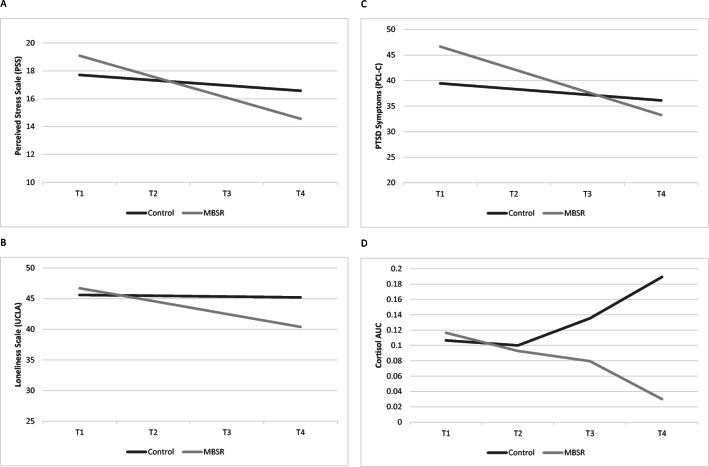
Background: Women veterans experience higher levels of stress-related symptoms than their civilian counterparts. Psychological stress is associated with greater inflammation and may increase risk for cardiovascular disease (CVD). Mindfulness-based stress reduction (MBSR) has been found to improve psychological well-being in other populations but no randomized controlled trials (RCT) have been conducted examining the impact of MBSR on well-being and inflammation in women veterans at risk for CVD. Objective: Determine the effectiveness of MBSR in improving psychological well-being, cortisol, and inflammation associated with CVD in women veterans. Design: The design is a RCT comparing MBSR to an active control condition (ACC) consisting of a health education program. Participants: Women veterans (N=164) with risk factors for CVD from the Chicagoland area participated in the study. Intervention: An 8-week MBSR program with weekly 2.5-h classes was compared to an ACC consisting of an 8-week health promotion education program with weekly 2.5-h classes. Main Measures: The outcomes were psychological well-being [perceived stress, depressive symptoms, loneliness, and post-traumatic stress disorder (PTSD)] symptoms and stress-related markers, including diurnal salivary cortisol and cytokines interleukin-6 (IL-6) and interferon gamma (IFN-γ). Data were collected at baseline, 4 weeks (mid-point of intervention), 8 weeks (completion of intervention), and 6 months after completion of MBSR or ACC. Key Results: Compared to the ACC, women who participated in MBSR reported less perceived stress, loneliness, and symptoms of PTSD. Although there were no significant differences between groups or changes over time in IL-6 or IFN-γ, participants in the MBSR program demonstrated a more rapid decline in diurnal salivary cortisol as compared to those in the ACC. Conclusions: MBSR was found to improve psychological well-being and decrease diurnal salivary cortisol in women veterans at risk for CVD. Health care providers may consider MBSR for women veterans as a means by which to improve their psychological well-being.
Overview
The claims and statistics of this paper haven’t been checked yet.
Free: it reads the open-access text and checks the first 5 claims that cite a source we can check. Create a free account to check every claim.
Integrity signals
Registry
Cites
Statistics
Figures
Verification
Claims the paper makes
The claims and statistics of this paper haven’t been checked yet.
Free: it reads the open-access text and checks the first 5 claims that cite a source we can check. Create a free account to check every claim.
Claims other papers make about this one
Each is checked against this paper’s own text: does it say what the citing paper says it does?
The source backs part of the claim, not all of it — or backs it for a different population, condition or comparison.
In the citing paper
“There is also evidence that psychological in terventions can influence cortisol levels in patients with cancer, psy chiatric conditions and other health issues (e.g., Antoni et al., 2023, Saban et al., 2022).”
From Effectiveness of stress management interventions to change cortisol levels: a systematic review and meta-analysis. (2024) · cites this paper as Saban et al., 2022
Experimental — accuracy not yet measured
Self-check
Percentages, sums and reported differences re-computed from the paper’s own numbers.
The self-check needs the paper’s full text.
Citations
Cites
The CES-D Scale: A Self-Report Depression Scale for Research in the General Population
Radloff, L. S. (1977) · Applied Psychological Measurement · doi:10.1177/014662167700100306 · Cited by 53,267
A Global Measure of Perceived Stress
Cohen, S., Kamarck, T., & Mermelstein, R. (1983) · Journal of Health and Social Behavior · doi:10.2307/2136404 · Cited by 32,807 · cited 1×
“The PSS is a measure of the degree to which situations in one’s life are considered to be stressful.(29) It contains ten questions with five responses on a Likert-type scale.”
BackgroundHierarchical Linear Models: Applications and Data Analysis Methods
Davidian, M. (2003) · Journal of the American Statistical Association · doi:10.1198/jasa.2003.s288 · Cited by 13,723
Applied Longitudinal Data Analysis: Modeling Change and Event Occurrence
Singer, J. D., & Willett, J. B. (2003) · doi:10.1093/acprof:oso/9780195152968.001.0001 · Cited by 10,647
Using Self-Report Assessment Methods to Explore Facets of Mindfulness
Baer, R. A., Smith, G. T., Hopkins, J., Krietemeyer, J., & Toney, L. (2006) · Assessment · doi:10.1177/1073191105283504 · Cited by 7,511
UCLA loneliness scale (version 3): reliability, validity, and factor structure
Russell, D. W. (1996) · Journal of Personality Assessment · doi:10.1207/s15327752jpa6601_2 · Cited by 5,800 · cited 1×
“The UCLALoneliness Scale is a 20item scale that assesses the subjective level of social isolation using a 4-point Likert-type scale.(31) Scores range from 0 to 60 with higher scores suggesting greater loneliness.”
MethodChronic inflammation in the etiology of disease across the life span
Furman, D., Campisi, J., Verdin, E., Carrera-Bastos, P., Targ, S., Franceschi, C., Ferrucci, L., Gilroy, D. W., Fasano, A., Miller, G. W., et al. (2019) · Nature Medicine · doi:10.1038/s41591-019-0675-0 · Cited by 4,915
Effects of mindfulness on psychological health: A review of empirical studies
Keng, S.-L., Smoski, M. J., & Robins, C. J. (2011) · Clinical Psychology Review · doi:10.1016/j.cpr.2011.04.006 · Cited by 2,687
Advances in Personal Relationships
Hall, J. A. (2020) · Cited by 1,978
Mindfulness-based stress reduction for healthy individuals: A meta-analysis
Khoury, B., Sharma, M., Rush, S. E., & Fournier, C. (2015) · Journal of Psychosomatic Research · doi:10.1016/j.jpsychores.2015.03.009 · Cited by 1,617
The SAGE Handbook of Quantitative Methodology for the Social Sciences
Kaplan, D. (2004) · doi:10.4135/9781412986311 · Cited by 1,454
(1990) · Cited by 1,282
Clinical evaluation of a measure to assess combat exposure.
Keane, T. M., Fairbank, J. A., Caddell, J. M., Zimering, R. T., Taylor, K. L., & Mora, C. A. (1989) · Psychological Assessment · doi:10.1037//1040-3590.1.1.53 · Cited by 926
Schnurr, P. P., Friedman, M. J., Engel, C. C., Foa, E. B., Shea, M. T., Chow, B. K., Resick, P. A., Thurston, V., Orsillo, S. M., Haug, R., et al. (2007) · JAMA · doi:10.1001/jama.297.8.820 · Cited by 813
Cherkin, D. C., Sherman, K. J., Balderson, B. H., Cook, A. J., Anderson, M. L., Hawkes, R. J., Hansen, K. E., & Turner, J. A. (2016) · JAMA · doi:10.1001/jama.2016.2323 · Cited by 729
Biegel, G. M., Brown, K. W., Shapiro, S. L., & Schubert, C. M. (2009) · Journal of Consulting and Clinical Psychology · doi:10.1037/a0016241 · Cited by 656
Creswell, J. D., Irwin, M. R., Burklund, L. J., Lieberman, M. D., Arevalo, J. M. G., Ma, J., Breen, E. C., & Cole, S. W. (2012) · Brain, Behavior, and Immunity · doi:10.1016/j.bbi.2012.07.006 · Cited by 607
PTSD Checklist—Civilian Version
Weathers, F. W., Litz, B., Herman, D., Juska, J., & Keane, T. (2012) · PsycTESTS Dataset · doi:10.1037/t02622-000 · Cited by 527
Witek-Janusek, L., Albuquerque, K., Chroniak, K. R., Chroniak, C., Durazo-Arvizu, R., & Mathews, H. L. (2008) · Brain, Behavior, and Immunity · doi:10.1016/j.bbi.2008.01.012 · Cited by 506 · cited 2×
“Abbreviations: PSS Perceived Stress Scale; UCLA-LS Loneliness Scale; PCL-C PTSD Checklist Civilian Version; CES-D The Center for Epidemiologic Studies Depression; SPS Social Provisions Scale; IL-6 and INF-γ are pg/ml of plasma production; AUC area under the curve; SE standard error of the coefficient Abbreviations: FF…”
BackgroundSelf-citationTurner, A. I., Smyth, N., Hall, S. J., Torres, S. J., Hussein, M., Jayasinghe, S. U., Ball, K., & Clow, A. J. (2020) · Psychoneuroendocrinology · doi:10.1016/j.psyneuen.2020.104599 · Cited by 503
Raudenbush, S. W., & Liu, X.-F. (2001) · Psychological Methods · doi:10.1037/1082-989x.6.4.387 · Cited by 455 · cited 1×
“The standardized effect sizes for polynomial trend were computed using the formula, δ = β11/ √ τ11.(39) To examine whether group differences were statistically significant at T4, post hoc analyses were performed for each outcome, by re-centering the variable of time to the last assessment.”
MethodSephton, S. E., Salmon, P., Weissbecker, I., Ulmer, C., Floyd, A., Hoover, K., & Studts, J. L. (2007) · Arthritis Care & Research · doi:10.1002/art.22478 · Cited by 387
Levine, G. N., Lange, R. A., Bairey‐Merz, C. N., Davidson, R. J., Jamerson, K., Mehta, P. K., Michos, E. D., Norris, K., Ray, I. B., Saban, K. L., et al. (2017) · Journal of the American Heart Association · doi:10.1161/jaha.117.002218 · Cited by 330
Self-citationKearney, D. J., McDermott, K., Malte, C., Martinez, M., & Simpson, T. L. (2012) · Journal of Clinical Psychology · doi:10.1002/jclp.20853 · Cited by 291 · cited 1×
“Findings from the few studies of MBSR in veteran populations revealed MBSR to reduce symptoms of depression and lower diurnal salivary cortisol, a stress-related hormone, in veterans experiencing post-traumatic stress disorder (PTSD).(18,19) Similarly, others reported MBSR to improve PTSD symptoms in veterans.”
BackgroundBritton, W. B., Shahar, B., Szepsenwol, O., & Jacobs, W. J. (2012) · Behavior Therapy · doi:10.1016/j.beth.2011.08.006 · Cited by 268
Meditation for posttraumatic stress: systematic review and meta-analysis
Hilton, L., Maher, A. R., Colaiaco, B., Apaydin, E., Sorbero, M. E., Booth, M., Shanman, R. M., & Hempel, S. (2017) · Psychological Trauma: Theory, Research, Practice, and Policy · doi:10.1037/tra0000180 · Cited by 196
Gross, C. R., Kreitzer, M. J., Thomas, W., Reilly-Spong, M., Cramer–Bornemann, M., Nyman, J. A., Frazier, P. A., & Ibrahim, H. N. (2010) · PubMed · Cited by 186
Witek‐Janusek, L., Gabram, S., & Mathews, H. L. (2006) · Psychoneuroendocrinology · doi:10.1016/j.psyneuen.2006.09.011 · Cited by 148
Self-citationCash, E., Salmon, P., Weissbecker, I., Rebholz, W. N., Bayley-Veloso, R., Zimmaro, L. A., Floyd, A., Dedert, E., & Sephton, S. E. (2015) · Annals of Behavioral Medicine · doi:10.1007/s12160-014-9665-0 · Cited by 146 · cited 4×
“Abbreviations: PSS Perceived Stress Scale; UCLA-LS Loneliness Scale; PCL-C PTSD Checklist Civilian Version; CES-D The Center for Epidemiologic Studies Depression; SPS Social Provisions Scale; IL-6 and INF-γ are pg/ml of plasma production; AUC area under the curve; SE standard error of the coefficient Abbreviations: FF…”
BackgroundInfluentialWitek Janusek, L., Tell, D., & Mathews, H. L. (2019) · Brain, Behavior, and Immunity · doi:10.1016/j.bbi.2019.04.012 · Cited by 143
Self-citationBrown, K. W., Coogle, C. L., & Wegelin, J. (2016) · Aging & Mental Health · doi:10.1080/13607863.2015.1065790 · Cited by 126 · cited 1×
“Participants kept samples refrigerated in their homes and brought samples to the clinic the day following collection.(28) Participants were provided stipends for each data collection ($50 each) and each class attended ($15 each).”
MethodPossemato, K., Bergen-Cico, D., Treatman, S., Allen, C., Wade, M., & Pigeon, W. (2016) · Journal of Clinical Psychology · doi:10.1002/jclp.22241 · Cited by 100 · cited 1×
“Similarly, others reported MBSR to improve PTSD symptoms in veterans.(20,21) However, no studies were found that examined MBSR in women veterans to determine the efficacy in reducing symptoms and biological indicators of stress (e.”
Stephenson, K. R., Simpson, T. L., Martinez, M. E., & Kearney, D. J. (2017) · Journal of Clinical Psychology · doi:10.1002/jclp.22323 · Cited by 89 · cited 1×
“Similarly, others reported MBSR to improve PTSD symptoms in veterans.(20,21) However, no studies were found that examined MBSR in women veterans to determine the efficacy in reducing symptoms and biological indicators of stress (e.”
Reductions in cortisol associated with primary care brief mindfulness program for veterans with PTSD
Bergen-Cico, D., Possemato, K., & Pigeon, W. (2014) · Medical Care · doi:10.1097/mlr.0000000000000224 · Cited by 84 · cited 1×
“Findings from the few studies of MBSR in veteran populations revealed MBSR to reduce symptoms of depression and lower diurnal salivary cortisol, a stress-related hormone, in veterans experiencing post-traumatic stress disorder (PTSD).(18,19) Similarly, others reported MBSR to improve PTSD symptoms in veterans.”
BackgroundKhusid, M. A., & Vythilingam, M. (2016) · Military Medicine · doi:10.7205/milmed-d-14-00677 · Cited by 77 · cited 4×
“Abbreviations: PSS Perceived Stress Scale; UCLA-LS Loneliness Scale; PCL-C PTSD Checklist Civilian Version; CES-D The Center for Epidemiologic Studies Depression; SPS Social Provisions Scale; IL-6 and INF-γ are pg/ml of plasma production; AUC area under the curve; SE standard error of the coefficient Abbreviations: FF…”
ResultInfluentialSzanton, S. L., Wenzel, J., Connolly, A. B., & Piferi, R. L. (2011) · BMC Complementary and Alternative Medicine · doi:10.1186/1472-6882-11-44 · Cited by 72 · cited 1×
“Previously published studies examining MBSR have included mostly White samples.(53) To our A”
BackgroundMomeni, J., Omidi, A., Raygan, F., & Akbari, H. (2016) · Journal of the American Society of Hypertension · doi:10.1016/j.jash.2016.07.007 · Cited by 71
Lehavot, K., Goldberg, S. B., Chen, J. A., Katon, J. G., Glass, J. E., Fortney, J. C., Simpson, T. L., & Schnurr, P. P. (2018) · Social Psychiatry and Psychiatric Epidemiology · doi:10.1007/s00127-018-1550-x · Cited by 69
Adverse Childhood Experiences and Adult Health Outcomes Among Veteran and Non-Veteran Women
McCauley, H. L., Blosnich, J. R., & Dichter, M. E. (2015) · Journal of Women s Health · doi:10.1089/jwh.2014.4997 · Cited by 65
Davis, L. L., Whetsell, C., Hamner, M. B., Carmody, J., ROTHBAUM, B. O., Allen, R. S., Bartolucci, A., Southwick, S. M., & Bremner, J. D. (2018) · Psychiatric Research and Clinical Practice · doi:10.1176/appi.prcp.20180002 · Cited by 62
Cardiovascular Care in Women Veterans
Han, J. K., Yano, E. M., Watson, K. E., & Ebrahimi, R. (2019) · Circulation · doi:10.1161/circulationaha.118.037748 · Cited by 58
A randomized, controlled trial of mindfulness-based stress reduction in HIV infection
Hecht, F. M., Moskowitz, J. T., Moran, P., Epel, E. S., Bacchetti, P., Acree, M., Kemeny, M. E., Mendes, W. B., Duncan, L. G., Weng, H., et al. (2018) · Brain Behavior and Immunity · doi:10.1016/j.bbi.2018.05.017 · Cited by 52 · cited 2×
“Only a few previous studies have assessed IL-6 and IFN-γ in relation to MBSR with some identifying a decrease in IL-6 and increase in IFN-γ production 1 month following an 8-week MBSR program16 and others finding no changes in IL-6.”
ResultCardiovascular Disease Risk Factors Among Women Veterans at VA Medical Facilities
Vimalananda, V. G., Miller, D. R., Christiansen, C. L., Wang, W., Tremblay, P. G., & Fincke, B. G. (2013) · Journal of General Internal Medicine · doi:10.1007/s11606-013-2381-9 · Cited by 51
Gordon, J. L., Halleran, M., Beshai, S., Eisenlohr-Moul, T. A., Frederick, J., & Campbell, T. S. (2021) · Psychoneuroendocrinology · doi:10.1016/j.psyneuen.2021.105277 · Cited by 48
Martinez, M. E., Kearney, D. J., Simpson, T., Felleman, B. I., Bernardi, N., & Sayre, G. (2015) · The Journal of Alternative and Complementary Medicine · doi:10.1089/acm.2014.0324 · Cited by 43
Golden, S. H., Sánchez, B. N., Wu, M., Champaneri, S., Diez Roux, A. V., Seeman, T., & Wand, G. S. (2013) · Psychoneuroendocrinology · doi:10.1016/j.psyneuen.2013.06.032 · Cited by 43
O’Day, E. B., Butler, R. M., Morrison, A. S., Goldin, P. R., Gross, J. J., & Heimberg, R. G. (2021) · Journal of Anxiety Disorders · doi:10.1016/j.janxdis.2021.102362 · Cited by 39
A Systematic Review of Therapeutic Interventions and Management Strategies for Gulf War Illness
Nugent, S. M., Freeman, M., Ayers, C. K., Winchell, K. A., Press, A. M., O'Neil, M. E., Paynter, R. A., & Kansagara, D. L. (2020) · Military Medicine · doi:10.1093/milmed/usaa260 · Cited by 35
Marchand, W. R., Sandoval, K., Lackner, R. J., Parker, S. C., Herrmann, T. S., Yabko, B. A., Velasquez, T., Lewis, L., & Butler, J. M. (2020) · Complementary Therapies in Clinical Practice · doi:10.1016/j.ctcp.2020.101274 · Cited by 34 · cited 1×
“In addition, women have been underrepresented in studies examining MBSR in veterans with a recent metaanalysis finding that 85% of the sample across all studies reviewed were male.(22) Furthermore, findings from a qualitative study suggest that women veterans prefer “women-only” MBSR groups.”
BackgroundJuul, L., Pallesen, K. J., Bjerggaard, M., Nielsen, C., & Fjorback, L. O. (2020) · BMC Public Health · doi:10.1186/s12889-020-08470-6 · Cited by 29
Tyra, A. T., Soto, S. M., Young, D. A., & Ginty, A. T. (2020) · International Journal of Psychophysiology · doi:10.1016/j.ijpsycho.2020.08.006 · Cited by 28
The Effectiveness of Mindfulness-Based-Stress-Reduction for Military Cadets on Perceived Stress
Chen, Y.-H., Chiu, F.-C., Lin, Y.-N., & Chang, Y.-L. (2021) · Psychological Reports · doi:10.1177/00332941211010237 · Cited by 19
Veterans’ interests, perceptions, and use of mindfulness
Herrmann, T. S., Marchand, W. R., Yabko, B. A., Lackner, R. J., Beckstrom, J. L., & Parker, A. (2020) · SAGE Open Medicine · doi:10.1177/2050312120938226 · Cited by 7 · cited 1×
“Other investigators have suggested offering MBSR to veterans in conjunction with other pleasurable activities, such as recreational sailing.(55) Furthermore, providing MBSR training to clinicians within the VA may also allow MBSR to be offered more widely.”
Background(2002)
Research works printed but not linked: 1
- Witek-Janusek L Albuquerque K Chroniak KR Chroniak C Durazo-Arvizu R Mathews HL Effect of mindfulness based stress reduction on immune function, quality of life and coping in women newly diagnosed with early stage breast cancer Brain, Behavior, & Immunity. 2008 22 6 969 81 10.1016/j.bbi.2008.01.012 18359186 PMC2586059 · DOI · Paper page
Cited by
Rogerson, O., Wilding, S., Prudenzi, A., & O’Connor, D. B. (2024) · Psychoneuroendocrinology · doi:10.1016/j.psyneuen.2023.106415 · Cited by 87
Crovetto, F., Nakaki, A., Arranz, A., Borras, R., Vellvé, K., Paules, C., Boutet, M. L., Castro-Barquero, S., Freitas, T., Casas, R., et al. (2023) · JAMA Network Open · doi:10.1001/jamanetworkopen.2023.30255 · Cited by 41
Ballesio, A., Zagaria, A., Vacca, M., Pariante, C. M., & Lombardo, C. (2023) · Brain Behavior and Immunity · doi:10.1016/j.bbi.2023.05.006 · Cited by 32
Tan, L., Strudwick, J., Deady, M., Bryant, R. A., & Harvey, S. B. (2023) · BMJ Open · doi:10.1136/bmjopen-2022-064758 · Cited by 34
Lee, S.-C., Tsai, P.-H., Yu, K.-H., & Chan, T.-M. (2025) · Healthcare · doi:10.3390/healthcare13080952 · Cited by 25
Metadata
- Authors
- Saban, K. L., Collins, E. G., Mathews, H. L., Bryant, F. B., Tell, D., Gonzalez, B., Bhoopalam, S., Chroniak, C. P., & Janusek, L. W.
- Affiliations
- Loyola University Chicago (US)
- Edward Hines, Jr. VA Hospital (US)
- Corresponding author
- Saban, Karen L.
- ORCID
- Venue
- Journal of General Internal Medicine
- Published
- 2022-08-30
- Volume
- 37
- Issue
- S3
- Pages
- 751-761
- ISSN
- 0884-8734 (ISSN-L)
- 1525-1497
- PMC
- PMC9481828
- OpenAlex
- W4293685790
- Cited by
- 31
- References
- 54
- Citations by year
- 2026: 8 · 2025: 13 · 2024: 4 · 2023: 5 · 2022: 1
- FWCI
- 5.25
- Type
- journal article
- Language
- en
- Open access
- hybrid
- doi.org
- Licence
- cc-by
- creativecommons.org/licenses/by/4.0 (tdm)
- creativecommons.org/licenses/by/4.0 (vor)
- Locations
- Journal of General Internal Medicine (publishedVersion, cc-by)
- PubMed Central (publishedVersion, cc-by)
- PubMed (publishedVersion)
- Funders
- u.s. department of veterans affairs (HSR&D NRI 12-413)
- Topics
- Social Sciences › Psychology › Clinical Psychology › Mindfulness and Compassion Interventions
- Life Sciences › Neuroscience › Behavioral Neuroscience › Stress Responses and Cortisol
- Social Sciences › Psychology › Social Psychology › Psychological Well-being and Life Satisfaction
- Keywords
- mindfulness-based stress reduction, women veterans, psychological well-being, perceived stress, post-traumatic stress disorder, loneliness, depressive symptoms, inflammation, interleukin-6, interferon-gamma, cardiovascular risk, health promotion education
- MeSH terms
- Cardiovascular Diseases, Female, Humans, Hydrocortisone, Inflammation, Interferon-gamma, Stress, Psychological, Veterans, Interleukin-6, Cytokines, Treatment Outcome, Mindfulness
About these checks
Registry, retraction, Cites and statistics results are computed, not judged, with one exception: a printed reference that no index lists is read once by a model before it counts as a citation error. Claims are extracted by a model and kept only when their quote appears verbatim in the text; each cited source is then checked, with a model’s help, for whether it says what the claim relies on. Those verdicts can be wrong — read the claim’s quote and the cited source before relying on one.
Statistics and arithmetic are recomputed, not judged.
Confidence bands are shown only for fields calibrated on our annotated test set. None is calibrated yet, so no band is shown.
What counts as a claim ›How we measure confidence ›How we check this ›
Are you an author, or do you see a problem with this page? Request a review
Data sources
Bibliographic data: Semantic Scholar, OpenAlex, Crossref.
Contains information from the Semantic Scholar Academic Graph Datasets, made available under the ODC Attribution License (ODC-BY 1.0).
Semantic Scholar’s data is described in: Kinney, R., et al. (2023). The Semantic Scholar Open Data Platform. arXiv:2301.10140.
