

Ozone disrupts the communication between plants and insects in urban and suburban areas: an updated insight on plant volatiles
Open accessThe DOI matches its Crossref record; 161 of the 163 references it cites were found in a registry or an index.
Abstract
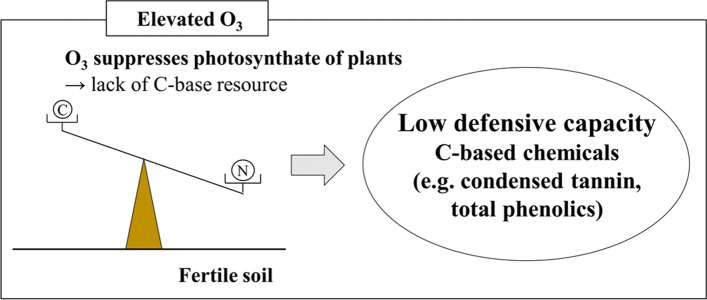
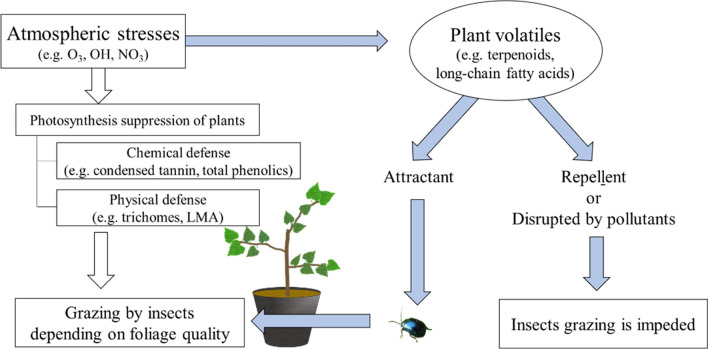
Plant–insect interactions are basic components of biodiversity conservation. To attain the international Sustainable Development Goals (SDGs), the interactions in urban and in suburban systems should be better understood to maintain the health of green infrastructure. The role of ground-level ozone (O 3) as an environmental stress disrupting interaction webs is presented. Ozone mixing ratios in suburbs are usually higher than in the center of cities and may reduce photosynthetic productivity at a relatively higher degree. Consequently, carbon-based defense capacities of plants may be suppressed by elevated O 3 more in the suburbs. However, contrary to this expectation, grazing damages by leaf beetles have been severe in some urban centers in comparison with the suburbs. To explain differences in grazing damages between urban areas and suburbs, the disruption of atmospheric communication signals by elevated O 3 via changes in plant-regulated biogenic volatile organic compounds and long-chain fatty acids are considered. The ecological roles of plant volatiles and the effects of O 3 from both a chemical and a biological perspective are presented. Ozone-disrupted plant volatiles should be considered to explain herbivory phenomena in urban and suburban systems.
Overview
The claims and statistics of this paper haven’t been checked yet.
Free: it reads the open-access text and checks the first 5 claims that cite a source we can check. Create a free account to check every claim.
Integrity signals
Registry
Cites
Statistics
Figures
Verification
Claims the paper makes
The claims and statistics of this paper haven’t been checked yet.
Free: it reads the open-access text and checks the first 5 claims that cite a source we can check. Create a free account to check every claim.
Claims other papers make about this one
Each is checked against this paper’s own text: does it say what the citing paper says it does?
The cited source says what the claim attributes to it.
In the citing paper
“For example, tropospheric O3 can destroy or change biogenic volatile chemicals and, thus, interfere with attraction of pollinators or pests to plants [135].”
From Changes in tropospheric air quality related to the protection of stratospheric ozone in a changing climate (2023) · cites this paper as [135]
Self-check
Percentages, sums and reported differences re-computed from the paper’s own numbers.
The self-check needs the paper’s full text.
Citations
Cites
Importance of pollinators in changing landscapes for world crops
Klein, A.-M., Vaissière, B. E., Cane, J. H., Steffan-Dewenter, I., Cunningham, S. A., Kremen, C., & Tscharntke, T. (2007) · Proceedings of the Royal Society B: Biological Sciences · doi:10.1098/rspb.2006.3721 · Cited by 7,176
Guenther, A., Karl, T., Harley, P., Wiedinmyer, C., Palmer, P. I., & Geron, C. (2006) · Atmospheric Chemistry and Physics · doi:10.5194/acp-6-3181-2006 · Cited by 4,603
The Dilemma of Plants: To Grow or Defend
Herms, D. A., & Mattson, W. J. (1992) · The Quarterly Review of Biology · doi:10.1086/417659 · Cited by 4,262
How many flowering plants are pollinated by animals?
Ollerton, J., Winfree, R., & Tarrant, S. (2011) · Oikos · doi:10.1111/j.1600-0706.2010.18644.x · Cited by 3,874
Causes and consequences of variation in leaf mass per area (LMA): a meta‐analysis
Poorter, H., Niinemets, Ü., Poorter, L., Wright, I. J., & Villar, R. (2009) · New Phytologist · doi:10.1111/j.1469-8137.2009.02830.x · Cited by 2,911
Carbon/Nutrient Balance of Boreal Plants in Relation to Vertebrate Herbivory
Bryant, J. P., Chapin, F. S., & Klein, D. R. (1983) · Oikos · doi:10.2307/3544308 · Cited by 2,497
Plant Immunity to Insect Herbivores
Howe, G. A., & Jander, G. (2008) · Annual Review of Plant Biology · doi:10.1146/annurev.arplant.59.032607.092825 · Cited by 2,427
Defensive Function of Herbivore-Induced Plant Volatile Emissions in Nature
Kessler, A., & Baldwin, I. T. (2001) · Science · doi:10.1126/science.291.5511.2141 · Cited by 2,182
Mechanisms of plant defense against insect herbivores
War, A. R., Paulraj, M. G., Ahmad, T., Buhroo, A. A., Hussain, B., Ignacimuthu, S., & Sharma, H. C. (2012) · Plant Signaling & Behavior · doi:10.4161/psb.21663 · Cited by 2,180
Arisz, S. A., van Wijk, R., Roels, W., Zhu, J.-K., Haring, M. A., & Munnik, T. (2013) · Frontiers in Plant Science · doi:10.3389/fpls.2013.00001 · Cited by 1,922
Li, Z., Song, Z., & Cornelis, J.-T. (2014) · Frontiers in Plant Science · doi:10.3389/fpls.2014.00529 · Cited by 1,912
Biogenic Volatile Organic Compounds (VOC): An Overview on Emission, Physiology and Ecology
Kesselmeier, J., & Staudt, M. (1999) · Journal of Atmospheric Chemistry · doi:10.1023/a:1006127516791 · Cited by 1,879
ENDANGERED MUTUALISMS: The Conservation of Plant-Pollinator Interactions
Kearns, C. A., Inouye, D. W., & Waser, N. M. (1998) · Annual Review of Ecology and Systematics · doi:10.1146/annurev.ecolsys.29.1.83 · Cited by 1,845
Schoonhoven, L. M., Jermy, T., & van Loon, J. J. A. (1998) · Springer eBooks · doi:10.1007/978-1-4899-3200-6 · Cited by 1,686 · cited 3×
“For example, trichomes interfere with insect mobility because of their morphology and also contribute to the depression effect of toxic chemicals such as phenolics that reduce the nutritional value of leaves (Matsuki et al. 2004; Schoonhoven et al. 2005; Karabourniotis et al. 2020).”
BackgroundInsect host location: a volatile situation
Bruce, T. J. A., Wadhams, L. J., & Woodcock, C. M. (2005) · Trends in Plant Science · doi:10.1016/j.tplants.2005.04.003 · Cited by 1,402
Gas-phase tropospheric chemistry of biogenic volatile organic compounds: a review
Atkinson, R., & Arey, J. (2003) · Atmospheric Environment · doi:10.1016/s1352-2310(03)00391-1 · Cited by 1,385
Herbivore-infested plants selectively attract parasitoids
De Moraes, C. M., Lewis, W. J., Paré, P. W., Alborn, H. T., & Tumlinson, J. H. (1998) · Nature · doi:10.1038/31219 · Cited by 1,319
Schoonhoven, L. M., Loon, J. J. A. V., & Dicke, M. (2005) · doi:10.1093/oso/9780198525943.001.0001 · Cited by 1,161
Effect of restricted emissions during COVID-19 on air quality in India
Sharma, S., Zhang, M., Anshika, Gao, J., Zhang, H., & Kota, S. H. (2020) · Science of The Total Environment · doi:10.1016/j.scitotenv.2020.138878 · Cited by 1,150
Indirect radiative forcing of climate change through ozone effects on the land-carbon sink
Sitch, S., Cox, P. M., Collins, W. J., & Huntingford, C. (2007) · Nature · doi:10.1038/nature06059 · Cited by 1,019
Caterpillar-induced nocturnal plant volatiles repel conspecific females
De Moraes, C. M., Mescher, M. C., & Tumlinson, J. H. (2001) · Nature · doi:10.1038/35069058 · Cited by 1,008
Multiple stress factors and the emission of plant VOCs
Holopainen, J. K., & Gershenzon, J. (2010) · Trends in Plant Science · doi:10.1016/j.tplants.2010.01.006 · Cited by 968
Plant Defense against Insect Herbivores
Fürstenberg-Hägg, J., Zagrobelny, M., & Bak, S. (2013) · International Journal of Molecular Sciences · doi:10.3390/ijms140510242 · Cited by 929
Amplified ozone pollution in cities during the COVID-19 lockdown
Sicard, P., De Marco, A., Agathokleous, E., Feng, Z., Xu, X., Paoletti, E., Rodriguez, J. J. D., & Calatayud, V. (2020) · Science of The Total Environment · doi:10.1016/j.scitotenv.2020.139542 · Cited by 802
Self-citationHeil, M., & Silva Bueno, J. C. (2007) · Proceedings of the National Academy of Sciences · doi:10.1073/pnas.0610266104 · Cited by 728
Guenther, A. (2000) · Atmospheric Environment · doi:10.1016/s1352-2310(99)00465-3 · Cited by 682
COVID-19 pandemic: Impacts on the air quality during the partial lockdown in São Paulo state, Brazil
Nakada, L. Y. K., & Urban, R. C. (2020) · Science of The Total Environment · doi:10.1016/j.scitotenv.2020.139087 · Cited by 656
Biogenic Hydrocarbons in the Atmospheric Boundary Layer: A Review
Fuentes, J. D., Gu, L., Lerdau, M., Atkinson, R., Baldocchi, D., Bottenheim, J. W., Ciccioli, P., Lamb, B., Geron, C., Guenther, A., et al. (2000) · Bulletin of the American Meteorological Society · doi:10.1175/1520-0477(2000)081<1537:bhitab>2.3.co;2 · Cited by 614
Blüthgen, N., & Klein, A.-M. (2011) · Basic and Applied Ecology · doi:10.1016/j.baae.2010.11.001 · Cited by 581
The specificity of herbivore-induced plant volatiles in attracting herbivore enemies
Clavijo McCormick, A., Unsicker, S. B., & Gershenzon, J. (2012) · Trends in Plant Science · doi:10.1016/j.tplants.2012.03.012 · Cited by 566
Contribution of Pollinator-Mediated Crops to Nutrients in the Human Food Supply
Eilers, E. J., Kremen, C., Smith Greenleaf, S., Garber, A. K., & Klein, A.-M. (2011) · PLoS ONE · doi:10.1371/journal.pone.0021363 · Cited by 422
Agathokleous, E., Feng, Z., Oksanen, E., Sicard, P., Wang, Q., Saitanis, C. J., Araminiene, V., Blande, J. D., Hayes, F., Calatayud, V., et al. (2020) · Science Advances · doi:10.1126/sciadv.abc1176 · Cited by 382
Self-citationTropospheric Ozone Assessment Report: Database and metrics data of global surface ozone observations
Schultz, M. G., Schröder, S., Lyapina, O., Cooper, O. R., Galbally, I., Petropavlovskikh, I., von Schneidemesser, E., Tanimoto, H., Elshorbany, Y., Naja, M., et al. (2017) · Elementa: Science of the Anthropocene · doi:10.1525/elementa.244 · Cited by 365
Feng, Z., De Marco, A., Anav, A., Gualtieri, M., Sicard, P., Tian, H., Fornasier, F., Tao, F., Guo, A., & Paoletti, E. (2019) · Environment International · doi:10.1016/j.envint.2019.104966 · Cited by 361
Karabourniotis, G., Liakopoulos, G., Nikolopoulos, D., & Bresta, P. (2020) · Journal of Forestry Research · doi:10.1007/s11676-019-01034-4 · Cited by 332
Continuous scanning for Bragg coherent X-ray imaging
Li, N., Dupraz, M., Wu, L., Leake, S. J., Resta, A., Carnis, J., Labat, S., Almog, E., Rabkin, E., Favre-Nicolin, V., et al. (2020) · Scientific Reports · doi:10.1038/s41598-020-69678-5 · Cited by 321
Koike, T. (1988) · Plant Species Biology · doi:10.1111/j.1442-1984.1988.tb00173.x · Cited by 306 · cited 4×
“Low LMA values mean that leaves may be easily grazed and high values that leaves may be more protected (Yamasaki and Kikuzawa 2003; Howe and Jander 2008; War et al.”
BackgroundSelf-citationde la Riva, E. G., Olmo, M., Poorter, H., Ubera, J. L., & Villar, R. (2016) · PLOS ONE · doi:10.1371/journal.pone.0148788 · Cited by 287
Ozone effects on plants in natural ecosystems
Grulke, N. E., & Heath, R. L. (2020) · Plant Biology · doi:10.1111/plb.12971 · Cited by 272
The Complexity of Factors Driving Volatile Organic Compound Emissions by Plants
Peñuelas, J., & Llusià, J. (2001) · Biologia plantarum · doi:10.1023/a:1013797129428 · Cited by 265
Tian, D., Tooker, J., Peiffer, M., Chung, S. H., & Felton, G. W. (2012) · Planta · doi:10.1007/s00425-012-1651-9 · Cited by 263
Bolter, C. J., Dicke, M., Van Loon, J. J. A., Visser, J. H., & Posthumus, M. A. (1997) · Journal of Chemical Ecology · doi:10.1023/b:joec.0000006385.70652.5e · Cited by 261
Lindroth, R. L. (2010) · Journal of Chemical Ecology · doi:10.1007/s10886-009-9731-4 · Cited by 256 · cited 1×
“A study reported that damages by herbivores are responsible for losses of net primary production up to 15% in temperate forests (Lindroth 2010).”
BackgroundMetabolic engineering of plant volatiles
Dudareva, N., & Pichersky, E. (2008) · Current Opinion in Biotechnology · doi:10.1016/j.copbio.2008.02.011 · Cited by 255
Paoletti, E., De Marco, A., Beddows, D. C. S., Harrison, R. M., & Manning, W. J. (2014) · Environmental Pollution · doi:10.1016/j.envpol.2014.04.040 · Cited by 241
Plant volatiles in polluted atmospheres: stress responses and signal degradation
BLANDE, J. D., HOLOPAINEN, J. K., & NIINEMETS, Ü. (2014) · Plant, Cell & Environment · doi:10.1111/pce.12352 · Cited by 211
Plant Volatile Organic Compounds (VOCs) in Ozone (O3) Polluted Atmospheres: The Ecological Effects
Pinto, D. M., Blande, J. D., Souza, S. R., Nerg, A.-M., & Holopainen, J. K. (2010) · Journal of Chemical Ecology · doi:10.1007/s10886-009-9732-3 · Cited by 201
Himanen, S. J., Blande, J. D., Klemola, T., Pulkkinen, J., Heijari, J., & Holopainen, J. K. (2010) · New Phytologist · doi:10.1111/j.1469-8137.2010.03220.x · Cited by 195
Gabbiadini, A., Riva, P., Andrighetto, L., Volpato, C., & Bushman, B. J. (2016) · PLoS ONE · doi:10.1371/journal.pone.0152121 · Cited by 184
Where do herbivore-induced plant volatiles go?
Holopainen, J. K., & Blande, J. D. (2013) · Frontiers in Plant Science · doi:10.3389/fpls.2013.00185 · Cited by 173 · cited 6×
“In addition, oxidative products via reaction can show repellent effects to some insects (Glinwood et al. 2003; Mishra and Sihag 2010; Holopainen and Blande 2013), thus, the entire ecosystem may be affected by O3 via BVOCs communication.”
BackgroundInfluentialBrilli, F., Ciccioli, P., Frattoni, M., PRESTININZI, M., Spanedda, A. F., & Loreto, F. (2009) · Plant Cell & Environment · doi:10.1111/j.1365-3040.2009.01948.x · Cited by 172
Pinto‐Zevallos, D. M., Blande, J. D., Nykänen, R., Dong, W., Nerg, A., & Holopainen, J. K. (2007) · Journal of Chemical Ecology · doi:10.1007/s10886-007-9255-8 · Cited by 172
Response of predatory mites with different rearing histories to volatiles of uninfested plants
Takabayashi, J., & Dicke, M. (1992) · Entomologia Experimentalis et Applicata · doi:10.1111/j.1570-7458.1992.tb01608.x · Cited by 164
Molecular basis of natural variation and environmental control of trichome patterning
Hauser, M.-T. (2014) · Frontiers in Plant Science · doi:10.3389/fpls.2014.00320 · Cited by 162 · cited 1×
“2006; Hauser 2014; Oksanen 2018).”
Agathokleous, E. (2017) · Ecotoxicology and Environmental Safety · doi:10.1016/j.ecoenv.2017.12.003 · Cited by 160 · cited 1×
“Based on the hormetic model (Agathokleous 2018, 2019a), low O3 concentrations, (slightly above the concentrations that plants are adapted to) can induce positive effects, including enhanced photosynthesis, and improved photosystem functioning, resulting in higher leaf areas and/or enhancement of…”
BackgroundSelf-citationAkimoto, H., Mori, Y., Sasaki, K., Nakanishi, H., Ohizumi, T., & Itano, Y. (2014) · Atmospheric Environment · doi:10.1016/j.atmosenv.2014.12.001 · Cited by 159
Holton, M. K., Lindroth, R. L., & Nordheim, E. V. (2003) · Oecologia · doi:10.1007/s00442-003-1351-z · Cited by 152
Matyssek, R., Wieser, G., Calfapietra, C., VRIES, W. D., Dizengremel, P., Ernst, D., Jolivet, Y., Mikkelsen, T. N., Mohren, G. M. J., Thiec, D. L., et al. (2011) · Environmental Pollution · doi:10.1016/j.envpol.2011.07.007 · Cited by 148
Kim, S., Karl, T., Guenther, A., Tyndall, G. S., Orlando, J. J., Harley, P. C., Rasmussen, R. A., & Apel, E. C. (2010) · Atmospheric chemistry and physics · doi:10.5194/acp-10-1759-2010 · Cited by 144
Volatile organic compounds from Italian vegetation and their interaction with ozone
Calfapietra, C., Fares, S., & Loreto, F. (2008) · Environmental Pollution · doi:10.1016/j.envpol.2008.09.048 · Cited by 141
Enshaeifar, S., Zoha, A., Markides, A., Skillman, S., Acton, S. T., Elsaleh, T., Hassanpour, M., Ahrabian, A., Kenny, M., Klein, S., et al. (2018) · PLOS ONE · doi:10.1371/journal.pone.0195605 · Cited by 137
Hamilton, J. G., Dermody, O., Aldea, M., Zangerl, A. R., Rogers, A., Berenbaum, M. R., & Delucia, E. H. (2005) · Environmental Entomology · doi:10.1603/0046-225x-34.2.479 · Cited by 135
Ozone degrades floral scent and reduces pollinator attraction to flowers
Farré‐Armengol, G., Peñuelas, J., Li, T., Yli‐Pirilä, P., Filella, I., Llusia, J., & Blande, J. D. (2016) · New Phytologist · doi:10.1111/nph.13620 · Cited by 134
Feng, Z., Yuan, X., Fares, S., Loreto, F., Li, P., Hoshika, Y., & Paoletti, E. (2019) · Plant, Cell & Environment · doi:10.1111/pce.13535 · Cited by 130
Agathokleous, E., Belz, R. G., Calatayud, V., De Marco, A., Hoshika, Y., Kitao, M., Saitanis, C. J., Sicard, P., Paoletti, E., & Calabrese, E. J. (2019) · Science of The Total Environment · doi:10.1016/j.scitotenv.2018.08.264 · Cited by 124
Self-citationCopolovici, L. O., Kännaste, A., Remmel, T., Vislap, V., & Niinemets, Ü. (2010) · Journal of Chemical Ecology · doi:10.1007/s10886-010-9897-9 · Cited by 119
Air pollutants degrade floral scents and increase insect foraging times
Fuentes, J. D., Chamecki, M., Roulston, T. H., Chen, B., & Pratt, K. R. (2016) · Atmospheric Environment · doi:10.1016/j.atmosenv.2016.07.002 · Cited by 116
Blande, J. D., Tiiva, P., Oksanen, E. J., & Holopainen, J. K. (2007) · Global Change Biology · doi:10.1111/j.1365-2486.2007.01453.x · Cited by 115
Li, S., Tosens, T., Harley, P. C., Jiang, Y., Kanagendran, A., Grosberg, M., Jaamets, K., & Niinemets, Ü. (2018) · Plant, Cell & Environment · doi:10.1111/pce.13128 · Cited by 110
Host plant location by Chrysomelidae
Fernández, P. C., & Hilker, M. (2006) · Basic and Applied Ecology · doi:10.1016/j.baae.2006.05.001 · Cited by 108
Unravelling the functions of biogenic volatiles in boreal and temperate forest ecosystems
Šimpraga, M., Ghimire, R. P., Van Der Straeten, D., Blande, J. D., Kasurinen, A., Sorvari, J., Holopainen, T., Adriaenssens, S., Holopainen, J. K., & Kivimäenpää, M. (2019) · European Journal of Forest Research · doi:10.1007/s10342-019-01213-2 · Cited by 107
Shimoda, T., Takabayashi, J., Ashihara, W., & Takafuji, A. (1997) · Journal of Chemical Ecology · doi:10.1023/b:joec.0000006487.49221.df · Cited by 105
Language of plants: Where is the word?
Šimpraga, M., Takabayashi, J., & Holopainen, J. K. (2016) · Journal of Integrative Plant Biology · doi:10.1111/jipb.12447 · Cited by 104
Llusià, J., Peñuelas, J., & Gimeno, B. (2002) · Atmospheric Environment · doi:10.1016/s1352-2310(02)00321-7 · Cited by 101
Effects of air pollution on biogenic volatiles and ecological interactions
McFrederick, Q. S., Fuentes, J. D., Roulston, T. H., Kathilankal, J. C., & Lerdau, M. (2009) · Oecologia · doi:10.1007/s00442-009-1318-9 · Cited by 101
Calatayud, Á., Iglesias, D. J., Talón, M., & Barreno, E. (2003) · Plant Physiology and Biochemistry · doi:10.1016/s0981-9428(03)00123-2 · Cited by 100
Air pollution monitoring and tree and forest decline in East Asia: A review
Takahashi, M., Feng, Z., Алексеевна, М. Т., Kalugina, O. V., Шергина, О. В., Afanasyeva, L. V., Kueh, R. J. H., Majid, N. M. A., & Sase, H. (2020) · The Science of The Total Environment · doi:10.1016/j.scitotenv.2020.140288 · Cited by 100
Nationwide ground-level ozone measurements in China suggest serious risks to forests
Li, P., De Marco, A., Feng, Z., Anav, A., Zhou, D., & Paoletti, E. (2018) · Environmental Pollution · doi:10.1016/j.envpol.2017.11.002 · Cited by 99
Takabayashi, J., & Shiojiri, K. (2019) · Current Opinion in Insect Science · doi:10.1016/j.cois.2019.01.003 · Cited by 99
Christen, V., & Fent, K. (2017) · Environmental Pollution · doi:10.1016/j.envpol.2017.04.003 · Cited by 95
Kopper, B. J., & Lindroth, R. L. (2003) · Oecologia · doi:10.1007/s00442-002-1090-6 · Cited by 94
Monitoring Sterile and Wild Insects in Area-Wide Integrated Pest Management Programmes
Vreysen, M. J. B. (2005) · Springer eBooks · doi:10.1007/1-4020-4051-2_12 · Cited by 93 · cited 1×
“Furthermore, understanding the mechanism via plant volatiles will provide a perspective for other initiatives such as integrated pest management (IPM) (Vreysen 2005).”
BackgroundOne species, many terpenes: matching chemical and biological diversity
Loreto, F., Bagnoli, F., & Fineschi, S. (2009) · Trends in Plant Science · doi:10.1016/j.tplants.2009.06.003 · Cited by 90
Shang, B., Feng, Z., Li, P., Yuan, X., Xu, Y., & Calatayud, V. (2017) · Science of The Total Environment · doi:10.1016/j.scitotenv.2017.06.083 · Cited by 89
Is Contact Nucleation Caused by Pressure Perturbation?
Yang, F., Cantrell, W., Kostinski, A. B., Shaw, R. A., & Vogelmann, A. M. (2019) · Atmosphere · doi:10.3390/atmos11010001 · Cited by 88
Association mapping of plant resistance to insects
Kloth, K. J., Thoen, M. P. M., Bouwmeester, H. J., Jongsma, M. A., & Dicke, M. (2012) · Trends in Plant Science · doi:10.1016/j.tplants.2012.01.002 · Cited by 87
Pinto‐Zevallos, D. M., Nerg, A., & Holopainen, J. K. (2007) · Journal of Chemical Ecology · doi:10.1007/s10886-007-9376-0 · Cited by 85
Costs of Resistance in Plants: From Theory to Evidence
Cipollini, D., Walters, D., & Voelckel, C. (2017) · Annual Plant Reviews online · doi:10.1002/9781119312994.apr0512 · Cited by 82
Temporal and spatial variations in leaf herbivory within a canopy of Fagus crenata
Yamasaki, M., & Kikuzawa, K. (2003) · Oecologia · doi:10.1007/s00442-003-1337-x · Cited by 80
A Review of Interactions between Insect Biological Control Agents and Semiochemicals
Sharma, A., Sandhi, R. K., & Reddy, G. V. P. (2019) · Insects · doi:10.3390/insects10120439 · Cited by 78
Induced BVOCs: how to bug our models?
Arneth, A., & Niinemets, Ü. (2010) · Trends in Plant Science · doi:10.1016/j.tplants.2009.12.004 · Cited by 77
The weakest link: Haploid honey bees are more susceptible to neonicotinoid insecticides
Friedli, A., Williams, G. R., Bruckner, S., Neumann, P., & Straub, L. (2019) · Chemosphere · doi:10.1016/j.chemosphere.2019.125145 · Cited by 75
Long-term change in the source contribution to surface ozone over Japan
Nagashima, T., Sudo, K., Akimoto, H., Kurokawa, J., & Ohara, T. (2017) · Atmospheric chemistry and physics · doi:10.5194/acp-17-8231-2017 · Cited by 67
Александровна, П. Н., Freiwald, V., Rousi, M., & Oksanen, E. J. (2003) · New Phytologist · doi:10.1046/j.1469-8137.2003.00828.x · Cited by 66
The impact of anthropogenic and biogenic emissions on surface ozone concentrations in Istanbul
İm, U., Poupkou, A., İncecik, S., Markakis, K., Kındap, T., Ünal, A., Melas, D. S., Yenigün, O., Topçu, S., Odman, M. T., et al. (2011) · The Science of The Total Environment · doi:10.1016/j.scitotenv.2010.12.026 · Cited by 66
Ascorbic Acid and Ozone: Novel Perspectives to Explain an Elusive Relationship
Bellini, E., & Tullio, M. C. D. (2019) · Plants · doi:10.3390/plants8050122 · Cited by 66
Herbivore‐specific plant volatiles prime neighboring plants for nonspecific defense responses
Timilsena, B. P., Seidl‐Adams, I., & Tumlinson, J. H. (2019) · Plant Cell & Environment · doi:10.1111/pce.13688 · Cited by 66
Glinwood, R., Pettersson, J., Ahmed, E. A., Ninkovic, V., Birkett, M. A., & Pickett, J. A. (2003) · Journal of Chemical Ecology · doi:10.1023/a:1022687025416 · Cited by 65
CO2and O3effects on host plant preferences of the forest tent caterpillar (Malacosoma disstria)
Agrell, J., Kopper, B. J., McDonald, E. P., & Lindroth, R. L. (2005) · Global Change Biology · doi:10.1111/j.1365-2486.2005.00924.x · Cited by 65
Borraz-Martínez, S., Simó, J., Gras, A., Mestre, M., & Boqué, R. (2019) · Scientific Reports · doi:10.1038/s41598-019-56274-5 · Cited by 65
Effects of Ozone on Forest Ecosystems in East and Southeast Asia
Koike, T., Watanabe, M., Hoshika, Y., Kitao, M., Matsumura, H., Funada, R., & Izuta, T. (2013) · Developments in environmental science · doi:10.1016/b978-0-08-098349-3.00017-7 · Cited by 64
Self-citationLi, G., & Ishikawa, Y. (2006) · Journal of Chemical Ecology · doi:10.1007/s10886-005-9022-7 · Cited by 63
BVOC responses to realistic nitrogen fertilization and ozone exposure in silver birch
Carriero, G., Brunetti, C., Fares, S., Hayes, F., Hoshika, Y., Mills, G., Tattini, M., & Paoletti, E. (2016) · Environmental Pollution · doi:10.1016/j.envpol.2015.12.047 · Cited by 63
Influence of Some Fatty Acids on Oviposition by the Bruchid Beetle, Callosobruchus maculatus
Parr, M. J., Tran, B., Simmonds, M. S. J., Kite, G. C., & CREDLAND, P. F. (1998) · Journal of Chemical Ecology · doi:10.1023/a:1020894410107 · Cited by 61
Importance of forest fragments as pollinator habitat varies with season and guild
Proesmans, W., Bonte, D., Smagghe, G. J., Meeus, I., & Verheyen, K. (2018) · Basic and Applied Ecology · doi:10.1016/j.baae.2018.08.004 · Cited by 61
Rautio, P., Markkola, A., Martel, J., Tuomi, J., Härmä, E., Kuikka, K., Siitonen, A., Riesco, I. L., & Roitto, M. (2002) · Oikos · doi:10.1034/j.1600-0706.2002.980308.x · Cited by 60
A Review of Research Needs for Pollinators in Managed Conifer Forests
Rivers, J. W., Galbraith, S. M., Cane, J. H., Schultz, C. B., Ulyshen, M. D., & Kormann, U. G. (2018) · Journal of Forestry · doi:10.1093/jofore/fvy052 · Cited by 58
Li, L., Manning, W. J., Tong, L., & Wang, X. (2015) · Environmental Pollution · doi:10.1016/j.envpol.2015.02.023 · Cited by 57
Ozone impedes the ability of a herbivore to find its host
Fuentes, J. D., Roulston, T. H., & Zenker, J. (2013) · Environmental Research Letters · doi:10.1088/1748-9326/8/1/014048 · Cited by 55
Mukherjee, A., Sarkar, N., & Barik, A. (2014) · Journal of Asia-Pacific Entomology · doi:10.1016/j.aspen.2014.01.010 · Cited by 54
BVOC-Mediated Plant-Herbivore Interactions
Trowbridge, A. M., & Stoy, P. C. (2013) · Tree physiology/Tree physiology (Dordrecht) · doi:10.1007/978-94-007-6606-8_2 · Cited by 54
Fancelli, M., Borges, M., Laumann, R. A., Pickett, J. A., Birkett, M. A., & Blassioli‐Moraes, M. C. (2018) · Journal of Chemical Ecology · doi:10.1007/s10886-018-0937-1 · Cited by 54
Shimoda, T., Ozawa, R., Arimura, G., Takabayashi, J., & Nishioka, T. (2002) · Applied Entomology and Zoology · doi:10.1303/aez.2002.535 · Cited by 53
Oksanen, E. J. (2018) · Plant Cell & Environment · doi:10.1111/pce.13187 · Cited by 53 · cited 3×
“2006; Hauser 2014; Oksanen 2018).”
BackgroundKim, S., Jiang, X., Lee, M., Turnipseed, A. A., Guenther, A., Kim, J.-C., Lee, S.-J., & Kim, S. (2012) · Atmospheric Environment · doi:10.1016/j.atmosenv.2012.11.005 · Cited by 51
The effect of elevated ozone on floral chemistry of Brassicaceae species
Saunier, A., & Blande, J. D. (2019) · Environmental Pollution · doi:10.1016/j.envpol.2019.113257 · Cited by 51
Matsuki, S. (2004) · Annals of Botany · doi:10.1093/aob/mch022 · Cited by 50
Ozone Trends in the United Kingdom over the Last 30 Years
Diaz, F. M. R., Khan, M. A. H., Shallcross, B. M. A., Shallcross, E. D. G., Vogt, U., & Shallcross, D. E. (2020) · Atmosphere · doi:10.3390/atmos11050534 · Cited by 47
Bo, F., Qian, K., & Du, Y. (2017) · Insects · doi:10.3390/insects8020060 · Cited by 44
Sun, J.-G., Huang, L., & Wang, C. (2012) · Arthropod-Plant Interactions · doi:10.1007/s11829-012-9190-7 · Cited by 43
Acton, W. J. F., Jud, W., Ghirardo, A., Wohlfahrt, G., HEWITT, C. N., Taylor, J. E., & Hansel, A. (2018) · PLoS ONE · doi:10.1371/journal.pone.0208825 · Cited by 41
Simpson, J. R., & McPherson, E. G. (2011) · Environmental Pollution · doi:10.1016/j.envpol.2011.02.034 · Cited by 38
Khan, M. A. H., Morris, W. C., Galloway, M. C., Shallcross, B. M. A., Percival, C. J., & Shallcross, D. E. (2017) · International Journal of Chemical Kinetics · doi:10.1002/kin.21101 · Cited by 37
Bison, J. V. S., Cardoso‐Gustavson, P., de Moraes, R. M., Pedrosa, G. D. S., da Cruz, L. S., Freschi, L., & de Souza, S. R. (2017) · Environmental Science and Pollution Research · doi:10.1007/s11356-017-0744-1 · Cited by 36
Differential sensitivity of four urban tree species to elevated O3
Xu, S., He, X., Chen, W., Huang, Y., Zhao, Y., & Li, B. (2015) · Urban forestry & urban greening · doi:10.1016/j.ufug.2015.10.015 · Cited by 35
Manninen, A. ‐., Holopainen, T., Lyytikäinen‐Saarenmaa, P., & Holopainen, J. K. (2000) · Global Change Biology · doi:10.1046/j.1365-2486.2000.00290.x · Cited by 35
Germinara, G. S., Pistillo, O. M., Griffo, R., Garonna, A. P., & Palma, A. M. D. (2019) · Insects · doi:10.3390/insects10090274 · Cited by 33
Effects of ozone on isoprene emission from two major Quercus species native to East Asia
Tani, A., Ohno, T., SAITO, T., Ito, S., Yonekura, T., & Miwa, M. (2017) · Journal of Agricultural Meteorology · doi:10.2480/agrmet.d-17-00022 · Cited by 32
Self-citationAgathokleous, E., Kitao, M., & Calabrese, E. J. (2018) · Environmental Pollution · doi:10.1016/j.envpol.2018.04.031 · Cited by 32 · cited 1×
“Based on the hormetic model (Agathokleous 2018, 2019a), low O3 concentrations, (slightly above the concentrations that plants are adapted to) can induce positive effects, including enhanced photosynthesis, and improved photosystem functioning, resulting in higher leaf areas and/or enhancement of…”
BackgroundSelf-citationManosalva, L., Pardo, F., Perich, F., Mutis, A., Parra, L., Ortega, F., Isaacs, R., & Quiróz, A. (2011) · Environmental Entomology · doi:10.1603/en10008 · Cited by 30
Plants that lead: do some surface features direct enemy traffic on leaves and stems?
Vermeij, G. J. (2015) · Biological Journal of the Linnean Society · doi:10.1111/bij.12592 · Cited by 29 · cited 1×
“With regards to herbivory, the presence of trichomes influences insect oviposition and/ or feeding by various species (Vermeij 2015; Oksanen 2018).”
BackgroundFeng, Z., Paoletti, E., Bytnerowicz, A., & Harmens, H. (2015) · Environmental Pollution · doi:10.1016/j.envpol.2015.02.004 · Cited by 29
Khaling, E., Li, T., Holopainen, J. K., & Blande, J. D. (2016) · Journal of Chemical Ecology · doi:10.1007/s10886-016-0697-8 · Cited by 28
Killiny, N., & Jones, S. E. (2016) · Journal of Plant Physiology · doi:10.1016/j.jplph.2016.11.001 · Cited by 28
Girón‐Calva, P. S., Li, T., & Blande, J. D. (2016) · Agriculture Ecosystems & Environment · doi:10.1016/j.agee.2016.09.028 · Cited by 27
Effah, E., Barrett, D. P., Peterson, P. G., Potter, M. A., Holopainen, J. K., & McCormick, A. C. (2020) · Scientific Reports · doi:10.1038/s41598-020-68386-4 · Cited by 27
Agathokleous, E., Sakikawa, T., ElEla, S. A., Mochizuki, T., Nakamura, M., Watanabe, M., Kawamura, K., & Koike, T. (2017) · Environmental Science and Pollution Research · doi:10.1007/s11356-017-9369-7 · Cited by 25
Self-citationPlant-mediated effects of ozone on herbivores depend on exposure duration and temperature
Duque, L., Poelman, E. H., & Steffan-Dewenter, I. D. (2019) · Scientific Reports · doi:10.1038/s41598-019-56234-z · Cited by 24
Agathokleous, E., WaiLi, Y., Ntatsi, G., Konno, K., Saitanis, C. J., Kitao, M., & Koike, T. (2018) · The Science of The Total Environment · doi:10.1016/j.scitotenv.2018.12.388 · Cited by 21
Self-citationMasui, N., Mochizuki, T., Tani, A., Matsuura, H., Agathokleous, E., Watanabe, T., & Koike, T. (2020) · Forests · doi:10.3390/f11010058 · Cited by 21
Self-citationYuan, X., Li, S., Feng, Z., Xu, Y., Shang, B., Fares, S., & Paoletti, E. (2020) · Environmental Pollution · doi:10.1016/j.envpol.2020.114909 · Cited by 21 · cited 1×
“Although there are some recent studies on O3 effects on forest tree volatiles (Xu et al. 2015, 2019; Yuan et al. 2020), the studies remain much fewer relatively to crops.”
BackgroundEffects of Ozone on Japanese Trees
Watanabe, M., Hoshika, Y., Koike, T., & Izuta, T. (2017) · Springer eBooks · doi:10.1007/978-4-431-56438-6_5 · Cited by 20
Self-citationXu, S., He, X., Burkey, K. O., Chen, W., Li, P., Li, Y., Li, B., & Wang, Y. (2019) · Journal of Environmental Sciences · doi:10.1016/j.jes.2019.04.018 · Cited by 19
Brosset, A., Saunier, A., Kivimäenpää, M., & Blande, J. D. (2020) · Environmental Science and Pollution Research · doi:10.1007/s11356-020-09320-z · Cited by 19
Miyama, T., Tobita, H., Uchiyama, K., YAZAKI, K., Ueno, S., Saito, T., Matsumoto, A., Kitao, M., & Izuta, T. (2018) · Journal of Agricultural Meteorology · doi:10.2480/agrmet.d-17-00043 · Cited by 18
Khaling, E., Agyei, T., Jokinen, S., Holopainen, J. K., & Blande, J. D. (2020) · Environmental Pollution · doi:10.1016/j.envpol.2020.115030 · Cited by 18
Handbook of Environment and Waste Management
(2020) · Handbook of environment and waste management · doi:10.1142/hewm · Cited by 18
Mofikoya, A. O., Kivimäenpää, M., Blande, J. D., & Holopainen, J. K. (2018) · Environmental Pollution · doi:10.1016/j.envpol.2018.05.031 · Cited by 16
Moser-Reischl, A., Rötzer, T., Biber, P., Ulbricht, M., Uhl, E., Qu, L., Koike, T., & Pretzsch, H. (2019) · Forests · doi:10.3390/f10080707 · Cited by 16 · cited 1×
“…Sciences, University of Shizuoka, Shizuoka, Japan 4 Research Faculty of Agriculture, Hokkaido University, Sapporo, Japan 5 Research Center for Eco-Environmental Science, CAS, Beijing 100085, People’s Republic of China 1 3 and suburban areas (Moser-Reischl 2019; Nakada and Urban 2020; Sharma et al.”
BackgroundSelf-citationSugai, T., Okamoto, S., Agathokleous, E., Masui, N., Satoh, F., & Koike, T. (2019) · Environmental Science and Pollution Research · doi:10.1007/s11356-019-06918-w · Cited by 16
Self-citationKlemola, T., Ammunét, T., Andersson, T., Klemola, N., & Ruohomäki, K. (2012) · Oikos · doi:10.1111/j.1600-0706.2011.20096.x · Cited by 15
Responses of a tropical tree species to ozone: visible leaf injury, growth, and lipid peroxidation
Cassimiro, J. C., & de Moraes, R. M. (2016) · Environmental Science and Pollution Research · doi:10.1007/s11356-015-5961-x · Cited by 15
The pollination services of forests
Krishnan, S., Wiederkehr Guerra, G. P., Bertrand, D., Wertz-Kanounnikoff, S., & Kettle, C. J. (2020) · FAO and Bioversity International eBooks · doi:10.4060/ca9433en · Cited by 15
Sakikawa, T., Shi, C., Nakamura, M., Watanabe, M., Oikawa, M., Satoh, F., & Koike, T. (2016) · Journal of Agricultural Meteorology · doi:10.2480/agrmet.d-14-00031 · Cited by 14
Self-citationGround-Level Ozone Profile and the Role of Plants as Sources and Sinks
Saitanis, C. J., Agathokleous, E., Burkey, K. O., & Hung, Y. (2020) · Handbook of environment and waste management · doi:10.1142/9789811207136_0008 · Cited by 13
Self-citationLiu, N., Ren, W., Li, X., Ma, X., Zhang, Y., & Li, B. (2018) · Meteorology and Atmospheric Physics · doi:10.1007/s00703-018-0598-1 · Cited by 12
ElEla, S. A., Agathokleous, E., & Koike, T. (2018) · Environmental Science and Pollution Research · doi:10.1007/s11356-018-1683-1 · Cited by 11
Self-citationIovinella, I., Pierattini, E. C., Bedini, S., Dani, F. R., Guarino, S., Lucchi, A., Giannotti, P., Cuzzupoli, G., Girardi, J., & Conti, B. (2020) · Scientific Reports · doi:10.1038/s41598-020-58004-8 · Cited by 10
Bustos, L. M. B., Ueno, A. C., Leo, T. D. D., Crocco, C. D., Martínez‐Ghersa, M. A., Molina‐Montenegro, M. A., & Gundel, P. E. (2020) · Insects · doi:10.3390/insects11090548 · Cited by 10
Larval parasitism of the autumnal moth reduces feeding intensity on the mountain birch
Ammunét, T., Klemola, N., Heisswolf, A., & Klemola, T. (2008) · Oecologia · doi:10.1007/s00442-008-1240-6 · Cited by 9
Mishra, S., & Sihag, R. C. (2010) · Journal of Apicultural Science · Cited by 4
Koike, T., Matsuki, S., Choi, D., Matsumoto, T., Watanabe, Y., & Maruyama, Y. (2006) · Institutional Repositories DataBase (IRDB) · Cited by 4
Self-citationLong-term change in the contributions of various source regions to surface ozone over JapanPreprint
Nagashima, T., Sudo, K., Akimoto, H., et al. (2017) · doi:10.5194/acp-2016-1087 · Cited by 2
Research works printed but not linked: 1
- Mukherjee A Barik A Long-chain free fatty acids from Momordica cochinchinensis Spreng flowers as allelochemical influencing the attraction of Aulacophora foveicollis Lucas (Coleoptera: Chrysomelidae) Allelopath J 2014 33 2 255 266
Cited by
Kumar, D., Singh, R., Upadhyay, S. K., VERMA, K. K., Tripathi, R. M., Liu, H., Dhankher, O. P., Tripathi, R. D., Sahi, S. V., & Seth, C. S. (2023) · Plant Science · doi:10.1016/j.plantsci.2023.111964 · Cited by 123
Nature and human well-being: The olfactory pathway
Bratman, G. N., Bembibre, C., Daily, G. C., Doty, R. L., Hummel, T. R., Jacobs, L. F., Kahn, P. H., Lashus, C., Majid, A., Miller, J. D., et al. (2024) · Science Advances · doi:10.1126/sciadv.adn3028 · Cited by 145
Emerging challenges of ozone impacts on asian plants: actions are needed to protect ecosystem health
Feng, Z., Agathokleous, E., Yue, X., Oksanen, E. J., Paoletti, E., Sase, H., Gandin, A., Koike, T., Calatayud, V., Yuan, X., et al. (2021) · Ecosystem Health and Sustainability · doi:10.1080/20964129.2021.1911602 · Cited by 90
Self-citationMadronich, S., Sulzberger, B., Longstreth, J. D., Schikowski, T., Andersen, M. P. S., Solomon, K. R., & Wilson, S. R. (2023) · Photochemical & Photobiological Sciences · doi:10.1007/s43630-023-00369-6 · Cited by 64
“For example, tropospheric O3 can destroy or change biogenic volatile chemicals and, thus, interfere with attraction of pollinators or pests to plants [135].”
BackgroundAir pollution disproportionately impairs beneficial invertebrates: a meta-analysis
Ryalls, J. M. W., Bishop, J., Mofikoya, A. O., Bromfield, L. M., Nakagawa, S., & Girling, R. D. (2024) · Nature Communications · doi:10.1038/s41467-024-49729-5 · Cited by 48
“Line 409: why use a model comparison instead of QM to assess the importance of each moderator?”
Metadata
- Authors
- Masui, N., Agathokleous, E., Mochizuki, T., Tani, A., Matsuura, H., & Koike, T.
- Affiliations
- Hokkaido University (JP)
- Nanjing University of Information Science and Technology (CN)
- Shizuoka University (JP)
- Chinese Academy of Sciences (CN)
- Corresponding author
- Masui, Noboru
- Venue
- Journal of Forestry Research
- Published
- 2021-01-10
- Volume
- 32
- Issue
- 4
- Pages
- 1337-1349
- ISSN
- 1007-662X (ISSN-L)
- 1993-0607
- PMC
- PMC7797194
- OpenAlex
- W3120140383
- Semantic Scholar
- 6a17515c54e8007f73caebe2619eef3c4c6e3b63
- Cited by
- 38
- References
- 162
- Citations by year
- 2026: 2 · 2025: 3 · 2024: 5 · 2023: 12 · 2022: 6 · 2021: 10
- FWCI
- 5.68
- Type
- journal article
- Language
- en
- Open access
- hybrid
- doi.org
- Licence
- cc-by
- creativecommons.org/licenses/by/4.0 (tdm)
- creativecommons.org/licenses/by/4.0 (vor)
- Locations
- Journal of Forestry Research (publishedVersion, cc-by)
- PubMed Central (publishedVersion, cc-by)
- PubMed (publishedVersion)
- Funders
- Ministry of Environment
- Nanjing University of Information Science and Technology (003080)
- Nanjing University
- Japan Society for the Promotion of Science
- Topics
- Life Sciences › Agricultural and Biological Sciences › Insect Science › Insect-Plant Interactions and Control
- Life Sciences › Agricultural and Biological Sciences › Plant Science › Plant responses to elevated CO2
- Physical Sciences › Environmental Science › Ecology › Forest Insect Ecology and Management
- Keywords
- surface ozone, plant-insect interactions, plant volatiles, biogenic volatile organic compounds, long-chain fatty acids, herbivory, Chrysomelidae, urban green infrastructure, suburbs, photosynthetic productivity
About these checks
Registry, retraction, Cites and statistics results are computed, not judged, with one exception: a printed reference that no index lists is read once by a model before it counts as a citation error. Claims are extracted by a model and kept only when their quote appears verbatim in the text; each cited source is then checked, with a model’s help, for whether it says what the claim relies on. Those verdicts can be wrong — read the claim’s quote and the cited source before relying on one.
Statistics and arithmetic are recomputed, not judged.
Confidence bands are shown only for fields calibrated on our annotated test set. None is calibrated yet, so no band is shown.
What counts as a claim ›How we measure confidence ›How we check this ›
Are you an author, or do you see a problem with this page? Request a review
Data sources
Bibliographic data: Semantic Scholar, OpenAlex, Crossref.
Contains information from the Semantic Scholar Academic Graph Datasets, made available under the ODC Attribution License (ODC-BY 1.0).
Semantic Scholar’s data is described in: Kinney, R., et al. (2023). The Semantic Scholar Open Data Platform. arXiv:2301.10140.
