

Diagnostic accuracy of novel serological biomarkers to detect acute mesenteric ischemia: a systematic review and meta-analysis
Open accessThe DOI matches its Crossref record; 63 of the 63 references it cites were found in a registry or an index.
Abstract
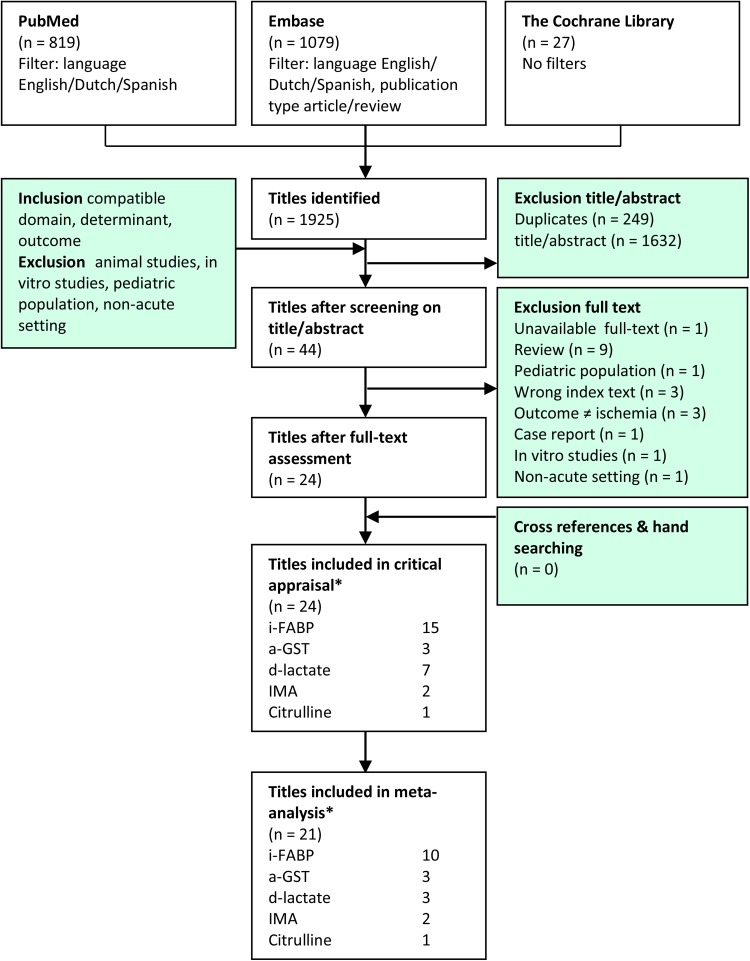
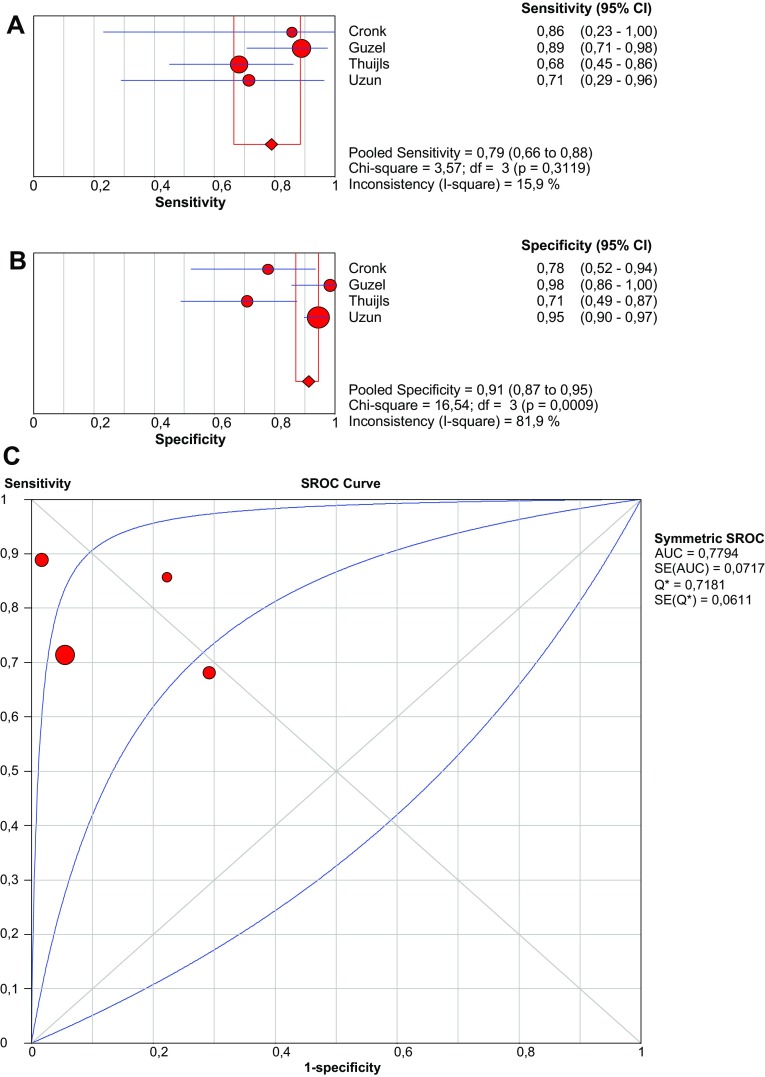
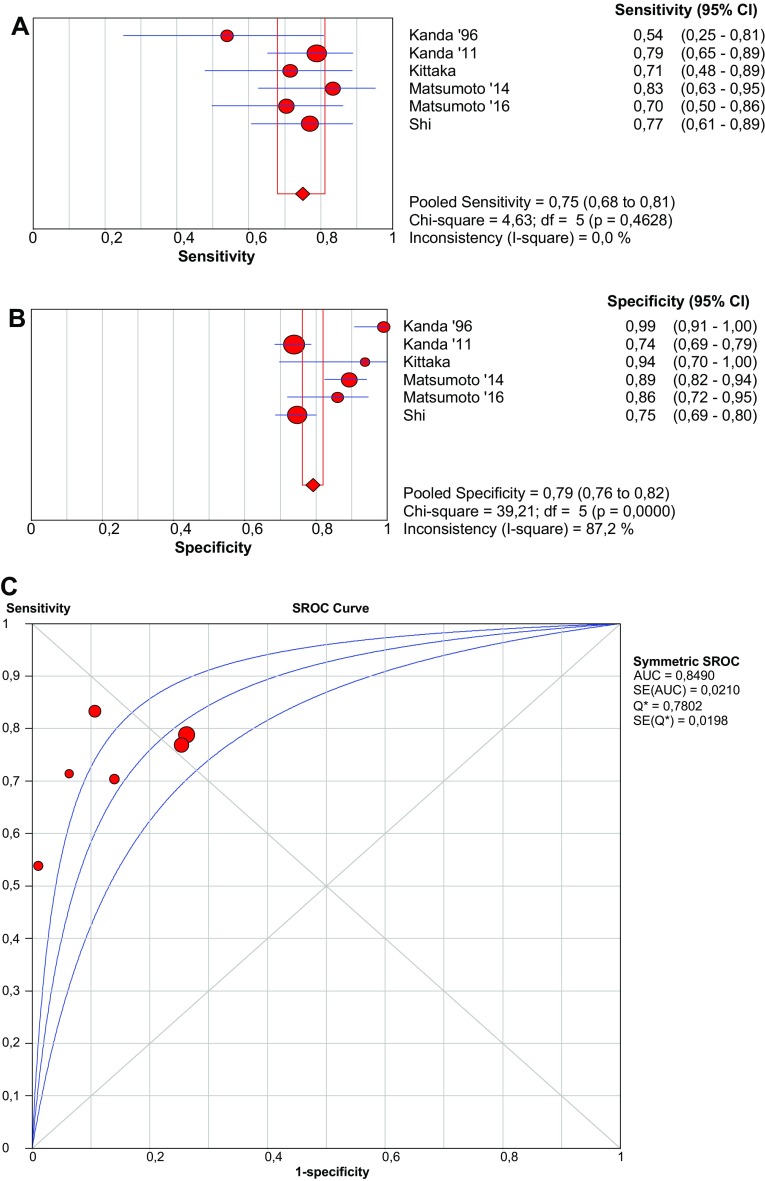
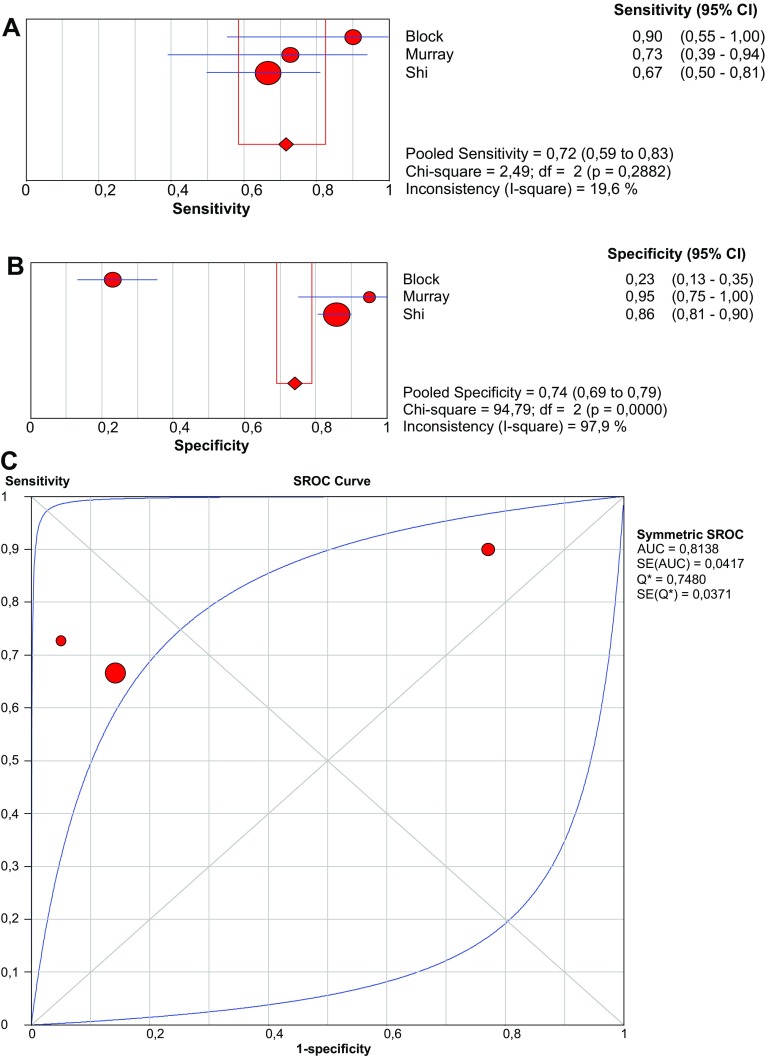
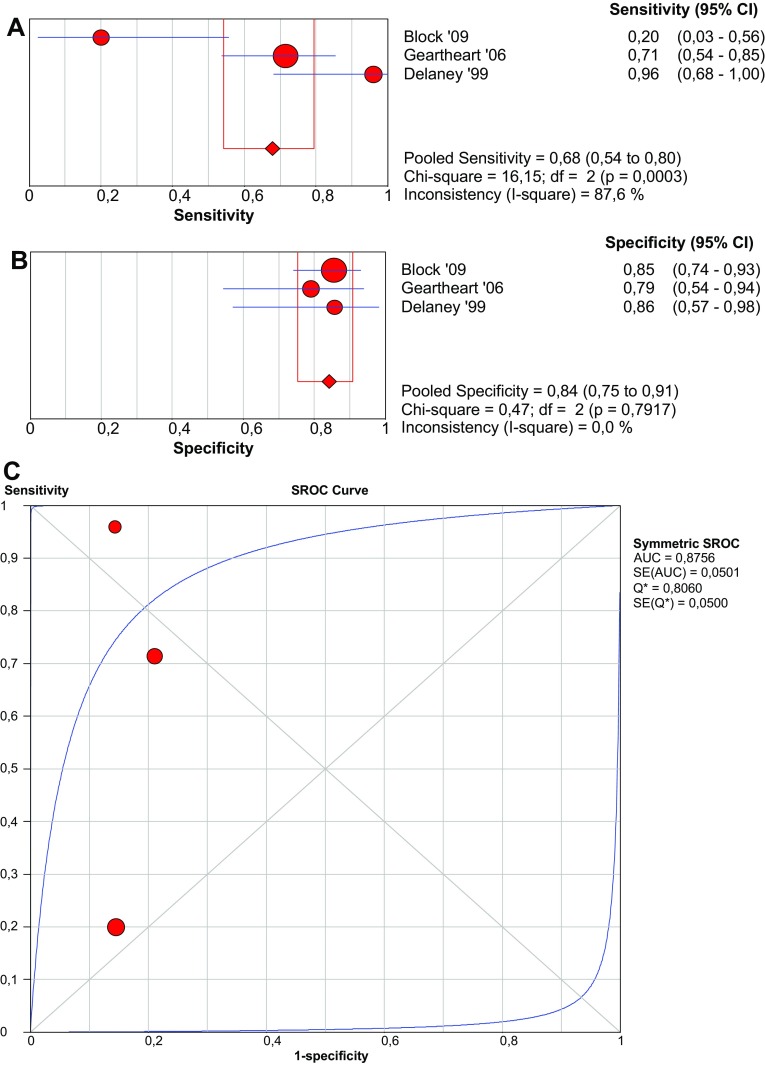
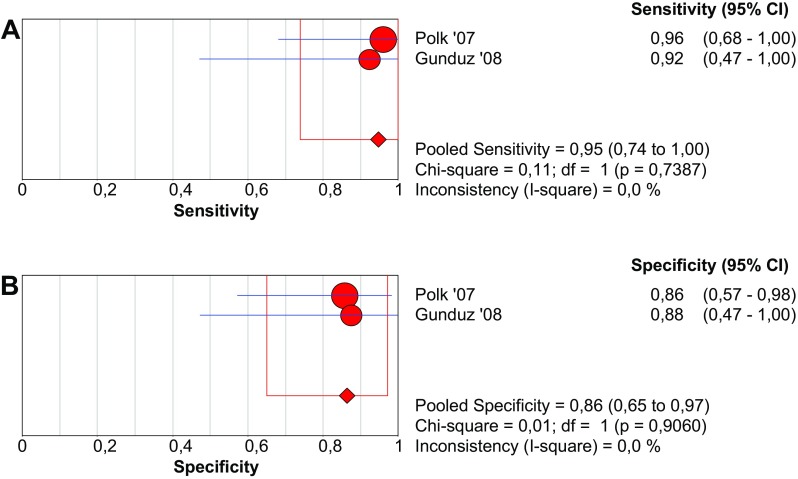
Laparotomy remains the gold standard for diagnosis of acute mesenteric ischemia (AMI), but is often unhelpful or too late due to non-specific clinical and radiological signs. This systematic review and meta-analysis aims to evaluate the diagnostic accuracy of the novel serological biomarkers intestinal fatty acid-binding protein (I-FABP), α-glutathione S-transferase (α-GST), D-lactate, ischemia modified albumin (IMA), and citrulline to detect AMI. A systematic search of electronic databases was performed to identify all published diagnostic accuracy studies on I-FABP, α-GST, D-lactate, IMA, and citrulline. Articles were selected based on pre-defined inclusion and exclusion criteria. Risk of bias and applicability were assessed. Two-by-two contingency tables were constructed to calculate accuracy standards. Summary estimates were computed using random-effects models. The search yielded 1925 papers, 21 were included in the final analysis. Pooled sensitivity and specificity for investigated biomarkers were: I-FABP (Uden); 79.0 (95% CI 66.5-88.5) and 91.3 (87.0-94.6), I-FABP (Osaka); 75.0 (67.9-81.2) and 79.2 (76.2-82.0), D-lactate; 71.7 (58.6-82.5) and 74.2 (69.0-79.0), α-GST; 67.8 (54.2-79.5) and 84.2 (75.3-90.9), IMA; 94.7 (74.0-99.9) and 86.4 (65.1-97.1), respectively. One study investigated accuracy standards for citrulline: sensitivity 39% and specificity 100%. The novel serological biomarkers I-FABP, α-GST, IMA, and citrulline may offer improved diagnostic accuracy of acute mesenteric ischemia; however, further research is required to specify threshold values and accuracy standards for different aetiological forms.
Overview
The claims and statistics of this paper haven’t been checked yet.
Free: it reads the open-access text and checks the first 5 claims that cite a source we can check. Create a free account to check every claim.
Integrity signals
Registry
Cites
Statistics
Figures
Verification
Claims the paper makes
The claims and statistics of this paper haven’t been checked yet.
Free: it reads the open-access text and checks the first 5 claims that cite a source we can check. Create a free account to check every claim.
Claims other papers make about this one
Each is checked against this paper’s own text: does it say what the citing paper says it does?
The cited source says what the claim attributes to it.
In the citing paper
“No breakthrough in defining a reliable biomarker with acceptable sensitivity and specificity was observed however [5, 6].”
From Diagnostic accuracy of biomarkers to detect acute mesenteric ischaemia in adult patients: a systematic review and meta-analysis (2023) · cites this paper as [5]
The cited source says what the claim attributes to it.
In the citing paper
“Novel biomarkers such as IMA and alpha glutathione S transferase (alpha-GST) were associated with great hope a few years ago, but no newer studies were identified than those in the systematic review by Treskes in 2017 [5].”
From Diagnostic accuracy of biomarkers to detect acute mesenteric ischaemia in adult patients: a systematic review and meta-analysis (2023) · cites this paper as [5]
The cited source says what the claim attributes to it.
In the citing paper
“Treskes et al. reported pooled sensitivity and specificity, respectively, for investigated biomarkers as follows: IFABP (human enzyme linked immunosorbent assay [ELISA] kit) 79.0% (95% CI 66.5 e 88.5%) and 91.3% (95% CI 87.0 e 94.6%);”
The cited source says what the claim attributes to it.
In the citing paper
“and ischaemia modified albumin 94.7% (95% CI 74.0 e 99.9%) and 86.4% (95% CI 65.1 e 97.1%). 124”
The cited source says what the claim attributes to it.
In the citing paper
“a -glutathione S-transferase 67.8% (95% CI 54.2 e 79.5%) and 84.2% (95% CI 75.3 e 90.9%);”
1 more claim about this paper
Create a free account to see every claim other papers make about this one.
Self-check
Percentages, sums and reported differences re-computed from the paper’s own numbers.
The self-check needs the paper’s full text.
Citations
Cites
Measuring inconsistency in meta-analyses
Higgins, J. P. T., Thompson, S. G., Deeks, J. J., & Altman, D. G. (2003) · BMJ · doi:10.1136/bmj.327.7414.557 · Cited by 63,139
Meta-analysis in clinical trials
DerSimonian, R., & Laird, N. (1986) · Controlled Clinical Trials · doi:10.1016/0197-2456(86)90046-2 · Cited by 39,552 · cited 1×
“A random-effect model according to DerSimonian and Laird was used for meta-analysis [32].”
MethodLiberati, A., Altman, D. G., Tetzlaff, J., Mulrow, C., Gøtzsche, P. C., Ioannidis, J. P. A., Clarke, M., Devereaux, P. J., Kleijnen, J., & Moher, D. (2009) · PLoS Medicine · doi:10.1371/journal.pmed.1000100 · Cited by 28,164 · cited 1×
“Results were reported in accordance with the PRISMA recommendations [35].”
ResultLiberati, A., Altman, D. G., Tetzlaff, J., Mulrow, C., Gøtzsche, P. C., Ioannidis, J. P. A., Clarke, M., Devereaux, P. J., Kleijnen, J., & Moher, D. (2009) · Journal of Clinical Epidemiology · doi:10.1016/j.jclinepi.2009.06.006 · Cited by 10,578
Whiting, P., Rutjes, A. W., Reitsma, J. B., Bossuyt, P. M., & Kleijnen, J. (2003) · BMC Medical Research Methodology · doi:10.1186/1471-2288-3-25 · Cited by 3,592
Meta-DiSc: a software for meta-analysis of test accuracy data
Zamora, J., Abraira, V., Muriel, A., Khan, K., & Coomarasamy, A. (2006) · BMC Medical Research Methodology · doi:10.1186/1471-2288-6-31 · Cited by 1,883
Mannervik, B., Alin, P., Guthenberg, C., Jensson, H., Tahir, M. K., Warholm, M., & Jörnvall, H. (1985) · Proceedings of the National Academy of Sciences · doi:10.1073/pnas.82.21.7202 · Cited by 1,071 · cited 1×
“The plasma level of αGST has been suggested to be a sensitive marker of small bowel ischemia [17, 18].”
BackgroundBar–Or, D., Lau, E., & Winkler, J. V. (2000) · The Journal of Emergency Medicine · doi:10.1016/s0736-4679(00)00255-9 · Cited by 867 · cited 1×
“Ischemia modified albumin (IMA) is human serum albumin that is less capable of binding cobalt due to ischemia [22].”
BackgroundCrenn, P., Coudray–Lucas, C., Thuillier, F., Cynober, L., & Messing, B. (2000) · Gastroenterology · doi:10.1053/gast.2000.20227 · Cited by 498 · cited 2×
“Nevertheless, citrulline remains a potential accurate marker for AMI, since it has been shown to be a reliable marker of functional enterocyte mass [24], prognostic value of mortality in the ICU [60], and NOMI after cardiac arrest [61].”
BackgroundESTES guidelines: acute mesenteric ischaemia
Tilsed, J. V. T., Casamassima, A., Kurihara, H., Mariani, D., Martinez, I., Pereira, J., Ponchietti, L., Shamiyeh, A., al-Ayoubi, F., Barco, L. A. B., et al. (2016) · European Journal of Trauma and Emergency Surgery · doi:10.1007/s00068-016-0634-0 · Cited by 382 · cited 1×
“Four aetiological forms of vascular AMI have been identified [6]: arterial embolism, arterial thrombosis, venous thrombosis, and non-occlusive mesenteric ischemia (NOMI).”
BackgroundNon-occlusive mesenteric ischemia: etiology, diagnosis, and interventional therapy
Trompeter, M., Brazda, T., Remy, C. T., Vestring, T., & Reimer, P. (2002) · European Radiology · doi:10.1007/s00330-001-1220-2 · Cited by 378
De Backer, D., Creteur, J., Silva, E., & Vincent, J.-L. (2003) · Critical Care Medicine · doi:10.1097/01.ccm.0000063045.77339.b6 · Cited by 371
Kanda, T., Fujii, H., Tani, T., Murakami, H., Suda, T., Sakai, Y., Ono, T., & Hatakeyama, K. (1996) · Gastroenterology · doi:10.1053/gast.1996.v110.pm8566578 · Cited by 284 · cited 1×
“Intestinal fatty acid-binding protein (I-FABP) is a small cytosolic protein exclusively expressed by enterocytes and is rapidly released into the circulation in case of mesenteric cell damage [14, 15].”
BackgroundThe Diagnosis of Acute Mesenteric Ischemia: A Systematic Review and Meta-analysis
Cudnik, M. T., Darbha, S., Jones, J., Macedo, J., Stockton, S. W., & Hiestand, B. C. (2013) · Academic Emergency Medicine · doi:10.1111/acem.12254 · Cited by 275 · cited 2×
“, the Llactate sensitivity and specificity is 86 and 44% [12]).”
BackgroundMethodEvennett, N. J., Petrov, M. S., Mittal, A., & Windsor, J. A. (2009) · World Journal of Surgery · doi:10.1007/s00268-009-0074-7 · Cited by 270 · cited 3×
“2%), α-GST may be non-specific for AMI, as it may also be released by the liver during oxidative stress [33].”
BackgroundInfluentialD-Lactic Acidosis in a Man with the Short-Bowel Syndrome
Oh, M. S., Phelps, K. R., Traube, M., Barbosa-Saldivar, J. L., Boxhill, C., & Carroll, H. J. (1979) · New England Journal of Medicine · doi:10.1056/nejm197908023010505 · Cited by 253 · cited 1×
“Elevated D-lactate levels have been associated with bacterial overgrowth due to infection [19], short bowel syndrome [20] and mesenteric infarction [21].”
BackgroundSerum D(−)-lactate levels as an aid to diagnosing acute intestinal ischemia
Murray, M. J., Gonze, M. D., Nowak, L. R., & Cobb, C. F. (1994) · The American Journal of Surgery · doi:10.1016/0002-9610(94)90101-5 · Cited by 229
THE MESENTERIC HEMODYNAMIC RESPONSE TO CIRCULATORY SHOCK: AN OVERVIEW
Reilly, P. M., Wilkins, K. B., Fuh, K. C., Haglund, U., & Bulkley, G. B. (2001) · Shock · doi:10.1097/00024382-200115050-00001 · Cited by 225
Sinha, M. K., Gaze, D. C., Tippins, J. R., Collinson, P. O., & Kaski, J. C. (2003) · Circulation · doi:10.1161/01.cir.0000072764.18315.6b · Cited by 218 · cited 1×
“Elevated IMA plasma levels have been associated with myocardial ischemia [23], but may also be of value for the diagnosis of mesenteric ischemia.”
BackgroundLieberman, J. M., Sacchettini, J., Marks, C., & Marks, W. H. (1997) · Surgery · doi:10.1016/s0039-6060(97)90363-9 · Cited by 217 · cited 1×
“After critical appraisal, three papers were excluded from the final analysis [49, 50, 52].”
Early Diagnosis of Intestinal Ischemia Using Urinary and Plasma Fatty Acid Binding Proteins
Thuijls, G., Wijck, K. V., Grootjans, J., Derikx, J. P. M., van Bijnen, A. A., Heineman, E., Dejong, C. H. C., Buurman, W. A., & Poeze, M. (2011) · Annals of Surgery · doi:10.1097/sla.0b013e318207a767 · Cited by 217 · cited 1×
“In four studies that examined the accuracy of I-FABP in patients presenting with acute abdomen, two-by-two contingency tables could be derived [40, 41, 46, 47].”
BackgroundDiagnostic accuracy of plasma biomarkers for intestinal ischaemia
Block, T., Nilsson, T. K., Björck, M., & Acosta, S. (2008) · Scandinavian Journal of Clinical and Laboratory Investigation · doi:10.1080/00365510701646264 · Cited by 172 · cited 2×
“In one article [37], I-FABP, Dlactate, and α-GST were studied simultaneously.”
BackgroundLeone, M., Bechis, C., Baumstarck, K., Ouattara, A., Collange, O., Augustin, P., Annane, D., Arbelot, C., Asehnoune, K., Baldési, O., et al. (2015) · Intensive Care Medicine · doi:10.1007/s00134-015-3690-8 · Cited by 162 · cited 1×
“Introduction Acute mesenteric ischemia (AMI) is a rare, but potentially catastrophic medical condition with mortality rates up to 58–80% in the critical care setting [1, 2].”
BackgroundIn defense of Pierre Louis who pioneered the epidemiological approach to good medicine
Morabia, A. (2008) · Journal of Clinical Epidemiology · doi:10.1016/j.jclinepi.2008.07.007 · Cited by 149
Ischemia-modified albumin in the diagnosis of acute mesenteric ischemia: a preliminary study
Gündüz, A., Türedi, S., Menteşe, A., Karahan, S. C., Hoş, G., Tatlı, Ö., Turan, İ., Uçar, U., Russell, R. M., & Topbaş, M. (2008) · The American Journal of Emergency Medicine · doi:10.1016/j.ajem.2007.04.030 · Cited by 147
Mesenteric hemodynamic response to circulatory shock
Ceppa, E. P., Fuh, K. C., & Bulkley, G. B. (2003) · Current Opinion in Critical Care · doi:10.1097/00075198-200304000-00008 · Cited by 142
Diagnostic performance of plasma biomarkers in patients with acute intestinal ischaemia
Matsumoto, S., Sekine, K., Funaoka, H., Yamazaki, M., Shimizu, M., Hayashida, K., & Kitano, M. (2014) · British Journal of Surgery · doi:10.1002/bjs.9331 · Cited by 135
Immunohistologic localization of alpha, Mu, and Pi class glutathione S-transferases in human tissues
Campbell, J. A. H., Corrigall, A. V., Guy, A., & Kirsch, R. E. (1991) · Cancer · doi:10.1002/1097-0142(19910315)67:6<1608::aid-cncr2820670623>3.0.co;2-s · Cited by 133
Use of D-Lactic Acid Measurements in the Diagnosis of Bacterial Infections
Smith, S. M., Eng, R. H. K., & Buccini, F. (1986) · Journal of Infectious Diseases · doi:10.1093/infdis/154.4.658 · Cited by 133 · cited 1×
“Elevated D-lactate levels have been associated with bacterial overgrowth due to infection [19], short bowel syndrome [20] and mesenteric infarction [21].”
BackgroundBiomarkers of gut barrier failure in the ICU
Piton, G., & Capellier, G. (2016) · Current Opinion in Critical Care · doi:10.1097/mcc.0000000000000283 · Cited by 129 · cited 1×
“The short lifetime of plasma I-FABP (11 min) facilitates the tracking of ischemic enterocyte damage almost in real time [16].”
BackgroundPlasma Citrulline Concentration
Papadia, C., Sherwood, R. A., Kalantzis, C., Wallis, K., Volta, U., Fiorini, E., & Forbes, A. (2007) · The American Journal of Gastroenterology · doi:10.1111/j.1572-0241.2007.01239.x · Cited by 123 · cited 1×
“For example, in short bowel syndrome, the citrulline levels are generally lower than in the general population [62], which may bias test results.”
BackgroundCronk, D. R., Houseworth, T. P., Cuadrado, D. G., Herbert, G. S., McNutt, P. M., & Azarow, K. S. (2006) · Current Surgery · doi:10.1016/j.cursur.2006.05.006 · Cited by 122 · cited 3×
“Two papers [40, 43] evaluated patients with bowel obstruction (n = 58, 41.”
BackgroundKanda, T., Tsukahara, A., Kyo, U. E. K. I., Sakai, Y., Tani, T., Nishimura, A., Yamazaki, T., Tamiya, Y., Tada, T., Hirota, M., et al. (2011) · Journal of Gastroenterology · doi:10.1007/s00535-011-0373-2 · Cited by 115
Plasma citrulline kinetics and prognostic value in critically ill patients
Piton, G., Manzon, C., Monnet, É., Cypriani, B., Barbot, O., Navellou, J.-C., Carbonnel, F., & Capellier, G. (2010) · Intensive Care Medicine · doi:10.1007/s00134-010-1751-6 · Cited by 115 · cited 6×
“I-FABP Intestinal fatty acid-binding protein AMI Acute mesenteric ischemia OMI Occlusive mesenteric ischemia NOMI Non-occlusive mesenteric ischemia MODS Multi-organ dysfunction syndrome α-GST α-Glutathione S-transferase IMA Ischemia-modified albumin ABSU Absorbance units ELISA Enzyme-linked immuno-sorbent assay CT Com…”
BackgroundInfluentialAcosta, S. (2015) · Current Opinion in Critical Care · doi:10.1097/mcc.0000000000000189 · Cited by 111
Shi, H., Wu, B., Wan, J., Liu, W., & Su, B. (2015) · Clinics and Research in Hepatology and Gastroenterology · doi:10.1016/j.clinre.2014.12.005 · Cited by 107 · cited 4×
“Although in one study [38], the exact ELISA test used was unclear; the reference values were comparable to the studies in which the Osaka kit was used.”
BackgroundResultInfluentiald-lactate as an early marker of intestinal ischaemia after ruptured abdominal aortic aneurysm repair
Poeze, M., Froon, A. H. M., Greve, J. W. M., & Ramsay, G. (1998) · Journal of British Surgery · doi:10.1046/j.1365-2168.1998.00837.x · Cited by 105 · cited 2×
“An additional four papers [21, 39, 48, 51] included patients at risk for NOMI.”
BackgroundMesenteric ischemia: Pathogenesis and challenging diagnostic and therapeutic modalities
Mastoraki, A. (2016) · World Journal of Gastrointestinal Pathophysiology · doi:10.4291/wjgp.v7.i1.125 · Cited by 101 · cited 1×
“The CT (angiography) scan can be a valuable diagnostic tool in diagnosing occlusive AMI [59].”
Methodthe HIVIND study team, De Costa, A., Shet, A., Kumarasamy, N., Ashorn, P., Eriksson, B., Bogg, L., & Diwan, V. K. (2010) · BMC Medical Research Methodology · doi:10.1186/1471-2288-10-25 · Cited by 86
Niewold, T., Meinen, M., & van der Meulen, J. (2004) · Research in Veterinary Science · doi:10.1016/j.rvsc.2004.02.006 · Cited by 83 · cited 1×
“Intestinal fatty acid-binding protein (I-FABP) is a small cytosolic protein exclusively expressed by enterocytes and is rapidly released into the circulation in case of mesenteric cell damage [14, 15].”
BackgroundThe value of the serum I-FABP level for diagnosing acute mesenteric ischemia
Güzel, M., Sözüer, E. M., Salt, Ö., Ikızcelı, İ., Akdur, O., & Yazıcı, C. (2013) · Surgery Today · doi:10.1007/s00595-013-0810-3 · Cited by 69 · cited 1×
“In four studies that examined the accuracy of I-FABP in patients presenting with acute abdomen, two-by-two contingency tables could be derived [40, 41, 46, 47].”
BackgroundDelaney, C. P., O'Neill, S., Manning, F., Fitzpatrick, J. M., & Gorey, T. F. (1999) · Journal of British Surgery · doi:10.1046/j.1365-2168.1999.01245.x · Cited by 69
Plasma d-Lactate as a Potential Early Marker for Colon Ischaemia After Open Aortic Reconstruction
Assadian, A., Assadian, O., Senekowitsch, C., Rotter, R., Bahrami, S., Fürst, W., Jaksch, W., Hagmüller, G. W., & Hübl, W. (2005) · European Journal of Vascular and Endovascular Surgery · doi:10.1016/j.ejvs.2005.10.031 · Cited by 68 · cited 1×
“An additional four papers [21, 39, 48, 51] included patients at risk for NOMI.”
BackgroundSerum citrulline is a potential marker for rejection of intestinal allografts
Gondolesi, G. E., Fishbein, T. M., Chehade, M., Tschernia, A., Magid, M. S., Kaufman, S. S., Raymond, K., Sansaricq, C., & LeLeiko, N. S. (2002) · Transplantation Proceedings · doi:10.1016/s0041-1345(02)02669-6 · Cited by 63 · cited 1×
“Its circulating half-life is 3–4 h [25, 26].”
Vermeulen Windsant, I. C., Hellenthal, F. A., Derikx, J. P. M., Prins, M. H., Buurman, W. A., Jacobs, M. J., & Schurink, G. W. H. (2012) · Annals of Surgery · doi:10.1097/sla.0b013e31824b1e16 · Cited by 60 · cited 1×
“An additional four papers [21, 39, 48, 51] included patients at risk for NOMI.”
BackgroundIntestinal Hemodynamics During Laparotomy
Lundberg, J., Lundberg, D., Norgren, L., Ribbe, E. B., Th�rne, J., & Werner, O. (1990) · Anesthesia & Analgesia · doi:10.1213/00000539-199007000-00002 · Cited by 60
van der Voort, P. H., Westra, B., Wester, J. P., Bosman, R. J., van Stijn, I., Haagen, I.-A., Loupatty, F. J., & Rijkenberg, S. (2014) · BMC Anesthesiology · doi:10.1186/1471-2253-14-111 · Cited by 59
Gearhart, S. L., Delaney, C. P., Senagore, A. J., Banbury, M. K., Remzi, F. H., Kiran, R. P., & Fazio, V. W. (2003) · PubMed · Cited by 59
Nakashima, K., Ishimaru, H., Fujimoto, T., Mizowaki, T., Mitarai, K., Nakashima, K., Matsuoka, Y., & Uetani, M. (2014) · Abdominal Imaging · doi:10.1007/s00261-014-0335-2 · Cited by 57 · cited 1×
“However, diagnosis is difficult, particularly in the early stages when treatment is most beneficial [10, 11].”
BackgroundKittaka, H., Akimoto, H., Takeshita, H., Funaoka, H., Hazui, H., Okamoto, M., Kobata, H., & Ohishi, Y. (2014) · PLoS ONE · doi:10.1371/journal.pone.0099915 · Cited by 53 · cited 2×
“Two papers [40, 43] evaluated patients with bowel obstruction (n = 58, 41.”
BackgroundNakamura, Y., Urashima, M., Toyota, N., Ono, C., Iida, M., Fukumoto, W., Kaichi, Y., Tani, C., Honda, Y., Komoto, D., et al. (2013) · Japanese Journal of Radiology · doi:10.1007/s11604-013-0245-1 · Cited by 50 · cited 1×
“However, diagnosis is difficult, particularly in the early stages when treatment is most beneficial [10, 11].”
BackgroundClinical Utility of the Cobalt-Albumin Binding Assay in the Diagnosis of Intestinal Ischemia
Polk, J. D., Rael, L. T., Craun, M. L., Mains, C. W., Davis-Merritt, D., & Bar-Or, D. (2008) · Journal of Trauma: Injury, Infection & Critical Care · doi:10.1097/ta.0b013e31815b846a · Cited by 47
Gearhart, S. L., Delaney, C. P., Senagore, A. J., Banbury, M. K., Remzi, F. H., Kiran, R. P., & Fazio, V. W. (2003) · The American Surgeon · doi:10.1177/000313480306900409 · Cited by 47
Prevention of Gastrointestinal Complications in the Critically Ill Patient
Martin, B. (2007) · AACN Advanced Critical Care · doi:10.1097/01.aacn.0000269259.91546.d8 · Cited by 46 · cited 1×
“Introduction Acute mesenteric ischemia (AMI) is a rare, but potentially catastrophic medical condition with mortality rates up to 58–80% in the critical care setting [1, 2].”
BackgroundPiton, G., Belin, N., Barrot, L., Belon, F., Cypriani, B., Navellou, J.-C., & Capellier, G. (2015) · Shock · doi:10.1097/shk.0000000000000440 · Cited by 45 · cited 1×
“Nevertheless, citrulline remains a potential accurate marker for AMI, since it has been shown to be a reliable marker of functional enterocyte mass [24], prognostic value of mortality in the ICU [60], and NOMI after cardiac arrest [61].”
BackgroundCitrulline Evaluation in Bowel Transplantation
Ruiz, P., Tryphonopoulos, P., Island, E. R., Selvaggi, G., Nishida, S., Moon, J., Berlanga, A., Defranc, T., Levi, D., Tekin, A., et al. (2010) · Transplantation Proceedings · doi:10.1016/j.transproceed.2009.12.029 · Cited by 32 · cited 1×
“Its circulating half-life is 3–4 h [25, 26].”
Plasma citrulline measurement in the diagnosis of acute mesenteric ischaemia
Kulu, R., Akyildiz, H., Akcan, A., Oztürk, A., & Sozuer, E. (2017) · ANZ Journal of Surgery · doi:10.1111/ans.13524 · Cited by 27
Uzun, Ö. Ü., Türkmen, S., Eryiğit, U., Menteşe, A., Türkyılmaz, S., Türedi, S., Karahan, S. C., & Gündüz, A. (2014) · Turkish Journal of Emergency Medicine · doi:10.5505/1304.7361.2014.15679 · Cited by 24 · cited 1×
“In four studies that examined the accuracy of I-FABP in patients presenting with acute abdomen, two-by-two contingency tables could be derived [40, 41, 46, 47].”
BackgroundCollange, O., Tamion, F., Meyer, N., Quillard‐Muraine, M., Kindo, M. J., Hue, G., Veber, B., Dureuil, B., & Plissonnier, D. (2013) · Journal of Cardiothoracic and Vascular Anesthesia · doi:10.1053/j.jvca.2013.01.018 · Cited by 22 · cited 1×
“After critical appraisal, three papers were excluded from the final analysis [49, 50, 52].”
Laparotomy for Visceral Ischemia and Gangrene
Woo, K., Major, K., Kohanzadeh, S., & Allins, A. D. (2007) · The American Surgeon™ · doi:10.1177/000313480707301018 · Cited by 22 · cited 1×
“The best diagnostic test apart from diagnostic laparotomy remains contrast computed tomography (angiography), (sensitivity 94%, specificity 95% [12, 13]).”
MethodRoss, S., Milne, J., Dwinnell, S. J., Tang, S., & Wood, S. L. (2012) · BMC Medical Research Methodology · doi:10.1186/1471-2288-12-31 · Cited by 19
Diagnostic value of intestinal fatty acid-binding protein for pneumatosis intestinalis
Matsumoto, S., Sekine, K., Funaoka, H., Funabiki, T., Yamazaki, M., Orita, T., Hayashida, K., & Kitano, M. (2016) · The American Journal of Surgery · doi:10.1016/j.amjsurg.2016.04.002 · Cited by 10
Fırat, A. C., Dönmez, A., Aldemir, D., İşgüzar, A. R., & Gültekin, B. (2011) · The Anatolian Journal of Cardiology · doi:10.5152/akd.2011.139 · Cited by 8 · cited 1×
“After critical appraisal, three papers were excluded from the final analysis [49, 50, 52].”
Research works printed but not linked: 1
- Treskes N, Persoon AM, Zanten ARH (2016) Diagnostic accuracy of novel serological biomarkers to detect acute mesenteric ischaemia: a systematic review and meta-analysis. CRD42016052163. https://www.crd.york.ac.uk/PROSPERO/register_new_review.asp. Accessed 6 Feb 2017 PMC5559578 28478489
Cited by
Acute mesenteric ischemia: guidelines of the World Society of Emergency Surgery
Bala, M., Kashuk, J., Moore, E. E., Kluger, Y., Biffl, W., Gomes, C. A., Ben-Ishay, O., Rubinstein, C., Balogh, Z. J., Civil, I., et al. (2017) · World Journal of Emergency Surgery · doi:10.1186/s13017-017-0150-5 · Cited by 574
“(Recommendation 1C) Abbreviations alpha–GST: Serum alpha-glutathione S-transferase; AMI: Acute mesenteric ischemia; CABA: Cobalt-albumin binding assay; CMI: Chronic mesenteric ischemia; CTA: Computed tomography angiography; DCS: Damage control surgery; I-FABP: Intestinal fatty acid binding protein; MDCT: Multi-detecto…”
BackgroundAcute mesenteric ischemia: updated guidelines of the World Society of Emergency Surgery.
Bala, M., Catena, F., Kashuk, J., De Simone, B., Gomes, C. A., Weber, D., Sartelli, M., Coccolini, F., Kluger, Y., Abu-Zidan, F. M., et al. (2022) · World Journal of Emergency Surgery · doi:10.1186/s13017-022-00443-x · Cited by 380
“Other biomarkers reported to be of use in the diagnosis of AMI include intestinal fatty acid-binding protein (I-FABP), serum alpha-glutathione S-transferase (alphaGST), and cobalt–albumin binding assay (CABA) [55, 56].”
BackgroundResulton behalf of the Working Group on Gastrointestinal Function within the Section of Metabolism, E. A. N. (. S. O. E., Reintam Blaser, A., Preiser, J.-C., Fruhwald, S., Wilmer, A., Wernerman, J., Benstoem, C., Casaer, M. P., Starkopf, J., van Zanten, A., et al. (2020) · Critical Care · doi:10.1186/s13054-020-02889-4 · Cited by 219
Koelemay, M. J., Geelkerken, R. H., Kärkkäinen, J., Leone, N., Antoniou, G. A., de Bruin, J. L., Gombert, A., Gottsätter, A., Iborra, E., Ronchey, S., et al. (2025) · European Journal of Vascular and Endovascular Surgery · doi:10.1016/j.ejvs.2025.06.010 · Cited by 123
Biochemical markers of acute intestinal ischemia: Possibilities and limitations
Montagnana, M., Danese, E., & Lippi, G. (2018) · Annals of Translational Medicine · doi:10.21037/atm.2018.07.22 · Cited by 108
Metadata
- Authors
- Treskes, N., Persoon, A. M., & van Zanten, A. R. H.
- Affiliations
- Ziekenhuis Gelderse Vallei (NL)
- St. Antonius Ziekenhuis (NL)
- Venue
- Internal and Emergency Medicine
- Published
- 2017-05-06
- Volume
- 12
- Issue
- 6
- Pages
- 821-836
- ISSN
- 1828-0447 (ISSN-L)
- 1970-9366
- PMC
- PMC5559578
- OpenAlex
- W2611677687
- Cited by
- 135
- References
- 63
- Citations by year
- 2026: 12 · 2025: 10 · 2024: 16 · 2023: 16 · 2022: 19 · 2021: 20 · 2020: 14 · 2019: 18 · 2018: 7 · 2017: 3
- FWCI
- 2.43
- Type
- journal article
- Language
- en
- Open access
- hybrid
- doi.org
- Locations
- Internal and Emergency Medicine (publishedVersion, cc-by)
- PubMed Central (publishedVersion, cc-by)
- PubMed (publishedVersion)
- Topics
- Health Sciences › Medicine › Surgery › Abdominal vascular conditions and treatments
- Health Sciences › Medicine › Critical Care and Intensive Care Medicine › Sepsis Diagnosis and Treatment
- Health Sciences › Medicine › Emergency Medicine › Appendicitis Diagnosis and Management
- Keywords
- acute mesenteric ischemia, serological markers, diagnostic accuracy, intestinal fatty acid binding protein, alpha-glutathione S-transferase, D-lactate, ischemia-modified albumin, citrulline, intestinal ischemia
- MeSH terms
- Acute Disease, Humans, Predictive Value of Tests, Biomarkers, Mesenteric Ischemia
About these checks
Registry, retraction, Cites and statistics results are computed, not judged, with one exception: a printed reference that no index lists is read once by a model before it counts as a citation error. Claims are extracted by a model and kept only when their quote appears verbatim in the text; each cited source is then checked, with a model’s help, for whether it says what the claim relies on. Those verdicts can be wrong — read the claim’s quote and the cited source before relying on one.
Statistics and arithmetic are recomputed, not judged.
Confidence bands are shown only for fields calibrated on our annotated test set. None is calibrated yet, so no band is shown.
What counts as a claim ›How we measure confidence ›How we check this ›
Are you an author, or do you see a problem with this page? Request a review
Data sources
Bibliographic data: Semantic Scholar, OpenAlex, Crossref.
Contains information from the Semantic Scholar Academic Graph Datasets, made available under the ODC Attribution License (ODC-BY 1.0).
Semantic Scholar’s data is described in: Kinney, R., et al. (2023). The Semantic Scholar Open Data Platform. arXiv:2301.10140.
