

How artificial intelligence will change the future of marketing
Open accessThe DOI matches its Crossref record; 71 of the 77 references it cites were found in a registry or an index.
Abstract
In the future, artificial intelligence (AI) is likely to substantially change both marketing strategies and customer behaviors. Building from not only extant research but also extensive interactions with practice, the authors propose a multidimensional framework for understanding the impact of AI involving intelligence levels, task types, and whether AI is embedded in a robot. Prior research typically addresses a subset of these dimensions; this paper integrates all three into a single framework. Next, the authors propose a research agenda that addresses not only how marketing strategies and customer behaviors will change in the future, but also highlights important policy questions relating to privacy, bias and ethics. Finally, the authors suggest AI will be more effective if it augments (rather than replaces) human managers.
Overview
The claims and statistics of this paper haven’t been checked yet.
Free: it reads the open-access text and checks the first 5 claims that cite a source we can check. Create a free account to check every claim.
Integrity signals
Registry
Cites
Statistics
Figures
Verification
Claims the paper makes
The claims and statistics of this paper haven’t been checked yet.
Free: it reads the open-access text and checks the first 5 claims that cite a source we can check. Create a free account to check every claim.
Claims other papers make about this one
Each is checked against this paper’s own text: does it say what the citing paper says it does?
The source backs part of the claim, not all of it — or backs it for a different population, condition or comparison.
In the citing paper
“Consequently, it can provide consumers with products that are more aligned with their demand characteristics and increase sales volume and market conversion rate while raising the average order value [65].”
From The Impact of AI-Personalized Recommendations on Clicking Intentions: Evidence from Chinese E-Commerce (2025) · cites this paper as [65]
Experimental — accuracy not yet measuredThe source backs part of the claim, not all of it — or backs it for a different population, condition or comparison.
In the citing paper
“Customers may perceive this as a sacrifice, especially those first time users (Davenport et al., 2020).”
From Customer experiences in the age of artificial intelligence (2021) · cites this paper as Davenport et al., 2020
Experimental — accuracy not yet measuredThe source backs part of the claim, not all of it — or backs it for a different population, condition or comparison.
In the citing paper
“Specifically, we identify different innovation capabilities in the technological, organizational, and environmental dimensions, and construct a taxonomy of AI applications according to the different types of innovation fostered by AI adoption (Davenport et al., 2020).”
From Artificial intelligence in innovation management: A review of innovation capabilities and a taxonomy of AI applications (2025) · cites this paper as Davenport et al., 2020
Experimental — accuracy not yet measuredThe cited source says what the claim attributes to it.
In the citing paper
“The use of new technologies in marketing can potentially enhance customer experiences by offering support to e-retailing, sales, customer service, and so on (Davenport et al., 2020).”
From COVID‐19 Pandemic in the New Era of Big Data Analytics: Methodological Innovations and Future Research Directions (2021) · cites this paper as Davenport et al., 2020
1 more claim about this paper
Create a free account to see every claim other papers make about this one.
Self-check
Percentages, sums and reported differences re-computed from the paper’s own numbers.
The self-check needs the paper’s full text.
Citations
Cites
LeCun, Y., Bengio, Y., & Hinton, G. (2015) · Nature · doi:10.1038/nature14539 · Cited by 84,126
(1994) · Journal of the American Dietetic Association · doi:10.1016/0002-8223(94)92216-0 · Cited by 45,910
Human-level control through deep reinforcement learning
Mnih, V., Kavukcuoglu, K., Silver, D., Rusu, A. A., Veness, J., Bellemare, M. G., Graves, A., Riedmiller, M., Fidjeland, A. K., Ostrovski, G., et al. (2015) · Nature · doi:10.1038/nature14236 · Cited by 30,357
Artificial intelligence in service
Huang, M.-H., & Rust, R. T. (2018) · Journal of Service Research · doi:10.1177/1094670517752459 · Cited by 3,978
Gender differences in risk taking: a meta-analysis
Byrnes, J. P., Miller, D. C., & Schafer, W. D. (1999) · Psychological Bulletin · doi:10.1037/0033-2909.125.3.367 · Cited by 3,723
Reinforcement learning in robotics: A survey
Kober, J., Bagnell, J. A., & Peters, J. (2013) · The International Journal of Robotics Research · doi:10.1177/0278364913495721 · Cited by 3,160
Kaplan, A., & Haenlein, M. (2019) · Business Horizons · doi:10.1016/j.bushor.2018.08.004 · Cited by 3,140
Augmented reality: a class of displays on the reality-virtuality continuum:
Milgram, P., Takemura, H., Utsumi, A., & Kishino, F. (1995) · SPIE Proceedings · doi:10.1117/12.197321 · Cited by 2,367 · cited 2×
“The extent to which a form is virtual versus embodied reflects its position on the Milgram virtuality– reality continuum (Milgram et al. 1995).”
BackgroundBrave new world: service robots in the frontline
Wirtz, J., Patterson, P. G., Kunz, W. H., Gruber, T., Lu, V. N., Paluch, S., & Martins, A. (2018) · Journal of Service Management · doi:10.1108/josm-04-2018-0119 · Cited by 2,315
Resistance to Medical Artificial Intelligence
Longoni, C., Bonezzi, A., & Morewedge, C. K. (2019) · Journal of Consumer Research · doi:10.1093/jcr/ucz013 · Cited by 2,015 · cited 5×
“Longoni et al. (2019) propose that offering customers the opportunity to slightly modify the AI may get these customers to look past uniqueness neglect, and focus more on the benefits of personalization.”
BackgroundInfluential
Research works printed but not linked: 6
- 8. Barro, S., & Davenport, T. H. (2019). People and machines: Partners in innovation. MIT Sloan Management Review, 60(4), 22-28.
- 18. Castelo, N., Bos, M., & Lehman, D. (2018). Consumer adoption of al- gorithms that blur the line between human and machine. Graduate School of Business: Columbia University Working Paper.
- 42. Hassler, C. A. (2018). Meet Replika, the AI Bot that wants to be your best friend. Retrieved February 11, 2019 from https://www.popsugar. com/news/Replika-Bot-AI-App-Review-Interview-Eugenia- Kuyda-44216396.
- 55. Lammer, L., Huber, A., Weiss, A., Vincze, M. (2014). Mutual care: How older adults react when they should help their care robot. In Proceedings of the International Symposium of Social Study AI Simulation Behavior (pp. 3-4).
- 84. Reese, B. (2018). The fourth age: Smart robots, conscious computers and the future of humanity. New York, NY: Atria Books.
- 88. Schrift, R. Y., Wertenbroch, K., André, Q., & Frank, D.H. (2017). Threatening free will. Presentation at the Symposium on Alienation and Meaning in Production and Consumption, Technische Universität München.
Cited by
Items 701–800 of 1,006
A machine learning algorithm for classification of mental tasks
Manoharan, H., Haleem, S. L. A., Selvarajan, S., Kshirsagar, P. R., Tirth, V., Thangamani, M., & Chandan, R. R. (2022) · Computers & Electrical Engineering · doi:10.1016/j.compeleceng.2022.107785 · Cited by 24
aiWOM: Artificial Intelligence Word-of-Mouth. Conceptualizing Consumer-to-AI Communication
Tassiello, V., Amatulli, C., Tillotson, J. S., & Laker, B. (2024) · International Journal of Human-Computer Interaction · doi:10.1080/10447318.2024.2349362 · Cited by 29
“Thanks to their machine learning software, these new technologies can directly elaborate on a vast amount of data to forecast consumers’ future behavior and enhance the degree of product and service personalization—devel-opments that could lead to unique business models (see Davenport et al., 2019).”
Navigating the AI wave for sales management: The mediating role of marketing agility
Iyer, P., Nikolov, A. N., Sleep, S., Eskridge, B., Moke, D. M., & Hutchins, J. (2025) · Industrial Marketing Management · doi:10.1016/j.indmarman.2025.03.009 · Cited by 25
Polimerou, R., & Spais, G. S. (2025) · Journal of Marketing Analytics · doi:10.1057/s41270-025-00396-5 · Cited by 25
“…interactions with brands via social media brand chatbots is lacking, and it does not examine how consumer-organization interactions are changing over time (Dwivedi et al. 2023; Davenport et al. 2020), particularly in digital marketing settings through innovative experiences (Sung et al. 2021).”
Gouveia, J., & Santos, S. (2025) · International Journal of Consumer Studies · doi:10.1111/ijcs.70136 · Cited by 25
Li, X., Qing, L., Wei, H., & Wei, J. (2026) · Journal of Manufacturing Technology Management · doi:10.1108/jmtm-06-2025-0489 · Cited by 33
Higher Education Institutions with Artificial Intelligence: Roles, Promises, and Requirements
Al-haimi, B., Hujainah, F., Nasir, D., & Alhroob, E. (2021) · Studies in computational intelligence · doi:10.1007/978-3-030-72080-3_13 · Cited by 22
Bhatt, V. (2021) · 2021 IEEE International Conference on Technology Management, Operations and Decisions (ICTMOD) · doi:10.1109/ictmod52902.2021.9739228 · Cited by 15
The perks and perils of artificial intelligence use in lateral exchange markets
Satornino, C. B., Grewal, D., Guha, A., Schweiger, E. B., & Goodstein, R. C. (2023) · Journal of Business Research · doi:10.1016/j.jbusres.2022.113580 · Cited by 25
Self-citationBahmani, N., Bhatnagar, A., & Gauri, D. K. (2023) · Journal of Business Research · doi:10.1016/j.jbusres.2023.113783 · Cited by 24
Exploring the Role of AI in B2B Customer Journey Management: Towards an IPO Model
Khvatova, T., Appio, F. P., Ray, S., & Schiavone, F. (2023) · IEEE Transactions on Engineering Management · doi:10.1109/tem.2023.3284532 · Cited by 26
Artificial Intelligence in Marketing and Consumer Behavior Research
Kim, T., Usman, U., Garvey, A. M., & Duhachek, A. (2023) · Foundations and Trends® in Marketing · doi:10.1561/1700000078 · Cited by 27
Leung, Y., Chan, R. L. H., Chiu, D. K. W., & Tian, R. (2023) · Aslib Journal of Information Management · doi:10.1108/ajim-05-2023-0177 · Cited by 29
XAI in Society 5.0 through the lens of marketing and HRM
Khan, S. A., & Naim, A. (2024) · Elsevier eBooks · doi:10.1016/b978-0-323-95315-3.00004-8 · Cited by 29
Su, Y., Wang, E. J., & Berthon, P. R. (2023) · Hawaii International Conference on System Sciences (HICSS) · doi:10.24251/hicss.2023.603 · Cited by 36
Artificial intelligence and marketing innovation: The mediating role of organizational culture
Awad, A. (2024) · Innovative Marketing · doi:10.21511/im.20(3).2024.14 · Cited by 39
8‐T Framework for Artificial Intelligence‐Driven Branding: A Strategic Typology
Deryl, M. D., Verma, S., & Srivastava, V. (2024) · International Journal of Consumer Studies · doi:10.1111/ijcs.70002 · Cited by 24
Mogaji, E. (2025) · Journal of Marketing Management · doi:10.1080/0267257x.2025.2461673 · Cited by 26
Visualising the Knowledge Domain of Artificial Intelligence in Marketing: A Bibliometric Analysis
Ismagilova, E., Dwivedi, Y. K., & Rana, N. P. (2020) · IFIP advances in information and communication technology · doi:10.1007/978-3-030-64849-7_5 · Cited by 24
The Role of Commitment Amongst Tourists and Intelligent Virtual Assistants
Loureiro, S. M. C., & Bilro, R. G. (2021) · Journal of Promotion Management · doi:10.1080/10496491.2021.1987979 · Cited by 23
AL-Shboul, M. A. (2024) · Business Process Management Journal · doi:10.1108/bpmj-02-2024-0089 · Cited by 37
Gao, J., Wang, H., Li, W., Li, G., & He, S. (2024) · International Journal of Human-Computer Interaction · doi:10.1080/10447318.2024.2383483 · Cited by 21
“If it is believed that AI service robots may have the risk of invading their privacy, consumers will have a negative perception of them, which will lead to consumers’ resistance to AI service robots (Davenport et al., 2020; Ameen et al., 2022).”
Advertising in the digital era: Can AI evoke emotions like humans?
Sallaku, K., Macca, L. S., Santoro, G., & Phan, T. T. (2025) · Business Process Management Journal · doi:10.1108/bpmj-07-2024-0637 · Cited by 22
de Oliveira, E. R., & Rodrigues, P. (2021) · Electronic Journal of Knowledge Management · doi:10.34190/ejkm.19.2.2459 · Cited by 24
Loganathan, T., & Doss, C. G. P. (2022) · Life Sciences · doi:10.1016/j.lfs.2022.121118 · Cited by 23
Zeng, N., Jiang, L., Vignali, G., & Ryding, D. (2023) · Springer eBooks · doi:10.1007/978-3-031-14961-0_34 · Cited by 27
Overcoming the blockchain technology credibility gap
Mazzù, M. F., Pozharliev, R., Andria, A., & Baccelloni, A. (2023) · Psychology and Marketing · doi:10.1002/mar.21855 · Cited by 24
Renaissance of project marketing: Avenues for the utilisation of digital tools
Toukola, S., Ståhle, M., & Mahlamäki, T. (2023) · Project Leadership and Society · doi:10.1016/j.plas.2023.100091 · Cited by 30
Singh, P. R., Verma, A., Vij, S., & Thakur, J. (2023) · E3S Web of Conferences · doi:10.1051/e3sconf/202339907006 · Cited by 27
AI micro-decisions in FinTechs: a mixed method research design
Issa, H., Jabbouri, R., & Mehanna, R.-A. (2023) · Management Decision · doi:10.1108/md-10-2022-1336 · Cited by 24
Morton, F., Benavides, T. B. T., & González-Treviño, E. (2024) · Management and industrial engineering · doi:10.1007/978-3-031-52990-0_2 · Cited by 27
Muthaluri, J. (2024) · Educational Administration: Theory and Practice · doi:10.53555/kuey.v30i5.4494 · Cited by 9
Gowri, D. P. (2024) · Journal of Communication and Management · doi:10.58966/jcm2024334 · Cited by 35
The Impact of Artificial Intelligence (AI) on Recruitment Process
Ouakili, O. E. (2025) · Open Journal of Business and Management · doi:10.4236/ojbm.2025.132039 · Cited by 26
OPTIMIZING DATA CENTER OPERATIONS WITH ARTIFICIAL INTELLIGENCE AND MACHINE LEARNING
Kabir, M. H., Islam, M. N., Khan, M. S. I., Electrical Control Engineer, R. B. (. P., Newaz, S., Mahamud, M. S., & Electrical Engineer, A. E. S. (2022) · American Journal of Scholarly Research and Innovation · doi:10.63125/xewz7g58 · Cited by 24
Ye, B. J., Kim, J.-Y., Suh, C., Choi, S. P., Choi, M., Kim, D., & Son, B. C. (2021) · International Journal of Environmental Research and Public Health · doi:10.3390/ijerph18042170 · Cited by 24
“This technology is increasingly used for applications in credit scoring [10] and marketing strategies [11] due to the universalization of smart devices and mobile (online) communication and the expanding influence of messenger apps.”
MethodThe Future of Marketing Analytics and Public Policy
Davis, B., Grewal, D., & Hamilton, S. (2021) · Journal of Public Policy & Marketing · doi:10.1177/07439156211042372 · Cited by 27
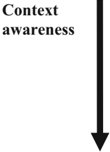
“Davenport et al. (2020) predict that AI will change the future of marketing through task automation and context awareness (i.e., computers sense and react on the basis of their surroundings).”
BackgroundSelf-citationAI-Powered Customer Segmentation For MarketingPreprint
Bhagat, A., Bhandari, P., Yadav, A. L., & Talwandi, N. S. (2024) · SSRN Electronic Journal · doi:10.2139/ssrn.4811907 · Cited by 21
A bibliometric analysis of AI bias in marketing: field evolution and future research agenda
Bacalhau, L. M., Pereira, M. C., & Neves, J. R. (2025) · Journal of Marketing Analytics · doi:10.1057/s41270-025-00379-6 · Cited by 21
“…considering intelligence levels, task types, and robotic integration, considering previously isolated dimensions, and proposes a future research agenda on AI’s influence on marketing and customer behavior and emphasizes AI’s role in augmenting, not replacing, human managers (Davenport et al. 2019).”
Arachchi, H. A. D. M., & Samarasinghe, G. (2025) · European Journal of Management Studies · doi:10.1108/ejms-05-2024-0047 · Cited by 24
Marketing and Artificial Intelligence: Personalization at Scale
Ramnarayan, S. (2020) · Advances in marketing, customer relationship management, and e-services book series · doi:10.4018/978-1-7998-5077-9.ch005 · Cited by 20
How consumer opinions are affected by marketers: an empirical examination by deep learning approach
Yu, B. T. W. (2021) · Journal of Research in Interactive Marketing · doi:10.1108/jrim-04-2021-0106 · Cited by 21
Deng, S., Xu, Q., Zhang, J., & Li, X. (2022) · Advances in Psychological Science · doi:10.3724/sp.j.1042.2022.00723 · Cited by 23
Artificial Intelligence and Machine Learning‐Based Manufacturing and Drug Product Marketing
Baviskar, K. P., Bedse, A. P., Raut, S., & Darapaneni, N. (2023) · Wiley eBooks · doi:10.1002/9781119865728.ch10 · Cited by 23
Yoon, H. J., Lee, Y.-J., Sun, S., & Joo, J. (2023) · Journal of Research in Interactive Marketing · doi:10.1108/jrim-08-2022-0262 · Cited by 21
Singh, J., & Bridge, R. G. (2023) · Journal of Service Research · doi:10.1177/10946705231177385 · Cited by 24
“labor by customizing interactions and preventing frontline employee burnout (Huang and Rust 2018; Davenport et al. 2020; Luo et al. 2021). Leveraging AI capabilities can help companies increase relationality in customer interactions and create more seamless and personalized experiences for their customers. Automating…”
BackgroundInfluentialDeposit AI as the “invisible hand” to make the resale easier: A moderated mediation model
Peng, L., Luo, M., & Guo, Y. (2023) · Journal of Retailing and Consumer Services · doi:10.1016/j.jretconser.2023.103480 · Cited by 21
Castillo‐Vergara, M., Muñoz, V., Geldés, C., Álvarez‐Marín, A., & Márquez, M. S. (2023) · Axioms · doi:10.3390/axioms12070631 · Cited by 28
Babayev, N., & Israfilzade, K. (2023) · Journal of Life Economics · doi:10.15637/jlecon.2078 · Cited by 26
“AI encompasses data mining, natural language processing (NLP), and machine learning (ML), including deep learning (Davenport, 2020; Nichifor, Trifan & Nechifor, 2021).”
BackgroundMartin, Y., Dai, X., & Deng, Z. (2023) · Internet Research · doi:10.1108/intr-02-2022-0113 · Cited by 23
Zhai, M., Wu, W., & Tsai, S. (2024) · Energy Economics · doi:10.1016/j.eneco.2024.108048 · Cited by 20
Chinnaraju, A. (2025) · International Journal of Science and Research Archive · doi:10.30574/ijsra.2025.14.2.0370 · Cited by 26
Chatzopoulos, C. G., Weber, M., & Customer Co-Creation, W. (2021) · International Journal of Industrial Engineering and Management · doi:10.24867/ijiem-2021-2-278 · Cited by 20
“However, AI might not deliver on all AI’s promises, due to the challenges related to data privacy, ethics, and job security [50] [51].”
BackgroundImproving customer experience with artificial intelligence by adhering to ethical principles
Игоревна, Д. О. (2021) · Бизнес-информатика · doi:10.17323/2587-814x.2021.2.34.46 · Cited by 24
Improving base-of-the-pyramid consumer welfare through mobile technology services
Pandey, D., Mukherjee, S., Das, G., & Zhang, J. Z. (2022) · Journal of Services Marketing · doi:10.1108/jsm-05-2021-0179 · Cited by 21
The pandemic of loneliness: designing smart tourism for combating loneliness
Stankov, U., Gretzel, U., Vujičić, M. D., Pavluković, V., Jovanović, T. S., Solarević, M., & Cimbaljević, M. (2022) · Information Technology & Tourism · doi:10.1007/s40558-022-00234-9 · Cited by 23
“Artificial intelligence (AI) that will drive the future of tourism information search is likely to change both marketing strategies and customer behaviours substantially (Davenport et al. 2020; Mich 2020), thus creating more loneliness-sensitive search and booking algorithms should be a priority.”
BackgroundAI and sustainable business model innovation: A systematic literature review
Sharma, A., Khokhar, M., Duan, Y., Bibi, M., Sharma, R., & Muhammad, B. (2025) · Sustainable Futures · doi:10.1016/j.sftr.2025.101204 · Cited by 19
Value propositions of artificial intelligence in retailing
Yrjölä, M., Hautamäki, P., & Ranta, R. (2024) · The International Review of Retail Distribution and Consumer Research · doi:10.1080/09593969.2024.2411209 · Cited by 29
“However, the use of AI may also introduce novel hedonic sacrifices, such as negative emotions, potential social isolation and a lack of human interaction (Davenport et al. 2020; de Kerviler, Demoulin, and Zidda 2016; Shin and Lin 2016).”
InfluentialKim, S., & Kim, J. (2025) · Service Business · doi:10.1007/s11628-025-00580-8 · Cited by 19
“While previous research argued that AI recommendation services increase actual media usage time and rates (Lee et al. 2022; Davenport et al. 2020), a counterargument exists that consumers experience increased fatigue and reduced satisfaction due to effects similar to those of echo chambers (Geschke…”
A Preliminary multidimensional AI readiness assessment model for SME’s
naheed, S., Pinto, R., & Pirola, F. (2025) · Procedia Computer Science · doi:10.1016/j.procs.2025.01.139 · Cited by 23
Artificial intelligence in sales research: Identifying emergent themes and looking forward
Jarotschkin, V., Soykoth, M. W., & Chaker, N. N. (2025) · Journal of Business Research · doi:10.1016/j.jbusres.2025.115383 · Cited by 22
Xavier, D. F., Korunka, C., & Reiter‐Palmon, R. (2025) · PLoS ONE · doi:10.1371/journal.pone.0319556 · Cited by 23
“This group’s initial adaptation to AI might have moderated their perceptions from the outset, setting a different baseline where AI’s presence was normative [8].”
Innovating the experience economy: How novel technologies transform customer experiences
Garaus, M., Treiblmaier, H., Wagner, U., & Garaus, C. (2025) · Digital Business · doi:10.1016/j.digbus.2025.100134 · Cited by 22
Artificial Intelligence in Marketing Communication and Customer Satisfaction
Alimkhodjaeva, N., Khozhimuratovna, M. M., Nabiev, E., & Aytieva, S. (2024) · International Conference on Future Networks and Distributed Systems (ICFNDS) · doi:10.1145/3726122.3726147 · Cited by 19
Simón, J. S., Brun, M. P., Mirabet, S. E., Nogueira, M. A. D. F., Martín-Guart, R., & de Azevedo, S. T. (2025) · Telecommunications Policy · doi:10.1016/j.telpol.2025.103033 · Cited by 22
Leveraging Generative AI for Public Service Innovation: A Path to Smart Government in Indonesia
Alamsyah, A., & Aryfiyanto, H. (2025) · Digital Government Research and Practice · doi:10.1145/3761820 · Cited by 22
“…“Assistance” and “Automated Workflows” to “Predictive Analytics”, “Data Interpretation”, and “Interactive Learning” [Alamsyah and Syahrir 2024 ; Davenport et al. 2020 ; Weisz et al. 2023 ]—offer tangible pathways to address enduring bureaucratic inefficiencies and infrastructural limitations…”
Waqas, M., & Qadri, U. A. (2025) · Journal of Business Ethics · doi:10.1007/s10551-025-06155-x · Cited by 22
“Contemporary targeting systems assemble granular behavioral profiles from location pings, click-streams, and inferred psychographics, yet frequently do so under broad or opaque consent clauses that fall short of meaningful “informed choice” (Davenport et al., 2020; Zard, 2025).”
The Impact of Digital Technology on E-Commerce and Sustainable Performance in the EU
Criveanu, M. M. (2025) · Economies · doi:10.3390/economies14010005 · Cited by 23
“An example of its efficiency is its dual role in the food industry: supporting production safety (hygienic cleaning) (Davenport et al., 2020) and commercial success (marketing optimization) (Khrais, 2020).”
Vyas, Y., & Vishwakarma, P. (2026) · International Journal of Consumer Studies · doi:10.1111/ijcs.70170 · Cited by 26
Islam, M. A., & Afroz, Z. (2025) · American Journal of Scholarly Research and Innovation · doi:10.63125/h9j70a40 · Cited by 20
Mussa, M. (2020) · المجلة العلمية للإقتصاد و التجارة · doi:10.21608/jsec.2020.128722 · Cited by 25
“Therefore, AI is the technology that will be adopted by marketers because it will affect the face of retailers' marketing strategies and customer behaviors (Davenport et al., 2020).”
BackgroundResultInfluentialAlgosaibi, A. A., Sait, A. R. W., Fahad, A., & Alhamed, S. (2020) · International Journal of Advanced Computer Science and Applications · doi:10.14569/ijacsa.2020.0111233 · Cited by 26
“Although wide advantages of BD and AI can be anticipated, several risks involve some policy considerations [11].”
BackgroundMarketing intelligence: Innovation ability to anticipate global competition
Aripin, Z., Suganda, U. K., & Kusumah, A. Z. (2022) · International Journal of Research in Business and Social Science (2147-4478) · doi:10.20525/ijrbs.v11i1.1589 · Cited by 19
“The importance of understanding the market is an important part of building a competitive advantage so as to increase revenue growth (Rodrigues, 2019; Davenport, 2020).”
BackgroundArtificial intelligence for business and marketing: a customer-centric approach
Zhang, W., & Agnihotri, R. (2024) · The Journal of Marketing Theory and Practice · doi:10.1080/10696679.2024.2332692 · Cited by 19
“Extant academic literature has also investigated how AI influences consumers’ well-being and company strategies (Davenport et al., 2020; Moradi & Dass, 2022; Peres et al., 2023).”
Innovative Content Production in Marketing Communication Through AI
Kubovics, M. (2024) · European Conference on Innovation and Entrepreneurship · doi:10.34190/ecie.19.1.2877 · Cited by 8
“Davenport et al. (2020) add to the complexity, stating that the target group is overall a key component of the effective application of artificial intelligence (AI) in marketing.”
BackgroundArtificial intelligence research in organizations: a bibliometric approach
Liu, P., Lai, Y., & Liu, D. (2024) · Cogent Business & Management · doi:10.1080/23311975.2024.2408439 · Cited by 21
“…consumer behavior patterns, and discern customer needs through technologies like social public opinion analysis and natural language processing (Davenport et al., 2020; Davidsson et al., 2020; Fan et al., 2020; gaspar et al., 2016). ai also aids in candidate screening and evaluation for…”
Reshadi, M. S., & Chehragh, A. M. (2025) · AI & Society · doi:10.1007/s00146-024-02178-6 · Cited by 27
GEORGE, B. P., & Mattathil, A. P. (2025) · Societies · doi:10.3390/soc15020034 · Cited by 25
Pneumonia Detection in Chest X-Ray Images : Handling Class Imbalance
Ali, W., Qureshi, E., Farooqi, O. A., & Khan, R. A. (2024) · International Multi-Topic Conference · doi:10.1109/inmic64792.2024.11004380 · Cited by 22
“By adopting data-driven decisions, various domains are embracing the potential AI and ML techniques have, in-order to boost efficiency [2].”
Contemporary Issues in Digital Marketing
Niininen, O. (2021) · Routledge eBooks · doi:10.4324/9781003093909 · Cited by 29
Boninsegni, M. F., Roy, A., Bakpayev, M., Kumar, S., Peronard, J.-P., & Reimer, T. (2021) · Digital Policy Regulation and Governance · doi:10.1108/dprg-06-2021-0080 · Cited by 21
The Quest for Customer Intelligence to Support Marketing Decisions: A Knowledge-Based Framework
Dam, N. A. K., Dinh, T. L., & Menvielle, W. (2022) · Vietnam Journal of Computer Science · doi:10.1142/s2196888822500208 · Cited by 21
Corporate Digital Responsibility at the Dawn of the Digital Service RevolutionPreprint
Wirtz, J., Hartley, N., Kunz, W. H., Tarbit, J., & Ford, J. (2021) · SSRN Electronic Journal · doi:10.2139/ssrn.3806235 · Cited by 25
Chen, T., Liu, F., Shen, X., Wu, J., & Liu, Y. (2025) · Industrial Management & Data Systems · doi:10.1108/imds-03-2024-0251 · Cited by 20
Fehrenbach (2026) · doi:10.1080/1051712x.2025.2481374
“Davenport et al. (2020, 36) AI is a system with human-level intelligence.”
Na, R., Hu, A., Zeng, Q., Ge, R., & Hao, R. (2025) · Electronic Markets · doi:10.1007/s12525-025-00813-8 · Cited by 19
“This pattern underscores that virtual streamers’ credibility hinges on algorithmic utility (e.g., error-free recommendations) rather than anthropomorphic empathy in AI-mediated interactions (Davenport et al., 2020).”
The Role of AI Technologies in E-Commerce Development: A European Comparative Study
Bocean, C. G., Popescu, L. G., Simion, D., Sperdea, N. M., Puiu, C., Marinescu, R. C., & Maria, E. (2025) · Journal of theoretical and applied electronic commerce research · doi:10.3390/jtaer20030225 · Cited by 20
Kasubi, J., Kisumbe, L. A., & Nyabakora, W. I. (2025) · SAGE Open · doi:10.1177/21582440251377298 · Cited by 13
“Moreover, AI-dri-ven analytics can provide valuable insights into ‘‘employee engagement’’ and retention, permitting HR experts to implement targeted plans to boost ‘‘satisfac-tion and reduce turnover’’ (Davenport et al., 2020).”
The State of Artificial Intelligence in Marketing With Directions for Future Research
Chen, J., Rosas, J. H. A., Frankwick, G. L., & Arévalo, F. R. J. (2022) · International Journal of Business Intelligence Research · doi:10.4018/ijbir.297062 · Cited by 21
Measuring the Service Quality of Artificial Intelligence in the Tourism and Hospitality Industry
Sankar, J. G., & David, A. (2023) · Advances in hospitality, tourism and the services industry (AHTSI) book series · doi:10.4018/978-1-6684-6985-9.ch007 · Cited by 19
Ridho, W. F. (2023) · Review of Business and Economics Studies · doi:10.26794/2308-944x-2023-11-3-6-17 · Cited by 25
The Effect of AI Agent Gender on Trust and Grounding
Jeon, J.-E. (2024) · Journal of theoretical and applied electronic commerce research · doi:10.3390/jtaer19010037 · Cited by 21
Boukis, A., Harris, L. C., & Koritos, C. (2024) · Tourism Management · doi:10.1016/j.tourman.2024.104927 · Cited by 18
Leveraging responsible artificial intelligence to enhance salespeople well-being and performance
Weng, C., Yuan, R., Ye, D., Huang, B., & Xun, J. (2024) · Service Industries Journal · doi:10.1080/02642069.2024.2361291 · Cited by 24
“…that demonstrate intelligence ’ (Shankar, 2018, p. vi), and ‘ it relies on several key technologies, such as machine learning, natural language processing, rule-based expert systems, neural networks, deep learning, physical robots, and robotic process automation ’ (Davenport et al., 2020, p. 26).”
Enhancing Advertising Initiatives: Using Machine Learning Algorithms to Engage Targeted Customer
Kunekar, P. R., Usman, M., Veena, C., Singla, A. K., Anute, N., & Polke, N. (2024) · International Conference on Communication, Computer Sciences and Engineering (IC3SE) · doi:10.1109/ic3se62002.2024.10593306 · Cited by 18
“Market information and consumer insights can be produced by applying AI technology, such as ML, to digital marketing [7].”
BackgroundReinhard, P., Li, M. M., Peters, C., & Leimeister, J. M. (2024) · Hawaii International Conference on System Sciences (HICSS) · doi:10.24251/hicss.2024.028 · Cited by 27
Zaman, M., Jasim, K. M., Hasan, R., Akter, S., & Vrontis, D. (2025) · International Marketing Review · doi:10.1108/imr-04-2024-0118 · Cited by 19
How robots will affect the future of retailing
Guha, A., & Grewal, D. (2022) · AMS Review · doi:10.1007/s13162-022-00241-3 · Cited by 22
“As suggested by Davenport et al. (2020), the effects of robots are likely to be evolutionary, not revolutionary, despite some exaggerated claims in the popular press.”
BackgroundMethodInfluentialSelf-citationFarhi, F., Jeljeli, R., & Belarbi, A. K. (2022) · International Arab Conference on Information Technology (ACIT) · doi:10.1109/acit57182.2022.9994146 · Cited by 23
“In this regard, Davenport and their colleagues [9] cited an example of Artificial Intelligence in transforming corporate sector organizations by introducing”
Background
Metadata
- Authors
- Davenport, T., Guha, A., Grewal, D., & Bressgott, T.
- Affiliations
- Babson College (US)
- University of South Carolina (US)
- Maastricht University (NL)
- Corresponding author
- Bressgott, Timna
- Venue
- Journal of the Academy of Marketing Science
- Published
- 2019-10-10
- Volume
- 48
- Issue
- 1
- Pages
- 24-42
- ISSN
- 0092-0703 (ISSN-L)
- 1552-7824
- OpenAlex
- W2979906316
- Cited by
- 2,875
- References
- 77
- Citations by year
- 2026: 810 · 2025: 644 · 2024: 506 · 2023: 332 · 2022: 283 · 2021: 209 · 2020: 85 · 2019: 4
- FWCI
- 66.26
- Type
- journal article
- Language
- en
- Open access
- hybrid
- doi.org
- Licence
- cc-by
- creativecommons.org/licenses/by/4.0 (tdm)
- creativecommons.org/licenses/by/4.0 (vor)
- Locations
- Journal of the Academy of Marketing Science (publishedVersion, cc-by)
- Research Publications (Maastricht University) (publishedVersion, cc-by)
- SSRN Electronic Journal (submittedVersion)
- RePEc: Research Papers in Economics (submittedVersion)
- Research Publications (Maastricht University) (submittedVersion, other-oa)
- Funders
- Maastricht University
- Topics
- Social Sciences › Business, Management and Accounting › Marketing › AI in Service Interactions
- Physical Sciences › Computer Science › Artificial Intelligence › Artificial Intelligence Applications
- Social Sciences › Business, Management and Accounting › Marketing › Digital Marketing and Social Media
- Keywords
- artificial intelligence, marketing strategy, consumer behavior, intelligence level, task type, privacy, algorithmic bias, AI ethics, future of marketing
About these checks
Registry, retraction, Cites and statistics results are computed, not judged, with one exception: a printed reference that no index lists is read once by a model before it counts as a citation error. Claims are extracted by a model and kept only when their quote appears verbatim in the text; each cited source is then checked, with a model’s help, for whether it says what the claim relies on. Those verdicts can be wrong — read the claim’s quote and the cited source before relying on one.
Statistics and arithmetic are recomputed, not judged.
Confidence bands are shown only for fields calibrated on our annotated test set. None is calibrated yet, so no band is shown.
What counts as a claim ›How we measure confidence ›How we check this ›
Are you an author, or do you see a problem with this page? Request a review
Data sources
Bibliographic data: Semantic Scholar, OpenAlex, Crossref.
Contains information from the Semantic Scholar Academic Graph Datasets, made available under the ODC Attribution License (ODC-BY 1.0).
Semantic Scholar’s data is described in: Kinney, R., et al. (2023). The Semantic Scholar Open Data Platform. arXiv:2301.10140.
