

Effects of light on human circadian rhythms, sleep and mood
Open accessPublished version of a preprint
The DOI matches its Crossref record; 111 of the 112 references it cites were found in a registry or an index; 57 of the 127 sources its claims cite were checked for support.
Abstract
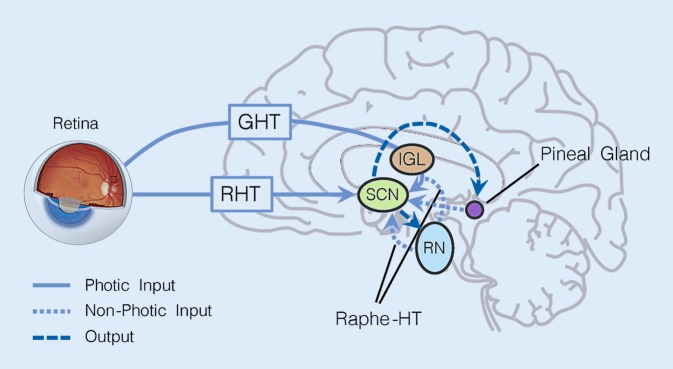
Humans live in a 24-hour environment, in which light and darkness follow a diurnal pattern. Our circadian pacemaker, the suprachiasmatic nuclei (SCN) in the hypothalamus, is entrained to the 24-hour solar day via a pathway from the retina and synchronises our internal biological rhythms. Rhythmic variations in ambient illumination impact behaviours such as rest during sleep and activity during wakefulness as well as their underlying biological processes. Rather recently, the availability of artificial light has substantially changed the light environment, especially during evening and night hours. This may increase the risk of developing circadian rhythm sleep-wake disorders (CRSWD), which are often caused by a misalignment of endogenous circadian rhythms and external light-dark cycles. While the exact relationship between the availability of artificial light and CRSWD remains to be established, nocturnal light has been shown to alter circadian rhythms and sleep in humans. On the other hand, light can also be used as an effective and noninvasive therapeutic option with little to no side effects, to improve sleep,mood and general well-being. This article reviews our current state of knowledge regarding the effects of light on circadian rhythms, sleep, and mood.
Overview
CoChat Summary
TL;DR
This review summarizes how light entrains the suprachiasmatic nuclei via retinal pathways and affects circadian rhythms, sleep, and mood. It highlights that mistimed light may disrupt circadian rhythms and sleep, while bright light therapy is effective for seasonal affective disorder and several other conditions, though mechanisms and real-world effects remain uncertain.
Key findings
- Light is the key zeitgeber for the circadian system; non-visual effects are mediated by the retina, especially intrinsically photosensitive retinal ganglion cells expressing melanopsin with peak sensitivity near 480 nm. Morning light advances the clock, while evening and night light delays it, and melatonin suppression and circadian phase shifting may be separable rather than proxies for each other.
- Daylight at high intensities is beneficial for sleep: each additional hour spent outdoors advanced sleep by ~30 min in questionnaire data; shorter daylight exposure and longer nights are associated with a longer biological night and longer sleep duration; daytime short-wavelength-enriched white light has been associated with increased evening fatigue, better sleep quality, decreased sleep-onset latency, and increased slow-wave sleep accumulation.
- Evening artificial light and screens can delay the circadian clock and impair sleep: 4 h of e-reader reading before sleep increased sleep onset latency, reduced evening sleepiness, melatonin secretion, next-morning alertness, and delayed the biological clock; smartphone use before bedtime has been associated with more self-reported sleeping problems, decreased sleep efficiency, longer sleep onset latency, poor sleep quality, and shortened sleep duration. However, one study found that 2 h of tablet reading after prolonged bright daytime light did not suppress melatonin or alter sleep.
- Bright light therapy, typically 7000–10,000 lx for at least 30–60 min daily, is established as first-line treatment for seasonal affective disorder, effective as second-line treatment for non-seasonal depression (usually taking 2–5 weeks), and used adjunctively in other psychiatric and medical conditions; adverse reactions such as eye irritation, headache, or nausea are usually rare and lessen after a few days or reduced dosage.
Methods
- Narrative review synthesizing current knowledge on light effects on circadian rhythms, sleep, and mood; no primary data collection, systematic search strategy, or meta-analysis is described.
- Covers anatomical architecture of the circadian system, fundamentals of light and photoreceptors, effects of light on the circadian clock, sleep, and mood, and clinical applications of light therapy.
- No study sample or participants are reported; evidence is drawn from cited human and animal studies.
Limitations
- The paper states that the exact relationship between artificial light availability and circadian rhythm sleep–wake disorders remains to be established; the precise mechanisms by which light improves mood are not known; how much of smartphone-related sleep effects are due to light versus psychological engagement is unknown; and the relative contributions of light and physical activity to daylight-related phase advance remain to be determined.
- The paper notes that many aspects of light effects on the circadian clock remain unknown, the long-term adaptive influences of the real-world “spectral diet” remain an important area of investigation, and most light therapy glasses have not yet been evaluated in large randomized clinical trials.
- Evident from the text: as a narrative review, it lacks systematic search, quality appraisal, and quantitative synthesis; several cited evening-light studies used long exposures (4–6.5 h), and the paper itself notes it is unclear whether shorter exposures produce the same results.
Model-written summary. Check it against the paper before relying on it.
Integrity signals
Registry
Cites
Statistics
Figures
Verification
Claims the paper makes
40 Valid · 6 Not valid · 40 Not checked · 17 Own results and interpretations
At least one cited source doesn’t support this claim or points to a different paper, and none confirmed it — see the verdicts below.
In the paper
“Several studies report that daytime exposure to white light enriched in short-wavelength content was associated with increased evening fatigue [91], and sleep quality [16, 39, 91], decreased sleep-onset latency [39], and increased slow-wave sleep accumulation [92], which is related to the dissipation of the homeostatic sleep pressure [1, 14, 34].”
§ Effects of light on human circadian rhythms, sleep and mood > Effects of light on sleep
What the sources say
- Disputedcites [91] Viola AU James LM Schlangen LJ Blue-enriched white light in the workplace improves self-reported alertness, performance and sleep quality Scand J Work Environ Health 2008 34 4 297 306 10.5271/sjweh.1268 18815716 sourceExperimental — accuracy not yet measured
The Results (‘Assessment at the end of the 4-week periods’; page not provided) report a decrease, not an increase, in evening fatigue under blue-enriched white light compared with standard white light. This directly contradicts the attributed claim. (LLM, conf=0.95)
Checked by a reasoning model — may be wrong.
plainstates an association- Asserted: passes — The authors put it forward as true.
- Checkable: passes — It can be checked against evidence.
- Load-bearing: unclear — It is unclear whether the paper’s conclusions depend on it.
- Based: passes — The paper gives a reason why it holds.
- Disputed
The cited sources support only part of this claim — read each source’s verdict below.
In the paper
“Here, shorter daylight exposure and longer nights are associated with a longer biological night as indexed by the duration of melatonin secretion, and thus longer sleep duration [85, 94, 95], which may also reflect a seasonality effect [104].”
§ Effects of light on human circadian rhythms, sleep and mood > Effects of light on sleep
What the sources say
- Partly supportedcites [85] Stothard ER Mchill AW Depner CM Circadian entrainment to the natural light-dark cycle across seasons and the weekend Curr Biol 2017 27 508 513 10.1016/j.cub.2016.12.041 28162893 PMC5335920 sourceExperimental — accuracy not yet measured
In Results and Discussion, “Seasonal Responses” (page unavailable), the paper reports a longer melatonin-defined biological night after exposure to the natural winter light-dark cycle than after summer exposure. In “Study 1—Winter week-long camping” (page unavailable), sleep was longer during winter camping than in the modern lighting environment, but the authors suggest cold temperatures and increased activity as possible contributors. The paper does not establish that longer melatonin secretion caused the longer sleep duration. (LLM, conf=0.87)
- Not checked — no full text of the sourcecites [94] Wehr TA The durations of human melatonin secretion and sleep respond to changes in daylength (photoperiod) J Clin Endocrinol Metab 1991 73 1276 1280 10.1210/jcem-73-6-1276 1955509 source
- Not checked — no full text of the sourcecites [95] Wehr TA Moul DE Barbato G Conservation of photoperiod-responsive mechanisms in humans Am. J. Physiol. Regul. Integr. Comp. Physiol. 1993 265 R846 R857 10.1152/ajpregu.1993.265.4.R846 8238456 source
plainstates an association- Asserted: passes — The authors put it forward as true.
- Checkable: passes — It can be checked against evidence.
- Load-bearing: passes — The paper’s conclusions depend on it.
- Based: passes — The paper gives a reason why it holds.
- Partly supported
Every source the paper cites for this claim was checked and supports it.
In the paper
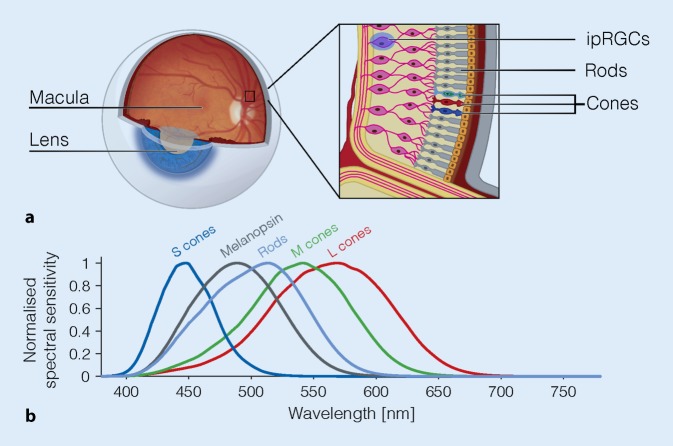
“Melanopsin is a short-wavelength-sensitive pigment with a peak spectral sensitivity near around 480 nm [4], rendering some RGCs intrinsically photosensitive [79].”
§ Effects of light on human circadian rhythms, sleep and mood > Photoreceptors in the retina
What the sources say
- Supportedcites [4] Bailes HJ Lucas RJ Human melanopsin forms a pigment maximally sensitive to blue light (lambdamax approximately 479 nm) supporting activation of G(q/11) and G(i/o) signalling cascades Proc Biol Sci 2013 280 20122987 10.1098/rspb.2012.2987 23554393 PMC3619500 source
The Results section (‘Spectral sensitivity of human and mouse melanopsins’) reports that human melanopsin is best fit by a peak sensitivity of 479 nm. The Discussion (‘Melanopsin spectral sensitivity’) likewise describes its action spectrum as having λmax of 479 nm, supporting the cited description of a short-wavelength-sensitive pigment peaking near 480 nm. (LLM, conf=0.95)
plain- Asserted: passes — The authors put it forward as true.
- Checkable: passes — It can be checked against evidence.
- Load-bearing: unclear — It is unclear whether the paper’s conclusions depend on it.
- Based: passes — The paper gives a reason why it holds.
- Supported
Every source the paper cites for this claim was checked and supports it.
In the paper
“These intrinsically photosensitive retinal ganglion cells (ipRGCs) are thought to mediate most effects of light on the circadian clock.”
§ Effects of light on human circadian rhythms, sleep and mood > Photoreceptors in the retina
What the sources say
- Supportedcites [79] Spitschan M Melanopsin contributions to non-visual and visual function Curr Opini Behav Sci 2019 30 67 72 10.1016/j.cobeha.2019.06.004 PMC6687502 31396546 source
The review’s ‘Non-visual effects of light mediated by melanopsin’ section identifies light-induced shifts of the internal clock as a melanopsin-mediated effect. Its circadian phase-shifting subsection says spectral sensitivity is broadly proportional to melanopsin activation; the review also identifies ipRGCs as carrying melanopsin signals to the suprachiasmatic nucleus. It notes possible cone contributions, which does not conflict with the claim’s qualified ‘most effects.’ (LLM, conf=0.85)
hedgedstates a possible cause- Asserted: passes — The authors put it forward as true.
- Checkable: passes — It can be checked against evidence.
- Load-bearing: unclear — It is unclear whether the paper’s conclusions depend on it.
- Based: passes — The paper gives a reason why it holds.
- Supported
The cited sources support only part of this claim — read each source’s verdict below.
In the paper
“The system mediating melatonin suppression has a spectral sensitivity that is broadly consistent with the spectral sensitivity of melanopsin [17, 60, 88].”
§ Effects of light on human circadian rhythms, sleep and mood > Effects of light on the circadian clock
What the sources say
- Partly supportedcites [17] Brainard GC Hanifin JP Greeson JM Action spectrum for melatonin regulation in humans: evidence for a novel circadian photoreceptor J Neurosci 2001 21 6405 6412 10.1523/JNEUROSCI.21-16-06405.2001 11487664 PMC6763155 sourceExperimental — accuracy not yet measured
The 'Action spectrum for melatonin suppression' section reports a peak sensitivity of 464 nm. The Discussion names melanopsin as a candidate photopigment, but does not give its spectral sensitivity or compare it with the measured action spectrum. The claimed consistency with melanopsin is therefore not established by this paper. (LLM, conf=0.84)
- Not checked — no full text of the sourcecites [60] Nowozin C Wahnschaffe A Rodenbeck A Applying Melanopic lux to measure biological light effects on Melatonin suppression and subjective sleepiness Curr Alzheimer Res 2017 14 1042 1052 10.2174/1567205014666170523094526 28545361 source
- Partly supportedcites [88] Thapan K Arendt J Skene DJ An action spectrum for melatonin suppression: evidence for a novel non-rod, non-cone photoreceptor system in humans J Physiol 2001 535 261 267 10.1111/j.1469-7793.2001.t01-1-00261.x 11507175 PMC2278766 sourceExperimental — accuracy not yet measured
The Results and Discussion report a short-wavelength action spectrum for melatonin suppression, best fit by an opsin template peaking around 459 nm. The paper mentions melanopsin as a candidate photopigment but does not report its spectral sensitivity or compare it with the measured action spectrum. Thus, it supports the melatonin-suppression finding, not the claimed consistency with melanopsin. (LLM, conf=0.86)
plainstates an association- Asserted: passes — The authors put it forward as true.
- Checkable: passes — It can be checked against evidence.
- Load-bearing: unclear — It is unclear whether the paper’s conclusions depend on it.
- Based: passes — The paper gives a reason why it holds.
- Partly supported
58 more claims · 23 with their cited sources checked
Create a free account to see all 103 claims and to verify the 5 references still open.
- It may state two separate claims as one. 29
- Probably not a substantial claim. 13
Citations
Cites
Two-Process Model of Sleep Regulation
(2009) · Encyclopedia of Neuroscience · doi:10.1007/978-3-540-29678-2_6166 · Cited by 3,899 · cited 1×
“The interactionbetween this circadian “process C” and the homeostatic “process S” has been conceptualised in the widely known “twoprocess model of sleep” [13, 15], which”
BackgroundLife between Clocks: Daily Temporal Patterns of Human Chronotypes
Roenneberg, T., Wirz-Justice, A., & Merrow, M. (2003) · Journal of Biological Rhythms · doi:10.1177/0748730402239679 · Cited by 2,662
International Classification of Sleep Disorders
Thorpy, M. (2017) · Sleep Disorders Medicine · doi:10.1007/978-1-4939-6578-6_27 · Cited by 2,505
Rosenthal, N. E. (1984) · Archives of General Psychiatry · doi:10.1001/archpsyc.1984.01790120076010 · Cited by 2,385
Central and Peripheral Circadian Clocks in Mammals
Mohawk, J. A., Green, C. B., & Takahashi, J. S. (2012) · Annual Review of Neuroscience · doi:10.1146/annurev-neuro-060909-153128 · Cited by 2,265
Action Spectrum for Melatonin Regulation in Humans: Evidence for a Novel Circadian Photoreceptor
Brainard, G. C., Hanifin, J. P., Greeson, J. M., Byrne, B., Glickman, G., Gerner, E., & Rollag, M. D. (2001) · The Journal of Neuroscience · doi:10.1523/jneurosci.21-16-06405.2001 · Cited by 1,930
Light Suppresses Melatonin Secretion in Humans
Lewy, A. J., Wehr, T. A., Goodwin, F. K., Newsome, D. A., & Markey, S. P. (1980) · Science · doi:10.1126/science.7434030 · Cited by 1,913
The two‐process model of sleep regulation: a reappraisal
Borbély, A. A., Daan, S., Wirz‐Justice, A., & Deboer, T. (2016) · Journal of Sleep Research · doi:10.1111/jsr.12371 · Cited by 1,577
Chang, A.-M., Aeschbach, D., Duffy, J. F., & Czeisler, C. A. (2015) · Proceedings of the National Academy of Sciences · doi:10.1073/pnas.1418490112 · Cited by 1,430 · cited 2×
“Chang and colleagues [26] for example found that reading a book from an e-reader for four hours before sleep increased sleep onset latency, reduced evening sleepiness, melatonin secretion aswell asnext-morningalertness, anddelayed the timing of the biological clock, which is also in line with other findings [72, 107].”
ResultDijk, D., & Czeisler, C. (1995) · The Journal of Neuroscience · doi:10.1523/jneurosci.15-05-03526.1995 · Cited by 1,356 · cited 1×
“Several studies report that daytime exposure to white light enriched in shortwavelength content was associated with increased evening fatigue [91], and sleep quality [16, 39, 91], decreased sleep-onset latency [39], and increased slow-wave sleep accumulation [92], which is related to thedissipationof thehomeostatic sl…”
Background
Cited by
Mechanisms of blue light-induced eye hazard and protective measures: a review
Ouyang, X., Yang, J., Hong, Z., Wu, Y., Xie, Y., & Wang, G. (2020) · Biomedicine & Pharmacotherapy · doi:10.1016/j.biopha.2020.110577 · Cited by 232
The influence of the environment and lifestyle on myopia
Biswas, S., El Kareh, A., Qureshi, M., Lee, D. M. X., Sun, C.-H., Lam, J. S. H., Saw, S.-M., & Najjar, R. P. (2024) · Journal of Physiological Anthropology · doi:10.1186/s40101-024-00354-7 · Cited by 191
The brain’s reward system in health and disease
Lewis, R. G., Florio, E., Punzo, D., & Borrelli, E. (2021) · Advances in experimental medicine and biology · doi:10.1007/978-3-030-81147-1_4 · Cited by 170
“Indeed, lights from backlit screens can delay and advance circadian timing causing asynchronization (Blume et al. 2019).”
BackgroundYuksel, D., McKee, G. B., Perrin, P. B., Alzueta, E., Caffarra, S., Ramos-Usuga, D., Arango-Lasprilla, J. C., & Baker, F. C. (2021) · Sleep Health · doi:10.1016/j.sleh.2020.12.008 · Cited by 156
Sleep Deprivation and Insomnia in Adolescence: Implications for Mental Health
Uccella, S., Cordani, R., Salfi, F., Gorgoni, M., Scarpelli, S., Gemignani, A., Geoffroy, P. A., De Gennaro, L., Palagini, L., Ferrara, M., et al. (2023) · Brain Sciences · doi:10.3390/brainsci13040569 · Cited by 131
“Light is a crucial zeitgeber that controls several biological processes, including daily melatonin variations [43].”
BackgroundMattingly, S. M., Grover, T., Martinez, G. J., Aledavood, T., Robles-Granda, P., Nies, K., Striegel, A., & Mark, G. (2021) · npj Digital Medicine · doi:10.1038/s41746-021-00435-2 · Cited by 117
“…such as light and ambient temperature and serve as a circadian pacemaker to coordinate other circadian responses to optimize to the environment 46 – 53 , e.g., in humans to promote sleep when it is dark and to be awake when it is light, to be asleep at the lowest point of core body temperature…”
BackgroundNCCN Guidelines® Insights: Survivorship, Version 1.2023
Sanft, T. B., Day, A., Ansbaugh, S. M., Armenian, S. H., Baker, K. S., Ballinger, T. J., Demark‐Wahnefried, W., Dickinson, K. A., Fairman, N. P., Felciano, J., et al. (2023) · Journal of the National Comprehensive Cancer Network · doi:10.6004/jnccn.2023.0041 · Cited by 123
The circadian clock and metabolic homeostasis: entangled networks
de Assis, L. V. M., & Oster, H. (2021) · Cellular and Molecular Life Sciences · doi:10.1007/s00018-021-03800-2 · Cited by 109
“However, such LEDs display a sharp blue emitting peak that is able to influence our circadian system via OPN4-detection in the eye [49] and may promote eyerelated pathologies [50].”
BackgroundInsomnia in adult patients with cancer: ESMO Clinical Practice Guideline
Grassi, L., Zachariae, R., Caruso, R., Palagini, L., Campos-Ródenas, R., Riba, M. B., Lloyd-Williams, M., Kissane, D., Rodin, G., McFarland, D., et al. (2023) · ESMO Open · doi:10.1016/j.esmoop.2023.102047 · Cited by 96
Reytor-González, C., Simancas-Racines, D., Román-Galeano, N. M., Annunziata, G., Galasso, M., Zambrano-Villacres, R., Verde, L., Muscogiuri, G., Frias-Toral, E., & Barrea, L. (2025) · Nutrients · doi:10.3390/nu17132135 · Cited by 88
“In contrast, artificial light at night, especially blue light from electronic screens, suppresses melatonin production and delays sleep onset [212–215].”
Effects of outdoor artificial light at night on human health and behavior: A literature review
Wang, T., Kaida, N., & Kaida, K. (2023) · Environmental Pollution · doi:10.1016/j.envpol.2023.121321 · Cited by 107
Wong, N. A., & Bahmani, H. (2022) · Heliyon · doi:10.1016/j.heliyon.2022.e10282 · Cited by 115
Nagare, R., Woo, M. K., MacNaughton, P., Plitnick, B., Tinianov, B. D., & Figueiro, M. G. (2021) · International Journal of Environmental Research and Public Health · doi:10.3390/ijerph18199980 · Cited by 109
“These impacts were likely driven by the improved daytime circadian-effective light levels imparted by the EC glass condition, supporting well-established mechanistic models demonstrating the benefits of short wavelength light characteristic of daylight on human circadian rhythm alignment and sleep quality [34]).”
BackgroundExposure to artificial light at night: A common link for obesity and cancer?
Muscogiuri, G., Poggiogalle, E., Barrea, L., Tarsitano, M. G., Garifalos, F., Liccardi, A., Pugliese, G., Savastano, S., Colao, A., Colao, A., et al. (2022) · European Journal of Cancer · doi:10.1016/j.ejca.2022.06.007 · Cited by 76
The role of the circadian system in the etiology of depression
de Leeuw, M., Verhoeve, S. I., van der Wee, N. J. A., van Hemert, A. M., Vreugdenhil, E., & Coomans, C. P. (2023) · Neuroscience & Biobehavioral Reviews · doi:10.1016/j.neubiorev.2023.105383 · Cited by 90
Circadian Disruption and Consequences on Innate Immunity and Inflammatory Response
Jerigová, V. Š., Zeman, M., & Okuliarová, M. (2022) · International Journal of Molecular Sciences · doi:10.3390/ijms232213722 · Cited by 74
Wearables in Chronomedicine and Interpretation of Circadian Health
Gubin, D. G., Weinert, D., Stefani, O., Otsuka, K., Borisenkov, M. F., & Cornélissen, G. (2025) · Diagnostics · doi:10.3390/diagnostics15030327 · Cited by 83
“It can be caused by a weakened light signaling due to poor circadian light hygiene [4–6, 150–153] or by a compromised light perception”
Höhn, C., Schmid, S. R., Plamberger, C. P., Bothe, K., Angerer, M., Gruber, G., Pletzer, B., & Hoedlmoser, K. (2021) · Clocks & Sleep · doi:10.3390/clockssleep3010005 · Cited by 61
“, rods and cones) but also by specific intrinsically photosensitive retinal ganglion cells (ipRGCs) [15], which contain the photopigment melanopsin [16,17].”
BackgroundCoskun, A., Zarepour, A., & Zarrabi, A. (2023) · International Journal of Molecular Sciences · doi:10.3390/ijms24076275 · Cited by 61
“social jetlag [127,128], exposure to artificial light [129], and irregular eating time [130]”
BackgroundSpitschan, M., Kervezee, L., Lok, R., McGlashan, E., Najjar, R. P., Allen, A. E., Andersen, M., Bará, S., Blattner, P., Blume, C., et al. (2023) · eBioMedicine · doi:10.1016/j.ebiom.2023.104889 · Cited by 60
Self-citationMelatonergic Receptors (Mt1/Mt2) as a Potential Additional Target of Novel Drugs for Depression
Boiko, D. I., Shkodina, A. D., Hasan, M. M., Bardhan, M., Kazmi, S. K., Chopra, H., Bhutra, P., Baig, A. A., & Skrypnikov, A. M. (2022) · Neurochemical Research · doi:10.1007/s11064-022-03646-5 · Cited by 74
“The sensitivity spectrum of melanopsin depends on the natural solar cycle, and its disruption causes an alteration in circadian rhythm [56].”
BackgroundAn Investigation of the Influence of the Night Lighting in a Urban Park on Individuals’ Emotions
Masullo, M., Cioffi, F., Lì, J., Maffei, L., Scorpio, M., Iachini, T., Ruggiero, G., Malferà, A., & Ruotolo, F. (2022) · Sustainability · doi:10.3390/su14148556 · Cited by 60
Spitschan, M., Smolders, K., Vandendriessche, B., Bent, B., Bakker, J. P., Rodriguez-Chavez, I. R., & Vetter, C. (2022) · DIGITAL HEALTH · doi:10.1177/20552076221144858 · Cited by 54
“Exposure to light has a powerful impact on human health and well-being.(1,2) This impact is mediated by a range of physiological responses to ocular light exposure.”
BackgroundSelf-citationLight-responsive biomaterials for ocular drug delivery
Abdelmohsen, H. A. M., Copeland, N. A., & Hardy, J. G. (2022) · Drug Delivery and Translational Research · doi:10.1007/s13346-022-01196-5 · Cited by 62
The relationship between chronotype and obesity: A systematic review
ERİM, S. E., & Sert, H. (2023) · Chronobiology International · doi:10.1080/07420528.2023.2180385 · Cited by 69
The Light-Dosimeter: A new device to help advance research on the non-visual responses to light
Stampfli, J., Schrader, B., di Battista, C., Häfliger, R., Schälli, O., Wichmann, G., Zumbühl, C., Blattner, P., Cajochen, C., Lazar, R., et al. (2023) · Lighting Research & Technology · doi:10.1177/14771535221147140 · Cited by 50
Self-citationDysfunction of circadian and sleep rhythms in the early stages of Alzheimer's disease
Rigat, L., Ouk, K., Kramer, A., & Priller, J. (2023) · Acta Physiologica · doi:10.1111/apha.13970 · Cited by 52
Individual differences and diversity in human physiological responses to light
Spitschan, M., & Santhi, N. (2022) · eBioMedicine · doi:10.1016/j.ebiom.2021.103640 · Cited by 46
Self-citationGubin, D. G., Danilenko, K. V., Stefani, O., Kolomeichuk, S. N., Markov, A., Petrov, I. M., Voronin, K., Mezhakova, M. S., Borisenkov, M. F., Shigabaeva, A., et al. (2023) · Biology · doi:10.3390/biology13010022 · Cited by 60
“The benefits of light for the circadian system and health imperatively depend on the circadian phase and change from the early morning to the late evening hours [1,2,7].”
BackgroundSleep in Habitual Adult Video Gamers: A Systematic Review
Kemp, C., Pienaar, P. R., Rosslee, D. T., Lipinska, G., Roden, L. C., & Rae, D. E. (2021) · Frontiers in Neuroscience · doi:10.3389/fnins.2021.781351 · Cited by 54
“We echo that, indeed, the performance of gamers and esports athletes may be vulnerable to the adverse effects of short and poor-quality sleep (Bonnar et al., 2019).”
BackgroundInfluentialAmbati, A., Hillary, R. P., Leu‐Semenescu, S., Ollila, H. M., Lin, L., During, E., Farber, N. M., Rico, T. J., Faraco, J. H., Leary, E. B., et al. (2021) · Proceedings of the National Academy of Sciences · doi:10.1073/pnas.2005753118 · Cited by 59
Therapeutics on the clock: Circadian medicine in the treatment of chronic inflammatory diseases
Jacob, H., Curtis, A. M., & Kearney, C. J. (2020) · Biochemical Pharmacology · doi:10.1016/j.bcp.2020.114254 · Cited by 58
Timing is everything: Circadian rhythms and their role in the control of sleep
Pandi-Perumal, S. R., Cardinali, D. P., Zaki, N. F. W., Ramanujam, K., Spence, D. W., Reiter, R. J., & Brown, G. M. (2022) · Frontiers in Neuroendocrinology · doi:10.1016/j.yfrne.2022.100978 · Cited by 70
Combertaldi, S. L., Ort, A., Cordi, M. J., Fahr, A., & Rasch, B. (2021) · Sleep Medicine · doi:10.1016/j.sleep.2021.09.009 · Cited by 64
The future of IEQ in green building certifications
Licina, D., Wargocki, P. L., Pyke, C. R., & Altomonte, S. (2021) · Buildings and Cities · doi:10.5334/bc.148 · Cited by 58
Juda, M., Liu-Ambrose, T. Y. L., Feldman, F., Suvagau, C., & Mistlberger, R. E. (2020) · Clocks & Sleep · doi:10.3390/clockssleep2040040 · Cited by 42
Behavioural determinants of physiologically-relevant light exposure
Biller, A. M., Balakrishnan, P., & Spitschan, M. (2024) · Communications Psychology · doi:10.1038/s44271-024-00159-5 · Cited by 48
“This highlights the role of an individual ’ s “ photic history ” 7,57,58 and “ spectral diet ” 59 which describe the timing of light as well as the spectral composition of the light an individual experiences across the day respectively (see Fig.”
InfluentialSelf-citationSleep, Sleep Disorders, and Mental Health: A Narrative Review
Howarth, N. E., & Miller, M. A. (2024) · Heart and Mind · doi:10.4103/hm.hm-d-24-00030 · Cited by 60
“[47] Further, the amount of light, which varies over the seasons, impacts mood and sleep through the SCN. [48] Between March and November in the US and UK, the clocks move forward ahead of the time zone.”
de Menezes-Júnior, L. A. A., de Moura, S. S., Miranda, A. G., Andrade, A. C. D. S., Machado-Coelho, G. L. L., & Meireles, A. L. (2023) · BMC Public Health · doi:10.1186/s12889-023-16041-8 · Cited by 47
“There are some hypotheses for this association, among them exposure to screens, especially at night, since screens backlit by LED can cause clinically relevant melatonin suppression and psychophysiological arousal, intervening in our biological clock [10].”
BackgroundBöhmer, M. N., Hamers, P. C. M., Bindels, P., Oppewal, A., Someren, E. J. W. V., & Festen, D. A. M. (2021) · Sleep Health · doi:10.1016/j.sleh.2021.06.001 · Cited by 41
Lyall, L. M., Sangha, N., Zhu, X., Lyall, D. M., Ward, J., Strawbridge, R. J., Cullen, B., & Smıth, D. J. (2023) · Journal of Affective Disorders · doi:10.1016/j.jad.2023.04.138 · Cited by 47
Influence of geometrical and optical building parameters on the circadian daylighting of an office
Potočnik, J., & Košir, M. (2021) · Journal of Building Engineering · doi:10.1016/j.jobe.2021.102402 · Cited by 47
Mireku, M. O., & Rodriguez, A. (2021) · International Journal of Environmental Research and Public Health · doi:10.3390/ijerph18116154 · Cited by 39
How Is Indoor Air Quality during Sleep? A Review of Field Studies
Canha, N., Teixeira, C., Figueira, M., & Correia, C. (2021) · Atmosphere · doi:10.3390/atmos12010110 · Cited by 47
“Sleep is influenced by several factors, from physical and mental conditions [10,11] to environmental factors, such as temperature [12,13], light [14] and noise levels [15], and carbon dioxide (CO2) levels [1].”
BackgroundHöhn, C., Hahn, M. A., Gruber, G., Pletzer, B. A., Cajochen, C., & Hoedlmoser, K. (2024) · Brain Communications · doi:10.1093/braincomms/fcae173 · Cited by 63
“18 30-33 Additionally, evening light exposure has been reported to elicit longer-lasting effects on next-morning cognitive performance 8,34 and mood.”
BackgroundThe vertical light-gradient and its potential impact on animal distribution and behavior
Nilsson, D., Smolka, J., & Bok, M. J. (2022) · Frontiers in Ecology and Evolution · doi:10.3389/fevo.2022.951328 · Cited by 40
“The amount of light illuminating the environment (the illuminance or irradiance) is well-known to regulate behavior and to entrain biological rhythms across the animal kingdom (Hertz et al., 1994; Cobcroft et al., 2001; Kristensen et al., 2006; Chiesa et al., 2010; Tuomainen and Candolin, 2011; Pauers et al., 2012; Al…”
BackgroundXu, Y.-X., Yu, Y., Huang, Y., Wan, Y., Su, P., Tao, F., & Sun, Y. (2021) · Environmental Pollution · doi:10.1016/j.envpol.2021.118628 · Cited by 35
Exploring the link between chronobiology and drug delivery: effects on cancer therapy
Albuquerque, T., Neves, A. R., Quintela, T., & Costa, D. R. B. (2021) · Journal of Molecular Medicine · doi:10.1007/s00109-021-02106-x · Cited by 37
Lang, C., Richardson, C. E., Micic, G., & Gradisar, M. (2022) · Frontiers in Psychiatry · doi:10.3389/fpsyt.2022.785079 · Cited by 51
“Natural daylight is the most potent timekeeper of the human circadian rhythm, hence artificial light exposure in the evening delays circadian timing thus sleep (9).”
BackgroundKarimi, L., Rahimi‐Bashar, F., Mohammadi, S. M., Mollahadi, M., Khoshfetrat, M., Vahedian‐Azimi, A., & Ashtari, S. (2021) · Frontiers in Psychiatry · doi:10.3389/fpsyt.2021.791342 · Cited by 34
“In this context, it is known that in the suprachiasmatic nucleus, the connections of the retina orient the nervous system about the existence of the light, which, being absent, stimulates the secretion of melatonin through the pineal gland (59).”
BackgroundSchmid, S. R., Höhn, C., Bothe, K., Plamberger, C., Angerer, M., Pletzer, B. A., & Hoedlmoser, K. (2021) · Clocks & Sleep · doi:10.3390/clockssleep3040040 · Cited by 38
Zimmermann, P., Kurth, S., Pugin, B., & Bokulich, N. A. (2024) · npj Biofilms and Microbiomes · doi:10.1038/s41522-024-00605-6 · Cited by 43
Effects of calibrated blue–yellow changes in light on the human circadian clock
Blume, C., Cajochen, C., Schöllhorn, I., Slawik, H. C., & Spitschan, M. (2023) · Nature Human Behaviour · doi:10.1038/s41562-023-01791-7 · Cited by 34
“Based on these converging lines of evidence (for a summary of the extant literature, see Supplementary Table 1), we therefore hypothesized that a similar effect can be found in the circadian system of humans.”
Self-citationJuliana, N., Azmi, L., Effendy, N. M., Teng, N. I. M. F., Abu, I. F., Bakar, N. N. A., Azmani, S., Yazit, N. A. A., Kadiman, S., & Das, S. (2023) · Nutrients · doi:10.3390/nu15030734 · Cited by 35
Zohdi, H., Egli, R., Guthruf, D., Scholkmann, F., & Wolf, U. (2021) · Scientific Reports · doi:10.1038/s41598-021-88059-0 · Cited by 34
The effect of evening light on circadian-related outcomes: A systematic review
Cyr, M., Artenie, D. Z., Bikaii, A. A., Borsook, D., & Olson, J. A. (2022) · Sleep Medicine Reviews · doi:10.1016/j.smrv.2022.101660 · Cited by 40
Sleep and Mental Health Disturbances Due to Social Isolation during the COVID-19 Pandemic in Mexico
Terán-Pérez, G., Portillo-Vasquez, A. M., Arana-Lechuga, Y., Sánchez-Escandón, Ó., Mercadillo-Caballero, R., González-Robles, R. O., & Velázquez‐Moctezuma, J. (2021) · International Journal of Environmental Research and Public Health · doi:10.3390/ijerph18062804 · Cited by 31
“Furthermore, social isolation induces a decrease in solar light stimulation that negatively affects both circadian rhythm synchronization and mood [37].”
BackgroundAn inventory of human light exposure behaviour
Siraji, M. A., Lazar, R., van Duijnhoven, J., Schlangen, L. J. M., Haque, S., Kalavally, V., Vetter, C., Glickman, G. L., Smolders, K. C. H. J., & Spitschan, M. (2023) · Scientific Reports · doi:10.1038/s41598-023-48241-y · Cited by 35
Self-citationSleep during and following critical illness: A narrative review
Showler, L., Abdelhamid, Y. A., Goldin, J., & Deane, A. M. (2023) · World Journal of Critical Care Medicine · doi:10.5492/wjccm.v12.i3.92 · Cited by 32
Ganobjak, M., Malfait, W. J., Just, J., et al. (2022) · Journal of Building Engineering · doi:10.1016/j.jobe.2022.105600 · Cited by 28
Mundula, T., Russo, E., Curini, L., Giudici, F., Piccioni, A., Franceschi, F., & Amedei, A. (2022) · Current Medicinal Chemistry · doi:10.2174/0929867329666220430131018 · Cited by 35
Circadian Clock-Controlled Checkpoints in the Pathogenesis of Complex Disease
Li, M., Xin, H., Yuan, Y., Yang, X., Li, H., Tian, D., Zhang, H., Zhang, Z., Han, T.-L., Chen, Q., et al. (2021) · Frontiers in Genetics · doi:10.3389/fgene.2021.721231 · Cited by 33
Systematic Review of Extended Reality for Smart Built Environments Lighting Design Simulations
Mohammadrezaei, E., Ghasemi, S., Dongre, P., Gračanin, D., & Zhang, H. (2024) · IEEE Access · doi:10.1109/access.2024.3359167 · Cited by 37
“To treat mental diseases, light therapy (LT) has become more and more popular over the past few decades [244]–[246].”
BackgroundKalkanis, A., Demolder, S., Papadopoulos, D., Testelmans, D., & Buyse, B. (2023) · Frontiers in Neurology · doi:10.3389/fneur.2023.1270043 · Cited by 43
“Shift workers and especially night workers are exposed to a substantial amount of unnatural light, which has been shown to suppress melatonin and aggravate the circadian misalignment between the internal circadian clock and activities (54).”
BackgroundXu, S., Zong, Z., Zhu, Y., Zhang, X., Zhang, Y., Wang, X., Tao, S., Wu, X., & Tao, F. (2023) · BMC Ophthalmology · doi:10.1186/s12886-023-02874-9 · Cited by 30
Guidolin, C., Aerts, S., Agbeshie, G. K., Akuffo, K. O., Aydin, S. N., Moyano, D. B., Bolte, J. F. B., Broszio, K., Cantarero-García, G., Didikoğlu, A., et al. (2024) · BMC Public Health · doi:10.1186/s12889-024-20206-4 · Cited by 32
“Light exposure significantly affects human health and behaviour, modulating sleep, cognitive functions and neuroendocrine processes [1].”
Self-citationCircadian de(regulation) in physiology: implications for disease and treatment
de Assis, L. V. M., & Kramer, A. (2024) · Genes & Development · doi:10.1101/gad.352180.124 · Cited by 37
The circadian system: A neglected player in neurodevelopmental disorders
Bouteldja, A. A., Penichet, D., Srivastava, L. K., & Cermakian, N. (2024) · European Journal of Neuroscience · doi:10.1111/ejn.16423 · Cited by 30
“…entrainment of the clock to the 24-h solar day, to which our circadian rhythms adapted, the presence of artificial light sources in the modern world (e.g. the light emitted from electronic devices, home and street lighting) puts people at risk of circadian rhythm disruption (Blume et al., 2019).”
The circadian rhythm: an influential soundtrack in the diabetes story
Hariri, A., Mirian, M., Zarrabi, A., Kohandel, M., Amini-Pozveh, M., Aref, A. R., Tabatabaee, A., Prabhakar, P. K., & Sivakumar, P. M. (2023) · Frontiers in Endocrinology · doi:10.3389/fendo.2023.1156757 · Cited by 30
de Menezes-Júnior, L. A. A., Sabião, T. D. S., de Moura, S. S., Batista, A. P., de Menezes, M. C., Carraro, J. C. C., Andrade, A. C. D. S., Machado-Coelho, G. L. L., & Meireles, A. L. (2023) · Nutrition · doi:10.1016/j.nut.2023.112008 · Cited by 27
Delorme, T. C., Srikanta, S. B., Fisk, A. S., Cloutier, M., Sato, M., Pothecary, C. A., Merz, C., Foster, F., Brown, S. A., Peirson, S. N., et al. (2022) · Frontiers in Neuroscience · doi:10.3389/fnins.2022.855154 · Cited by 26
“The detrimental effects of mistimed light exposure have been well documented in a plethora of studies conducted on different sub-sections of the population (Evans and Davidson, 2013; Cho et al., 2018; Blume et al., 2019).”
BackgroundImpact of window views on cognitive functions and perceived comfort in healthcare environments
Elnaklah, R., & AlWaer, H. (2024) · Building and Environment · doi:10.1016/j.buildenv.2024.112482 · Cited by 30
Preschoolers' engagement with screen content and associations with sleep and cognitive development
Axelsson, E. L., Purcell, K., Asis, A., Paech, G. M., Metse, A. P., Murphy, D., & Robson, A. (2022) · Acta Psychologica · doi:10.1016/j.actpsy.2022.103762 · Cited by 66
Gorgol, J., Stolarski, M., & Bullock, B. (2021) · Journal of Sleep Research · doi:10.1111/jsr.13520 · Cited by 26
“Natural light is not only an important zeitgeber for circadian system entrainment, deficiencies in the amount and timing of light may directly affect mood and emotion regulation via neurobiological pathways (Blume et al., 2019).”
BackgroundArtificial Light at Night and Type 2 Diabetes Mellitus
Baek, J. H., Zhu, Y., Jackson, C. L., & Park, Y. (2024) · Diabetes & Metabolism Journal · doi:10.4093/dmj.2024.0237 · Cited by 35
Morning light therapy in adults with Tourette’s disorder
Ricketts, E. J., Burgess, H. J., Montalbano, G. E., Coles, M. E., Mcguire, J. F., Thamrin, H., McMakin, D. L., McCracken, J. T., Carskadon, M. A., Piacentini, J. C., et al. (2021) · Journal of Neurology · doi:10.1007/s00415-021-10645-z · Cited by 25
Bais, B., Kamperman, A. M., Bijma, H. H., Hoogendijk, W. J., Souman, J. L., Knijff, E., & Lambregtse-van den Berg, M. P. (2020) · BMJ Open · doi:10.1136/bmjopen-2020-038030 · Cited by 24
Nunayon, S. S., & Zhong, L. (2025) · Sustainable Cities and Society · doi:10.1016/j.scs.2025.106535 · Cited by 33
Sleep and circadian hygiene practices association with sleep quality among Brazilian adults
Castro-Santos, L., Lima, M. D. O., Pedrosa, A. K. P., Serenini, R., de Menezes, R. C. E., & Longo‐Silva, G. (2023) · Sleep Medicine X · doi:10.1016/j.sleepx.2023.100088 · Cited by 31
“Furthermore, the content of these media can incite reactions to stress, such as excitement, agitation, fear, and euphoria, increasing adrenaline and vigilance when the body should be preparing for rest [15,56].”
BackgroundInfluentialHe, M., Ru, T., Li, S., Li, Y., & Zhou, G. (2022) · Journal of Sleep Research · doi:10.1111/jsr.13724 · Cited by 32
“The sleep–wake cycle is one of the prominent manifestations of circadian rhythmic patterns (Blume et al., 2019).”
BackgroundInfluentialZhu, S.-Y., Jin, S., Li, Z., Xu, Q. H., Hu, Z., Qiu, J., Chen, J., Pang, T., Zeng, L., Li, X., et al. (2025) · Journal of Advanced Ceramics · doi:10.26599/jac.2025.9221169 · Cited by 22
Coliță, C.-I., Hermann, D. M., Fîlfan, M., Coliță, D., Doeppner, T. R., Tica, O. S., Glăvan, D., & Popa‐Wagner, A. (2024) · Clocks & Sleep · doi:10.3390/clockssleep6040043 · Cited by 32
“Furthermore, the activity of the SCN is influenced by non-light-related information, including neurotransmitters like serotonin [9,10] and melatonin [11] and inputs from internal clocks in peripheral tissues [12].”
Shoaib, Z., Akbar, A., Kim, E. S., Kamran, M. A., Kim, J. H., & Jeong, M. Y. (2023) · Scientific Reports · doi:10.1038/s41598-023-33426-2 · Cited by 24
Miner, K. A., Huertas, M., Aspbury, A. S., & Gabor, C. R. (2021) · Frontiers in Ecology and Evolution · doi:10.3389/fevo.2021.617063 · Cited by 21
Associations between light at night and mental health: A systematic review and meta-analysis
Deprato, A., Haldar, P., Navarro, J. F., Harding, B. N., Lacy, P., Maidstone, R. J., Moitra, S., Cros, A. P., Durrington, H. J., Kogevinas, M., et al. (2025) · The Science of The Total Environment · doi:10.1016/j.scitotenv.2025.179188 · Cited by 29
Li, H., Tian, Z., Zhang, S., & Zou, M. (2024) · Building and Environment · doi:10.1016/j.buildenv.2024.111655 · Cited by 23
Jalali, M. S., Jones, J. R., Tural, E., & Gibbons, R. B. (2024) · Buildings · doi:10.3390/buildings14041125 · Cited by 38
Postoperative cognitive dysfunction: spotlight on light, circadian rhythms, and sleep
Campbell, E., & Figueiro, M. G. (2024) · Frontiers in Neuroscience · doi:10.3389/fnins.2024.1390216 · Cited by 20
“The daily light–dark pattern from the retina reaching the SCN is the primary zeitgeber for the circadian system (Blume et al., 2019).”
BackgroundFabrication of 3D‐Printed Contact Lenses and Their Potential as Color Blindness Ocular Aids
Hittini, S., Salih, A. E., Alam, F., et al. (2023) · Macromolecular Materials and Engineering · doi:10.1002/mame.202200601 · Cited by 21
Frenkel, Y., Черно, В. С., Kostenko, H., Chopra, H., Gautam, R. K., & Kostenko, V. О. (2023) · Pathophysiology · doi:10.3390/pathophysiology30010005 · Cited by 29
“The relevance of this issue is conditioned by the changes reshaping the sleep/work cycle in industrialised countries and the growing tendency to a night work regime with the rise in the exploitation of visual display units, smartphones, and light-emitting diode lighting that cause a shift in the light spectrum toward…”
BackgroundSimulating Physiological Potentials of Daylight Variables in Lighting Design
Ravn, M., Mach, G., Hansen, E. K., & Triantafyllidis, G. A. (2022) · Sustainability · doi:10.3390/su14020881 · Cited by 23
Fernandez, F. (2022) · Nature and Science of Sleep · doi:10.2147/nss.s251712 · Cited by 30
Huang, H.-T., Huang, T., & Hong, C. (2021) · Biology · doi:10.3390/biology10111205 · Cited by 25
“This biological clock and circadian rhythm are regulated by exposure to bright lights, such as sunlight or artificial light [6].”
BackgroundGulliver, A., Pike, G., Banfield, M., Morse, A., Katruss, N., Valerius, H., Pescud, M., McMaster, M., & West, S. (2021) · Evaluation and Program Planning · doi:10.1016/j.evalprogplan.2021.101930 · Cited by 18
Evaluating circadian light hygiene: Methodology and health implications
Gubin, D. G., Borisenkov, M. F., Kolomeichuk, S., Markov, A. G., Weinert, D., Cornélissen, G., & Stefani, O. (2024) · Russian Open Medical Journal · doi:10.15275/rusomj.2024.0415 · Cited by 26
Gilgoff, R., Mengelkoch, S., Elbers, J. M., Kotz, K. J., Radin, A. S., Pasumarthi, I., Murthy, R., Sindher, S., Harris, N. B., & Slavich, G. M. (2024) · Stress · doi:10.1080/10253890.2024.2327333 · Cited by 24
“Journaling and creating “to do” lists can help release worries and decrease nighttime rumination (Scullin et al., 2018). light therapy can help reset the circadian rhythm and homeostatic sleep drive (Blume et al., 2019).”
Lemke, T., Hökby, S., Wasserman, D., Carli, V., & Hadlaczky, G. (2023) · PLoS ONE · doi:10.1371/journal.pone.0293580 · Cited by 31
Effect of Smartphone Use on Sleep in Undergraduate Medical Students: A Cross-Sectional Study
Goel, A., Moinuddin, A., Tiwari, R., Sethi, Y., Suhail, M. K., Mohan, A., Kaka, N., Sarthi, P., Dutt, R., Ahmad, S. F., et al. (2023) · Healthcare · doi:10.3390/healthcare11212891 · Cited by 37
Napping Behavior in Adolescents: Consensus, Dissents, and Recommendations
Santos, J. S., Beijamini, F., & Louzada, F. M. (2021) · Sleep and Vigilance · doi:10.1007/s41782-021-00155-3 · Cited by 17
Spitschan, M., Mead, J., Roos, C., Lowis, C., Griffiths, B., Mucur, P., & Herf, M. (2021) · Wellcome Open Research · doi:10.12688/wellcomeopenres.16595.1 · Cited by 27
Self-citation
Metadata
- Authors
- Blume, C., Garbazza, C., & Spitschan, M.
- Affiliations
- University of Salzburg (AT)
- University of Basel (CH)
- Corresponding author
- Blume, Christine
- Garbazza, Corrado
- Spitschan, Manuel
- Venue
- Somnologie
- Published
- 2019-08-20
- Volume
- 23
- Issue
- 3
- Pages
- 147-156
- ISSN
- 1432-9123 (ISSN-L)
- 1439-054X
- PMC
- PMC6751071
- OpenAlex
- W2969343566
- Semantic Scholar
- 6f6a6e9d7a952485a71d17fe4aa15b818d8500af
- Cited by
- 695
- References
- 110
- Citations by year
- 2026: 122 · 2025: 150 · 2024: 126 · 2023: 123 · 2022: 80 · 2021: 72 · 2020: 19 · 2019: 2
- FWCI
- 23.88
- Type
- journal article
- Language
- en
- Open access
- hybrid
- doi.org
- Licence
- cc-by
- creativecommons.org/licenses/by/4.0 (tdm)
- creativecommons.org/licenses/by/4.0 (vor)
- Locations
- Somnologie - Schlafforschung und Schlafmedizin (publishedVersion, cc-by)
- PubMed Central (publishedVersion, cc-by)
- PubMed (publishedVersion)
- OSF Preprints (OSF Preprints) (submittedVersion, cc-by)
- OSF Preprints (OSF Preprints) (submittedVersion)
- Funders
- Austrian Science Fund
- Topics
- Life Sciences › Neuroscience › Endocrine and Autonomic Systems › Circadian rhythm and melatonin
- Social Sciences › Psychology › Experimental and Cognitive Psychology › Sleep and related disorders
- Physical Sciences › Environmental Science › Global and Planetary Change › Impact of Light on Environment and Health
- Keywords
- circadian rhythm, light exposure, artificial light at night, circadian rhythm disruption, suprachiasmatic nucleus, sleep, mood, phototherapy, circadian misalignment, well-being
About these checks
Registry, retraction, Cites and statistics results are computed, not judged, with one exception: a printed reference that no index lists is read once by a model before it counts as a citation error. Claims are extracted by a model and kept only when their quote appears verbatim in the text; each cited source is then checked, with a model’s help, for whether it says what the claim relies on. Those verdicts can be wrong — read the claim’s quote and the cited source before relying on one.
The claim verdicts this report counts are experimental: their accuracy is not yet measured.
A language model drew the claims from the paper on 2026-10-10, under version 3 of the claim definition (model deepseek-v4.1-flash, prompt extract-v3).
A second model labelled each claim on 2026-10-10 (model jev-1.13-20260917, definition revision gold-guideline-v0.2).
Cited sources are checked with a language model’s help (gpt-6-sol).
Statistics and arithmetic are recomputed, not judged.
Confidence bands are shown only for fields calibrated on our annotated test set. None is calibrated yet, so no band is shown.
What counts as a claim ›How we measure confidence ›How we check this ›
Are you an author, or do you see a problem with this page? Request a review
Data sources
Bibliographic data: Semantic Scholar, OpenAlex, Crossref.
Contains information from the Semantic Scholar Academic Graph Datasets, made available under the ODC Attribution License (ODC-BY 1.0).
Semantic Scholar’s data is described in: Kinney, R., et al. (2023). The Semantic Scholar Open Data Platform. arXiv:2301.10140.
