

Effects of light on human circadian rhythms, sleep and mood
Open accessPublished version of a preprint
The DOI matches its Crossref record; 111 of the 112 references it cites were found in a registry or an index; 57 of the 127 sources its claims cite were checked for support.
Abstract
Humans live in a 24-hour environment, in which light and darkness follow a diurnal pattern. Our circadian pacemaker, the suprachiasmatic nuclei (SCN) in the hypothalamus, is entrained to the 24-hour solar day via a pathway from the retina and synchronises our internal biological rhythms. Rhythmic variations in ambient illumination impact behaviours such as rest during sleep and activity during wakefulness as well as their underlying biological processes. Rather recently, the availability of artificial light has substantially changed the light environment, especially during evening and night hours. This may increase the risk of developing circadian rhythm sleep-wake disorders (CRSWD), which are often caused by a misalignment of endogenous circadian rhythms and external light-dark cycles. While the exact relationship between the availability of artificial light and CRSWD remains to be established, nocturnal light has been shown to alter circadian rhythms and sleep in humans. On the other hand, light can also be used as an effective and noninvasive therapeutic option with little to no side effects, to improve sleep,mood and general well-being. This article reviews our current state of knowledge regarding the effects of light on circadian rhythms, sleep, and mood.
Overview
CoChat Summary
TL;DR
This review summarizes how light entrains the suprachiasmatic nuclei via retinal pathways and affects circadian rhythms, sleep, and mood. It highlights that mistimed light may disrupt circadian rhythms and sleep, while bright light therapy is effective for seasonal affective disorder and several other conditions, though mechanisms and real-world effects remain uncertain.
Key findings
- Light is the key zeitgeber for the circadian system; non-visual effects are mediated by the retina, especially intrinsically photosensitive retinal ganglion cells expressing melanopsin with peak sensitivity near 480 nm. Morning light advances the clock, while evening and night light delays it, and melatonin suppression and circadian phase shifting may be separable rather than proxies for each other.
- Daylight at high intensities is beneficial for sleep: each additional hour spent outdoors advanced sleep by ~30 min in questionnaire data; shorter daylight exposure and longer nights are associated with a longer biological night and longer sleep duration; daytime short-wavelength-enriched white light has been associated with increased evening fatigue, better sleep quality, decreased sleep-onset latency, and increased slow-wave sleep accumulation.
- Evening artificial light and screens can delay the circadian clock and impair sleep: 4 h of e-reader reading before sleep increased sleep onset latency, reduced evening sleepiness, melatonin secretion, next-morning alertness, and delayed the biological clock; smartphone use before bedtime has been associated with more self-reported sleeping problems, decreased sleep efficiency, longer sleep onset latency, poor sleep quality, and shortened sleep duration. However, one study found that 2 h of tablet reading after prolonged bright daytime light did not suppress melatonin or alter sleep.
- Bright light therapy, typically 7000–10,000 lx for at least 30–60 min daily, is established as first-line treatment for seasonal affective disorder, effective as second-line treatment for non-seasonal depression (usually taking 2–5 weeks), and used adjunctively in other psychiatric and medical conditions; adverse reactions such as eye irritation, headache, or nausea are usually rare and lessen after a few days or reduced dosage.
Methods
- Narrative review synthesizing current knowledge on light effects on circadian rhythms, sleep, and mood; no primary data collection, systematic search strategy, or meta-analysis is described.
- Covers anatomical architecture of the circadian system, fundamentals of light and photoreceptors, effects of light on the circadian clock, sleep, and mood, and clinical applications of light therapy.
- No study sample or participants are reported; evidence is drawn from cited human and animal studies.
Limitations
- The paper states that the exact relationship between artificial light availability and circadian rhythm sleep–wake disorders remains to be established; the precise mechanisms by which light improves mood are not known; how much of smartphone-related sleep effects are due to light versus psychological engagement is unknown; and the relative contributions of light and physical activity to daylight-related phase advance remain to be determined.
- The paper notes that many aspects of light effects on the circadian clock remain unknown, the long-term adaptive influences of the real-world “spectral diet” remain an important area of investigation, and most light therapy glasses have not yet been evaluated in large randomized clinical trials.
- Evident from the text: as a narrative review, it lacks systematic search, quality appraisal, and quantitative synthesis; several cited evening-light studies used long exposures (4–6.5 h), and the paper itself notes it is unclear whether shorter exposures produce the same results.
Model-written summary. Check it against the paper before relying on it.
Integrity signals
Registry
Cites
Statistics
Figures
Verification
Claims the paper makes
40 Valid · 6 Not valid · 40 Not checked · 17 Own results and interpretations
At least one cited source doesn’t support this claim or points to a different paper, and none confirmed it — see the verdicts below.
In the paper
“Several studies report that daytime exposure to white light enriched in short-wavelength content was associated with increased evening fatigue [91], and sleep quality [16, 39, 91], decreased sleep-onset latency [39], and increased slow-wave sleep accumulation [92], which is related to the dissipation of the homeostatic sleep pressure [1, 14, 34].”
§ Effects of light on human circadian rhythms, sleep and mood > Effects of light on sleep
What the sources say
- Disputedcites [91] Viola AU James LM Schlangen LJ Blue-enriched white light in the workplace improves self-reported alertness, performance and sleep quality Scand J Work Environ Health 2008 34 4 297 306 10.5271/sjweh.1268 18815716 sourceExperimental — accuracy not yet measured
The Results (‘Assessment at the end of the 4-week periods’; page not provided) report a decrease, not an increase, in evening fatigue under blue-enriched white light compared with standard white light. This directly contradicts the attributed claim. (LLM, conf=0.95)
Checked by a reasoning model — may be wrong.
plainstates an association- Asserted: passes — The authors put it forward as true.
- Checkable: passes — It can be checked against evidence.
- Load-bearing: unclear — It is unclear whether the paper’s conclusions depend on it.
- Based: passes — The paper gives a reason why it holds.
- Disputed
The cited sources support only part of this claim — read each source’s verdict below.
In the paper
“Here, shorter daylight exposure and longer nights are associated with a longer biological night as indexed by the duration of melatonin secretion, and thus longer sleep duration [85, 94, 95], which may also reflect a seasonality effect [104].”
§ Effects of light on human circadian rhythms, sleep and mood > Effects of light on sleep
What the sources say
- Partly supportedcites [85] Stothard ER Mchill AW Depner CM Circadian entrainment to the natural light-dark cycle across seasons and the weekend Curr Biol 2017 27 508 513 10.1016/j.cub.2016.12.041 28162893 PMC5335920 sourceExperimental — accuracy not yet measured
In Results and Discussion, “Seasonal Responses” (page unavailable), the paper reports a longer melatonin-defined biological night after exposure to the natural winter light-dark cycle than after summer exposure. In “Study 1—Winter week-long camping” (page unavailable), sleep was longer during winter camping than in the modern lighting environment, but the authors suggest cold temperatures and increased activity as possible contributors. The paper does not establish that longer melatonin secretion caused the longer sleep duration. (LLM, conf=0.87)
- Not checked — no full text of the sourcecites [94] Wehr TA The durations of human melatonin secretion and sleep respond to changes in daylength (photoperiod) J Clin Endocrinol Metab 1991 73 1276 1280 10.1210/jcem-73-6-1276 1955509 source
- Not checked — no full text of the sourcecites [95] Wehr TA Moul DE Barbato G Conservation of photoperiod-responsive mechanisms in humans Am. J. Physiol. Regul. Integr. Comp. Physiol. 1993 265 R846 R857 10.1152/ajpregu.1993.265.4.R846 8238456 source
plainstates an association- Asserted: passes — The authors put it forward as true.
- Checkable: passes — It can be checked against evidence.
- Load-bearing: passes — The paper’s conclusions depend on it.
- Based: passes — The paper gives a reason why it holds.
- Partly supported
Every source the paper cites for this claim was checked and supports it.
In the paper
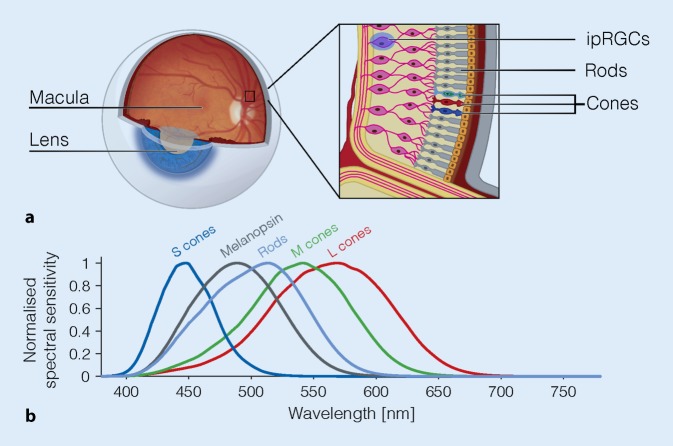
“Melanopsin is a short-wavelength-sensitive pigment with a peak spectral sensitivity near around 480 nm [4], rendering some RGCs intrinsically photosensitive [79].”
§ Effects of light on human circadian rhythms, sleep and mood > Photoreceptors in the retina
What the sources say
- Supportedcites [4] Bailes HJ Lucas RJ Human melanopsin forms a pigment maximally sensitive to blue light (lambdamax approximately 479 nm) supporting activation of G(q/11) and G(i/o) signalling cascades Proc Biol Sci 2013 280 20122987 10.1098/rspb.2012.2987 23554393 PMC3619500 source
The Results section (‘Spectral sensitivity of human and mouse melanopsins’) reports that human melanopsin is best fit by a peak sensitivity of 479 nm. The Discussion (‘Melanopsin spectral sensitivity’) likewise describes its action spectrum as having λmax of 479 nm, supporting the cited description of a short-wavelength-sensitive pigment peaking near 480 nm. (LLM, conf=0.95)
plain- Asserted: passes — The authors put it forward as true.
- Checkable: passes — It can be checked against evidence.
- Load-bearing: unclear — It is unclear whether the paper’s conclusions depend on it.
- Based: passes — The paper gives a reason why it holds.
- Supported
Every source the paper cites for this claim was checked and supports it.
In the paper
“These intrinsically photosensitive retinal ganglion cells (ipRGCs) are thought to mediate most effects of light on the circadian clock.”
§ Effects of light on human circadian rhythms, sleep and mood > Photoreceptors in the retina
What the sources say
- Supportedcites [79] Spitschan M Melanopsin contributions to non-visual and visual function Curr Opini Behav Sci 2019 30 67 72 10.1016/j.cobeha.2019.06.004 PMC6687502 31396546 source
The review’s ‘Non-visual effects of light mediated by melanopsin’ section identifies light-induced shifts of the internal clock as a melanopsin-mediated effect. Its circadian phase-shifting subsection says spectral sensitivity is broadly proportional to melanopsin activation; the review also identifies ipRGCs as carrying melanopsin signals to the suprachiasmatic nucleus. It notes possible cone contributions, which does not conflict with the claim’s qualified ‘most effects.’ (LLM, conf=0.85)
hedgedstates a possible cause- Asserted: passes — The authors put it forward as true.
- Checkable: passes — It can be checked against evidence.
- Load-bearing: unclear — It is unclear whether the paper’s conclusions depend on it.
- Based: passes — The paper gives a reason why it holds.
- Supported
The cited sources support only part of this claim — read each source’s verdict below.
In the paper
“The system mediating melatonin suppression has a spectral sensitivity that is broadly consistent with the spectral sensitivity of melanopsin [17, 60, 88].”
§ Effects of light on human circadian rhythms, sleep and mood > Effects of light on the circadian clock
What the sources say
- Partly supportedcites [17] Brainard GC Hanifin JP Greeson JM Action spectrum for melatonin regulation in humans: evidence for a novel circadian photoreceptor J Neurosci 2001 21 6405 6412 10.1523/JNEUROSCI.21-16-06405.2001 11487664 PMC6763155 sourceExperimental — accuracy not yet measured
The 'Action spectrum for melatonin suppression' section reports a peak sensitivity of 464 nm. The Discussion names melanopsin as a candidate photopigment, but does not give its spectral sensitivity or compare it with the measured action spectrum. The claimed consistency with melanopsin is therefore not established by this paper. (LLM, conf=0.84)
- Not checked — no full text of the sourcecites [60] Nowozin C Wahnschaffe A Rodenbeck A Applying Melanopic lux to measure biological light effects on Melatonin suppression and subjective sleepiness Curr Alzheimer Res 2017 14 1042 1052 10.2174/1567205014666170523094526 28545361 source
- Partly supportedcites [88] Thapan K Arendt J Skene DJ An action spectrum for melatonin suppression: evidence for a novel non-rod, non-cone photoreceptor system in humans J Physiol 2001 535 261 267 10.1111/j.1469-7793.2001.t01-1-00261.x 11507175 PMC2278766 sourceExperimental — accuracy not yet measured
The Results and Discussion report a short-wavelength action spectrum for melatonin suppression, best fit by an opsin template peaking around 459 nm. The paper mentions melanopsin as a candidate photopigment but does not report its spectral sensitivity or compare it with the measured action spectrum. Thus, it supports the melatonin-suppression finding, not the claimed consistency with melanopsin. (LLM, conf=0.86)
plainstates an association- Asserted: passes — The authors put it forward as true.
- Checkable: passes — It can be checked against evidence.
- Load-bearing: unclear — It is unclear whether the paper’s conclusions depend on it.
- Based: passes — The paper gives a reason why it holds.
- Partly supported
58 more claims · 23 with their cited sources checked
Create a free account to see all 103 claims and to verify the 5 references still open.
- It may state two separate claims as one. 29
- Probably not a substantial claim. 13
Citations
Cites
Two-Process Model of Sleep Regulation
(2009) · Encyclopedia of Neuroscience · doi:10.1007/978-3-540-29678-2_6166 · Cited by 3,899 · cited 1×
“The interactionbetween this circadian “process C” and the homeostatic “process S” has been conceptualised in the widely known “twoprocess model of sleep” [13, 15], which”
BackgroundLife between Clocks: Daily Temporal Patterns of Human Chronotypes
Roenneberg, T., Wirz-Justice, A., & Merrow, M. (2003) · Journal of Biological Rhythms · doi:10.1177/0748730402239679 · Cited by 2,662
International Classification of Sleep Disorders
Thorpy, M. (2017) · Sleep Disorders Medicine · doi:10.1007/978-1-4939-6578-6_27 · Cited by 2,505
Rosenthal, N. E. (1984) · Archives of General Psychiatry · doi:10.1001/archpsyc.1984.01790120076010 · Cited by 2,385
Central and Peripheral Circadian Clocks in Mammals
Mohawk, J. A., Green, C. B., & Takahashi, J. S. (2012) · Annual Review of Neuroscience · doi:10.1146/annurev-neuro-060909-153128 · Cited by 2,265
Action Spectrum for Melatonin Regulation in Humans: Evidence for a Novel Circadian Photoreceptor
Brainard, G. C., Hanifin, J. P., Greeson, J. M., Byrne, B., Glickman, G., Gerner, E., & Rollag, M. D. (2001) · The Journal of Neuroscience · doi:10.1523/jneurosci.21-16-06405.2001 · Cited by 1,930
Light Suppresses Melatonin Secretion in Humans
Lewy, A. J., Wehr, T. A., Goodwin, F. K., Newsome, D. A., & Markey, S. P. (1980) · Science · doi:10.1126/science.7434030 · Cited by 1,913
The two‐process model of sleep regulation: a reappraisal
Borbély, A. A., Daan, S., Wirz‐Justice, A., & Deboer, T. (2016) · Journal of Sleep Research · doi:10.1111/jsr.12371 · Cited by 1,577
Chang, A.-M., Aeschbach, D., Duffy, J. F., & Czeisler, C. A. (2015) · Proceedings of the National Academy of Sciences · doi:10.1073/pnas.1418490112 · Cited by 1,430 · cited 2×
“Chang and colleagues [26] for example found that reading a book from an e-reader for four hours before sleep increased sleep onset latency, reduced evening sleepiness, melatonin secretion aswell asnext-morningalertness, anddelayed the timing of the biological clock, which is also in line with other findings [72, 107].”
ResultDijk, D., & Czeisler, C. (1995) · The Journal of Neuroscience · doi:10.1523/jneurosci.15-05-03526.1995 · Cited by 1,356 · cited 1×
“Several studies report that daytime exposure to white light enriched in shortwavelength content was associated with increased evening fatigue [91], and sleep quality [16, 39, 91], decreased sleep-onset latency [39], and increased slow-wave sleep accumulation [92], which is related to thedissipationof thehomeostatic sl…”
BackgroundDacey, D. M., Liao, H.-W., Peterson, B. B., Robinson, F. R., Smith, V. C., Pokorny, J., Yau, K.-W., & Gamlin, P. D. (2005) · Nature · doi:10.1038/nature03387 · Cited by 1,333
Thapan, K., Arendt, J., & Skene, D. J. (2001) · The Journal of Physiology · doi:10.1111/j.1469-7793.2001.t01-1-00261.x · Cited by 1,320
A Novel Human Opsin in the Inner Retina
Provencio, I., Rodriguez, I. R., Jiang, G., Hayes, W. P., Moreira, E. F., & Rollag, M. D. (2000) · The Journal of Neuroscience · doi:10.1523/jneurosci.20-02-00600.2000 · Cited by 1,290
Zeitzer, J. M., Dijk, D., Kronauer, R. E., Brown, E. N., & Czeisler, C. A. (2000) · The Journal of Physiology · doi:10.1111/j.1469-7793.2000.00695.x · Cited by 1,175
Sleep and circadian rhythm disruption in psychiatric and neurodegenerative disease
Wulff, K., Gatti, S., Wettstein, J. G., & Foster, R. G. (2010) · Nature Reviews Neuroscience · doi:10.1038/nrn2868 · Cited by 1,055
Lemola, S., Perkinson-Gloor, N., Brand, S., Dewald-Kaufmann, J. F., & Grob, A. (2015) · Journal of Youth and Adolescence · doi:10.1007/s10964-014-0176-x · Cited by 940 · cited 1×
“Several studies have reported that smartphone ownership and use before bedtime may be associated with more self-reported sleeping problems [74], decreased sleep efficiency, longer sleep onset latency and poor sleep quality [29], and delays sleep thereby also shortening sleep duration [29, 50, 74].”
BackgroundCajochen, C., Münch, M., Kobialka, S., Kräuchi, K., Steiner, R., Oelhafen, P., Orgül, S., & Wirz-Justice, A. (2005) · The Journal of Clinical Endocrinology & Metabolism · doi:10.1210/jc.2004-0957 · Cited by 939
Riemersma-van der Lek, R. F. (2008) · JAMA · doi:10.1001/jama.299.22.2642 · Cited by 803 · cited 1×
“age-related depression, but can also slow down the progressive cognitive decline in dementia [52, 65].”
BackgroundEntrainment of the Human Circadian Clock to the Natural Light-Dark Cycle
Wright, K. P., McHill, A. W., Birks, B. R., Griffin, B. R., Rusterholz, T., & Chinoy, E. D. (2013) · Current Biology · doi:10.1016/j.cub.2013.06.039 · Cited by 783 · cited 2×
“Despite light being the strongest zeitgeber, this phase-advance could also result from physical exercise during daytime [102, 105], which is often confounded with time spent outdoors.”
BackgroundRole of Melatonin in the Regulation of Human Circadian Rhythms and Sleep
Cajochen, C., Kräuchi, K., & Wirz‐Justice, A. (2003) · Journal of Neuroendocrinology · doi:10.1046/j.1365-2826.2003.00989.x · Cited by 735
Circadian Rhythm Sleep Disorders: Part I, Basic Principles, Shift Work and Jet Lag Disorders
Sack, R. L., Auckley, D., Auger, R. R., Carskadon, M. A., Wright, K. P., Vitiello, M. V., & Zhdanova, I. V. (2007) · Sleep · doi:10.1093/sleep/30.11.1460 · Cited by 650
Dijk, D.-J., & Czeisler, C. A. (1994) · Neuroscience Letters · doi:10.1016/0304-3940(94)90841-9 · Cited by 628
Viola, A. U., James, L. M., Schlangen, L. J., & Dijk, D.-J. (2008) · Scandinavian Journal of Work, Environment & Health · doi:10.5271/sjweh.1268 · Cited by 565
Light Affects Mood and Learning through Distinct Retina-Brain Pathways
Fernandez, D. C., Fogerson, P. M., Lazzerini Ospri, L., Thomsen, M. B., Layne, R. M., Severin, D., Zhan, J., Singer, J. H., Kirkwood, A., Zhao, H., et al. (2018) · Cell · doi:10.1016/j.cell.2018.08.004 · Cited by 505
Achermann, P., Dijk, D.-J., Brunner, D. P., & Borbély, A. A. (1993) · Brain Research Bulletin · doi:10.1016/0361-9230(93)90016-5 · Cited by 470 · cited 1×
“Several studies report that daytime exposure to white light enriched in shortwavelength content was associated with increased evening fatigue [91], and sleep quality [16, 39, 91], decreased sleep-onset latency [39], and increased slow-wave sleep accumulation [92], which is related to thedissipationof thehomeostatic sl…”
BackgroundGooley, J. J., Rajaratnam, S. M. W., Brainard, G. C., Kronauer, R. E., Czeisler, C. A., & Lockley, S. W. (2010) · Science Translational Medicine · doi:10.1126/scitranslmed.3000741 · Cited by 447 · cited 1×
“Indeed, there is evidence that cones do contribute, though at a different time scale than the ipRGCs [42].”
BackgroundBoubekri, M., Cheung, I. N., Reid, K. J., Wang, C.-H., & Zee, P. C. (2014) · Journal of Clinical Sleep Medicine · doi:10.5664/jcsm.3780 · Cited by 418 · cited 2×
“Likewise, exposure to daylight has been shown to increase sleep duration, possibly by advancing sleep timing [16].”
BackgroundThe effects of prior light history on the suppression of melatonin by light in humans
Hébert, M., Martin, S. K., Lee, C., & Eastman, C. I. (2002) · Journal of Pineal Research · doi:10.1034/j.1600-079x.2002.01885.x · Cited by 413
Natural Sleep and Its Seasonal Variations in Three Pre-industrial Societies
Yetish, G., Kaplan, H., Gurven, M., Wood, B., Pontzer, H., Manger, P. R., Wilson, C., McGregor, R., & Siegel, J. M. (2015) · Current Biology · doi:10.1016/j.cub.2015.09.046 · Cited by 395
Complex Interaction of the Sleep-Wake Cycle and Circadian Phase Modulates Mood in Healthy Subjects
Boivin, D. B. (1997) · Archives of General Psychiatry · doi:10.1001/archpsyc.1997.01830140055010 · Cited by 378
Circadian Time of Morning Light Administration and Therapeutic Response in Winter Depression
Terman, J. S., Terman, M., Lo, E.-S., & Cooper, T. B. (2001) · Archives of General Psychiatry · doi:10.1001/archpsyc.58.1.69 · Cited by 366 · cited 1×
“The antidepressant effect of light is most pronounced when it is administered in the early morning hours [86, 97].”
BackgroundMorning sunlight reduces length of hospitalization in bipolar depression
Benedetti, F., Colombo, C., Barbini, B., Campori, E., & Smeraldi, E. (2001) · Journal of Affective Disorders · doi:10.1016/s0165-0327(00)00149-x · Cited by 341
Conservation of photoperiod-responsive mechanisms in humans
Wehr, T. A., Moul, D. E., Barbato, G., Giesen, H. A., Seidel, J. A., Barker, C., & Bender, C. (1993) · American Journal of Physiology-Regulatory, Integrative and Comparative Physiology · doi:10.1152/ajpregu.1993.265.4.r846 · Cited by 334
Direct Measurements of Smartphone Screen-Time: Relationships with Demographics and Sleep
Christensen, M. A., Bettencourt, L., Kaye, L., Moturu, S. T., Nguyen, K. T., Olgin, J. E., Pletcher, M. J., & Marcus, G. M. (2016) · PLOS ONE · doi:10.1371/journal.pone.0165331 · Cited by 327 · cited 1×
“Several studies have reported that smartphone ownership and use before bedtime may be associated with more self-reported sleeping problems [74], decreased sleep efficiency, longer sleep onset latency and poor sleep quality [29], and delays sleep thereby also shortening sleep duration [29, 50, 74].”
BackgroundThe Durations of Human Melatonin Secretion and Sleep Respond to Changes in Daylength (Photoperiod)
WEHR, T. A. (1991) · The Journal of Clinical Endocrinology & Metabolism · doi:10.1210/jcem-73-6-1276 · Cited by 320
Bailes, H. J., & Lucas, R. J. (2013) · Proceedings of the Royal Society B: Biological Sciences · doi:10.1098/rspb.2012.2987 · Cited by 319
Meyer-Bernstein, E., & Morin, L. (1996) · The Journal of Neuroscience · doi:10.1523/jneurosci.16-06-02097.1996 · Cited by 312
The impact of daytime light exposures on sleep and mood in office workers
Figueiro, M. G., Steverson, B., Heerwagen, J., Kampschroer, K., Hunter, C. M., Gonzales, K., Plitnick, B., & Rea, M. S. (2017) · Sleep Health · doi:10.1016/j.sleh.2017.03.005 · Cited by 308 · cited 1×
“Several studies report that daytime exposure to white light enriched in shortwavelength content was associated with increased evening fatigue [91], and sleep quality [16, 39, 91], decreased sleep-on-set latency [39], and increased slow-wave sleep accumulation [92], which is related to the dissipation of the homeostati…”
BackgroundTerman, M., Terman, J. S., & Ross, D. C. (1998) · Archives of General Psychiatry · doi:10.1001/archpsyc.55.10.875 · Cited by 307 · cited 1×
“Light therapy is also effective as second-line treatment for non-seasonal depression, although it usually takes longer (2–5 weeks) than in SAD to achieve a therapeutic effect [2, 75, 87].”
BackgroundCircadian Entrainment to the Natural Light-Dark Cycle across Seasons and the Weekend
Stothard, E. R., McHill, A. W., Depner, C. M., Birks, B. R., Moehlman, T. M., Ritchie, H. K., Guzzetti, J. R., Chinoy, E. D., LeBourgeois, M. K., Axelsson, J., et al. (2017) · Current Biology · doi:10.1016/j.cub.2016.12.041 · Cited by 303
Sunny hospital rooms expedite recovery from severe and refractory depressions
Beauchemin, K. M., & Hays, P. (1996) · Journal of Affective Disorders · doi:10.1016/0165-0327(96)00040-7 · Cited by 299 · cited 1×
“The availability of light in hospital roomshas been shown todecrease the lengthof stayofdepressed patients in a clinic [6].”
BackgroundAcute exposure to evening blue‐enriched light impacts on human sleep
Chellappa, S. L., Steiner, R., Oelhafen, P., Lang, D., Götz, T., Krebs, J., & Cajochen, C. (2013) · Journal of Sleep Research · doi:10.1111/jsr.12050 · Cited by 283 · cited 1×
“From this, the authors concluded that the alerting effects of short-wavelength light persist into sleep, which is in line with findings by Chellappa and colleagues [28], who reported a decrease in homeostatic sleep pressure following short-wavelength light exposure in the evening.”
ResultLoss of circadian rhythm in sleep-wakefulness cycle in the rat by suprachiasmatic nucleus lesions
Ibuka, N., & Kawamura, H. (1975) · Brain Research · doi:10.1016/0006-8993(75)90574-0 · Cited by 271
The human circadian system adapts to prior photic history
Chang, A., Scheer, F. A. J. L., & Czeisler, C. A. (2011) · The Journal of Physiology · doi:10.1113/jphysiol.2010.201194 · Cited by 263
Human circadian phase–response curves for exercise
Youngstedt, S. D., Elliott, J. A., & Kripke, D. F. (2019) · The Journal of Physiology · doi:10.1113/jp276943 · Cited by 263
Illumination levels in nursing home patients: effects on sleep and activity rhythms
Shochat, T., Martin, J., Marler, M., & Ancoli‐Israel, S. (2000) · Journal of Sleep Research · doi:10.1046/j.1365-2869.2000.00221.x · Cited by 262
Lieverse, R., Van Someren, E. J. W., Nielen, M. M. A., Uitdehaag, B. M. J., Smit, J. H., & Hoogendijk, W. J. G. (2011) · Archives of General Psychiatry · doi:10.1001/archgenpsychiatry.2010.183 · Cited by 261
Melanopsin-Based Brightness Discrimination in Mice and Humans
Brown, T. M., Tsujimura, S.-I., Allen, A. E., Wynne, J., Bedford, R., Vickery, G., Vugler, A., & Lucas, R. J. (2012) · Current Biology · doi:10.1016/j.cub.2012.04.039 · Cited by 256 · cited 1×
“There is now converging evidence that melanopsin signals reach the primary visual cortex (V1) [82], where they may contribute to and modulate our visual perception [20, 25, 109].”
BackgroundAdaptation of Human Pineal Melatonin Suppression by Recent Photic History
Smith, K. A., Schoen, M. W., & Czeisler, C. A. (2004) · The Journal of Clinical Endocrinology & Metabolism · doi:10.1210/jc.2003-032100 · Cited by 256 · cited 1×
“the amount of light seenduringtheday[27, 44, 77].”
Videnovic, A., Klerman, E. B., Wang, W., Marconi, A., Kuhta, T., & Zee, P. C. (2017) · JAMA Neurology · doi:10.1001/jamaneurol.2016.5192 · Cited by 255
A Randomized, Double-Blind, Placebo-Controlled Study of Light Therapy for Antepartum Depression
Wirz-Justice, A., Bader, A., Frisch, U., Stieglitz, R.-D., Alder, J., Bitzer, J., Hösli, I., Jazbec, S., Benedetti, F., Terman, M., et al. (2011) · The Journal of Clinical Psychiatry · doi:10.4088/jcp.10m06188blu · Cited by 241
Sleep–wake cycles and cognitive functioning in schizophrenia
Bromundt, V., Köster, M., Georgiev-Kill, A., Opwis, K., Wirz-Justice, A., Stoppe, G., & Cajochen, C. (2011) · British Journal of Psychiatry · doi:10.1192/bjp.bp.110.078022 · Cited by 223 · cited 1×
“The stabilising effects of light also make BLT a useful additional treatment inadult attentiondeficithyperactivity disorder (ADHD) [69], borderline personality disorder [19], and other conditions characterised by sleep–wake disruption, such as schizophrenia [18] or neurodegenerative diseases [103].”
BackgroundSanthi, N., Thorne, H. C., van der Veen, D. R., Johnsen, S., Mills, S. L., Hommes, V., Schlangen, L. J. M., Archer, S. N., & Dijk, D. (2012) · Journal of Pineal Research · doi:10.1111/j.1600-079x.2011.00970.x · Cited by 219
Gronfier, C., Wright, K. P., Kronauer, R. E., Jewett, M. E., & Czeisler, C. A. (2004) · American Journal of Physiology-Endocrinology and Metabolism · doi:10.1152/ajpendo.00385.2003 · Cited by 212
EFFECT OF LIGHT WAVELENGTH ON SUPPRESSION AND PHASE DELAY OF THE MELATONIN RHYTHM
Wright, H. R., & Lack, L. C. (2001) · Chronobiology International · doi:10.1081/cbi-100107515 · Cited by 210
Variation of outdoor illumination as a function of solar elevation and light pollution
Spitschan, M., Aguirre, G. K., Brainard, D. H., & Sweeney, A. M. (2016) · Scientific Reports · doi:10.1038/srep26756 · Cited by 208 · cited 1×
“Light intensities in closed rooms are considerably lower and standard office lighting is only ~500 lx, often lower [37, 81].”
BackgroundSelf-citationMünch, M., Kobialka, S., Steiner, R., Oelhafen, P., Wirz-Justice, A., & Cajochen, C. (2006) · American Journal of Physiology-Regulatory, Integrative and Comparative Physiology · doi:10.1152/ajpregu.00478.2005 · Cited by 202
Suprachiasmatic nucleus in sleep–wake regulation
Moore, R. Y. (2007) · Sleep Medicine · doi:10.1016/j.sleep.2007.10.003 · Cited by 202 · cited 1×
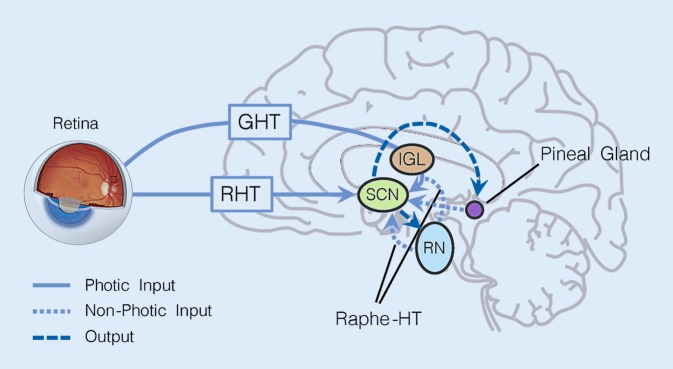
“More specifically, the RN can alter vigilance levels in accordance with circadian phase via serotonergic wakefulness-promoting projections to the hypothalamus and the cortex [30, 56].”
BackgroundOpponent melanopsin and S-cone signals in the human pupillary light response
Spitschan, M., Jain, S., Brainard, D. H., & Aguirre, G. K. (2014) · Proceedings of the National Academy of Sciences · doi:10.1073/pnas.1400942111 · Cited by 192 · cited 1×
“has the paradoxical consequence that increases in S cone activation lead to a dilation of the pupil [80, 100], which is also controlled by the ipRGCs.”
BackgroundSelf-citationBright light therapy for nonseasonal depression: meta-analysis of clinical trials
Al-Karawi, D., & Jubair, L. (2016) · Journal of Affective Disorders · doi:10.1016/j.jad.2016.03.016 · Cited by 189
Kronauer, R. E., Forger, D. B., & Jewett, M. E. (1999) · Journal of Biological Rhythms · doi:10.1177/074873099129001073 · Cited by 185
Benedetti, F., Barbini, B., Fulgosi, M. C., Colombo, C., Dallaspezia, S., Pontiggia, A., & Smeraldi, E. (2005) · The Journal of Clinical Psychiatry · doi:10.4088/jcp.v66n1207 · Cited by 180 · cited 1×
“BLT, especially in combination with selective serotonin reuptake inhibitors (SSRIs), can accelerate the clinical improvement and lead to significantly fewer residual symptoms [7, 53].”
Background‘Natural’ light treatment of seasonal affective disorder
Wirz-Justice, A., Graw, P., Kräuchi, K., Sarrafzadeh, A., English, J., Arendt, J., & Sand, L. (1996) · Journal of Affective Disorders · doi:10.1016/0165-0327(95)00081-x · Cited by 178
Sleep Initiation and Initial Sleep Intensity: Interactions of Homeostatic and Circadian Mechanisms
Borbély, A. A., Achermann, P., Trachsel, L., & Tobler, I. (1989) · Journal of Biological Rhythms · doi:10.1177/074873048900400205 · Cited by 174
Stephan, F. K., & Nunez, A. A. (1977) · Behavioral Biology · doi:10.1016/s0091-6773(77)90397-2 · Cited by 171
Chronotherapeutics for Affective Disorders: A Clinician's Manual for Light and Wake Therapy
Wirz‐Justice, A., Benedetti, F., & Terman, M. (2009) · Cited by 168
Circadian rhythms – from genes to physiology and disease
Bollinger, T., & Schibler, U. (2014) · Swiss Medical Weekly · doi:10.4414/smw.2014.13984 · Cited by 152
Interactions of the serotonin and circadian systems: nature and nurture in rhythms and blues
Ciarleglio, C. M., Resuehr, H. E. S., & McMahon, D. G. (2011) · Neuroscience · doi:10.1016/j.neuroscience.2011.09.036 · Cited by 151 · cited 1×
“More specifically, the RN can alter vigilance levels in accordance with circadian phase via serotonergic wakefulness-promoting projections to the hypothalamus and the cortex [30, 56].”
BackgroundAn Open Trial of Light Therapy in Adult Attention-Deficit/Hyperactivity Disorder
Rybak, Y. E., McNeely, H. E., Mackenzie, B. E., Jain, U. R., & Levitan, R. D. (2006) · The Journal of Clinical Psychiatry · doi:10.4088/jcp.v67n1006 · Cited by 148 · cited 3×
“In addition to the pathway between retina and SCN, there is recent evidence from animal studies show- Abbreviations ADHD Attention deficit hyperactivity disorder BLT Bright light therapy CCT Correlated colour temperature CIE Commission Internationale de l’Eclairage CRSWD Circadian rhythm sleep-wake disorders DLMO Dim-…”
BackgroundMelanopsin contributions to non-visual and visual function
Spitschan, M. (2019) · Current Opinion in Behavioral Sciences · doi:10.1016/j.cobeha.2019.06.004 · Cited by 146
Self-citationLighting, sleep and circadian rhythm: An intervention study in the intensive care unit
Engwall, M., Fridh, I., Johansson, L., Bergbom, I., & Lindahl, B. (2015) · Intensive and Critical Care Nursing · doi:10.1016/j.iccn.2015.07.001 · Cited by 146
Linking Light Exposure and Subsequent Sleep: A Field Polysomnography Study in Humans
Wams, E. J., Woelders, T., Marring, I., van Rosmalen, L., Beersma, D. G. M., Gordijn, M. C. M., & Hut, R. A. (2017) · Sleep · doi:10.1093/sleep/zsx165 · Cited by 143 · cited 2×
“In this context, Wams and colleagues [92] report that participants with later exposure to light >10 lx had more nocturnalawakeningsand less slow-wave sleep.”
BackgroundDynamic resetting of the human circadian pacemaker by intermittent bright light
Rimmer, D. W., Boivin, D. B., Shanahan, T. L., Kronauer, R. E., Duffy, J. F., & Czeisler, C. A. (2000) · American Journal of Physiology-Regulatory, Integrative and Comparative Physiology · doi:10.1152/ajpregu.2000.279.5.r1574 · Cited by 139
GALLIN, P. F., TERMAN, M., REMÉ, C. E., RAFFERTY, B., TERMAN, J. S., & BURDE, R. M. (1995) · American Journal of Ophthalmology · doi:10.1016/s0002-9394(14)73874-7 · Cited by 134
How to Report Light Exposure in Human Chronobiology and Sleep Research Experiments
Spitschan, M., Stefani, O., Blattner, P., Gronfier, C., Lockley, S., & Lucas, R. (2019) · Clocks & Sleep · doi:10.3390/clockssleep1030024 · Cited by 122 · cited 1×
“Detailed minimum guidelines are given in [83].”
Self-citationSpitschan, M., Bock, A. S., Ryan, J., Frazzetta, G., Brainard, D. H., & Aguirre, G. K. (2017) · Proceedings of the National Academy of Sciences · doi:10.1073/pnas.1711522114 · Cited by 116 · cited 1×
“There is now converging evidence that melanopsin signals reach the primary visual cortex (V1) [82], where they may contribute to and modulate our visual perception [20, 25, 109].”
BackgroundSelf-citationLeft Habenula Mediates Light-Preference Behavior in Zebrafish via an Asymmetrical Visual Pathway
Zhang, B.-B., Yao, Y.-Y., Zhang, H.-F., Kawakami, K., & Du, J.-L. (2017) · Neuron · doi:10.1016/j.neuron.2017.01.011 · Cited by 115 · cited 2×
“In addition to the circadian effects of light mediated via the SCN, a pathway from the retina to the habenula has recently been found to be involved in mediating effects of light on mood in animal models [38, 110].”
BackgroundControlled trial of bright light and negative air ions for chronic depression
GOEL, N., TERMAN, M., SU TERMAN, J., MACCHI, M. M., & STEWART, J. W. (2005) · Psychological Medicine · doi:10.1017/s0033291705005027 · Cited by 115
Adjunctive Bright Light in Non‐Seasonal Major Depression
Martiny, K. (2004) · Acta Psychiatrica Scandinavica · doi:10.1111/j.1600-0447.2004.00460_2.x · Cited by 105 · cited 1×
“BLT, especially in combination with selective serotonin reuptake inhibitors (SSRIs), can accelerate the clinical improvement and lead to significantly fewer residual symptoms [7, 53].”
BackgroundSheaves, B., Freeman, D., Isham, L., McInerney, J., Nickless, A., Yu, L.-M., Rek, S., Bradley, J., Reeve, S., Attard, C., et al. (2018) · Psychological Medicine · doi:10.1017/s0033291717003191 · Cited by 104 · cited 7×
“Light therapy is also effective as second-line treatment for non-seasonal depression, although it usually takes longer (2–5 weeks) than in SAD to achieve a therapeutic effect [2, 75, 87].”
BackgroundInfluential(2009) · Cited by 101
Temporal integration of light flashes by the human circadian system
Najjar, R. P., & Zeitzer, J. M. (2016) · Journal of Clinical Investigation · doi:10.1172/jci82306 · Cited by 99
Chronotherapeutics for Affective Disorders: A Clinician's Manual for Light and Wake Therapy
Wirz-Justice, A., Benedetti, F., & Terman, M. (2013) · doi:10.1159/isbn.978-3-318-02091-5 · Cited by 99
Cone and melanopsin contributions to human brightness estimation
Zele, A. J., Adhikari, P., Feigl, B., & Cao, D. (2018) · Journal of the Optical Society of America A · doi:10.1364/josaa.35.000b19 · Cited by 97
Souman, J. L., Borra, T., de Goijer, I., Schlangen, L. J. M., Vlaskamp, B. N. S., & Lucassen, M. P. (2018) · Journal of Biological Rhythms · doi:10.1177/0748730418784041 · Cited by 96
Allen, A. E., Hazelhoff, E. M., Martial, F. P., Cajochen, C., & Lucas, R. J. (2018) · SLEEP · doi:10.1093/sleep/zsy100 · Cited by 95
Adolescents with a smartphone sleep less than their peers
Schweizer, A., Berchtold, A., Barrense-Dias, Y., Akre, C., & Suris, J.-C. (2017) · European Journal of Pediatrics · doi:10.1007/s00431-016-2823-6 · Cited by 93 · cited 1×
“Several studies have reported that smartphone ownership and use before bedtime may be associated with more self-reported sleeping problems [74], decreased sleep efficiency, longer sleep onset latency and poor sleep quality [29], and delays sleep thereby also shortening sleep duration [29, 50, 74].”
BackgroundWhat is the ‘spectral diet’ of humans?
Webler, F. S., Spitschan, M., Foster, R. G., Andersen, M., & Peirson, S. N. (2019) · Current Opinion in Behavioral Sciences · doi:10.1016/j.cobeha.2019.06.006 · Cited by 86
Self-citationA controlled study of light therapy for bulimia nervosa
(1994) · American Journal of Psychiatry · doi:10.1176/ajp.151.5.744 · Cited by 85
Suprachiasmatic nuclei Lessions in the rat: Alterations in sleep circadian rhythms
Mouret, J., Coindet, J., Debilly, G., & Chouvet, G. (1978) · Electroencephalography and Clinical Neurophysiology · doi:10.1016/0013-4694(78)90191-8 · Cited by 85
Rångtell, F. H., Ekstrand, E., Rapp, L., Lagermalm, A., Liethof, L., Búcaro, M. O., Lingfors, D., Broman, J.-E., Schiöth, H. B., & Benedict, C. (2016) · Sleep Medicine · doi:10.1016/j.sleep.2016.06.016 · Cited by 83 · cited 1×
“More specifically, Rångtell and colleagues [64] examined the effects of reading a novel on a tablet computer (~102± 41 lx, 7718K) vs.”
BackgroundMelanopsin- and L-cone–induced pupil constriction is inhibited by S- and M-cones in humans
Woelders, T., Leenheers, T., Gordijn, M. C. M., Hut, R. A., Beersma, D. G. M., & Wams, E. J. (2018) · Proceedings of the National Academy of Sciences · doi:10.1073/pnas.1716281115 · Cited by 81
Use of melatonin for sleep and circadian rhythm disorders
Sack, R. L., Lewy, A. J., & Hughes, R. J. (1998) · Annals of Medicine · doi:10.3109/07853899808999393 · Cited by 80
Kronauer, R. E., Forger, D. B., & Jewett, M. E. (1999) · Journal of Biological Rhythms · doi:10.1177/074873049901400609 · Cited by 74
Significance of circadian rhythms in severely brain-injured patients: A clue to consciousness?
Blume, C., Lechinger, J., Santhi, N., Giudice, R. D., Gnjezda, M.-T., Pichler, G., Scarpatetti, M., Donis, J., Michitsch, G., & Schabus, M. (2017) · Neurology · doi:10.1212/wnl.0000000000003942 · Cited by 70 · cited 1×
“Studies have also demonstrated beneficial effects of BLT in patients with sleep–wake abnormalities after renal transplantation [21] or in cirrhotic patients [33], as well as in severely brain-injured patients in post-comatose states [9, 10], and Parkinson’s disease [90].”
BackgroundSelf-citationMillisecond Flashes of Light Phase Delay the Human Circadian Clock during Sleep
Zeitzer, J. M., Fisicaro, R. A., Ruby, N. F., & Heller, H. C. (2014) · Journal of Biological Rhythms · doi:10.1177/0748730414546532 · Cited by 69 · cited 1×
“It has been shown that under certain circumstances, a train of very brief flashes light flashes on the millisecond scale can cause circadian phase shifts which are larger than those caused by continuous light [59, 108].”
BackgroundFunctional decoupling of melatonin suppression and circadian phase resetting in humans
Rahman, S. A., St Hilaire, M. A., Gronfier, C., Chang, A., Santhi, N., Czeisler, C. A., Klerman, E. B., & Lockley, S. W. (2018) · The Journal of Physiology · doi:10.1113/jp275501 · Cited by 58 · cited 1×
“There is now accruing evidence that they may be indeed separable [63].”
BackgroundNowozin, C., Wahnschaffe, A., Rodenbeck, A., Zeeuw, J. D., Hädel, S., Kozakov, R., Schöpp, H., Münch, M., & Kunz, D. (2017) · Current Alzheimer Research · doi:10.2174/1567205014666170523094526 · Cited by 54
Evidence for an impact of melanopsin activation on unique white perception
Cao, D., Chang, A., & Gai, S. (2018) · Journal of the Optical Society of America A · doi:10.1364/josaa.35.00b287 · Cited by 51
De Rui, M., Middleton, B., Sticca, A., Gatta, A., Amodio, P., Skene, D. J., & Montagnese, S. (2015) · Neurochemical Research · doi:10.1007/s11064-014-1414-z · Cited by 51 · cited 1×
“K or in cirrhotic patients [33], as well as in severely brain-injured patients in postcomatose states [9, 10], and Parkinson’s disease [90].”
BackgroundCircadian Sleep-Wake Cycles, Well-Being, and Light Therapy in Borderline Personality Disorder
Bromundt, V., Wirz-Justice, A., Kyburz, S., Opwis, K., Dammann, G., & Cajochen, C. (2013) · Journal of Personality Disorders · doi:10.1521/pedi_2012_26_057 · Cited by 49
The effect of bright light therapy on depression associated with premenstrual dysphoric disorder
Krasnik, C., Montori, V. M., Guyatt, G. H., Heels-Ansdell, D., & Busse, J. W. (2005) · American Journal of Obstetrics and Gynecology · doi:10.1016/j.ajog.2005.01.055 · Cited by 47 · cited 1×
“In patients with chronic depression, BLT has been shown to lead to remarkable remission rates compared to placebo [41] and represents a valid therapeutic option also in gender-related mood disorders, such as premenstrual dysphoric disorder and perinatal depression [47, 96].”
BackgroundBurkhalter, H., Wirz-Justice, A., Denhaerynck, K., Fehr, T., Steiger, J., Venzin, R. M., Cajochen, C., Weaver, T. E., & De Geest, S. (2015) · Transplant International · doi:10.1111/tri.12443 · Cited by 38
A Systematic Review of Bright Light Therapy for Eating Disorders
Beauchamp, M. T., & Lundgren, J. D. (2016) · The Primary Care Companion For CNS Disorders · doi:10.4088/pcc.16r02008 · Cited by 33
Blume, C., Angerer, M., Raml, M., del Giudice, R., Santhi, N., Pichler, G., Kunz, A. B., Scarpatetti, M., Trinka, E., & Schabus, M. (2019) · European Journal of Neurology · doi:10.1111/ene.13935 · Cited by 28 · cited 1×
“Studies have also demonstrated beneficial effects ofBLTinpatientswithsleep–wakeabnormalities after renal transplantation [21] or in cirrhotic patients [33], as well as in severely brain-injured patients in postcomatose states [9, 10], and Parkinson’s disease [90].”
BackgroundSelf-citationThe human habenula is responsive to changes in luminance and circadian rhythm
Kaiser, C., Kaufmann, C., Leutritz, T., Arnold, Y. L., Speck, O., & Ullsperger, M. (2019) · NeuroImage · doi:10.1016/j.neuroimage.2019.01.064 · Cited by 28
Schwartz, R. S., & Olds, J. (2015) · Harvard Review of Psychiatry · doi:10.1097/hrp.0000000000000078 · Cited by 21
When is a proxy not a proxy? The foibles of studying non‐image forming light
Zeitzer, J. M. (2018) · The Journal of Physiology · doi:10.1113/jp276076 · Cited by 13
Bromundt, V., & Wirz-Justice, A. (2013) · Schlaf · doi:10.1055/s-0038-1626044 · Cited by 4
Chronobiologie: Licht- und Wachtherapie bei psychiatrischen Erkrankungen
Cajochen, C. (2013) · PSYCH up2date · doi:10.1055/s-0033-1343181 · Cited by 2
Circadian systems biology in seasonal affective disorder
Partonen, T. (2009) · Seasonal Affective Disorder · doi:10.1093/med/9780199544288.003.0007
Cited by
Mechanisms of blue light-induced eye hazard and protective measures: a review
Ouyang, X., Yang, J., Hong, Z., Wu, Y., Xie, Y., & Wang, G. (2020) · Biomedicine & Pharmacotherapy · doi:10.1016/j.biopha.2020.110577 · Cited by 232
The influence of the environment and lifestyle on myopia
Biswas, S., El Kareh, A., Qureshi, M., Lee, D. M. X., Sun, C.-H., Lam, J. S. H., Saw, S.-M., & Najjar, R. P. (2024) · Journal of Physiological Anthropology · doi:10.1186/s40101-024-00354-7 · Cited by 191
The brain’s reward system in health and disease
Lewis, R. G., Florio, E., Punzo, D., & Borrelli, E. (2021) · Advances in experimental medicine and biology · doi:10.1007/978-3-030-81147-1_4 · Cited by 170
“Indeed, lights from backlit screens can delay and advance circadian timing causing asynchronization (Blume et al. 2019).”
BackgroundYuksel, D., McKee, G. B., Perrin, P. B., Alzueta, E., Caffarra, S., Ramos-Usuga, D., Arango-Lasprilla, J. C., & Baker, F. C. (2021) · Sleep Health · doi:10.1016/j.sleh.2020.12.008 · Cited by 156
Sleep Deprivation and Insomnia in Adolescence: Implications for Mental Health
Uccella, S., Cordani, R., Salfi, F., Gorgoni, M., Scarpelli, S., Gemignani, A., Geoffroy, P. A., De Gennaro, L., Palagini, L., Ferrara, M., et al. (2023) · Brain Sciences · doi:10.3390/brainsci13040569 · Cited by 131
“Light is a crucial zeitgeber that controls several biological processes, including daily melatonin variations [43].”
Background
Metadata
- Authors
- Blume, C., Garbazza, C., & Spitschan, M.
- Affiliations
- University of Salzburg (AT)
- University of Basel (CH)
- Corresponding author
- Blume, Christine
- Garbazza, Corrado
- Spitschan, Manuel
- Venue
- Somnologie
- Published
- 2019-08-20
- Volume
- 23
- Issue
- 3
- Pages
- 147-156
- ISSN
- 1432-9123 (ISSN-L)
- 1439-054X
- PMC
- PMC6751071
- OpenAlex
- W2969343566
- Semantic Scholar
- 6f6a6e9d7a952485a71d17fe4aa15b818d8500af
- Cited by
- 695
- References
- 110
- Citations by year
- 2026: 122 · 2025: 150 · 2024: 126 · 2023: 123 · 2022: 80 · 2021: 72 · 2020: 19 · 2019: 2
- FWCI
- 23.88
- Type
- journal article
- Language
- en
- Open access
- hybrid
- doi.org
- Licence
- cc-by
- creativecommons.org/licenses/by/4.0 (tdm)
- creativecommons.org/licenses/by/4.0 (vor)
- Locations
- Somnologie - Schlafforschung und Schlafmedizin (publishedVersion, cc-by)
- PubMed Central (publishedVersion, cc-by)
- PubMed (publishedVersion)
- OSF Preprints (OSF Preprints) (submittedVersion, cc-by)
- OSF Preprints (OSF Preprints) (submittedVersion)
- Funders
- Austrian Science Fund
- Topics
- Life Sciences › Neuroscience › Endocrine and Autonomic Systems › Circadian rhythm and melatonin
- Social Sciences › Psychology › Experimental and Cognitive Psychology › Sleep and related disorders
- Physical Sciences › Environmental Science › Global and Planetary Change › Impact of Light on Environment and Health
- Keywords
- circadian rhythm, light exposure, artificial light at night, circadian rhythm disruption, suprachiasmatic nucleus, sleep, mood, phototherapy, circadian misalignment, well-being
About these checks
Registry, retraction, Cites and statistics results are computed, not judged, with one exception: a printed reference that no index lists is read once by a model before it counts as a citation error. Claims are extracted by a model and kept only when their quote appears verbatim in the text; each cited source is then checked, with a model’s help, for whether it says what the claim relies on. Those verdicts can be wrong — read the claim’s quote and the cited source before relying on one.
The claim verdicts this report counts are experimental: their accuracy is not yet measured.
A language model drew the claims from the paper on 2026-10-10, under version 3 of the claim definition (model deepseek-v4.1-flash, prompt extract-v3).
A second model labelled each claim on 2026-10-10 (model jev-1.13-20260917, definition revision gold-guideline-v0.2).
Cited sources are checked with a language model’s help (gpt-6-sol).
Statistics and arithmetic are recomputed, not judged.
Confidence bands are shown only for fields calibrated on our annotated test set. None is calibrated yet, so no band is shown.
What counts as a claim ›How we measure confidence ›How we check this ›
Are you an author, or do you see a problem with this page? Request a review
Data sources
Bibliographic data: Semantic Scholar, OpenAlex, Crossref.
Contains information from the Semantic Scholar Academic Graph Datasets, made available under the ODC Attribution License (ODC-BY 1.0).
Semantic Scholar’s data is described in: Kinney, R., et al. (2023). The Semantic Scholar Open Data Platform. arXiv:2301.10140.
