

Sex Differences in the Prevalence, Outcomes and Management of Hypertension
Open accessThe DOI matches its Crossref record; 52 of the 52 references it cites were found in a registry or an index.
Abstract
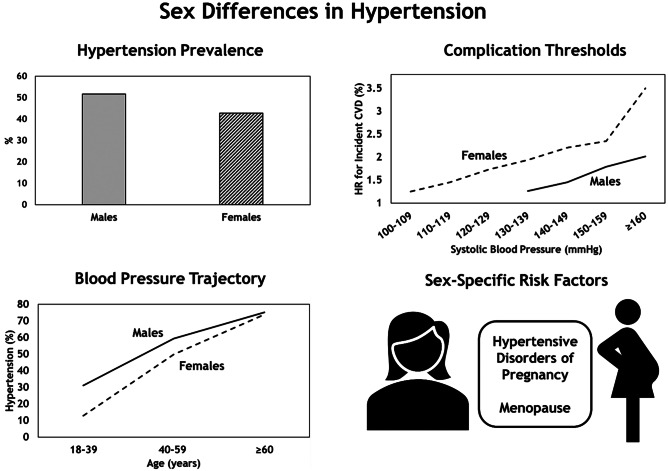
Purpose of Review: To review recent data on sex differences in the prevalence, outcomes and management of hypertension. Recent Findings: Although hypertension is overall more common in males, females experience a much sharper incline in blood pressure from the third decade of life and consequently the prevalence of hypertension accelerates comparatively with age. Mechanisms responsible for these blood pressure trajectories may include the sustained vascular influence of hypertensive disorders of pregnancy, interactions between the renin–angiotensin–aldosterone system and sex hormones or even psychosocial gendered factors such as socioeconomic deprivation. Moreover, the impact of hypertension is not uniform and females are at higher risk of developing a multitude of adverse cardiovascular outcomes at lower blood pressure thresholds. Summary: Blood pressure is a sexually dimorphic trait and although significant differences exist in the prevalence, pathophysiology and outcomes of hypertension in males and females, limited data exist to support sex-specific blood pressure targets.
Overview
The claims and statistics of this paper haven’t been checked yet.
Free: it reads the open-access text and checks the first 5 claims that cite a source we can check. Create a free account to check every claim.
Integrity signals
Registry
Cites
Statistics
Figures
Verification
Claims the paper makes
The claims and statistics of this paper haven’t been checked yet.
Free: it reads the open-access text and checks the first 5 claims that cite a source we can check. Create a free account to check every claim.
Claims other papers make about this one
Each is checked against this paper’s own text: does it say what the citing paper says it does?
In the citing paper
“Hypertension is estimated to affect one in 12 young adults (aged 18–39 years) globally.42”
Self-check
Percentages, sums and reported differences re-computed from the paper’s own numbers.
The self-check needs the paper’s full text.
Citations
Cites
Yusuf, S., Hawken, S., Ôunpuu, S., Dans, T., Avezum, A., Lanas, F., McQueen, M., Budaj, A., Pais, P., Varigos, J., et al. (2004) · The Lancet · doi:10.1016/s0140-6736(04)17018-9 · Cited by 12,026
Heart Disease and Stroke Statistics—2020 Update: A Report From the American Heart Association
Virani, S. S., Alonso, A., Benjamin, E. J., Bittencourt, M. S., Callaway, C. W., Carson, A. P., Chamberlain, A. M., Chang, A. R., Cheng, S., Delling, F. N., et al. (2020) · Circulation · doi:10.1161/cir.0000000000000757 · Cited by 9,175
Whelton, P. K., Carey, R. M., Aronow, W. S., Casey, D. E., Collins, K. J., Dennison Himmelfarb, C., DePalma, S. M., Gidding, S., Jamerson, K. A., Jones, D. W., et al. (2018) · Journal of the American College of Cardiology · doi:10.1016/j.jacc.2017.11.006 · Cited by 6,616
Heart Disease and Stroke Statistics—2021 Update: A Report From the American Heart Association
Virani, S. S., Alonso, A., Aparicio, H. J., Benjamin, E. J., Bittencourt, M. S., Callaway, C. W., Carson, A. P., Chamberlain, A. M., Cheng, S., Delling, F. N., et al. (2021) · Circulation · doi:10.1161/cir.0000000000000950 · Cited by 5,784
Hansson, L., Zanchetti, A., Carruthers, S. G., Dahlöf, B., Elmfeldt, D., Julius, S., Ménard, J., Rahn, K. H., Wedel, H., & Westerling, S. (1998) · The Lancet · doi:10.1016/s0140-6736(98)04311-6 · Cited by 5,728
2020 International Society of Hypertension Global Hypertension Practice Guidelines
Unger, T., Borghi, C., Charchar, F., Khan, N. A., Poulter, N. R., Prabhakaran, D., Ramirez, A., Schlaich, M., Stergiou, G. S., Tomaszewski, M., et al. (2020) · Hypertension · doi:10.1161/hypertensionaha.120.15026 · Cited by 4,132
Effects of intensive blood-pressure control in type 2 diabetes mellitus
(2010) · New England Journal of Medicine · doi:10.1056/nejmoa1001286 · Cited by 3,598
Yusuf, S., Joseph, P., Rangarajan, S., Islam, S., Mente, A., Hystad, P., Brauer, M., Kutty, V. R., Gupta, R., Wielgosz, A., et al. (2020) · The Lancet · doi:10.1016/s0140-6736(19)32008-2 · Cited by 2,017
Sex and gender: modifiers of health, disease, and medicine
Mauvais-Jarvis, F., Bairey Merz, N., Barnes, P. J., Brinton, R. D., Carrero, J.-J., DeMeo, D. L., De Vries, G. J., Epperson, C. N., Govindan, R., Klein, S. L., et al. (2020) · The Lancet · doi:10.1016/s0140-6736(20)31561-0 · Cited by 2,001
Status of Hypertension in China: Results From the China Hypertension Survey, 2012–2015
Wang, Z., Chen, Z., Zhang, L., Wang, X., Hao, G., Zhang, Z., Shao, L., Tian, Y., Dong, Y., Zheng, C., et al. (2018) · Circulation · doi:10.1161/circulationaha.117.032380 · Cited by 1,698
Cited by
Items 101–200 of 389
Bala, C. G., Rusu, A., Fronea, O. F. G., Benedek, T., Pop, C., Vijiiac, A. E., Stănciulescu, D., Dărăbanțiu, D., Román, G., & Dorobanţu, M. (2023) · International Journal of Environmental Research and Public Health · doi:10.3390/ijerph20031736 · Cited by 5
“, in women there is a much sharper incline in blood pressure from the third decade of life and they are at higher risk of developing adverse cardiovascular events at lower blood pressure thresholds) [29].”
BackgroundMasenga, S. K., Hamooya, B. M., Patel, K. P., & Kirabo, A. (2024) · Frontiers in Nutrition · doi:10.3389/fnut.2024.1334853 · Cited by 5
Kenfaoui, I., Bouchefra, S., Daouchi, S., Benzakour, A., & Ouhssine, M. (2024) · Diabetology International · doi:10.1007/s13340-024-00750-5 · Cited by 8
“The factors that cause hypertension to become more prevalent after the seventh decade in women are also certainly of multifactorial origin, notably a lower level of cardiovascular risk in women than in men, all other things being equal, with a higher life expectancy and a survivor effect [67].”
Relationship between Oxidative Balance Score and All-Cause Mortality in Hypertension
Ma, T., Wang, L., & Yan, X. (2025) · Journal of Vascular Research · doi:10.1159/000543471 · Cited by 5
“…who were male or with CVD, the relationship between high OBS and decreased all-cause mortality risk was more remarkable in HTN. Connelly et al. [22] also discovered notable disparities in HTN outcomes between males and females, which may be in fl uenced by a complex interplay of factors…”
Raza, A., Kaleem, M., Shaikh, M. A. A., Mansoor, F., Ansab, M., Turkmani, M. M., & Khan, U. (2025) · Journal of Clinical Hypertension · doi:10.1111/jch.70064 · Cited by 5
Nix, K., Hawkins, T. L., Vlasschaert, M., Ma, I. W. Y., & Nerenberg, K. A. (2023) · CJC Open · doi:10.1016/j.cjco.2023.09.020 · Cited by 5
Molina, D. I., Coca, A., Alcocer, L. A., & Piskorz, D. L. (2024) · American Journal of Cardiovascular Drugs · doi:10.1007/s40256-024-00634-8 · Cited by 5
“In addition, the risk of cardiovascular outcomes is about 1.5 times higher in women than men with stage 1 or 2 hypertension, irrespective of age [45], and the significant risk of CVD, myocardial infarction, stroke, and heart failure begins at a lower BP threshold in women than in men [46].”
BackgroundInfluentialKessler, T. A., & Rayman, L. (2024) · Medical Research Archives · doi:10.18103/mra.v12i6.5357 · Cited by 5
Impact of sex differences on patients with neuroendocrine neoplasms during hospital admission
Tan, W. Y., Cramer, L. D., Vijayvergia, N., Lustberg, M. B., & Kunz, P. L. (2024) · Therapeutic Advances in Medical Oncology · doi:10.1177/17588359241292271 · Cited by 4
High fructose consumption induces cardiac dysfunction and vascular abnormalities
Tappia, P. S., Garriock, E., Ramjiawan, B., & Moghadasian, M. H. (2025) · Canadian Journal of Physiology and Pharmacology · doi:10.1139/cjpp-2025-0249 · Cited by 4
New insights into sexual dimorphism in cardiometabolic health
Kaldirimitzian, C., Kampanella, L., Chouliara, K.-M., Kavvadia, E.-M., Tsinopoulou, V. R., Tsamis, K. I., Boutzios, G., Peppa, Μ., & Paschou, S. Α. (2025) · HORMONES · doi:10.1007/s42000-025-00740-5 · Cited by 4
The Health-Related Consequences of Gender-Based Violence Against Women in South Africa
Enaifoghe, A., & Adekola, A. P. (2026) · International Journal of Environmental Research and Public Health · doi:10.3390/ijerph23030298 · Cited by 4
Revealing Sex Differences in Hypertensive Urgency Management: Insights From a Tertiary Hospital
Prado, G., Bea, C., Martínez, E., Gómez, R. I., Ruíz, D., Sirvent, C. P., Gabarre, A. M., Saurí, I., Forner, M. J., Rodilla, E., et al. (2026) · Journal of Clinical Hypertension · doi:10.1111/jch.70228 · Cited by 4
Kubota, H., Kunisawa, K., Hasegawa, M., Kurahashi, H., Kagotani, K., Fujimoto, Y., Hayashi, A., Ryoji, S. O. N. O., Tsuji, T., Saito, K., et al. (2024) · Neurochemistry International · doi:10.1016/j.neuint.2024.105858 · Cited by 4
Onyenobi, E., Zhong, M., Soremekun, O. S., Kamiza, A. B., Boua, P. R., Chikowore, T., Fatumo, S., Choudhury, A., Hazelhurst, S., Adebamowo, C., et al. (2025) · Circulation Genomic and Precision Medicine · doi:10.1161/circgen.124.005048 · Cited by 5
Development and Validation of an Incident Hypertension Risk Prediction Model for Young Adults
An, J., Fischer, H. J., Ni, L., Xia, M., Choi, S. K., Morrissette, K. L., Wei, R. X., Reynolds, K., Muntner, P., Colantonio, L. D., et al. (2025) · Journal of the American Heart Association · doi:10.1161/jaha.124.040769 · Cited by 4
“31,32 We randomly split KPSC data into 80% derivation and 20% test data set.”
Novel Advances in Our Understanding of Sex-Dependent Control of Blood Pressure
Muir, R. Q., Xu, J., Medcalf, A. D., & Pluznick, J. L. (2025) · Annual Review of Physiology · doi:10.1146/annurev-physiol-050724-022450 · Cited by 5
McEligot, A. J., Xiao, C., & Quynh, T. (2025) · Alzheimer s & Dementia · doi:10.1002/alz.70650 · Cited by 4
“11,19,20 The lifetime risk of women developing AD is higher than it is for men.”
Algharably, E. A. E., Fuentes, L. E. V., Toepfer, S., König, M., Regitz‐Zagrosek, V., Bertram, L., Bolbrinker, J., Demuth, I., & Kreutz, R. H. (2022) · Journal of Human Hypertension · doi:10.1038/s41371-022-00781-y · Cited by 4
“Sex differences in the incidence, progression as well as disease outcomes of hypertension and CKD have been recognized [12, 13].”
BackgroundSetiawan, I. S., Pujiyanto, T. I., Yunani, Y., & Winarto, E. (2023) · Jurnal Kebidanan dan Keperawatan Aisyiyah · doi:10.31101/jkk.3077 · Cited by 4
“Estrogen exposure and aging also play a role in the influence of the renin-angiotensin-aldosterone system (RAAS) antihypertensive pathway on blood pressure modulation, which may be critical for the development of hypertension in postmenopausal women (Connelly et al., 2022).”
Alateeq, K., Walsh, E., & Cherbuin, N. (2024) · International Journal of Molecular Sciences · doi:10.3390/ijms252211859 · Cited by 5
Jazzar, A., Jacques, D., Abou-Aichi, A., & Bkaily, G. (2025) · Pathophysiology · doi:10.3390/pathophysiology32010012 · Cited by 4
Goux, D., & Maurin, É. (2025) · The Economic Journal · doi:10.1093/ej/ueaf025 · Cited by 13
Øyen, J., Brantsæter, A. L., Myrmel, L. S., Rosendahl-Riise, H., Nygard, O. K., Gerdts, E., Madsen, L., & Egeland, G. M. (2025) · European Journal of Preventive Cardiology · doi:10.1093/eurjpc/zwaf343 · Cited by 4
Baumgartner, N. W., Capuano, A. W., Barnes, L. L., Bennett, D. A., & Arvanitakis, Z. (2026) · Annals of Neurology · doi:10.1002/ana.78280 · Cited by 5
Kim, Y., Chang, Y., Ryu, S., Park, S., Cho, Y., Sohn, W., Kang, J., Wild, S. H., & Byrne, C. D. (2023) · Nutrition Metabolism and Cardiovascular Diseases · doi:10.1016/j.numecd.2023.04.021 · Cited by 5
“Both NAFLD and BP show sexually dimorphic traits and prevalence of these conditions varies by sex across the lifespan [10, 11].”
PEMERIKSAAN KESEHATAN SEBAGAI UPAYA DETEKSI DINI PENYAKIT TIDAK MENULAR
Naimah, S., Sari, D. A., Widuri, W., & Santoso, T. (2024) · Jurnal LENTERA · doi:10.57267/lentera.v4i1.349 · Cited by 11
Bugeja, A. L., Girard, C. I., Sood, M. M., Kendall, C., Sweet, A., Singla, R., Motazedian, P., Vinson, A. J., Ruzicka, M., Hundemer, G. L., et al. (2024) · Journal of Internal Medicine · doi:10.1111/joim.13821 · Cited by 4
Systolic blood pressure at age 40 and 30-year stroke risk in men and women
Walle‐Hansen, M. M., Hagberg, G., Myrstad, M., Berge, T., Vigen, T., Ihle‐Hansen, H., Thommessen, B., Ariansen, I., Lyngbakken, M. N., Røsjø, H. R., et al. (2024) · Open Heart · doi:10.1136/openhrt-2024-002805 · Cited by 4
Urbanization exacerbates age-associated declines in cardiometabolic health in Turkana and Orang AsliPreprint
Watowich, M. M., Brassington, L., Longtin, A., Wang, S., Rossow, R., Reinhardt, K. D., John, E., Kahumbu, J. C., Kinyua, P., Lopurudoi, A., et al. (2025) · medRxiv · doi:10.1101/2025.06.06.25329160 · Cited by 4
“(60– 62).”
Osum, M., Tosun, Ö., Birtan, H., & Kalkan, R. (2023) · Balkan Journal of Medical Genetics · doi:10.2478/bjmg-2023-0024 · Cited by 3
“The risk of hypertension significantly increases with age in both men and women [25].”
BackgroundAlahmad, S., Samman, A., & Al-Kayali, R. (2025) · International Journal of Public Health · doi:10.3389/ijph.2025.1607939 · Cited by 3
“Blood pressure is in fl uenced by sex, and this variation is likely due to hormonal differences such as the protective vasodilatory effect of estrogen in premenopausal women, [22].”
Tsai, H., Chang, W., & Lee, Y. (2025) · Eye · doi:10.1038/s41433-025-03956-2 · Cited by 3
“The datasets generated or analysed during the current study are not publicly available because of the data protection policy of the NHIRD (https://nhird.nhri.org.tw/en/Data_Protection.html) but are available from the corresponding authors upon reasonable request.”
Khodadadi, H., Ebrahimi, A., Jalali, F., Ardakani, A. F., Hajhashemy, Z., & Askari, G. (2025) · BMC Public Health · doi:10.1186/s12889-025-24205-x · Cited by 3
“…men and women, the selenium values might be also different among them [61, 62] On the other hand, the prevalence disparity of hypertension among men and women [63], is another thesis that might lead to gender differences in the relationship between circulating selenium and risk of hypertension.”
Elevated asprosin in hypertension: evidence from an exploratory case-control study
Alkhalidy, H., Assamak, A., Al-Shami, I. K., Mukattash, T. L., Khashman, T., & Liu, D. (2026) · Scientific Reports · doi:10.1038/s41598-025-32824-y · Cited by 4
“Sex is a crucial biological factor affecting blood pressure regulation, primarily due to the modulatory effects of sex hormones on the renin–angiotensin–aldosterone system, which differ significantly between males and females 56 .”
Sex-Biased Pharmacotherapeutic Disparities in Hypertension
Yaacoub, S., Bardawil, C. E., Yammine, R., Dakroub, A. H., & Eid, A. H. (2026) · Drugs · doi:10.1007/s40265-026-02326-w · Cited by 3
Nastouli, K.-M., Apostolos, A., Bozika, M., Boliaris, G., Iliakis, P., Ktenopoulos, N., Vlachakis, P. K., Karakasis, P., Theodoropoulou, T., Tsiamis, N., et al. (2026) · Medicina · doi:10.3390/medicina62071313 · Cited by 3
“Hypertension is an important modifiable risk factor for CAD and cardiovascular morbidity among women [46].”
Yanti, C. A., Susanti, E., Djuwita, R., Martha, E., Besral, Mujar, N. M. M., & Kustanto, D. R. (2026) · Journal of Public Health Research · doi:10.1177/22799036261474134 · Cited by 3
“13,14,35 These findings reinforce the importance of age and gender-sensitive prevention strategies, particularly given Indonesia’s growing elderly population.”
Alcohol consumption and its correlation with medical conditions: a UK Biobank study
Mayer, C. S., & Fontelo, P. A. (2024) · Frontiers in Public Health · doi:10.3389/fpubh.2024.1294492 · Cited by 3
Lamadé, E. K., Petrozzi, B. P., Schaupp, B., Özer, N., Krumm, B., Coenen, M., Häfner, S., Gilles, M., Meyer‐Lindenberg, A., & Deuschle, M. (2024) · Biomarkers in Neuropsychiatry · doi:10.1016/j.bionps.2024.100109 · Cited by 3
Examining Impacts of Situational Stress on Cardiovascular Physiology During a Vigilance Task
O’Neill, R. M., Kern, K. J., Friedman, S. E., Sbarra, D. A., Hamann, H. A., & Ruiz, J. M. (2025) · Psychosomatic Medicine · doi:10.1097/psy.0000000000001374 · Cited by 3
“…body weight is understood to be associated with increased resting BP and HR. 39,40 Due to established differences in relevant cardiovascular traits 41,42 and observed sex differences in previous videogame experience in the sample (Table 1), we examined sex (male, female) as a factor in all models.”
HMGB1 drives T-cell activation in hypertensive males and females
Snyder, E. C., Mohamed, R., & Sullivan, J. C. (2025) · American Journal of Physiology-Renal Physiology · doi:10.1152/ajprenal.00197.2024 · Cited by 3
Lazaridis, A. A., Malliora, A., & Gkaliagkousi, Ε. (2025) · Journal of Clinical Medicine · doi:10.3390/jcm14093137 · Cited by 3
Analysis of Factors Associated with the Risk of Hypertension in Aceh Embarkation Hajj Pilgrims
Wirda, N., Maulana, T., Usman, S., Yani, M., & Saputra, I. (2025) · International Journal Of Public Health · doi:10.62951/ijph.v2i2.379 · Cited by 3
Moustakli, E., Potiris, A., Zikopoulos, A., Mavrogianni, D., Kathopoulis, N., Drakaki, Ε., Anagnostaki, I., Tsakiridis, I. G., Dagklis, T., Skentou, C., et al. (2025) · International Journal of Molecular Sciences · doi:10.3390/ijms26136034 · Cited by 3
“These differences result from the interaction of sexually dimorphic placental biology, sex chromosomes, and sex steroid hormones, each of which affects vascular tone, renal function, and inflammatory responses differently in each sex [2,14].”
Törmä, D., Suoranta, T., Rinta-Harri, M., Hytönen, J. P., Yla-Herttuala, S., & Ruotsalainen, A. (2026) · Apmis · doi:10.1111/apm.70132 · Cited by 3
“Estrogen status in females affects RAAS directly [59] and studies have demonstrated cardio-protective effects of estrogen in hypertension development [60].”
Cui, Z., Qiu, Z., Cheng, W., Hu, W. M., Ma, G., Cai, X., Jin, Y., Zhao, Y., He, L., Li, Y., et al. (2023) · Journal of Clinical Hypertension · doi:10.1111/jch.14700 · Cited by 3
Pratiwi, V. D., Hendra, P., & Virginia, D. M. (2024) · Jurnal Manajemen Kesehatan Yayasan RS Dr Soetomo · doi:10.29241/jmk.v10i1.1909 · Cited by 3
Early, K. B., Valencia, S. I., Stendell-Hollis, N. R., Klyve, D., & Gee, D. L. (2024) · Journal of the American Heart Association · doi:10.1161/jaha.123.030126 · Cited by 3
Management of menopause for women with cardiovascular disease
Scottish Government Women’s Health and Heart Health Policy Teams with thanks to the numerous clinicians who helped and in collaboration with the medical advisory council of the British Menopause Society (2024) · Post Reproductive Health · doi:10.1177/20533691241302040 · Cited by 3
“Exogenous hormonal therapy has been shown to affect QT interval duration and increase the risk for ventricular arrhythmias, 22 particularly in predisposed patients, which emphasises the need for careful monitoring and risk assessment in these patients.”
Surma, S., Czapla, M., Uchmanowicz, I., Juárez‐Vela, R., Pietrzykowski, Ł., Uchmanowicz, B., Leśkiewicz, M., Griesmann, K., Burzyński, M., Smereka, J., et al. (2025) · Nursing Reports · doi:10.3390/nursrep15030110 · Cited by 4
“These differences may be related to sex-specific risk factors such as hypertensive disorders of pregnancy and menopause [24].”
Qiu, W., Han, Y., Huang, J., Chen, D., Fang, J., Chang, H., & Peng, X. (2025) · Journal of Clinical Hypertension · doi:10.1111/jch.70042 · Cited by 3
“Gendered factors may also play a significant role in the development of HTN, and the relatively higher oxidative stress burden in men may cause sexual dimorphism in HTN [33].”
Journal of Human Hypertension special issue on sex and gender differences in hypertension
Connelly, P. J., & Delles, C. (2023) · Journal of Human Hypertension · doi:10.1038/s41371-023-00847-5 · Cited by 3
“Considerable differences exist between men and women relating to the pathophysiology, epidemiology and outcomes relating to this condition [2].”
BackgroundSelf-citationZhao, F., Gidwani, R. A., Wang, M. C., Chen, L., & Nianogo, R. A. (2024) · Journal of Epidemiology & Community Health · doi:10.1136/jech-2024-222037 · Cited by 2
“33 Recent advances in the understanding of the relationship between the renin- angiotensin-aldosterone system (RAAS) and sex hormones (oestrogen and testosterone) provide new insight into the sexually dimorphic development of hypertension.”
BackgroundInfluentialKoller, Á., Járai, Z., & Takács, J. (2025) · Journal of Hypertension · doi:10.1097/hjh.0000000000003985 · Cited by 4
Ibezim, H. U., Njoya, H. K., Esene, H., Azenabor, S. E., & Sule, S. (2024) · PubMed Central · doi:10.71480/nmj.v66i1.706 · Cited by 2
“[15] However, there is currently limited data supporting sex-specific blood pressure targets.”
Hypertension Types and Associated Cardiovascular Risk Factors in Lithuanians Aged 50–54 Years
Šileikienė, V., Dzenkeviciute, V., Čypienė, A., Smailytė, U., Puronaitė, R., Badarienė, J., Laucevičius, A., Butkevičiūtė, E., Navickas, P., & Rinkūnienė, E. (2025) · Journal of Clinical Medicine · doi:10.3390/jcm14093177 · Cited by 2
“…also been found in previous studies; although more men su ff er from hypertension from pubertal age, its prevalence in women increases in the post-menopausal period due to hormonal changes [10]. study, the prevalence of arterial hypertension aged 50–54 years and was significantly higher in men (53.8”
InfluentialSatarug, S. (2025) · Journal of Xenobiotics · doi:10.3390/jox15040122 · Cited by 3
“In most economically developed countries, at least one-third of their adult population live with primary or essential hypertension, with notable gender differences in incidence and treatment outcomes [45,46].”
Uncontrolled Blood Pressure in Hypertension Patients in Semarang City
Sari, E. Y. U., Cahyati, W. H., & Ningrum, D. N. A. (2024) · Public Health Perspective Journal · doi:10.15294/phpj.v8i2.14127 · Cited by 2
Huang, Y., Kurniansyah, N., Levey, D. F., Gelernter, J. E., Huffman, J. E., Cho, K., Wilson, P. W. F., Gottlieb, D. J., Rice, K. M., & Sofer, T. (2025) · The American Journal of Human Genetics · doi:10.1016/j.ajhg.2025.07.015 · Cited by 3
Calderón‐Jaramillo, M., Rentería, E., & Spijker, J. (2025) · Innovation in Aging · doi:10.1093/geroni/igaf085 · Cited by 2
Zheng, H., Yu, H., Rosenberg, M. W., Wu, Y., Luo, Y., Chu, J., Yang, M., Yue, X., & Wang, Y. (2025) · BMC Public Health · doi:10.1186/s12889-025-25335-y · Cited by 3
Liu, T., Zeng, J., Qi, G., Wang, Y., Liu, Y., Peng, L., Li, X., & Jiang, W. (2025) · BMC Public Health · doi:10.1186/s12889-025-25183-w · Cited by 2
“And there are distinct gender differences in hypertensive patients [4].”
Atherosclerosis in women: immune regulation under sex differences
Wei, X., Li, M., Cui, Z., Wang, W., Shao, S., Yi, B., Xu, B.-Y., Ren, H., Jia, H., Bo, Y., et al. (2025) · Vessel Plus · doi:10.20517/2574-1209.2025.78 · Cited by 4
Yaseen, K., Abuhalima, D., Al‐Jabi, S. W., & Zyoud, S. H. (2026) · Discover Public Health · doi:10.1186/s12982-026-01377-4 · Cited by 2
Marques, D. A., Guay, L. M., Koogler, A. A., Ostrowski, T. D., de Souza, A. M. A., Sandberg, K. L., & Kinkead, R. (2026) · Experimental Physiology · doi:10.1113/ep093539 · Cited by 2
“Such pattern differs from the one reported in women as the incidence of hypertension rises progressively with age (Connelly et al., 2022).”
Phy, M., Rahman, M. S., Rahman, M. M., Moadsiri, A., Khim, S. A., Liv, C., Chhim, S., Chham, S., & Haruyama, R. (2026) · BMC Public Health · doi:10.1186/s12889-026-26522-1 · Cited by 2
“For individuals with no formal schooling or low educational attainment, health center staffs and village health support groups (VHSGs) could play key roles in delivering this information through interpersonal communication and local networks [73].”
Zheng, A., Fox, M. P., Greener, R., Kileel, E. M., Bor, J. H., Venter, W. D. F., Pisa, P. T., Murray, E. J., Brennan, A. T., & Maskew, M. (2026) · Annals of Epidemiology · doi:10.1016/j.annepidem.2026.110074 · Cited by 2
Zhang, X., Wang, X., Fan, L., & Xing, G. (2026) · Journal of Stroke and Cerebrovascular Diseases · doi:10.1016/j.jstrokecerebrovasdis.2026.108623 · Cited by 2
Whole-body and intracellular arginine metabolism in hypertension: role of disease severity and sex
Hüttl, V., Deutz, N. E. P., Wierzchowska-McNew, R. A., Ruebush, L. E., & ENGELEN, M. P. K. J. (2026) · American Journal of Hypertension · doi:10.1093/ajh/hpag047 · Cited by 3
Pasca, S., Linari, S., Tagliaferri, A., Santoro, C., & Zanon, E. (2022) · Thrombosis Research · doi:10.1016/j.thromres.2022.11.015 · Cited by 2
Suwanno, J., Phonphet, C., Mayurapak, C., Ninla‐aesong, P., & Thiamwong, L. (2023) · Journal of Vascular Nursing · doi:10.1016/j.jvn.2023.04.002 · Cited by 2
Veiz, E., Kieslich, S.-K., Czesnik, D., Herrmann‐Lingen, C., Meyer, T., & Staab, J. (2023) · Scientific Reports · doi:10.1038/s41598-023-40113-9 · Cited by 2
Patino, C. P. P. S., Rodríguez, D., Cordero, S. U., Navia, L. A., de la Rosa, C. N. V., & Martínez, R. A. O. (2023) · Revista de Investigación e Información en Salud · doi:10.52428/20756208.v18i45.1040 · Cited by 2
Tchuente, B. R. T., Hagbe, P. V., Mouafo, H. T., Youovop, J. A. F., Mboindi, O. M., Javeres, M. N. L., Takuissu, G. R., Ntentié, F. R., Azantsa, B. G. K., Ngondi, J. L., et al. (2024) · Journal of Biosciences and Medicines · doi:10.4236/jbm.2024.122001 · Cited by 2
Pang, L., Kottu, L., Guo, Z., Ma, M., Wang, H., Zhao, Y., Tang, M., Shi, Y., Liu, W., Wu, X., et al. (2024) · BMC Public Health · doi:10.1186/s12889-023-17157-7 · Cited by 2
“These variations are caused by a combination of genetically (sex-related) and psychosocially (gender-related) determined variables [15–16], but overall, men are more likely to have other coexisting conditions in China [17].”
Wijaya, S. I., Bathari, A. C. R., & Wiedyaningsih, C. (2023) · Indonesian Journal of Pharmacology and Therapy · doi:10.22146/ijpther.10453 · Cited by 2
While You Are Sleeping: Marital Ambivalence and Blunted Nocturnal Blood Pressure
Birmingham, W. C., Herr, R. M., Cressman, M., Patel, N., & Hung, M. (2024) · International Journal of Environmental Research and Public Health · doi:10.3390/ijerph21060723 · Cited by 2
“Further, based on the literature which has identified sex as an independent predictor of hypertension, [87,90] we expect sex will act as a moderator.”
BackgroundLarkins, N., Choong, C. S., Schlaich, M. P., Quinlan, C., Mynard, J. P., Kim, S., Mori, T. A., & Beilin, L. J. (2024) · Journal of Hypertension · doi:10.1097/hjh.0000000000003815 · Cited by 2
Tanglai, W., Jeamjitvibool, T., Chen, P., Lockwood, M. B., & Cajita, M. (2024) · The Journal of Cardiovascular Nursing · doi:10.1097/jcn.0000000000001147 · Cited by 2
Burks, J. H., Bruce, L. K., Kasl, P., Soltani, S., Viswanath, V., Hartogensis, W., Dilchert, S., Hecht, F. M., Dasgupta, S., Altıntaş, İ., et al. (2024) · npj Women s Health · doi:10.1038/s44294-024-00041-z · Cited by 3
“Speci fi cally, there are differences in the prevalence of chronic metabolic disorders such as diabetes 8 , and cardio-vascular conditions 9 such as hypertension 10,11 .”
InfluentialPereira, G. H., Ribeiro, L. A. L., Amorim, M. A. A., Garcia, C. S., Ribeiro, R. I. M., Machado, L. C., Sarges, A. F., & Ribeiro, A. K. (2024) · Research Society and Development · doi:10.33448/rsd-v13i11.47450 · Cited by 2
Satarug, S., Yimthiang, S., Khamphaya, T., Pouyfung, P., Vesey, D. A., & Djordjević, A. B. (2025) · Toxics · doi:10.3390/toxics13020081 · Cited by 4
“Typically, hypertension is more prevalent in men, compared to age-matched pre-menopausal women [58–60], and the differences of the Cd effects in men and women were related to sex hormones.”
Rapport 25-01. L’inégalité de prise en charge de l’infarctus du myocarde chez les femmes en France
Gilard, M. (2025) · Bulletin de l Académie Nationale de Médecine · doi:10.1016/j.banm.2025.02.005 · Cited by 2
Satarug, S. (2025) · Journal of Xenobiotics · doi:10.3390/jox15020049 · Cited by 2
“× µ µ β These data suggest that β 2 -microglubulinuria occurred after hypertension development; a signi fi cant increase in risk of hypertension was observed at the exposure level producing E Cd /E cr of 0.68 µg/g creatinine, which was much lower than E Cd /E cr of 2.32 µg/g creatinine. µ µ Thus,”
InfluentialThe impact of sex on blood pressure
Bourdon, F., Ponte, B., & Teso, A. D. (2025) · Current Opinion in Nephrology & Hypertension · doi:10.1097/mnh.0000000000001077 · Cited by 4
“Excessive stiffness and high pulsatility of women than in men [27].”
Ding, J., Li, J., Cai, X., Zhang, K., Yu, S. N., Liu, K., & Huang, M. (2025) · Scientific Reports · doi:10.1038/s41598-025-96202-4 · Cited by 2
Posttraumatic stress disorder and hypertension in older adult Vietnam Era male and female veterans
Serier, K. N., Burns, H., Magruder, K. M., Spiro, A., Kaiser, A. P., Kimerling, R. E., Frayne, S. M., Kilbourne, A. M., Stock, E. M., Forsberg, C. W., et al. (2025) · Journal of Traumatic Stress · doi:10.1002/jts.23162 · Cited by 2
“Sex-specific risk factors and sex differences in the prevalence of hypertension across the lifespan are well-documented (Connelly et al., 2022; Stuart et al., 2018).”
Sex disparities in awareness, treatment, and control of hypertension in Peru
Diaz‐Arocutipa, C., Bodes, R. S., Puerto, E., Martín‐Asenjo, R., & Vicent, L. (2025) · Journal of Hypertension · doi:10.1097/hjh.0000000000004072 · Cited by 2
Bua, G. M., Ssempijja, V., Ndyanabo, A., Nabukalu, D., Basiima, J., Kankaka, E. N., Nalugoda, F. K., Nakigozi, G. F., Kagaayi, J., Chang, L. W., et al. (2025) · BMC Infectious Diseases · doi:10.1186/s12879-025-11004-3 · Cited by 2
“…we did not study the underlying cause of this finding, a previous study indicated that females in similar populations may experience pregnancy-related high BP risk factors such as sustained vascular disorders, overweight issues, and socioeconomic deprivations that predispose them to high BP [34].”
Buffel, V., Bos, P., Chham, S., Chhim, S., Danhieux, K., Ku, G. M., van Olmen, J., Zavrnik, Č., Klemenc–Ketiš, Z., & Wouters, E. (2025) · International Journal of Integrated Care · doi:10.5334/ijic.8921 · Cited by 2
Polimorfisme Gen Cycloooxxygenase-2 dan Prevalensi Hipertensi Masyarakat Indonesia
Prameswari, Y. N. (2025) · JURNAL Al-AZHAR INDONESIA SERI SAINS DAN TEKNOLOGI · doi:10.36722/sst.v10i3.4246 · Cited by 2
“Oleh karena itu, paparan estrogen sepanjang fase reproduktif, bersama dengan proses penuaan, memainkan peran yang sangat penting dalam perkembangan hipertensi pada wanita pascamenopause dan penurunan kadar estrogen memperburuk risiko hipertensi [17].”
InfluentialRoy, T. K., Rahman, M., Rahman, M. S., Halder, N., & Rashid, M. M. (2024) · Journal of Clinical Hypertension · doi:10.1111/jch.14858 · Cited by 2
“In contrast to industrialized countries like Korea 35 and the United States, 36 where males were more likely to have HTN, it was discovered that females had a greater prevalence of the disease than males in several developing countries, including Bangladesh, 37 India, 22,23 and Nepal.”
ResultAre Differences in Living Kidney Donation Rates a Sex or a Gender Disparity?
Loban, K., Morgan, R., Kute, V. B., Bhalla, A., & Sandal, S. (2024) · Experimental and Clinical Transplantation · doi:10.6002/ect.mesot2023.l21 · Cited by 2
Duvenage, E., Cooper, S. T. E., Gattari, D., Cull, J. J., Dash, P. R., Chan, D., Llamedo, M., Rossi, M., Nasuto, S. J., Holderbaum, W., et al. (2025) · bioRxiv (Cold Spring Harbor Laboratory) · doi:10.1101/2025.05.16.654397 · Cited by 2
Zhang, S., Li, Y., Xu, X., Xu, R., Zhang, L., Wan, X., Yao, Z., Sun, Y., Liu, Y., Bin, J., et al. (2023) · Frontiers in Cardiovascular Medicine · doi:10.3389/fcvm.2023.1177166 · Cited by 1
“The ultimate aim of antihypertensive treatment is to lower the BP to a certain threshold (BP target), which could reduce the symptoms of hypertension and decrease the potential risk of cerebral and cardiovascular diseases, such as stroke and coronary artery disease (28).”
BackgroundGender Differences in Cardiovascular Health: Hormonal Effects on Cardiovascular Risk and Management
Tsirka, A. E. (2023) · Handbook of experimental pharmacology · doi:10.1007/164_2023_668 · Cited by 3
Left ventricular outflow tract obstruction in patients with Ebstein anomaly
Ergi, D. G., Schaff, H. V., Connolly, H. M., Miranda, W. R., Majdalany, D. S., & Dearani, J. M. (2023) · JTCVS Open · doi:10.1016/j.xjon.2023.10.024 · Cited by 1
Rastreamento e prevalência da hipertensão arterial sistêmica
Guimarães, N. M., Bertati, L. M., Alves, V. H. R., Bovo, M., Santos, E. C. R., Araujo, E. D. O., Kasai, I. A. Y., Bessa, M. F., Leone, B. Z., de Carvalho, M. M., et al. (2024) · Contribuciones a las Ciencias Sociales · doi:10.55905/revconv.17n.5-175 · Cited by 1
Assessment of genetic and clinical factors in T2D susceptibility among patients with hypertension
Hageh, C. A., O’Sullivan, S., Henschel, A., Chacar, S., Hantouche, M., Nader, M., & Zalloua, P. (2024) · Acta Diabetologica · doi:10.1007/s00592-024-02279-0 · Cited by 1
Metadata
- Authors
- Connelly, P. J., Currie, G., & Delles, C.
- Affiliations
- University of Glasgow (GB)
- Corresponding author
- Delles, Christian
- Venue
- Current Hypertension Reports
- Published
- 2022-03-07
- Volume
- 24
- Issue
- 6
- Pages
- 185-192
- ISSN
- 1522-6417 (ISSN-L)
- 1534-3111
- PMC
- PMC9239955
- OpenAlex
- W4221102176
- Cited by
- 320
- References
- 52
- Citations by year
- 2026: 75 · 2025: 107 · 2024: 90 · 2023: 42 · 2022: 6
- FWCI
- 12.46
- Type
- journal article
- Language
- en
- Open access
- hybrid
- doi.org
- Licence
- cc-by
- creativecommons.org/licenses/by/4.0 (tdm)
- creativecommons.org/licenses/by/4.0 (vor)
- Locations
- Current Hypertension Reports (publishedVersion, cc-by)
- PubMed Central (publishedVersion, cc-by)
- PubMed (publishedVersion)
- ENLIGHTEN (Jurnal Bimbingan dan Konseling Islam) (acceptedVersion, cc-by-sa)
- Funders
- British Heart Foundation (RE/18/6/34217)
- Topics
- Health Sciences › Medicine › Cardiology and Cardiovascular Medicine › Blood Pressure and Hypertension Studies
- Health Sciences › Medicine › Public Health, Environmental and Occupational Health › Sex and Gender in Healthcare
- Health Sciences › Medicine › Endocrinology, Diabetes and Metabolism › Hormonal Regulation and Hypertension
- Keywords
- sex differences, hypertension, hypertension prevalence, cardiovascular outcomes, blood pressure trajectories, hypertensive disorders of pregnancy, renin-angiotensin-aldosterone system, sex hormones, socioeconomic deprivation, antihypertensive therapy
- MeSH terms
- Blood Pressure, Female, Humans, Hypertension, Male, Pregnancy, Renin-Angiotensin System, Sex Characteristics, Sex Factors, Prevalence
About these checks
Registry, retraction, Cites and statistics results are computed, not judged, with one exception: a printed reference that no index lists is read once by a model before it counts as a citation error. Claims are extracted by a model and kept only when their quote appears verbatim in the text; each cited source is then checked, with a model’s help, for whether it says what the claim relies on. Those verdicts can be wrong — read the claim’s quote and the cited source before relying on one.
Statistics and arithmetic are recomputed, not judged.
Confidence bands are shown only for fields calibrated on our annotated test set. None is calibrated yet, so no band is shown.
What counts as a claim ›How we measure confidence ›How we check this ›
Are you an author, or do you see a problem with this page? Request a review
Data sources
Bibliographic data: Semantic Scholar, OpenAlex, Crossref.
Contains information from the Semantic Scholar Academic Graph Datasets, made available under the ODC Attribution License (ODC-BY 1.0).
Semantic Scholar’s data is described in: Kinney, R., et al. (2023). The Semantic Scholar Open Data Platform. arXiv:2301.10140.
