

Sex Differences in the Prevalence, Outcomes and Management of Hypertension
Open accessThe DOI matches its Crossref record; 52 of the 52 references it cites were found in a registry or an index.
Abstract
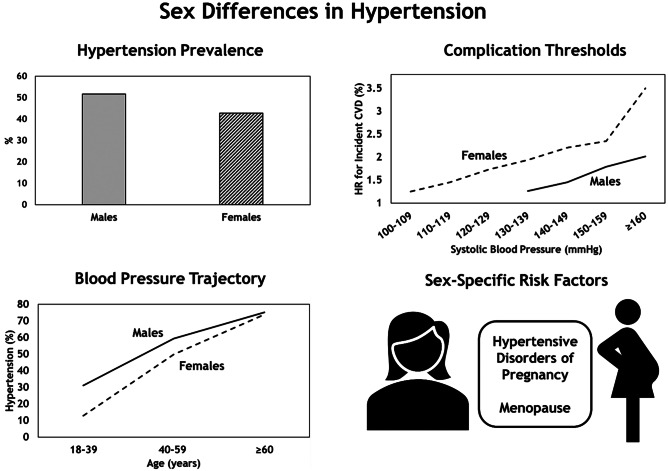
Purpose of Review: To review recent data on sex differences in the prevalence, outcomes and management of hypertension. Recent Findings: Although hypertension is overall more common in males, females experience a much sharper incline in blood pressure from the third decade of life and consequently the prevalence of hypertension accelerates comparatively with age. Mechanisms responsible for these blood pressure trajectories may include the sustained vascular influence of hypertensive disorders of pregnancy, interactions between the renin–angiotensin–aldosterone system and sex hormones or even psychosocial gendered factors such as socioeconomic deprivation. Moreover, the impact of hypertension is not uniform and females are at higher risk of developing a multitude of adverse cardiovascular outcomes at lower blood pressure thresholds. Summary: Blood pressure is a sexually dimorphic trait and although significant differences exist in the prevalence, pathophysiology and outcomes of hypertension in males and females, limited data exist to support sex-specific blood pressure targets.
Overview
The claims and statistics of this paper haven’t been checked yet.
Free: it reads the open-access text and checks the first 5 claims that cite a source we can check. Create a free account to check every claim.
Integrity signals
Registry
Cites
Statistics
Figures
Verification
Claims the paper makes
The claims and statistics of this paper haven’t been checked yet.
Free: it reads the open-access text and checks the first 5 claims that cite a source we can check. Create a free account to check every claim.
Claims other papers make about this one
Each is checked against this paper’s own text: does it say what the citing paper says it does?
In the citing paper
“Hypertension is estimated to affect one in 12 young adults (aged 18–39 years) globally.42”
Self-check
Percentages, sums and reported differences re-computed from the paper’s own numbers.
The self-check needs the paper’s full text.
Citations
Cites
Yusuf, S., Hawken, S., Ôunpuu, S., Dans, T., Avezum, A., Lanas, F., McQueen, M., Budaj, A., Pais, P., Varigos, J., et al. (2004) · The Lancet · doi:10.1016/s0140-6736(04)17018-9 · Cited by 12,026
Heart Disease and Stroke Statistics—2020 Update: A Report From the American Heart Association
Virani, S. S., Alonso, A., Benjamin, E. J., Bittencourt, M. S., Callaway, C. W., Carson, A. P., Chamberlain, A. M., Chang, A. R., Cheng, S., Delling, F. N., et al. (2020) · Circulation · doi:10.1161/cir.0000000000000757 · Cited by 9,175
Whelton, P. K., Carey, R. M., Aronow, W. S., Casey, D. E., Collins, K. J., Dennison Himmelfarb, C., DePalma, S. M., Gidding, S., Jamerson, K. A., Jones, D. W., et al. (2018) · Journal of the American College of Cardiology · doi:10.1016/j.jacc.2017.11.006 · Cited by 6,616
Heart Disease and Stroke Statistics—2021 Update: A Report From the American Heart Association
Virani, S. S., Alonso, A., Aparicio, H. J., Benjamin, E. J., Bittencourt, M. S., Callaway, C. W., Carson, A. P., Chamberlain, A. M., Cheng, S., Delling, F. N., et al. (2021) · Circulation · doi:10.1161/cir.0000000000000950 · Cited by 5,784
Hansson, L., Zanchetti, A., Carruthers, S. G., Dahlöf, B., Elmfeldt, D., Julius, S., Ménard, J., Rahn, K. H., Wedel, H., & Westerling, S. (1998) · The Lancet · doi:10.1016/s0140-6736(98)04311-6 · Cited by 5,728
2020 International Society of Hypertension Global Hypertension Practice Guidelines
Unger, T., Borghi, C., Charchar, F., Khan, N. A., Poulter, N. R., Prabhakaran, D., Ramirez, A., Schlaich, M., Stergiou, G. S., Tomaszewski, M., et al. (2020) · Hypertension · doi:10.1161/hypertensionaha.120.15026 · Cited by 4,132
Effects of intensive blood-pressure control in type 2 diabetes mellitus
(2010) · New England Journal of Medicine · doi:10.1056/nejmoa1001286 · Cited by 3,598
Yusuf, S., Joseph, P., Rangarajan, S., Islam, S., Mente, A., Hystad, P., Brauer, M., Kutty, V. R., Gupta, R., Wielgosz, A., et al. (2020) · The Lancet · doi:10.1016/s0140-6736(19)32008-2 · Cited by 2,017
Sex and gender: modifiers of health, disease, and medicine
Mauvais-Jarvis, F., Bairey Merz, N., Barnes, P. J., Brinton, R. D., Carrero, J.-J., DeMeo, D. L., De Vries, G. J., Epperson, C. N., Govindan, R., Klein, S. L., et al. (2020) · The Lancet · doi:10.1016/s0140-6736(20)31561-0 · Cited by 2,001
Status of Hypertension in China: Results From the China Hypertension Survey, 2012–2015
Wang, Z., Chen, Z., Zhang, L., Wang, X., Hao, G., Zhang, Z., Shao, L., Tian, Y., Dong, Y., Zheng, C., et al. (2018) · Circulation · doi:10.1161/circulationaha.117.032380 · Cited by 1,698
Cited by
Items 301–389 of 389
Mechanisms Responsible for Exaggerated Blood Pressure Responses to Exercise in Healthy Individuals
Hilton, S. E. (2024) · The Atrium (University of Guelph) · doi:10.13140/rg.2.2.22326.20801
Efficacy of Sumac in Blood Pressure Modulation: A Narrative Review
Hosseinzadeh, A., Coleman, R., & Parvin, N. (2024) · Health & fitness journal of Canada · doi:10.14288/hfjc.v17i2.845
Academic journal of health sciences
(n.d.) · GSI Repository (German Federal Government)
What Should We Care For? A Comparative Analysis of the Social Care Needs of Aging Populations
Calderón‐Jaramillo, M. (2025) · Tesis Doctorals en Xarxa (Consorci de Serveis Universitaris de Catalunya)
The Mouth After Midnight: Nocturnal Wakefulness and Eating Behavior
Kennedy, K. E. R., & Kennedy, K. E. R. (2024) · UA Campus Repository (The University of Arizona)
Relationship between Uric Acid Level and Hypertension Incidence in Takkalasi Village, Barru Regency
Jamaluddin, S. R., Sam, A. D. P., Zulfahmidah, Kartika, I. D., & Karim, A. M. A. A. (2025) · Saintika Medika · doi:10.22219/sm.vol21.smumm1.39921
Reproductive Health and Women’s Well-being at Older Ages
Guo, M. (2024) · Digital Access to Scholarship at Harvard (DASH) (Harvard University)
Eating Behaviors in Adolescence and Young Adulthood and Adult Cardiometabolic Disease Risk
Salvia, M. G. (2024) · Digital Access to Scholarship at Harvard (DASH) (Harvard University)
Lipid Profile in Drug Naive Hypertensive Patients visiting Cardiology OPD in a Central Hospital
Poudel, S. K., Mishra, D. K., Gautam, B., Sherpa, K., Koirala, P. C., Bhandari, R., & Poudel, L. G. (2024) · Journal of National Heart and Lung Society Nepal · doi:10.3126/jnhls.v4i2.88426
“It differs from some international studies that report higher hypertension prevalence in males 12 .”
Guo, H., Yang, H., Li, J., & Lv, T. (2026) · Medicine · doi:10.1097/md.0000000000046772
“[46,47] Age-related elevation in blood pressure is primarily mediated by 2 pathophysiological mechanisms: progressive decline in vascular compliance and age-associated hemodynamic alterations.”
Poedjijo, Y. S. S., Hanif, A. M., Wahyudi, Murni, A. W., Ahmad, A., Faheri, E., Elvira, D., & Kurniawan, E. (2025) · Jurnal kedokteran dan kesehatan Indonesia · doi:10.20885/jkki.vol16.iss3.art5
“10,11 Until puberty, blood pressure is fairly consistent between the two sexes.”
Septiani, V., Kartidjo, P., Indrawati, W., Amelia, R., & Suminar, R. (2025) · Research in Clinical Pharmacy · doi:10.59931/rcp.25.0009 · Cited by 1
Mousavi, M. A., Tehrani, F. R., Azizi, F., & Farahmand, M. (2026) · Scientific Reports · doi:10.1038/s41598-025-30994-3
“For instance, the decline in estrogen levels during menopause is associated with an elevated risk of developing HTN 10–12 .”
Sex-Specific Blood Pressure Thresholds in Middle-Aged Adults
Williams, K., Grobman, B., Kwapong, F. L., Col, H., Turkson‐Ocran, R., Ngo, L. H., Zhang, M., Daya, N. R., Selvin, E., Lutsey, P. L., et al. (2026) · Hypertension · doi:10.1161/hypertensionaha.125.25490
Almansour, A., & Aldhawyan, A. F. (2026) · Journal of Family and Community Medicine · doi:10.4103/jfcm.jfcm_345_25
“[23,26] The observed gender differences in prevalence and management of hypertension suggest the need for gender‑specific strategies in prevention and treatment.”
Cardiologia – Teoria e Prática Ed. XXV
Nascimento, B. C., Barbosa, L. F. P., Neto, L. E. F., Silva, G. V., Teixeira, V. R., Campos, B. T., Munhoz, A. J. S., de Freitas, G. B. L., de Almeida, C. C., SILVA, A. N. D., et al. (2026) · Editora Pasteur eBooks · doi:10.59290/978-65-6029-330-4
Costa, V. H. M., Gil, M. B. L. R., Caproni, L. F., Zanfrilli, P. H., Lopes, L. S. D. M., Doná, A. B. R., Moura, M., & Ribeiro, G. E. D. P. (2026) · Editora Pasteur eBooks · doi:10.59290/3129232496
Wongnaah, F. G., Salu, S., Aboagye, R. G., & Ahinkorah, B. O. (2026) · Tropical Medicine & International Health · doi:10.1111/tmi.70082
Luckey, S. W., Sethi, R., Crouse, N., Meredith, K. M., & Bush, R. (2026) · Physiological Reports · doi:10.14814/phy2.70794
“Men typically have a higher prevalence of hypertension than age-matched premenopausal women, but the incidence in women rises substantially after menopause, eventually exceeding that of similarly aged men (Connelly et al., 2022; Virani et al., 2021).”
Murray, E. P., Ben-Chioma, A. E., & Waribo, H. A. (2026) · Nexus of Medicine and Laboratory Science Journal · doi:10.71462/sfpl2601001
Risk factors for cardiac death in women with coronary artery disease
King, I. S., Eskuri, M. A. E., Holmström, L. T. A., Kiviniemi, A. M., Lepojärvi, E. S., Tulppo, M. P., Piira, O.-P., Kenttä, T. V., Perkiömäki, J. S., Ukkola, O. H., et al. (2026) · European Heart Journal Open · doi:10.1093/ehjopen/oeag044
“20,22 Previous research, as seen also in our study, has highlighted that women often have worse BP control and are less likely to receive anti-hypertensive medication, suggesting that improving hypertension management could be a cost-effective strategy to reduce cardiac mortality in women.”
InfluentialSetjiadi, D., Delles, C., Kroon, A. A., Reesink, K. D., Bekers, O., Meex, S. J. R., Köhler, S., Kooman, J. P., Jansen, J. F. A., Rocca, H. B., et al. (2026) · Journal of Hypertension · doi:10.1097/hjh.0000000000004265
Self-citationВитальевич, В. А., Morozova, T. E., Skvirskaya, G. P., Геннадиевич, Р. А., Gurjar, M. V., Алексеевна, Г. А., Samokhina, E. O., & Zaugolnikova, T. V. (2026) · Health Care of the Russian Federation · doi:10.47470/0044-197x-2026-70-1-37-42
Alfredsson, J., Taebnia, N., Dzaki, N., Ljunggren, S., Helmfrid, I., Johansson, E. C., Keulen, J., Rolandsson, O., Bergdahl, I. A., Lauschke, V. M., et al. (2026) · The FASEB Journal · doi:10.1096/fj.202600261r
Hajebi, M., Farzi, Y., Fe'li, S., Sharifi, F., Rezaei, N., Mirzad, M., Ebrahimpur, M., & Payab, M. (2026) · Aging Clinical and Experimental Research · doi:10.1007/s40520-026-03339-x
Li, Y., Wang, Y., Wang, B., Ouyang, Q., Liu, W., Xu, X. M., Zhang, X., Liu, M., & Xiu, R. (2026) · Comprehensive physiology · doi:10.1002/cph4.70130
Martins, L. G., Morais, J. M. D. O., Forzan, G. O., Netto, J. M. M., Leonardo, J. G. F. S., & Ferreira, C. S. (2026) · Revista Brasileira de Ciências Biológicas · doi:10.22533/at.ed.8208112612017
Pryplavko, N. M., & Kravchenko, A. M. (2026) · Ukrainian journal of cardiovascular surgery · doi:10.63181/ujcvs.2026.34(1).111-118
George, B., Arjunan, P., Ittyachen, A. M., Mani, R., Varghese, S. M., & Chandrababu, R. (2026) · Journal of Education and Health Promotion · doi:10.4103/jehp.jehp_2073_25
“[17] These findings suggest that gender‑specific approaches may be necessary for hypertension management, despite current guidelines recommending the same treatment for both sexes.”
Mayambala, D., Wandera, S. O., Lwanga, C., Haydon, D. T., Bonfoh, B., Mfinanga, S., Kibuuka, H. N., & Nuvey, F. S. (2026) · BMC Public Health · doi:10.1186/s12889-026-27241-3
“The discrete-time logistic regression modeled the probability of death in each interval conditional on survival up to that interval, accounting for the longitudinal structure of the data and flexibly accommodating time-varying covariates [24–26].”
Sari, C. F., Khoiriyah, N. N., Kurnianto, S., Kusuma, E., & Widianto, E. P. (2026) · Fundamental and Management Nursing Journal · doi:10.20473/fmnj.v9i1.76916
“This gender-and age-related disparity is attributed to hormonal changes, such as the decline in estrogen after menopause, as well as increased cardiometabolic risks in older women (Connelly et al., 2022; Mohanty et al., 2022).”
Ginting, J. B., Suci, T., Ginting, C. N., & Indriyanto, K. (2026) · Journal of Family and Community Medicine · doi:10.4103/jfcm.jfcm_26_26
Santalahti, A., Ojanen, A., Palosaari, T., Jääskeläinen, T., Kaartinen, N. E., Sääksjärvi, K., Laatikainen, T., & Lundqvist, A. (2026) · Hypertension · doi:10.1161/hypertensionaha.125.25982
“23,24 Women consume less salt than men, and their mean SBP and DBP levels remain below the recommended upper thresholds.”
Efficacy of Valsartan-HCTZ in hypertension: a cohort study exploring age as a key determinant
Rauf, A., Shah, Y., Ullah, Z., Inayat, F., Babaresh, W. M., Begum, A., & Ahmad, S. (2026) · BMC Cardiovascular Disorders · doi:10.1186/s12872-026-05900-y
“Clinical factors, including the duration of hypertension, baseline blood pressure levels, and the presence of comorbid conditions such as diabetes and obesity, have also been shown to significantly impact treatment efficacy [8, 9].”
Rethinking a Women’s Health Care Agenda in the United States
Palley, E., Palley, H. A., & Palley, M. L. (2026) · Palgrave Macmillan US eBooks · doi:10.1057/978-1-349-96147-4_1
Moreira, J. D. (2026) · American Journal of Physiology-Heart and Circulatory Physiology · doi:10.1152/ajpheart.00147.2026
Pervaiz, A., Jamali, J. A., Zahoor, M. Y., Usman, M. S., Devi, K., Kumar, M., Simran, F., Ali, Z., Muhammad, N., Raja, R., et al. (2026) · Annals of Medicine and Surgery · doi:10.1097/ms9.0000000000005160
“This could be attributed to the fact that males are more commonly affected by hypertension than females [ 26 ] .”
Sex differences in the progression of salt-sensitive hypertension in aged Dahl salt-sensitive rats
Bohovyk, R., Kravtsova, O., Levchenko, V., & Staruschenko, A. (2026) · American Journal of Physiology-Regulatory, Integrative and Comparative Physiology · doi:10.1152/ajpregu.00084.2026
Hu, Y., Jamal, H., Deng, X., Lawrence, K. G., Werder, E. J., Launer, L. J., & Sandler, D. P. (2026) · Journal of Exposure Science & Environmental Epidemiology · doi:10.1038/s41370-026-00915-1
Hypertension as a Determinant of Elevated Stress Among Hajj Pilgrims: A Cross-Sectional Study
Amir, F. M., Boy, E., Handayani, A., & Nurhasanah (2026) · Saintika Medika · doi:10.22219/sm.vol22.smumm1.44313
Safitri, Z. H., Palupi, D. L. M., & Ulkhasanah, M. E. (2026) · Jurnal Keperawatan Duta Medika · doi:10.47701/zf5djr64
Subtypes of Hypertension 2 to 7 Years After First Pregnancy
Brubaker, L. H., Catov, J. M., Merz, C. N. B., Barnes, S. E., Gibbs, B. B., Booker, W. A., Chung, J. M., Greenland, P., Grobman, W. A., Khan, S. S., et al. (2026) · Hypertension · doi:10.1161/hypertensionaha.125.26296
Functional Food Containing Probiotics–Differences in Health Benefits Among Men and Women
Sionek, B., & Szymański, P. (2026) · Applied Sciences · doi:10.3390/app16126120
Xie, M., Luo, Z. X., Xiong, H., Jiang, J., Liu, Y., Guo, S., Yao, X. P., Wan, Z., Zhang, J., & Shuai, P. (2026) · Annals of Medicine · doi:10.1080/07853890.2026.2689825
“Men are more prone to be exposed to various CKD risk factors, including hypertension [31], obesity [32], and metabolic syndrome [33].”
Lunio, R. E., Nob, J. M. R., & Nob, L. M. (2026) · Psychology and Education A Multidisciplinary Journal · doi:10.70838/pemj.570705
ŞAKİR, R., Yahya, D., & Koçak, M. (2026) · International Journal of Hypertension · doi:10.1155/ijhy/6660660
Faheem, M. S. B., Hassan, S. T., Najmi, O. E. M., Waheed, A., Ullah, Z. B., Sattar, Y., & Alraies, M. C. (2026) · Journal of the National Medical Association · doi:10.1016/j.jnma.2026.06.020
Liu, Y., Hu, S., Wu, R., Fu, T., Li, Z., Zhang, J., & Zhang, M. (2026) · BMC Cardiovascular Disorders · doi:10.1186/s12872-026-06337-z
“This profile aligns with established observations that women are disproportionately affected by NOCAD and coronary microvascular dysfunction compared with men [27, 28].”
Limwado, G. D., Matanje, B. L., Mithi, V. S., Valeta, F., Mwendera, M., Ngongonda, B., Matiya, K., Mwale, O., Phiri, H. C., Ndarama, E. P. L., et al. (2026) · PLOS Global Public Health · doi:10.1371/journal.pgph.0006629
“Therefore, while the observed association aligns with existing literature, it should be interpreted cautiously and considered within the broader behavioural and clinical context influencing hypertension management [42,44,45].”
Faktor Risiko Hipertensi pada Calon Jemaah Haji Lansia di Provinsi Sumatera Barat Tahun 2025
Sari, Y. I., & Helda, H. (2026) · Jurnal Kesmas (Kesehatan Masyarakat) Khatulistiwa · doi:10.29406/jkmk.v13i2.8909
李子荣, Wu, Y., Jin, Q., Lou, T., Kang, Y., Wang, X., Sun, N., Ni, T., Zhu, Z., Wang, M., et al. (2026) · PLoS ONE · doi:10.1371/journal.pone.0352162
Hypertension in young university students: analysis of risk factors in medical students
Neto, H. H., Miyawaki, L. N., Mariani, O. M., Dias, L. M., Araujo, G. D., Scremin, I. G., Lerut, B., & Kubrusly, L. F. (2026) · BioSCIENCE · doi:10.55684/2026.84.en.e00012
Choi, K., Park, B. E., Dalakoti, M., Han, K., Choi, J., Son, J., & Kim, H. (2026) · Menopause The Journal of The North American Menopause Society · doi:10.1097/gme.0000000000002867
Addie, O., & Seun-Addie, F. K. (2026) · Discover Public Health · doi:10.1186/s12982-026-02597-4
“Women’s sharper rise in blood pressure from age 30 onward corroborates the findings of Connelly et al. [53], whose analysis of six primary studies showed that hypertension is more prevalent in males overall, but that females experience a steeper increase beginning in their third decade of life.”
Lax, M., & Williams, J. S. (2026) · Physiological Reports · doi:10.14814/phy2.71028
“Although more prevalent in males (Connelly et al., 2022), females develop CVD at lower blood pressure thresholds, increasing their disease burden.”
Role of menopause in the development of cardiovascular disease in women
Das, S., Wang, W., & Kunadian, V. (2026) · Open Heart · doi:10.1136/openhrt-2026-004200
“…management of their hypertension and therefore frequent monitoring of blood pressure during the MT may help to reduce the incidence of stroke and CVD. 59 Insulin resistance and diabetes Changes in body shape are frequently seen in women during the MT with a more central distribution of body fat.”
Mieres, N. G., Oliveira, K., Marques, N. C. B., Azorza, N. M. C., Borba, H. H. L., Pontarolo, R., Sari, M. H. M., Bonini, J. S., Reolon, J. B., Lazo, R. E. L., et al. (2026) · Diseases · doi:10.3390/diseases14080291
Skrining Tekanan Darah pada Komunitas Dewasa Sekolah Mutiara Bangsa
Firmansyah, Y., & Santoso, A. H. (2026) · Jurnal Pengabdian Masyarakat · doi:10.59030/jpmbd.v5i2.142
“(Connelly et al., 2022; Hetherington et al., 2024) Implikasi klinis dari hasil skrining ini menunjukkan pentingnya deteksi dini hipertensi melalui pemeriksaan tekanan darah rutin di masyarakat.”
Climate change and hypertension: global trends, temporal patterns, and regional insights
Ye, J., 陈浩新, & Hashish, M. A. (2026) · Frontiers in Climate · doi:10.3389/fclim.2026.1703142
Alhetheli, G. I., Almarshoud, S. S., Ghorab, A., Aldawish, R., Aldawsari, A., & Alowais, A. (2026) · Journal of Multidisciplinary Healthcare · doi:10.2147/jmdh.s620159
Päivärinne, M. (2026) · Jyväskylä University Digital Archive (University of Jyväskylä)
Yunita, F., & Santoso, A. H. (2026) · Jurnal Pengabdian West Science · doi:10.58812/jpws.v5i08.3601
“(Connelly et al., 2022; Nwia et al., 2023) Skrining yang dilakukan di tingkat komunitas menjadi langkah penting untuk mengenali individu berisiko lebih awal, terutama karena hipertensi sering berlangsung tanpa gejala dalam waktu yang lama.”
Temporal Trends in the Use of Primary Prevention Medications at Stroke Admission
Burns, C., Kilkenny, M. F., Oliver, C., Purvis, T., Cadilhac, D. A.-M., Hill, K., Nelson, M. R., Kleinig, T., & Dalli, L. L. (2026) · Neuroepidemiology · doi:10.1159/ned/adwag013
Prescription Medication Use Among Women Aged 40 and Older in the United States from 1999 to 2020
Dunlap, C. E., Hurwitz, L. M., Abril, J., Trabert, B. L., Dood, R. L., Zeleznik, O. A., & Trabert, B. (2026) · Journal of Women s Health · doi:10.1177/15409996261483623
Vargas-Sanhueza, Y., la Fuente, M. R.-D., & Rodríguez-Fernández, A. (2026) · Revista chilena de nutrición · doi:10.64159/rchnut-53-4-5
Sex-based differences in acute coronary syndrome: mechanisms, management, and outcomes
Bujak, K., Bordonaro, C., Mauro, M. S., & Capodanno, D. (2026) · Expert Review of Cardiovascular Therapy · doi:10.1080/14779072.2026.2729313
“Hypertension is consistently more common in women and is often accompanied by left ventricular hypertrophy and diastolic dysfunction [14,15].”
Wang, Y., Mao, Y., Wang, X., Liu, R., Cui, M., & Feng, R. (2026) · JMIR Public Health and Surveillance · doi:10.2196/93217
“This pattern is consistent with epidemiological evidence, indicating that women experience adverse cardiovascular outcomes at lower blood pressure thresholds than men [14] and that hypertension-related vascular remodeling differs by sex [15].”
Kang, S. W., Sanchez, C. H., Whittle, R. H., Perretti, A., Cherry, J. M., Maqueda, M. A., Orlowski, S., Kwon, Y. M., & Weimer, S. (2026) · Frontiers in Physiology · doi:10.3389/fphys.2026.1919762
“WD-induced BP regulation may be a sexually dimorphic trait (Connelly et al., 2022).”
Sex Differences in Sleep Duration and Quality: Implications for Hypertension Risk
do Amaral, T. M., Dudzik, J. M., & St‐Onge, M. (2026) · Current Hypertension Reports · doi:10.1007/s11906-026-01385-4
Asmin, E., Wulandari, P., Rahawarin, H. E. F., Seimahuira, T., Kailola, N. E., & Tuharea, M. (2024) · JMM (Jurnal Masyarakat Mandiri) · doi:10.31764/jmm.v8i5.25950
Chace, T. J., & Durden, T. E. (2026) · Ethnicity and Health · doi:10.1080/13557858.2026.2729321
Kaur, S., Sachdeva, R., & Gensel, J. C. (2026) · Neurotrauma Reports · doi:10.1177/2689288x261486527
Zamasi, D. S., & Sembiring, H. (2026) · Indonesian Trust Nursing Journal · doi:10.37104/itnj.v4i2.473
Wong, T. L., Wang, A., Lew, J. C., Taylor, S. L., Akinjobi, Z., Ahmed, S. M., Ali, M. R., & Lyo, V. (2026) · Surgery for Obesity and Related Diseases · doi:10.1016/j.soard.2026.09.013
Pramudya, K. A., & Sari, D. K. (2025) · IJOH Indonesian Journal of Public Health
Suranata, F. M., Djalil, R. H., Takahepis, N. F., & Pakaya, B. (2026) · Science Midwifery
Clarissa, S., Elfi, E., Subianto, T., & Aryani, B. (2026) · Jurnal Kesehatan Tambusai
EDUKASI HIPERTENSI DAN LATIHAN SLOW DEEP BREATHING PADA LANSIA
Arkianti, M. M. Y., Diannita, C. G., Paula, V., Pangkey, B. C. A., & Suntoro, S. (2025) · Prosiding Konferensi Nasional Pengabdian Kepada Masyarakat dan Corporate Social Responsibility (PKM-CSR) · doi:10.37695/pkmcsr.v8i0.2650
Faktor Risiko Hipertensi Pada Usia Dewasa Di Kabupaten Nias
Tanu, B. Y., Situmorang, P., Zai, N. S., & Siregar, D. (2025) · JURNAL KEPERAWATAN CIKINI · Cited by 6
Liu, N.-D., Chen, L., Wang, D.-T., Wang, Y., Yang, M.-C., Zu, C., He, H.-H., Liu, H., Lin, L., Sun, L., et al. (2026) · Frontiers in Public Health · doi:10.3389/fpubh.2026.1924151
“Women experience a steeper blood pressure (BP) increase after age 30 compared with men, suggesting sex specific risk trajectories (3).”
Yi, S., & Marques-Vidal, P. M. (2026) · Annals of Epidemiology · doi:10.1016/j.annepidem.2026.110308
Guananga-Pinto, J. V. (2026) · INNOVATE Research Journal · doi:10.65133/irj.v2.n1.2026/a18
“No obstante, la tendencia observada es consistente con la evidencia que señala variaciones en la presentación y el control de la hipertensión según el sexo y la edad, fenómenos ampliamente documentados en la literatura científica (Connelly et al., 2022).”
The Hubungan Kebiasaan Merokok dan Obesitas terhadap Kualitas Tidur pada Penderita Hipertensi
Khusna, A. L., & Khotimah, S. (2026) · Jurnal Fisioterapi dan Rehabilitasi · doi:10.33660/jfrwhs.v10i2.694
Rising Inequity in Hypertension Prevalence: Results of a Survey in Sorocaba-SP, Brazil, 2022Preprint
Gianini, R. J., Nanartonis, M. J., de Carvalho, B. V., Caneto, N. F., Junqueira, N. M., Gammal, D. F., Rezende, C. M. S., & Rodrigues, C. I. S. (2026) · Research Square · doi:10.21203/rs.3.rs-11306434/v1
Mettananda, C. D. K., Premaratna, R., Mallawa, R., Fernando, U., Senaratne, A. S., Perera, U., & Wickramasinghe, C. (2026) · PLoS ONE · doi:10.1371/journal.pone.0361894
Çın, D. (2025) · Dspace Repository (Marmara Üniversitesi)
Nikolić, G., Jovanović, U., Milivojević, D., Jovanović, M., Jevtić, J., Perić, M., Brković, V., Jovanović, D., Stefanović, J., Vukajlović, J. M., et al. (2026) · Life · doi:10.3390/life16111888
Mundeke, B., Musavuli, G., Munyambethe, J., Lukulirwa, L., Mwenge, G., Musimbulwa, R., Vutseme, N., Muyisa, R. M., & Sabuni, L. (2026) · Research Square · doi:10.21203/rs.3.rs-11652639/v1
Metadata
- Authors
- Connelly, P. J., Currie, G., & Delles, C.
- Affiliations
- University of Glasgow (GB)
- Corresponding author
- Delles, Christian
- Venue
- Current Hypertension Reports
- Published
- 2022-03-07
- Volume
- 24
- Issue
- 6
- Pages
- 185-192
- ISSN
- 1522-6417 (ISSN-L)
- 1534-3111
- PMC
- PMC9239955
- OpenAlex
- W4221102176
- Cited by
- 320
- References
- 52
- Citations by year
- 2026: 75 · 2025: 107 · 2024: 90 · 2023: 42 · 2022: 6
- FWCI
- 12.46
- Type
- journal article
- Language
- en
- Open access
- hybrid
- doi.org
- Licence
- cc-by
- creativecommons.org/licenses/by/4.0 (tdm)
- creativecommons.org/licenses/by/4.0 (vor)
- Locations
- Current Hypertension Reports (publishedVersion, cc-by)
- PubMed Central (publishedVersion, cc-by)
- PubMed (publishedVersion)
- ENLIGHTEN (Jurnal Bimbingan dan Konseling Islam) (acceptedVersion, cc-by-sa)
- Funders
- British Heart Foundation (RE/18/6/34217)
- Topics
- Health Sciences › Medicine › Cardiology and Cardiovascular Medicine › Blood Pressure and Hypertension Studies
- Health Sciences › Medicine › Public Health, Environmental and Occupational Health › Sex and Gender in Healthcare
- Health Sciences › Medicine › Endocrinology, Diabetes and Metabolism › Hormonal Regulation and Hypertension
- Keywords
- sex differences, hypertension, hypertension prevalence, cardiovascular outcomes, blood pressure trajectories, hypertensive disorders of pregnancy, renin-angiotensin-aldosterone system, sex hormones, socioeconomic deprivation, antihypertensive therapy
- MeSH terms
- Blood Pressure, Female, Humans, Hypertension, Male, Pregnancy, Renin-Angiotensin System, Sex Characteristics, Sex Factors, Prevalence
About these checks
Registry, retraction, Cites and statistics results are computed, not judged, with one exception: a printed reference that no index lists is read once by a model before it counts as a citation error. Claims are extracted by a model and kept only when their quote appears verbatim in the text; each cited source is then checked, with a model’s help, for whether it says what the claim relies on. Those verdicts can be wrong — read the claim’s quote and the cited source before relying on one.
Statistics and arithmetic are recomputed, not judged.
Confidence bands are shown only for fields calibrated on our annotated test set. None is calibrated yet, so no band is shown.
What counts as a claim ›How we measure confidence ›How we check this ›
Are you an author, or do you see a problem with this page? Request a review
Data sources
Bibliographic data: Semantic Scholar, OpenAlex, Crossref.
Contains information from the Semantic Scholar Academic Graph Datasets, made available under the ODC Attribution License (ODC-BY 1.0).
Semantic Scholar’s data is described in: Kinney, R., et al. (2023). The Semantic Scholar Open Data Platform. arXiv:2301.10140.
