

Sex Differences in the Prevalence, Outcomes and Management of Hypertension
Open accessThe DOI matches its Crossref record; 52 of the 52 references it cites were found in a registry or an index.
Abstract
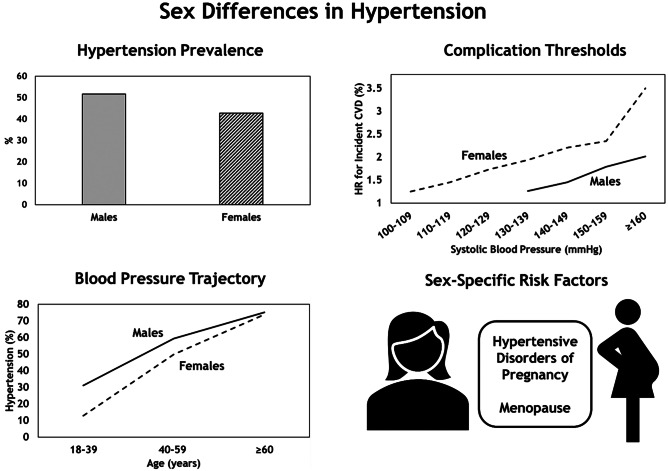
Purpose of Review: To review recent data on sex differences in the prevalence, outcomes and management of hypertension. Recent Findings: Although hypertension is overall more common in males, females experience a much sharper incline in blood pressure from the third decade of life and consequently the prevalence of hypertension accelerates comparatively with age. Mechanisms responsible for these blood pressure trajectories may include the sustained vascular influence of hypertensive disorders of pregnancy, interactions between the renin–angiotensin–aldosterone system and sex hormones or even psychosocial gendered factors such as socioeconomic deprivation. Moreover, the impact of hypertension is not uniform and females are at higher risk of developing a multitude of adverse cardiovascular outcomes at lower blood pressure thresholds. Summary: Blood pressure is a sexually dimorphic trait and although significant differences exist in the prevalence, pathophysiology and outcomes of hypertension in males and females, limited data exist to support sex-specific blood pressure targets.
Overview
The claims and statistics of this paper haven’t been checked yet.
Free: it reads the open-access text and checks the first 5 claims that cite a source we can check. Create a free account to check every claim.
Integrity signals
Registry
Cites
Statistics
Figures
Verification
Claims the paper makes
The claims and statistics of this paper haven’t been checked yet.
Free: it reads the open-access text and checks the first 5 claims that cite a source we can check. Create a free account to check every claim.
Claims other papers make about this one
Each is checked against this paper’s own text: does it say what the citing paper says it does?
In the citing paper
“Hypertension is estimated to affect one in 12 young adults (aged 18–39 years) globally.42”
Self-check
Percentages, sums and reported differences re-computed from the paper’s own numbers.
The self-check needs the paper’s full text.
Citations
Cites
Yusuf, S., Hawken, S., Ôunpuu, S., Dans, T., Avezum, A., Lanas, F., McQueen, M., Budaj, A., Pais, P., Varigos, J., et al. (2004) · The Lancet · doi:10.1016/s0140-6736(04)17018-9 · Cited by 12,026
Heart Disease and Stroke Statistics—2020 Update: A Report From the American Heart Association
Virani, S. S., Alonso, A., Benjamin, E. J., Bittencourt, M. S., Callaway, C. W., Carson, A. P., Chamberlain, A. M., Chang, A. R., Cheng, S., Delling, F. N., et al. (2020) · Circulation · doi:10.1161/cir.0000000000000757 · Cited by 9,175
Whelton, P. K., Carey, R. M., Aronow, W. S., Casey, D. E., Collins, K. J., Dennison Himmelfarb, C., DePalma, S. M., Gidding, S., Jamerson, K. A., Jones, D. W., et al. (2018) · Journal of the American College of Cardiology · doi:10.1016/j.jacc.2017.11.006 · Cited by 6,616
Heart Disease and Stroke Statistics—2021 Update: A Report From the American Heart Association
Virani, S. S., Alonso, A., Aparicio, H. J., Benjamin, E. J., Bittencourt, M. S., Callaway, C. W., Carson, A. P., Chamberlain, A. M., Cheng, S., Delling, F. N., et al. (2021) · Circulation · doi:10.1161/cir.0000000000000950 · Cited by 5,784
Hansson, L., Zanchetti, A., Carruthers, S. G., Dahlöf, B., Elmfeldt, D., Julius, S., Ménard, J., Rahn, K. H., Wedel, H., & Westerling, S. (1998) · The Lancet · doi:10.1016/s0140-6736(98)04311-6 · Cited by 5,728
2020 International Society of Hypertension Global Hypertension Practice Guidelines
Unger, T., Borghi, C., Charchar, F., Khan, N. A., Poulter, N. R., Prabhakaran, D., Ramirez, A., Schlaich, M., Stergiou, G. S., Tomaszewski, M., et al. (2020) · Hypertension · doi:10.1161/hypertensionaha.120.15026 · Cited by 4,132
Effects of intensive blood-pressure control in type 2 diabetes mellitus
(2010) · New England Journal of Medicine · doi:10.1056/nejmoa1001286 · Cited by 3,598
Yusuf, S., Joseph, P., Rangarajan, S., Islam, S., Mente, A., Hystad, P., Brauer, M., Kutty, V. R., Gupta, R., Wielgosz, A., et al. (2020) · The Lancet · doi:10.1016/s0140-6736(19)32008-2 · Cited by 2,017
Sex and gender: modifiers of health, disease, and medicine
Mauvais-Jarvis, F., Bairey Merz, N., Barnes, P. J., Brinton, R. D., Carrero, J.-J., DeMeo, D. L., De Vries, G. J., Epperson, C. N., Govindan, R., Klein, S. L., et al. (2020) · The Lancet · doi:10.1016/s0140-6736(20)31561-0 · Cited by 2,001
Status of Hypertension in China: Results From the China Hypertension Survey, 2012–2015
Wang, Z., Chen, Z., Zhang, L., Wang, X., Hao, G., Zhang, Z., Shao, L., Tian, Y., Dong, Y., Zheng, C., et al. (2018) · Circulation · doi:10.1161/circulationaha.117.032380 · Cited by 1,698
Cited by
Mechanisms and consequences of sex differences in immune responses
Dunn, S. E., Perry, W. A., & Klein, S. L. (2024) · Nature Reviews Nephrology · doi:10.1038/s41581-023-00787-w · Cited by 249
“This male predisposition to kidney damage is also observed in other kidney diseases, including chronic kidney disease 192,193 , IgA nephropathy 194 , hypertension 195 and in natu-ral ageing 196 .”
Differences in the epidemiology, management and outcomes of kidney disease in men and women
Chesnaye, N. C., Carrero, J. J., Hecking, M., & Jager, K. J. (2024) · Nature Reviews Nephrology · doi:10.1038/s41581-023-00784-z · Cited by 175
“A higher prevalence of albuminuria in men than women could be in part due to their higher age-standardized prevalence of diabetes mellitus 42 , hypertension 43 and smoking 44 .”
Rafferty, Q., Stafford, L. K., Vos, T., Thomé, F. S., Aalruz, H., Abate, Y. H., Abbafati, C., ElHafeez, S. A., Abedi, A., Abiodun, O. O., et al. (2025) · The Lancet Global Health · doi:10.1016/s2214-109x(25)00198-6 · Cited by 214
“…such as certain health conditions and risk factors that are more prevalent in males, rendering them more susceptible to the development of KFRT. 7,31,32 Other studies highlight sociocultural factors—such as gender roles, inequities in access to health care, and health-seeking behaviours— that…”
Brazilian Guidelines of Hypertension – 2025
Brandão, A. A., Rodrigues, C. I. S., Bortolotto, L. A., Armstrong, A. D. C., Mulinari, R. A., Feitosa, A. D. M., Gomes, M. A. M., Barbosa, E. C. D., Moura-Neto, J. A., Neves, M. F., et al. (2025) · Arquivos Brasileiros de Cardiologia · doi:10.36660/abc.20250624 · Cited by 156
Sex Differences in Hypertension and Its Management Throughout Life
Yeo, W.-J., Abraham, R., Surapaneni, A., Schlosser, P., Ballew, S. H., Özkan, B., Flaherty, C. M., Yu, B., Bonventre, J. V., Parikh, C. R., et al. (2024) · Hypertension · doi:10.1161/hypertensionaha.124.22980 · Cited by 85
“Prior studies suggest a higher prevalence of hypertension in younger men compared with women and older women compared with men with the reversal occurring at age 60 years, 19,20,23,32 as well as a similar pattern for uncontrolled hypertension with the reversal occurring at age 65 to 70 years.”
Nwia, S. M., Leite, A. P. D. O., Li, X. C., & Zhuo, J. L. (2023) · Frontiers in Cardiovascular Medicine · doi:10.3389/fcvm.2023.1198090 · Cited by 76
Liu, X., Xie, Z., Zhang, Y., Huang, J., Kuang, L., Li, X., Li, H., Zou, Y., Xiang, T., Yin, N., et al. (2024) · Cardiovascular Diabetology · doi:10.1186/s12933-024-02503-9 · Cited by 60
The role of sex and gender in hypertension
Azizi, Z., Alipour, P., Raparelli, V., Norris, C. M., & Pilote, L. (2022) · Journal of Human Hypertension · doi:10.1038/s41371-022-00789-4 · Cited by 63
“Such clinical implications and its consequences have been discussed in detailed in previous studies, and hence will need to be taken into consideration when discussing complications and sequalae of hypertensive disorder [24].”
BackgroundFarina, F. R., Bridgeman, K., Gregory, S., Crivelli, L., Foote, I. F., Jutila, O.-E. I., Kucikova, L., Mariano, L. I., Nguyen, K.-H., Thayanandan, T., et al. (2024) · The Lancet Healthy Longevity · doi:10.1016/j.lanhl.2024.100665 · Cited by 45
Yuan, Y., Isasi, C. R., Al‐Rousan, T., Ghosh, A. K., Mullachery, P. H., Palta, P., & Makarem, N. (2025) · Diabetes Care · doi:10.2337/dca24-0118 · Cited by 42
Zhang, S., Wang, X., Chen, G., Tong, L., Dai, T., Wang, L., Zhu, L., Zhang, H., & Du, D. (2023) · Redox Biology · doi:10.1016/j.redox.2023.102782 · Cited by 39
Chen, J., Wang, B., Liu, C., Li, C., Meng, T., Wang, J., Liu, Q., Liu, Z., & Zhou, Y. (2024) · Lipids in Health and Disease · doi:10.1186/s12944-024-02342-3 · Cited by 37
“…for instance, can influence the vascular system by inducing vasodilation, inhibiting vascular remodeling, and regulating the renin-angiotensin-aldosterone system and the sympathetic nervous system, thereby playing a protective role in blood pressure regulation in premenopausal women [28, 29].”
BackgroundRinaldi, R., Nucci, S. D., Donghia, R., Donvito, R., Cerabino, N., Chito, M. D., Penza, A., Mongelli, F. P., Shahini, E., Zappimbulso, M., et al. (2024) · Nutrients · doi:10.3390/nu16101408 · Cited by 38
“This is because women’s blood pressure begins to rise sharply in their third decade of life [49].”
BackgroundFan, Z., Yang, C., Zhang, J., Huang, Y., Yang, Y. Z., Zeng, P., Cai, W., Xiang, Z., Wu, J., & Yang, J. (2023) · PLoS ONE · doi:10.1371/journal.pone.0292159 · Cited by 41
Tang, R., An, J., Bellows, B. K., Moran, A. E., & Zhang, Y. (2025) · American Journal of Hypertension · doi:10.1093/ajh/hpaf044 · Cited by 44
Foschi, M., D’Anna, L., Gabriele, C., Conversi, F., Gabriele, F., Santis, F. D., Orlandi, B., Santis, F. D., Ornello, R., & Sacco, S. (2024) · Journal of the American Heart Association · doi:10.1161/jaha.123.032595 · Cited by 37
“…values of SBP and diastolic blood pressure on admission in women, might empower the well-documented association between hypertension and male sex, 42 thus supporting earlier evidence pointing to a higher risk of hypertensive heart disease and correlated cardiovascular events within this sex…”
Neighborhood-Level Disparities in Hypertension Prevalence and Treatment Among Middle-Aged Adults
Blazel, M., Perzynski, A. T., Gunsalus, P. R., Mourany, L., Gunzler, D. D., Jones, R. W., Pfoh, E. R., & Dalton, J. E. (2024) · JAMA Network Open · doi:10.1001/jamanetworkopen.2024.29764 · Cited by 34
Akangbe, B. O., Akinwumi, F. E., Adekunle, D., Tijani, A. A., Aneke, O. B., & Anukam, S. (2025) · Cureus · doi:10.7759/cureus.88532 · Cited by 42
“This systematic review follows the guidelines of Preferred Reporting Items for Systematic Reviews and Meta-Analyses (PRISMA) [10] to ensure transparency and reproducibility.”
Salt sensitivity of blood pressure: mechanisms and sex-specific differences
Masenga, S. K., Wandira, N., Cattivelli-Murdoch, G., Saleem, M., Beasley, H. K., Hinton, A. O., Jr., Ertuğlu, L. A., Mwesigwa, N., Kleyman, T. R., & Kirabo, A. (2025) · Nature Reviews Cardiology · doi:10.1038/s41569-025-01135-0 · Cited by 32
“Men are more likely to have conditions such as coronary artery disease, which can favour the choice of β-blockers or ACE inhibitors 229 .”
Sex and gender in hypertension guidelines
Meinert, F. M., Thomopoulos, C., & Kreutz, R. H. (2023) · Journal of Human Hypertension · doi:10.1038/s41371-022-00793-8 · Cited by 35
“The varying prevalence of hypertension is related to biological (sex) and psychosocial (gender) factors and their interaction [4].”
BackgroundSex Differences in Kidney Health and Disease
Harvey, B. J., & de la Rosa, D. Á. (2024) · The Nephron journals/Nephron journals · doi:10.1159/000541352 · Cited by 40
“Some suggest no signi fi cant differences, while others indicate variations in blood pressure response, GFR and side effect pro fi les [280 – 282].”
Rezaianzadeh, A., Johari, M. G., Baeradeh, N., Seif, M., & Hosseini, S. V. (2024) · BMC Public Health · doi:10.1186/s12889-024-21082-8 · Cited by 28
Janssens, K., Foulkes, S. J., Mitchell, A. M., Dausin, C., Van Soest, S., Spencer, L., Rowe, S. J., D’Ambrosio, P., Elliott, A. D., Van Puyvelde, T., et al. (2025) · European Journal of Preventive Cardiology · doi:10.1093/eurjpc/zwae262 · Cited by 25
Work hours and the risk of hypertension: the case of Indonesia
Andini, F. A. D., & Siregar, A. Y. M. (2024) · BMC Public Health · doi:10.1186/s12889-024-20003-z · Cited by 36
“The possible cause is that females experience a much rapid rise in blood pressure beginning in their third decade of life and the prevalence of hypertension increases with age [58].”
BackgroundWu, Y., Xin, B., Wan, Q., Ren, Y., & Jiang, W. (2024) · Heliyon · doi:10.1016/j.heliyon.2024.e27941 · Cited by 24
“The primary complications include coronary heart disease, heart failure, aortic dissection, stroke and chronic kidney disease, etc [4,5].”
BackgroundSex differences in preclinical models of hypertension
Olivera, S., & Graham, D. (2022) · Journal of Human Hypertension · doi:10.1038/s41371-022-00770-1 · Cited by 25
“Hence, the ability of women to maintain lower blood pressure levels is lost with age and, consequently, hypertension develops rapidly [81].”
BackgroundCentral nervous system mechanisms of salt-sensitive hypertension
Feng, Y., Pan, S., Verma, H., Zheng, H., Plata, A. A., Zubcevic, J. A., & Leenen, F. H. H. (2025) · Physiological Reviews · doi:10.1152/physrev.00035.2024 · Cited by 23
Haemorrhagic stroke and brain vascular malformations in women: risk factors and clinical features
Ali, M., van Etten, E. S., Akoudad, S., Schaafsma, J. D., de Visser, M. C. H., Ali, M., Cordonnier, C., Sandset, E. C., Klijn, C. J. M., Ruigrok, Y. M., et al. (2024) · The Lancet Neurology · doi:10.1016/s1474-4422(24)00122-4 · Cited by 20
Sleep-Disordered Breathing and Hypertension—A Systematic Review
Battisha, A., Kahlon, A., & Kalra, D. K. (2025) · Journal of Clinical Medicine · doi:10.3390/jcm14093115 · Cited by 18
“On the other hand, HTN is more common in men during early adulthood but affects women more frequently in later life stages, especially post-menopause [52].”
Abubakar, M., Saleem, A., Hajjaj, M., Faiz, H., Pragya, A., Jamil, R., Salim, S. S., Lateef, I. K., Singla, D. K., Ramar, R., et al. (2023) · Heart Failure Reviews · doi:10.1007/s10741-023-10369-4 · Cited by 17
Cardiovascular and physiological risk factors in women at mid-life and beyond
Morales, Y. A. R., & Abramson, B. L. (2024) · Canadian Journal of Physiology and Pharmacology · doi:10.1139/cjpp-2023-0468 · Cited by 20
Cheng, T., Yu, D., Tang, Q., Qiu, X., Geng, L., Zhou, L., Yang, Y., & Wen, Z. (2024) · Frontiers in Endocrinology · doi:10.3389/fendo.2024.1436999 · Cited by 18
Mansoori, A., Gohari, N. S. F., Etemad, L., Poudineh, M., Ahari, R. K., Mohammadyari, F., Azami, M., Rad, E. S., Ferns, G. A., Esmaily, H., et al. (2023) · Hypertension Research · doi:10.1038/s41440-023-01472-y · Cited by 17
“The prevalence of HTN at younger ages is higher in men, but this difference decreases with increasing age [27, 28].”
Yu, J., Li, J., Li, M., Wang, L., Xu, X., & Li, M. (2023) · BMC Geriatrics · doi:10.1186/s12877-023-04191-8 · Cited by 16
“The likelihood of developing hypertension increases significantly as both men and women age [2].”
BackgroundWhich Comes First, Nonalcoholic Fatty Liver Disease or Arterial Hypertension?
Golubeva, J. A., Sheptulina, A. F., Elkina, A. Y., Liusina, E. O., Kiselev, A. R., & Drapkina, O. M. (2023) · Biomedicines · doi:10.3390/biomedicines11092465 · Cited by 18
Barros, B., Paiva, A. M., Oliveira, M., Alves, S., Esteves, F., Fernandes, A. M. P. D. S., Vaz, J. A., Slezáková, K., Costa, S., Teixeira, J. P., et al. (2024) · Frontiers in Public Health · doi:10.3389/fpubh.2024.1338435 · Cited by 18
α1 C S1928 Phosphorylation of Ca V 1.2 Channel Controls Vascular Reactivity and Blood Pressure
Flores-Tamez, V. A., Baudel, M. A. S. M., Hong, J., Taylor, J. L., Ren, L., Le, T., Syed, A. U., Moustafa, Y., Singhrao, N., Lemus‐Martinez, W. R., et al. (2024) · Journal of the American Heart Association · doi:10.1161/jaha.124.035375 · Cited by 16
“56,57 These observations and results here may inspire future studies to comprehensively compare the sex-and age-dependent role of α 1 C pS1928 and K V 2.1 pS590 in modulating α 1 C /Ca V 1.2, vascular function, and BP during basal conditions and hypertension.”
InfluentialHypertension Management in Women With a Multidisciplinary Approach
Nobakht, N., Afshar, Y., Vaseghi, M., Li, Z., Donangelo, I., Lavretsky, H., Mok, T., Han, C. S., & Nicholas, S. B. (2024) · Mayo Clinic Proceedings · doi:10.1016/j.mayocp.2024.10.005 · Cited by 19
Enhancing brain health in the global south through a sex and gender lens
Baez, S., Castro-Aldrete, L., Britton, G. B., Ibañez, A., & Santuccione-Chadha, A. (2024) · Nature Mental Health · doi:10.1038/s44220-024-00339-6 · Cited by 15
“Although hypertension is generally more common in male individuals, female individuals experience a notable increase in blood pressure starting in their thir-ties, which accelerates with age 106 .”
Stroke vs. Preeclampsia: Dangerous Liaisons of Hypertension and Pregnancy
Lacković, M., Nikolić, D., Janković, M. Z., Rovčanin, M., & Mihajlovic, S. (2023) · Medicina · doi:10.3390/medicina59101707 · Cited by 15
“Never-theless, it should not be neglected or forgotten that females are at higher risk of developing cardiovascular complications at lower blood pressure thresholds, and that the impact of hypertension is not uniform between the sexes [28].”
Saving women's hearts: Improving outcomes with prevention & policy
Gulati, M. (2023) · American Journal of Preventive Cardiology · doi:10.1016/j.ajpc.2023.100504 · Cited by 14
Huang, P., Zhang, H., Ren, G., Wang, Y., Fu, S., Liu, Y., Zhang, Z., Guo, L., & Ma, X. (2025) · Scientific Reports · doi:10.1038/s41598-025-86430-z · Cited by 14
“This suggested that in the case of other basic conditions, women may were more likely than men to suffer from hypertension 30 .”
Qi, Q., Hu, Y., Shen, Q., Tang, K., Yu, J., Xu, Y., Huang, Q., Hou, B., & Hao, Z. (2025) · BMC Nephrology · doi:10.1186/s12882-025-04398-4 · Cited by 15
Association of gender with cardiovascular and autonomic responses to central hypovolemia
Shankhwar, V., Urevc, J., Steuber, B., Zalaudek, K. S., Bergauer, A., Suwaidi, H. S. A., du Plessis, S. S., Alsheikh-Ali, A. A. A., Kellett, C. F., Bayoumi, R., et al. (2023) · Frontiers in Cardiovascular Medicine · doi:10.3389/fcvm.2023.1211774 · Cited by 13
“…fi cant differences between males and females responses to LBNP ( p <0.001) respectively. fi ndings are consistent with previous research that has reported gender-related variations in blood pressure regulation, with males exhibiting higher levels of sympathetic nerve activity than females (26 – 29).”
InfluentialSex-Related Disparities in Cardiovascular Outcomes Among Older Adults With Late-Onset Hypertension
Bugeja, A. L., Girard, C. I., Sood, M. M., Kendall, C., Sweet, A., Singla, R., Motazedian, P., Vinson, A. J., Ruzicka, M., Hundemer, G. L., et al. (2024) · Hypertension · doi:10.1161/hypertensionaha.124.22870 · Cited by 15
“37 We also lacked the racial and ethnic composition of our cohort.”
BackgroundVerhaar, B. J. H., Mosterd, C. M., Collard, D., Galenkamp, H., Muller, M., Rampanelli, E., van Raalte, D. H., Nieuwdorp, M., & van den Born, B. H. (2023) · Atherosclerosis · doi:10.1016/j.atherosclerosis.2023.05.016 · Cited by 13
Ferreira, M. L. V., Castro, A., Nunes, S. G. D. O., dos Santos, M. V. M. A., Cavaglieri, C. R., Tanaka, H., & Chacon‐Mikahil, M. P. T. (2024) · Hypertension Research · doi:10.1038/s41440-024-01721-8 · Cited by 13
Miao, Y., Zhang, J., Wu, J., Zhu, D., Bai, J., Zhang, J., Ren, R., Guo, D., Zhen, M., Cui, J., et al. (2024) · International Journal for Equity in Health · doi:10.1186/s12939-024-02324-y · Cited by 14
Aging and sex differences in salt sensitivity of blood pressure
Demirci, M., Afolabi, J., & Kirabo, A. (2025) · Clinical Science · doi:10.1042/cs20240788 · Cited by 14
Differential Effect of Sex on Mortality According to Age in Heart Failure
Lee, Y., Yoon, M., Choi, D., & Park, J. J. (2024) · Journal of the American Heart Association · doi:10.1161/jaha.124.034419 · Cited by 11
“21 Overall, despite women being older, men exhibited more unfavorable baseline characteristics across both groups, with these differences becoming more pronounced in the older age group.”
Incidence and risk factors of new-onset hypertension up to 3 years post SARS-CoV-2 infection
Boparai, M. S., Gordon, J., Bajrami, S., Alamuri, T. T., Lee, R. C., & Duong, T. Q. (2025) · Scientific Reports · doi:10.1038/s41598-025-14617-5 · Cited by 13
“Sex differences in developing hypertension have been hypothesized to occur, in part, due to differences in the influence of sex hormones on activating the renin-angiotensin-aldosterone system (RAAS) 18 .”
Ischemic stroke and comorbidities: Impact on recovery and the role of genetics and epigenetics
Cercel, A., Abuzan, M., Doeppner, T. R., Hermann, D. M., Martin, L., & Popa‐Wagner, A. (2025) · Mechanisms of Ageing and Development · doi:10.1016/j.mad.2025.112127 · Cited by 12
Gouaref, I., Makrelouf, M., Otmane, A., Abderrhmane, S. A., Haddam, A. E. M., & Koceir, E.-A. (2024) · International Journal of Molecular Sciences · doi:10.3390/ijms25179288 · Cited by 11
“Pregnancies may reveal pre-existing metabolic abnormalities, leading to the diagnosis of gestational diabetes and blood pressure disturbance, which appears to be the most important risk factor for progression to patent T2DM [165] and also hypertension [166].”
BackgroundMbikyo, M. B., Ai, W., Ma, Q., Miao, L., Cui, N., Yang, Y., Fu, H., Sun, Y., & Li, Z. (2024) · Journal of the American Heart Association · doi:10.1161/jaha.123.032269 · Cited by 10
Li, F., Yuan, H., Cai, S., Piao, W., Nan, J., Yang, Y., Zhao, L., & Yu, D. (2024) · Nutrients · doi:10.3390/nu16193275 · Cited by 10
“This was in line with other studies that have shown that RC elevation was an independent risk factor for hypertensive events, with a higher risk of morbidity compared to traditional risk factors [29,30].”
ResultRao, A. G., Parvez, A., Shahid, S., Pervez, N., Rana, J. S., Fudim, M., & Khan, M. S. (2025) · The Egyptian Heart Journal · doi:10.1186/s43044-025-00677-5 · Cited by 10
Unveiling the Sex-Based Divide: Exploring Sex Differences in Peripheral Artery Disease
Kansul, F., Crichton, A. B., Pomozi, E., & Roy, T. L. (2025) · Current Atherosclerosis Reports · doi:10.1007/s11883-025-01330-x · Cited by 11
Zhang, L., Lu, A.-X., Lin, Y., Li, J., Xu, X., Yan, C., & Zhong, L. (2024) · Pediatric Research · doi:10.1038/s41390-024-03472-1 · Cited by 12
“67,79 Furthermore, the sex difference was still more signi fi cant despite the fact that SII levels were signi fi cantly higher in middle-aged women with HTN than in men in a study of the relationship between sex and systemic immune-in fl ammatory indexes in patients with new-onset essential HTN. 80…”
Arshad, M. S., Tharwani, Z. H., Deepak, F., Abdullah, A., Kumar, R., Bhimani, R. K., Sagar, R. S., Bhimani, P. D., Raja, A., Parkash, O., et al. (2025) · The Egyptian Heart Journal · doi:10.1186/s43044-025-00622-6 · Cited by 10
Nasser, I. A., Asghar, S., Masud, L., Hafeez, M. A., Hurjkaliani, S., Zulfiqar, E., Shahzad, M., Ahmed, H., Khan, S., Ahmed, S., et al. (2025) · Medicina · doi:10.3390/medicina61050917 · Cited by 9
“AAMRs were calculated by standardizing death counts to the U.S. population structure in the year 2000, enabling consistent comparisons across years [4].”
Identifikasi Faktor Risiko Peningkatan Kejadian Hipertensi
Rachmawati, F. A., Setyawan, F. E. B., & Wartiningsih, M. (2023) · CoMPHI Journal Community Medicine and Public Health of Indonesia Journal · doi:10.37148/comphijournal.v3i3.131 · Cited by 20
Andishgar, A., Bazmi, S., Tabrizi, R., Rismani, M., Keshavarzian, O., Pezeshki, B., & Ahmadizar, F. (2024) · PLoS ONE · doi:10.1371/journal.pone.0300201 · Cited by 11
West, M., Cheng, Y., He, Y., Leng, Y., Magdamo, C., Hyman, B. T., Dickson, J. R., Serrano-Pozo, A., Blacker, D., & Das, S. (2025) · JMIR Aging · doi:10.2196/65178 · Cited by 8
“The higher prevalence of VCI in male participants may be related to a greater burden of hypertension, particularly in early life [49].”
Abbas, K., Usmani, N., Habib, S., Mustafa, M., Alam, M., Kausar, S., & Ahmed, K. (2025) · Discover Public Health · doi:10.1186/s12982-025-00912-z · Cited by 10
“The evaluation of BPM has shown that males have more normal BPM than females do [37, 38].”
Park, C., Han, S., Litten, K. P., Mehta, S., & Ng, B. P. (2023) · Chronic Illness · doi:10.1177/17423953231196613 · Cited by 8
Yang, Y., Yang, L., Feng, X., Ding, C., Zhang, J., & Liu, Z. (2024) · Frontiers in Medicine · doi:10.3389/fmed.2024.1338462 · Cited by 8
“As we know, the incidence of HBP is related to age and sex, which is more common in men, while the prevalence rate of women shows an upward trend with age (31).”
BackgroundEnvironmental Cadmium Exposure Induces an Increase in Systolic Blood Pressure by Its Effect on GFR
Satarug, S., Vesey, D. A., Yimthiang, S., Khamphaya, T., Pouyfung, P., & Djordjević, A. B. (2024) · Stresses · doi:10.3390/stresses4030029 · Cited by 8
Guidelines for sex-specific considerations to improve rigor in renal research and how we got there
Ilatovskaya, D. V., Ogola, B. O., Faulkner, J., Mamenko, M., Taylor, E. B., Dent, E. L., Ryan, M. J., & Sullivan, J. C. (2024) · American Journal of Physiology-Renal Physiology · doi:10.1152/ajprenal.00136.2024 · Cited by 8
You, R., Tao, Q., Wang, S., Cao, L., Zeng, K., Lin, J., & Chen, H. (2025) · Bioengineering · doi:10.3390/bioengineering12030238 · Cited by 8
O'Brien, M. W., & Theou, O. (2024) · American Journal of Physiology-Heart and Circulatory Physiology · doi:10.1152/ajpheart.00179.2024 · Cited by 8
Meta-analysis on sex differences in mortality and neurodevelopment in congenital heart defects
Crain, A. K., Lim, Z. N., Sarfatis, C. J., Arias, M. R. R., Holder, T. F., Moreira, A. G., Corno, A. F., & Findley, T. O. (2025) · Scientific Reports · doi:10.1038/s41598-025-92894-w · Cited by 7
O’Donnell, B. L., Williams, M. D., Billaud, M., Dunaway, L. S., Columbus, L. M., Koval, M. H., & Isakson, B. E. (2025) · American Journal of Physiology-Heart and Circulatory Physiology · doi:10.1152/ajpheart.00510.2025 · Cited by 7
Lone, A., & Albotuaiba, A. O. (2023) · Psychology Research and Behavior Management · doi:10.2147/prbm.s416828 · Cited by 11
Prevalence and risk factors of the most common multimorbidity among Canadian adults
Mortey, O., Mugford, G. J., Aubrey‐Bassler, K., Mariathas, H. H., Odimba, U., & Gao, Z. (2025) · PLoS ONE · doi:10.1371/journal.pone.0317688 · Cited by 8
“On the other hand aging is a gradual, continuous process of biological, physiological and psychological changes across all organ systems, and it has long been established as a common risk factor for many chronic diseases [33–39], including osteoarthritis and high blood pressure [24,40].”
Kaur, A., Ricciardelli, S., Rajah, M. N., & Pilote, L. (2025) · Journal of Hypertension · doi:10.1097/hjh.0000000000003997 · Cited by 7
Zietara, A. P., Dissanayake, L. V., Lowe, M. E., Xu, B., Levchenko, V., Kain, V., Halade, G. V., Klemens, C. A., Palygin, O., & Staruschenko, A. (2025) · JCI Insight · doi:10.1172/jci.insight.181778 · Cited by 7
“It is well known that females are more protected against hypertension than males, though they are more susceptible to salt sensitivity, but this protection tends to fall off at older age (64, 65).”
Sex Differences in Fatty Acid Metabolism and Blood Pressure Response to Dietary Salt in Humans
Ishimwe, J., Ferguson, J. F., & Kirabo, A. (2023) · Cardiogenetics · doi:10.3390/cardiogenetics13010005 · Cited by 7
“Although hypertension is more prevalent in males, its development across the lifespan is steeper in females [4].”
BackgroundThurston, T. S., Weavil, J. C., Wan, H., Supiano, M. A., Kithas, P. A., & Amann, M. (2024) · American Journal of Physiology-Regulatory, Integrative and Comparative Physiology · doi:10.1152/ajpregu.00117.2024 · Cited by 7
Donald, D. M., McDonnell, T., O’Reilly, M., & Sherlock, M. (2024) · Reviews in Endocrine and Metabolic Disorders · doi:10.1007/s11154-024-09897-7 · Cited by 8
Awareness of Hypertension in Reproductive-Aged Women Living With Chronic Kidney Disease
Chang, D. H., Ahmed, S. B., Riehl-Tonn, V. J., Kalenga, C. Z., Sola, D. Y., & Dumanski, S. M. (2023) · CJC Open · doi:10.1016/j.cjco.2023.12.006 · Cited by 10
“28,39 An analysis of the Canadian Heart Health Surveys reported that 29% of women treated for hypertension did not achieve blood pressure targets compared with 19% of men.”
BackgroundSami, A., Ashraf, R., Nisar, S., Mustehsan, Z. H., Javed, M. A., Ozsahin, D. U., & Waheed, Y. (2025) · Journal of Health Population and Nutrition · doi:10.1186/s41043-025-01058-z · Cited by 6
“The prevalence of HTN varies greatly based on gender with the heart disease and stroke statistics estimating the prevalence of HTN in the US was 51.7% among males and 42.8% among females aged 20 years and older [30, 31].”
InfluentialKhan, S., Hassan, M. Z., Hussain, M. S., Dhedhi, H. A. A., Fatima, W., Nawaz, J., Ahsan, A., Pirih, F. N. U., Khalid, N., Qaisar, M., et al. (2025) · Scientific Reports · doi:10.1038/s41598-025-29224-7 · Cited by 6
Sex-Associated Biomarker Differences in CKD Progression and Mortality
McDonnell, T., Onoja, A., Vuilleumier, N., Banks, R. E., Cockwell, P., Fraser, S. D., Saleem, M. A., Wheeler, D. C., Geifman, N., Kalra, P. A., et al. (2026) · Clinical Journal of the American Society of Nephrology · doi:10.2215/cjn.0000000979 · Cited by 6
Hypertension in Women Across the Life Cycle: Unique Aspects and Challenges
Bond, R. M., Purewal, V. S., Cameron, N. A., Tobb, K., Adedinsewo, D. A., Isiadinso, I., & Phillips, K. A. (2026) · Current Hypertension Reports · doi:10.1007/s11906-026-01362-x · Cited by 6
Alfian, S. D., Sholihah, S., Griselda, M., Pratama, M. A. A., Insani, W. N., Satoh, M., & Abdulah, R. (2026) · Hypertension Research · doi:10.1038/s41440-026-02648-y · Cited by 6
“However, fi ndings remain inconsistent, as some studies report higher prevalence in younger men and older women [30 – 32], while others identify male sex as a risk factor [33].”
Advances in understanding the impact of sex on kidney health and disease
Lees, J. S., Stevens, K. I., Kotwal, S. S., Bruchfeld, A. N., & Levin, A. (2026) · The Lancet · doi:10.1016/s0140-6736(26)00654-9 · Cited by 6
Hitij, J. B., Gaciong, Z. A., Šimić, D., Vajer, P., Zelveian, P., Chazova, I. E., Jelaković, B., & Precious trial investigators (2024) · Journal of Hypertension · doi:10.1097/hjh.0000000000003901 · Cited by 7
Alcocer, L. A., Schiffrin, E. L., Fink, G. D., Gironacci, M. M., Irigoyen, M. C., Palei, A. C., Prieto, M. C., Punzi, H. A., Molina, D. I., Ponte-Negretti, C. I., et al. (2025) · American Journal of Hypertension · doi:10.1093/ajh/hpaf050 · Cited by 6
“11,12 However, this disparity is age-dependent, with women having a higher prevalence in older age groups.”
Differential cardiovascular risk profiles by sex among adults with CKD: a NHANES-based analysis
Belikoff, H. T., Walsan, R., Hildreth, C. M., & Phillips, J. K. (2025) · Frontiers in Cardiovascular Medicine · doi:10.3389/fcvm.2025.1544590 · Cited by 6
“This does align with the literature showing females are at an overall reduced risk of hypertension compared to males (31), though this is impacted by factors such as age (34).”
Tryfonos, A., Christodoulou, F., Pamboris, G. M., Christodoulides, S., & Theodorou, A. A. (2023) · Sports · doi:10.3390/sports11090177 · Cited by 8
“Additionally, it is crucial to recognize that blood pressure regulation and the development of cardiovascular diseases can vary between males and females throughout [57,58].”
BackgroundLiao, W., Cao, X., Yu, T., Lu, K., Xia, H., Wang, S., Sun, G., & Yu, E. Y.-W. (2023) · Food & Function · doi:10.1039/d3fo02797j · Cited by 6
Niedermayer, F., Schauberger, G., Rathmann, W., Klug, S. J., Thorand, B., Peters, A., & Rospleszcz, S. (2024) · PLoS ONE · doi:10.1371/journal.pone.0300966 · Cited by 6
Awad, E., Hopkins, C., Palatinus, H. N., Hunt-Smith, T., Ryba, C. K., & Youngquist, S. T. (2024) · Journal of the American College of Emergency Physicians Open · doi:10.1002/emp2.13189 · Cited by 6
“21 Moreover,otherfactorssuchasdemographiccharacteristics, resuscitation protocols, and in-hospital interventions may also contribute to the reported variations in OHCA outcomes between males and females.”
BackgroundThe inverse associations of glycine and histidine in diet with hyperlipidemia and hypertension
Rahemi, M. H., Zhang, Y., Li, Z., Guan, D., Li, D., Fu, H., Yu, J., Lu, J., Wang, C., & Feng, R. (2024) · Nutrition Journal · doi:10.1186/s12937-024-01005-4 · Cited by 6
“Similar results have been reported in other studies, as well as in a study conducted on the Korean population aged 66 years [55, 63].”
ResultHypertension-Associated Expenditures Among Privately Insured US Adults in 2021
Kumar, A., He, S., Pollack, L. M., Lee, J. S., Imoisili, O. E., Wang, Y., Kompaniyets, L., Luo, F., & Jackson, S. L. (2024) · Hypertension · doi:10.1161/hypertensionaha.124.23401 · Cited by 9
“58–61 The reasons for disproportionately higher hypertension-associated expenditures among women compared with men should be explored further.”
Fernández-Cardero, Á., Sierra-Cinos, J. L., López-Jiménez, A., Cuadrado, C., de Miguel, B. B., García‐Conesa, M., Bravo, L., & Sarriá, B. (2024) · Nutrients · doi:10.3390/nu16081143 · Cited by 6
“Nonetheless, women appeared to have a higher cardiovascular risk at lower blood pressure levels than men, and once menopause is reached, blood pressure increases at higher rates in women [52,53].”
BackgroundA study of impulsivity and adverse childhood experiences in a population health setting
Read, R. W., Schlauch, K. A., Elhanan, G., Neveux, I., Koning, S. M., Cooper, T., & Grzymski, J. J. (2024) · Frontiers in Public Health · doi:10.3389/fpubh.2024.1447008 · Cited by 5
Hossain, A., Sultana, S. R., Sujan, M. J., Ahsan, G. U., Hossain, M. Z., Hossain, M. A., Hijazi, H. H. A., Salman, A., & Chowdhury, R. (2025) · Scientific Reports · doi:10.1038/s41598-025-94983-2 · Cited by 5
Bhatia, M. R., Dwivedi, L. K., Maurya, P., Dawoodi, S. L., Ahmed, W., Jana, S., & Dixit, P. (2025) · Journal of Clinical Hypertension · doi:10.1111/jch.70069 · Cited by 5
“Furthermore, the effects of elevated blood pressure appear to be gender-specific, with emerging evidence suggesting that hypertension represents a more significant cardiovascular risk factor in females [24].”
Miao, Y., Luo, Y., Zhao, Y., Wang, H., & Wu, Y. X. (2025) · Annals of Medicine · doi:10.1080/07853890.2025.2537916 · Cited by 5
“In fact, behavioral and metabolic risk factors play a significant role in explaining the gender gap between men and women [44].”
Metadata
- Authors
- Connelly, P. J., Currie, G., & Delles, C.
- Affiliations
- University of Glasgow (GB)
- Corresponding author
- Delles, Christian
- Venue
- Current Hypertension Reports
- Published
- 2022-03-07
- Volume
- 24
- Issue
- 6
- Pages
- 185-192
- ISSN
- 1522-6417 (ISSN-L)
- 1534-3111
- PMC
- PMC9239955
- OpenAlex
- W4221102176
- Cited by
- 320
- References
- 52
- Citations by year
- 2026: 75 · 2025: 107 · 2024: 90 · 2023: 42 · 2022: 6
- FWCI
- 12.46
- Type
- journal article
- Language
- en
- Open access
- hybrid
- doi.org
- Licence
- cc-by
- creativecommons.org/licenses/by/4.0 (tdm)
- creativecommons.org/licenses/by/4.0 (vor)
- Locations
- Current Hypertension Reports (publishedVersion, cc-by)
- PubMed Central (publishedVersion, cc-by)
- PubMed (publishedVersion)
- ENLIGHTEN (Jurnal Bimbingan dan Konseling Islam) (acceptedVersion, cc-by-sa)
- Funders
- British Heart Foundation (RE/18/6/34217)
- Topics
- Health Sciences › Medicine › Cardiology and Cardiovascular Medicine › Blood Pressure and Hypertension Studies
- Health Sciences › Medicine › Public Health, Environmental and Occupational Health › Sex and Gender in Healthcare
- Health Sciences › Medicine › Endocrinology, Diabetes and Metabolism › Hormonal Regulation and Hypertension
- Keywords
- sex differences, hypertension, hypertension prevalence, cardiovascular outcomes, blood pressure trajectories, hypertensive disorders of pregnancy, renin-angiotensin-aldosterone system, sex hormones, socioeconomic deprivation, antihypertensive therapy
- MeSH terms
- Blood Pressure, Female, Humans, Hypertension, Male, Pregnancy, Renin-Angiotensin System, Sex Characteristics, Sex Factors, Prevalence
About these checks
Registry, retraction, Cites and statistics results are computed, not judged, with one exception: a printed reference that no index lists is read once by a model before it counts as a citation error. Claims are extracted by a model and kept only when their quote appears verbatim in the text; each cited source is then checked, with a model’s help, for whether it says what the claim relies on. Those verdicts can be wrong — read the claim’s quote and the cited source before relying on one.
Statistics and arithmetic are recomputed, not judged.
Confidence bands are shown only for fields calibrated on our annotated test set. None is calibrated yet, so no band is shown.
What counts as a claim ›How we measure confidence ›How we check this ›
Are you an author, or do you see a problem with this page? Request a review
Data sources
Bibliographic data: Semantic Scholar, OpenAlex, Crossref.
Contains information from the Semantic Scholar Academic Graph Datasets, made available under the ODC Attribution License (ODC-BY 1.0).
Semantic Scholar’s data is described in: Kinney, R., et al. (2023). The Semantic Scholar Open Data Platform. arXiv:2301.10140.
