

The Role of the Immune Cells in Fracture Healing
Open accessThe DOI matches its Crossref record; 85 of the 85 references it cites were found in a registry or an index.
Abstract
PURPOSE OF REVIEW: Bone fracture healing is a complex physiological process relying on numerous cell types and signals. Inflammatory factors secreted by immune cells help to control recruitment, proliferation, differentiation, and activation of hematopoietic and mesenchymal cells. Within this review we will discuss the functional role of immune cells as it pertains to bone fracture healing. In doing so, we will outline the cytokines secreted and their effects within the healing fracture callus. RECENT FINDINGS: Macrophages have been found to play an important role in fracture healing. These immune cells signal to other cells of the fracture callus, modulating bone healing. Cytokines and cellular signals within fracture healing continue to be studied. The findings from this work have helped to reinforce the importance of osteoimmunity in bone fracture healing. Owing to these efforts, immunomodulation is emerging as a potential therapeutic target to improve bone fracture healing.
Overview
The claims and statistics of this paper haven’t been checked yet.
Free: it reads the open-access text and checks the first 5 claims that cite a source we can check. Create a free account to check every claim.
Integrity signals
Registry
Cites
Statistics
Figures
Verification
Claims the paper makes
The claims and statistics of this paper haven’t been checked yet.
Free: it reads the open-access text and checks the first 5 claims that cite a source we can check. Create a free account to check every claim.
Claims other papers make about this one
Each is checked against this paper’s own text: does it say what the citing paper says it does?
The source backs part of the claim, not all of it — or backs it for a different population, condition or comparison.
In the citing paper
“These cells secrete growth factors and cytokines in response to bone injury leading to recruitment of immune and mesenchymal progenitor cells and revascularization [4, 37].”
From Osteoimmunology of Fracture Healing. (2024) · cites this paper as [4]
Experimental — accuracy not yet measuredThe cited source says what the claim attributes to it.
In the citing paper
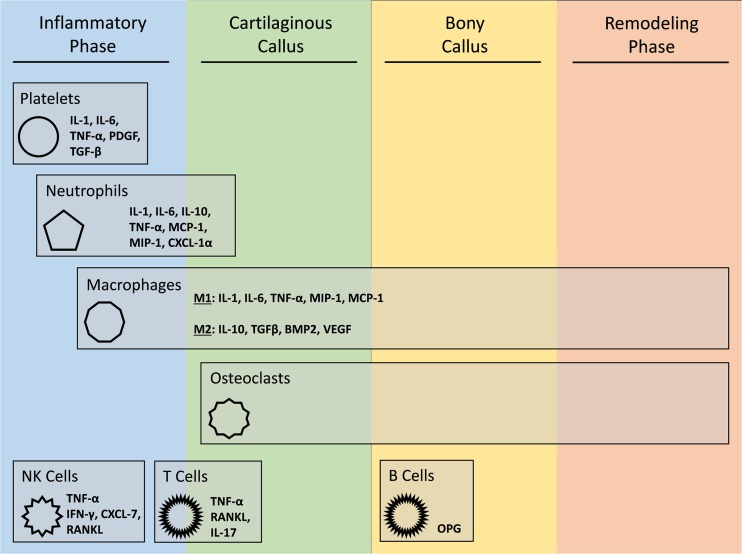
“Bone fracture healing progresses through four distinct yet overlapping phases: formation of the hematoma, development of the cartilaginous callus, development of the bony callus, and finally remodeling of the fracture callus.”
From Osteoimmunology of Fracture Healing. (2024) · cites this paper as [4]
Self-check
Percentages, sums and reported differences re-computed from the paper’s own numbers.
The self-check needs the paper’s full text.
Citations
Cites
Exploring the full spectrum of macrophage activation
Mosser, D. M., & Edwards, J. P. (2008) · Nature Reviews Immunology · doi:10.1038/nri2448 · Cited by 9,144
Osteoclast differentiation and activation
Boyle, W. J., Simonet, W. S., & Lacey, D. L. (2003) · Nature · doi:10.1038/nature01658 · Cited by 6,670
Németh, K., Leelahavanichkul, A., Yuen, P. S. T., Mayer, B., Parmelee, A., Doi, K., Robey, P. G., Leelahavanichkul, K., Koller, B. H., Brown, J. M., et al. (2009) · Nature Medicine · doi:10.1038/nm.1905 · Cited by 2,364
Overview of the immune response
Chaplin, D. D. (2010) · Journal of Allergy and Clinical Immunology · doi:10.1016/j.jaci.2009.12.980 · Cited by 2,235
Ren, G., Zhang, L., Zhao, X., Xu, G., Zhang, Y., Roberts, A. I., Zhao, R. C., & Shi, Y. (2008) · Cell Stem Cell · doi:10.1016/j.stem.2007.11.014 · Cited by 2,101
Osteoimmunology: shared mechanisms and crosstalk between the immune and bone systems
Takayanagi, H. (2007) · Nature Reviews Immunology · doi:10.1038/nri2062 · Cited by 1,878
Kong, Y.-Y., Feige, U., Sarosi, I., Bolon, B., Tafuri, A., Morony, S., Capparelli, C., Li, J., Elliott, R., McCabe, S., et al. (1999) · Nature · doi:10.1038/46303 · Cited by 1,856 · cited 1×
“The immunological function of NK cells is to recognize foreign or virally infected cells and induce apoptosis or cell lysis through cytotoxic granules [65]. Little is known about the function of natural killer cells in fracture healing. It is possible that NK cells play a role in removal of damaged cells located at th…”
BackgroundThe biology of fracture healing
Marsell, R., & Einhorn, T. A. (2011) · Injury · doi:10.1016/j.injury.2011.03.031 · Cited by 1,824
Segal, A. W. (2005) · Annual Review of Immunology · doi:10.1146/annurev.immunol.23.021704.115653 · Cited by 1,789
Franz, S., Rammelt, S., Scharnweber, D., & Simon, J. C. (2011) · Biomaterials · doi:10.1016/j.biomaterials.2011.05.078 · Cited by 1,391
Research works printed but not linked: 2
- Miranda MAMSM Treatment strategy for non unions and malunions 2007 New York Thieme
- Dimitriou R Tsiridis E Giannoudis PV Current concepts of molecular aspects of bone healing Injury. 2005 36 12 1392 1404 10.1016/j.injury.2005.07.019 16102764 · DOI · Paper page
Cited by
Items 101–200 of 295
Adjuvant drug-assisted bone healing: Part I – Modulation of inflammation
Rothe, R., Schulze, S., Neuber, C., Hauser, S., Rammelt, S., & Pietzsch, J. (2019) · Clinical Hemorheology and Microcirculation · doi:10.3233/ch-199102 · Cited by 21
“Additionally, other key events like proliferation and differentiation of MSCs to osteoprogenitor cells such as chondrocytes and osteoblasts take place [9, 81, 95].”
Neuronal regulation of bone and tendon injury repair: a focused review
Xu, M., Zhu, M., Qin, Q., Xing, X., Archer, M., Ramesh, S., Cherief, M., Li, Z., Lévi, B., Clemens, T. L., et al. (2024) · Journal of Bone and Mineral Research · doi:10.1093/jbmr/zjae087 · Cited by 24
Engineering of immunoinstructive extracellular matrices for enhanced osteoinductivity
García‐García, A., Pigeot, S., & Martín, I. (2022) · Bioactive Materials · doi:10.1016/j.bioactmat.2022.12.017 · Cited by 24
The impact of age and sex on the inflammatory response during bone fracture healing
Molitoris, K. H., Balu, A. R., Huang, M., & Baht, G. S. (2024) · JBMR Plus · doi:10.1093/jbmrpl/ziae023 · Cited by 21
“1,11,35,51 In plasma, TNF α expression was elevated with age in both males and females while IL-10 expression was elevated in aged females only.”
BackgroundSelf-citationPaglia, D. N., Díaz‐Hernández, M. E., Roberts, J. L., Kalinowski, J., Lorenzo, J., & Drissi, H. (2019) · Journal of Orthopaedic Research® · doi:10.1002/jor.24537 · Cited by 21
“This complex process requires the recruitment and proliferation of stem cells, including those of the hematopoietic origin.(3,4) Differentiation of these hematopoietic stem cells into clastic cells such as chondroclasts and osteoclasts is essential for the normal progression of secondary bone healing to facilitate the…”
BackgroundLaser irradiation decreases sclerostin expression in bone and osteogenic cells
Ohsugi, Y., Katagiri, S., Hirota, T., Niimi, H., Hatasa, M., Watanabe, K., Shimohira, T., Mizutani, K., Kitazawa, M., Matsuzawa, A., et al. (2020) · The FASEB Journal · doi:10.1096/fj.202001032r · Cited by 20
Clark, D. R., Brazina, S., Miclau, T., Park, S., Hsieh, C. L., Nakamura, M. C., & Marcucio, R. (2024) · Aging Cell · doi:10.1111/acel.14212 · Cited by 21
“Increased infiltration of circulating monocyte-derived macrophages with a pro-inflammatory phenotype is characteristic of the inflammatory events during the early time points after injury to bone (Baht et al., 2018).”
BackgroundInfluentialModerate static magnetic field promotes fracture healing and regulates iron metabolism in mice
Wang, S., Liu, Y., Lou, C., Cai, C., Ren, W., Liu, J., Gong, M., Shang, P., & Zhang, H. (2023) · BioMedical Engineering OnLine · doi:10.1186/s12938-023-01170-3 · Cited by 23
“Previous studies have indicated the presence of two distinct waves of immune cells in fracture healing [26].”
BackgroundBrown, M. G., Brady, D. J., Healy, K. M., Henry, K. A., Ogunsola, A. S., & Ma, X. (2024) · Cells · doi:10.3390/cells13121045 · Cited by 20
“These cells can be identified by the presence of Podoplanin (PDPN), cluster of differentiation 73 (CD73), and cluster of differentiation 164 (CD164) surface cell markers, along with the absence of cluster of differentiation 146 (CD146) [80].”
BackgroundMaterial‐Induced Venosome‐Supported Bone Tubes
Charbonnier, B., Baradaran, A., Sato, D., Alghamdi, O. G., Zhang, Z. B., Zhang, Y., Gbureck, U., Gilardino, M. S., Harvey, E. J., Makhoul, N. M., et al. (2019) · Advanced Science · doi:10.1002/advs.201900844 · Cited by 19
Molstad, D. H. H., Zars, E. L., Norton, A., Mansky, K. C., Westendorf, J. J., & Bradley, E. W. (2020) · Scientific Reports · doi:10.1038/s41598-020-78364-5 · Cited by 19
Turajane, K., Ji, G., Chinenov, Y. V., Chao, M., Ayturk, U. M., Suhardi, V. J., Greenblatt, M. B., Ivashkiv, L. B., Bostrom, M. P., & Yang, X. (2021) · JBMR Plus · doi:10.1002/jbm4.10535 · Cited by 20
Topography-based implants for bone regeneration: Design, biological mechanism, and therapeutics
Guo, W., Yang, Z., Liu, F., Song, J., Yang, W., Li, Y., Hu, W., & Wang, K. (2025) · Materials Today Bio · doi:10.1016/j.mtbio.2025.102066 · Cited by 23
“Moreover, neutrophils and macrophages clear the dead cells and debris and also release factors that promote the recruitment of mesenchymal progenitor cells from the periosteum, bone marrow, and systemic circulation [81].”
Recent progress in immunomodulation-based strategies for bone repair
Yuqiang, W., Ziyan, Z., Xuedi, S., & Piao, C. (2025) · Regenerative Therapy · doi:10.1016/j.reth.2025.101054 · Cited by 25
“In recent years, with the emergence of the concept of osteoimmunology, researchers have increasingly recognized the indispensable role of the immune system in bone repair and regeneration [10,11].”
Microgel-Assisted Delivery of Adenosine to Accelerate Fracture Healing
Hoque, J., Zeng, Y., Newman, H., Gonzales, G., Lee, C., & Varghese, S. (2022) · ACS Biomaterials Science & Engineering · doi:10.1021/acsbiomaterials.2c00977 · Cited by 18
Cracking the Code: The Role of Peripheral Nervous System Signaling in Fracture Repair
Morris, A. J., Parker, R. S., Nazzal, M. K., Natoli, R. M., Fehrenbacher, J. C., Kacena, M. A., & White, F. A. (2024) · Current Osteoporosis Reports · doi:10.1007/s11914-023-00846-y · Cited by 19
“Through the continuous release of norepinephrine, chronic stress induces a dysregulation of immune responses that can deleteriously affect fracture healing [126 •• , 128, 129].”
BackgroundLetaifa, R. B., Klaylat, T., Tarchala, M., Gao, C., Schneider, P., Rosenzweig, D. H., Martineau, P. A., & Gawri, R. (2024) · Surgeries · doi:10.3390/surgeries5020033 · Cited by 18
“These macrophages produce transforming growth factor-beta (TGF-β ) and PDGF, which have been shown to be involved in fracture healing [54,55].”
BackgroundEndothelial to mesenchymal Notch signaling regulates skeletal repair
Novak, S., Tanigawa, H., Singh, V., Root, S. H., Schmidt, T. A., Hankenson, K. D., & Kalajzić, I. (2024) · JCI Insight · doi:10.1172/jci.insight.181073 · Cited by 18
“Although the initial inflammatory response is important to begin the healing process, achieving physiological healing requires a delicate balance between pro-and antiinflammatory signals (35, 36).”
BackgroundShimo, T., Takebe, H., Okui, T., Kunisada, Y., Ibaragi, S., Obata, K., Kurio, N., Shamsoon, K., Fujii, S., Hosoya, A., et al. (2020) · International Journal of Molecular Sciences · doi:10.3390/ijms21072365 · Cited by 20
“In light of our present findings, it is not clear which immune cells are IL-1β-producing cells on day 7 after fracture, but there may be neutrophils and macrophages in a cartilaginous callus [15].”
BackgroundSu, N., Saqib, H., Villicana, C., Kim, S. W., Ambrosi, T. H., Freeman, P., Kim, T. C., Tong, X., Ayushman, M., Chan, C. K. F., et al. (2025) · npj Regenerative Medicine · doi:10.1038/s41536-025-00421-2 · Cited by 17
“Within the injury niche, immune cells act as the fi rst responders, transmitting signals to recruit other niche cells, including stem cells and endothelial cells, mediating the cellular crosstalk and shaping the subsequent healing process 3,4 .”
Clayton, S. W., Walk, R. E., Mpofu, L., Easson, G. W. D., & Tang, S. Y. (2024) · Osteoarthritis and Cartilage · doi:10.1016/j.joca.2024.10.002 · Cited by 19
“17,53 The longitudinal response in females at 19dpi showed a shift in lymphocytes where Cd8+ T cells were the highest responders and could contribute to why repair is still impaired in females (Fig.”
Gläser, N., Schröder, M., Barcik, J. P., Haffner‐Luntzer, M., & Wehrle, E. (2025) · Frontiers in Bioengineering and Biotechnology · doi:10.3389/fbioe.2025.1652897 · Cited by 18
“These activated non-nucleated cells secrete different cytokines such as interleukin (IL)-1, IL-6 and tumor necrosis factor-alpha (TNF-α ) (Baht et al., 2018; Jingushi et al., 1995; Dimitriou et al., 2005; Dulgeroglu and Metineren, 2017).”
InfluentialImmunomodulation Pathogenesis and Treatment of Bone Nonunion
Song, C., Liu, Y., Tao, X., Cheng, K., Cai, W., Zhou, D., Zhou, Y., Wang, L., Shi, H., Qi, H., et al. (2024) · Orthopaedic Surgery · doi:10.1111/os.14131 · Cited by 16
Khajuria, D. K., Reider, I., Kamal, F., Norbury, C. C., & Elbarbary, R. A. (2023) · Frontiers in Immunology · doi:10.3389/fimmu.2023.1250309 · Cited by 15
“The fi eld of osteoimmunology continues to uncover new dimensions of the reciprocal interaction between bone and the immune system (2, 57).”
BackgroundInfluentialGouhari, F., Zandi, R., Mehrvar, A., Talebi, S., & Shariatpanahi, Z. V. (2023) · Injury · doi:10.1016/j.injury.2023.111253 · Cited by 15
Kawai, H., Oo, M. W., Tsujigiwa, H., Nakano, K., Takabatake, K., Sukegawa, S., & Nagatsuka, H. (2021) · International Journal of Medical Sciences · doi:10.7150/ijms.51946 · Cited by 15
Review: cellularity in bone marrow autografts for bone and fracture healing
Haeusner, S., Jauković, A., Kupczyk, E. K., & Herrmann, M. (2023) · American Journal of Physiology-Cell Physiology · doi:10.1152/ajpcell.00482.2022 · Cited by 18
Xue, H. Y., Tao, D., Weng, Y., Fan, Q., Zhou, S., Zhang, R., Zhang, H., Yue, R., Wang, X., Wang, Z., et al. (2019) · Frontiers of Medicine · doi:10.1007/s11684-019-0693-9 · Cited by 15
An “all-in-one” scaffold targeting macrophages to direct endogenous bone repair in situ
Niu, Y., Wang, L., Yu, N. H., Xing, P., Wang, Z., Zhong, Z., Feng, Y., Dong, L., & Wang, C. (2020) · Acta Biomaterialia · doi:10.1016/j.actbio.2020.05.023 · Cited by 15
Chen, Y., Goodheart, C. R., & Rua, D. (2020) · International Journal of Molecular Sciences · doi:10.3390/ijms21228853 · Cited by 16
“These cells initiate the acute inflammatory response [11].”
BackgroundHajializade, M., Moghtadaei, M., Mirzaei, A., Kordkandi, S. A., Babaheidarian, P., Pazoki–Toroudi, H., & Yeganeh, A. (2020) · Materials Science and Engineering C · doi:10.1016/j.msec.2020.110861 · Cited by 14
Prospects and Applications of Natural Blood-Derived Products in Regenerative Medicine
Wessely-Szponder, J., Zdziennicka, J., Junkuszew, A., Latalski, M., Świeca, M., & Szponder, T. (2021) · International Journal of Molecular Sciences · doi:10.3390/ijms23010472 · Cited by 14
Macrophages and osteoclasts: similarity and divergence between bone phagocytes
Halper, J., Dolfi, B., Ivanov, S., Madel, M., & Blin‐Wakkach, C. (2025) · Frontiers in Immunology · doi:10.3389/fimmu.2025.1683872 · Cited by 14
Harnessing extracellular vesicles for endochondral bone regeneration: Mechanisms and applications
Staubli, F., Zhou, Y., Vader, P., Hofmann, S., Bergsma, J. E., Gawlitta, D., & Man, K. (2026) · Acta Biomaterialia · doi:10.1016/j.actbio.2026.01.012 · Cited by 13
Kobayashi-Sun, J., Suzuki, N., Hattori, A., Yamaguchi, M., & Kobayashi, I. (2020) · Biochemical and Biophysical Research Communications · doi:10.1016/j.bbrc.2020.07.075 · Cited by 14
Fatima, T., Jolly, R., Wani, M. R., Shadab, G. G. H. A., & Shakir, M. (2021) · Results in Materials · doi:10.1016/j.rinma.2021.100240 · Cited by 13
Resolvin D1 improves allograft osteointegration and directly enhances osteoblasts differentiation
Pinto, N., Klein, Y., David, E., Polak, D., Steinberg, D. H., Mizrahi, G., Khoury, Y., Barenholz, Y., & Chaushu, S. (2023) · Frontiers in Immunology · doi:10.3389/fimmu.2023.1086930 · Cited by 14
“In the inflammatory phase of fracture healing, platelets, neutrophils and macrophages invade to the injury site, and secrete growth factors and cytokines that promote mesenchymal cells to arrive (9).”
BackgroundXiao, B., Adjei‐Sowah, E., & Benoit, D. S. W. (2023) · Nanomedicine Nanotechnology Biology and Medicine · doi:10.1016/j.nano.2023.102727 · Cited by 15
Zdziennicka, J., Junkuszew, A., Latalski, M., Świeca, M., & Wessely-Szponder, J. (2021) · International Journal of Molecular Sciences · doi:10.3390/ijms221810060 · Cited by 13
“Previously, some authors stated that neutrophils as the leading participants of the inflammatory phase have the potential to modulate inflammatory response to Ti implantation [23].”
BackgroundAlsabani, M. H., Alotaibi, B., Olayan, L. H., Alghamdi, A., Alshammasi, M., Alqasir, B., Alrashidi, S., Alshugair, M., & Harbi, M. A. (2023) · International Journal of General Medicine · doi:10.2147/ijgm.s434630 · Cited by 13
“7 Furthermore, lymphopenia is linked to trauma, which increases mortality rates and lengthens hospital admissions.”
Voß, J. O., Pivetta, F., Elkilany, A., Schmidt‐Bleek, K., Duda, G. N., Odaka, K., Dimitriou, I. M., Ort, M., Streitz, M., Heiland, M., et al. (2024) · Frontiers in Immunology · doi:10.3389/fimmu.2024.1476009 · Cited by 12
Li, B., Ouchi, T., Liu, J., & Yang, Y. (2025) · Science Signaling · doi:10.1126/scisignal.adw7107 · Cited by 13
“…to 12 kDa) chemo-tactic cytokines that regulate the directional migration of cells to the site of injury, are secreted by a wide variety of cells in the wound, including endothelial cells, fibroblasts, keratinocytes, and innate immune cells such as neutrophils and macrophages ( 49 , 50 , 71 , 73 ).”
Clark, D. R., Doelling, J., Hu, D. P., Miclau, T., Nakamura, M. C., & Marcucio, R. (2022) · Journal of Orthopaedic Research® · doi:10.1002/jor.25439 · Cited by 13
“The contribution of immune cells throughout these processes has been shown to be vital for successful healing outcomes.(1) The role of macrophages in the propagation and resolution of inflammation during fracture healing has been well characterized.”
BackgroundZhang, E., Miramini, S., Patel, M. K., Richardson, M., Ebeling, P. R., & Zhang, L. (2022) · Computer Methods and Programs in Biomedicine · doi:10.1016/j.cmpb.2022.107319 · Cited by 12
Bianconi, S., Oliveira, K. M. C., Klein, K., Wolf, J., Schaible, A., Schröder, K., Barker, J. H., Marzi, İ., Leppik, L. P., & Henrich, D. M. (2023) · Cells · doi:10.3390/cells12172151 · Cited by 12
“Neutrophils secrete cytokines such as IL-1β, IL-6, and TNF-α (whose transcription was assessed in the present study), as well as IL-10, MCP-1, CXCL1α, and MIP1, which attract monocytes and are involved in their differentiation into macrophages [40].”
BackgroundDesando, G., Bartolotti, I., Cattini, L., Tschon, M., Martini, L., Fini, M., Schiavinato, A., Soranzo, C., & Grigolo, B. (2021) · Stem Cell Reviews and Reports · doi:10.1007/s12015-020-10099-2 · Cited by 11
Svensson, S., Pujari‐Palmer, M., Svensson, J., Johansson, A., Engqvist, H., Omar, O., & Thomsen, P. (2022) · Journal of Materials Science Materials in Medicine · doi:10.1007/s10856-021-06639-y · Cited by 12
“than 10% of traumatic injury cases [1], especially when the”
BackgroundYe, K., Zhang, X., Shangguan, L., Liu, X., Nie, X., & Qiao, Y. (2023) · Journal of Functional Biomaterials · doi:10.3390/jfb14090456 · Cited by 11
“Macrophages, one of the first cells to arrive at the site of injury, are present throughout the whole repair and regeneration process [5].”
BackgroundKhokhani, P., Belluomo, R., Croes, M., Gawlitta, D., Kruyt, M. C., & Weinans, H. (2022) · Tissue Engineering Part C Methods · doi:10.1089/ten.tec.2022.0086 · Cited by 11
“16 Both innate and adaptive immune cells can be found at the fracture site during the early stage after fracture, which indicates that inflammation is the first action of repair.”
The in vitro human fracture hematoma model - a tool for preclinical drug testing
Pfeiffenberger, M., Hoff, P., Thöne-Reineke, C., Buttgereit, F., Lang, A., & Gaber, T. (2020) · ALTEX · doi:10.14573/altex.1910211 · Cited by 11
“More in detail, granulocytes but also monocytes/macrophages and natural killer (NK) cells are involved in the clearance of debris (Baht et al., 2018; Thomas and Puleo, 2011).”
BackgroundOsteoimmunology: Interactions With the Immune System in Spinal Fusion
Bergin, S. M., Crutcher, C. L., Keeler, C., Rocos, B., Haglund, M. M., Guo, H. M., Gottfried, O. N., Richardson, W. J., & Than, K. D. (2023) · The International Journal of Spine Surgery · doi:10.14444/8556 · Cited by 10
Biomaterial-assisted gene therapy for bone repair
Yang, L., Li, W., Yu, Y., Wang, H., & Wang, X. (2026) · Materials Today Bio · doi:10.1016/j.mtbio.2026.102886 · Cited by 17
“4C) [27,29,43,123,124].”
Mishchenko, O., Yanovska, A., Sulaieva, O., Moskalenko, R., Pernakov, M., Husak, Y., Korniienko, V. V., Deineka, V., Kosinov, O., Varakuta, O. A., et al. (2023) · Nanomaterials · doi:10.3390/nano13121876 · Cited by 11
“In addition to T lymphocytes, macrophages play an important role and have crucial significance for bone metabolism and bone tissue remodeling [22].”
BackgroundEffects of Aging on the Immune and Periosteal Response to Fracture in Mice
King, J. S., Wan, M., Kim, A., Prabhu, S., Novak, S., Kalajzić, I., Delany, A. M., & Sanjay, A. (2024) · Bone · doi:10.1016/j.bone.2025.117524 · Cited by 9
Sadlik, J., Kosińska, E., Niziołek, K., Urbaniak, M. M., Sobczak‐Kupiec, A., & Słota, D. (2025) · Materials · doi:10.3390/ma18214945 · Cited by 9
Extracellular vesicles in osteoimmunomodulation: Orchestrating immune-driven bone regeneration
Pol, F., Longoni, A., Levato, R., Gawlitta, D., & Man, K. (2025) · International Journal of Biological Macromolecules · doi:10.1016/j.ijbiomac.2025.149614 · Cited by 10
Borgiani, E., Nasello, G., Ory, L., Herpelinck, T., Groeneveldt, L. C., Bucher, C. H., Schmidt‐Bleek, K., & Geris, L. (2023) · Frontiers in Immunology · doi:10.3389/fimmu.2023.1231329 · Cited by 10
“The in fl ammatory environment is formed promptly after the injury through the invasion and recruitment of specialized cells [Baht et al. (10)], namely innate immune cells.”
BackgroundChen, Y.-C., Su, H., Huang, S.-M., Yu, C., Chang, J.-H., & Chiu, Y. (2025) · BioData Mining · doi:10.1186/s13040-025-00427-y · Cited by 10
“These cells signal to their counterparts within the fracture callus, influencing the healing trajectory by secreting cytokines, which serve as critical modulators of the repair process [11].”
Novak, S., & Kalajzić, I. (2022) · Bone · doi:10.1016/j.bone.2022.116599 · Cited by 9
Monocyte alteration in elderly hip fracture healing: monocyte promising role in bone regeneration
Shema, C., Lu, Y., Wang, L., & Zhang, Y. (2024) · Immunity & Ageing · doi:10.1186/s12979-024-00413-8 · Cited by 8
“These factors assume indispensable roles in governing the recruitment, proliferation, differentiation, and activation of hematopoietic and mesenchymal cells, all of which are critical for the successful healing of bone fractures [57].”
BackgroundPlatelets: A Potential Factor that Offers Strategies for Promoting Bone Regeneration
Yang, J., Xiao, L., Zhang, L., Luo, G., Ma, Y., Wang, X., & Zhang, Y. (2024) · Tissue Engineering Part B Reviews · doi:10.1089/ten.teb.2024.0004 · Cited by 10
“13,55 Under varying circumstances, macrophages are categorized into two distinct groups: M1 and M2.”
Zhang, T., Neunaber, C., Ye, W., Wagner, A., Bülow, J. M., Relja, B., & Bundkirchen, K. (2024) · Advanced Biology · doi:10.1002/adbi.202300653 · Cited by 8
Luo, G., Zhang, Y., Chen, P., Wu, F., Shi, M., Ma, Y., & Wang, X. (2025) · Colloids and Surfaces B Biointerfaces · doi:10.1016/j.colsurfb.2025.114711 · Cited by 7
Advances on T cell immunity in bone remodeling and bone regeneration
Hu, W., Jinxia, D. E. N. G., Zhanpeng, S. U., Haixing, W. A. N. G., & Lin, S. (2024) · Journal of Zhejiang University (Medical Sciences) · doi:10.3724/zdxbyxb-2023-0619 · Cited by 11
Thrombopoietic agents enhance bone healing in mice, rats, and pigs
Childress, P., Nielsen, J. J., Bemenderfer, T. B., Dadwal, U. C., Chakraborty, N., Harris, J. S., Bethel, M., Alvarez, M. B., Tucker, A., Wessel, A. R., et al. (2024) · Journal of Bone and Mineral Research · doi:10.1093/jbmr/zjae191 · Cited by 7
Baysal, E., Al‐Sharabi, N., Mustafa, K. B. E., Costea, D. E., Brennan, M. Á., & Suliman, S. (2025) · Stem Cell Reviews and Reports · doi:10.1007/s12015-025-11015-2 · Cited by 6
“…a crucial role in this process by regulating the activity of osteoblasts, osteoclasts, and bone marrow derived mesenchymal stromal/stem cells (BMSC) through signaling cascades and the release of bioactive factors, which facilitate intracellular communication for effective bone remodel - ing [2].”
Terhaar, H., Duck, B., Collins, C., Grant, E., Pride, L. S., Zhang, D., Zineldin, E., Burrows, P. D., Javed, A., & Khass, M. (2025) · Current Osteoporosis Reports · doi:10.1007/s11914-025-00947-w · Cited by 6
Lu, F., Groven, R. V. M., Lodewijks, A. J. L., Poeze, M., van Griensven, M., & Blokhuis, T. J. (2026) · Biomaterials · doi:10.1016/j.biomaterials.2026.124028 · Cited by 6
Ahmad, W., Pishevar, N., Cochrane, L. J., Reynolds, A., Kim, J., Korostenskij, I., Geiser, V. L., Carson, M. D., Warner, A. J., Chen, P., et al. (2023) · Journal Of Clinical Periodontology · doi:10.1111/jcpe.13875 · Cited by 6
Short-Term Evaluation of Cellular Fate in an Ovine Bone Formation Model
Markides, H., Foster, N. C., McLaren, J. S., Hopkins, T., Black, C. R. M., Oreffo, R. O. C., Scammell, B. E., Echevarria, I., White, L. J., & Haj, A. J. E. (2021) · Cells · doi:10.3390/cells10071776 · Cited by 6
“The healing process is initiated with an immediate inflammatory response alongside the formation of a haematoma (as a result of blood vessel disruption upon injury) which is essential in enabling bone formation, followed by the recruitment of immune and mesenchymal stromal cells [28,29].”
BackgroundChen, P., Yang, B., Wu, Y., & Wang, J. (2020) · Molecular and Cellular Biochemistry · doi:10.1007/s11010-020-03846-z · Cited by 6
Lu, L., Liu, Y., Nazierhan, S., Sun, Z., Aikeremu, D., Alimasi, W., Xu, K., Niyazi, W., & Wang, H. (2020) · PubMed Central · Cited by 6
Editorial: The immune system and inflammation in musculoskeletal health, aging, and disease
Baht, G. S., & Grol, M. W. (2023) · Frontiers in Immunology · doi:10.3389/fimmu.2023.1218118 · Cited by 6
Self-citationSung, J., Barratt, K. R., Pederson, S., Chenu, C., Reichert, I. L. H., Atkins, G. J., Anderson, P., & Smitham, P. J. (2023) · Bone and Joint Research · doi:10.1302/2046-3758.1210.bjr-2023-0062.r1 · Cited by 6
“34,35 Proinflammatory cytokines are known to show peak expression within the first 24 hours after fracture, depressed levels during cartilage formation, and their levels increase again during bone remodelling.”
BackgroundTchouto, M. N., Bucher, C. H., Meß, A.-K., Haas, S. F., Schmidt‐Bleek, K., Duda, G. N., Beule, D., & Milek, M. (2025) · Frontiers in Immunology · doi:10.3389/fimmu.2025.1511902 · Cited by 5
Chen, B., Li, G., Fang, Q., Ding, P., & Gao, Y. (2026) · Inflammation and Regeneration · doi:10.1186/s41232-026-00416-6 · Cited by 5
“At this stage, macrophage-derived IL-1β and TNF-α orchestrate the recruitment and proliferation of mesenchymal stromal cells (MSCs) and regulate angiogenesis [90].”
Milić, M., Ilić, K., Erceg, I., Jurašin, D. D., Maltar‐Strmečki, N., Vrček, I. V., & Sikirić, M. D. (2023) · Bulletin of Materials Science · doi:10.1007/s12034-023-03021-2 · Cited by 6
Boiko, A. A., Маланчук, В. О., Myroshnychenko, M. S., Markovska, O. V., Shapkin, A. S., & Marakushyn, D. I. (2024) · Polski Merkuriusz Lekarski · doi:10.36740/merkur202402105 · Cited by 5
Etschmaier, V., Üçal, M., Lohberger, B., Weinberg, A., & Schäfer, U. (2024) · Cells and Development · doi:10.1016/j.cdev.2024.203927 · Cited by 5
Inflammatory response toward a Mg-based metallic biomaterial implanted in a rat femur fracture model
Riyaz, S., Sun, Y., Helmholz, H., Peñate-Medina, T., Medina, O. P., Wiese, B., Will, O., AlBaraghtheh, T., Mohamad, F. H., Hövener, J., et al. (2024) · Acta Biomaterialia · doi:10.1016/j.actbio.2024.06.040 · Cited by 6
Dual role for pannexin 1 at synapses: regulating functional and morphological plasticity
Martinez, A. C., Wicki‐Stordeur, L. E., Ariano, A. V., & Swayne, L. A. (2024) · The Journal of Physiology · doi:10.1113/jp285228 · Cited by 6
“It would be nice if the authors spent a few sentences highlighting the evidence that supports this, or what additional evidence would make the case stronger.”
A MODERN VIEW ON REPARATIVE OSTEOGENESIS: MAIN STAGES AND THEIR PATTERNS
Sukhonos, O., Korenkov, O. V., & Sukhodub, L. (2024) · Eastern Ukrainian Medical Journal · doi:10.21272/eumj.2024;12(3):476-491 · Cited by 5
“Також нейтрофіли секретують ряд цитокінів, таких як IL-1, IL-6, IL-10, TNF-α, MCP-1 (фактор хемотаксису моноцитів 1), CXCL-1α (C-X-C мотивний хемокіновий ліганд 1α), MIP-1 (макрофагальний білок запалення 1) для подальшого залучення моноцитів, які диференціюються в макрофаги [17].”
Amorphous Calcium Carbonate Enhances Fracture Healing in a Rat Fracture Model
Yeh, T., Chen, C.-K., Kuthati, Y., Mende, L. K., Wong, C., & Kong, Z. (2024) · Nutrients · doi:10.3390/nu16234089 · Cited by 5
The Role of Immune System Cells in Fracture Healing: Review of the Literature and Current Concepts
Flevas, D. A., Papageorgiou, M. G., Drakopoulos, P., & Lambrou, G. Ι. (2021) · Cureus · doi:10.7759/cureus.14703 · Cited by 5
“T lymphocytes, also known as T cells, are hematopoietic cells of the lymphoid lineage characterized by the expression of T-cell receptors (TCRs) [1,4].”
BackgroundInfluentialRetractedVasconcelos, R. C., Ferreira, C. R. D., de Araújo, E. M., Motta, F. V., Bomio, M. R. D., Júnior, R. F. D. A., Paiva, D. F. F., Pirih, F. Q. M., da Silva, J. S. P., Chan, A. B., et al. (2020) · LA Referencia (Red Federada de Repositorios Institucionales de Publicaciones Científicas) · Cited by 5
The effects of thyroidectomy on healing fracture in rabbits model
Bader, O. A., & Nahi, H. H. (2022) · Al-mağallaẗ al-ʻirāqiyyaẗ li-l-ʻulūm al-bayṭariyyaẗ/Iraqi journal of veterinary sciences · doi:10.33899/ijvs.2021.130893.1897 · Cited by 5
Resorbable 3D‐Printed Osteosynthetic Plates for Rib Fracture Repair
Augustine, E. K., Camarena, A., Klein, T. R., Kang, L., Wimmer, G., Stinson, N. C., Fernandez-Moure, J. S., & Becker, M. L. (2025) · Advanced Healthcare Materials · doi:10.1002/adhm.202500409 · Cited by 4
Lu, F., Groven, R. V. M., Meesters, D. M., Bitorina, A. V., Poeze, M., Tang, S., van Griensven, M., Blokhuis, T. J., & Shiri‐Sverdlov, R. (2025) · Bone · doi:10.1016/j.bone.2025.117574 · Cited by 5
γδ17T Cells Hinder Mandibular Bone Defect Healing
Naamneh, R., Shoukair, F. L., Gera, M., Jaber, Y., Yacoub, S., Netanely, Y., Saba, Y., Zubeidat, K., Wilensky, A., Prinz, I., et al. (2025) · Journal of Dental Research · doi:10.1177/00220345251391194 · Cited by 4
“In the absence of IL-17, inflammatory responses at the defect site were reduced, facilitating a more rapid transition to the reparative phase (Baht et al 2018).”
The Osteoimmunologic Basis of Biologic and Bioengineered Scaffolds in Fracture Healing
Shelby, H., Bergren, S., Wier, J. R., Schwarz, E. M., & Lieberman, J. R. (2026) · Bioengineering · doi:10.3390/bioengineering13020223 · Cited by 5
“These neutrophils further secrete inflammatory cytokines such as IL-6, MCP-1, and MIP-1 α , which recruit additional immune and stromal cells [50].”
Tylicka, M., Guszczyn, T., Maksimowicz, M., Kamińska, J., Matuszczak, E., Karpińska, M., & Koper‐Lenkiewicz, O. M. (2021) · Frontiers in Endocrinology · doi:10.3389/fendo.2021.749667 · Cited by 5
“(15), who postulate that during the inflammatory phase neutrophils secrete a wide range of cytokines and chemokines (IL-1, IL-6, IL-10, TNFa, CCL2, CXCL-1a, MIP-1) to attract monocytes, which are”
BackgroundRegenerative medicine: potential applications for foot and ankle disorders
Caravaggio, F., Antonelli, M., & Depalmi, F. (2021) · LO SCALPELLO-OTODI Educational · doi:10.36149/0390-5276-208 · Cited by 4
Lestari, C., Darwin, E., Putra, D. P., & Suharti, N. (2021) · Journal of Pharmacy & Pharmacognosy Research · doi:10.56499/jppres21.1015_9.5.609 · Cited by 4
Underlying Ossification Phenotype in a Murine Model of Metastatic Synovial Sarcoma
Kirkham, M., Kalivas, A., Fatema, K., Luelling, S., Dubansky, B. H., Dubansky, B. D., Jones, K. B., & Barrott, J. J. (2020) · International Journal of Molecular Sciences · doi:10.3390/ijms21072636 · Cited by 4
“Such inflammation incites an immune response, galvanizing immune cells such as lymphocytes, macrophages, and neutrophils to infiltrate the primary site and secrete growth signaling molecules that are responsible for transforming mesenchymal stem cells into differentiated osteoblast cells [25,26].”
BackgroundOsteoimmunology: The effect of autoimmunity on fracture healing and skeletal analysis
Lončar, S. R., Halcrow, S. E., & Swales, D. (2023) · Forensic Science International: Synergy · doi:10.1016/j.fsisyn.2023.100326 · Cited by 3
Zeeshan, R. M. (2024) · IntechOpen eBooks · doi:10.5772/intechopen.1005088 · Cited by 3
Pradillo-Gallego, D., Manzano‐Moreno, F. J., Ocaña‐Peinado, F. M., & Olmedo-Gaya, M. V. (2024) · Clinical Oral Investigations · doi:10.1007/s00784-024-06050-1 · Cited by 3
“T-CD4 lymphocytes have been found to interfere with the regulation of osteoclast and osteoblast activity, affect - ing bone development, homeostasis, and healing [61, 62].”
Strait, L. K., Dewan, D., Williams, K. E., Guyer, T., Willett, N. J., & Guldberg, R. E. (2025) · Frontiers in Physiology · doi:10.3389/fphys.2025.1587766 · Cited by 4
“Preclinical and clinical studies have identified risk factors and comorbidities, such as osteoporosis and a dysregulated immune response, to be associated with poor healing outcomes (Baht et al., 2018; Vantucci et al., 2020; Cheng et al., 2021; Gorter et al., 2021).”
Shu, Y., Luo, Z., Tang, Z., Li, W., Sun, F., Dong, T., Zhang, C., Luo, X., Luo, Z., Liu, X., et al. (2026) · Frontiers in Bioengineering and Biotechnology · doi:10.3389/fbioe.2026.1784567 · Cited by 3
Yu, A. J. R., Zare, M. R., Ogunnaike, E. A., & Yazdi, M. (2026) · Biomaterials Science · doi:10.1039/d6bm00388e · Cited by 3
Metadata
- Authors
- Baht, G. S., Vi, L., & Alman, B. A.
- Affiliations
- Duke University (US)
- University of Toronto (CA)
- Corresponding author
- Baht, Gurpreet S.
- Alman, Benjamin A.
- Venue
- Current Osteoporosis Reports
- Published
- 2018-03-05
- Volume
- 16
- Issue
- 2
- Pages
- 138-145
- ISSN
- 1544-1873 (ISSN-L)
- 1544-2241
- PMC
- PMC5866272
- OpenAlex
- W2793888838
- Cited by
- 275
- References
- 85
- Citations by year
- 2026: 30 · 2025: 42 · 2024: 49 · 2023: 34 · 2022: 29 · 2021: 37 · 2020: 36 · 2019: 14 · 2018: 4
- FWCI
- 3.25
- Type
- journal article
- Language
- en
- Open access
- hybrid
- doi.org
- Licence
- cc-by
- creativecommons.org/licenses/by/4.0 (tdm)
- Locations
- Current Osteoporosis Reports (publishedVersion, cc-by)
- Europe PMC (PubMed Central) (publishedVersion, cc-by)
- PubMed Central (publishedVersion, cc-by)
- PubMed (publishedVersion)
- Funders
- National Institute on Aging (R01AG049745)
- Topics
- Health Sciences › Medicine › Orthopedics and Sports Medicine › Bone fractures and treatments
- Life Sciences › Biochemistry, Genetics and Molecular Biology › Molecular Biology › Bone Metabolism and Diseases
- Physical Sciences › Engineering › Biomedical Engineering › Bone Tissue Engineering Materials
- Keywords
- fracture healing, immune cells, osteoimmunology, macrophages, cytokines, fracture callus, hematopoietic cells, mesenchymal cells, immunomodulation, inflammation
- MeSH terms
- Bony Callus, Cell Differentiation, Hematopoietic Stem Cells, Humans, Macrophages, Cytokines, Fracture Healing, Cell Proliferation, Mesenchymal Stem Cells
About these checks
Registry, retraction, Cites and statistics results are computed, not judged, with one exception: a printed reference that no index lists is read once by a model before it counts as a citation error. Claims are extracted by a model and kept only when their quote appears verbatim in the text; each cited source is then checked, with a model’s help, for whether it says what the claim relies on. Those verdicts can be wrong — read the claim’s quote and the cited source before relying on one.
Statistics and arithmetic are recomputed, not judged.
Confidence bands are shown only for fields calibrated on our annotated test set. None is calibrated yet, so no band is shown.
What counts as a claim ›How we measure confidence ›How we check this ›
Are you an author, or do you see a problem with this page? Request a review
Data sources
Bibliographic data: Semantic Scholar, OpenAlex, Crossref.
Contains information from the Semantic Scholar Academic Graph Datasets, made available under the ODC Attribution License (ODC-BY 1.0).
Semantic Scholar’s data is described in: Kinney, R., et al. (2023). The Semantic Scholar Open Data Platform. arXiv:2301.10140.
