

Dissociation and Alterations in Brain Function and Structure: Implications for Borderline Personality Disorder
Open accessThe DOI matches its Crossref record; 158 of the 161 references it cites were found in a registry or an index, and 1 are not checked yet; 32 of the 186 sources its claims cite were checked for support.
Abstract
Dissociation involves disruptions of usually integrated functions of consciousness, perception, memory, identity, and affect (e.g., depersonalization, derealization, numbing, amnesia, and analgesia). While the precise neurobiological underpinnings of dissociation remain elusive, neuroimaging studies in disorders, characterized by high dissociation (e.g., depersonalization/derealization disorder (DDD), dissociative identity disorder (DID), dissociative subtype of posttraumatic stress disorder (D-PTSD)), have provided valuable insight into brain alterations possibly underlying dissociation. Neuroimaging studies in borderline personality disorder (BPD), investigating links between altered brain function/structure and dissociation, are still relatively rare. In this article, we provide an overview of neurobiological models of dissociation, primarily based on research in DDD, DID, and D-PTSD. Based on this background, we review recent neuroimaging studies on associations between dissociation and altered brain function and structure in BPD. These studies are discussed in the context of earlier findings regarding methodological differences and limitations and concerning possible implications for future research and the clinical setting.
Verified 2026-11-25 · 1 reference not checked yet
Overview
CoChat Summary
## TL;DR
This is a narrative review of neuroimaging research on dissociation, focusing on how prior findings in depersonalization/derealization disorder, dissociative identity disorder, and dissociative PTSD may inform borderline personality disorder (BPD). The paper concludes that dissociation in BPD is linked to altered function and structure in fronto-limbic, default-mode, insular, temporal, and thalamic regions, but the evidence is heterogeneous and limited by mostly small, correlational studies.
## Key findings
- The review states that stress-related dissociation is common in BPD, occurring in about 75–80% of patients and typically lasting minutes to hours, or days.
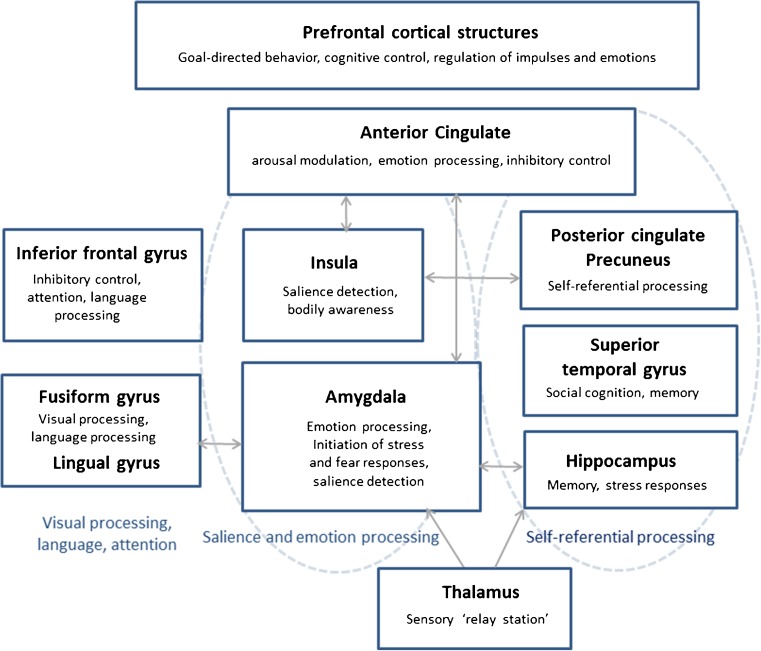
- Across the reviewed BPD neuroimaging studies, dissociation was associated with altered activity or connectivity in regions involved in emotion processing, memory, self-referential processing, and cognitive control, including the amygdala, hippocampus, parahippocampal gyrus, insula, PCC/precuneus, mPFC, ACC, IFG, and dlPFC.
- In a structural MRI study of 30 female BPD patients and 25 healthy controls, patients with comorbid dissociative amnesia or DID had +13% larger left postcentral gyrus volume than controls and +11% larger than BPD patients without these disorders; within the full BPD sample, right precuneus volume was −9% vs controls and stronger depersonalization related to larger right precuneus size.
- The review summarizes that experimental dissociation induction in BPD often increased DSS and was linked to changes such as increased left IFG activity, altered amygdala responses, and poorer task performance; for example, in one study dissociation induction in 19 unmedicated female BPD patients increased DSS and was associated with increased left IFG activity and reduced pain sensitivity.
## Methods
- Narrative review of neurobiological models of dissociation and neuroimaging studies in DDD, DID, D-PTSD, and BPD.
- The authors searched PubMed, PsychInfo, Web of Science, and Science Direct using combinations of “Borderline Personality Disorder,” “Dissociation,” and neuroimaging-related keywords; they report an overview of studies in Table 1 (n = 20).
- They synthesized findings from multiple study types, including PET, SPECT, RS-fMRI, task-based fMRI, MRS, structural MRI, and DTI, with emphasis on links between dissociation scales (DES, DSS) and brain function/structure.
## Limitations
- The paper explicitly notes that many studies had small sample sizes, were female-only, and often lacked clinical control groups or traumatized controls without disorder.
- It states that many findings are correlational, so they do not allow causal conclusions about whether brain differences are a cause or consequence of dissociation.
- It also says interpretation is complicated by comorbidities, trauma history, psychotropic medication, and gender distribution; additionally, the text makes evident that the evidence base is heterogeneous across tasks, samples, and dissociation measures.
Model-written summary. Check it against the paper before relying on it.
Integrity signals
Registry
Cites
Statistics
Figures
Verification
Claims the paper makes
24 Valid · 4 Not valid · 83 Not checked · 7 Own results and interpretations
At least one cited source doesn’t support this claim or points to a different paper, and none confirmed it — see the verdicts below.
In the paper
“Volumes of these regions (implicated in motor control [103–105]) were negatively correlated with severity of derealization/depersonalization [103].”
§ Dissociation and Alterations in Brain Function and Structure: Implications for Borderline Personality Disorder > Introduction > Research on Structural Alterations
What the sources say
- Disputedcites [103] Chalavi S Vissia EM Giesen ME Nijenhuis ER Draijer N Barker GJ Similar cortical but not subcortical gray matter abnormalities in women with posttraumatic stress disorder with versus without dissociative identity disorder Psychiatry Res 2015 231 3 308 19 10.1016/j.pscychresns.2015.01.014 25670646 sourceExperimental — accuracy not yet measured
Section 3.2.2 reports positive correlations between the dissociative-symptom component and bilateral putamen and right pallidum volumes; Table 4 gives positive coefficients for all three. The Discussion likewise says larger putamen and pallidum volumes were associated with more severe depersonalization/derealization symptoms, contrary to the claimed negative correlation. (LLM, conf=0.93)
Checked by a reasoning model — may be wrong.
plainstates an association- Asserted: passes — The authors put it forward as true.
- Checkable: passes — It can be checked against evidence.
- Load-bearing: unclear — It is unclear whether the paper’s conclusions depend on it.
- Based: passes — The paper gives a reason why it holds.
- Disputed
The cited sources support only part of this claim — read each source’s verdict below.
In the paper
“Stress-related dissociation occurs in about 75–80% of BPD patients [6, 113–118],”
- Also stated in: § Dissociation in Borderline Personality Disorder (BPD) · plain
“Stress-related dissociation occurs in about 75–80% of BPD patients [6, 113–118]”
§ Dissociation and Alterations in Brain Function and Structure: Implications for Borderline Personality Disorder > Introduction > Dissociation in Borderline Personality Disorder (BPD)
What the sources say
- Not checked — no full text of the sourcecites [6] Stiglmayr CE Ebner-Priemer UW Bretz J Behm R Mohse M Lammers CH Dissociative symptoms are positively related to stress in borderline personality disorder Acta Psychiatr Scand 2008 117 2 139 47 18028248 source
- Not checked — no full text of the sourcecites [113] Chopra HD Beatson JA Psychotic symptoms in borderline personality disorder Am J Psychiatr 1986 143 12 1605 7 10.1176/ajp.143.12.1605 3789216 source
- Not checked — no full text of the sourcecites [114] Skodol AE Gunderson JG Pfohl B Widiger TA Livesley WJ Siever LJ The borderline diagnosis I: psychopathology comorbidity, and personality structure Biol Psychiatry 2002 51 12 936 50 10.1016/S0006-3223(02)01324-0 12062877 source
- Not checked — no full text of the sourcecites [115] Korzekwa MI Dell PF Pain C Dissociation and borderline personality disorder: an update for clinicians Current Psychiatry Reports 2009 11 1 82 8 10.1007/s11920-009-0013-1 19187714 source
- Not checked — no full text of the sourcecites [116] Simeon D Nelson D Elias R Greenberg J Hollander E Relationship of personality to dissociation and childhood trauma in borderline personality disorder CNS Spectrums 2003 8 10 755 62 10.1017/S109285290001912X 14712173 source
- Partly supportedcites [117] Zanarini MC Frankenburg FR Jager-Hyman S Reich DB Fitzmaurice G The course of dissociation for patients with borderline personality disorder and axis II comparison subjects: a 10-year follow-up study Acta Psychiatr Scand 2008 118 4 291 6 10.1111/j.1600-0447.2008.01247.x 18759803 PMC3876894 sourceExperimental — accuracy not yet measured
The paper’s introductory discussion says dissociative experiences are common among patients with BPD. It does not give a 75–80% prevalence estimate, and the Discussion says further research is needed to determine whether those experiences are stress-related rather than chronic. (LLM, conf=0.85)
- Not checked — no full text of the sourcecites [118] Zanarini MC Ruser TF Frankenburg FR Hennen J Gunderson JG Risk factors associated with the dissociative experiences of borderline patients J Nerv Ment Dis 2000 188 1 26 30 10.1097/00005053-200001000-00005 10665457 source
plain- Asserted: passes — The authors put it forward as true.
- Checkable: passes — It can be checked against evidence.
- Load-bearing: unclear — It is unclear whether the paper’s conclusions depend on it.
- Based: passes — The paper gives a reason why it holds.
- Also stated in: § Dissociation in Borderline Personality Disorder (BPD) · plain
The cited sources support only part of this claim — read each source’s verdict below.
In the paper
“States of detachment (e.g., numbing) may thus be associated with reduced reactivity in this area [70].”
§ Dissociation and Alterations in Brain Function and Structure: Implications for Borderline Personality Disorder > Introduction > Etiological Models: Trauma and Dissociation
What the sources say
- Partly supportedcites [70] Phillips ML Sierra M Depersonalization disorder: a functional neuroanatomical perspective Stress 2003 6 3 157 65 10.1080/1025389031000138538 13129809 sourceExperimental — accuracy not yet measured
The sections “Emotional Numbing in Depersonalization” and “Towards an Understanding of the Functional Neuroanatomical Basis of Depersonalization” describe blunted emotional responses and reduced insula activation to aversive scenes in depersonalized patients. They do not establish reduced amygdala reactivity in detachment states; the claim specifies a brain region the reported finding does not support. No page numbers are available in our copy. (LLM, conf=0.83)
hedgedstates an association- Asserted: passes — The authors put it forward as true.
- Checkable: passes — It can be checked against evidence.
- Load-bearing: passes — The paper’s conclusions depend on it.
- Based: passes — The paper gives a reason why it holds.
- Partly supported
The cited sources support only part of this claim — read each source’s verdict below.
In the paper
“Furthermore, the hippocampus and parahippocampal regions may be critical to the understanding of altered memory processing during dissociative states [31–33, 61].”
§ Dissociation and Alterations in Brain Function and Structure: Implications for Borderline Personality Disorder > Introduction > Etiological Models: Trauma and Dissociation
What the sources say
- Partly supportedcites [31] Bremner JD Traumatic stress: effects on the brain Dialogues Clin Neurosci 2006 8 4 445 61 17290802 PMC3181836 sourceExperimental — accuracy not yet measured
The Neurobiology of PTSD and Cognitive function and brain structure in PTSD sections link the hippocampus to altered memory after traumatic stress and mention dissociative amnesia. Neural circuits in PTSD reports altered parahippocampal activity during trauma-related tasks. The paper does not establish that both regions are critical to altered memory processing specifically during dissociative states; page numbers were not available in our copy. (LLM, conf=0.82)
- Not matchedcites [32] Bremner JD Williams LM Banyard V Traumatic memories lost and found: can lost memory of abuse be found in the brain? Trauma & memory 1999 London Sage 217 28
We searched by its title and found no matching paper.
- Partly supportedcites [33] Elzinga BM Bremner JD Are the neural substrates of memory the final common pathway in posttraumatic stress disorder (PTSD)? J Affect Disord 2002 70 1 1 17 10.1016/S0165-0327(01)00351-2 12113915 PMC5580811 sourceExperimental — accuracy not yet measured
Section 2.6 links dissociative reactions to impaired memory encoding, and section 4 proposes that hippocampal dysfunction may underlie trauma-related amnesia and fragmented memories. The paper does not identify parahippocampal regions as part of that explanation, so it supports only the hippocampal portion of the claim. (LLM, conf=0.85)
- Not checked — no full text of the sourcecites [61] Krystal JH, Bremner JD, SouthwickSM, Charney DS. The emerging neurobiology of dissociation: implications for treatment of posttraumatic stress disorder. In: Bremner JD, Marmar CR, editors. 1. Washington DC: American Psychiatric Press; 1998. p. 321–63. source
hedgedstates a possible cause- Asserted: passes — The authors put it forward as true.
- Checkable: passes — It can be checked against evidence.
- Load-bearing: unclear — It is unclear whether the paper’s conclusions depend on it.
- Based: passes — The paper gives a reason why it holds.
- Partly supported
The cited sources support only part of this claim — read each source’s verdict below.
In the paper
“Research in BPD has found reasonably strong relationships between dissociation and childhood trauma, especially sexual abuse [118, 121–124], physical abuse, attachment difficulties, and parental neglect [118, 125, 126]”
§ Dissociation and Alterations in Brain Function and Structure: Implications for Borderline Personality Disorder > Introduction > Dissociation in Borderline Personality Disorder (BPD)
What the sources say
- Not checked — no full text of the sourcecites [118] Zanarini MC Ruser TF Frankenburg FR Hennen J Gunderson JG Risk factors associated with the dissociative experiences of borderline patients J Nerv Ment Dis 2000 188 1 26 30 10.1097/00005053-200001000-00005 10665457 source
- Partly supportedcites [121] Dutra L Bureau JF Holmes B Lyubchik A Lyons-Ruth K Quality of early care and childhood trauma: a prospective study of developmental pathways to dissociation J Nerv Ment Dis 2009 197 6 383 90 10.1097/NMD.0b013e3181a653b7 19525736 PMC2697443 sourceExperimental — accuracy not yet measured
The paper reports associations between dissociation and childhood physical or sexual abuse in prior research, and its Discussion links later dissociation to parental emotional unavailability. But it does not establish these relationships specifically in people with BPD. Its own longitudinal study found that childhood abuse did not predict dissociation scores, so the claim also obscures an important qualification. (LLM, conf=0.86)
- Not checked — no full text of the sourcecites [122] Ross-Gower J Waller G Tyson M Elliott P Reported sexual abuse and subsequent psychopathology among women attending psychology clinics: the mediating role of dissociation Br J Clin Psychol 1998 37 Pt 3 313 26 10.1111/j.2044-8260.1998.tb01388.x 9784886 source
- Not checked — no full text of the sourcecites [123] Shearer SL Dissociative phenomena in women with borderline personality disorder Am J Psychiatr 1994 151 9 1324 8 10.1176/ajp.151.9.1324 8067488 source
- Not checked — no full text of the sourcecites [124] Van Den Bosch LM Verheul R Langeland W Van Den Brink W Trauma, dissociation, and posttraumatic stress disorder in female borderline patients with and without substance abuse problems Aust N Z J Psychiatry 2003 37 5 549 55 10.1046/j.1440-1614.2003.01199.x 14511082 source
- Could not verifycites [125] Dalenberg CJ Glaser D Alhassoon OM Statistical support for subtypes in posttraumatic stress disorder: the how and why of subtype analysis Depress Anxiety 2012 29 8 671 8 10.1002/da.21926 22447622 sourceExperimental — accuracy not yet measured
The Complex PTSD section discusses dissociation in relation to PTSD and repeated interpersonal trauma, not the claimed relationships in people with BPD. Searches for BPD, attachment difficulties, parental neglect, and the specified forms of abuse found no passage establishing those relationships in our copy. (LLM, conf=0.76)
- Not checked — no full text of the sourcecites [126] Ogawa JR Sroufe LA Weinfield NS Carlson EA Egeland B Development and the fragmented self: longitudinal study of dissociative symptomatology in a nonclinical sample Dev Psychopathol 1997 9 4 855 79 10.1017/S0954579497001478 9449009 source
boostedstates an association- Asserted: passes — The authors put it forward as true.
- Checkable: passes — It can be checked against evidence.
- Load-bearing: passes — The paper’s conclusions depend on it.
- Based: passes — The paper gives a reason why it holds.
49 more claims · 7 with their cited sources checked
Create a free account to see all 118 claims and to verify the 2 references still open.
- It may state two separate claims as one. 56
- Probably not a substantial claim. 9
Claims other papers make about this one
Each is checked against this paper’s own text: does it say what the citing paper says it does?
The cited source says what the claim attributes to it.
In the citing paper
“early data in adults suggest potential neurobiological differences in dissociative PTSD [63].”
From Trauma, PTSD, and the Developing Brain (2017) · cites this paper as [63]
Self-check
Percentages, sums and reported differences re-computed from the paper’s own numbers.
Rated major: it would touch a result — a value a result rests on, reported and recomputed p-values on opposite sides of the significance level, two passages that conflict with no sign which is right, or a cited work retracted before this paper was published.
In the paper
“Niedtfeld and colleagues (2013) used voxel-based morphometry to investigate structural alterations across the entire brain in a female sample of 60 unmedicated BPD patients with (n = 21) and without comorbid PTSD (n = 31; mainly following severe childhood trauma such as physical/sexual abuse), and HCs (n = 60) [150•].”
§ Dissociation and Alterations in Brain Function and Structure: Implications for Borderline Personality Disorder > Introduction > Structural Neuroimaging Studies in BPD
Reported 60 · recomputed 52
Citations
Cites
A default mode of brain function
Raichle, M. E., MacLeod, A. M., Snyder, A. Z., Powers, W. J., Gusnard, D. A., & Shulman, G. L. (2001) · Proceedings of the National Academy of Sciences · doi:10.1073/pnas.98.2.676 · Cited by 12,190
Gratz, K. L., & Roemer, L. (2004) · Journal of Psychopathology and Behavioral Assessment · doi:10.1023/b:joba.0000007455.08539.94 · Cited by 8,942
Functional connectivity in the resting brain: a network analysis of the default mode hypothesis
Greicius, M. D., Krasnow, B., Reiss, A. L., & Menon, V. (2003) · Proceedings of the National Academy of Sciences · doi:10.1073/pnas.0135058100 · Cited by 6,358
A cognitive model of posttraumatic stress disorder
Ehlers, A., & Clark, D. M. (2000) · Behaviour Research and Therapy · doi:10.1016/s0005-7967(99)00123-0 · Cited by 6,147
Saliency, switching, attention and control: a network model of insula function
Menon, V., & Uddin, L. Q. (2010) · Brain Structure and Function · doi:10.1007/s00429-010-0262-0 · Cited by 5,592
Large-scale brain networks and psychopathology: a unifying triple network model
Menon, V. (2011) · Trends in Cognitive Sciences · doi:10.1016/j.tics.2011.08.003 · Cited by 4,168
The construction of autobiographical memories in the self-memory system
Conway, M. A., & Pleydell-Pearce, C. W. (2000) · Psychological Review · doi:10.1037/0033-295x.107.2.261 · Cited by 4,089
Development, reliability, and validity of a dissociation scale
BERNSTEIN, E. M., & PUTNAM, F. W. (1986) · The Journal of Nervous and Mental Disease · doi:10.1097/00005053-198612000-00004 · Cited by 3,793
The attention system of the human brain: 20 years after
Petersen, S. E., & Posner, M. I. (2012) · Annual Review of Neuroscience · doi:10.1146/annurev-neuro-062111-150525 · Cited by 3,439
Psychophysiological and Modulatory Interactions in Neuroimaging
Friston, K. J., Buechel, C., Fink, G. R., Morris, J., Rolls, E., & Dolan, R. J. (1997) · NeuroImage · doi:10.1006/nimg.1997.0291 · Cited by 3,097
Research works printed but not linked: 7
- Cannon WB Bodily changes in pain, hunger, fear, and range 1929 Appleton-Century-Crofts New York, NY
- Fanselow MS Lester LS Bolles RC Breecher MD A functional behavioristic approach to aversively modtivated behavior: predatory immenence as a determinant of the topography of the defensive behavior Evolution and learning 1988 Hilsdale, NJ Erlbaum 185 212
- Bremner JD Williams LM Banyard V Traumatic memories lost and found: can lost memory of abuse be found in the brain? Trauma & memory 1999 London Sage 217 28
- Spitzer C Barnow S Freyberger HJ Grabe HJ Dissociation predicts symptom-related treatment outcome in short-term inpatient psychotherapy Aust N Z J Psychiatry 2007 41 8 682 7 10.1080/00048670701449146 17620165 · DOI · Paper page
- Krystal JH Bennett AL Bremner JD Southwick SM Charney DS Friedman MJ Charney DS Toward a cognitive neuroscience of dissociation and altered memory functions in post-traumatic stress disorder Deutch AY, editors 1995 Philadelphia Lippincott-Raven Publishers 228 69
- APA. Diagnostic and statistical manual of mental disorders, fourth edition, Text Revision (DSM-IV-TR). Washington, DC: American Psychiatric Association; 2000.
- Steinberg M Interviewers guide to the structured clinical interview for DSM-IV dissociative disorders 1994 Washington, DC American Psychiatric Press
Cited by
Dissociation in victims of childhood abuse or neglect: a meta-analytic review
Vonderlin, R., Kleindienst, N., Alpers, G. W., Bohus, M., Lyssenko, L., & Schmahl, C. (2018) · Psychological Medicine · doi:10.1017/s0033291718000740 · Cited by 280
Trauma, PTSD, and the Developing Brain
Herringa, R. J. (2017) · Current Psychiatry Reports · doi:10.1007/s11920-017-0825-3 · Cited by 248
Can't get it off my brain: Meta-analysis of neuroimaging studies on perseverative cognition
Makovac, E., Fagioli, S., Rae, C. L., Critchley, H. D., & Ottaviani, C. (2020) · Psychiatry Research: Neuroimaging · doi:10.1016/j.pscychresns.2019.111020 · Cited by 157
Lanius, R. A., Boyd, J. E., McKinnon, M. C., Nicholson, A. A., Frewen, P., Vermetten, E., Jetly, R., & Spiegel, D. (2018) · Current Psychiatry Reports · doi:10.1007/s11920-018-0983-y · Cited by 138
Biomarkers of Pathological Dissociation: A Systematic Review
Roydeva, M. I., & Reinders, A. A. T. S. (2021) · Neuroscience & Biobehavioral Reviews · doi:10.1016/j.neubiorev.2020.11.019 · Cited by 116
The effects of trauma on brain and body: A unifying role for the midbrain periaqueductal gray
Terpou, B. A., Harricharan, S., McKinnon, M. C., Frewen, P., Jetly, R., & Lanius, R. A. (2019) · Journal of Neuroscience Research · doi:10.1002/jnr.24447 · Cited by 82
Pain sensitivity and plasma beta-endorphin in adolescent non-suicidal self-injury
van der Venne, P., Bálint, A., Drews, E., Parzer, P., Resch, F., Koenig, J., & Kaess, M. (2020) · Journal of Affective Disorders · doi:10.1016/j.jad.2020.09.036 · Cited by 91
“Stress-related dissociative states as part of the diagnostic entity have been reported in up to 80% of individuals with BPD (Krause-Utz et al., 2017) and were found to be linked to lower PS (Ludäscher et al.”
BackgroundThe Psychedelic Future of Post-Traumatic Stress Disorder Treatment
Zaretsky, T. G., Jagodnik, K. M., Barsic, R., Antonio, J. H., Bonanno, P. A., MacLeod, C., Pierce, C., Carney, H., Morrison, M. T., Saylor, C., et al. (2024) · Current Neuropharmacology · doi:10.2174/1570159x22666231027111147 · Cited by 85
Perez, D. L., Matin, N., Williams, B., Tanev, K., Makris, N., LaFrance, W. C., & Dickerson, B. C. (2018) · Human Brain Mapping · doi:10.1002/hbm.23853 · Cited by 65
“Across psychopathologies, dissociation has been linked to increased prefrontal engagement, diminished amygdalar activity, and altered somatosensory and visual processing [Krause-Utz et al., 2017].”
BackgroundKrause-Utz, A., Frost, R., Chatzaki, E., Winter, D., Schmahl, C. G., & Elzinga, B. M. (2021) · Current Psychiatry Reports · doi:10.1007/s11920-021-01246-8 · Cited by 70
Self-citationPopkirov, S., Carson, A. J., & Stone, J. (2018) · Seizure · doi:10.1016/j.seizure.2018.04.009 · Cited by 62
Krause-Utz, A., Winter, D., Schriner, F., Chiu, C.-D., Lis, S., Spinhoven, P., Bohus, M., Schmahl, C., & Elzinga, B. M. (2018) · European Archives of Psychiatry and Clinical Neuroscience · doi:10.1007/s00406-017-0806-x · Cited by 57
Self-citationAl-Shamali, H. F., Winkler, O., Talarico, F., Greenshaw, A. J., Forner, C. C., Zhang, Y., Vermetten, E. H. G. J. M., & Burback, L. (2022) · Australian & New Zealand Journal of Psychiatry · doi:10.1177/00048674221077029 · Cited by 61
“Therefore, it follows that dissociation may also have implications for BPD (Krause-Utz et al., 2017).”
BackgroundDerry, H. M., Epstein, A. S., Lichtenthal, W. G., & Prigerson, H. G. (2019) · Expert Review of Anticancer Therapy · doi:10.1080/14737140.2019.1651648 · Cited by 47
Neuroimaging Studies of Nonsuicidal Self-Injury in Youth: A Systematic Review
Brañas, M. J. A. A., Croci, M. S., Salto, A. B. R., Doretto, V. F., Martinho, E., Macedo, M., Miguel, E. C., Roever, L., & Pan, P. M. (2021) · Life · doi:10.3390/life11080729 · Cited by 48
“This region is responsible for encoding negative emotions, attention modulation, interoception, and pain perception [63].”
BackgroundKrause-Utz, A., Walther, J.-C., Lis, S., Schmahl, C., & Bohus, M. (2019) · Psychological Medicine · doi:10.1017/s0033291718002489 · Cited by 38
“, 2012) and limbic reactivity (Krause-Utz et al., 2017) to stressful material in BPD.”
BackgroundSelf-citationCurrent Understanding of the Neural Mechanisms of Dissociation in Borderline Personality Disorder
Krause-Utz, A., & Elzinga, B. M. (2018) · Current Behavioral Neuroscience Reports · doi:10.1007/s40473-018-0146-9 · Cited by 38
Self-citationDavies, G., Hayward, M., Evans, S., & Mason, O. J. (2020) · Psychiatry Research · doi:10.1016/j.psychres.2020.112864 · Cited by 35
Reduced white matter integrity in borderline personality disorder: A diffusion tensor imaging study
Ninomiya, T., Oshita, H., Kawano, Y., Goto, C., Matsuhashi, M., Masuda, K., Takita, F., Izumi, T., Inoue, A., Higuma, H., et al. (2017) · Journal of Affective Disorders · doi:10.1016/j.jad.2017.09.007 · Cited by 34
Cognitive and neural facets of dissociation in a traumatized population.
Fani, N., King, T. Z., Powers, A. D., Hardy, R. A., Siegle, G. J., Blair, J., Surapaneni, S., van Rooij, S. J. H., Ressler, K. J., Jovanović, T., et al. (2019) · Emotion · doi:10.1037/emo0000466 · Cited by 29
Lemche, E., Sierra, M., David, A. S., Phillips, M. L., Gasston, D., Williams, S., & Giampietro, V. (2016) · European Journal of Neuroscience · doi:10.1111/ejn.13183 · Cited by 28
Brain structure and symptom dimensions in borderline personality disorder
Nenadić, I., Voss, A., Besteher, B., Langbein, K., & Gaser, C. (2020) · European Psychiatry · doi:10.1192/j.eurpsy.2019.16 · Cited by 26
The role of dissociation and abuse among adolescents who self-harm
Hoyos, C., Mancini, V. O., Furlong, Y., Medford, N., Critchley, H., & Chen, W. (2019) · Australian & New Zealand Journal of Psychiatry · doi:10.1177/0004867419851869 · Cited by 28
Murphy, R. J. (2023) · PubMed Central · Cited by 50
Popkirov, S., Flasbeck, V., Schlegel, U., Juckel, G., & Brüne, M. (2019) · Journal of Trauma & Dissociation · doi:10.1080/15299732.2018.1451808 · Cited by 20
“The central pathogenic role of childhood trauma in BPD and its association with dissociative tendencies is well-known (Krause-Utz et al., 2017; Watson, Chilton, Fairchild, & Whewell, 2006).”
BackgroundInfluentialDissociative Model in Patients With Resistant Schizophrenia
Panov, G. (2022) · Frontiers in Psychiatry · doi:10.3389/fpsyt.2022.845493 · Cited by 26
Kate, M.-A., Jamieson, G., Dorahy, M. J., & Middleton, W. (2021) · Journal of Trauma & Dissociation · doi:10.1080/15299732.2020.1792024 · Cited by 19
“For example, if a person becomes so depersonalized and experiences a sense of “absence”, they may fail to encode salient aspects of their experience leading them to report amnesia for some of the events during an episode of depersonalization (Krause-Utz et al., 2017).”
BackgroundMinding my brain: Fourteen neuroscience‐based principles to enhance psychotherapy responsiveness
Faustino, B. (2022) · Clinical Psychology & Psychotherapy · doi:10.1002/cpp.2719 · Cited by 28
Flasbeck, V., Jungilligens, J., Lemke, I., Beckers, J., Öztürk, H., Wellmer, J., Seliger, C., Juckel, G., & Popkirov, S. (2024) · BMJ Neurology Open · doi:10.1136/bmjno-2024-000665 · Cited by 25
Thalamic volume and fear extinction interact to predict acute posttraumatic stress severity
Steuber, E. R., Seligowski, A. V., Roeckner, A. R., Reda, M., Lebois, L. A. M., van Rooij, S. J. H., Murty, V. P., Ely, T. D., Bruce, S. E., House, S. L., et al. (2021) · Journal of Psychiatric Research · doi:10.1016/j.jpsychires.2021.07.023 · Cited by 19
“Due to its role in sensory integration and relay, the thalamus is heavily implicated in dissociative disorders (Krause-Utz et al., 2017), with differences observed in both structural and perfusion studies (Schlumpf et al., 2014; Shucard et al., 2012).”
BackgroundImperatori, C., Barchielli, B., Corazza, O., Carbone, G. A., Prevete, E., Montaldo, S., Rossi, E. D., Massullo, C., Tarsitani, L., Ferracuti, S., et al. (2023) · Journal of Trauma & Dissociation · doi:10.1080/15299732.2023.2181479 · Cited by 25
“Consistently, studies examining the neurobiological underpinnings of TDD have reported alterations in the physiological integration between different brain areas and between brain large-scale networks involved in higher order cognitive processes such as mentalization and top-down cognitive control (Carbone et al., 202…”
BackgroundExploring the relationship between auditory hallucinations, trauma and dissociation
Wearne, D., Curtis, G. J., Melvill-Smith, P., Orr, K., Mackereth, A., Rajanthiran, L., Hood, S. D., Choy, W., & Waters, F. (2020) · BJPsych Open · doi:10.1192/bjo.2020.31 · Cited by 22
Vannikov‐Lugassi, M., Shalev, H., & Soffer‐Dudek, N. (2020) · Psychology and Psychotherapy Theory Research and Practice · doi:10.1111/papt.12279 · Cited by 30
Developmental and attachment-based perspectives on dissociation: beyond the effects of maltreatment
Guérin-Marion, C., Sezlik, S., & Bureau, J.-F. (2020) · European Journal of Psychotraumatology · doi:10.1080/20008198.2020.1802908 · Cited by 16
“…between neural regions that regulate aspects of self-awareness (e.g. insula, precuneus), sensory processing (e.g. thalamus), pain and fear processing (e.g. periaqueductal grey) and cognitive regulation (e.g. medial prefrontal cortex; for reviews, see Krause-Utz et al., 2017; Lanius et al., 2018).”
BackgroundInfluentialDefrin, R., Sagy, N. C., Biran, I., Goor‐Aryeh, I., Shai, R., & Ginzburg, K. (2019) · European Journal of Pain · doi:10.1002/ejp.1504 · Cited by 19
Ferber, S. G., Hazani, R., Shoval, G., & Weller, A. (2020) · Current Neuropharmacology · doi:10.2174/1570159x18666200429234430 · Cited by 35
“Borderline Personality Disorder (BPD) is a chronic debilitating psychiatric disorder characterized by emotional instability, impulsive/aggressive behavior, chaotic interpersonal relationships, cognitive disturbances, including dissociation, severe functional impairment, suicidal thoughts and attempts, anhedonia and ge…”
BackgroundFani, N., Guelfo, A., Barrie, D. L. L., Teer, A. P., Clendinen, C., Karimzadeh, L., Jain, J., Ely, T. D., Powers, A. D., Kaslow, N. J., et al. (2023) · Psychological Medicine · doi:10.1017/s0033291723001277 · Cited by 19
Carbone, G. A., Imperatori, C., Bersani, F. S., Massullo, C., Orlando, E. M., & Farina, B. (2021) · Psychopathology · doi:10.1159/000519563 · Cited by 11
Lewis, Y. D., Kapon, S., Enoch‐Levy, A., Yaroslavsky, A., Witztum, E., & Stein, D. J. (2021) · Journal of Clinical Medicine · doi:10.3390/jcm10174027 · Cited by 13
“These experiences may be associated with the development of a host of dissociative symptoms [20], resulting from both psychological and physiological derangements [22].”
BackgroundStrachan, L. P., Paulik, G., Preece, D. A., & McEvoy, P. M. (2023) · Psychology and Psychotherapy Theory Research and Practice · doi:10.1111/papt.12486 · Cited by 14
Salmon, A. P., Nicol, K., Kaess, M., Jovev, M., Betts, J. K., & Chanen, A. M. (2023) · Borderline Personality Disorder and Emotion Dysregulation · doi:10.1186/s40479-023-00226-z · Cited by 11
“Trait dissociation is commonly measured using selfreport and/or interviewer assessment [2, 3], while state dissociation is usually measured by self-report in response to dissociation-inducing stimuli or a stressinducing behavioural task [14], or through real time monitoring of stress and dissociative symptoms [13].”
BackgroundRougemont-Bücking, A., Guenot, F., Salamin, V., Gothuey, I., Duffour, C., King-Olivier, J., Girard, V., & Naudin, J. (2024) · European Journal of Trauma & Dissociation · doi:10.1016/j.ejtd.2024.100431 · Cited by 9
An exploration of the antecedents and mechanisms causing athletes’ stress and twisties symptom
Yu, G., Chang, K., & Shih, I.-T. (2022) · Heliyon · doi:10.1016/j.heliyon.2022.e11040 · Cited by 13
“According to literature review results, we understand that twisties could be a type of Depersonalization-derealization disorder resulting from a posttraumatic stress disorder (PTSD) (Edwards and Angus, 1972; Krause-Utz et al., 2017).”
BackgroundAcar, Ö. F., Öğülmüş, S., & Boysan, M. (2018) · Sleep and Hypnosis · doi:10.5350/sleep.hypn.2019.21.0188 · Cited by 10
Bremner, J. D., Williamson, D., & Vaccarino, V. (2024) · Journal of Affective Disorders · doi:10.1016/j.jad.2024.08.050 · Cited by 9
Childhood Trauma and Personality Disorder
Perry, C., & Lee, R. (2020) · Springer eBooks · doi:10.1007/978-3-030-49414-8_12 · Cited by 12
The relationship between sleep, dissociation and psychotic‐like experiences
Creatura, G. M., Ered, A., Murty, V. P., & Ellman, L. M. (2022) · Early Intervention in Psychiatry · doi:10.1111/eip.13284 · Cited by 8
“Additionally, dissociative and psychotic disorders both show deficits in sensory gating, which may suggest overlapping altered thalamo-cortical connectivity (Keshavan et al., 2008; Krause-Utz et al., 2017).”
Kim, E., Murphy, R. J., & Driscoll, M. (2022) · Case Reports in Psychiatry · doi:10.1155/2022/9703482 · Cited by 6
“Neuroimaging studies investigating DID and DPDR have observed abnormal face processing in these patients [2].”
BackgroundMacchia, A., Mikusky, D., Sachser, C., Mueller‐Stierlin, A. S., Nickel, S., Sanhüter, N., & Abler, B. (2025) · European Journal of Psychotraumatology · doi:10.1080/20008066.2025.2461965 · Cited by 6
“…the various definitions of dissociation, as flashbacks, amnesia, emotional numbness, and analgesia can be defined as dissociative phenomena in BPD (Krause-Utz et al., 2017), while other definitions focus on feelings of alienation, such as derealization or depersona-lization, which might be…”
Depersonalization-Derealization Disorder: Etiological Mechanism, Diagnosis and Management
Wilkhoo, H. S., Islam, A. W., Reji, F., Sanghvi, L., Potdar, R., & Solanki, S. (2024) · Discoveries · doi:10.15190/d.2024.09 · Cited by 12
“Alterations in activities of brain areas like the amygdala, hippocampus, and middle/superior temporal gyrus along with white matter and other cortical regions are linked with DPDR 34 .”
Li, M., Xiao, Y., Ge, Y. C., Yan, H., Li, X., Yue, W., & Yan, H. (2026) · Translational Psychiatry · doi:10.1038/s41398-025-03802-9 · Cited by 10
Chmiel, J., & Kurpas, D. (2025) · International Journal of Molecular Sciences · doi:10.3390/ijms26178230 · Cited by 8
Camacho‐Rubio, J., & García, M. S. O. (2019) · Medicine - Programa de Formación Médica Continuada Acreditado · doi:10.1016/j.med.2019.07.004 · Cited by 8
Neurostructural brain imaging study of trait dissociation in healthy children
Badura-Brack, A. S., Marklin, M., Embury, C. M., Picci, G., Frenzel, M. R., Klanecky, A. K., Stephen, J. M., Wang, Y., Calhoun, V. D., & Wilson, T. W. (2022) · BJPsych Open · doi:10.1192/bjo.2022.576 · Cited by 6
“In a review of pathological dissociation in borderline personality disorder, Krause-Utz et al 37 explicitly suggested the importance of the precuneus owing to its role in self-referential processing.”
Use of Selective Alternative Therapies for Treatment of OCD
Khan, I., Jaura, T. A., Tukruna, A., Arif, A., Tebha, S. S., Nasir, S., Mukherjee, D., Masroor, N., & Yosufi, A. (2023) · Neuropsychiatric Disease and Treatment · doi:10.2147/ndt.s403997 · Cited by 6
“areas responsible for memory and emotions (like the amygdala and hippocampus), cognitive control, and arousal modulation.(34) Other side effects were increased blood pressure, heart rate, nausea, vomiting, and transient anxiety.”
BackgroundTseng, H., Chiu, C., Chen, K. C., Lee, I. H., Chen, P. S., & Yang, Y. K. (2021) · Journal of Psychiatric Research · doi:10.1016/j.jpsychires.2021.04.017 · Cited by 7
Mindfulness Meditation as a Complementary Health Therapy: A Useful Import into Africa?
Ajari, E. E. (2020) · European Journal of Environment and Public Health · doi:10.29333/ejeph/8328 · Cited by 5
“Furthermore, hyperconnectivity of the prefontral cortex and limbic system is a reported outcome which can lead to dissociative states (Krause-Utz et al., 2017).”
BackgroundDissociative Symptoms are Highly Prevalent in Adults with Narcolepsy Type 1
Quaedackers, L., Fortuyn, H. A. D., van Gilst, M. M., Lappenschaar, M. G. A., & Overeem, S. (2021) · Behavioral Sleep Medicine · doi:10.1080/15402002.2021.1888729 · Cited by 4
“So far other circuits, in the limbic system and (pre)frontal cortex have been found to be functional in producing dissociation (Brand et al., 2012; Krause-Utz et al., 2017).”
BackgroundVlerick, L., Peremans, K. Y., Dockx, R., Audenaert, K., Baeken, C., Saunders, J. H., & Polis, I. (2019) · Psychiatry Research Neuroimaging · doi:10.1016/j.pscychresns.2019.01.005 · Cited by 7
“dissociative subtype of PTSD and dissociative identity disorder (Felmingham et al., 2008; Krause-Utz et al., 2017; Schlumpf et al., 2014).”
BackgroundKyle, R. (2021) · American Academy of PediatricsItasca, IL eBooks · doi:10.1542/9781610025072-ch6 · Cited by 4
A Fragmented Mind: Altered States of Consciousness and Spirit Possession Between Rituals and Therapy
Leo, D. G. (2025) · Integrative Psychological and Behavioral Science · doi:10.1007/s12124-025-09929-0 · Cited by 5
“Dissociation is a disruption in one or more aspects of psychological function - ing, such as consciousness, memories, feelings, and sense of identity (Krause-Utz et al., 2017 ; Spiegel et al., 2011 ).”
Racial Discrimination–Related Interoceptive Network Disruptions: A Pathway to Disconnection
Elbasheir, A., Bond, R., Harnett, N. G., Guelfo, A., Karkare, M. C., Fulton, T. M., Ely, T. D., McDermott, T. J., Lanius, R. A., Ahluwalia, V., et al. (2024) · Biological Psychiatry Cognitive Neuroscience and Neuroimaging · doi:10.1016/j.bpsc.2024.12.011 · Cited by 6
Dissociative experiences alter resting state functional connectivity after childhood abuse
von Schröder, C., Nkrumah, R. O., Demirakça, T., Ende, G., & Schmahl, C. G. (2025) · Scientific Reports · doi:10.1038/s41598-024-79023-9 · Cited by 6
“Neurofunctional biomarkers associated with dissociative experiences in BPD consistently show heightened prefrontal activity and decreased temporal activation during dissociation induction paradigms 36–39 .”
InfluentialInvestigating associations between self‐compassion, self‐criticism and psychotic‐like experiences
Collman, S., Heriot-Maitland, C., PETERS, E. R., & Mason, O. J. (2023) · Psychology and Psychotherapy Theory Research and Practice · doi:10.1111/papt.12500 · Cited by 4
“…by symptoms that considerably overlap with those of psychosis, such as voice-hearing, deperson-alisation, somatic sensations and sensory intrusions (Krause-Utz et al., 2017), leading various authors to suggest that dissociation plays a role in psychotic experiences (Longden et al., 2020; Panov,…”
Rimmington, D., Roberts, R., Sawyer, A. C. P., & Sved‐Williams, A. (2024) · Borderline Personality Disorder and Emotion Dysregulation · doi:10.1186/s40479-024-00250-7 · Cited by 7
“This is concordant with broader research regarding the disruptive effects of dissociation neurologically on language processing [76–78].”
ResultPoli, A., Maremmani, A. G. I., Conversano, C., Muscas, G., Gemignani, A., Pozza, A., & Miccoli, M. (2021) · Journal of Affective Disorders Reports · doi:10.1016/j.jadr.2021.100296 · Cited by 6
The role of the precuneus in dissociative seizures: A structural neuroimaging study
Helmstaedter, L., Popkirov, S., Wellmer, J., Seliger, C., & Jungilligens, J. (2025) · NeuroImage Clinical · doi:10.1016/j.nicl.2025.103872 · Cited by 2
“While being incompletely understood, it is increasingly clear that the pathophysiology cannot be explained purely psychologically but involves functional and structural neurobiological features in cortical and subcortical structures (Krause-Utz et al., 2017; Roydeva et al., 2020).”
The impact of childhood trauma on the emergence and development of dissociative disorders
ČR, P. Ú. A., Schmidtová, J., Štěpánek, P., & Čermák, I. (2021) · Ceskoslovenska psychologie · doi:10.51561/cspsych.65.2.178 · Cited by 2
Dissociazione e ipnosi: dalla teoria alla pratica clinica
Benedittis, G. D. (2024) · IPNOSI · doi:10.3280/ipn2023-002001 · Cited by 2
Psychosomatic features of anxiety and depressive disorders
Вербенко, В. А., Dvirsky, A., & Soldatenko, A. (2025) · Vrach · doi:10.29296/25877305-2025-02-01 · Cited by 4
Functional Neurological Disorder and Dissociative Disorders in Women
Raynor, G., & Baslet, G. C. (2019) · Springer eBooks · doi:10.1007/978-3-030-04245-5_3 · Cited by 4
Safari, A., & Aftab, R. (2021) · فصلنامه روان شناسی کاربردی · doi:10.52547/apsy.2021.223466.1132 · Cited by 10
Kezelman, G. (2023) · Psychotherapy and Counselling Journal of Australia · doi:10.59158/001c.77932 · Cited by 2
Casiglia, E., & Tikhonoff, V. (2021) · Psychology · doi:10.4236/psych.2021.129086 · Cited by 2
“, 2019), other times they can derive from psychic causes and more precisely from the onset of a sense of depersonalization and derealisation (D&D) following a psychic trauma or a post-traumatic stress disorders (PTSD) in predisposed personalities (Edwards & Angus, 1972; Krause-Utz et al., 2017).”
BackgroundInfluentialDissociative Identity Disorder and Its Relationship with Other Diagnoses
Sürü, D. (2025) · Psikiyatride Guncel Yaklasimlar - Current Approaches in Psychiatry · doi:10.18863/pgy.1409605 · Cited by 1
Savica, V., Sīle, L., & Taube, M. (2025) · Frontiers in Psychiatry · doi:10.3389/fpsyt.2025.1666781 · Cited by 3
“…incompletely understood, recent advances in neuroimaging have revealed consistent alterations in brain regions associated with emotion processing and memory, attention and interoceptive awareness, fi ltering of sensory input, self-referential process, cognitive control and arousal modulation (14).”
Jin, Y., Zhang, Y., Zong, X., & Kwan, L. Y. ‐. (2026) · Journal of Affective Disorders · doi:10.1016/j.jad.2026.121381 · Cited by 2
Dissociation in epilepsy: rethinking boundaries between psychiatry and neurology
Dhoisne, M., Derambure, P., & Leroy, A. (2026) · Epilepsy & Behavior · doi:10.1016/j.yebeh.2026.111023 · Cited by 1
Psikiyatride Fonksiyonel Konfüzyon
Özdemir, O., & Özdemir, P. G. (2022) · Psikiyatride Guncel Yaklasimlar - Current Approaches in Psychiatry · doi:10.18863/pgy.908344 · Cited by 1
A Review of Borderline Personality Disorder in Adolescence
Irawan, M. R. (2023) · Lombok Medical Journal · doi:10.29303/lmj.v2i1.2507 · Cited by 7
Reviewing Delusional Misidentification Syndromes with Examples
Totuk, Ö., & Türkkol, M. (2024) · Düzce Tıp Fakültesi Dergisi · doi:10.18678/dtfd.1373936 · Cited by 3
“Neuroimaging studies have also shown abnormal face recognition in these patients (13).”
Correlative analysis of dissociative disorder among Kashmiri population
Dar, N. U. D., Gania, A. M., Dhar, T. H., & Bhat, A. M. U. D. (2024) · Asian Journal of Medical Sciences · doi:10.3126/ajms.v15i5.62819 · Cited by 2
Seven Identities Co-existing, A Noteworthy Manifestation of Complex Childhood Trauma: A Case Report
Shin, A., & Leung, E. (2024) · International Journal of Psychiatric Trainees · doi:10.55922/001c.122962 · Cited by 1
Depersonalisation – a key to understand the complexity of dissociative phenomena
Tomalski, R., & Pietkiewicz, I. J. (2022) · Psychiatria i Psychologia Kliniczna · doi:10.15557/pipk.2022.0022 · Cited by 1
The Body and Mind in Context: The Role of Trauma and Adversity
Hunter, N. (2018) · Springer eBooks · doi:10.1007/978-3-319-91752-8_6
Transtorno De Personalidade Borderline, Sintomas Dissociativos E Memória
Silva, F. V. S., & Palma, P. D. C. (2021) · Revista Científica Multidisciplinar Núcleo do Conhecimento · doi:10.32749/nucleodoconhecimento.com.br/psicologia/sintomas-dissociativos · Cited by 1
La Psychose, une réponse à la Peur
Bordeleau, D. (2021) · Revue de Psychologie Analytique · doi:10.3917/rpa1.009.0075
Martinho, E. (2020) · Digital Library of Theses and Dissertations (Universidade de São Paulo) · doi:10.11606/t.5.2020.tde-15092021-110622
Salmon, A. P., Nicol, K., Kaess, M., Jovev, M., Betts, J. K., & Chanen, A. M. (2022) · Research Square · doi:10.21203/rs.3.rs-2224405/v1
Macchia, A., Malejko, K., & Abler, B. (2023) · Nervenheilkunde · doi:10.1055/a-2016-2551
Crazy Minds in Courts: An Analysis of Forensic Neuropsychology
Wang, A., & Corra, A. (2022) · Journal of Student Research · doi:10.47611/jsrhs.v11i4.3260
Borderline Personality Organization as an Aid in Differential Diagnosis
Jackson, D., McLawhorn, D. E., & Pal, S. (2023) · The Journal of Nervous and Mental Disease · doi:10.1097/nmd.0000000000001673 · Cited by 2
“…define dissociation as a “disruption of and/or discontinuity in the normal, subjective integration of one or more aspects of psychological functioning, including—but not limited to—memory, identity, consciousness, perception, and motor control” (Krause-Utz et al., 2017; Spiegel et al., 2011).”
BackgroundResultGarcia, S., Coetzee, S., & Belaunzaran, M. (2023) · Springer eBooks · doi:10.1007/978-3-031-39854-4_43
Dissociative Identity Disorder and the Human Brain; Neuroanatomy
Hasan, F. M., Bonsu, N., & Sreeram, V. (2023) · Springer eBooks · doi:10.1007/978-3-031-39854-4_23
Az Bilinen Bir Konu “Fonksiyonel Konfüzyon nedir”: Bir Gözden Geçirme
Kağızman, S. Ç., & Hocaoğlu, Ç. (2024) · Uludağ Üniversitesi Tıp Fakültesi Dergisi · doi:10.32708/uutfd.1344784
Sanrısal Yanlış Tanımlama Sendromları
Tamam, L., & Yıldız, M. (2024) · Akademisyen Kitabevi eBooks · doi:10.37609/akya.3134
Functional Brain Alterations Associated with Depersonalization/Derealization Disorder
Murphy, R. J. (2024) · Springer eBooks · doi:10.1007/978-3-031-32035-4_124-1
Dissociation in Borderline Personality Disorder
Salavati, M., & Selby, E. A. (2024) · Springer eBooks · doi:10.1007/978-3-031-75503-3_10 · Cited by 1
Kovács, B. D., & Molnár, M. J. (2025) · Orvosi Hetilap · doi:10.1556/650.2025.33239
Metadata
- Authors
- Krause-Utz, A., Frost, R., Winter, D., & Elzinga, B. M.
- Affiliations
- Leiden University (NL)
- Heidelberg University (DE)
- Corresponding author
- Krause-Utz, Annegret
- Venue
- Current Psychiatry Reports
- Published
- 2017-01
- Volume
- 19
- Issue
- 1
- Pages
- 6-6
- ISSN
- 1523-3812 (ISSN-L)
- 1535-1645
- PMC
- PMC5283511
- OpenAlex
- W2582596576
- Semantic Scholar
- c2259f7d420e7141455e507466ffd40aaa652403
- Cited by
- 116
- References
- 161
- Citations by year
- 2026: 11 · 2025: 14 · 2024: 17 · 2023: 14 · 2022: 11 · 2021: 14 · 2020: 12 · 2019: 8 · 2018: 10 · 2017: 4
- FWCI
- 1.41
- Type
- journal article
- Language
- en
- Open access
- hybrid
- doi.org
- Locations
- Current Psychiatry Reports (publishedVersion, cc-by)
- PubMed Central (publishedVersion, cc-by)
- PubMed (publishedVersion)
- Leiden Repository (Leiden University) (submittedVersion)
- Leiden Repository (Leiden University) (submittedVersion, cc-by)
- Data Archiving and Networked Services (DANS) (submittedVersion, other-oa)
- Funders
- Leiden University
- Topics
- Health Sciences › Medicine › Psychiatry and Mental health › Psychosomatic Disorders and Their Treatments
- Social Sciences › Psychology › Clinical Psychology › Personality Disorders and Psychopathology
- Social Sciences › Psychology › Clinical Psychology › Psychoanalysis and Psychopathology Research
- Keywords
- dissociation, borderline personality disorder, depersonalization disorder, dissociative identity disorder, neuroimaging, brain structure, brain function, depersonalization, derealization, numbing, amnesia, analgesia
- MeSH terms
- Borderline Personality Disorder, Brain, Brain Mapping, Cerebral Cortex, Depersonalization, Dissociative Disorders, Humans, Limbic System, Stress Disorders, Post-Traumatic, Neuroimaging
About these checks
Registry, retraction, Cites and statistics results are computed, not judged, with one exception: a printed reference that no index lists is read once by a model before it counts as a citation error. Claims are extracted by a model and kept only when their quote appears verbatim in the text; each cited source is then checked, with a model’s help, for whether it says what the claim relies on. Those verdicts can be wrong — read the claim’s quote and the cited source before relying on one.
The claim verdicts this report counts are experimental: their accuracy is not yet measured.
A language model drew the claims from the paper on 2026-10-09, under version 3 of the claim definition (model deepseek-v4.1-flash, prompt extract-v3).
A second model labelled each claim on 2026-10-09 (model jev-1.13-20260917, definition revision gold-guideline-v0.2).
Cited sources are checked with a language model’s help (gpt-6-sol).
Statistics and arithmetic are recomputed, not judged.
Confidence bands are shown only for fields calibrated on our annotated test set. None is calibrated yet, so no band is shown.
What counts as a claim ›How we measure confidence ›How we check this ›
Are you an author, or do you see a problem with this page? Request a review
Data sources
Bibliographic data: Semantic Scholar, OpenAlex, Crossref.
Contains information from the Semantic Scholar Academic Graph Datasets, made available under the ODC Attribution License (ODC-BY 1.0).
Semantic Scholar’s data is described in: Kinney, R., et al. (2023). The Semantic Scholar Open Data Platform. arXiv:2301.10140.
