

Towards Transparency by Design for Artificial Intelligence
Open accessThe DOI matches its Crossref record; 122 of the 122 references it cites were found in a registry or an index.
Abstract
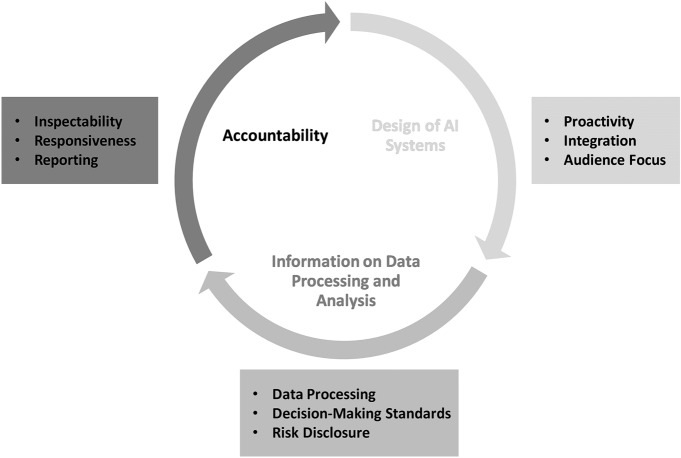
In this article, we develop the concept of Transparency by Design that serves as practical guidance in helping promote the beneficial functions of transparency while mitigating its challenges in automated-decision making (ADM) environments. With the rise of artificial intelligence (AI) and the ability of AI systems to make automated and self-learned decisions, a call for transparency of how such systems reach decisions has echoed within academic and policy circles. The term transparency, however, relates to multiple concepts, fulfills many functions, and holds different promises that struggle to be realized in concrete applications. Indeed, the complexity of transparency for ADM shows tension between transparency as a normative ideal and its translation to practical application. To address this tension, we first conduct a review of transparency, analyzing its challenges and limitations concerning automated decision-making practices. We then look at the lessons learned from the development of Privacy by Design, as a basis for developing the Transparency by Design principles. Finally, we propose a set of nine principles to cover relevant contextual, technical, informational, and stakeholder-sensitive considerations. Transparency by Design is a model that helps organizations design transparent AI systems, by integrating these principles in a step-by-step manner and as an ex-ante value, not as an afterthought.
Overview
The claims and statistics of this paper haven’t been checked yet.
Free: it reads the open-access text and checks the first 5 claims that cite a source we can check. Create a free account to check every claim.
Integrity signals
Registry
Cites
Statistics
Figures
Verification
Claims the paper makes
The claims and statistics of this paper haven’t been checked yet.
Free: it reads the open-access text and checks the first 5 claims that cite a source we can check. Create a free account to check every claim.
Claims other papers make about this one
Each is checked against this paper’s own text: does it say what the citing paper says it does?
The cited source says what the claim attributes to it.
In the citing paper
“We agree with the H. Felzmann et al. that transparency shall be a holistic concept and be considered at the earliest stages of AI development31.”
From Transparency of AI in Healthcare as a Multilayered System of Accountabilities: Between Legal Requirements and Technical Limitations (2022) · cites this paper as Felzmann et al., 2020
Experimental — accuracy not yet measured
Self-check
Percentages, sums and reported differences re-computed from the paper’s own numbers.
The self-check needs the paper’s full text.
Citations
Cites
Principles of Biomedical Ethics
(2012) · Thieves of Virtue · doi:10.7551/mitpress/9079.003.0009 · Cited by 13,453
Agency Theory: An Assessment and Review
Eisenhardt, K. M. (1989) · The Academy of Management Review · doi:10.5465/amr.1989.4279003 · Cited by 13,338 · cited 1×
“The informational approach to transparency aligns with the principal-agent theory, where the principal, who delegated certain tasks to an agent, needs to obtain information in order to check if the agent holds up their part of the contract (Eisenhardt 1989).”
BackgroundExit, Voice and Loyalty: Responses to Decline in Firms, Organizations, and States.
Tullock, G., & Hirschman, A. O. (1970) · The Journal of Finance · doi:10.2307/2325604 · Cited by 10,904
Not So Different After All: A Cross-Discipline View Of Trust
Rousseau, D. M., Sitkin, S. B., Burt, R. S., & Camerer, C. (1998) · Academy of Management Review · doi:10.5465/amr.1998.926617 · Cited by 10,274
Understanding Information Systems Continuance: An Expectation-Confirmation Model1
Bhattacherjee, A. (2001) · MIS Quarterly · doi:10.2307/3250921 · Cited by 8,767 · cited 1×
“Trust involves a trustor’s/principal’s assessment of the trustee/agent’s trustworthiness in terms of ability, benevolence, and integrity (Bhattacherjee 2001; Jones 1996).”
BackgroundPeeking Inside the Black-Box: A Survey on Explainable Artificial Intelligence (XAI)
Adadi, A., & Berrada, M. (2018) · IEEE Access · doi:10.1109/access.2018.2870052 · Cited by 6,294
The global landscape of AI ethics guidelines
Jobin, A., Ienca, M., & Vayena, E. (2019) · Nature Machine Intelligence · doi:10.1038/s42256-019-0088-2 · Cited by 6,220
Explanation in Artificial Intelligence: Insights from the Social Sciences
Miller, T. (2017) · arXiv · doi:10.48550/arxiv.1706.07269 · Cited by 5,338
Explanation in artificial intelligence: Insights from the social sciences
Miller, T. (2019) · Artificial Intelligence · doi:10.1016/j.artint.2018.07.007 · Cited by 5,302
The ethics of algorithms: Mapping the debate
Mittelstadt, B. D., Allo, P., Taddeo, M., Wachter, S., & Floridi, L. (2016) · Big Data & Society · doi:10.1177/2053951716679679 · Cited by 4,567
Research works printed but not linked: 10
- 3. ACM (2017). Statement on algorithmic transparency and accountability. Retrieved January 10, 2020, from https ://www.acm.org/binar ies/conte nt/asset s/publi c-polic y/2017_usacm _state ment_algor ithms .pdf.
- ICDPPC (International Conference of Data Protection and Privacy Commissioners). (2018). Declaration on ethics and data protection in artificial intelligence. Retrieved November 11, 2020, from https://icdppc.org/wp-content/uploads/2018/10/20180922_ICDPPC-40th_AI-Declaration_ADOPTED.pdf.
- 62. ICDPPC (International Conference of Data Protection and Privacy Commissioners). (2018). Declara- tion on ethics and data protection in artificial intelligence. Retrieved November 11, 2020, from https ://icdpp c.org/wp-conte nt/uploa ds/2018/10/20180 922_ICDPP C-40th_AI-Decla ratio n_ADOPT ED.pdf. ICO. (2020). What is automated individual decision-making and profiling? Retrieved August 19, 2020, from https ://ico.org.uk/for-organ isati ons/guide -to-data-prote ction /guide -to-the-gener al-data-prote ction -regul ation -gdpr/autom ated-decis ion-makin g-and-profi ling/what-is-autom ated-indiv idual -decis ion-makin g-and-profi ling/. IEEE. (2019). Ethically aligned design (version 2). Retrieved November 11, 2020, from https ://stand ards. ieee.org/conte nt/dam/ieee-stand ards/stand ards/web/docum ents/other /ead_v2.pdf.
- 80. Meijer, A. (2014). Transparency. In M. Bovens, R. E. Goodin, & T. Schillemans (Eds.), The Oxford hand- book of public accountability (pp. 507-524). Oxford: Oxford University Press.
- 81. Merchant, B. (2019). Tech journalism's 'on background' scourge. Columbia Journalism Review, July 17 2019. Retrieved November 11, 2020, from https ://www.cjr.org/opini on/tech-journ alism -on-backg round .php.
- 89. O'Neill, O. (2002). A question of trust: The BBC Reith Lectures 2002. Cambridge: Cambridge University Press.
- 110. Tielenburg, D. S. (2018). The 'dark sides' of transparency: Rethinking information disclosure as a social praxis. Master's thesis, Utrecht University. Retrieved October 20, 2020, from https ://dspac e.libra ry.uu.nl/handl e/1874/36952
- 113. Van Otterlo, M. (2013). A machine learning view on profiling. In M. Hildebrandt & K. de Vries (Eds.), Privacy, due process and the computational turn: Philosophers of law meet philosophers of tech- nology (pp. 41-64). London: Routledge.
- 118. Weller, A. (2017). Challenges for transparency. arXiv preprint arXiv :1708.01870 . · arXiv
- 121. Zarsky, T. Z. (2013). Transparent predictions. University of Illinois Law Review, 4, 1503-1570.
Cited by
Items 201–300 of 717
Morandini, S., Fraboni, F., Balatti, E., Hackmann, A., Brendel, H., Puzzo, G., Volpi, L., Giusino, D., Angelis, M. D., & Pietrantoni, L. (2023) · AHFE international · doi:10.54941/ahfe1004068 · Cited by 20
Decoding the Black Box: A Comprehensive Review of Explainable Artificial Intelligence
Embarak, O. H. (2023) · International Conference on Information Technology Trends (ITT) · doi:10.1109/itt59889.2023.10184238 · Cited by 18
“Additionally, there are concerns about accountability and transparency in decision-making processes involving AI systems [23, 24].”
BackgroundCybercrime Intention Recognition: A Systematic Literature Review
Kassa, Y. W., James, J. I., & Belay, E. G. (2024) · Information · doi:10.3390/info15050263 · Cited by 20
Investigating the dynamics of tax evasion and revenue leakage in somali customs
Nor, M. I., & Mohamed, A. A. (2024) · PLoS ONE · doi:10.1371/journal.pone.0303622 · Cited by 17
KAMU YÖNETİMİNDE ALGORİTMALARIN EGEMENLİĞİ: ALGOKRASİ VE TEHDİTLERİ
Polat, M. (2024) · Kamu Yönetimi ve Teknoloji Dergisi · doi:10.58307/kaytek.1495010 · Cited by 16
Navigating the Metaverse: A New Virtual Tool with Promising Real Benefits for Breast Cancer Patients
Żydowicz, W. M., Skokowski, J., Marano, L., & Połom, K. (2024) · Journal of Clinical Medicine · doi:10.3390/jcm13154337 · Cited by 15
“The transparent reporting of AI development and deployment processes can instill trust among users, empowering them to hold AI systems accountable [112,113] Additionally, interdisciplinary collaboration is pivotal in addressing bias and discrimination in AI algorithms [114].”
BackgroundNegotiating the Shared Agency between Humans & AI in the Recommender System
Wu, M., Liu, W., Wang, Y., & Yao, M. Z. (2025) · CHI Conference Extended Abstracts on Human Factors in Computing Systems (CHI EA) · doi:10.1145/3706599.3719900 · Cited by 22
“Thus, user control over these algorithmic recommender systems is widely discussed and increasingly asked for [10, 31, 33].”
TARGE: large language model-powered explainable hate speech detection
Hashir, M. H., Memoona, & Kim, S. W. (2025) · PeerJ Computer Science · doi:10.7717/peerj-cs.2911 · Cited by 17
“Ensuring interpretability in hate speech detection systems is essential to fostering user trust, enhancing the understanding of decision-making processes, and enabling the development of more equitable and reliable solutions ( Felzmann et al., 2020 ).”
Developing an Explainable Machine Learning-Based Thyroid Disease Prediction Model
Arjaria, S. K., Rathore, A. S., & Chaubey, G. (2021) · International Journal of Business Analytics · doi:10.4018/ijban.292058 · Cited by 19
Toward Accountable and Explainable Artificial Intelligence Part One: Theory and Examples
Khan, M. M., & Vice, J. (2022) · IEEE Access · doi:10.1109/access.2022.3207812 · Cited by 17
“The ratio of 313 test and training data informs how well a model performs on 314 new data that were not used during the model development 315 and system training [45].”
BackgroundMethodGlaser, M., & Littlebury, R. (2024) · Therapeutic Advances in Drug Safety · doi:10.1177/20420986241293303 · Cited by 14
Ethical Considerations for Artificial Intelligence Applications for HIV
Garett, R., Kim, S., & Young, S. D. (2024) · AI · doi:10.3390/ai5020031 · Cited by 16
“Transparency, which is often used as a synonym for explainability, interpretability, openness, accessibility, and visibility, is difficult to define in simple terms [33].”
BackgroundAdjust for Trust: Mitigating Trust-Induced Inappropriate Reliance on AI Assistance
Srinivasan, T., & Thomason, J. (2026) · ACM International Conference on Intelligent User Interfaces (IUI) · doi:10.1145/3742413.3789136 · Cited by 18
“The research community has historically regarded transparency about AI behavior and reasoning through model explanations as essential for responsible and accountable deployment of AI systems [25, 42, 59].”
The Impact of Artificial Intelligence on Organizational Communication
Hassan, A. (2024) · Studies in systems, decision and control · doi:10.1007/978-3-031-56586-1_58 · Cited by 15
AI Transparency in Academic Search Systems: An Initial Exploration
Liu, Y., Sullivan, P., & Sinnamon, L. S. (2024) · Proceedings of the Association for Information Science and Technology · doi:10.1002/pra2.1167 · Cited by 12
“Definitions and standards for AI transparency vary widely and are not yet well established within academic and research contexts (Felzmann et al., 2020).”
Digital business world and ethical dilemmas: a systematic literature review
Fülöp, M. T., Ionescu, C. A., & Topor, D. I. (2024) · Digital Finance · doi:10.1007/s42521-024-00119-y · Cited by 15
“Technologies, such as the smart home or smart driving (autonomous driving) are also becoming more established (Felzmann et al., 2020; Rodgers & Nguyen, 2022).”
InfluentialAdvancing Fraud Detection in Banking: Real-Time Applications of Explainable AI (XAI)
Ahmadi, S. (2024) · Journal of Electrical Systems · doi:10.52783/jes.7821 · Cited by 17
BleacherBot: AI Agent as a Sports Co-Viewing Partner
Kim, K., Song, H., Ryu, J., Oh, C., & Suh, B. (2025) · CHI Conference on Human Factors in Computing Systems · doi:10.1145/3706598.3714178 · Cited by 15
“Following Felzmann et al.’s [32] framework for transparency in AI design, content filtering systems [108] and feedback mechanisms [112] might help users report concerning interactions, while appropriate filters could help manage unexpected responses from language models.”
Wu, M., Liu, W., Wang, Y., Ding, W., & Yao, M. Z. (2026) · CHI Conference on Human Factors in Computing Systems · doi:10.1145/3772318.3791914 · Cited by 15
“One central critique is the opacity of algorithmic decision-making, often portrayed as a “black box” where users can only access and consume finalized outputs [15, 64], lacking explanations and involvement [30, 92].”
Opportunities and Challenges of Using Artificial Intelligence in Securing Cyber-Physical Systems
Nweke, L. O., & Yayilgan, S. Y. (2024) · Springer eBooks · doi:10.1007/978-3-031-57452-8_7 · Cited by 18
A Transparency-Based Action Model Implemented in a Robotic Physical Trainer for Improved HRI
Aharony, N., Krakovski, M., & Edan, Y. (2024) · ACM Transactions on Human-Robot Interaction · doi:10.1145/3700598 · Cited by 14
“Thus, prospective transparency can be seen as an accountability mechanism [8, 12].”
Company perspectives of generative artificial intelligence in industrial work
Aromaa, S., Heikkilä, P., Jurvansuu, M., Pehlivan, S., Väärä, T., & Jurmu, M. (2025) · Procedia Computer Science · doi:10.1016/j.procs.2025.01.085 · Cited by 14
Pinning down an octopus: towards an operational definition of AI systems in the EU AI Act
Tomić, S., & Štimac, V. (2025) · Journal of European Public Policy · doi:10.1080/13501763.2025.2534648 · Cited by 11
“Some AI systems make decisions automatically when human oversight is necessary to ensure fairness and ethicality (Coglianese & Lehr, 2019; Felzmann et al. , 2020).”
AI integration for climate risk mitigation: The role of organizational context
Khan, M. K., Hussain, M. J., Hussan, M. W., Qadeer, A., Armstrong, A., & Li, S. (2025) · Technological Forecasting and Social Change · doi:10.1016/j.techfore.2025.124327 · Cited by 14
Exploring AI's Role in Supporting Diversity and Inclusion Initiatives in Multicultural Marketplaces
Mariyono, D., & Hidayatullah, A. N. A. (2024) · International Journal of Religion · doi:10.61707/apmwg008 · Cited by 17
Exploring Perspectives of Teacher Students Toward Generative AI Technologies
Thararattanasuwan, K., & Prachagool, V. (2024) · International Education Studies · doi:10.5539/ies.v17n5p22 · Cited by 14
“In addition, the strength of the correlation offers information about the degree of linkage that exists between the variables (Felzmann et al., 2020).”
BackgroundIncreasing transparency of computer-aided detection impairs decision-making in visual search
Kunar, M. A., Watson, D., & Montana, G. (2024) · Psychonomic Bulletin & Review · doi:10.3758/s13423-024-02601-5 · Cited by 10
“If transparency leads to overtrust in the CAD system, participants would be more likely to accept the CAD recommendation, even if it disagrees with their own judgement (see Felzmann et al., 2020, for a discussion on the link between transparency and trust in AI).”
Nadarzynski, T., Knights, N., Husbands, D., Graham, C. A., Llewellyn, C. D., Buchanan, T., Montgomery, I., Rodriguez, A. S., Ogueri, C., Singh, N., et al. (2025) · PLOS Digital Health · doi:10.1371/journal.pdig.0000724 · Cited by 13
Em, S., & Khampirat, B. (2025) · Practice, progress, and proficiency in sustainability · doi:10.4018/979-8-3373-1917-9.ch004 · Cited by 10
Ethical Frontiers of AI in Language Pedagogy: Navigating Transparency, Accountability, and Equity
Compagnoni, I., Oguilve, V., & Wen, W. (2025) · International Journal of Linguistics · doi:10.5296/ijl.v17i4.22768 · Cited by 12
Generative AI-Destination Marketing: Do Privacy Concerns and Justification Matter?
Yhee, Y., Kim, J. Y., Kim, J., & Koo, C. (2025) · Journal of Travel Research · doi:10.1177/00472875251349235 · Cited by 12
“This suggests that justifications serve not merely as informational disclosures but as cognitive repair mechanisms that reduce affective resistance and help restore trust in the communication process (Felzmann et al., 2020).”
AI in autism education: a review of collaborative and longitudinal approaches
Adako, O. P., Adeusi, O. C., & Alaba, P. A. (2025) · Disability and Rehabilitation Assistive Technology · doi:10.1080/17483107.2025.2579825 · Cited by 11
“…processes and provide explicit consent for the integration of Ai tools within educational settings [29]. transparent communication regarding the objectives, procedures followed in developing Ai tools, and potential risks cultivates an atmosphere of ethical and collaborative research [37].”
Hiremath, S., Ramesh, P., Konek, S. S., Bhavikatti, V., Vemula, R., & Omnamasivaya, B. (2025) · Journal of Entrepreneurship and Public Policy · doi:10.1108/jepp-04-2025-0112 · Cited by 14
Tilly, N., Seepma, A. P., Senadheera, S., & Yiğitcanlar, T. (2025) · European Journal of Innovation Management · doi:10.1108/ejim-07-2025-0964 · Cited by 13
Groen, E. L. M., Sharon, T., & Becker, M. (2026) · AI and Ethics · doi:10.1007/s43681-025-00955-7 · Cited by 12
“These approaches incorporate values in the design of technologies; e.g. pri - vacy by design [31], fairness by design [42, 43], transparency by design [28], or design for sustainability [38].”
Hauer, M. P., Krafft, T. D., & Zweig, K. A. (2023) · Data & Policy · doi:10.1017/dap.2023.30 · Cited by 16
“In this article, we follow a similar idea as Felzmann et al. (2020), but build our elaborations along a generic software development process.”
BackgroundMethodGharbaoui, O. E., Boukhari, H. E., & Salmi, A. (2024) · TEM Journal · doi:10.18421/tem133-11 · Cited by 12
Transparency in AI Systems for Value Co-creation in Healthcare
Megaro, A. (2023) · Emerald Group Publishing Limited eBooks · doi:10.1108/978-1-80382-551-920231007 · Cited by 12
Medical Artificial Intelligence and Human Values
Manrai, A. K., Yu, K., & Kohane, I. S. (2024) · New England Journal of Medicine · doi:10.1056/nejmc2408971 · Cited by 10
Saleh, M., & Tabatabaei, A. (2025) · arXiv (Cornell University) · doi:10.48550/arxiv.2504.13199 · Cited by 13
“Studies show that when AI systems display Transparency [46], users are more likely to accept their recommendations, thereby promoting ethical practices.”
Co-designing Explainable Robots: A Participatory Design Approach for HRI
Gebellí, F., Ros, R., Lemaignan, S., & Garrell, A. (2024) · IEEE RO-MAN · doi:10.1109/ro-man60168.2024.10731212 · Cited by 14
“Furthermore, PD would allow the inclusion of the explainability dimension from the start of the design process following a transparency-by-design approach [8], instead of being an add-on to already deployed systems.”
BackgroundMethodInfluentialDeveloping and evaluating a design method for positive artificial intelligence
van der Maden, W., Lomas, D., & Hekkert, P. (2024) · Artificial intelligence for engineering design analysis and manufacturing · doi:10.1017/s0890060424000155 · Cited by 11
“The full questionnaire took approximately 15-20 minutes to complete.”
Smart cities: digital transformation for sustainable urban development
Nassereddine, H., & Khoshkenar, A. (2025) · Elsevier eBooks · doi:10.1016/b978-0-443-29861-5.00019-6 · Cited by 10
Beyond aversion – principles of appropriate algorithmic decision-making in human resource management
Strohmeier, S., Becker, M., & Scheer-Weller, E. (2025) · Expert Systems with Applications · doi:10.1016/j.eswa.2025.128954 · Cited by 9
SE Perspective on LLMs: Biases in Code Generation, Code Interpretability, and Code Security Risks
Krasniqi, R., Xu, D., & Vieira, M. P. A. (2025) · ACM Computing Surveys · doi:10.1145/3774324 · Cited by 17
“This involves ensuring training data fairness, designing bias-minimizing architectures, developing robust safety mechanisms (e.g., alignment, guardrails), and ensuring transparency by design [78].”
Impacts of AI on Human Designers: A Systematic Literature Review
Sinlapanuntakul, P., & Zachry, M. R. (2025) · IEEE Transactions on Professional Communication · doi:10.1109/tpc.2025.3588655 · Cited by 11
“Data privacy and consent issues arise when AI systems train on existing large design datasets [42], [43].”
Lee, J.-C., & Cao, H. (2026) · Industrial Management & Data Systems · doi:10.1108/imds-01-2025-0075 · Cited by 11
An Introduction to the Principle of Transparency in Automated Decision-Making Systems
Rendón, L. G. (2022) · International Convention on Information and Communication Technology, Electronics and Microelectronics · doi:10.23919/mipro55190.2022.9803417 · Cited by 12
Information fusion via symbolic regression: A tutorial in the context of human health
Schnur, J. J., & Chawla, N. V. (2022) · Information Fusion · doi:10.1016/j.inffus.2022.11.030 · Cited by 10
“Within high-risk fields, such as medicine, finance, or criminal justice, model interpretability is especially crucial; the user must be able to ascertain why a certain decision should be chosen over another in order to maintain transparency and accountability [2].”
BackgroundWhy it Remains Challenging to Assess Artificial Intelligence
Brecker, K., Lins, S., & Sunyaev, A. (2023) · Hawaii International Conference on System Sciences (HICSS) · doi:10.24251/hicss.2023.641 · Cited by 12
“This assessment requires a socio-technical perspective (Schiff et al., 2021), and is a challenging endeavor as it raises fundamental questions (Felzmann et al., 2020), and entails wide-ranging risks that are complex to assess for ethicists as well (Kriebitz & Lütge, 2020).”
BackgroundExploration of Explainable AI for Trust Development on Human-AI Interaction
Bernardo, E. L., & Seva, R. R. (2023) · Artificial Intelligence and Cloud Computing Conference (AICCC) · doi:10.1145/3639592.3639625 · Cited by 9
“However, alternative studies, such as those conducted by Fer-reira & Monteiro [20], Schoonderwoerd et al. [47], and Felzmann et al. [19], have adopted a human-centered approach to examining XAI and argue that this viewpoint is excessively simplistic and constraining.”
ResultSaremi, M. L., Ziv, I., Asan, O., & Bayrak, A. E. (2024) · Journal of Mechanical Design · doi:10.1115/1.4065916 · Cited by 13
Navigating AI Biases in Education: A Foundation for Equitable Learning
Bhavana, S., Jayashree, K., & Rao, T. V. N. (2024) · Advances in educational marketing, administration, and leadership book series · doi:10.4018/979-8-3693-5443-8.ch005 · Cited by 11
Ritonga, A. K. (2023) · JURNAL IQRA · doi:10.25217/ji.v8i2.3377 · Cited by 14
“Digital technology literacy that is currently developing is pushing towards the ability to be able to interpret the working mechanisms of technology application systems such as artificial intelligence, programming, engineering principles (Felzmann et al., 2020).”
BackgroundExplainability and Transparency in Designing Responsible AI Applications in the Enterprise
Banerjee, G., Dhar, S., Roy, S., Syed, R., & Das, A. (2024) · Lecture notes in networks and systems · doi:10.1007/978-3-031-74443-3_25 · Cited by 11
Toxic politics and TikTok engagement in the 2024 U.S. election
Biswas, A., Sabet, A. J., & Lin, Y. (2025) · Harvard Kennedy School Misinformation Review · doi:10.37016/mr-2020-181 · Cited by 12
Towards Navigating Ethical Challenges in AI-Driven Healthcare Ad Moderation
Sen, A., Joy, J. M., & Jennex, M. E. (2025) · Computers · doi:10.3390/computers14090380 · Cited by 10
“Transparency is the enabling condition that makes ethically sound hybrid moderation possible [103].”
Jarrahi, M. H., Karami, A., Conway, P., Memariani, A., & Lutz, C. (2025) · Technology in Society · doi:10.1016/j.techsoc.2025.103127 · Cited by 10
“Therefore, AI governance frameworks should include context-sensitive risk assessments that account for model performance metrics and contextual and social impacts (Felzmann et al., 2020).”
Self-citationEthical Leadership in Information Technology Decision Making and its Impact on Risk Management
Sucipto, P. A., Hamboer, M. J. E., Ahmad, N., Darmawan, Z., & Angellia, F. (2023) · Jurnal Minfo Polgan · doi:10.33395/jmp.v12i2.13173 · Cited by 4
“Transparency requires organisations to clearly disclose the rationale and considerations underlying each IT decision, as well as providing wider access to relevant information (Felzmann et al., 2020).”
BackgroundPalomino-Flores, P., Cristi-López, R., & Paul, D. (2024) · IEEE World Engineering Education Conference (EDUNINE) · doi:10.1109/edunine60625.2024.10500654 · Cited by 9
Wood, D. A. (2024) · Ecological Modelling · doi:10.1016/j.ecolmodel.2024.110898 · Cited by 9
Designing Human-Centric AI Mental Health Chatbots: A Case Study of Two Apps
Lee, K. S., Yeung, J., Kurniawati, A., & Chou, D. T. (2025) · Lecture notes in networks and systems · doi:10.1007/978-981-96-1747-0_36 · Cited by 9
A Data Analytics Organisation’s Perspective on Trust and AI Adoption
Smit, D., Eybers, S., & Smith, J. (2022) · Communications in computer and information science · doi:10.1007/978-3-030-95070-5_4 · Cited by 8
Transparency Classification for HRI with Humanoid Service Robots
Nukovic, L., Kirchhoff, J., & von Stryk, O. (2024) · ACM/IEEE International Conference on Human-Robot Interaction (HRI) · doi:10.1145/3610978.3640739 · Cited by 9
“But also the access to the causes for a decision or recent action is an important transparency factor [15, 12].”
BackgroundMethodInfluentialZhang, G. (2025) · International Journal of Information and Communication Technology · doi:10.1504/ijict.2025.145828 · Cited by 9
Genicot, N., & Moraes, T. G. (2025) · Cambridge Forum on AI Law and Governance · doi:10.1017/cfl.2025.10013 · Cited by 8
Madhavi, K. R., Rongali, S. K., Polineni, T. N. S., Kummari, D. N., Challa, K., & Challa, S. R. (2026) · International Conference on Electronics and Renewable Systems (ICEARS) · doi:10.1109/icears67481.2026.11416589 · Cited by 10
“It provides theoretical understanding but lacks operational implementation [14].”
Alves, E., Gurupadayya, B. M., & Prabhakaran, P. (2026) · Critical Reviews in Analytical Chemistry · doi:10.1080/10408347.2026.2639581 · Cited by 7
Weaver, K. D. (2026) · Information Services & Use · doi:10.1177/18758789261435716 · Cited by 9
“8 (Felzmann et al., 2020).”
Cenci, A. (2025) · AI and Ethics · doi:10.1007/s43681-024-00636-x · Cited by 8
A Study on Ethical Implementation of AI in Collegiate Studies using Fuzzy Implication
Awashreh, R. A. (2025) · Pakistan Journal of Life and Social Sciences (PJLSS) · doi:10.57239/pjlss-2025-23.1.00317 · Cited by 8
Responsible guidelines for authorship attribution tasks in NLP
Saxena, V., Tamò‐Larrieux, A., DIJCK, G. V., & Spanakis, G. (2025) · Ethics and Information Technology · doi:10.1007/s10676-025-09821-w · Cited by 14
“Our research builds on existing ethical AI frameworks (Mittelstadt, 2019; Felzmann et al., 2020; Prem, 2023) to address specific Ethical, Legal, and Social Issues (ELSI/ELSA) in AA, providing a questionnaire to guide stakeholders in navigating these challenges.”
Self-citationThe Pitfalls of “Security by Obscurity” and What They Mean for Transparent AI
Hall, P., Mundahl, O., & Park, S. (2025) · Proceedings of the AAAI Conference on Artificial Intelligence · doi:10.1609/aaai.v39i27.35022 · Cited by 12
Anzar, M. (2024) · Journal Social Civilecial · doi:10.71435/610495 · Cited by 11
Transparency of combinatorial optimisations via machine learning and explainable AI
Garn, W., & Amirghasemi, M. (2025) · Annals of Operations Research · doi:10.1007/s10479-025-06684-8 · Cited by 12
“The audience, such as stakeholders, developers, and users affected by AI decisions, is essential when designing and deploying transparent AI systems (Felzmann et al., 2020 ).”
Sayyadnejad, M. M., Asgari, A., Sami, A., & Tahayori, H. (2025) · Empirical Software Engineering · doi:10.1007/s10664-025-10710-5 · Cited by 9
paradoja de la transparencia en la IA: Opacidad y explicabilidad. Atribución de responsabilidad
Ruiz, F. J. B. (2022) · Revista Internacional de Pensamiento Político · doi:10.46661/revintpensampolit.7526 · Cited by 7
Xu, X., Yu, R., Yuan, M., & Zheng, J. (2025) · Ergonomics · doi:10.1080/00140139.2025.2456535 · Cited by 7
“Therefore, further research is needed to adapt or develop trans-parency models tailored specifically to intelligent agents, especially the decision-making tasks, considering the balance between interpretability and cognitive load (Felzmann et al. 2020).”
Craig, K., & Sadovykh, V. (2022) · Hawaii International Conference on System Sciences (HICSS) · doi:10.24251/hicss.2022.726 · Cited by 8
Transparency in large language model (LLM)-powered digital human twins: the AI ethics perspective
Pigac, T. (2025) · AI & Society · doi:10.1007/s00146-025-02617-y · Cited by 10
Salamzadeh, A., Ashkani, M., & Asgharifar, M. H. (2025) · Strategy and Leadership · doi:10.1108/sl-04-2025-0091 · Cited by 10
Use of explainable AI (xAI) in dementia detection and prognosis: a scoping review
Nguyen, P. A., Din, F. U., Krug, M., & Jones, R. (2026) · BMC Medical Informatics and Decision Making · doi:10.1186/s12911-025-03279-y · Cited by 6
“However, ‘transparency’ refers to making data sources, model architecture, and decision-making processes accessible to end-users [11], for example clinicians, patients, and other stakeholders.”
Who Controls the Conversation? User Perspectives on Generative AI (LLM) System Prompts
Neumann, A., Pi, Y., & Singh, J. (2026) · CHI Conference on Human Factors in Computing Systems · doi:10.1145/3772318.3791726 · Cited by 15
“Understanding user perspectives can inform questions about appropriate disclosure practices, including what information users find valuable [11, 38, 42], what trade-offs they find acceptable between trans-parency and security, and how disclosure mechanisms might be designed to balance competing…”
Seini, A. B., Adam, I. O., & Preko, M. (2026) · Human-Intelligent Systems Integration · doi:10.1007/s42454-026-00100-7 · Cited by 8
Analyzing Trustworthiness and Explainability in Artificial Intelligence: A Comprehensive Review
Dixit, M., Kansal, I., Khullar, V., Kumar, R., & Kumar, S. (2024) · Recent Advances in Electrical & Electronic Engineering (Formerly Recent Patents on Electrical & Electronic Engineering) · doi:10.2174/0123520965308169240616144800 · Cited by 7
Spitzer, P., Celis, S., Martin, D., Kühl, N., & Satzger, G. (2024) · Mensch und Computer (MuC) · doi:10.1145/3670653.3677488 · Cited by 8
“XAI can significantly enhance the collaboration between humans and AI by improving interpretability, trust, and usability through various types of explanations [6].”
Analysis of the medical residency matching algorithm to validate and improve equity
Mascarenhas, B., & Puranam, K. S. (2023) · PLoS ONE · doi:10.1371/journal.pone.0284153 · Cited by 6
“Algorithmic bias is widespread across a variety of contexts, and will increase with the growing prevalence of algorithm use for analysis of big data, creating an increasing need for their validation There have been calls for algorithms to be validated with respect to whether or not they meet an organizations clinical…”
BackgroundLiberty, Manipulation, and Algorithmic Transparency: Reply to Franke
Klenk, M. (2024) · Philosophy & Technology · doi:10.1007/s13347-024-00739-7 · Cited by 5
“Chief among them is the call for automated decisions to be explainable and for decision sources and criteria to be transparent (Felzmann et al., 2020).”
XAI: regulatory and ethical aspects
Nannini, L. (2025) · Elsevier eBooks · doi:10.1016/b978-0-44-329135-7.00020-5 · Cited by 7
Responsible and Ethical AI in Natural Language Processing
Sangwan, S. R., & Kumar, A. (2025) · Springer eBooks · doi:10.1007/978-3-031-88988-2_10 · Cited by 5
Shehu, H., Ogunleye, E., Atilola, M. O., Eromosele, E. I., Lawal, A. B., & Chukwuma, T. T. (2025) · Scientific journal of engineering and technology. · doi:10.69739/sjet.v2i2.833 · Cited by 5
Yao, M. M., & Xu, M. (2025) · Sustainability · doi:10.3390/su17177883 · Cited by 5
Enhancing explainability in AI-based energy forecasting through clustering and data selection
Teixeira, B., Valina, L., Pinto, T. D. O., dos Reis, A. M., Barroso, J., & Vale, Z. (2025) · Sustainable Energy Grids and Networks · doi:10.1016/j.segan.2025.102043 · Cited by 5
Mollay, M. H., Sharma, D., Anawade, P. A., Rafique, A. A. A., & Akpabio, E. I. (2025) · Lecture notes in electrical engineering · doi:10.1007/978-981-96-8283-6_24 · Cited by 5
Pozdniakov, S., Brazil, J. R., Poquet, O., Krusche, S., Berrezueta-Guzman, S., Sadiq, S. W., & Khosravi, H. (2025) · Computers and Education Artificial Intelligence · doi:10.1016/j.caeai.2025.100509 · Cited by 6
Trust and Ethics in Chatbots: A Framework for Responsible AI Interactions
Sowmya, P., & Vasudeva (2026) · IEEE Access · doi:10.1109/access.2026.3653763 · Cited by 6
“Transparency builds user trust, reduces confusion, and supports ethical accountability, especially in high-impact domains like healthcare, finance, or education [20], [27].”
Kembau, A. S., Tampinongkol, F. F., Wardhana, A., Tarigan, A. E., Sutrisno, J., & Budiarjo, K. (2025) · International Conference on Informatics, Multimedia, Cyber and Information System (ICIMCIS) · doi:10.1109/icimcis68501.2025.11327281 · Cited by 6
“This pattern is consistent with transparency-by-design principles that prioritize intelligibility and proportionality over declarative compliance [10], [11].”
InfluentialZheng, H., Ou, M., Luo, C., & Zeng, Y. (2026) · Aslib Journal of Information Management · doi:10.1108/ajim-06-2025-0377 · Cited by 6
Multidisciplinary perspectives on human‑AI team trust
Tielman, M. L., Bailey, M. E., Frattolillo, F., Jorge, C. C., Ulfert, A., & Meyer-Vitali, A. (2025) · Interaction Studies Social Behaviour and Communication in Biological and Artificial Systems · doi:10.1075/is.24048.tie · Cited by 5
EU AI Act and the Rights-Based Approach to Technological Governance
Pavlidis, G. (2026) · Review of European and Comparative Law · doi:10.31743/recl.19283 · Cited by 7
“37 This is a preventive approach that integrates the awareness of fundamental rights into the architecture of high-risk AI systems.”
Metadata
- Authors
- Felzmann, H., Fosch-Villaronga, E., Lutz, C., & Tamò-Larrieux, A.
- Affiliations
- Ollscoil na Gaillimhe – University of Galway (IE)
- BI Norwegian Business School (NO)
- Venue
- Science and Engineering Ethics
- Published
- 2020-11-16
- Volume
- 26
- Issue
- 6
- Pages
- 3333-3361
- ISSN
- 1353-3452 (ISSN-L)
- 1471-5546
- PMC
- PMC7755865
- OpenAlex
- W3103319283
- Cited by
- 588
- References
- 122
- Citations by year
- 2026: 154 · 2025: 173 · 2024: 145 · 2023: 71 · 2022: 27 · 2021: 18
- FWCI
- 11.40
- Type
- journal article
- Language
- en
- Open access
- hybrid
- doi.org
- Licence
- cc-by
- creativecommons.org/licenses/by/4.0 (tdm)
- creativecommons.org/licenses/by/4.0 (vor)
- Locations
- Science and Engineering Ethics (publishedVersion, cc-by)
- PubMed Central (publishedVersion, cc-by)
- PubMed (publishedVersion)
- Leiden Repository (Leiden University) (submittedVersion)
- NORA - Norwegian Open Research Archives (submittedVersion, cc-by)
- Data Archiving and Networked Services (DANS) (submittedVersion)
- Funders
- H2020 Marie Skłodowska-Curie Actions (707404)
- Research Council of Norway (275347)
- Leiden University
- Topics
- Physical Sciences › Computer Science › Artificial Intelligence › Explainable Artificial Intelligence (XAI)
- Physical Sciences › Computer Science › Artificial Intelligence › Ethics and Social Impacts of AI
- Social Sciences › Law › Digitalization, Law, and Regulation
- Keywords
- transparency, artificial intelligence, automated decision-making, privacy by design, AI system design, transparency principle, algorithmic accountability, stakeholder considerations
- MeSH terms
- Artificial Intelligence, Humans
About these checks
Registry, retraction, Cites and statistics results are computed, not judged, with one exception: a printed reference that no index lists is read once by a model before it counts as a citation error. Claims are extracted by a model and kept only when their quote appears verbatim in the text; each cited source is then checked, with a model’s help, for whether it says what the claim relies on. Those verdicts can be wrong — read the claim’s quote and the cited source before relying on one.
Statistics and arithmetic are recomputed, not judged.
Confidence bands are shown only for fields calibrated on our annotated test set. None is calibrated yet, so no band is shown.
What counts as a claim ›How we measure confidence ›How we check this ›
Are you an author, or do you see a problem with this page? Request a review
Data sources
Bibliographic data: Semantic Scholar, OpenAlex, Crossref.
Contains information from the Semantic Scholar Academic Graph Datasets, made available under the ODC Attribution License (ODC-BY 1.0).
Semantic Scholar’s data is described in: Kinney, R., et al. (2023). The Semantic Scholar Open Data Platform. arXiv:2301.10140.
