

Towards Transparency by Design for Artificial Intelligence
Open accessThe DOI matches its Crossref record; 122 of the 122 references it cites were found in a registry or an index.
Abstract
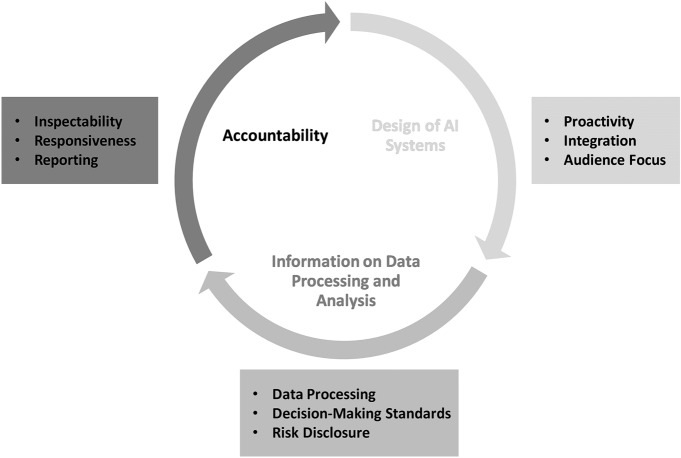
In this article, we develop the concept of Transparency by Design that serves as practical guidance in helping promote the beneficial functions of transparency while mitigating its challenges in automated-decision making (ADM) environments. With the rise of artificial intelligence (AI) and the ability of AI systems to make automated and self-learned decisions, a call for transparency of how such systems reach decisions has echoed within academic and policy circles. The term transparency, however, relates to multiple concepts, fulfills many functions, and holds different promises that struggle to be realized in concrete applications. Indeed, the complexity of transparency for ADM shows tension between transparency as a normative ideal and its translation to practical application. To address this tension, we first conduct a review of transparency, analyzing its challenges and limitations concerning automated decision-making practices. We then look at the lessons learned from the development of Privacy by Design, as a basis for developing the Transparency by Design principles. Finally, we propose a set of nine principles to cover relevant contextual, technical, informational, and stakeholder-sensitive considerations. Transparency by Design is a model that helps organizations design transparent AI systems, by integrating these principles in a step-by-step manner and as an ex-ante value, not as an afterthought.
Overview
The claims and statistics of this paper haven’t been checked yet.
Free: it reads the open-access text and checks the first 5 claims that cite a source we can check. Create a free account to check every claim.
Integrity signals
Registry
Cites
Statistics
Figures
Verification
Claims the paper makes
The claims and statistics of this paper haven’t been checked yet.
Free: it reads the open-access text and checks the first 5 claims that cite a source we can check. Create a free account to check every claim.
Claims other papers make about this one
Each is checked against this paper’s own text: does it say what the citing paper says it does?
The cited source says what the claim attributes to it.
In the citing paper
“We agree with the H. Felzmann et al. that transparency shall be a holistic concept and be considered at the earliest stages of AI development31.”
From Transparency of AI in Healthcare as a Multilayered System of Accountabilities: Between Legal Requirements and Technical Limitations (2022) · cites this paper as Felzmann et al., 2020
Experimental — accuracy not yet measured
Self-check
Percentages, sums and reported differences re-computed from the paper’s own numbers.
The self-check needs the paper’s full text.
Citations
Cites
Principles of Biomedical Ethics
(2012) · Thieves of Virtue · doi:10.7551/mitpress/9079.003.0009 · Cited by 13,453
Agency Theory: An Assessment and Review
Eisenhardt, K. M. (1989) · The Academy of Management Review · doi:10.5465/amr.1989.4279003 · Cited by 13,338 · cited 1×
“The informational approach to transparency aligns with the principal-agent theory, where the principal, who delegated certain tasks to an agent, needs to obtain information in order to check if the agent holds up their part of the contract (Eisenhardt 1989).”
BackgroundExit, Voice and Loyalty: Responses to Decline in Firms, Organizations, and States.
Tullock, G., & Hirschman, A. O. (1970) · The Journal of Finance · doi:10.2307/2325604 · Cited by 10,904
Not So Different After All: A Cross-Discipline View Of Trust
Rousseau, D. M., Sitkin, S. B., Burt, R. S., & Camerer, C. (1998) · Academy of Management Review · doi:10.5465/amr.1998.926617 · Cited by 10,274
Understanding Information Systems Continuance: An Expectation-Confirmation Model1
Bhattacherjee, A. (2001) · MIS Quarterly · doi:10.2307/3250921 · Cited by 8,767 · cited 1×
“Trust involves a trustor’s/principal’s assessment of the trustee/agent’s trustworthiness in terms of ability, benevolence, and integrity (Bhattacherjee 2001; Jones 1996).”
BackgroundPeeking Inside the Black-Box: A Survey on Explainable Artificial Intelligence (XAI)
Adadi, A., & Berrada, M. (2018) · IEEE Access · doi:10.1109/access.2018.2870052 · Cited by 6,294
The global landscape of AI ethics guidelines
Jobin, A., Ienca, M., & Vayena, E. (2019) · Nature Machine Intelligence · doi:10.1038/s42256-019-0088-2 · Cited by 6,220
Explanation in Artificial Intelligence: Insights from the Social Sciences
Miller, T. (2017) · arXiv · doi:10.48550/arxiv.1706.07269 · Cited by 5,338
Explanation in artificial intelligence: Insights from the social sciences
Miller, T. (2019) · Artificial Intelligence · doi:10.1016/j.artint.2018.07.007 · Cited by 5,302
The ethics of algorithms: Mapping the debate
Mittelstadt, B. D., Allo, P., Taddeo, M., Wachter, S., & Floridi, L. (2016) · Big Data & Society · doi:10.1177/2053951716679679 · Cited by 4,567
Research works printed but not linked: 10
- 3. ACM (2017). Statement on algorithmic transparency and accountability. Retrieved January 10, 2020, from https ://www.acm.org/binar ies/conte nt/asset s/publi c-polic y/2017_usacm _state ment_algor ithms .pdf.
- ICDPPC (International Conference of Data Protection and Privacy Commissioners). (2018). Declaration on ethics and data protection in artificial intelligence. Retrieved November 11, 2020, from https://icdppc.org/wp-content/uploads/2018/10/20180922_ICDPPC-40th_AI-Declaration_ADOPTED.pdf.
- 62. ICDPPC (International Conference of Data Protection and Privacy Commissioners). (2018). Declara- tion on ethics and data protection in artificial intelligence. Retrieved November 11, 2020, from https ://icdpp c.org/wp-conte nt/uploa ds/2018/10/20180 922_ICDPP C-40th_AI-Decla ratio n_ADOPT ED.pdf. ICO. (2020). What is automated individual decision-making and profiling? Retrieved August 19, 2020, from https ://ico.org.uk/for-organ isati ons/guide -to-data-prote ction /guide -to-the-gener al-data-prote ction -regul ation -gdpr/autom ated-decis ion-makin g-and-profi ling/what-is-autom ated-indiv idual -decis ion-makin g-and-profi ling/. IEEE. (2019). Ethically aligned design (version 2). Retrieved November 11, 2020, from https ://stand ards. ieee.org/conte nt/dam/ieee-stand ards/stand ards/web/docum ents/other /ead_v2.pdf.
- 80. Meijer, A. (2014). Transparency. In M. Bovens, R. E. Goodin, & T. Schillemans (Eds.), The Oxford hand- book of public accountability (pp. 507-524). Oxford: Oxford University Press.
- 81. Merchant, B. (2019). Tech journalism's 'on background' scourge. Columbia Journalism Review, July 17 2019. Retrieved November 11, 2020, from https ://www.cjr.org/opini on/tech-journ alism -on-backg round .php.
- 89. O'Neill, O. (2002). A question of trust: The BBC Reith Lectures 2002. Cambridge: Cambridge University Press.
- 110. Tielenburg, D. S. (2018). The 'dark sides' of transparency: Rethinking information disclosure as a social praxis. Master's thesis, Utrecht University. Retrieved October 20, 2020, from https ://dspac e.libra ry.uu.nl/handl e/1874/36952
- 113. Van Otterlo, M. (2013). A machine learning view on profiling. In M. Hildebrandt & K. de Vries (Eds.), Privacy, due process and the computational turn: Philosophers of law meet philosophers of tech- nology (pp. 41-64). London: Routledge.
- 118. Weller, A. (2017). Challenges for transparency. arXiv preprint arXiv :1708.01870 . · arXiv
- 121. Zarsky, T. Z. (2013). Transparent predictions. University of Illinois Law Review, 4, 1503-1570.
Cited by
Items 101–200 of 717
Ilori, O., Nwosu, N. T., & Naiho, H. N. N. (2024) · Computer Science & IT Research Journal · doi:10.51594/csitrj.v5i6.1224 · Cited by 41
Enhancing data management and security protocols in financial sector projects
Apeh, C. E., Odionu, C. S., Bristol-Alagbariya, B., Okon, R., & Austin-Gabriel, B. (2024) · World Journal of Advanced Research and Reviews · doi:10.30574/wjarr.2024.21.3.0735 · Cited by 41
“AI developers must strive to make AI algorithms and decision-making processes transparent and understandable to non-experts (Felzmann et al ., 2020).”
BackgroundThe impact of AI perceived transparency on trust in AI recommendations in healthcare applications
Shabankareh, M., Sahne, S. S. K., Nazarian, A., & Foroudi, P. (2025) · Asia-Pacific Journal of Business Administration · doi:10.1108/apjba-12-2024-0690 · Cited by 55
Comparative Analysis of Machine Learning Algorithms for Consumer Credit Risk Assessment
Xu, T. (2024) · Transactions on Computer Science and Intelligent Systems Research · doi:10.62051/r1m3pg16 · Cited by 38
A Critical AI View on Autonomous Vehicle Navigation: The Growing Danger
Miller, T. I., Durlik, I., Kostecka, E., Borkowski, P., & Łobodzińska, A. (2024) · Electronics · doi:10.3390/electronics13183660 · Cited by 47
Be Aware: Navigating Challenges in AI-Driven Higher Education
Awashreh, R. A. (2024) · The International Journal of Interdisciplinary Educational Studies · doi:10.18848/2327-011x/cgp/v20i01/203-218 · Cited by 41
Relative explainability and double standards in medical decision-making
Kempt, H., Heilinger, J., & Nagel, S. K. (2022) · Ethics and Information Technology · doi:10.1007/s10676-022-09646-x · Cited by 40
A Review Study of Fuzzy Cognitive Maps in Engineering: Applications, Insights, and Future Directions
Karatzinis, G. D., & Boutalis, Y. S. (2025) · Eng—Advances in Engineering · doi:10.3390/eng6020037 · Cited by 37
Krook, J., Winter, P., Downer, J., & Blockx, J. (2025) · AI and Ethics · doi:10.1007/s43681-025-00674-z · Cited by 52
Huang, R., Tlili, A., Xu, L., Ying, C., Zheng, L., Metwally, A. H. S., Da, T., Chang, T., Wang, H., Mason, J., et al. (2023) · Journal of Applied Learning & Teaching · doi:10.37074/jalt.2023.6.2.33 · Cited by 48
The future of accounting: Predictions on automation and AI integration
Ajayi-Nifise, A. O., Odeyemi, O., Mhlongo, N. Z., Ibeh, C. V., Elufioye, O. A., & Awonuga, K. F. (2023) · World Journal of Advanced Research and Reviews · doi:10.30574/wjarr.2024.21.2.0466 · Cited by 37
“Implementing robust data protection measures and ensuring compliance with privacy regulations become imperative to safeguard client trust (Ilugbusi et al., 2020; Felzmann et al.,2020).”
BackgroundKhan, A. (2024) · IIUM Law Journal · doi:10.31436/iiumlj.v32i1.912 · Cited by 77
Selvam, D. C., Devarajan, Y., & Raja, T. (2024) · Nuclear Engineering and Design · doi:10.1016/j.nucengdes.2024.113719 · Cited by 71
AI through the looking glass: an empirical study of structural social and ethical challenges in AI
Ryan, M., de Roo, N., Wang, H., Blok, V., & Atik, C. (2024) · AI & Society · doi:10.1007/s00146-024-02146-0 · Cited by 40
“An example is the 'Ethics by Design' approach, which is gaining popularity in AI and is seen in similar approaches, such as Privacy by Design, Transparency by Design, and Sustainability by Design (Schaar 2010; Felzmann et al. 2020).”
Revolutionizing Business Analytics: The Impact of Artificial Intelligence and Machine Learning.
Ahmed, F., Ahmed, M. R., Kabir, M. A., & Islam, M. M. (2025) · American Journal of Advanced Technology and Engineering Solutions · doi:10.63125/f7yjxw69 · Cited by 54
David, A., Yigitcanlar, T., Desouza, K., Mossberger, K., Cheong, P. H., Corchado, J., Beeramoole, P., & Paz, A. (2025) · Government Information Quarterly · doi:10.1016/j.giq.2025.102054 · Cited by 20
The digital transformation of hepatology: The patient is logged in
Wu, T. E., Simonetto, D. A., Halamka, J. D., & Shah, V. H. (2022) · Hepatology · doi:10.1002/hep.32329 · Cited by 35
“Additionally, AI faces a credibility problem because of a lack of transparency in the way algorithms are developed and tested.[61] By their very nature, many algorithms will always be a black box without “explainability” of how the algorithm actually works.”
BackgroundMapping the landscape of ethical considerations in explainable AI research
Nannini, L., Manerba, M. M., & Beretta, I. (2024) · Ethics and Information Technology · doi:10.1007/s10676-024-09773-7 · Cited by 38
“2, the major ethical theories (deon-tology, consequentialism, and virtue ethics) and the field of applied ethics offer valuable frameworks for navigating the complex ethical challenges surrounding XAI systems (Shafer-Landau, 2012; Copp, 2006; Felzmann et al., 2020; Beauchamp & Childress, 2001).”
Navigating ChatGPT: catalyst or challenge for Indonesian youth in digital entrepreneurship?
Herani, R., & Angela, J. (2024) · Journal of Entrepreneurship in Emerging Economies · doi:10.1108/jeee-05-2024-0181 · Cited by 40
Human-centered AI development in practice—insights from a multidisciplinary approach
Friedrich, J., Brückner, A., Mayan, J., Schumann, S., Kirschenbaum, A., & Zinke-Wehlmann, C. (2024) · Zeitschrift für Arbeitswissenschaft · doi:10.1007/s41449-024-00434-5 · Cited by 38
“5.2), transparent communication (Felzmann et al. 2020) and the safeguarding of ethical aspects (High-Level Expert Group on Artificial Intelligence 2019) play a central role in achieving the objectives.”
InfluentialLiefgreen, A., Weinstein, N., Wachter, S., & Mittelstadt, B. (2023) · AI & Society · doi:10.1007/s00146-023-01684-3 · Cited by 35
Ebrahimi, S., Abdelhalim, E., Hassanein, K., & Head, M. M. (2024) · European Journal of Information Systems · doi:10.1080/0960085x.2024.2395531 · Cited by 40
“Notwithstanding the state of users’ trust in algorithmic decision aids, the important role of users’ trust in the success of algorithmic systems has been widely acknowledged (Abbasi et al., 2016; Felzmann et al., 2020; Smuha, 2019).”
The Dual Nature of AI in Information Dissemination: Ethical Considerations
Germani, F., Spitale, G., & Biller‐Andorno, N. (2024) · JMIR AI · doi:10.2196/53505 · Cited by 41
“In line with previous research on transparency and AI [26,27], and our previous section on ethical principles, we propose that one (and possibly the most relevant one) of the foundational ethical principles, which is valid also in the context of AI-driven disinformation and misinformation, is…”
BackgroundResultViolos, J., Mamanis, G., Kompatsiaris, I. Y., & Papadopoulos, S. (2025) · Discover Sustainability · doi:10.1007/s43621-025-00954-y · Cited by 40
“Transparency is also a critical ethical consideration, as it ensures users can understand how decisions are made, fostering trust, accountability, and fairness in their deployment [215].”
Nasrun, M. K., Susilo, H., & Afrianty, T. W. (2025) · BISMA (Bisnis dan Manajemen) · doi:10.26740/bisma.v17n2.p264-291 · Cited by 38
Enhancing IT audit effectiveness with agile methodologies: A conceptual exploration
Ilori, O., Nwosu, N. T., & Naiho, H. N. N. (2024) · Engineering Science & Technology Journal · doi:10.51594/estj.v5i6.1217 · Cited by 32
Audit Trails for Accountability in Large Language ModelsPreprint
Ojewale, V., Suresh, H., & Venkatasubramanian, S. (2026) · arXiv (Cornell University) · doi:10.48550/arxiv.2601.20727 · Cited by 37
Semujanga, B., & Parent‐Rocheleau, X. (2024) · International Journal of Environmental Research and Public Health · doi:10.3390/ijerph21010086 · Cited by 33
“This result seems to partially nuance the generally accepted view around AM, which offers algorithmic transparency as a solution that could solve most deleterious effect caused by these systems [7,112–114].”
BackgroundBias, journalistic endeavours, and the risks of artificial intelligence
Leiser, M. R. (2022) · Edward Elgar Publishing eBooks · doi:10.4337/9781839109973.00007 · Cited by 50
Regulating high-reach AI: On transparency directions in the Digital Services Act
Söderlund, K., Engström, E., Haresamudram, K., Larsson, S., & Strimling, P. (2024) · Internet Policy Review · doi:10.14763/2024.1.1746 · Cited by 45
Professionalism in artificial intelligence: The link between technology and ethics
Klarin, A., Abadi, H. A., & Sharmelly, R. (2024) · Systems Research and Behavioral Science · doi:10.1002/sres.2994 · Cited by 30
Torkamaan, H., Tahaei, M., Buijsman, S., Xiao, Z., Wilkinson, D., & Knijnenburg, B. P. (2024) · Human-computer interaction series · doi:10.1007/978-3-031-55109-3_2 · Cited by 42
Ethical Considerations in AI-Driven HCI Systems in Software Engineering
Aljawawdeh, H., Fawareh, H. J., Refai, M. A., Alshraideh, F., Salman, R., Dabaa’t, S. A., Alazzeh, H., Al-Shdaifat, H. M., & Khouj, M. (2024) · International Arab Conference on Information Technology (ACIT) · doi:10.1109/acit62805.2024.10876926 · Cited by 35
“Transparent AI systems need to expose how decisions are made for AI to be trusted, a domain of research that’s commonly re Open communication of AI working, as well as make sure users can interpret this information [1], [10].”
Hu, C., Li, F., Wang, S., Gao, Z., Pan, S. L., & Qing, M. (2025) · Cogent Education · doi:10.1080/2331186x.2025.2490425 · Cited by 31
“Transparency in AI decision-making processes is essential — educators and students should have a clear understanding of how AI systems make decisions, allowing for greater accountability (Felzmann et al., 2020).”
Yhee, Y., & Koo, C. (2025) · Tourism Management · doi:10.1016/j.tourman.2025.105305 · Cited by 33
Responsible AI in structural engineering: a framework for ethical use
Plevris, V., & Hosamo, H. (2025) · Frontiers in Built Environment · doi:10.3389/fbuil.2025.1612575 · Cited by 29
Building Trust in Artificial Intelligence: A Systematic Review through the Lens of Trust Theory
Regona, M., Yiğitcanlar, T., Hon, C. K. H., & Teo, M. M. (2026) · ACM Computing Surveys · doi:10.1145/3789256 · Cited by 34
Machine learning based small bowel video capsule endoscopy analysis: Challenges and opportunities
Wahab, H., Mehmood, I., Ugail, H., Sangaiah, A. K., & Muhammad, K. (2023) · Future Generation Computer Systems · doi:10.1016/j.future.2023.01.011 · Cited by 31
Nazeer, S., Sumbal, M. S., Liu, G., Munir, H., & Tsui, E. (2023) · Global Knowledge, Memory and Communication · doi:10.1108/gkmc-07-2023-0246 · Cited by 31
Sankar, B. S., Gilliland, D., Rincon, J., Hermjakob, H., Yan, Y., Adam, I., Lemaster, G., Wang, D., Watson, K., Bui, A., et al. (2024) · Bioengineering · doi:10.3390/bioengineering11100984 · Cited by 26
Challenges in enabling user control over algorithm-based services
König, P. D. (2022) · AI & Society · doi:10.1007/s00146-022-01395-1 · Cited by 38
“Research on accountable algorithms has devised various ways in which ADM systems can be made more transparent and tested to make sure that they do not perform in an undesirable fashion (e.g. Diakopoulos 2014; Krafft et al. 2020; Kroll et al. 2017; Lepri et al. 2018; Felzmann et al. 2020).”
Uncertain Boundaries: Multidisciplinary Approaches to Copyright Issues in Generative AI
Amon, A., Yin, Z., Wang, Z., Palikhe, A., Yu, T., & Zhang, W. (2025) · ACM SIGKDD Explorations Newsletter · doi:10.1145/3787470.3787472 · Cited by 31
“Inspired by similar “privacy-by-design” principles, several experts advocate for adopting measures that actively promote transparency throughout the AI development process [37].”
Rohan, A., Hossen, M. D., Pranto, M. N., Hossain, B., Yoshi, A. M., & Islam, R. (2026) · Frontiers in Artificial Intelligence · doi:10.3389/frai.2025.1696423 · Cited by 31
Exploring Gender Bias and Algorithm Transparency: Ethical Considerations of AI in HRM
Du, J. (2024) · Journal of Theory and Practice of Management Science · doi:10.53469/jtpms.2024.04(03).06 · Cited by 38
“Nonetheless, the intrinsic intricacies of AI algorithms, proprietary technology, and the possible compromise between transparency and the safeguarding of trade secrets present ongoing challenges (Felzmann et al., 2020).”
BackgroundTransparency in an Age of Digitalization and Responsibility
Reischauer, G., Heß, T., Sellhorn, T., & Theissen, E. (2024) · Schmalenbach Journal of Business Research · doi:10.1007/s41471-024-00203-4 · Cited by 32
Bridging the Gap: Integrating Ethics and Environmental Sustainability in AI Research and PracticePreprint
Luccioni, A. S., Pistilli, G., Sefala, R., & Moorosi, N. (2025) · arXiv (Cornell University) · doi:10.48550/arxiv.2504.00797 · Cited by 29
Digital Revolution, Artificial Intelligence, and Ethical Challenges
Kumar, S., Verma, A. K., & Mirza, A. (2024) · Frontiers of artificial intelligence, ethics and multidisciplinary applications. · doi:10.1007/978-981-97-5656-8_11 · Cited by 27
Trustworthy AI: AI developers’ lens to implementation challenges and opportunities
Cousineau, C., Dara, R. A., & Chowdhury, A. H. (2024) · Data and Information Management · doi:10.1016/j.dim.2024.100082 · Cited by 29
Guiding the future: developing an ethical framework for generative AI use in education
Ofosu-Asare, Y. (2025) · International Journal of Information and Learning Technology · doi:10.1108/ijilt-06-2024-0113 · Cited by 33
Schelenz, L., Segal, A., Adelio, O., & Gal, K. (2024) · ACM Journal on Responsible Computing · doi:10.1145/3636508 · Cited by 32
“We then combine the focus of Felzmann et al. [16] on practitioners with concrete assessment methods that are guided by theory but also practical.”
BackgroundMethodInfluentialOhde, J. W., Thompson, A., Liu, Z., Rost, L. M., Overgaard, J. D., Tan, J. Y. E., Overgaard, S. M., Sarmiento, R. F., Ke, Y., Liew, J. C. K., et al. (2026) · npj Digital Medicine · doi:10.1038/s41746-026-02554-0 · Cited by 23
Local Agnostic Interpretable Model for Diabetes Prediction with Explanations Using XAI
Aelgani, V., Gupta, S. K., & Narayana, V. A. (2023) · Lecture notes in networks and systems · doi:10.1007/978-981-19-8563-8_40 · Cited by 26
Integrating AI tools for enhanced autism education: a comprehensive review
Adako, O. P., Adeusi, O. C., & Alaba, P. A. (2024) · International Journal of Developmental Disabilities · doi:10.1080/20473869.2024.2392983 · Cited by 28
“This requires transparent decision-making processes that foster trust and enable users to make informed decisions about incorporating AI tools into their educational practices (Felzmann et al. 2020).”
Human-Controllable AI: Meaningful Human Control
Liu, C., & Xu, W. (2025) · Springer eBooks · doi:10.1007/978-981-97-8440-0_58-1 · Cited by 26
Introducing contextual transparency for automated decision systems
Sloane, M., Solano-Kamaiko, I. R., Yuan, J., Dasgupta, A., & Stoyanovich, J. (2023) · Nature Machine Intelligence · doi:10.1038/s42256-023-00623-7 · Cited by 28
“They are part of a wider push in the ADS research community towards transparency-by-design, an approach that sets out to include ‘norma-tive, relational and social factors’ in the ‘meaningful realization of trans-parency’ 48 across all stages of the software development process 49,50 .”
BackgroundMuralidhar, D., Belloum, R., & Ashok, A. (2025) · International Journal of Human-Computer Studies · doi:10.1016/j.ijhcs.2025.103591 · Cited by 25
Cai, J., Patel, A., Naderi, A., & Wohn, D. Y. (2024) · CHI Conference Extended Abstracts on Human Factors in Computing Systems (CHI EA) · doi:10.1145/3613905.3650882 · Cited by 21
“Many scholarships have highlighted the importance of moderation trans-parency to improve justice and fairness [12, 41].”
Exploring explainable AI: a bibliometric analysis
Sharma, C. B., Sharma, S., Sharma, K., Sethi, G. K., & Chen, Y.-H. (2024) · Discover Applied Sciences · doi:10.1007/s42452-024-06324-z · Cited by 27
“This includes transparency, auditability, traceability, user engagement, and governance [51].”
Xiong, Y., & Kim, J. K. (2025) · Computers in Human Behavior Artificial Humans · doi:10.1016/j.chbah.2025.100120 · Cited by 25
SDGs: A Responsible Research Assessment Tool toward Impactful Business Research
Rodenburg, K. S., Silva, V. D., & Hughes, J. (2021) · Sustainability · doi:10.3390/su132414019 · Cited by 21
Soto-Sanfiel, M. T., Angulo-Brunet, A., & Lutz, C. (2024) · doi:10.31235/osf.io/bvyku · Cited by 20
Self-citationAccountability and AI: Redundancy, Overlaps and Blind-Spots
Elliott, M. T. J., & MacCárthaigh, M. (2025) · Public Performance & Management Review · doi:10.1080/15309576.2025.2493889 · Cited by 22
“Whilst an AI system can be designed to improve system transparency (Felzmann et al., 2020), regulations within the public sector around transparency often expand beyond the system and rely on the user organizations will-ingness to act transparently.”
A literature review on the artificial intelligence in manufacturing systems under industry 5.0
Pan, Y., Huang, Z., Lev, B., Xu, L., & Olson, D. L. (2026) · International Journal of Production Research · doi:10.1080/00207543.2026.2623537 · Cited by 23
“This can be facilitated by publishing accessible and comprehensible privacy policies, explicitly outlining the purposes of data processing, and addressing data subjects’ inquiries regarding their personal information (Bertino, Kundu, and Sura 2019; Felzmann et al.2020).”
Technological Answerability and the Severance Problem: Staying Connected by Demanding Answers
Tigard, D. W. (2021) · Science and Engineering Ethics · doi:10.1007/s11948-021-00334-5 · Cited by 21
“This is sometimes framed in terms of ex ante explanation, or transparency by design (e.g. Felzmann et al., 2020; Rossi & Lenzini, 2020).”
MethodAlgorithmic Transparency and Manipulation
Klenk, M. (2023) · Philosophy & Technology · doi:10.1007/s13347-023-00678-9 · Cited by 22
“Algorithmic transparency is often considered an essential goal in the responsible design and deployment of AI (Felzmann et al., 2020; Winfield et al., 2021).”
Bao, A., & Zeng, Y. (2024) · Humanities and Social Sciences Communications · doi:10.1057/s41599-024-02759-2 · Cited by 21
“Transparency assessments are directly related to the integrity of the process functional understanding of the explanatory users (Felzmann et al. 2020).”
InfluentialBeyond Code and Algorithms: Navigating Ethical Complexities in Artificial Intelligence
Ľuptáková, I. D., Pospíchal, J., & Huraj, L. (2024) · Lecture notes in networks and systems · doi:10.1007/978-3-031-54813-0_30 · Cited by 30
Göksal, Ş. İ., Solarte-Vásquez, M. C., & Chochia, A. (2024) · Mezinárodní a srovnávací právní revue/International and Comparative Law Review · doi:10.2478/iclr-2024-0017 · Cited by 23
Mitigating Bias in AI Model Using eXplainable AI in Terms of Hiring Process in the Industry
Alsubaie, N., & Aleisa, N. (2025) · IEEE Access · doi:10.1109/access.2025.3599947 · Cited by 22
“When AI systems are used in critical areas, like hiring or healthcare, understanding their decision-making process is essential [21], [22].”
Shabankareh, M., Daronkola, H. K., Sarhadi, A., Thaichon, P., & Nazarian, A. (2025) · International Journal of Advertising · doi:10.1080/02650487.2025.2557053 · Cited by 26
“Transparency also plays a critical role, as users need to understand how AI systems operate, including the logic behind decision-making processes and the sources of data utilized (Felzmann et al. 2020).”
Waqas, M., & Qadri, U. A. (2025) · Journal of Business Ethics · doi:10.1007/s10551-025-06155-x · Cited by 22
“AI awareness refers to consumers’ understanding of how algorithmic systems operate, including data collection practices, profiling mechanisms, and decision-making processes used in personalized marketing (Felzmann et al., 2020; Mariani et al., 2022).”
InfluentialTong, S., & Li, S. (2024) · International Journal of Advanced Computer Science and Applications · doi:10.14569/ijacsa.2024.0150777 · Cited by 34
“Nevertheless, the lack of transparency in AI algorithms raises questions regarding transparency in urban planning [28].”
BackgroundZero trust architecture: A paradigm shift in network security
Ejiofor, O. E., Olusoga, O., & Ahmed, A. (2025) · Computer Science & IT Research Journal · doi:10.51594/csitrj.v6i3.1871 · Cited by 20
Kpodo, J., & Nejadhashemi, A. P. (2025) · Artificial Intelligence in Agriculture · doi:10.1016/j.aiia.2025.04.001 · Cited by 26
Nieuwenhuizen, E., Meijer, A. J., Bex, F., & Grimmelikhuijsen, S. (2024) · Public Performance & Management Review · doi:10.1080/15309576.2024.2443140 · Cited by 19
“This is in line with the Transparency by Design principles of Felzmann et al. (2020), which highlight areas where system designers need to address transparency concerns regarding artificial intelligence during the design process.”
Exploring the Impact of AI-Driven Personalization on Consumer Engagement in Digital Marketing.
AL-Ghaswyneh, O. F. M. (2025) · Management · doi:10.58691/man/200968 · Cited by 28
“Felzmann et al. (2020) emphasized that robust infrastructure and effective cost management enhance customer engagement and loyalty.”
Han, L., Fang, J., Xie, C., Liao, M., & Zhang, Y. (2025) · Journal of Business Ethics · doi:10.1007/s10551-025-06061-2 · Cited by 19
Computational Landscape in Drug Discovery: From AI/ML Models to Translational Application
Sharma, D., Anabala, M., Jain, V. V., Shyam, M., Prince, S. E., & Muniyan, R. (2025) · Scientifica · doi:10.1155/sci5/1688637 · Cited by 22
“Fairness and readability can be improved by using transparent models, putting humans in the loop, and incorporating domain knowledge [116].”
Arcilla, A. O., Espallardo, A. K. V., Gomez, C. A. J., Viado, E. M. P., Ladion, V. J. T., Naanep, R. A. T., Pascual, A. R. L., Artificio, E. B., & Tubola, O. D. (2023) · International Computer Science and Engineering Conference · doi:10.1109/icsec59635.2023.10329756 · Cited by 22
“This consent should be well-informed and precise, explicitly stating the purpose of data collection and any involvement of third parties [15].”
BackgroundMethodSun, T., & Li, Y. (2024) · American Journal of Industrial and Business Management · doi:10.4236/ajibm.2024.144024 · Cited by 20
“Algorithmic transparency is one of the basic characteristics of algorithmic technology (Ahonen & Erkkilä, 2020; Cram et al., 2022; Felzmann et al., 2020).”
BackgroundMind The Gap: Designers and Standards on Algorithmic System Transparency for Users
Schor, B. G. S., Norval, C., Charlesworth, E., & Singh, J. (2024) · Proceedings of the CHI Conference on Human Factors in Computing Systems · doi:10.1145/3613904.3642531 · Cited by 17
“Mere calls for more transparency have been shown to be inefcient [22, 82].”
InfluentialPudney, S., Mills, D., Alaei, A., Sellers, S., Dvořák, J., & Potluka, O. (2025) · Evaluation · doi:10.1177/13563890251350677 · Cited by 18
“An array of principles to be applied to the design and implementation of AI interventions is emerging (Felzmann et al., 2020; Gabriel, 2020; Hassija et al., 2024; Jobin et al., 2019; Li et al., 2023; Taeihagh, 2021) and there are natural differences in opinion about their usefulness.”
Generative artificial intelligence use in the workplace: implications for management practice
Hernández-Tamurejo, Á., Bužinskienė, R., Barbosa, B., Miceikienė, A., & Saura, J. R. (2025) · Review of Managerial Science · doi:10.1007/s11846-025-00949-z · Cited by 23
“…suggest that obtaining and implementing transparency from AI models about their functional aspects in generating outputs is hard (Walmsley 2021; Felzmann et al. 2020), studies confirm that users highly value transparency and influence trust and intention to use AI (Haresamudram et al., 2023).”
A Remedy to the Unfair Use of AI in Educational Settings
Lundin, J., Modén, M. U., Lindell, T. L., & Fischer, G. (2023) · Interaction design & architecture(s)/ID&A Interaction design & architecture(s) · doi:10.55612/s-5002-059-002 · Cited by 21
Acceptance of digital instruments in the accounting profession
Fülöp, M. T., Ionescu, C. A., Măgdaș, N., Topor, D. I., & Breaz, T. O. (2024) · Journal of East European Management Studies · doi:10.5771/0949-6181-2024-2-283 · Cited by 20
Eutsler, L., Rivera, B., Barnes, M., & Cummings, J. (2026) · Journal of Research on Technology in Education · doi:10.1080/15391523.2025.2476589 · Cited by 16
“To address this issue, the Transparency by Design (TbD) approach has helped aid others with transparency during the development and implementation of AI from the early stages of design (Felzmann et al., 2020).”
InfluentialExploring social media users’ experiences with algorithmic transparency cues
Oeldorf-Hirsch, A., Romann, L. R., Witkowich, I., & Chen, J. (2025) · New Media & Society · doi:10.1177/14614448251339493 · Cited by 21
“As Felzmann et al. (2020) note, there is a “tension between transparency as a normative ideal and its translation to practical application” (p. 3334).”
Reyes, R. L., & Regala, J. D. (2025) · Science & Education · doi:10.1007/s11191-025-00667-8 · Cited by 20
“These guidelines should specifically address concerns related to data privacy, intellectual property, and the possibility of bias in AI-generated data (Felzmann et al., 2020).”
Key Information Influencing Patient Decision-Making About AI in Health Care: Survey Experiment Study
Zhu, X., Stroud, A. M., Minteer, S. A., Yoo, D. W., Ridgeway, J. L., Mooghali, M., Miller, J. E., & Barry, B. A. (2026) · Journal of Medical Internet Research · doi:10.2196/75615 · Cited by 20
“These findings echo previous research showing that increasing transparency alone is insufficient for calibrated trust, and such information must also be accessible and meaningful to users [35,80,84].”
A pragmatic perspective on AI transparency at workplace
Al-Sulaiti, G., Sadeghi, M. A., Chauhan, L. P. S., Lucas, J., Chawla, S., & Elmagarmid, A. K. (2023) · AI and Ethics · doi:10.1007/s43681-023-00257-w · Cited by 19
“The third benefit of transparency is the enabling of accountability by reducing information asymmetry, thus allowing organizations and individuals to be held accountable for their decisions [18, 20, 28].”
L’intelligence artificielle peut-elle être une innovation responsable ?
Vuarin, L., Lopes, P. G., & Massé, D. (2023) · Innovations · doi:10.3917/inno.pr2.0153 · Cited by 18
Nowrozy, R., Ahmed, K. E. U., & Wang, H. (2025) · PLoS ONE · doi:10.1371/journal.pone.0310553 · Cited by 21
“The introduction of human oversight serves as a protective layer against inaccuracies or shortcomings inherent in automated decision-making processes [102].”
Zhang, X., Hu, J., & Zhou, Y. (2025) · Education and Information Technologies · doi:10.1007/s10639-025-13535-3 · Cited by 17
“Additionally, Bogina et al. (2022); Felzmann et al. (2020) points out that the lack of algorithmic transparency undermines trust in AI systems, amplifying perceived risks and discouraging adoption.”
Stroppiana, D., Bordogna, G., Sali, M., Boschetti, M., Sona, G., & Brivio, P. A. (2021) · ISPRS International Journal of Geo-Information · doi:10.3390/ijgi10080546 · Cited by 17
“Specifically, GDPR promotes transparency of automated systems, by requiring that they provide meaningful information about the logics, and a justification of outcomes in order to enable understanding [16].”
BackgroundSchneider, T., Hois, J., Rosenstein, A., Metzl, S., Gerlicher, A. R. S., Ghellal, S., & Love, S. (2023) · ACM International Conference on Intelligent User Interfaces (IUI) · doi:10.1145/3581641.3584085 · Cited by 24
“One solution to address transparency and UX in AI-based systems can be achieved by system explanations [Felzmann et al. 2020].”
BackgroundTo govern or be governed: an integrated framework for AI governance in the public sector
Choi, H., & Park, M. J. (2023) · Science and Public Policy · doi:10.1093/scipol/scad045 · Cited by 15
Ethical perspectives on AI Agents and Agentic AI
Hahn, M., Tretter, M., & Dabrock, P. (2026) · AI and Ethics · doi:10.1007/s43681-026-01027-0 · Cited by 19
Artificial Intelligence Algorithms in Flood Prediction: A General Overview
Pandey, M. K. (2024) · Springer eBooks · doi:10.1007/978-3-031-51053-3_12 · Cited by 20
Ethical Dilemmas in Digital Accounting: A Comprehensive Literature Review
Groșanu, A., Fülöp, M. T., & Măgdaș, N. (2024) · CECCAR BUSINESS REVIEW · doi:10.37945/cbr.2024.04.06 · Cited by 17
“In many areas, regulations set framework conditions, for example, in tax or accounting legislation (Felzmann, Furthermore, corporate governance codes oblige corporations throughout Europe to provide transparent information as efficient and effective ways of managing and controlling the entities.”
The trust trifecta: How transparency, ethics, and benefits shape public confidence in government AI
Bian, X., Bin, W., & Yang, A. (2025) · Government Information Quarterly · doi:10.1016/j.giq.2025.102083 · Cited by 19
Metadata
- Authors
- Felzmann, H., Fosch-Villaronga, E., Lutz, C., & Tamò-Larrieux, A.
- Affiliations
- Ollscoil na Gaillimhe – University of Galway (IE)
- BI Norwegian Business School (NO)
- Venue
- Science and Engineering Ethics
- Published
- 2020-11-16
- Volume
- 26
- Issue
- 6
- Pages
- 3333-3361
- ISSN
- 1353-3452 (ISSN-L)
- 1471-5546
- PMC
- PMC7755865
- OpenAlex
- W3103319283
- Semantic Scholar
- 03d7cd2475ba417fbc0d5f6b7255f8aa14eb227a
- Cited by
- 588
- References
- 122
- Citations by year
- 2026: 154 · 2025: 173 · 2024: 145 · 2023: 71 · 2022: 27 · 2021: 18
- FWCI
- 11.40
- Type
- journal article
- Language
- en
- Open access
- hybrid
- doi.org
- Licence
- cc-by
- creativecommons.org/licenses/by/4.0 (tdm)
- creativecommons.org/licenses/by/4.0 (vor)
- Locations
- Science and Engineering Ethics (publishedVersion, cc-by)
- PubMed Central (publishedVersion, cc-by)
- PubMed (publishedVersion)
- Leiden Repository (Leiden University) (submittedVersion)
- NORA - Norwegian Open Research Archives (submittedVersion, cc-by)
- Data Archiving and Networked Services (DANS) (submittedVersion)
- Funders
- H2020 Marie Skłodowska-Curie Actions (707404)
- Research Council of Norway (275347)
- Leiden University
- Topics
- Physical Sciences › Computer Science › Artificial Intelligence › Explainable Artificial Intelligence (XAI)
- Physical Sciences › Computer Science › Artificial Intelligence › Ethics and Social Impacts of AI
- Social Sciences › Law › Digitalization, Law, and Regulation
- Keywords
- transparency, artificial intelligence, automated decision-making, privacy by design, AI system design, transparency principle, algorithmic accountability, stakeholder considerations
- MeSH terms
- Artificial Intelligence, Humans
About these checks
Registry, retraction, Cites and statistics results are computed, not judged, with one exception: a printed reference that no index lists is read once by a model before it counts as a citation error. Claims are extracted by a model and kept only when their quote appears verbatim in the text; each cited source is then checked, with a model’s help, for whether it says what the claim relies on. Those verdicts can be wrong — read the claim’s quote and the cited source before relying on one.
Statistics and arithmetic are recomputed, not judged.
Confidence bands are shown only for fields calibrated on our annotated test set. None is calibrated yet, so no band is shown.
What counts as a claim ›How we measure confidence ›How we check this ›
Are you an author, or do you see a problem with this page? Request a review
Data sources
Bibliographic data: Semantic Scholar, OpenAlex, Crossref.
Contains information from the Semantic Scholar Academic Graph Datasets, made available under the ODC Attribution License (ODC-BY 1.0).
Semantic Scholar’s data is described in: Kinney, R., et al. (2023). The Semantic Scholar Open Data Platform. arXiv:2301.10140.
