

Genomic Instability of iPSCs: Challenges Towards Their Clinical Applications
Open accessThe DOI matches its Crossref record; 119 of the 119 references it cites were found in a registry or an index.
Abstract
Induced pluripotent stem cells (iPSCs) are a type of pluripotent stem cells generated directly from mature cells through the introduction of key transcription factors. iPSCs can be propagated and differentiated into many cell types in the human body, holding enormous potential in the field of regenerative medicine. However, genomic instability of iPSCs has been reported with the advent of high-throughput technologies such as next-generation sequencing. The presence of genetic variations in iPSCs has raised serious safety concerns, hampering the advancement of iPSC-based novel therapies. Here we summarize our current knowledge on genomic instability of iPSCs, with a particular focus on types of genetic variations and their origins. Importantly, it remains elusive whether genetic variations in iPSCs can be an actual risk factor for adverse effects including malignant outgrowth. Furthermore, we discuss novel approaches to generate iPSCs with fewer genetic variations. Lastly, we outline the safety issues and monitoring strategies of iPSCs in clinical settings.
Overview
The claims and statistics of this paper haven’t been checked yet.
Free: it reads the open-access text and checks the first 5 claims that cite a source we can check. Create a free account to check every claim.
Integrity signals
Registry
Cites
Statistics
Figures
Verification
Claims the paper makes
The claims and statistics of this paper haven’t been checked yet.
Free: it reads the open-access text and checks the first 5 claims that cite a source we can check. Create a free account to check every claim.
Claims other papers make about this one
Each is checked against this paper’s own text: does it say what the citing paper says it does?
The source backs part of the claim, not all of it — or backs it for a different population, condition or comparison.
In the citing paper
“However, these iPSC models encounter significant reproducibility challenges. When in a pluripotent state, they are highly sensitive to external environmental cues, modifying internal genomic architecture, becoming unsuitable for differentiations11.”
From Examining iPSC derived motor neuron variability and genome stability monitoring as a solution (2025) · cites this paper as [11]
Experimental — accuracy not yet measuredThe cited source says what the claim attributes to it.
In the citing paper
“Following previous studies in the literature, it is known that iPSC genomic architecture can change over time whilst these cells are in culture11 and this can have a noticeable impact on differentiation protocols21.”
From Examining iPSC derived motor neuron variability and genome stability monitoring as a solution (2025) · cites this paper as [11]
The check wasn’t confident either way, so it gives no verdict — never disputed.
In the citing paper
“However, variability in differentiation outcomes presents a major barrier to reproducibility and model reliability.”
From Examining iPSC derived motor neuron variability and genome stability monitoring as a solution (2025) · cites this paper as [11]
Experimental — accuracy not yet measured
Self-check
Percentages, sums and reported differences re-computed from the paper’s own numbers.
The self-check needs the paper’s full text.
Citations
Cites
Takahashi, K., & Yamanaka, S. (2006) · Cell · doi:10.1016/j.cell.2006.07.024 · Cited by 26,673
Induction of Pluripotent Stem Cells from Adult Human Fibroblasts by Defined Factors
Takahashi, K., Tanabe, K., Ohnuki, M., Narita, M., Ichisaka, T., Tomoda, K., & Yamanaka, S. (2007) · Cell · doi:10.1016/j.cell.2007.11.019 · Cited by 20,221
An integrated encyclopedia of DNA elements in the human genome
The ENCODE Project Consortium (2012) · Nature · doi:10.1038/nature11247 · Cited by 18,072
Induced Pluripotent Stem Cell Lines Derived from Human Somatic Cells
Yu, J., Vodyanik, M. A., Smuga-Otto, K., Antosiewicz-Bourget, J., Frane, J. L., Tian, S., Nie, J., Jonsdottir, G. A., Ruotti, V., Stewart, R., et al. (2007) · Science · doi:10.1126/science.1151526 · Cited by 10,310 · cited 2×
“Since the establishment of human iPSCs in 2007 [2, 3], many attempts have been made to produce iPSCs more efficiently and safely.”
BackgroundThe cancer genome atlas pan-cancer analysis project
The Cancer Genome Atlas Research Network, Weinstein, J. N., Collisson, E. A., Mills, G. B., Shaw, K. R. M., Ozenberger, B. A., Ellrott, K., Shmulevich, I., Sander, C., & Stuart, J. M. (2013) · Nature Genetics · doi:10.1038/ng.2764 · Cited by 9,092
Mutation and cancer: statistical study of retinoblastoma
Knudson, A. G. (1971) · Proceedings of the National Academy of Sciences · doi:10.1073/pnas.68.4.820 · Cited by 7,612 · cited 1×
“Moreover, combination of mutation might lead to tumorigenic potential, as illustrated by multiple-hit hypothesis [49, 50].”
BackgroundSequencing technologies – the next generation
Metzker, M. L. (2010) · Nature Reviews Genetics · doi:10.1038/nrg2626 · Cited by 7,066 · cited 1×
“netic variations across the entire genome at single nucleotide resolution [17] and (ii) low frequency variations which could not be identified by conventional methods [18], revolutionizing the field of genomic research including genomic studies of iPSCs.”
BackgroundAge-related clonal hematopoiesis associated with adverse outcomes
Jaiswal, S., Fontanillas, P., Flannick, J., Manning, A., Grauman, P. V., Mar, B. G., Lindsley, R. C., Mermel, C. H., Burtt, N., Chavez, A., et al. (2014) · New England Journal of Medicine · doi:10.1056/nejmoa1408617 · Cited by 4,841 · cited 1×
“Somatic mutations, including cancer driver mutations, have been shown to accumulate in blood cells with increasing age [70, 71].”
BackgroundThe pathogenesis of cancer metastasis: the ‘seed and soil’ hypothesis revisited
Fidler, I. J. (2003) · Nature Reviews Cancer · doi:10.1038/nrc1098 · Cited by 4,686 · cited 1×
“[47] for review) Tumorigenic potential might also differ depending on the environment [48] surrounding the transplanted cells.”
BackgroundComing of age: ten years of next-generation sequencing technologies
Goodwin, S., McPherson, J. D., & McCombie, W. R. (2016) · Nature Reviews Genetics · doi:10.1038/nrg.2016.49 · Cited by 4,352 · cited 1×
“However, even though NGS technologies have significantly reduced in cost [109], extensive genome-wide analysis on a routine basis is still financially inefficient.”
Background
Cited by
Items 101–200 of 283
Latoszek, E., & Czeredys, M. (2021) · Frontiers in Cell and Developmental Biology · doi:10.3389/fcell.2021.657337 · Cited by 26
Park, H. J., Han, A., Kim, J. Y., Choi, J., Bae, H. S., Cho, G., Shin, H., Shin, E. J., Lee, K.-I., Kim, S., et al. (2022) · npj Regenerative Medicine · doi:10.1038/s41536-021-00198-0 · Cited by 25
Identification of marker genes to monitor residual iPSCs in iPSC-derived products
Lemmens, M., Perner, J., Potgeter, L., Zogg, M., Thiruchelvam, S., Müller, M. M., Doll, T., Werner, A., Gilbart, Y., Couttet, P., et al. (2022) · Cytotherapy · doi:10.1016/j.jcyt.2022.09.010 · Cited by 25
Furuya, K., Zheng, Y., Sako, D., Iwasaki, K., Zheng, D.-X., Ge, J., Liu, L., Furuta, T., Akimoto, K., Yagi, H., et al. (2019) · World Journal of Stem Cells · doi:10.4252/wjsc.v11.i9.705 · Cited by 24
Preclinical Development of Cell-Based Products: a European Regulatory Science Perspective
McBlane, J. W., Phul, P., & Sharpe, M. E. (2018) · Pharmaceutical Research · doi:10.1007/s11095-018-2437-y · Cited by 27
A comprehensive analysis of induced pluripotent stem cell (iPSC) production and applications
Matiukhova, M., Ryapolova, A., Andriianov, V. S., Reshetnikov, V. V., Zhuravleva, S., Ivanov, R. A., Karabelsky, A. V., & Minskaia, E. (2025) · Frontiers in Cell and Developmental Biology · doi:10.3389/fcell.2025.1593207 · Cited by 30
“To achieve higher resolution, hybridization-based technologies (aCGH) (Kallioniemi et al., 1992) and single nucleotide polymorphism (SNP) genotyping (Wang et al., 1998) have been developed to investigate mutations across the entire genome (Yoshihara et al., 2017).”
InfluentialSkeletal muscle generated from induced pluripotent stem cells - induction and application.
Miyagoe‐Suzuki, Y., & Takeda, S. (2017) · PubMed Central · doi:10.4252/wjsc.v9.i6.89 · Cited by 23
Recent advances in the induced pluripotent stem cell‐based skin regeneration
Choudhury, S., Surendran, N., & Das, A. (2021) · Wound Repair and Regeneration · doi:10.1111/wrr.12925 · Cited by 25
Genetically modified organoids for tissue engineering and regenerative medicine
Zhang, Q., Jin, H., Zhu, D., Chen, Y., Fu, M., Lu, S., Qiu, Y., Zhou, G., Yang, G., & Jiang, Z. (2024) · Advances in Colloid and Interface Science · doi:10.1016/j.cis.2024.103337 · Cited by 26
Application of Stem Cell Therapy for ACL Graft Regeneration
Wang, C., Hu, Y., Zhang, S., Ruan, D., Huang, Z., He, P., Cai, H., Heng, B. C., Chen, X., & Shen, W. (2021) · Stem Cells International · doi:10.1155/2021/6641818 · Cited by 24
“All stem cell therapies have the inherent risk of tumorigenicity, due to the aberration of chromosomal, copy number, and single nucleotide, hindering clinical translation [139, 140].”
BackgroundKamaraj, A., Kyriacou, H., Seah, M. K. T., & Khan, W. S. (2021) · Cytotherapy · doi:10.1016/j.jcyt.2021.03.008 · Cited by 26
Auto-qPCR; a python-based web app for automated and reproducible analysis of qPCR data
Maussion, G., Thomas, R. A., Demirova, I., Gu, G., Cai, E., Chen, C. X. ‐., Abdian, N., Strauss, T. J. P., Kelaï, S., Nauleau-Javaudin, A., et al. (2021) · Scientific Reports · doi:10.1038/s41598-021-99727-6 · Cited by 25
Shrestha, R., Wen, Y., Ding, D., & Tsai, R. (2019) · Cells · doi:10.3390/cells8010036 · Cited by 22
Stem cells and regenerative medicine
Tatullo, M., Isacco, C. G., Dipalma, G., Ballini, A., Inchingolo, A. M., Paduanelli, G., Nguyen, C. Đ. K., Inchingolo, A. D., Im, M., Scacco, S., et al. (2019) · Elsevier eBooks · doi:10.1016/b978-0-12-813762-8.00017-7 · Cited by 22
Hintzsche, H., Montag, G., & Stopper, H. (2018) · Scientific Reports · doi:10.1038/s41598-018-21680-8 · Cited by 26
Human artificial chromosomes for pluripotent stem cell-based tissue replacement therapy
Sinenko, S. A., Ponomartsev, S. V., & Tomilin, A. N. (2020) · Experimental Cell Research · doi:10.1016/j.yexcr.2020.111882 · Cited by 20
Liver Regeneration by Hematopoietic Stem Cells: Have We Reached the End of the Road?
Siapati, E. K., Roubelakis, M. G., & Vassilopoulos, G. (2022) · Cells · doi:10.3390/cells11152312 · Cited by 22
“However, challenges associated with the generation of iPSC cells [22,23] still warrant their use in clinical trials.”
BackgroundLi, J., Liu, Y., Zhang, R., Yang, Q., Xiong, W., He, Y., & Ye, Q. (2024) · Stem Cell Research & Therapy · doi:10.1186/s13287-024-03774-5 · Cited by 21
“And due to genetic instability, iPSCs have tumorigenic potential [34, 36].”
BackgroundHuang, M. L., Michalak, A. L., Fisher, C., Christy, M. P., Smith, R. A. A., & Godula, K. (2017) · Stem Cells · doi:10.1002/stem.2714 · Cited by 20
Modeling Disease with Human Inducible Pluripotent Stem Cells
Grandy, R. A., Tomaz, R. A., & Vallier, L. (2018) · Annual Review of Pathology Mechanisms of Disease · doi:10.1146/annurev-pathol-020117-043634 · Cited by 22
Reprogramming and transdifferentiation - two key processes for regenerative medicine
Hybiak, J., Jankowska, K., Machaj, F., Rosik, J., Broniarek, I., Żyluk, A., Hilderman, G. C., Małecki, A., Łoś, M., & Urasińska, E. (2020) · European Journal of Pharmacology · doi:10.1016/j.ejphar.2020.173202 · Cited by 20
Engineering the next generation of theranostic biomaterials with synthetic biology
Wang, X., Liang, Q., Luo, Y., Ye, J., Yu, Y., & Chen, F. (2023) · Bioactive Materials · doi:10.1016/j.bioactmat.2023.10.018 · Cited by 23
“Nevertheless, their clinical application has been hindered by genomic instability and the potential for malignancy [114, 115].”
BackgroundOf Cytometry, Stem Cells and Fountain of Youth
Gałkowski, D., Ratajczak, M. Z., Kocki, J., & Darżynkiewicz, Z. (2017) · Stem Cell Reviews and Reports · doi:10.1007/s12015-017-9733-5 · Cited by 19
Gröschel, C., Hübscher, D., Nolte, J., Monecke, S., Sasse, A., Elsner, L., Paulus, W., Trenkwalder, C., Polić, B., Mansouri, A., et al. (2017) · Frontiers in Immunology · doi:10.3389/fimmu.2017.00870 · Cited by 17
He, C., Chen, B., Yan, C., & Zhou, X. (2025) · Frontiers in Genome Editing · doi:10.3389/fgeed.2025.1612868 · Cited by 22
“…of the G1/S cell cycle checkpoint during reprogramming induces genetic mutations, some of which overlap with cancer-related signaling pathways, and the epigenetic differences of different iPSC clones affect the differentiation ef fi ciency and therapeutic consistency (Yoshihara et al., 2017).”
iPSC reprogramming-mediated aneuploidy correction in autosomal trisomy syndromes
Akutsu, S. N., Miyamoto, T., Oba, D., Tomioka, K., Ochiai, H., Ohashi, H., & Matsuura, S. (2022) · PLoS ONE · doi:10.1371/journal.pone.0264965 · Cited by 16
Yeap, Y. J., Tng, T. J. W., Lee, M. J., Goh, M., & Lim, K. (2023) · International Journal of Molecular Sciences · doi:10.3390/ijms24032523 · Cited by 23
Gasson, S. B., Dobson, L. K., Chow, L., DOW, S. W., Gregory, C. A., & Saunders, W. B. (2020) · Stem Cells and Development · doi:10.1089/scd.2020.0144 · Cited by 18
Jabri, A., Khan, J. A., Taftafa, B., Alsharif, M., Mhannayeh, A., Chinnappan, R., Alzhrani, A., Kazmi, S., Mir, M. S., Alsaud, A. W., et al. (2024) · Bioengineering · doi:10.3390/bioengineering11040346 · Cited by 15
“Through reprogramming and prolonged in vitro culture, these mutations can be introduced and accumulated in iPSCs from their parental cells [150].”
BackgroundMaroufi, N. F., Hasegawa, K., Vahedian, V., Ahmad, S. N. S., Zarebkohan, A., Mazrakhondi, S. A. M., Hosseini, V., & Rahbarghazi, R. (2020) · Journal of Cellular Physiology · doi:10.1002/jcp.29616 · Cited by 15
Stem Cell-Based Approaches for Spinal Cord Injury: The Promise of iPSCs
Zeng, C. (2025) · Biology · doi:10.3390/biology14030314 · Cited by 21
“Ensuring the safety of iPSC-based therapies is a major concern, as the reprogramming process can introduce genetic mutations or epigenetic changes that could lead to tumorigenesis [17–20].”
Stem Cell Therapy in Heart Disease: Limitations and Future Possibilities.
Sano, T., Ishigami, S., Ito, T., & Sano, S. (2020) · Institutional Repositories DataBase (IRDB) · doi:10.18926/amo/59948 · Cited by 18
Kanchan, K., Iyer, K. R., Yanek, L. R., Carcamo‐Orive, I., Taub, M. A., Malley, C. E., Baldwin, K. K., Becker, L. C., Broeckel, U., Cheng, L., et al. (2020) · Stem Cell Research · doi:10.1016/j.scr.2020.101803 · Cited by 18
“Studies suggest that genetic abnormalities in hiPSCs affect their clinical applicability and reliability as research models (D'Antonio et al., 2018; Martins-Taylor and Xu, 2012; Oliveira et al., 2014; Peterson and Loring, 2014; Yoshihara et al., 2017).”
BackgroundTargeting cell plasticity for regeneration: From in vitro to in vivo reprogramming
Romanazzo, S., Lin, K., Srivastava, P., & Kilian, K. A. (2020) · Advanced Drug Delivery Reviews · doi:10.1016/j.addr.2020.08.007 · Cited by 17
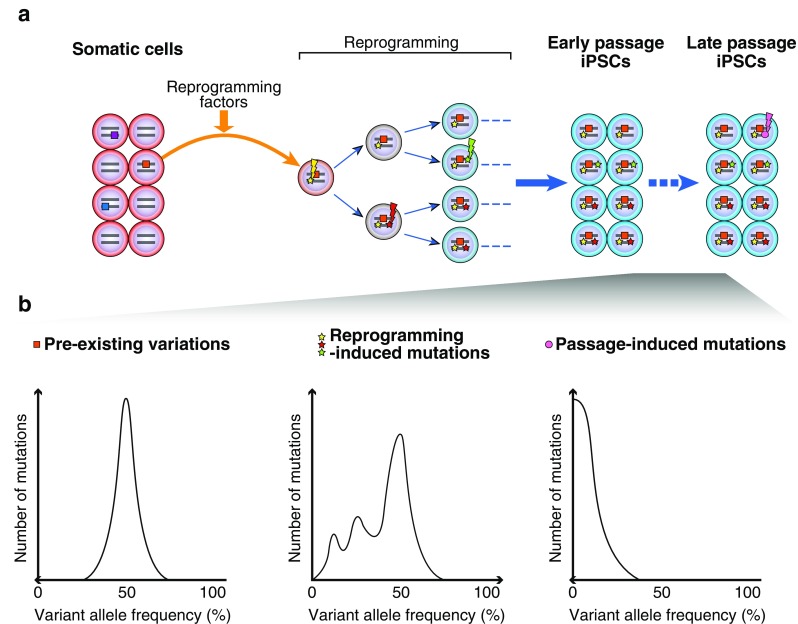
“These mutations can be either inherited from their parental cells, or acquired during the reprogramming process, or even generated during prolonged culture in vitro [25].”
BackgroundSotthibundhu, A., Nopparat, C., Natphopsuk, S., Phuthong, S., Noisa, P., & Govitrapong, P. (2021) · Neurochemical Research · doi:10.1007/s11064-021-03382-2 · Cited by 15
Vo, Q. D., Nakamura, K., Saito, Y., Akagi, S., Miyoshi, T., & Yuasa, S. (2025) · International Journal of Molecular Sciences · doi:10.3390/ijms26114984 · Cited by 13
“Additionally, prolonged culture may introduce mutations, which may pose safety concerns [156].”
Advanced Technologies to Target Cardiac Cell Fate Plasticity for Heart Regeneration
Testa, G., Benedetto, G. D., & Passaro, F. (2021) · International Journal of Molecular Sciences · doi:10.3390/ijms22179517 · Cited by 13
“Major concerns are related to the possible chromosomal aberrations [98], which can be inherited from parental cells or result from cell reprogramming or extended culture periods, as well as the potential long-term deleterious effects of the implanted engineered tissue, the lack of heterogeneous cell population after d…”
BackgroundRegenerative Neurology and Regenerative Cardiology: Shared Hurdles and Achievements
Mitrečić, D., Hribljan, V., Jagečić, D., Isaković, J., Lamberto, F., Horánszky, A., Zana, M., Földes, G., Zavan, B., Pivoriūnas, A., et al. (2022) · International Journal of Molecular Sciences · doi:10.3390/ijms23020855 · Cited by 14
Takeda, Y., & Dai, P. (2020) · Scientific Reports · doi:10.1038/s41598-020-60769-x · Cited by 15
Tynecka, M., Moniuszko, M., & Eljaszewicz, A. (2021) · Stem Cell Reviews and Reports · doi:10.1007/s12015-021-10137-7 · Cited by 13
“concerns, iPSC-MSCs hold high therapeutic potential, which has been demonstrated in some preclinical studies [83].”
BackgroundA comprehensive review on organ-on-chips as powerful preclinical models to study tissue barriers
Filiz, Y., Esposito, A., Maria, C. D., Vozzi, G., & Yeşil-Çeliktaş, Ö. (2024) · Progress in Biomedical Engineering · doi:10.1088/2516-1091/ad776c · Cited by 13
“Additionally, the instability of iPSCs refers to their susceptibility to genetic and epigenetic changes during prolonged culture, potentially affecting their quality and reliability for downstream applications [38, 39].”
Current development of alternative treatments for endothelial decompensation: Cell-based therapy
Rodríguez-Fernández, S., Piñeiro-Ramil, M., Castro-Viñuelas, R., Sanjurjo‐Rodríguez, C., Portela, M. Á., Fuentes-Boquete, I. M., Rendal, E., & Díaz‐Prado, S. (2021) · Experimental Eye Research · doi:10.1016/j.exer.2021.108560 · Cited by 13
Label-Free Long-Term Methods for Live Cell Imaging of Neurons: New Opportunities
Baričević, Z., Ayar, Z., Leitão, S. M., Mladinić, M., Fantner, G. E., & Ban, J. (2023) · Biosensors · doi:10.3390/bios13030404 · Cited by 14
“First of all, they carry genetic alterations [69] and during prolonged culture are subjected to passage-induced mutations [70].”
BackgroundHuman pluripotent stem cells in regenerative medicine: where do we stand?
Nguyen, H. T., Jacobs, K., & Spits, C. (2018) · Reproduction · doi:10.1530/rep-18-0291 · Cited by 16
Biomimetic microfluidic chips for toxicity assessment of environmental pollutants
Du, X.-Y., & Yang, J. (2024) · The Science of The Total Environment · doi:10.1016/j.scitotenv.2024.170745 · Cited by 13
MacArthur, C. C., Pradhan, S. K., Wetton, N., Zarrabi, A., Dargitz, C., Sridharan, M., Jackson, S. M., Pickle, L., & Lakshmipathy, U. (2019) · Regenerative Medicine · doi:10.2217/rme-2018-0148 · Cited by 11
Silva, D. D., Crous, A., & Abrahamse, H. (2024) · Current Issues in Molecular Biology · doi:10.3390/cimb46070379 · Cited by 11
“Additionally, it offers the possibility of producing tissue constructs on a large scale and reducing the risk of immunological rejection in autologous tissue engineering [40].”
BackgroundVega, S. L., Liu, E., Arvind, V., Bushman, J. S., Sung, H., Becker, M. L., Lelièvre, S. A., Kohn, J., Vidi, P., & Moghe, P. V. (2016) · Experimental Cell Research · doi:10.1016/j.yexcr.2016.12.018 · Cited by 11
“Finally, with induced pluripotent stem cells (iPSCs) revolutionizing research and treatment options for common and rare diseases, we envision applying morphotextural analyses of nuclear organization for characterizing differentiation protocols, predicting genomic instability [44], and studying tumor heterogeneity with…”
3D Printing for Cell Therapy Applications
Leberfinger, A. N., Moncal, K. K., Ravnic, D. J., & Ozbolat, I. T. (2017) · Molecular and translational medicine · doi:10.1007/978-3-319-57153-9_11 · Cited by 14
The Winding Road of Cardiac Regeneration—Stem Cell Omics in the Spotlight
Micheu, M. M., Scărlătescu, A. I., Scafa‐Udriște, A., & Dorobanţu, M. (2018) · Cells · doi:10.3390/cells7120255 · Cited by 11
“Trisomy X 1–5 5–8 FAM58A Family with sequence similarity 58, member A Cell proliferation [7,8,11]”
BackgroundInfluentialAdvances and Challenges in Pluripotent Stem Cell‐Based Whole‐Cell Vaccines for Cancer Treatment
Wan, G., Huang, J., Xu, R., & Jin, M. (2025) · Medicine Bulletin · doi:10.1002/mdb2.70002 · Cited by 12
Questa, M., Moshref, M., Jimenez, R. J., Cervantes, V. L., Crawford, C. K., Settles, M. L., Ross, P. J., & Kol, A. (2020) · Stem Cells Translational Medicine · doi:10.1002/sctm.20-0278 · Cited by 12
Steevens, A. R., Griesbach, M. W., You, Y., Dutton, J. R., Low, W. C., & Santi, P. A. (2021) · Stem Cell Research & Therapy · doi:10.1186/s13287-021-02184-1 · Cited by 10
Ma, X., Liu, H., Zheng, Y., Dai, Y., Lingling, E., Zhang, R., & Zhang, S. (2022) · Combinatorial Chemistry & High Throughput Screening · doi:10.2174/1386207325666220705120904 · Cited by 10
Cohen, C., Flouret, V., Herlyn, M., Fukunaga‐Kalabis, M., Li, L., & Bernerd, F. (2023) · Pigment Cell & Melanoma Research · doi:10.1111/pcmr.13077 · Cited by 11
Strategies and mechanisms of neuronal reprogramming
Wan, Y., & Ding, Y. P. (2023) · Brain Research Bulletin · doi:10.1016/j.brainresbull.2023.110661 · Cited by 15
Bujko, K., Ciechanowicz, A. K., Kucia, M., & Ratajczak, M. Z. (2023) · Cytometry Part A · doi:10.1002/cyto.a.24767 · Cited by 10
Stem cell-based hydrogel for the repair and regeneration of cartilage
Yao, Z., You, X., Wang, X., Kang, Y., Wang, L., & Zhang, Z. (2024) · Chinese Chemical Letters · doi:10.1016/j.cclet.2024.110607 · Cited by 12
Establishment of chicken muscle and adipogenic cell cultures for cultivated meat production
Haach, V., Silveira, K. R. D., Peixoto, M. A., Sá, A. P. P., Gressler, V., Feddern, V., Ibelli, A. M. G., Silva, L. P., & Bastos, A. P. (2025) · Frontiers in Nutrition · doi:10.3389/fnut.2025.1648935 · Cited by 9
Mommaerts, K., Bellora, C., Lambert, P., Türkmen, S., Schwamborn, J. C., & Betsou, F. (2021) · Biopreservation and Biobanking · doi:10.1089/bio.2020.0159 · Cited by 9
“29 Combining the results from the two techniques, a higher structural instability was detected for the fibroblasts isolated with the GM skin dissociation technique, with the chromosome 5 found to be particularly unstable.”
The Structural and the Functional Aspects of Intercellular Communication in iPSC-Cardiomyocytes
Kiss, É., Fischer, C., Sauter, J.-M., Sun, J., & Ullrich, N. D. (2022) · International Journal of Molecular Sciences · doi:10.3390/ijms23084460 · Cited by 11
“Genomic alterations, for instance, can arise during the reprogramming or even during the prolonged culture process [30].”
BackgroundNogueira, I. P. M., Costa, G. M. J., & Lacerda, S. M. D. S. N. (2024) · Animals · doi:10.3390/ani14020220 · Cited by 11
“The presence of (epi)genetic instability and variations raises concerns about the safety of utilizing these cells, as the potential adverse effects of identified mutations remain uncertain [116,117].”
BackgroundWu, Y., Sun, J., Wang, W., Wang, Y., & Friedrich, R. E. (2024) · Frontiers in Bioengineering and Biotechnology · doi:10.3389/fbioe.2024.1324049 · Cited by 12
Will iPS Cells Regenerate or Just Provide Trophic Support to the Diseased Tissues?
Bhartiya, D. (2018) · Stem Cell Reviews and Reports · doi:10.1007/s12015-018-9837-6 · Cited by 9
Common Ethical Considerations of Human-Induced Pluripotent Stem Cell Research
Omole, A. E., Fakoya, A. O. J., Nnawuba, K. C., & Haider, K. H. (2022) · Springer eBooks · doi:10.1007/978-981-16-6016-0_21-1 · Cited by 17
Mimetic Hierarchical Approaches for Osteochondral Tissue Engineering
Gadjanski, I. (2018) · Advances in experimental medicine and biology · doi:10.1007/978-3-319-76711-6_7 · Cited by 11
Regenerating Damaged Myocardium: A Review of Stem-Cell Therapies for Heart Failure
Fan, D., Wu, H., Peng, H., Pan, K., & Wu, R. (2021) · Cells · doi:10.3390/cells10113125 · Cited by 10
Scaling Insulin-Producing Cells by Multiple Strategies
Choi, J. S., Cayabyab, F., Perez, H., & Yoshihara, E. (2024) · Endocrinology and Metabolism · doi:10.3803/enm.2023.1910 · Cited by 9
Purification technologies for induced pluripotent stem cell therapies
Generali, M., Fujita, Y., Kehl, D., Hirosawa, M., Emmert, M. Y., TAKAHASHI, J. C., Hoerstrup, S. P., & Saito, H. (2024) · Nature Reviews Bioengineering · doi:10.1038/s44222-024-00220-2 · Cited by 11
“Owing to the extensive manufacturing processes, stem cell genomic stability should be intensively investigated Review article before use 140 .”
Chakrabarty, K., Shetty, R., Argulwar, S., Das, D., & Ghosh, A. (2021) · Cytotherapy · doi:10.1016/j.jcyt.2021.08.003 · Cited by 8
“Similar to immortalized cell lines, iPSCs under prolonged periods of culture have been shown to be capable of accumulating chromosomal and genetic aberrations [104].”
BackgroundStem cells and their potential clinical applications in psychiatric disorders
Ratajczak, M. Z., Ciechanowicz, A. K., Kucharska–Mazur, J., & Samochowiec, J. (2017) · Progress in Neuro-Psychopharmacology and Biological Psychiatry · doi:10.1016/j.pnpbp.2017.04.020 · Cited by 8
Cellular and Animal Models of Striated Muscle Laminopathies
Nicolas, H. A., Akimenko, M., & Tesson, F. (2019) · Cells · doi:10.3390/cells8040291 · Cited by 13
“Moreover, iPSCs have been shown to differ from the original cells in terms of somatic mutations, copy number variations and DNA methylation [132,133].”
BackgroundRurali, E., Vinci, M. C., Bassetti, B., Barbagallo, V., Pompilio, G., & Gambini, E. (2020) · Current Stem Cell Research & Therapy · doi:10.2174/1574888x15666200225124451 · Cited by 9
Goullée, H., Taylor, R. L., Forrest, A. R. R., Laing, N. G., Ravenscroft, G., & Clayton, J. S. (2021) · Skeletal Muscle · doi:10.1186/s13395-021-00278-1 · Cited by 10
Tokuyama, T., Ahmed, R. E., Chanthra, N., Anzai, T., & Uosaki, H. (2021) · Biology · doi:10.3390/biology10100981 · Cited by 10
Zhang, Y., Huang, G., Yuan, Z., Zhang, Y., & Chang, R. (2021) · Frontiers in Cell and Developmental Biology · doi:10.3389/fcell.2021.760515 · Cited by 7
“In addition, gene variant mutations might be produced and even accumulate during the long time of culturing patient-derived iPSCs (Liu et al., 2014; Yoshihara et al., 2017).”
BackgroundHuang, L., Zheng, Z., Bai, D., & Han, X. (2021) · Current Stem Cell Research & Therapy · doi:10.2174/1574888x17666211229155533 · Cited by 7
Manipulating cell fate while confronting reproducibility concerns
Osterloh, J. M., & Mullane, K. (2018) · Biochemical Pharmacology · doi:10.1016/j.bcp.2018.01.016 · Cited by 7
Yi, B., Dissanayaka, W. L., & Zhang, C. (2020) · Journal of Endodontics · doi:10.1016/j.joen.2020.06.024 · Cited by 8
Age-Related Macular Degeneration: From Epigenetics to Therapeutic Implications
Farkas, M. H., & DeAngelis, M. M. (2021) · Advances in experimental medicine and biology · doi:10.1007/978-3-030-66014-7_9 · Cited by 8
Stelcer, E., Kulcenty, K. I., & Suchorska, W. M. (2018) · PLoS ONE · doi:10.1371/journal.pone.0205691 · Cited by 7
Tsai, R., Shrestha, R., & Wen, Y. (2019) · Tzu Chi Medical Journal · doi:10.4103/tcmj.tcmj_147_19 · Cited by 9
“Molecular basis of genomic instability of induced pluripotent stem cell Genomic instability acquired during forced reprogramming, cultural adaptation, passage-induced mutation, and viral integration has been reported [47,48].”
BackgroundDisc-Derived Induced Pluripotent Stem Cells and Environmental Cues for Nucleus Pulposus Regeneration
Laagland, L. T., Poramba‐Liyanage, D. W., Desprat, R., Riemers, F. M., Warmerdam, C. C., Soubeyrand, M., Bensadoun, P., Ito, K., Milhavet, O., Camus, A., et al. (2025) · Tissue Engineering Part A · doi:10.1177/19373341251359106 · Cited by 7
“12 In the present study, we used a relatively early but stable passage ( * p15 – 30), which is recommended for clinical application to minimize the risk of passage-induced mutations, 51,52 increasing the possibility of an effect of the epigenetic memory of the hiPSC tissue source.”
Patterson, B. O., Yang, B., Tanaka, Y., Kim, K., Çakır, B., Xiang, Y., Kim, J., Wang, S., & Park, I. (2023) · Science Advances · doi:10.1126/sciadv.adf2245 · Cited by 7
3D Print Technology for Cell Culturing
Haldar, S., Lahiri, D., & Roy, P. (2019) · Elsevier eBooks · doi:10.1016/b978-0-12-815890-6.00005-0 · Cited by 11
The Potential of Induced Pluripotent Stem Cells to Treat and Model Alzheimer’s Disease
Schulz, J. M. (2021) · Stem Cells International · doi:10.1155/2021/5511630 · Cited by 6
Dadheech, N., Cuesta-Gomez, N., Jasra, I. T., Verhoeff, K., Garza, B. M., Mouhammed, O., & Shapiro, A. M. J. (2022) · Journal of Immunology and Regenerative Medicine · doi:10.1016/j.regen.2022.100064 · Cited by 5
Braidotti, S., Ferraro, R. M., Franca, R., Genova, E. C., Giambuzzi, F., Mancini, A., Marinozzi, V., Pugnetti, L., Zudeh, G., Tesser, A., et al. (2025) · Frontiers in Pharmacology · doi:10.3389/fphar.2025.1549183 · Cited by 5
“…limitations on working with iPSCs-derived neurons, including time, costs, technical issues such as the variability in the neuronal pool for high throughput screening and reproducibility of results among iPSCs clones of the same individual (Dolmetsch and Geschwind, 2011; Yoshihara et al., 2017).”
Luo, Y., Xu, Z., & Li, Z. (2025) · FASEB BioAdvances · doi:10.1096/fba.2025-00126 · Cited by 7
“These genetic variations are retained during the reprogramming process and become an inherent genetic background of the iPSC line [88].”
Dey, C., Raina, K., Thool, M., Adhikari, P., Haridhasapavalan, K. K., Sundaravadivelu, P. K., Venkatesan, V., Gogoi, R., Selvaraju, S., & Thummer, R. P. (2021) · Elsevier eBooks · doi:10.1016/b978-0-323-90059-1.00007-5 · Cited by 8
Cholangiocyte Organoids in Liver Transplantation; a Comprehensive Review
Rejas, C., & Junger, H. H. G. (2024) · Transplant International · doi:10.3389/ti.2024.12708 · Cited by 6
“However, high rates of mutations and DNA damage accumulations are well-known for iPSC in 2D-cell cultures, which raises concerns about the use of stem cells in cell therapy [52].”
BackgroundmiR‐196b‐5p inhibits proliferation of Wharton's jelly umbilical cord stem cells
Han, X. Y., Yang, H., Liu, H., Zhang, C., Cao, Y., Fan, Z., & Shi, R. (2020) · FEBS Open Bio · doi:10.1002/2211-5463.13043 · Cited by 5
Translational potential of hiPSCs in predictive modeling of heart development and disease
Mansfield, C., Zhao, M., & Basu, M. (2022) · Birth Defects Research · doi:10.1002/bdr2.1999 · Cited by 6
Examining iPSC derived motor neuron variability and genome stability monitoring as a solution
Gaffey, F., McCoull, D., Vaitone, E., Hedges, E., Lovejoy, C., Yao, Z., Wright, P. D., Mead, R. J., & Stebbeds, W. (2025) · Scientific Reports · doi:10.1038/s41598-025-23378-0 · Cited by 4
Stem Cells: The Game Changers of Human Cardiac Disease Modelling and Regenerative Medicine
Parrotta, E. I., Scalise, S., Scaramuzzino, L., & Cuda, G. (2020) · Vide Leaf, Hyderabad eBooks · doi:10.37247/pamb.1.2020.8 · Cited by 4
miR-124- and let-7-Mediated Reprogram of Human Fibroblasts into SST Interneurons
Gu, X., Wang, J., & Jiang, X. (2022) · ACS Chemical Neuroscience · doi:10.1021/acschemneuro.2c00445 · Cited by 4
The Regenerative Medicine Market Landscape
Cauwenberghe, C. V. (2018) · Elsevier eBooks · doi:10.1016/b978-0-12-801238-3.65597-6 · Cited by 4
ARHGDIA Confers Selective Advantage to Dissociated Human Pluripotent Stem Cells
Riggs, M. J., Sheridan, S. D., & Rao, R. R. (2021) · Stem Cells and Development · doi:10.1089/scd.2021.0079 · Cited by 4
“NANOG is located on chromosome 12 and increased NANOG expression may confer self-renewal benefit to these populations [35].”
BackgroundRong, W., Rome, C. P., & Yao, S. (2021) · Cells Tissues Organs · doi:10.1159/000519600 · Cited by 4
Baggiani, M., Damiani, D., Privitera, F., Vecchia, S. D., Tessa, A., & Santorelli, F. M. (2024) · International Journal of Molecular Sciences · doi:10.3390/ijms251910614 · Cited by 3
“Moreover, to rule out the unlucky event of genomic rearrangements [14,15], we performed a detailed genomic analysis by array-CGH, analyzing mutant hiPS cells and their HDF parental lines and evaluating the genome integrity of our clones.”
Method
Metadata
- Authors
- Yoshihara, M., Hayashizaki, Y., & Murakawa, Y.
- Affiliations
- RIKEN (JP)
- Corresponding author
- Murakawa, Yasuhiro
- Venue
- Stem Cell Reviews and Reports
- Published
- 2016-09-05
- Volume
- 13
- Issue
- 1
- Pages
- 7-16
- ISSN
- 1550-8943 (ISSN-L)
- 1558-6804
- PMC
- PMC5346115
- OpenAlex
- W2510668402
- Cited by
- 283
- References
- 119
- Citations by year
- 2026: 13 · 2025: 26 · 2024: 26 · 2023: 19 · 2022: 28 · 2021: 47 · 2020: 34 · 2019: 32 · 2018: 27 · 2017: 28 · 2016: 3
- FWCI
- 2.71
- Type
- journal article
- Language
- en
- Open access
- hybrid
- doi.org
- Locations
- Stem Cell Reviews and Reports (publishedVersion, cc-by)
- Europe PMC (PubMed Central) (publishedVersion, cc-by)
- PubMed Central (publishedVersion, cc-by)
- PubMed (publishedVersion)
- Funders
- Ministry of Education, Culture, Sports, Science, and Technology
- Topics
- Life Sciences › Biochemistry, Genetics and Molecular Biology › Molecular Biology › Pluripotent Stem Cells Research
- Life Sciences › Biochemistry, Genetics and Molecular Biology › Molecular Biology › CRISPR and Genetic Engineering
- Life Sciences › Biochemistry, Genetics and Molecular Biology › Cell Biology › Telomeres, Telomerase, and Senescence
- Keywords
- induced pluripotent stem cells, genomic instability, genetic variation, somatic mutations, iPSC safety, iPSC-based therapy, clinical translation
- MeSH terms
- Cell Differentiation, Humans, Models, Genetic, Risk Factors, Transcription Factors, Genetic Variation, Stem Cell Transplantation, Genomic Instability, Induced Pluripotent Stem Cells, Cellular Reprogramming
About these checks
Registry, retraction, Cites and statistics results are computed, not judged, with one exception: a printed reference that no index lists is read once by a model before it counts as a citation error. Claims are extracted by a model and kept only when their quote appears verbatim in the text; each cited source is then checked, with a model’s help, for whether it says what the claim relies on. Those verdicts can be wrong — read the claim’s quote and the cited source before relying on one.
Statistics and arithmetic are recomputed, not judged.
Confidence bands are shown only for fields calibrated on our annotated test set. None is calibrated yet, so no band is shown.
What counts as a claim ›How we measure confidence ›How we check this ›
Are you an author, or do you see a problem with this page? Request a review
Data sources
Bibliographic data: Semantic Scholar, OpenAlex, Crossref.
Contains information from the Semantic Scholar Academic Graph Datasets, made available under the ODC Attribution License (ODC-BY 1.0).
Semantic Scholar’s data is described in: Kinney, R., et al. (2023). The Semantic Scholar Open Data Platform. arXiv:2301.10140.
