

Genomic Instability of iPSCs: Challenges Towards Their Clinical Applications
Open accessThe DOI matches its Crossref record; 119 of the 119 references it cites were found in a registry or an index.
Abstract
Induced pluripotent stem cells (iPSCs) are a type of pluripotent stem cells generated directly from mature cells through the introduction of key transcription factors. iPSCs can be propagated and differentiated into many cell types in the human body, holding enormous potential in the field of regenerative medicine. However, genomic instability of iPSCs has been reported with the advent of high-throughput technologies such as next-generation sequencing. The presence of genetic variations in iPSCs has raised serious safety concerns, hampering the advancement of iPSC-based novel therapies. Here we summarize our current knowledge on genomic instability of iPSCs, with a particular focus on types of genetic variations and their origins. Importantly, it remains elusive whether genetic variations in iPSCs can be an actual risk factor for adverse effects including malignant outgrowth. Furthermore, we discuss novel approaches to generate iPSCs with fewer genetic variations. Lastly, we outline the safety issues and monitoring strategies of iPSCs in clinical settings.
Overview
The claims and statistics of this paper haven’t been checked yet.
Free: it reads the open-access text and checks the first 5 claims that cite a source we can check. Create a free account to check every claim.
Integrity signals
Registry
Cites
Statistics
Figures
Verification
Claims the paper makes
The claims and statistics of this paper haven’t been checked yet.
Free: it reads the open-access text and checks the first 5 claims that cite a source we can check. Create a free account to check every claim.
Claims other papers make about this one
Each is checked against this paper’s own text: does it say what the citing paper says it does?
The source backs part of the claim, not all of it — or backs it for a different population, condition or comparison.
In the citing paper
“However, these iPSC models encounter significant reproducibility challenges. When in a pluripotent state, they are highly sensitive to external environmental cues, modifying internal genomic architecture, becoming unsuitable for differentiations11.”
From Examining iPSC derived motor neuron variability and genome stability monitoring as a solution (2025) · cites this paper as [11]
Experimental — accuracy not yet measuredThe cited source says what the claim attributes to it.
In the citing paper
“Following previous studies in the literature, it is known that iPSC genomic architecture can change over time whilst these cells are in culture11 and this can have a noticeable impact on differentiation protocols21.”
From Examining iPSC derived motor neuron variability and genome stability monitoring as a solution (2025) · cites this paper as [11]
The check wasn’t confident either way, so it gives no verdict — never disputed.
In the citing paper
“However, variability in differentiation outcomes presents a major barrier to reproducibility and model reliability.”
From Examining iPSC derived motor neuron variability and genome stability monitoring as a solution (2025) · cites this paper as [11]
Experimental — accuracy not yet measured
Self-check
Percentages, sums and reported differences re-computed from the paper’s own numbers.
The self-check needs the paper’s full text.
Citations
Cites
Takahashi, K., & Yamanaka, S. (2006) · Cell · doi:10.1016/j.cell.2006.07.024 · Cited by 26,673
Induction of Pluripotent Stem Cells from Adult Human Fibroblasts by Defined Factors
Takahashi, K., Tanabe, K., Ohnuki, M., Narita, M., Ichisaka, T., Tomoda, K., & Yamanaka, S. (2007) · Cell · doi:10.1016/j.cell.2007.11.019 · Cited by 20,221
An integrated encyclopedia of DNA elements in the human genome
The ENCODE Project Consortium (2012) · Nature · doi:10.1038/nature11247 · Cited by 18,072
Induced Pluripotent Stem Cell Lines Derived from Human Somatic Cells
Yu, J., Vodyanik, M. A., Smuga-Otto, K., Antosiewicz-Bourget, J., Frane, J. L., Tian, S., Nie, J., Jonsdottir, G. A., Ruotti, V., Stewart, R., et al. (2007) · Science · doi:10.1126/science.1151526 · Cited by 10,310 · cited 2×
“Since the establishment of human iPSCs in 2007 [2, 3], many attempts have been made to produce iPSCs more efficiently and safely.”
BackgroundThe cancer genome atlas pan-cancer analysis project
The Cancer Genome Atlas Research Network, Weinstein, J. N., Collisson, E. A., Mills, G. B., Shaw, K. R. M., Ozenberger, B. A., Ellrott, K., Shmulevich, I., Sander, C., & Stuart, J. M. (2013) · Nature Genetics · doi:10.1038/ng.2764 · Cited by 9,092
Mutation and cancer: statistical study of retinoblastoma
Knudson, A. G. (1971) · Proceedings of the National Academy of Sciences · doi:10.1073/pnas.68.4.820 · Cited by 7,612 · cited 1×
“Moreover, combination of mutation might lead to tumorigenic potential, as illustrated by multiple-hit hypothesis [49, 50].”
BackgroundSequencing technologies – the next generation
Metzker, M. L. (2010) · Nature Reviews Genetics · doi:10.1038/nrg2626 · Cited by 7,066 · cited 1×
“netic variations across the entire genome at single nucleotide resolution [17] and (ii) low frequency variations which could not be identified by conventional methods [18], revolutionizing the field of genomic research including genomic studies of iPSCs.”
BackgroundAge-related clonal hematopoiesis associated with adverse outcomes
Jaiswal, S., Fontanillas, P., Flannick, J., Manning, A., Grauman, P. V., Mar, B. G., Lindsley, R. C., Mermel, C. H., Burtt, N., Chavez, A., et al. (2014) · New England Journal of Medicine · doi:10.1056/nejmoa1408617 · Cited by 4,841 · cited 1×
“Somatic mutations, including cancer driver mutations, have been shown to accumulate in blood cells with increasing age [70, 71].”
BackgroundThe pathogenesis of cancer metastasis: the ‘seed and soil’ hypothesis revisited
Fidler, I. J. (2003) · Nature Reviews Cancer · doi:10.1038/nrc1098 · Cited by 4,686 · cited 1×
“[47] for review) Tumorigenic potential might also differ depending on the environment [48] surrounding the transplanted cells.”
BackgroundComing of age: ten years of next-generation sequencing technologies
Goodwin, S., McPherson, J. D., & McCombie, W. R. (2016) · Nature Reviews Genetics · doi:10.1038/nrg.2016.49 · Cited by 4,352 · cited 1×
“However, even though NGS technologies have significantly reduced in cost [109], extensive genome-wide analysis on a routine basis is still financially inefficient.”
Background
Cited by
Items 201–283 of 283
Lee, J.-M., Lee, C., Seol, B., Jung, C. K., Kim, Y., Kang, D., Yu, H., Hong, Y., Song, C. L., Cho, Y. S., et al. (2025) · Experimental & Molecular Medicine · doi:10.1038/s12276-025-01439-8 · Cited by 4
Zhang, K., Na, T., Jia, C., Yuan, X., Guo, M., Yang, X., Li, M., Jia, W., Bai, Z., Lu, J., et al. (2026) · Stem Cell Research & Therapy · doi:10.1186/s13287-026-04975-w · Cited by 5
“…banks, hiPSCs are also vulnerable to culture-induced genomic alterations, particularly some recurrent genomic abnormalities, which lead to selective growth advantage of mutant cells in culture conditions, potentially due to the altered expression or function of one or more mutated genes [13, 14].”
Menssen, D. M. A., Vasilopoulou, A. G., Abinzano, F., Korpershoek, J. V., Kara, A., Papantoniou, I., Kelly, D. J., Callens, S. J. P., Malda, J., & Ito, K. (2026) · Journal of Orthopaedic Translation · doi:10.1016/j.jot.2026.101150 · Cited by 3
“Finally, a key challenge in using iPSC lines is their genomic instability, which can occur at any processing stage [60,61].”
Bourguignon, N., Chamorro, D., Pérez-Sosa, C., Aravelli, A., Bravo, E., Pérez, M., Miriuka, S., Lerner, B., & Bhansali, S. (2022) · Biochemical Engineering Journal · doi:10.1016/j.bej.2022.108660 · Cited by 3
Narrative review of proximal tubular epithelial cell in-vitro co-culture models
Varda, L., Petreski, T., Gradišnik, L., Maver, U., & Bevc, S. (2024) · Biofabrication · doi:10.1088/1758-5090/ad9407 · Cited by 3
“Secondly, reprogramming of cells or the cell source can be the reason for genomic instability [217].”
Role of prostaglandin E2 in allogeneic mesenchymal stem cell therapy for cardiac repair
Sareen, N., Srivastava, A., & Dhingra, S. (2021) · Canadian Journal of Physiology and Pharmacology · doi:10.1139/cjpp-2020-0413 · Cited by 4
Ishikawa, T. (2017) · World Journal of Stem Cells · doi:10.4252/wjsc.v9.i5.77 · Cited by 3
Sontayananon, N., Redwood, C. S., Davies, B., & Gehmlich, K. (2020) · Biology · doi:10.3390/biology9110402 · Cited by 4
“In addition, substantial iPSC passaging increases the risk of genome instability and possibly leads to phenotypic variation in iPSC-derived progenies [15].”
BackgroundMaassen, J., Guenther, R., Hondrich, T. J. J., Čepkenović, B., Brinkmann, D., Maybeck, V., Offenhäusser, A., Dittrich, B., Müller, A., Skazik, C., et al. (2023) · Stem Cell Reviews and Reports · doi:10.1007/s12015-023-10538-w · Cited by 3
“But this stem cell source is still not clinically approved due to its potential for teratoma formation [6].”
BackgroundTrebinjac, S., & Nair, M. K. (2020) · Springer eBooks · doi:10.1007/978-981-15-6783-4_11 · Cited by 3
Novel developments in retinal regeneration: Advances and future outlooks in stem cell therapy
Zeppieri, M., Visalli, F., Musa, M., Avitabile, A., Giglio, R., Tognetto, D., Gagliano, C., D’Esposito, F., & Cappellani, F. (2025) · World Journal of Stem Cells · doi:10.4252/wjsc.v17.i12.111374 · Cited by 3
Hu, B., Zhou, S., Wang, X., Zhang, Z., Wang, R., & Wang, R. (2025) · Biochemical and Biophysical Research Communications · doi:10.1016/j.bbrc.2025.151359 · Cited by 2
Zhao, Z., Chen, X. X., Wang, S., Fu, M., Shen, H., Li, J., Xu, J., Qin, J., & Shi, C. (2025) · Cell & Bioscience · doi:10.1186/s13578-025-01410-0 · Cited by 2
“This process increases the risk of genetic instability and developing harmful genetic mutations [30, 31].”
Lentiviral vectors as the delivery vehicles for transduction into iPSCs
Kantor, B., & Chiba‐Falek, O. (2021) · Elsevier eBooks · doi:10.1016/b978-0-323-85766-6.00005-x · Cited by 7
Three-dimensional bioprinting in medical surgery
Alexiou, M. V., & Tooulias, A. I. (2021) · Elsevier eBooks · doi:10.1016/b978-0-323-66193-5.00003-4 · Cited by 3
MLL-AF4, a double-edged sword for iPSC respecification into HSPCs
Zeisig, B. B., & So, C. W. E. (2018) · Proceedings of the National Academy of Sciences · doi:10.1073/pnas.1800622115 · Cited by 3
An update on clinical applications of iPSCs from a genomic point of view
Yoshihara, M., & Murakawa, Y. (2022) · Elsevier eBooks · doi:10.1016/b978-0-323-99892-5.00001-3 · Cited by 2
Self-citationStem Cell and Gene Therapy for Inherited Retinal Diseases
DeSouza, P. J., Park, U. C., & Park, S. S. (2022) · Springer eBooks · doi:10.1007/978-981-16-7337-5_3 · Cited by 2
Yu, N. H., Qiu, J., Li, K., Luo, Q., Liu, X., Yang, Y., Jiang, Z., He, S., He, A., Chen, S., et al. (2022) · Cell Biology International · doi:10.1002/cbin.11837 · Cited by 2
Induced pluripotent stem cells (iPSCs): Where are we and where are we heading?
Jamal, A. (2023) · Cellular and Molecular Biology · doi:10.14715/cmb/2023.69.11.13 · Cited by 3
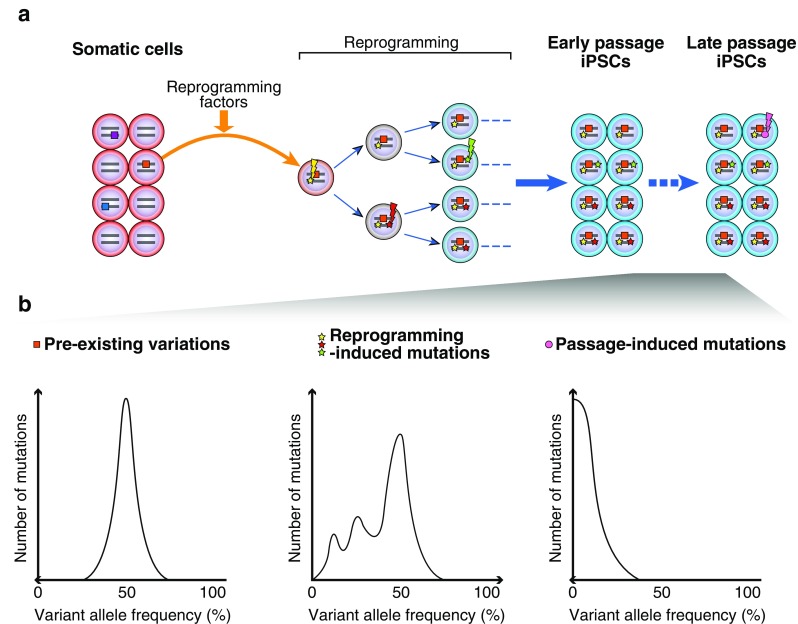
“…scenarios employing iPSCs for the betterment of human health and the improvement of the health care sector. causes of the onset of DNA mutations in the iPSCs could be the reprogramming process, during subsequent passa - ging of these cells, or the preexisting mutations in the primary cells (17).”
BackgroundHuman-Induced Pluripotent Stem Cell-Based Modeling of Cardiac Storage Disorders
Nelson, B., Hashem, S. I., & ADLER, E. D. (2017) · Current Cardiology Reports · doi:10.1007/s11886-017-0829-y · Cited by 3
Spinal cord neural stem cells heterogeneity in postnatal development
Ban, J., & Mladinić, M. (2020) · STEMedicine · doi:10.37175/stemedicine.v1i1.19 · Cited by 2
“This can lead to tumorigenesis in addition to retainment of patientspecific mutations (6,12).”
Prospects of cell replacement therapy for the treatment of degenerative cervical myelopathy
Shea, G. K., Koljonen, P. A., Chan, Y., & Cheung, K. (2020) · Reviews in the Neurosciences · doi:10.1515/revneuro-2020-0075 · Cited by 2
Stem Cell-Based Products in the Market
Aljabali, A. A. A., Seetan, K. I., Alshaer, W., Abu‐El‐Rub, E., Obeid, M. A., Dua, K., & Tambuwala, M. M. (2021) · Stem cell biology and regenerative medicine · doi:10.1007/978-3-030-78101-9_11 · Cited by 2
Modelling human diabetes ex vivo: a glance at maturity onset diabetes of the young
Ka, M., Hawkins, E., Pouponnot, C., & Duvillié, B. (2024) · Frontiers in Endocrinology · doi:10.3389/fendo.2024.1427413 · Cited by 1
“However, one major limit was the discovery of a genomic mutation in the derived iPS cells (68).”
BackgroundStem cell therapy for inherited retinal diseases: Trends and insights from 2000 to 2024
Long, J., Xu, Z., Hu, P., Ye, Y., & Long, D. (2025) · Cell Transplantation · doi:10.1177/09636897251400835 · Cited by 1
“Although no adverse effects were observed, the trial was later suspended, and concerns over genomic instability highlighted the need for further safety evaluations 42 .”
Modeling myeloid cell development in health and disease using induced pluripotent stem cells
Tesakov, I., Nasri, M., Klimiankou, M., Fındık, B., Loskill, P., & Skokowa, J. (2026) · Frontiers in Immunology · doi:10.3389/fimmu.2026.1815809 · Cited by 1
“…mutations, largely attributable to replicative stress and reactive oxygen species generated by the reprogramming factors themselves (232, 233), and (iii) acquired mutations or recurrent karyotypic aberrations that accumulate during prolonged in vitro iPSC culture (61, 234, 235).”
Daheron, L. M., & Chen, I. P.-F. (2022) · Elsevier eBooks · doi:10.1016/b978-0-12-822277-5.00008-0 · Cited by 2
The cell replacement therapeutic potential of human pluripotent stem cells
Taei, A., Sajadi, F., Salahi, S., Enteshari, Z., Falah, N., Shiri, Z., Abasalizadeh, S., Hajizadeh‐Saffar, E., Hassani, S., & Baharvand, H. (2024) · Expert Opinion on Biological Therapy · doi:10.1080/14712598.2024.2443079 · Cited by 1
Developing stem cells for corneal disease: recent developments and future perspectives
John, A. A., Ahmadzadeh, H., & Sabater, A. L. (2025) · Regenerative Medicine · doi:10.1080/17460751.2025.2526253 · Cited by 1
Establishing validity standards for iPSC modeling of neuropsychiatric disorders
Kolsters, N., Vernon, A. C., Kasri, N. N., & Latour, B. L. (2025) · Genomic psychiatry : · doi:10.61373/gp025p.0074 · Cited by 2
Sugiyama-Finnis, A., & Yamazaki, S. (2025) · Regenerative Therapy · doi:10.1016/j.reth.2025.07.001 · Cited by 2
“…multiple quality control and safety checks, from the stage of donor somatic cell selection, iPSC colony selection, expansion and differentiation [113] both at a crude level through karyotyping and more sensitive methods such as whole genome sequencing or quantitative-polymerase chain reaction…”
Abaylı, B., Gestel, U. V., Vankelecom, H. E. J., & Laporte, E. (2026) · Biomolecules · doi:10.3390/biom16040558 · Cited by 2
Hamann, V., Hook, S., Sujariyakul, P., Ramalingam, R., Sgodda, M., Klefenz, I., Stalke, A., Yuan, Q., Steinbrück, L., Rovai, A., et al. (2026) · Journal of Hepatology · doi:10.1016/j.jhep.2026.05.022 · Cited by 1
Induced Pluripotent Stem Cells in the Era of Precise Genome Editing
Punetha, M., Saini, S., Chaudhary, S., Yadav, P. S., Whitworth, K. M., Green, J. A., Kumar, D., & Kues, W. A. (2023) · Current Stem Cell Research & Therapy · doi:10.2174/1574888x18666230307115326 · Cited by 1
The role of stem cells in cystic fibrosis disease modeling and drug discovery
Conese, M., Beccia, E., Carbone, A., Castellani, S., Gioia, S. D., Corti, F., Angiolillo, A., & Colombo, C. (2018) · Expert Opinion on Orphan Drugs · doi:10.1080/21678707.2018.1549480 · Cited by 1
Clinical Potential of Induced Pluripotent Stem Cells
Karagiannis, P. (2019) · Current human cell research and applications · doi:10.1007/978-981-13-3672-0_1 · Cited by 1
Common Ethical Considerations of Human-Induced Pluripotent Stem Cell Research
Omole, A. E., Fakoya, A. O. J., Nnawuba, K. C., & Haider, K. H. (2022) · Springer eBooks · doi:10.1007/978-981-19-2655-6_21 · Cited by 2
Ratajczak, M. Z. (2017) · Progress in Neuro-Psychopharmacology and Biological Psychiatry · doi:10.1016/j.pnpbp.2017.08.018 · Cited by 1
“Unfortunately, both classical pluripotent stem cells, such as embryonic stem cells, and induced pluripotent stem cells (iPSCs) bear the risk of teratoma formation after injection into the host and, as recently demonstrated, exhibit problems related to genomic instability (Yoshihara et al., 2017).”
BackgroundSteMClass: A Novel DNA Methylation-Based Classifier for iPSC In Vitro Differentiation StatesPreprint
Pérez, E., Vallone, V. B. F., Teichmann, D., Euskirchen, P., Siewert, C., Osberg, B., Wolkenstein, P., Stachelscheid, H., & Capper, D. (2025) · bioRxiv (Cold Spring Harbor Laboratory) · doi:10.1101/2025.09.02.673063 · Cited by 1
Generation of knockout human iPSCs to investigate genes associated with telomere length
Shamkhi, N. (2017) · Figshare
Looking Back at the 2018 Year of Stem Cell Reviews and Reports
Ratajczak, M. Z. (2018) · Stem Cell Reviews and Reports · doi:10.1007/s12015-018-9859-0
Stem cell therapy and regenerative medicine in RPE degenerative disease: advances and challenges
Takiuti, J. T., Takahashi, V. K. L., Apatoff, M. B. L., & Tsang, S. H. (2018) · Expert Review of Ophthalmology · doi:10.1080/17469899.2018.1555034 · Cited by 1
Verheijen, M. C. T. (2019) · Research Publications (Maastricht University) · doi:10.26481/dis.20190517mv · Cited by 2
Regenerative medicine of the skin: Quantitative and qualitative analyses
Oostendorp, C. (2019) · Radboud Repository (Radboud University) · Cited by 1
Induced pluripotent stem cells in liver disease
Donato, M. T., Pelechá-Salvador, M., & Tolosa, L. (2021) · Elsevier eBooks · doi:10.1016/b978-0-12-822229-4.00011-5
Ferguson, D. C. J., MacInnes, K. A., Daniels, D. E., & Frayne, J. (2021) · Elsevier eBooks · doi:10.1016/b978-0-12-822230-0.00006-5 · Cited by 2
Recellularization of Decellularized Whole Organ Scaffolds: Elements, Progresses, and Challenges
Hu, J.-G., Huang, Y., Tan, J., Da, L., & Xie, H. (2021) · Springer eBooks · doi:10.1007/978-981-33-6962-7_6 · Cited by 1
Faculty Opinions recommendation of Ethical and Safety Issues of Stem Cell-Based Therapy.
Millar, N. L. (2020) · Faculty Opinions – Post-Publication Peer Review of the Biomedical Literature · doi:10.3410/f.732466979.793579465
Looking Back at the Past Year of Stem Cell Reviews and Reports
Ratajczak, M. Z. (2017) · Stem Cell Reviews and Reports · doi:10.1007/s12015-017-9779-4
Clinical trials of myocardium injury cell therapy
Геннадиевич, П. А., Витальевич, С. М., Turchyn, V. V., & Bushe, V. V. (2022) · Patologiya krovoobrashcheniya i kardiokhirurgiya · doi:10.21688/1681-3472-2022-2-17-29
Cell-Based Therapy and Genome Editing in Parkinson’s Disease: Quo Vadis?
Schneider, Y., Wihan, J., Turan, S., & Winkler, J. (2022) · Advances in neuroethics · doi:10.1007/978-3-030-97641-5_3
Kardiale Effekte der m6A-Methylierung auf micro-RNA-Bindung
von Limont, N. L. W. (2022) · eDiss (Georg-August-Universität Göttingen) · doi:10.53846/goediss-9441
Induced Pluripotent Stem Cells: Progress toward Clinical Translation from Bench to Bedside
Fakoya, A. O. J., Omole, A. E., Satyadev, N., & Haider, K. H. (2022) · Springer eBooks · doi:10.1007/978-981-19-2655-6_40
Update on stem/progenitor cell-based clinical trials for eye disease
El-Hashash, A. H. K. (2023) · Elsevier eBooks · doi:10.1016/b978-0-323-99987-8.00003-5
Stem Cells in Ophthalmology: From the Bench to the Bedside
Miotti, G., Parodi, P. C., Ferrari, A., Salati, C., & Zeppieri, M. (2023) · Springer eBooks · doi:10.1007/978-981-99-0846-2_10-1
Evidence-Based and Clinical Experimentation on Cell Therapy
Ferrari, A., Stocco, C., Bulla, R., Zacchigna, S., & Papa, G. (2023) · Springer eBooks · doi:10.1007/978-3-031-45453-0_22
Yi, B., Ding, T., Jiang, S., Gong, T., Chopra, H., Sha, O., Dissanayaka, W. L., Ge, S., & Zhang, C. (2021) · Figshare · doi:10.6084/m9.figshare.14532273
Yi, B., Ding, T., Jiang, S., Gong, T., Chopra, H., Sha, O., Dissanayaka, W. L., Ge, S., & Zhang, C. (2021) · Figshare · doi:10.6084/m9.figshare.14532270
Advancing Cancer Immune Cell Therapies via Engineered iPSC-Based Strategies
Vu, S. H., & Nguyen, X. (2024) · Interdisciplinary cancer research · doi:10.1007/16833_2024_293
Stem Cells in Ophthalmology: From the Bench to the Bedside
Miotti, G., Parodi, P. C., Ferrari, A., Salati, C., & Zeppieri, M. (2024) · Springer eBooks · doi:10.1007/978-981-99-7119-0_10
Gavrilov, N. S., Ignatyeva, N. V., Medvedeva, E. V., & Timashev, P. S. (2024) · Genes and Cells · doi:10.17816/gc633492
Avabhrath, N., Foltz, L., & Grimes, M. L. (2024) · STAR Protocols · doi:10.1016/j.xpro.2024.103532
Comprehensive Review of Stem Cell Research: Current Status and Future Perspectives
sali, R. (2022) · Academic International Journal of Medical Sciences · doi:10.59675/m2022-03
Sharma, D., & Srivastava, S. (2025) · Wiley eBooks · doi:10.1002/9781394313785.ch7
Tracheal graft engineering: State of the art
Duru, Ç., & Haykal, S. (2025) · Elsevier eBooks · doi:10.1016/b978-0-443-30084-4.00013-2
Alsalloum, A., Mingaleva, N., Gornostal, E. A., Antysheva, Z., Sparber, P. A., Skoblov, M. Y., Pozhitnova, V. O., Белышева, Т. С., Levashova, A., Kuznetsova, E., et al. (2025) · Cells · doi:10.3390/cells14241985
“These include the choice of starting cell source, the delivery method for the reprogramming factors, and the specific factors used [20].”
Steevens, A. R., Griesbach, M. W., You, Y., Dutton, J. R., Low, W. C., & Santi, P. A. (2021) · Figshare · doi:10.6084/m9.figshare.13978693
Yi, B., Ding, T., Jiang, S., Gong, T., Chopra, H., Sha, O., Dissanayaka, W. L., Ge, S., & Zhang, C. (2021) · Figshare · doi:10.6084/m9.figshare.14532267
Liu, X., Li, C., Zheng, K., Zhao, X., Xu, X., Yang, A., Yi, M., Tao, H., Xie, B., Qiu, M., et al. (2020) · Figshare · doi:10.6084/m9.figshare.13185851
Dissecting the non-cell autonomous impact of cellular senescence on cellular reprogramming
von Joest, M. (2019) · theses.fr (ABES) · doi:10.70675/01382339z05d9z4aacz911dz62afcc7c9191
In Vitro Models of Neurodegenerative Diseases
Saleh, A., & Becker, E. B. E. (2026) · Contemporary clinical neuroscience · doi:10.1007/978-3-032-18296-8_6
You, Y., Dong, H., & Xu, J. (2026) · Journal of Shanghai Jiaotong University (Science) · doi:10.1007/s12204-026-2936-7
“As is well known, the formation of iNK cells involves multiple genetic engineering steps, which raises the risks of genomic instability [186] , epigenetic dysregulation [187] , or the selection of pre-malignant clones [188] .”
Engineering organoids toward implantable living therapeutics
Shi, Z., Yang, Q., You, X., Wang, H., Wang, H., & Zhao, G. (2026) · hLife · doi:10.1016/j.hlife.2026.06.002
“However, genomic instability and uncontrolled proliferation or differentiation of hPSCs may increase the risk of tumor formation and generation of undesired cell populations, posing major barriers to clinical translation and safety [148,149].”
Rukh, S., Meechan, D. W., Roberts, A., Siggins, C., Erwin, Z. D., Maynard, T. M., & LaMantia, A. (2026) · Disease Models & Mechanisms · doi:10.1242/dmm.052786
“…L 2/3 PNs and results of parallel studies that have used patient-derived or engineered iPSCs with 22q11 deletions (Liang and Zhang, 2013; Yoshihara et al., 2017) indicate that in vitro assays might require extensive adjustment to reliably identify 22q11DS pathogenic mechanisms and…”
Qiu, Y.-X., Zhi, Z.-K., Leng, Y.-M., Zhang, X.-T., Du, C.-X., Tang, J., Li, H., & Wei-bing, T. (2026) · World Journal of Stem Cells · doi:10.4252/wjsc.123046
Beyond the Human Body: Models for Studying Neutrophil Biology
Hamdan, S., & Wachowska, M. (2026) · Immunology and Cell Biology · doi:10.1111/imcb.70150
“However, the broader application of iPSC-based neutrophil models remains limited by high culture costs, time-consuming differentiation procedures, and concerns regarding genomic instability, as the reprogramming process often leads to spontaneous genetic alterations [17].”
Zhang, W. (2026) · Springer eBooks · doi:10.1007/978-3-032-32096-4_4
Liu, H., Sun, Z., Jin, Y., Li, R., & Shan, Z. (2026) · ACS Applied Materials & Interfaces · doi:10.1021/acsami.6c11219
Namvar, L., Sedov, K., Yang, M. J., Hermosillo, R., Zafar, F., & Schüle, B. (2026) · BMC Genomics · doi:10.1186/s12864-026-13395-2
Advances and perspectives of functionalized exosomes in spinal cord injury repair
Xu, S., Li, L., Qin, X., Duan, F., Qu, R., Xiao, Y., Ji, Y., 孙朝晖, Jin, L., & Fangang, M. (2026) · Chemical Engineering Journal · doi:10.1016/j.cej.2026.183378
Metadata
- Authors
- Yoshihara, M., Hayashizaki, Y., & Murakawa, Y.
- Affiliations
- RIKEN (JP)
- Corresponding author
- Murakawa, Yasuhiro
- Venue
- Stem Cell Reviews and Reports
- Published
- 2016-09-05
- Volume
- 13
- Issue
- 1
- Pages
- 7-16
- ISSN
- 1550-8943 (ISSN-L)
- 1558-6804
- PMC
- PMC5346115
- OpenAlex
- W2510668402
- Cited by
- 283
- References
- 119
- Citations by year
- 2026: 13 · 2025: 26 · 2024: 26 · 2023: 19 · 2022: 28 · 2021: 47 · 2020: 34 · 2019: 32 · 2018: 27 · 2017: 28 · 2016: 3
- FWCI
- 2.71
- Type
- journal article
- Language
- en
- Open access
- hybrid
- doi.org
- Locations
- Stem Cell Reviews and Reports (publishedVersion, cc-by)
- Europe PMC (PubMed Central) (publishedVersion, cc-by)
- PubMed Central (publishedVersion, cc-by)
- PubMed (publishedVersion)
- Funders
- Ministry of Education, Culture, Sports, Science, and Technology
- Topics
- Life Sciences › Biochemistry, Genetics and Molecular Biology › Molecular Biology › Pluripotent Stem Cells Research
- Life Sciences › Biochemistry, Genetics and Molecular Biology › Molecular Biology › CRISPR and Genetic Engineering
- Life Sciences › Biochemistry, Genetics and Molecular Biology › Cell Biology › Telomeres, Telomerase, and Senescence
- Keywords
- induced pluripotent stem cells, genomic instability, genetic variation, somatic mutations, iPSC safety, iPSC-based therapy, clinical translation
- MeSH terms
- Cell Differentiation, Humans, Models, Genetic, Risk Factors, Transcription Factors, Genetic Variation, Stem Cell Transplantation, Genomic Instability, Induced Pluripotent Stem Cells, Cellular Reprogramming
About these checks
Registry, retraction, Cites and statistics results are computed, not judged, with one exception: a printed reference that no index lists is read once by a model before it counts as a citation error. Claims are extracted by a model and kept only when their quote appears verbatim in the text; each cited source is then checked, with a model’s help, for whether it says what the claim relies on. Those verdicts can be wrong — read the claim’s quote and the cited source before relying on one.
Statistics and arithmetic are recomputed, not judged.
Confidence bands are shown only for fields calibrated on our annotated test set. None is calibrated yet, so no band is shown.
What counts as a claim ›How we measure confidence ›How we check this ›
Are you an author, or do you see a problem with this page? Request a review
Data sources
Bibliographic data: Semantic Scholar, OpenAlex, Crossref.
Contains information from the Semantic Scholar Academic Graph Datasets, made available under the ODC Attribution License (ODC-BY 1.0).
Semantic Scholar’s data is described in: Kinney, R., et al. (2023). The Semantic Scholar Open Data Platform. arXiv:2301.10140.
