

Gut microbiota and dysbiosis in Alzheimer's disease: Implications for pathogenesis and treatment
Open accessThe DOI matches its Crossref record; 173 of the 173 references it cites were found in a registry or an index.
Abstract
Understanding how gut flora influences gut-brain communications has been the subject of significant research over the past decade. The broadening of the term “microbiota-gut-brain axis” from “gut-brain axis” underscores a bidirectional communication system between the gut and the brain. The microbiota-gut-brain axis involves metabolic, endocrine, neural, and immune pathways which are crucial for the maintenance of brain homeostasis. Alterations in the composition of gut microbiota are associated with multiple neuropsychiatric disorders. Although a causal relationship between gut dysbiosis and neural dysfunction remains elusive, emerging evidence indicates that gut dysbiosis may promote amyloid-beta aggregation, neuroinflammation, oxidative stress, and insulin resistance in the pathogenesis of Alzheimer’s disease (AD). Illustration of the mechanisms underlying the regulation by gut microbiota may pave the way for developing novel therapeutic strategies for AD. In this narrative review, we provide an overview of gut microbiota and their dysregulation in the pathogenesis of AD. Novel insights into the modification of gut microbiota composition as a preventive or therapeutic approach for AD are highlighted.
Overview
The claims and statistics of this paper haven’t been checked yet.
Free: it reads the open-access text and checks the first 5 claims that cite a source we can check. Create a free account to check every claim.
Integrity signals
Registry
Cites
Statistics
Figures
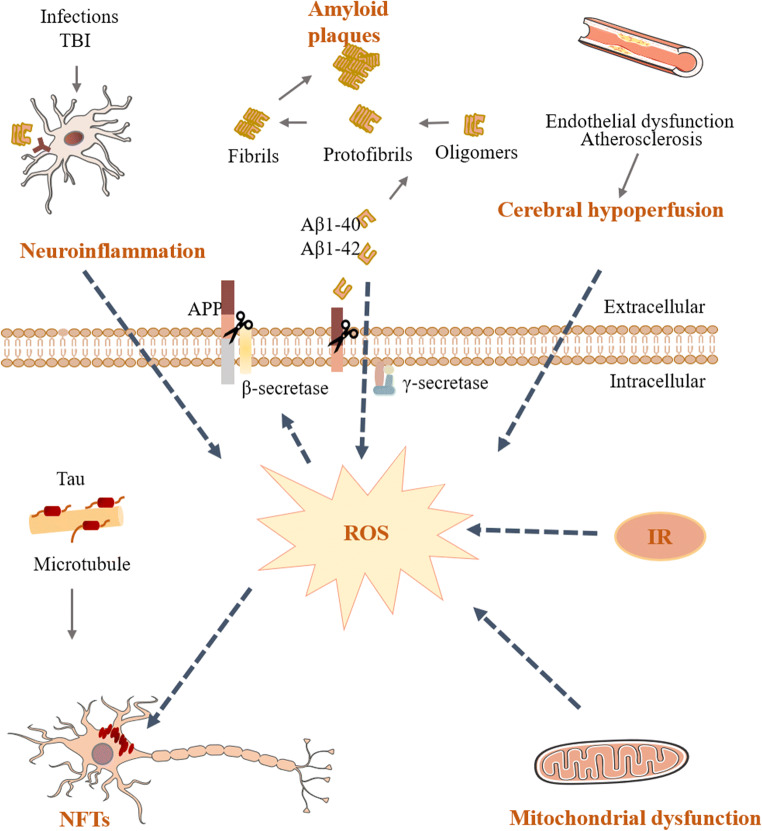
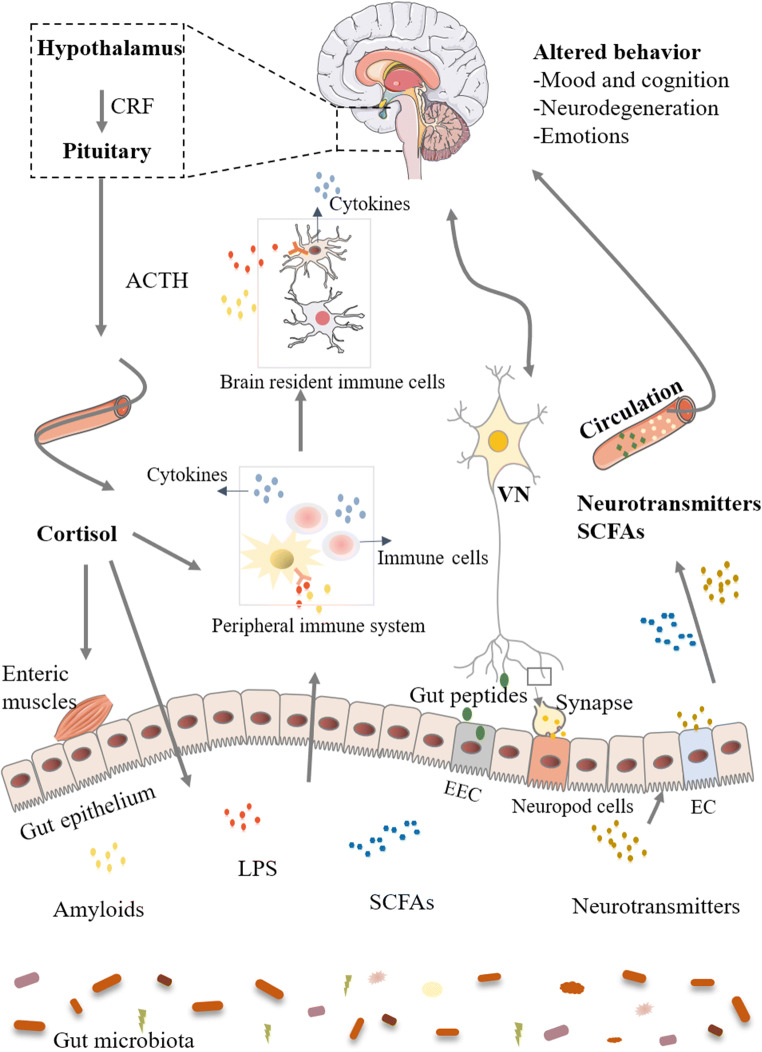
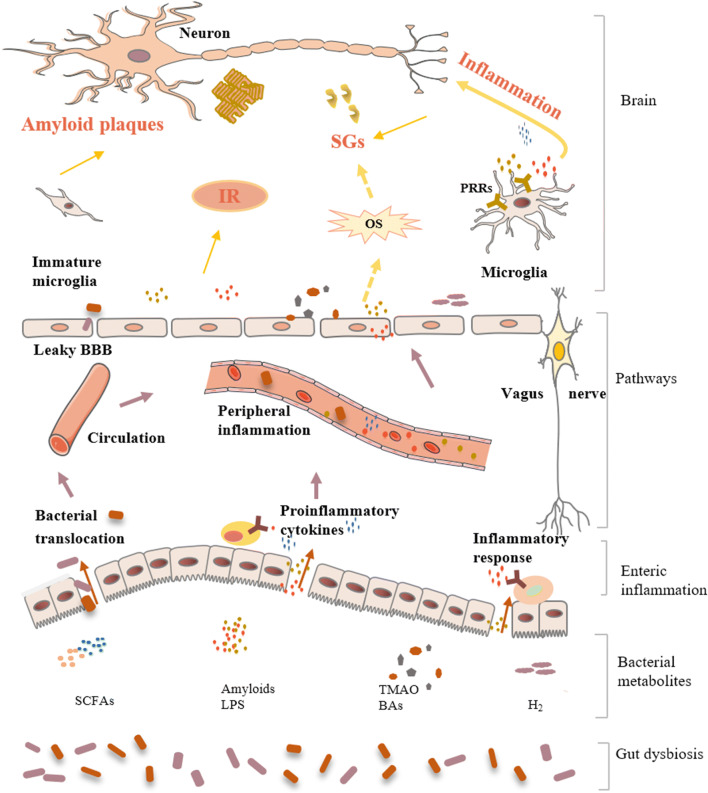
Verification
Claims the paper makes
The claims and statistics of this paper haven’t been checked yet.
Free: it reads the open-access text and checks the first 5 claims that cite a source we can check. Create a free account to check every claim.
Claims other papers make about this one
Each is checked against this paper’s own text: does it say what the citing paper says it does?
The source backs part of the claim, not all of it — or backs it for a different population, condition or comparison.
In the citing paper
“The onset of systemic inflammation may allow inflammatory mediators to cross over the BBB and impact microglia, further exacerbating neuroinflammation.213,217”
From Recent advances in Alzheimer's disease: Mechanisms, clinical trials and new drug development strategies. (2024) · cites this paper as [213]
Experimental — accuracy not yet measuredThe source backs part of the claim, not all of it — or backs it for a different population, condition or comparison.
In the citing paper
“There is growing evidence that age-related changes in the microbiota may contribute to cognitive decline and other neurodegenerative disorders (102, 103).”
From Signalling cognition: The gut microbiota and hypothalamic-pituitary-adrenal axis (2023) · cites this paper as [102]
Experimental — accuracy not yet measuredThe cited source says what the claim attributes to it.
In the citing paper
“The microbiota-gut-brain axis refers to a bidirectional communication system between the gut and the brain, including metabolic, endocrine, neural, and immune pathways that can work independently or in concert.213,216”
From Recent advances in Alzheimer's disease: Mechanisms, clinical trials and new drug development strategies. (2024) · cites this paper as [213]
Self-check
Percentages, sums and reported differences re-computed from the paper’s own numbers.
The self-check needs the paper’s full text.
Citations
Cites
An obesity-associated gut microbiome with increased capacity for energy harvest
Turnbaugh, P. J., Ley, R. E., Mahowald, M. A., Magrini, V., Mardis, E. R., & Gordon, J. I. (2006) · Nature · doi:10.1038/nature05414 · Cited by 12,444
A human gut microbial gene catalogue established by metagenomic sequencing
MetaHIT Consortium, Qin, J., Li, R., Raes, J., Arumugam, M., Burgdorf, K. S., Manichanh, C., Nielsen, T., Pons, N., Levenez, F., et al. (2010) · Nature · doi:10.1038/nature08821 · Cited by 11,624 · cited 1×
“The microorganisms residing in the gut make up the vast majority of the human microbial population, including at least 1000 different bacterial species and approximately 150 times as many genes as in the human genome [21, 22].”
BackgroundDiversity of the Human Intestinal Microbial Flora
Eckburg, P. B., Bik, E. M., Bernstein, C. N., Purdom, E., Dethlefsen, L., Sargent, M., Gill, S. R., Nelson, K. E., & Relman, D. A. (2005) · Science · doi:10.1126/science.1110591 · Cited by 7,913 · cited 1×
“Firmicutes and Bacteroidetes constitute the most abundant phyla in human intestinal microbiota [23].”
BackgroundAlzheimer's disease: the amyloid cascade hypothesis
Hardy, J. A., & Higgins, G. A. (1992) · Science · doi:10.1126/science.1566067 · Cited by 7,484 · cited 1×
“Since it was first proposed by Hardy and Higgins in 1992, the amyloid cascade hypothesis has been the dominant theory of AD pathogenesis which holds that the accumulation of Aβ peptides derived from amyloid precursor protein (APP) is the initial event of AD pathogenesis [3].”
BackgroundNeuroinflammation in Alzheimer's disease
Heneka, M. T., Carson, M. J., Khoury, J. E., Landreth, G. E., Brosseron, F., Feinstein, D. L., Jacobs, A. H., Wyss-Coray, T., Vitorica, J., Ransohoff, R. M., et al. (2015) · The Lancet Neurology · doi:10.1016/s1474-4422(15)70016-5 · Cited by 6,226 · cited 1×
“least partially mediated by excessive or non-resolving innate immune activation [8].”
BackgroundThe amyloid hypothesis of Alzheimer's disease at 25 years
Selkoe, D. J., & Hardy, J. (2016) · EMBO Molecular Medicine · doi:10.15252/emmm.201606210 · Cited by 6,164 · cited 1×
“Over the ensuing decades, this hypothesis has evolved from a neuron-centric linear cascade, which postulates that Aβ results in hyperphosphorylated tau and neurodegeneration, to an integrative model that also involves feedback and feedforward responses of impaired vasculature, oxidative stress (OS), microgliosis, and…”
BackgroundGibson, G. R., Hutkins, R., Sanders, M. E., Prescott, S. L., Reimer, R. A., Salminen, S. J., Scott, K., Stanton, C., Swanson, K. S., Cani, P. D., et al. (2017) · Nature Reviews Gastroenterology & Hepatology · doi:10.1038/nrgastro.2017.75 · Cited by 5,634
Cryan, J. F., O'Riordan, K. J., Cowan, C. S. M., Sandhu, K. V., Bastiaanssen, T. F. S., Boehme, M., Codagnone, M. G., Cussotto, S., Fulling, C., Golubeva, A. V., et al. (2019) · Physiological Reviews · doi:10.1152/physrev.00018.2018 · Cited by 5,286 · cited 8×
“Gut microbiota also produces a remarkably complex array of proinflammatory neurotoxins that can cross the BBB and are pathogenic and highly detrimental to the homeostatic function of neurons in the CNS [16].”
BackgroundInfluentialDominguez-Bello, M. G., Costello, E. K., Contreras, M., Magris, M., Hidalgo, G., Fierer, N., & Knight, R. (2010) · Proceedings of the National Academy of Sciences · doi:10.1073/pnas.1002601107 · Cited by 4,774 · cited 1×
“Importantly, the gut microbiota of vaginally born infants closely resembles the microbial compositions of the mothers’ vagina, while newborns delivered via cesarean section are enriched with microbes found on human skin and in the surrounding environment [25].”
BackgroundHost-gut microbiota metabolic interactions
Nicholson, J. K., Holmes, E., Kinross, J., Burcelin, R., Gibson, G., Jia, W., & Pettersson, S. (2012) · Science · doi:10.1126/science.1223813 · Cited by 4,760 · cited 1×
“The ability of bacteria to produce bioactive products provides a mechanistic basis to understand the role of gut microbiota in modulating central physiological and pathological processes [36].”
Background
Cited by
Items 401–500 of 514
Alzheimer’s Disease and Gut Microbiota
Pandey, S., & Yadav, P. K. (2025) · Interdisciplinary biotechnological advances · doi:10.1007/978-981-95-2104-3_5 · Cited by 1
Salman, B., Haidar, R., Faour, V., Ali, W. A., Aridi, L., Harb, F., Azar, S. T., Khattar, Z. A., & Ghadieh, H. E. (2025) · Health Sciences Review · doi:10.1016/j.hsr.2025.100251 · Cited by 7
Unmasking the hidden catalyst: How infections trigger Alzheimer's disease
Fülöp, T., Cohen, A. A., Frost, E. H., Lévesque, S., Khalil, A., Rodrigues, S., Desroches, M., Alami, M., Berrougui, H., Ramassamy, C., et al. (2026) · Journal of Alzheimer s Disease · doi:10.1177/13872877251415571 · Cited by 2
“91 – 93 As the most widely studied “ off track ” cause of AD is infection, we will examine it as a prototype cause for the development of AD.”
de Miranda, A. S., Vieira, É. L. M., Teixeira, A. L., & Bauer, M. E. (2026) · NeuroImmunoModulation · doi:10.1159/000550781 · Cited by 2
Modulation of host proteostasis by Prevotella corporis via induction of the heat shock response
Tibi, M. F., Argote, Y. M., Walker, A. C., Pandey, S., Puente, C. P., Ellward, G. L., Safwat, A., Rincón-Limas, D. E., & Czyż, D. M. (2026) · Cell Stress and Chaperones · doi:10.1016/j.cstres.2026.100150 · Cited by 1
“3,4 Additionally, the intestine is emerging with a pivotal role as a proteostasis-modulating organ via intercellular signaling with distal tissues, 5,6 highlighting the benefits of understanding microbiota-host interactions as modulators of organismal proteostasis.”
Xiaoyi, Z., Haixiao, L., Houjian, R., Zhang, W., Fan, J., Han, S., Defeng, W., Zhen, W., & Jingrong, C. (2026) · Frontiers in Neuroscience · doi:10.3389/fnins.2026.1775002 · Cited by 1
“However, its pathogenesis remains unclear, with recent evidence high-lighting the gut microbiota (GM) as a potential contributor to AD development or progression (Liu et al., 2020; Jiang et al., 2017; Grabrucker et al., 2023; Zhuang et al., 2018).”
Kenneth, M. J., Wu, C.-C., Fang, C., Hussain, B., Abbas, A., Tsai, H., & Hsu, B. (2026) · Pharmacological Research - Modern Chinese Medicine · doi:10.1016/j.prmcm.2026.100820 · Cited by 1
Aksić, M., Ćirović, A., Orisakwe, O. E., Djulejić, V., Puty, B., Lima, R. R., & Ćirović, A. (2026) · Neurology International · doi:10.3390/neurolint18060111 · Cited by 1
“…K. Gut microbiota also play a crucial role in immune system function, while intestinal dysbiosis has been associated with various adverse health outcomes, including cancer [24], cardiovascular disease [25] and neurological disorders, such as Alzheimer’s [26,27], multiple sclerosis [28], and others.”
Unhealthy dietary patterns and Alzheimer’s disease: associations and underlying mechanistic pathways
Ramasinghe, C., & Xu, B. (2026) · Critical Reviews in Food Science and Nutrition · doi:10.1080/10408398.2026.2691237 · Cited by 2
“Faecalibacterium prausnitzii , Roseburia spp, and Bifidobacterium spp, which are beneficial microorganisms in the gut environment, produce SCFA such as butyrate, acetate, and propionate (Ramasinghe et al. 2025).”
The emerging roles of gut microbiome on neurotoxic outcomes: Implications for neurological disorders
Krishna, G., Sridhar, M., & Muralidhara, M. (2021) · Elsevier eBooks · doi:10.1016/b978-0-12-821039-0.00022-8 · Cited by 1
Integrative Nutritional Therapy in Canine Cognitive Dysfunction
Nokay, C. N. (2023) · American Journal of Traditional Chinese Veterinary Medicine · doi:10.59565/001c.68390 · Cited by 1
Oleksak, I., Leśniewski, M., Welian-Polus, I., Maliszewska, K., & Ziółkowska, J. (2024) · Journal of Education Health and Sport · doi:10.12775/jehs.2024.57.005 · Cited by 1
Interplay Between Gut-microbiota and Neurodegeneration
Ashique, S., Pal, R., Kumar, S., Verma, B., Kumar, N., Kahwa, I., Farid, A., Mishra, N., Kumar, P., & Taghizadeh‐Hesary, F. (2024) · BENTHAM SCIENCE PUBLISHERS eBooks · doi:10.2174/9789815238754124010009 · Cited by 1
Mehrbakhsh, P., Bafroee, A. S. T., & Aliasgari, E. (2024) · Archives of Clinical Infectious Diseases · doi:10.5812/archcid-138798 · Cited by 1
“Therefore, it can be assumed that the gut microbiome has a potential association with the pathogenesis of AD and that a reduction in the gut microbiota variety can cause various pathologies in the brain, including inflammation, cerebrovascular degeneration, and A β aggregation (6).”
РОЛЬ И ОСОБЕННОСТИ МИКРОБИОТЫ КИШЕЧНИКА ПРИ БОЛЕЗНИ АЛЬЦГЕЙМЕРА
Турсуметова, Д. Р., Хан, Ю., Ткачёва, Л. В., & Раевский, К. П. (2024) · Успехи геронтологии · doi:10.34922/ae.2024.37.4.016 · Cited by 1
Zhao, M., Pi, Y., & Zhang, L. (2022) · Journal of Healthcare Engineering · doi:10.1155/2022/7037037 · Cited by 1
“,e results of this study showed that the pathogenic bacteria were predominantly Gram-negative, with Escherichia coli predominating, which is consistent with the report [9] and similar to the distribution of pathogens in the whole population [10, 11].”
BackgroundResultRetractedThe Reactive Species Interactome - Mitochondria AxisPreprint
Châtre, L. (2022) · Preprints.org · doi:10.20944/preprints202205.0289.v1
Editorial: Highlights in Alzheimer's and Parkinson's disease
Cantone, M., & Sacco, L. (2023) · Frontiers in Human Neuroscience · doi:10.3389/fnhum.2023.1238525 · Cited by 1
“Moreover, with repeated failures of single-target therapeutic treatments in the last decade, the relationship between microbial dysbiosis and several hallmarks of AD has drawn increasing attention (Liu et al., 2020).”
BackgroundReiriz, M., Beltrán-Velasco, A. I., Echeverry‐Alzate, V., Miguel, E. M., Gómez-Senent, S., Uceda, S., & Clemente‐Suárez, V. J. (2024) · Preprints.org · doi:10.20944/preprints202405.2103.v1 · Cited by 1
Salian, V. S., Veerareddy, V., Tang, X., Xiao, Y., Kalari, K. R., Kashyap, P., & Kandimalla, K. K. (2025) · bioRxiv (Cold Spring Harbor Laboratory) · doi:10.64898/2025.12.15.694447 · Cited by 2
zou, Z., Wang, X., Ge, X., Lei, D., Lei, X., Hou, J., Jian, X., Long, Y., & Li, X. (2025) · Research Square · doi:10.21203/rs.3.rs-8188423/v1 · Cited by 1
Neuroinflammation Interactions with Mitochondria: Implications for Alzheimer’s Disease
Chiang, V. S. (2021) · Global Journal of Medical Research
(2021) · Elsevier eBooks · doi:10.1016/b978-0-323-88445-7.16001-4
Biobanking and Biomarkers in the Alzheimer’s Disease Drug-Development Ecosystem
Kinney, J. W., & Salazar, A. (2022) · Cambridge University Press eBooks · doi:10.1017/9781108975759.011
Baskin, B. M., Logsdon, A. F., Lee, S. J., Foresi, B. D., Peskind, E. R., Banks, W. A., Cook, D. G., & Schindler, A. G. (2022) · bioRxiv (Cold Spring Harbor Laboratory) · doi:10.1101/2022.10.11.511013
“, dysbiosis) can have detrimental effects on health and wellness, including implications for cognitive functioning, mental health, and neurodegeneration (Ceppa et al., 2020; Liu et al., 2020; Ticinesi et al., 2018; Tremlett et al., 2017).”
Targeting pathological changes in the gut protects the CNS from neuropathology.
Charpentier, B. (2022) · ThinkIR: The University of Louisville's Institutional Repository (University of Louisville) · doi:10.18297/etd/3966
Grabrucker, S., Marizzoni, M., Silajdžić, E., Lopizzo, N., Mombelli, E., Nicolas, S., Dohm-Hansen, S., Scassellati, C., Moretti, D. V., Rosa, M., et al. (2022) · Research Square · doi:10.21203/rs.3.rs-2272240/v1
Piana, G. S., Batista, C. D. C. L., Contão, H. D. O., Lopes, K. A., Silva, L. T. D., Cardoso, T. C., de Assunção, G. N., ZAMPROGNO, S. B., Cavalcante, R. L. D. C., Borges, S. R. A., et al. (2022) · International Journal of Health Science · doi:10.22533/at.ed.159312301013
Study on the Mechanism of Intestinal Microbiota in Alzheimer’s Disease
车, 土. (2022) · Advances in Microbiology · doi:10.12677/amb.2022.114023
Zhang, M., Ge, M., Li, Q., Li, H., Jiao, L., & Wu, W. (2023) · Preprints.org · doi:10.20944/preprints202306.0919.v1
Fatores dietéticos associados à inflamação em distúrbios neurodegenerativos: uma revisão narrativa
de Andrade, M. E. G., & de Siqueira, C. G. (2023) · OBSERVATÓRIO DE LA ECONOMÍA LATINOAMERICANA · doi:10.55905/oelv21n11-041
Insights in the Cross-Talk Between Microbiota-Gut-Brain Axis: A Focus on Alzheimer’s Disease
Soni, T., Jawanda, I. K., Kumari, S., & Prabha, V. (2023) · Springer eBooks · doi:10.1007/978-981-99-3126-2_22
Research Progress in the Treatment of Alzheimer’s Disease Based on Microbiota-Gut-Brain Axis
张, 蝶. (2023) · Advances in Clinical Medicine · doi:10.12677/acm.2023.13122870
Xiang, W., Pan, X., Cai, M., Hou, B., Li, Z., & Wang, M. (2023) · International Conference on Health Big Data and Intelligent Healthcare (ICHIH) · doi:10.1109/ichih60370.2023.10396251
“Based on the above findings, we reasonably speculate that Xanthoceraside may exert its anti-AD effect through metabolic pathway and microbial gut brain pathway [16].”
BackgroundSynbiotics: Complementary and Synergistic Approach Against Different Carcinomas
Chhabra, J., Wadhwa, K., Goyal, R., Rao, N., Dureja, H., & Pahwa, R. (2024) · Springer eBooks · doi:10.1007/978-981-99-5575-6_19
Mu, Q., Yu, W.-D., Li, M., Wang, X., Ren, S., Hou, X., Wu, N., & Guo, J. (2024) · Research Square · doi:10.21203/rs.3.rs-4592138/v1
Huang, X., & Yuan, Y. (2024) · Journal of Contemporary Medical Practice · doi:10.53469/jcmp.2024.06(08).19
“Alzheimer's disease (AD) is a progressive neurodegenerative disease of the central nervous system (CNS) characterized by gradual decline of cognitive function [1].”
BackgroundAvaliação da microbiota intestinal e uso de probióticos na doença de Alzheimer
da Rosa, J. C. P., Lopes, I. G. C., Rainieri, A. L., Cardoso, R. D. R., & Lage, P. S. (2024) · Debates em Psiquiatria · doi:10.25118/2763-9037.2024.v14.1346 · Cited by 2
Meta-analysis of postbiotics on evaluating health benefits and mechanisms
Barathikannan, K., Chelliah, R., David, H. A., Kulandairaj, E. P., Vijayalakshmi, S., Rubab, M., & Oh, D.-H. (2025) · Elsevier eBooks · doi:10.1016/b978-0-443-22188-0.00019-x · Cited by 2
Role of gut microbiota in neuropsychiatric and neurological disorders
Mishra, T., Rahi, V., Kamble, A. L., & Kaundal, R. K. (2025) · Elsevier eBooks · doi:10.1016/b978-0-443-21680-0.00014-6
Loganathbabu, V. K. T., Murali, R. M. V., Shriya, P., Arun, R., Rahman, M., Ganesh, H. N., Ramalingam, S., & Nagarajan, A. K. (2024) · Springer eBooks · doi:10.1007/978-981-96-0297-1_8 · Cited by 1
Physiological Changes Linked with Alzheimer’s Disease and Related Dementias
Payen, A., Bateman, J. R., Miller, D., Muralidhara, S. D., & Bennett, J. M. (2024) · Springer eBooks · doi:10.1007/978-3-031-32035-4_99-1
Kumar, H., Dhanjal, D. S., Dhalaria, R., Kimta, N., Cimler, R., & Kuča, K. (2025) · International review of neurobiology · doi:10.1016/bs.irn.2025.04.005
Ileal mucosal epithelial cell proliferation in old mice and in mice with Alzheimer's disease
Dinić, J., Đorđević, I., Vuković, D., & Puškaš, N. (2025) · Medicinski podmladak · doi:10.5937/mp76-56124
Distribution Characteristics of Intestinal Microbiota in Patients with Depression and Heart Failure
杨, 宝. (2025) · Advances in Clinical Medicine · doi:10.12677/acm.2025.1551388
Heredia, L., Mateo, D., Carrión, N., & Torrente, M. (2025) · Data in Brief · doi:10.1016/j.dib.2025.111778 · Cited by 1
Connecting Link Between Dysbiotic Microbiota and Alzheimer’s Disease: Role of Phytochemicals
Kumari, S., Verma, H., Gangwar, P., Yadav, A., Yadav, B., Rao, R., Mantha, A. K., & Dhiman, M. (2025) · Advances in Science, Technology & Innovation/Advances in science, technology & innovation · doi:10.1007/978-3-031-80973-6_20
Intestinal flora in aging: a scientific perspective on food intervention
Ye, X., Guan, Y., Chen, P., Zhu, J., Liu, Y., Chen, J., Zhu, K., Jin, Z., Luo, S., Cai, J., et al. (2025) · Food Science and Human Wellness · doi:10.26599/fshw.2025.9250713 · Cited by 1
Physiological Changes Linked with Alzheimer’s Disease and Related Dementias
Payen, A., Bateman, J. R., Miller, D., Muralidhara, S. D., & Bennett, J. M. (2025) · Springer eBooks · doi:10.1007/978-3-031-73368-0_99
Gündoğdu, A., Arıkan, M., Ulas, A., Koldaş, S. S., & Ece, G. T. (2025) · Next research. · doi:10.1016/j.nexres.2025.100846 · Cited by 3
Moskva, K. A., Kikhtyak, O. P., Kikhtiak, T. A., & Ланюш, Ф. (2025) · INTERNATIONAL JOURNAL OF ENDOCRINOLOGY (Ukraine) · doi:10.22141/2224-0721.21.7.2025.1647
Kırmızıbekmez, A. M., Önder, A., Ozdemir, M. Y., Gurerk, G., Aydın, S., Eryiğit, Ö. Y., Güloğlu, M. O., & Kara, İ. (2025) · Scientific Reports · doi:10.1038/s41598-025-29256-z · Cited by 2
Role of gut microbiome in diabetes and neurodegenerative diseases
Nabi, H., & Hossain, A. (2025) · Elsevier eBooks · doi:10.1016/b978-0-443-33355-2.00009-8
Eraqi, W. A., El‐Sabbagh, W. A., Aziz, R. K., Elshahed, M. S., Youssef, N. H., & Elkenawy, N. M. (2024) · Figshare · doi:10.6084/m9.figshare.26751670
Additional file 1 of Multi-pathogen infections and Alzheimer’s disease
Vigašová, D., Nemergut, M., Liskova, B., & Damborský, J. (2021) · Figshare · doi:10.6084/m9.figshare.13663188
Ren, D., Chenyao, X., Chai, X., Zhang, Z., Zhu, X., Zhao, Y., Wei, J., Yi, C., Chen, S., Li, E., et al. (2025) · Brain Behavior and Immunity Integrative · doi:10.1016/j.bbii.2025.100148 · Cited by 4
Chronic stress, gut dysbiosis, and cholesterol metabolism: Implications for Alzheimer's disease
Das, A., Navya, P., Chowdhury, D., Das, A., Manna, R., & Bodakhe, S. H. (2026) · Journal of Neuroimmunology · doi:10.1016/j.jneuroim.2026.578853
The influence of the gut-brain axis on neurological and psychiatric well-being
Sufyan, M., & Kamal, M. A. (2025) · Asia-Pacific Journal of Surgical & Experimental Pathology · doi:10.32948/ajsep.2025.08.18
Blood-based emerging biomarkers in early detection and diagnosis of Alzheimer’s disease
Anand, T., & Kumar, A. (2026) · International review of neurobiology · doi:10.1016/bs.irn.2026.01.002
Hasegawa, T., Iwai, S., Ikeda, H. O., Miyaoka, D., Sato, N., Fujimoto, K., Wei, X., Kusaka, M., Miyata, M., Numa, S., et al. (2026) · Investigative Ophthalmology & Visual Science · doi:10.1167/iovs.67.2.27 · Cited by 2
“20 These findings have suggested a possible gut– brain axis, where gut microbial imbalances might influence neuroinflammation and neurodegeneration through immune or metabolic pathways.”
Starved synapses: Gut microbiome dysbiosis and its role in Alzheimer’s glucose impairment
Upadhyay, R., Santhosh, S., Malathi, R., Kumari, P. S., Vijayanand, S., & Sevanan, M. (2026) · International review of neurobiology · doi:10.1016/bs.irn.2026.01.010
Maladaptive aging trajectory in late-onset Alzheimer's disease
Lv, T., Sun, H., Xia, T., Zhu, M. L., & Li, Y. (2026) · The Innovation Life · doi:10.59717/j.xinn-life.2026.100206
Self-citationIbeanu, G. C., Eze, D. U., Eze, A., Atoyebi, S. O., Akingbade, T. O., Folarin, A. A., Okoli, J. C., Rowaiye, O. I., & Rowaiye, A. B. (2026) · The Journal of Nutritional Physiology · doi:10.1016/j.jnphys.2026.100019
Singh, N. P., Singh, S., Jain, R. K., Yadav, M., & Kumar, A. (2025) · De Gruyter eBooks · doi:10.1515/9783112205150-002
Hesarooeyeh, Z. G., Khalili, E., Michel, T., & Vafaee, M. S. (2026) · Journal of Neural Transmission · doi:10.1007/s00702-026-03126-y
“The evolving term “microbiota-gut-brain axis” emphasizes the microbiota’s role in bidirectional communication between the gut and brain (Liu et al. 2020).”
Liu, K., Zhang, X., Wang, Y.-T., Wang, R., Jin, R.-H., & Bing, Y.-H. (2026) · Molecular Neurobiology · doi:10.1007/s12035-026-05803-1 · Cited by 1
Self-citationRole of Ageing in Alzheimer's Therapeutics
Abdel-Sater, K. A. (2026) · Russian neurological Journal · doi:10.30629/2658-7947-2025-30-6-11-20
Positional Prompts-Enhanced Brain–Heart–Gut Interactions for Mild Cognitive Impairment Diagnosis
Li, F., Zhao, S., Bai, S., Jia, D., Xie, F., Liang, J., Zhang, H., Zhang, Y., Ding, Z., Xu, Y., et al. (2026) · IEEE Transactions on Medical Imaging · doi:10.1109/tmi.2026.3681075 · Cited by 1
“In addition, systemic inflammation and neuroinflammatory processes associated with gut and cardiovascular dysfunction may contribute to AD-related cerebral vulnerability [18], [19].”
Self-citationLi, H., Zhao, Y., Luo, Y., Bao, B., Hao, J., Duan, S., & Liu, Z. (2026) · Journal of Agricultural and Food Chemistry · doi:10.1021/acs.jafc.5c11966 · Cited by 3
From mechanisms to therapeutics: The expanding role of cell-based strategies in Alzheimer's disease
Sun, X., Deng, W., Yu, J., & Xu, X. (2026) · European Journal of Pharmacology · doi:10.1016/j.ejphar.2026.178867
Hu, J., Li, B., Xu, X., Lin, S., Xu, S., Chen, Y., & Tong, G. (2026) · Archivum Immunologiae et Therapiae Experimentalis · doi:10.2478/aite-2026-0011
“Dysbiosis, an imbalance in microbial communities, can influence cancer development through mechanisms such as chronic inflammation, immune modulation, and direct interactions with cancer cells (Liu et al. 2020).”
Ugwah-Oguejiofor, C. J., Okechukwu, P. N., Mathias, S. N., Ofokansi, M. N., & Janakiraman, A. K. (2026) · Studies in natural products chemistry · doi:10.1016/b978-0-443-49144-3.00007-1
Research advances on estrogen deficiency leading to depression
Wang, C., Chang, Y., & Sheng, H. (2026) · Translational Neuroscience · doi:10.1515/tnsci-2025-0399 · Cited by 1
Zuo, T., Lu, Y., & Li, Y. P. (2025) · Springer handbooks · doi:10.1007/978-3-032-01636-2_37
Akkermansia muciniphila and Alzheimer’s Disease: Mechanisms, Evidence and Translational Potential
Li, J., Long, Q., & Zhu, B. (2026) · Biomolecules · doi:10.3390/biom16050726 · Cited by 1
Kumari, J., Das, S., Ranjan, S., & Singh, S. (2026) · 3 Biotech · doi:10.1007/s13205-026-04885-x · Cited by 1
Muralidhara, M., Vismaya, & Kumar, V. L. (2026) · Neurochemistry International · doi:10.1016/j.neuint.2026.106204
Gut-Brain Neuroomics and Smart Microbiomes: AI-Driven Insights Into Personalized Neurological Health
Britil, I., Moummou, H., & El‐Mansoury, B. (2026) · Advances in computational intelligence and robotics book series · doi:10.4018/979-8-3373-8172-5.ch008
Clinical evidence on kefir consumption and human health
Larrosa, M., Velasco, S. C., López, S. M., & Gálvez, B. G. (2026) · Nutrición Hospitalaria · doi:10.20960/nh.06955 · Cited by 1
Dynamic changes of gut microbiota during progression of three Alzheimer’s disease mice models
Zou, Z., Liu, H., Lei, D., Jian, X., & Li, X. J. (2026) · Frontiers in Neuroscience · doi:10.3389/fnins.2026.1849896
Targeting microbiota–gut–brain axis with phytochemicals: a mechanistic roadmap for dementia
Manna, P., Ganguly, S. C., Chatterjee, A., Mondal, B., Maity, A., Chatterjee, S., Guria, T., & Chakraborty, M. (2026) · Metabolic Brain Disease · doi:10.1007/s11011-026-01909-6
“Beyond their immunomodulatory role, SCFAs also regulate host energy metabolism and mitochondrial function(Liu et al. 2020).”
Das, K., Khatun, R., Begum, S., Bhattacharyya, K., Datta, M., Saha, D., Sarma, A., Mehta, P., & Das, B. K. (2026) · Metabolic Brain Disease · doi:10.1007/s11011-026-01922-9
“The microbiota is considered an important “organ” that provides a range of physiological functions related to innate immunity, appetite, and energy metabolism, both locally and systemically (Liu et al. 2020).”
InfluentialПроданчук, М. Г., Balan, H. M., & Zhminko, P. G. (2026) · Ukrainian Journal of Modern Toxicological Aspects · doi:10.33273/2663-4570-2026-100-1-7-31
Liang, X., Ning, T., Wang, Y., & Zhan, L. (2026) · Frontiers in Microbiology · doi:10.3389/fmicb.2026.1765044
“Therefore, regulating GM to prevent and treat AD has merged as a new research focus (Figure 13) (Liu et al., 2020; Mou et al., 2022; Wang et al., 2025).”
Gut Microbiota in Alzheimer′s Disease: Mechanisms, Evidence, and Therapeutic Implications
Ramya, M., & Harshitha, B. (2026) · Advanced Gut & Microbiome Research · doi:10.1155/agm3/4510434
Aydoğdu, G. S., Ağagündüz, D., Roviezzo, F., Romano, B., & Capasso, R. (2026) · Biomedicine & Pharmacotherapy · doi:10.1016/j.biopha.2026.119776
Neuroinflammation and Drug Treatment of Alzheimers Disesase
Dahake, S., Damkondwar, P., Rekhi, B., & Qausain, S. (2026) · IEEE International Conference on Intelligent Technologies for a Sustainable and Inclusive Future (ICITSIF) · doi:10.1109/icitsif69060.2026.11608870
“Considering the risk of AD-promoting character of psychological stress, the awareness is to be articulated on the one hand in order to reduce the risk of toxicity and risk-based potential of the latter [22].”
Chen, J., & Zhang, Z. (2026) · Frontiers in Aging Neuroscience · doi:10.3389/fnagi.2026.1855269
“Recent research highlights the “brain-gut-microbiota axis” as a major regulator of neuro-inflammation, it is crucial for maintaining brain homeostasis and preventing disorders (Kowalski and Mulak, 2019; Liu et al., 2020; Schächtle and Rosshart, 2021).”
Merino-País, M., López‐Ortiz, S., Emanuele, E., Imbimbo, C., Imbimbo, B. P., Lista, S., & Santos‐Lozano, A. (2026) · Journal of Functional Morphology and Kinesiology · doi:10.3390/jfmk11030287
“Specifically, GM in AD is marked by an increased Firmicutes/Bacteroidetes ratio [11], a reduction in short-chain fatty acid (SCFA)-producing taxa such as Bifidobacterium [12] and an enrichment of pro-inflammatory groups like Proteobacteria [13].”
In silico dysbiosis-associated neuroprotective metabolite insufficiency in Alzheimer’s disease
Shaer, N. A., & Al-Abbas, N. S. (2026) · Open Medicine · doi:10.1515/med-2026-1484
“The circulating molecules, including lipopolysaccharides (LPS) and amyloid-beta (A β ), have been reported to potentially exacerbate neuro-in fl ammatory processes and are frequently identi fi ed co-localized in amyloid plaques within brain tissue [44, 45].”
Mental health and gut-brain crosstalk: implications for depression and Alzheimer's disease
Skourti, K., Katsaitis, F., Pavlidi, P., Anesti, M., Balla, J., Emvalomatis, A., Kokras, N., Dalla, C., & Sotiropoulos, I. (2026) · Neuroscience Applied · doi:10.1016/j.nsa.2026.107023
“Moreover, dysregulation of different metabolites derived from the gut microbiota [e.g. SCFAs, LPS and trimethylamine N-oxide (TMAO)] have been also found in AD patients (S. Liu et al., 2020; Marizzoni et al., 2023).”
Targeting the microbiota-gut-brain axis in neurodegeneration: Zebrafish-based investigations
verma, B., Kumar, R., Sharma, A., Kumar, N., Khan, Z., Ashique, S., Rani, R., Parihar, V. S., Antal, S., Mumtaz, et al. (2026) · Neurodegenerative Disease Management · doi:10.1080/17582024.2026.2705869
Positive Effects of Healthy Diet and Nine Non-Pharmacological Interventions in Alzheimer’s Disease
Sun, C., Fan, J., Wang, X., Xu, S., Zhu, Y., Su, Y., Wu, J., Peng, L., & Hou, X. (2026) · Food Reviews International · doi:10.1080/87559129.2026.2703994
Metabolomic Discoveries for Traditional Chinese Medicine Efficacy in Alzheimer′s Disease
Sun, H., Huang, D., Yang, F., Zhang, P., Yang, D., & Zeng, C. (2026) · BioMed Research International · doi:10.1155/bmri/2455800
Chen, Y., Lei, X., Yang, H., Wang, Y., & Deng, S. (2026) · Microbiological Research · doi:10.1016/j.micres.2026.128661
Gut Microbiota and Psoriatic Arthritis: From Pathogenesis to Microbiota-Targeted Therapies
Valentini, S., Lorenzini, S., Gentileschi, S., Cantarini, L., Frediani, B., & Baldi, C. (2026) · Rheumato · doi:10.3390/rheumato6030018
“Factors that can alter intestinal permeability include physical [35] and psychological [36] stress, alcohol abuse [37], antibiotics [38], air pollution and food additives [39].”
Xu, X.-Z., Dong, M.-S., Dai, J.-Y., Wang, Q.-Y., Dong, X.-C., & Jin, Y. (2026) · Frontiers in Microbiology · doi:10.3389/fmicb.2026.1865281 · Cited by 2
“Depletion of indole-producing bacteria leads to reduced AhR activation and diminished IL-22 production, impairing intestinal epithelial barrier repair, reducing GLP-1 secretion, and slowing colonic motility (Gao et al., 2020).”
Microbiome‐Phytochemical Crosstalk Along the Gut‐Brain Axis in Alzheimer and Parkinson's Disease
Emon, M., Rahaman, M. M., Sarder, D., Shadin, M., Neela, S. A., Wangchuk, P., & Sarker, S. (2026) · MicrobiologyOpen · doi:10.1002/mbo3.70374
“This strengthens gut integrity, improves BBB function, and reduces the accumulation of Aβ and tau proteins in the brain (Liu et al. 2020).”
Huang, K., Wei, Y.-Y., Zhang, S., He, L., Zhou, J., Zhou, L.-S., Su, H.-B., & Lu, G. (2026) · Medicine · doi:10.1097/md.0000000000050227
“[3] Despite decades of research, the comprehensive pathogenesis of AD remains to be elucidated and so far, no effective treatment has been developed.”
Thakur, A., Sharma, R. R., Kumari, S., Prakash, D., & Devi, A. S. (2026) · Inflammopharmacology · doi:10.1007/s10787-026-02371-7 · Cited by 1
“Microbiome alterations have also been linked to cerebral amyloid deposition in cognitively normal individuals and reduced microbial diversity has been consistently observed in patients with AD and mild cognitive impairment (MCI) (Liu et al. 2020).”
Influential
Metadata
- Authors
- Liu, S., Gao, J., Zhu, M., Liu, K., & Zhang, H.-L.
- Affiliations
- Jilin University (CN)
- Mayo Clinic (US)
- Corresponding author
- Liu, Kangding
- Venue
- Molecular Neurobiology
- Published
- 2020-08-23
- Volume
- 57
- Issue
- 12
- Pages
- 5026-5043
- ISSN
- 0893-7648 (ISSN-L)
- 1559-1182
- PMC
- PMC7541367
- OpenAlex
- W3080830493
- Semantic Scholar
- c1c305deb6388641b3da3e3e7dd5ceb7471ddaec
- Cited by
- 516
- References
- 173
- Citations by year
- 2026: 87 · 2025: 136 · 2024: 108 · 2023: 77 · 2022: 62 · 2021: 42 · 2020: 4
- FWCI
- 4.43
- Type
- journal article
- Language
- en
- Open access
- hybrid
- doi.org
- Licence
- cc-by
- creativecommons.org/licenses/by/4.0 (tdm)
- creativecommons.org/licenses/by/4.0 (vor)
- Locations
- Molecular Neurobiology (publishedVersion, cc-by)
- PubMed Central (publishedVersion, cc-by)
- PubMed (publishedVersion)
- Funders
- National Natural Science Foundation of China (81771299)
- Topics
- Life Sciences › Biochemistry, Genetics and Molecular Biology › Molecular Biology › Gut microbiota and health
- Life Sciences › Neuroscience › Cellular and Molecular Neuroscience › Alzheimer's disease research and treatments
- Health Sciences › Medicine › Gastroenterology › Gastrointestinal motility and disorders
- Keywords
- gut microbiota, dysbiosis, Alzheimer's disease, microbiota-gut-brain axis, amyloid-beta aggregation, neuroinflammation, oxidative stress, insulin resistance, Alzheimer's disease pathogenesis, Alzheimer's disease treatment, neuropsychiatric disorders
- MeSH terms
- Gastrointestinal Microbiome, Alzheimer Disease, Animals, Brain, Humans, Insulin Resistance, Oxidative Stress, Dysbiosis
About these checks
Registry, retraction, Cites and statistics results are computed, not judged, with one exception: a printed reference that no index lists is read once by a model before it counts as a citation error. Claims are extracted by a model and kept only when their quote appears verbatim in the text; each cited source is then checked, with a model’s help, for whether it says what the claim relies on. Those verdicts can be wrong — read the claim’s quote and the cited source before relying on one.
Statistics and arithmetic are recomputed, not judged.
Confidence bands are shown only for fields calibrated on our annotated test set. None is calibrated yet, so no band is shown.
What counts as a claim ›How we measure confidence ›How we check this ›
Are you an author, or do you see a problem with this page? Request a review
Data sources
Bibliographic data: Semantic Scholar, OpenAlex, Crossref.
Contains information from the Semantic Scholar Academic Graph Datasets, made available under the ODC Attribution License (ODC-BY 1.0).
Semantic Scholar’s data is described in: Kinney, R., et al. (2023). The Semantic Scholar Open Data Platform. arXiv:2301.10140.
