

Gut microbiota and dysbiosis in Alzheimer's disease: Implications for pathogenesis and treatment
Open accessThe DOI matches its Crossref record; 173 of the 173 references it cites were found in a registry or an index.
Abstract
Understanding how gut flora influences gut-brain communications has been the subject of significant research over the past decade. The broadening of the term “microbiota-gut-brain axis” from “gut-brain axis” underscores a bidirectional communication system between the gut and the brain. The microbiota-gut-brain axis involves metabolic, endocrine, neural, and immune pathways which are crucial for the maintenance of brain homeostasis. Alterations in the composition of gut microbiota are associated with multiple neuropsychiatric disorders. Although a causal relationship between gut dysbiosis and neural dysfunction remains elusive, emerging evidence indicates that gut dysbiosis may promote amyloid-beta aggregation, neuroinflammation, oxidative stress, and insulin resistance in the pathogenesis of Alzheimer’s disease (AD). Illustration of the mechanisms underlying the regulation by gut microbiota may pave the way for developing novel therapeutic strategies for AD. In this narrative review, we provide an overview of gut microbiota and their dysregulation in the pathogenesis of AD. Novel insights into the modification of gut microbiota composition as a preventive or therapeutic approach for AD are highlighted.
Overview
The claims and statistics of this paper haven’t been checked yet.
Free: it reads the open-access text and checks the first 5 claims that cite a source we can check. Create a free account to check every claim.
Integrity signals
Registry
Cites
Statistics
Figures
Verification
Claims the paper makes
The claims and statistics of this paper haven’t been checked yet.
Free: it reads the open-access text and checks the first 5 claims that cite a source we can check. Create a free account to check every claim.
Claims other papers make about this one
Each is checked against this paper’s own text: does it say what the citing paper says it does?
The source backs part of the claim, not all of it — or backs it for a different population, condition or comparison.
In the citing paper
“The onset of systemic inflammation may allow inflammatory mediators to cross over the BBB and impact microglia, further exacerbating neuroinflammation.213,217”
From Recent advances in Alzheimer's disease: Mechanisms, clinical trials and new drug development strategies. (2024) · cites this paper as [213]
Experimental — accuracy not yet measuredThe source backs part of the claim, not all of it — or backs it for a different population, condition or comparison.
In the citing paper
“There is growing evidence that age-related changes in the microbiota may contribute to cognitive decline and other neurodegenerative disorders (102, 103).”
From Signalling cognition: The gut microbiota and hypothalamic-pituitary-adrenal axis (2023) · cites this paper as [102]
Experimental — accuracy not yet measuredThe cited source says what the claim attributes to it.
In the citing paper
“The microbiota-gut-brain axis refers to a bidirectional communication system between the gut and the brain, including metabolic, endocrine, neural, and immune pathways that can work independently or in concert.213,216”
From Recent advances in Alzheimer's disease: Mechanisms, clinical trials and new drug development strategies. (2024) · cites this paper as [213]
Self-check
Percentages, sums and reported differences re-computed from the paper’s own numbers.
The self-check needs the paper’s full text.
Citations
Cites
An obesity-associated gut microbiome with increased capacity for energy harvest
Turnbaugh, P. J., Ley, R. E., Mahowald, M. A., Magrini, V., Mardis, E. R., & Gordon, J. I. (2006) · Nature · doi:10.1038/nature05414 · Cited by 12,444
A human gut microbial gene catalogue established by metagenomic sequencing
MetaHIT Consortium, Qin, J., Li, R., Raes, J., Arumugam, M., Burgdorf, K. S., Manichanh, C., Nielsen, T., Pons, N., Levenez, F., et al. (2010) · Nature · doi:10.1038/nature08821 · Cited by 11,624 · cited 1×
“The microorganisms residing in the gut make up the vast majority of the human microbial population, including at least 1000 different bacterial species and approximately 150 times as many genes as in the human genome [21, 22].”
BackgroundDiversity of the Human Intestinal Microbial Flora
Eckburg, P. B., Bik, E. M., Bernstein, C. N., Purdom, E., Dethlefsen, L., Sargent, M., Gill, S. R., Nelson, K. E., & Relman, D. A. (2005) · Science · doi:10.1126/science.1110591 · Cited by 7,913 · cited 1×
“Firmicutes and Bacteroidetes constitute the most abundant phyla in human intestinal microbiota [23].”
BackgroundAlzheimer's disease: the amyloid cascade hypothesis
Hardy, J. A., & Higgins, G. A. (1992) · Science · doi:10.1126/science.1566067 · Cited by 7,484 · cited 1×
“Since it was first proposed by Hardy and Higgins in 1992, the amyloid cascade hypothesis has been the dominant theory of AD pathogenesis which holds that the accumulation of Aβ peptides derived from amyloid precursor protein (APP) is the initial event of AD pathogenesis [3].”
BackgroundNeuroinflammation in Alzheimer's disease
Heneka, M. T., Carson, M. J., Khoury, J. E., Landreth, G. E., Brosseron, F., Feinstein, D. L., Jacobs, A. H., Wyss-Coray, T., Vitorica, J., Ransohoff, R. M., et al. (2015) · The Lancet Neurology · doi:10.1016/s1474-4422(15)70016-5 · Cited by 6,226 · cited 1×
“least partially mediated by excessive or non-resolving innate immune activation [8].”
BackgroundThe amyloid hypothesis of Alzheimer's disease at 25 years
Selkoe, D. J., & Hardy, J. (2016) · EMBO Molecular Medicine · doi:10.15252/emmm.201606210 · Cited by 6,164 · cited 1×
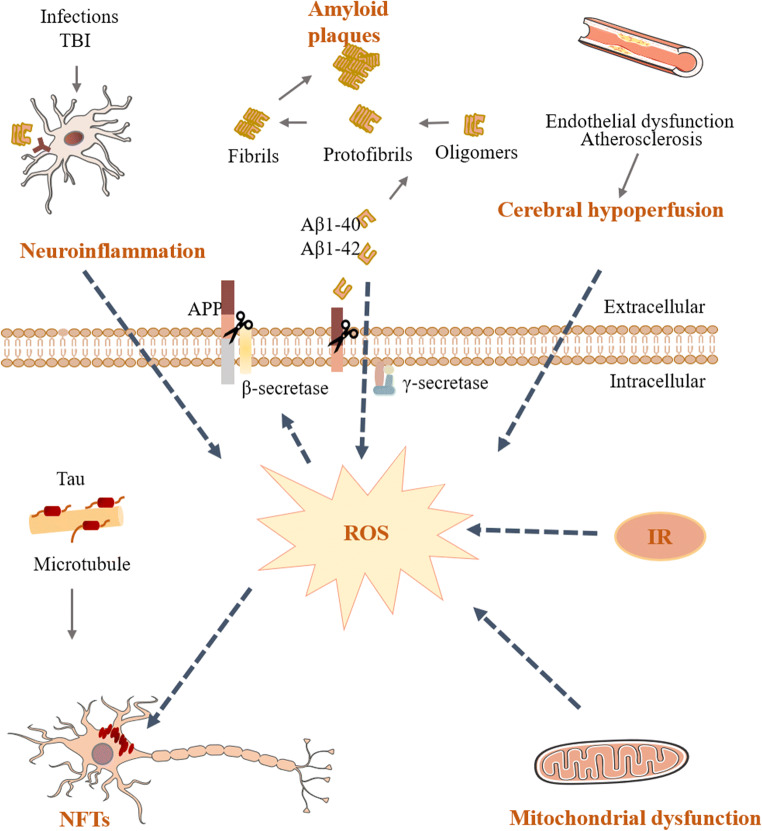
“Over the ensuing decades, this hypothesis has evolved from a neuron-centric linear cascade, which postulates that Aβ results in hyperphosphorylated tau and neurodegeneration, to an integrative model that also involves feedback and feedforward responses of impaired vasculature, oxidative stress (OS), microgliosis, and…”
BackgroundGibson, G. R., Hutkins, R., Sanders, M. E., Prescott, S. L., Reimer, R. A., Salminen, S. J., Scott, K., Stanton, C., Swanson, K. S., Cani, P. D., et al. (2017) · Nature Reviews Gastroenterology & Hepatology · doi:10.1038/nrgastro.2017.75 · Cited by 5,634
Cryan, J. F., O'Riordan, K. J., Cowan, C. S. M., Sandhu, K. V., Bastiaanssen, T. F. S., Boehme, M., Codagnone, M. G., Cussotto, S., Fulling, C., Golubeva, A. V., et al. (2019) · Physiological Reviews · doi:10.1152/physrev.00018.2018 · Cited by 5,286 · cited 8×
“Gut microbiota also produces a remarkably complex array of proinflammatory neurotoxins that can cross the BBB and are pathogenic and highly detrimental to the homeostatic function of neurons in the CNS [16].”
BackgroundInfluentialDominguez-Bello, M. G., Costello, E. K., Contreras, M., Magris, M., Hidalgo, G., Fierer, N., & Knight, R. (2010) · Proceedings of the National Academy of Sciences · doi:10.1073/pnas.1002601107 · Cited by 4,774 · cited 1×
“Importantly, the gut microbiota of vaginally born infants closely resembles the microbial compositions of the mothers’ vagina, while newborns delivered via cesarean section are enriched with microbes found on human skin and in the surrounding environment [25].”
BackgroundHost-gut microbiota metabolic interactions
Nicholson, J. K., Holmes, E., Kinross, J., Burcelin, R., Gibson, G., Jia, W., & Pettersson, S. (2012) · Science · doi:10.1126/science.1223813 · Cited by 4,760 · cited 1×
“The ability of bacteria to produce bioactive products provides a mechanistic basis to understand the role of gut microbiota in modulating central physiological and pathological processes [36].”
Background
Cited by
Zhang, J., Zhang, Y., Wang, J., Xia, Y., Zhang, J., & Chen, L. (2024) · Signal Transduction and Targeted Therapy · doi:10.1038/s41392-024-01911-3 · Cited by 1,138
“213,216 Alterations in the host ’ s diet, use of antibiotics, exposure to psychosocial stress, or irregularities in the immune system may shift the relative proportions of bacterial species, resulting in a disruption of the microbiota ’ s composition and functionality as dysbiosis.”
BackgroundImmunological mechanisms of inflammatory diseases caused by gut microbiota dysbiosis: A review
Zhao, M., Chu, J., Feng, S., Guo, C., Xue, B., He, K., & Li, L. (2023) · Biomedicine & Pharmacotherapy · doi:10.1016/j.biopha.2023.114985 · Cited by 458
Signalling cognition: The gut microbiota and hypothalamic-pituitary-adrenal axis
Rusch, J. A., Layden, B. T., & Dugas, L. R. (2023) · Frontiers in Endocrinology · doi:10.3389/fendo.2023.1130689 · Cited by 415
Neuroinflammation in Alzheimer’s Disease
Onyango, I. G., Jauregui, G. V., Čarná, M., Bennett, J. P., & Stokin, G. B. (2021) · Biomedicines · doi:10.3390/biomedicines9050524 · Cited by 330
Gut Microbiota Dysbiosis: Pathogenesis, Diseases, Prevention, and Therapy
Shen, Y., Fan, N., Ma, S., Cheng, X., Yang, X., & Wang, G. (2025) · MedComm · doi:10.1002/mco2.70168 · Cited by 301
“All of those promote the onset of AD [137].”
The role of gut dysbiosis in Parkinson’s disease: mechanistic insights and therapeutic options
Wang, Q., Luo, Y., Ray Chaudhuri, K., Reynolds, R., Tan, E.-K., & Pettersson, S. (2021) · Brain · doi:10.1093/brain/awab156 · Cited by 281
Han, Y., Wang, B., Gao, H., He, C., Hua, R., Liang, C., Zhang, S., Wang, Y., Xin, S., & Xu, J. (2022) · Journal of Inflammation Research · doi:10.2147/jir.s384949 · Cited by 265
“81 Even though the initiation of Aβ in pathogenesis has been proposed for many years, the repeated failure of anti-Aβ therapy in many clinical trials clearly manifests that the amyloid deposition protein hypothesis cannot fully explain the pathogenesis of AD, which suggests that the occurrence of…”
Microbiota from Alzheimer’s patients induce deficits in cognition and hippocampal neurogenesis
Grabrucker, S., Marizzoni, M., Silajdžić, E., Lopizzo, N., Mombelli, E., Nicolas, S., Dohm-Hansen, S., Scassellati, C., Moretti, D. V., Rosa, M., et al. (2023) · Brain · doi:10.1093/brain/awad303 · Cited by 236
“49 Dysregulation in systemic inflammatory status has long been associated with the aetiology and progression of Alzheimer’s disease 50 but there is little evidence showing that alterations in gut microbiota composition are associated with circulatory systemic factors and cognitive status in…”
The Potential Role of Gut Microbiota in Alzheimer’s Disease: From Diagnosis to Treatment
Varesi, A., Pierella, E., Romeo, M., Piccini, G. B., Alfano, C., Bjørklund, G., Oppong, A., Ricevuti, G., Esposito, C., Chirumbolo, S., et al. (2022) · Nutrients · doi:10.3390/nu14030668 · Cited by 225
Microbial-derived metabolites as a risk factor of age-related cognitive decline and dementia
Connell, E., Le Gall, G., Pontifex, M. G., Sami, S., Cryan, J. F., Clarke, G., Müller, M., & Vauzour, D. (2022) · Molecular Neurodegeneration · doi:10.1186/s13024-022-00548-6 · Cited by 208
“Broad deviations in these microbial compositions, often referred to as “dysbiosis”, condition distinctly different metabolic profiles that may contribute to cognitive decline [23, 24].”
BackgroundShabbir, U., Arshad, M. S., Sameen, A., & Oh, D.-H. (2021) · Nutrients · doi:10.3390/nu13020690 · Cited by 191
Understanding the Gut–Brain Axis and Its Therapeutic Implications for Neurodegenerative Disorders
Zheng, Y., Bonfili, L., Wei, T., & Eleuteri, A. M. (2023) · Nutrients · doi:10.3390/nu15214631 · Cited by 175
“However, FMT treatment poses significant unique, and complex challenges for clinicians and regulators, including poorly defined mechanisms of action, stool availability, donor selection, adverse effects, and a relative lack of long-term follow-up data [164].”
BackgroundKandpal, M., Indari, O., Baral, B., Jakhmola, S., Tiwari, D., Bhandari, V., Pandey, R. K., Bala, K., Sonawane, A., & Jha, H. C. (2022) · Metabolites · doi:10.3390/metabo12111064 · Cited by 159
“However, microbial homeostasis perturbations also correspond to various diseased states, for example, inflammatory bowel disease (IBD) [6], Crohn’s disease (CD) [7], Alzheimer’s disease (AD) [8] and Parkinson’s disease (PD) [9], non-alcoholic fatty liver disease [10], atopic eczema allergies [11], gastric cancer [12],…”
BackgroundKim, H. S., Kim, S., Shin, S. J., Park, Y. H., Nam, Y., Kim, C. W., Lee, K. W., Kim, S.-M., Jung, I. D., Yang, H. D., et al. (2021) · Translational Neurodegeneration · doi:10.1186/s40035-021-00273-y · Cited by 148
Daily, J. W., Kang, S., & Park, S. (2020) · BioFactors · doi:10.1002/biof.1703 · Cited by 157
“Therefore, luteolin needs to be studied in humans to determine if it has potential as a natural intervention to alleviate human AD.”
BackgroundInfluentialEicher, T. P., & Mohajeri, M. H. (2022) · Nutrients · doi:10.3390/nu14132661 · Cited by 142
“Levels of Firmicutes were mostly increased, and those of Bacteroidetes decreased [3,44–46].”
BackgroundInfluentialJin, J., Xu, Z., Zhang, L., Zhang, C., Zhao, X., Mao, Y., Zhang, H., Liang, X., Wu, J., Yang, Y., et al. (2023) · Gut Microbes · doi:10.1080/19490976.2023.2167172 · Cited by 136
Self-citationThe Role of Gut, Vaginal, and Urinary Microbiome in Urinary Tract Infections: From Bench to Bedside
Meštrović, T., Matijašić, M., Perić, M., Čipčić Paljetak, H., Barešić, A., & Verbanac, D. (2020) · Diagnostics · doi:10.3390/diagnostics11010007 · Cited by 137
Aaldijk, E., & Vermeiren, Y. (2022) · Ageing Research Reviews · doi:10.1016/j.arr.2021.101556 · Cited by 142
“The involvement of the microbiota-gut-brain axis in AD with possible implications for prevention and treatment have been highlighted previously (Arora et al., 2020; Kesika et al., 2021; Liu et al., 2020).”
Shabbir, U., Rubab, M., Tyagi, A., & Oh, D. (2020) · International Journal of Molecular Sciences · doi:10.3390/ijms22010196 · Cited by 127
“Although AD is a neurodegenerative disease, however, scientists are considering a new hypothesis that despite the limited bioavailability of curcumin in gut, it has an indirect influence on the CNS that is due to microbiota-gut-brain axis [74].”
BackgroundBile acids as key modulators of the brain-Gut-Microbiota axis in alzheimer’s disease
Mulak, A. (2021) · Journal of Alzheimer s Disease · doi:10.3233/jad-210608 · Cited by 114
“The contribution of gut microbiota to the pathogenesis of AD is well depicted in animal models as well as clinical studies (reviewed in detail in [1]) [1, 5, 6, 70, 81].”
BackgroundRegulation of common neurological disorders by gut microbial metabolites
Park, J., & Kim, C. H. (2021) · Experimental & Molecular Medicine · doi:10.1038/s12276-021-00703-x · Cited by 136
Dysbiosis and Alzheimer’s Disease: A Role for Chronic Stress?
Sharma, V., Singh, T. G., Garg, N., Dhiman, S., Gupta, S., Rahman, M. H., Najda, A., Walasek-Janusz, M., Kamel, M. S., Albadrani, G. M., et al. (2021) · Biomolecules · doi:10.3390/biom11050678 · Cited by 117
Beneficial effects of butyrate on brain functions: A view of epigenetic
Alpino, G. D. C. Á., Pereira-Sol, G. A., Dias, M. D. M. E., Aguiar, A. S. D., & Peluzio, M. D. C. G. (2024) · Critical Reviews in Food Science and Nutrition · doi:10.1080/10408398.2022.2137776 · Cited by 110
“The imbalance of gut microbiota can affect brain functions and it is associated with neurological diseases such as Autism Spectrum Disorder, Parkinson’s, Alzheimer’s Disease, and Depression (Fattorusso et al. 2019; Sun and Shen 2018; Liu et al. 2020; Capuco et al. 2020).”
BackgroundMulti-pathogen infections and Alzheimer’s disease
Vigašová, D., Nemergut, M., Lišková, B., & Damborský, J. (2021) · Microbial Cell Factories · doi:10.1186/s12934-021-01520-7 · Cited by 125
The Role of Microbiome in Brain Development and Neurodegenerative Diseases
Nandwana, V., Nandwana, N. K., Das, Y., Saito, M., Panda, T., Das, S., Almaguel, F. A., Hosmane, N. S., & Das, B. C. (2022) · Molecules · doi:10.3390/molecules27113402 · Cited by 140
“By cleaving E-cadherin (a cell adhesion molecule), Bacteroides fragilis exotoxin disrupts adherence junctions [111].”
BackgroundKalkan, A. E., BinMowyna, M. N., Raposo, A., Ahmad, M. F., Ahmed, F., Otayf, A. Y., Carrascosa, C., Saraiva, A., & Karav, S. (2025) · Nutrients · doi:10.3390/nu17081305 · Cited by 135
“[132] Abbreviations: BTBR, Black and Tan Brachyury; HDAC, histone deacetylase; HFD, high fat diet; HPA axis, hypothalamic–pituitary–adrenal axis.”
Alzheimer’s disease as type 3 diabetes: understanding the link and implications
Kciuk, M., Kruczkowska, W., Gałęziewska, J., Wanke, K., Kałuzińska-Kołat, Ż., Aleksandrowicz, M., & Kontek, R. (2024) · International Journal of Molecular Sciences · doi:10.3390/ijms252211955 · Cited by 98
“The intestinal microbiota consists of more than 1000 strains of bacteria, as well as yeast, viruses, protozoa, parasites, and archaea [50,51].”
Das, T. K., & Ganesh, B. P. (2023) · Gut Microbes · doi:10.1080/19490976.2023.2206504 · Cited by 109
Melrose, J. (2023) · Antioxidants · doi:10.3390/antiox12030663 · Cited by 106
Gut Microbiota, an Additional Hallmark of Human Aging and Neurodegeneration
Molinero, N., Antón‐Fernández, A., Hernández, F., Ávila, J., Bartolomé, B., & Moreno-Arribas, M. V. (2023) · Neuroscience · doi:10.1016/j.neuroscience.2023.02.014 · Cited by 110
Yang, J., Liang, J., Hu, N., He, N., Liu, B., Liu, G., & Qin, Y. (2024) · CNS Neuroscience & Therapeutics · doi:10.1111/cns.70091 · Cited by 120
Chu, C.-Q., Yu, L.-L., Qi, G.-Y., Mi, Y.-S., Wu, W.-Q., Lee, Y.-K., Zhai, Q.-X., Tian, F.-W., & Chen, W. (2022) · Neuroscience & Biobehavioral Reviews · doi:10.1016/j.neubiorev.2022.104556 · Cited by 83
Baldi, S., Mundula, T., Nannini, G., & Amedei, A. (2021) · World Journal of Gastroenterology · doi:10.3748/wjg.v27.i39.6715 · Cited by 98
Epigenetic effects of short-chain fatty acids from the large intestine on host cells
Stein, R. A., & Riber, L. (2023) · microLife · doi:10.1093/femsml/uqad032 · Cited by 95
“…(Han and Lin 2014 , Gurung et al. 2020 ), cardiovascuar disease (Nov ak ovic et al. 2020 ), depression (Winter et al. 2018 , imbana et al. 2020 , Liu et al. 2020 ), occupational sleep apneanduced hypertension (Mashaqi and Gozal 2019 ), Alzheimer’s disase (Ko w alski and Mulak 2019 , Liu et al.…”
BackgroundReview of microbiota gut brain axis and innate immunity in inflammatory and infective diseases
Yuan, C., He, Y., Xie, K., Feng, L., Gao, S., & Cai, L. (2023) · Frontiers in Cellular and Infection Microbiology · doi:10.3389/fcimb.2023.1282431 · Cited by 96
Gut-microbiota derived bioactive metabolites and their functions in host physiology
Debnath, N., Kumar, R., Kumar, A., Mehta, P. K., & Yadav, A. K. (2021) · Biotechnology and Genetic Engineering Reviews · doi:10.1080/02648725.2021.1989847 · Cited by 77
Nanopore sequencing technology and its applications
Zheng, P., Zhou, C., Ding, Y., Liu, B., Lu, L., Zhu, F., & Duan, S. (2023) · MedComm · doi:10.1002/mco2.316 · Cited by 106
Age-Related Hearing Loss: The Link between Inflammaging, Immunosenescence, and Gut Dysbiosis
Kociszewska, D., & Vlajkovic, S. M. (2022) · International Journal of Molecular Sciences · doi:10.3390/ijms23137348 · Cited by 88
Wu, H., Qiu, W., Zhu, X., Li, X., Xie, Z., Carreras, I., Dedeoglu, A., Dyke, T. E. V., Han, Y. W., Karimbux, N. Y., et al. (2022) · Frontiers in Aging Neuroscience · doi:10.3389/fnagi.2022.912709 · Cited by 80
Liu, X., Liu, Y., Liu, J., Zhang, H., Shan, C., Guo, Y., Gong, X., Cui, M., Li, X., & Tang, M. (2023) · Neural Regeneration Research · doi:10.4103/1673-5374.382223 · Cited by 83
“Mounting studies suggest gut microbiome alterations, or dysbiosis, contribute to Aβ deposition compared with normal controls (Vogt et al., 2017; Liu et al., 2020).”
BackgroundSelf-citationLei, W., Cheng, Y., Liu, X., Gao, J., Zhu, Z., Ding, W., Xu, X., Li, Y., Ling, Z., Jiang, R., et al. (2025) · Frontiers in Immunology · doi:10.3389/fimmu.2025.1582119 · Cited by 68
Self-citationBiałecka-Dębek, A., Granda, D., Szmidt, M. K., & Zielińska, D. (2021) · Nutrients · doi:10.3390/nu13082514 · Cited by 75
“The term “microbiota–gut–brain axis” (broadened from “gut–brain axis”) [111] represents the bidirectional communication between the central nervous system (CNS) and the gastrointestinal tract [111].”
BackgroundLiang, L., Saunders, C., & Sanossian, N. (2023) · Food Science & Nutrition · doi:10.1002/fsn3.3229 · Cited by 85
Can We Treat Neuroinflammation in Alzheimer’s Disease?
Sánchez‐Sarasúa, S., Fernández-Pérez, I., Espinosa‐Fernández, V., Sánchez‐Pérez, A. M., & Ledesma, J. C. (2020) · International Journal of Molecular Sciences · doi:10.3390/ijms21228751 · Cited by 67
“Moreover, GM have been shown to influence the maturation, differentiation and activation of the brain immune system [131,132].”
BackgroundLuo, Y., Yang, L.-L., & Yao, X. (2024) · Molecular Neurodegeneration · doi:10.1186/s13024-024-00720-0 · Cited by 79
“Moreover, BAs downregulate the expression of cholesterol-metabolizing enzyme CYP46A through the farnesoid X receptor (FXR), promoting cholesterol accumulation and increasing Aβ production [190].”
BackgroundWhat Are the Key Gut Microbiota Involved in Neurological Diseases? A Systematic Review
Bonnechère, B., Amin, N., & van Duijn, C. M. (2022) · International Journal of Molecular Sciences · doi:10.3390/ijms232213665 · Cited by 76
Kim, Y., Lim, J., & Oh, J. (2024) · Biomedicine & Pharmacotherapy · doi:10.1016/j.biopha.2024.117277 · Cited by 71
L., K., Ng, T. K. S., Wee, H. N., & Ching, J. (2023) · Mechanisms of Ageing and Development · doi:10.1016/j.mad.2023.111787 · Cited by 58
“However, further research is needed to elucidate if VN stimulation or vagotomy could be a possible therapeutic intervention for AD, in the context of GM modulation (Liu et al., 2020).”
BackgroundLiu, S., Gao, J., Liu, K., & Zhang, H. (2021) · Mechanisms of Ageing and Development · doi:10.1016/j.mad.2021.111560 · Cited by 61
Self-citationWang, Y., Song, J., Wang, X., Qian, Q., & Wang, H. (2022) · The Science of The Total Environment · doi:10.1016/j.scitotenv.2022.156936 · Cited by 58
Cheon, S. Y., & Song, J. (2022) · Cell & Bioscience · doi:10.1186/s13578-022-00836-0 · Cited by 61
“Moreover, an increase in the production of harmful substances owing to changes in the gut microbiota composition is associated with AD pathology [58].”
BackgroundGenetic Approaches Using Zebrafish to Study the Microbiota–Gut–Brain Axis in Neurological Disorders
Lee, J. G., Cho, H.-J., Jeong, Y.-M., & Lee, J.-S. (2021) · Cells · doi:10.3390/cells10030566 · Cited by 62
“Acute systemic inflammation due to pathogen infections of the intestine and low-grade chronic inflammation due to intestinal dysbiosis and its derived products of bacterial toxins, metabolites, and cytokines [14] are known to be closely associated with the progression of neurological disorders [59].”
BackgroundPei, Y., Yan, L., Li, H., Jiang, C., & Wang, L. (2023) · Frontiers in Aging Neuroscience · doi:10.3389/fnagi.2023.1174599 · Cited by 65
“In conclusion, gut microbiome dysbiosis will damage gut barrier and blood–brain barrier through multiple pathways, trigger neuroinflammation, and promote apoptosis of neurons and glial cells, especially in the hippocampus and cerebral cortex, which may be the basis for the development of AD (Liu et al., 2020).”
BackgroundCutuli, D., Decandia, D., Giacovazzo, G., & Coccurello, R. (2023) · International Journal of Molecular Sciences · doi:10.3390/ijms241914686 · Cited by 64
“In recent years, a great deal of interest has been focused on the deleterious impact produced by GM dysbiosis, the growth of pro-inflammatory bacteria, increased permeability of the intestinal barrier, and systemic inflammation in AD pathogenesis [72,73], including the comorbidity of NPSs and AD [74].”
BackgroundNovelties on Neuroinflammation in Alzheimer’s Disease–Focus on Gut and Oral Microbiota Involvement
Popescu, C., Munteanu, C., Anghelescu, A., Ciobanu, V., Spînu, A., Andone, I., Mandu, M., Bistriceanu, R., Băilă, M., Postoiu, R.-L., et al. (2024) · International Journal of Molecular Sciences · doi:10.3390/ijms252011272 · Cited by 63
“Dysbiosis, or an imbalance in gut microbiota composition, has been implicated in neuroinflammation and could contribute to the pathogenesis of AD [28].”
BackgroundNaseri, K., Saadati, S., Yari, Z., Asbaghi, O., Hezaveh, Z. S., Mafi, D., Hoseinian, P., Ashtary‐Larky, D., Hekmatdoost, A., & de Courten, B. V. (2022) · Pharmacological Research · doi:10.1016/j.phrs.2022.106288 · Cited by 59
Hediyal, T. A., Vichitra, C., Anand, N., Bhaskaran, M., Essa, S. M., Kumar, P., Qoronfleh, M. W., Akbar, M., Kaul-Ghanekar, R., Mahalakshmi, A. M., et al. (2024) · Frontiers in Immunology · doi:10.3389/fimmu.2024.1324018 · Cited by 59
Jeong, D., Ryu, M. S., Yang, H.-J., & Park, S. (2021) · Foods · doi:10.3390/foods10020221 · Cited by 54
“Gut microbiota directly activate the vagus nerve from the enteric nervous system to transmit the signals from the gut to the brain [77].”
BackgroundRespiratory diseases and gut microbiota: relevance, pathogenesis, and treatment
Sun, M., Lu, F., Yu, D., Wang, Y., Chen, P., & Liu, S. (2024) · Frontiers in Microbiology · doi:10.3389/fmicb.2024.1358597 · Cited by 60
“…ecosystem that we already know plays an important role in the health of multiple organ systems, and gut dysbiosis may lead to a variety of common diseases such as diabetes, neuropsychiatric disorders, cancer, etc. (Liu et al., 2020; Lau et al., 2021; Bai et al., 2022; Chidambaram et al., 2022).”
BackgroundSelf-citationThe Microbiota-Gut-Brain Axis as a Key to Neuropsychiatric Disorders: A Mini Review
Stopińska, K., Radziwoń-Zaleska, M., & Domitrz, I. (2021) · Journal of Clinical Medicine · doi:10.3390/jcm10204640 · Cited by 51
Nagayach, A., Bhaskar, R., Ghosh, S., Singh, K. K., Han, S. S., & Sinha, J. K. (2024) · Ageing Research Reviews · doi:10.1016/j.arr.2024.102450 · Cited by 59
Gut microbiome and Alzheimer’s disease: What we know and what remains to be explored
Kapoor, B., Biswas, P., Gulati, M., Rani, P., & Gupta, R. (2024) · Ageing Research Reviews · doi:10.1016/j.arr.2024.102570 · Cited by 46
Impact of Vegan and Vegetarian Diets on Neurological Health: A Critical Review
Clemente‐Suárez, V. J., Redondo-Flórez, L., Martín-Rodríguez, A., Curiel-Regueros, A., Rubio-Zarapuz, A., & Tornero-Aguilera, J. F. (2025) · Nutrients · doi:10.3390/nu17050884 · Cited by 54
“Furthermore, Liu et al. remarked that vegan diets lower trimethylamine N-oxide (TMAO) levels [168]—a compound linked to neurodegeneration and amyloid plaque formation—offering another avenue for AD prevention [171].”
Song, Y., Deng, Q., Li, J., Chen, R., Li, D., Wang, S., Jing, B., & Zhou, X. Y. (2025) · Carbohydrate Polymers · doi:10.1016/j.carbpol.2025.123960 · Cited by 51
Application of Marine Natural Products against Alzheimer’s Disease: Past, Present and Future
Hu, D., Jin, Y., Hou, X., Zhu, Y., Chen, D., Tai, J., Chen, Q., Shi, C., Ye, J., Wu, M., et al. (2023) · Marine Drugs · doi:10.3390/md21010043 · Cited by 53
“(Re-produced with permission from [20],”
BackgroundSelf-citationThe Brain–Gut–Bone Axis in Neurodegenerative Diseases: Insights, Challenges, and Future Prospects
Li, R., Miao, Z., Liu, Y., Chen, X., Wang, H., Su, J., & Chen, J. (2024) · Advanced Science · doi:10.1002/advs.202307971 · Cited by 64
Hang, Z., Lei, T., Zeng, Z., Cai, S., Bi, W., & Du, H. (2021) · Biomedicine & Pharmacotherapy · doi:10.1016/j.biopha.2021.112343 · Cited by 47
Soriano, S., Curry, K. D., Wang, Q., Chow, E., Treangen, T. J., & Villapol, S. (2022) · International Journal of Molecular Sciences · doi:10.3390/ijms23094476 · Cited by 44
Merino del Portillo, M., Clemente-Suárez, V. J., Ruisoto, P., Jimenez, M., Ramos-Campo, D. J., Beltran-Velasco, A. I., Martínez-Guardado, I., Rubio-Zarapuz, A., Navarro-Jiménez, E., & Tornero-Aguilera, J. F. (2024) · Metabolites · doi:10.3390/metabo14100549 · Cited by 44
Age-Related Cognitive Decline, Focus on Microbiome: A Systematic Review and Meta-Analysis
Coradduzza, D., Sedda, S., Cruciani, S., Miglio, M. R. D., Ventura, C., Nivoli, A., & Maioli, M. (2023) · International Journal of Molecular Sciences · doi:10.3390/ijms241813680 · Cited by 51
“[49] Prospective and cross-sectional n = 33 AD n = 32 pre-onset stage aMCI.”
BackgroundHe, C., Jiang, J., Liu, J., Zhou, L., Ge, Y., & Yang, Z. (2024) · International Journal of Biological Macromolecules · doi:10.1016/j.ijbiomac.2024.132372 · Cited by 50
Zhang, Z., Zhang, H., Yang, D., Hao, Q., Yang, H., Meng, D., de Vos, W. M., Guan, L. L., Liu, S., Teame, T., et al. (2024) · iMeta · doi:10.1002/imt2.181 · Cited by 47
“Gut microbiota dysbiosis is commonly associated with hosts' diseases or disorders in humans [54 – 57] and aquatic animals [58].”
BackgroundSelf-citationKurhaluk, N., Kamiński, P., Bilski, R., Kołodziejska, R., Woźniak, A., & Ткаченко, Г. М. (2025) · International Journal of Molecular Sciences · doi:10.3390/ijms26083658 · Cited by 59
“Conversely, dysbiosis—characterised by an imbalance in the gut microbial composition—has been proposed to increase BBB permeability, thereby facilitating the accumulation and deposition of A β plaques [98].”
InfluentialGiambò, F., Costa, C., Teodoro, M., & Fenga, C. (2022) · Frontiers in Medicine · doi:10.3389/fmed.2022.810397 · Cited by 49
Stefano, M. D., Santonocito, S., Polizzi, A., Mauceri, R., Troiano, G., Giudice, A. L., Romano, A., Mascitti, M., & Isola, G. (2023) · International Journal of Molecular Sciences · doi:10.3390/ijms24021084 · Cited by 69
Northuis, C. A., Bell, E. J., Lutsey, P. L., George, K. M., Gottesman, R. F., Mosley, T. H., Whitsel, E. A., & Lakshminarayan, K. (2023) · Neurology · doi:10.1212/wnl.0000000000207747 · Cited by 47
“39,40 A di ff erent consideration is the use of PPI as part of quadruple therapy for eradicating Helicobacter pylori infection.”
BackgroundPrajapati, S. K., Shah, R., Alford, N., Mishra, S. P., Jain, S., HANSEN, B. C., Sanberg, P. R., Molina, A. J. A., & Yadav, H. (2023) · The Journals of Gerontology Series A · doi:10.1093/gerona/glad226 · Cited by 43
Gallo, V., Arienzo, A., Tomassetti, F., & Antonini, G. (2024) · Foods · doi:10.3390/foods13060907 · Cited by 54
“…dysbiosis has also been associated with the promotion of some types of cancer, including colorectal cancer [37,38], as well as neurological and neuropsychiatric disorders, including Alzheimer’s disease [39] and major depression [40,41], through the impairment of the gut-brain axis homeostasis [42].”
BackgroundNewer Therapeutic Approaches in Treating Alzheimer’s Disease: A Comprehensive Review
Sree, R. R., Kalyan, M., Anand, N., Mani, S., Gorantla, V. R., Sakharkar, M. K., Song, B., & Chidambaram, S. B. (2025) · ACS Omega · doi:10.1021/acsomega.4c05527 · Cited by 56
Xie, J., Hoecke, L. V., Wonterghem, E. V., Imschoot, G. V., Andries, V., Vereecke, L., & Vandenbroucke, R. E. (2025) · Gut Microbes · doi:10.1080/19490976.2025.2501193 · Cited by 44
“34 Currently, gut microbiota dysbiosis has been shown to be involved in the progression of AD in different mouse models.”
Gut microbiota and its metabolites in Alzheimer’s disease: from pathogenesis to treatment
Zou, X., Zou, G., Zou, X., Wang, K., & Chen, Z. (2024) · PeerJ · doi:10.7717/peerj.17061 · Cited by 53
“The Mediterranean diet (MD) is characterized by high consumption of fruits, vegetables, legumes, and grains, as well as anti-inflammatory properties, and has long been considered a healthy dietary pattern ( Liu et al., 2020 ; Long-Smith et al., 2020 ).”
BackgroundMicroRNA-based therapeutics for inflammatory disorders of the microbiota-gut-brain axis
Datta, N., Johnson, C., Kao, D. H., Gurnani, P., Alexander, C., Polytarchou, C., & Monaghan, T. M. (2023) · Pharmacological Research · doi:10.1016/j.phrs.2023.106870 · Cited by 43
Yan, L., Li, H., Qian, Y., Zhang, J., Cong, S., Zhang, X., Wu, L., Wang, Y., Wang, M., & Yu, T. (2024) · Frontiers in Aging Neuroscience · doi:10.3389/fnagi.2024.1334887 · Cited by 50
“Research has linked changes in gut microbiota composition to the development of AD (Liu et al., 2020; Kim et al., 2022).”
BackgroundInfluence of human gut microbiome on the healthy and the neurodegenerative aging
Borrego-Ruiz, A., & Borrego, J. J. (2024) · Experimental Gerontology · doi:10.1016/j.exger.2024.112497 · Cited by 47
Shen, Y., Zhao, M., Zhao, P., Meng, L., Zhang, Y., Zhang, G., Taishi, Y., & Sun, L. (2024) · Frontiers in Pharmacology · doi:10.3389/fphar.2024.1408462 · Cited by 55
The dopaminergic system and Alzheimer’s disease
Zhang, Y., Liang, Y., & Gu, Y. (2024) · Neural Regeneration Research · doi:10.4103/nrr.nrr-d-24-00230 · Cited by 51
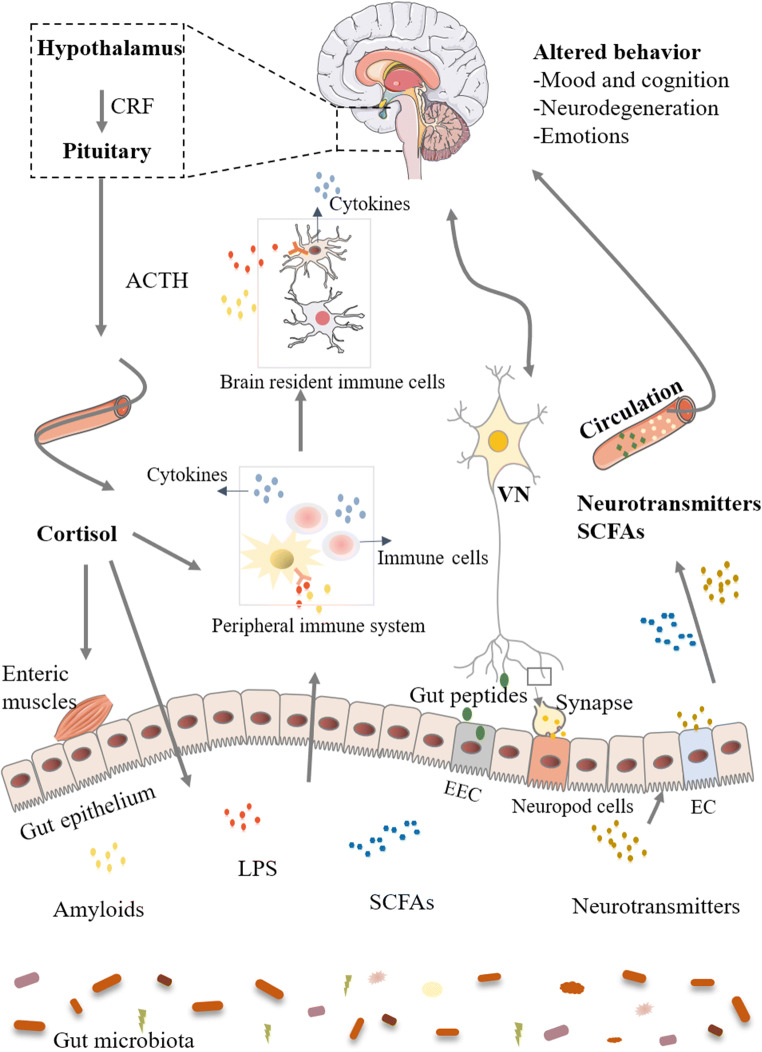
“The intestinal microbiota can regulate the microbiota–gut–brain axis through neural, endocrine, and metabolic pathways, thus influencing the function of the CNS (Liu et al., 2020a; Doifode et al., 2021).”
InfluentialTalebi, M., Kakouri, E., Talebi, M., Tarantilis, P. A., Farkhondeh, T., İlgün, S., Pourbagher-Shahri, A. M., & Samarghandian, S. (2021) · Expert Review of Neurotherapeutics · doi:10.1080/14737175.2021.1923479 · Cited by 39
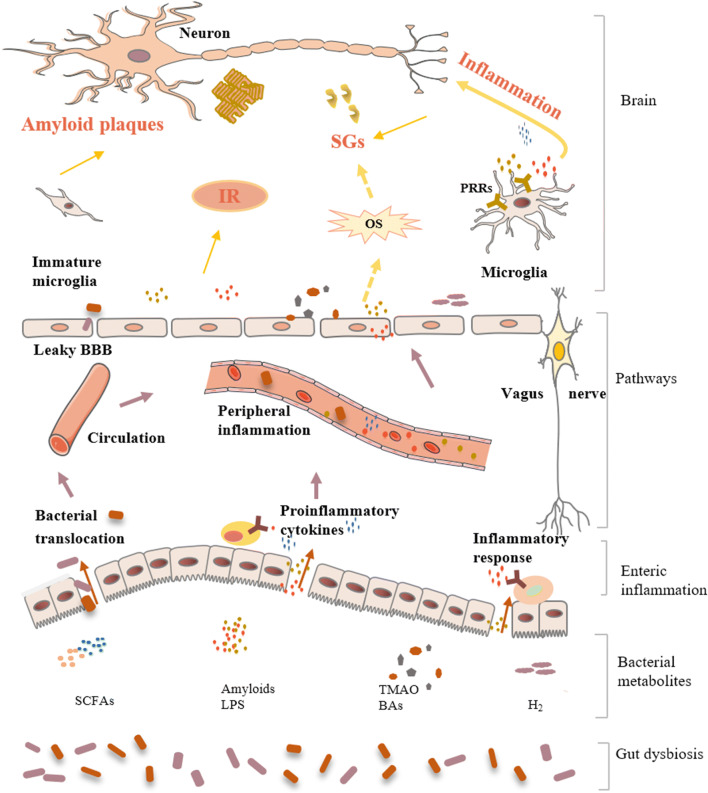
“biosis may induce endorse Aβ aggregation, neuroinflammation, oxidative stress, and insulin resistance concur to the pathogenesis of AD [208,209].”
BackgroundJiang, J. H., Liu, H., Wang, Z., Tian, H., Wang, S., Yang, J., & Ren, J. (2021) · PLoS ONE · doi:10.1371/journal.pone.0259530 · Cited by 44
“This provided a therapeutic strategy and theoretical basis for some diet therapies and probiotics supplement therapy [17].”
BackgroundEffect of a Vegan Diet on Alzheimer’s Disease
Katonová, A., Sheardová, K., Amlerová, J., Angelucci, F., & Hort, J. (2022) · International Journal of Molecular Sciences · doi:10.3390/ijms232314924 · Cited by 50
“A dysbiotic gut microbiome may contribute to the progression and exacerbation of the disease, possibly by promoting immune activation, systemic inflammation, Aβ aggregation, and insulin resistance in the periphery and the brain [66].”
BackgroundMa, L., Jiang, X., Huang, Q.-Y., Chen, W., Zhang, H., Pei, H., Cao, Y., Wang, H., & Li, H. (2023) · Biomedicine & Pharmacotherapy · doi:10.1016/j.biopha.2023.115244 · Cited by 44
Self-citationGuan, Y., Tang, G., Li, L., Shu, J., Zhao, Y., Huang, L., & Tang, J. (2024) · Archives of Pharmacal Research · doi:10.1007/s12272-023-01484-9 · Cited by 46
“There is growing evidence suggesting that alterations in the composition of the gut microbiota can contribute to NDs by affecting neurotransmitter production, and modulating neuroinflammation, immune responses, oxidative stress, protein aggregation, and gut microbiota dysbiosis (Liu et al. 2020b).”
BackgroundDomínguez, A. M. C., Salazar, D. D. J. R., stefanolo, J. P., Serrano, M. C. C., Quiroga, I. C. C., & Peña, J. R. Z. (2024) · Probiotics and Antimicrobial Proteins · doi:10.1007/s12602-024-10353-w · Cited by 58
Manfredi, J. N., Gupta, S. K., Vyavahare, S. S., Deák, F., Lu, X., Buddha, L., Wankhade, U. D., Lohakare, J., Isales, C. M., & Fulzele, S. (2024) · Physiology & Behavior · doi:10.1016/j.physbeh.2024.114778 · Cited by 42
Ma, B., Barathan, M., Ng, M. H., & Law, J. X. (2025) · International Journal of Molecular Sciences · doi:10.3390/ijms26073148 · Cited by 44
“In AD, dysbiosis of the gut is related to increased β -amyloid (A β ) accumulation and tau hyperphosphorylation by OS-mediated mitochondrial dysfunction [70].”
Alzheimer’s Disease: A Systems View Provides a Unifying Explanation of Its Development
Grobler, C., van Tongeren, M., Gettemans, J., Kell, D. B., & Pretorius, E. (2022) · Journal of Alzheimer s Disease · doi:10.3233/jad-220720 · Cited by 51
“The damage caused by ROS, referred to as oxidative stress, may include the production of A (cid:2) and NFTs [69].”
InfluentialNazzi, C., Avenanti, A., & Battaglia, S. (2024) · Antioxidants · doi:10.3390/antiox13060701 · Cited by 37
“Specifically, gut microbiota composition perturbations lead to increased oxidative stress, neuronal death, and neuroinflammation, culminating in the development of disorders such as Alzheimer’s disease [32,33] and Parkinson’s disease [34,35].”
BackgroundInfections and immunity: associations with obesity and related metabolic disorders
Ray, A., Bonorden, M. J. L., Pandit, R., Nkhata, K. J., & Bishayee, A. (2023) · Journal of Pathology and Translational Medicine · doi:10.4132/jptm.2022.11.14 · Cited by 48
“A number of investigators recorded an alteration of gut microbiota (dysbiosis) in prion disease and other neurodegenerative disorders such as Alzheimer’s and Parkinson’s disease [72-76].”
BackgroundGut Microbiota and Immune System Dynamics in Parkinson’s and Alzheimer’s Diseases
Kuštrimović, N. Z., Balkhi, S., Bilato, G., & Mortara, L. (2024) · International Journal of Molecular Sciences · doi:10.3390/ijms252212164 · Cited by 45
“AD patients infected with H. pylori, Chlamydia pneumoniae, and Borrelia burgdorferi have higher levels of A β in their blood [172,173].”
Gut-Brain Axis and Neurological Disorders-How Microbiomes Affect our Mental Health
Bhatia, N. Y., Jalgaonkar, M. P., Hargude, A. B., Sherje, A. P., Oza, M. J., & Doshi, G. (2022) · CNS & Neurological Disorders - Drug Targets · doi:10.2174/1871527321666220822172039 · Cited by 43
Metadata
- Authors
- Liu, S., Gao, J., Zhu, M., Liu, K., & Zhang, H.-L.
- Affiliations
- Jilin University (CN)
- Mayo Clinic (US)
- Corresponding author
- Liu, Kangding
- Venue
- Molecular Neurobiology
- Published
- 2020-08-23
- Volume
- 57
- Issue
- 12
- Pages
- 5026-5043
- ISSN
- 0893-7648 (ISSN-L)
- 1559-1182
- PMC
- PMC7541367
- OpenAlex
- W3080830493
- Semantic Scholar
- c1c305deb6388641b3da3e3e7dd5ceb7471ddaec
- Cited by
- 516
- References
- 173
- Citations by year
- 2026: 87 · 2025: 136 · 2024: 108 · 2023: 77 · 2022: 62 · 2021: 42 · 2020: 4
- FWCI
- 4.43
- Type
- journal article
- Language
- en
- Open access
- hybrid
- doi.org
- Licence
- cc-by
- creativecommons.org/licenses/by/4.0 (tdm)
- creativecommons.org/licenses/by/4.0 (vor)
- Locations
- Molecular Neurobiology (publishedVersion, cc-by)
- PubMed Central (publishedVersion, cc-by)
- PubMed (publishedVersion)
- Funders
- National Natural Science Foundation of China (81771299)
- Topics
- Life Sciences › Biochemistry, Genetics and Molecular Biology › Molecular Biology › Gut microbiota and health
- Life Sciences › Neuroscience › Cellular and Molecular Neuroscience › Alzheimer's disease research and treatments
- Health Sciences › Medicine › Gastroenterology › Gastrointestinal motility and disorders
- Keywords
- gut microbiota, dysbiosis, Alzheimer's disease, microbiota-gut-brain axis, amyloid-beta aggregation, neuroinflammation, oxidative stress, insulin resistance, Alzheimer's disease pathogenesis, Alzheimer's disease treatment, neuropsychiatric disorders
- MeSH terms
- Gastrointestinal Microbiome, Alzheimer Disease, Animals, Brain, Humans, Insulin Resistance, Oxidative Stress, Dysbiosis
About these checks
Registry, retraction, Cites and statistics results are computed, not judged, with one exception: a printed reference that no index lists is read once by a model before it counts as a citation error. Claims are extracted by a model and kept only when their quote appears verbatim in the text; each cited source is then checked, with a model’s help, for whether it says what the claim relies on. Those verdicts can be wrong — read the claim’s quote and the cited source before relying on one.
Statistics and arithmetic are recomputed, not judged.
Confidence bands are shown only for fields calibrated on our annotated test set. None is calibrated yet, so no band is shown.
What counts as a claim ›How we measure confidence ›How we check this ›
Are you an author, or do you see a problem with this page? Request a review
Data sources
Bibliographic data: Semantic Scholar, OpenAlex, Crossref.
Contains information from the Semantic Scholar Academic Graph Datasets, made available under the ODC Attribution License (ODC-BY 1.0).
Semantic Scholar’s data is described in: Kinney, R., et al. (2023). The Semantic Scholar Open Data Platform. arXiv:2301.10140.
