

Translocation of particles deposited in the respiratory system: a systematic review and statistical analysis
Open accessThe DOI matches its Crossref record; 82 of the 82 references it cites were found in a registry or an index.
Abstract
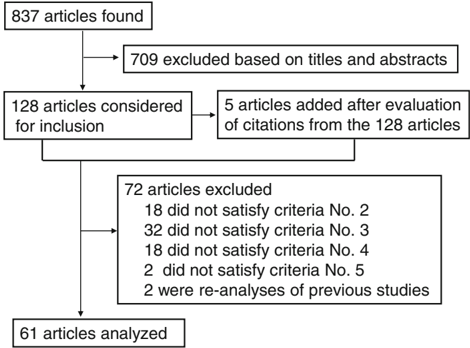
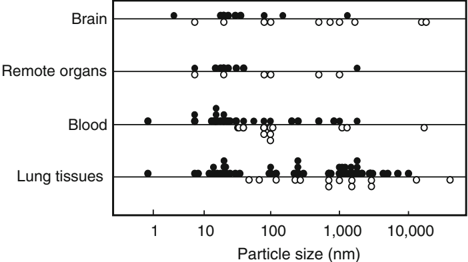
Many epidemiological studies have demonstrated that ambient particulate matter poses consistent risks for respiratory and cardiovascular disorders. The translocation of inhaled particles is one hypothesis that could explain such systemic effects. The objectives of this study were to conduct a systematic review of previous reports on particle translocation from the respiratory system and to discuss factors important for translocation. A PubMed search was conducted in August 2011 for the period from 1967 with four main keyword domains (particle, translocation, detection site, and exposure route). The systematic review identified 61 original articles written in English that met the specified criteria (i.e., information on experiment and particle detection). Categorical regression analysis was performed with the site of particle detection as the objective variable, and particle size, particle material, animal species, and exposure route as the explanatory variables. All explanatory variables showed statistically significant effects. The effects for particle size and particle material were large, while the effects for animal species and exposure route were relatively small. There was a broad relationship between particle size and detection site: ≤50 nm for brain and remote organs; ≤1 μm for blood; and ≤10 μm for lung tissues. However, these results should be considered within the context of several limitations, such as deficiency of information.
Overview
The claims and statistics of this paper haven’t been checked yet.
Free: it reads the open-access text and checks the first 5 claims that cite a source we can check. Create a free account to check every claim.
Integrity signals
Registry
Cites
Statistics
Figures
Verification
Claims the paper makes
The claims and statistics of this paper haven’t been checked yet.
Free: it reads the open-access text and checks the first 5 claims that cite a source we can check. Create a free account to check every claim.
Self-check
Percentages, sums and reported differences re-computed from the paper’s own numbers.
The self-check needs the paper’s full text.
Citations
Cites
Nanotoxicology: An Emerging Discipline Evolving from Studies of Ultrafine Particles
Oberdörster, G., Oberdörster, E., & Oberdörster, J. (2005) · Environmental Health Perspectives · doi:10.1289/ehp.7339 · Cited by 7,891 · cited 2×
“[9] advocated a mechanism in which particles deposited in the olfactory mucosa of the nasal cavity are subsequently taken into axons of the olfactory nerve and migrate into the olfactory bulb of the brain ventricle.”
BackgroundHealth Effects of Fine Particulate Air Pollution: Lines that Connect
Pope, C. A., & Dockery, D. W. (2006) · Journal of the Air & Waste Management Association · doi:10.1080/10473289.2006.10464485 · Cited by 6,583
Translocation of inhaled ultrafine particles to the brain
Oberdörster, G., Sharp, Z., Atudorei, V., Elder, A., Gelein, R., Kreyling, W., & Cox, C. (2004) · Inhalation Toxicology · doi:10.1080/08958370490439597 · Cited by 2,606 · cited 1×
“16 mg/m(3) Detected in olfactory bulb, cerebrum, cerebellum [B] [37]”
BackgroundBrook, R. D., Franklin, B., Cascio, W., Hong, Y., Howard, G., Lipsett, M., Luepker, R., Mittleman, M., Samet, J., Smith, S. C., et al. (2004) · Circulation · doi:10.1161/01.cir.0000128587.30041.c8 · Cited by 2,380
Particulate air pollution and acute health effects
Seaton, A., Godden, D., MacNee, W., & Donaldson, K. (1995) · The Lancet · doi:10.1016/s0140-6736(95)90173-6 · Cited by 2,138 · cited 1×
“, ultrafine particles; UFPs) could explain, at least in part, the effects of airborne PM on the cardiovascular system [4, 5].”
BackgroundHuman Respiratory Tract Model for Radiological Protection
Icrp (1994) · Annals of the ICRP · Cited by 1,767
Geiser, M., Rothen-Rutishauser, B., Kapp, N., Schürch, S., Kreyling, W., Schulz, H., Semmler, M., Hof, V. I., Heyder, J., & Gehr, P. (2005) · Environmental Health Perspectives · doi:10.1289/ehp.8006 · Cited by 1,407 · cited 1×
“11 mg/m 3 Detected in capillary lumen [D], interstitium [A, D], alveolar epithelial cells [D] [35]”
BackgroundTranslocation of Inhaled Ultrafine Manganese Oxide Particles to the CentralNervous System
Elder, A., Gelein, R., Silva, V., Feikert, T., Opanashuk, L., Carter, J., Potter, R., Maynard, A., Ito, Y., Finkelstein, J., et al. (2006) · Environmental Health Perspectives · doi:10.1289/ehp.9030 · Cited by 1,180 · cited 1×
“5 mg/m 3 Detected in olfactory bulb, striatum, frontal cortex, cerebellum [B] [29]”
Delfino, R. J., Sioutas, C., & Malik, S. (2005) · Environmental Health Perspectives · doi:10.1289/ehp.7938 · Cited by 931 · cited 2×
“This, in turn, can lead to various changes in the cardiovascular system, such as an increase in blood coagulability and the progression of atherosclerotic lesions [1, 4].”
BackgroundOberdörster, G., Sharp, Z., Atudorei, V., Elder, A., Gelein, R., Lunts, A., Kreyling, W., & Cox, C. (2002) · Journal of Toxicology and Environmental Health, Part A · doi:10.1080/00984100290071658 · Cited by 846 · cited 1×
“18 mg/m(3), 6 h Detected in liver [B] [45]”
Background
Research works printed but not linked: 1
- Elder A, Oberdo ¨rster G. Translocation and effects of ultrafine particles outside of the lung. Clin Occup Environ Med. 2006;5: 785-96.
Cited by
Inhaled Nanoparticles Accumulate at Sites of Vascular Disease
Miller, M. R., Raftis, J. B., Langrish, J. P., McLean, S. G., Samutrtai, P., Connell, S. P., Wilson, S., Vesey, A. T., Fokkens, P. H. B., Boere, A. J. F., et al. (2017) · ACS Nano · doi:10.1021/acsnano.6b08551 · Cited by 609
“38,39 Here we demonstrate in man that there is less translocation of gold particles with a primary diameter of 34 nm in comparison to that of 4 nm particles ( ∼ 55 nm and ∼ 18 nm aerodynamic diameter of agglomerates, respectively).”
Sun, K., Song, Y., He, F., Jing, M., Tang, J., & Liu, R. (2021) · Science of The Total Environment · doi:10.1016/j.scitotenv.2021.145403 · Cited by 435
Effect of Particulate Matter Air Pollution on Cardiovascular Oxidative Stress Pathways
Rao, X., Zhong, J., Brook, R. D., & Rajagopalan, S. (2018) · Antioxidants & Redox Signaling · doi:10.1089/ars.2017.7394 · Cited by 359
“In addition, PM particles may directly permeate via the olfactory nerve into the central nervous system (13, 112).”
BackgroundThe impact of environmental metals in young urbanites’ brains
Calderón-Garcidueñas, L., Serrano-Sierra, A., Torres-Jardón, R., Zhu, H., Yuan, Y., Smith, D., Delgado-Chávez, R., Cross, J. V., Medina-Cortina, H., Kavanaugh, M., et al. (2013) · Experimental and Toxicologic Pathology · doi:10.1016/j.etp.2012.02.006 · Cited by 156
“Particulate matter is indeed an effective vehicle for brain access (Calderón-Garcidueñas et al., 2001b, 2002,2003b, 2004, 2010; Terzano et al., 2010; Nakane 2011; Morgan et al., 2011) and evidence that the nasal-brain connection pathway is important, is the fact that metals such as Ni and V are present in a gradient f…”
Chemical multi-fingerprinting of exogenous ultrafine particles in human serum and pleural effusion
Lu, D., Luo, Q., Chen, R., Zhuansun, Y., Jiang, J., Wang, W., Yang, X., Zhang, L., Liu, X., Li, F., et al. (2020) · Nature Communications · doi:10.1038/s41467-020-16427-x · Cited by 171
Effects of Ambient Air Pollution Exposure on Olfaction: A Review
Ajmani, G. S., Suh, H. H., & Pinto, J. M. (2016) · Environmental Health Perspectives · doi:10.1289/ehp136 · Cited by 165
Epidemiological and Experimental Links between Air Pollution and Type 2 Diabetes
Liu, C., Ying, Z., Harkema, J. R., Sun, Q., & Rajagopalan, S. (2012) · Toxicologic Pathology · doi:10.1177/0192623312464531 · Cited by 162
“Particles associated with air pollution have been shown to directly permeate the central nervous system through translocation along the olfactory nerve into the olfactory bulb (Nakane 2012).”
BackgroundChatterjee, S., Tao, J., Johncola, A., Guo, W., Caporale, A. S., Langham, M. C., & Wehrli, F. W. (2019) · American Journal of Physiology-Lung Cellular and Molecular Physiology · doi:10.1152/ajplung.00110.2019 · Cited by 154
Caporale, A. S., Langham, M. C., Guo, W., Johncola, A., Chatterjee, S., & Wehrli, F. W. (2019) · Radiology · doi:10.1148/radiol.2019190562 · Cited by 147
“Once inhaled, ultrafine particles and the oxidant species located on their surface can translocate into the vascular space (13), resulting in a state of chronic vascular inflammation and oxidative stress noxious to endothelial function.”
BackgroundAir Pollution as a Risk Factor for Type 2 Diabetes
Rao, X., Patel, P., Puett, R., & Rajagopalan, S. (2015) · Toxicological Sciences · doi:10.1093/toxsci/kfu250 · Cited by 132
“CNS via translocation along the olfactory nerve into the olfactory bulb and exert direct effects on CNS inflammation (Block et al., 2012; Nakane, 2012).”
BackgroundBurke, K. E. (2018) · Mechanisms of Ageing and Development · doi:10.1016/j.mad.2017.12.003 · Cited by 136
Soeur, J., Belaïdi, J.-P., Chollet, C., Denat, L., Dimitrov, A., Jones, C., Perez, P., Zanini, M., Zobiri, O., Mezzache, S., et al. (2017) · Journal of Dermatological Science · doi:10.1016/j.jdermsci.2017.01.007 · Cited by 131
Ambient Air Pollution: An Emerging Risk Factor for Diabetes Mellitus
Rao, X., Montresor-López, J., Puett, R. C., Rajagopalan, S., & Brook, R. D. (2015) · Current Diabetes Reports · doi:10.1007/s11892-015-0603-8 · Cited by 129
Subramaniam, V. D., Prasad, S. V., Banerjee, A., Gopinath, M., Murugesan, R., Marotta, F., Sun, X.-F., & Pathak, S. (2018) · Drug and Chemical Toxicology · doi:10.1080/01480545.2018.1491987 · Cited by 129
Pollution and Sun Exposure: A Deleterious Synergy. Mechanisms and Opportunities for Skin Protection
Marrot, L. (2019) · Current Medicinal Chemistry · doi:10.2174/0929867324666170918123907 · Cited by 125
Field performance of a low-cost sensor in the monitoring of particulate matter in Santiago, Chile
Tagle, M., Rojas, F., Reyes, F., Vásquez, Y., Hallgren, F., Lindén, J., Kolev, D., Watne, Å. K., & Oyola, P. (2020) · Environmental Monitoring and Assessment · doi:10.1007/s10661-020-8118-4 · Cited by 126
“5 can penetrate the alveolar epithelium, enter the bloodstream and migrate to various organs in the human body (Nakane, 2012; Li et al. 2019).”
BackgroundMarval, J., & Tronville, P. M. (2022) · Building and Environment · doi:10.1016/j.buildenv.2022.108992 · Cited by 123
Exposure to Traffic-Related Air Pollution and Serum Inflammatory Cytokines in Children
Gruzieva, O., Merid, S. K., Gref, A., Gajulapuri, A., Lemonnier, N., Ballereau, S., Gigante, B., Kere, J., Auffray, C., Melén, E., et al. (2017) · Environmental Health Perspectives · doi:10.1289/ehp460 · Cited by 103
“In addition, direct systemic effects by inhaled particulate matter (PM) that translocates from lungs into the vascular tree, inducing the release of proinflammatory mediators have been demonstrated (Nakane 2012).”
BackgroundLiu, C., Fonken, L. K., Wang, A., Maiseyeu, A., Bai, Y., Wang, T.-Y., Maurya, S., Ko, Y.-A., Periasamy, M., Dvonch, T., et al. (2014) · Particle and Fibre Toxicology · doi:10.1186/s12989-014-0053-5 · Cited by 96
“5 has been shown to permeate the CNS via translocation along the olfactory nerve into the olfactory bulb and exert direct effects on CNS inflammation [19,42].”
Air Pollution–Related Neurotoxicity Across the Life Span
Cory‐Slechta, D. A., Merrill, A. K., & Sobolewski, M. (2022) · The Annual Review of Pharmacology and Toxicology · doi:10.1146/annurev-pharmtox-051921-020812 · Cited by 104
Nanomaterials and their Classification
Buzea, C., & Pacheco, I. (2016) · Advanced structured materials · doi:10.1007/978-81-322-3655-9_1 · Cited by 100
Liao, M., Braunstein, Z., & Rao, X. (2023) · The Science of The Total Environment · doi:10.1016/j.scitotenv.2023.163803 · Cited by 94
Direct contact with particulate matter increases oxidative stress in different brain structures
Sagrillo‐Fagundes, L., Fleck, A. D. S., Zanchi, A. C., Saldiva, P. H. N., & Rhoden, C. R. (2015) · Inhalation Toxicology · doi:10.3109/08958378.2015.1060278 · Cited by 83
“Likewise, Nakane (2012) demonstrated that size and particle material are the main factors in particle transportation, in spite of the exposure route role.”
BackgroundAre microplastics bad for your health? More rigorous science is needed
Xu, J., Wright, S., Rauert, C., & Thomas, K. V. (2025) · Nature · doi:10.1038/d41586-025-00702-2 · Cited by 80
Contemporary Formulation Development for Inhaled Pharmaceuticals
Sou, T., & Bergström, C. A. S. (2020) · Journal of Pharmaceutical Sciences · doi:10.1016/j.xphs.2020.09.006 · Cited by 76
The impact of nanomaterial characteristics on inhalation toxicity
Bierkandt, F. S., Leibrock, L., Wagener, S., Laux, P., & Luch, A. (2018) · Toxicology Research · doi:10.1039/c7tx00242d · Cited by 74
Overview of lunar dust toxicity risk
Pohlen, M., Carroll, D., Prisk, G. K., & Sawyer, A. J. (2022) · npj Microgravity · doi:10.1038/s41526-022-00244-1 · Cited by 72
Pacitto, A., Stabile, L., Viana, M., Scungio, M., Reche, C., Querol, X., Alástuey, A., Rivas, I., Álvarez-Pedrerol, M., Sunyer, J., et al. (2017) · The Science of The Total Environment · doi:10.1016/j.scitotenv.2017.10.256 · Cited by 72
Cellular and Molecular Mechanisms of Environmental Pollutants on Hematopoiesis
Scharf, P. R. D. S., Broering, M. F., da Rocha, G. H. O., & Farsky, S. H. P. (2020) · International Journal of Molecular Sciences · doi:10.3390/ijms21196996 · Cited by 68
Luderer, U., Lim, J., Ortiz, L., Nguyen, J. D., Shin, J. H., Allen, B. D., Liao, L. S., Malott, K. F., Perraud, V., Wingen, L. M., et al. (2022) · Particle and Fibre Toxicology · doi:10.1186/s12989-021-00445-8 · Cited by 67
“However, because of their small size, they are not efficiently cleared from the alveoli by macrophages and are able to penetrate across the lung interstitium and translocate into the circulation to reach other target organs [51, 52].”
BackgroundLequy, É., Siemiatycki, J., de Hoogh, K., Vienneau, D., Dupuy, J., Garès, V., Hertel, O., Christensen, J. H., Zhivin, S., Goldberg, M., et al. (2021) · Environmental Health Perspectives · doi:10.1289/ehp8719 · Cited by 65
“On the other hand, metals contained in such tiny particles (which are often correlated with BC) may also enter this circulation and trigger the biological effects above mentioned (Nakane 2012).”
BackgroundBuzea, C., & Pacheco, I. (2019) · Elsevier eBooks · doi:10.1016/b978-0-08-102641-0.00028-1 · Cited by 65
Guo, Y., Liu, Y., Xiang, T., Li, J., Lv, M., Yan, Y., Zhao, J., Sun, J., Yang, X., Liao, C., et al. (2023) · Environmental Science & Technology · doi:10.1021/acs.est.2c06802 · Cited by 57
Air pollution and cytokine responsiveness in asthmatic and non-asthmatic children
Klümper, C., Krämer, U., Lehmann, I., Berg, A. V., Berdel, D., Herberth, G., Beckmann, C., Link, E., Heinrich, J., Hoffmann, B. H., et al. (2015) · Environmental Research · doi:10.1016/j.envres.2015.02.034 · Cited by 55
Nanoparticle Uptake by Plants: Beneficial or Detrimental?
Pacheco, I., & Buzea, C. (2018) · Springer eBooks · doi:10.1007/978-3-319-76708-6_1 · Cited by 55
Chanda, F., Lin, K.-X., Chaurembo, A. I., Huang, J.-Y., Zhang, H., Deng, W., Xu, Y.-J., Li, Y., Fu, L.-D., Cui, H., et al. (2024) · The Science of The Total Environment · doi:10.1016/j.scitotenv.2024.176255 · Cited by 52
Respiratory Filter Reduces the Cardiovascular Effects Associated With Diesel Exhaust Exposure
Vieira, J. L., Guimarães, G. V., de André, P. A., Cruz, F. D. D., Saldiva, P. H. N., & Bocchi, E. A. (2015) · JACC Heart Failure · doi:10.1016/j.jchf.2015.07.018 · Cited by 52
Leaching of PAHs from rubber modified asphalt pavements
Fathollahi, A., Makoundou, C., Coupe, S. J., & Sangiorgi, C. (2022) · The Science of The Total Environment · doi:10.1016/j.scitotenv.2022.153983 · Cited by 46
Impacts of micro- and nanoplastics on early-life health: a roadmap towards risk assessment
Christopher, E. A., Vries, Y. C., Devadoss, A., Mandemaker, L. D. B., van Boxel, J., Copsey, H., Dusza, H. M., Legler, J., Meirer, F., Muncke, J., et al. (2024) · Microplastics and Nanoplastics · doi:10.1186/s43591-024-00089-3 · Cited by 42
Health risk assessment of particulate matter 2.5 in an academic metallurgy workshop
Mbazima, S. J. (2022) · Indoor Air · doi:10.1111/ina.13111 · Cited by 40
Mukherjee, A., Hartikainen, A. H., Joutsensaari, J., Basnet, S., Meščeriakovas, A., Ihalainen, M., Yli‐Pirilä, P., Leskinen, J. T. T., Somero, M., Louhisalmi, J., et al. (2024) · The Science of The Total Environment · doi:10.1016/j.scitotenv.2024.175840 · Cited by 36
Risk of Adverse Health Outcomes and Decrements in Performance Due to In-flight Medical Conditions
Antonsen, E. (2017) · NASA STI Repository (National Aeronautics and Space Administration) · Cited by 33
Ambient Fine Particulate Matter and Cancer: Current Evidence and Future Perspectives
Liu, H., Zhang, X., Sun, Z., & Chen, Y. (2023) · Chemical Research in Toxicology · doi:10.1021/acs.chemrestox.2c00216 · Cited by 31
Ganguly, K., Carlander, U., Garessus, E. D. G., Fridén, M., Eriksson, U. G., Tehler, U., & Johanson, G. (2019) · Critical Reviews in Toxicology · doi:10.1080/10408444.2019.1584153 · Cited by 29
“have also been detected in the mediastinal and/or hilar lymph nodes in mice and rats, following inhalation, intranasal and/or intra-tracheal instillation (Shwe et al. 2005; van Ravenzwaay et al 2009; Pauluhn 2012; Nakane 2012).”
BackgroundWright, S., Levermore, J. M., & Ishikawa, Y. (2023) · Applied Spectroscopy · doi:10.1177/00037028231199772 · Cited by 27
“100 At the lung epithelium, those particles <1 μm could translocate and redistribute via the circulatory system.(94) For those studies reporting microplastic concentrations in air, 50% used a method with an LOD above 10 μm, with two having an LOD of 50 μm.”
MethodResultElectronic Cigarette and Atherosclerosis: A Comprehensive Literature Review of Latest Evidences
Damay, V. A., Setiawan, I., Lesmana, R., Akbar, M. R., Lukito, A. A., Tarawan, V. M., Martha, J. W., & Nugroho, J. (2022) · International Journal of Vascular Medicine · doi:10.1155/2022/4136811 · Cited by 25
“5μm, often called fine heavy metal particles, capable of accumulating in the respiratory airway and translocating into the underlying vascular tissue and causing oxidative stress formation, vascular inflammation, and endothelial dysfunction [58, 59].”
BackgroundSystemic and vascular effects of circulating diesel exhaust particulate matter
Bai, N., & van Eeden, S. F. (2013) · Inhalation Toxicology · doi:10.3109/08958378.2013.844749 · Cited by 25
“served as major organs to clear-off these ambient particles (Nakane, 2012).”
BackgroundŞahin, Ç., Doğan, T. R., Yıldız, M., & Sofuoǧlu, S. C. (2022) · Indoor Air · doi:10.1111/ina.13068 · Cited by 21
Pacitto, A., Stabile, L., Russo, S., & Buonanno, G. (2020) · Atmosphere · doi:10.3390/atmos11050485 · Cited by 18
Wu, T., Tong, M., Chu, A., Wu, K., Niu, X., & Zhang, Z. (2022) · Cardiovascular Toxicology · doi:10.1007/s12012-022-09753-7 · Cited by 18
Kobos, L. M., & Shannahan, J. H. (2021) · Experimental Biology and Medicine · doi:10.1177/1535370220983275 · Cited by 18
“Particles may also translocate from the lungs to the circulation to cause systemic effects throughout the body, with smaller particles doing so with greater efficiency than larger particles.(41)”
BackgroundA critical review of micro- and nanoplastic permeation in the human body
Pan, Y., Janjua, T. I., Thomas, K. V., Shepherd, C. E., & Rauert, C. (2026) · Microplastics and Nanoplastics · doi:10.1186/s43591-026-00177-6 · Cited by 17
“It is generally accepted that smaller particles can more readily cross cell barriers with particle size identified as a strong factor for translocation [26].”
Wang, Q., Huo, J., Chen, H., Duan, Y., Fu, Q., Sun, Y., Zhang, K., Huang, L., Wang, Y., Tan, J., et al. (2023) · Environmental Science Atmospheres · doi:10.1039/d3ea00096f · Cited by 17
Particulate bioaerogels for respiratory drug delivery
Li, H., Makatsoris, C., & Forbes, B. (2024) · Journal of Controlled Release · doi:10.1016/j.jconrel.2024.04.021 · Cited by 16
“Lastly, for the even smaller bioaerogel particles with d v 0.5 μ m, once deposited in the alveolar regions through the Brownian diffusion, they are intended to be translocated into cells, lymph and blood, followed by a possible distribution around the body, as reported somewhere else [149].”
InfluentialThe Canadian Cancer Registries Epidemiology Group, Latifovic, L., Villeneuve, P. J., Parent, M., Kachuri, L., & Harris, S. A. (2020) · BMC Cancer · doi:10.1186/s12885-020-6644-7 · Cited by 14
“While extra pulmonary translocation mechanisms of inhaled particles and fibers are not fully understood, the clearance of ultra-fine silica particles and small-diameter asbestos fibers from the lungs may lead to their dissemination and persistence at other organ sites [2, 10].”
BackgroundVitamin C prevents epidermal damage induced by PM‐associated pollutants and UVA1 combined exposure
Dimitrov, A., Zanini, M., Zucchi, H., Boudah, S., Lima, J., Sœur, J., & Marrot, L. (2021) · Experimental Dermatology · doi:10.1111/exd.14315 · Cited by 14
Gadoue, S. M., & Toomeh, D. (2019) · Physica Medica · doi:10.1016/j.ejmp.2019.02.013 · Cited by 13
Zyśk, J., Wyrwa, A., Suwała, W., Pluta, M., Olkuski, T., & Raczyński, M. (2020) · Atmosphere · doi:10.3390/atmos11111222 · Cited by 13
“5 are able to pass through the barrier of the upper (nose and pharynx) and lower (larynx, trachea) respiratory tracts and finally enter the lungs, from where they can be distributed by the circulatory system throughout the human body [6,7].”
BackgroundVo, T. T. T., Huang, H. W., Wee, Y., Feng, S., Cheng, J. H.-C., Tuan, V. P., & Lee, I. (2021) · Journal of Periodontal Research · doi:10.1111/jre.12944 · Cited by 12
Manangama, G., Gramond, C., Audignon‐Durand, S., Baldi, I., Fabbro-Péray, P., Ilg, A. G. S., Guénel, P., Lebailly, P., Luce, D., Stücker, I., et al. (2020) · Environmental Research · doi:10.1016/j.envres.2020.110024 · Cited by 13
“…including the brain, due to their capability to cross biological barriers, for instance the 1 alveolar capillary barrier, placental barrier and the blood-brain barrier (Campagnolo et al., 2017; Elder 2 and Oberdorster, 2006; Nakane, 2012; Nemmar et al., 2001; Oberdorster et al., 2005, 2002).”
BackgroundTen questions concerning indoor dust
Hartmann, E. M., Dannemiller, K. C., Farmer, D. K., O’Brien, R. E., Berberich, J., Ditto, J. C., Farinas, O. R., Gall, E. T., Ganguly, A., Grassian, V. H., et al. (2025) · Building and Environment · doi:10.1016/j.buildenv.2025.113988 · Cited by 9
Leinardi, R., Sanchez-Calero, C. L., Ibouraadaten, S., Uwambayinema, F., Yakoub, Y., Pavan, C., Claus, R., Lemaire, F., Ronsmans, S., Ghosh, M., et al. (2025) · Environment International · doi:10.1016/j.envint.2025.109473 · Cited by 9
“Despite some studies suggest that the transport through the lymphatic system may also result in splenic accumulation upon inhalation, the influence of the bloodstream in silica biodistribution process to the spleen should be considered (Nakane, 2012; Wei et al., 2012; Mitchell et al., 2007).”
Wehrli, F. W., Caporale, A. S., Langham, M. C., & Chatterjee, S. (2020) · Frontiers in Physiology · doi:10.3389/fphys.2020.00492 · Cited by 9
“The work was motivated by prior data indicating aerosol and its breakdown products to contain toxic compounds that can enter the vascular system through upper respiratory pathways (Bakand et al., 2012; Nakane, 2012).”
BackgroundChanges in gene expression in lungs of mice exposed to traffic-related air pollution
Yang, J., Chen, Y., Yu, Z., Ding, H., & Ma, Z.-F. (2018) · Molecular and Cellular Probes · doi:10.1016/j.mcp.2018.03.005 · Cited by 9
The effects of inhaled pollutants on reproduction in marginalized communities: a contemporary review
Santacruz-Márquez, R., Neff, A. M., Mourikes, V. E., Fletcher, E. J., & Flaws, J. A. (2023) · Inhalation Toxicology · doi:10.1080/08958378.2023.2197941 · Cited by 7
“…reviewed by Nakane (2012), several in vivo studies have confirmed the translocation and distribution of a diverse variety of pollutants to different organs after deposition in the respiratory system, demonstrating that inhaled pollutants can reach different organs and exert toxicity (Nakane 2012).”
InfluentialLuderer, U. (2024) · Reproduction · doi:10.1530/rep-24-0194 · Cited by 7
Metal Nanoparticles and Their Toxicity
Pacheco, I., & Buzea, C. (2017) · Wiley eBooks · doi:10.1002/9783527807093.ch10 · Cited by 7
Lung retention, distribution and persistence of polymer particles in rats exposed via inhalation
Thá, E. L., Ma‐Hock, L., Rueckel, M., Gruendling, T., Wohlleben, W., Reck, B., & Landsiedel, R. (2026) · Particle and Fibre Toxicology · doi:10.1186/s12989-025-00655-4 · Cited by 6
“The translocation of inhaled particles to the lung-draining LNs has been extensively documented in the literature, as reviewed by Nakane [81].”
Neurotoxic Effects of Airborne Particulate Matter: Mechanisms and Health Implications
Thangavel, P., Park, D., & Lee, Y. (2025) · Journal of Biochemical and Molecular Toxicology · doi:10.1002/jbt.70322 · Cited by 6
Impact of the Airborne Particulate Matter onthe Human Health
Camatini, M., Gualtieri, M., & Sancini, G. (2016) · Wiley eBooks · doi:10.1002/9783527336449.ch10 · Cited by 6
History and Future Perspectives for the Evaluation of the Toxicity of Celestial Dust
Corazzari, I., DURANTE, M., Fubini, B., Gerde, P., KARLSSON, L. L., Linnarsson, D., Loftus, D. J., MCDONALD, F., Palmberg, L., Prisk, G. K., et al. (2021) · Institutional Research Information System University of Turin (University of Turin) · Cited by 6
Diabetes and Metabolic Syndrome
Rao, X., Liu, C., & Rajagopalan, S. (2015) · Molecular and integrative toxicology · doi:10.1007/978-1-4471-6669-6_8 · Cited by 6
He, X., Wang, C., Wang, Y., Yu, J., Zhao, Y., Li, J., Hussain, M., & Liu, B. (2022) · Frontiers in Bioengineering and Biotechnology · doi:10.3389/fbioe.2022.1097363 · Cited by 5
“Particles can also be used as an effective drug delivery transmitter in cancer treatment and prevention (Nakane, 2012; Gong et al., 2015; Kumar et al., 2015).”
BackgroundRong, M., Shen, Y., Ge, Y., Du, W., Kan, H., Cai, J., Zhao, Y., & Hua, J. (2024) · Environment & Health · doi:10.1021/envhealth.4c00102 · Cited by 5
The plastic brain part II: new insights into micro- and nanoplastics neurotoxicity
van Kaam, S., Westerink, R. H. S., & Kasteel, E. E. J. (2025) · Microplastics and Nanoplastics · doi:10.1186/s43591-025-00161-6 · Cited by 5
“Previous research has reported that particles larger than 1 µm cannot translocate across the epithelial barrier in the lung [162] and particles larger than 10 µm cannot translocate across the intestinal barrier [163].”
A prospective pilot study of the T‐lymphocyte response to fine particulate matter exposure
Zallouha, M. A., Landkocz, Y., Méausoone, C., Ledoux, F., Visade, F., Cazier, F., Martin, P. J., Borgie, M., Vitagliano, J., Trémolet, G., et al. (2020) · Journal of Applied Toxicology · doi:10.1002/jat.3932 · Cited by 5
“5) and are subsequently able to reach the lower airways where some of their constituents can interact with blood cells (Nakane, 2012).”
BackgroundMallampati, S. R., Mitoma, Y., Simion, C., & Lee, B. H. (2015) · Journal of the Air & Waste Management Association · doi:10.1080/10962247.2015.1077175 · Cited by 5
“The small respirable particles of fly ash are easily inhaled to the lungs, where the harmful condensed phases are extracted by body fluids and thereby pose a health hazard (Lauf, 1985; Nakane, 2012; Shim et al., 2012).”
BackgroundHolland, N. A. (2014) · The Scholarship East Carolina University's Institutional Repository (East Carolina University) · Cited by 5
Ryu, G.-W., Kim, J., Ha, Y., Chae, S., Yang, E., & Kim, C. (2025) · Journal of Hazardous Materials · doi:10.1016/j.jhazmat.2025.139796 · Cited by 4
Ponugoti, A., Ngo, H. T., Stinnett, S. S., & Vajzovic, L. M. (2023) · Journal of VitreoRetinal Diseases · doi:10.1177/24741264231205071 · Cited by 4
Respiratory Drug/Vaccine Delivery Using Nanoparticles
Ramsey, J. M., McCloskey, A. P., Gaul, R., Fernández, E. F., Sweeney, L., Greene, C. M., MacLoughlin, R. J., & Cryan, S. (2020) · AAPS advances in the pharmaceutical sciences series · doi:10.1007/978-3-030-35910-2_6 · Cited by 4
Yang, X., Cao, Y. Q., Xu, M., Niu, Z., Wang, M., Wang, Y., Meng, M., Zhao, X., Shi, Z., Wang, L., et al. (2026) · Environmental Science & Technology · doi:10.1021/acs.est.5c14929 · Cited by 3
Contessi, S., Borghi, F., Graziosi, F., & Violante, F. S. (2025) · Results in Chemistry · doi:10.1016/j.rechem.2025.102400 · Cited by 3
CardioRespiratory Effects of Wildfire Suppression (CREWS) study: an experimental overview
Brewster, L. M., Lichty, D., Broznitsky, N., & Ainslie, P. N. (2025) · Frontiers in Public Health · doi:10.3389/fpubh.2025.1578582 · Cited by 2
“This may be particularly true for wildfire smoke PM which is overwhelmingly present in the submicron size fraction ( PM 1 ) (16, 17).”
Leinardi, R., Petriglieri, J. R., Uwambayinema, F., Pochet, A., Yakoub, Y., Ibouraadaten, S., Tomatis, M., Lescoat, A., Turci, F., Lecureur, V., et al. (2025) · Journal of Hazardous Materials · doi:10.1016/j.jhazmat.2025.139648 · Cited by 2
“Data are presented as mean ± SD (n = 5). clearance of airborne fibers within the respiratory tract [91].”
Evidence on microplastic exposure and respiratory health outcomes: a systematic review
Chen, C., Luo, L., Zheng, Y., Ran, L., Li, Z., Zhongliang, G., Li, Q., Ji, Y., Hua, J., & Wang, N. (2026) · Therapeutic Advances in Respiratory Disease · doi:10.1177/17534666261465486 · Cited by 2
“17,18 Moreover, the biological plausibility of reported translocation data is questionable 19 as particles larger than a few microns are difficult to cross barriers; therefore, remote detection of MNPs in real-world studies is frequently inconsistent with basic experimental results.”
PAH (polycyclic aromatic hydrocarbons): Risk assessment and health impacts
Matta, G., Pant, G., Uniyal, D. P., & Dhingra, G. K. (2024) · Elsevier eBooks · doi:10.1016/b978-0-323-95235-4.00031-1 · Cited by 2
Metal Nanoparticles and Their Toxicity
Pacheco, I., & Buzea, C. (2017) · Wiley eBooks · doi:10.1002/9783527807093.ch9 · Cited by 2
Vieira, J. L. (2016) · Digital Library of Theses and Dissertations (Universidade de São Paulo) · doi:10.11606/t.5.2016.tde-01072016-085421 · Cited by 2
Ten questions concerning particle exposure in open electrosurgery and its control strategies
Wu, X., Ding, Y., Zhang, Y., Ding, Z., & Qian, H. (2024) · International Journal of Ventilation · doi:10.1080/14733315.2024.2412454 · Cited by 1
“…size, the deeper the particles penetrate the body through the respiratory tract, triggering different a spectrum of respiratory health responses (Nakane, 2012), ranging from upper respiratory tract conditions such as rhinitis (Ilce et al., 2017), nasal mucosa damage (Sarkarizi et al., 2020),…”
Torres-Agullo, A., Lacorte, S., Lazaridis, M., Chalvatzaki, E., Chatoutsidou, S. E., & Karanasiou, A. (2026) · Environmental Research · doi:10.1016/j.envres.2026.124824 · Cited by 1
Kleinman, M. T., Wingen, L. M., Herman, D. A., Johnson, R., & Keebaugh, A. J. (2018) · ACS symposium series · doi:10.1021/bk-2018-1299.ch021 · Cited by 1
Short-lived climate pollutants and public health risks: A review
Satyaprakash, K., & Das, A. (2021) · Cited by 1
Guidelines for appropriate "biomarker of exposure" selection for EWAS studies
Povey, A. C., Chapizanis, D., Gotti, A., Sarigiannis, D. A., Garí, M., Grimalt, J. O., Tratnik, J. S., Hudobivnik, M. J., Heath, E., Mazej, D., et al. (2015) · Research Explorer (The University of Manchester) · Cited by 1
Dalzon, B. (2018) · theses.fr (ABES) · doi:10.70675/9ec1bcf4z7c25z49f6zb12az8f704813dc5c · Cited by 1
Asuntojen ilmansuodatuksen terveyshyödyt
Suonmaa, V. (2014) · UEF eRepo (University of Eastern Finland) · Cited by 1
Gaio, V. (2021) · Portuguese National Funding Agency for Science, Research and Technology (RCAAP Project by FCT) · Cited by 1
Rinaldo, M. (2015) · theses.fr (ABES) · doi:10.70675/0ef60b5fzaaf4z474aza132z621bbe024317 · Cited by 1
Scheers, H. (2016) · Lirias
Različni patofiziološki učinki onesnaževal v zunanjem zraku na telesna tkiva
Perčič, S., Otorepec, P., & Kukec, A. (2018) · Slovenian Medical Journal · doi:10.6016/zdravvestn.2477
Metadata
- Authors
- Nakane, H.
- Affiliations
- Toyota Central Research and Development Laboratories (Japan) (JP)
- Corresponding author
- Nakane, Hideo
- Venue
- Environmental Health and Preventive Medicine
- Published
- 2011-11-20
- Volume
- 17
- Issue
- 4
- Pages
- 263-274
- ISSN
- 1342-078X (ISSN-L)
- 1347-4715
- PMC
- PMC3390561
- OpenAlex
- W2030022793
- Cited by
- 101
- References
- 82
- Citations by year
- 2026: 9 · 2025: 10 · 2024: 8 · 2023: 8 · 2022: 11 · 2021: 8 · 2020: 11 · 2019: 5 · 2018: 7 · 2017: 8 · 2016: 4 · 2015: 6 · 2014: 3 · 2013: 1 · 2012: 2
- FWCI
- 0.19
- Type
- journal article
- Language
- en
- Open access
- gold
- doi.org
- Licence
- cc-by
- www.springer.com/tdm (tdm)
- Locations
- Environmental Health and Preventive Medicine (publishedVersion, cc-by)
- Europe PMC (PubMed Central) (publishedVersion)
- PubMed Central (publishedVersion)
- PubMed (publishedVersion)
- Topics
- Physical Sciences › Environmental Science › Health, Toxicology and Mutagenesis › Air Quality and Health Impacts
- Health Sciences › Medicine › Pulmonary and Respiratory Medicine › Inhalation and Respiratory Drug Delivery
- Physical Sciences › Environmental Science › Health, Toxicology and Mutagenesis › Indoor Air Quality and Microbial Exposure
- Keywords
- particle translocation, inhaled particles, respiratory system, particle size, particle material, exposure routes, brain, blood, lung tissue, animal species differences
- MeSH terms
- Air Pollutants, Animals, Biological Transport, Humans, Lung, Particle Size, Regression Analysis, Respiratory System, Respiratory Tract Diseases, Tissue Distribution, Inhalation Exposure, Particulate Matter
About these checks
Registry, retraction, Cites and statistics results are computed, not judged, with one exception: a printed reference that no index lists is read once by a model before it counts as a citation error. Claims are extracted by a model and kept only when their quote appears verbatim in the text; each cited source is then checked, with a model’s help, for whether it says what the claim relies on. Those verdicts can be wrong — read the claim’s quote and the cited source before relying on one.
Statistics and arithmetic are recomputed, not judged.
Confidence bands are shown only for fields calibrated on our annotated test set. None is calibrated yet, so no band is shown.
What counts as a claim ›How we measure confidence ›How we check this ›
Are you an author, or do you see a problem with this page? Request a review
Data sources
Bibliographic data: Semantic Scholar, OpenAlex, Crossref.
Contains information from the Semantic Scholar Academic Graph Datasets, made available under the ODC Attribution License (ODC-BY 1.0).
Semantic Scholar’s data is described in: Kinney, R., et al. (2023). The Semantic Scholar Open Data Platform. arXiv:2301.10140.
