

Translocation of particles deposited in the respiratory system: a systematic review and statistical analysis
Open accessThe DOI matches its Crossref record; 82 of the 82 references it cites were found in a registry or an index.
Abstract
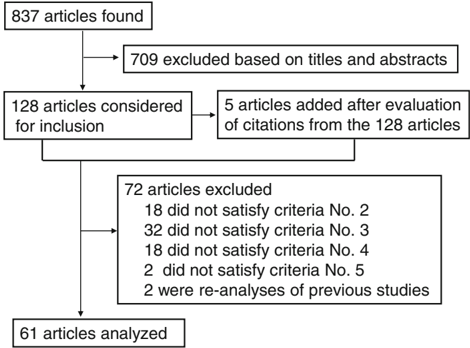
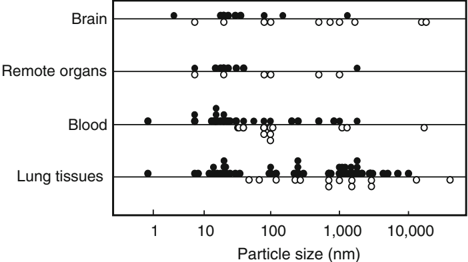
Many epidemiological studies have demonstrated that ambient particulate matter poses consistent risks for respiratory and cardiovascular disorders. The translocation of inhaled particles is one hypothesis that could explain such systemic effects. The objectives of this study were to conduct a systematic review of previous reports on particle translocation from the respiratory system and to discuss factors important for translocation. A PubMed search was conducted in August 2011 for the period from 1967 with four main keyword domains (particle, translocation, detection site, and exposure route). The systematic review identified 61 original articles written in English that met the specified criteria (i.e., information on experiment and particle detection). Categorical regression analysis was performed with the site of particle detection as the objective variable, and particle size, particle material, animal species, and exposure route as the explanatory variables. All explanatory variables showed statistically significant effects. The effects for particle size and particle material were large, while the effects for animal species and exposure route were relatively small. There was a broad relationship between particle size and detection site: ≤50 nm for brain and remote organs; ≤1 μm for blood; and ≤10 μm for lung tissues. However, these results should be considered within the context of several limitations, such as deficiency of information.
Overview
The claims and statistics of this paper haven’t been checked yet.
Free: it reads the open-access text and checks the first 5 claims that cite a source we can check. Create a free account to check every claim.
Integrity signals
Registry
Cites
Statistics
Figures
Verification
Claims the paper makes
The claims and statistics of this paper haven’t been checked yet.
Free: it reads the open-access text and checks the first 5 claims that cite a source we can check. Create a free account to check every claim.
Self-check
Percentages, sums and reported differences re-computed from the paper’s own numbers.
The self-check needs the paper’s full text.
Citations
Cites
Nanotoxicology: An Emerging Discipline Evolving from Studies of Ultrafine Particles
Oberdörster, G., Oberdörster, E., & Oberdörster, J. (2005) · Environmental Health Perspectives · doi:10.1289/ehp.7339 · Cited by 7,891 · cited 2×
“[9] advocated a mechanism in which particles deposited in the olfactory mucosa of the nasal cavity are subsequently taken into axons of the olfactory nerve and migrate into the olfactory bulb of the brain ventricle.”
BackgroundHealth Effects of Fine Particulate Air Pollution: Lines that Connect
Pope, C. A., & Dockery, D. W. (2006) · Journal of the Air & Waste Management Association · doi:10.1080/10473289.2006.10464485 · Cited by 6,583
Translocation of inhaled ultrafine particles to the brain
Oberdörster, G., Sharp, Z., Atudorei, V., Elder, A., Gelein, R., Kreyling, W., & Cox, C. (2004) · Inhalation Toxicology · doi:10.1080/08958370490439597 · Cited by 2,606 · cited 1×
“16 mg/m(3) Detected in olfactory bulb, cerebrum, cerebellum [B] [37]”
BackgroundBrook, R. D., Franklin, B., Cascio, W., Hong, Y., Howard, G., Lipsett, M., Luepker, R., Mittleman, M., Samet, J., Smith, S. C., et al. (2004) · Circulation · doi:10.1161/01.cir.0000128587.30041.c8 · Cited by 2,380
Particulate air pollution and acute health effects
Seaton, A., Godden, D., MacNee, W., & Donaldson, K. (1995) · The Lancet · doi:10.1016/s0140-6736(95)90173-6 · Cited by 2,138 · cited 1×
“, ultrafine particles; UFPs) could explain, at least in part, the effects of airborne PM on the cardiovascular system [4, 5].”
BackgroundHuman Respiratory Tract Model for Radiological Protection
Icrp (1994) · Annals of the ICRP · Cited by 1,767
Geiser, M., Rothen-Rutishauser, B., Kapp, N., Schürch, S., Kreyling, W., Schulz, H., Semmler, M., Hof, V. I., Heyder, J., & Gehr, P. (2005) · Environmental Health Perspectives · doi:10.1289/ehp.8006 · Cited by 1,407 · cited 1×
“11 mg/m 3 Detected in capillary lumen [D], interstitium [A, D], alveolar epithelial cells [D] [35]”
BackgroundTranslocation of Inhaled Ultrafine Manganese Oxide Particles to the CentralNervous System
Elder, A., Gelein, R., Silva, V., Feikert, T., Opanashuk, L., Carter, J., Potter, R., Maynard, A., Ito, Y., Finkelstein, J., et al. (2006) · Environmental Health Perspectives · doi:10.1289/ehp.9030 · Cited by 1,180 · cited 1×
“5 mg/m 3 Detected in olfactory bulb, striatum, frontal cortex, cerebellum [B] [29]”
Delfino, R. J., Sioutas, C., & Malik, S. (2005) · Environmental Health Perspectives · doi:10.1289/ehp.7938 · Cited by 931 · cited 2×
“This, in turn, can lead to various changes in the cardiovascular system, such as an increase in blood coagulability and the progression of atherosclerotic lesions [1, 4].”
BackgroundOberdörster, G., Sharp, Z., Atudorei, V., Elder, A., Gelein, R., Lunts, A., Kreyling, W., & Cox, C. (2002) · Journal of Toxicology and Environmental Health, Part A · doi:10.1080/00984100290071658 · Cited by 846 · cited 1×
“18 mg/m(3), 6 h Detected in liver [B] [45]”
BackgroundKreyling, W. G., Semmler, M., Erbe, F., Mayer, P., Takenaka, S., Schulz, H., Oberdörster, G., & Ziesenis, A. (2002) · Journal of Toxicology and Environmental Health, Part A · doi:10.1080/00984100290071649 · Cited by 790 · cited 1×
“5 mg/m(3), 1 h Detected in liver [D] [44]”
BackgroundPulmonary and systemic distribution of inhaled ultrafine silver particles in rats.
Takenaka, S., Karg, E., Roth, C., Schulz, H., Ziesenis, A., Heinzmann, U., Schramel, P., & Heyder, J. (2001) · Environmental Health Perspectives · doi:10.1289/ehp.01109s4547 · Cited by 730 · cited 1×
“113 mg/m(3), 6 h Detected in liver, kidney [D] [46]”
BackgroundPulmonary Retention of Ultrafine and Fine Particles in Rats
Ferin, J., Oberdörster, G., & Penney, D. P. (1992) · American Journal of Respiratory Cell and Molecular Biology · doi:10.1165/ajrcmb/6.5.535 · Cited by 722 · cited 2×
“5 mg/m (3), 12 weeks Detected in hilar lymph nodes [D], alveolar epithelial cells [A] [58]”
BackgroundTranslocation and potential neurological effects of fine and ultrafine particles a critical update
Peters, A., Veronesi, B., Calderón‐Garcidueñas, L., Gehr, P., Chen, L., Geiser, M., Reed, W. R., Rothen‐Rutishauser, B., Schürch, S., & Schulz, H. (2006) · Particle and Fibre Toxicology · doi:10.1186/1743-8977-3-13 · Cited by 683
Rapid translocation of nanoparticles from the lung airspaces to the body
Choi, H. S., Ashitate, Y., Lee, J. H., Kim, S. H., Matsui, A., Insin, N., Bawendi, M. G., Semmler-Behnke, M., Frangioni, J. V., & Tsuda, A. (2010) · Nature Biotechnology · doi:10.1038/nbt.1696 · Cited by 648 · cited 3×
“Polystyrene– polyacrylate 34 Rat Intratracheal 10 pmol/g wt Detected in lymph node [D] [14]”
BackgroundInfluentialNEMMAR, A., VANBILLOEN, H., HOYLAERTS, M. F., HOET, P. H. M., VERBRUGGEN, A., & NEMERY, B. (2001) · American Journal of Respiratory and Critical Care Medicine · doi:10.1164/ajrccm.164.9.2101036 · Cited by 643
Sioutas, C., Delfino, R. J., & Singh, M. (2005) · Environmental Health Perspectives · doi:10.1289/ehp.7939 · Cited by 617
Nanoparticles: Health Effects—Pros and Cons
Gwinn, M. R., & Vallyathan, V. (2006) · Environmental Health Perspectives · doi:10.1289/ehp.8871 · Cited by 571 · cited 1×
“The high surface-to-volume ratio of UFPs allows them to adsorb large amounts of substances, including various organic and inorganic compounds that induce oxidative stress and/or inflammation [8].”
BackgroundCorrelation between particle size, in vivo particle persistence, and lung injury
Oberdörster, G., Ferin, J., & Lehnert, B. E. (1994) · Environmental Health Perspectives · doi:10.1289/ehp.94102s5173 · Cited by 466
Ultrafine Particle Deposition and Clearance in the Healthy and Obstructed Lung
Brown, J. S., Zeman, K. L., & Bennett, W. D. (2002) · American Journal of Respiratory and Critical Care Medicine · doi:10.1164/rccm.200205-399oc · Cited by 449 · cited 1×
“Carbon (Technegas) 33 Human Inhalation No accumulation was observed in vicinity of liver [42]”
BackgroundC. L. Tran, D. B. (2000) · Inhalation Toxicology · doi:10.1080/08958370050166796 · Cited by 436 · cited 2×
“TiO2 2,100 Rat Inhalation 25, 50 mg/m 3 Detected in lymph nodes [C] [51]”
BackgroundUltrafine Particle–Lung Interactions: Does Size Matter?
Kreyling, W. G., Semmler-Behnke, M., & Möller, W. (2006) · Journal of Aerosol Medicine · doi:10.1089/jam.2006.19.74 · Cited by 394
Kreyling, W. G., Semmler-Behnke, M., Seitz, J., Scymczak, W., Wenk, A., Mayer, P., Takenaka, S., & Oberdörster, G. (2009) · Inhalation Toxicology · doi:10.1080/08958370902942517 · Cited by 384 · cited 2×
“Ir 80 Rat Inhalation Not detected in blood, liver, spleen, kidney, heart, brain [19]”
BackgroundAcute pulmonary effects of ultrafine particles in rats and mice.
Oberdörster, G., Finkelstein, J. N., Johnston, C. J., Gelein, R. M., Cox, C., Baggs, R. B., & Elder, A. C. P. (2000) · PubMed · Cited by 373
Möller, W., Felten, K., Sommerer, K., Scheuch, G., Meyer, G., Meyer, P., Häussinger, K., & Kreyling, W. G. (2008) · American Journal of Respiratory and Critical Care Medicine · doi:10.1164/rccm.200602-301oc · Cited by 364 · cited 1×
“Carbon (Technegas) 100 Human Inhalation Not detected in liver [28]”
BackgroundSemmler, M., Seitz, J., Erbe, F., Mayer, P., Heyder, J., Oberdörster, G., & Kreyling, W. G. (2004) · Inhalation Toxicology · doi:10.1080/08958370490439650 · Cited by 340 · cited 1×
“2 mg/m(3) Detected in liver, spleen, kidney, brain [D] [38]”
WANG, J., CHEN, C., LIU, Y., JIAO, F., LI, W., LAO, F., LI, Y., LI, B., GE, C., & ZHOU, G. (2008) · Toxicology Letters · doi:10.1016/j.toxlet.2008.10.001 · Cited by 337
The Role of Macrophages in Particle Translocation from Lungs to Lymph Nodes
Harmsen, A. G., Muggenburg, B. A., Snipes, M. B., & Bice, D. E. (1985) · Science · doi:10.1126/science.4071052 · Cited by 328 · cited 1×
“Polystyrene 1300 Dog Intratracheal 5 9 10(10) particles Detected in lymph nodes [A, D] [64]”
BackgroundDo Inhaled Carbon Nanoparticles Translocate Directly into the Circulation in Humans?
Mills, N. L., Amin, N., Robinson, S. D., Anand, A., Davies, J., Patel, D., de la Fuente, J. M., Cassee, F. R., Boon, N. A., MacNee, W., et al. (2006) · American Journal of Respiratory and Critical Care Medicine · doi:10.1164/rccm.200506-865oc · Cited by 323 · cited 1×
“Carbon (Technegas) 108 Human Inhalation No obvious uptake by liver or spleen [31]”
BackgroundThe ICRP system of radiological protection
(1994) · Annals of the ICRP · doi:10.1016/0146-6453(94)90018-3 · Cited by 255
Sager, T. M., Kommineni, C., & Castranova, V. (2008) · Particle and Fibre Toxicology · doi:10.1186/1743-8977-5-17 · Cited by 248 · cited 1×
“7 mg Not significant in lymph node [26]”
BackgroundTransport of Nanoparticles Across the Rat Nasal Mucosa
Brooking, J., Davis, S. S., & Illum, L. (2001) · Journal of Drug Targeting · doi:10.3109/10611860108997935 · Cited by 206 · cited 1×
“1% in liver, kidney, spleen, brain [47]”
Role of the alveolar macrophage in lung injury: studies with ultrafine particles
Oberdörster, G., Ferin, J., Gelein, R., Soderholm, S. C., & Finkelstein, J. (1992) · Environmental Health Perspectives · doi:10.1289/ehp.9297193 · Cited by 206
Shimada, A., Kawamura, N., Okajima, M., Kaewamatawong, T., Inoue, H., & Morita, T. (2006) · Toxicologic Pathology · doi:10.1080/01926230601080502 · Cited by 199 · cited 1×
“Carbon black 14 Mouse Intratracheal 1 mg Detected in interstitium, capillary lumen [A] [32]”
MethodMa-Hock, L., Burkhardt, S., Strauss, V., Gamer, A. O., Wiench, K., van Ravenzwaay, B., & Landsiedel, R. (2009) · Inhalation Toxicology · doi:10.1080/08958370802361057 · Cited by 197 · cited 1×
“Not detected in liver, kidney, spleen, olfactory bulb, brain [20]”
BackgroundParticulate matter and heart disease: Evidence from epidemiological studies
Peters, A. (2005) · Toxicology and Applied Pharmacology · doi:10.1016/j.taap.2005.04.030 · Cited by 183
Distribution Pattern of Inhaled Ultrafine Gold Particles in the Rat Lung
Takenaka, S., Karg, E., Kreyling, W. G., Lentner, B., Möller, W., Behnke-Semmler, M., Jennen, L., Walch, A., Michalke, B., Schramel, P., et al. (2006) · Inhalation Toxicology · doi:10.1080/08958370600748281 · Cited by 182 · cited 1×
“088 mg/m(3), 6 h Detected in blood [B], alveolar epithelial cells [A] [33]”
Backgroundvan Ravenzwaay, B., Landsiedel, R., Fabian, E. J., Burkhardt, S., Strauss, V., & Ma‐Hock, L. (2008) · Toxicology Letters · doi:10.1016/j.toxlet.2008.11.020 · Cited by 173 · cited 2×
“TiO2 1,100 Rat Inhalation 250 mg/m (3), 6 h/ day, 5 days Detected in mediastinal lymph node [D] [24]”
Background(2000) · CrossRef Listing of Deleted DOIs · doi:10.1016/j.coem.2006.07.003 · Cited by 171
HUNTER, D. D., & UNDEM, B. J. (1999) · American Journal of Respiratory and Critical Care Medicine · doi:10.1164/ajrccm.159.6.9808078 · Cited by 161 · cited 1×
“Polystyrene 40,000 Guinea pig Intratracheal Did not penetrate basement membrane [54]”
BackgroundLung deposition and extrapulmonary translocation of nano-ceria after intratracheal instillation
He, X., Zhang, H., Ma, Y., Bai, W., Zhang, Z., Lu, K., Ding, Y., Zhao, Y., & Chai, Z. (2010) · Nanotechnology · doi:10.1088/0957-4484/21/28/285103 · Cited by 160 · cited 1×
“01% in heart, kidney, brain, testis [16]”
Biodistribution of gold nanoparticles in mouse lung following intratracheal instillation
Sadauskas, E., Jacobsen, N. R., Danscher, G., Stoltenberg, M., Vogel, U., Larsen, A., Kreyling, W., & Wallin, H. (2009) · Chemistry Central Journal · doi:10.1186/1752-153x-3-16 · Cited by 160 · cited 3×
“Au 40 Mouse Intratracheal 15 mg Not detected in liver [23]”
MethodInfluentialRetention of monodisperse or polydisperse aluminosilicate particles inhaled by dogs, rats, and mice
Snipes, M. B., Boecker, B. B., & McClellan, R. O. (1983) · Toxicology and Applied Pharmacology · doi:10.1016/0041-008x(83)90258-2 · Cited by 143 · cited 3×
“Aluminosilicate 2,800 Dog Inhalation IBB 29 lCi Detected in lung-associated lymph nodes [D] [67]”
BackgroundInfluentialChen, J., Tan, M., Nemmar, A., Song, W., Dong, M., Zhang, G., & Li, Y. (2006) · Toxicology · doi:10.1016/j.tox.2006.02.016 · Cited by 132
Mistry, A., Glud, S. Z., Kjems, J., Randel, J., Howard, K. A., Stolnik, S., & Illum, L. (2009) · Journal of Drug Targeting · doi:10.1080/10611860903055470 · Cited by 130 · cited 1×
“8 9 10(8) particles Detected in apical cells of olfactory epithelium [A] [21]”
BackgroundNo Significant Translocation of Inhaled 35-nm Carbon Particles to the Circulation in Humans
Wiebert, P., Sanchez-Crespo, A., Falk, R., Philipson, K., Lundin, A., Larsson, S., Möller, W., Kreyling, W. G., & Svartengren, M. (2006) · Inhalation Toxicology · doi:10.1080/08958370600748455 · Cited by 122 · cited 1×
“6 9 10(5) particles/cm(3), 6 min No significant translocation to systemic circulation [34]”
BackgroundEyles, J. E., Bramwell, V. W., Williamson, E. D., & Alpar, H. O. (2001) · Vaccine · doi:10.1016/s0264-410x(01)00220-1 · Cited by 120 · cited 1×
“1% of lung burden in spleen [48] Environ Health Prev Med (2012) 17:263–274 267”
BackgroundPEG-PLA Nanoparticles as Carriers for Nasal Vaccine Delivery
Vila, A., Sánchez, A., Évora, C., Soriano, I., Vila Jato, J. L., & Alonso, M. J. (2004) · Journal of Aerosol Medicine · doi:10.1089/0894268041457183 · Cited by 115 · cited 1×
“Polylactic acid 1,500 Rat Intranasal Detected in submucosal layer [A] [40]”
MethodKato, T., Yashiro, T., Murata, Y., Herbert, D. C., Oshikawa, K., Bando, M., Ohno, S., & Sugiyama, Y. (2003) · Cell and Tissue Research · doi:10.1007/s00441-002-0647-3 · Cited by 113 · cited 1×
“5 mg Not observed in alveolar epithelial cells, endothelial cells, capillary lumen [41]”
BackgroundChronic manganese poisoning in the dry battery industry
Emara, A. M., Sh, E.-G., Madkour, O. I., & El Samra, G. H. (1971) · Occupational and Environmental Medicine · doi:10.1136/oem.28.1.78 · Cited by 112 · cited 1×
“On the other hand, various neurobehavioral effects have been reported among workers in the dry battery industry who had inhaled MnO2 aerosol [76, 77]; however, olfactory disorders were not specified among the workers.”
BackgroundBrody, A. R., Mw, R., Evans, J. N. G., & Davis, G. S. (1982) · PubMed · Cited by 103
Liu, Y., Gao, Y., Zhang, L., Wang, T., Wang, J., Jiao, F., Li, W., Liu, Y., Li, Y., Li, B., et al. (2009) · Journal of Nanoscience and Nanotechnology · doi:10.1166/jnn.2009.1320 · Cited by 103 · cited 2×
“Cu 17,000 Mouse Intranasal 1 mg Not significant in blood, liver, kidney, olfactory bulb, spleen, heart, brain [17]”
BackgroundLiu, Y., Ibricevic, A., Cohen, J. A., Cohen, J. L., Gunsten, S. P., Fréchet, J. M. J., Walter, M. J., Welch, M. J., & Brody, S. L. (2009) · Molecular Pharmaceutics · doi:10.1021/mp900215p · Cited by 101 · cited 2×
“1 mg Detected in blood, liver, spleen, kidney, heart, thyroid [D] [18]”
BackgroundResults of Magnetic Resonance Imaging in Long-Term Manganese Dioxide-Exposed Workers
DIETZ, M. C., Ihrig, A., Wrazidlo, W., Bader, M., Jansen, O., & Triebig, G. (2001) · Environmental Research · doi:10.1006/enrs.2000.4068 · Cited by 94 · cited 1×
“On the other hand, various neurobehavioral effects have been reported among workers in the dry battery industry who had inhaled MnO2 aerosol [76, 77]; however, olfactory disorders were not specified among the workers.”
BackgroundFechter, L. D., Johnson, D. L., & Lynch, R. A. (2002) · NeuroToxicology · doi:10.1016/s0161-813x(02)00013-x · Cited by 88 · cited 3×
“3 lm have also been detected in the cerebral cortex [43].”
BackgroundInfluentialSystematic Influence Induced by 3 nm Titanium Dioxide Following Intratracheal Instillation of Mice
Li, Y., Li, J., Yin, J., Li, W., Kang, C., Huang, Q., & Li, Q. (2010) · Journal of Nanoscience and Nanotechnology · doi:10.1166/jnn.2010.2690 · Cited by 88 · cited 1×
“In the present review, successful detection of particles in the brain was found mostly in data from inhalation and intranasal administration studies (8 sets of data), but in only one study of intratracheal administration [15].”
BackgroundCorrelation between particle size, in vivo particle persistence, and lung injury.
Oberdörster, G., Ferin, J., & Lehnert, B. E. (1994) · Environmental Health Perspectives · doi:10.1289/ehp.102-1567252 · Cited by 87 · cited 2×
“TiO2 250 Rat Inhalation 23 mg/m (3), 12 weeks Detected in lymph nodes, interstitium [D] [56]”
BackgroundAdamson, I. Y. R., & Bowden, D. H. (1981) · Experimental Lung Research · doi:10.3109/01902148109052312 · Cited by 81 · cited 3×
“Polystyrene 100 Mouse Intratracheal 4 mg Detected in interstitial cells and type I alveolar epithelial cells [A] [70]”
MethodInfluentialInhalation Exposure to Carbon Black Induces Inflammatory Response in Rats
Niwa, Y., Hiura, Y., Sawamura, H., & Iwai, N. (2008) · Circulation Journal · doi:10.1253/circj.72.144 · Cited by 75 · cited 1×
“Not detected in liver, spleen, aortic endothelial cells [27] 266 Environ Health Prev Med (2012) 17:263–274”
BackgroundFate and Toxic Effects of Inhaled Ultrafine Cadmium Oxide Particles in the Rat Lung
Takenaka, S., Karg, E., Kreyling, W. G., Lentner, B., Schulz, H., Ziesenis, A., Schramel, P., & Heyder, J. (2004) · Inhalation Toxicology · doi:10.1080/08958370490443141 · Cited by 74 · cited 1×
“55 mg/m(3), 6 h Detected in liver, kidney [B] [39]”
BackgroundA microanalytic study of particles transport across the alveoli: role of blood platelets.
Berry, J. P., ARNOUX, B., Stanislas, G., Galle, P. R., & Chrétien, J. (1977) · PubMed · Cited by 74
Tin-Tin-Win-Shwe, Yamamoto, S., Kakeyama, M., Kobayashi, T., & Fujimaki, H. (2005) · Toxicology and Applied Pharmacology · doi:10.1016/j.taap.2005.03.014 · Cited by 69 · cited 2×
“Carbon black 95 Mouse Intratracheal (25, 125, 625 lg) 9 4 Detected in mediastinal lymph node [A, B, C] [36]”
BackgroundManganese toxicokinetics at the blood-brain barrier.
Yokel, R. A., & Crossgrove, J. S. (2004) · PubMed · Cited by 67
Lymphatic removal of fluids and particles in the mammalian lung.
Leak, L. V. (1980) · Environmental Health Perspectives · doi:10.1289/ehp.803555 · Cited by 59 · cited 2×
“Carbon 35 Rat Intratracheal Detected in a vesicle within epithelial lining of alveolar wall, vesicles within lymphatic endothelium [A] [71]”
MethodPauluhn, J. (2012) · Journal of Applied Toxicology · doi:10.1002/jat.1668 · Cited by 53 · cited 1×
“1 mg/m(3), 4 weeks Detected in lung-associated lymph node [B, C] [13]”
BackgroundNaota, M., Shimada, A., MORITA, T., Inoue, K., & Takano, H. (2009) · Toxicologic Pathology · doi:10.1177/0192623309335059 · Cited by 50 · cited 1×
“625, 1 mg Detected in lung capillary, lymph nodes, type I epithelial cells [A] [22]”
BackgroundProceedings of the Second International Tampere Conference in Statistics
Ziegel, E. R., Pukkila, T., & Puntanen, S. (1989) · Technometrics · doi:10.1080/00401706.1989.10488587 · Cited by 49
Lehnert, B. E., Valdez, Y. E., & Stewart, C. C. (1986) · Experimental Lung Research · doi:10.3109/01902148609061496 · Cited by 48 · cited 1×
“Polystyrene 1,900 Rat Intratracheal 4 9 10(8) particles Detected in tracheobronchial lymph nodes [A] [63]”
BackgroundTransmigration of titanium dioxide (TiO2) particles in rats after inhalation exposure
Lee, K. P., Trochimowicz, H. J., & Reinhardt, C. F. (1985) · Experimental and Molecular Pathology · doi:10.1016/0014-4800(85)90083-8 · Cited by 45 · cited 1×
“TiO2 400 Rat Inhalation 10, 50, 250 mg/ m(3), 2 years Detected in liver [A, C], spleen [A, C], lymph node [C], type I epithelial cells [A] [65]”
BackgroundRetention and clearance of inhaled submicron carbon black particles
Strom, K. A., Johnson, J. T., & Chan, T. L. (1989) · Journal of Toxicology and Environmental Health · doi:10.1080/15287398909531244 · Cited by 42 · cited 1×
“Carbon black 240 Rat Inhalation 7 mg/m(3), 1, 3, 6 weeks Detected in hilar lymph nodes [C, D] [61]”
BackgroundMicrosphere Absorption by the Nasal Mucosa of the Rat
Alpar, H., Almeida, A., & Brown, M. (1994) · Journal of Drug Targeting · doi:10.3109/10611869409015903 · Cited by 42 · cited 1×
“Polystyrene 830 Rat Intranasal 8 9 10(9) particles Detected in blood [A] [55]”
Methodde, W.-S. R., & Cassee, F. R. (2003) · Cited by 40
Disposition of 3-, 7-, and 13-μm microspheres instilled into lungs of dogs
Snipes, M. B., Chávez, G., & Muggenburg, B. A. (1984) · Environmental Research · doi:10.1016/0013-9351(84)90031-8 · Cited by 32 · cited 3×
“4 mg Not detected in tracheobronchial lymph nodes [66]”
BackgroundInfluentialVitarella, O. M. D., Moss, O., & Dorman, D. C. (2000) · Inhalation Toxicology · doi:10.1080/08958370050138003 · Cited by 32 · cited 3×
“Mn phosphate 1,670–15,500 Rat Intratracheal 40, 80, 160 lg Mn/kg No significant increase in striatum [53]”
BackgroundInfluentialSnipes, M. B., Muggenburg, B. A., & Bice, D. E. (1983) · Journal of Toxicology and Environmental Health · doi:10.1080/15287398309530378 · Cited by 26 · cited 1×
“5–64 lCi Detected in thoracic lymph nodes [D] [68]”
BackgroundPulmonary Retention and Translocation of Insufflated Tantalum
Morrow, P. E., Kilpper, R. W., Beiter, E. H., & Gibb, F. R. (1976) · Radiology · doi:10.1148/121.2.415 · Cited by 17 · cited 2×
“Ta 10,000 Dog Inhalation ILB 5240–5950 mg Detected in lymph nodes [D] [73]”
BackgroundRadiation Enhances Silica Translocation to the Pulmonary Interstitium and Increases Fibrosis in Mice
Adamson, I. Y. R. (1992) · Environmental Health Perspectives · doi:10.1289/ehp.9297233 · Cited by 15 · cited 1×
“Silica 300 Mouse Intratracheal 1 mg Detected in interstitium [A, B] [57]”
MethodMueller, H., ROBINSON, B. J., Muggenburg, B. A., Gillett, N. A., & Guilmette, R. A. (1990) · Journal of Toxicology and Environmental Health · doi:10.1080/15287399009531419 · Cited by 13 · cited 2×
“Polystyrene 1,700 Dog Intratracheal 10(7), 10(9) particles Detected in interstitium [A, D] [60]”
BackgroundRole of the alveolar macrophage in lung injury: studies with ultrafine particles.
Oberdörster, G., Ferin, J., Gelein, R., Soderholm, S. C., & Finkelstein, J. (1992) · Environmental Health Perspectives · doi:10.1289/ehp.97-1519541 · Cited by 12 · cited 3×
“5, 1 mg Detected in epithelial cells/interstitium [D] [59]”
BackgroundInfluentialPathways and quantification of insoluble particles in the lung compartments of the rat
Trošić, I., Mataušić-Pišl, M., Horš, N., & Trošić, I. (2000) · International Journal of Hygiene and Environmental Health · doi:10.1078/s1438-4639(04)70006-1 · Cited by 6 · cited 1×
“4 9 10(8) particles Detected in lymph nodes [D] [52]”
BackgroundTanaka, I. (1987) · Journal of UOEH · doi:10.7888/juoeh.9.361 · Cited by 3 · cited 1×
“7 mg/m(3), 1 year Particles less than 2,300 nm transported to bronchopulmonary lymph nodes [A] [62]”
Background
Research works printed but not linked: 1
- Elder A, Oberdo ¨rster G. Translocation and effects of ultrafine particles outside of the lung. Clin Occup Environ Med. 2006;5: 785-96.
Cited by
Inhaled Nanoparticles Accumulate at Sites of Vascular Disease
Miller, M. R., Raftis, J. B., Langrish, J. P., McLean, S. G., Samutrtai, P., Connell, S. P., Wilson, S., Vesey, A. T., Fokkens, P. H. B., Boere, A. J. F., et al. (2017) · ACS Nano · doi:10.1021/acsnano.6b08551 · Cited by 609
“38,39 Here we demonstrate in man that there is less translocation of gold particles with a primary diameter of 34 nm in comparison to that of 4 nm particles ( ∼ 55 nm and ∼ 18 nm aerodynamic diameter of agglomerates, respectively).”
Sun, K., Song, Y., He, F., Jing, M., Tang, J., & Liu, R. (2021) · Science of The Total Environment · doi:10.1016/j.scitotenv.2021.145403 · Cited by 435
Effect of Particulate Matter Air Pollution on Cardiovascular Oxidative Stress Pathways
Rao, X., Zhong, J., Brook, R. D., & Rajagopalan, S. (2018) · Antioxidants & Redox Signaling · doi:10.1089/ars.2017.7394 · Cited by 359
“In addition, PM particles may directly permeate via the olfactory nerve into the central nervous system (13, 112).”
BackgroundThe impact of environmental metals in young urbanites’ brains
Calderón-Garcidueñas, L., Serrano-Sierra, A., Torres-Jardón, R., Zhu, H., Yuan, Y., Smith, D., Delgado-Chávez, R., Cross, J. V., Medina-Cortina, H., Kavanaugh, M., et al. (2013) · Experimental and Toxicologic Pathology · doi:10.1016/j.etp.2012.02.006 · Cited by 156
“Particulate matter is indeed an effective vehicle for brain access (Calderón-Garcidueñas et al., 2001b, 2002,2003b, 2004, 2010; Terzano et al., 2010; Nakane 2011; Morgan et al., 2011) and evidence that the nasal-brain connection pathway is important, is the fact that metals such as Ni and V are present in a gradient f…”
Chemical multi-fingerprinting of exogenous ultrafine particles in human serum and pleural effusion
Lu, D., Luo, Q., Chen, R., Zhuansun, Y., Jiang, J., Wang, W., Yang, X., Zhang, L., Liu, X., Li, F., et al. (2020) · Nature Communications · doi:10.1038/s41467-020-16427-x · Cited by 171
Metadata
- Authors
- Nakane, H.
- Affiliations
- Toyota Central Research and Development Laboratories (Japan) (JP)
- Corresponding author
- Nakane, Hideo
- Venue
- Environmental Health and Preventive Medicine
- Published
- 2011-11-20
- Volume
- 17
- Issue
- 4
- Pages
- 263-274
- ISSN
- 1342-078X (ISSN-L)
- 1347-4715
- PMC
- PMC3390561
- OpenAlex
- W2030022793
- Cited by
- 101
- References
- 82
- Citations by year
- 2026: 9 · 2025: 10 · 2024: 8 · 2023: 8 · 2022: 11 · 2021: 8 · 2020: 11 · 2019: 5 · 2018: 7 · 2017: 8 · 2016: 4 · 2015: 6 · 2014: 3 · 2013: 1 · 2012: 2
- FWCI
- 0.19
- Type
- journal article
- Language
- en
- Open access
- gold
- doi.org
- Licence
- cc-by
- www.springer.com/tdm (tdm)
- Locations
- Environmental Health and Preventive Medicine (publishedVersion, cc-by)
- Europe PMC (PubMed Central) (publishedVersion)
- PubMed Central (publishedVersion)
- PubMed (publishedVersion)
- Topics
- Physical Sciences › Environmental Science › Health, Toxicology and Mutagenesis › Air Quality and Health Impacts
- Health Sciences › Medicine › Pulmonary and Respiratory Medicine › Inhalation and Respiratory Drug Delivery
- Physical Sciences › Environmental Science › Health, Toxicology and Mutagenesis › Indoor Air Quality and Microbial Exposure
- Keywords
- particle translocation, inhaled particles, respiratory system, particle size, particle material, exposure routes, brain, blood, lung tissue, animal species differences
- MeSH terms
- Air Pollutants, Animals, Biological Transport, Humans, Lung, Particle Size, Regression Analysis, Respiratory System, Respiratory Tract Diseases, Tissue Distribution, Inhalation Exposure, Particulate Matter
About these checks
Registry, retraction, Cites and statistics results are computed, not judged, with one exception: a printed reference that no index lists is read once by a model before it counts as a citation error. Claims are extracted by a model and kept only when their quote appears verbatim in the text; each cited source is then checked, with a model’s help, for whether it says what the claim relies on. Those verdicts can be wrong — read the claim’s quote and the cited source before relying on one.
Statistics and arithmetic are recomputed, not judged.
Confidence bands are shown only for fields calibrated on our annotated test set. None is calibrated yet, so no band is shown.
What counts as a claim ›How we measure confidence ›How we check this ›
Are you an author, or do you see a problem with this page? Request a review
Data sources
Bibliographic data: Semantic Scholar, OpenAlex, Crossref.
Contains information from the Semantic Scholar Academic Graph Datasets, made available under the ODC Attribution License (ODC-BY 1.0).
Semantic Scholar’s data is described in: Kinney, R., et al. (2023). The Semantic Scholar Open Data Platform. arXiv:2301.10140.
