

Factors Affecting Canagliflozin-Induced Transient Urine Volume Increase in Patients with Type 2 Diabetes Mellitus
Open accessThe DOI matches its Crossref record; 36 of the 36 references it cites were found in a registry or an index.
Abstract
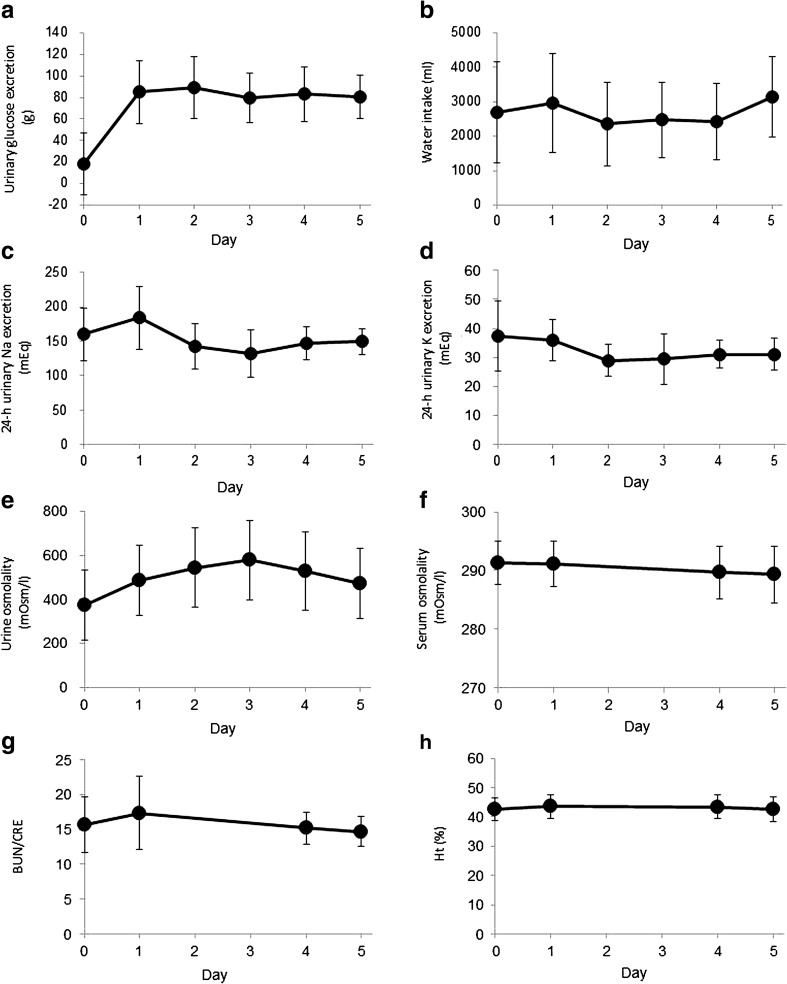
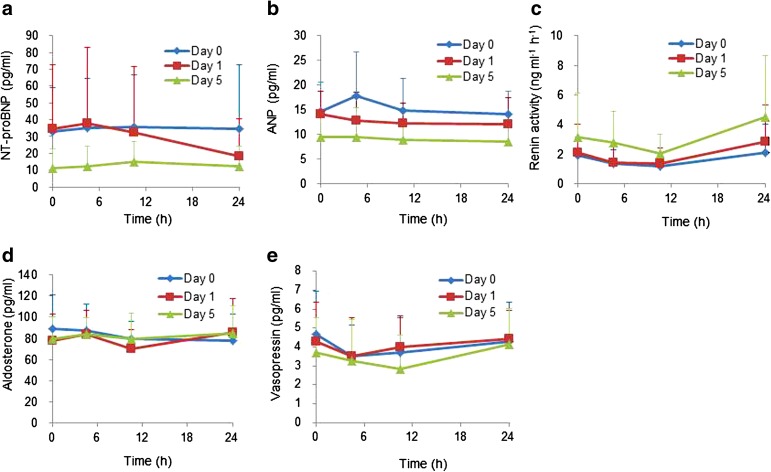
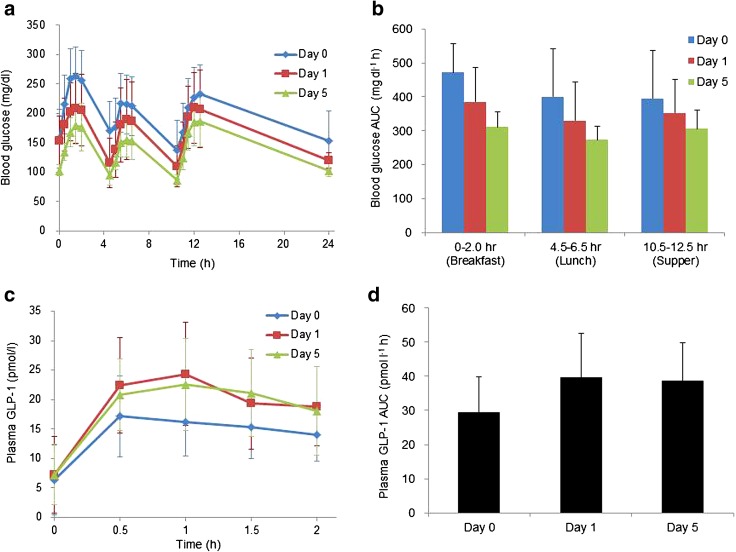
INTRODUCTION: Sodium glucose co-transporter 2 (SGLT2) inhibitors exhibit diuretic activity, which is a possible mechanism underlying the cardiovascular benefit of these inhibitors. However, the osmotic diuresis-induced increase in urine volume, and the risk of dehydration have been of concern with SGLT2 inhibitor treatment. This study aimed to investigate the mechanism underlying SGLT2 inhibitor canagliflozin-induced diuresis in Japanese type 2 diabetes mellitus (T2DM) patients. METHODS: Thirteen T2DM patients received a daily oral dose of 100 mg canagliflozin before breakfast for 6 days. Blood and urine samples were collected at predetermined time points. The primary endpoint was evaluation of correlations between changes from baseline in urine volume and factors that are known to affect urine volume and between actual urine volume and these factors. RESULTS: Canagliflozin transiently increased urine volume and urinary sodium excretion on Day 1 with a return to baseline levels thereafter. Canagliflozin administration increased urinary glucose excretion, which was sustained during repeated-dose administration. Plasma atrial natriuretic peptide (ANP) and N-terminal pro-b-type natriuretic peptide (NT-proBNP) levels decreased, while plasma renin activity increased. On Day 1 of treatment, changes in sodium and potassium excretion were closely correlated with changes in urine output. A post hoc multiple regression analysis showed changes in sodium excretion and water intake as factors that affected urine volume change at Day 1. Furthermore, relative to that at baseline, canagliflozin decreased blood glucose throughout the day and increased plasma total GLP-1 after breakfast. CONCLUSION: Canagliflozin induced transient sodium excretion and did not induce water intake at Day 1; hence, natriuresis rather than glucose-induced osmotic diuresis may be a major factor involved in the canagliflozin-induced transient increase in urine output. In addition, canagliflozin decreased plasma ANP and NT-proBNP levels and increased plasma renin activity, which may be a compensatory mechanism for sodium retention, leading to subsequent urine output recovery. CLINICAL TRIAL REGISTRATION: UMIN000019462. FUNDING: Mitsubishi Tanabe Pharma Corporation.
Overview
The claims and statistics of this paper haven’t been checked yet.
Free: it reads the open-access text and checks the first 5 claims that cite a source we can check. Create a free account to check every claim.
Integrity signals
Registry
Cites
Statistics
Figures
Verification
Claims the paper makes
The claims and statistics of this paper haven’t been checked yet.
Free: it reads the open-access text and checks the first 5 claims that cite a source we can check. Create a free account to check every claim.
Claims other papers make about this one
Each is checked against this paper’s own text: does it say what the citing paper says it does?
The source backs part of the claim, not all of it — or backs it for a different population, condition or comparison.
In the citing paper
“Although clinical studies demonstrated natriuretic/osmotic diuretic effects of SGLT2 inhibitors, it should be mentioned that these studies did not record or standardize sodium intake (Tanaka et al., 2017; Iijima et al., 2015; Wilcox et al., 2018; Mordi et al., 2020; Griffin et al., 2020).”
From A kidney perspective on the mechanism of action of sodium glucose co-transporter 2 inhibitors (2021) · cites this paper as Tanaka et al., 2017
Experimental — accuracy not yet measured
Self-check
Percentages, sums and reported differences re-computed from the paper’s own numbers.
The self-check needs the paper’s full text.
Citations
Cites
Empagliflozin, Cardiovascular Outcomes, and Mortality in Type 2 Diabetes
Zinman, B., Wanner, C., Lachin, J. M., Fitchett, D., Bluhmki, E., Hantel, S., Mattheus, M., Devins, T., Johansen, O. E., Woerle, H. J., et al. (2015) · New England Journal of Medicine · doi:10.1056/nejmoa1504720 · Cited by 12,315
Pathophysiology and treatment of type 2 diabetes: perspectives on the past, present, and future
Kahn, S. E., Cooper, M. E., & Del Prato, S. (2014) · The Lancet · doi:10.1016/s0140-6736(13)62154-6 · Cited by 1,743 · cited 1×
“Typical features of type 2 diabetes mellitus (T2DM) are insulin resistance of various organs and reduced glucose-stimulated insulin secretion [1].”
BackgroundFitchett, D., Zinman, B., Wanner, C., Lachin, J. M., Hantel, S., Salsali, A., Johansen, O. E., Woerle, H. J., Broedl, U. C., & Inzucchi, S. E. (2016) · European Heart Journal · doi:10.1093/eurheartj/ehv728 · Cited by 907
Dapagliflozin a glucose-regulating drug with diuretic properties in subjects with type 2 diabetes
Lambers Heerspink, H. J., de Zeeuw, D., Wie, L., Leslie, B., & List, J. (2013) · Diabetes, Obesity and Metabolism · doi:10.1111/dom.12127 · Cited by 837 · cited 1×
“A 12-week treatment with dapagliflozin was reported to be associated with increases in plasma renin activity and aldosterone [26].”
BackgroundGerich, J. E. (2010) · Diabetic Medicine · doi:10.1111/j.1464-5491.2009.02894.x · Cited by 633
Grempler, R., Thomas, L., Eckhardt, M., Himmelsbach, F., Sauer, A., Sharp, D. E., Bakker, R. A., Mark, M., Klein, T., & Eickelmann, P. (2012) · Diabetes, Obesity and Metabolism · doi:10.1111/j.1463-1326.2011.01517.x · Cited by 608 · cited 1×
“As canagliflozin has modest potency for SGLT1 inhibition relative to that of other highly-selective SGLT2 inhibitors [30], and intestinal SGLT1 inhibition enhanced GLP-1 secretion in a rodent model [31], the increase in total GLP-1 may have arisen through inhibition of SGLT1 in the intestine.”
BackgroundScheen, A. J. (2015) · Drugs · doi:10.1007/s40265-014-0337-y · Cited by 554
The role of the kidneys in glucose homeostasis: a new path towards normalizing glycaemia
DeFronzo, R. A., Davidson, J. A., & Del Prato, S. (2012) · Diabetes, Obesity and Metabolism · doi:10.1111/j.1463-1326.2011.01511.x · Cited by 493 · cited 1×
“SGLT2 expression is increased in T2DM; hence, higher amounts of glucose are reabsorbed by the kidney, thereby contributing to the sustained elevation of serum glucose levels in patients with diabetes [2, 3].”
BackgroundSGLT2 inhibition in diabetes mellitus: rationale and clinical prospects
Ferrannini, E., & Solini, A. (2012) · Nature Reviews Endocrinology · doi:10.1038/nrendo.2011.243 · Cited by 458
Heise, T., Seewaldt‐Becker, E., Macha, S., Hantel, S., Pinnetti, S., Seman, L., & Woerle, H. J. (2013) · Diabetes, Obesity and Metabolism · doi:10.1111/dom.12073 · Cited by 273
Cited by
Items 101–150 of 150
Acute Kidney Injury and Electrolyte Imbalances Caused by Dapagliflozin Short-Term Use
Lopes, A. C., Lourenço, O. M., Morgado, S., Gaspar, A., Freire, I., Eusébio, I., Ribeiro, J., Silva, M. A., Mendes, M., Fonseca, O., et al. (2024) · Pharmaceuticals · doi:10.3390/ph17040420 · Cited by 7
“Despite their documented benefits, discrepancies persist regarding the influence of SGLT2is on urinary sodium concentration and output [20–24].”
BackgroundForouzanmehr, B., Hedayati, A. H., Gholami, E., Hemmati, M. A., Maleki, M., Butler, A. E., Jamialahmadi, T., Kesharwani, P., Yaribeygi, H., & Sahebkar, A. (2024) · Cellular Signalling · doi:10.1016/j.cellsig.2024.111335 · Cited by 8
Jiménez, D. L., Chozas, J. M. L., Montoro, A. E., Corral, M. Á. R., Guerra, L. C., & Miramontes‐González, J. P. (2018) · Diabetes Research and Clinical Practice · doi:10.1016/j.diabres.2018.12.006 · Cited by 7
Ikeda, Y., Ishii, S., Maemura, K., Oki, T., Yazaki, M., Fujita, T., Nabeta, T., Maekawa, E., Koitabashi, T., & Ako, J. (2021) · Heart and Vessels · doi:10.1007/s00380-020-01768-w · Cited by 7
“Additionally, urine output increases after initiating SGLT2 inhibitors [6].”
BackgroundGomes, S. V., da Rocha, J. M. C., de Araújo, F. E. A., de Lucena, B. J. D., Marques, L. E. R. D. M., de Oliveira, I. V., Lima, J. L. B., & Macêdo, K. L. D. S. (2020) · Brazilian Journal of Health Review · doi:10.34119/bjhrv3n2-103 · Cited by 7
Tezuka, Y., Sekine, O., Hirano, A., Hanada, Y., Ikuhisa, N., Ariga, M., Azuma, C., Yamamoto, Y., Ito‐Kobayashi, J., Washiyama, M., et al. (2020) · Diabetes Therapy · doi:10.1007/s13300-020-00950-7 · Cited by 6
Canagliflozin-associated severe hyponatremia: a rare and potentially adverse effect?
Dhanasekaran, M., Narayanan, S., Mastoris, I., & Mehta, S. J. (2022) · Endocrinology Diabetes and Metabolism Case Reports · doi:10.1530/edm-21-0035 · Cited by 6
SGLT2 inhibitors for the treatment of diabetes: a patent review (2019–23)
Baghel, R., Chhikara, N., Kumar, P., & Tamrakar, A. K. (2024) · Expert Opinion on Therapeutic Patents · doi:10.1080/13543776.2024.2379929 · Cited by 6
Empagliflozin: a wonder drug for the treatment of SIAD?
Tzoulis, P. (2024) · Frontiers in Endocrinology · doi:10.3389/fendo.2024.1453159 · Cited by 5
Schmidt, P. M., Perniss, A., Bodenbenner, M., Wiegand, S., Briand, L. V., & Deckmann, K. (2024) · Advanced Biology · doi:10.1002/adbi.202400117 · Cited by 5
Kongphakdee, N., Piwchan, S., Sanpawithayakul, K., Chonprasertsuk, S., & Siramolpiwat, S. (2026) · International Journal of Hepatology · doi:10.1155/ijh/9503323 · Cited by 4
“The transient increase in 24-h UNa observed at Day 3, followed by attenuation by Day 28, is consistent with prior studies of SGLT2 inhibitors in both diabetic and heart failure populations [10–13].”
Nakajima, H., Okada, H., Kogure, A., Osaka, T., Tsutsumi, T., Onishi, M., Mitsuhashi, K., Kitagawa, N., Mogami, S., Kitamura, A., et al. (2024) · Journal of Diabetes Investigation · doi:10.1111/jdi.14314 · Cited by 4
Huang, W., Whitelaw, J., Kishore, K., Neto, A. S., Holmes, N. E., Marhoon, N., Bellomo, R., & Ekinci, E. I. (2023) · Journal of Diabetes and its Complications · doi:10.1016/j.jdiacomp.2023.108522 · Cited by 4
Empagliflozin and fluid balance: results from the SiRENA project
Nielsen, S. F., Duus, C. L., Buus, N. H., Bech, J. N., & Mose, F. H. (2025) · Clinical Kidney Journal · doi:10.1093/ckj/sfaf262 · Cited by 3
Rao, A. K., Ibrahim, A. B., & Rockey, D. C. (2026) · The American Journal of Medicine · doi:10.1016/j.amjmed.2026.04.019 · Cited by 3
SGLT-2 inhibitors in heart failure: a literature review on mechanisms, efficacy and safety
Kułak, K. B., Chamera-Cyrek, K., Janik, I., Kuśmierska, M., Koman, A. M., Pliszka, M., Gadżała, K., Palacz, K. A., Sztybór, I., & Przygodzka, S. (2024) · Quality in Sport · doi:10.12775/qs.2024.15.52083 · Cited by 3
“Gliflozins induce natriuresis and glucosuria by inhibiting SGLT2 in the proximal renal tubule [36, 37].”
BackgroundIsogawa, M., Makino, H., Son, C., Nishimura, K., Hirata, T., Kasama, S., Miyamoto, Y., Noguchi, M., Kasahara, M., & Hosoda, K. (2024) · BMC Endocrine Disorders · doi:10.1186/s12902-024-01690-6 · Cited by 3
“It is worth noting that Canagliflozin does not affect urine volume [33], a phenomenon that may be due to the activation of ketone body production in the liver.”
BackgroundYaribeygi, H., Katsiki, N., Butler, A. E., Atkin, S. L., & Sahebkar, A. (2019) · Journal of Cellular Physiology · doi:10.1002/jcp.28041 · Cited by 3
“Indeed, SGLT2i were reported to increase, rather than suppress, plasma renin, aldosterone, and angiotensin II levels in patients with Type 2 diabetes mellitus (T2DM; Kawanami et al., 2017; Tanaka et al., 2017).”
BackgroundSaha, D., Naskar, A., Mukherjee, S., Munshi, S., Bagchi, C., & Naser, S. M. (2025) · Journal of the Practice of Cardiovascular Sciences · doi:10.4103/jpcs.jpcs_36_25 · Cited by 2
Umezawa, M., Orito, K., Yoshimoto, R., & Fujii, Y. (2026) · American Journal of Veterinary Research · doi:10.2460/ajvr.25.11.0390 · Cited by 2
The Renal Effects of SGLT2 Inhibitors
Sawaf, H., Qaz, M., Ismail, J., & Mehdi, A. (2022) · EMJ Nephrology · doi:10.33590/emjnephrol/22-00080 · Cited by 2
Nashawi, M., Ahmed, M. S., Amin, T., Abualfoul, M., & CHILTON, R. J. (2021) · World Journal of Cardiology · doi:10.4330/wjc.v13.i12.676 · Cited by 2
Are Sodium-Glucose Cotransporter 2 Inhibitors Really Useful and Safe for Advanced Heart Failure?
Okumura, T., & Murohara, T. (2018) · Circulation Journal · doi:10.1253/circj.cj-18-0584 · Cited by 2
Aslan, O., & Demirci, E. E. (2023) · The European Research Journal · doi:10.18621/eurj.1349473 · Cited by 1
Paul, S., Samadd, M. A., Bhoiyan, A. Z. M. M. R., Sarkar, M. R., Sharmin, N., Abdurrahim, M., Ahmed, M. F., & Alauddin, M. (2026) · Dhaka University Journal of Science · doi:10.3329/dujs.v74i1.83274 · Cited by 1
“10,11 8-11 They also reduces the risk of cardiovascular failure by increasing water excretion.”
Kalender, D. S. Y., Çavdar, Ü., Ertürk, M. S., & Pamuk, B. Ö. (2026) · Diabetology International · doi:10.1007/s13340-026-00902-9 · Cited by 1
“Contrary to the common belief that glucosuria-induced osmotic diuresis is the primary mechanism, SGLT2i are thought to increase urine volume primarily through natriuresis, although the exact mechanisms remain debated [ 9 ].”
Yazaki, M., Nabeta, T., Inomata, T., Maemura, K., Ooki, T., Fujita, T., Iida, Y., Ikeda, Y., Ishii, S., Naruke, T., et al. (2019) · Circulation Reports · doi:10.1253/circrep.cr-19-0080 · Cited by 1
Nsihino, K., Ishii, K., Tanikawa, T., Urata, N., Nakamura, J., Suehiro, M., Kawamoto, H., Manabe, N., Kamata, T., & Kawanaka, M. (2020) · Kanzo · doi:10.2957/kanzo.61.438
Extending the use of SGLT2 inhibitors from diabetic to non-diabetic kidney disease
Dekkers, C. C. J. (2020) · University of Groningen research database (University of Groningen / Centre for Information Technology) · doi:10.33612/diss.136049658
Opingari, E. (2019) · TSpace (University of Toronto)
Mason, T. (2020) · TSpace (University of Toronto)
Onoda, S., Ishimitsu, T., Mayu, U., Hirao, J., Abe, M., Ishimitsu, A., Kaiga, A., & Satonaka, H. (2019) · Dokkyo journal of medical sciences
Mechanisms of SGLT2 inhibition in the kidney: from mechanism towards biomarker guided therapy
Sen, T. (2023) · University of Groningen research database (University of Groningen / Centre for Information Technology) · doi:10.33612/diss.659987622
Ogawa, M., Kojima, Y., Ishizaka, M., Miyakawa, H., Hsu, H., Miyagawa, Y., & TAKEMURA, N. (2023) · Open Veterinary Journal · doi:10.5455/ovj.2023.v13.i5.13
Nandave, M. (2024) · Springer eBooks · doi:10.1007/978-981-97-7568-2_3
FGF-23, hsCRP, Cardiovascular Events, and the Benefit of Canagliflozin in the CANVAS Trial
Punithan, A., Ghamarian, E., Grothe, D., MacLean, M., Connelly, K. A., Neal, B. C., Weisman, A., Cherney, D. Z. I., Billia, F., & Udell, J. A. (2025) · JACC Advances · doi:10.1016/j.jacadv.2025.102276
Sawamura, T., Karashima, S., Nagase, S., Nambo, H., Shimizu, E., Higashitani, T., Aono, D., Ohbatake, A., Kometani, M., Demura, M., et al. (2020) · Figshare · doi:10.6084/m9.figshare.13310965
Tanaka, A., Imai, T., Toyoda, S., Sugimoto, K., Yoshida, R., Furuta, M., & Node, K. (2023) · Figshare · doi:10.6084/m9.figshare.23639976
Sawamura, T., Karashima, S., Nagase, S., Nambo, H., Shimizu, E., Higashitani, T., Aono, D., Ohbatake, A., Kometani, M., Demura, M., et al. (2020) · Figshare · doi:10.6084/m9.figshare.13310953
Natali, A., Nesti, L., Tricò, D., & Ferrannini, E. (2021) · Figshare · doi:10.6084/m9.figshare.16696428
Sawamura, T., Karashima, S., Nagase, S., Nambo, H., Shimizu, E., Higashitani, T., Aono, D., Ohbatake, A., Kometani, M., Demura, M., et al. (2020) · Figshare · doi:10.6084/m9.figshare.13310959
Flozins - modern treatment for patients with type 2 diabetes
Augustyn, D., Pawlikowski, K., Korpalski, M., Żygłowicz, M., Marciniak, M., Torbicki, A., Gaworek, P., Pawluczyk, M., & Trybuła, A. (2025) · Quality in Sport · doi:10.12775/qs.2025.43.61318
Sawamura, T., Karashima, S., Nagase, S., Nambo, H., Shimizu, E., Higashitani, T., Aono, D., Ohbatake, A., Kometani, M., Demura, M., et al. (2020) · Figshare · doi:10.6084/m9.figshare.13310950
Therapeutic targets in type 2 diabetes and metabolic syndrome: From microbiome to medication
Bouter, K. E. C. (2021) · UvA-DARE (University of Amsterdam)
SGLT2阻害薬が体液量に及ぼす効果:ループ利尿薬、バソプレシンV2受容体拮抗薬との比較検討
大原健 (2022) · Institutional Repositories DataBase (IRDB)
Alhefel, S. H., Thomas, B., Sherbash, M., Hayder, S., Ibrahim, M. I., Singh, R., Alhefel, A. H., Safrah, S. A., Karawia, A., & AlYazeedi, A. (2026) · Journal of Pharmaceutical Policy and Practice · doi:10.1080/20523211.2026.2645913
“Age emerged as a consistent predictor of increased UTI risk across both unadjusted and adjusted models, indicating a linear relationship between advancing age and UTI susceptibility (Tahara et al., 2013; Tanaka et al., 2015).”
Sodium and chloride transport in the proximal tubule
Alexander, R. T., & Dimke, H. (2026) · Elsevier eBooks · doi:10.1016/b978-0-12-815389-5.00050-2
⼼筋エネルギー代謝を基軸とした⽝猫⼼疾患の病態理解と治療戦略
梅澤, む. (2026) · Institutional Repositories DataBase (IRDB)
Dapagliflozin reduziert die Inzidenz der akuten Nierenschädigung nach herzchirurgischen Eingriffen
Feuerborn, C., Bode, C., & Piekarski, F. (2026) · Die Anaesthesiologie · doi:10.1007/s00101-026-01760-5
Cacciapuoti, F., Caso, I., Nasti, R., Rocca, F. L., Cuomo, O., & Mauro, C. (2026) · Journal of Gerontology and Geriatrics · doi:10.3390/jgg74040045
Metadata
- Authors
- Tanaka, H., Takano, K., Iijima, H., Kubo, H., Maruyama, N., Hashimoto, T., Arakawa, K., Togo, M., Inagaki, N., & Kaku, K.
- Affiliations
- Tanabe Pharma Corporation (Japan) (JP)
- Kyoto University (JP)
- Kawasaki Medical School (JP)
- Corresponding author
- Iijima, Hiroaki
- Venue
- Advances in Therapy
- Published
- 2016-12-15
- Volume
- 34
- Issue
- 2
- Pages
- 436-451
- ISSN
- 0741-238X (ISSN-L)
- 1865-8652
- PMC
- PMC5331075
- OpenAlex
- W2562563466
- Cited by
- 140
- References
- 36
- Citations by year
- 2026: 7 · 2025: 4 · 2024: 15 · 2023: 17 · 2022: 17 · 2021: 21 · 2020: 25 · 2019: 20 · 2018: 10 · 2017: 4
- FWCI
- 11.38
- Type
- journal article
- Language
- en
- Open access
- hybrid
- doi.org
- Licence
- cc-by-nc
- creativecommons.org/licenses/by/4.0 (tdm)
- Locations
- Advances in Therapy (publishedVersion, cc-by-nc)
- Europe PMC (PubMed Central) (publishedVersion, cc-by-nc)
- PubMed Central (publishedVersion, cc-by-nc)
- PubMed (publishedVersion)
- Funders
- Mitsubishi Tanabe Pharma Corporation
- Topics
- Health Sciences › Medicine › Endocrinology, Diabetes and Metabolism › Diabetes Treatment and Management
- Health Sciences › Medicine › Cardiology and Cardiovascular Medicine › Heart Failure Treatment and Management
- Health Sciences › Medicine › Cardiology and Cardiovascular Medicine › Blood Pressure and Hypertension Studies
- Keywords
- canagliflozin, SGLT2 inhibitors, type 2 diabetes, urine output, diuresis, sodium excretion, osmotic diuresis, atrial natriuretic peptide, NT-proBNP, renin-angiotensin system, glucagon-like peptide-1, water intake, dehydration risk
- MeSH terms
- Canagliflozin, Sodium-Glucose Transporter 2 Inhibitors, Adult, Blood Glucose, Dehydration, Diabetes Mellitus, Type 2, Female, Glycosuria, Humans, Hypoglycemic Agents, Japan, Male, Middle Aged, Peptide Fragments, Treatment Outcome, Natriuretic Peptide, Brain, Sodium-Glucose Transporter 2
About these checks
Registry, retraction, Cites and statistics results are computed, not judged, with one exception: a printed reference that no index lists is read once by a model before it counts as a citation error. Claims are extracted by a model and kept only when their quote appears verbatim in the text; each cited source is then checked, with a model’s help, for whether it says what the claim relies on. Those verdicts can be wrong — read the claim’s quote and the cited source before relying on one.
Statistics and arithmetic are recomputed, not judged.
Confidence bands are shown only for fields calibrated on our annotated test set. None is calibrated yet, so no band is shown.
What counts as a claim ›How we measure confidence ›How we check this ›
Are you an author, or do you see a problem with this page? Request a review
Data sources
Bibliographic data: Semantic Scholar, OpenAlex, Crossref.
Contains information from the Semantic Scholar Academic Graph Datasets, made available under the ODC Attribution License (ODC-BY 1.0).
Semantic Scholar’s data is described in: Kinney, R., et al. (2023). The Semantic Scholar Open Data Platform. arXiv:2301.10140.
