

The Better Understanding and Recognition of the Disconnects, Experiences, and Needs of Patients with Chronic Idiopathic Constipation (BURDEN-CIC) Study: Results of an Online Questionnaire
Open accessThe DOI matches its Crossref record; 13 of the 14 references it cites were found in a registry or an index.
Abstract
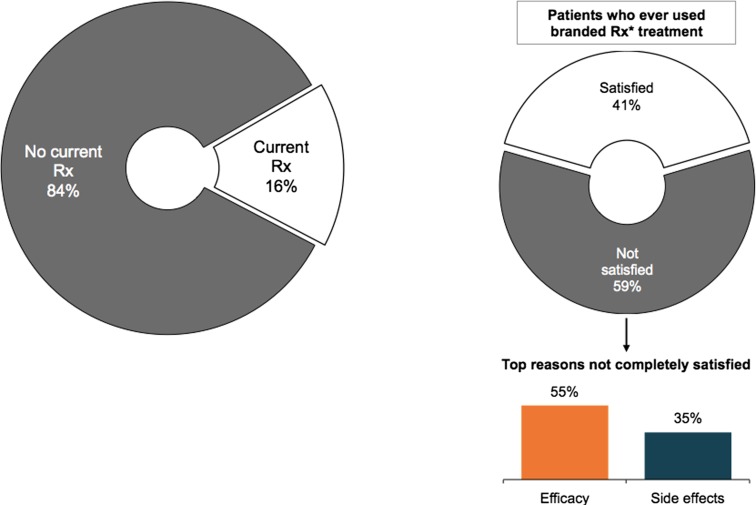
INTRODUCTION: There is limited literature comparing the experiences and attitudes of patients with chronic idiopathic constipation (CIC) to those of healthcare professionals (HCPs) treating CIC patients. The BURDEN-CIC study was conducted to better understand the experiences and ongoing needs of CIC patients and to assess their alignment versus disconnection with the perceptions and needs of HCPs who treat CIC patients. METHODS: to survey individuals with CIC (n = 1223). HCPs who treat CIC patients were recruited separately and participated in a complementary online questionnaire (n = 331). RESULTS: Most patients had used (58%) or were using (51%) over-the-counter treatments for their CIC, with only 16% currently on prescription therapy. More than half (59%) of current CIC prescription users were not satisfied/completely satisfied with their current chronic treatment. Many patients (42%) felt frustrated regarding their CIC, and a similar percentage (40%) expressed acceptance that CIC was part of their daily life. The majority of HCPs agreed that CIC patients were frustrated (72%), stressed (50%), or fed up (43%) with current treatment options but were relatively unaware (21%) that patients were accepting of their CIC. HCPs reported the greatest challenges in treating CIC patients as response rates to current therapies (55%), treatment adherence (55%), management of treatment-related diarrhea (34%), and lack of treatment options (34%). CONCLUSION: BURDEN-CIC identified that many patients and HCPs are frustrated and not satisfied with current CIC treatments due to lack of efficacy and side effects, such as diarrhea. The survey identified that many patients are "accepting" of their disease, potentially compromising treatment outcomes. More dialogue is needed between HCPs and CIC patients, especially regarding management of treatment expectations and side effects. Further, additional treatment options would be useful for both patients and HCPs. FUNDING: Synergy Pharmaceuticals Inc.
Overview
The claims and statistics of this paper haven’t been checked yet.
Free: it reads the open-access text and checks the first 5 claims that cite a source we can check. Create a free account to check every claim.
Integrity signals
Registry
Cites
Statistics
Figures
Verification
Claims the paper makes
The claims and statistics of this paper haven’t been checked yet.
Free: it reads the open-access text and checks the first 5 claims that cite a source we can check. Create a free account to check every claim.
Claims other papers make about this one
Each is checked against this paper’s own text: does it say what the citing paper says it does?
The source backs part of the claim, not all of it — or backs it for a different population, condition or comparison.
In the citing paper
“However, more than half are not satisfied with their current treatment [6, 7]”
From British Dietetic Association Guidelines for the Dietary Management of Chronic Constipation in Adults (2025) · cites this paper as [6]
Experimental — accuracy not yet measuredThe source backs part of the claim, not all of it — or backs it for a different population, condition or comparison.
In the citing paper
“Nearly all patients try lifestyle management options for symptom relief, including dietary modifications that primarily focus on increasing dietary fibre intake [6, 7].”
From British Dietetic Association Guidelines for the Dietary Management of Chronic Constipation in Adults (2025) · cites this paper as [6]
Experimental — accuracy not yet measuredThe source backs part of the claim, not all of it — or backs it for a different population, condition or comparison.
In the citing paper
“This interferes with the advice given by healthcare professionals, ultimately negatively impacting patients' symptom management and overall satisfaction [6, 7].”
From British Dietetic Association Guidelines for the Dietary Management of Chronic Constipation in Adults (2025) · cites this paper as [6]
Experimental — accuracy not yet measuredIn the citing paper
“However, there are considerable limitations with these guidelines, which may help explain the high treatment dissatisfaction rates [ 6 , 7 ].”
From British Dietetic Association Guidelines for the Dietary Management of Chronic Constipation in Adults (2025) · cites this paper as [6]
In the citing paper
“However, more than half are not satisfied with their current treatment [ 6 , 7 ], highlighting an urgent need to improve management strategies for chronic constipation.”
From British Dietetic Association Guidelines for the Dietary Management of Chronic Constipation in Adults (2025) · cites this paper as [6]
Self-check
Percentages, sums and reported differences re-computed from the paper’s own numbers.
The self-check needs the paper’s full text.
Citations
Cites
Lacy, B. E., Mearin, F., Chang, L., Chey, W. D., Lembo, A. J., Simren, M., & Spiller, R. (2016) · Gastroenterology · doi:10.1053/j.gastro.2016.02.031 · Cited by 2,866
Epidemiology of Constipation in North America: A Systematic Review
Higgins, P. D., & Johanson, J. F. (2004) · American Journal of Gastroenterology · doi:10.1111/j.1572-0241.2004.04114.x · Cited by 1,080
American Gastroenterological Association Technical Review on Constipation
Bharucha, A. E., Pemberton, J. H., & Locke, G. R. (2013) · Gastroenterology · doi:10.1053/j.gastro.2012.10.028 · Cited by 909
Suares, N. C., & Ford, A. C. (2011) · American Journal of Gastroenterology · doi:10.1038/ajg.2011.164 · Cited by 904
Chronic constipation: a survey of the patient perspective
JOHANSON, J. F., & KRALSTEIN, J. (2007) · Alimentary Pharmacology & Therapeutics · doi:10.1111/j.1365-2036.2006.03238.x · Cited by 617 · cited 7×
“[4] found that 73% of respondents reported that CIC symptoms impacted personal activities, and 69%”
BackgroundResultInfluentialPare, P., Ferrazzi, S., Thompson, W. G., Irvine, E. J., & Rance, L. (2001) · The American Journal of Gastroenterology · doi:10.1111/j.1572-0241.2001.05259.x · Cited by 439
Nellesen, D., Yee, K., Chawla, A., Lewis, B. E., & Carson, R. T. (2013) · Journal of Managed Care Pharmacy · doi:10.18553/jmcp.2013.19.9.755 · Cited by 242
Heidelbaugh, J. J., Stelwagon, M., Miller, S. A., Shea, E. P., & Chey, W. D. (2015) · American Journal of Gastroenterology · doi:10.1038/ajg.2015.67 · Cited by 157
Müller‐Lissner, S., Tack, J., Feng, Y., Schenck, F., & Specht Gryp, R. (2013) · Alimentary Pharmacology & Therapeutics · doi:10.1111/apt.12124 · Cited by 123
Emergency Department Burden of Constipation in the United States from 2006 to 2011
Sommers, T., Corban, C., Sengupta, N., Jones, M., Cheng, V., Bollom, A., Nurko, S., Kelley, J., & Lembo, A. (2015) · American Journal of Gastroenterology · doi:10.1038/ajg.2015.64 · Cited by 106
Cited by
Management of functional constipation in children and adults
Vriesman, M. H., Koppen, I. J. N., Camilleri, M., Di Lorenzo, C., & Benninga, M. A. (2020) · Nature Reviews Gastroenterology & Hepatology · doi:10.1038/s41575-019-0222-y · Cited by 457
Chang, L., Chey, W. D., Imdad, A., Almario, C. V., Bharucha, A. E., Diem, S., Greer, K. B., Hanson, B., Harris, L. A., Ko, C., et al. (2023) · Gastroenterology · doi:10.1053/j.gastro.2023.03.214 · Cited by 185
Self-citationBrenner, D. M., Fogel, R., Dorn, S. D., Krause, R., Eng, P., Kirshoff, R., Nguyen, A., Crozier, R. A., Magnus, L., & Griffin, P. H. (2018) · American Journal of Gastroenterology · doi:10.1038/s41395-018-0026-7 · Cited by 145
Self-citationvan der Schoot, A., Drysdale, C., Whelan, K., & Dimidi, E. (2022) · The American Journal of Clinical Nutrition · doi:10.1093/ajcn/nqac184 · Cited by 120
“However, half of people with constipation are dissatisfied with the current treatment options, primarily because of a lack of effectiveness and side effects (8).”
BackgroundSharma, A., Rao, S. S. C., Kearns, K., Orleck, K. D., & Waldman, S. A. (2021) · Alimentary Pharmacology & Therapeutics · doi:10.1111/apt.16369 · Cited by 84
Oh, S. J., Fuller, G., Patel, D. B., Khalil, C., Spalding, W. M., Nag, A., Spiegel, B. M. R., & Almario, C. V. (2020) · The American Journal of Gastroenterology · doi:10.14309/ajg.0000000000000614 · Cited by 87
“(15,18,27 – 30).”
InfluentialChang, L., Chey, W. D., Imdad, A., Almario, C. V., Bharucha, A. E., Diem, S. J., Greer, K. B., Hanson, B., Harris, L. A., Ko, C. W., et al. (2023) · The American Journal of Gastroenterology · doi:10.14309/ajg.0000000000002227 · Cited by 57
Self-citationQuigley, E. M. M., Horn, J. R., Kissous-Hunt, M., Crozier, R. A., & Harris, L. A. (2018) · Advances in Therapy · doi:10.1007/s12325-018-0733-x · Cited by 51
“The methodology for the BURDEN IBS-C study was nearly identical to that of the BURDEN-CIC study [5], with the only difference being the population disease state (i.e., IBS-C or CIC) studied.”
BackgroundMethodResultInfluentialSelf-citationBurden of Constipation: Looking Beyond Bowel Movements
Harris, L. A., & Chang, C. H. (2022) · The American Journal of Gastroenterology · doi:10.14309/ajg.0000000000001708 · Cited by 39
“Patients often report difficult bowel movement, bloating, abdominal discomfort, and abdominal pain as the most bothersome symptoms (4,5,16).”
BackgroundInfluentialSelf-citationBrenner, D. M., Harris, L. A., Chang, C. H., Waldman, S. A., Poppers, D. M., Kassebaum-Ladewski, A., & Sayuk, G. S. (2022) · The American Journal of Gastroenterology · doi:10.14309/ajg.0000000000001709 · Cited by 38
“In the US population-based surveys, more than 90% of respondents with CIC relied solely on OTC therapies to manage their constipation symptoms (2) and had tried an average of 3 OTC treatments before seeking help from a healthcare provider (4), suggesting a reluctance to escalate treatment.”
BackgroundInfluentialSelf-citationShah, E. D., Staller, K. D., Nee, J. W., Ahuja, N. K., Chan, W. W., Lembo, A. J., Brenner, D. M., Siegel, C. A., & Chey, W. D. (2021) · The American Journal of Gastroenterology · doi:10.14309/ajg.0000000000001403 · Cited by 31
Venkataraman, R., Shenoy, R., Ahire, J. J., Neelamraju, J., & Madempudi, R. S. (2021) · Probiotics and Antimicrobial Proteins · doi:10.1007/s12602-021-09855-8 · Cited by 32
Laxative Use in the Community: A Literature Review
Werth, B. L., & Christopher, S. A. (2021) · Journal of Clinical Medicine · doi:10.3390/jcm10010143 · Cited by 26
“Another US study found that, of 1223 adults with chronic constipation, only 40% were satisfied with OTC laxatives [9].”
BackgroundInfluentialBritish Dietetic Association Guidelines for the Dietary Management of Chronic Constipation in Adults
Dimidi, E., van der Schoot, A., Barrett, K., Farmer, A. D., Lomer, M. C., Scott, S. M., & Whelan, K. (2025) · Journal of Human Nutrition and Dietetics · doi:10.1111/jhn.70133 · Cited by 25
Barish, C. F., & Griffin, P. H. (2018) · Current Medical Research and Opinion · doi:10.1080/03007995.2018.1430024 · Cited by 25
Aminizadeh, M., Tirgari, B., Rashtabadi, O. R., Jahani, Y., & Tajadini, H. (2023) · BMC Geriatrics · doi:10.1186/s12877-023-03881-7 · Cited by 20
“Similarly, a study reported that many patients were dissatisfied with current constipation treatments due to ineffectiveness and side effects of medications, and that complementary treatment options would be beneficial for patients [30].”
BackgroundTaylor, D. C. A., Abel, J. L., Martin, C. K., Doshi, J. A., Essoi, B., Korrer, S., Reasner, D. S., Carson, R. T., & Hunter, A. G. (2020) · Journal of Medical Economics · doi:10.1080/13696998.2020.1799816 · Cited by 20
Staller, K. D., Hinson, J., Kerstens, R., Spalding, W. M., & Lembo, A. J. (2021) · The American Journal of Gastroenterology · doi:10.14309/ajg.0000000000001521 · Cited by 21
“Participants with a baseline (week 0) abdominal bloating score of moderate (2), severe (3), or very severe (4) were included.”
BackgroundPatient-reported experiences with refractory or unexplained chronic cough: a qualitative analysis
Bali, V., Schelfhout, J., Sher, M., Peters, A. T., Patel, G. B., Mayorga, M. A., Goss, D., & DeMuro, C. (2024) · Therapeutic Advances in Respiratory Disease · doi:10.1177/17534666241236025 · Cited by 20
Lacy, B. E., Shea, E. P., Manuel, M., Abel, J. L., Jiang, H., & Taylor, D. C. A. (2021) · PLOS ONE · doi:10.1371/journal.pone.0243318 · Cited by 17
Tegaserod: What’s Old Is New Again
Sayuk, G. S., & Tack, J. F. (2022) · Clinical Gastroenterology and Hepatology · doi:10.1016/j.cgh.2022.01.024 · Cited by 19
Huang, S.-Y., Chiao, C., & Chien, L. (2024) · International Journal of Nursing Studies · doi:10.1016/j.ijnurstu.2024.104936 · Cited by 24
Diagnosing Constipation Spectrum Disorders in a Primary Care Setting
Heidelbaugh, J. J., de Andino, N. M., Pineles, D., & Poppers, D. M. (2021) · Journal of Clinical Medicine · doi:10.3390/jcm10051092 · Cited by 22
“A patient’s quality of life (QoL) is understandably negatively correlated with the severity of constipation [1,3,12].”
BackgroundInfluentialPatel, S. N., Doerfler, B., Boutros, K., Ng, S., Manuel, M., & DeSimone, E. (2021) · International Journal of General Medicine · doi:10.2147/ijgm.s274568 · Cited by 20
Nakajima, A., Fujimaki, M., Arai, Y., & Emori, K. (2022) · Journal of Neurogastroenterology and Motility · doi:10.5056/jnm20263 · Cited by 20
“…chronic constipation were not fully satisfied with the efficacy of these treatments, and there are gaps in satisfaction between physicians and patients with regard to treatment 10,11 in the selection of drug treatment for constipation and in the definition of efficacy among doctors and patients.”
LaCross, J. A., Borello‐France, D., Marchetti, G. F., Turner, R. L., & George, S. (2022) · Journal of Womenʼs Health Physical Therapy · doi:10.1097/jwh.0000000000000244 · Cited by 17
Heemskerk, S. C. M., Dirksen, C. D., van Kuijk, S. M. J., Benninga, M. A., Baeten, C. I. M., Masclee, A., Melenhorst, J., & Breukink, S. O. (2023) · Annals of Surgery · doi:10.1097/sla.0000000000006158 · Cited by 19
Sharma, A., Herekar, A., Bhagatwala, J., & Rao, S. S. C. (2019) · Clinical and Experimental Gastroenterology · doi:10.2147/ceg.s145668 · Cited by 17
“Lubiprostone, a bicyclic fatty acid derived from prostaglandin E1 that activates CIC-2 chloride channels, should be considered a second-line pro-secretory agent for laxative-refractory CIC.”
BackgroundInfluentialvan der Schoot, A., Creedon, A., Whelan, K., & Dimidi, E. (2023) · Neurogastroenterology & Motility · doi:10.1111/nmo.14613 · Cited by 12
Werth, B. L., Williams, K. A., Fisher, M., & Pont, L. (2020) · European Journal of Clinical Pharmacology · doi:10.1007/s00228-020-02865-5 · Cited by 13
O’Brien, L., WILKINSON, T. J., Frampton, C., Gearry, R. B., & Wall, C. L. (2024) · American Journal of Clinical Nutrition · doi:10.1016/j.ajcnut.2024.05.026 · Cited by 10
Lundberg, V., Boström, A., Gottberg, K., & Konradsen, H. (2020) · Journal of Multidisciplinary Healthcare · doi:10.2147/jmdh.s277727 · Cited by 13
“This will open up for a dialogue between patients and healthcare professionals and might change clinical practice.(20,41,42) Several healthcare professionals described the need to communicate with the patient about experiences of bowel function; however, it was healthcare professionals who decided which treatment opti…”
BackgroundBarish, C., Dorn, S., Fogel, R. P., Patel, R., & Rosenberg, J. (2021) · Digestive Diseases and Sciences · doi:10.1007/s10620-020-06187-5 · Cited by 8
L-Arabinose Alleviates Functional Constipation in Mice by Regulating Gut Microbiota and Metabolites
Liu, K., Dong, H., Li, X., Hu, C., Cui, F., Li, S., Zhang, X., Du, Y., Yang, P., Ji, W., et al. (2025) · Foods · doi:10.3390/foods14050900 · Cited by 11
“It is characterized by lumpy or hard stools, infrequent bowel movements, abdominal cramps, and bloating [4].”
Lembo, A. J., Simons, M. L., Loesch, J., Hamza, E., Graff, E. L., Quigley, E. M. M., & Rao, S. S. C. (2024) · Alimentary Pharmacology & Therapeutics · doi:10.1111/apt.18198 · Cited by 11
Self-citationEvidence-based treatment recommendations for OTC management of chronic constipation
Rao, S. S. C., & Brenner, D. M. (2022) · Journal of the American Association of Nurse Practitioners · doi:10.1097/jxx.0000000000000760 · Cited by 12
“Further complicating this is that almost two-thirds of individuals with chronic constipation never discuss their condition with a health care provider (HCP; Oh et al., 2020) and 40%–50% self-treat with OTC laxatives (Oh et al., 2020; Pinto Sanchez & Bercik, 2011).”
BackgroundInfluentialBoyd, T., Paz, M., Ahmad, I., Rao, F. U., Samad, A., Garcia‐Fischer, I., Silvernale, C. J., Murray, H. B., & Staller, K. D. (2023) · Gastro Hep Advances · doi:10.1016/j.gastha.2023.01.004 · Cited by 10
Over-The-Counter Remedies in Older Adults
Safari, D., DeMarco, E. C., Scanlon, L., & Grossberg, G. T. (2021) · Clinics in Geriatric Medicine · doi:10.1016/j.cger.2021.07.005 · Cited by 8
Bang, K. B., Choi, J. H., Park, J. H., Lee, S., Rho, M., Lee, S.-W., Lee, S., & Shin, J. E. (2022) · Saudi Journal of Gastroenterology · doi:10.4103/sjg.sjg_400_21 · Cited by 9
Yang, L., Zong, Y., Meng, F., Wu, Y., & Zhang, S. (2025) · Journal of Gastroenterology and Hepatology · doi:10.1111/jgh.16844 · Cited by 5
“Furthermore, previous studies have indicated that approximately 60% of patients expect an SBM response within 24 h after administration [44, 45].”
Kessoku, T., Ishihara, Y., Takahashi, K., Dang, T. H., Ohira, M., Horiuchi, M., Shibata, C., Uchida, A., Toriumi, Y., Misawa, N., et al. (2025) · Neurogastroenterology & Motility · doi:10.1111/nmo.70106 · Cited by 8
Rao, S. S. C., Laitman, A. P., & Miner, P. B. (2023) · Clinical and Translational Gastroenterology · doi:10.14309/ctg.0000000000000598 · Cited by 5
Kassebaum-Ladewski, A., Poppers, D. M., & Brenner, D. M. (2022) · The American Journal of Gastroenterology · doi:10.14309/ajg.0000000000001686 · Cited by 4
“GASTROINTESTINAL SYMPTOMSDRIVING PATIENTS TO SEEK CARE Gastrointestinal symptoms, such as abdominal pain, discomfort, and difficult bowel movements, are prevalent among the general population and are known to drive many patients to seek evaluations fromahealthcare provider (1,2,8).”
BackgroundInfluentialBritish Dietetic Association Guidelines for the Dietary Management of Chronic Constipation in Adults
Dimidi, E., van der Schoot, A., Barrett, K., Farmer, A. D., Lomer, M. C., Scott, S. M., & Whelan, K. (2025) · Neurogastroenterology & Motility · doi:10.1111/nmo.70173 · Cited by 5
Yoshihara, T., Kessoku, T., Takatsu, T., Misawa, N., Ashikari, K., Fuyuki, A., Ohkubo, H., Higurashi, T., Iwaki, M., Kurihashi, T., et al. (2022) · Contemporary Clinical Trials Communications · doi:10.1016/j.conctc.2022.101019 · Cited by 3
“Studies involving patients with IBS-C and CIC have also shown that of the large number of patients treated with over-the-counter and prescription drugs, many are not satisfied with their effectiveness and suffer from inadequate efficacy and side effects such as diarrhea [18,19].”
BackgroundCash, B. D., Lü, M., Lembo, A. J., Feuerstadt, P., Nguyen, L. A. B., Terasawa, E., Ayyagari, R., Du, S., Pi, S., Westermeyer, B., et al. (2024) · Journal of Managed Care & Specialty Pharmacy · doi:10.18553/jmcp.2024.30.10.1136 · Cited by 9
Hinson, J., Achenbach, H., Terreri, B., & Boules, M. (2023) · Neurogastroenterology & Motility · doi:10.1111/nmo.14563 · Cited by 2
The Burden and Treatment of Chronic Constipation Among US Nursing Home Residents
Zhang, T., Zullo, A. R., James, H. O., Lee, Y., Taylor, D. C. A., & Daiello, L. A. (2023) · Journal of the American Medical Directors Association · doi:10.1016/j.jamda.2023.05.006 · Cited by 6
“34 The effects of CC on emotional well-being and QoL of NH residents are not as well studied but are of particular concern for residents unable to communicate their experiences because of cognitive impairment or other limitations.”
BackgroundCost-Effectiveness of Vibrant System vs. Linaclotide in Chronic Idiopathic Constipation
Voigt, J. D., & Frissora, C. L. (2024) · Advances in Therapy · doi:10.1007/s12325-024-03035-0 · Cited by 2
Shah, E. D., Lee, T., Baldwin, Z. K., Kort, J., Ando, M., Champaloux, S. W., Boules, M., & González, Y. S. (2025) · Advances in Therapy · doi:10.1007/s12325-025-03163-1 · Cited by 2
Step on the accelerator: modern treatment of constipation
Staursky, D., Shimoga, D., & Sharma, A. (2023) · Current Opinion in Gastroenterology · doi:10.1097/mog.0000000000000982 · Cited by 2
de Andino, N. M. (2018) · Journal of the American Association of Nurse Practitioners · doi:10.1097/jxx.0000000000000090 · Cited by 4
Staller, K. D., Barshop, K., Vélez, C. D., Bailey, A., Locascio, J. J., Chiquette, E., & Kuo, B. (2020) · Journal of Neurogastroenterology and Motility · doi:10.5056/jnm20001 · Cited by 2
“896 Daily constipation severity (1-10) 4.”
BackgroundInfluentialMoshiree, B., Schoenfeld, P., Franklin, H., & Rezaie, A. R. (2022) · Clinical Therapeutics · doi:10.1016/j.clinthera.2021.11.009 · Cited by 1
The Vibrating Capsule: Safety and Tolerability in Patients With Chronic Idiopathic Constipation
Curtin, B. F., Quigley, E. M. M., Chey, W. D., Lembo, A. J., Brenner, D. M., Spiegel, B. M. R., & Rao, S. S. C. (2025) · Neurogastroenterology & Motility · doi:10.1111/nmo.15004 · Cited by 8
“In addition, 55% of health care providers surveyed reported inadequate treatment response to pharmacologic therapies, and 34% described managing treatment-emergent diarrhea as most challenging [21].”
Self-citationBai, T., Xu, Z., Zhen, Y., Liao, A., Wang, B., Zhao, R., Zhu, Y., Dai, N., Liu, S., Zhao, H., et al. (2025) · Drugs · doi:10.1007/s40265-025-02205-w · Cited by 3
A “Curriculum of Information Needs” of Parents of Children With Chronic Constipation
Zaman, S. S., Ashley-Norman, T., Sutcliffe, J. R., & Cartledge, P. (2025) · Clinical Pediatrics · doi:10.1177/00099228251395563 · Cited by 1
Transanal Irrigation in Functional Constipation: Long-term Results From an Italian National Study
Falletto, E., Martellucci, J., Rossitti, P., Zucchi, E., Bondurri, A. A., Zaffaroni, G., Ascanelli, S., Chimisso, L., D’Alba, L., Bellini, M., et al. (2026) · Diseases of the Colon & Rectum · doi:10.1097/dcr.0000000000004224 · Cited by 3
Feuerstadt, P., Lü, M., Terasawa, E., Terreri, B., Du, S., Pi, S., Westermeyer, B., Ayyagari, R., Lembo, A. J., Moshiree, B., et al. (2025) · Gastro Hep Advances · doi:10.1016/j.gastha.2025.100664 · Cited by 1
Inconvenient topic: laxative abuse. review and clinical case
Konovalova, N. V., Стопінчук, О. В., & Крикус, О. Ю. (2020) · Reports of Vinnytsia National Medical University · doi:10.31393/reports-vnmedical-2020-24(4)-28 · Cited by 1
Tian, J., CUI, L., Li, F., & FENGLINGWANG (2021) · Indian Journal of Pharmaceutical Sciences · doi:10.36468/pharmaceutical-sciences.spl.191 · Cited by 1
“There are certain mental and psychological changes in patients with long term habitual constipation, mainly as follows: poor anorexia, mental tension, anxiety, physical fatigue, lack of sleep and even severe insomnia[20,21].”
BackgroundSouth, C., Havemann, B. D., Hogan, R. B., Levitan, O., & Cronly, K. (2021) · Archives of Gastroenterology and Hepatology · doi:10.22259/2639-1813.0401002
Blair, H. A. (2018) · Drugs & Therapy Perspectives · doi:10.1007/s40267-018-0579-y
Constipation and Laxative Use in the Community
Werth, B. L. (2019) · The Sydney eScholarship Repository (The University of Sydney)
Waha, J. E., & Pfeifer, J. (2020) · Springer eBooks · doi:10.1007/978-3-030-43811-1_18
Bloem, M. N., Keszthelyi, D., Benninga, M. A., & Koppen, I. J. N. (2025) · Gastroenterology Clinics of North America · doi:10.1016/j.gtc.2025.01.002
Varma, S., Dicken, Q. G., Silvernale, C. J., Kochar, B. D., & Staller, K. D. (2025) · Neurogastroenterology & Motility · doi:10.1111/nmo.70161
“In the general population, fiber is the most frequently used treatment for constipation by a large margin [15, 16].”
Brenner, D. M., Moshiree, B., de Courcy, J., Reynolds, N. A., Taylor-Whiteley, T., Jiang, J., Lu, M., Terreri, B., & Shah, E. D. (2026) · Gastro Hep Advances · doi:10.1016/j.gastha.2026.100900
“8,24 A US patient questionnaire conducted in 2016 reported less than half (41”
Takaki, H., Hagihara, A., Kobayashi, D., & Koyanagi, S. (2026) · Women s Health Reports · doi:10.1177/26884844261424789 · Cited by 1
Zhou, Z., Li, Y., Tu, Y., He, M., Liao, D., He, Z., 刘志仁, Li, B., 周祖刚, & 艾双春 (2026) · Frontiers in Pharmacology · doi:10.3389/fphar.2026.1761301
“Consequently, many patients report ongoing symptoms and low satisfaction with existing therapies (Drossman et al., 2009; Harris et al., 2017), highlighting a significant unmet clinical need.”
Evaluation of senna-based laxatives' candies: A cross-sectional study on constipation management
Malik, S. (2026) · Arab Journal of Gastroenterology · doi:10.1016/j.ajg.2025.12.003
Takagi, T., Shin, T., Yoneda, S., Higashikawa, M., Shimada, Y., Umeyama, M., & Ueno, M. (2026) · Digestion · doi:10.1159/000552237
Clukey, J., Locascio, J. J., Semler, J. R., Patel, Y., Makous, J. C., Attaluri, A., Kuo, B., & Staller, K. D. (2026) · Journal of Clinical Gastroenterology · doi:10.1097/mcg.0000000000002405
Lambiase, C., Fornai, M., Corsetti, M., & Bellini, M. (2026) · Frontiers in Pharmacology · doi:10.3389/fphar.2026.1983671
Ren, C., Yang, G., Wu, M., Xing, Y., Ren, J., Tu, J., Wang, L., & Yang, J. (2026) · Journal of Traditional Chinese Medical Sciences · doi:10.1016/j.jtcms.2026.09.003
Metadata
- Authors
- Harris, L. A., Horn, J., Kissous-Hunt, M., Magnus, L., & Quigley, E. M. M.
- Affiliations
- Mayo Clinic in Arizona (US)
- University of Washington (US)
- Synergy Pharmaceuticals (United States) (US)
- Houston Methodist (US)
- Corresponding author
- Quigley, Eamonn M. M.
- Venue
- Advances in Therapy
- Published
- 2017-11-06
- Volume
- 34
- Issue
- 12
- Pages
- 2661-2673
- ISSN
- 0741-238X (ISSN-L)
- 1865-8652
- PMC
- PMC5709448
- OpenAlex
- W2767840932
- Cited by
- 75
- References
- 14
- Citations by year
- 2026: 9 · 2025: 11 · 2024: 7 · 2023: 10 · 2022: 11 · 2021: 11 · 2020: 8 · 2019: 3 · 2018: 5
- FWCI
- 4.60
- Type
- journal article
- Language
- en
- Open access
- hybrid
- doi.org
- Licence
- Locations
- Advances in Therapy (publishedVersion, cc-by-nc)
- Europe PMC (PubMed Central) (publishedVersion, cc-by-nc)
- PubMed Central (publishedVersion, cc-by-nc)
- PubMed (publishedVersion)
- Funders
- Synergy Pharmaceuticals Inc
- Topics
- Health Sciences › Medicine › Gastroenterology › Gastrointestinal motility and disorders
- Health Sciences › Medicine › Urology › Pelvic floor disorders treatments
- Health Sciences › Medicine › Surgery › Congenital gastrointestinal and neural anomalies
- Keywords
- chronic idiopathic constipation, patient experience, healthcare professional perceptions, treatment satisfaction, over-the-counter laxatives, medication adherence, patient-physician communication, treatment expectations
- MeSH terms
- Adult, Aged, Aged, 80 and over, Attitude of Health Personnel, Chronic Disease, Constipation, Female, Health Personnel, Humans, Male, Middle Aged, Patients, Surveys and Questionnaires, Needs Assessment, Drug-Related Side Effects and Adverse Reactions
About these checks
Registry, retraction, Cites and statistics results are computed, not judged, with one exception: a printed reference that no index lists is read once by a model before it counts as a citation error. Claims are extracted by a model and kept only when their quote appears verbatim in the text; each cited source is then checked, with a model’s help, for whether it says what the claim relies on. Those verdicts can be wrong — read the claim’s quote and the cited source before relying on one.
Statistics and arithmetic are recomputed, not judged.
Confidence bands are shown only for fields calibrated on our annotated test set. None is calibrated yet, so no band is shown.
What counts as a claim ›How we measure confidence ›How we check this ›
Are you an author, or do you see a problem with this page? Request a review
Data sources
Bibliographic data: Semantic Scholar, OpenAlex, Crossref.
Contains information from the Semantic Scholar Academic Graph Datasets, made available under the ODC Attribution License (ODC-BY 1.0).
Semantic Scholar’s data is described in: Kinney, R., et al. (2023). The Semantic Scholar Open Data Platform. arXiv:2301.10140.
