

Clinical, Economic, and Patient-Reported Benefits of Connected Insulin Pen Systems: A Systematic Literature Review
Open accessThe DOI matches its Crossref record; 43 of the 44 references it cites were found in a registry or an index.
Abstract
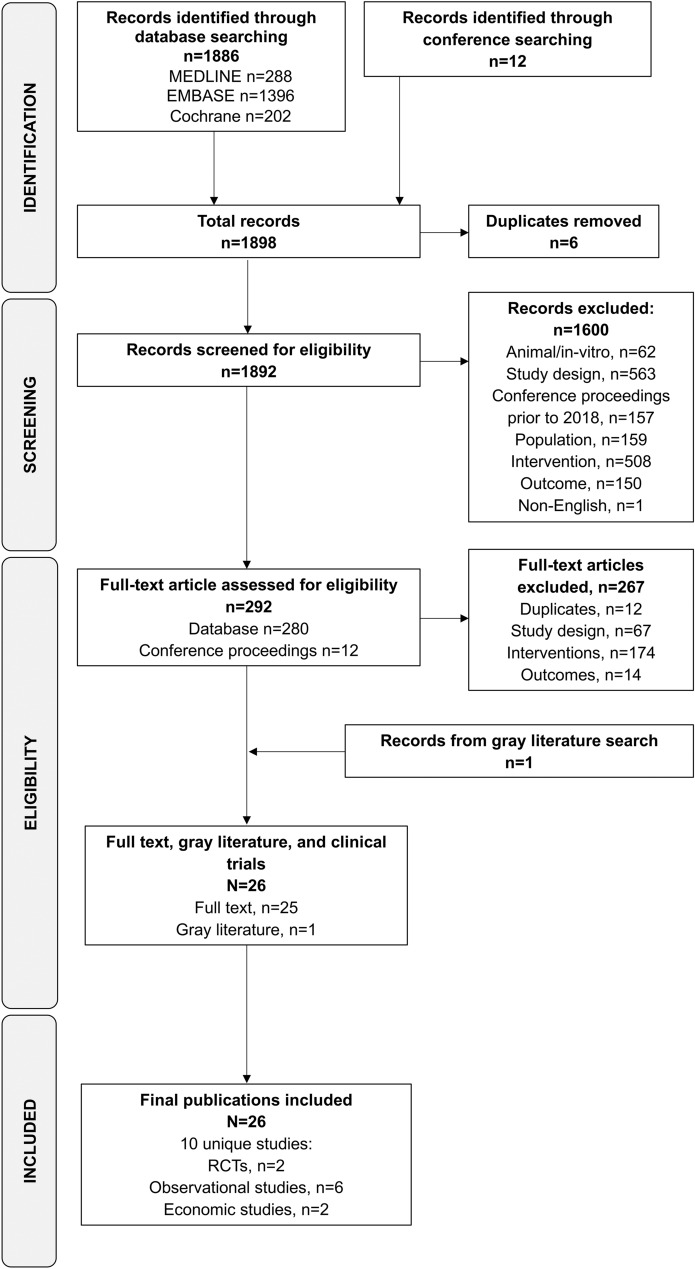
The objective of this systematic literature review was to evaluate the available literature concerning the clinical, economic, and patient-reported benefits of insulin pen platforms, including connected insulin pens/caps/sleeves and insulin platforms, as well as mobile apps capable of receiving near real-time insulin dosing information. Medline and Embase databases and the Cochrane Library were searched for published literature between January 2015 and May 2021, and manual searches for conference abstracts from 2018 to May 2021 were performed. These searches were supplemented by internet searches for relevant literature and clinical trials. Study selection involved the population, intervention, comparator, outcomes, time frame, and study design outline. Included studies investigated connected insulin systems or connected caps/sleeves enabling pens to be connected, or apps able to connect to these systems, in individuals of all ages with type 1 or type 2 diabetes mellitus. Searches identified a total of 26 publications (mostly observational studies and conference abstracts) for inclusion, representing ten unique, predominantly small studies. Evidence in this field is still in its early stages, and only two randomized controlled trials met our inclusion criteria. Available results showed that connected insulin pens and their systems potentially helped reduce suboptimal insulin use and may therefore improve glycemic control. Satisfaction of people with diabetes with the technologies used was high, and economic benefits were noted. Features of effective connected insulin pen devices include simplicity of use and data upload/sharing, useful “point-of-care” alerts, and simple and understandable data presentation to facilitate more effective consultations. Connected insulin pen systems could be increasingly considered as part of routine clinical care for insulin-treated persons with diabetes who must manage the complexity of their daily insulin routine. Future research focusing on the way data obtained from these devices can be most effectively used alongside other information is urgently needed. Digital health tools, like text message reminders and mobile apps, are being used more often to help people with diabetes improve their health in a way that works for them. For people who take insulin to treat their diabetes, what has been missing is a way to track insulin doses alongside other diabetes information in an app. Connected insulin pens, also called smart pens, are able to do this. In this article we have looked at the evidence available on the benefits of connected insulin pens. We found that while information on connected insulin pens is limited at the moment, what there is shows that using a connected insulin pen can help people remember to take their insulin and give themselves the right dose and that those who have used a connected insulin pen or related technology are happy with it. Useful features of connected insulin pens include being easy to use, having an alert function, and being able to share the insulin information with the user’s doctor. Connected insulin pens may also reduce diabetes-related costs. Connected insulin pens are likely to become more common for people with diabetes who take insulin, but there is a need for more research on how best to use them to improve the treatment of people with diabetes.
Overview
The claims and statistics of this paper haven’t been checked yet.
Free: it reads the open-access text and checks the first 5 claims that cite a source we can check. Create a free account to check every claim.
Integrity signals
Registry
Cites
Statistics
Figures
Verification
Claims the paper makes
The claims and statistics of this paper haven’t been checked yet.
Free: it reads the open-access text and checks the first 5 claims that cite a source we can check. Create a free account to check every claim.
Claims other papers make about this one
Each is checked against this paper’s own text: does it say what the citing paper says it does?
In the citing paper
“A systematic review of connected insulin pens or pen caps showed improvement of glucose outcomes whether as A1C reduction, TIR increase, or hypoglycemia reduction (155).”
From 7. Diabetes Technology: Standards of Care in Diabetes—2025 (2025) · cites this paper as [155]
Self-check
Percentages, sums and reported differences re-computed from the paper’s own numbers.
The self-check needs the paper’s full text.
Citations
Cites
Preferred Reporting Items for Systematic Reviews and Meta-Analyses: the PRISMA statement
Moher, D., Liberati, A., Tetzlaff, J., Altman, D. G., & for the PRISMA Group (2009) · BMJ · doi:10.1136/bmj.b2535 · Cited by 83,823
Preferred Reporting Items for Systematic Reviews and Meta-Analyses: The PRISMA Statement
Moher, D., Liberati, A., Tetzlaff, J., & Altman, D. G. (2009) · Journal of Clinical Epidemiology · doi:10.1016/j.jclinepi.2009.06.005 · Cited by 19,575 · cited 1×
“…according to the Cochrane Handbook for Systematic Reviews of Interventions [22], the Pre-ferred Reporting Items for Systematic Reviews and Meta-Analyses (PRISMA) guidelines [23], and the systematic review methods specified by the National Institute for Health and Care Excellence (NICE) in Sect.”
(2014) · Medical Entomology and Zoology · Cited by 17,633
Cochrane Handbook for Systematic Reviews of Interventions
(2019) · doi:10.1002/9781119536604 · Cited by 14,828
International Diabetes Federation 2017
Carracher, A. M., Marathe, P. H., & Close, K. L. (2018) · Journal of Diabetes · doi:10.1111/1753-0407.12644 · Cited by 13,418
Cumpston, M., Li, T., Page, M. J., Chandler, J., Welch, V. A., Higgins, J. P., & Thomas, J. (2019) · Cochrane Database of Systematic Reviews · doi:10.1002/14651858.ed000142 · Cited by 7,218
Davies, M. J., D’Alessio, D. A., Fradkin, J., Kernan, W. N., Mathieu, C., Mingrone, G., Rossing, P., Tsapas, A., Wexler, D. J., & Buse, J. B. (2018) · Diabetologia · doi:10.1007/s00125-018-4729-5 · Cited by 1,455
Mobile-health: A review of current state in 2015
Silva, B. M. C., Rodrigues, J. J. P. C., de la Torre Díez, I., López-Coronado, M., & Saleem, K. (2015) · Journal of Biomedical Informatics · doi:10.1016/j.jbi.2015.06.003 · Cited by 871 · cited 1×
“Through providing objective, integrated data, connected insulin pen systems may improve clinical decision-making and facilitate proactive, patient-centered management of diabetes, resulting in improved glycemic control and clinical outcomes as well as reduced health care costs [17, 18, 20, 21].”
Williams, R., Karuranga, S., Malanda, B., Saeedi, P., Basit, A., Besançon, S., Bommer, C., Esteghamati, A., Ogurtsova, K., Zhang, P., et al. (2020) · Diabetes Research and Clinical Practice · doi:10.1016/j.diabres.2020.108072 · Cited by 861 · cited 1×
“Diabetes is associated with a substantial economic burden on society [2].”
Trends in diabetes treatment and control in U.S. adults, 1999-2018
Fang, M., Wang, D., Coresh, J., & Selvin, E. (2021) · New England Journal of Medicine · doi:10.1056/nejmsa2032271 · Cited by 690 · cited 1×
“Evidence suggests that, despite numerous advances in insulin innovations, adequate glucose con-trol in individuals with diabetes occurs less frequently than seen for other metabolic targets, such as blood pressure [10] or lipid levels [11].”
Peyrot, M., Barnett, A. H., Meneghini, L. F., & Schumm‐Draeger, P. ‐. (2012) · Diabetic Medicine · doi:10.1111/j.1464-5491.2012.03605.x · Cited by 655 · cited 1×
“In people requiring insulin therapy, key elements of this ‘‘failure’’ are barriers to appropriate dose adjustment and insulin omission/non-adherence (either intentional or unintentional); as such, these are important issues to address to improve diabetes management [12, 13].”
6. Glycemic Targets: Standards of Medical Care in Diabetes—2019
American Diabetes Association (2019) · Diabetes Care · doi:10.2337/dc19-s006 · Cited by 655 · cited 1×
“Achieving glycemic control is the corner-stone of disease management in diabetes [5, 6], with glycemic targets difficult to achieve, especially for those treated with insulin [7–9].”
Type 2 diabetes and quality of life
Trikkalinou, A., Papazafiropoulou, A. K., & Melidonis, A. (2017) · World Journal of Diabetes · doi:10.4239/wjd.v8.i4.120 · Cited by 597 · cited 1×
“People with diabetes also experience considerable burden associated with their disease, including pain, anxiety, inconvenience, and loss of health-related quality of life (QoL) [3, 4].”
7. Diabetes Technology: Standards of Medical Care in Diabetes—2022
American Diabetes Association Professional Practice Committee (2022) · Diabetes Care · doi:10.2337/dc22-s007 · Cited by 358
Shan, R., Sarkar, S., & Martin, S. S. (2019) · Diabetologia · doi:10.1007/s00125-019-4864-7 · Cited by 339 · cited 1×
“Through providing objective, integrated data, connected insulin pen systems may improve clinical decision-making and facilitate proactive, patient-centered management of diabetes, resulting in improved glycemic control and clinical outcomes as well as reduced health care costs [17, 18, 20, 21].”
Evaluation of the Cascade of Diabetes Care in the United States, 2005-2016
Kazemian, P., Shebl, F. M., McCann, N., Walensky, R. P., & Wexler, D. J. (2019) · JAMA Internal Medicine · doi:10.1001/jamainternmed.2019.2396 · Cited by 252 · cited 1×
“Evidence suggests that, despite numerous advances in insulin innovations, adequate glucose con-trol in individuals with diabetes occurs less frequently than seen for other metabolic targets, such as blood pressure [10] or lipid levels [11].”
Chua, S.-S., Ong, W. M., & Ng, C. J. (2014) · Patient Preference and Adherence · doi:10.2147/ppa.s57567 · Cited by 232 · cited 1×
“People with diabetes also experience considerable burden associated with their disease, including pain, anxiety, inconvenience, and loss of health-related quality of life (QoL) [3, 4].”
Peyrot, M., Barnett, A. H., Meneghini, L. F., & Schumm‐Draeger, P. ‐. (2012) · Diabetes, Obesity and Metabolism · doi:10.1111/j.1463-1326.2012.01636.x · Cited by 143
Adolfsson, P., Hartvig, N. V., Kaas, A., Møller, J. B., & Hellman, J. (2020) · Diabetes Technology & Therapeutics · doi:10.1089/dia.2019.0411 · Cited by 139
Phillip, M., Bergenstal, R. M., Close, K. L., Danne, T., Garg, S. K., Heinemann, L., Hirsch, I. B., Kovatchev, B. P., Laffel, L. M., Mohan, V., et al. (2021) · Diabetes Technology & Therapeutics · doi:10.1089/dia.2020.0375 · Cited by 135
Smart Connected Insulin Pens, Caps, and Attachments: A Review of the Future of Diabetes Technology
Sangave, N. A., Aungst, T. D., & Patel, D. K. (2019) · Diabetes Spectrum · doi:10.2337/ds18-0069 · Cited by 90
Challenges in Diabetes Care: Can Digital Health Help Address Them?
Iyengar, V., Wolf, A., Brown, A., & Close, K. (2016) · Clinical Diabetes · doi:10.2337/diaclin.34.3.133 · Cited by 84 · cited 3×
“Through providing objective, integrated data, connected insulin pen systems may improve clinical decision-making and facilitate proactive, patient-centered management of diabetes, resulting in improved glycemic control and clinical outcomes as well as reduced health care costs [17, 18, 20, 21].”
Jendle, J., Ericsson, Å., Gundgaard, J., Møller, J. B., Valentine, W. J., & Hunt, B. (2021) · Diabetes Therapy · doi:10.1007/s13300-020-00980-1 · Cited by 68
Evidence-based Mobile Medical Applications in Diabetes
Drincic, A., Prahalad, P., Greenwood, D., & Klonoff, D. C. (2016) · Endocrinology and Metabolism Clinics of North America · doi:10.1016/j.ecl.2016.06.001 · Cited by 63 · cited 2×
“Through providing objective, integrated data, connected insulin pen systems may improve clinical decision-making and facilitate proactive, patient-centered management of diabetes, resulting in improved glycemic control and clinical outcomes as well as reduced health care costs [17, 18, 20, 21].”
Real-World Evidence: Promise and Peril For Medical Product Evaluation.
Dhruva, S. S., Ross, J. S., & Desai, N. R. (2018) · Europe PMC (PubMed Central) · Cited by 51
Taira, D. A., Ma, C., Kumasaka, A., Shimada, R., & Davis, J. W. (2014) · Population Health Management · doi:10.1089/pop.2013.0099 · Cited by 45 · cited 1×
“Achieving glycemic control is the corner-stone of disease management in diabetes [5, 6], with glycemic targets difficult to achieve, especially for those treated with insulin [7–9].”
Holmes-Walker, D. J., Abraham, M. B., Chee, M., Jones, T. W., & Australasian Diabetes Data Network (ADDN) Study Group (2022) · Internal Medicine Journal · doi:10.1111/imj.15426 · Cited by 38 · cited 1×
“Achieving glycemic control is the corner-stone of disease management in diabetes [5, 6], with glycemic targets difficult to achieve, especially for those treated with insulin [7–9].”
Digital Health Interventions for Diabetes: Everything to Gain and Nothing to Lose
Kerr, D., King, F., & Klonoff, D. C. (2019) · Diabetes Spectrum · doi:10.2337/ds18-0085 · Cited by 37 · cited 1×
“…hypoglycemic events), result in better adherence, provide decision support by allowing people with diabetes and their health care providers to look at trends over time, improve the well-being of the person with diabetes, and reduce disease-related burden on the person with diabetes [18, 54, 55].”
Insulclock : A Novel Insulin Delivery Optimization and Tracking System
Gomez-Peralta, F., Abreu, C., Gomez-Rodriguez, S., & Ruiz, L. (2019) · Diabetes Technology & Therapeutics · doi:10.1089/dia.2018.0361 · Cited by 30
Charleer, S., De Block, C., Radermecker, R., Weber, E., Vercammen, C., Strivay, M., Scarniere, D., Taes, Y., Spincemaille, K., LOWYCK, I., et al. (2020) · Diabetes Technology & Therapeutics · doi:10.1089/dia.2020.2525.abstracts · Cited by 29
Gomez-Peralta, F., Abreu, C., Gomez-Rodriguez, S., Cruz-Bravo, M., María-Sanchez, C., Poza, G., & Ruiz-Valdepeñas, L. (2020) · Diabetes Technology & Therapeutics · doi:10.1089/dia.2019.0427 · Cited by 25
Piotie, P. N., Webb, E. M., & Rheeder, P. (2021) · African Journal of Primary Health Care & Family Medicine · doi:10.4102/phcfm.v13i1.2648 · Cited by 20
Zandona, A., Vettoretti, M., Longato, E., Li, Y., Madondo, K., Pagan, J., Siscovick, D. S., & Di Camillo, B. (2019) · Diabetes Technology & Therapeutics · doi:10.1089/dia.2019.2525.abstracts · Cited by 15
(2018) · Diabetologie und Stoffwechsel · doi:10.1055/s-0043-124608 · Cited by 8
126-LB: Improved Insulin Adherence after Introduction of a Smart Connected Insulin Pen
Adolfsson, P., HARTVIG, N. V., Kaas, A., Knudsen, N., MÅRDBY, A.-C. M., Møller, J. B., & Hellman, J. (2019) · Diabetes · doi:10.2337/db19-126-lb · Cited by 6
Ramos, C., Galindo, R. J., ALAM, M. M., Cardona, S., Albury, B. S., Oladejo, O., Pasquel, F. J., Vellanki, P., Fayfman, M., Migdal, A. L., et al. (2020) · Diabetes · doi:10.2337/db20-996-p · Cited by 4 · cited 8×
“); one was fully published [32] and one was a conference abstract [28, 29].”
Influential1076-P: Increased Time-in-Range (TIR) Observed after Introduction of a Connected Insulin Pen
Adolfsson, P., HARTVIG, N. V., Kaas, A., Knudsen, N., MÅRDBY, A.-C. M., & Hellman, J. (2019) · Diabetes · doi:10.2337/db19-1076-p · Cited by 3 · cited 1×
“These core publications were associated with several supporting publications [32, 38–50].”
975-P: Effect of Late Bolus Injections on Glycemic Variability Studied by Connected Pens
JENDLE, J. H., HARTVIG, N. V., Kaas, A., Møller, J. B., MÅRDBY, A.-C. M., & Catrina, S. (2020) · Diabetes · doi:10.2337/db20-975-p · Cited by 3
Edwards, S., He, X., Johnson, J. L., Meadows, E., Wang, W., Wolpert, H. A., Polonsky, W., & Ponce-Ibarra, A. (2021) · Diabetologie und Stoffwechsel · doi:10.1055/s-0041-1727331 · Cited by 3
83-LB: Missed Insulin Bolus Doses Are Associated with Hypoglycemic Fear
EDWARDS, S. S., Johnson, J. L., Wolpert, H. A., He, X., Kao, C. Y., Meadows, E. S., Poon, J. L., Price, D. A., & Polonsky, W. H. (2019) · Diabetes · doi:10.2337/db19-83-lb · Cited by 1
Edwards, S., He, X., Johnson, J. L., Meadows, E. S., WANG, W., Wolpert, H. A., & Polonsky, W. H. (2020) · Diabetes · doi:10.2337/db20-375-p · Cited by 1
989-P: Type 1 Diabetes: Real-World Insulin Injection Patterns
Catrina, S., HARTVIG, N. V., Kaas, A., Møller, J. B., MÅRDBY, A.-C. M., & JENDLE, J. H. (2020) · Diabetes · doi:10.2337/db20-989-p · Cited by 1
Cappon, G., Vettoretti, M., Facchinetti, A., & Sparacino, G. (2017) · Padua Research Archive (University of Padova) · doi:10.1177/1932296818761742
Research works printed but not linked: 7
- International Diabetes Federation. IDF Diabetes Atlas 10th edition. 2021. https://diabetesatlas.org/atlas/tenth-edition/. Accessed Oct 5, 2022.
- Christian J, Dasgupta N, Jordan M, Juneja M, Nilsen W, Reites J (2018) Digital health and patient registries: today, tomorrow, and the future. In: Gliklich RE DN, Leavy MB, et al. (ed) 21st century patient registries: registries for evaluating patient outcomes: a user’s guide: 3rd edition, Addendum [Internet]. Agency for Healthcare Research and Quality (US), Rockville (MD). 29708678
- Eli Lilly and Company Clinical Study Report: OQV_LY8888AT (Bravo Pen) 2018 Indianapolis Eli Lilly and Company
- Smith M Gaetano A Thanasekaran S Heungyong IG Lewis J Smart insulin pens improve time below range in multiple daily insulin therapy J Manag Care Spec Pharm 2021 26 10-a S35
- Gomez-Peralta F Abreu C Gomez-Rodriguez S Cruz-Bravo M Alcarria E Insulclock: a novel insulin delivery optimization and tracking system Diabetes Technol Ther 2019 21 Supplement 1 A-69 10.1089/dia.2019.2525.abstracts 30896261 · DOI
- Rodbard D He X Wang W Use of connected insulin pen to evaluate the effects of pre-meal, delayed, missed, and correction boluses on prandial glucose control in T1D and T2D Diabetes Technol Ther 2021 22 Supplement A-44-A-45
- Van de Sand L Schildt J Thun S Health economic analysis of the telemedicine based ESYSTA®-System with a connected smart insulin pen – potential monetary savings from using an integrated diabetes management system Diabetes Technol Ther 2019 21 Suppl 1 T1
Cited by
7. Diabetes Technology: Standards of Care in Diabetes—2025
American Diabetes Association Professional Practice Committee, ElSayed, N. A., McCoy, R. G., Aleppo, G., Balapattabi, K., Beverly, E. A., Briggs Early, K., Bruemmer, D., Echouffo-Tcheugui, J. B., Ekhlaspour, L., et al. (2025) · Diabetes Care · doi:10.2337/dc25-s007 · Cited by 348
7. Diabetes Technology: Standards of Care in Diabetes—2026
Bajaj, M. S., McCoy, R. G., Balapattabi, K., Bannuru, R. R., Bellini, N. J., Bennett, A. K., Beverly, E. A., Early, K. B., ChallaSivaKanaka, S., Echouffo-Tcheugui, J. B., et al. (2025) · Diabetes Care · doi:10.2337/dc26-s007 · Cited by 293
Biester, T., Berget, C., Boughton, C. K., Cudizio, L., Ekhlaspour, L., Hilliard, M. E., Reddy, L., Sap, S. N. U., Schoelwer, M. J., Sherr, J. L., et al. (2024) · Hormone Research in Paediatrics · doi:10.1159/000543034 · Cited by 131
“Most studies done to Insulin Delivery Horm Res Paediatr 2024;97:636 – 662 DOI: 10.1159/000543034 date are on adults and only a few are RCTs; however, overall evidence suggests that connected pens may improve outcomes as noted in a recent systematic review [183].”
InfluentialAdvances in Continuous Glucose Monitoring: Clinical Applications
Kwon, S. Y., & Moon, J. S. (2025) · Endocrinology and Metabolism · doi:10.3803/enm.2025.2370 · Cited by 94
“Studies show they improve adherence, enhance glycemic control, and boost patient satisfaction [50].”
Gackowski, M., Jasińska-Stroschein, M., Osmałek, T. Z., & Waszyk-Nowaczyk, M. (2024) · Medical Science Monitor · doi:10.12659/msm.944605 · Cited by 34
“There is a need for clinician and patient education and more clinical trials to demonstrate the benefits and cost-effectiveness of intelligent pens [84,86].”
Background
Metadata
- Authors
- Cranston, I., Jamdade, V., Liao, B., & Newson, R. S.
- Affiliations
- Portsmouth Hospitals NHS Trust (GB)
- Eli Lilly (United States) (US)
- Eli Lilly (Australia) (AU)
- Corresponding author
- Newson, Rachel S.
- Venue
- Advances in Therapy
- Published
- 2023-03-16
- Volume
- 40
- Issue
- 5
- Pages
- 2015-2037
- ISSN
- 0741-238X (ISSN-L)
- 1865-8652
- PMC
- PMC10130105
- OpenAlex
- W4327681303
- Cited by
- 37
- References
- 44
- Citations by year
- 2026: 14 · 2025: 10 · 2024: 11 · 2023: 2
- FWCI
- 1.33
- Type
- journal article
- Language
- en
- Open access
- hybrid
- doi.org
- Licence
- cc-by-nc
- creativecommons.org/licenses/by-nc/4.0 (tdm)
- creativecommons.org/licenses/by-nc/4.0 (vor)
- Locations
- Advances in Therapy (publishedVersion, cc-by-nc)
- PubMed Central (publishedVersion, cc-by-nc)
- PubMed (publishedVersion)
- Funders
- Eli Lilly and Company
- Topics
- Health Sciences › Medicine › Endocrinology, Diabetes and Metabolism › Diabetes Management and Research
- Health Sciences › Medicine › Endocrinology, Diabetes and Metabolism › Diabetes Management and Education
- Health Sciences › Health Professions › General Health Professions › Mobile Health and mHealth Applications
- Keywords
- connected insulin pens, smart pen, insulin dose, type 1 diabetes, type 2 diabetes, glycemic control, patient satisfaction, digital health, mobile application, economic benefits, diabetes technology, data sharing, SMS reminders, insulin-treated patients, diabetes self-management, patient-reported outcomes, health economics, clinical outcomes
- MeSH terms
- Cost-Benefit Analysis, Diabetes Mellitus, Type 1, Diabetes Mellitus, Type 2, Humans, Hypoglycemic Agents, Injections, Subcutaneous, Insulin, Randomized Controlled Trials as Topic, Point-of-Care Systems, Mobile Applications
About these checks
Registry, retraction, Cites and statistics results are computed, not judged, with one exception: a printed reference that no index lists is read once by a model before it counts as a citation error. Claims are extracted by a model and kept only when their quote appears verbatim in the text; each cited source is then checked, with a model’s help, for whether it says what the claim relies on. Those verdicts can be wrong — read the claim’s quote and the cited source before relying on one.
Statistics and arithmetic are recomputed, not judged.
Confidence bands are shown only for fields calibrated on our annotated test set. None is calibrated yet, so no band is shown.
What counts as a claim ›How we measure confidence ›How we check this ›
Are you an author, or do you see a problem with this page? Request a review
Data sources
Bibliographic data: Semantic Scholar, OpenAlex, Crossref.
Contains information from the Semantic Scholar Academic Graph Datasets, made available under the ODC Attribution License (ODC-BY 1.0).
Semantic Scholar’s data is described in: Kinney, R., et al. (2023). The Semantic Scholar Open Data Platform. arXiv:2301.10140.
