

Sarcopenic-obesity and cardiovascular disease risk in the elderly
Open accessThe DOI matches its Crossref record; 42 of the 43 references it cites were found in a registry or an index, and 1 are not checked yet.
Abstract
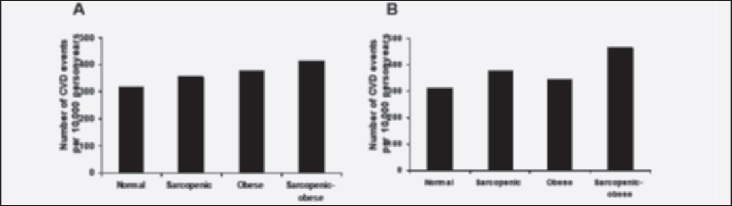
OBJECTIVES: To determine: 1) whether sarcopenic-obesity is a stronger predictor of cardiovascular disease (CVD) than either sarcopenia or obesity alone in the elderly, and 2) whether muscle mass or muscular strength is a stronger marker of CVD risk. DESIGN: Prospective cohort study. PARTICIPANTS: Participants included 3366 community-dwelling older (>or= 65 years) men and women who were free of CVD at baseline. MEASUREMENTS: Waist circumference (WC), bioimpedance analysis, and grip strength were used to measure abdominal obesity, whole-body muscle mass, and muscular strength, respectively. Subjects were classified as normal, sarcopenic, obese, or sarcopenic-obese based on measures of WC and either muscle mass or strength. Participants were followed for 8 years for CVD development and proportional hazard regression models were used to compare risk estimates for CVD in the four groups after adjusting for age, sex, race, income, smoking, alcohol, and cognitive status. RESULTS: Compared with the normal group, CVD risk was not significantly elevated within the obese, sarcopenic, or sarcopenic-obese groups as determined by WC and muscle mass. When determined by WC and muscle strength, CVD risk was not significantly increased in the sarcopenic or obese groups, but was increased by 23% (95% confidence interval: 0.99-1.54, P=0.06) within the sarcopenic-obese group. CONCLUSION: Sarcopenia and obesity alone were not sufficient to increase CVD risk. Sarcopenic-obesity, based on muscle strength but not muscle mass, was modestly associated with increased CVD risk. These findings imply that strength may be more important than muscle mass for CVD protection in old age.
Overview
The claims and statistics of this paper haven’t been checked yet.
Free: it reads the open-access text and checks the first 5 claims that cite a source we can check. Create a free account to check every claim.
Integrity signals
Registry
Cites
Statistics
Figures
Verification
Claims the paper makes
The claims and statistics of this paper haven’t been checked yet.
Free: it reads the open-access text and checks the first 5 claims that cite a source we can check. Create a free account to check every claim.
Claims other papers make about this one
Each is checked against this paper’s own text: does it say what the citing paper says it does?
The source backs part of the claim, not all of it — or backs it for a different population, condition or comparison.
In the citing paper
“The Cardiovascular Health Study, a large prospective study of 3,366 community-dwelling older individuals, demonstrated an association between dynapenic obesity (based on handgrip strength and WC) and the highest risk of CVD (105).”
From Health Consequences of Sarcopenic Obesity: A Narrative Review (2020) · cites this paper as [105]
Experimental — accuracy not yet measuredThe cited source says what the claim attributes to it.
In the citing paper
“Investigators from the Cardiovascular Health Study used low grip strength and high waist circumference to define low muscle strength and obesity. Rates approached 11.1%201, while data from FNIH classified 4.1% of men and 14.0% of women as having sarcopenic obesity using high BMI and low grip strength as measures of obesity and low muscle strength, respectively202.”
From Sarcopenic obesity in older adults: aetiology, epidemiology and treatment strategies (2018) · cites this paper as [201]
The cited source says what the claim attributes to it.
In the citing paper
“Recent cross-sectional and cohort studies suggest that sarcopenic obesity, as measured by muscle strength rather than muscle mass, is associated with increased risks of CVD (48) and cardiovascular mortality (39); however, this finding is challenged by certain studies that imply that sarcopenic obesity may have weak links to CVD (39, 49) or even no association with CVD, independent of sarcopenia or”
From Sarcopenic obesity: epidemiology, pathophysiology, cardiovascular disease, mortality, and management (2023) · cites this paper as [48]
In the citing paper
“In contrast, the risk of CVD was not significantly higher in the sarcopenic obesity group, when defined using BIA-measured muscle mass; thus, muscle strength may be more important predictor of CVD than muscle mass.”
From Health Consequences of Sarcopenic Obesity: A Narrative Review (2020) · cites this paper as [105]
In the citing paper
“Compared to that in participants without sarcopenia or obesity, the risk of CVD did not significantly increase in the dynapenia or obesity groups. However, the risk of CVD increased by 23% in the dynapenia and obesity groups.”
From Health Consequences of Sarcopenic Obesity: A Narrative Review (2020) · cites this paper as [105]
1 more claim about this paper
Create a free account to see every claim other papers make about this one.
Self-check
Percentages, sums and reported differences re-computed from the paper’s own numbers.
The self-check needs the paper’s full text.
Citations
Cites
Folstein, M. F., Folstein, S. E., & McHugh, P. R. (1975) · Journal of Psychiatric Research · doi:10.1016/0022-3956(75)90026-6 · Cited by 88,282 · cited 1×
“Cognitive Function. Cognitive function was measured using the 30-point Mini-Mental State Examination ( 22 ).”
Toprak, O., Kurt, H., Sarı, Y., Şarkış, C., Us, H., & Kırık, A. (2017) · Kidney and Blood Pressure Research · doi:10.1159/000468530 · Cited by 29,627
Grundy, S. M., Bilheimer, D. W., Chait, A., Clark, L. T., Denke, M. A., Havel, R. J., Hazzard, W. R., Hulley, S. B., Hunninghake, D. B., Kreisberg, R. A., et al. (1993) · JAMA · doi:10.1001/jama.269.23.3015 · Cited by 27,947
Expert Panel on Detection, E. (2001) · JAMA: The Journal of the American Medical Association · doi:10.1001/jama.285.19.2486 · Cited by 26,011
Chobanian, A. V. (2003) · JAMA · doi:10.1001/jama.289.19.2560 · Cited by 25,386
Hirono, N., Mori, E., Ikejiri, Y., Imamura, T., Shimomura, T., Hashimoto, M., Yamashita, H., & Ikeda, M. (1997) · Brain and nerve · Cited by 21,030
Kok, J. S., Berg, I. J., & Scherder, E. J. A. (2013) · Dementia and Geriatric Cognitive Disorders Extra · doi:10.1159/000353441 · Cited by 20,589
Older Adults' Reasons for Using Technology while Aging in Place
Peek, S. T. M., Luijkx, K. G., Rijnaard, M. D., Nieboer, M. E., van der Voort, C. S., Aarts, S., van Hoof, J., Vrijhoef, H. J. M., & Wouters, E. J. M. (2016) · Gerontology · doi:10.1159/000430949 · Cited by 19,690
Sensitivity and False Alarm Rate of a Fall Sensor in Long-Term Fall Detection in the Elderly
Kangas, M., Korpelainen, R., Vikman, I., Nyberg, L., & Jämsä, T. (2015) · Gerontology · doi:10.1159/000362720 · Cited by 18,909
Detection, evaluation, and treatment of high blood cholesterol in adults (Adult Treatment Panel III)
Grundy, S. M., Becker, D. M., Clark, L. T., Cooper, R., Denke, M. A., Howard, J. L., Hunninghake, D. B., Illingworth, D. R., Luepker, R. V., McBride, P. E., et al. (2002) · Civil War Book Review · Cited by 12,198
Cited by
Items 201–300 of 300
日本老年医学会「高齢者の生活習慣病管理ガイドライン」作成ワーキング (2018) · Nippon Ronen Igakkai Zasshi Japanese Journal of Geriatrics · doi:10.3143/geriatrics.55.464 · Cited by 11
Takayama, M., Azuma, K., Shimizu‐Hirota, R., Makino, K., Seino, T., Yoshida, T., Kashiwagi, K., Hirose, H., Inoue, N., & Iwao, Y. (2018) · Health Evaluation and Promotion · doi:10.7143/jhep.45.573 · Cited by 8
Xin, Y., Qian, X., & Yang, Y. J. (2025) · Diabetology & Metabolic Syndrome · doi:10.1186/s13098-025-02032-9 · Cited by 8
“Indeed, prior research has shown that SO is associated with a significantly elevated risk of cardio-vascular disease (CVD), with one study reporting a 23% increased risk compared to non-sarcopenic obesity [11].”
InfluentialZhou, C., Zhan, L., He, P., Yuan, J., & Zha, Y. (2023) · Nutrition in Clinical Practice · doi:10.1002/ncp.11044 · Cited by 7
Zhuang, M., Shi, J., Liu, J., He, X., & Chen, N. (2023) · BMC Geriatrics · doi:10.1186/s12877-023-04592-9 · Cited by 8
“Stephen et al. [9] indicated that older people with SO have an increased risk of CVD by 23% compared with those without SO.”
BackgroundBarbat‐Artigas, S., Filion, M., Ringuet, M.-È., Aubertin‐Leheudre, M., & Karelis, A. D. (2012) · Canadian Journal of Diabetes · doi:10.1016/j.jcjd.2012.08.001 · Cited by 8
Ruperto, M., Gómez‐Martín, M., & Rosado, C. I. (2016) · Revista Española de Nutrición Humana y Dietética · doi:10.14306/renhyd.20.4.245 · Cited by 7
Fierro Rodríguez, D. (2025) · Revista de Derecho Civil · Cited by 6
Rossi, A. P., Rubele, S., & Zamboni, M. (2019) · Nutrition and Skeletal Muscle · doi:10.1016/b978-0-12-810422-4.00006-3 · Cited by 5
Zhang, S., Hu, X., Liu, M., Jin, J., Liu, J., Li, G., Ou, Y., & Dong, H. (2025) · Aging Clinical and Experimental Research · doi:10.1007/s40520-025-03094-5 · Cited by 6
Sarcopenia and cardiovascular disease in patients with and without kidney disease: what do we know?
Güngör, Ö., Sevinç, M., Sena Memnune, U. L. U., & Kocyigit, I. D. (2022) · International Urology and Nephrology · doi:10.1007/s11255-022-03393-0 · Cited by 7
Neto, L. S. S., Karnikowiski, M. G. O., Tavares, A. B., & Lima, R. M. (2012) · Cited by 5
Choi, H.-A., & Park, K.-M. (2016) · Research in Community and Public Health Nursing · doi:10.12799/jkachn.2016.27.3.231 · Cited by 5
ASSOCIATION OF LOW MUSCLE MASS AND ISOKINETIC STRENGTH WITH METABOLIC SYNDROME
Kim, H., Kim, Y. H., & Kim, W. D. (2020) · Journal of Men s Health · doi:10.15586/jomh.v16i2.224 · Cited by 5
Medication Adherence of Elderly Patients With Chronic Heart Failure
Чукаева, И. И., Larina, V. N., Карпенко, Д. Г., & Pozdnyakova, A. V. (2017) · Kardiologiia · doi:10.18087/cardio.2017.10.10043 · Cited by 6
Araki, A., 赫英, 周., & Mori, S. (2012) · Nippon Ronen Igakkai Zasshi Japanese Journal of Geriatrics · doi:10.3143/geriatrics.49.210 · Cited by 7
Zamboni, M. M., Macchi, F., Nori, N., & Rossi, A. P. (2021) · Wiley eBooks · doi:10.1002/9781119597896.ch12 · Cited by 6
Shirotori, S., Hasegawa, Y., Nagai, K., Kusunoki, H., Yoshimura, S., Tokumoto, K., Hattori, H., Tamaki, K., Hori, K., Kishimoto, H., et al. (2025) · Diseases · doi:10.3390/diseases13040109 · Cited by 5
“The interaction between reduced muscle quality and enhanced adiposity increases health risks, particularly in older populations [12–16].”
Association between sarcopenic obesity with insulin resistance and metabolic syndrome
Pérez‐Cruz, E., Castro-Martínez, D., & Guzmán, O. P. G. (2022) · Medicina Clínica (English Edition) · doi:10.1016/j.medcle.2021.07.022 · Cited by 6
Han, Y., Choi, Y., & Kim, Y. S. (2024) · Geriatrics and gerontology international/Geriatrics & gerontology international · doi:10.1111/ggi.14987 · Cited by 4
“41 One study found that obesity alone did not provide suf fi cient evidence to link it directly to sarcopenia 42 however, muscle strength, rather than muscle mass, showed a signi fi cant relationship.”
Kwon, Y., Chung, J. A., Choi, Y. J., Lee, Y. M., Choi, S. Y., Yoo, I. H., Kim, T. H., & Jeong, S. J. (2024) · Life · doi:10.3390/life14111457 · Cited by 7
Chen, J. Y., Wang, J., Jin, Y. L., Cheng, K. K., Lam, T. H., Zhang, W. S., & Xu, L. (2025) · Quality of Life Research · doi:10.1007/s11136-025-03960-9 · Cited by 6
Construction of a prediction model for sarcopenic obesity based on machine learning
Xu, M., Liu, J., Hu, S., Luan, T., Duan, Y., Wang, A., Cui, Z., Zhou, J., & Mao, Y. (2025) · Frontiers in Public Health · doi:10.3389/fpubh.2025.1576338 · Cited by 7
“These delays can have significant consequences for quality of life and all-cause mortality (14–16).”
Kwon, S., Baptista, F., Levy, S. M., Guha, I., Saha, P. K., & Janz, K. F. (2025) · International Journal of Environmental Research and Public Health · doi:10.3390/ijerph22030416 · Cited by 5
Otsuka, T., Yamagata, K., Nguyen, M.-P., Ngo, U. T., Sakai, H., Trimova, G., Anan, J., Okada, Y., Nakayamada, S., & Tanaka, Y. (2025) · Inflammation and Regeneration · doi:10.1186/s41232-025-00373-6 · Cited by 4
Comparison of sarcopenic status between elderly leprosy survivors and general population
Kim, W. D., Park, H. W., Hwang, B. K., Bae, S. O., Kim, I. K., & Chung, S. G. (2013) · Archives of Gerontology and Geriatrics · doi:10.1016/j.archger.2013.07.013 · Cited by 6
Nutrition, Exercise, and Pharmaceutical Therapies for Sarcopenic Obesity
Wakabayashi, H., & Sakuma, K. (2013) · Journal of Nutritional Therapeutics · doi:10.6000/1929-5634.2013.02.02.5 · Cited by 7
“2) in patients with solid tumors of the respiratory and gastrointestinal tracts [13].”
BackgroundLee, Y., Lee, H., Yoon, S., Shin, J., Park, K., Lee, S., & Lee, S. (2021) · Frontiers in Medicine · doi:10.3389/fmed.2021.790135 · Cited by 6
“Numerous reports have been published regarding this syndrome, and several studies have evaluated its relationship with other diseases such as cardiovascular disease and solid tumors (14, 15).”
BackgroundZhang, N., Qu, X., Zhou, H., & Kang, L. (2024) · Cureus · doi:10.7759/cureus.62300 · Cited by 4
Abdelhafiz, A. H., Siqueira, I., & Sinclair, A. J. (2025) · Journal of Diabetes and its Complications · doi:10.1016/j.jdiacomp.2025.109193 · Cited by 5
Kim, S. (2020) · Journal of Men s Health · doi:10.15586/jomh.v16i2.251 · Cited by 3
Vascular aging and sarcopenia: Interactions with physiological functions during exercise
Hayashi, N. (2021) · Elsevier eBooks · doi:10.1016/b978-0-12-822146-4.00012-0 · Cited by 3
Esser, N., Paquot, N., & Scheen, A. J. (2010) · Médecine des Maladies Métaboliques · doi:10.1016/s1957-2557(10)70083-3 · Cited by 3
“Lors d’un suivi prospectif de 8 ans de 3 366 sujets canadiens âgés d’au moins 65 ans, indemnes de pathologie cardiovasculaire, les influences respectives de l’excès de masse grasse (IMC, tour de taille, bioimpédance) et de la sarcopénie (déficit de masse et force musculaires) ont été analysées en ce qui concerne l’inc…”
BackgroundNeto, L. S. S., Medeiros, A., Travassos, A., Osório, N. B., & Nunes, G. F. (2019) · Revista de Nutrição · doi:10.1590/1678-9865201932e180237 · Cited by 5
“The studies found on the association between SO and risk factors and/or CMD and CVD are shown in Table 1.”
BackgroundMethodInfluentialJiang, Y., Jiang, W., Wang, Q., Wei, T., & Chan, L. (2025) · Bioengineering · doi:10.3390/bioengineering12090921 · Cited by 2
“The chronic progression of sarcopenia and obesity makes symptoms more insidious [3,4].”
Wasir, A. S., Doad, J. S., Wasir, J. S., Bansal, M., & Joshi, A. R. (2025) · Endocrine Regulations · doi:10.2478/enr-2025-0023 · Cited by 4
“Stephen and Janssen (2009) in a prospective study (n=3366 aged ≥65 years) have shown that irrespective of how SO has been classified the crude event rates for CVD were higher in the SO group than in the sarcopenic and obese groups and that on comparison with the normal group, the CVD event rates…”
Neto, L. S. S., Karnikowiski, M. G. O., Tavares, A. B., & Lima, R. M. (2012) · DOAJ (DOAJ: Directory of Open Access Journals) · Cited by 2
dos Santos, C. A., Fraga-Maia, H., Pitanga, F. J. G., de Almeida, M. D. C. C., da Fonseca, M. D. J. M., Aquino, E. M. L., Cardoso, L. D. O., Barreto, S. M., Duncan, B. B., Schmidt, M. I., et al. (2022) · British Journal Of Nutrition · doi:10.1017/s0007114522003531 · Cited by 3
“Data revealed an increase of 23 % in the risk of CVD in individuals with sarcopenic obesity(73) and a prevalence of sarcopenic obesity of approximately 8 and 11-fold higher than isolated sarcopenia and obesity, respectively(74).”
Descriptive Study of Body Composition Abnormalities and Health Risks in Patients with Obesity
Xiao, J. (2013) · Cited by 2
Body composition and its association with health outcomes among elderly South Koreans
Hong, S.-Y. (2014) · Pacific Science Review · doi:10.1016/j.pscr.2014.08.021 · Cited by 3
So, Y.-S. (2016) · 한국융합학회논문지 · doi:10.15207/jkcs.2016.7.3.185 · Cited by 3
“이처럼 체성분 변화로 인해 근감소증과 비만이동시에나타나는것을가리켜 sarcopenic obesity 라 하는데 이는 근감소증과 비만으로 인해 발생되는 건 강상문제들이동시에발생하기때문에노인에게있어서 더욱 위험하다[9,10,11].”
Sillanpää, E. (2011) · Jyväskylä University Digital Archive (University of Jyväskylä) · Cited by 12
Zamboni, M. M., Rossi, A. P., & Zoico, E. (2012) · Wiley eBooks · doi:10.1002/9781118338032.ch13 · Cited by 3
Atkins, E. R., on behalf of the Global Registry for Endovascular Aortic Treatment (GREAT) Participants, Milner, R., & Delaney, C. L. (2023) · The Journal of Cardiovascular Surgery · doi:10.23736/s0021-9509.23.12572-9 · Cited by 1
Shen, Z., Zeng, R., Xie, F., Wang, J., Ye, D., Zhu, A., Chen, L., Zhu, W., Zhu, K., Fan, T., et al. (2024) · The journal of nutrition health & aging · doi:10.1016/j.jnha.2024.100396 · Cited by 1
“While both sarcopeniaandobesityhavebeenidentifiedasconditionsassociated with stroke, heart disease, and diabetes [2,3], the intricate relationship between sarcopenic obesity (SO) and CMM remains underexplored.”
Diago-Galmés, A., Guillamón-Escudero, C., Tenías, J. M., Soriano, J. M., & Garrido, J. F. (2024) · Nutrients · doi:10.3390/nu16223904 · Cited by 2
Differing dietary patterns according to body composition
Lee, Y.-C., Kim, H.-M., Lee, H. S., Jeon, S., Kwon, Y., & Lee, J. (2025) · Frontiers in Nutrition · doi:10.3389/fnut.2025.1509620 · Cited by 2
“Furthermore, a 10-year follow-up cohort study showed that participants with sarcopenic obesity carried a 23% higher risk of CVD, regardless of the lack of association between CVD risk and obesity or sarcopenia alone (14).”
Dulloo, A. G., Ramessur, V., Hunma, S., Joonas, N., Ramessur, B. N., Schütz, Y., & Montani, J. (2025) · International Journal of Obesity · doi:10.1038/s41366-025-01934-y · Cited by 5
Tan, S. Y. T., Wong, J. J., Tan, G. H. M., Tan, R., Gao, F., Teo, L. L., Ewe, S. H., Lim, W. S., Tan, H. C., & Koh, A. S.-M. (2025) · Aging Clinical and Experimental Research · doi:10.1007/s40520-025-03230-1 · Cited by 1
“Several studies have described an association between SO and increased CVD risk in older adults, [ 25– 27] but only a few studies assess the relationship between low MQI and CVD. Chen et al. reported that subjects with low MQI selected from the National Health and Nutrition Examina - tion Survey…”
Reference values and prediction of sarcopenia in Japanese men and women
Sanada, K., & Miyachi, M. (2012) · The Journal of Physical Fitness and Sports Medicine · doi:10.7600/jpfsm.1.637 · Cited by 1
Шевцова, В. И., & Zujkova, A. A. (2021) · The Russian Archives of Internal Medicine · doi:10.20514/2226-6704-2021-11-6-442-446 · Cited by 2
“Согласно литературным данным, саркопеническое ожирение ассоциировано с повышенным риском развития кардиоваскулярных заболеваний, застойной сердечной недостаточности, метаболического синдрома, артериальной гипертензии и дислипидемии, смерти от всех причин [21, 23, 25, 26].”
Mongraw‐Chaffin, M., Evans, J. K., Shappell, H. M., Espeland, M. A., & Hayden, K. M. (2025) · Obesity · doi:10.1002/oby.24212 · Cited by 1
“Research into the concept of sarcopenic obesity, the combination of reduced ALM and subsequent lower muscle strength with excess adiposity, is one approach to addressing this issue [7] and exemplifies that the answer may not be as simple as one or the other [8 – 10].”
Effects of Exercise on Cardiovascular Disease Risk Factors in Sarcopenic Obesity Elderly Women
Jung, J., & Yang, S.-J. (2012) · Journal of the Korea Academia-Industrial cooperation Society · doi:10.5762/kais.2012.13.9.3962 · Cited by 1
“또한, 노화로 인한 sarcopenia는 인슐린 반응을 이용할 수 있는 근육량의 감소로 인슐린저항성을 높이고 [15], 지방량이 증가되어 염증인자를 증진시켜 이로 인한 대사증후군[16]과 같은 CVD 위험을 높인다[1, 11, 17]는 가설이 설득력을 얻고 있다.”
InfluentialRech, C. R., Dellagrana, R. A., de Fátima, M., Marucci, N., & Petróski, E. L. (2012) · Cited by 1
Khwaja, R., Dessouky, R., Heffler, M. A., Xi, Y., Neeland, I. J., & Chhabra, A. B. (2019) · European Journal of Radiology · doi:10.1016/j.ejrad.2019.01.001 · Cited by 1
Sarcopenia, Currently a Hot Topic: A Narrative Review
Chai, J., & Kang, H.-J. (2021) · The Asian Journal of Kinesiology · doi:10.15758/ajk.2021.23.1.20 · Cited by 1
“However, the fact that the best measures are based on muscle strength rather than muscle mass particularly in the context of cardiovascular disease has been confirmed [19].”
BackgroundEffects of Korea Dance on Obesity-related Variables and Cardiovascular Function in Obese Older Women
yeju, H. (2015) · Official Journal of the Koeran Society of Dance Science · doi:10.21539/ksds.2015.32.2.103 · Cited by 1
Kim, J., Lee, I., & Kang, H. (2021) · Exercise Science · doi:10.15857/ksep.2021.30.2.237 · Cited by 1
Atherosclerotic Cardiovascular Disease Prevention in the Older Adult: Part 2
Murphy, E., Cooney, M. T., & McEvoy, J. W. (2023) · Contemporary cardiology · doi:10.1007/978-3-031-16594-8_2 · Cited by 1
Gross, D. C., Cheever, C. R., & Batsis, J. A. (2023) · Springer eBooks · doi:10.1007/978-3-031-40116-9_38 · Cited by 1
Measurements of Muscle Mass, Equations and Cut‐off Points
Visser, M., & Schaap, L. S. (2012) · Wiley eBooks · doi:10.1002/9781118338032.ch15 · Cited by 4
Crisostomo, L. A. H. K. (2016) · Digital Library of Theses and Dissertations (Universidade de São Paulo) · doi:10.11606/d.6.2016.tde-29042016-132829 · Cited by 25
Measurements of Muscle Mass, Equations and Cut‐off Points
Visser, M., & Schaap, L. S. (2021) · Wiley eBooks · doi:10.1002/9781119597896.ch16 · Cited by 1
Loss of Muscle Mass and Muscle Strength in Obese and Nonobese Older Adults
B̀ouchard, D. R., & Janssen, I. (2014) · Springer eBooks · doi:10.1007/978-1-4939-1929-1_6 · Cited by 2
Self-citationNutrición y enfermedades metabólicas en el anciano. Estrategias alimentarias
Fuentes, L. G., Álvarez, I. C., & Triana, F. M. C. (2014) · Medicine - Programa de Formación Médica Continuada Acreditado · doi:10.1016/s0304-5412(14)70830-3 · Cited by 6
Menopause and Sarcopenia: Dietary and Nutritional Aspects
Barbat‐Artigas, S., & Aubertin‐Leheudre, M. (2013) · Humana Press eBooks · doi:10.1007/978-1-62703-373-2_14 · Cited by 2
Obesidade sarcopênica e risco para óbito em idosos brasileiros
da Rocha, M. A. P. (2015) · Digital Library of Theses and Dissertations (Universidade de São Paulo) · doi:10.11606/d.6.2015.tde-09102015-083138 · Cited by 2
em coorte de idosos domiciliados no município de São Paulo.
Hassan, A. H., & Crisostomo, K. (2016)
Hintze, L. J., da Silva, D. R. P., Bianchini, J. A. A., Dada, R. P., McNeil, J., & Nardo, N. (2017) · Revista Brasileira de Atividade Física & Saúde · doi:10.12820/rbafs.v.21n6p561-570
Vecchio, L. D., Stanton, R., Borges, N. R., Macgregor, C., Doering, T. M., Korhonen, M. T., & Reaburn, P. R. J. (2016) · ResearchOnline at James Cook University (James Cook University) · Cited by 1
The relationship between skeletal muscle mass and arterial stiffness in an elderly Korean population
이승원 (2014) · YUHSpace (Yonsei University Medical Library)
Sarcopenic Obesity Exacerbates Health Risk in Older Adults More Than Sarcopenia or Obesity Alone
Helsel, B. C. (2018) · Current Research in Diabetes & Obesity Journal · doi:10.19080/crdoj.2018.06.555692
“Stephen & Janssen [8] investigated whether sarcopenia, obesity, or sarcopenic obesity served as a stronger predictor for cardiovascular disease risk in older adults ≥65 years of age.”
BackgroundEating behaviors and strategies to promote weight loss and maintenance
Ryan, D. H., & Anton, S. D. (2020) · Elsevier eBooks · doi:10.1016/b978-0-12-818460-8.00009-5
Kim, K. (2020) · The Korean Journal of Sports Medicine · doi:10.5763/kjsm.2020.38.3.155
Patients at risk of the progression of chronic venous disease.
Meulendijks, A. M. (2021) · Utrecht University Repository (Utrecht University) · doi:10.33540/298
Khramtsova, N. I., Плаксин, С. А., Ponomarev, D. N., & Sotskov, A. Y. (2021) · IEEE International Symposium on Medical Measurements and Applications (MeMeA) · doi:10.1109/memea52024.2021.9478755
Batsis, J. A. (2015) · Springer eBooks · doi:10.1007/978-3-319-12125-3_38-1
Batsis, J. A. (2016) · Springer eBooks · doi:10.1007/978-3-319-11251-0_38
日本老年医学会「高齢者の生活習慣病管理ガイドライン」作成ワーキング (2018) · Nippon Ronen Igakkai Zasshi Japanese Journal of Geriatrics · doi:10.3143/geriatrics.55.g1 · Cited by 2
Öztorun, H. S., Bahşi, R., Turgut, T., Sürmeli, D. M., Coşarderelioğlu, Ç., Atmış, V., Yalçın, A., Aras, S., & Varlı, M. (2022) · European Journal of Geriatrics and Gerontology · doi:10.4274/ejgg.galenos.2022.2022-3-3 · Cited by 1
Jiang, Y., Yang, C., Zhang, J., Luo, P., Jiang, W., & Wei, T. (2023) · Research Square · doi:10.21203/rs.3.rs-3099213/v1
Gross, D. C., Cheever, C. R., & Batsis, J. A. (2023) · Springer eBooks · doi:10.1007/978-3-319-12125-3_38-2
Sarkopenik Obezite ile Mücadelede Egzersiz ve Beslenme Stratejileri
ŞİMŞEK, A., Güneş, M., & Demirer, B. (2023) · İstanbul Gelişim Üniversitesi Sağlık Bilimleri Dergisi · doi:10.38079/igusabder.1272892
Diagnosis and treatment of obesity disease in older adults
Nishikage, S., Hirota, Y., & Ogawa, W. (2023) · Nippon Ronen Igakkai Zasshi Japanese Journal of Geriatrics · doi:10.3143/geriatrics.60.317
Shi, M., Fan, S., Sun, L., Chen, X., & Zhang, G. (2025) · Clinical Nutrition ESPEN · doi:10.1016/j.clnesp.2025.04.018 · Cited by 1
“Conversely, a study of 3,000 þ adults aged 56 þ found no signi fi cant SO-CVD link when using BIA, but a 23 % higher CVD risk when SO was de fi ned by grip strength and waist circumference [40].”
Kwon, S., Janz, K. F., Guha, I., Rowlands, A. V., Rysavy, O., Saha, P. K., Pendleton, C., Shin, E. D., & Levy, S. M. (2025) · Children · doi:10.3390/children12091204 · Cited by 1
Leem, A. Y., Kim, Y. S., Chung, K. S., Park, M. S., Kang, Y. A., Park, Y.-M., & Jung, J. Y. (2022) · Figshare · doi:10.6084/m9.figshare.20307400
Zhuang, M., Shi, J., Liu, J., He, X., & Chen, N. (2023) · Figshare · doi:10.6084/m9.figshare.24873103
Takeshita, S., Nishioka, Y., Tamaki, Y., Kamitani, F., Mohri, T., Nakajima, H., Kurematsu, Y., Okada, S., Myojin, T., Noda, T., et al. (2024) · Figshare · doi:10.6084/m9.figshare.24971298
Hajj, C. E. (2019) · theses.fr (ABES) · doi:10.70675/263c14a1z15ecz4122z8fe2z2945f23420b0 · Cited by 1
Li, R., Liu, T., Xin, W., Liang, Z., Zhao, C., Zhao, Z., Zhang, T., Zhao, F. H., Xu, W., & Jin, P. (2026) · Eating and Weight Disorders - Studies on Anorexia Bulimia and Obesity · doi:10.1007/s40519-026-01865-1
“…U.S. study of older adults (n = 3,366,ages ≥ 65 years) showed that SO was unrelated to CVD risk when defined by skeletal muscle mass and waist circumference; when defined by grip strength and waist circumference, only a borderline statistically significant association was observed [33].”
Diagnosis and evaluation of sarcopenic obesity
Kalra, S., Shrestha, D., & Verma, M. (2026) · Best Practice & Research Clinical Endocrinology & Metabolism · doi:10.1016/j.beem.2026.102109 · Cited by 1
Yang, Y., Peng, Z., You, Z., Wang, Y., Zhu, L., Zhong, Q., & Liang, M. (2026) · Archives of Gerontology and Geriatrics · doi:10.1016/j.archger.2026.106356
Zhong, Z., Chen, Y., Xiang, Q. X., Liu, H., Zhao, M., Pekovic‐Vaughan, V., Sund, R., Sankaranarayanan, R., Cuthbertson, D. J., & Isanejad, M. (2026) · Journal of the American Heart Association · doi:10.1161/jaha.125.047621
“…associations in our study, supporting prior evidence that muscle strength exerts a greater impact on cardiovascular disease risk than muscle mass. 32 Age-and sex-stratified analyses showed that all sar-copenia phenotypes were associated with higher HF risk compared with the reference group but…”
Zhang, R., Yu, D., Liu, X., Xue, H., Xie, J., & Wang, L. (2026) · Diabetology & Metabolic Syndrome · doi:10.1186/s13098-026-02247-4
Sinclair, A., James, F., Muraleedharan, A., & Abdelhafiz, A. H. (2026) · Journal of Personalized Medicine · doi:10.3390/jpm16080422
“Similarly, sarcopenia combined with obesity, sarcopenic obesity, appears to have an increased CV risk greater than either condition alone [5].”
Suzuki, K., Ariie, T., Kuniyoshi, Y., Kurasawa, Y., Isaji, Y., Oka, T., Maeda, H., Nasu, T., Kunihara, H., Tanaka, K., et al. (2026) · Clinical Nutrition ESPEN · doi:10.1016/j.clnesp.2026.105111 · Cited by 1
Adverse outcomes of sarcopenic obesity in older adults: a scoping review
Chang, H., Zhao, Y., Tian, Y., & Hao, L. (2026) · Frontiers in Nutrition · doi:10.3389/fnut.2026.1917374
“In addition, four studies defined sarcopenia based on muscle mass (12, 14, 29, 30), two studies defined it based on muscle strength (31, 32), and one study defined it based on mid-arm muscle circumference (13).”
InfluentialWright, N. C. (2010) · UA Campus Repository (The University of Arizona)
Metadata
- Authors
- Stephen, W. C., & Janssen, I.
- Affiliations
- Queen's University (CA)
- Corresponding author
- Janssen, I.
- ORCID
- Janssen, I.
- Venue
- The Journal of nutrition, health and aging
- Publisher
- Elsevier BV
- Published
- 2009-05
- Volume
- 13
- Issue
- 5
- Pages
- 460-466
- ISSN
- 1279-7707 (ISSN-L)
- PMC
- PMC12880267
- OpenAlex
- W2079791223
- Cited by
- 301
- References
- 43
- Citations by year
- 2026: 8 · 2025: 21 · 2024: 16 · 2023: 28 · 2022: 20 · 2021: 22 · 2020: 18 · 2019: 14 · 2018: 19 · 2017: 10 · 2016: 23 · 2015: 23 · 2014: 19 · 2013: 11 · 2012: 25
- FWCI
- 10.60
- Type
- journal article
- Language
- en
- Open access
- hybrid
- doi.org
- Licence
- cc-by-nc-nd
- www.elsevier.com/tdm/userlicense/1.0/ (tdm)
- www.elsevier.com/legal/tdmrep-license (tdm)
- creativecommons.org/licenses/by-nc-nd/4.0/ (vor, 5349 d)
- Locations
- The journal of nutrition health & aging (publishedVersion, cc-by-nc-nd)
- Europe PMC (PubMed Central) (publishedVersion, cc-by-nc-nd)
- PubMed (publishedVersion)
- PubMed Central (publishedVersion, cc-by-nc-nd)
- Topics
- Health Sciences › Medicine › Physiology (medical) › Nutrition and Health in Aging
- Health Sciences › Medicine › Physiology (medical) › Body Composition Measurement Techniques
- Health Sciences › Medicine › Geriatrics and Gerontology › Frailty in Older Adults
- Keywords
- sarcopenic obesity, sarcopenia, obesity, cardiovascular risk, older adults, muscle strength, grip strength, muscle mass, waist circumference, abdominal obesity, bioelectrical impedance analysis
- MeSH terms
- Adipose Tissue, Aged, Aged, 80 and over, Body Composition, Cardiovascular Diseases, Female, Follow-Up Studies, Humans, Longitudinal Studies, Male, Muscular Atrophy, Obesity, Prospective Studies, Risk Factors, United States, Cohort Studies, Geriatric Assessment, Comorbidity, Electric Impedance, Age Distribution, Muscle, Skeletal, Hand Strength, Muscle Weakness, Waist Circumference
About these checks
Registry, retraction, Cites and statistics results are computed, not judged, with one exception: a printed reference that no index lists is read once by a model before it counts as a citation error. Claims are extracted by a model and kept only when their quote appears verbatim in the text; each cited source is then checked, with a model’s help, for whether it says what the claim relies on. Those verdicts can be wrong — read the claim’s quote and the cited source before relying on one.
Statistics and arithmetic are recomputed, not judged.
Confidence bands are shown only for fields calibrated on our annotated test set. None is calibrated yet, so no band is shown.
What counts as a claim ›How we measure confidence ›How we check this ›
Are you an author, or do you see a problem with this page? Request a review
Data sources
Bibliographic data: Semantic Scholar, OpenAlex, Crossref.
Contains information from the Semantic Scholar Academic Graph Datasets, made available under the ODC Attribution License (ODC-BY 1.0).
Semantic Scholar’s data is described in: Kinney, R., et al. (2023). The Semantic Scholar Open Data Platform. arXiv:2301.10140.
